The Trygon Factor (1967) ****

Sublime climax but you need persistence to get through the fog of red herrings. Genre mash-up that flits precariously between whodunit and horror as we slip from a convent of nefarious nuns living in a vast stately home, where half-naked girls pose for photo sessions, and secret messages are smuggled out, to a pre-giallo masked killer with a drowning obsession liable to jump out. Luckily, there’s an equally impressive grand hotel nearby, thankfully minus nuns, but where killers still roam.

I had mistakenly assumed horror because “Trygon” is close to “Tygon,” the British horror outfit taking a more outré approach to the genre than staid old Hammer, and because of the random killings, and a man, Luke (James Culliford), son of the mansion owner Livia Emberday (Cathleen Nesbitt), in the habit of dressing up in weird garb and chopping the heads off flowers with a sword and inclined, in a fit of pique, to smash precious china heirlooms. And because there’s a fair bit of business with a coffin, this being the kind of movie where mourners lean into the casket and kiss the corpse.

If it is, indeed, a corpse. Zombies, anyone? I wouldn’t have been surprised. This is jam-packed with sumptuous misleading incident. Especially, as, for most of the proceedings, it seems like we’re stuck in a detective tale with an inspector who’s clearly never lived a minute in Britain judging from his glowing tan. He’s investigating a missing colleague (Allan Cuthbertson) seen in the opening sequence snooping around the mansion before being passed furtive notes through the gates by a young nun, later rigorously stripped of her habit.

The tan’s probably the giveaway since the immaculately turned-out Supt Cooper-Smith (Stewart Granger) fancies himself as a ladies’ man, first with French receptionist Sophie (Sophie Hardy) who expects a bit of coaxing seduction, and then with Livia’s daughter Trudy (Susan Hampshire), the photographer,  who doesn’t, keener on a speedier route into a man’s affections.

By the time the dust begins to settle, and the top cop harbors suspicions about a dockside warehouse owned by swivel-eyed Hubert (Robert Morley) – although Cooper-Smith’s  investigation technique revolves around plying young women with brandy – we’re drifting between the notion of some mad cult operating in the convent and Luke as the most likely serial killer given his determination to “play” with young women.

But, in fact, just as we’re being lulled into a sense of false security and the idea that we’ve seen this all before, director Cyril Frankel (On the Fiddle, 1961) springs the first of several audacious twists. The idea that the stately home is a front for a gang of thieves might, on the face of it, appear ludicrous except for the skill with which they carry out the heist and that the criminal mastermind is Livia, assisted by equally cunning daughter.

They have imported – in a coffin – a top French safecracker whose tool of choice is the kind of weapon that Thunderbolt and Lightfoot would have envied, if not a villain of James Bond proportions, and although the armament doesn’t spew out laser beams, it has sufficient firepower to render vulnerable the toughest safe. Naturally, Livia organises the break-in to coincide with nearby building works where the thunder of pneumatic drills will drown out any gun fire.

The thieves turn up outside the appointed bank in what appears an official security van, but from the boxes they carry into the target they produce gas masks and proceed to immobilize anyone inside. They’re after gold bullion because, under the guise of manufacturing large candlestick holders for sale to tourists at the stately home, Livia has set up a gold-smelting operation, pouring liquified gold into the base of the candlestick, trademark Trygon. Having re-disguised the French safecracker as a corpse and placed him in a coffin ready for the surreptitious trip home, ruthless Livia instead dumps him into the Thames to drown.

It’s pure luck that our police lothario happens upon the truth and discovers the smelting basement whereupon – twist number two – the delectable Trudy reveals herself to be the serial killer. She kills for “fun” and relishes the prospect of knocking off an “arrogant” male and one too susceptible to her charms to recognize her femme fatale sensibilities

The giallo-esque killings are highlights, one victim drowned in a baptismal font, another in a bathtub. That female’s kicking and screaming isn’t enough, what with the radio turned up loud, to attract the attention of the nubile Sophie next door luxuriating in a bubble bath. But death by piping hot liquid gold takes some beating. And that’s not the sole reason for the X-certificate since the movie taunts the censor in Blow-Up (1966) – minus the attendant hullabaloo – fashion with a brief glimpse of naked female breast.

The prospective audience might have expected a supernatural outcome given director Frankel’s previous outing The Witches (1966) and had they been alerted to the fact that the source material (uncredited) was written Edgar Wallace might have come prepared for some of the twists.   

This is the kind of movie that needs to be viewed backwards because it’s only at the end that you work out what it’s all about and how skilfully the audience has been duped. An object lesson and one that, for example, Zoe Kravitz (Blink Twice, 2024) should have watched to learn how to suck an audience in.

When you consider the movie in reverse, you realize this is really about an exceptionally clever heist and two women who are more than a match for any man. The males here are definitely disposable.

If you wondered why I gave this is a four-star rating rather than the more obvious three stars, it’s because of what’s mostly unsaid, the iceberg of psychology floating beneath the surface, the one that says that British audiences would not tolerate a top-class female criminal gang capable of pulling off a fantastic heist and without compunction killing off any man, including co-workers, who gets in their way. Had it begun from the POV of Lydia and Trudy planning the robbery, and dealt with Cooper-Smith et al as simply hazards of the profession, it might have made a terrific heist picture but then all the fun of the twists and the pulling the wool over audience eyes would be missed.

Susan Hampshire (The Three Lives of Thomasina, 1963) belies her Disney persona with a chilling portrait of an exceptionally smart femme fatale. Stewart Granger (The Last Safari, 1967) looks as if he views the whole boring process of detection as nothing more than the opportunity to try out some chat-up lines.

Cyril Frankel makes no pretence at being a great stylist, but he more than makes up for it by the teasing structure, some of the costumes, the atmosphere and the twists. Derry Quinn (Operation Crossbow, 1965) and Stanley Munro, in his movie debut, devised the screenplay based on a book by Edgar Wallace

Watch – and marvel.
Never Take Candy/Sweets From a Stranger (1960) ****

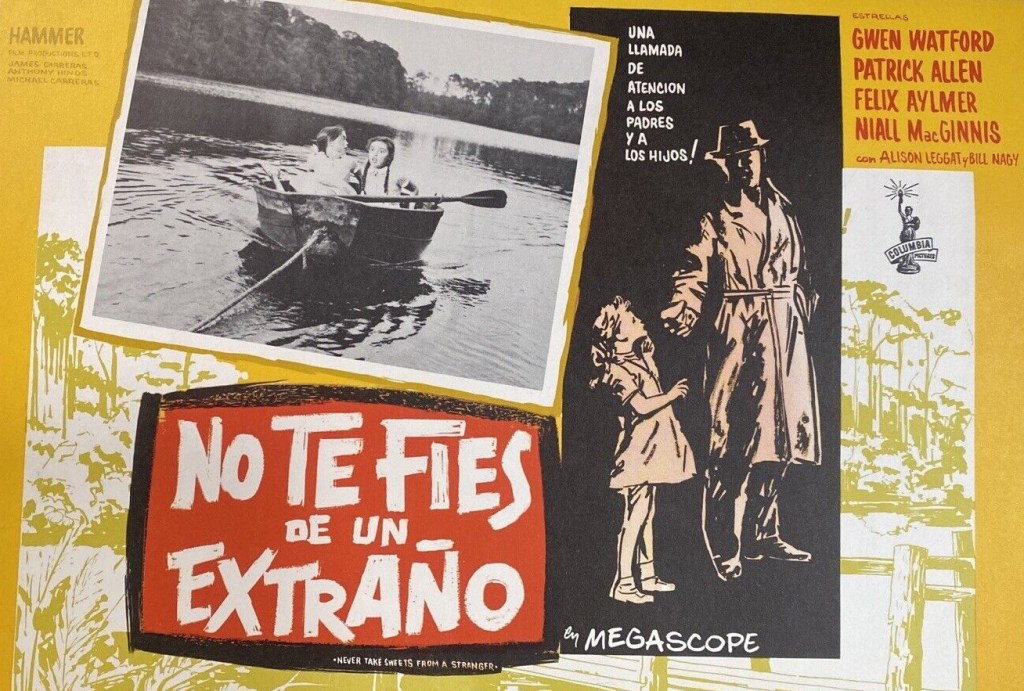
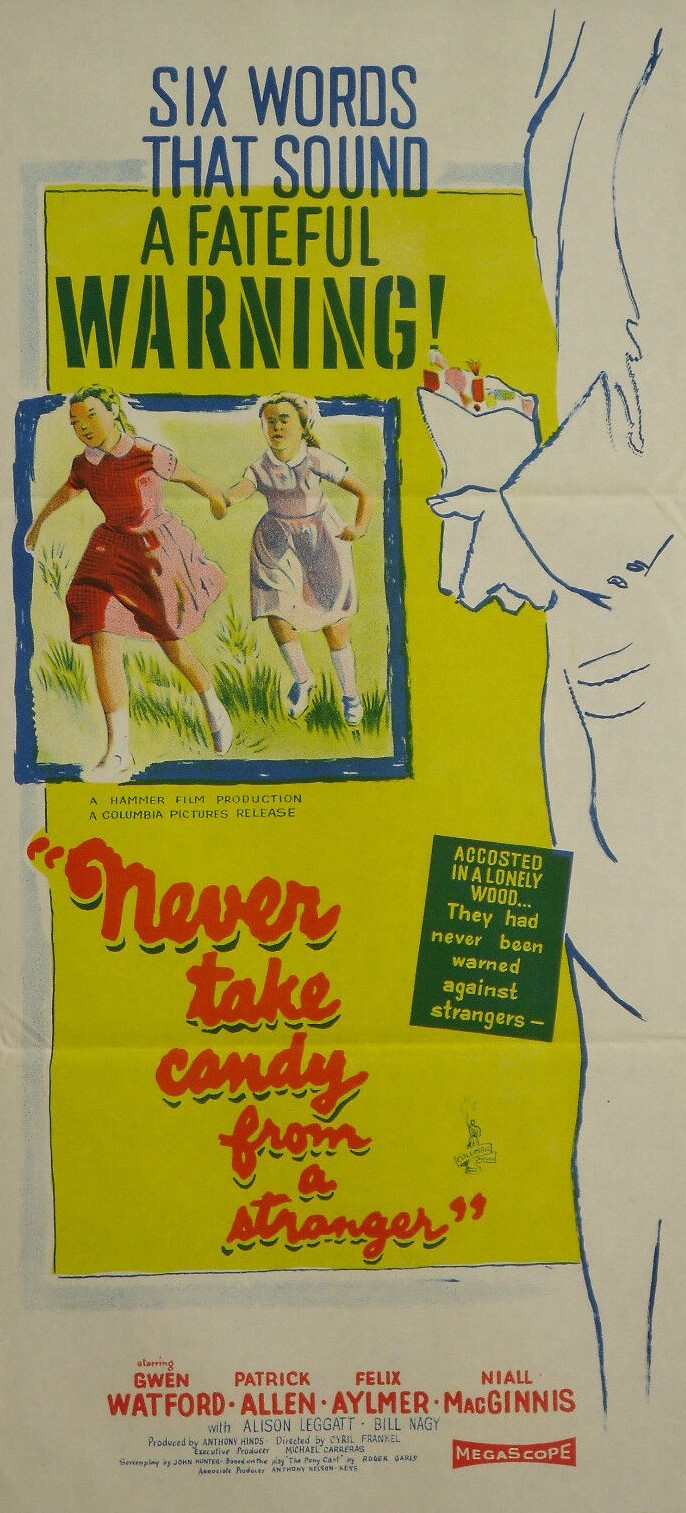
Banned in the U.S., box office flop in Britain, consigned to the vaults for over three decades,  and when revived and you wonder how everyone could have been so wrong. A sensitive portrayal of a family caught up in local Canadian politics when their daughter accuses a dignitary of molestation, it carefully avoids the exploitation trap. At times tense, thrilling and heart-rending, with dynamic use of sound – sirens, footsteps, tracking dogs – it’s probably the best Hammer picture of the decade.

Young Lucille (Frances Green) takes her new friend Jean (Janina Faye), daughter of newly-arrived immigrants Peter (Patrick Allen) and Sally Carter (Gwen Watford), to visit an old man Clarence Olderberry Sr (Felix Aylmer). When the child returns home, not initially perturbed by what occurred, it transpires that, in return for a handful of candy (sweets in British parlance), she danced naked.

Sally’s mother Martha (Alison Leggatt), conscious of the disruption accusations might cause, tries to play it down. Sally reports the incident to the police chief Hammond (Budd Knapp) who is reluctant to pursue a case against the town’s most important person. Clarence Jr. (Bill Nagy) warns Peter of disastrous consequences. Lucille’s parents send her away so she cannot back up Jean’s story.

There follows trial by town, the whole family receiving the enmity of the local populace, while Jean is destroyed in the witness box by the prosecutor (Michael Gwynn), ending up so distraught her parents throw in the towel, the accused walking released scot free. Rancour is such Peter quits his job but as they prepare to quit the town, Jean goes off playing in the woods again with Lucille.

Stalked by the old man, they race terrified through the woods and into a rowing boat on the water only for the assailant to grab the tow-line and pull them back.

Movie tie-in by the author of the original play.

What could have easily pandered to the worst possible taste is incredibly well done. Strangers arousing the ire of a local populace is a trope as old as the hills so none of the consequence of their action was surprising. Nor, for the time, was the disgust expressed that such an accusation could be cast, not even if the old man has a history of mental illness, a voluntary patient whose records have conveniently vanished.

Whether the son has any inkling of the truth, or whether he is equally appalled, is never made clear as he is in any case duty bound to defend the family’s good name.  But compromise is the name of the game. And whereas you can understand Lucille’s father not wanting to risk his job, Sally’s mother falls into a different category, the uptight Englishwoman who dare not challenge the existing order. There’s a terrific scene when she is suddenly made aware that she is in the wrong but is too frightened to admit it.

Jean’s experience could easily be repeated today, thousands of women refusing to accuse in case they end up slandered or defamed, or find themselves taking on powerful men with powerful friends. We all know how easy it is for an unscrupulous lawyer to embark on witness character assassination. Initial corruption of innocence can be heightened by testifying in a witness box.

The sub-text of the film, while never remotely explicit, is that adults were only too aware of the existence of paedophiles, regardless of trying to write them off as harmless as Martha does, and it was virtually impossible is those more innocent times to explain to a child the dangers of taking candy from a friendly stranger.

Director Cyril Frankel (Operation Snafu, 1961) has done an excellent job of opening up the stage play by Roger Garis, and yet imposed quite a claustrophobic feel to the enterprise. Having escaped a potential captor, Jean is a prisoner of consequence, initially disbelieved, paraded in front of a hostile town, belittled by the prosecutor, despised by the jury, and let down in the end by her fearful parents who, having put her through the court ordeal, decide it is too much. And when she is free it is only to fall prey once again.

Patrick Allen (The Traitors, 1962) is custom-made for this kind of principled role, but Gwen Watford (Taste the Blood of Dracula, 1970) makes the most of a rare top-billed part, caught between conscience and status quo, battling an entrenched male hierarchy, undone by her own mother. Janina Faye (Day of the Triffids, 1963), only a couple of years older than the character she was playing and hopefully had little knowledge of the background to her role, is excellent as the young girl who discovers that innocence has a guilty side.

Well worth a watch with, unfortunately, a story that still rings true today.

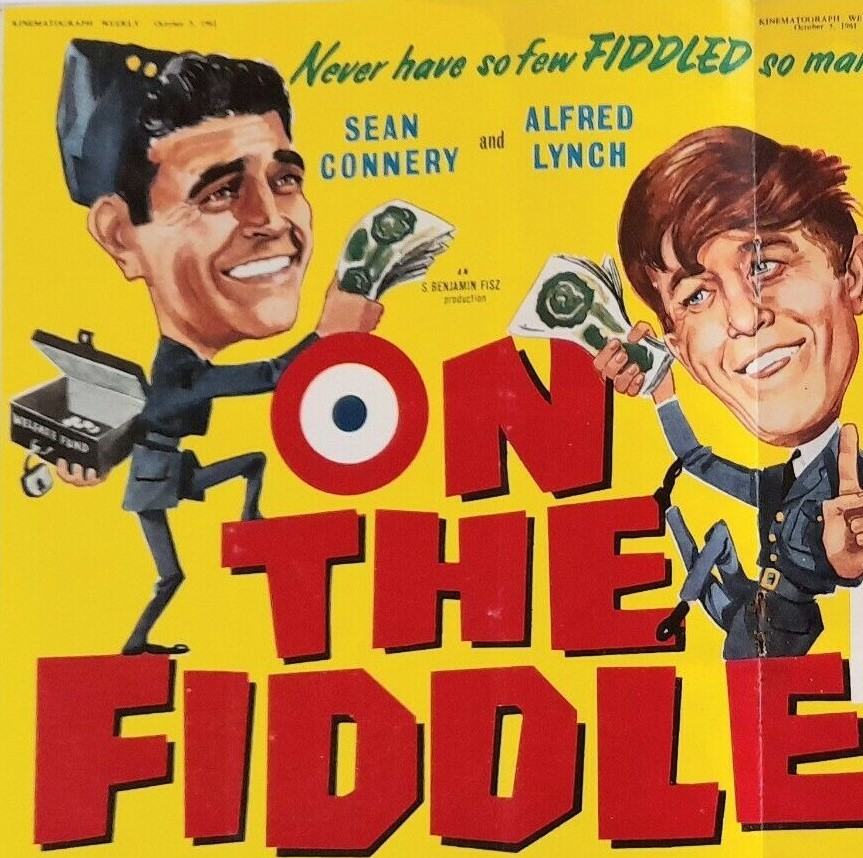
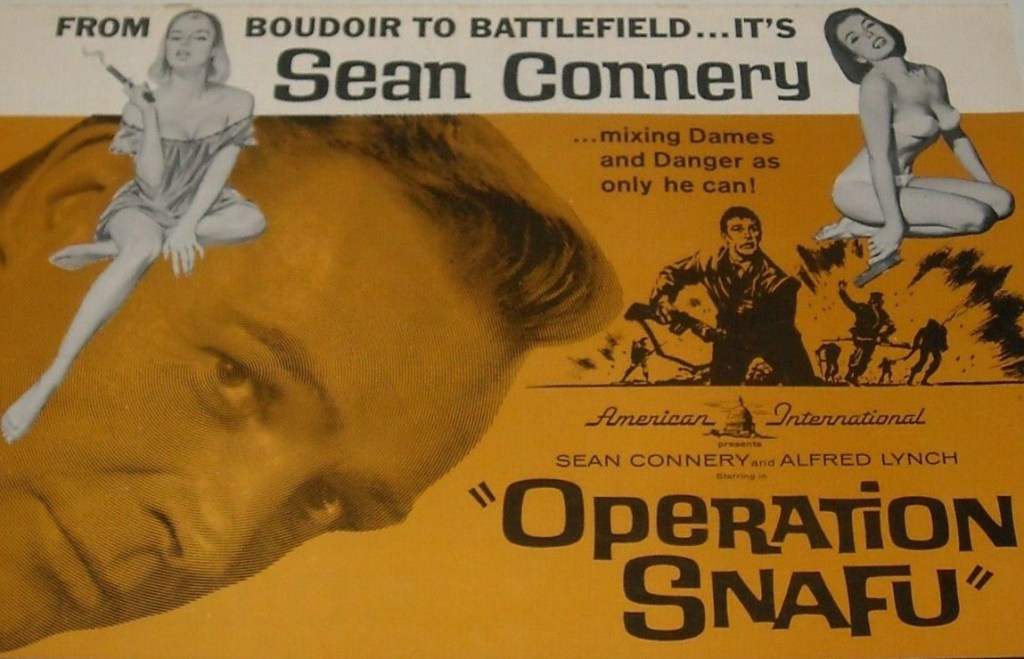
On the Fiddle / Operation Snafu (1961) ***

Unassuming but undeniably charming British World War Two comedy denied U.S. release until four years later when a savvy distributor jumped on the James Bond bandwagon. Primarily of interest these days for the opportunity to see a pre-Bond Sean Connery (Dr No, 1962) in action its merit chiefly lies in ploughing the same furrow, though with a great deal less pomposity and self-consciousness, as the later The Americanization of Emily (1964), of the coward backing into heroism.

Horace Pope (Alfred Lynch) is a scam merchant who only dodges prison by enlisting. Assigned to the RAF he teams up with Pedlar Pascoe (Sean Connery) and they embark on a series of schemes designed to keep them as far away from the front line as possible. It’s hardly an equal partnership, Pope dreams up the fiddles while Pascoe just falls in with them. It’s not dumb and dumber but a collaboration that goes no further back in the annals of movies than brain and brawn.

Needless to say, the movie lacks the the damsels in bikinis which were a prerequisite of the Bond pictures. Sean Connery takes top billing Stateside where he was originally behind Lynch.

It’s certainly a cynical number, reflecting the boredom experienced by many of the Armed Forces backroom staff, the administrators whose inefficiency turns them into easy dupes, and the determination of soldiers to take advantage of every opportunity to bend the rules. It takes the unusual position of presenting the ordinary soldier as smart and every officer as a numbskull, an approach that would only have been possible 15 years after the war ended and in marked contrast to the determined heroism of other British war films – such intrepid stiff-upper-lip behavior a hallmark of the British version of the genre.

First stop is to run an operation issuing leave passes – for a price – and the sheer effrontery exhibited by Pope is a joy to behold. Next up is selling stolen meat on the black market.

While Pedlar is the wide-eyed camp follower, and more likely to forever sit on the sidelines, cheerful but shy, and only a few pratfalls away from being a bumbling idiot, they do make a good team. Being sent to France is more of a heaven-sent opportunity to increase their bankrolls than a hazardous wartime mission as Pope sells rations to the French. Eventually, of course, their various scams are rumbled and they are forced into battle.

The only thing better than one pre-Bond Connery picture is two.

The movie switches a bit more deftly into serious mode than the aforementioned The Americanization of Emily mostly because these are actual soldiers trained to be soldiers rather than an officer who landed a cushy number and whose main effort is to avoid combat. War is presented as horrific rather than comedy and it must have been the same experience for an ordinary soldier at the time, after months of inactivity suddenly thrust into the cauldron.

The picture moves at a brisk pace and is continually amusing if not particularly laugh-out-loud. You’ve probably seen most of the set-ups before but they are reinvented with an appealing freshness and briskness  As a bonus there’s reams of British character actors and comedians – plus token American Alan King (who would appear in Connery starrer The Anderson Tapes, 1971) – along the way. The term “snafu” in case you’re interested, has a similar meaning to the “fubar” of Saving Private Ryan (1998).

Alfred Lynch (The Hill, 1965) doesn’t milk the Cockney patter overmuch and he’s got a greater international screen appeal than the likes of the more English Sid James (Carry On films) or Norman Wisdom. Think a shiftier Sgt Bilko, if the Phil Silvers creation could be any more untrustworthy.

Connery’s performance is well worth a watch as a prelude to what was to come once his roles were tailor-made. He is an effortless scene-stealer, gifted in expressing emotion through his eyes, and although verbally Lynch dominates it’s difficult to take your eyes off Connery.

The roll-call of character actors includes Cecil Parker (A Study in Terror, 1965), Stanley Holloway (My Fair Lady, 1964), John Le Mesurier (The Moon-Spinners, 1964), Graham Stark (The Wrong Box, 1966) and Victor Maddern (The Lost Continent, 1968).

Cyril Frankel (The Trygon Factor, 1966) comfortably cobbles this together from a screenplay by Harold Buchman (The Lawyer, 1970, and who had ironically enough penned the picture Snafu in 1945) based on the novel Stop at a Winner by R.F. Delderfield.

When the box office supremacy of the Bond pictures was underscored by the reissue of the Dr No/From Russia with Love double bill in 1965, distributors, as had been their wont, racked the vaults for anything featuring Connery that could be re-sold to a willing public.    

While there is a readily available DVD, this turns up on a regular basis, in Britain at least, on television.

Discover WordPress

A daily selection of the best content published on WordPress, collected for you by humans who love to read.

The Atavist Magazine

by Brian Hannan

WordPress.com News

The latest news on WordPress.com and the WordPress community.