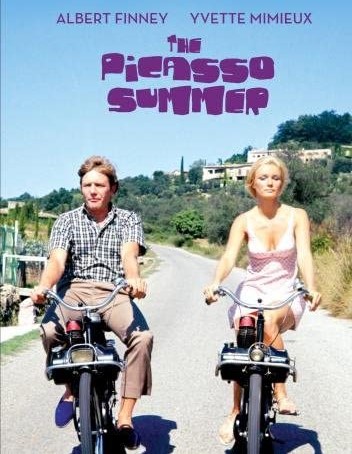
Must-see for collectors of cinematic curios. A treatise on entitlement, bullfighting, Picasso, the impact of celebrity on everyday lives and the hermaphroditic qualities of snails? Or an innovative piece of moviemaking through its use of a jigsaw split-screen, an audacious reimagining of the painter’s work, documentary and animation. Or despite the involvement of top talent like Albert Finney (Tom Jones, 1963), Yvette Mimieux (Dark of the Sun, 1968), composer Michel Legrand (The Thomas Crown Affair, 1968) and writer Ray Bradbury (Fahrenheit 451, 1966), rightly consigned to the vault and never given a cinema release.
George (Albert Finney), a disenchanted San Francisco architect who designs warehouses, and wife Alice (Yvette Mimieux) take a holiday in France to rekindle his love of Picasso and set out to find and – in in a severe case of early onset entitlement – talk to the legendary painter. So they fly to Paris, take the train to Cannes and cycle around. Romance, it has to be said, in that idyllic countryside is the last thing on his mind, although George does pluck a guitar and sing a love song on a riverbank and they do dally in the sea. And he is far from a stuffed shirt, in one scene stealing a boy’s balloon to prevent the kid hogging a telescope.
Not even Barbra Streisand singing the title track provided the movie with any momentum.
There are barely ten lines of meaningful dialog, though Alice’s frustration at her husband’s obsession is soon obvious. The best sequences are the reimagining of Picasso paintings as animation. Picasso broke down the world, so we are told, and represented it as his own so by this token it seems pretty fair to do the same to the artist’s work. In the best scene George turns toreador (not sure the budget ran to stuntmen) facing up to a real bull. But there is plenty Picasso to make up, including a candlelit walk along the “Dream Tunnel” displaying the artist’s War and Peace murals, a lecture on the painter’s ceramics and his self-identification with death in the bull ring.
And there is a twist at the end, as the couple on a beach do not loiter long enough to see a man resembling the famed artist make Picasso-like drawings on the sand. But mostly it’s a story about American entitlement, that a painter should not shut himself off from the world in order to prevent the world stopping him getting on with painting. When George, denied entrance or even acknowledgement of his bell-ringing, stands at the gate to the Picasso villa, it is almost as he is the one imprisoned by his need for celebrity. Half a century on, the need for ordinary lives to be validated by contact with celebrities has become an insane part of life. The fact that the impossible mission ends in defeat (“everything is still the same”) lends a tone of irony.
Work out in your own mind what resemblence the guy who appears briefly at the end bears to Picasso.
Finney’s box office status at this point in his career allowed him to retain his thick Lancashire accent – Sean Connery managed that trick for his entire career. As in Two for the Road (1967) he does a trademark Bogart impression and eats with his mouth open. And he is game enough to stand in a bull ring with a raging bull. Yvette Mimieux is scandalously underused, insights into her thoughts conveyed by lonely walks through night-time streets, although she is the only one to fully appreciate art when she comes across a blind painter (Peter Madden). The best part goes to Luis Miguel Dominguin playing himself, a bullfighter and renowned friend of Picasso. In the incongruity stakes little can match Graham Stark (The Plank, 1967) as a French postman.
As you might have guessed this had a somewhat complicated production. Three directors were involved: Robert Sallin, Serge Bourguignon and Wes Herchendsohn. It was the only directorial chore for Sallin, better known as the producer of Star Trek II: The Wrath of Khan (1982). It brought a temporary halt to the career of Oscar-nominated director Bourguignon (Sundays and Cybele, 1962) whose previous film was Two Weeks in September starring Brigitte Bardot. Herchendsohn was primarily an animation layout artist/supervisor credited with episodes of Star Trek: The Animated Series (1973-1974).
There is some stunning cinematography from Vilmos Zsigmond (Deliverance, 1972) and a superb score by Michel Legrand. This was the beginning and end of the movie career of Edwin Boyd who shared screenwriting credit with Bradbury. And it was the beginning and the end of the movie as a viable film for general release, Warner Brothers promptly shelved it.
In the hands of a French or Spanish arthouse moviemaker, with a tale of protagonists going nowhere, this might have gained more critical traction. It’s hardly going to fall into the highly-commended category, but in fact from the present-day perspective says a lot about celebrity obsession and entitlement. Despite the oddities – perhaps because of them – I was never bored.
Box office hits like Never on Sunday (1960), La Dolce Vita (1960), Zorba the Greek (1964), A Man and a Woman (1966) and Z (1969) gave Hollywood the wrong idea. Studios believed they could take advantage of the cheaper costs of shooting in Europe, set up alliances with critically acclaimed French, Italian, Greek, German and Swedish directors as well as several top overseas marquee names, and create a pipeline of product to fill out release schedules with pictures that were as acceptable to neighborhood cinemas as to arthouses.
The reliance of United Artists on this source was as much to blame for the box office crisis it endured as the other films covered in the first two articles in this series. In many cases, the studio gave directors their head, not reining them in on budgets, allowing several final cut, and assuming that critics and awards at festivals like Cannes, Berlin and Venice would do the job of selling the product to the domestic market.
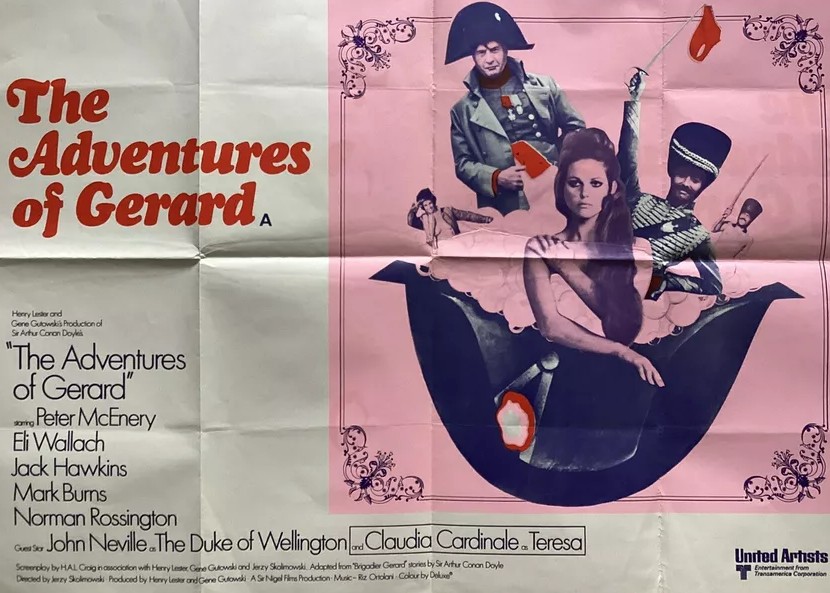
On the basis of Polish director Jerzy Skolimowski winning the Golden Bear at Berlin for Le Depart / The Departure (1967) starring Jean-Luc Godard protege Jean-Pierre Leaud – and its subsequent arthouse success – UA bequeathed him big-budget The Adventures of Gerard (1970), set during the Napoleonic War, based on a book by Sherlock Holmes creator Arthur Conan Doyle, and headlined by rising British star Peter McEnery (Negatives, 1968) and established Italian import Claudia Cardinale (The Professionals, 1966) and a supporting cast including Jack Hawkins and Eli Wallach.
“The picture turned out to be one of the worst disasters in the history of the company,” the company directors told the shareholders. “It was the result of reliance on one of the new fashionable foreign film directors. The picture was beset by problems due to the unprofessional excesses…indulged in by the director.” The outcome was a movie that could not be reshaped into a “more acceptable form” and that ending up occupying “a limbo area between adventure and farce.” Prospects were so poor, the studio doubted if it would even recoup marketing and advertising costs never mind any of the production costs.
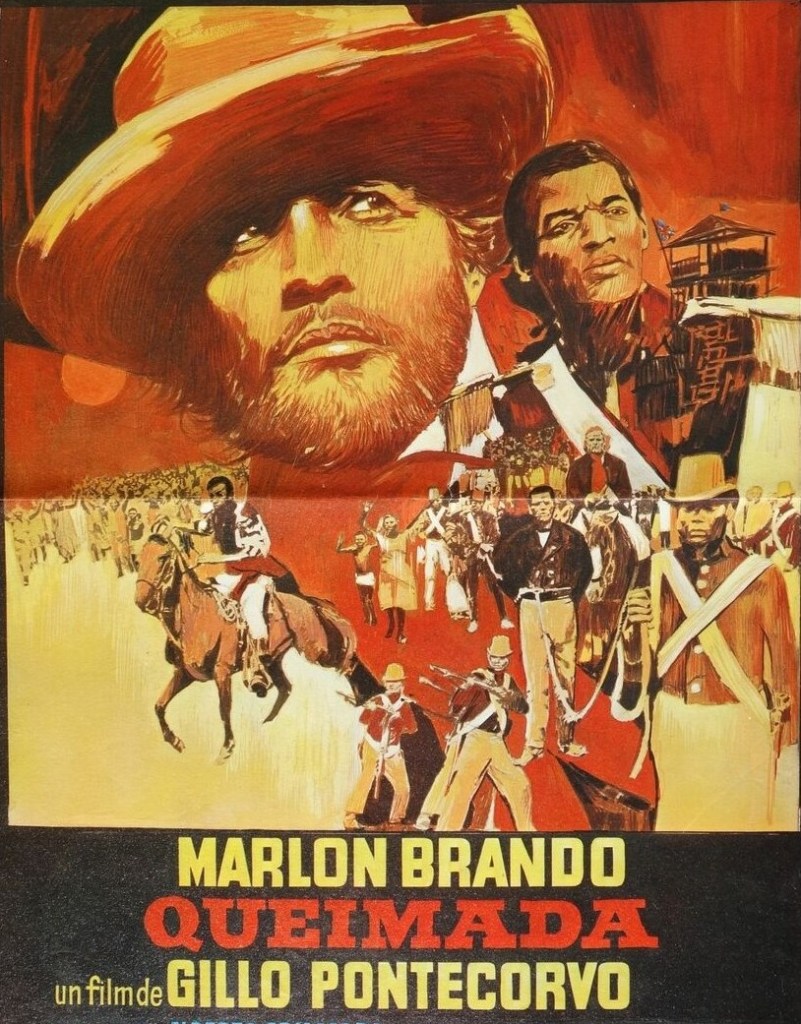
Theoretically, Burn! / Quiemada (1969) should have fared better. At least it had a proper star in Marlon Brando, even though his marquee value was being questioned. This had been placed in the hands of Italian director Gillo Pontecorvo whose The Battle of Algiers (1966) had been nominated for the Best Foreign Language Film Oscar. The studio had hoped to “combine interesting message with entertainment values.” However, personality conflict between director and star saw the picture to go “way over budget.” Prospects remained dim because “despite all efforts to persuade the director to reduce it to realistic length,” it was deemed overlong and “badly cut.” It fell between the stools of the arthouse audience who would have appreciated the message and the action audience who would have welcomed the more commercial elements. It was marked down for “a substantial loss.”
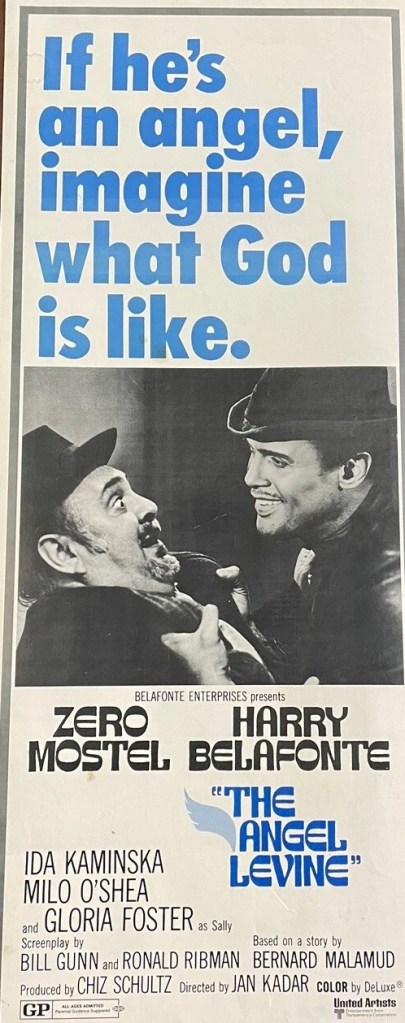
On the strength of a nomination for the Palme D’Or at Cannes for The Shop on Main Street (1965), the studio backed a project by its Hungarian director Jan Kadar. The Angel Levine (1970) attracted investment because the director had achieved “a certain cult,” the recording career of star Harry Belafonte had reached new heights, and the story was supposed to have a special appeal to ethnic groups. “Everything went wrong. The direction and performance came out slow and leaden. The story…didn’t work.” The picture was over budget and overlong. “The director could not be persuaded to make the necessary cuts” resulting in expectation of another “substantial loss.”
Italian director Elio Petri had enjoyed cult success with the offbeat sci fi The 10th Victim (1965) starring Marcello Mastroianni and Ursula Andress. For A Quiet Place in the Country (1968) he had lined up top British Oscar-nominated actress Vanessa Redgrave and rising Italian star Franco Nero who had played lovers in Camelot (1967). It was greenlit at a time when the studio believed there was a wider market among discriminating audiences for foreign films previously restricted to arthouses. But it had become clear that films in this category faced “inevitable loss.”
You probably haven’t heard of That Splendid November (1969), greenlit to “fulfill a pay-or-play commitment to Italian star Gina Lollobrigida” (Strange Bedfellows, 1965). While targeting the European market, it was hoped it would do additional business in America. It didn’t. Once again, the director (Mauro Bolognini) was allowed too much leeway. He had not been “persuaded to make the changes that would improve its chances” while the studio discovered that La Lollo had lost her marquee luster.
However, United Artists had also committed to potential “breakout” pictures, foreign movies aimed at American arthouses. The bulk of the overseas pictures that had thrived in the U.S. had done so via the arthouse circuit after being favorably reviewed by critics. These were considered relatively low-cost and low-risk investments. But, as events proved, these were as big a gamble as more high-budget projects.
Red, White and Zero / The White Bus (1967) proved “an utter failure” despite the presence of three top British directors, Lindsay Anderson (This Sporting Life, 1963), Oscar-winner Tony Richardson (Tom Jones, 1963) and Peter Brook. Although made for the arthouse market, these proved fewer in number than anticipated when the film was greenlit.
A French heist film entitled Score “would not be made today,” admitted the UA executives. Hoping to capitalize on the caper genre, the studio discovered no one was interested. Three French pictures, Philippe de Broca’s Give Her the Moon (1970) starring Philippe Noiret, The American and Lent in the Month of March (1968), were written off due to the softening of the arthouse market, as was Yugoslavian number It Rains in My village (1968) starring Annie Girardot. French/Brazilian Pour Un Amour Lointain (1968), “one of the poorer foreign pictures,” had such dismal prospects it was denied U.S. distribution. German picture Gentlemen in White Vests (1970) lacked appeal even its home market.
SOURCE: “Comments supplementing notes to Balance Sheet and Statement of Operations of United Artists Corporation for 1970,” United Artists Archive, Box 1 Folder 12 (Wisconsin Center for Theater and Film Research).
When the Cannes Film Festival in 1969 gave The Appointment the honor of being the first film invited to compete it looked like an exercise in kudos. Quite how that turned into a humiliation that would deny the Sidney Lumet picture a U.S. release was one of the oddest stories of the decade.
Lumet, it has to be said, was not exactly flying high. After the double whammy in 1964 of The Pawnbroker and Fail Safe, his career had stalled, The Group (1966) not delivering the expected box office, fired from Funny Girl (1967) and The Deadly Affair (1967), Bye Bye Braverman (1968) and The Seagull (1968) all misfires. So it probably seemed like the ideal career fillip to recharge his creative batteries in Italy, with a movie starring Omar Sharif and Anouk Aimee, both Oscar-nominated and still bathing in the warm afterglow of worldwide successes via Doctor Zhivago (1965) and A Man and a Woman (1966), respectively.
Aimee had made the list of female stars dominating the box office along with the likes of Barbra Streisand, Faye Dunaway, Jane Fonda, Catherine Deneuve, Julie Christie, Mia Farrow, Julie Andrews and Joanne Woodward. Although producer Martin Poll had a spotty record – just rom-com Love Is a Ball (1963) and thriller Sylvia (1965) on his dance card – that would change with his most ambitious project to date, The Lion in Winter (1968) pairing Peter O’Toole and Katharine Hepburn.
In truth, Lumet thought the original screenplay by the distinctively offbeat James Salter – undergoing a highly productive period, Three (1969) and Downhill Racer (1969) also on the launch ramp – “a silly story” but one that “could be salvaged with careful creation of mood, texture and dialog.” But he was virtually the only American on the project, Sharif Egyptian, Aimee French while the rest of the cast (excepting Austrian Lotte Lenya) and crew was Italian.
Shooting began at the end of February 1968. Martin Poll had been already working for seven months on the project ensuring it didn’t suffer from the production mishaps that had blighted another, bigger, MGM production, The Shoes of the Fisherman (1968). Interiors were shot at the Palatino studios (now fully soundproofed) in Rome, with a key sequence filmed at Lake Bolsena 100km to the north, and Poll had gained permission to shoot in key locations in the capital including Via Condotti leading to the Spanish Steps.
But the lake proved a trial. High in the mountains, located in a crater, it was prone to sudden squalls. First day of shooting coincided with “maverick” winds on the lake. The 40ft boat hired to transport the crew three kilometres across the lake to the tiny island was wrecked. A helicopter flew in two smaller replacements, and helped ferry passengers across, but only if they signed disclaimers absolving Poll of any redress should there be an accident.
Contract never fulfilled although it formed part of Avco embassy’s 20-page advert in Box Office magazine in November 1968.
Poll had also granted the director a week’s rehearsal time with the full cast, the movie was filmed with direct sound, rather than the traditional Italian post-production synching. And he had been hard at work on a fashion promotion campaign, highlighting the 40 haute couture designs that designer Ghelardi had created for one sequence.
A fashion show was being programmed as part of the world premiere in Rome on April 2, 1969, with the expectation that newspaper and television coverage would drive up global media interest. Poll had also set up 26 openings worldwide as the first wave of an ambitious release program to start a few days later to capitalize on the Easter break. It was all looking good – the movie had even come in under budget and a week ahead of schedule.
But the world premiere and the global release pattern were cancelled when, out of the blue, the movie was invited to compete at Cannes. The showing there would constitute the world premiere. The existing strategy was shelved in the hope that victory at the festival would provide a bigger marketing hook. Cannes had already suffered controversy that year after Carl Foreman quit the jury following censorship in France of his big-budget Cinerama roadshow western Mackenna’s Gold (1969), incidentally also starring Sharif.
Nothing went according to plan at Cannes. Festival audiences booed and whistled and waved white handkerchiefs in a sign of their disapproval. Variety called it a “flimsy love story” while condemning Sharif’s performance as “laughable.” What should have been a triumph turned into a disaster. MGM pushed back release a year until further work was done on the film.
But even as MGM was considering what to do to produce a version that might satisfy U.S. exhibitors, audiences in other parts of the world had decided there wasn’t much wrong with the version shown at Cannes. In fall 1969, the movie registered “sensational grosses.” In Japan rentals topped $1 million, in Manila there was an “unusually long run” and it broke records in Buenos Aires. Even so, Stateside executives were dismissive, “abroad, speed doesn’t mean that much,” they declared and set about changing the movie.
Under the terms of Lumet’s contract his right to final cut should have prevented any tampering with the picture. Unfortunately, he had gone along with the general consensus that the Michel Legrand score, minimalist though it was, required changing. But substituting John Barry music took the movie past its agreed completion date, thus negating Lumet’s contract and allowing MGM free rein.
At first, following a “disappointing” sneak preview in the U.S. in 1969, Lumet was involved in the editing but the studio found it easier to move forward if the original director was not looking over its shoulder. A new editor, Margaret Booth, was called in. She sliced 25 per cent out of the picture and added stock Italian footage to give the movie what MGM guessed would pass for “authenticity”, a more sun-kissed version of the country. MGM’s assessment was that the new version was “much better, much faster, playable.”
Lumet disagreed, “The MGM version now makes no sense. Characters appear and disappear, plot elements emerge and then are dropped. It’s ridiculous.” Being enraged was as close as the director came to affecting the outcome. It wasn’t the only box office disappointment facing MGM at the time. Much of the $20 million invested in four pictures – The Appointment, Goodbye Mr Chips (1969), Zabriskie Point (1970) and Captain Nemo and the Underwater City (1969) – was lost.
A “disappointing” test date in April 1970 in San Francisco confirmed what the studio feared. The movie was unreleasable. It might have been a different story if the two stars had unassailable box office track records. But Omar Sharif’s career had dipped. Mayerling (1968) though a success abroad barely hit the million-dollar mark in the U.S., while Mackenna’s Gold , Che! (1969), The Last Valley (1970) and The Horsemen (1971) were all expensive flops.
Anouk Aimee had done little better, pulling out of The Mandarins with James Coburn, Fox’s big-budget Justine (1969) a spectacular flop, Jacques Demy’s The Model Shop (1969) – “a really bad movie” according to Vincent Canby of the New York Times – also tanking and Columbia failing to find a release slot for One Night A Train (1968).
Lumet remained in a commercial wilderness. He was touted in a two-page advertisement as lining up two features for Avco Embassy, but they never appeared, nor did The Confessions of Nat Turner and We Bombed in New Haven, based on the Joseph Heller play, while Last of the Mobile Hot Shots (1970) with James Coburn flopped. He only managed an unexpected return to form with hit crime caper The Anderson Tapes (1971).
The 100 prints made by MGM – half in the original version, half the recut version – sat on the shelf as new studio management pondered whether the film was worth any further investment in the advertising and marketing required to shape a launch or even worth wasting any more time. In the end, it took the easier option, and without permitting any more cinematic screenings, sold it to CBS for its Late Movie slot – “the film buff graveyard” – which played host to such other lost pictures as The Picasso Summer starring Albert Finney and John Frankenheimer’s The Extraordinary Seaman (1969) with Faye Dunaway.
Beyond the abortive sneak preview and the test showing, the first anyone in America caught glimpse of The Appointment was on July 20, 1972 – three years after its Cannes disaster – on the small-screen on CBS.
SOURCES: “Roman Settings for Appointment,” Variety, February 28, 1968, p25; “Appointment Has Quick Dates with Squall,” Variety, March 20, 1968, p28; “Elated Poll Completes Appointment,” Variety, June 2, 1968, p22; Advertisement, Variety, November 13, 1968, p54-55; Shelagh Graham, “Film Industry in New Garbo Epoch as Femme Stars Dominate B.O,” Variety, January 8, 1969, p1; “Anouk of the Scram,” Variety, January 29, 1969, p26; “Holdbacks Explained,” Variety, February 26, 1969, p21; “Set Appointment Preem in Rome,” Variety, February 26, 1969, p38; “MGM Cancels Italo Appointment So As To Qualify at Cannes,” Variety, March 19, 1969, p5; “Appointment in Cannes,” Variety, April 16, 1969, p13; “Booing of Metro’s Appointment,” Variety, May 28, 1969, p28; Review, Variety, May 28, 1969, p34; “Re-edit Appointment After Cannes Booing,” Variety, July 9, 1969, p5; “Lumet Ponders Slave Revolt,” Variety, September 3, 1969, p6; “Capsized in Cannes,” Variety, September 19, 1969, p5; “Appointment Does Big Biz O’Seas,” Variety, October 8, 1969, p5; “MGM Delayed Appointment Pic,” Variety, January 20, 1970, p5; “MGM Write-Downs,” Variety, April 22, 1970, p5; “Cannes-Jeered Pic,” Variety, July 19, 1972, p7.
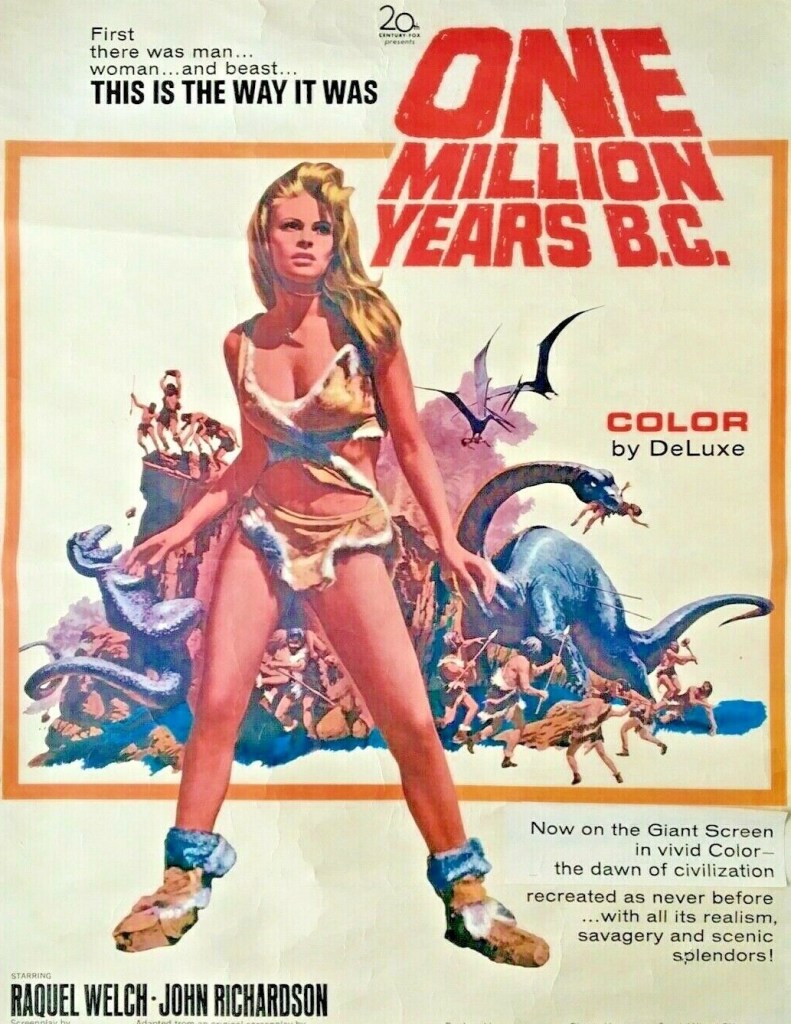
From attending to director Michael Winner’s parking meter and falling foul of the British film censor to interviewing David Lean at the National Film Theatre in London, Tony Sloman’s autobiography casts a fascinating light on the British film industry. A marvellous string of anecdotes relating to Othello (1965), One Million Years B.C. (1966), Chitty, Chitty, Bang, Bang (1968), Wonderwall (1968), De Sade (1969) and cult television series The Prisoner (1968) are augmented by insights into the less well-known aspects of how movies are made.
Most commonly associated with the sound and editing departments, he also directed two British sex films Sweet and Sexy (1971) and Not Tonight, Darling (1971). In addition, he is also a walking encyclopaedia on film – he later lectured on the subject – and a riveting part of the book involves how he fell in love with the movies. I’ve read countless biographies of actors and directors who made it big in pictures and rarely, if ever, do their stories focus on their love of the medium, of the films they saw when growing up and the experiences that entailed. So the first part of this book plays off to the soundtrack of inveterate filmgoing in the 1950s at his local cinema in London and then up to the West End, one expedition to view a revival of Gone with the Wind ending up instead with the saucier Femmes de Paris (1953).
Getting into the business was very difficult for a tailor’s son from Streatham and, having determined to become a film editor, even attending evening film classes failed to open any doors until he responded to a newspaper advert and became a dispatch boy and soon after an editor for a small suite of cutting rooms in Soho in the same building as Private Eye magazine, thus beginning a long apprenticeship in this particular discipline, working in all the British studios from biggies like Shepperton, Elstree and Pinewood to smaller outfits such as Merton Park.
Except for this book I would be unaware of the how menial are some of the tasks essential for a film to be made. One of his earliest jobs was to attend the screening of rushes and “tick the selected takes in the rushes notebook…and then after numbering them break them out in script order for the editor to assemble the next day in the cutting copy.” He learned not to count frames or measure length when dictating a particular cut but to put himself in the position of the character and the audience, how much of what they see needs to be shown to register.
One of the refreshing elements of this biography is that the author is happy to own up to professional and personal mistakes. As he didn’t drive he was unable to synchronise car engine sounds in the correct manner. He got into trouble for labelling cans containing film in pen and not stencil. As a result of personal mishap, he learned the hard way never to film anything without a continuity person present.
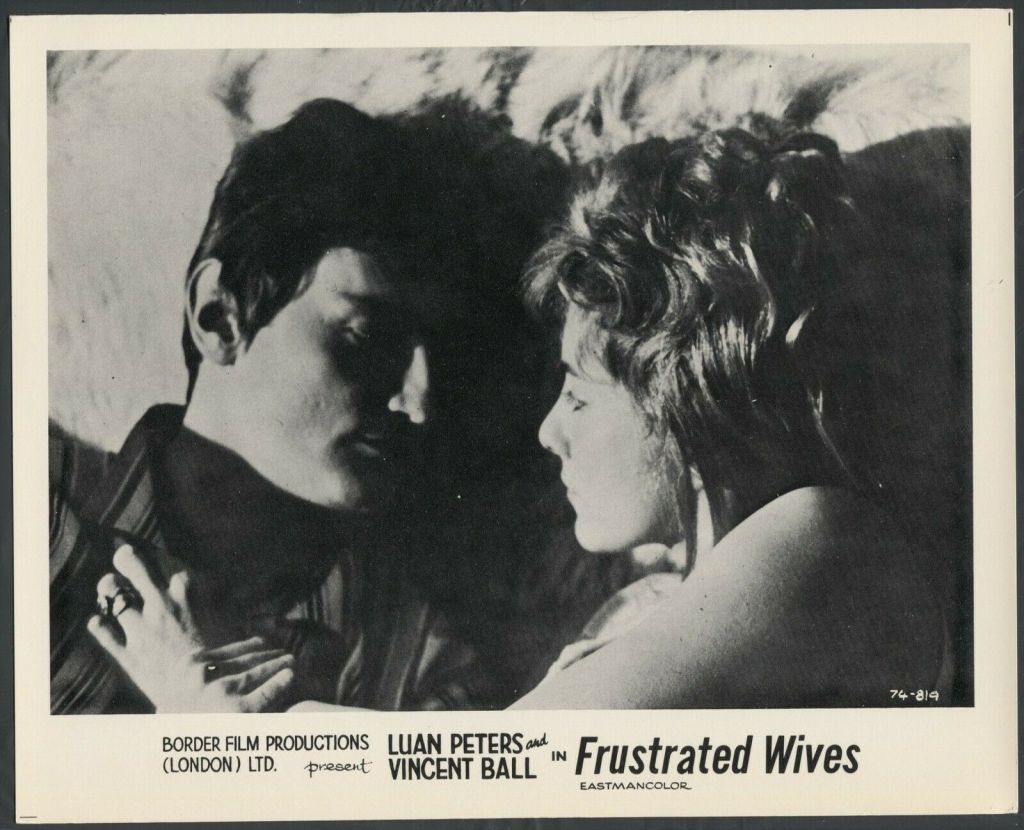
His second directorial effort“Not Tonight Darling” was renamed “Frustrated Wives.”
And he has a fan’s delight at meeting stars in the flesh, walking down the street with a David Niven determined to be swamped by fans, recounting that Maximilian Schell is shorter than expected, James Mason taller. He reveals that Dana Andrews’ favorite of his own films is not a Hollywood classic like Laura (1944) or The Best Years of Our Lives (1946) but the lesser known Three Hours to Kill (1954) because when the producer ran out of cash he paid the actor in Mexican artefacts that came to be worth a quarter of a million dollars. Former silent film star Bessie Love tried to convert him to Christian Science when the author would have rather she reminisced about her days in early Hollywood. Eating in a restaurant in Cannes he watched at another table Federico Fellini and Luchino Visconti share a bowl of bouillabaisse and later bumped (literally) into Graham Greene and encountered in the hills working as barman a former camera operator for Jean Renoir.
He met the entire Dirty Dozen at lunch in the studio canteen, heard Maggie Smith swear and enjoyed an up-close-and-personal encounter with Raquel Welch over the moviola “pressing closer to me in that tiniest of bikinis.” Working with Ray Harryhausen on One Million Years B.C. (1966) “my main function with him was to be his own personal soundstage at Elstree with the moviola…to see where his newly-shot material would go into the sequence as cut…Ray needed to see them over and over and do frame counts before shooting his effects.” On the same film he was responsible for writing “dialogue” – in other words” a series of grunts and sounds that would match up with the actor’s mouth movement.”
There are other fascinating nuggets. He played an unsung part in the success of The Prisoner, coming up with the ideal piece for the beginning of the Arrival episode – the “Radetzky March.” He had an unusual job title, too, “Film Librarian,” which consisted of getting all the back projections which had already been filmed ready for the actual set. Supplying library material as and when, shooting inserts, and matching new film to location work. “The secret of finding music for mute material was not merely finding music that was appropriate but to find music that would positively enhance the image to which it would be matched.”
There are other fascinating nuggets. Donald Sutherland was revoiced in his role in Oedipus the King (1968) but after the success of Mash (1970) his original voice was put back in. The first screening of Wonderwall (1968) was for the Beatles because George Harrison had expressed an interest in writing the score. In the course of this when his Indian-style slippers were ruined by rain someone on the set whipped up for him a “customized pair of cardboard shoes made from Technicolor delivery boxes.” Composer John Barry was set to co-finance a film called The Jam but the screenplay was shown to Jean-Luc Godard who promptly went out an made Weekend (1967).
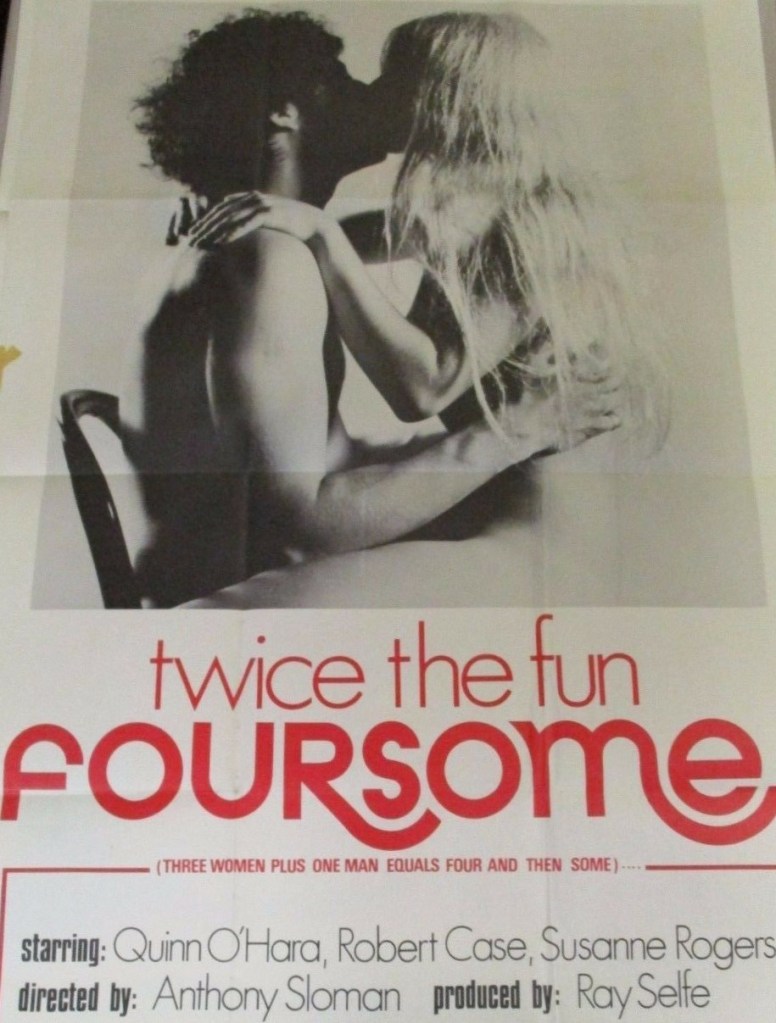
“Sweet and Sexy” was renamed “Foursome” for the U.S. market, even though no such activity takes place. At one point Scottish actress Quinn O’Hara had been engaged to U.S. pop star Fabian.
He shared a flat with Michael Billington (Alfred the Great, 1968) – who holds the record for most auditions for the role of James Bond. Billington was a lover of Liza Minelli, Barbara Broccoli and Quinn O’Hara and was slated to direct Sloman’s first film but when he was offered a starring role in the UFO series (1970-1971), Sloman took over the directorial reins and recruited as leading man Billington’s UFO stand-in Robert Case. Quinn O’Hara (Cry of the Banshee, 1970), Billington’s girlfriend, had the female lead. It began life with the relatively harmless title of City Suite.
But when it was funded by Miracle Films, the title changed to City, Sweet and Sexy and finally plain old Sweet and Sexy (though it goes by the name of Foursome on imdb). What the Americans called “sexploitation.” The initial budget only ran to £15,000 but was increased to £20,000. But when submitted to the British Board of Films Censors in October 1970, it was refused a certificate unless 40 minutes were cut. After nearly 18 months of wrangling it was finally granted an X-certificate – minus 21 offensive minutes – and the 69-minute picture finally opened at the Cameo Royal in London in March 1972.
Sloman had better luck with his second feature, Not Tonight Darling (1971) – also known as Frustrated Wives. Luan Peters (Lust for a Vampire, 1971) came on board as star and Sloman had the good luck to snare pop band Thunderclap Newman, who had enjoyed a big hit with “Something in the Air”, for the score. There were also appearances by Jason Twelvetrees, who had also been in Sweet and Sexy, Fiona Richmond (Let’s Get Laid, 1978) and James Hayter (A Challenge for Robin Hood, 1967).
The book ends in the early 1970s and I can only hope Tony Sloman is hard at work on a second volume as his memoirs are a welcome antidote to the raft of books about big stars which are often far less entertaining. An excellent read, especially if you are interested in the behind-the-scenes aspects of movie making.
EXTRA: This is not in the book but I did a bit of digging on my own account to see if any of his movies were ever screened in the U.S. I found out, as noted in the article above, that “Sweet and Sexy” was released in the U.S. as “Foursome”. Despite the concerns of the British film censor, it was not that out of line otherwise it would not have received an “R” rating when it could easily have been rated “X.” I couldn’t find any sign of a review, either in “Variety” or “Box Office,” the two main trade magazines. But I did find some evidence that it had been screened in some big cities.
It was distributed by AIP in the U.S, and C-P in Canada. “Variety” and “Box Office” had different methods of measuring revenue. The former simply listed the gross. But the latter employed a different approach. It related the receipts for each film according to the average weekly take of a particular cinema. This was in some senses a better idea. Strong figures might not necessarily mean a good result if that cinema was used to movies knocking up big numbers.
In January 1972 “Foursome”, playing solo, had a “sexy” opening week, according to “Variety,” at the 1,200-seat Midtown in Philadelphia (tickets priced at $1.50-$3.00) with $14,000 (equivalent to $96,000 today) followed by s second week of $9,500. The same month, supported by “Freedom to Love” (1969), a documentary about sexual behavior, “Foursome” ran for three weeks at the 609-seat World (tickets $1.25) in Chicago. The first and third weeks both accounted for $3,800 but the second week was tops with $4,000. In April there was a “lusty” (presumably intended ironically) $3,100 at the 2,809-seat Loews Downtown (tickets $2.00-$2.50) in Dayton where it played solo.
In August at the 676-seat Suburban World (tickets $2.25) in Minneapolis it scored a “fair” $4,000, again the only film on the program. In December it turned up at the 250-seat Playhouse (tickets $2.50) in Washington, as the supporting feature this time to “Together” (1971) starring Marilyn Chambers and directed by Sean S. Cunningham, later responsible for the first “Friday the 13th ” (1980). The outcome was a “sharp” $4,500. By comparing seating capacity and ticket prices you can get a better idea of the film performed.
Box Office magazine marked performance on a percentage basis against a basic mark of 100, which represented an average week. According to this magazine, the movie was also to be found in Hartford where it scored 175 (i.e. almost double the average week’s takings), New Haven (175), Boston (150) and Buffalo (100). The takings in Minneapolis were no great shakes according to this method of analyzing results, reaching only 100 on the magazine’s measuring system.
Box Office also noted a couple of outings in Canada, where it played as the supporting feature to “Love Me Like I Do” (1970) starring Dyanne Thorne, later immortalised as “Ilsa”. However, Canada appeared not to subscribe to the percentage system. Instead, in Winnipeg at the Downtown in March 1972 it was judged “very good” while in Toronto at the Coronet in November 1972 it was judged “fair.”
SOURCES: “Variety” – January 12, 1972, p8; January 26, 1972, p10; April 5, 1972, p14; August 30, 1970, p14; December 6, 1972; p14. “Box Office” – September 11, 1972, pB4; “Box Office Barometer,” September 18, 1972 pB4; November 6, 1972, p16; November 13, 1972, pK2; March 5, 1973, pK3.
The movie Cinderella story to end all movie Cinderella stories. Quite how The Wicker Man came to earn its cult status given that for more than a decade it was hardly screened is quite a remarkable tale. An occult picture that as authoritative a producer as Michael Deeley (Blade Runner, 1982) deemed one of the ten worst films of all time – and without even the compensation of falling into the “so bad it’s good” category.
Most people who saw it during its original British release did so by default. They had gone to see Nicolas Roeg’s Don’t Look Now (1973) with top stars Donald Sutherland and Julie Christie and tagged onto that box office hit – and critical smash – was this other movie critics had dismissed. That it surfaced at all was because British Lion put it out on the lower part of a double bill in order to legitimately defray its costs by snipping off some of the revenue accrued by Don’t Look Now.
It certainly wasn’t that the Nicolas Roeg picture needed a helping hand on the box office front. Prior to opening, Don’t Look Now had already covered its $1.2 million budget by selling off foreign rights with Paramount taking it for the United States. Despite having the same budget of $1.2 million, The Wicker Man, did not attract the same foreign interest, or indeed any foreign interest. and for the time being was put on the shelve. British Lion had been sold to EMI who put Deeley in charge and his assessment of The Wicker Man‘s worth put paid to any prospect of a high-end launch.
Don’t Look Now opened, minus The Wicker Man, in October 1973 at the London West End’s most prestigious cinema, the Odeon Leicester Square and in phenomenal fashion. An opening week $32,000 (equivalent to $126,000 these days) was bettered by a second week of $44,000 ($174,000 equivalent). A further two weeks brought in $41,000 and $35,000 respectively (or about close on to a total of $600,000 in today’s money).
Advertisement that ran in the “Variety” trade paper on November 16, 1977.
Then it switched, still minus The Wicker Man, virtually next door to the equally prestigious 1,402-seater Leicester Square Theater. An opening salvo of $29,000 dropped just $1,000 in the second week. A six-week run garnered $138,000 ($546,000 equivalent). Four weeks into that run it also opened at the 1,394-seat Metropole, this time as a double bill with The Wicker Man. It wasn’t a genuine double bill. A proper double bill consisted of two films of roughly equal standing that might both have premiered in the West End, top billing given to the movie that had performed best at the box office.
The Wicker Man had been on quite a different trajectory to Don’t Look Now. Despite it being promoted in “a savvy publicity ploy” at the Cannes Film Festival in May 1973 with a 30ft high “wicker man” set on fire on the Croisette, once Michael Deeley took control, replacing Peter Snell, also producer of The Wicker Man, he had no intention of giving a solo launch. By piggybacking on a hit movie, it was guaranteed to bring in some income.
However, initially, it seemed a disastrous idea. The Metropole double bill opened in mid-December 1973 to a miserly $5,300, second week no better, just $4,900.
But then something extraordinary happened. The third week was through the roof, a whopping $13,700. Over seven weeks it snapped up $57,000 (equivalent to $225,000 today). It wasn’t that surprising, however, since in the first two weeks it was still showing at the Leicester Square Theatre, but once the Metropole was the only option, the figures jumped up. Assuming revenue would taper off, in the fifth week of the Metropole run it began playing simultaneously at the 1,883-seat Odeon Kensington – probably to coincide with the general release – where the first week raked in $16,800. It continued at this cinema for six weeks, bringing in another $57,000.
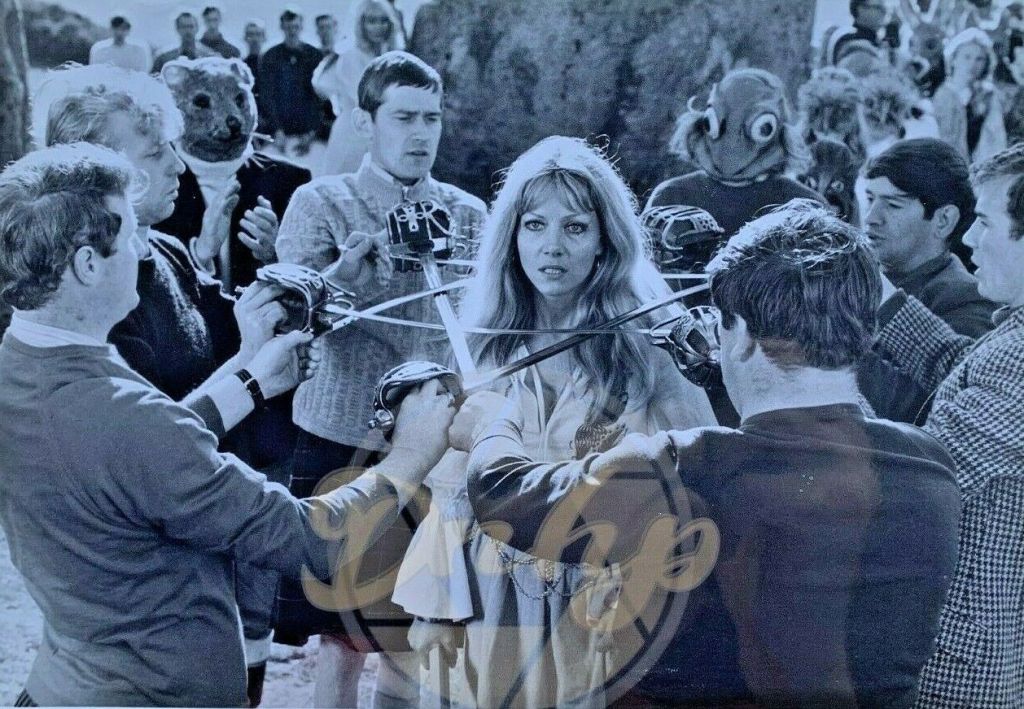
Let the fun begin: Ingrid Pitt does a blade runner.
And even then it wasn’t done. Towards the end of February the double bill switched to the 600-seat Odeon Haymarket, also in the West End. and opened with $6,000. A decent enough tally for a movie that had been on the market for over four months, but it turned out that except for its eighth and final week, that amount was the lowest it grossed. It ran out with a similar sum to the other two cinemas, $56,200. And then it moved again to the 150-seat Cinecenta 3, just off Leicester Square in London’s West end for a final flourish of $5,300 in two weeks, the second week improving on the first. All told, the double bill grossed $175,100 in the West End (just under $700,000 at today’s figures). The double bill also went out on general release on the Odeon circuit in Britain at the start of February 1974 – and not in December 1973 as has been argued (the London West End screenings were what would be termed “pre-release” activity).
How much of the double bill’s success could be attributed to The Wicker Man is not that difficult to calculate. As we have seen, Don’t Look Now was already an enormous success before it took on a perhaps-unwanted partner. Not every Odeon general release required a supporting feature, often a short would do. Without another film on the program, Don’t Look Now would have received more daily showings which could boost receipts and at the very least been more profitable for not having to share the box office.
Whereas Don’t Look Now sailed into New York on a tide of box office and critical glory at the 549-seat Sutton with a first week tallying $30,000 and had massed $110,000 in five weeks, The Wicker Man was deemed a massive flop. British Lion wrote it off to the tune of $470,000, a substantial amount.
There was no chance of British Lion fobbing off the more astute Americans with the notion of The Wicker Man running as the stablemate of Don’t Look Now. Major U.S. distributors bought pictures that had been hits on release in their home country. Perhaps not surprisingly, the main contender for the rights was Roger Corman, a horror specialist, and he thought he could make it work if the film was editing from the original 102-minutes to 86-minutes, a timing that make it more appealing in a double bill. But Corman could not meet EMI’s terms.
However, it was bought in 1974 for American release by the Beechwood Properties – which Variety mispelled as “Beachhead Corp” but only initially as as a tax shelter. However, Beechwood succeeded in drumming up a distributor, National General Corporation which distributed John Wayne movies Rio Lobo (1970) and Big Jake (1971) as well as Little Big Man (1971) and Le Mans (1971), The Getaway (1972) and The Life and Times of Judge Roy Bean (1972). NGC was taken enough by the movie to pay EMI $300,000 for the rights.
But then NGC hit a financial brick wall and pulled out and the project passed on to Warner Brothers after it picked up the top prize at the International Festival of Fantasy and Science Fiction. As a prelude to a release, Warner Brothers submitted it to the American censor where it earned an “R” (restricted) rating in keeping with its British X-certificate. Warner Brothers test-marketed the shortened version as a solo feature with 24 prints playing the San Diego and Atlanta regions. But when the movie failed to attract an audience it was deemed a flop and shelved.
And in summer 1974 it was officially shelved.
Christopher Lee with flowing locks.
So it sat in limbo for another three years before in 1977 Cinefantastique magazine dubbed it “The Citizen Kane of Horror Pictures” and devoted a 32-page spread to it in its Vol 6 No 10 issue, so determined it had uncovered a work of genius that it took out a substantial advertisement in U.S. trade paper Variety. That appeared to elicit some distributor interest and it was purchased in 1977 from Beechwood by New Orleans company Abraxas, headed by Stirling Smith, John Alan Simon, and Ron and Micheline Weinberg. Abraxas got the rights for a song – just $20,000.
But then the Weinberg’s split from Abraxas and set up a company (I am presuming) called International Films. It looked like they were licensed to show The Wicker Man, which they did in a kind of hit-and-run strategy, racing all over the country with the movie in the back of the car, and renting it out to around 30 arthouses, presumably assuming the “Citizen Kane” tag might attract an audience.
Distributed under the banner Summerisle Films, some of these showings were indeed propitious. In January 1979 at the 300-seat Lumiere in San Francisco with tickets priced at $4 it knocked up a “boffo” $19,000 (equivalent to a meaty $75,000 now). There was none of the steep fall-off either that you might expect. The second week hauled in an excellent $15,500 ($59,000 today) and the nine-week run brought in total of $93,000 (a very good $368,000 in today’s terms). It was deemed so successful that it achieved in exhibitor parlance a “move-over,” transferring to the 300-seat Cento Cedar.
Results were similar in Los Angeles. At the 763-seat Los Feliz Westland 1, also primarily an arthouse, it racked up opening week figures of $19,000 and after six weeks had powered to $61,900 plus another $37,000 from a two-week run at four suburban houses. There was a decent performance in Seattle, close on $40,000 in a five-week run at the 700-seat Crest. Enough to counter a poor showing in Minneapolis at the 461-seat World where it opened to a “slow” $2,000. And excepting that result, the prospects must have looked rosy.
That is, until the wheels came off.
International Films turned out to be beset by financial problems. Weinberg had been due to pay Abraxas a total of $150, 000 by December 1978, paid off in three tranches, an initial amount of $30,000 by December 1977, another $50,000 by June 1978 and the the remaining sum by December of the same year. When the debt was not settled, Abraxas took Weinberg in court in July 1979 and the outcome was that the rights reverted back to Abraxas, now headed by Smith and Simon. And that was timely from a publicity perspective for the movie had just been named Best Horror Picture and Best Screenplay by the Academy of Fantasy and Horror Films.
So Abraxas started all over again, sticking to the precedent of opening it in arthouses. But it looked like they sold off regional rights for the movie appeared under different distributors, Horror Films as well as Abraxas and the original Summer Isle banner April 1980 saw The Wicker Man set a new house record at the 200-seat Orson Welles III in Boston with a $15,000 opening and over the next eight weeks it locked up a hefty $73,500 ($256,000 equivalent). The same month it hit New York, but an excellent opener of $21,000 at the 533-seat Paramount dropped to just $9,000 in the second week, then $4,400 in the third and $4,000 in the last. In December it scored $7,500 at the 150-seat Cerberus II in Washington D.C, finishing with $16,000 for three weeks.
In January 1981 it was the last movie shown in a 12-week season of revivals at the 560-seater Fine Arts in Kansas City and, despite registering only a “mild” $3,500, it moved over the Watts Mill 2 for a $3,200 opener and an $8,400 total over four weeks. But a four-screen “showcase” in Miami produced a “remote” $3,700. There was some publicity derived for being selected, eight years after initial launch in Britain, at the Cleveland International film Festival.
But success in the independent field required momentum and despite excellent results in a handful of cinemas, The Wicker Man never really took off.
Salvation came via another route – video. Without VHS and then DVD it is doubtful if the movie would ever have achieved its current cult status. It’s not the first film to hit the ground running in the video format after a less than stellar performance in the cinema. I doubt that anyone, years after it was first shown, believed The Wicker Man had a hidden pot of gold. But my guess is the video rights cost little and in the burgeoning market where taste was not stifled by choices made at a cinema chain head office it was a film that finally found an audience.
SOURCES: “Michael Deeley Replaces Snell at Brit Lion,” Variety, April 11, 1973, p4; “Doing The Cannes-Cannes,” Variety, May 23, 1973, p26; “Form Beachhead Corp To Handle Wicker Man,” Variety, Jan 2, 1974, p4; “This Week’s Code Tags,” Variety, April 24, 1974, p4; “Wicker Man Wins Top Prize at Fantasy Fest,” Variety, May 1, 1974, p7; “British Lion 6 Months Slips to 890G,” Variety, January 29, 1975, p39; Advert, Variety, November 16, 1977, p38; Stuart Byron, “Something Wicker This Way Comes,” Film Comment, November-Dcember 1977; “Abraxas Corp Sues Ronald Weinberg,” Variety, April 18, 1979, p5; “Enjoin Weinberg Re Wicker Man,” Variety, Jul 4, 1979, p35; “Cleveland: 45 Titles: 3 Situations,” Variety, April 1, 1981, p24; “Metropolis Strikes Deal with Magnum,” August 10, 1988, p34. Box office figures all from the following issues of weekly Variety: Oct 24, 1973-April 24, 1974; October 5, 1977; March 21, 1979, April 11, 1979; April 18, 1979; April 25, 1979; May 7, 1979; April 23, 1980; December 3, 1980; February 4, 1981; April 1, 1981; May 20 1981.







 The Magnificent 60s