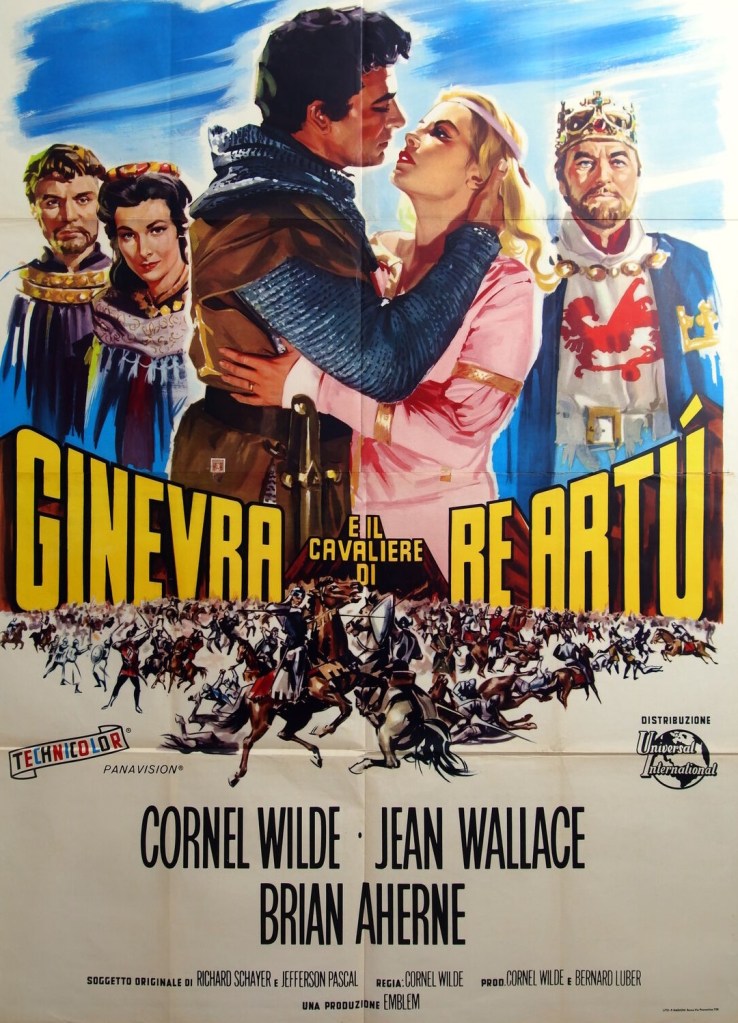
Sword of Lancelot / Lancelot and Guinevere (1963) ***

The legend is knotty. On the one hand it’s the most chivalric period in history. Excalibur, The Holy Grail, the feudal-tyranny-busting power-sharing democracy of The Round Table, and before Harry Potter came into view the most celebrated wizard of all time in the shape of Merlin. On the other hand, love was a pawn. Women were traded to cement relationships between rival kingdoms. And humans were all too fallible.

For a start, you had a king, Arthur, who couldn’t keep it in his pants and had already sired a bastard son Mordred who had his own ideas about inheritance. Then you had the king’s champion, Lancelot, who had a similar problem, except in his case he couldn’t keep his hands off the king’s new wife, Guinevere.

To pull off this love story, and keep the audience onside, you needed actors of a high caliber otherwise it sinks to a tawdry tale of adultery and betrayal. Unfortunately, there’s no Robert Taylor-Elizabeth Taylor (Knights of the Round Table, 1951) to hand and the combination of Cornel Wilde and his wife Jean Wallace doesn’t have the same ring or impact.

So, wisely, Cornel Wilde who doubles – make that quadruples – as director, co-writer and co-producer as well as star, concentrates on action, far more than in other swashbucklers of the decade such as Pirates of Tortuga (1961) and King’s Pirate (1967). Wilde has genre credentials, outside of Errol Flynn and Tyrone Power, with At Sword’s Point (1952) to his credit.

And you can’t help taking a liking to a swashbuckler which begins with a joke about soap, and then carries the same riff through to the obligatory bathing scene, where the act of physical washing, rather than merely splashing about in the nude for audience titillation purposes, sparks the relationship between the doomed couple.

This version of the story begins with the French king reneging on the deal to marry his daughter to King Arthur and demanding the matter be settled in the traditional manner, one-to-one combat. Lancelot is elected the English champion. By the time he returns home, complication lies in his wake. It’s not long before suspicions are aroused, Guinevere unable to keep emotions in check when she imagines Lancelot wounded in battle. Indiscretion gets the better of them and when Lancelot is discovered leaving her bedchamber, it’s all lovelorn systems go. Condemned to death for adultery, she needs rescued from a burning pyre.
Guilt ruins exile. Lancelot is now a reluctant rebel. And sex is off the agenda. Matters are only settled in the most drastic fashion, one that ensures an ending to rival Casablanca (1942). Action compensates for acting – Wilde runs the gamut of emotions from grimace to grin while Wallace over-acts – with a number of well-managed battle scenes.

The pick is Lancelot leading an army against raping pillaging Vikings. Apparently impregnable behind a lake that prevents attack on three sides, the Vikings don’t expect the English to block off their escape by setting the forest on fire, forcing them to charge through the water to Lancelot’s waiting troops. Another pitched battle is equally well-handled with thundering horses, each side trading volleys of arrows, and a clever flanking movement.

Although a relative novice behind the camera, Wilde is not afraid to experiment. Tracking cameras are extensively used as is limited point-of-view (opponent viewed through a vizor) although he does resort on occasion to older tricks like speeding up film so foot soldiers resemble Olympic sprinters.

And there is a sprinkling of other jokes and observations. A courtier mangles a visitor’s name in Court Jester fashion. Church bells ring because someone is battering the hell out of the iron casing. A rhymer is on hand to mock. A trumpeter is killed before he can sound the retreat. An old crone chomping on an apple settles in to watch a burning at the stake.

Obviously, in my search for a 1960s swashbuckler, I take the blame for bringing this to your attention. While lacking the charisma of Doug McClure and Jill St John in King’s Pirate  and the acting not rising much above the levels of Pirates of Tortuga, this outshines both in the action department.
In the News Sixty Years Ago: April 1961

HOLLYWOOD CASHING IN ON EICHMANN TRIAL  

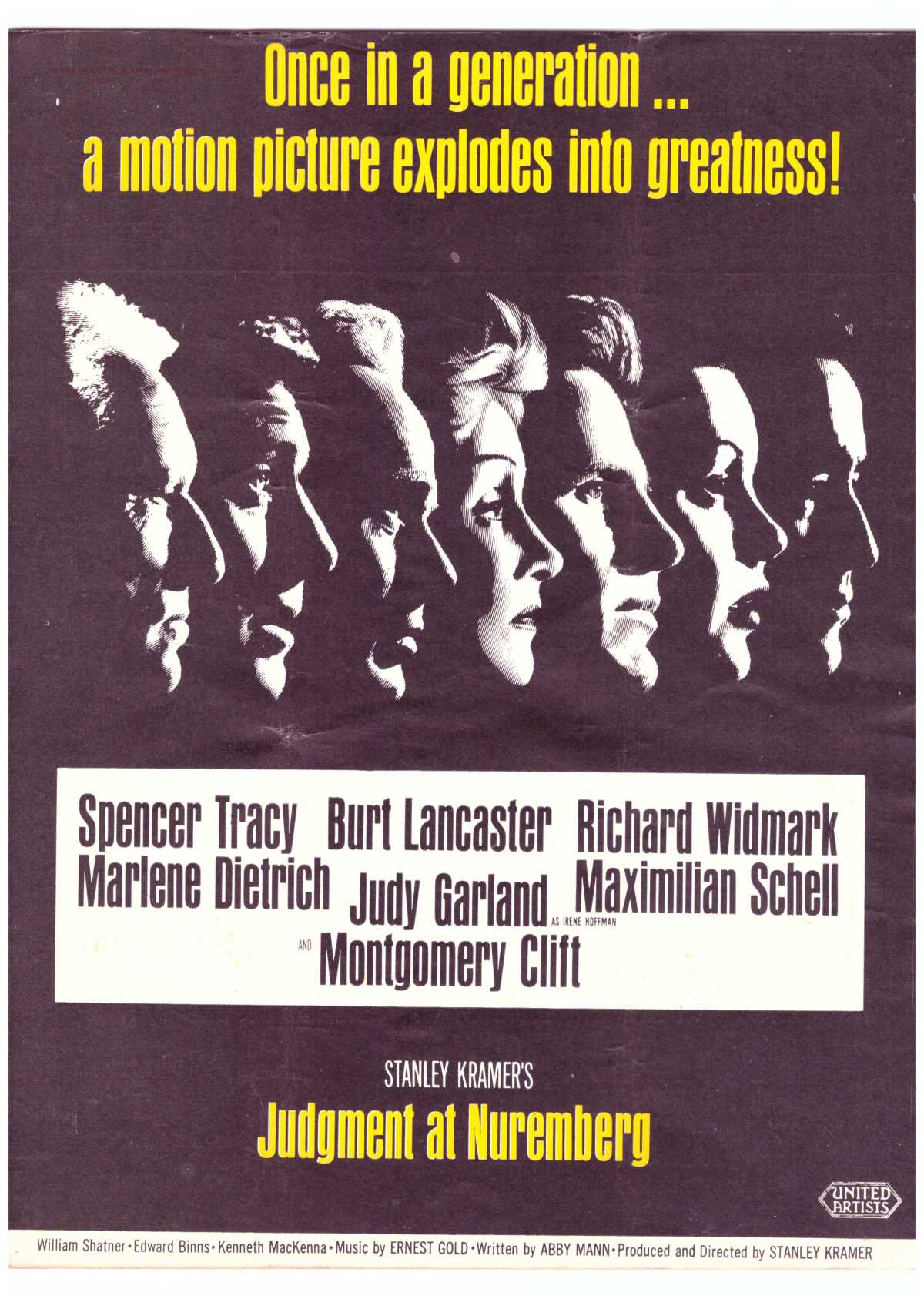
With the upcoming trial of Nazi Adolf Eichmann dominating the media for weeks, and publishers enjoying a boom with titles on Eichmann and Hitler, and with Life magazine’s biggest issue so far in the year being one with Hitler on the cover, movie studios had at last wakened up to the opportunities. A Swiss documentary Mein Kampf was due to open as was Operation Eichmann and Stanley Kramer’s big-budget Judgement at Nuremberg with Spencer Tracy and Burt Lancaster heading an all-star cast. Also in the offing were a Hitler biopic from Allied Artists, Hitler’s Women, a movie based on John Hersey novel The Wall and French director Roger Vadim with an idea to update De Sade as a Nazi.

BRITISH STARS MAKE ‘EM LAUGH

At a time when the Steve Reeves musclemen pictures had dominated the foreign film market, nine British comedies had taken the U.S. by storm. While their box office figures were not colossal by U.S. standards, they were extremely hot compared to the numbers normally racked up at the American ticket wickets by British films. For the 1960 season the British beat all other foreign film contenders. A total of 135 British movies released generating $22.9 million in rentals, well ahead of the nearest rival Italy whose 116 pictures took in $12.2 million (rentals being what the studios received from the overall box office gross). Carry On Nurse was one of the hottest British comedies as well as The Mouse That Roared and I’m Alright, Jack both starring Peter Sellers, Alec Guinness in Our Man in Havana, and Ted Ray in Please Turn Over. Brigitte Bardot was single-handedly the biggest foreign attraction with eight movies on show.

KING AND I REISSUE FLOPS

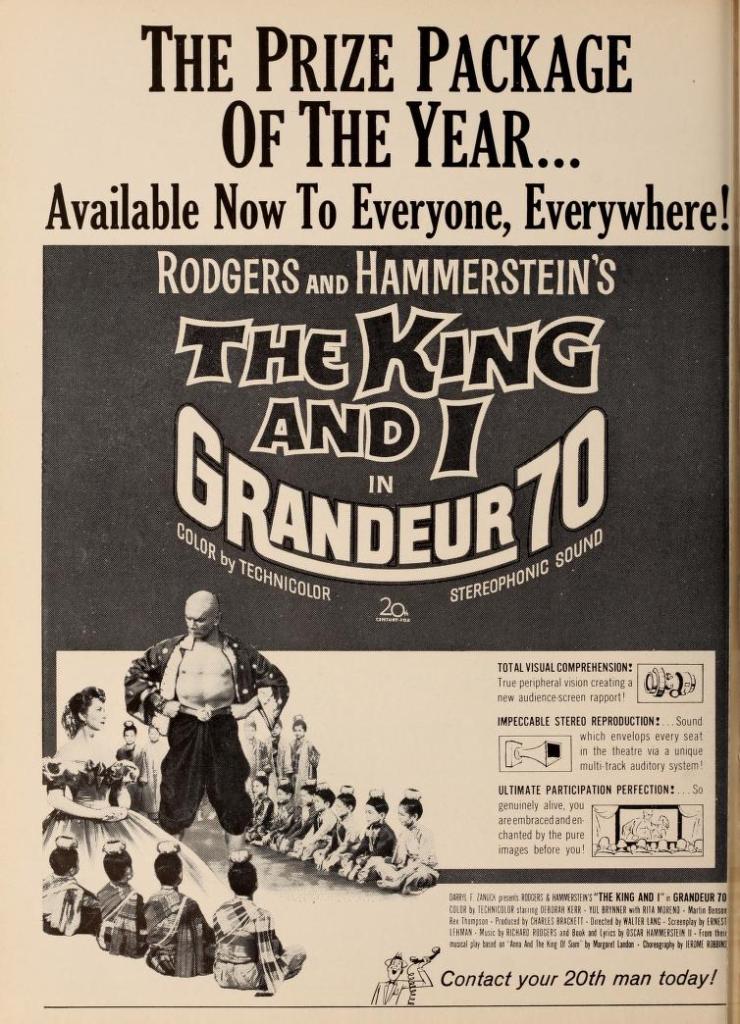
Twentieth Century Fox had brought back The King and I (1956) in 70mm in its Grandeur format as a two-a-day roadshow at the upscale Rivoli in New York on March 23 only to discover that audiences would not bite and a week later it was shifted to “grind” (continuous performance). Meanwhile, Columbia was backing a revival of Picnic (1955) starring William Holden and Kim Novak, promising a new campaign and artwork.

FIRST PURPOSE-BUILT CINERAMA THEATER OPENS

Although the Cinerama phenomenon had been all the rage for nearly a decade, the movies had always been shown in specially-converted cinemas. Now the first purpose-built theater had opened, the Cooper, in Denver, Colorado, at a cost of $1 million with seating for 814.

TRIPLE NAME CHANGE FOR THE HUSTLER

The Robert Rossen movie featuring Paul Newman as a poolroom shark had already started filming in New York when it changed its title first to Stroke of Luck and then quickly to Sin of Angels and under that title – to confuse potential moviegoers – had snagged considerable coverage in Time, the New York Times and the New York Herald-Tribune before reverting back to the original title.

BARDOT BIOPIC

Although the French sex symbol had barely been a star for half a dozen years, she was already lining up a biopic to be directed by one of the leading New Wave exponents 28-year-old Louis Malle. Co-starring Marcello Mastroianni, it appeared as A Very Private Affair in 1962.

WB SHELLS OUT FOR CAMELOT

Six years before the Lerner and Loewe musical finally hit the screens, Jack Warner paid $1.5 million for the screen rights plus 25% of the net profits.

Sources: “New Nazi Beast Film Cycle” (Variety, April 5, 1961, p1); “British Humor Scores in the U.S.” (Variety, April 26, 1961, 1); “Hard Ducat Not For Reissue?” (Variety, April 5, 1961, p3); “Advert, Picnic” (Box Office, April 3, 1961, 10); “World’s First Theater Built Specially for Cinerama Opens in Denver” (Box Office, April 3, 1961, p28);  “Brave Young Director Faces Bardot Playing Herself in Her Own Biopic” (Variety, April 12, 1961, p1); “WB’s Camelot Buy” (Variety, April 12, 1961, p1).

Behind the Scenes: Isadora (1968)

“Only Vanessa Redgrave could portray the full range of emotions in the tour de force title role performance of Isadora,” runs the opening line to the sumptuous 52-page program (cover shown above) that accompanied the film.

Programs like this were part of the package for a movie intended for roadshow. I’ve no idea how many Universal printed but most were shredded since after an initial launch in Los Angeles, the movie was not shown in roadshow in America (though it was overseas). It was also drastically cut from 168 minutes to 138 minutes.

Redgrave had been on the cusp of major stardom after an Oscar nomination for Morgan!(1966) and box office breakout Blow Up (1966) but under-performing Warner Brothers’ musical roadshow Camelot (1967) and flops Charge of the Light Brigade (1968) and A Quiet Place in the Country (1968) had put a dent in her surge to the top of the Hollywood tree.

Directed by Karel Reisz (Saturday Night and Sunday Morning, 1960, and Morgan!), the movie was filmed entirely on location – 72 of them – for six months. Main locations in Britain were Oldway Mansion in Devon and the British Museum.

Different rooms and aspects of South Lodge mansion in London, once owned by the Royces of Rolls-Royce fame, provided backdrops for scenes set in Moscow, Berlin, New York, Chicago and Boston. Yugloslavia doubled up for France and Russia, the Berlin Opera house represented by National Theatre in Rijeka, and the resort of Opatija on the Adriatic standing in for Nice.

The film was produced by the Hakim brothers, better known for arthouse picture like Purple Noon (1960) and Belle de Jour (1967). Jason Robards, on the first of two European excursions that year (the other being Once upon a Time in the West), played one of her many lovers. According to Robards, the art of acting “is an intuitive process; any actor can prepare only so much for any given part and the rest must come from a deep resource within him.” Although Redgrave received an Oscar nomination, the movie made a huge loss.

Discover WordPress

A daily selection of the best content published on WordPress, collected for you by humans who love to read.

The Atavist Magazine

by Brian Hannan

WordPress.com News

The latest news on WordPress.com and the WordPress community.