Serena (1962) ***

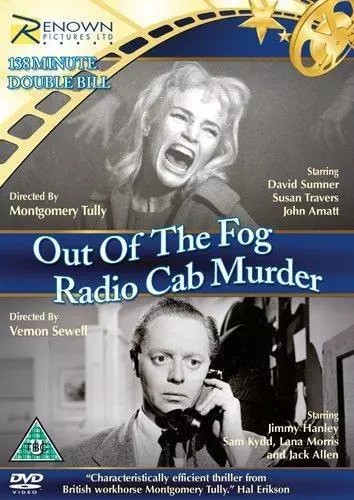
Might have been pitched higher had it appeared after Honor Blackman Moment to Moment, 1966) began her stint as Cathy Gale in hit television show The Avengers. As it is, still a neat job. Few stylistic flourishes – a zoom shot (highly unusual), use of silhouette, camera swivel, substantial location work and some judicious use of the overhead camera. But mostly a crime picture that delivers in tidy fashion. As another plus point, it’s short.  

Ideal support material, the kind of movie that was easy to get off the ground in the U.K. because of the Eady Levy (a tax break) and the quota system whereby cinemas had to show a certain percentage of home-grown movies. Films capitalizing on this were known as “quota quickies” and most deserved to disappear from view shortly after being made.

This is an exception, and damned clever it is too, and though a few of the “clues” wouldn’t register with a contemporary audience, it piles on the twists and turns so it’s one narrative beat after another.

Detective Inspector Gregory (Patrick Holt) and Sergeant Conway (Bruce Beeby) come calling on artist Howard Rogers (Emrys Jones) with news his wife has been murdered. They’re separated three years, divorce unlikely due to the wife’s Catholicism.  Howard is putting the finishing touches to a painting of voluptuous brunette model Serena, who subsequently can’t be found to substantiate his alibi.

The blonde wife’s face has been blown apart by shotgun pellets so there’s a question-mark over her identity. So when said wife Ann (Honor Blackman) turns up, it’s clear someone else is dead. Ann is all set for reconciliation and the couple plan to head off for France to live off the £280,000 left in her father’s will.

Soon becomes apparent to the doughty investigation team that the murderer has killed the wrong woman. Ann, fearing she was being followed and worried about her safety, had called in old chum Cathy, an actress, also a blonde, to dress up in her clothes and pretend to be the wife. Clothes are found in the river. The finger of suspicion points at the missing Serena, in love with the artist and perhaps wanting to bump off her rival.

The clues, such as they are, are infinitesimal, though of course in those days there was little recourse to forensics. But they don’t mount up to much and their importance to the investigation – a modest piece of sleight of hand – is kept from the audience, spared the endless poring over red herrings to be found in modern detective tales, so it’s only at the end that the culprits are found.

And you can see why the director withheld crucial evidence because the climax is exceptionally well done. Ann’s lawyer is executor of the will, so, perforce, she would have had several meetings with him.

When the police arrive as the reconciled couple are packing their bags before hopping over the Channel, the ever-helpful cops offer them a lift to the train station. But, in fact, plan to take them to the police station. In the car for no apparent reason is the lawyer. But no words of greeting are exchanged between him and the wife.

Ergo, she’s not the wife.

That’s Serena in the car. Howard and Serena conspired to kill the wife. Clever use of wigs turned Serena into the brunette model and then the blonde wife. Two clues – plus the continued absence of the model – had led Insp Gregory to this conclusion. They found spirit-gum on the clothes found in the river, and that’s used to attach wigs, and in church the false Ann was seen crossing herself with her left hand rather than her right, de rigeur for that religion even if you were left-handed.

So, as I said, tidily done, mystery stoked high until the end.

Peter Maxwell (Impact, 1963) was mostly a jobbing television director only afforded a handful of movies, and all of these B-pictures, into which he injects the occasional stylistic touch, but which fitted well into the supporting picture category.

Patrick Holt reminded me of Peter Finch (The Legend of Lylah Clare, 1968), same build, haircut, stolidness and pursing of the lips, but he’s not asked to plumb any emotional depths. You might well have forecast a bright future for Honor Blackman after this movie but she was already established enough, making the transition to adult roles from child star, and since she’s not called upon to play a femme fatale, there’s not much for her to get her teeth into either. Emrys Jones (The Trials of Oscar Wilde, 1960) is good as the schemer.

Quite a few hands involved in tricking out the screenplay including the director, Edward and Valerie Abraham (Dominique, 1978) and Reginald Hearne (The Sicilians, 1964) .

One of the best examples of the “quota quickie.”

Nothing but the Best (1964) ***

Hardly surprising Denholm Elliott comes a cropper in this delicious British upper class black comedy – he steals the show from denoted star Alan Bates. Had he kept going any longer you would hardly have noticed Bates even featured, such was the clever impact of Elliott’s insiduous playing.

The toff version of Room at the Top (1958) meets Alfie (1966) as “ambitious young yob” Jimmy Brewster (Alan Bates) manipulates his way to the top. Too many people not coming up to scratch for his upwardly mobile purposes are cast aside – or strangled. Arrogance and bluff are the key to getting ahead in the upper-class world towards which he pivots. Doing absolutely nothing at all also works wonders in high society as does dismissing one’s hugely expensive education.

Jimmy is initially helped on his way, given an insider’s guide, by dissolute layabout toff Charles (Denholm Elliott) with a marked predilection for forgery, and other minor criminal schemes, but whose chief skill appears to be sponging off everyone else. Jimmy is a lowly executive in an upmarket estate agent, fighting for promotion against people with silver spoons rattling around every part of their anatomy and who have the genuine class their business appears to call for.

Every now and then the satire still contains contemporary bite, the difference between universities still relevant, as is that most people are not swayed by actual knowledge but by the fact that you can toss out the names of various academics. But, mostly, it’s bluff that opens the doors. Jimmy misses an appointment with an important banker, a dereliction that should have scuppered his chances of negotiating a better deal for his client. But, in fact, the banker takes this as Jimmy having gone elsewhere and immediately offers a better deal.

When confronted by a colleague for ignoring another appointment, Jimmy merely vaguely waffles on about being detained by “Sir Charles,” true identity left shrouded in mystery, contentious colleague silenced by either not being on speaking terms with the person mentioned or unwilling to admit his ignorance.

Having seduced every secretary within reach – none of whom meet his lofty standards – Jimmy manages to wangle his way into catching the eye of wealthy boss Horton (Harry Andrews) and his attractive daughter Ann (Millicent Martin), whom he marries.

While this would have been sharp as a tack in satirical terms back in the day, most of that weaponry is now out-dated. Suffers because none of the upper-class characters show any sense whatsoever – they can’t all be duffers and most seem to have tumbled out of central casting’s idea of an upper class twit. Charles is the exception, but even he is something of an innocent, not quite aware of what ruthlessness he has unwittingly set afire.

The lower classes aren’t much better. Secretaries and switchboard girls fall at Jimmy’s feet, handsome beggar that he is, though his landlady Mrs March (Pauline Delaney) appears to have his measure and is not above indulging in hypocrisy.

The voice-over works to the detriment of the picture. Because that device is doing so much of the heavy lifting, filling in the audience on Jimmy’s true feelings, the actor doesn’t have to do much acting and we’re presented with a kind of wooden figure who hides behind a mask. Of course since he’s masking his feelings, you might be inclined to give Alan Bates the benefit of the doubt.

And it would work very well if there wasn’t Denholm Elliott giving a master class in duplicity. He exhibits genuine charm.

I’m guessing that the voice-over was already there in Frederic Raphael’s script and not added to compensate for Alan Bates’s one-note performance. So if it was, that certainly presented a problem for the actor since most of what made his character interesting was at one remove, not presented in dialog or confrontation as would be the norm.

Alfie solved the problem by breaking the fourth wall – all the rage these days – and having the character directly address the audience, which allowed Michael Caine to present his own case.

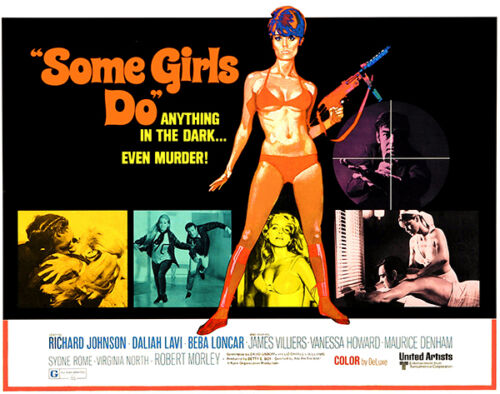
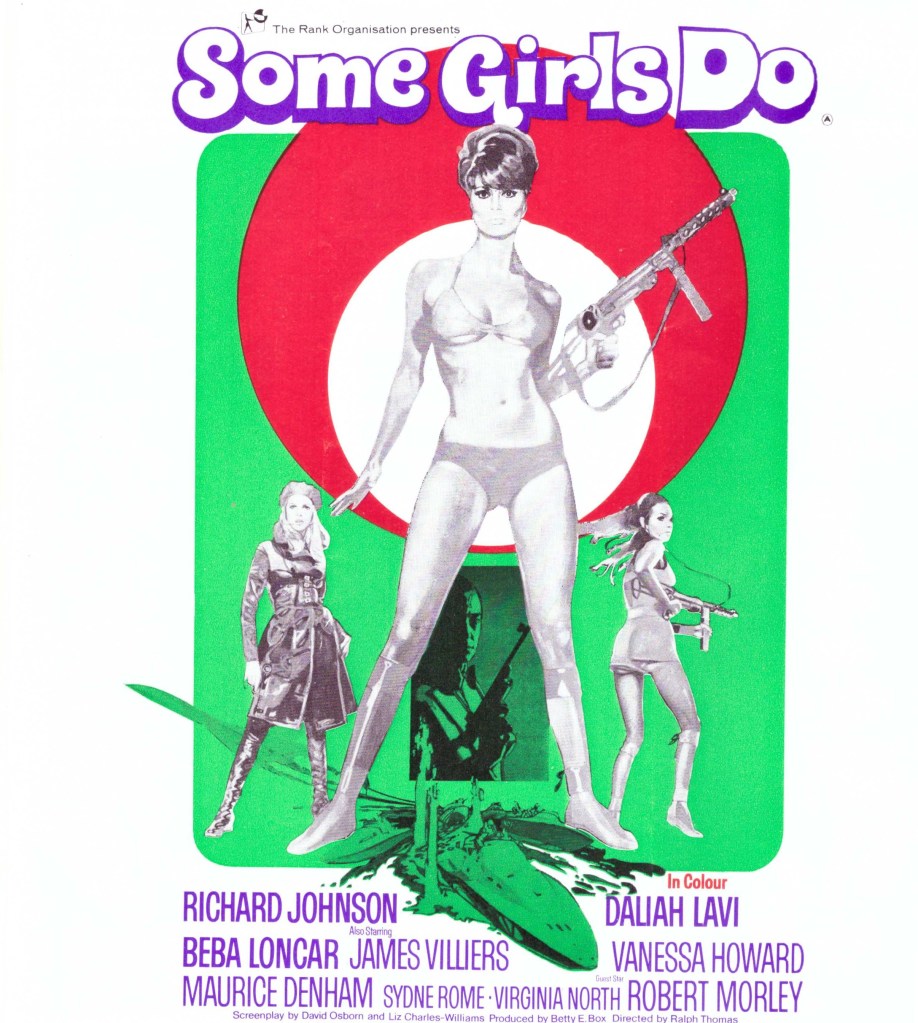
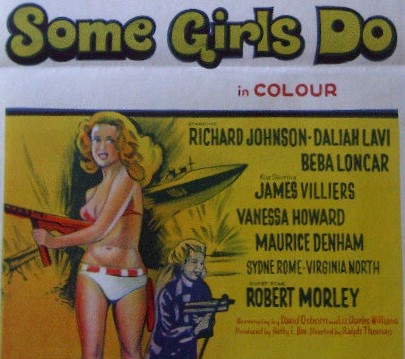
So, if Alan Bates felt limited in what he could show on screen, he certainly does a good job of maintaining the façade. But Denholm Elliott (Station Six Sahara, 1963) steals the show. Harry Andrews (The Charge of the Light Brigade, 1968) is permitted no nuance to his normal bluff persona, singer Millicent Martin (Alfie, 1966) sparkles, and a bunch of British character actors including James Villiers (Some Girls Do, 1969) and Nigel Stock (The Lost Continent, 1968) put in an appearance.

Directed with some glee by Clive Donner (Alfred the Great, 1969) from a script by Frederic Raphael (Darling, 1965) adapted from a short story by Stanley Ellin (House of Cards, 1968).

Not as coruscating now as originally intended.

Return to Sender (1963) ***

The B-film’s B-film. Where American B-pictures invariably focused on sleaze, sci-fi- horror or violence, their British counterparts often exuded class with solid acting, clever plots, excellent though simple sets and good composition. Edgar Wallace, the world’s most prolific writer, had regained sudden popularity thirty years after his death, and movies made from his works made ideal subjects for B-pictures fed into the British double-bill system. His thrillers are all story, racing along with twist after twist.

On the verge of being arrested for fraud, high-class businessman Dino Steffano (Nigel Davenport) hits on blackmail as a means of forcing investigator Robert Lindley (Geoffrey Keen) to drop the case. He sets up associate Mike Cochrane (William Russell) to fake photographs involving sexy Lisa (Yvonne Romain) and Lindley in compromising positions. So Lisa, pretending to hold vital evidence, lures him to her flat where this can be staged.

Meanwhile Lindley’s daughter Beth (Jennifer Daniel) chats up Cochrane after overhearing him asking questions about her father’s cottage. Cochrane has history with Lindley, having been sent for an 18-month prison sentence as a result of a previous encounter. He also resents Steffano over previous double-dealing and is planning to take his own revenge while carrying out the master plan.

I doubt if you will be able to see the twists coming. Suffice to say, nothing is what it seems. The closer Lindley gets to uncovering the mystery, the darker it becomes and the more danger he appears to be in. Even when characters reveal their plans, you can be sure they will have a different one up their sleeve. Steffano’s exceptional charm masks his ruthlessness. While Lindley is dogged, he is no match for the slinky Lisa who can play the vulnerable female with ease. Artist Beth treasures her independence so much that it takes her down some devious alleys, especially when trying to pump Cochrane for information. And it all leads to a terrific climax, involving further twists and double-dealing.

Most of this is played out in classy apartments with log fires burning and Steffano drinking brandy and smoking cigars, or on a yacht, or Lindley’s equally splendid chambers.

The stars are either up-and-coming movie stars or destined for small-screen fame. Many of these Edgar Wallace thrillers would prove stepping stones for new talent.

Nigel Davenport (The Third Secret, 1964) is the pick and would become an accomplished supporting actor in films like Play Dirty (1969). Yvonne Romaine had already made a splash in The Frightened City (1961) and would go on to play the female lead in Devil Doll (1964) and The Brigand of Kandahar (1965). Geoffrey Keen (Dr Syn, Alias The Scarecrow, 1963) would make a bigger impact on television in Mogul (1965-1972). As would William Russell (The Great Escape, 1963) who went on to become a long-running sidekick of Dr Who (1963-1965). Jennifer Daniel became a horror favorite with female lead in The Kiss of the Vampire (1963) and The Reptile (1966). 

Making his movie debut director John Hales clearly benefits from a couple of decades as an editor in films like The Seventh Veil (1945) and Village of the Damned (1960) and he nips quickly from one scene to another to keep the plot ticking along while showing some gift for framing characters within a scene.  

I should point out you will easily find flaws. Strictly speaking, if you know your police procedural, Lindley would not be an investigator, and it would not be too hard to find strains of implausibility showing. But that should not detract from this enjoyable movie.

British studio Anglo Amalgamated churned out these Edgar Wallace thrillers as double-bill fodder and, even though compromised in the budget department, they were generally well-made. Wallace was a brand-name, a best-selling author on account of his 200-plus novels, most still in print long after his death, and a byword for a good read. American television edited the features down to fit into a television series. So if you are hunting these down make sure you get the original features rather than the edited versions.

The Touchables (1968) **

Take a giant bubble, yellow Mini, an abundance of mini-skirts, Michael Caine waxwork,  one pop star, four models, a masked wrestler, nuns, table football, a pinball machine, a circular bed, various sunsets, a shotgun and a lass milking a fake cow. And what do you get? Not much? A dry run for Performance (1971), given Donald Cammell’s involvement, but otherwise a largely soporific feature hoping for redemption on the cult circuit. But with the unsavory subject matter, even with a proto-feminist outlook, that might struggle might to win approval from a contemporary audience.

Unlike Privilege (1967) it’s not saved by ironic comment on the music scene or even anything in the way of decent performances and looks more like an attempt to guy up the nascent careers of a bunch of young actresses and get by with a day-glo pop art sensibility. At no point are we invited to disapprove of the model quartet who decide, having tried out their kidnapping skills on a Michael Caine waxwork, that they might as well go the whole hog and abduct pop star Christian (David Anthony) and tie him to a bed and take their turns having their wicked way with him.

This is all purportedly acceptable stuff because a) it’s a gender switch and b) the poor pop singer is only too happy to escape the drudgery of making millions and not have to even consort with groupies and c) is presented as if he is thoroughly enjoying the whole experience. That is, if you ignore him being chloroformed, shot, and whacked over the head, then of course it’s all very pleasant.

Naturally, these being cunning wenches, they hide him in plain sight. Who would think to look for him in a giant transparent bubble?

Although drawn with villainous strokes, as were all the managers in Privilege who put unnecessary pressure on the pop star they have created, it’s hard to view Anthony’s upper class manager Twynyng (James Villiers) as a bad guy for wanting his safe return.

So what happens once the ladies take charge of their victim? Beyond sex, not much, playing with the various items mentioned, not even any jealousy rearing its ugly head, just the kind of cinematography that might well pass for advertising.

It’s hard to see what the point of it all was. Screenwriter Ian La Fresnais (The Jokers, 1967) might have been brought in to add a touch of levity to what otherwise – kidnap, rape – was a dodgy subject based on an original by Donald and David Cammell. Even taking a comedy approach wasn’t going to work if it was saddled with little interaction between characters and nobody, to put it bluntly, who could act.

I would tend to think with the “talent” involved that this was made by a neophyte producer. But, in fact, this is the oddest part of the whole debacle. John Bryson was an Oscar-winner – admittedly for art direction for Great Expectations (1948) – but also an experienced producer, this being the last of the dozen he made. But they included Man with a Million (1954) and The Purple Plain (1954), both toplining Gregory Peck, The Spanish Gardener (1956) with Dirk Bogarde, The Horse’s Mouth (1958) starring Alec Guinness, Tamahine (1963) – reviewed in this Blog – and Peter Sellers in After the Fox (1966).

It didn’t do anything for anyone’s career, which was the least you could expect for the actors forced into such mindless cavorting. Judy Huxtable appeared in a similar lightweight advertising-led concoction Les Bicyclettes de Belsize (1968) and bit parts in the likes of Die Screaming, Marianne (1971) and Up the Chastity Belt (1972). Ester Anderson did somewhat better, female lead to Sidney Poitier in A Warm December (1973), her last movie. For Kathy Simmonds this was her first and last movie, but she was better known as a genuine pop star’s girlfriend, dating George Harrison, Rod Stewart and Harry Nilsson. Only movie of David Anthony. Seems it’s too easy to confuse Marilyn Rickard with German Monica Ringwald so she may or may not have a string of bit parts in sexploitationers. Arts presenter Joan Bakewell put in an appearance as did Michael Chow, later a famous restaurateur and artist, and wrestler Ricki Starr.

Director Roger Freeman made one more picture, Secret World (1969) with Jacqueline Bisset which at least had a decent premise.

File under awful.

The Criminal / The Concrete Jungle (1960) ****

You’d be hard put to imagine from this hard-nosed gangster picture that both director Joseph Losey and star Stanley Baker would be capable of a more discreet arthouse offering like Accident (1966). Except for the director’s penchant for introducing a jazz score more often than suits the material – witness a brutal beating in a prison – this is an exceptionally gruelling blast through the British underworld, as though the domestic film industry had suddenly inhaled a narcotic comprised of Cagney and Bogart at their meanest.

With hardly a redemptive character in sight, it makes terrific demands of both director and star that anyone comes out achieving audience sympathy. Hollywood usually fell back on the trope of the innocent prisoner to instigate character empathy, but there’s no question from the outset that career criminal Bannion (Stanley Baker) is as tough as they come. In the opening section he arranges for rival Kelly (Kenneth Cope) to be viciously beaten with prison guard Barrows (Patrick Magee) turning a blind eye.

Out after a three-year stretch, Bannion plans a robbery of a race track with a partner, American Mike (Sam Wanamaker). But it turns out the track is owned by another gangster. After that, the double-crosses come thick and fast, nobody to be trusted, everyone out for themselves. He ends up back in prison, wanted by both sides of the law, the gangsters desperate to get their hands on the hidden loot.

Inside, he is protected by Italian mob boss Saffron (Gregoire Aslan), ruling his empire from prison, in return for a share of the loot. In due course, he instigates a riot, and double-crossing the other inmates, secures a shift to a low-security prison, and he is rescued from the transfer van. But there’s no escape. It’s a bleak ending all round. He dies on a beach, but without revealing where he has stowed the loot.

There are a couple of gals in the mix. The first, his ex-, Maggie (Jill Bennett) he treats in appalling fashion. The second, something of a present for his release, Suzanne (Margit Saad), sees the better side of him, although you have a sneaking feeling that she’s a plant.

But, really, nobody’s got a better side here. The prison scenes are grittier than had previously been the case in British movies, but the whole gangster set-up has a realistic “goodfellas” feel to it, boozing gangsters welcoming him home even as they are planning to stitch him up. And while Bannion may be unaware of ownership of the race track, clearly Mike isn’t, and Bannion is being set up to take the fall.

Joseph Losey (The Damned, 1962) takes an original approach to the material, cutting out the “big job” element entirely in favor of repercussion. He keeps up a brisk pace, which helps build tension, instead focussing on the relationships between the criminals and the prison hierarchy. Especially in the early prison scenes, more is made of vulnerability than toughness, many of Bannion’s confederates presented as weak and easily controlled rather than constantly challenging, prison guards complicit.

Stanley Baker (Where’s Jack, 1969) has such a malevolent appearance he was often as his best in the toughest arenas and perhaps Losey is making the point that even the toughest of tough guys can be duped by gangsters with more brains. There’s a terrific support cast: Sam Wanamaker (Warning Shot, 1966), Gregoire Aslan (Lost Command, 1966), Patrick Magee (Hard Contract, 1969), Jill Bennett (The Charge of the Light Brigade, 1968), Patrick Wymark (Where Eagles Dare, 1968) and  Laurence Naismith (Jason and the Argonauts, 1963). German star Margit Saad (The Magnificent Two, 1967) lends an air of mystery to her character.

This was the third – of four – teamings for Losey and Baker. The British censor took a mighty mild attitude to the unexpected levels of nudity and violence. Alan Owen (A Hard Day’s Night, 1964) and Jimmy Sangster (The Devil-Ship Pirates, 1964) are credited with the script.

Takes no prisoners.

Where’s Jack (1969) ***

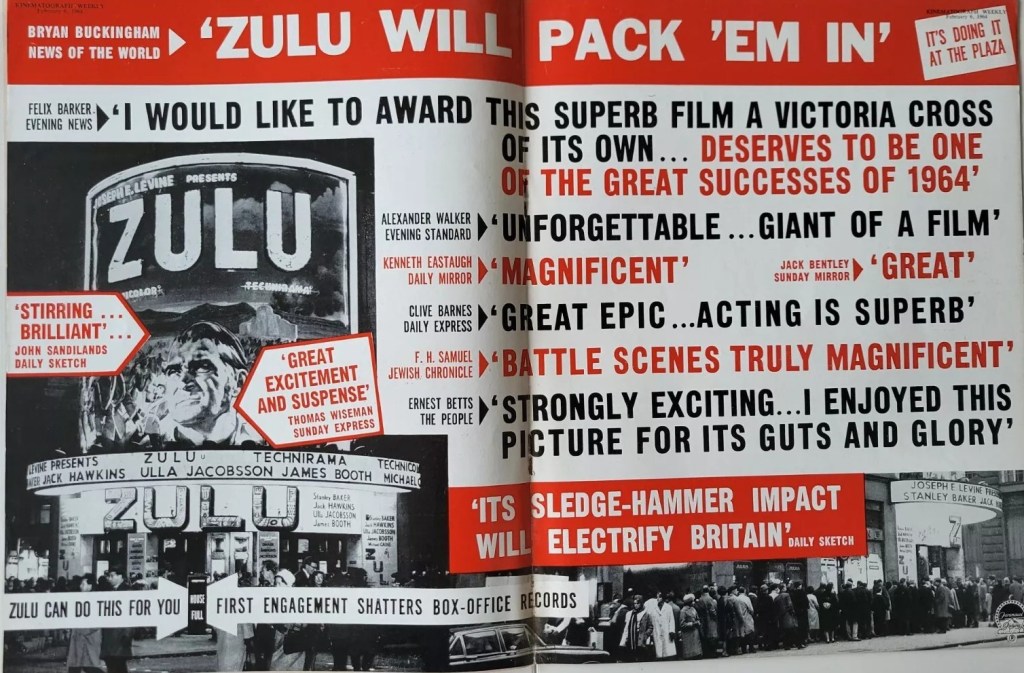
Prison escapees tend to conform to a certain type. Think Charles Bronson and Steve McQueen (The Great Escape, 1969), Paul Newman (Cool Hand Luke, 1967) and Clint Eastwood (Escape from Alcatraz, 1979). Admittedly, Tim Robbins (The Shawshank Redemption, 1994) doesn’t fit the bill, but he’s got brains instead of brawn. But he’s not twinkle-eyed or twinkle-toed or diminutive like British hoofer Tommy Steele (Half a Sixpence, 1967) who’s not helped here by being up against a distinctively tough screen character in the shape of Stanley Baker (Zulu, 1964).

Served up as an antidote to the tomfoolery and sexuality of Tom Jones (1963), more interested in the seamier side of Ye Olde England, it ignores the more interesting tale of criminal corruption and hypocrisy of Jonathan Wild (Stanley Baker), the Thief-Taker, in favor of young thief Jack Sheppard (Tommy Steele) who proves his nemesis.

Wild was the ultimate hypocrite, not just stewed in the corruption of the times but taking advantage of it, and not so much poacher-turned-gamekeeper but gamekeeper who had not entirely abandoned his previous profession. Wild, a notorious thief, managed to set himself up as London’s top lawman, keeping other thieves in line and handing over a certain number to the hangman. He had another sideline. He sold back stolen goods to burglarized owners. Most of this was condoned by the authorities who believed that it took a thief to catch a thief.

Wild enrages Sheppard, apprentice locksmith to trade, by reneging on a deal to free Sheppard’s criminal brother. Sheppard sets out to teach the antique godfather a lesson, breaking into his warehouse and stealing the contents.

Wild has him arrested on a variety of occasions, but each time Sheppard breaks out from prisons that had the reputation of the later Alcatraz, in one instance through a sewer, in another via a chimney, turning himself into a local hero in the process. Sheppard’s main trade is not so much burglary as highwayman and further annoying Wild by bringing such criminal solicitation to the streets of posh London, from which it had, by decree of Wild, been outlawed.

In so doing, Sheppard encounters Lady Darlington (Sue Lloyd), so taken with our scamp that had this been Tom Jones there would have been some rollicking in the hay (or the Mayfair equivalent). Instead, she bets her Scottish estate that he will escape from his latest incarceration.

Sheppard has the hots for barmaid Bess (Fiona Lewis) but this not being Tom Jones we don’t go much beyond cleavage. The sub-plot involving Lady Darlington, which I’m guessing forms part of the Jack Sheppard legend (since he was a real-life character), takes up valuable time which could have been spent either developing the romance or on the escapes, which don’t generate the necessary tension, or filling out the crook’s character.

Narrative-wise there’s more at stake for Wild, not just being led a merry dance by Sheppard and losing respect (the crime of crimes against a criminal mastermind) but also by potentially damaging his cosy relationship with the authorities, led by snippy Lord Chancellor (Alan Badel) who is on the other side of the Lady Darlington wager.

Fair amount of rubbish being tossed out of windows, unruly tavern occupants, poverty and homelessness abounding, and general but unspecified bawdiness, in fact a truer perspective of the times, doesn’t compensate for the lack of compelling narrative.

On paper, this should have amounted to a lot more. Mostly, it goes askew from miscasting. Tommy Steele is outshone without much difficulty by Stanley Baker and it’s asking a lot of an audience to accept that a cheeky chappie can outwit the exceptionally clever tough guy. It’s Baker who makes the most of his scenes, either lording it over his gangs, using cruelty to keep them in line, or fearing that he might be toppled from his lofty position and end up either back in the gutter or at the end of a noose.

There’s a bit of complicated jiggery-pokery relating to the effect your weight has on how long you can dangle on the end of a rope. Hangmen in those days did not follow scientific principles and provide some kind of weighting handicap as occurred later to prevent unnecessary suffering and make death as swift as possible.

Anyway, our Jack, being a skinny little runt (and this plot-point key to the climax ensuring the part required a skinny little runt rather than someone hewn from the normal tough guy runt) doesn’t die from the hanging, escaping the fury of Wild and (so legend has it) managing to escape to the colonies.

Put a Michael Caine (The Ipcress File, 1965) in the leading role or Richard Harris (Major Dundee, 1965) or even a Nicol Williamson (The Reckoning, 1970) and you would have quite a different movie, a more believable protagonist. Even Peter O’Toole (Night of the Generals, 1966), while devoid of muscle, would suggest the brains to outwit his opponent.

In the face of the mop-haired pop singers and raucous rock stars, Tommy Steele had reinvented himself from 1950s teen idol into Broadway musical star with Half a Sixpence and then viewed as a squeaky-clean alternative to the more louche movie star turned up in harmless offerings like Disney’s The Happiest Millionaire (1967) and Francis Ford Coppola’s non-grandiose Finian’s Rainbow (1968).

Oddly enough, it was to escape such typecasting that he took on what was perceived as a much tougher role only to discover he lacked the acting cojones to pull it off. Baker, Badel (Bitter Harvest, 1963) and Lloyd (Corruption, 1968) beat him hands down.

Director James Clavell was riding high after To Sir, with Love (1967) as was producer-star Stanley Baker after Robbery (1967) and screenwriters David and Rafe Newhouse following Point Blank (1967). This brought them down to earth.

More Artful Dodger than Get Carter.

Subterfuge (1968) ***

Worth seeing alone for super-slinky leather-clad uber-sadistic Donetta (Suzanna Leigh) who delights in torturing the daylights out of any secret agent who crosses her path, in this case Michael Donovan (Gene Barry). She’s got a neat line in handbags, too, the poisonous kind. Two stories cross over in this London-set spy drama. American Donovan (Gene Barry) is under surveillance from both foreign powers and British intelligence. When his contact comes into unfortunate contact with a handbag, he finds himself on the sticky end of the attention of Shevik (Marius Goring) while at the same time employed by the British spy chief Goldsmith (Michael Rennie) to find the mole in their camp.

The three potential suspects are top-ranking intelligence officers: Col. Redmayne (Richard Todd), British spy Peter Langley (Tom Adams) and backroom underling Kitteridge (Colin Gordon). On top of this Langley’s wife Anne (Joan Collins) adds conscience to the proceedings, growing more and more concerned that the affairs of the secret state are taking too much precedence over her marriage.

The hunt-the-mole aspect is pretty well-staged. Kitteridge always looks shifty, keenly watching his boss twisting the dials on a huge office safe containing top secret secrets. Langley is introduced as a villain, turning up at Shevik’s with the drugs that are going to send  Donovan to sleep for eight hours for transport abroad in a trunk. But he turns out to be just pretending and aids Donovan’s innovative escape. Charming but ruthless Redmayne is also under suspicion if only because he belongs to the upper-class strata (Burgess, Philby and Maclean etc) that already betrayed their country.

In investigating Langley, Donovan fixes on the wife, now, coincidentally, a potential romantic target since her husband is suing for divorce. She is particularly attracted to Donovan after he saves her son from a difficult situation on the water, although that appears manufactured for the very purpose of making her feel indebted. However, the couple are clearly attracted, although the top of a London bus would not generally be the chosen location, in such glamorous spy pictures, for said romance to develop.

As you will be aware, romance is a weak spot for any hard-bitten spy and Shevik’s gang take easy advantage, putting Anne, her son and Donovan in peril at the same time as the American follows all sorts of clues to pin down the traitor.

This is the final chapter in Gene Barry’s unofficial 1960s movie trilogy – following Maroc 7 (1967) and Istanbul Express (1968) – and London is a more dour and more apt climate for this more down-to-earth drama. Forget bikinis and gadgets, the best you can ask for is Joan Collins dolled up in trendy min-skirt and furs. Gene Barry, only too aware that London has nothing on Morocco or Istanbul in the weather department, dresses as if expecting thunderstorms, so he’s not quite the suave character of the previous two pictures, but that does not seem to dampen his ardor and the gentle romantic banter is well done.

Joan Collins, in a career trough after her Twentieth Century Fox contract ended with Esther and the King (1960), has the principled role, determining that the price paid by families for those in active secret service is too high. No slouch in the spy department himself, essaying Charles Vine in three movies including Where the Bullets Fly (1966), Tom Adams plays with audience expectations in this role.

It’s a marvelous cast, one of those iconic congregations of talent, with former British superstar Richard Todd (The Dam Busters, 1955) and Michael Rennie, television’s The Third Man (1959-1965), Marius Goring (The Girl on a Motorcycle, 1968) and Suzanna Leigh (The Lost Continent, 1968) trading her usual damsel-in-distress persona for a turn as terrific damsel-causing-distress.

Shorn of sunny location to augment his backgrounds, director Peter Graham Scott (Bitter Harvest, 1963) turns his camera on scenic London to take in Trafalgar Square, the zoo, Royal Festival Hall, the Underground, Regent’s Park with the usual flotilla of pigeons and ducks.

Get slinky.

The Vengeance of She (1968) ***

Sequels boomed in the 1960s mainly thanks to multiple spy spin-offs in the James Bond/Matt Helm/Derek Flint vein but for every From Russia with Love (1963) and In Like Flint (1967) there was a more tepid entry like Return of the Seven (1966). One of the prerequisites of the series business was that the original star reappeared. But Ursula Andress who played the title character in Hammer’s She (1966) declined to reprise the role.

John Richardson did return from the first picture but in a different role, as the immortal Killikrates within the lost city of Zuma. So Hammer brought in Andress lookalike statuesque Czech blonde Olinka Berova (The 25th Hour, 1967), even emulating the Swiss star’s famous entrance in Dr No (1962), although instead of coming out of the sea Berova is going in and substituting the bikini with bra and panties, but the effect is much the same.

Story, set in the 1960s, has supposed Scandinavian Carol (Berova) mysteriously drawn south against her will and driven by voices in her head conjuring up the name Ayesha. We first encounter her walking down a mountain road in high heels only to be chased through the woods by a truck driver. It transpires she had unusual powers, or someone protecting her has, for the lorry brake slips and the truck crushes the driver. Next means of transport is a yacht owned by dodgy drunken businessman George (Colin Blakely) and before you know it she is in Algeria, assisted by Kassim (Andre Morell) who attempts to forestall those trying to control her mind, but to no avail.

Philip (Edward Judd), whose character is effectively “handsome guy from the yacht,” follows as she continues south and eventually the pair reach Kuma, where she is acclaimed as Ayesha aka She. Kallikrates’ immortality depends on her with some urgency crossing through the cold flames of the sacred fire. There’s a sub-plot involving high priest Men-hari (Derek Godfrey) promised immortality for returning Ayesha to Kuma and further intrigue that comes a little too late to help proceedings. You can probably guess the rest.

There’s no “vengeance” that I can see and certainly no whip-cracking as suggested in the poster. Berova, while attractive enough, lacks the screen magnetism of Andress and the mystery of who Carol is and where she’s headed is no substitute for either pace or tension and Berova isn’t a good enough actress to convey the fear she must be experiencing. The script could have done without weighting down the Kuma high priests with lengthy exposition explaining the whys and wherefores. Neither a patch on the original nor the expected star-making turn for Berova, this is strictly Saturday afternoon matinee fare and the slinky actress, despite her best sex-kitten efforts, cannot compensate.

Director Cliff Owen (A Man Could Get Killed, 1966) assembles a strong supporting cast, headed by Edward Judd (First Men in the Moon,1964) and Colin Blakely (a future Dr Watson in Billy Wilder’s The Private Life of Sherlock Holmes, 1970). You can also spot Andre Morell (Dark of the Sun, 1968), George Sewell (who later enjoyed a long-running role in British television series Special Branch, 1969-1974) and television regular Jill Melford. 

Curious change of pace for writer Peter O’Donnell, best known at this point for creating another sultry heroine, Modesty Blaise (1966).

Lee (2024) *** – Seen at the Cinema

Would have worked better as a documentary. Bit puzzled too by the deceit of the structural device, flashing back from her war years to being interviewed by an apparent journalist in old age at her country cottage. Seems an interesting conceit that he turns out to be her son Antony (Josh O’Connor) and she’s able to turn the tables and ask what she was like as a mother (not good, apparently, Antony grew up feeling he was an imposition). But also a standard biopic trope as he uses her famed photos to stimulate memories. But then, presumably in the interests of honesty (or who knows what) the credits blow these sequences to pieces by pointing out that her son didn’t have a scoobie about her war activities until after the death a forage in the attic turned up boxes of her photos. What the heck, artistic license and all that.

My other quibble, since I’m in that sort of mood, is that the ageing process seems to have passed our star Kate Winslet by. Sure, she’s dabbed on a bit of oldie make-up for her later years but the crow’s nest of lines around her eyes are noticeably prominent for a woman just turned thirty in the immediate pre-war year.

Still, on with the show, in which her pre-war fame as a surrealist is also ignored, as is her liaison with Man Ray, or that before she took up with another surrealist Roland Penrose (Alexander Skarsgard) she had been married to –  and not divorced from – an Egyptian businessmen. The thrust of the movie is her war years as Vogue correspondent. There’s a bit of falling back on characters skitting around in the background (Cecil Beaton, for example) and keeping us up-to-scratch on timescale, invasion imminent etc.

Misogyny is fairly rampant, the British squeamish about sending women unnecessarily to the front line, the Yanks less so. Though Lee Miller is treated, for dramatic purposes, as the only female war correspondent, breaking through the usual class ceiling, in fact the Yanks had squads of them including Martha Gellhorn and Mary Welsh, third and fourth wives of Ernest Hemingway, respectively, Kathleen Harriman, Dixie Tighe and Helen Kirkpatrick, and Tania Long, none of whom would be unknown to Miller since she posed for a photo with the gang in 1943.

There was nothing subtle about Lee Miller, she said it like it was, a hard-drinking what used to be known as a free spirit, an euphemism for embracing a love-‘em-and-leave-‘em mentality. But there’s some subtlety here, a scene of her peeling potatoes revealing more about male expectation than any verbal punch-up with any officious male, being covered with supposedly invisible paint by Roland more effective in catching sexual attraction than the rest of her let-it-all-hang-out persona.

The only problem is that the concentration camp scenario has been dealt with by any number of far superior films and her staggering back with shock at the sight of the piled-up corpses not compensation enough. I don’t know enough about war photographers to compare what she captures through the lens with the dozens of others doing the same job. By the time her photos of the Holocaust were printed in American Vogue, Richard Dimbleby and Edward Murrow had delivered radio devastating reports and anonymous military photographers supplied tons of evidence against the Nazis.

I’m not sure it actually helps her case that she took a bath, naked, in Hitler’s bath.

Kate Winslet (Ammonite, 2020) almost single-handedly keeps the movie on course, but it lacks impact as a war picture, and the idea that nobody other than Lee was taking note of the suffering of the British during the Blitz seems a bit of a stretch. Pick of the support is most definitely Andrea Riseborough as the doughty British Vogue editor, every bit as tough if not as outspoken as Miller. Josh O’Connor (Challengers, 2024) spends all his time looking soulful for no reason I can divine. Marion Cottillard (La Vie en Rose, 2007) is wasted.

Ellen Kuras directed from a script by Liz Hannah (All the Bright Places, 2020), Marion Hume (movie debut) and John Collee (Monkey Man, 2024).

Movie not as hard-nosed as Winslet.

The Critic (2024) ** – Seen at the Cinema

Can we get over all this “national treasure” (a favorite of Britain) baloney, please? If we’re going to drag our esteemed acting knights of the realm out of their armchairs (you notice I didn’t say retirement because actors almost never officially retire, Kathy Bates and Gene Hackman to the contrary) could we please give them something more than an opportunity to overact and turn themselves into ripe old hams at the age of (in this case) eighty-five. Sir Ian McKellen (Gandalf and Magneto to you and me) deserves better.

Because there’s nothing at all in this beyond Falstaffian monster Jimmy (Ian McKellen), the eponymous theater critic, relishing his power and taking revenge when’s on the verge of losing it. Frankly, if this was called The Tie-Pin Killer, the serial murderer in the book on which this is based, and Jimmy, as in that book, was relegated to a bit part, albeit a juicy one, it might have been a lot more interesting.

While it touches upon 1930s London Fascists and the plight of the homosexual (a criminal offence to participate) these are kind of tossed into the scenario as if to placate an audience who might complain this is very thin gruel indeed. Presumably, we are somehow meant sympathize with this cruel, odious, character because from time to time he finds himself confronted by blackshirts, who take a dislike to his black companion Tom (Alfred Enoch), who acts as his secretary and presumably not anything else because Jimmy prefers “rough trade.”

In revenge for being fired, he sets up actress Nina (Gemma Atterton) to seduce his employer David Brooke (Mark Strong). Blackmail’s the tool of reinstatement. Apart from general actor insecurity, it’s not entirely clear why Nina should be so determined to keep in Jimmy’s good books. There’s some unbelievable stuff about becoming attracted to acting through reading his articles, which seems quite bizarre since his nasty reviews would put people off going, as he proudly explains is one his aims.

So Nina prostitutes herself for a good review. Yep, must happen all the time. And despite her supposed success – these are, after all, West End plays she is starring in – she lives in a bedsit where hot water is rationed. But she is, romantically, in a bind. She’s just dumped her married lover Stephen (Ben Barnes) whose wife Cora (Romola Garai) just happens to be the daughter of Brooke.

And although Brooke’s wife is “bonkers” (though that’s very much on the periphery) he’s that old-fashioned upper class English gent who only feels shame at adultery when he’s caught out and then of course does the right thing which is to blow his brains out. Which leaves Nina racked with guilt which drives her, as it would, back into the arms of Stephen only for him (another adulterer with principles) to reject her on the grounds that she slept with his father-in-law. When Nina begins to talk about confessing to her role in conspiracy, what’s an upstanding chap to do but drown her in the bathtub?

In the original book Jimmy was a minor character.

Crikey, and we complain about the plotting in the multiverse. This is just bonkersverse. Presumably, Oscar-nominated screenwriter Patrick Marber (Notes on a Scandal, 2007) happened upon Anthony J. Quinn thriller Curtain Call in which Jimmy exists on the periphery of the actual narrative though as a larger-than-life character and decided to forget the whole tie-pin killer thing and rearrange the tale so it revolved around McKellen in the hope nobody would notice, in the midst of McKellen roistering and boistering to his heart’s content, the lack of any sensible tale.

You could certainly have more easily hooked it on Nina, who falls into the Patrick Hamilton category of easily-led character on the edge with impulse inclined to cut her adrift.

If you want ham, McKellen’s your man, none of the subtlety which has impelled other performances. Gemma Atterton (The King’s Man, 2021) has a few moments tormented by conscience but the part is woefully underwritten. This is the reined-in Mark Strong (Tar, 2022) rather the one with the veins standing out on his neck. Lesley Manville (Mrs Harris Goes to Paris, 2022), potentially another future national treasure, has a brief role as does Romola Garai (Atonement, 2007).

Maybe wanting to burnish his artistic credentials, director Anand Tucker (Leap Year, 2010) is predisposed to the extreme close-up and for viewing a scene in extreme long shot through a corridor, window or door.

Jimmy would give have slated this.

Discover WordPress

A daily selection of the best content published on WordPress, collected for you by humans who love to read.

The Atavist Magazine

by Brian Hannan

WordPress.com News

The latest news on WordPress.com and the WordPress community.