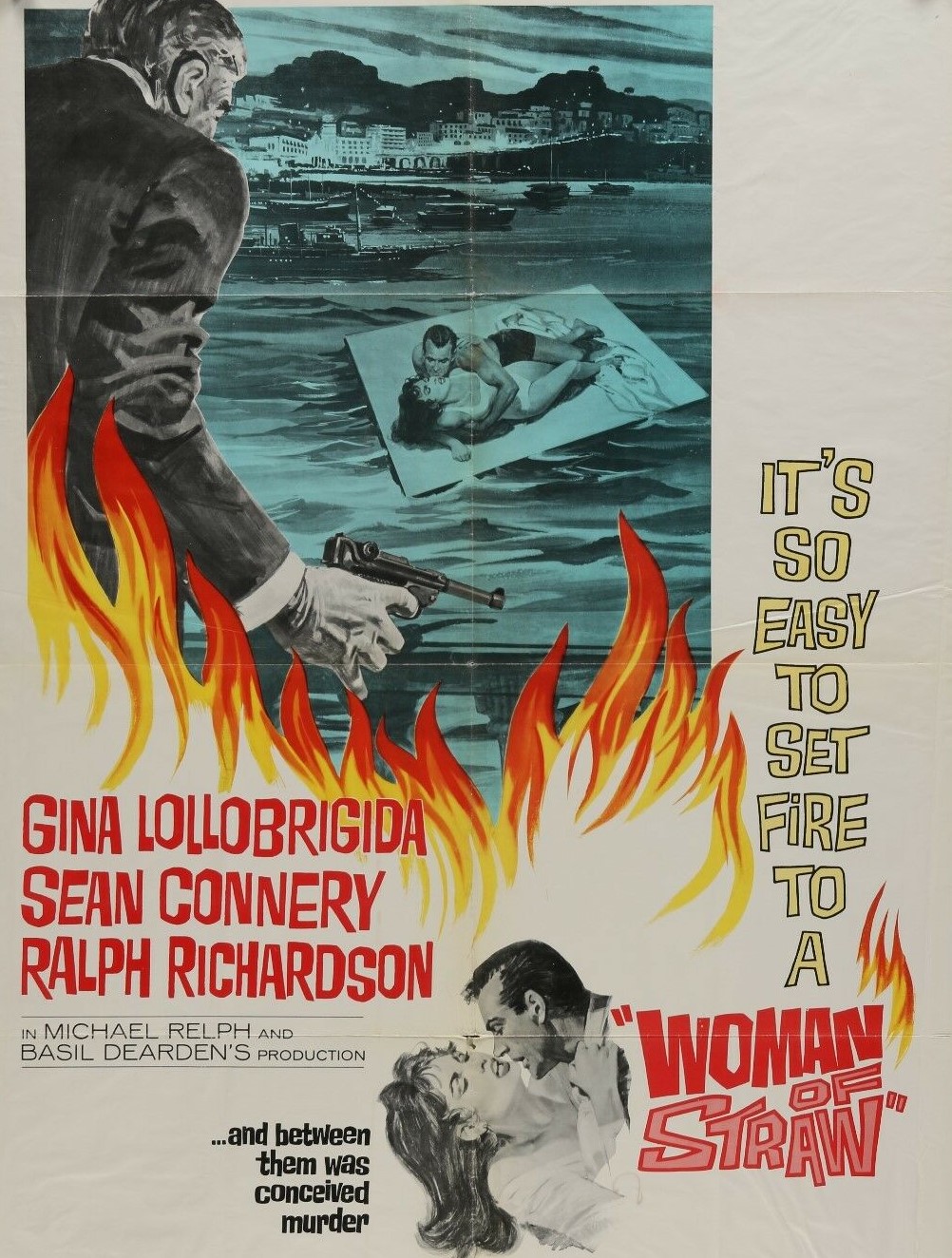
Woman of Straw (1964) ***

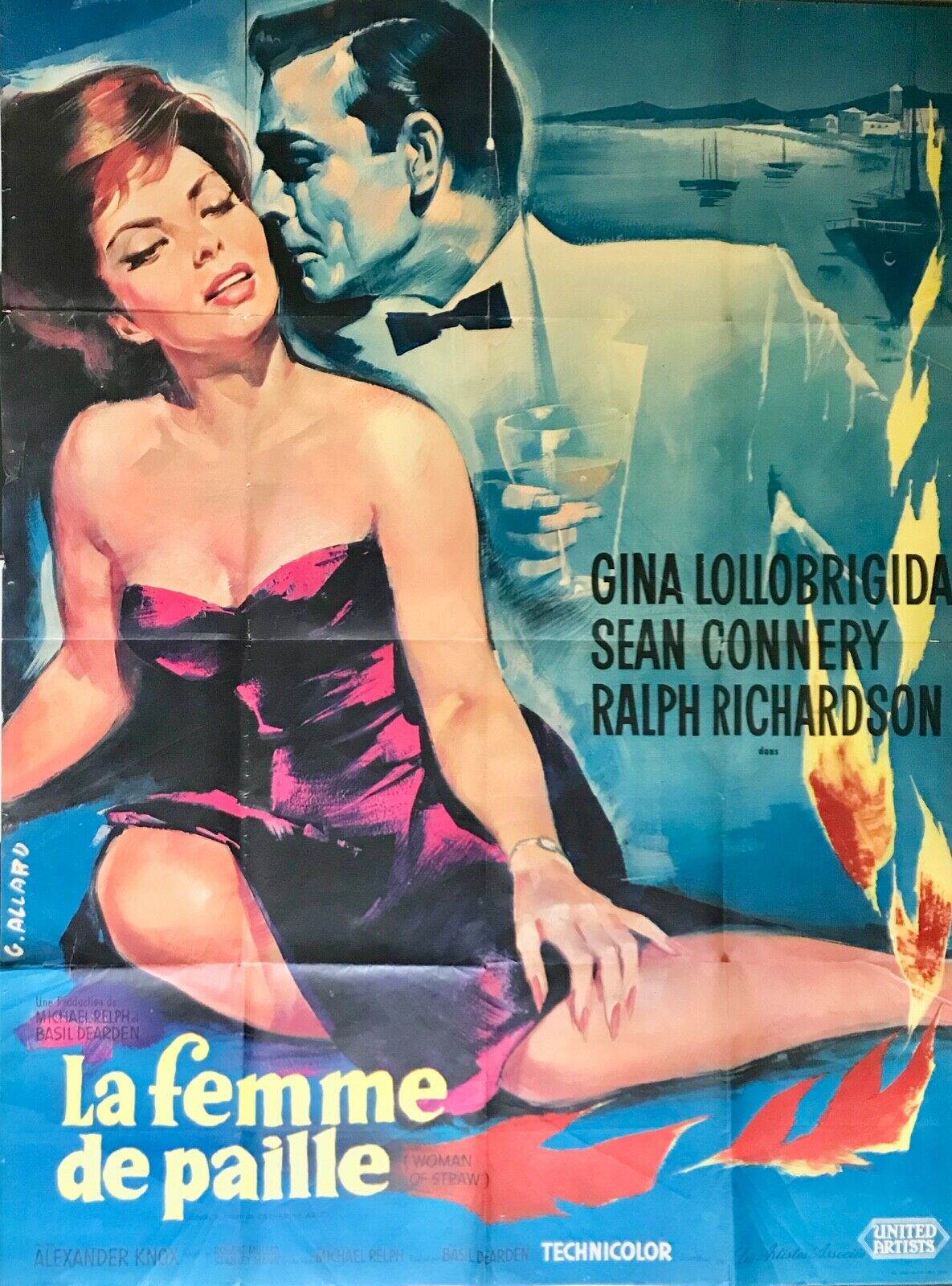
In a plot worthy of Hitchcock without that director’s sly malice, rich playboy Tony (Sean Connery) conspires with not-so-innocent nurse Maria (Gina Lollobrigida) to rid himself of  heinous upper-class racist misogynistic bully Charles (Ralph Richardson), his uncle. Beyond  a savage case of entitlement, Tony has good reason to hate the wheelchair-bound multi-millionaire, blaming him for his father’s suicide and for seducing his widowed mother, now dead. Tony’s ploy, in part by opposing the very idea, is to get Maria to marry Charles, inherit his fortune and provide himself a £1 million finder’s fee when the seriously ill old man dies.

Maria’s refusal to kowtow to the old man and her initial resistance to Tony make her all the more desirable to both. When Maria saves the old man from a potential heart attack, he is moved enough to marry her and draw up exactly the will the pair want. But when he suddenly dies, Maria surprises herself by the depth of emotion she feels.
But that soon changes when she comes under suspicion. A bundle of complications swiftly change the expected outcome. A police inspector (Alexander Knox) doubts cause and place of death.

The first half is the set-up, the various figures being moved into place, not quite as easily as might have been anticipated, which adds another element of tension. Charles is such a hideous person nobody could lament his passing, but still his vulnerability, not just his wheelchair confinement but his love of music, his better qualities coming to the fore as the result of Maria’s presence, accord him greater sympathy than you would imagine.

That the otherwise gallant Tony’s entitled life depends entirely on his uncle’s good wishes lends him an appealing frailty. The nurse’s principles safeguard her against being taken in by riches alone, but there is a sense that she has used her physical attraction in the past to her advantage.

After the first two James Bond pictures, this was Sean Connery’s first attempt to move away from the secret agent stereotype and in large part he is successful. As amoral as Bond, he could as easily be a Bond villain, smooth and charming and larger than life and superbly gifted in the art of manipulation, the kind of putting all the pieces in place that Bond villains excelled in.
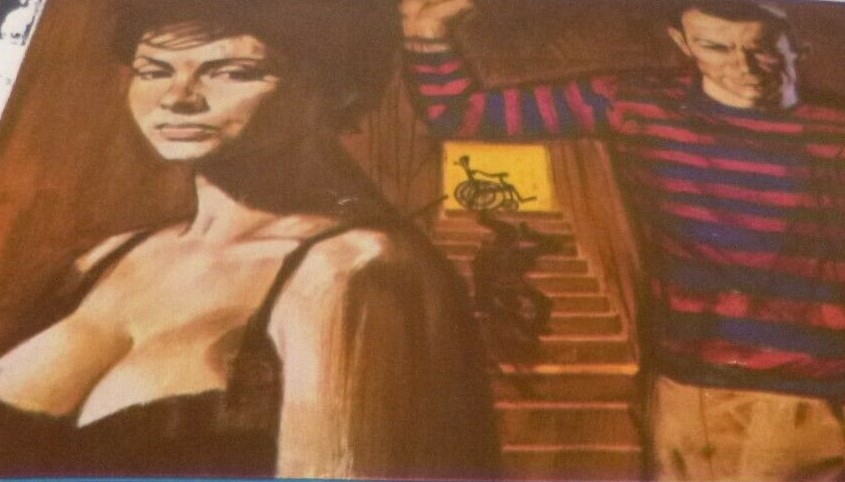
It will come as a surprise to contemporary viewers that he is merely the leading man, not the star. Gina Lollobrigida (Go Naked in the World, 1961) receives top-billing because she carries the emotional weight, initially perhaps as cold as Tony, but her attitude to Charles changing after marriage, meeting a need that Tony would not consider his to fulfill, and beginning to regret going along with any devious plan. That she then discovers she may merely be a pawn rather than a partner creates the dilemma on which the final section of the film depends for tension.

Both actors are excellent, exuding star wattage, the screen charisma between them evident, and audiences craving the pairing of Connery with an European female superstar will be well satisfied. Lollobrigida has the better role, requiring greater depth, but it is romance as duel most of the way. Ralph Richardson (Khartoum,1966) has never been better as one of the worst human beings ever to grace a screen. Johnny Sekka (The Southern Star, 1969) brings dignity to the maligned servant and Alexander Knox (Khartoum) is a crusty cop. 

A slick offering from Basil Dearden (The Mind Benders, 1963), with one proviso – see seaparate article for the racism in this film. Written by Robert Muller (The Beauty Jungle, 1964) and Stanley Mann (The Collector, 1965) based on the novel by Catherine Arley.

Could have done with expending less time on the set-up and getting to the meat of the thriller quicker.
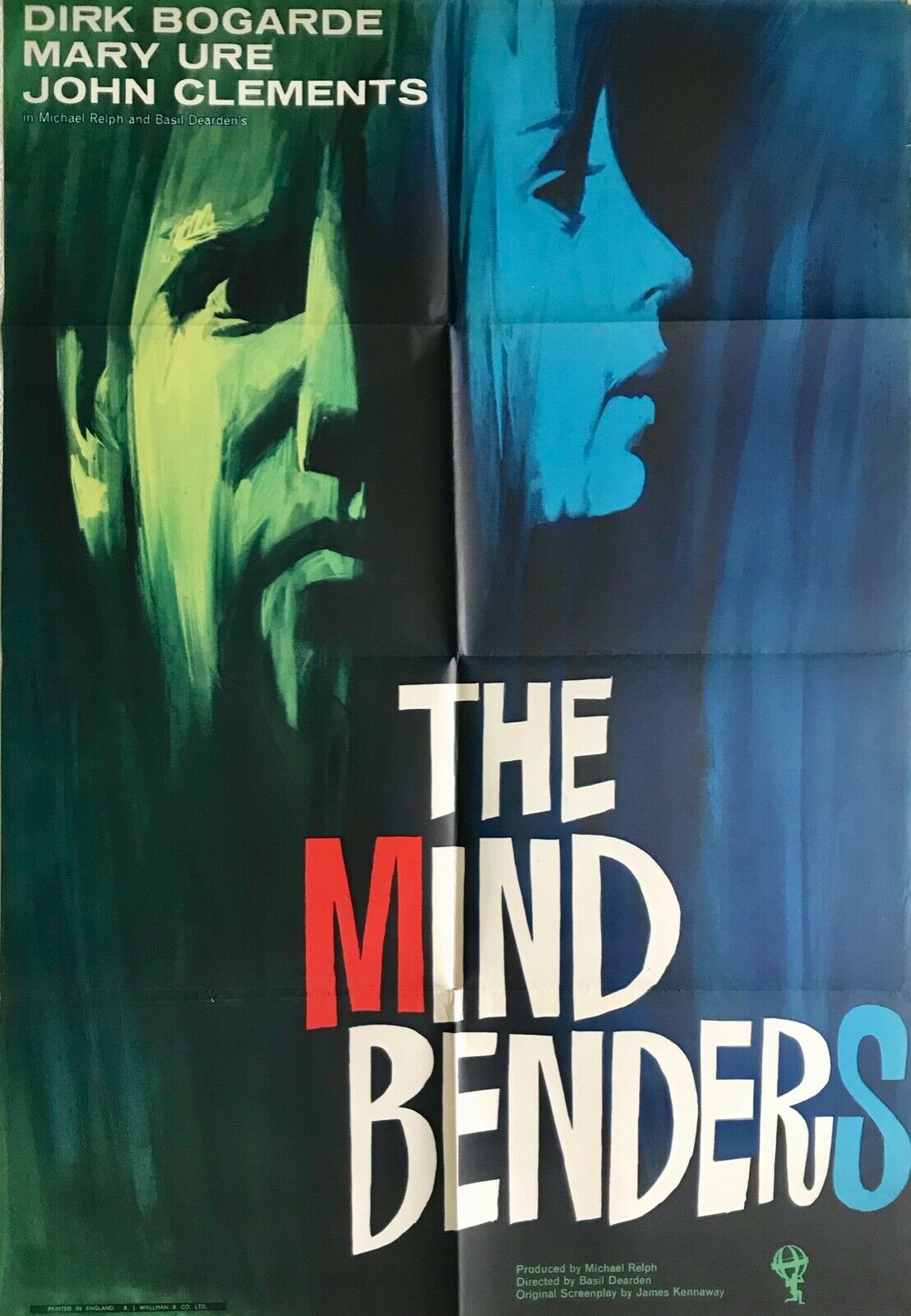
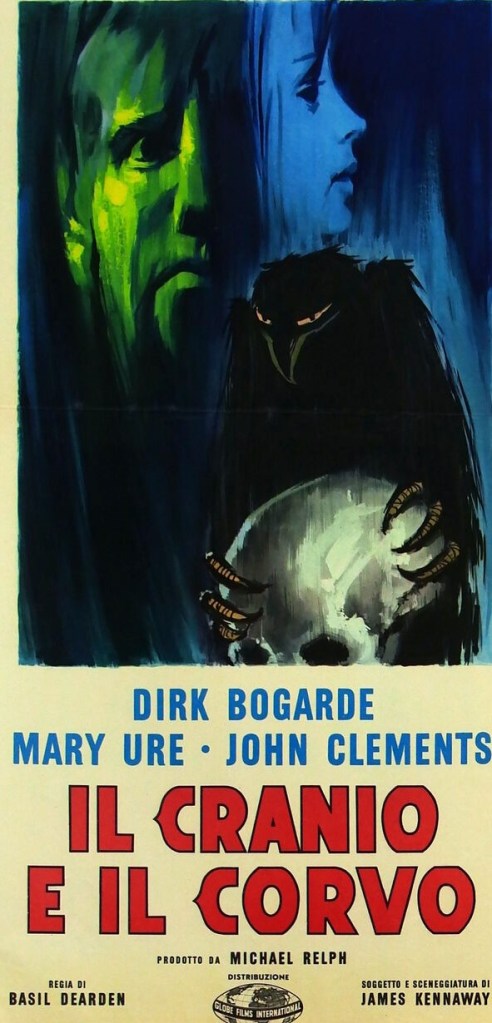
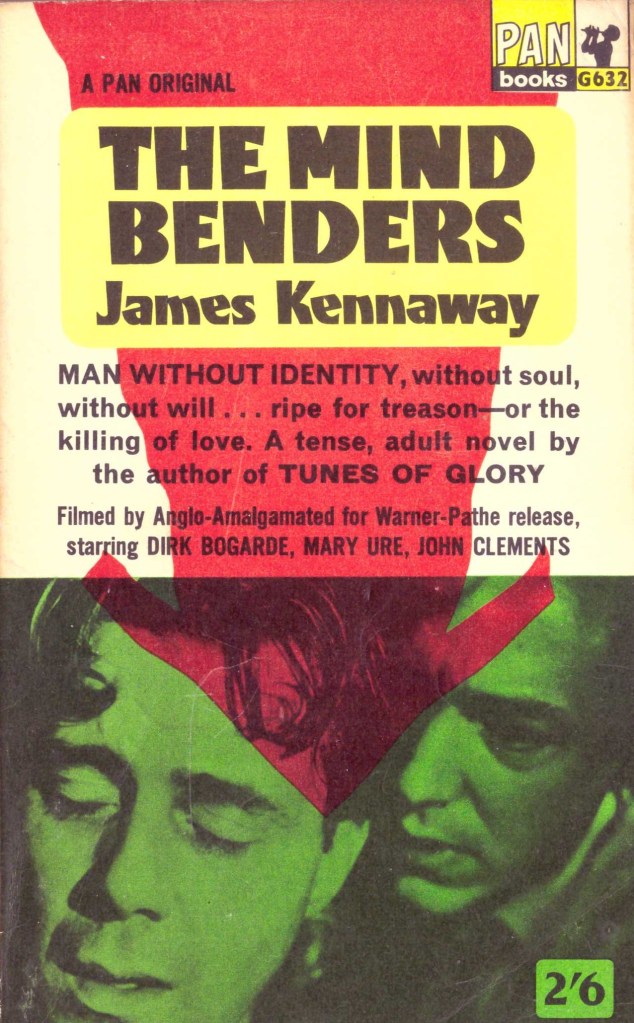
The Mind Benders (1963) ****

As far as Hollywood was concerned brainwashing was ascribed to foreigners intent on disrupting democracy as with The Manchurian Candidate (1962). Such inherent hypocrisy will come as no surprise since scientists at McGill University in Canada had been carrying out C.I.A.-funded sensory deprivation experiments in the 1950s. Where the John Frankenheimer paranoia thriller went straight down the political route, The Mind Benders, based on the McGill tests, is more interested in the personal cost, although ruthless politicians and unscrupulous scientists still abound.

The suicide of renowned scientist Professor Sharpey (Harold Goldblatt), possibly selling secrets to the Russians, sends MI5 agent Major Hall (John Clements) to Oxford to investigate sensory perception tests. The guinea pigs have all been volunteers, keen to expand knowledge of human mental endurance. The latest volunteer, Dr Longman (Dirk Bogarde), is on leave recovering from his participation. To avoid branding Sharpey a traitor it is proposed that he was actually brainwashed by long immersion in a water tank and subsequent sensory deprivation.

In order to prove the point, Longman, a driving force behind the research having shifted the focus from sub-zero temperatures to water, is the unknowing guinea pig, a jealous colleague Dr Danny Tate (Michael Bryant) who fancies his wife Oonagh (Mary Ure) suggesting that the experiment would be deemed a success if Longman was turned against his wife. It transpires that sensory deprivation has already had an effect on Longman, his wife complaining his lovemaking has grown rough.

The callousness with which this stage of research is undertaken, the disregard not so much for human life but emotion and love, in a country that prides itself on honor and fair play, sets up a different register to the Frankenheimer film where at issue is the assassination of the most important person in the United States. Longman, fed lies about his wife’s infidelity, becomes a different character, distrustful, aggressive, embarking on an affair of his own, putting in jeopardy the happiness he has constructed.

Ahead of its time in analyzing the importance of the hidden persuaders (as television advertising would later be termed) and lacking a thriller element to drive the narrative, nor devised as a self-indulgent experiment like the later Altered States (1980), nonetheless this achieves tremendous power through the deliberate dislocation of individual life, personalizing in a way that others in the paranoia thriller genre do not the dangers of tampering with the unknown.

And perhaps because it is so British, with the Longman family living in a big rambling house, the children involved in myriad games, the scientist a loving husband, that the outcome is so horrible. Brainwashing was seen as a form of torture, with subjects susceptible to ideas they may have once opposed, almost forming a new identity.

The structure here sucks in the audience. It’s ostensibly initially about spies, outing a traitor, a notion that every British citizen would go along with, the film especially relevant in the wake of the Kim Philby affair the year of the film’s release, when the idea of “spies among us” took root. Then we move on to a scientific account of the deprivation experiment, the first one taking place in the Arctic Circle, footage of a volunteer emerging in a fugue state. When Longman does another experiment, himself the guinea pig, to show what is involved, the various changes the body and mind undergo, it still seems far removed, captivating and intriguing though it may be, from any human horror.

James Kennaway wrote the movie tie-in paperback based on his original screenplay.

But when Longman becomes the unknowing victim, the audience becomes privy to the worst aspects of the brainwashing. The personal price paid would put every member of the audience off endorsing its use.

This is a very measured film, cunning in its construction, that puts the viewer at the heart of the story. Without spelling out the psychological terror, the implications are nonetheless clear, a nightmare from which there is no escape, no guarantee the process could be reversed, men turned into different personalities at the behest of government for who knows what end.

Dork Bogarde (Hot Enough for June, 1964) does this kind of role so well, the well-meaning person whose life is thrown into disarray. Mary Ure (Where Eagles Dare, 1968) is superb as the fun-loving wife, fighting for her husband, Michael Bryant excels as the sly friend, determined to win his wife by illicit means. Michael John Clemens only made two films this decade and his portrayal of the MI5 agent, as dispassionate as any scientist, putting country above individual, is almost as frightening as the experiment he provokes.

The idea came from an original screenplay by Scottish novelist James Kennaway (Tunes of Glory, 1960) who had come across the Canadian research. He was adept at placing stories within institutions in some respect with their own sacrosanct traditions and while the army barracks of Tunes of Glory could not be further removed from Oxford academe both reek of unchallenged hierarchy, of sacrifice to a cause.

Basil Dearden (Woman of Straw, 1964) directs this brilliantly, the attractive countryside location in contrast with the gloom of the experimental rooms, the warmth of a happy marriage evaporating in the face of insidious threat. He returned to the theme of identity in The Man Who Haunted Himself (1970).

This is one of these films that lives on in the mind long after the viewing has ceased and will  strike a contemporary note where identity, and its shifting values, is such an issue.

The Secret Partner (1961) ****

Curious about what happened to Haya Harareet, Charlton Heston’s leading lady in Ben Hur (1959), filmed in 70mm glorious color, I happened across this neat twisty British thriller filmed in standard ratio and black-and-white. Turned out to be put together by the Basil Dearden/Michael Relph combo and starring Stewart Granger, one-time star of MGM extravaganzas like King Solomon’s Mines (1951) and clearly now atoning for failing to hit the box office mark often enough for Hollywood’s liking.

Driven by a brilliant plot, whose resolution I defy you to guess, and climaxing with three stunning twists, the first story-driven but the others landing a no less effective emotional and human punch. I should warn you right away that Harareet is not in the picture as much as you would expect given that she took second billing. That’s no surprise, really, since on her first entrance, as wife Nicole, she walks out on husband John Brent (Stewart Granger) citing his illicit romantic liaisons. 

Though driving a swanky car and living in a big house, Brent, a top-level shipping executive, is one harassed individual. What’s more he is being blackmailed by alcoholic dentist Ralph Beldon (Norman Bird).  When the shipping company’s safe is robbed of £130,000 (equivalent to £3 million today), suspicion falls on Brent, one of only two employees with both keys and the combination. Enter about-to-retire chain-smoking Detective Superintendent Hanbury (Bernard Lee, shortly to achieve global fame as “M” in the Bond series).

Constantly wreathed in a cloud of smoke, Hanbury’s investigation leads to various suspects – the other keyholder Charles Standish (Hugh Burden) whose job is at risk, interior designer Clive Lang (John Lee) who is over familiar with Nicole, and friend Alan Richford (Conrad Philips) who is secretly in love with Nicole. All have good reason to be responsible for the theft, not least Nicole because of Brent’s habit of talking in his sleep and in trying to memorize ever-changing safe combinations constantly running them through his head, conscious or unconscious.

To add to the complications, Brent has a mysterious past. In addition, a masked gunman pops up from time to time. So, although Brent remains the prime suspect, Hanbury, with an investigator’s vigilance and attention to detail that Hercule Poirot would be proud of, uncovers clues that point elsewhere. Pretty soon, Brent is on the run, first to France, where he is arrested, and then, after escaping custody, through the murky streets of Soho trying to locate a girl to whom he might have given the combination while asleep. He, too, discovers some unpleasant truths far closer to home.

Basil Dearden (Victim, 1961) does a brilliant job of setting up the mystery, a dab hand, too, at serving up multiple red herrings, as well as a spot of sleight of hand, not least when the music intrudes too loudly in old-fashioned manner as if to point the finger, and the audience’s attention, in a misleading direction. Sure, it’s a low-budget affair by Hollywood standards and indeed by Dearden/Relph standards (big-budget roadshow Khartoum, for example), and the black-and-white photography is for financial rather than artistic reasons, but it is superbly done and keeps you guessing to the end.

Stewart Granger (The Last Safari, 1967) is at his suave best. Harareet, all fur coat and steely resolve, gives a good performance. Bernard Lee is an excellent British copper, hoping to end his career on a high note, patiently probing suspects, and there is a good turn from Norman Bird as the dodgy dentist and a fleeting appearance by Willoughby Goddard as an equally dodgy hotel manager. Written by David Pursall and Jack Seddon who went on to churn out MGM’s Miss Marple thrillers.

Victim (1961) ****

Blackmail remains an odious and, unfortunately, booming area of criminal activity, especially targeting youngsters for perceived sexually inappropriate behavior. Politicians still fall into honey traps and I’m sure there are  Hollywood stars who dare not risk coming out for fear of jeopardising their careers. Too often, people pay up or commit suicide rather than endure what they view as a shameful transgression. Seventy years ago, it was a crime in Britain to be a homosexual so anyone with that particular inclination was open to blackmail.

This picture tied the British censor in knots just for daring to use the word “homosexual” never mind “queer” (in the old slang). The Americans were less sympathetic, refusing to allow it to be shown.

It remains surprisingly powerful, not just for the dealing with a subject that had ruined as brilliant career as that of Oscar Wilde over half a century before and had the power to continue to do so. While the wealthy might be able to hush up such criminal acts, the less well-off endured spells in prison.

It’s structured as a triple-edged thriller. Top London barrister Farr (Dirk Bogarde), a fast rising star, determines to root out a vicious blackmailer, while keeping from wife Laura (Sylvia Syms) his own submerged inclinations,  and all the time paying the price in emotional terms for denying his true feelings.

The police are surprisingly sympathetic so this isn’t full of tough cops beating up poor gay men but a community turned inside out trying to retain its sanity. The movie makes various open pleas to the British government to change its mind, but such agitation for change takes place within the context of an enthralling narrative.

It opens like a conventional thriller. A man on the run, Barratt (Peter McEnery), one step ahead of the law, seeking help from a variety of acquaintances, one of whom is Farr. We don’t know what this chap has done except he lugs around a precious suitcase. Not filled, it transpires, with compromising photos, as you might expect, but with a scrapbook.

Eventually, we find out Barratt has embezzled a large stash of cash in order to pay off blackmailers. When caught, he refuses to fess up, instead taking the suicidal way out. Farr, feeling guilty, decides to hunt down the blackmailers. This takes him through a gay underground, populated by characters who are being similarly fleeced: upmarket hairdresser Henry (Charles Lloyd-Pack), upmarket car salesman Phip (Nigel Stock), West End actor Calloway (Dennis Price). Some victims are not only complicit but implicate others (exactly as happened recently in Britain when a Tory MP was blackmailed). Eventually, the trailer leads to the vicious Sandy (Derren Nesbitt) and vile accomplice Madge (Mavis Villiers).

That it avoids falling into the exploitation sector is thanks to a story that focuses on human torment rather than pointing the finger. Prior to his marriage, Farr himself has owned up to a previous indiscretion and promised never to go astray. He can allow himself to fall in love, as with Barratt, but take it no further than giving the young man a lift home. Laura, meanwhile, refuses to just be his alibi, his “lifebelt,” her belief that she is in a proper marriage torn asunder by her husband’s admission that his career is under threat.

Inadvertently, Farr has wrecked other lives, small, dumpy bookseller Doe (Norman Bird) rejected by Barratt for unrequited love with the handsome lawyer. Laura’s brother cuts ties with her over the stain such a scandal would cast over the family. Friendship with Farr throws  suspicion onto married friend Eddy (Donald Churchill). Not everyone can hide their sexuality, Henry having endured four prison sentences for being caught.

And as with your normal thriller, there are red herrings, a newcomer to a pub possibly being in league with the blackmailer, and audience suspicion is directed to the camp pair whispering in the pub. As with the best red herrings, these are transformed into different narrative pegs.

Farr is far from your usual detective, what with his upper class lifestyle, and the danger – physical, marital and emotional – he puts himself in, but he is dogged and principled and in the end gets his man, knowing full well that he will pay a price. Eliminating stereotypes helps. Nobody minces around and there’s no vicious gossip or sarcastic observer on the sidelines.

I’d already been very impressed by the work of the underrated Basil Dearden whose portfolio includes lean thrillers The Secret Partner (1961) and The Man Who Haunted Himself (1970), grander affairs such as Khartoum (1966) and The Assassination Bureau (1964), and fistfuls of sub-Hitchcockian twisted complication in The Mind Benders (1963), Woman of Straw (1964), Masquerade (1965) and Only When I Larf (1968). This sits high on his list. But he is very much aided by a superb screenplay by Janet Green (The Clouded Yellow, 1950) and John McCormick (Seven Women, 1965).

Excellent performance by Dirk Bogarde (Our Mother’s House, 1967) and a very rounded one by Sylvia Sims (East of Sudan, 1964). A shout out for Derren Nesbitt (The Blue Max, 1966) as the creepy smug villain and John Cairney (Jason and the Argonauts, 1963), who recently died, and was a relation of my mother.

Recommended. Blackmail has an ominous contemporary ring.  

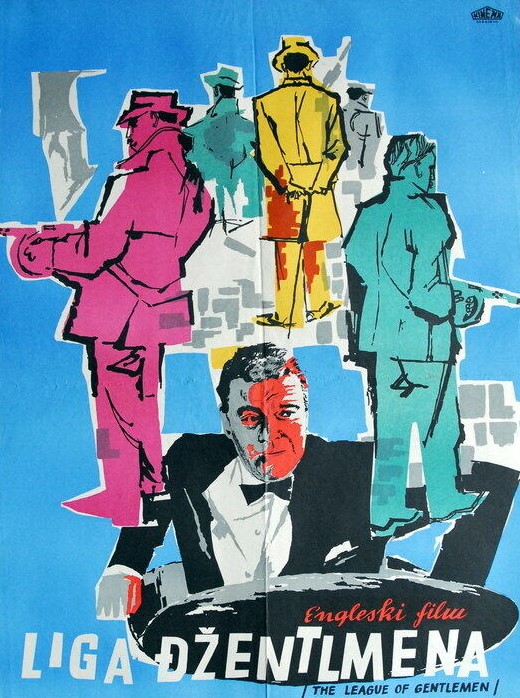
The League of Gentlemen (1960) ****

Cracking British heist film prefiguring titles as disparate as The Dirty Dozen (1967) and Heat (1995). Superb opening scene shows the lid coming off a manhole cover and after a short pause to avoid being drenched by a municipal street cleaner a man in a dinner suit emerges and makes his way to his Rolls Royce. Say hello to Lt-Col Hyde (Jack Hawkins).

Don’t be fooled by early reviews that tabbed this this an “action-comedy,” the humor is only incidental, while serving the important purpose of cutting the grandiose down to size, and not in the vein of, for example, Beverly Hills Cop (1984).

A group of ex-WW2 officers receive a mysterious parcel containing a pulp novel and £50 in notes torn in two, the other halves redeemed if they turn up for a meeting at the Café Royal in London. The opening section is almost a riposte to the recruitment sequence of The Magnificent Seven, out the same year, which strived for effect, and zipped along with one-liners.

This gang are all down-on-their-luck, any courage or leadership displayed during the conflict counting for nothing in peacetime. The sequence is surprisingly risqué for the period, virtually all the characters engaged with disreputable women. So, we have Major Race (Nigel Patrick) running some gambling scam with easy-come-easy-go confederate Peggy (Melissa Stribling), Lt Lexy (Richard Attenborough) a garage mechanic with a sideline in fixing the odds on one-arm bandits and inclined to steal other men’s girlfriends, and Captain Porthill (Bryan Forbes) a pianist playing in seedy dives and living off a middle-aged woman whom he cheats on.

Barely getting by emotionally or financially are Major Rutland-Smith (Terence Alexander) whose glamorous wife (Nanette Newman) takes a string of lovers while ritually humiliating him and Captain Mycroft (Roger Livesey) running a chaplain racket and selling erotic magazines. Hyde lives on his own in a mansion, his absent wife described as “the bitch.”

There’s an undercurrent here that’s barely explored of soldiers who have lost their way, but at the time it could remain underutilized because audiences would be filled with men whose post-war experiences chimed with these characters. Hyde has come up with a stunning plan to relieve a bank of close on a million pounds, the cash split equally, using the various skills his team had acquired through war service.

It’s a bold and, even if carried out with military precision, frankly terrifying exercise that intends to use machine guns and smoke bombs to scare the living daylights out of anyone who dares intervene, bringing New York-style gangsters to the streets of peaceful London. First stop is an army training where, in a ruse similar to that of the later The Dirty Dozen, Mycroft impersonates a commanding officer, inspects troops and deals out humiliation at the drop of a hat. Without doubt, this is an amusing sequence, especially when his superiors in the enterprise, Hyde and Race, are forced to eat disgusting Army slop, but it fulfils the same role as in the Robert Aldrich picture, the least likely soldier allowed to strut his stuff, tension undercut.

The heist itself follows the normal template of planning and execution and it’s brilliantly done, although the crooks are undone by a minor flaw in the procedure. Except for the opening section, and when Hyde exposes, as perhaps community therapy, the criminality of his gang, we learn little more about them, except, as if revisiting the past, how they respond (or not) to the discipline and hierarchy of the Army model on which the group operates. Scoring points off each other, or rebelling, or meting out punishment for misdemeanors, it’s like being back in the Army.

Nobody’s seeking redemption as in The Magnificent Seven or The Dirty Dozen, but it’s still easy to sympathize with an odd bunch whose expectations have been dashed. The scene where Race witnesses Hyde’s stark living conditions, and then offers to wash up the plates piled up in the sink, tells you a lot about how lost some of these men are.

Excellent acting all round from, by British standards, an all-star cast. At one time the number one British star, Jack Hawkins was an occasional Hollywood pick, leading role in Howard Hawks’ Land of the Pharaohs (1955), major supporting roles in Bridge on the River Kwai (1957) and Ben-Hur (1959). Richard Attenborough (The Angry Silence, 1960) had been a top name for over a decade, Nigel Patrick top-billed in director Basil Dearden’s previous outing Sapphire (1959). Kieron Moore (Day of the Triffids, 1963), Bryan Forbes (better known as a writer and director) and Nanette Newman (The Wrong Box, 1966) were rising stars, and you might want to include Oliver Reed (Hannibal Brooks, 1969) in that roster as he makes a camp entrance in a bit part.

Basil Dearden (Khartoum, 1966) is in top form with a script by Forbes from the John Boland bestseller.  

Worth seeing.

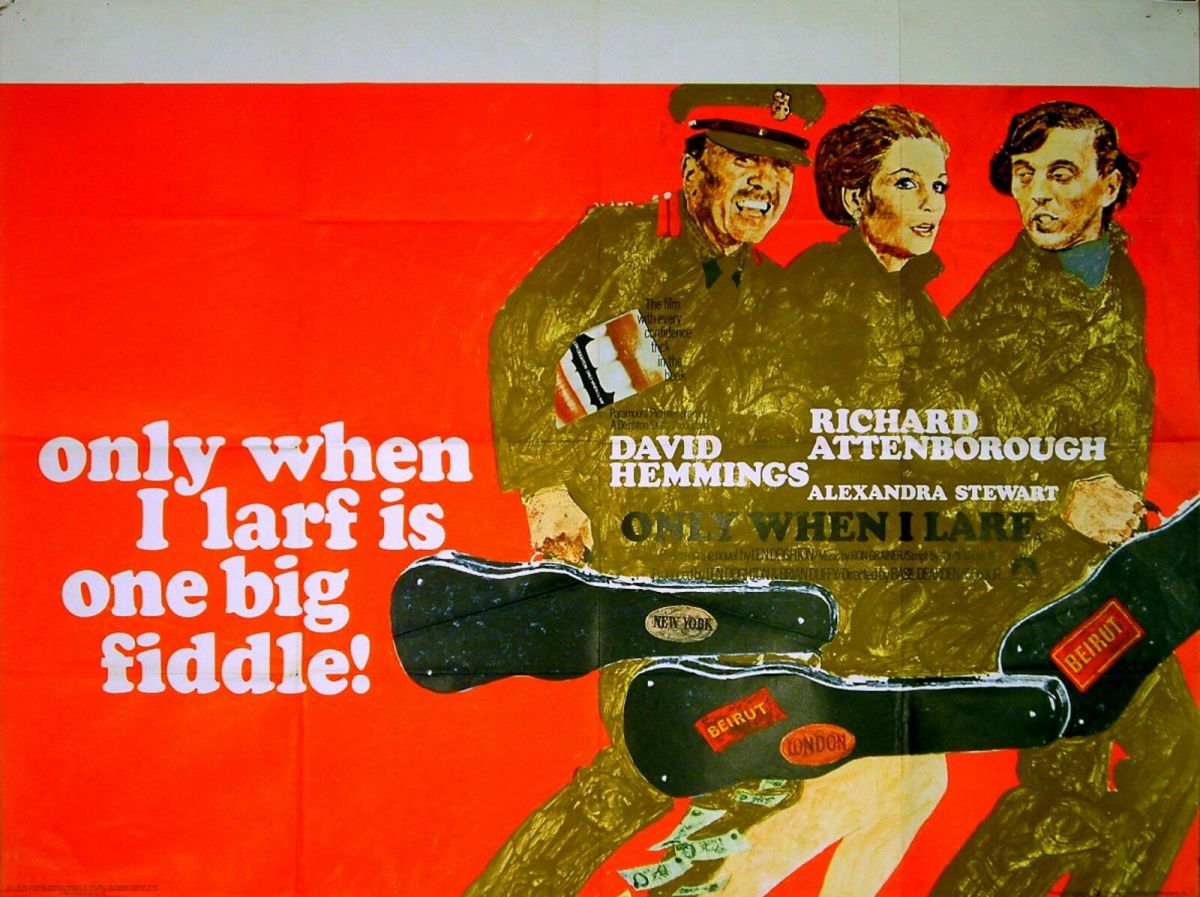
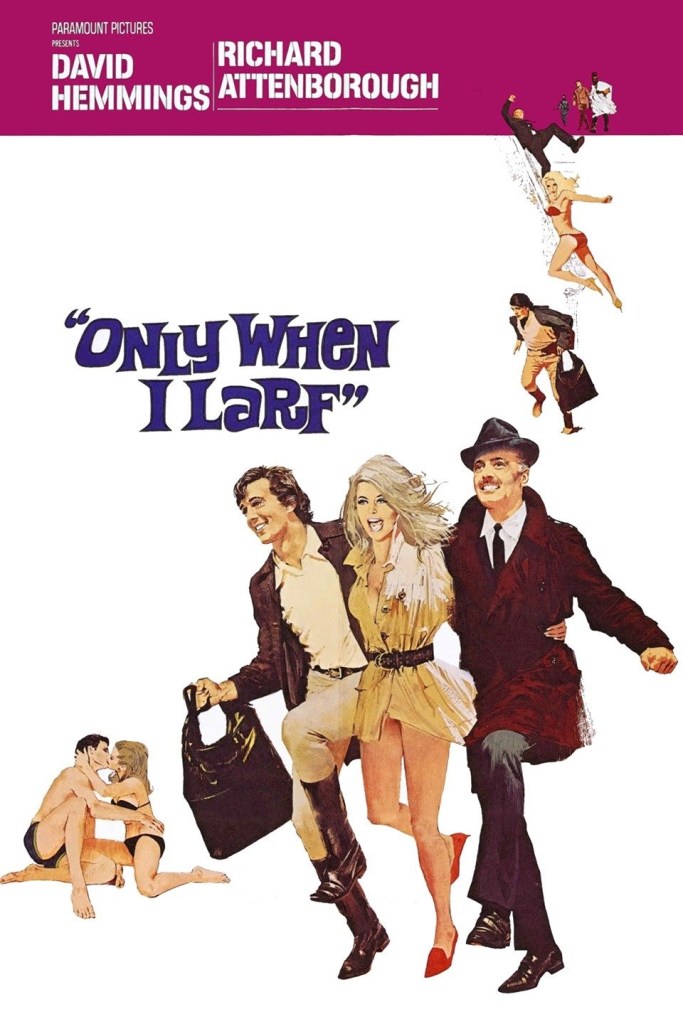
Only When I Larf (1968) ***

Terrific, elongated, 20-minute pre-credit sequence sets up this brisk con-man thriller as the trio of Silas (Richard Attenborough0, his younger lover Liz (Alexandra Stewart) and apprentice Bob (David Hemmings) fleece a couple of greedy businessmen in New York.  The action moves with military precision, the trio so appealing, the scam so well-worked, you want them to escape.

But when their next sting fails to come off, roles are reversed and it is floppy-haired Bob  who takes charge, organizing the scheme, and making moves on Liz. Meanwhile, Silas is planning to double-cross them. The first and last schemes work a treat but the middle one sags, even allowing for cracks to appear in the relationships.

Attenborough is the pick of the bunch, switching accents and personalities, one minute a suave businessman, the next a nervous Lebanon banker, while at other times his stiff upper lip contends with his sergeant-major attitude. Hemmings’ accents are less convincing, all over the place at times, but the switch from junior partner to operation controller is convincing especially as he clearly enjoys putting Attenborough in his place, forcing him to shave off his moustache and giving him the name Longbottom.

And Stewart is never quite what she seems, willing to indulge either man to suit her purpose. Scottish actress Melissa Stribling, wife of director Basil Dearden, is a late addition to the crew and colder-eyed.

This was Attenborough’s first starring role since Guns at Batasi (1964) – Best Actor at the Bafta Awards – and although he had featured roles in Hollywood productions The Flight of the Phoenix (1965) and The Sand Pebbles (1966) – his screen person was quite confined in those pictures. Here, it feels like he has been let free. Hemmings was coming off three heavy roles in Camelot (1967), The Charge of the Light Brigade (1968) and The Long Day’s Dying (1968) so it felt like he, too, had a spring in his step. This was a distinct mainstream jump for Canadian actress Alexandra Stewart, although she had small roles in Maroc 7 (19670 and Truffaut’s The Bride Wore Black (1968),

Basil Dearden slipped this one in between the more lavish Khartoum (1966) and The Assassination Bureau (1969). There is a slapstick chase reminiscent of the latter but, basically, he keeps to the story and allows character to develop. This being a British film, you might find some outdated British attitudes. This was bestselling author Len Deighton’s first stab at production.


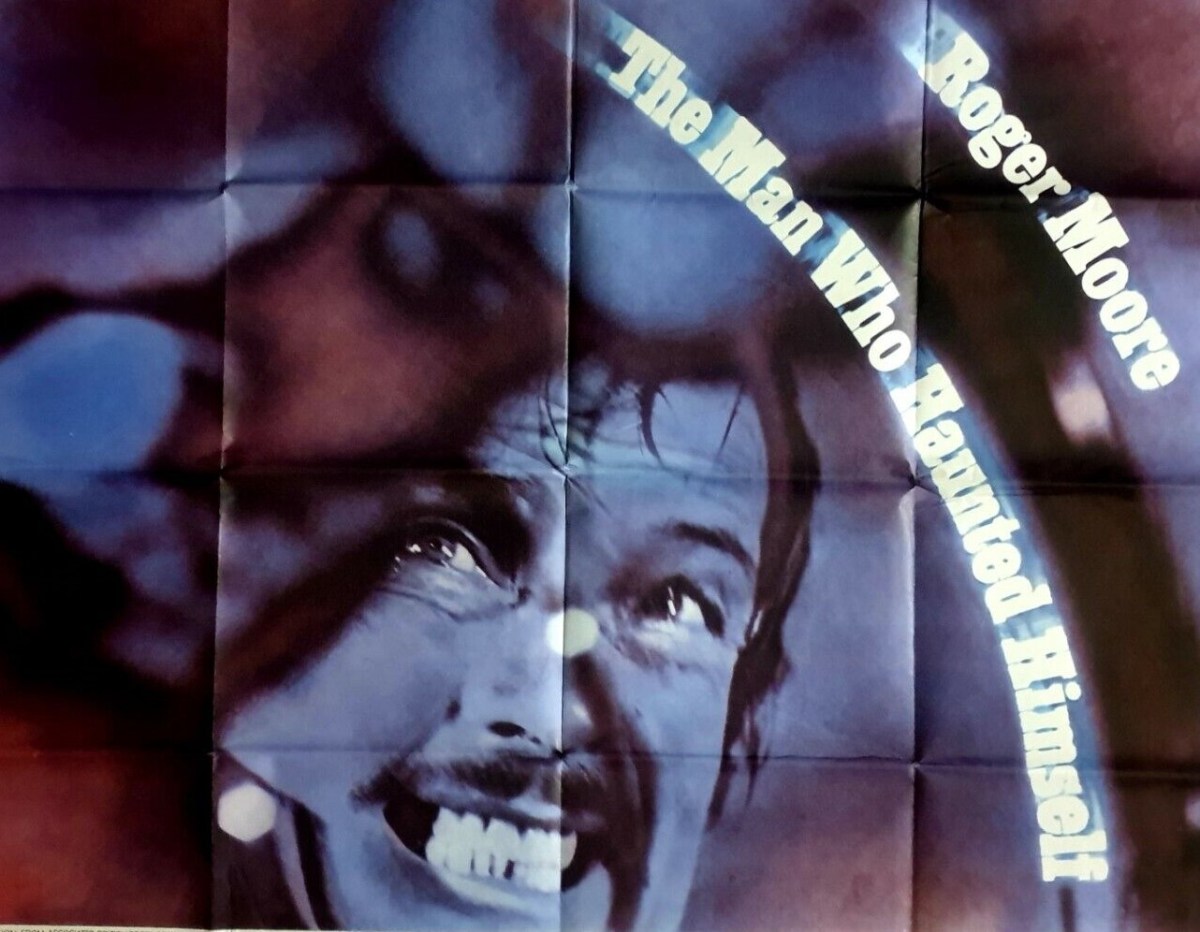
The Man Who Haunted Himself (1970) ****

I grant you, not many movies pivot on a broken matchstick. Nor, for that matter, play around with the screen persona of the imperturbable Roger Moore (Vendetta for the Saint, 1968) or call upon him to do more than raise an occasional eyebrow. No doubt I’m committing heresy in comparing this to The Wicker Man (1973) but there’s a certain similarity in the innocent being dragged into deep waters and, as in that picture, instead of our hero triumphing against sinister forces, ending up a victim.   

While the main narrative thrust is a doppelganger, the initial plot concerns murky business dealings, boardroom betrayal, and corporate espionage set against the backdrop of high living, upscale car, trophy wife, a spot of fun in a casino. The final film of Basil Dearden (The Assassination Bureau, 1969), who died prematurely aged 60, deals with the shattering of the life of strait-laced Pelham (Roger Moore).

He is fastening his car seat-belt a full decade before that was mandatory in Britain, punctuality his mantra, keeps to the speed limit, an immaculate dresser, and while hard work has taken its toll on his marriage he’s not the kind to have a mistress stashed away. But he crashes his car when, against all odds, he seems possessed by the desire to race along at 100mph, overtaking like crazy. For a moment, in surgery, his body registers two heartbeats.

Then people start reminding him of out-of-character activities, thrashing everyone at the club at snooker (and for money stakes), hitting the casino, receiving a nod-and-wink for under-the-table business dealings, while fashion photographer Julie (Olga Georges-Picot) makes sexual demands.

And outside his house his wife Eve (Hildegard Neil) spies a very swanky sports car and begins to suspect her husband is having an affair. Naturally, the upstanding Pelham tries to track down this imposter who has the habit of marking his territory with a broken matchstick. Some occurrences are downright weird. On meeting colleague Alexander (Anton Rogers) for a drink, he discovers he’s already had a drink. There’s the question of a piece of jewellery for Julie that he doesn’t recall buying. An astonished barber wonders why his client would need his hair cut two days in a row. And is someone stealing his shirts and ties?

This is the kind of picture where the normal resolution would be some kind of gas lighting, or tip into film noir with wife and/or the femme fatale involved in conspiracy, or at least some reasonable explanation for the dodgy goings-on.

Britain was going through a doppelganger mini-epidemic, Doppleganger/ Journey to the Far Side of the Sun appearing the year before, but that was a more straightforward sci-fi, being set in the future. And, of course, sci-fi was going through a new cycle what with 2001: A Space Odyssey (1968), Barbarella (1968) and Planet of the Apes (1968).

But it would be a tough call to place this in the same straightforward sci-fi category. The better fit, as I suggested, is The Wicker Man, the background one of a character upset by a different version of normality rather than inhabiting another world or discovering things have changed in the future. And there’s a psychological twist too, the sense of man losing grip on reality, battling  a madness he cannot escape, and while it could have done with dwelling on that aspect a while longer, nonetheless Dearden still achieves his result.

Roger Moore is excellent in twin roles, Hildegard Neil makes an interesting debut and Olga-Georges Picot (Farewell, Friend / Adieu L’Ami, 1968) brings surprising depth to her limited role.

The twisty stuff was written by Michael Relph (The Assassination Bureau) and Dearden based on the bestseller The Strange Case of Mr Pelham by Anthony Armstrong.

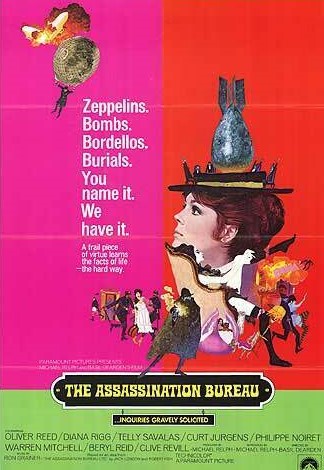
The Assassination Bureau (1969) ****

A couple of decades before “high concept” was invented came this high concept picture – a killer is hired to kill himself. Ivan Dragomiloff (Oliver Reed) is the assassin in question and Sonya Winter (Diana Rigg) the journalist doing the hiring. So Ivan challenges the other members of his murderous outfit to kill him before he despatches them. The odds are about ten to one. Initially involved in shadowing Ivan, Sonya becomes drawn to his aid when it transpires there is a bigger conspiracy afoot.

Set just before World War One, the action cuts a swathe through Europe’s glamor cities – London, Paris, Vienna, Venice – while stopping off for a bit of slapstick, some decent sight gags and a nod now and then to James Bond (gadgets) and The Pink Panther (exploding sausages).

Odd a mixture as it is, mostly it works, thanks to the intuitive partnership of director Basil Dearden and producer (and sometime writer and designer) Michael Relph, previously responsible this decade for League of Gentlemen (1960), Victim (1961), Masquerade (1965) and Khartoum (1966).

Playing mustachioed media magnate Lord Bostwick, Telly Savalas (The Scalphunters, 1968)  has a decent chomp at an upper-class British action. It’s easy to forget was one of the things that marked him out was his clear diction and he always had an air about him, so this was possibly less of a stretch.

Ramping up the fun is a multi-cultural melange in supporting roles:  Frenchman Phillipe Noiret (Night of the Generals, 1967), everyone’s favourite German Curt Jurgens (Psyche ’59, 1964) playing another general, Italian Annabella Contrera (The Ambushers, 1967) and Greek George Coulouris (Arabesque, 1966) plus British stalwarts Beryl Reid (The Killing of Sister George, 1969) as a brothel madam, television’s Warren Mitchell (Till Death Do Us Part), Kenneth Griffith and Clive Revill (Fathom, 1967).

The action flits between sudden danger and elaborate set pieces. When Ivan announces his proposal to his board he promptly fells a colleague with a gavel just as that man throws a knife. Apart from folderols in a Parisian brothel, we are treated to a Viennese waltz and malarkey in Venice. There are disguises aplenty, donned by our hero and his enemies. Lighters are turned into flame throwers.

And there is a lovely sly sense of humour, an Italian countess, wanting rid of her husband, does so under the pretext of Ivan gone rogue. Oliver Reed (Hannibal Brooks, 1969) and Diana Rigg (On Her Majesty’s Secret Service, 1970), adopting her best Julie Andrews impression, are in excellent form and strike sparks off each other. Their verbal duels are a joy to watch. Basil Dearden, in his second-last picture, invested the movie with considerable panache. It takes more skill to carry off this kind of movie, as much satire and spoof as anything else, than a straightforward action or crime picture.

Relph conjured up the screenplay based on an unfinished Jack London novel published posthumously in 1963 with the assistance of crime writer Robert L. Fish.

Shouldn’t work as well as it does. Surprisingly enjoyable.

https://amzn.to/49R8RMy

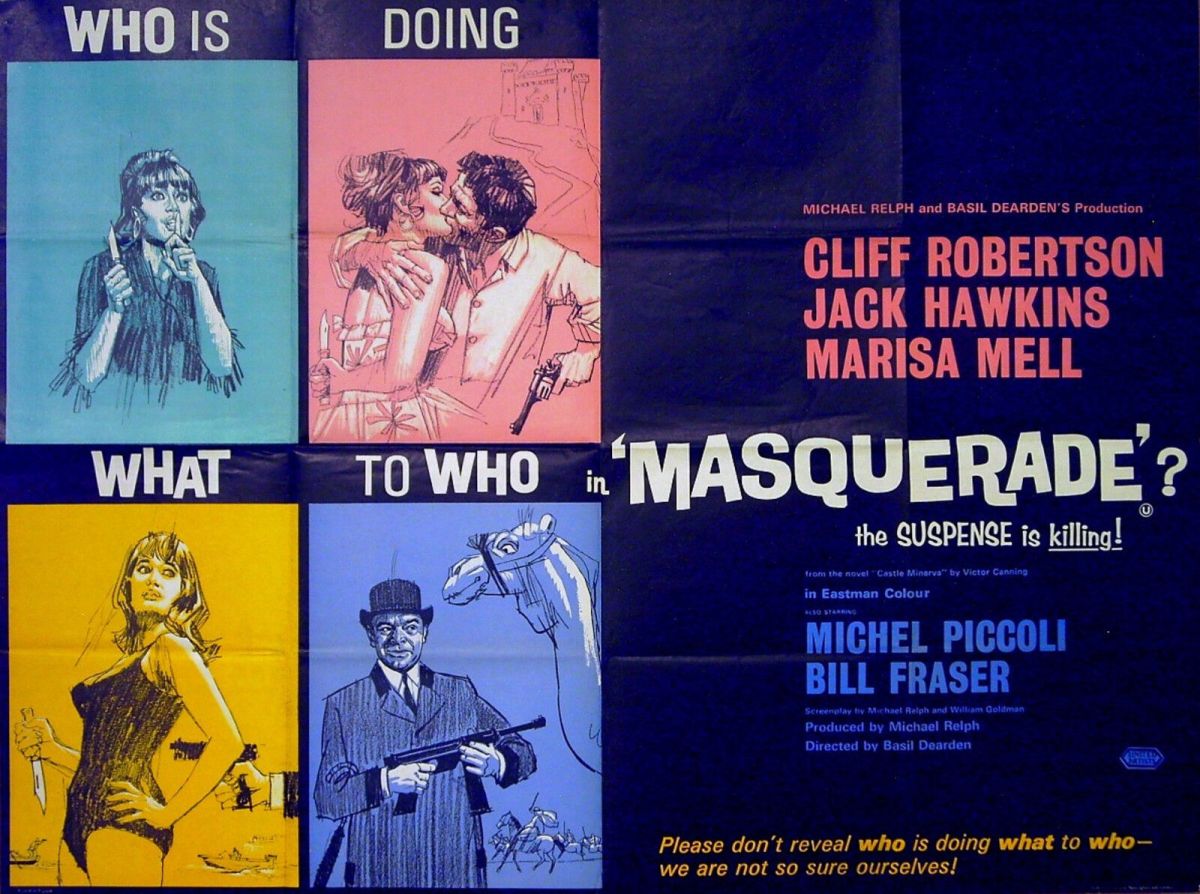
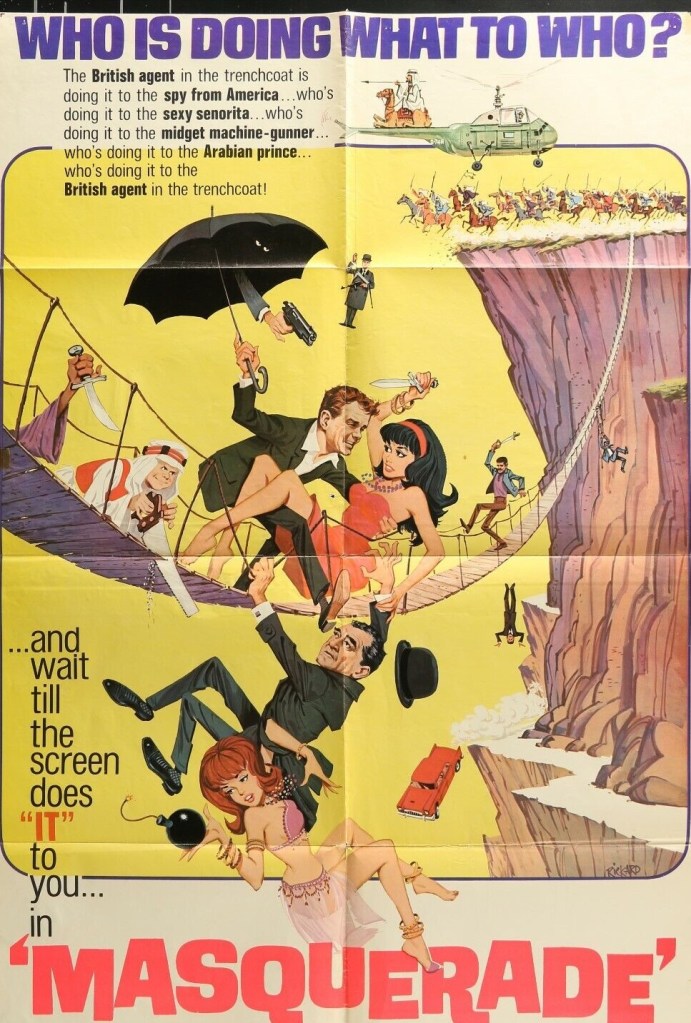
Masquerade (1965) ***

Made just before director Basil Dearden embarked on Khartoum (1965), this is probably best-known these days for being screenwriter – and ace self-publicist – William Goldman’s first credit. It’s based on Castle Minerva by Victor Canning whose previous filmed books included The Golden Salamander (1950) with Trevor Howard, The Venetian Bird (1952)  with Richard Todd, and The House of the Seven Hawks (1959) with Robert Taylor.

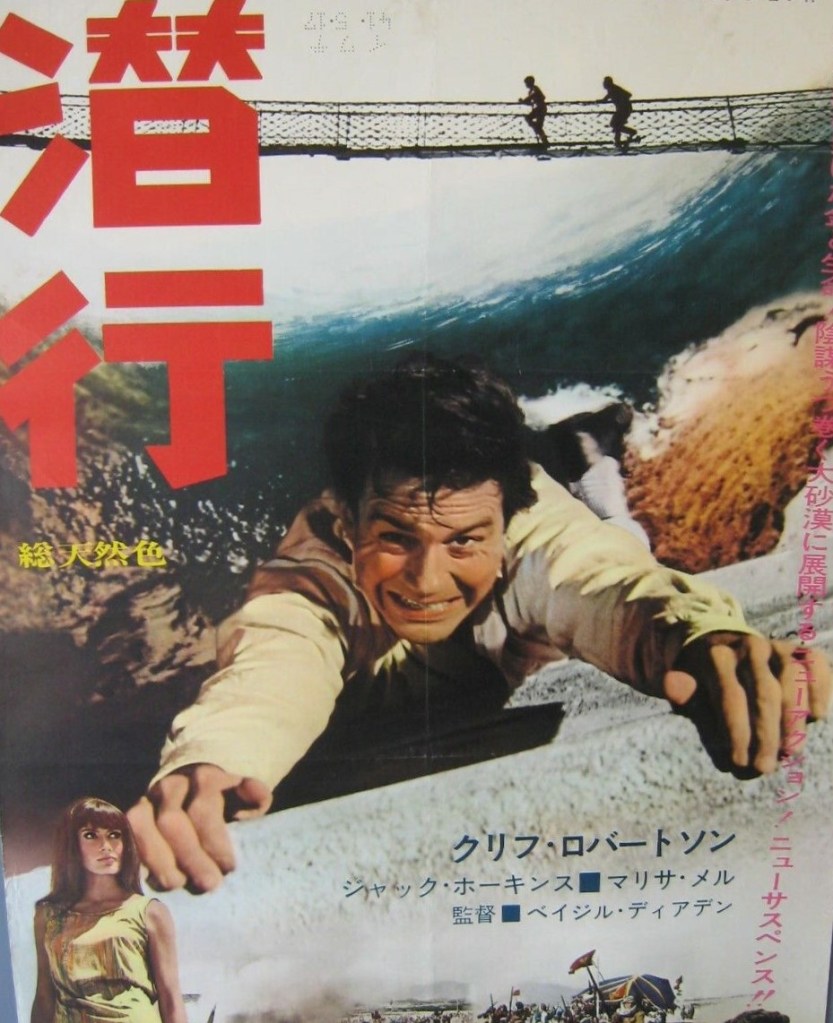
I’d like to say this is a self-aware thriller with spy and comedic elements but it veers awful close to either a cult film or a mess. Basic story has Frazer (Cliff Robertson) hired by former wartime commander and now British intelligence agent Col Drexel (Jack Hawkins) to look after an Arab princeling who has been kidnapped by the British (so much for Brits always being on the side of the angels) to help seal an oil concession in the Gulf.

Theoretically, the kidnapping is for the teenager’s own good, to prevent him being assassinated before he ascends to the throne…see it’s getting awfully complicated already. Anyway, it turns out he actually has been kidnapped by Drexel who has turned rogue in order to fund his retirement. The boy is held in some kind of fortress/castle in Spain and then another more sinister one.

Frazer meantime falls for the seductive charms of Sophie (Marisa Mell) who he thinks is a smuggler intent on stealing his boat but a) is part of the kidnap gang and b) in love with him enough to help him escape when he in turn is captured.

Did I mention the film also included a circus, a clown act, a gunfight on a dam, characters left dangling on a rope bridge, a lady in red, a balancing act along a perilous ledge, entrapment in a wine tanker (huh?) and an animal cage (double huh?), a vulture, men in bowler hats…

It is enlivened by visual gags – ultra-large footprints (from somebody wearing flippers). The dialogue sparkles as when the prince, with an overactive entitlement gland, says, “I am practically divine,” to which Hawkins deadpans “Your Highness, you are irresistible.” Add to that various cliché-twisting scenes – the double-dealing Sophie now overcome by love, says to Drexel: “Ask me anything you want and I will tell you the truth,” but every question he asks solicits the response, “I don’t know.” Then, imprisoned in a cage, after protracted cobbling together of lengths of bamboo to steal keys they turn out to be the wrong keys.

Throw in: British propriety  – Frazer’s  substantial fee for risking his life is reduced to a miserable sum once tax has been deducted; and a superb Arab charge on horseback with tracking cameras, either a rehearsal for Khartoum or the scene that got Dearden the gig.

Actually, the more I write about it the more fun it sounds and I wish it were, but it does not quite gel. Cliff Robertson (The Devil’s Brigade, 1968) and Marisa Mell (Danger: Diabolik, 1968) don’t convince – Robertson talks through gritted teeth without suggesting he has much inner grit – although Jack Hawkins (The Third Secret, 1964) and other British stalwarts like Charles Gray (The Devil Rides Out, 1968) and Bill Fraser (The Best House in London, 1969) and Frenchman Michel Piccoli (Danger: Diabolik) deliver the goods. It should have been a straightforward three-star job or – if qualifying as a cult – in the five-star class. It is definitely not an outright stinker. Perhaps best filed under “curiosity.”

We Need To Talk About Sir Sean – Racism in “Woman of Straw” (1964)

Of course racism was endemic in Britain and the remainder of the British colonies in the 1960s where people of whatever color were treated as inferiors, underlings and at times with a brutality that bordered on slavery. So I’m not intending to say anything new here. But I was incredibly shocked by one scene of racism in Woman of Straw (1964) that I reviewed yesterday, a thriller in the Hitchcock mould starring Sean Connery and Gina Lollobrigida with Ralph Richardson as the wealthy man the subject of a murder plot.

Richardson’s character, Charles, is completely heinous, treating everyone badly, and they being in his thrall cannot bite back, unlike his dogs.

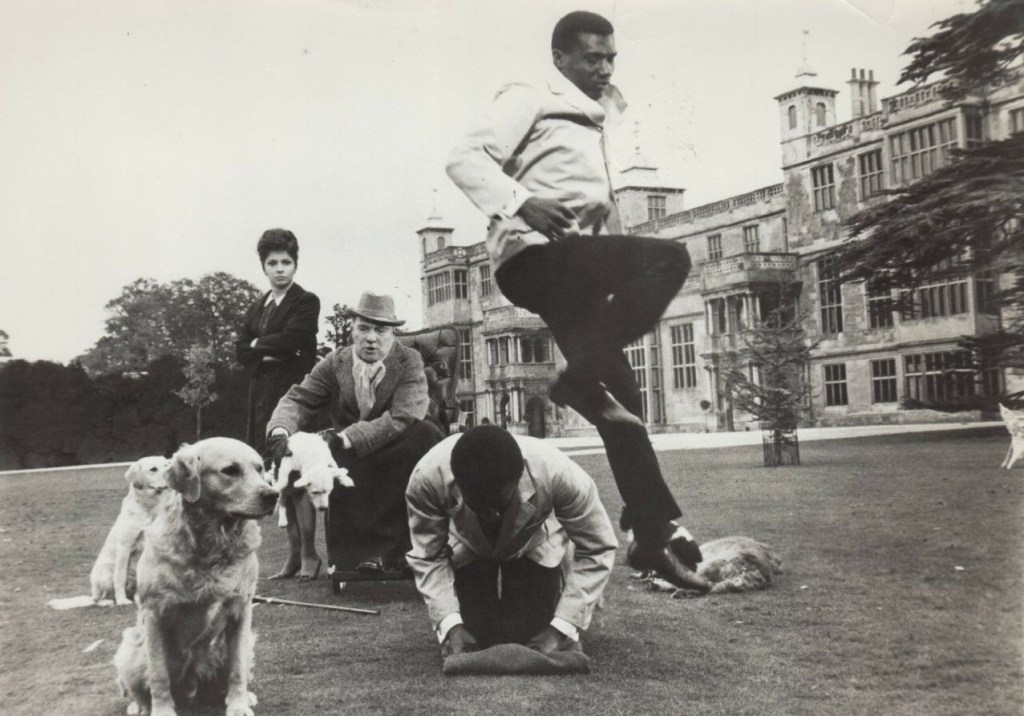
This is a still from the picture showing the offensive incident and would have been
used to promote the movie. As good an indication as any of the prevalent
racism is that clearly nobody believed this to be in bad taste.

For reasons best known to himself, Charles wants his dogs to be able to jump over each other. And when they fail to obey his commands, he instructs his two black servants, played by Johnny Sekka and Danny Daniels, to show them how it is done. One has to kneel on the grass like a dog and the other to jump over him. In due course, the dogs get the hang of it, leaping over the humiliated man on the ground.

There are enough other instances in the film to ensure the audience gets the right idea about Charles without this.

But I was shocked to the core. I have seen many instances of black people treated much worse in films, but in 1964 I guess such treatment would not have been permitted by the censor and this was the closest they could get to the abject degradation required. I can’t have been the only person shocked by it. But nobody was in 1964 otherwise it would not have got past the British censor – eliminating the scene would not have affected the plot – not a murmur from a critic, and certainly no sign of audiences leaving in droves.

But why should it be left to post-production? Did Sean Connery really think there was nothing untoward in the script? If it had been a Scotsman being used in this fashion might he have complained? Did Gina Lollobrigida think nothing of the scene? Similarly, had it been an Italian servant might she have objected? Connery and Lollobrigida either individually or collectively had far more box office cachet than the director – in fact this was Dearden’s move into the big time – so could easily have asked for the scene to be eliminated.

And what of Sir Ralph Richardson, at the time considered one of the great theatrical triumvirate (Olivier and Gielgud the others) who played the character? A forthright person in many other ways, but not here. Perhaps the most surprising person to be blind to the offensiveness of the scene was director Basil Dearden, especially since a previous film Victim (1961) was sympathetic to gay men. I would like to know if the scene was in the source novel by Catherine Arlay.

Whatever, one of the reasons that racism remained so endemic in the 1960s and far beyond was because people failed to see it when it was right in front of their eyes. I’ve no idea who owns the rights to this otherwise good thriller but it might be a good idea for them to take a look and excise this scene or at least give warning that it exists.

The British Board of Film Censors gave this a “12” rating when it came out on DVD. I contacted the BBFC to see if anybody had ever re-watched the film to come to the ratings conclusion. Naturally, I am still waiting to hear back.

You can check out what I’m referring to on YouTube which has a reasonable print. This incident occurs at the 16-17 minute mark. 

Discover WordPress

A daily selection of the best content published on WordPress, collected for you by humans who love to read.

The Atavist Magazine

by Brian Hannan

WordPress.com News

The latest news on WordPress.com and the WordPress community.