Behind the Scenes: “The Sundowners” (1960)

Whereas Deborah Kerr had always been first choice from the moment in 1957 Fred Zinnemann – he had directed her in From Here to Eternity (1953) –  announced plans to film the Jon Cleary bestseller about itinerants in the Australian Outback, Robert Mitchum was third choice. Despite having been successfully paired with Kerr for John Huston’s box office hit Heaven Knows Mr. Allison (1957), he was passed over in favor of, initially, William Holden with whom she had starred in the equally successful The Proud and the Profane (1956). When Holden dropped out, he was immediately replaced by Gary Cooper who had scored a big success with William Wyler’s Oscar-nominated Friendly Persuasion (1956)

And rather than Peter Ustinov (Topkapi, 1964) and Glynis Johns (The Cabinet of Caligari, 1962) in the major supporting roles, Zinnemann had hoped to secure the services of Claudette Colbert and Errol Flynn, both of whom had once been substantial box office attractions, though Colbert had been offscreen since Texas Lady (1955) and Flynn’s marquee appeal was spotty to say the least, though he had just signed up John Huston’s Roots of Heaven (1958). That decision was taken out of Zinnemann’s hands by Flynn’s premature death in 1959.
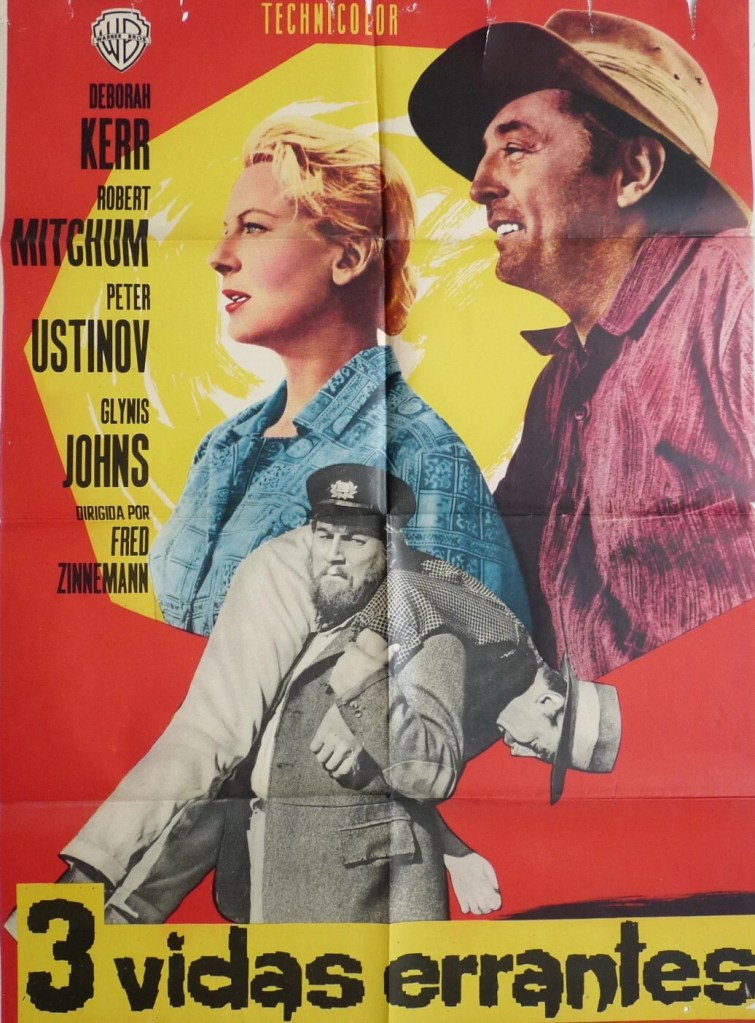
At this point Peter Ustinov was an all-purpose supporting actor and had not appeared in a major Hollywood production in six years but was just about to make a name for himself in Spartacus (1960) while Glynis Johns, at one time a major British star, had lost much of her marquee allure. Kerr and Johns had worked previously on Perfect Strangers (1945) and remained friends.

Nor was Zinnemann first to pounce on the tale. After the novel – based on the lives of the author’s parents – was published in 1952, rights were acquired by producer Joseph Kaufman who commissioned a screenplay from Kay Keavney. But when he failed to secure funding, Zinnemann scooped the rights after being persuaded by Tasmanian-born Dorothy Hammerstein, wife of the lyricist, that Australia would be a great location.

Screenplay duties then fell to Aaron Spelling (Guns of the Timberland, 1960), best known later as an uber-producer in television. After his draft was deemed “unsatisfactory,” he was replaced by Isobel Lennart (Please Don’t Eat the Daisies, 1960), though Zinnemann later claimed that her dialog was “not Australian enough” and author Jon Cleary (uncredited) was called in to solve “these problems.” .

Studio boss Jack Warner wanted Arizona to stand in for Australia but gave in to Zinnemann’s insistence on reality in part because the director had shot the successful The Nun’s Story (1959) in Africa, even though it added $500,000 to the budget. In fact, Warner gave in relatively easily. He understood that “were we to shoot in Arizona,” Zinnemann explained, “it would emerge as a half-assed Western with bars instead of pubs, cowboys instead of sheep-drovers – they move differently, walk and react differently.” It was the first major Hollywood film to be shot there.
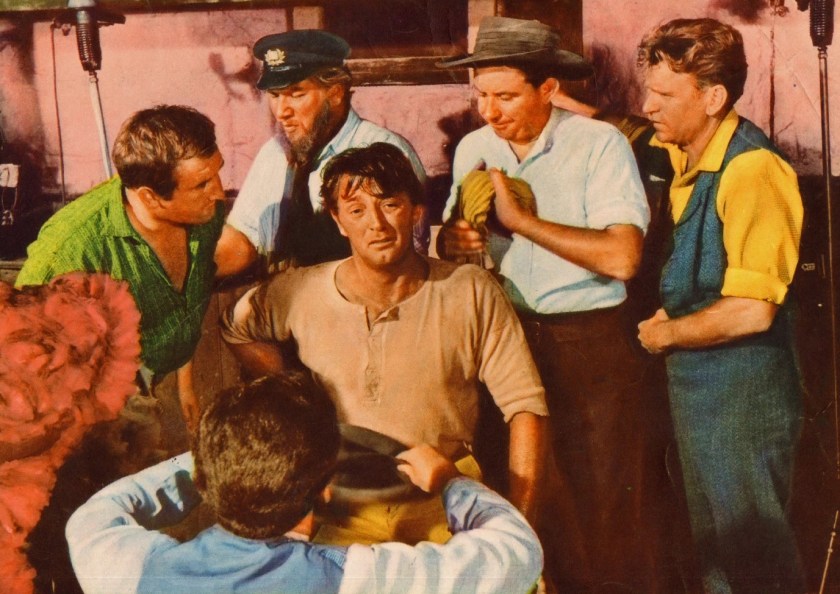
In the second half of 1959 the director spent 12 weeks in advance of the stars arriving filming scenery and most of the scenes involving the sheep – 2,000 of them transported 800 miles to the location. Rather than hiring them, Warner Brothers bought them wholesale and afterwards sold them for a profit.  Despite their reputation for docility, sheep proved difficult to wrangle. A whole day was lost when the leader of the sheep just decided he would move no further and the entire flock did the same.

The crew was initially based in Cooma, a small town in New South Wales. Second unit camera operator Nicolas Roeg would return to Australia a decade later to director Walkabout (1971). The movie was hit by unseasonal bad weather – heavy rain and hailstones – which added several weeks to the schedule.

“There’s a good deal of Ida in me,” said Kerr, “I can settle anywhere and call it home.” Her second husband, screenwriter Peter Viertel (The Old Man and the Sea, 1958), made life more palatable by venturing out into the backs streets and finding German and Italian makers of foodstuffs and thereafter the stars took turns to cook for each other. “Bob Mitchum had a way with steaks,” noted Kerr, “but we all decided Peter was the best and most imaginative cook.”

It’s worth killing off the canard that Kerr only gained top-billing in this picture thanks to the generosity of Robert Mitchum. In fact, Kerr was by far the bigger star. She had been top-billed in Heaven Knows Mr. Allison ahead of Mitchum, The King and I (1956) ahead of Yul Brynner, Count Your Blessings (1959) ahead of Rosanna Brazzi, The Journey (1959) ahead of Brynner again, Bonjour Tristesse (1958) ahead of David Niven, Tea and Sympathy (1956) and The End of the Affair (1955) ahead of Van Johnson. She only ceded top billing to the likes of William Holden and Cary Grant (An Affair to Remember, 1957). Although many commentators these days assume that Elizabeth Taylor was the top British star of the decade, Kerr was easily her equal and outranked her – five versus two – in terms of Oscar nominations.

In fact, in terms of marquee appeal, Robert Mitchum could not compete with Kerr. Heaven Knows Mr. Allison was his biggest hit since River of No Return (1954) with Marilyn Monroe. The work with which he is most commonly associated, Night of the Hunter (1955), was a flop, and he was in the main reduced to a diet of westerns and war films.

He was more associated with the wrong sort of headlines than box office. His previous film The Night Fighters / A Terrible Beauty (1960) attracted more attention from journalists for his fight in a bar than from audiences. But Zinnemann was a fan and had tried to hire him for From Here to Eternity.

Mitchum’s notoriety went ahead of him and at the airport he was deluged by reporters, most determined to know, for such a renowned hard drinker, what he thought of Aussie beer. He crossed swords with journalists a few days later, complaining that he was misunderstood and nothing like his screen personality. “I’m no tough guy,” he argued, “all the public knows is some silver, chromium-plated jerk. How could they know what I’m really like?” When he pointed out that his marijuana bust had been expunged from the record, one frustrated newspaperman recorded, “He isn’t a jailbird, he isn’t a drunk, he isn’t a brawler.”

Mitchum had no trouble with cast and director. Zinnemann was astounded by the actor’s mastery of the accent, pronouncing it  “perfect” and adding “he had the uncanny knack of making any accent sound as though he had been born with it.” Mitchum and Kerr renewed their non-sexual love affair. “It was an honor to feed her lines,” said Mitchum. Zinnemann summed him up, “He has a problem with people who take themselves too seriously.”

But Mitchum was hounded by fans and autograph hunters. An audience gathered to watch him eat in local restaurants, his mood not helped by the solitary confinement imposed when rain prevented filming. One journalist, having inveigled his way into Mitchum’s rented home, was astonished to discover the actor could cook. Jon Cleary sprung to his defense. “Robert Mitchum is anything but a droopy-eyed slob once you get to know him. He is extremely well read and writes beautiful poetry.

When it came to horses, Ustinov was the bigger problem. “He was scared of them and they of him,” said Zinnemann, “and the moment he got in the saddle he would forget all his lines.”

Shooting a bush fire was relatively straightforward since they were a “frequent and devastating occurrence”, so the second unit simply flew near to the area in question, hired a taxi and started shooting. But these fires, fueled by the eucalyptus trees they were burning, moved at terrific speed, jumping along the tops of trees “and scattering their burning fragments fast and wide like projectiles.” But if the fire suddenly switched direction – and it moved at 30 miles per hour – there was a danger, as once occurred, that the crew could be cut off.

When the unit headed for Port Augusta in the south, it was a 45-minute commute to the sheep station at Iron Knob where many scenes were shot. Mitchum had had enough of being an object of curiosity and chartered a luxury cruiser, although he was still fending off young ladies who took to swimming out to the boat.

There was little scenic in the journey to the location. “The dust flew along the whole road,” said co-star Dina Merrill, and Mitchum was taken aback by the size of the sheep and found daunting the task of shearing a 400lb Merino sheep in one go. One mistake and you could cut into a vein and the animal would bleed to death. Mitchum relied on Dutch courage. Interiors were filmed in the more hospitable atmosphere of a London studio. There was an unwelcome sting in the tail for Mitchum – he was sent a tax demand from the Australian authorities which he refused to pay.

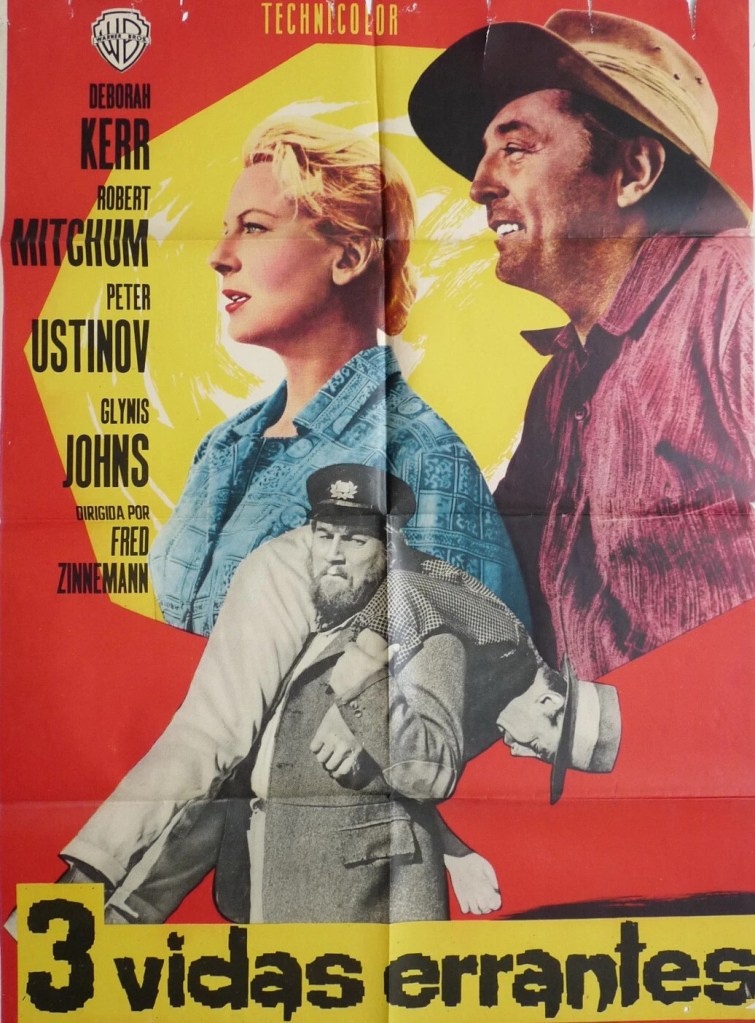
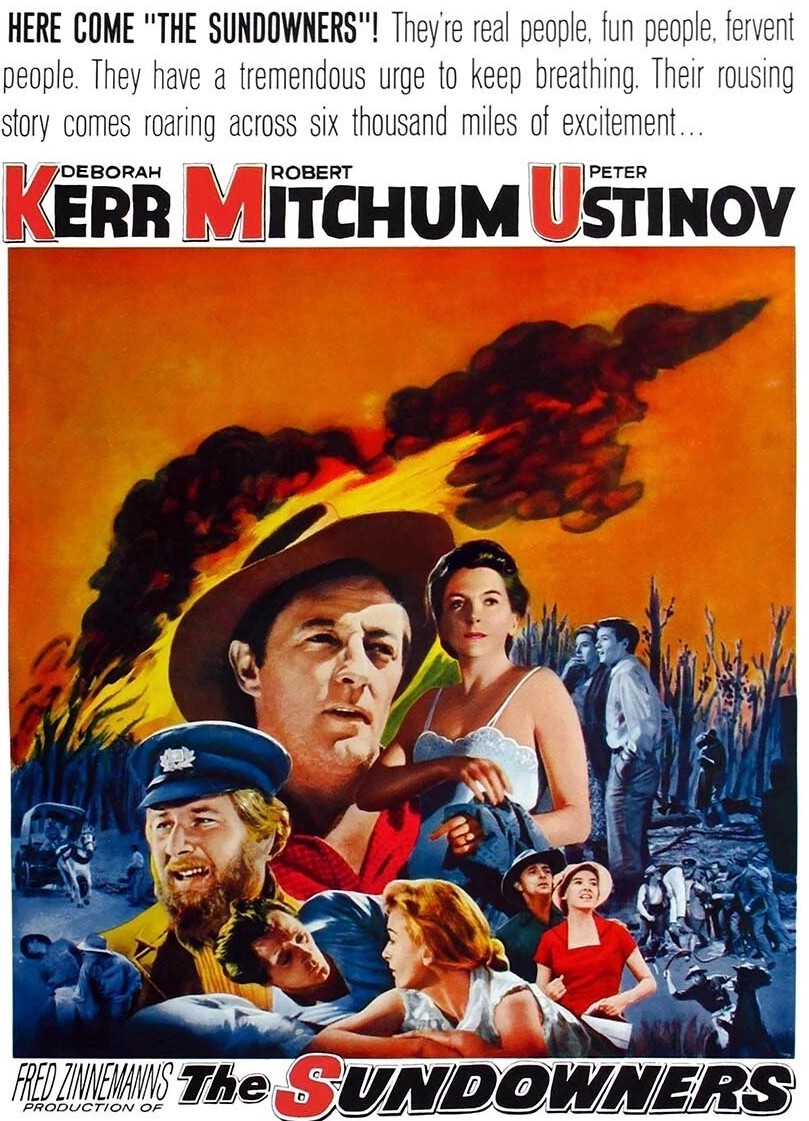
Although Jack Warner had given his assent to the overseas shoot, he was incapable of directing the advertising department to produce a poster that didn’t focus on the notion that this was the frisky Deborah Kerr of From Here to Eternity, “a highly-sexed lady who could harldy wait for the sun to go down so she could lay her hands on Bob.” Audiences were naturally disappointed when the projected love affair failed to materialize.  

While the critics were generally in favor of the movie and audiences in the U.S. big cities responded well, its attraction faded as it set out across the U.S. However, it did better abroad  and not surprisingly was a massive hit in Australia. Mitchum and Kerr re-teamed for Stanley Donen comedy The Grass Is Greener (1960) – with Kerr again billed before Mitchum.

SOURCES:  Eric Braun, Deborah Kerr (WH Allen, 1977) pp173-177; Lee Server, Robert Mitchum, Baby I Don’t Care (Faber & Faber, 2001) pp422-429; Fred Zinnemann, An Autobiography (Bloomsbury, 1992) pp173-183.
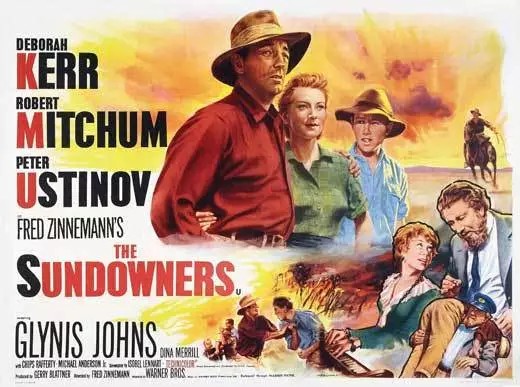
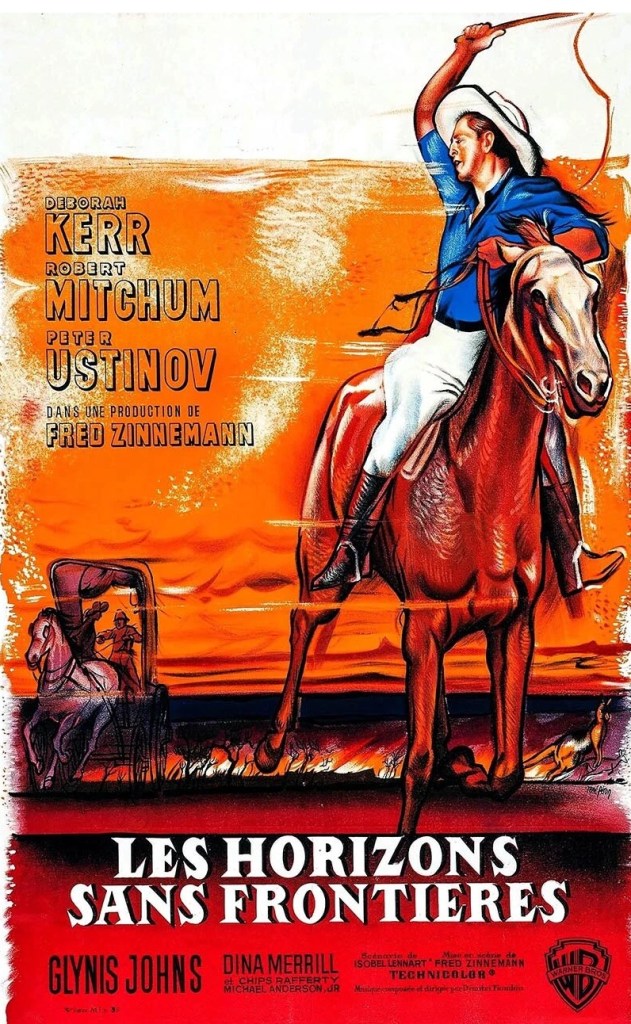
The Sundowners (1960) ****

I kept waiting for Deborah Kerr to turn up and it was a good 20 minutes before I realized that the actress had so immersed herself in the dowdy Ida Carmody that she was turning in what would be recognized as an Oscar-nominated performance. I was less convinced by Robert Mitchum’s Oirish accent but after a time, he, too, buried his normal screen persona under a feckless wanderer. And I was expecting some meaningful point-making stuff from director Fred Zinnemann given he had nursed home such purposeful features as High Noon (1952), From Here to Eternity (1953), A Hatful of Rain (1957) and The Nun’s Story (1959) and would soon be heading back in that virtue-signalling direction with Behold a Pale Horse (1964) and A Man for All Seasons (1966). However, like Day of the Jackal (1973), though for other reasons, this is very much an outlier in the Zinnemann portfolio.

It’s groundbreaking work from the stars. In the first place, Deborah Kerr does the unthinkable for a star of her magnitude – five Oscar nominations so far and a string of hits including From Here to Eternity, The Proud and the Profane (1955) opposite William Holden, The King and I (1956) top-billed ahead of Yul Brynner, An Affair to Remember (1957) opposite Cary Grant and Heaven Knows, Mr Allison (1958) leading Robert Mitchum a merry dance. Here, she is shorn of make-up. Her freckles are everywhere and her cheekbones look as if they are there from hunger not for reasons of fashion. These days, that down-to-the-wire approach would suggest an actress desperately trying to revive her career – Demi Moore in The Substance (2024) or Pamela Anderson in  The Last Showgirl (2024) – rather than a star at the top of her game.

Robert Mitchum, too, dumps his screen persona, and provides his most relaxed and naturalistic performance.

The story is pretty straightforward. Ida wants to settle down, husband Paddy (Robert Mitchum), a born drifter, does not. Paddy enjoys drinking and gambling and wandering through the Australian Outback and ekes out enough as a drover to keep them solvent. The plot, therefore, is episodic. But what could have been a series of loosely-linked sequences is held together by a concentration of the reality of an existence revolving around sheep – droving, shearing, rearing – and trundling along in a horse-drawn caravan, putting up a tent at night, cooking over an open fire, other aspects bordering on the primitive. You can be sure that every minor triumph will be torpedoed.

You could be forgiven for thinking that Wyler had set out to make a western what with the preponderance of sweeping location. Make it sheep instead of cattle and you have Red River (1948) in a minor key with the usual shenanigans once the drover makes his destination.

Livening up proceedings are equally responsibility-resistant itinerant Rupert Venneker (Peter Ustinov), whose more basic skills including pugilism belie his posh accent, and innkeeper Mrs Firth (Glynis Johns) who makes a good stab at trying to hold onto him.

The bulk of the emotion plays through the eyes of Ida, desperately trying to save up enough money to buy a house. A bushfire that temporarily separates the couple unexpectedly acts to strengthen their relationship. While Ida is helping deliver a baby, Frank is getting roaring drunk. The tension between the pair is also a metaphor for growing civilization out of a wilderness, the men who tamed the land becoming redundant, a new educated class taking over. Ida wants to be settled to provide her ambitious son Sean (Michael Anderson Jr) with an education as much as she doesn’t want to be a traveller in her old age.

Offers much about a civilization in the making still relying on the old-timers to put in the hard yards while the guys doing all the work don’t have the sense to seek greater or more stable reward. What’s life if it doesn’t go wrong once in a while? Freedom is its own reward. As Paddy points out, he has no restrictions, the entirety of Australia is his bailiwick.

Wyler makes much of what he’s got, the tensions between the couple undercutting the strength of their affection for each other, and just when it looks as if Ida has got her way Paddy manages to cut loose and destroy her dreams.

There’s drama a-plenty, not just the terrifying bushfire, but a pretty engrossing horse race or two. Paddy’s idea of heaven is to hold court in a saloon singing old Irish songs. Sometimes Ida has little but heartbreak to nurse her along.

And while the various episodes make it a tidy drama, really it’s what one critic described as “a no-story movie – an observation of life” and in that regard more concerned with fallibility and vulnerability. Had it been made by a European director, it would remain one of the most talked-about movies of the decade.

Wyler keeps up a tidy pace. Deborah Kerr (The Arrangement, 1969) steals the show and her peers agreed, putting her up for an Oscar, but it was a close-run thing because Glynis Johns (The Cabinet of Caligari, 1962) was also nominated. Peter Ustinov (Topkapi, 1964) was equally impressive, as was Robert Mitchum (El Dorado, 1967). Wyler was also nominated as was screenwriter Isobel Lennart (Fitzwilly / Fitzwilly Strikes Back, 1967) adapting the Jon Cleary bestseller.

I caught this on Amazon Prime.

Thoroughly involving.

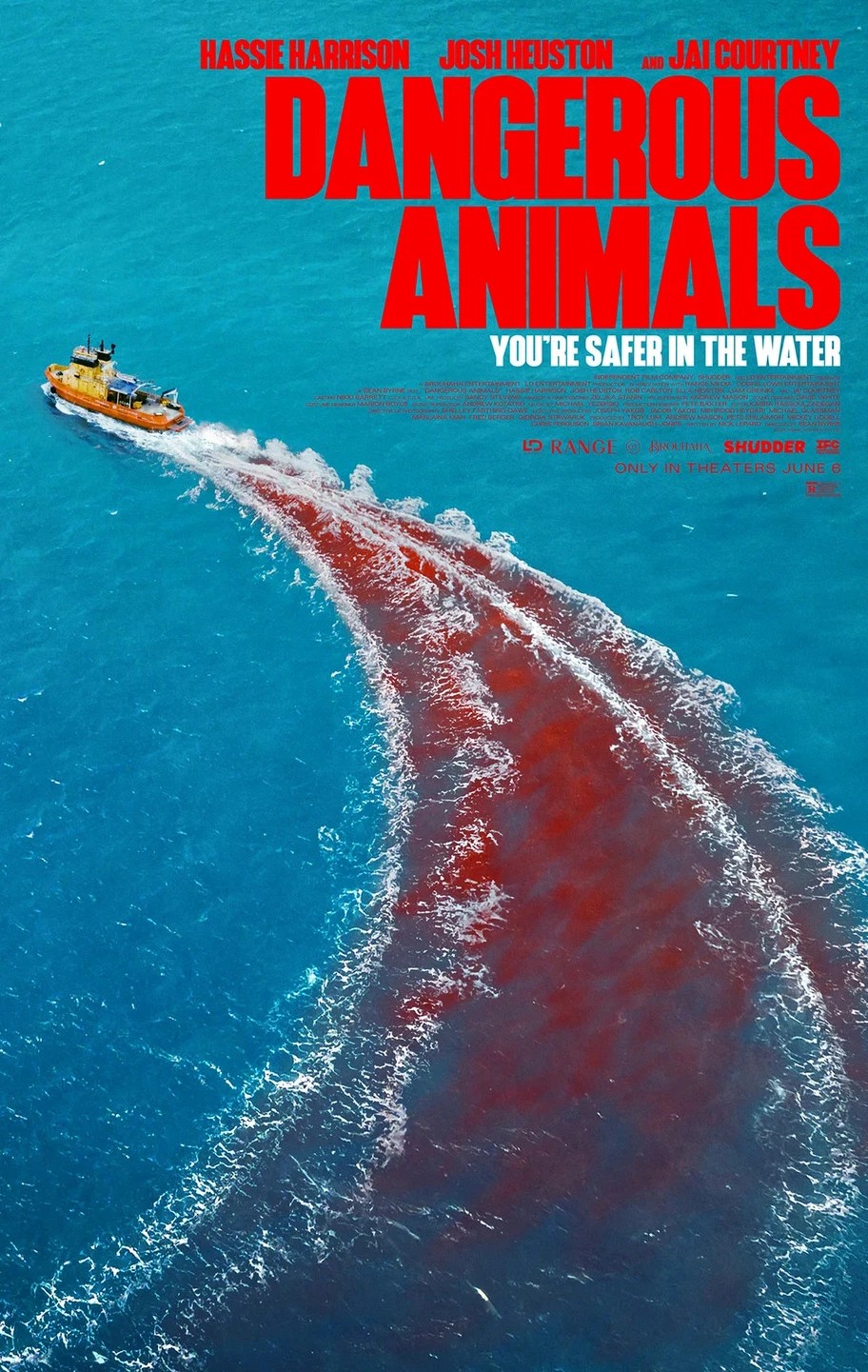
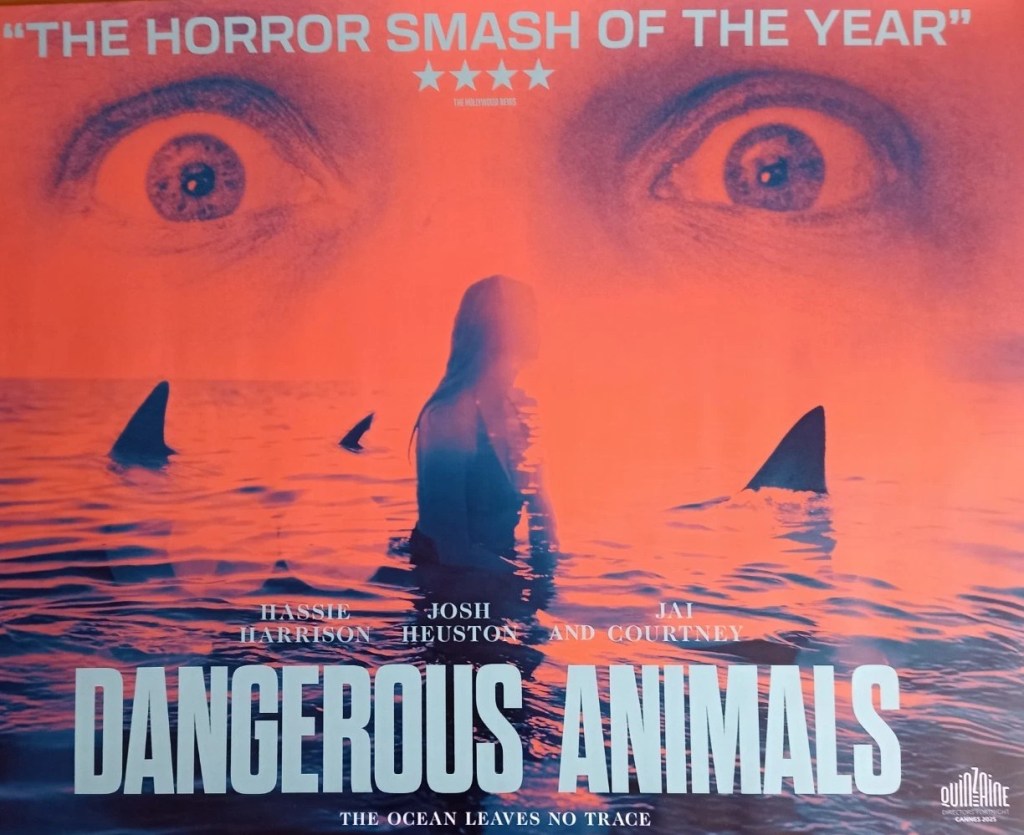
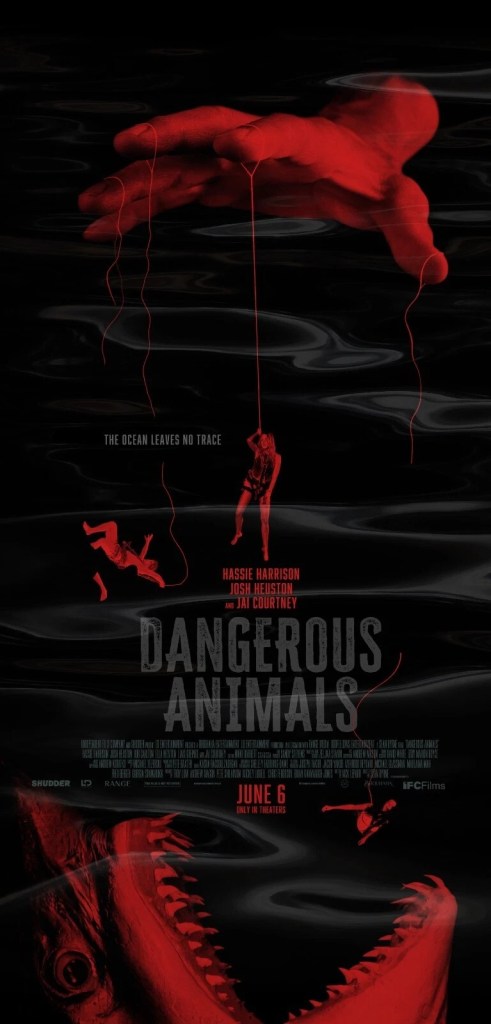
Dangerous Animals (2025) *** – Seen at the Cinema

Steven Spielberg made his reputation dangling human bait to sharks and audiences lapped it up. I’m surprised it’s taken this long for a psychotic serial killer to understand the visceral thrill of watching victims die screaming as they are torn apart by sharks and churn up the sea in a froth of blood and guts. As you know I’m partial to a sharkfest and though this isn’t on the same epic scale in terms of destruction as Sharks under Paris (2024), given I was pretty fed up watching the dire Ballerina (let’s hope she’s excommunicated from the John Wick universe), I toddled off to see this without much in the way of expectation.

It’s pretty much in the Old Dark House line of horror pictures, good-looking young men and women imprisoned by a nutcase of the intelligent version of the species that recently surfaced in Heretic (2024). Aussie boat skipper Tucker (Jai Courtney) has a legitimate business taking tourists out shark-watching in a cage. And he’s got a side hustle in picking up vulnerable tourists – on gap years and the like or trying to escape the confines of the past or hiding out from consequence. He either catches his unwitting prey on land or waits till they turn up on his boat singly or in couples and not part of an organized tour from which their absence would be automatically noticed.

Heather (Ella Newton) and Greg (Liam Greinke) fall into the unannounced category. They get the shark experience but then Greg makes more intimate acquaintance with the predators after he’s knifed in the throat and tossed overboard.

Not only does Tucker like to watch he likes other victims to watch – someone dying. In full Spielberg mode he films the deaths. So he goes on the prowl for another victim, kidnapping the  more sassy Zephyr (Hassie Harrison) in the middle of the night. She’s got a good deal more fight in her than the hapless Heather and manages to find a device to unlock the handcuffs chaining her to a bed, makes a makeshift shank from a broken piece of plastic and is adept at wielding a frying pan or harpoon or any other device that comes within range.

In between delivering homilies on the wonder of the shark, Tucker indulges in his dangling, the screaming Heather chopped to ribbons while Zephyr, strapped to the best seat in the house, is unwilling witness.

Luckily for Zephyr, she has smitten Moses (Josh Heuston), a one-night stand, and he has more detection skill than the cops who are not really interested in yet another beach bum who’s gone off without telling anyone. He tracks down the boat and invites himself to the party. Turns out between them they have more than a smattering of shark lore and when Josh is lowered into the water knows that the sharks will leave him alone if he doesn’t thrash about.

But drugged and chained up the pair have little chance of escape unless the doughty Zephyr goes full tilt escapologist boogie and gnaws off her thumb off to facilitate the cuffs slipping over her hand.

Unfortunately for her this picture is so full of twists there’s very little chance of a clean getaway and even when she makes it to the shore by swimming Tucker, thanks to a dinghy with an outboard motor, is on top of her.

It’s not as gruesome as it sounds, though you will want to avert your eyes when Zephyr starts gnawing on her thumb, and director Sean Byrne (The Devil’s Candy, 2015) emulates his idol Spielberg by turning less into more, ratcheting up the tension through anticipation and some terrific footage of marauding sharks. It helps that he doesn’t have a lascivious bone in his body, there’s no sexual assault, no drooling over half-naked women, no wet t-shirt nonsense.

Hassie Harrison (Yellowstone, 2020-2024) is the latest in a bunch of feisty women who refuse to conform to the scream queen norm. Jai Courtney (The Suicide Squad, 2021) is exceptionally creepy as the learned soft-spoken psychopath. Written by Nick Leppard in his debut.

Sean Byrne knows how to turn the screws.

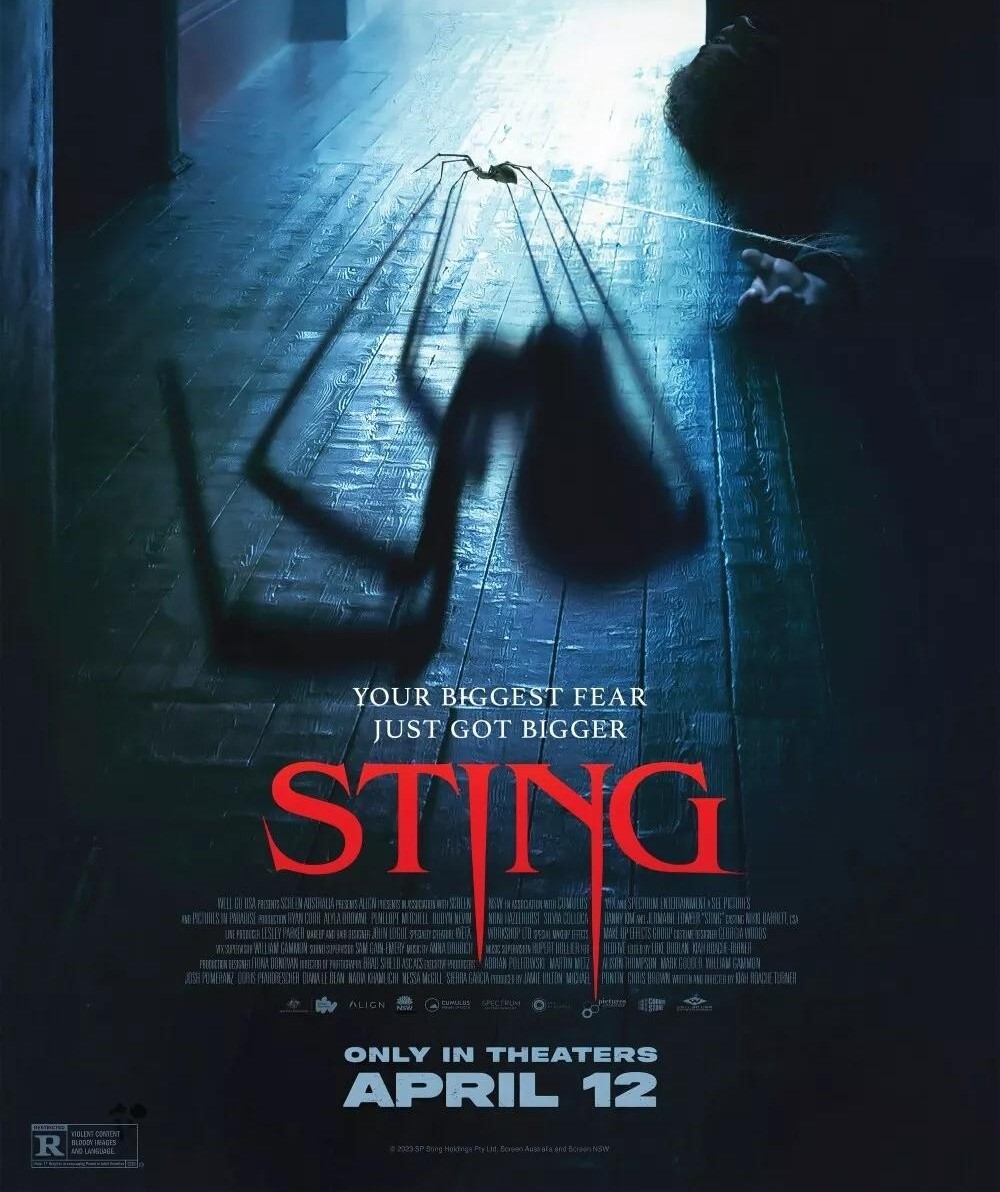
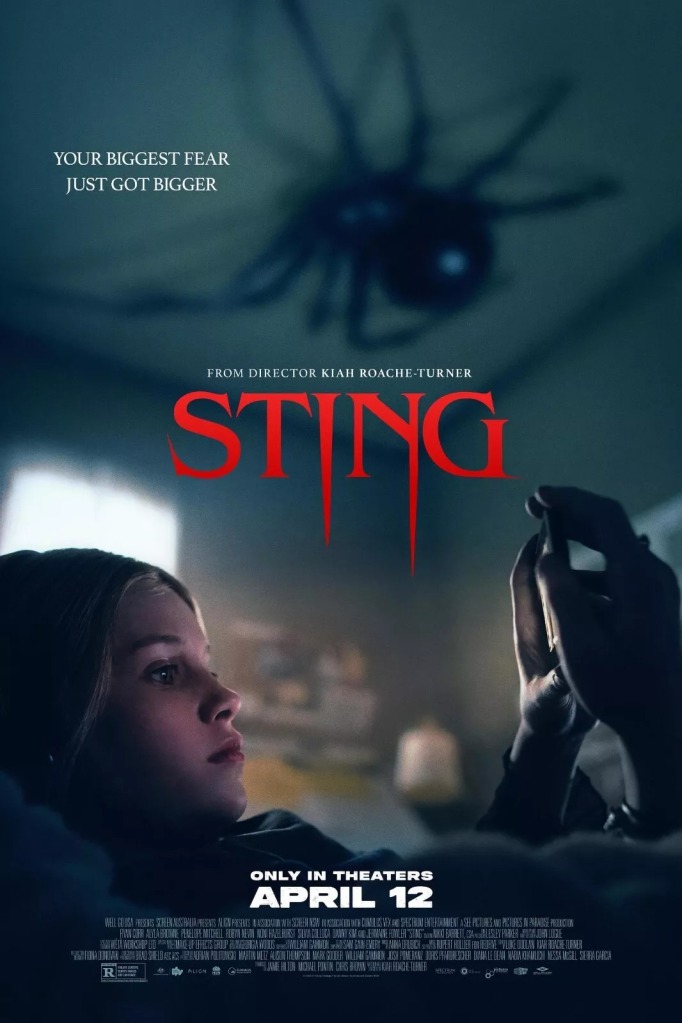
Sting (2024) ****

Once in a while the stars align and, as luck would have it and given we are in stellar mode, a new star is born. Famously, Daniel Day-Lewis owed his instant elevation to arthouse marquee status to the opening on the same day in New York of My Beautiful Laundrette (1985) and A Room with a View (1985) playing such disparate characters that critics were in awe. While not necessarily on that scale I had the privilege of watching a new young talent unfold on my Monday double bill when taking in Sting and Furiosa. The common denominator being Alyla Browne (The Secret Kingdom, 2023), main character in the horror picture and the young Furiosa in the George Miller epic, who, again, essays completely different characters in an extremely convincing manner.

Quite why the horror picture acquired its title is something of a mystery, since nobody actually gets stung and there’s not a bee in sight and any other creepy-crawlies are limited to cameo appearances as lunch for our star creature, a giant spider. Quite why, too, our monster has to come from outer space is anyone’s guess given the Australian filmmakers must be well acquainted with giant spiders hiding in the dunny or other more conspicuous spots in their homeland.

And if you’re going to pretend your movie is actually set in Brooklyn, you’d better not give the game away by the credits forewarning that the picture is part-funded by the authorities in Australia and New South Wales which are hardly likely to pony up for a movie made six thousand miles away, or for suggesting that the country is awash with giant spiders. Setting aside the kind of nit-picking you get on imdb – doorknobs wrongly positioned, for example – this is prime horror.

The genre has shifted away from the dysfunctional family or teenagers high on sex and drugs to settled habitats which allows for more interesting and occasionally subtle character development. There a couple of neat twists, for starters wannabe young illustrator Charlotte (Alyla Browne) is an arachnaphile and her nose is put out of joint by the arrival of a new baby, a half-brother, and accommodating her mother’s new partner Ethan (Ryan Corr) in their lives. They should bond over their joint love of illustrating – he’s a semi-pro – but he’s a tad too critical.

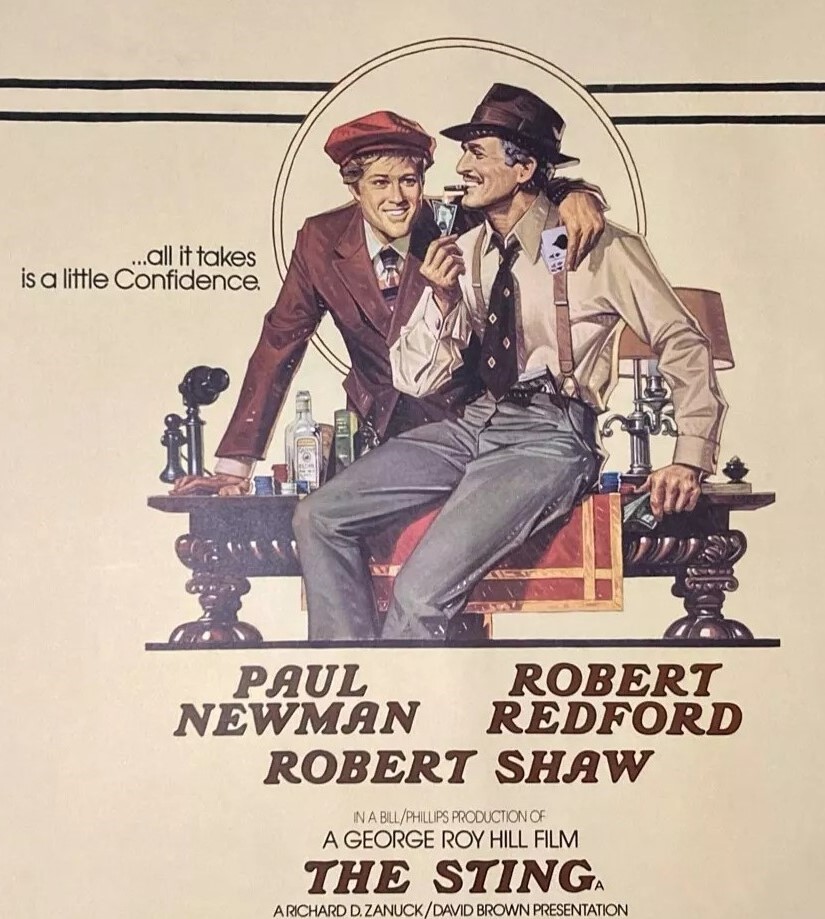
Not to be confused with the 1970s blokcbuster.

Mother Heather’s (Penelope Mitchell) extended family adds complication, mean demanding immigrant aunt and dementia-ridden grandmother living in the same building.

Biggest complication is that when a spider appears out of nowhere, Charlotte adopts it as a pet, catching it live morsels, watching it grow, nicknaming it (presumably because the screenwriter was struggling for a snappy title) Sting and using it as model for her artwork. The creature is unaware that its role is to be fantasy and doesn’t take long to show its true nature, clever enough to twist the cap off the jar it’s contained in, then, after outgrowing such confinement, taking off into the crawl space and hunting down the building’s inhabitants.

That this is a good notch above recent offerings owes much to writer-director Kiah Roache-Turner (Wyrmwood: Apocalypse, 2021). He moves the camera confidently and often slowly, providing panorama where another helmsman would have opted for the cheap shot and quick shock. He takes time to develop the family dynamic, recognizably frazzled at the seams but not coming apart, with the older members exerting dominance through overt power or vulnerability, and there’s some neat comedy involving Frank (Jermaine Fowler) the cocky foul-mouthed pest controller.

The monster munching is well done, nothing that’s going to strain the low budget, carnage mostly kept off-screen, sightings of the beastie limited early on, consequence rather than action the draw.

But the real treat here is Charlotte, the most well-rounded teenage horror character in a long time. She’s hormonal, untidy and passionate, fights with her mother, tries to make peace with both newcomers, Ethan and infant, but is just this side of being creepy, catching beasties for her pet, delighted in its destructive power, but then having to confront all her angst and hostility as it falls to her to turn into rescuer. Alyla Browne is surely a talent for the radar. And there’s a good twist, alien-style, as the dead spider has just time to pop out a few eggs, so, hey, sequel alert, and one that shows all the signs of being more interesting than anything in the vein of The Strangers.

Worth a look.

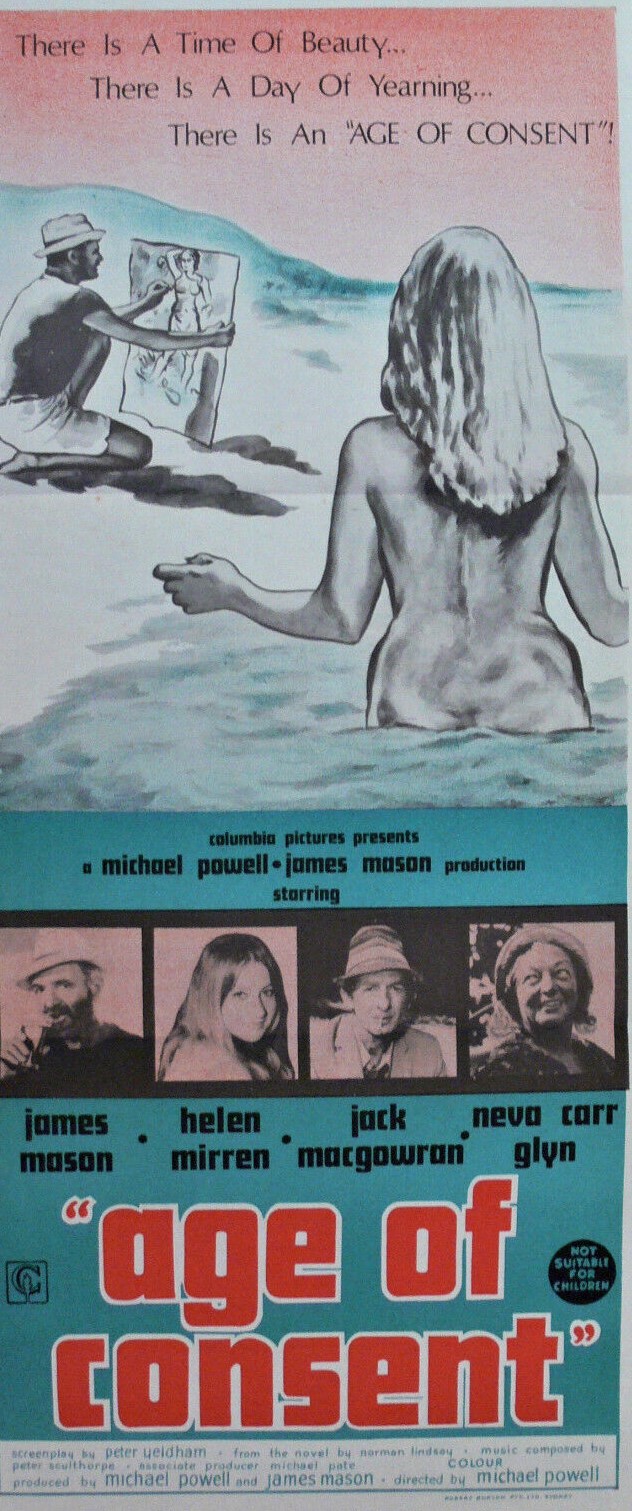
Age of Consent (1969) ***

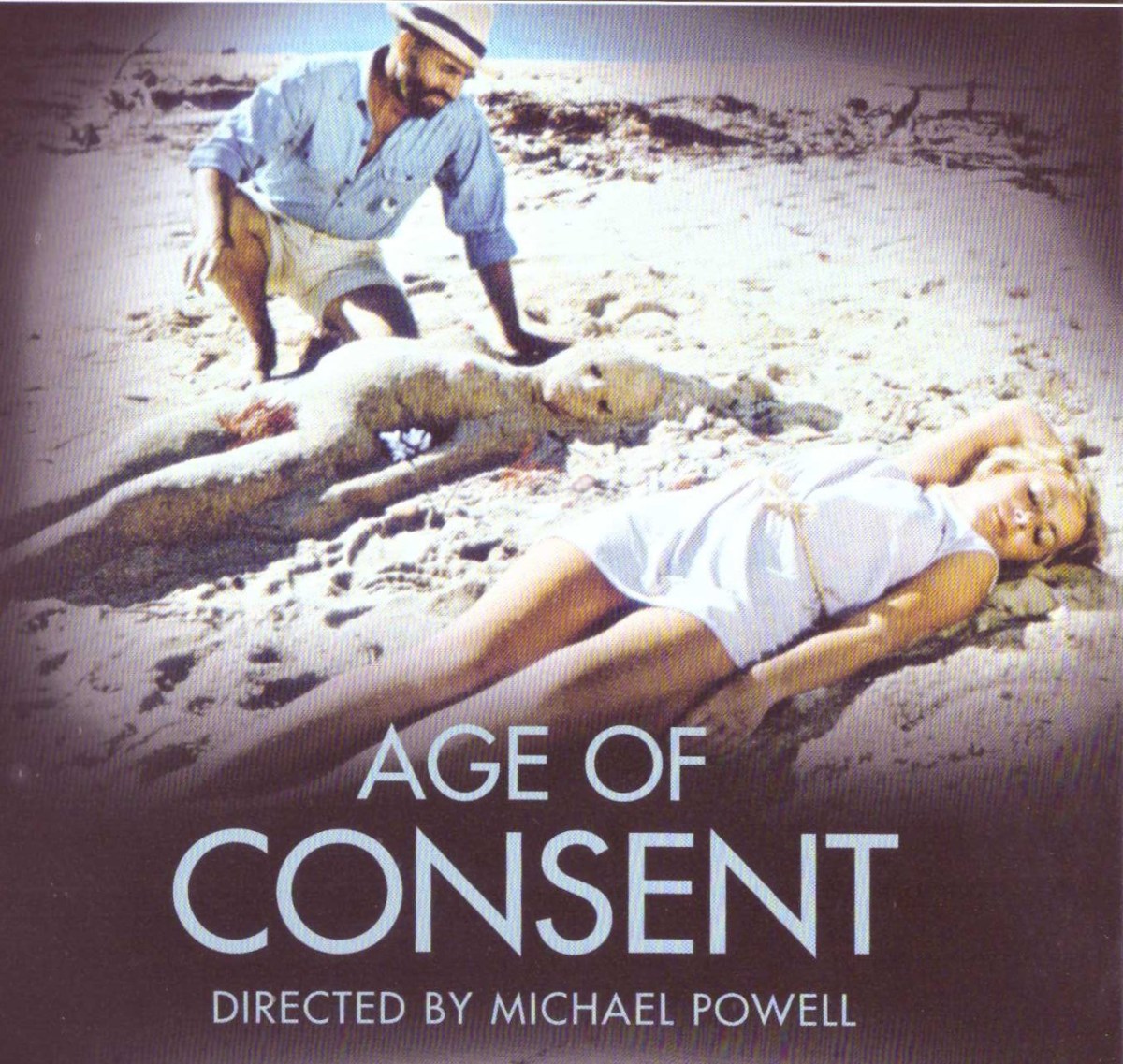
Reputations were made and broken on this tale of a jaded artist returning to his homeland to rediscover his mojo. Director Michael Powell had, in tandem with partner Emeric Pressburger, created some of the most acclaimed films of the 1940s – A Matter of Life and Death (1946), Black Narcissus (1947) and The Red Shoes (1948) – but the partnership had ended the next decade. Powell’s solo effort Peeping Tom (1960) was greeted with a revulsion from which his career never recovered. Age of Consent was his penultimate picture but the extensive nudity and the age gap between the principals left critics shaking their heads.

For Helen Mirren, on the other hand, it was a triumphant start to a career that has now spanned over half a century, one Oscar and three nominations. She was a burgeoning theatrical talent at the Royal Shakespeare Company when she made her movie debut as Mason’s muse. It should also be pointed out that when it came to scene-stealing she had a rival in the pooch Godfrey.

You would rightly be concerned that there was some grooming going on. Although 24 at the time of the film’s release, Cora (Helen Mirren), an under-age nymph, spends a great deal of time innocently cavorting naked in the sea off the Great Barrier Reef in Australia. But there are a couple of provisos. In the first place, Cora was not swimming for pleasure, she was diving for seafood to augment her impoverished lifestyle. In the second place, she was so poor she would hardly have afforded a bikini and was the kind of free spirit anyway who might have shucked one off.

Thirdly, and more importantly, artist Bradley Morahan (James Mason) wasn’t interested. He wasn’t the kind of painter who needed to perve on young girls. An early scene showed him in bed with a girlfriend and it was clear that he was an object of lust elsewhere. Morahan, fit and tanned, obsessed like any other artist about his talent, and was in this remote stretch not to hunt for young naked girls but to find inspiration. As well as eventually painting Cora, he also transforms the shack he rents into something of beauty.

Morahan is vital to Cora’s self-development. The money he pays her for modelling goes towards her escape fund. Her mother being a useless thieving alcoholic, she has little in the way of role model. And the world of seafood supply is competitive. She is lost in paradise and the scene of her buying a tacky handbag demonstrates the extent of her initial ambition. Although her physical attributes attract male attention, it is only on forming a relationship with the painter that Cora begins to believe in herself. There’s not much more to the central story than the artist rediscovering his creative spark and helping Cora’s personal development along the way.

Morahan is a believable character. He is not an impoverished artist. Far from being self-deluded, he is a questing individual, turning his back on easy money and the temptations of big city life in order to reinvent himself. He isn’t going to starve and he has no problems with women. And he is perfectly capable of looking after himself.  A more rounded artist would be hard to find. Precisely because there is no sexual relationship with Cora, the movie, as a film about character development, is ideally balanced.

The movie is gorgeously filmed, with many aerial shots of the reef and underwater photography by Ron and Valerie Taylor. 

What does let the show down is a proliferation of cliched characters who over-act. Nat Kelly (Jack McGowran), sponging friend, ruthless seducer and thief, leads that list closely followed by Cora’s grandmother (Neva Carr-Glynn) who looks like a reject from a Dickens novel. There’s also a dumb and dumber cop and a neighbor so bent on sex that she falls for Kelly. It’s not the first time that comedy has got in the way of art, but it’s a shame it had to interrupt so often what is otherwise a touching film.

At its heart is a portrait of the artist as an older man and his sensitive relationship with a young girl. In later years, Powell married film editor Thelma Schoonmaker and after his death she oversaw the restoration of Age of Consent, with eight minutes added and the Stanley Myers score replaced by the original by Peter Sculthorpe. 

Unusually sensitive screenplay from Peter Yeldham who, as my readers will know, is more usually associated with Harry Alan Towers productions like Bang! Bang! You’re Dead / Our Man in Marrakesh (1966), based on the novel by Norman Lindsay.  

Intriguing, occasionally moving, superb debut from Mirren plus it works.

Anyone But You (2023) **** – Seen at the Cinema

Hey, I’m going back to Anyone but You because I went back to see it again. Blame Oppenheimer, or its lack thereof –  the reissue had been scheduled for showing on Monday but was pulled presumably because it was already on streamer and not enough customers showed up over the weekend – so I took a chance on this substitute. If you recall, I’ve already reviewed it and gave it three stars. But on re-view, I’m upping that to four stars. As is often the case on first viewing, you get snagged down by the narrative, but for second viewing, once you know which way it’s headed you can sit back and enjoy the other ingredients.

I’m not alone in thinking this has been under-rated – in the U.S., box office has gone up by over 11 per cent rather than down in the third weekend of release – and, in fact, the take has increased every weekend – indicating strong word-of-mouth.  

The rom-com has kind of faded away from the glory days of Tom Hanks-Meg Ryan / Richard Gere-Julia Roberts / Hugh Grant-A.N. Other  and if you find it at all these days it’s likely to be wrapped in an adventure or thriller. In truth it’s been on a sticky wicket for over five decades when studios preferred straight-out romance or straight-out comedy rather than a hybrid, but more importantly because, for it to work, you need stars of equal importance who can generate that extremely rare onscreen chemistry.

And not either male or female stars so big that nobody cares who plays the leading man or leading female opposite them. While movie pairings ain’t so unusual – think Tracy-Hepburn, Rock Hudson-Doris Day, Burton-Taylor, Bogart-Bacall, Clark Gable-Lana Turner – it’s worth remembering that it’s only the first two of these teamings that fitted the rom-com mold, the rest being more high octane dramas or thrillers.

Most comedies that have hit the contemporary button have been raunchy boozed-up affairs whose characters have been waylaid by self-destructive tendences, insecurity and body shaming. This one is a throwback to Hollywood gloss. Nobody’s out of work, even temporarily, nobody’s poor, nobody’s moaning about their bodies, nobody’s out of their mind on drink or drugs. The male members may have a predilection for displaying torso, ass and, er, members, and the gals are equally fit, prancing about as likely as not in bikinis or even just the bottom half.

It’s woke enough, it’s a gay wedding they’re attending, they all do yoga and are fit enough to undertake a hike into the wilderness, you can take a break (a la Friends) from a relationship and hook up with someone else, and the worst that can be said is that the older guys like an occasional joint while someone takes peppermint tea with sugar and the male lead, despite being buffed-up-to-hell, is scared of flying and swimming. But it’s a very nifty script, with a bucket of little character-defining cameo moments, the brides-to-be compete to place plates in the correct position on a table, one boyfriend too keen on booze, helicopter parents.

And you could say it is as contemporary as they come, pivoting on effectively tittle-tattle, what otherwise might be an indiscreet comment on social media that turns the world upside down is here just overheard. And it’s a pretty intelligent picture that puts the ability to have a decent fight in a marriage above peace and harmony, reality in other words over romantic fiction gibberish.

The basis of any rom-com is of course meet-cute followed by any number of reasons to keep the couple apart. Most of those ideas have been used up already, so the chances of digging up anything original is rare. What they come up with here is pretty fair, and plays on the necessity of a warring couple required to cosy up in order not to cause chaos at the wedding.

But a rom-com ain’t going to work unless the audience takes to the central couple. And my first question after seeing Glen Powell (Top Gun; Maverick, 2022) and  Sydney Sweeney (The Voyeurs, 2021) is when are they going to team up again? They’re far from cloying or schmaltzy, but believable human beings. Individually, they are stars in the making. Together, they are dynamite..

I’m not sure you’d go for the other Sydney (the one in Australia) as your ideal wedding venue unless Australia was helping you foot the movie production bill, and although interesting use is made of the harbor I’d not be keen on a river so shallow that boats can’t turn around in it (a plot point) but if you’re going to stage a Titanic homage (not the sinking I hasten to add but the King of the World malarkey) probably this is as good a place as any.

Anyway, the story focuses on the disgruntled participants of a one-night stand forced to pair up at a wedding where they encounter an abundance of exes and various interfering family members. While skipping the raw rudeness of its immediate predecessors, there are still a couple of slapstick moments centering on the discarding of items of clothing, but mostly the narrative follows the dictat of the will-they-won’t-they scenario, cleverly finding ways to  keep them apart just when they look set.

Apart from Powell and Sweeney, worth looking out for Hadley Robinson (The Boys in the Boat, 2023), Alexandra Shipp (Barbie, 2023), MTA Charlee Fraser in her movie debut, and old-timers Dermot Mulroney (My Best Friend’s Wedding, 1997), Rachel Griffiths (Muriel’s Wedding, 1994) and Bryan Brown (Cocktail, 1988). Directed by Will Gluck (Friends with Benefits, 2011) from a script by himself and Ilona Wolpert (High School Musical: The Musical, 2021-2023) but pretty much drawn from Shakespeare’s Much Ado about Nothing.

Has charm in abundance, and the script has plenty of bite especially when the couple are trading bitter remarks.

An updated version of the old-fashioned enjoyable rom-com.

Behind the Scenes: Biggest Films in Australia 1960-1969

Information about how films performed outside the United States in the 1960s was incredibly difficult to obtain. Foreign or worldwide grosses were not reported in any consistent fashion – if at all – during that decade. Even the box office I’ve been able to report on previously, i.e. United Artists, just listed foreign as one all-encompassing entity, not breaking it down by country. So, when the opportunity does arise, it’s fascinating to observe how audiences in different countries react to what comes down the line.

Probably it will come as no surprise to discover that the top film of the 1960s in Australia was The Sound of Music. The musical brought in $4.4 million in rentals (the amount returned to studios once cinemas have taken their cut of the gross). It was the number one film, by a considerable margin, in the United States as well. Astonishingly, given the population differential (12.5 million Aussie inhabitants by 1970 vs 203 million in the US) the rentals were, proportionately, on a par, the movie hauling in $72 million in rentals on home territory.

Second place in Australia went to David Lean blockbuster Doctor Zhivago (#3 in the U.S.) with $2.6 million followed by My Fair Lady (#7 Stateside) on $2 million, in both instances, pro rata, bettering their U.S. box office.

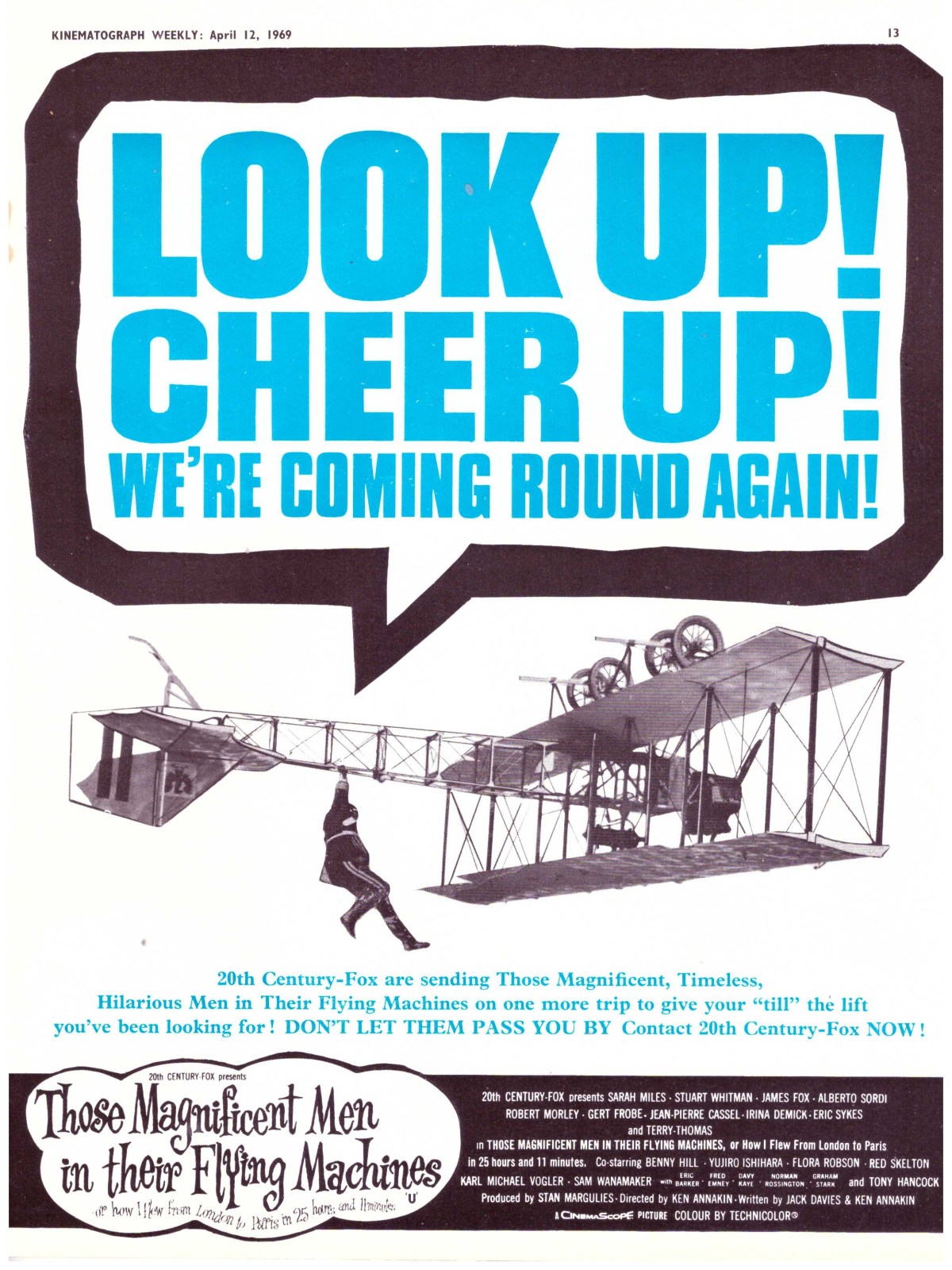
The biggest surprise of the decade was the performance of Those Magnificent Men in Their Flying Machines (#39 Stateside) which rocked up in fourth place with $1.7 million. You could probably say the same for the next picture on the list, Lee Marvin-Clint-Eastwood-Jean Seberg musical Paint Your Wagon, which struggled at the US box office. Australia rentals hooked $1.44 million.

Australians proved largely impervious to the flood of westerns that had struck pay dirt at the U.S box office. Big Stateside hitters like How the West Was Won (#12), True Grit (#47), Cat Ballou (#62), The Professionals (#69), The Alamo (#73) and Shenandoah (#77)  don’t feature on this list. The exception was Butch Cassidy and the Sundance Kid (#28) which raced to $1.31 million and placed seventh Down Under.

Whether humor would travel was difficult to predict. As well as  Those Magnificent Men,  comedies ranking better in Australia than in the U.S. were: It’s A Mad, Mad, Mad, Mad World (#18 Stateside) which took sixth spot here on $1.3 million; Tom Jones (#23) 10th here with $1.06 million; The Great Race (#54) 16th here on $884,000; and Irma La Douce (#43) 20th here with $832,000.

But The Graduate, the second-best performing movie in the U.S., failed to emulate that success, coming in 12th here with $1.02 million. Likewise, comedies that were massive in the U.S. made less of an impact, neither The Odd Couple (#14 Stateside) nor The Love Bug (#22nd) making this list.

Aussies were as appreciative as U.S. audiences of Sidney Poitier’s breakthrough duo Guess Who’s Coming to Dinner (#10) whose $1.08 million secured ninth position here and To Sir, With Love (#19) which took 11th spot on $1.05 million.

There was comparatively less interest in the spy genre that swamped American cinemas during the decade. James Bond was not the bonanza it was Stateside. Thunderball, ranked 8th in the U.S., Goldfinger ranked 11th, and You Only Live Twice ranked 20th were, 21st , 22nd and 30th, respectively here, and not commanding, proportionately, anything like similar rentals.

With $1 million in the kitty, Oliver! outranked both West Side Story ($902,000) and Camelot ($833,000) whereas in the U.S. the situation had been reversed. Here, respectively, they snapped up 13th, 15th and 19th spots whereas in America it had gone 55th, 17th and 45th.

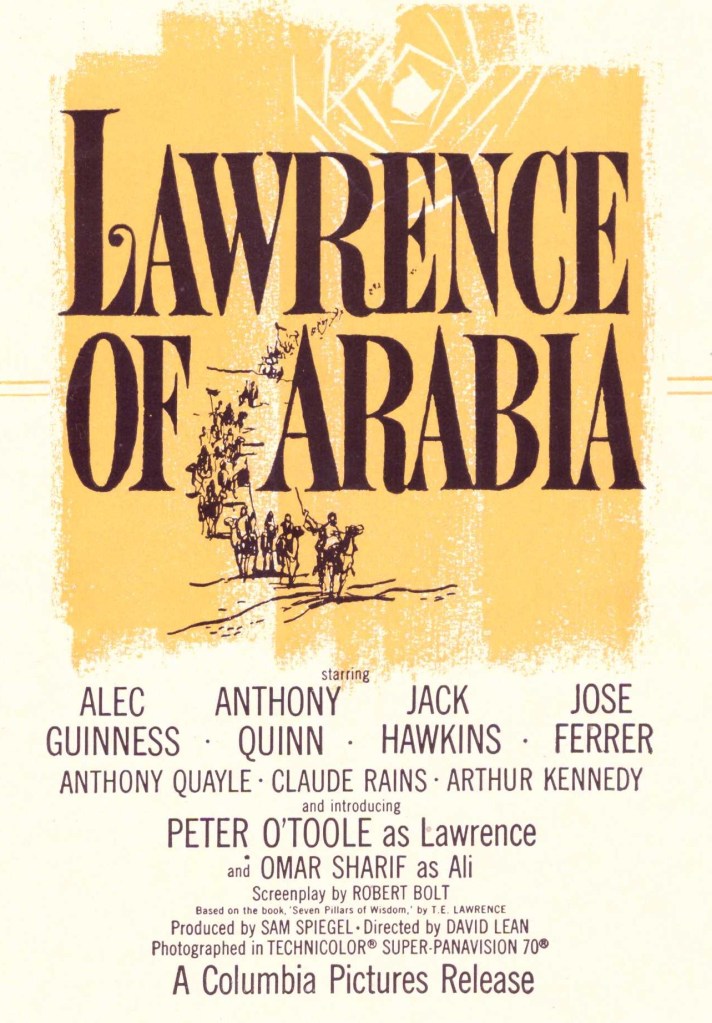
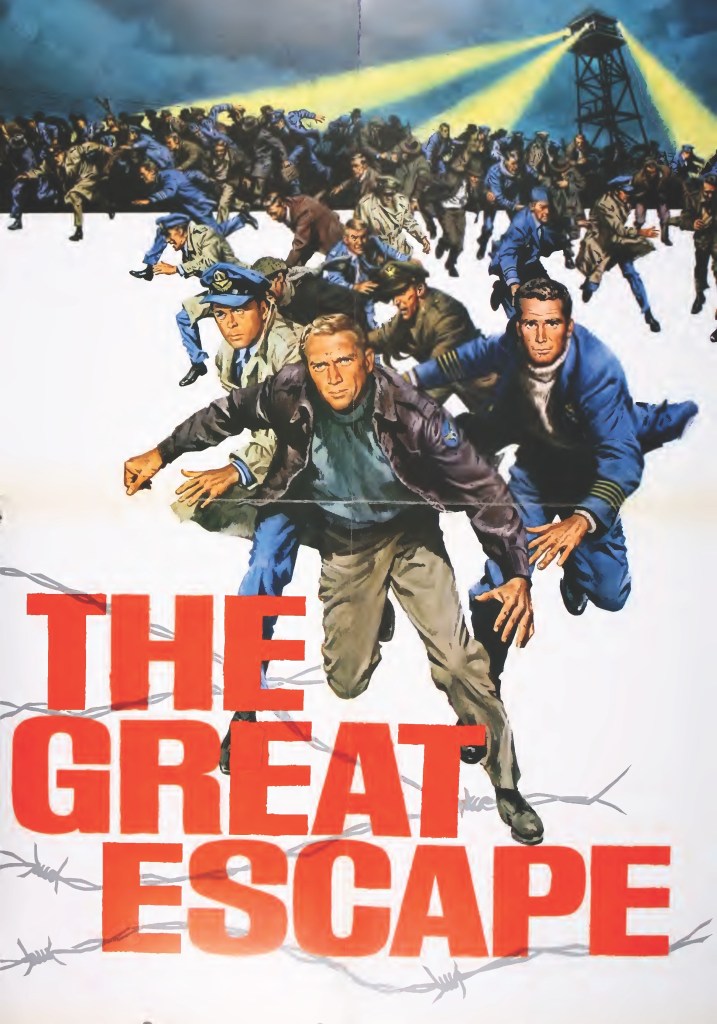
Three outliers which had not made the U.S. Top 100 performed far better in Australia:  Battle of Britain with $776,000 tallied up 23rd spot, Born Free with $721,000 homed in on 26th spot and The Great Escape shot up $543,000 for 32nd. Some other movies in the American Top 100 did considerably better in Australia. Lawrence of Arabia (#28) tracked to 8th spot in Australia with $1.1 million. Chitty Chitty Bang Bang and Hatari!, joint 92nd in the U.S rankings, topped out at 29th and 33rd, respectively, in the Aussie version.  

Controversy didn’t fly so well. Of pictures that fell into that category, the best results came from Midnight Cowboy. It was ranked 52nd in the U.S. rentals race but clocked up $846,000 in Australia to land 18th place. Conversely, The Dirty Dozen, 16th in the U.S., only managed  28th. But other movies laden with sex, drugs, profanity or violence proved to have less appeal. Bonnie and Clyde (#13 Stateside), Valley of the Dolls (#14), The Carpetbaggers (#26), Rosemary’s Baby (#28), Planet of the Apes (#28)  and Who’s Afraid of Virginia Woolf (#37) failed to make the cut.

SOURCES:  “All-Time Aussie Rental Champs,” Variety, May 5, 1982, p54; Brian Hannan, The Magnificent 60s, The 100 Most Popular Films of a Revolutionary Decade (McFarland, 2022).

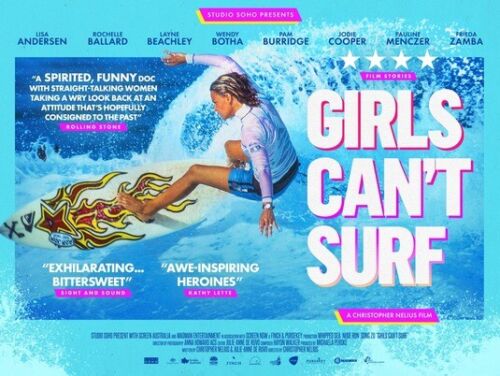
Girls Can’t Surf (2020) **** – Seen at the Cinema

Not to take anything away from this fascinating documentary about the battle for gender parity in the surfing world, but it occurred to me how few movies exist that features female athletes, compared to the plethora focusing on males. The occasional Million Dollar Baby (2004) and I, Tonya (2017) are in stark contrast to the plethora of Rocky (and now Creed)movies,  or all the American football and baseball pictures while Kevin Costner alone has managed a dozen varied sports movies and even the recent King Richard (2021), ostensibly about the Williams sisters, actually centered on the father.  

And the reason I ask is that the lives of any of the champion surfers showcased here would have made a worthy biopic, their stories mostly about overcoming adversity, battling male prejudice and finally, though only in the last few years, winning equal pay with men. Just as King Richard was as much about brand management, so is Girls Can’t Surf, although it was only by accident that big business understood the commercial impact women surfers had on sales of board clothing.

And the other reason I ask is that compared even to the long ago likes of Big Wednesday (1978)  and Endless Summer (1965) the actual surfing footage here is meagre and it got me to thinking how much better it would have been with a proper budget for filming the surfing action.

Anyway, back to the movie I actually saw rather than the one I can only imagine, this covers the growth of female surfing from being regarded as a mere appendage to the male version to the billion-dollar industry it has become, tracing the largely sexist obstacles thrown in the way of women. The biggest issue initially wasn’t prize money, but that the men hogged the best waves and the best beaches, women often allocated times where the waves would be dismal, and therefore could not show off their skills.

This isn’t a sport like tennis or soccer where muscle power gives men the edge. Here, everyone is battling the same ocean. It’s not as if women get to surf with smaller, easier waves – that’s the last thing they want. The ocean doesn’t take it any easier on the women. But the women, barely tolerated, found themselves not just squeezed out of a decent share of the prize money but, being ignored in terms of publicity and deemed unworthy of articles in the surfing magazines, lost out in the battle to raise the sponsorship required just to make a living.

Whenever recession hit the sport, the answer was always to reduce female prize money, cancel female events or attempt to drive them out of the sport altogether. There’s an entire roll-call of generation after generation of top surfers not just battling each other to become world champion (there’s a program of global events as in Formula One racing) but battling personal circumstances – Pauline Menczer was crippled by arthritis, Pam Burridge suffered from anorexia – and each other as well as endemic sexism and inappropriate male advances.

The men were the glamour pusses, and they preferred it if the women stayed in their cars and read Mills & Boon novels and watched them surf, or if they wanted to parade about it should be in bikinis for the beauty contests that appeared a constituent part of any event.

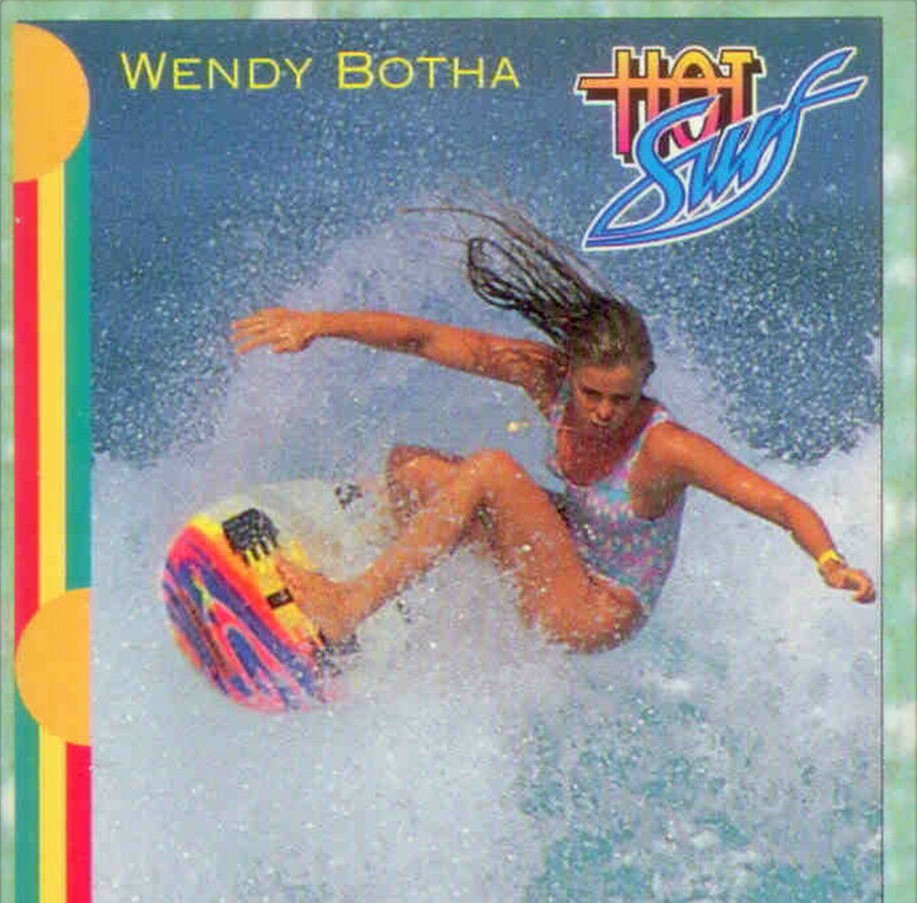
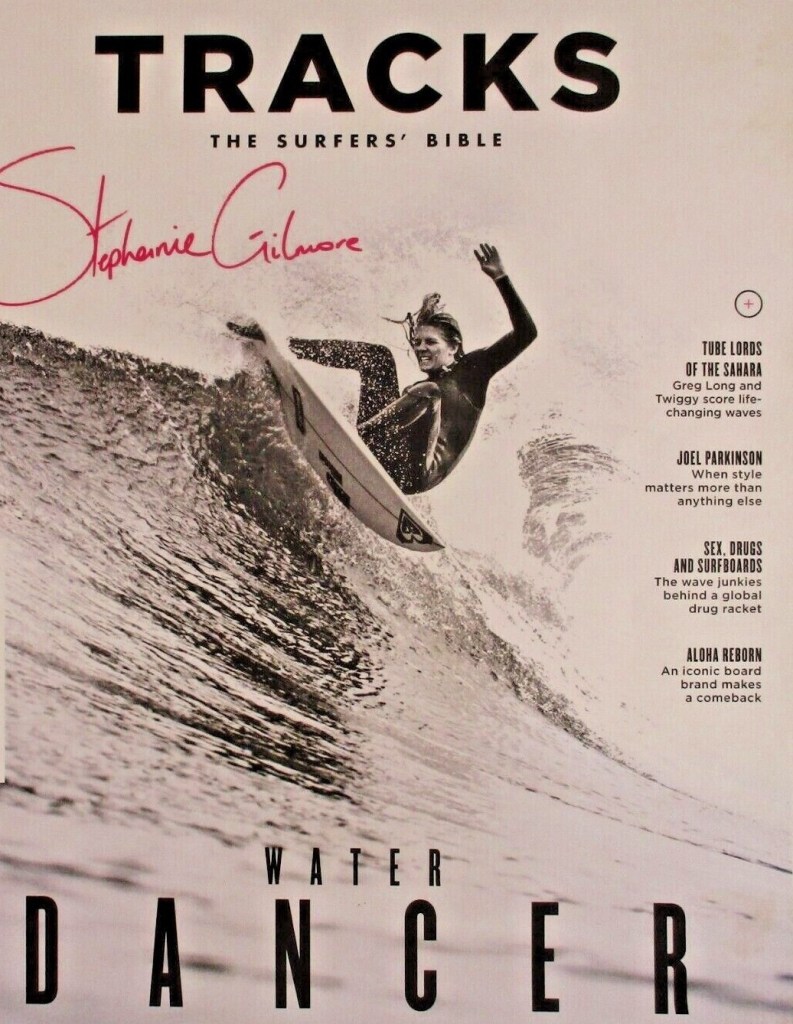
The story is told in large part by the participants, names that were unfamiliar to me, like Jodie Cooper, Frieda Zamba, Lisa Anderson, Wendy Botha, Layne Beachley and Stephanie Gilmore. But the terms they use are the same as competitive athletes the world over, the determination to win, sometimes win at all costs, and even with a world championship trophy to your name unable to attract sponsorship.

The film could easily be interpreted as all about the battle for parity. At the start female prize money was barely a tenth of the million-dollar prize fund allocated the men. But even when manufacturers recognised that females were selling product, female earnings were usually half that of men. Eventually, the women took action, effectively going on strike when offered the poorer time slots in competitions, and at some point, it’s not exactly clear when, forcing the organisers to create a more even playing field, taking competitions to places where there was no shortage of giant waves for both sexes. The men, encountering exactly the same waves as their female counterparts, were forced to admit that in some instances the women were actually better. A social media outcry spelled the end of unequal pay, although noticeably there was no back payment for the years of inequality.

So, a terrific film directed by Christopher Nelius (Storm Surfers: New Zealand, 2010) – and co-written with Julie-Anne Du Ruvo – with no shortage of potential candidates for an awesome biopic, the supposed glamor of the surfing world exposed as tawdry for the most part, a bunch of larger-than-life personalities, a dose of humor, and women riding waves you would be scared to cross in a boat never mind with just a board for company.

In some programming quirk I caught this at the cinema but apparently it’s available on DVD and it must be streaming somewhere. The small screen will no doubt diminish the action but won’t take away form the basic story.

Age of Consent (1969) ***

Reputations were made and broken on this tale of a jaded artist returning to his homeland to rediscover his mojo. Director Michael Powell had, in tandem with partner Emeric Pressburger, created some of the most acclaimed films of the 1940s – A Matter of Life and Death (1946), Black Narcissus (1947) just remade by the BBC and The Red Shoes (1948) – but the partnership had ended the next decade. Powell’s solo effort Peeping Tom (1960) was greeted with a revulsion from which his career never recovered. Age of Consent was his penultimate picture but the extensive nudity and the age gap between the principals left critics shaking their heads.

For Helen Mirren, on the other hand, it was a triumphant start to a career that has now spanned half a century, one Oscar and three Oscar nominations. She was a burgeoning theatrical talent at the Royal Shakespeare Company when she made her movie debut as the muse of the artist played by James Mason. It should also be pointed out that when it came to scene-stealing she had a rival in the pooch Godfrey.

You would rightly be concerned that there could be some grooming going on. Although 24 at the time of the film’s release, Mirren played an under-age nymph who spent a great deal of time sporting naked in the sea off the Great Barrier Reef in Australia. But there are a couple of provisos. In the first place, Mirren’s character was not swimming for pleasure, she was diving for seafood to augment her impoverished lifestyle. In the second place, she was so poor she would hardly have afforded a swimsuit and was the kind of free spirit anyway who might have shucked one off. Thirdly, and more importantly, Mason wasn’t interested. He wasn’t the kind of artist who needed to perve on young girls. An early scene showed him in bed with a girlfriend and it was clear that he was an object of lust elsewhere. Mason was an artist, fit and tanned, as obsessed any other artist about his talent, and was in this remote stretch not to hunt for young naked girls but to find inspiration. As well as eventually painting Mirren, he also transforms the shack he rents into something of beauty.

Mason is as vital to Mirren’s self-development. The money he pays her for modelling goes towards her escape fund. Her mother being a useless thieving alcoholic, she has little in the way of role model. And the world of seafood supply was competitive. She is lost in paradise and the scene of her buying a tacky handbag demonstrates the extent of her initial ambition. Although her physical attributes attract male attention, it is only on forming a relationship with the painter that Mirren begins to believe in herself. There’s not much more to the central story than the artist rediscovering his creative spark and helping Mirren’s personal development along the way.

And if Powell had wanted to make an erotically-charged movie, he need look no further than his own Black Narcissus, in which two nuns are brought to the brink of lustful temptation in a convent in the Himalayas. Powell, himself, had form in the erotic department, having previously been the illicit lover of the film’s star Deborah Kerr and at the time of making the movie had switched, in similar illicit fashion, to her co-star Kathleen Byron. There is no question that the young Mirren in a beauty, but it is not lust that guides Mason.

Female career longevity has always been an issue in Hollywood, the assumption being that women had shorter careers than men. But when I was writing “When Women Ruled Hollywood,” I discovered this was not true. Until Sophia Loren’s late foray this year, Jane Fonda had led the roll of honor – male or female – with a career lasting 58 years. Next came Shirley Maclaine with 56 years, then Clint Eastwood (54), Katharine Hepburn (52) and Helen Mirren (51) and Robert Redford (51). Loren’s latest – The Life Ahead – gave her a career as a recognised star turn of 66 years.

Mason is a believable character. He is not an impoverished artist. Far from being self-deluded, he is a questing individual, turning his back on easy money and the temptations of big city life in order to reinvent himself. He isn’t going to starve and he has no problems with women. And he is perfectly capable of looking after himself.  A more rounded artist would be hard to find. Precisely because there is no sexual relationship with Mirren, the movie, as a film about character development, is ideally balanced.

The movie is gorgeously filmed, with many aerial shots of the reef and underwater photography by Ron and Valerie Taylor.  

What does let the show down is a proliferation of cliched characters who over-act. Jack McGowran as a sponging friend, ruthless seducer and thief heads that list closely followed by Neva Carr-Glynn as Mirren’s grandmother who looks like a reject from a Dickens novel. There’s also a dumb and dumber cop and a neighbor so bent on sex that she falls for McGowran. It’s not the first time comedy has got in the way of art, but it’s a shame it had to interrupt so often what is otherwise a touching film.

At its heart is a portrait of the artist as an older man and his sensitive relationship with a young girl. In later years, Powell married film editor Thelma Schoonmaker and after his death she oversaw the restoration of Age of Consent, with eight minutes added and the Stanley Myers score replaced by the original by Peter Sculthorpe.

Discover WordPress

A daily selection of the best content published on WordPress, collected for you by humans who love to read.

The Atavist Magazine

by Brian Hannan

WordPress.com News

The latest news on WordPress.com and the WordPress community.