Marketeers employ a cute trick to get round the contractual billing required on movie posters. The position and size of a star’s name in any movie – even now – is stipulated long before a single camera rolls. This is where all the “name above the title” malarkey stems from comes from, that stipulation setting the reals stars apart from the wannabes.
However, whoever was in charge of drawing up the standard boilerplate template was only concerned with names, not images. That left a loophole to be exploited. Should you have a female rising star, whose face or figure might be a darn sight more attractive than the top-billed male, well, by heck, there was nothing to stop you plugging the contractually-less-dominant person all over the poster at the expense of the top-billed star.
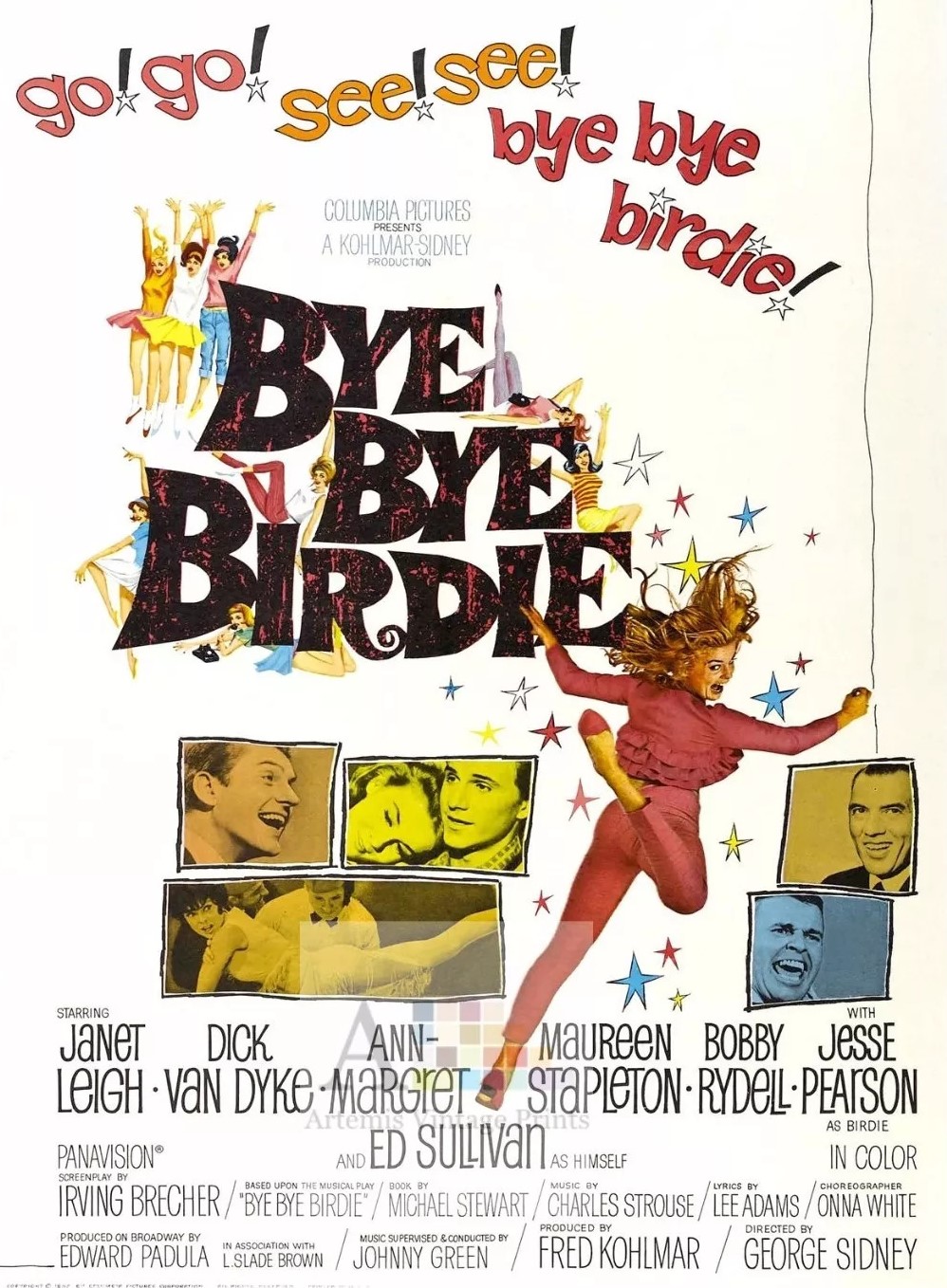
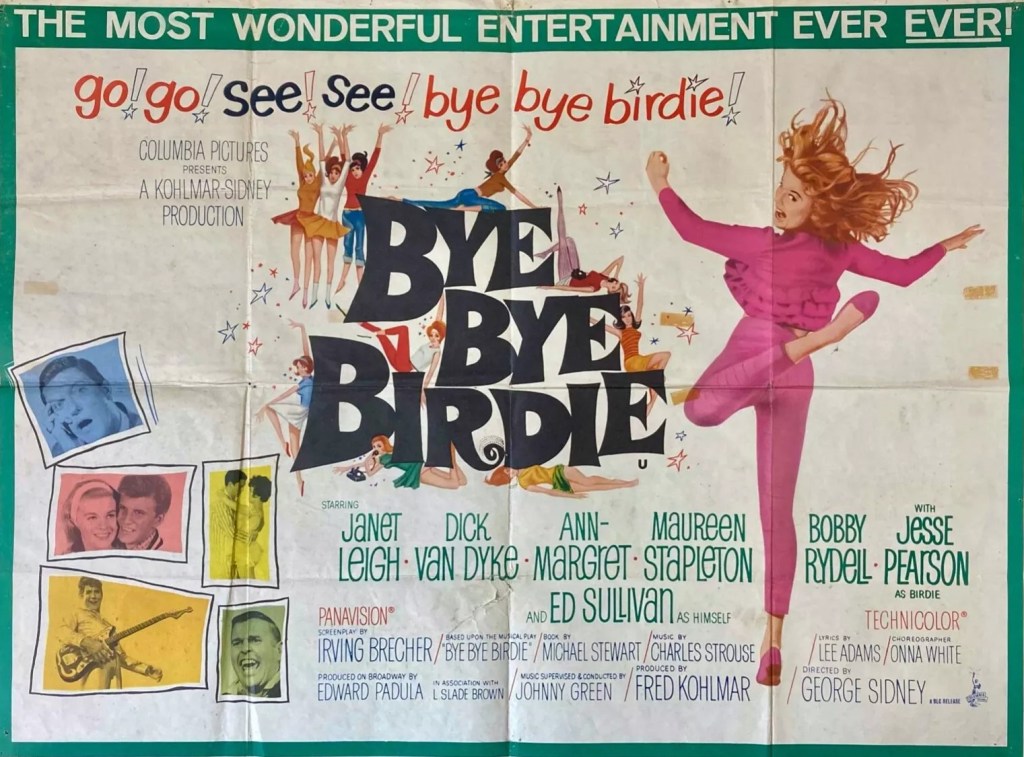
The marketeers did it with Marilyn Monroe, they did it with Audrey Hepburn, and now they’re stooping to the same loophole to promote Ann-Margret as virtually the only star of any importance. Admittedly, this was before top-billed Dick Van Dyke achieved much of a reputation as a hoofer in such spectaculars as Mary Poppins (1964). But his second-billed female lead, Janet Leigh, whose features the camera had very much taken a shine to, was also elbowed out of poster prominence.
And small wonder. Excepting Monroe, no actress ever in the last decade burst onto the screen with such pizzazz. By the time Bye Bye Birdie – her third movie – opened Ann-Margret’s asking price had zoomed to $250,000 and she had struck a two-picture deal with MGM, was contracted to five for Twentieth Century Fox, three for Columbia and another three for Frank Sinatra’s movie production arm.
So a heck of a lot was in the balance. And, boy, does she deliver. Her energy is untouchable and, excepting again Monroe, there was never a sexier singer.
Shame the musical itself is so trite, at its best in homage to those innocent days of the 1950s, that were a more Technicolor version of those 1940s musicals that invariably were sugary confections. The story rips off the Elvis Presley legend. Conrad Birdie (Jesse Pearson) is a pop singer who has been drafted. Songwriter’s secretary Rosie (Janet Leigh) comes up with a publicity gimmick, Conrad singing a song, “One Last Kiss,” written by Albert (Dick Van Dyke) sung on the Ed Sullivan Show, his last gig before joining the Army, with a specially-chosen gal to be recipient of said smooch.
To fill you in, Rosie has had a tough time getting boyfriend Albert, eight years into their relationship, across the wedding finishing line. Bridie fan Kim (Ann-Margret) also has a boyfriend Hugo (Bobby Rydell) who naturally objects to his beloved kissing the pop singer on air in front of millions even it is a publicity stunt. Meanwhile, Albert’s Mama (Maureen Stapleton) is trying to drive a wedge between Rosie and her son. The out-of-sorts Rosie and Hugo conspire to sabotage the television show.
So pretty much the will-she-won’t-she is delivered in wishy-washy style with the plot (call that a plot!) interrupted every few minutes for a song. The narrative seems out of place for a section involving arrest for statutory rape and racism, but that gives the movie some much-needed muscle.
No question that Ann-Margret (The Swinger, 1966) steals the show. That would hardly be surprising given the lack of competition. But she certainly has the song-and-dance chops, and her energy is second to none. She gets a march on everyone by singing the title number over the credits, the credits themselves very much pushed into the background. The other prospective breakout musical star Dick Van Dyke only has one solo and Janet Leigh (Psycho, 1960) wasn’t going to effect a change of screen persona any time soon.
George Sidney directed from a screenplay by Irving Brecher (Oscar-nominated for Meet Me in St Louis, 1944) and Michael Stewart (Hello, Dolly!, 1969) from the original Broadway hit by Charles Strouse (music), Lee Adams (lyrics) and Stewart (book).
Refreshingly lightweight. Ann-Margret lights up the screen.
The “Behind the Scenes” articles have become increasingly popular in the Blog. As regular readers will know I am fascinated about the problems incurred in making certain movies. Perhaps one of the more interesting aspects of this category is that every now and there is out of nowhere massive interest in the making of a particular movie and it shoots up the all-time tree. Most of the material has come from my own digging, and sources are always quoted at the end of each article, but occasionally I have turned to books written on the subject of the making of a specific film.
As with the All-Time Top Movies section, the top 20 comprises the choices of my readers. Alistair MacLean still exerts an influence, which is reassuring because my next book is about the films made from his books.
While Waterloo remains firmly out in front there are some interesting new entries such as The Cincinnati Kid, The Appointment, Mackenna’s Gold, The Train, The Sons of Katie Elder and The Trouble with Angels while Man’s Favorite Sport has made a steady climb upwards.
(1)Waterloo(1970). No doubting the effect of Ridley Scott’s Napoleon in racketing up interest in this famous flop.
(2) Ice Station Zebra(1968). A complete cast overhaul and ground-breaking special effects are at the core of this filming of an Alistair MacLean tale.
(3)In Harm’s Way(1965). Otto Preminger black-and-white epic about Pearl Harbor and after.
(7) The Guns of Navarone (1961). Alistair MacLean again, setting up the template for the men-on-a-mission war picture with an all-star cast and enough production jeopardy to qualify for a movie of its own.
(6)The Satan Bug(1965). The problems facing director John Sturges in adapting the Alistair MacLean pandemic classic for the big screen.
(9) Man’s Favorite Sport (1964). Howard Hawks back in the gender wars with Rock Hudson and Paul Prentiss squaring off.
(4)Battle of the Bulge (1965). There were going to be two versions, so the race was on to get this one to the public first.
(5) Cast a Giant Shadow (1965). Producer Melville Shavelson wrote a book about his experiences and this and other material relating the arduous task of bringing the Kirk Douglas-starrer to the screen are told here.
(10) The Girl on a Motorcycle (1968). Cult classic starring Marianne Faithful and Alain Delon had a rocky road to release, especially in the U.S. where the censor was not happy.
(8) Sink the Bismarck! (1962). Documentary-style British WW2 classic with Kenneth More with the stiffest of stiff-upper-lips.
(11). Tora! Tora! Tora! (1970). Richard Fleischer dispenses with the all-star cast in favor of even-handed verisimilitude.
(New Entry) The Cincinnati Kid (1965). Once Sam Peckinpah was fired from the poker epic, Norman Jewison took over. Steve McQueen, Ann-Margret and Edward G. Robinson are top-billed.
(New Entry) The Trouble with Angels (1966). Hayley Mills causes trouble at a convent school where Rosalind Russell tries to rein her in.
(13). The Bridge at Remagen (1969). John Guillerman WW2 classic with George Segal and Robert Vaughn
(17). The Collector (1963). William Wyler’s creepy adaptation of John Fowles’ creepy bestseller with Terence Stamp and Samatha Eggar.
(New Entry) The Train (1964). Another director fired, this time Arthur Penn, with John Frankenheimer taking over in this cat-and-mouse WW2 struggle between Burt Lancaster and Paul Schofield.
(New Entry) The Appointment (1969). Sidney Lumet has his hands tied in Italian drama with Omar Sharif and Anouk Aimee.
(20) The Way West (1967). Kirk Douglas and Robert Mitchum face off in pioneer western.
(New entry) Mackenna’s Gold (1969). Producer Carl Foreman has his work cut out bringing home western Cinerama epic starring Gregory Peck and Omar Sharif.
(New entry) The Sons of Katie Elder (1965). Long-gestating Henry Hathaway western with John Wayne and Dean Martin as brawling brothers.
Traditionally, this is an opportunity for me to blow the trumpet on behalf of my loyal and growing band of readers. But this time out I’m also taking the opportunity to blow my own trumpet or in the patois of my home city “bum ma load.” I began this blog in June 2020 and my monthly viewing figures scarcely topped a few hundred in the first year. Now I’m hitting 10,000 views a month. Being a self-effacing kind of guy, I thought the world should know.
Now, back to the main task in hand. It’s been a major aspect of the Blog to see which films are most favored by my readers. As regular readers will know, I run this feature every six months.
It’s worth pointing out that for such a testosterone-driven decade the Top Ten is dominated by female stars with Ann-Marget and Angie Dickinson in the ascendancy. Raquel Welch, Hayley Mills and Jean Seberg also make a splash. As well as top male figures like Frank Sinatra, John Wayne, Robert Mitchum and Dean Martin readers have been highly appreciative of underdogs like Alain Delon, Richard Johnson and Alex Cord.
Surprisingly high number of new entries include Young Cassidy, Fathom, The Appointment, Diamond Head, The Family Way and The Venetian Affair.
The figures in brackets represent the previous year’s position.
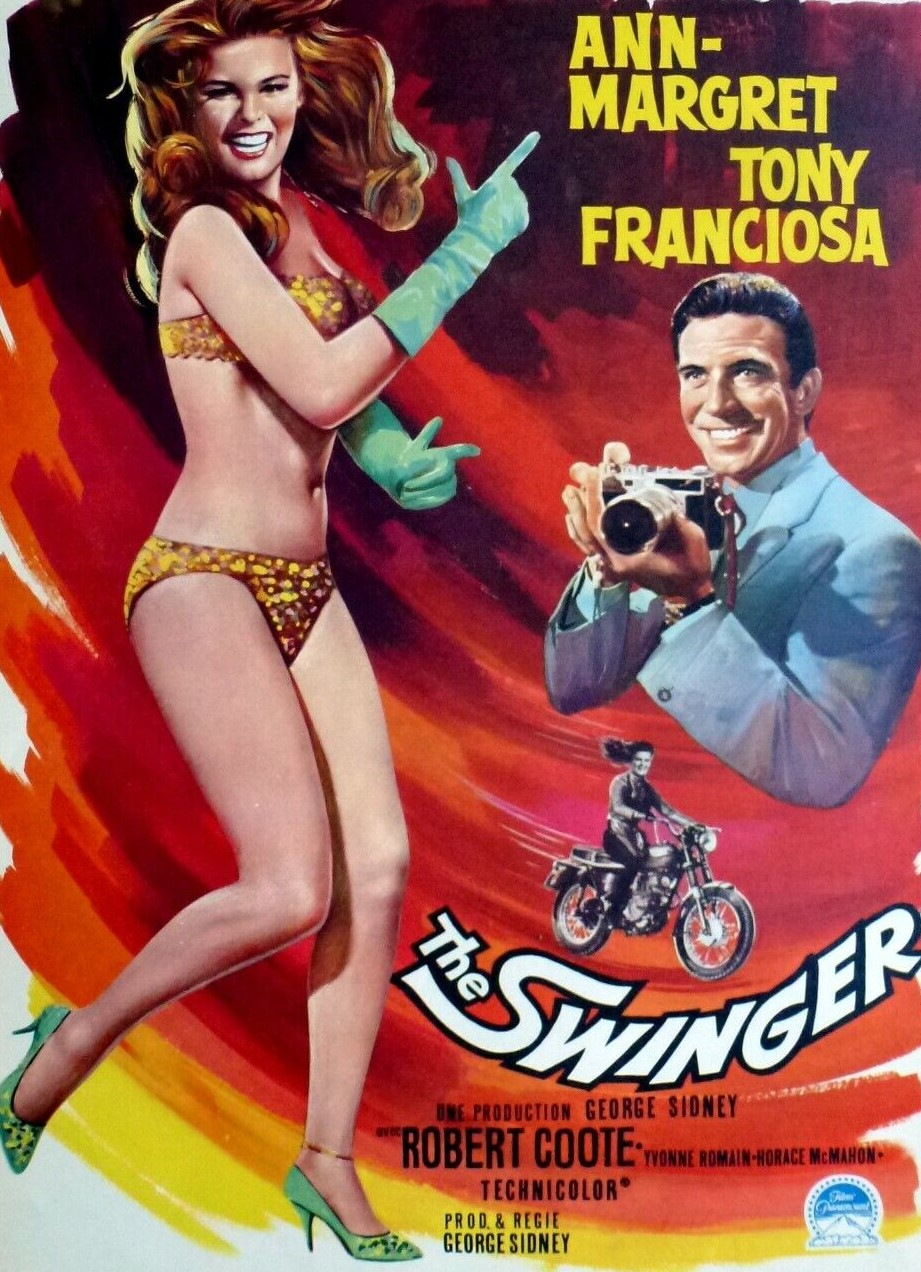
(1) The Swinger (1966). Queen of the Blog Ann-Margret in bouncy sex comedy that manages a sprinkling of innocence.
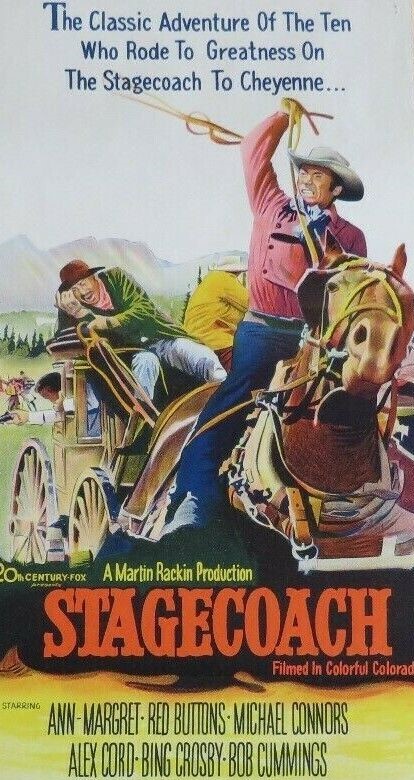
(2) Stagecoach (1966). Double whammy from Ann-Margret in this more than acceptable remake of the John Ford western with the male lead taken by Alex Cord, another star in need of reassessment.
(4) Fraulein Doktor (1969). German spy Suzy Kendall out-foxes Kenneth More in this World War One adventure with surprisingly grisly battle scenes and a superb score from Ennio Morricone.
(3) Jessica(1962). Angie Dickinson as a young widow incurring the wrath of wives in a small Italian town.
(7) Once Upon a Time in the West (1969). For many, including myself, the greatest western ever made. Sergio Leone fashions a masterpiece from a stunning cast of Claudia Cardinale, Henry Fonda and Charles Bronson and that fabulous Morricone score.
(6) Fireball XL5. (1962) The height of a television cult. Famous British series from Gerry and Sylvia Anderson, now colorized. “My heart will be a fireball…”
(5) The Sins of Rachel Cade. (1961) Angie Dickinson (again) as African missionary falling foul of the natives and commissioner Peter Finch. Roger Moore in an early role.
(10) Vendetta for the Saint. (1968) More television cultism. Movie made by combining two episodes of the series featuring the immortal Simon Templar. Roger Moore tackles the Mafia.
(12) TheSisters (1969). Complicated French love triangle featuring Nathalie Delon and Susan Strasberg.
(11) Baby Love (1969). Controversy was the initial selling point but now it’s morphed into a morality tale as orphaned Linda Hayden tries to fit into an upper-class London household.
(13) Pharoah (1966). Sensational Polish epic set in Ancient Egypt centering on the battle between the country’s ruler and the religious hierarchy.
(9) Moment to Moment (1966). Hitchcockian-style thriller set in the south of France with Jean Seberg caught out in illicit love affair. Co-starring Honor Blackman.
(21) Go Naked in the World (1961). Steamy drama with Gina Lollobrigida discovering that her profession (the oldest) and true love (with rich Anthony Franciosa) don’t mix. Great turn from Ernest Borgnine as a doting father.
(8) The Secret Ways (1961). The first of the Alistair MacLean adaptations to hit the big screen features Richard Widmark trapped in Hungary during the Cold War. Senta Berger has a small role.
(36) In Harm’s Way (1965). Otto Preminger’s Pearl Harbor epic sets John Wayne and Kirk Douglas at each other’s throats.
(20) The Golden Claws of the Cat Girl (1968). Genuine French cult film with Daniele Gaubert as a sexy cat burglar.
(14)Can Heironymus Merkin Ever Forget Mercy Humpe and Find True Happiness? (1969) Self-indulgence reaches new heights as singer Anthony Newley invokes his inner Fellini that somehow involves bedding lots of women. Then-current wife Joan Collins co-stars.
(New Entry) Young Cassidy (1965). Rod Taylor and Julie Christie in Jack Cardiff’s Irish drama. He took over from an ill John Ford.
(22) Pressure Point (1962). No escape for racist patient Bobby Darin when psychiatrist Sidney Poitier is around.
(New Entry) The Appointment (1969). Complete change of pace for Omar Sharif in unusual Italian drama directed by Sidney Lumet. Anouk Aimee is the tantalizing female lead.
(New Entry) Fathom (1967) Raquel Welch swaps her skydiving kit for the more comfortable environs of a bikini in thriller. Anthony Franciosa co-stars.
(22) Pendulum (1969). Cop George Peppard accused of murdering unfaithful wife Jean Seberg.
(New Entry) The Family Way (1966). Hayley Mills grows up – and how – in marital drama with new British star Hywel Bennett.
(New Entry) Diamond Head (1962). Ruthless hypocritical land baron Charlton Heston causes chaos in Hawaii. With Yvette Mimieux and George Chakiris.
(26) A Dandy in Aspic (1968). Cold War thriller with Laurence Harvey as a double agent who wants out. Mia Farrow co-stars.
(New Entry) The Venetian Affair (1966). Robert Vaughn turns in a terrific performance as an ex-alcoholic spy dealing with former lover Elke Sommer in slippery Venice-set thriller.
(21) The Best House in London (1969). That’s a euphemism for a brothel, let’s get that straight. David Hemmings tries to do right by the sex workers.
(25) Lady in Cement (1969). Frank Sinatra reprises private eye Tony Rome with mobster’s moll Raquel Welch as his client.
(31) The Girl on a Motorcycle / Naked under Leather (1968). Heavily-censored in the U.S., erotic drama with singer Marianne Faithfull as the titular fantasizing heroine. Alain Delon co-stars.
(New Entry) Genghis Khan (1965). Omar Sharif as the all-conquering Mongol chieftain. Stephen Boyd, James Mason, Eli Wallach, Telly Savalas and Francoise Dorleac lend support.
(New Entry) The Chalk Garden (1964). Hayley Mills again, being brought to heel by governess Deborah Kerr with a hidden secret.
(New Entry) Plane (2023). Gerard Butler channels his inner Bruce Willis as he attempts to avoid dying hard on an island inhabited by rebels.
(23) Oceans 11. Frank Sinatra heads the Rat Pack line-up, inspiring an industry of remakes and with everyone starting with Tarantino ripping off one scene.
(New Entry) Five Card Stud (1968). Surprising mix of feminism and noir in revenge western. Dean Martin, Robert Mitchum and Inger Stevens topline.
(34) The Misfits (1960). Last hurrah for Clark Gable, fabulous turns from Montgomery Clift and Marilyn Monroe in John Huston tale of losers.
(28) Once a Thief (1965). Change of pace for Ann-Margret as working mother whose ex-jailbird husband Alain Delon is forced into another job.
(27) Deadlier than the Male (1967). Espionage with a sting in the tale as venomous female villains including Elke Sommer and Sylva Koscina target Bulldog Drummond
(35) Rage (1966). Glenn Ford and Stella Stevens combat pandemic in Mexican town.
(New Entry) Blonde (2022). Ana de Armas in stylized biopic of Marilyn Monroe
(33) She Died with Her Boots On / Whirlpool (1969). Sleazy British film from cult Spanish director Jose Ramon Larraz sees kinky photographer Karl Lanchbury seduce real-life MTA Vivien Neves.
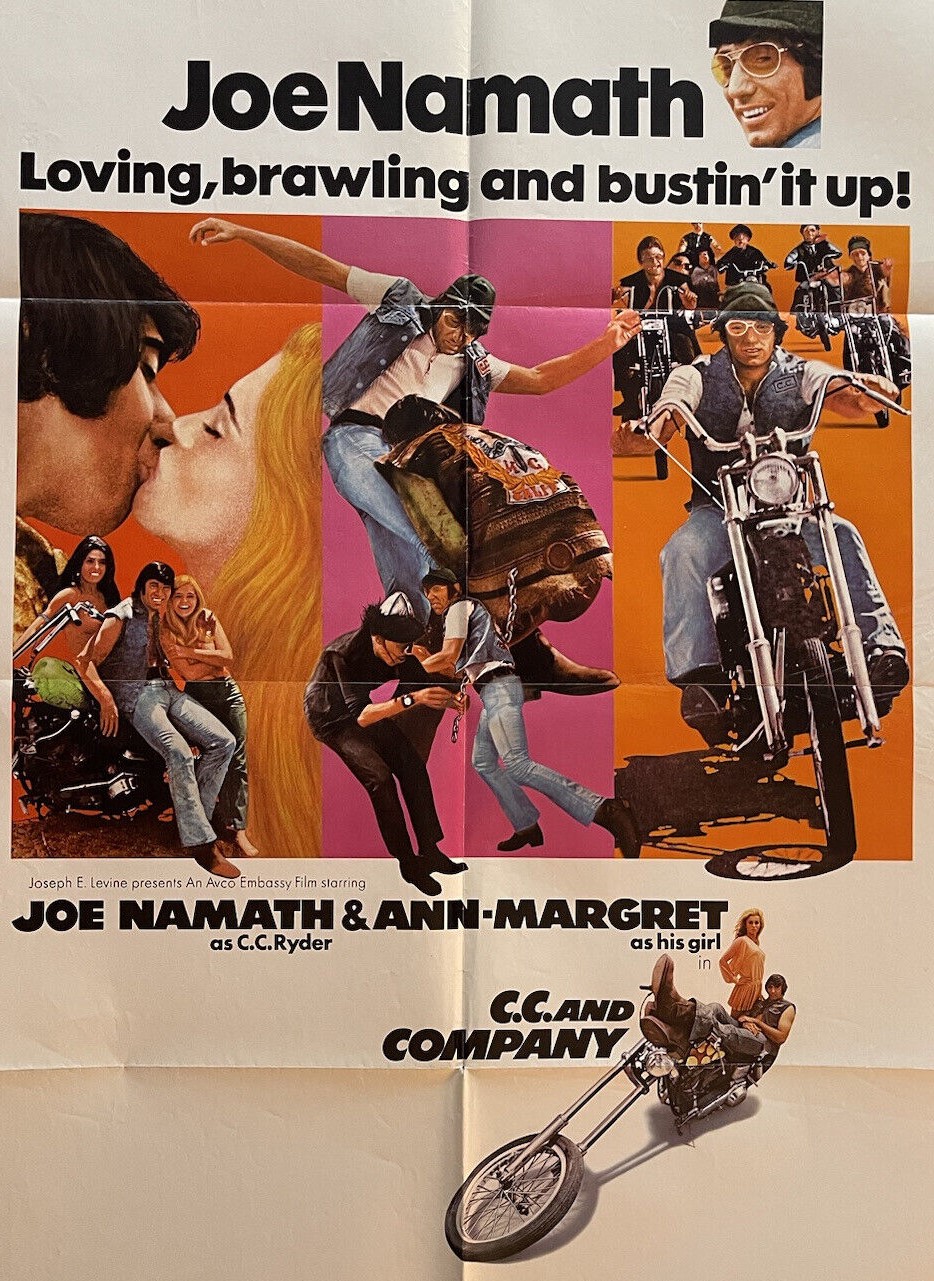
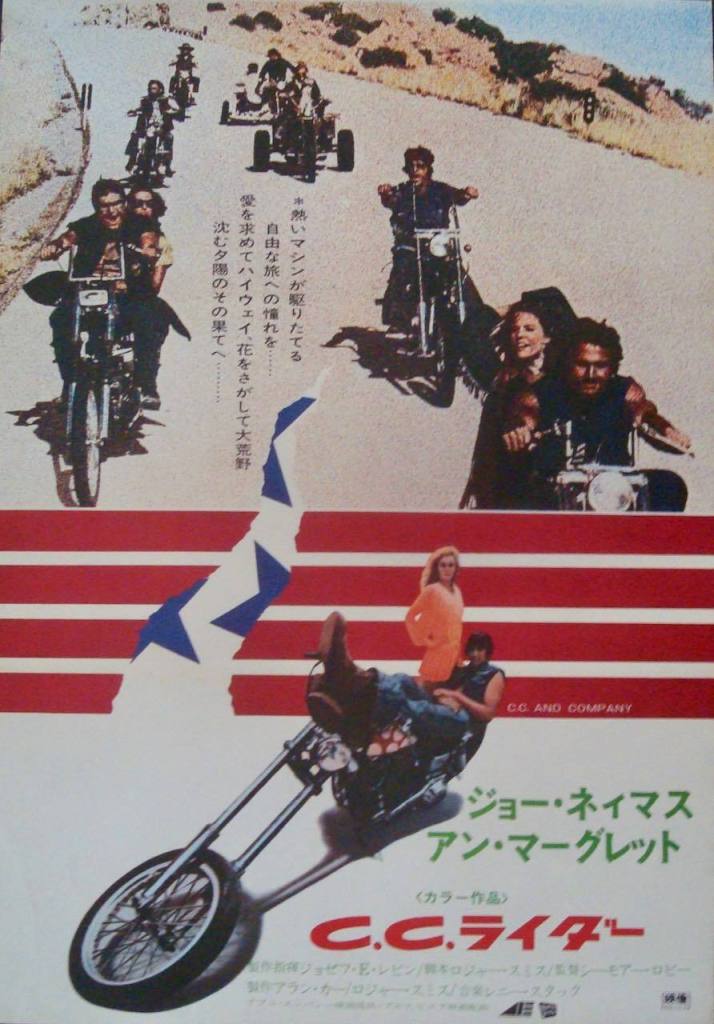
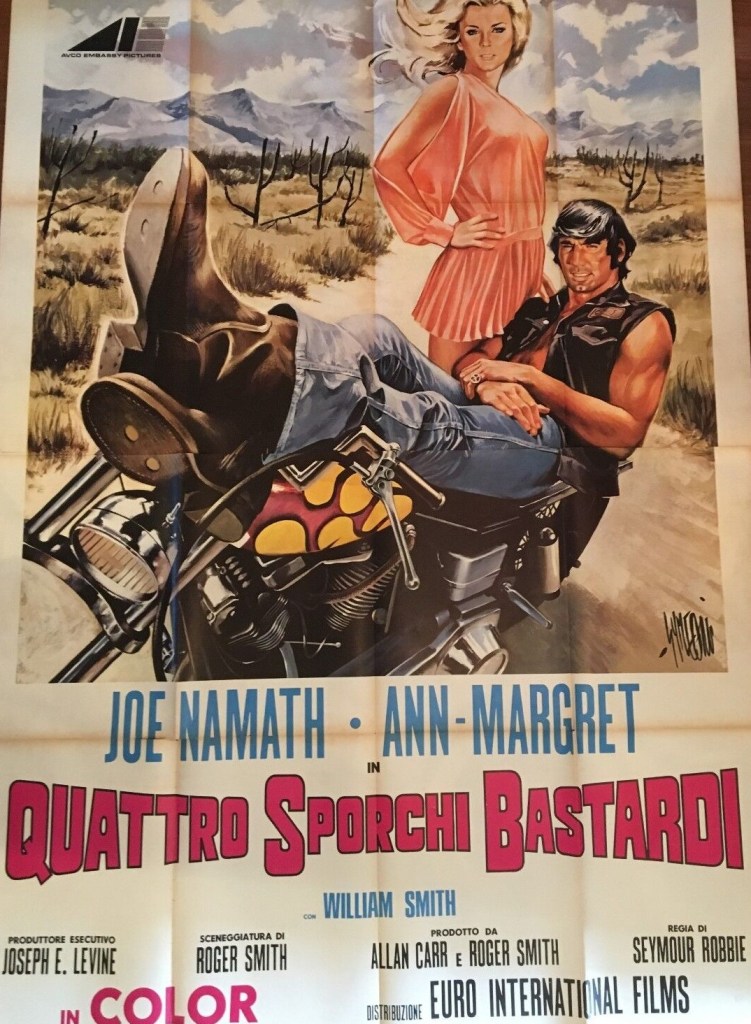
Just terrible. Not even the presence of Ann-Margret (The Swinger, 1966) can save this. Scarcely a single redeeming feature and nothing that might lend itself to shift it into the So Bad It’s Good category. In fact, you would probably put it in a lower class, the So Bad It’s Worse Than You Can Possibly Imagine strata. Little seen for over half a century, and small wonder.
And, boy, did Ann-Margret need a hit after a three-year self-imposed exile in Italy, where she earned big bucks for pictures that hardly got a sniff on the U.S. release circuit, putting an almighty dent in her marquee value. In theory, she should have returned home with a bang, as female lead in a Stanley Kramer production, R.P.M. (1970), the most prestigious picture she had ever been associated with, and easily the best director. But that, riding the counter-culture wave, was a big flop.
This was her second attempt at counter-culture. Motorbike sagas were bankable after the success of Easy Rider (1969) and even as B-pictures had attracted decent audiences for the likes of TheWild Angels (1967) and Run, Angel, Run (1969).
But this was saddled with a terrible star in Joe Namath, and a terrible script by Roger Smith (The First Time, 1969), Ann-Margret’s husband-manager, that puts the wild boys of the highways in a motocross competition, swapping their high-powered bikes for the much smaller Kawasaki engines used in that sport.
If you were American, Joe Namath was a god. If you were foreign, he was a nobody. One of the country’s greatest American football (not soccer!) players, he had made his movie debut in another flop, Norwood (1969). My guess is Ann-Margret was there to help out her husband, also the producer, and beef up the marquee.
But C.C. Ryder (Joe Namath) looks more like an overgrown schoolboy, hulking though he is, than a Hell’s Angel. For the lack of believability he invests in the role you would have done as well with pop star Fabian (Ten Little Indians, 1965).
Anyway, on with the barmy story. So, fashion director Ann (Ann-Margret) has the bright idea, as fashion directors did in those days, of setting up a shoot against the backdrop of a motocross event, kind of like Zabriskie Point (1970) but with bikes. On the way, her car breaks down. The two passing bikers who come to her rescue have something else in mind and she is only saved from rape by the intervention of Ryder.
He belongs to a biking troupe headed by Moon (William Smith), the misogynist’s misogynist, who slaps his women around and sends them out to prostitute themselves on the highways because unlike the enterprising chaps from Easy Rider he’s not got the brains to set up a drugs operation. Then he gets the inspired notion of picking up easy money by sending his guys to compete in the motocross competition because, surely, them being serious motorbike freaks they can beat the hell out of any professional motocross rider who does this for a living.
No doubt audiences will be rooting for the amateurs the way they do for the young kids in other movies that need to put on their own show to save an orphanage or the like.
Naturally, Ryder falls for Ann. Equally naturally, Moon doesn’t like that one bit. And so kidnaps Ann, ensuring Ryder comes to the rescue. Cue a showdown. No doubt we’ll see an almighty battle with chains and wrenches and surely there will be a flashing blade or two as this pair roll around in the dust.
Nope! Let’s just find a handy football stadium and race round the athletic dirt track. That’s bound to be more exciting. You would get more excitement watching goldfish in a bowl.
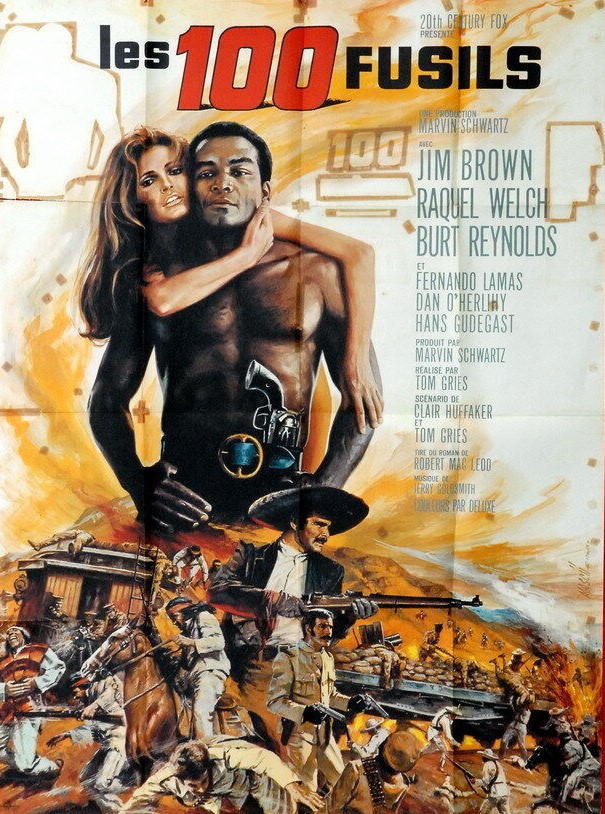
Theoretically, the combination of Namath and Ann-Margret should have reached the incendiary levels of football star Jim Brown’s sexual tussle with Raquel Welch in 100 Rifles (1969). Nope. Namath has all the screen charisma of a beetle and there’s nothing Ann-Margret can do to help that. You couldn’t have wasted her first nude scene on someone less deserving.
As you might expect, Ann-Margret does get to dance, but for some reason the camera is more focused on Namath who is lacking in the shake-your-booty department.
There is one decent scene and one interesting shot. Unfortunately, the only good scene is the opener, giving a false sense that this might be an interesting picture. It involves Namath “grazing” his way round a supermarket, making up a sandwich from easily available ingredients, even stealing a tissue from a box to wipe his lips. What a rascal, no wonder everyone would be terrified of such a biker. And in the climactic race one of the bikers hits a fence that collapses concertina style.
But that’s it, a 94-minute vanity project that killed off Namath’s movie career and nearly put the kibosh on Ann-Margret’s. You can’t really blame television director Seymour Robbie (Marco, 1973) for failing to improve the material or the stars.
Sometimes being a completist (in this case following Ann-Marget’s career) has its down side.
PREVIOUSLY REVIEWED IN THE BLOG: Ann-Margret in State Fair (1962), Viva Las Vegas (1964), Kitten with a Whip (1964), The Pleasure Seekers (1964), Bus Riley’s Back in Town (1965), Once a Thief (1965), The Cincinnati Kid (1965), Made in Paris (1966), The Swinger (1966), Stagecoach (1966), Appointment in Beirut/Rebus (1968), Criminal Affair/Criminal Symphony (1968).
Ann-Margret is pipped to the post by…Ann-Margret. The Swinger and Stagecoach duked it out at the top of the All-Time Top 40 with the former taking it by a good margin. But it was the reversal in the annual stakes, with the western ahead just by a nose. The films viewed most this year. As ever some surprise picks.
Stagecoach (1966). Ann-Margret and Alex Cord in decent remake of John Ford classic western.
The Swinger (1966). Ann-Margret as novelist who tries to live up to the sexy persona she has invented.
The Sins of Rachel Cade (1961). Angie Dickinson as African missionary with Peter Finch and Roger Moore in thrall.
Fireball XL5. The famous British television series from Gerry and Sylvia Anderson, now colorized. “My heart will be a fireball…”
Fraulein Doktor (1969). German spy Suzy Kendall out-foxes Kenneth More. Grisly realistic WWI battle scenes and a superb score from Ennio Morricone.
Vendetta for the Saint (1968) Roger Moore vs the Mafia.
Plane(2023). Gerard Butler channels his inner Bruce Willis in Die-Hard-on-a-desert-island adventure.
Baby Love (1969). Orphan Linda Hayden proves too much of a temptation for upper-middle-class London family.
The Best House in London (1969). David Hemmings goes into battle for sex workers.
TheSisters (1969). Nathalie Delon and Susan Strasberg in complicated love triangle of love and betrayal.
Pendulum (1968). Taut thriller with cop George Peppard accused of murdering unfaithful wife Jean Seberg.
Moment to Moment (1966). Jean Seberg investigated for murder in Hitchcockian thriller set in the South of France.
Rage (1966). Glenn Ford and Stella Stevens combat pandemic in Mexican town.
The First Deadly Sin (1980). Frank Sinatra’s cop chases down a serial killer.
Go Naked in the World (1961). Gina Lollobrigida finds that her profession (the oldest) and true love (with rich Anthony Franciosa) don’t mix. Great turn from Ernest Borgnine as a doting father.
Lady in Cement (1969). Sinatra as private eye Tony Rome who takes on gangster’s moll Raquel Welch as a client.
Champions (2023). Woody Harrelson as the basketball coach saddled with a bunch of misfits.
A Dandy in Aspic (1968). Cold War thriller with Laurence Harvey as a double agent who wants out. Mia Farrow co-stars.
She Died with Her Boots On / Whirlpool (1969). Sleazy British film from cult Spanish director Jose Ramon Larraz sees kinky photographer Karl Lanchbury seduce real-life MTA Vivien Neves.
Once a Thief (1965). Less glamorous role for Ann-Margret as wife of ex-jailbird thief Alain Delon who is forced into another job.
Diamond Head (1962). Charlton Heston chews the scenery in Hawaiian epic.
Titanic (1997). Reissue in 3D of the James Cameron box office smash.
Can Heironymus Merkin Ever Forget Mercy Humpe and Find True Happiness? (1969) Self-indulgence reaches new heights with writer-director-producer Anthony Newley’s autobiographical tale about stardom. Then-wife Joan Collins co-stars.
Sergeant Ryker (1968). Lee Marvin in Korean War courtroom drama.
The Misfits (1960). Clark Gable goes out on a high, ably supported by Montgomery Clift and Marilyn Monroe in John Huston tale of losers.
Once Upon a Time in the West(1969). Sergio Leone masterpiece featuring the stunning cast of Claudia Cardinale, Henry Fonda and Charles Bronson and that fabulous Morricone score.
In Harm’s Way (1965). John Wayne and Kirk Douglas in Otto Preminger WW2 epic set in Pearl Harbor and after.
The Invitation (2022). Gothic thriller starring Nathalie Emmanuel.
Beat Girl / Wild for Kicks (1960). Gillian Hills is tempted into joining the striptease game. Christopher Lee puts in an appearance.
100 Rifles (1969). Raquel Welch, Jim Brown and Burt Reynolds heat up the screen in Tom Gries western set in Mexico.
Not my pick of the flicks, but yours, the films viewed most often since the Blog began in June 2020. Given that the number of hits for the blog has tripled over the last year, you might expect to see an entirely new Top 40. But that’s not been the case. Worth noting that the top five pictures star women. And some films have shown remarkable staying power with some stars – big round of applause for Ann-Margret, Angie Dickinson, Alex Cord, George Peppard, Gene Barry, Jean Seberg, Roger Moore, Alain Delon, Frank Sinatra, Kirk Douglas et al – featuring more than once.
The figures in brackets represent the previous year’s position.
(4) The Swinger (1966). All hail Ann-Margret. Bouncy sex comedy that manages a sprinkling of innocence.
(40) Stagecoach (1966). No prizes for guessing that it’s the presence of Ann-Margret (again) rather than Alex Cord that has hit a chord in this decent remake of John Ford’s famous western.
(1) Jessica(1962). Angie Dickinson as a young widow incurring the wrath of wives in a small Italian town.
(5) Fraulein Doktor (1969). Under-rated World War One espionage tale with Suzy Kendall out-foxing Kenneth More, grisly realistic battle scenes and a superb score from Ennio Morricone.
(New Entry) The Sins of Rachel Cade. Angie Dickinson as African missionary falling foul of the natives and commissioner Peter Finch. Roger Moore in an early role.
(3)Once Upon a Time in the West (1969). Sergio Leone masterpiece featuring the stunning cast of Claudia Cardinale, Henry Fonda and Charles Bronson and that fabulous Morricone score.
(New Entry) Fireball XL5. The famous British television series from Gerry and Sylvia Anderson, now colorized. “My heart will be a fireball…”
(3) The Secret Ways (1961). The first of the Alistair MacLean adaptations to hit the big screen features Richard Widmark trapped in Hungary during the Cold War.
(10) Moment to Moment (1966). Nod to Hitchcock in twisty Jean Seberg thriller set in the South of France. Also starring Honor Blackman.
(New Entry) Vendetta for the Saint . Who cares if it’s two television episodes combined? Roger Moore tackles the Mafia.
(32) Baby Love (1969). Controversy was the initial selling point but now it’s morphed into a morality tale as orphaned Linda Hayden tries to fit into an upper-class London household.
(15) TheSisters (1969). Nathalie Delon and Susan Strasberg in complicated love triangle of love and betrayal.
(7) Pharoah (1966). Polish epic set in Egypt sees the country’s ruler at odds with the religious hierarchy.
(9)Can Heironymus Merkin Ever Forget Mercy Humpe and Find True Happiness? Self-indulgence reaches new heights as singer Anthony Newley invokes his inner Fellini that somehow involves bedding lots of women. Then-current wife Joan Collins co-stars.
(New Entry) The Best House in London (1969). That’s a euphemism for a brothel, let’s get that right from the outset. David Hemmings tries to do right by the sex workers.
(New Entry) Pendulum (1968). The George Peppard (or perhaps Jean Seberg) reappraisal continues. Here he is the cop accused of murdering unfaithful wife Seberg.
(6) Oceans 11. Frank Sinatra heads the Rat Pack line-up, inspiring a couple of remakes and with Tarantino ripping off one scene.
(36) Lady in Cement (1969). Sinatra again as private eye Tony Rome who takes on Raquel Welch (and that’s a stretch?) as a client.
(8) The Golden Claws of the Cat Girl (1968). French cult film with Daniele Gaubert as a sexy cat burglar.
(New Entry) Go Naked in the World (1961). Gina Lollobrigida finds that her profession (the oldest) and true love (with rich Anthony Franciosa) don’t mix. Great turn from Ernest Borgnine as a doting father.
(17) Pressure Point (1962). No escape for racist patient Bobby Darin when psychiatrist Sidney Poitier is around.
(New Entry) A Dandy in Aspic (1968). Cold War thriller with Laurence Harvey as a double agent who wants out. Mia Farrow co-stars.
(22) Deadlier than the Male (1967). Espionage with a sting in the tale as venomous female villains including Elke Sommer and Sylva Koscina target Bulldog Drummond.
(New Entry) Once a Thief (1965). Change of pace for Ann-Margret as working mother whose ex-jailbird thief Alain Delon is forced into another job.
(12) Subterfuge (1968). Gene Barry-Joan Collins spy thriller set primarily in a dreary London.
(14) Fade In(1968). Not at all as bad as rising star Burt Reynolds believed – he disowned it. Romance set on a movie location.
(New Entry) The Girl on a Motorcycle / Naked under Leather (1968). Heavily-censored in the U.S., erotic drama with singer Marianne Faithfull as the titular fantasizing heroine. Alain Delon co-stars.
(New Entry) Some Girls Do (1969). Bulldog Drummond returns and a bevy of villainous women including Daliah Lavi and Beba Loncar await.
(New Entry) She Died with Her Boots On / Whirlpool (1969). Sleazy British film from cult Spanish director Jose Ramon Larraz sees kinky photographer Karl Lanchbury seduce real-life MTA Vivien Neves.
(New Entry) The Misfits (1960). Last hurrah for Clark Gable, fabulous turns from Montgomery Clift and Marilyn Monroe in John Huston tale of losers.
(New Entry) Rage (1966). Glenn Ford and Stella Stevens combat pandemic in Mexican town.
(23) A House Is Not a Home (1964). Not when it’s a brothel. Shelley Winters is the madam. Raquel Welch has an uncredited role.
(New Entry) In Harm’s Way (1965). John Wayne and Kirk Douglas in Otto Preminger WW2 epic set in Pearl Harbor and after.
(New Entry) Istanbul Express (1968). Gene Barry faces Senta Berger in espionage thriller. Shown on television in the U.S., but gained a cinematic release elsewhere.
(24) P.J. / New Face in Hell (1967). George Peppard’s private eye finds client Raymond Burr too tough to handle. Gayle Hunnicutt is the femme fatale.
(New Entry) Beat Girl / Wild for Kicks (1960). Another sleazy British drama. Gillian Hills is the youngster tempted into the striptease game. Christopher Lee puts in an appearance.
(27) The Brotherhood (1968). Brothers at war Mafia-style with Kirk Douglas and Alex Cord.
(New Entry) The Invitation (2022). Gothic conspiracy starring Nathalie Emmanuel from Game of Thrones.
(New Entry) The First Deadly Sin (1980). Frank Sinatra’s last starring role as cop tracking serial killer. Faye Dunaway plays his dying wife.
(New Entry) The Family Way (1966). Hayley Mills sheds the child-star image with a vengeance, shedding his clothes in British family drama. Co-starring father John Mills and Hywel Bennett.
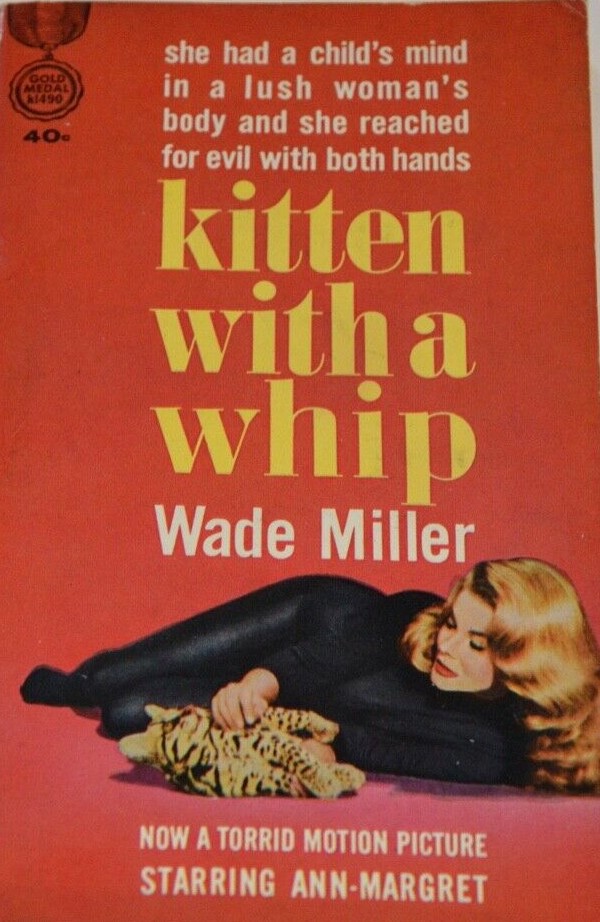
Ann-Margret was a late arrival on the scene. The voluptuous Mamie van Doren (3 Nuts in Search of a Bolt, 1964) had bought the rights to the novel by Wade Miller in September 1959 before selling them on the Universal a couple of months later, possibly in exchange for the starring role.
Wade Miller was the pseudonym of writing team Robert Wade and H. Bill Miller, who had teamed up at the age of 12, and wrote screenplays under another pseudonym, Whit Masterson. Together they had turned out 30 novels, and hundreds of short stories and their work had been the basis for, most famously, A Touch of Evil (1958). The later Yellow Canary (1963) and Warning Shot (1966) were based on their novels. The moment Hollywood came calling Fawcett publishing, through its Gold Medal paperback division. rushed out a movie tie-in edition, adding another when the film was due for release.
The second movie tie-in edition.
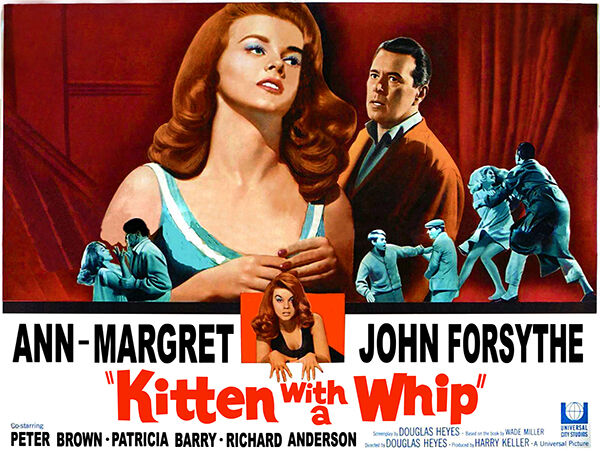
Laszlo Gorog (Too Soon to Love, 1960) was initially allocated the screenplay, but was quickly replaced by Alfred Benner (Key Witness, 1960). Nancy Kwan (Tamahine, 1963) and Steve Forrest (Yellow Canary) entered the frame when Richard Rush (Too Soon To Love) was being tipped to direct. Brigitte Bardot turned it down. And it languished in limbo for a couple of years before being handed to television director Douglas Heyes – a journeyman known for episodes of Laramie, Cheyenne, The Twilight Zone, TheVirginian, et al.
It wasn’t meant to be his debut feature. That was intended to be If One Is To Die from his own original screenplay, announced in 1961. But that was for Twentieth Century Fox. When that failed to materialize, and after a short spell back in television, he did double duty – writer and director, a role he had carried out countless times for television – for Kitten with a Whip
It was the last of the 11 movies scheduled by Universal for production in 1963, shooting beginning on December 27. The studio, at the forefront of developing new talent, put new recruit Patrica Barry (Send Me No Flowers, 1964) in the secondary female role.
That this got into the mix for Ann-Margret must have taken some determined wheeling and dealing for by 1963 the actress was in phenomenal demand, especially for someone with so little experience. She had contracts for over a dozen pictures. In part, she was the most exciting addition to a growing pool of new talent that included Michael Callan (The Interns, 1962), Alex Cord (Stagecoach, 1966), George Segal (The Quiller Mmorandum, 1966) and Peter Fonda (Lilith, 1964), but the fact that she could sing and perform made her doubly attractive since Hollywood had now worked out that hit singles and live performances were “the fastest route to the showbiz area…and the springboard to…film fields.”
Film adaptations of hit musicals, benefitting from the “broader pull of Hollywood productions” and “wider audience exposure,” boosted sales not just of the original soundtrack but also the original Broadway cast recording. Columbia’s Bye, Bye Birdie (1963) sold two million copies of the movie soundtrack and album and 1.5 million of the Broadway version.
There was a three-picture deal with Frank Sinatra’s Essex Productions that should have included Marriage on the Rocks (at that time known as Community Property, its original Broadway title) delayed until 1965 when the original director pulled out. Columbia was owed three movies, Twentieth Century Fox five. Every time she signed a new contract her price went up. She was the object of a bidding war. MGM appeared to be in the lead when it raised her going rate, ponying up $275,000 plus a percentage for two movies – Viva Las Vegas (1964) and Say it with Music (shelved). But Universal trumped that, $250,000 per picture for six movies, the first being Kitten with a Whip.
Her arrival in showbiz had triggered whirlwind of promotion. She snaffled her first headline in December 1960, at the age of 19, when Jack Benny added her to his nightclub act in las Vegas. Four months later her face adorned a full-page ad in Hollywood Reporter that announced her television debut on the Jack Benny Show on CBS April 2, 1961. By then Twentieth Century Fox was sniffing around and she landed a $1,000 a week contract. The studio set her as female lead in State Fair (1962) but she was abruptly dropped and when reinstated it was as second female lead.
At this stage, publicity focusing around her voice. Signed to RCA Victor, she quickly became a top-selling artist. In return for delivering 12-24 singles and a number of albums over three years, the label committed to spending $50,000 a year in promotion. Columbia assigned George Sidney, director of Bye, Bye Birdie, to make an eight-minute promotional film.
After well-received turns in A Pocketful of Miracles (1962), Bye, Bye Birdie and female lead to Elvis Presley in Viva Las Vegas, Kitten with a Whip represented departure, her first dramatic role. Although some observers later criticized her management team, in retrospect it’s clear that a sensible strategy was in operation, alternating lighter fare where she could sing and dance with more serious works (Once a Thief and The Cincinnati Kid, 1965, and Stagecoach the following year) where she did neither.
Exhibitors were so convinced she was the real deal that she was the youngest-ever winner of their Star of the Year Award, previous holders of the trophy including the more established likes of John Wayne, Gregory Peck, William Holden, Deborah Kerr and Doris Day, but only after they had been in the business for several years with umpteen box office hits to prove their worth.
Male lead John Forsythe, after years on television in Bachelor Father (1957-1962), was making a movie comeback. But he had signed an unusual contract with Universal, suggesting nobody was confident he was as genuine a prospect. The studio offered him a deal for two pictures a year, but one that also included television work for its television arm Revue.
Reviews were better than the actress might have expected. Eugene Archer, the second-string critic on the New York Times said “she demonstrated enough untrained talent to suggest interesting dramatic possibilities in better films.” Box Office opined that Ann-Margret delivered “a realistic and surprisingly effective characterization” but pleaded for studios to “let her return to lighter fare.” Variety was dismissive: “display of over-acting.”
Exhibitors took a negative view. “Does this popular star a great deal of harm,” was typical of the response. Others were more forthright, describing the movie as a “glaring example of the type of show that shouldn’t be made.” Overall, it was not what anybody – critics, audiences, cinema managers – expected and not in a good way. The St Paul Evening Dispatch took the MPAA’s Production Code to task for passing a picture of “sheer sadism, depravity without redeeming reason.”
In some first run situations, it was the solo feature. Other cinemas paired with Lolita (1962), a somewhat obvious choice, or Lilith (1964) or British film Young and Willing (1962), Faces in the Dark (1960) with Mai Zetterling and Audie Murphy western Bullet for a Badman (1964). In some cities, it bypassed first run and went straight into the drive-ins. In smaller locales it went out on the lower half of a double bill.
Only in Pittsburgh did it score at the box office, “lofty” the assessment. It was deemed “sluggish” Washington, “slow” in Chicago and Los Angeles, and “slim” in Columbus, Ohio. Of 21 movies released in the Winter Quarter, it was ranked lowest where it mattered most, at the ticket wickets, according to Box Office. It didn’t rake in $1 million in rentals, the amount required to earn a place on Variety’s annual box office chart.
Kitten with a Whip didn’t appear to harm the star’s career. Critics praised her work on Once A Thief and The Cincinnati Kid. But as her career first prospered and later crashed and burned it was considered something better not mentioned. John Forsythe fared less well. Outside of television, he only made five movies in five years.
Heyes’ movie career stuttered. He had been due to write and direct The 12th of Never, based on his own novel, to star Sandra Dee, one of Universal’s top marquee names, in June 1964, but when that was cancelled returned to television until called back to direct Beau Geste (1966).
There might have been reassessment of the value of the original film when Gus Van Sant announced he planned a remake in 2007. On the other hand, that it was Lindsay Lohan’s favorite picture didn’t do it much good.
I’ll let you down gently. Ain’t no whip. What you have instead is one of the most under-rated, unseen and maligned mini-masterpieces you will ever come across marching to the film noir beat. Bewildering femme fatale and the kind of disenchanted anti-authority teenagers who would drive the “youthquake” that almost destroyed the industry half a decade later. And within this, one of the great tragedies of Hollywood, the performance of her career from Ann-Margret, buried because it wasn’t what the public, the critics or the industry expected from the young star.
Edgy score with soulful sax underwrites a picture brimfull of surprises and plays constantly with your expectations, the picture shifting gear so often you’d think you were in a tumble dryer. The doorbell plays like a loaded gun, every interruption racking up tension.
Stylish credits that hint of Hitchcock precede a brilliant opening as in full noir fashion a band of light catches the eyes in the darkness of a blonde (Ann-Margret) dressed in a nightgown cresting a hill.
She tries to jump on a moving goods wagon, eventually makes her way to a deserted house, untouched wrapped newspapers littering the lawn, clambering into a bed, clutching a teddy bear for comfort. You want mystery? This is just the start. In one of the best neat cuts, we jump from the eyes of a teddy bear to headlights. Owner returning home is budding politician David (John Forsythe), wife away due to marital issues.
Come morning, he discovers his guest, Jody. She recites a sad tale of fleeing sex abuse. But soon he realizes she’s got a story to fit every occasion and can turn the emotions on like a tap. Manipulation is in her DNA. But she’s a tough little number. “Hands off, buster,” she snaps at one point as she tries to physically hustle her out.
It’s unspoken that the idea of being caught, regardless of whether he’s entirely innocent, in illicit dalliance would mean the end of his political ambitions, but she’s happy to spell it out. If the cops work her over, who knows what would spill out.
He buys her clothes, gives her money. Sayonara, baby! Except it’s not. He discovers she’s on the run from juvie, where she torched the home and stabbed the matron. Worse, she’s not left after all, but returned, the house filled with the noise of television cartoons, floor littered with teenager mess.
It’s unclear what exactly she wants. But she knows if she screams rape that’s curtains for him. And if Freud (1962) used a length of rope to show how a psychiatrist can’t escape his client, Jody’s version is a length of telephone cable, dragging her quarry to the floor when he’s talking to his wife.
And before you know it, it turns into home invasion. She’s called up some pals, younger versions of the creeps in The Penthouse (1967) but with a similar set of philosophic ramblings (“the meanings of the meaningless”) from thug Ron (Peter Brown), not averse to sharing buddy’s docile girlfriend Vera (Patricia Barry). And now it’s blackmail. And violence, a cutthroat razor the weapon of choice, though thug Buck (Skip Ward) is handy with his fists, too.
The kids, drug peddlers, want driven over the border. So now we’re racing off in the dark. David is savvy enough to leave Buck entangled in barbed wire, manages to drop the wounded Ron off at a doctor’s surgery and now desperately tries to escape Jody, though, as you might expect she has other plans.
So the movie spins all the time on the twin axis of discovery that could end David’s career and the demonic damsel. While it steers clear of any sexual attraction by David for the young glamor girl, his interest is initially more paternal, and consequence-aware. Quite what she does want is unclear, beyond some kind of freedom, power even, “I call the shots, not you,” the upper hand over the males, marking him with her nails in the way she has been scarred.
But it races along, it’s impossible not to be dragged into the quandary, half the time you hoping that somehow she will escape her demons, while fully aware that she’s on the fast track to Hell and will take people with her.
This is Ann-Margret (The Swinger, 1966) as you’ve never seen her. It’s not that the sexiness is hidden, it’s a heck more subtle than that, and when she parades in some flimsy item it’s clearly more for approval than arousal. At one point she dances in a jokingly sensuous manner, but otherwise there’s no trademark singing and dancing. She’s a junior version of the more fully-fledged femme fatales of noir who’ve hooked some sap into crime. This gal hasn’t got that kind of criminal brain – or maybe not yet – she’s a victim of circumstance and, let’s face it, the powerful male.
There’s a terrific moment when Vera accepts that she means little more to her boyfriend than that she has a car, exhibiting the kind of impotence that came with the territory for young women of the era lacking confidence or a decent role model. Jody’s the opposite. She’s confident enough, but no idea what to do with it, beyond ensuring no man gets the better of her.
You’ve heard enough of Jody’s sob stories not to believe a word she says but still the power of Ann-Margret’s performance is that you feel the deeper, hidden, pain.
Writer-director Douglas Heyes (Beau Geste, 1966) directs with tremendous verve, keeping his foot down on the tension pedal. That the movie was generally seen as a low-point in the career of Heyes and Ann-Margret is one of those Hollywood anomalies, or ironies if you will, probably dumped on because it was perceived as flying too close to the Lolita (1962)/Baby Doll (1958) template, although in reality the character avoids going down the simpering child route except as a means of extracting sympathy.
John Forsythe (Topaz, 1969) begins on the rack and never gets free.
Nothing like would you expect – and certainly not from the title – and deserves full reassessment and all the critical accolades going especially from those who appreciate the noir canon.
Massive disservice to Ann-Margret, whose performance here should have opened up a career of more serious movies.
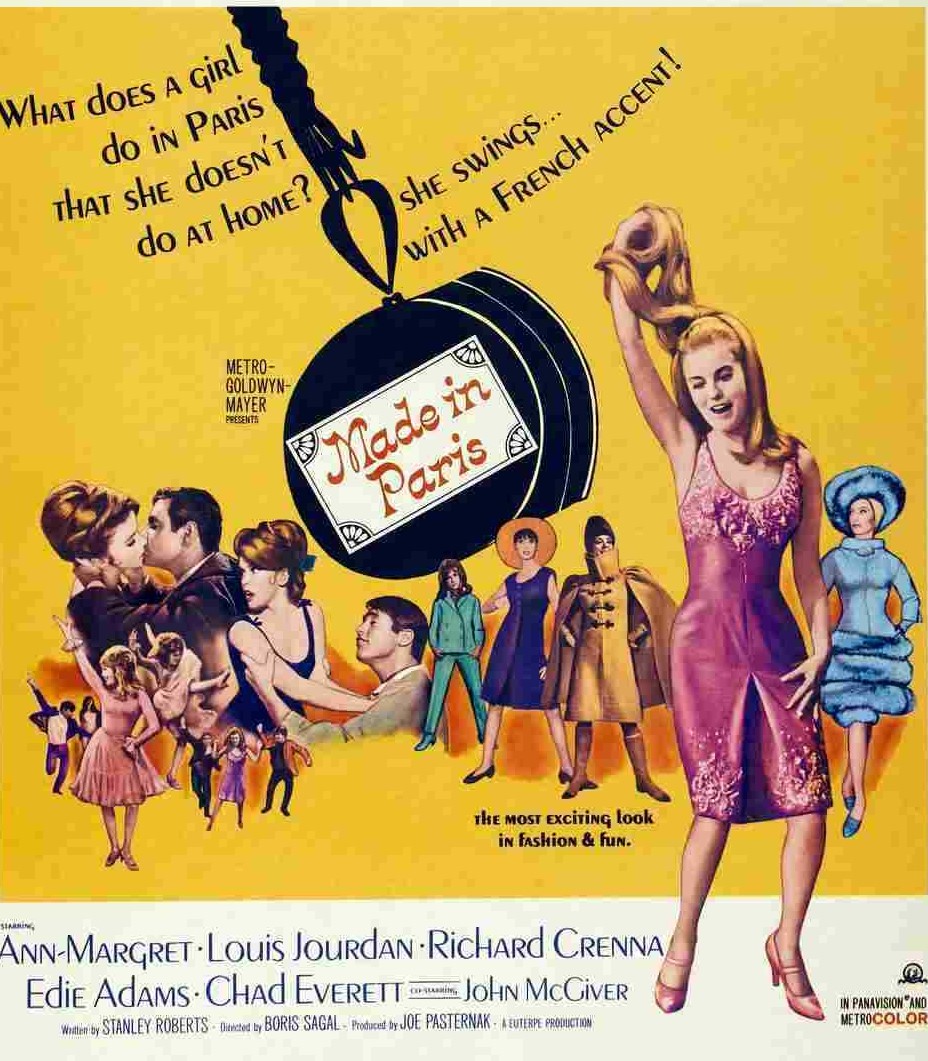
She sings, she dances, she shakes her booty. What else would you expect from Ann-Margret in light comedic mode (i.e. The Swinger, 1966) rather than serious drama (i.e. Stagecoach, 1966). While appearing as free-and-easy as in The Swinger, she’s actually a dedicated virgin, as was par for the course before the Swinging Sixties kicked in. But the way she lets it all hang out, you’d be forgiven (if you were a predatory male) for guessing the opposite.
Maggie (Ann-Margret) is a career girl, assistant fashion buyer in a New York store, having come up the hard way, small-town-girl then model then salesperson. When the Paris buyer Irene (Edie Adams) quits her job to get married, Maggie is shipped out as her replacement, not as a reward for all her hard work but as punishment because she refuses to sleep with the boss’s cocky son Ted (Chad Everett). The idea is she’ll be so out of her depth, she’ll return humiliated and only too happy to jump into bed.
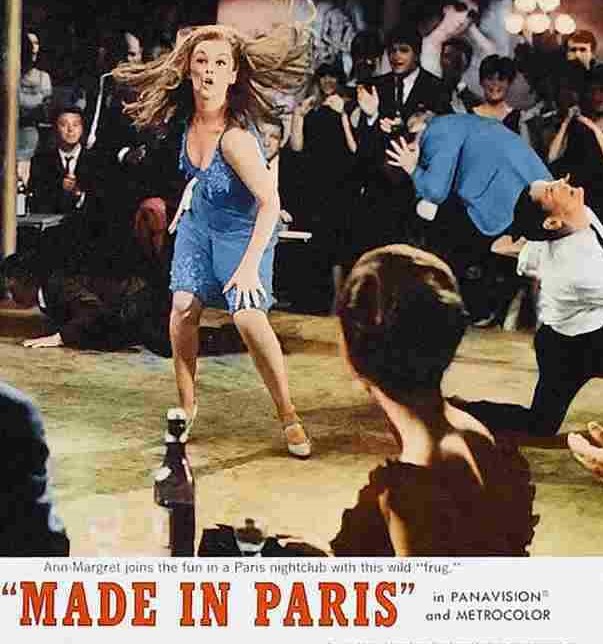
What do poster designes have against certain colors? In the movie Ann-Margret dances in blue. In the poster, the dress turns red.
Turns out Irene quit so fast she didn’t have time to tell her Parisian boyfriend and fashion designer Marc (Louis Jourdan) so on Maggie’s first night in the company’s luxurious apartment he turns up. Naturally, he expects a bit of the old-fashioned quid pro quo, je ne sais quoi, whatever they call sex when they are being coy about it, and when she refuses to play ball he cables New York to demand her dismissal. Even when the New York boss (John McGiver) relents, she is banned from Marc’s fashion shows, meaning she can’t buy clothes she is forbidden to view.
Enter Ted’s buddy Herb (Richard Crenna), from the same lothario mold. Just to even things up or add further complication, Ted realizes he is actually in love with a girl who said no after a thousand boring girls who said yes. Trying to win her way back into Marc’s good books, with Herb as her guide she tracks the designer through the night clubs, eventually putting on the kind of sexy wild impromptu dance exhibition that the more staid Maggie could only have achieved if she’d taken lessons from Ann-Margret.
That does the trick and they share an impromptu number (“Paris Lullaby”) on the banks of the Seine although Marc still insists she shed her inhibitions before marriage if she wants to be considered a true Parisienne. The arrival of Mark and then Irene, abandoning her husband on their honeymoon when called in to retrieve the situation, adds fuel to the fire and then it’s one mishap after another, especially when Maggie discovers the pleasures of absinthe and ends up in Herb’s bed (yep, she has a hell of a time wondering not just how she got there but if, Heavens to Murgatroyd as Snagglepuss would say, she committed the terrible deed).
Unbelievably, and just as well perhaps from the narrative perspective, Herb isn’t a love rival. Maggie isn’t his type, its transpires. Shoot that man on sight – doesn’t fancy Ann-Margret? Lock him up!
You won’t be surprised to learn that it all sorts itself out in the end but you might be a bit taken aback how quickly a dedicated career girl throws away her career once a marriage proposal comes her way.
You might have expected from the title that Maggie would be a model, the best excuse you could find for the actress to cavort in a series of skimpy costumes, as she does in the pre-credit sequence, an exquisite dialogue-free montage with a clever pay-off that makes you think this is going to be much more stylish – excluding the fashion show of course – than it is.
Ann-Margret has such a dazzling screen persona she makes light work of even the lightest of confections. She does all that her most fervent fans would want but it’s not her fault she’s been cast in a Doris Day comedy that ensures she can only properly express her character by acts of exhibition. Louis Jourdan (Can-Can, 1960) keeps creepy entitlement at bay with lashings of Gallic charm. Despite his character’s playboy tag, Chad Everett (The Impossible Years, 1968) is the squarest of squares.
Richard Crenna (The Midas Run, 1969) spins his normal hard-ass screen persona into something a bit more sympathetic. Edie Adams (The Honey Pot, 1967) and John McGiver (Fitzwilly/Fitzwilly Strikes Back, 1967) add a bit of dash in support.
You’d never guess the director was Boris Sagal of The Omega Man (1971) fame. Stanley Roberts (Come September, 1961) wrote the screenplay.
Ann-Margret at her zingiest. What more could you ask?
It’s Angie Dickinson vs Ann-Margret at the top of the All-Time Top 40. The two female stars take four of the top seven spots with Ann-Margret’s The Swinger replacing at the top long-time favorite The Secret Ways. These two have been duking it out over the past year, in which time the top spot has changed hands four times, with Jessica and Once Upon a Time in the West also taking a turn in the premier position. It’s also noticeable that women are top-billed in seven of the pictures in the Top Ten.
I started this Blog three years ago in June. Last year it was being read in 120 countries but that’s now gone up to 182 (out of the 193 recognized by the United Nations plus the Vatican state and the State of Palestine). Reviews have also increased and I’m now approaching 7,000 views a month, so thanks to you all.
I’ve been doing an Annual Top 40 since I started so this is the third iteration of that idea based on those reviews – out of the 900-plus posted so far – which have attracted the most attention over the three-year period. This isn’t my choice of the top films in the Blog, but yours, my loyal readers. The chart covers the films viewed the most times since the Blog began, from June 1, 2020 to July 31, 2023. (Yeah, it should have been May 31, but I’ve been remiss.)
(7)The Swinger (1966). Ann-Margret struts her stuff as a magazine journalist trying to persuade Tony Franciosa she is as sexy as the characters she has written about.
(-) Once Upon A Time in the West (1968). Rated the top western of all time, Sergio Leone’s operatic epic with Claudia Cardinale, Henry Fonda and Charles Bronson and the astonishing Ennio Morricone score.
(2) Jessica (1962). Innocently gorgeous widow Angie Dickinson finds her looks turn so many male heads in a small Italian town that the female population seek revenge.
(5)Fraulein Doktor (1969). Suzy Kendall in the best role of her career as a sexy German spy in World War One.
(-) Stagecoach(1966). Ann-Margret, Alex Cord and Bing Crosby in decent remake of classic John Ford western.
(1) The Secret Ways (1961). Richard Widmark exudes menace in this adaptation of an early Alistair MacLean spy thriller set in Hungary during the Cold War. Senta Berger has a small role.
(-) The Sins of Rachel Cade (1961). Angie Dickinson as a missionary who falls in love with Peter Finch in war-torn Africa.
(-) Gerry Anderson’s Fireball XL5. Colorized version of the famed sci fi television show.
(11) Moment to Moment (1966). Hitchcockian-style thriller with Jean Seberg caught up in murder plot in the French Riviera. Also features Honor Blackman.
(3) Ocean’s 11 (1960). In the Rat Pack debut Frank Sinatra, Dean Martin, Sammy Davis Jr. et al plan an audacious Las Vegas robbery.
(17)Can Heironymous Merkin Ever Forget Mercy Humpe and Find True Happiness? (1969). Off-the-wall musical awash with nudity and Fellini-esque cavorting, directed by star Anthony Newley. Has to be seen to be believed. Joan Collins pops up.
(4) Pharoah(1966). Priests battle kings in Polish epic set in ancient Egypt. Fabulous to look at and thoughtful.
(-) Sisters (1969). French drama bordering on the incestuous starring Nathalie Delon and Susan Strasberg.
(-) Vendetta for the Saint (1969). Feature length version of the television show sees Roger Moore and Rosemary Dexter battling the Mafia in Sicily.
(6) The Golden Claws of the Cat Girl (1968). Cult French movie starring Daniele Gaubert as a sexy cat burglar.
(-) Baby Love (1969). Orphan Linda Hayden finds herself in a predatory middle-class London household.
(-) Pendulum (1969). The under-rated George Peppard as a cop accused of murdering cheating wife Jean Seberg.
(-) Lady in Cement (1969). Frank Sinatra reprises private eye Tony Rome as he tangles with Raquel Welch.
(15) Subterfuge(1968). C.I.A. operative Gene Barry hunts an M.I.5 mole in London. Intrigue all round with Joan Collins supplying the romance and a scene-stealing Suzanna Leigh as a villain.
(-) Plane (2023). Gerard Butler goes Die Hard as stranded pilot outwitting terrorists on a remote Pacific island.
(18) Pressure Point (1962). Prison psychiatrist Sidney Poitier must help racist Nazi Bobby Darin.
(31) Fade In (1968). Long-lost modern western with Burt Reynolds serenading low-level movie executive Barbara Loden whose company is actually filming Terence Stamp picture Blue.
(16) A House Is Not a Home (1965). Biopic of notorious madam Polly Adler (played by Shelley Winters) who rubbed shoulders with the cream of Prohibition gangsters.
(19) Deadlier than the Male (1967). Richard Johnson as Bulldog Drummond is led a merry dance by spear-gun-toting Elke Sommer and Sylva Koscina in outlandish thriller.
(-) The Girl on a Motorcycle (1968). Marianne Faithful dons – and slips out of – leathers in erotic drama with Alain Delon.
(-) Some Girls Do (1969). Daliah Lavi and Beba Loncar get tough with Bulldog Drummond in sequel to Deadlier than the Male.
(-) Beat Girl / Wild for Kicks (1960). London teenager heads for shady Soho. Starts out in milk bars, ends up in strip clubs.
(-) Sodom and Gomorrah (1962). Robert Aldrich biblical epic sees Stewart Granger giving way to temptation in the infamous locale.
(-) A Dandy in Aspic (1968). Director Anthony Mann died during shooting of spy picture so star Laurence Harvey took over. Mia Farrow co-stars.
(-) The Brotherhood (1968). Martin Ritt’s Pre-Godfather take on the Mafia starring Kirk Douglas and Alex Cord as duelling brothers.
(23) Once a Thief (1965). Ann-Margret (again) is a revelation in crime drama with ex-con Alain Delon coerced into a robbery despite trying to go straight. Supporting cast boasts Jack Palance, Van Heflin and Jeff Corey. .
(-) Uptight (1968). Jules Dassin remake of John Ford classic The Informer set among black revolutionaries.
(9) A Place for Lovers (1969). Faye Dunaway andMarcello Mastroianni in doomed love affair directed by Vittorio De Sica.
(-) The Misfits (1961). Stunning last hurrah for Marilyn Monroe and Clark Gable in John Huston tale of ageing cowboys.
(-) Father Stu (2022). Biopic of boxer-turned-priest with Mark Wahlberg and Mel Gibson.
(-) Blonde (2022). Andrew Dominik’s controversial take on the life of Marilyn Monroe with Ana de Armas.
(12) 4 for Texas (1963). Frank Sinatra and Dean Martin face off in a Robert Aldrich western featuring Ursula Andress and Anita Ekberg with Charles Bronson in a smaller part.
(-) Istanbul Express (1968). Gene Barry, John Saxon and Senta Berger involved in nefarious dealings on the other famous trans-European express.
(33) P.J./New Face in Hell (1968). Private eye George Peppard is duped by shady millionaire Raymond Burr and mistress Gayle Hunnicutt in murder mystery.
(10) The Venetian Affair (1966). Robert Vaughn hits his acting stride as a former C.I.A. operative turned journalist investigating suicide bombings in Venice. Great supporting cast includes Elke Sommer and Boris Karloff.
Dropping out of the Top 40
The surge of new entrants and other films attracting a vast new audience has meant some previous favorites tumble out of the Annual Top 40. (Previous year’s position shown in brackets).
(8) It’s Not All Rock’n’Roll (2020). Ageing rocker Dave Doughman aims to mix a career with being a father in this fascinating documentary
(13) Age of Consent (1969). Helen Mirren stars as the nubile muse of jaded painter James Mason returning to his Australian roots.
(14) The Double Man (1967). Yul Brynner chases his doppelganger in the Swiss Alps with Britt Ekland adding a touch of glamour.
(20) Valley of Gwangi (1969). Special effects genius Ray Harryhausen the star here as James Franciscus and Gila Golen encounter prehistoric monsters in a forbidden valley.
(21) The Naked Runner (1967). With his son held hostage, Frank Sinatra is forced to carry out an assassination in east Germany.
(22) Orgy of the Dead (1965). Bearing the Ed Wood imprint, mad monster mash-up with the naked dead.
(24) The Sicilian Clan (1969). Stunning caper with thief Alain Delon and Mafia chief Jean Gabin teaming up for audacious jewel heist with cop Lino Ventura on their trail. French thriller directed by Henri Verneuil. Great score by Ennio Morricone.
(25) Dark of the Sun / The Mercenaries (1968). More diamonds at stake as Rod Taylor leads a gang of mercenaries into war-torn Congo. Jim Brown, Yvette Mimieux and Kenneth More co-star. Based on the Wilbur Smith bestseller
(26) Stiletto (1969). Mafia hitman Alex Cord pursued by tough cop Patrick O’Neal. Britt Ekland as the treacherous girlfriend heads a supporting cast including Roy Scheider, Barbara McNair and Joseph Wiseman.
(27) Maroc 7 (1967). Yet more jewel skullduggery with Gene Barry infiltrating a gang of thieves in Morocco who use the cover of a fashion shoot. Top female cast comprises Elsa Martinelli, Cyd Charisse, Tracy Reed and Alexandra Stewart.
(28) The Rock (1996). Former inmate Sean Connery breaks into Alcatraz with Nicolas Cage to prevent mad general Ed Harris blowing up San Francisco. Michael Bay over-the-top thriller with blistering pace.
(29) The Swimmer (1968). Burt Lancaster’s life falls apart as he swims pool-by-pool across the county. Superlative performance.
(30) Hour of the Gun (1967). James Garner as a ruthless Wyatt Earp and Jason Robards as Doc Holliday in John Sturges’ realistic re-telling of events after the Gunfight at the O.K. Corral.
(32) Dr Syn Alias the Scarecrow (1963). The British movie version of Disney American television mini-series sees Patrick McGoohan as a Robin Hood-type character assisting local smugglers.
(34) Sol Madrid/The Heroin Gang (1968). In his second top-billed role David MacCallum drags hooker Stella Stevens to Mexico to capture drugs kingpin Telly Savalas.
(35) A Twist of Sand (1968). Diamonds again. Smugglers Richard Johnson and Jeremy Kemp hunt long-lost jewels in Africa. Honor Blackman is along for the voyage.
(36) Genghis Khan (1965). Omar Sharif plays the legendary warlord who unites warring Mongol tribes. Stellar cast includes Stephen Boyd, James Mason, Francoise Dorleac, Eli Wallach, Telly Savalas and Robert Morley.
(37) Interlude (1968).Bittersweet romance between famed conductor Oskar Wener and young reporter Barbara Ferris.
(38) Woman of Straw (1964). Sean Connery tangles with Gina Lollobrigida in tangled tale of the killing of wealthy uncle Ralph Richardson.
(39) Bedtime Story (1964). Marlon Brando and David Niven are rival seducers on the Riviera targeting wealthy women.









 The Magnificent 60s