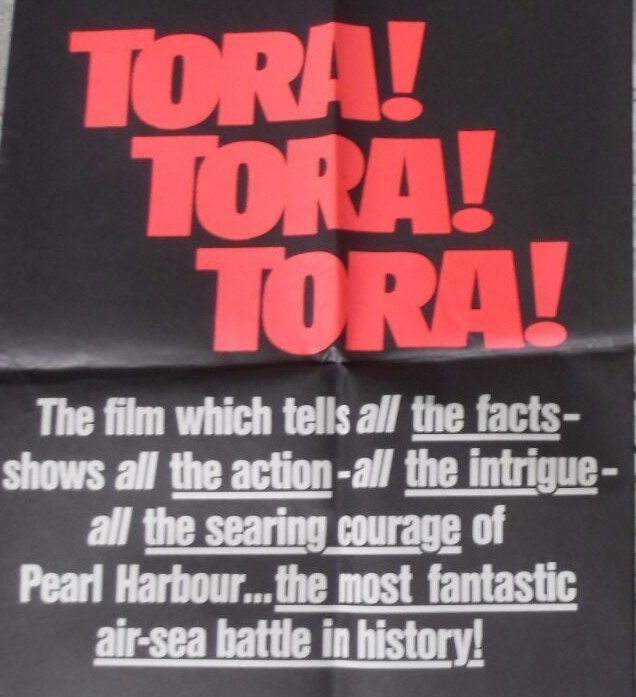
In cinematic terms director Richard Fleischer’s work on a Pearl Harbor project had begun in 1962, for a proposed movie called Zackary, the true story of an American spy living in Japan prior to the infamous attack. Fleischer signed a one-year contract with Dino de Laurantiis, the Italian producer behind the director’s previous movie Barabbas (1962). Italian screenwriters had a crack at the tale, then, in a foretaste of things to come, de Laurentiis turned to a Japanese writer whose idea of a screenplay was restricted to a document less than two pages in length. And so began one of the director’s periods in movie purgatory.
After Zackary was abandoned, Fleischer was put to work on four other concepts, none of which made their way to the screen. Worse, the pay-checks stopped coming and Fleischer sued Dino for a million dollars. Next up was The Nightrunners of Bengal from the bestseller by John Master for Samuel Bronston (El Cid, 1961). That, too, ended up in the courts.
If those rollercoasters weren’t enough, Fleischer revived his career with Fantastic Voyage (1966) and nearly sunk it with the financially disastrous Doctor Dolittle (1967), resuscitated his standing again with The Boston Strangler (1968) and dug another commercial hole with Che! (1969).
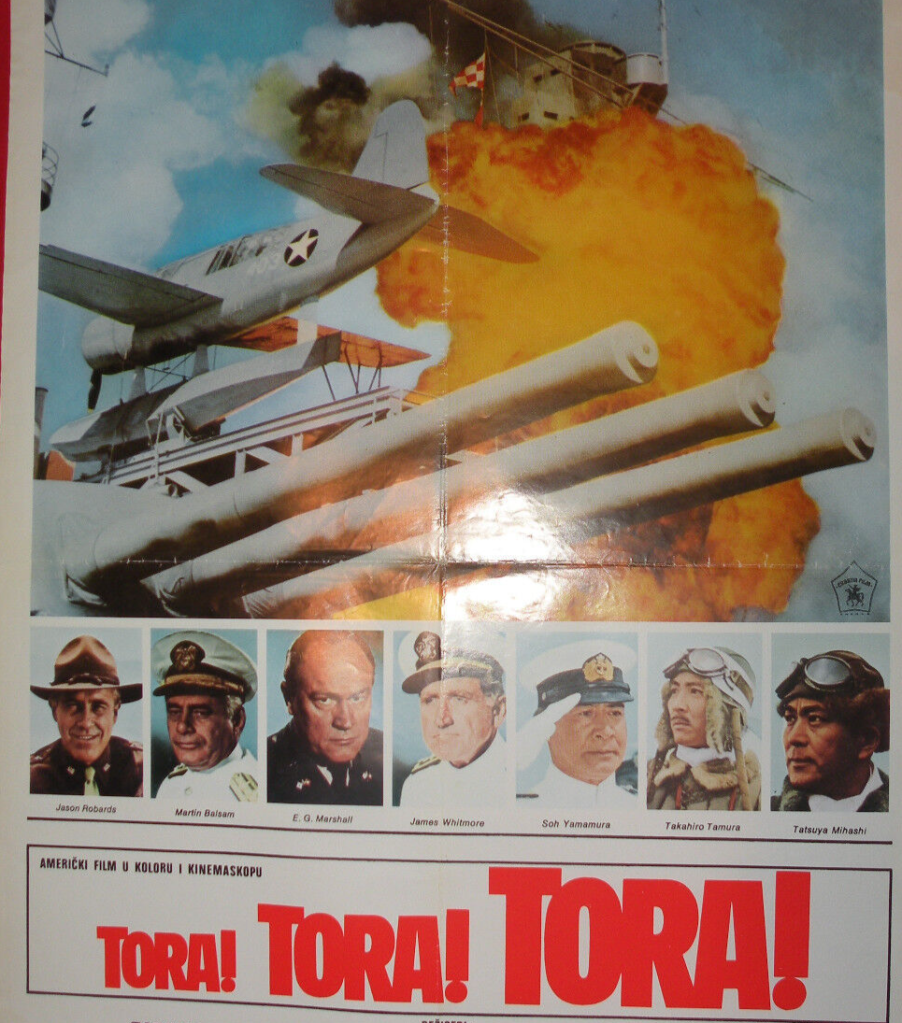
But he was the first port of call when producer Elmo Williams and his paymaster Darryl F. Zanuck, for whom Fleischer had made The Big Gamble (1961), decided on the biggest gamble in Hollywood history outside of Gone with the Wind (1939) and Cleopatra (1963). In some respects Fleischer was on board as makeweight. For the undeniable directorial star of the show was intended to be legendary Japanese helmsman Akira Kurosawa (Seven Samurai, 1954). Never mind that the vast bulk of the global paying public had never heard of him, let alone pronounce his name, Kurosawa undoubtedly represented a critical coup. American critics responsible for building appreciation of him in academic circles were unlikely to lambast him for working with Hollywood, especially as, in the even-handed manner of this project, Kurosawa would be telling the story of the attack on Pearl Harbor from the Japanese point-of-view.
In fact, it wasn’t so much one epic, as two parallel films, telling the tale from opposing perspective, edited together.
But just getting to the filming stage had required research of Cecil B. DeMille proportions. Dr Gordon Prang of Maryland University had spent years on the subject, interviewing every participant on either side. He broke down the research into a daily accounting of the year prior to December 7, 1961, and a second-by-second analysis of the day before the attack. Every incident used in the film came from this research.
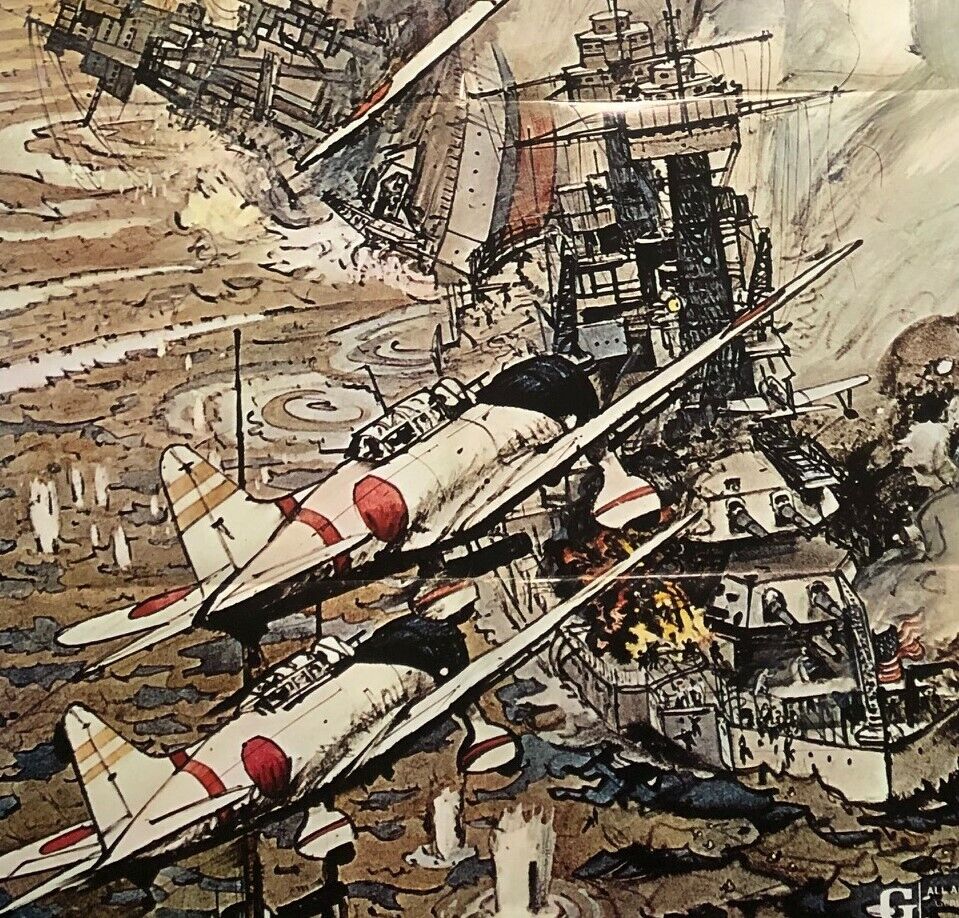
The bigger problem was assembling a Japanese fleet. Only one destroyer remained of the Japanese World War Two taskforce. The rest had been sunk. To do the movie justice, Twentieth Century Fox had to someow conjure up – just from the Japanese side – six aircraft carriers and the 353 aircraft they transported plus another 27 vessels that made up the escort. Whether the U.S. Navy would have been keen on lending a hand, it wouldn’t be much help either in providing the necessary material since most of its fleet from that period had long since been mothballed.
A million dollars was spent on a set that comprised half a battleship that could float and be towed. The rest was miniatures, but given the scale, most of these would come in around the 40-foot mark. There were 19 Japanese miniatures and 10 American.
There were no Japanese Zero planes either. So 28 Vultee AT-6 aircraft were stretched six feet and adapted to resemble the Japanese plane. The production team raided the country for Flying Fortresses, P-40s and VT-13s that could serve the purpose if reconditioned. Dozens of vehicles from the era period were rescued from junkyards and repaired, restored and repainted.
Coordinating the work of the two directors was always going to be the main problem. How would the styles fit? For the scheme to work did one of Fleischer or Kurosawa have to assume supreme commander status? It didn’t help that neither could speak the other’s language. The few meetings held between the two directors were entirely about the Kurosawa section of the screenplay. To Fleischer’s astonishment, at the rather aggressive nudging of Elmo Williams, Kurosawa made concessions.
Fleischer came up with the practical solution to melding the two separate movies. His suggestion was: don’t do it. He intended showing the Americans as sloppy and overly-relaxed while Kurosawa wanted to emphasize the spit and polish of the Japanese Navy. The contradictory approaches would make each section appear such opposites as to make the entire production seamless.
Surprisingly, the studio won some cooperation from the U.S. government in the shape of the loan of an aircraft carrier. But such goodwill did not go unnoticed and the studio was forced to repay the Defense Department $515,000 for its use. But, in general, the Government was not inclined to cooperate, wanting paid for everything they supplied. Off-duty soldiers and sailors were received standard Hollywood fees to act as extras. Every piece of machinery had to be rented. Tugs, Elmo Williams soon discovered, were available only at extortionate cost.
Water explosions were not only time-consuming but if the production encountered too much delay they become waterlogged and didn’t explode. Extras found it hard not to react to the explosions all around and just as difficult to wait for cues.
The biggest, most expensive and most spectacular, scene was the one battleship, the USS Nevada, that somehow managed to escape the harbor only to be attacked by dive-bombers. As mentioned, the only battleship constructed was only half-built. Part of what was missing were the engines. So it needed to be towed into position and allowed to drift on the current past five strategically-placed cameras with dozens of waters explosions synchronized to split-second timing. There were explosions on the deck, too, and stuntmen ready to be blown overboard. The planning and choreography required to show all hell breaking loose was staggering. The sequence was so expensive it would be impossible to re-stage.
Disaster on a movie set does not require everything possible to go wrong. Just one thing. In this case the ship got underway sooner than expected. With everyone on set working to sight cues, naturally they just did what was expected. Except it was unexpected. And the worst kind of unexpected. The water was ripped apart by explosions, the stuntmen were diving into the water, bullets and bombs were raining everywhere.
And the cameras had not turned an inch. The battle was half over before anything was photographed.
Fleischer and Williams had no alternative but to send their footage to the labs anyway. It would be processed overnight and screened the next morning to studio bosses. Fleischer expected to be fired. Luckily, they had filmed sufficient action for Zanuck to send a congratulatory telegram.
But the Fleischer experience – his section of the movie came in ahead of time – was nothing as bad as the Japanese one. Kurosawa hired business tycoons with no acting experience for “all but the leading roles” in the hope they would finance his next picture. He was as obsessive over detail as David Lean, shutting down production to repaint the set or replace a set of books on a wall. Kurosawa’s production also required a fake battleship, at a cost of $1.6 million. He built it wrong. The rate of filming was catastrophically slow. An unhappy atmosphere turned disastrous when the director turned on an assistant. The upshot was the most feted Japanese director of all time was fired.
Fleischer blamed the studio for forcing Kurosawa to work in the Hollywood manner, interfering with the work of a director who had achieved his fame by being autonomous. The only scene filmed by Kurosawa that ended up in the picture was that of the American ambassador in the US embassy in Tokyo.
Unsurprisingly, many took issue with the notion of making the film at all. In the U.S., Representative John M. Murphy called it “an affront to americans fighting in vietname…every ethical standard is besmisrched by the Hollywood-Pentagon hook-up to produce a film glorifying the Japanese attack on Pearl Harbor.2
One of the last 70mm roadshows and erroneously viewed as a financial disaster on account of its performance in the United States, in fact the movie made a reasonable profit from its global release and, of course, a fortune in the course of its lifetime, counting television, DVD and streaming.
SOURCES: Richard Fleischer, Just Tell Me When To Cry, (Carroll and Graf, 1993) p227-233, 273-287; “Controversy Boils Up As Tora! Opens,” Desfret News, September 25, 1970, p8C.
What is it about the British, hardly renowned these days for cinematic output, that they can confer late-onset stardom on hitherto supporting player?
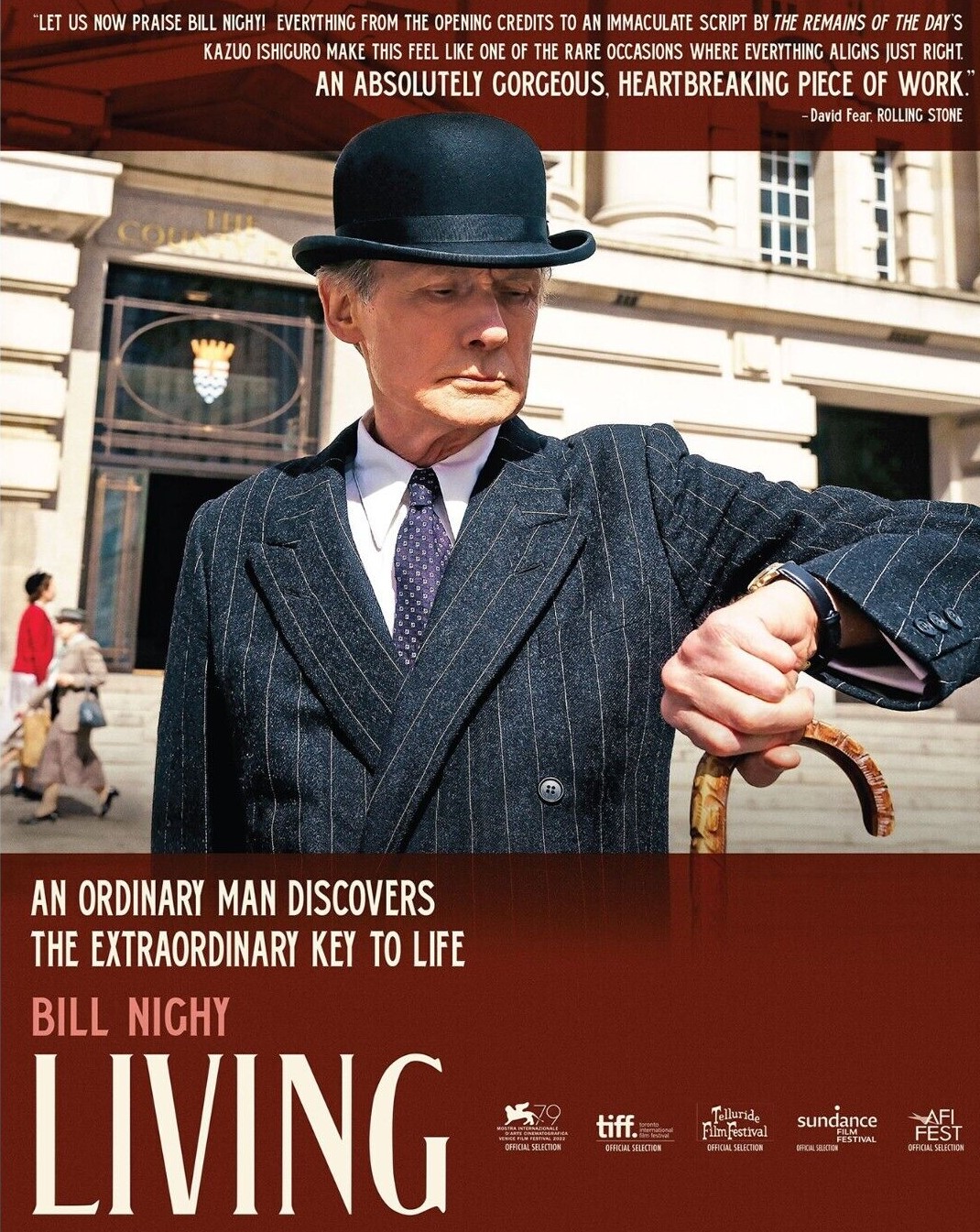
To a list that now includes Olivia Coleman (The Favorite, 2018)), Lesley Manville (Mrs Harris Goes to Paris, 2022) and Jim Broadbent (The Duke, 2020) we can now add Bill Nighy best known for a rumbustious turn in The Boat That Rocked (2009).
And in a movie that is so slow, so bereft of any action, it goes in the polar opposite direction to current Hollywood offerings. Worse, it’s set in moribund England of 1953 and almost wilfully ignores that year’s great event, a hook that would undoubtedly have attracted The Crown crowd, the Coronation of Queen Elizabeth II, whose funeral barely a couple of months back generated record global television audience.
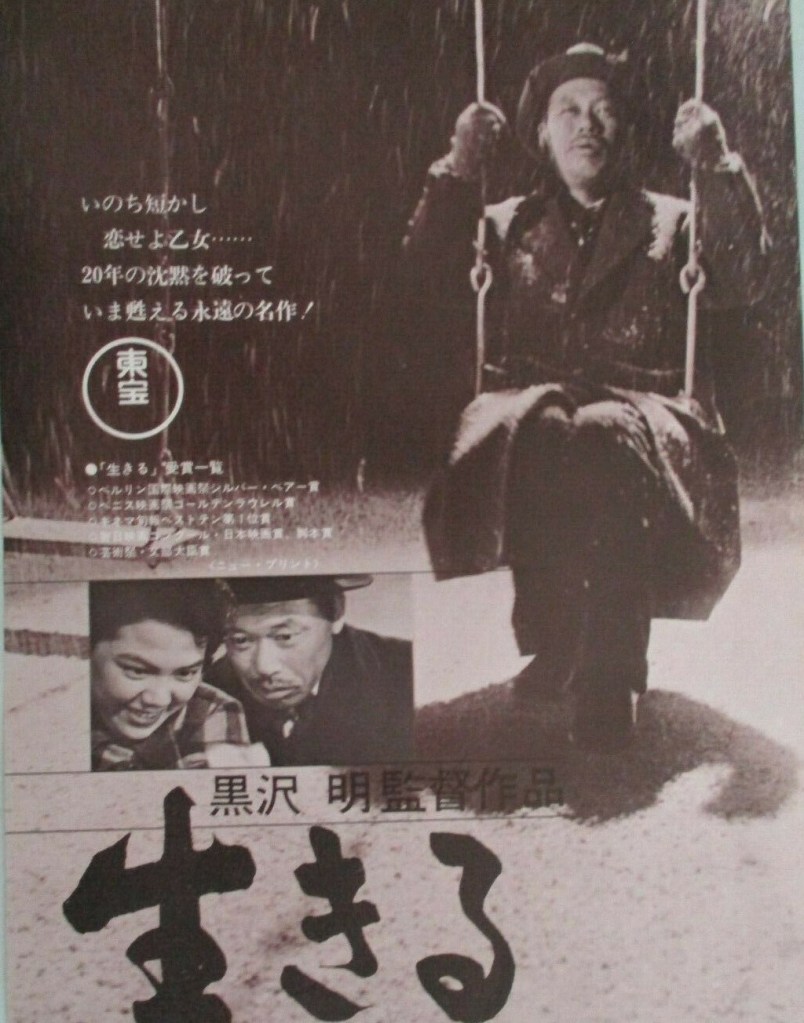
The new movie does steal this seminal image from the original “Ikiru.”
The characters all exist in that worst of all English cliches, the pin-striped bowler-hatted stiff-upper-lip brigade who exist in a world so far removed from American enterprise and vigor that the hardest work they do is to avoid responsibility for any decision with an almost Brazil-type ability to pass the buck to another department.
And it is all done so beautifully. It’s not only the role of a lifetime for Nighy but his first leading role and he manages without once resorting to his trademark chuckle.
There’s no plot to speak off, just a gradual awareness by long-widowed civil servant Williams (Bill Nighy) that he has disappeared into a soulless existence, lacking any spark, easily matching the soubriquet “Mr Zombie” given by cheeky assistant Margaret (Aimee Lou Wood).
On receiving the news that he is dying of cancer, his reaction is to attach himself to livelier characters, Sutherland (Tom Burke) and Margaret, in the hope that by osmosis some of their joie de vivre will rub off, his attraction to the girl bordering on infatuation, which given the age gap, he luckily realises and pulls away from in time.
Unlike most downtrodden characters seeking redemption, he doesn’t immerse himself in a murder mystery, or race to someone’s rescue or confront the town villain, instead, almost secretly, devoting himself to building a playpark on behalf of downtrodden mothers who have no chance of beating the system on their own. In fact, there could not be a greater act of class rebellion for a middle-class Englishman than to connive on behalf of the lower classes to beat the Establishment.
His tiny action is against the background of a ruling middle- and upper-class who enjoy lives in the leafy suburbs far removed from the inner-city deprivation of London.
Screenwriter Kazuo Ishiguro (The Remains of the Day, 1993) – adapting Akira Kurosawa’s Ikiru (1952) – has form exploring English emotional repression, with the most delicate of touches shedding a light on the incipient hierarchical pecking order. New recruit Wakeling (Alex Sharp) is kept in his place by the slightest touch of an umbrella. And in echoes of the inmates scurrying away from the approaching Nurse Rachet in One Flew Over the Cuckoo’s Nest (1975), Williams nearly hugs the wall, head bowed, hat in hand, to allow boss Sir James (Michael Cochrane) to pass in the corridor. Another colleague is “ashamed” to see Williams beg a superior to reconsider an adverse decision, as if this was not just a dishonorable action for Williams but a humiliation for himself to witness.
Only a hint here and there is required to draw other characters, William’s son’s harpie of a wife, and Williams’ colleagues not only forced to work at the same desk all day but crammed into the same (first-class) railway carriage for the journey home.
This could easily have gone down the more aggressive narrative route of Williams kicking up a stink and confronting those creating obstacles in other departments, there could have been stand-up rows, and defeat followed by celebration, but then that would have not been British. And while Hollywood might have revelled in the creation of another champion of the common man (or in this case, woman), instead director Oliver Hermanus (Moffie, 2019) has taken the much quieter approach, much to the film’s benefit.
There is only one directorial trick that will stop you in your tracks and a couple of lingering images, but the movie is all the better for the director restraining the impulse to go in more heavily.
Aimee Lou Woods easily makes the transition from television (Sex Education, 2019-2021) in an interesting part where her initial involvement as confidante turns into a more challenging role.
An industry, bewailing the post-pandemic absence of the older generation, will hopefully be sensible enough to accord this a platform release – word-of-mouth might even attract a younger audience – and come Oscar time Bill Nighy should be in with a shout.
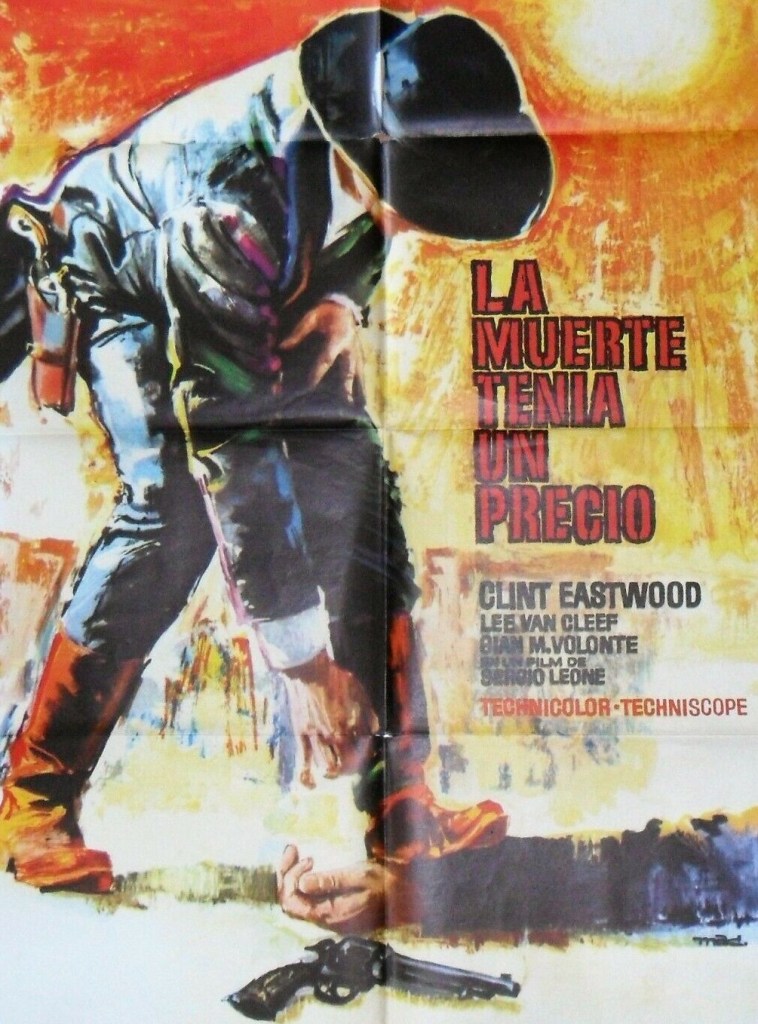
The prospective casting was tantalizing. How about Clint Eastwood and Lee Marvin, a pairing for the ages, two of the toughest guys in screen history? Failing that, Eastwood and Charles Bronson, The Man With No Name vs The Monosyllabic Man? The role of Colonel Mortimer could also have gone to Henry Fonda or Robert Ryan before in one of the movie business’s oddest tales it ended up with Lee Van Cleef.
In due course Bronson and Fonda would work with Sergio Leone in the director’s best film, Once Upon a Time in the West (1969). Fonda’s agent had already dodged Leone’s entreaties once, having rejected A Fistful of Dollars (1964). Marvin was, in fact, all set, an oral agreement in place until a few days before shooting began on For a Few Dollars More he suddenly opted instead for Cat Ballou (1965), a decision that won him an Oscar and turned him into an unlikely star.
When none of his first choices proved available or interested, Leone turned to Van Cleef. Or, more correctly, a photo of the actor pulled from an old casting catalog. Although a western buff like Leone remembered Van Cleef from his debut in High Noon (1952) plus Gunfight at the O.K. Corral (1957), The Tin Star (1957) and a dozen other bit parts and supporting roles in westerns, Van Cleef had not been credited in a movie since The Man Who Shot Liberty Valance (1962).
He proved virtually impossible to track down. No small surprise there because he earned a living mostly as a painter now, a car accident having left him with a limp. He couldn’t run, much less ride anything but a docile horse. He required a stepladder to get mounted. Leone flew to Los Angeles and his first sight of Van Cleef, older than his photograph, proved his instincts correct, Van Cleef’s face “so strong, so powerful.” The salary on offer, for a down-on-his-luck actor scarcely able to pay a phone bill, was a fat purse of $10,000. (Eastwood’s salary was $50,000 plus a profit share compared to just $15,000 for the first film).
Leone put him to work right away, the day he arrived in Italy filming reaction shots. It was just as well his input that day was so simple because, as Clint Eastwood had discovered, the language barrier was a problem. Equally disconcerting was that Van Cleef had no idea why he had been chosen, and since A Fistful of Dollars had not been released in the U.S., no inkling of the kind of western the director had in mind. At Eastwood’s urging, he nipped out to a local cinema and returned with the understanding that the script was “definitely second to style.” Van Cleef was easy to work with, and although he could put away a fair amount of liquid refreshment it never interfered with his work. He came ready for direction.
Leone had not wanted to make a sequel. His original plan was a caper picture called Grand Slam or a remake of Fritz Lang’s classic M to star Klaus Kinski or an autobiographical drama – Viale Glorioso – set in the 1930s. Jolly, the producers of A Fistful of Dollars, offered him a 30 per cent profit share on that film if he made a sequel, as they felt he was legally obliged to do. Instead, furious with his treatment at their hands, the director hit upon the title of a sequel For a Few Dollars More, the actual storyline only coming to fruition when he came across a treatment called The Bounty Killer by Enzo dell’Aquilla and Fernando Di Leo, who in exchange for a large sum, surrendered their screen credits. Luciano Vincenzoni completed the screenplay in nine days, leavening it with humor, after the director and his brother-in-law Fulvio Morsella had produced a revised treatment, Leone also involved in the final screenplay.
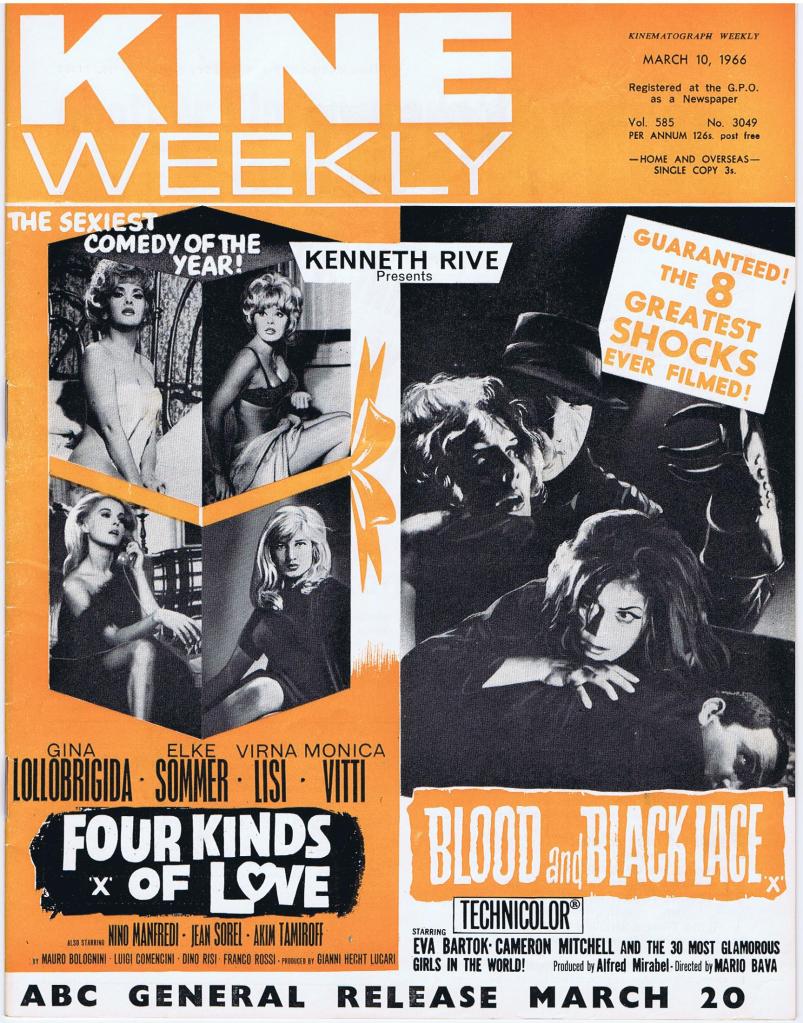
Jolly Films, the makers of “A Fistful of Dollars” already had experience of selling its films abroad. But as with Mario Bava’s “Blood and Black Lace” they were usually sold outright with no share of the box office and in turn sold as a supporting feature for a fixed price to an exhibitor.
Leone found a new backer in Alberto Grimaldi, an Italian entertainment lawyer who worked for Columbia and Twentieth Century Fox and had produced seven Spanish westerns. He promised to triple the first film’s budget to $600,000, with the director on a salary and 50 per cent profit share.
Success bred artistic confidence. A Fistful of Dollars had broken all box office records in Italy, grossing $4.6 million, and so Leone sought to improve on his initial offering and develop an “authorial voice.”
Thematically, with two principals, initially rivals who end up as “argumentative children,” it took inspiration from westerns like The Bravados (1958) – the photo and the chiming watch – and Robert Aldrich’s Vera Cruz which pitched Burt Lancaster against Gary Cooper. While bounty hunters had cropped up in Hollywood, they were not ruthless killers, actions always justified, rather than merely professionals doing their job. So in some sense Leone was drawing upon, and upending, films like Anthony Mann’s The Naked Spur (1953) and The Tin Star, Andre De Toth’s The Bounty Hunter (1954) and Budd Boetticher’s Ride Lonesome (1959). Just as Clint Eastwood’s bounty hunter underwent change, gradually the character played by Gian Maria Volonte evolved from a straightforward outlaw called Tombstone to a stoned, sadistic bandit named El Indio.
With artistic pretension came attention to detail. Leone required historical exactitude not just relating to weapons used, but their ballistics and range. Lee Van Cleef’s arsenal included a Buntline Special with removable shoulder stock, Colt Lightning pump action shotgun, Winchester ’94 rifle, and a double-barreled Lefaucheux. Carlo Simi’s town, constructed near Almeria, contained a two-storey saloon, undertaker’s parlor, barbershop, telegraph office, jail, hotel and an adobe First City Bank. And there was nothing pretty about it. The saloon was dirty and overcrowded, machines belching so much smoke it “looked as if a man could choke in there.” Filming took place between mid-April and the end of June 1965.
Perhaps the biggest area for improvement was the music. Ennio Morricone had scored another nine films since A Fistful of Dollars. Both director and composer had ambitious ideas about how to use the music. The score was not recorded in advance, nor was Morricone given a screenplay, instead listening while Leone told him the story and asked for individual themes for characters. Morricone would play short pieces for Leone and if met with his approval compose longer themes. Each character had their own leitmotif, sometimes the same instrument at different registers, the flute brief and high-pitched for Monco (Eastwood) but in a low register for Mortimer, church bells and a guitar representing El Indio. In a very real sense, they were experimenting with form. Bernardo Bertolucci regarded Morricone’s music as “almost a visible element in the film.” Musical ideas regarding El Indio’s watch, however, were developed at the rough cut stage, its repetitive melody becoming “sound effect, musical introduction and concrete element in the story.”
As well as creating music for audiences, Leone’s films are punctured with music that holds particular meaning for characters, here the watch and in Once Upon a Time in the West the harmonica, in both films flashback used to assist understanding.
The myth of why it took so long for either film to reach the United States was based on two misconceptions, firstly that Japanese director Akira Kurosawa, whose Yojimbo (1961) A Fistful of Dollars closely resembled, had blocked its progress, secondly that it relied on screenwriter Vincenzoni to make the breakthrough via a contact working for United Artists.
In fact, there were more obvious reasons for resistance from American distributors. In the first place, you could not discount snobbery. The notion that the country that had invented the western should now be reliant on importing them from Italy seemed a shade abhorrent. Although For a Few Dollars More was sold to 26 countries in a day at the annual Sorrento trade fair in 1965 – at the same fair a year earlier there had not been a single taker for A Fistful of Dollars – the United States was not among the buyers, distributors perhaps even more daunted by the prospect of introducing so much violence to American audiences reared on the traditional western.
Foreign movies that made the successful transition to the United States arrived weighted down with critical approval and/or awards or garlanded with a sexy actress – Brigitte Bardot, Anna Magnani, Sophia Loren among the favored – and risqué scenes that Hollywood dare not include for fear of offending the all-mighty Production Code.
But sex was a far easier sell in the U.S. than violence. And an actor with no movie marquee such as Clint Eastwood did not fill exhibitors with delight and even the notion that A Fistful of Dollars was a remake of Akira Kurosawa’s Yojimbo (1961) failed to stir the critics (as with The Magnificent Seven being a remake of Seven Samurai, most viewing the notion as repellent). So both the first and second pictures in the “Dollars” trilogy were stuck in distribution limbo for three and two years, respectively, before being screened in America.
And, initially, it had appeared that Italian audiences shared the same distaste for a cultural intruder such as A Fistful of Dollars. One cinema chain owner refused to book the film on the grounds that there were not enough female characters. A Fistful of Dollars was released in Italy in August, a dead period, since the month is so hot and everyone has abandoned the city for the beach. It opened – only in Florence and with neither publicity nor advertising – on August 27th 1964, a Friday, and did poor business that day and the next. But by Monday, it was a different story, takings had doubled and over the following two days customers were being turned away. New films typically played first-run for 7-10 days in Florence, A Fistful of Dollars ran for three months, triggering a box office story of Cinderella proportions.
But my research indicated there had been ample opportunity for an American distributor to snap up the rights to A Fistful of Dollars in 1965, two years before it was finally released there. In the first place, the music rights had already been purchased by New York firm South Mountain Music in March 1965 in expectation the film would acquire release that year. In December 1965 Arrigo Colombo, partner in Jolly, flew to the United States for the specific purpose of lining up a major distributor for A Fistful of Dollars. The company had previously secured U.S. distribution for horror product like Castle of Blood (1964) and Blood and Black Lace (1964) but those were outright sales.
With the movie already sold to Spain, West Germany, France and Japan, Colombo aimed to conclude a deal for the English-speaking market, “purposely holding back” from releasing the picture in those countries as he sought an all-encompassing contract. At that point, Kurosawa no longer stood in the way, that issue “now cleared up” settled in the normal fashion by financial inducement, in an “amicable settlement” Toho snagging the Japanese and Korean rights, the deal sweetened with a minimum $100,000 against a share of global profits. But Colombo went home empty-handed, unable to secure any deal and his temerity ridiculed by trade magazine Variety
Although Sergio Leone had one other legal obstacle to surmount that would not have got in the way of a U.S. distribution deal, the worst that could happen being that a contract might be struck with a different company. Italian companies Jolly Films/Unidis, which had backed the original, took umbrage at Leone going ahead with the sequel without their financial involvement, cutting them off from the profit pipeline. So in April 1966 they took Leone to court in Rome arguing that For A Few Dollars More “represented a steal as well as unlawful competition for its own Fistful.” Four months later the judge denied the claim on the grounds that “the character played by Clint Eastwood in each film is not characterized to such a degree that a likeness exists” (even though to all intents and purposes it was the same character, cigar, poncho, gun, bounty hunting!). Ironically, Italian laxity in such matters counted against Eastwood when he failed to prevent the distribution of a film based on two segments of Rawhide stitched together.
It would also be highly unusual if United Artists was not aware of both A Fistful of Dollars and For A Few DollarsMore since, in keeping tabs on the foreign performance of both Goldfinger (1964) and Thunderball (1965) the studio could scarcely fail to notice the Italian westerns close on their box office tail, the second western outpointing Thunderball in daily averages in Rome.
But the story still, erroneously, goes that it was the intervention of writer Vincenzoni which proved decisive. He had contacts in U.S, namely Ilya Lopert of United Artists. Grimaldi was, meanwhile, trying to sell U.S. and Canada rights relating to the second picture. Vincenzoni arranged for UA’s representatives to view A Fistful of Dollars in Rome and cut himself in for a slice of the profits when the distributor surprisingly purchased the entire series.
Since A Fistful of Dollars had already been sold to most major territories, UA could only acquire the North American rights – for a reported $900,000 – but for the other two films gained a considerably larger share of global distribution
United Artists was an unusual company among the Hollywood hierarchy, and not primarily due to recurrent Oscar success, but because it had, completely unexpectedly, hit box office gold with James Bond. There was nothing particularly odd about a series, as Tarzan, Sherlock Holmes etc (still flourishing in the 1960s) testified. What was distinctive about the Bonds was that each picture – the four so far had earned close to $150 million worldwide, not counting merchandising – had done better than the last, which went against the standard rule of sequels of diminishing returns and higher costs. Given the opportunity to buy into a ready-made series (two films in the can, the third in production) UA made an “attempt to calculatedly duplicate the (Bond) phenomenon” and in so doing “create a trend.” Assuming the movies would follow the Bond formula of increased grosses with each successive picture, the studio was prepared to spend “many hundreds of thousands” of dollars to establish the first picture.
United Artists embarked on an unusual sales campaign to the trade. Instead of marketing the pictures one at a time, they started to promote the series with the tagline “A Fistful of Dollars is the first motion picture of its kind, it won’t be the last.” The advertising campaign was unusual in that it was based entirely around introducing the character rather than the story (much in the same way as James Bond had been), three separate slivers of the poster devoted to visual aspects, the cigar, gun and poncho, each carrying mention of “The Man With No Name,” such anonymity one of the talking points of the movies.
Cinema managers were briefed on release dates, A Fistful of Dollars in January 1967, the sequel for April and The Good, the Bad and the Ugly for Xmas that year. Like the Bonds, it was expected that box office would progressively, if not explosively, increase. The studio unveiled a “hard-hitting campaign” designed to “intrigue the western or action fan.”
However, the North American premiere was held not in the United States but Canada, at the Odeon-Carlton in Toronto. Having committed to a four-week engagement, a risky prospect for an unknown quantity, the cinema started advertising a teaser campaign three weeks in advance. During the first week, posters were not just focused on the “man with no name” but also “the film with no name” and the “cinema with no name,” all those elements removed from the artwork until the second week of the campaign. UA allocated $20,000 in marketing, up to four times the usual amount spent on a launch there, and was rewarded with strong results – “bullish but not Bondish” Variety’s verdict.
However, the UA gamble did not pay off, especially when taking into account the high cost of buying the rights allied to huge marketing costs. Initial commercial projections proved unrealistic. Despite apparently hitting the box office mark in first-run dates in key cities, the film was pulled up short by its New York experience. Shunted straight into a showcase (wide) release rather than a first-run launch, it brought in a pitiful $153,000 from 75 theaters – even The Quiller Memorandum (1966) in its second week did better ($150,000 from 25). As a consequence when For a Few Dollars More was released in April/May, UA held off boking it into New York until “a suitable arrangement” could be made, which translated into hand-picking a dozen houses famed for appealing to action fans plus 600-seat arthouse the Trans-Lux West.
United Artists predicted $3.5 million in rentals (the amount returned to studios after cinemas take their cut of the gross) for A Fistful of Dollars and $4.5 million with For a Few Dollars More. Neither came close, the latter the marginally better performer with $2.2 million in rentals (enough for a lowly 41st on the annual chart) with the first film earning $2.1 million in rentals (46th) way behind more traditional performers like Hombre ($6.5 million for tenth spot), El Dorado ($5.9 million in 13th) and The War Wagon ($5.5 million in 15th).
The vaunted Bond-style box office explosion never materialized and it might have helped if UA had kept closer watch on the actual revenues posted in Italy for the series. While For a Few Dollars More increased by $2 million the takings of A Fistful of Dollars, the final film in the trilogy, The Good, the Bad and the Ugly produced lower grosses than even the first.
However, it did look as if The Good, the Bad and the Ugly would come good. UA opened it in two first-run cinemas in New York where each house retained it for six weeks. But although the final tally of $4.5 million (24th spot in the annual rankings) was the best of the series, it did not herald returns that made it anywhere near comparable to the Bonds.
It’s possible the movies did better in terms of admissions than the box office figures show. Distributors pushing foreign product into arthouses were generally able to achieve a high share of the rental – 50 per cent the going rate – because they were able to set rival arthouses against each other and movies with a sexy theme/star had inbuilt box office appeal, La Dolce Vita (1960) and And God Created Women (1956) the classic examples. But that would not be possible when trying to interest ordinary cinemas with a film lacking in sex.
When I researched the early Bonds for a previous Blog, I found that United Artists had only managed to achieve bookings for Dr No (1962) by lowering its rental demand. Exhibitors paid the studio just 30 per cent of the gross. And I wondered if perhaps the same occurred with A Fistful of Dollars given the star, like Sean Connery, was completely unknown. Of course, it would not explain why the series did not grow as expected.
Of course, there was a surprising winner and an unexpected loser in the whole ‘Dollars’ saga. Clint Eastwood emerged as the natural successor to John Wayne with a solid box office – and later critical – reputation for American westerns starting off with Hang ‘Em High (1968) which beat The Good, the Bad and the Ugly at the box office, while Sergio Leone’s Once Upon a Time in the West (1969) proved a huge flop in the U.S.
Christopher Frayling, Sergio Leone, Something To Do With Death (Faber & Faber, 2000), p160-162, p165-200; “Italo’s Own Oater Leads Box Office,” Variety, December 2, 1964, p16; “South Mountain Buys Dollar Score,” Variety, March 10, 1965, p58; “Jolly’s Colombo Discovers N.Y.C. Busy at Xmas,” Variety, December 22, 1965, p3; “Tight Race for Box Office Honours in Italy Looms as Thunder Leads Dollars,” Variety, January 65, 1966, p15; “Dollars World Distribution for UA,” Variety, March 22, 1966, p22; “Clint Eastwood Italo Features Face Litigation,” Variety, April 13, 1966, p29; “UA Cautious on Links to Italo Fistful; Faces Slap from Kurosawa,” Variety, July 13, 1966, p7; “Rome Court Rejects Plea for Seizure of Few Dollars Made By Fistful Film,” Variety, August 3, 1966, p28; “Clint Eastwood vs Jolly on 2 Segs of Rawhide ‘Billed’ New Italo Pic,” Variety, September 7, 1966, p15; “Italy Making More Westerns, Spy Films Than Star Vehicles,” Box Office, October 31, 1966, p13; “Hemstitched Feature,” Variety, November 23, 1966, p22; “UA Division Holds Screenings of Westerns,” Box Office, December 12, 1966, pE2; Advertisement, Variety, December 21, 1966, p12-13; “UA Gambles Dollars As Good As Bonds,” Variety, December 28, 1966, p7; “Fred Goldberg Shows Ads on UA ‘Dollar’ Films,” Box Office, January 2, 1967, pE4; “Review,” Box Office, January 9, 1967, pA11; “Fistful of Dollars: Male (and Italo) B.O.,” Variety, January 18, 1967, p7; “Fistful of Dollars: The Glad Reaper,” Variety, February 1, 1967, p5; “This Week’s N.Y. Showcases,” Variety, February 8, 1967, p9; “Fistful’s Weaker N.Y. B.O. Clench,” Variety, February 8, 1967, p7; “Methodical Campaign Kicks Off Ideal Fistful Ballyhoo in Toronto,” Box Office, May 1, 1967, pA1; “Few DollarsMore Runs 30% Ahead of First Dubbed Italo-Made Western, So Bond Analogy Makes Out,” Variety, May 31, 1967, p4; “N.Y. Slow to Fall Into Line,” Variety, May 31, 1967, p4; “B’way Still Boffo,” Variety, July 12, 1967, p9; “Carefully Picked,” Variety, July 12, 1967, p4; “B’way Biz Still Big,” Variety, July 19, 1967, p9; “Big Rental Films of 1967,” Variety, January 3, 1968, p25; “B’way B.O. Up,” Variety, January 31, 1968, p9; “Big Rental Films of 1968,” Variety, January 8, 1969, p15.
Hollywood has been hitting the retread button for over a century. Today’s reboots and re-imaginings are nothing new. Although in the past the excuse was technological development, the splurge of remakes in the 1960s including Beau Geste (1966), Stagecoach (1966) and Goodbye Mr. Chips (1969) were superior to the originals in one particular aspect – they were in color.
When silent films went from two-reels to four-reels and from six-reels to eight-reels, roughly the length of a modern picture, and when silent gave way to sound the remake business went into overdrive. The 80-minute Tess of the Storm Country (1914) starring Mary Pickford was transformed into a 137-minute version eight years later headlined by the same star. Zane Grey westerns starring William Farnum Raiders of the Purple Sage (1918), The Lone Ranger (1919) and The Last of the Duanes (1919) were remade as Tom Mix vehicles between 1923 and 1925 and toplining George O’Brien between 1930 and 1931. Over 120 remakes were made between 1928 and 1930, with around 80 per cent going out with the same title. There was another remake burst at the end of the 1930s including The Hunchback of Notre Dame (1939).
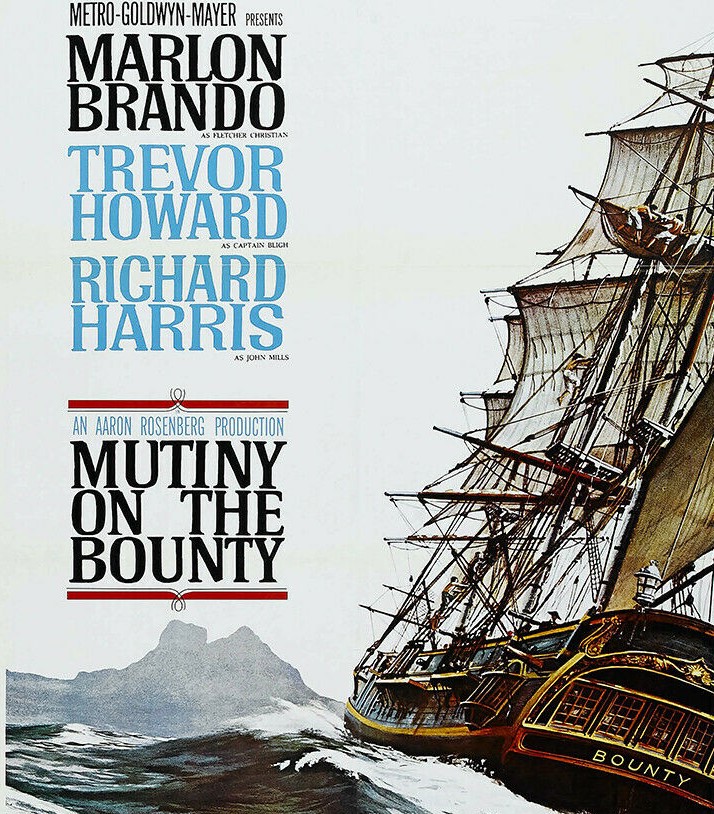
Color was the prime instigator for the remake business in the 1960s. But you could also add the technological development of 70mm, the key element of roadshow pictures. Many big-budget films of the 1920s and 1930s had hit the box office target and with studios looking for as many sure-fire winners as possible it seemed sensible to give a new look to older projects. Ben-Hur (1959) could be seen as lighting the remake touch paper especially when it scored equally highly at the box office and the Oscars. MGM followed through with roadshows of Mutiny on the Bounty (1962), one-third as long again as the 1935 original, Cimarron (1960) with an extra 20 minutes compared to the 1931 Oscar-winner. But the reimagining of The Four Horsemen of the Apocalypse (1962) ran about the same length as the Rudolph Valentino version of 1921 as did King of Kings (1961) compared to the 1927 Cecil B. DeMille version.
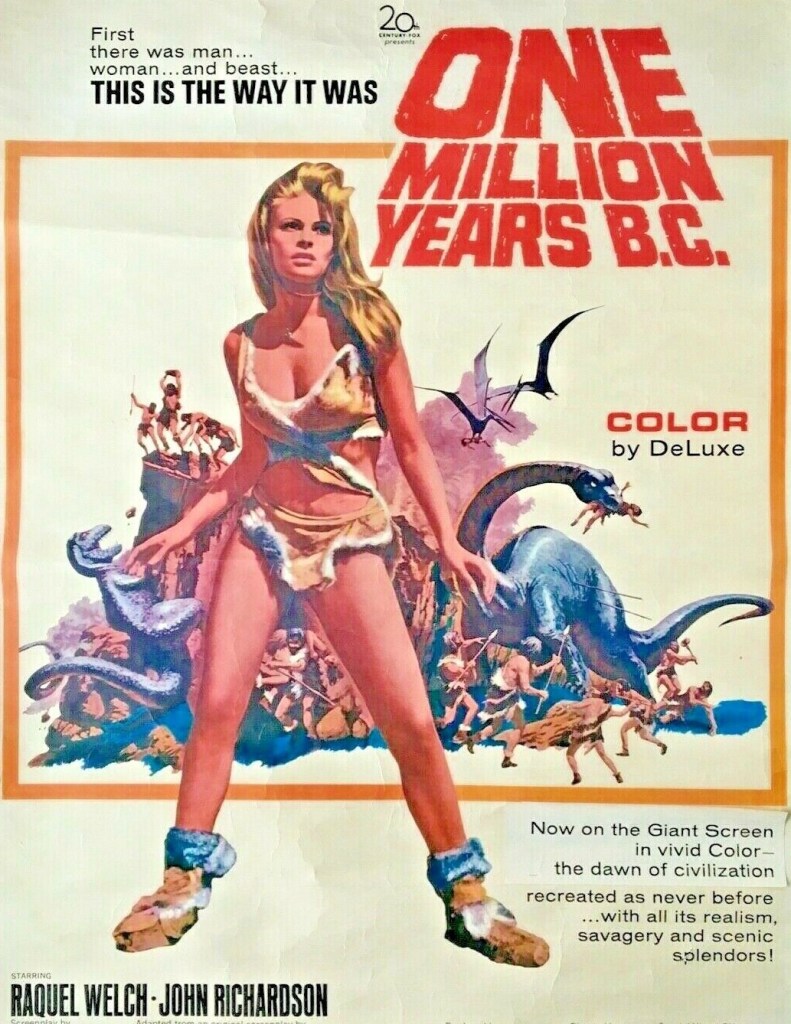
The famed Raquel Welch vehicle was based on a film of 1940.
Prior to considering the expensive business of investing in a remake, studios had been able to rely on sticking out the old movie as a reissue, limited financial exposure often resulting in considerable box office. But it was impossible to sell silent pictures, excepting comedians like Charlie Chaplin, to a modern audience and many of the big hits of the 1930s had either been already sold to television or were considered dated by contemporary standards and although black-and-white films were still being made halfway through the decade (In Harm’s Way, 1965, for example) they were a difficult re-sell.
Far easier to revamp a well-known, perhaps beloved, product with the addition of color cinematography, better sound, and possibly with major stars in the vein of Marlon Brando (Mutiny on the Bounty) and Peter O’Toole (Goodbye, Mr. Chips). It also seemed the case that lesser stars could still prop a remake with little adverse effect on the receipts especially if the lower-priced actors substantially reduced the budget and consequently the income required to turn a profit.
Some movies appeared to be on an endless recycle. The Count of Monte Cristo (1964) had been filmed in 1956, 1954 and 1934, the latter starring Robert Donat. The Perils of Pauline (1967) had been remade twice since Pearl White had made the character her own in 1914. Back Street (1961) with Susan Hayward had been filmed twice before in 1941 and 1932. The Spanish-made The Last of the Mohicans (1963) starring Jeffrey Hunter was the fifth attempt at filming the famous novel after movies made in 1920, 1932, 1936 and 1957.
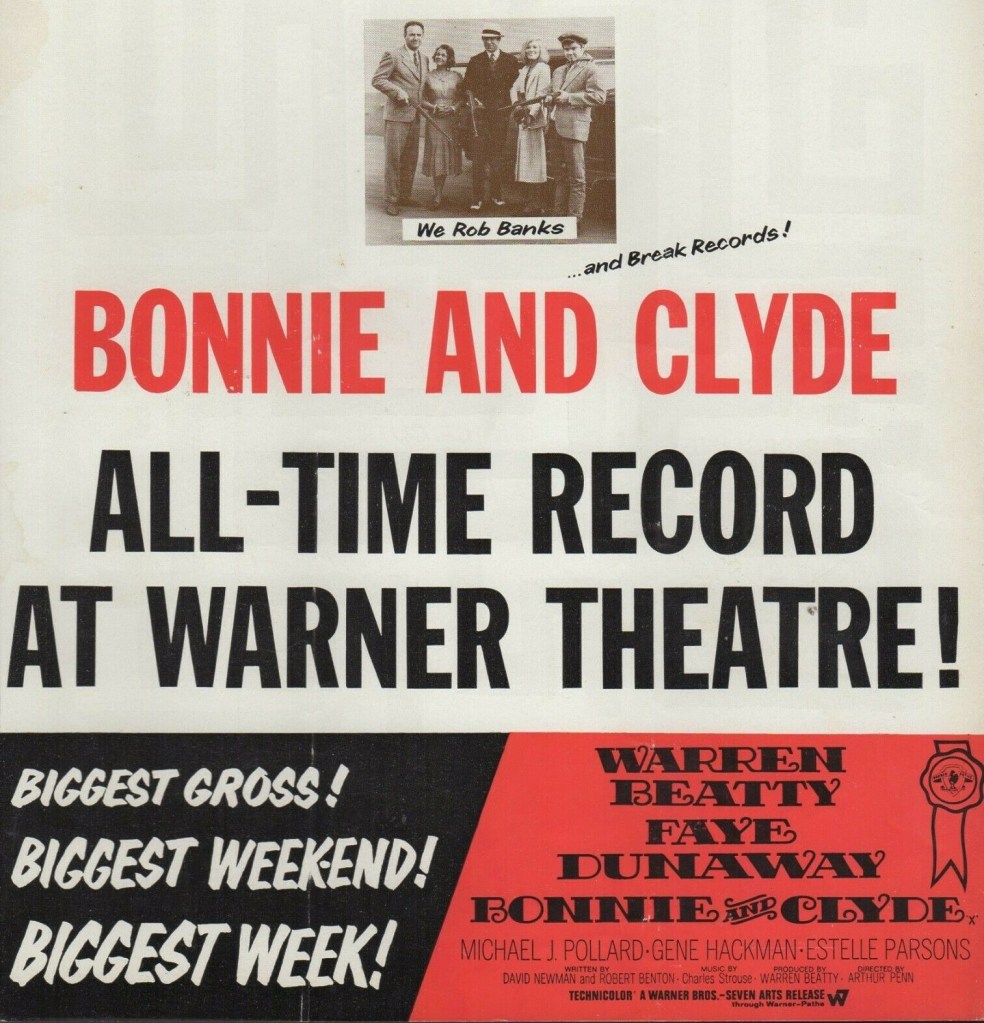
“The Bonnie Parker Story” laid the groundwork for this box office smash-and-grab.
Some remakes changed their titles. Cary Grant comedy Walk, Don’t Run (1966) was based on The More the Merrier (1943), Stolen Hours (1963) with Susan Hayward on Dark Victory (19390 with Bette Davis, Doris Day vehicle Move Over Darling (1963) on My Favorite Wife (1940), and Agatha Christie’s Ten Little Indians (1963) on The Old Dark House (1932). William Wyler’s The Children’s Hour (1961) starring Audrey Hepburn drew on These Three (1936), Uptight (1968) was a modern take on John Ford’s Oscar-nominated The Informer (1935), and comedy The Shakiest Gun in the West (1968) with Don Knotts had its origins in The Paleface (1948) starring Bob Hope. Akira Kurosawa’s Japanese classic Rashomon (1950) retuned as The Outrage (196) starring Paul Newman. The Bonnie Parker Story (1958) was drastically retuned as Bonnie and Clyde (1967). Frank Capra’s A Pocketful of Miracles (1961) was based on his own Lady for a Day (1932). Gregory Peck thriller Mirage (1965) took only three years to re-emerge as Jigsaw (1968).
Other studios decided the original title was too big an attraction to be discarded. Of Human Bondage (1964) with Kim Novak and Laurence Harvey had been made 30 years earlier with Bette Davis and Leslie Howard. Night Must Fall (1965) starring Albert Finney had originated 27 years prior. Raquel Welch-starrer One Million Years B.C. (1966) had been slightly truncated from One Million B.C. (1940), Lee Marvin and Angie Dickinson headlined The Killers (1964) based on characters originally essayed by Burt Lancaster and Ava Gardner 18 years previously, Mayerling (1969) with Omar Sharif and Catherine Deneuve had starred Charles Boyer and Danielle Darrieux in the 1936 version.
Horror was the most obvious genre to receive a revamp. Robert Bloch rewrote The Cabinet of Dr Cagliari (1962) forty-two years after the original. Hands of Orlac (1961) with Mel Ferrer had previously been known as Mad Love (1936). Herbert Lom reprised The Phantom of theOpera (1962) following on from Lon Chaney in 1925 and Nelson Eddy in 1943. French-made The Golem (1967) was based on versions screened in 1921 and 1937.
Some films were remade with music, Goodbye Mr. Chips – the Robert Donat, Greer Garson original belonging to 1939 – the most obvious example but The Sound of Music (1965) was essentially a musical version of the Germanic The Trapp Family (1956), and Three Coins in the Fountain (1954) set in Rome turned up as the musical The Pleasure Seekers (1964) set in Madrid, both films directed by Jean Negulesco. On the other hand, State Fair (1962), which had been turned into a drama in 1945 despite being based on a Rodgers & Hammerstein musical, was restored to its roots.
Not every remake idea proved a slam dunk. Projects that failed to get off the ground included: TheBirth of Nation (1915), Ecstasy (1933), Metropolis (1927) to be directed again by Fritz Lang, Wuthering Heights (1939) to star Richard Harris, Dark Angel (1925 and 1937) with Rock Hudson, The Lives of a Bengal Lancer (1935), The Crusades (1935), The Charge of the Light Brigade (1936) with Roger Moore – although it was remade in 1968 – Wee Willie Winkie (1937), Jane Eyre (1943) to star James Mason, The Macomber Affair (1946) and The Postman Always Rings Twice (1946). Anthony Quinn was touted for a remake of Kurosawa’s Sanjuro (1962) and Saul David planned a westernized version of that director’s The Hidden Fortress (1958).
French director Claude Chabrol had ambitions to make a version of Hamlet (1948) from Ophelia’s point of view though a Russian version appeared in 1964. MGM blocked a remake of Tarzan of the Apes (1931). Francis Ford Coppola proposed Heaven Can Wait, a reworking of Here Comes Mr. Jordan, to star Bill Cosby. Stephen Boyd was mooted for a remake of The Quiet Man (1952).
Producer Ray Stark (Funny Girl, 1967) announced new versions of Casablanca (1942) and a Peter Collinson-directed The Maltese Falcon (1941). Musical versions were announced of The Private Life of Henry VIII (1933), Our Town (1937), Rebel Without a Cause (1955) and Roman Holiday (1953), the latter to star Robert Redford.
SOURCES: Brian Hannan, Coming Back to a Theater Near You, A History of Hollywood Reissues, 1914-2014 (McFarland, 2016), p21, 27, 31; “Drift Towards Remakes Grows on Coast,” Box Office, March 11, 1939, p37; “That Birth of a Nation Title,” Variety, April 13, 1960, p6; “Sales Come-On But Never Mislabel Content – Hathaway,” Variety, October 26, 1960, p13; “Bischoff-Diamond To Make Charge,” Box Office, July 10, 1961, p11; “Bash Vindicated – After 4 Yrs,” Variety, July 12, 1961, p5; “MGM Is Upheld In Suit over Tarzan,” Box Office, July 10, 1961, p13; “New Cycle of Classics for French Prods,” Variety, July 12, 1961, p16; “Dark Angel Remake to Writer Lee Mahin,” Box Office, December 18, 1961, pW-8; “Robert Blees Plans Remake of Macomber Affair,” Box Office, March 12, 1962, p16; “Anderson-U.A. Talk Wuthering Remake,” Variety, August 28, 1963, p22; “Spain’s Latest Western,” Variety, October 23, 1963, p18; “MGM Signs for 3 Co-Productions in Spain,” Variety, January 15, 1964, p22; “Hollywood Report,” Box Office, February 10, 1964, p16; “Japanese Sanjuro Remake for Quinn,” Variety, May 5, 1965, p4; “Weintraub Sends Down L.A. Roots,” Variety, January 12, 1966, p5;“Universal Re-Do of DeMille 1935 Crusades,” Variety, April 13, 1966, p3; “Plan Rebel Without Cause For Remake As Musical,” Box Office, April 18, 1966, p9; “Lee Thompson Busily Reprints His Musical Version of Henry VIII,” Variety, April 27, 1966, p17; “U’s Future Parks 17 Vehicles,” Variety, May 25, 1966, p33; “Re-Do of Quiet Man,” Variety, March 5, 1967, p5; “De Laurentiis in New Par Dickers,” Variety, January 10, 1968, p5; “David to Re-Do Kurosawa Plot As U.S. Western,” Variety, June 12, 1968, p4; “Re-Do of Falcon,” Variety, July 10, 1968, p14; “Star In W7 Pic,” Variety, January 15, 1969, p3.

 The Magnificent 60s