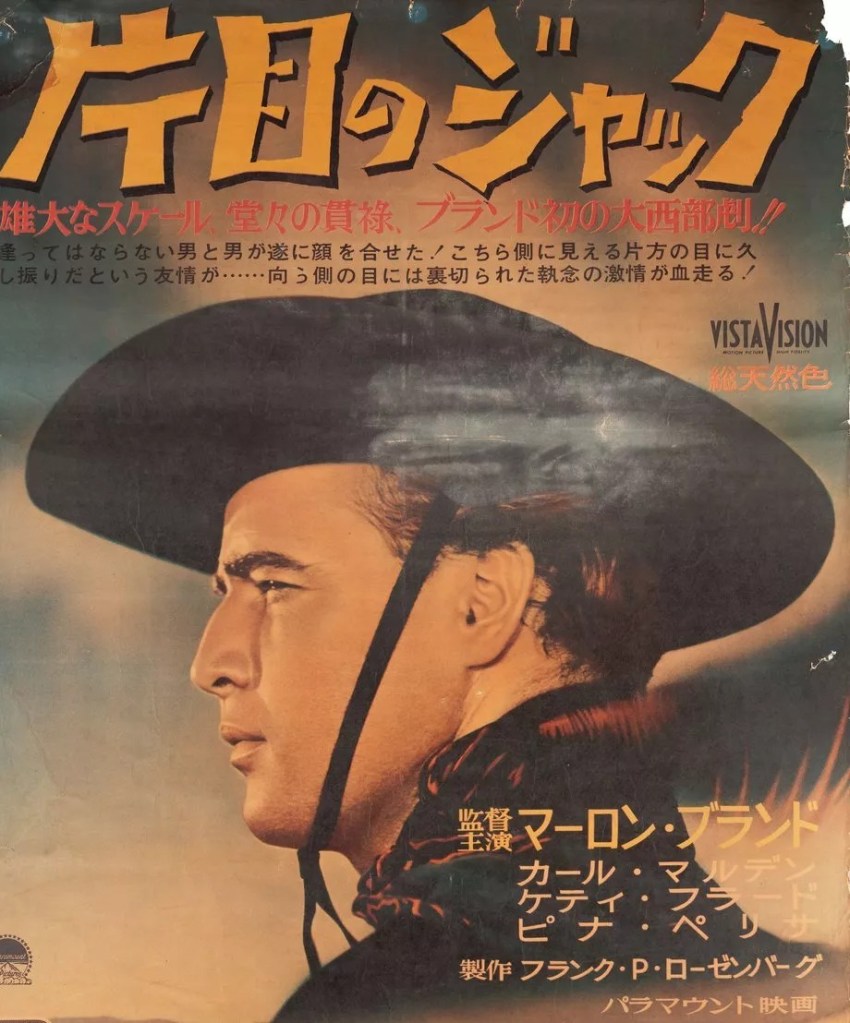
Behind the Scenes: Do As You’re Told: Selling Marlon Brando in “One-Eyed Jacks (1961): The Pressbook

Pressbooks/Marketing Manuals were intended as guides for the better promotion of a picture. At best, they were viewed as suggestive, devised in the spirit of cooperation. Paramount took a different perspective for One-Eyed Jacks. It laid down the law. This was “do as you’re told” under a new guise.

In the first place, it was an uncommonly sumptuous Pressbook, the distinctive cover printed on thick paper. It was larger, too, than the standard A2.

But at the heart of the marketing was almost a command for cinemas to follow a stringent campaign of advertisements running for seven days prior to showing the picture. This was contained in an immeasurably large section, a double fold-out running to 46 inches wide by 19 inches high. In other words so huge it could not help but catch the eye.

Unusually, the campaign was a before-and-after promotion. Of the seven days delineated, five   were in advance of opening, the final two post-opening. Cinemas could choose between four sizes of campaign. Size was measured in “lines” – the unit of measurement rather than inches employed by newspapers. The more lines, the bigger the advert. Thus, Campaign AA was intended to run for 2,700-2,800 lines with the biggest advert reserved for opening day. Campaign 1 was set for 1,900-2,100 lines; Campaign 2 for 800-900 lines; and Campaign 3 for 550-650 lines. The last two campaigns were limited to three days.

The tagline for the opening Advert ran: “The motion picture that starts its own tradition of greatness” with the subsidiary “Marlon Brando’s most brilliant performance as Johnny Rio, the wildest one-eyed jack ever flung into the game of life. Here is love and courage, sin and violence – in one of the most explosively dramatic excitement in screen  history!” In the AA campaign this was twice as wide (14 inches) as it was high.

The Second Day’s advert was much smaller – 9.5 inches wide and 4.5 inches high – and while keeping the main tagline dispensed entirely with the subsidiary.

Day Three was the opposite – the biggest advert yet – at 36 inches wide by 9 inches high. There was a new tagline: “A new experience in excitement…A new height in greatness!” and the subsidiary was just the first sentence of the original.

Day Four was bigger again – 40 inches wide by 8 inches high. The same tagline and subsidiary as Day Three with the addition of: “In vengeance he taught the enemy’s daughter the ways of love. Now the dawn would come up like gunfire.”

Opening Day (Day Five) was the biggest of them all – 57 inches wide by 9.5 inches high. Same tagline and subsidiary as Day Four but with a different addition: “His enemy’s daughter clinging to him in the night…this was just the beginning of his vengeance.”

Day Six (First Day After Opening) was remarkably small – 4 inches by 2 inches – literally just a reminder and carrying only the main tagline. The Final Day was 11 inches by 5.5 inches and with the same tagline.

Anticipating success, the marketeers had supplied adverts that announced “Held over for a 2nd big week.”

Whether cinemas signed up for such a promotional exercise they could be in no doubt about the studio’s commitment. Claiming it was the most publicized picture in recent history, Paramount pointed to articles in Life, Look, Coronet, Argosy, McCalls, Newsweek, Pageant, Glamour, Seventeen, Mademoiselle, American Weekly, Parade, Woman’s Day, This Week and the New York Times Magazine.

Music was a better cross-promotion prospect than anything else with both a soundtrack album and a single on the market. In addition, piano duo Ferrante and Teicher had recorded an instrumental. Two songs from the film were published in sheet music format.

Unusually, presumably assuming the movie had received all the editorial coverage it required – some or all of the articles run in the magazines mentioned would have been syndicated to local and national newspapers – the Pressbook was devoid of the usual run of star biography or journalistic snippets.

Behind the Scenes: Selling “Zulu” (1964) – The Pressbook

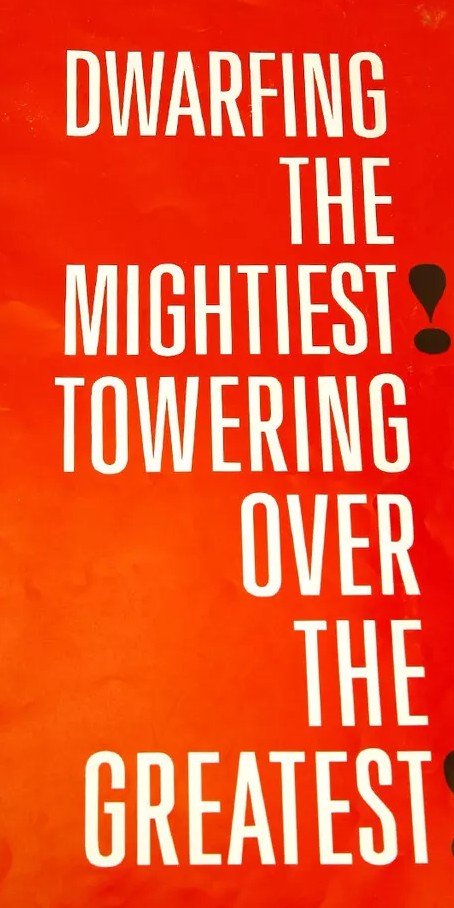
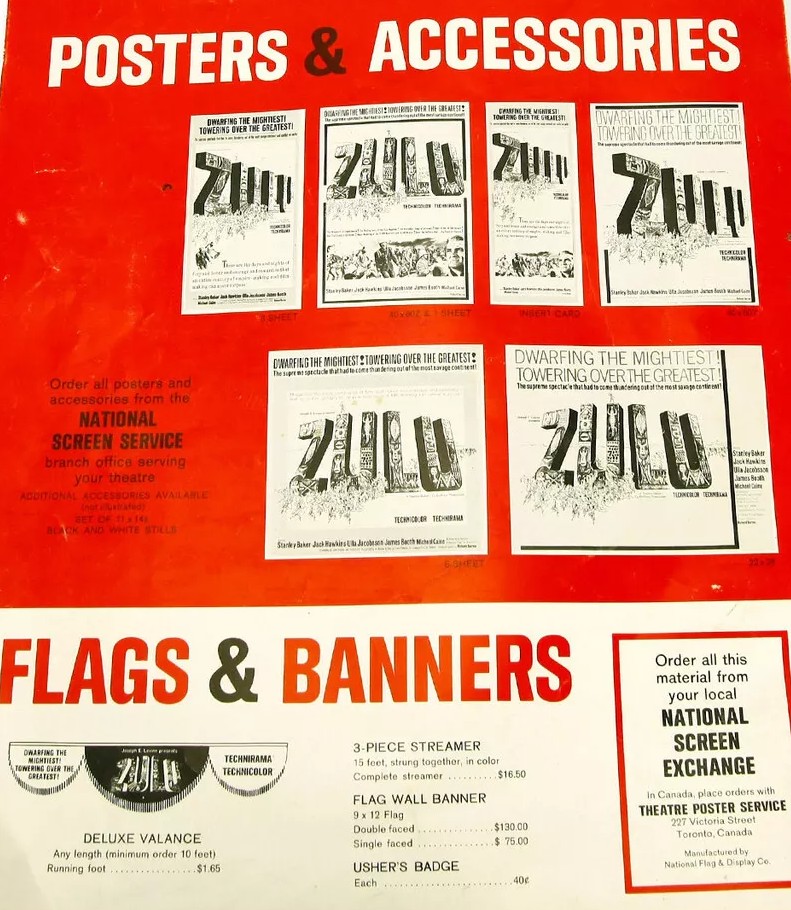
“Dwarfing the Mightiest! Towering over the Greatest!” wasn’t just the movie’s tagline. It could have easily been used to describe the Pressbook. This folded out into a colossal 40 inches wide  by 20 inches high, one of the biggest pressbooks ever produced.

The marketing team produced an impressive list of ideas. Cinema managers were urged to get war correspondents and war heroes involved and to blow up photos of the Victoria Cross. Hanging on the name of the star was a “Baker’s Dozen” competition, inviting people to list the thirteen movies featuring Stanley Baker. Quite how they thought a promotion involving banks would go down is anybody’s guess. Especially as this was the notion: “Zulus are allowed as many wives as they want, provided they can afford to pay for them. The price ranges between six and twenty head of cattle per wife. For an interesting tie-in, get local banks to display money and other barter materials. Give them a montage of still from the picture to display.” Culturally tone-deaf doesn’t cut it.

To attract children there was a coloring-in competition and a school study guide. The movie was available in 70mm Super Technirama so there was a special advertisement linked in to that for cinema going down that route.

Other taglines included: “The supreme spectacle that had to come thundering out of the most thrilling continent!” and “These are the days and nights of fury and honor and courage and cowardice that an entire century of empire-making and film-making can never surpass!”

And in case hyperbole wasn’t enough, one of the ads spelled out the exciting details. “The Massacre of Isandlwana! The Mating Song of the Zulu Maidens! The Incredible Siege of Ishiwane! Night of the 40,000 Spears! Days That Saved a Continent! Mass Wedding of 2,000 Warriors and 2,000 Virgins! Amid the Battle’s Heat…the Flash of Passion!”

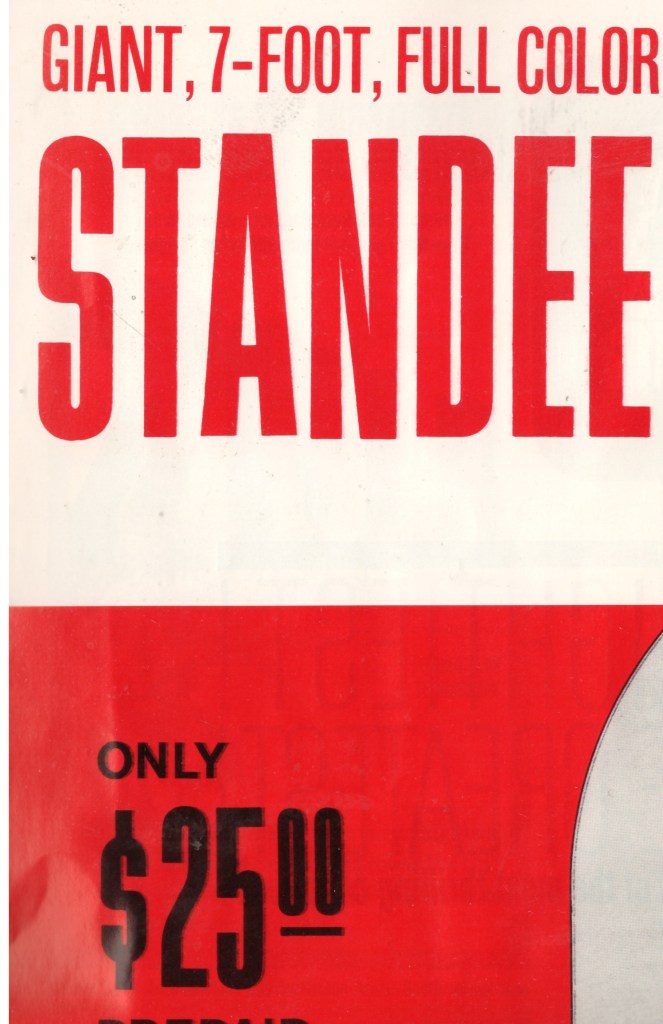
There was a seven-foot high standee and a three-foot 3D illuminated standee.

To help sell the picture to local journalists, little articles were planted that could hook an editor’s interest. For example, when director Cy Endfield glimpsed some soldiers firing their rifles left-handed, he stopped filming, because British soldiers were required to shoot right-handed. The film was shot in the shadows of the Darkensberg Mountains. The river which flowed past Rorke’s Drift was slower than it had been at the time of the battle so the course was altered and dammed to increase the flow. Out of sight of the cameras but essential to filming were the modern villages constructed to house cast and crew, stores, catering and compounds for horses and oxen.

The cast were on set at 6.30am for make-up. The Zulus spent more time in make-up than the British soldiers, as the costume department ensured every aspect of their outfits was historically correct. A total of 100lb of small colored beads was crafted by made by local women for the maidens to wear. A primitive method of making necklaces, strung together with animal sinew and rolled by hand, was employed incorporating a further 100lb of wild syringa seeds which were dyed.

The warrior loincloths of softened animal skins were made the traditional way using stones aqnd animal fat. Shields were also made from animal skin. The teeth of tigers and baboons formed their necklaces. They kept snuff in a small gourd worn round the waist. The purpose of a porcupine quill tucked into their hair was to extract thorns after a long march.

Three cameras were utilized to shoot the blaze that burned down the hospital. “Undress rehearsal” was the name given to the marriage ritual scenes of bare-breasted women.

Though Michael Caine was being touted for stardom, as far as the Pressbook was concerned he was relegated to section below Jack Hawkins, James Booth and Ulla Jacobsen who had smaller parts. The movie was a notable change for Jack Hawkins, who saw action in World War Two. Instead of playing his usual hero, he was a weakling and drunk. It was the second English-language film for Swede Jacobsen after Love Is a Ball / All This and Money Too (1963).

Behind the Scenes: Selling Jeopardy in Space – Pressbook for “Marooned” (1969)

You could come away from the Pressbook/Exhibitors Manual wondering if some of the actors were in the wrong profession, given the number of accomplished pilots on the roster.  James Franciscus held a commercial license for multi-engine planes and had logged three thousand flying hours in three years. Gene Hackman not only had a private flying license but was in the process of building his own biplane.

Producer Mike Frankovich had flown with the US Air Force during World War Two, clocking up 7,000 hours flying time and ending up a colonel. Technical expert George Smith had ejected at 6,000 feet from a plane flying at 800 mph.

Another less well-known fact, Natalie Wood (who was appearing in producer Mike Frankovich’s Bob and Carol and Ted and Alice, 1969) was fluent in Russian and was brought in to translate for a showing of the movie to visiting Russian spacemen. Nancy Kovack, by the way, was equally talented, speaking Persian and other languages.

As much as the main function of the Pressbook was to provide exhibitors with a range of adverts in every conceivable size that they could cut out and take along to their local newspaper, its secondary function was to provide cinema owners with promotional ideas and to provide snippets and articles that could be passed on to a local friendly reporter.  But pickings were slim for jouranlists. Not surprisingly, Gregory Peck didn’t have much say, since whatever he did have to say he’d said already as promotion work for the two other features preceding Marooned this year. And nobody’s spilling the beans on the special effects.

Due to the bulkiness of their space suits, the three actors playing astronauts couldn’t sit down between takes and instead the production employed “the slanted boards usually leaned against by elaborately-gowned female stars to protect their costumes.” (You learn something new about the business every day!). Never mind the bulkiness, the actors spent a chunk of their time in the air and the one day James Franciscus expected to meet acting hero Gregory Peck (they had no scenes together) it proved impossible as when the star visited the capsule set Franciscus was 60 ft in the air.

Richard Crenna got a better response from his young son, who had little concept of what an actor did. But after seeing his dad floating around in space high above him, he reckoned his father was actually a hero

For such a male-oriented picture, Columbia made a big play for the female audience. “The Ladies Love Marooned,” boasted one advert in the 16-page A2 Pressbook/Campaign Manual aimed at exhibitors. Pulling on quotes from critics nobody had really heard of, it managed to present the notion that the picture was as exciting, fascinating, “ingeniously-devised,” and suspenseful for women as much as men, at the same time as focusing on the feminine aspects of the movie – “Lee Grant is a knockout.”

The Pressbook itself allocated editorial space to the three female stars. For Lee Grant the slant was that her talent had been recognized by a host of awards – Emmy, Obie, Best Actress at Cannes plus an Oscar nomination (she would later win an Oscar for Shampoo, 1975). But you have to wonder how an actress would respond to be called, in print, “an egg-head with sex” as was the case with Nancy Kovack. In between turning out such pictures as Tarzan and the Valley of Gold (1966) and this, Kovack had been resident in Iran where she made Diamond 33 (1967) and Night of the Angels (1968). By comparison, Mariette Hartley got off lightly, thanks to her Shakespearian training.

A separate 4-page A2 insert promoted the three Oscar nominations for cinematography, sound and visual effects. “Nominated for 3 Academy Awards,” was the slug accompanying the ads. Never mind the reviews from female critics, much bigger space was devoted here to a rave review form Rex Reed, one of the most famous critics of the day (and star, if that’s the right word, of Myra Breckenridge, 1970), who claimed Marooned was “as exciting, spirited and suspenseful as any spy movie or any cops-and-robbers movie ever made.”

As you might expect, the bulk of the promotional ideas were science-based. Exhibitors were told to target the country’s 2,500 science clubs, the armed forces, the industries that supported the space program and, of course, schools and colleges. Tie-ins had been achieved with 4,500 A&P stores, Jane Parker Donuts, and Philco-Ford dealers.

From a contemporary marketing standpoint, the surprising tie-in was with Omega watches, tagged “the first watch on the moon,” the company’s Speedmaster brand not just worn by the astronauts who did land on the moon in July 1969 but seen in the picture on the wrists of Gregory Peck, Richard Crenna, David Janssen, Gene Hackman and James Franciscus. Over 4,000 dealers were backing the movie.

Model kit manufacturer Revell was offering space suits as prizes in a competition. It distributed more than 42,000 standees and posters and printed five million entry forms. Bantam books was promoting the original novel by Martin Caidin.  That exhibitors would be eager to equip a staff member with an astronaut’s garb and have him/her parade through the streets went without saying. Using lift-off sound effects in a cinema lobby was another idea or turning the entire lobby into a space set.

Rather disconcertingly, the marketing bigwigs thought it would be a clever idea to propose a discussion program on radio or local television on the subject of what would happen if spacemen were marooned, a rather tetchy subject when that became reality.

Unusually, but not surprisingly, the posters stuck with the one tag line: “Three marooned astronauts. And only 55 minutes left to rescue them. While the whole world watches and waits…” and buttressed by some thumbs-up quotes from the likes of reviewers from the New York Times, Redbook, Los Angeles Times and Los Angeles Herald Examiner. In fact, the advertising department took such a shine to Charles Champlin of the LA Times that they cut up his review and stuck snippets of it in three separate ads.

You’ll have seen from the variety of adverts I’ve used to support the review and the Behind the Scenes article earlier in the Blog, that there was a wider range, initially, of adverts, some showing the capsule stuck out in the middle of space. By the time it came to printing this Pressbook, the one for the picture’s general release, all of those were jettisoned in favor of the insipid “thumbs-up” poster with faces to the foreground and the launch in the background, attendant quotes and the “3 Academy award Nominations” slug.

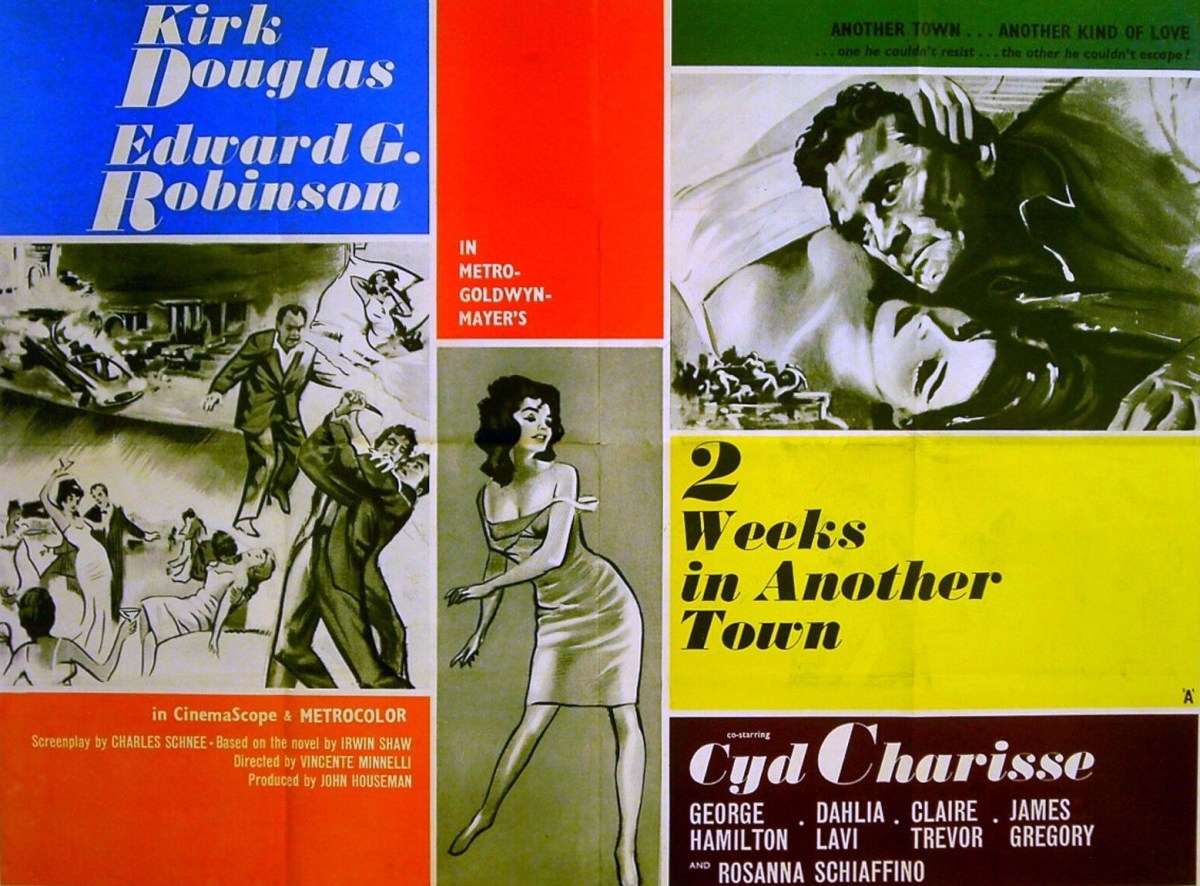
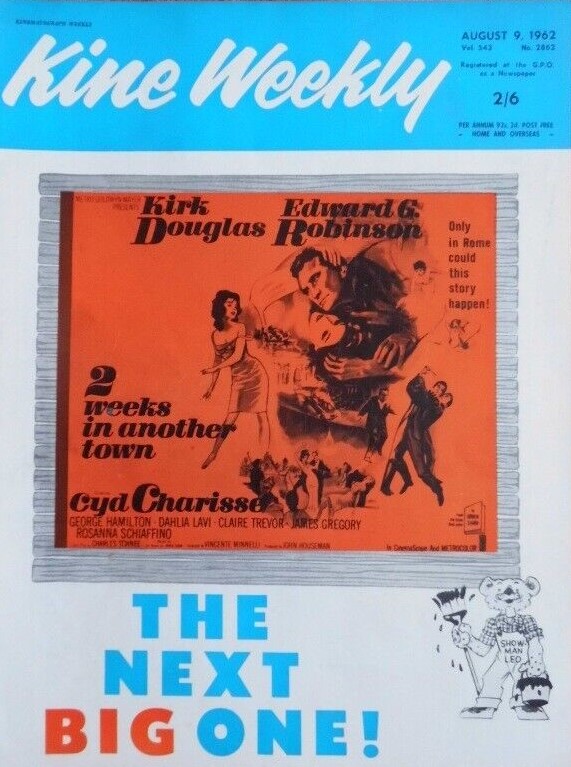
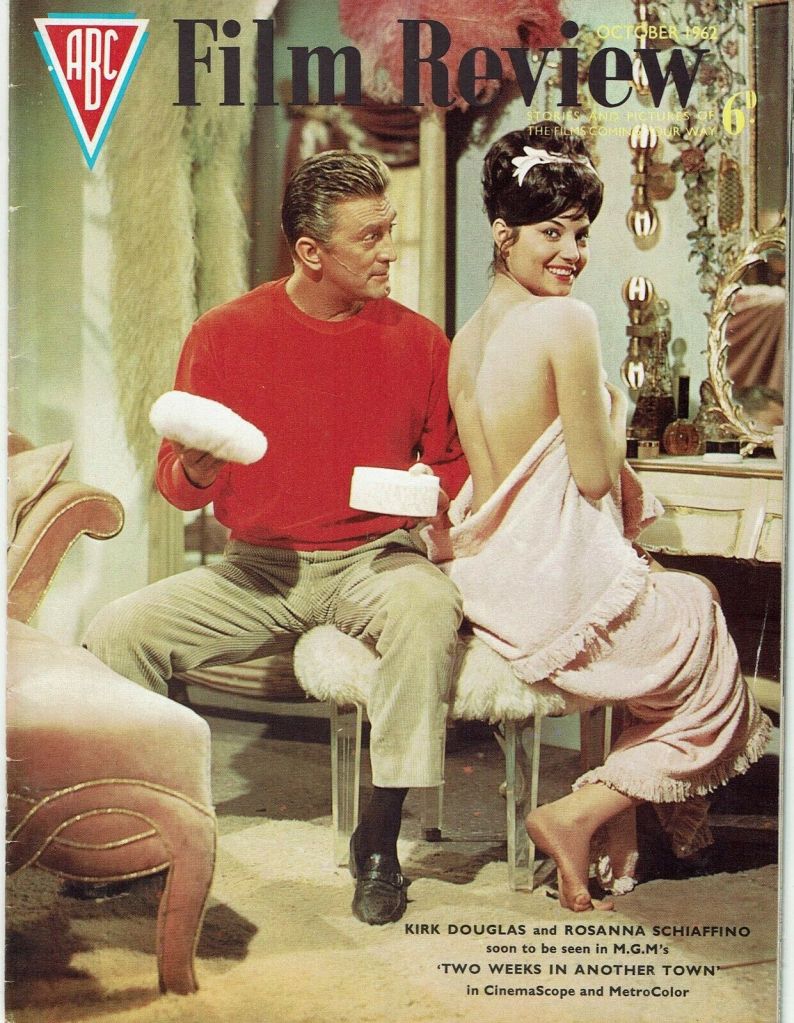
Behind the Scenes: “Two Weeks in Another Town” (1962)

Until a technological invention first used in Once a Thief (1965) it was impossible to shoot “day for night” without it appearing very obvious. So when director Vincente Minnelli aimed for as much verisimilitude as possible for the Rome-set drama it meant half the shoot took place at night. “Minnelli could sleep easily during the day,” recalled star Kirk Douglas (The Arrangement, 1969), “sometimes till six o’clock in the evening, but I couldn’t so there were three unpleasant weeks of night shooting and not much sleep.”

But the movie suffered, Douglas later complained, by studio interference at the editing stage. When the movie fell foul of the Production Code, change of MGM management vetoed the more salacious aspects of the movie – the worst aspects of “La Dolce Vita” including a sequence in a nightclub where guests watched an unseen sexual act. Fifteen minutes were cut including a scene that showed Cyd Charisse’s character in a more sympathetic light. In an ironic reflection of the film’s narrative, Minnelli played no part in the editing, not due to production deadlines as in the movie, but out of choice.

The actual producer John Houseman – producer of Douglas starrers The Bad and the Beautiful (1952) and Lust for Life (1956) though later best known as an actor in Rollerball (1975) etc –  backed out of any tussle with MGM head honcho Joseph Vogel. Douglas implored Vogel and editor Margaret Booth, to no avail. Consequently, in Douglas’s opinion, the film was “emasculated.” He argued MGM had turned an “adult” picture into a “family” film. Quite how this could be squared with marketing that promised a “shocking intimate view of Rome’s international film set” (see below) was not mentioned.

Following the commercial and artistic success of Spartacus (1960), Douglas was at the peak of his career, though his last three pictures had been flops. After nabbing an Oscar for Gigi (1959), Minnelli also enjoyed a career high, and although best known for musicals like Meet Me in St Louis (1944) and An American in Paris (1951) was equally adept at drama like The Bad and the Beautiful,  Lust for Life (1956) and Some Came Running (1958). But he, too, was running empty, his last three serious films – Home from the Hill (1960), All the Fine Young Cannibals (1961) and big-budget roadshow The Four Horsemen of the Apocalypse (1962) coming up short at the box office.

Douglas earned $500,000 and a percentage of the profits (though none were forthcoming – it made a loss of $3 million) and top-billing. Although co-star Edward G. Robinson (Seven Thieves, 1960) appeared above the title, Douglas refused to accord female lead Cyd Charisse (Maroc 7, 1967), on one-tenth of his salary, that concession.

Douglas recalled that he build up his acting skills through wrestling. A college wrestling champ, he barnstormed across the country in a carnival, playing the cocky person reputedly from the audience who challenged the giant resident wrestler. “My job was to make the audience think he was going to murder me,” Douglas told the Pressbook/Campaign Manual. “And the way to do this was by expressions on my face. To yell out in pain would seem cowardly. But I learned a hundred and one ways of showing it through use of my eyes and the muscles in my face.”

The actor escaped serious injury when lightning, preceding one of the worst thunderstorms in a  decade,  struck a 200-year-old clock on the top of the church in Santa Maria Square. Four huge iron numerals were torn off and crashed to the ground, one grazing Douglas’s head.

In fact, the movie’s authenticity owed much to being filmed on the streets of Rome rather than reconstructed on the studio lot. In particular, scenes utilizing the Via Veneto, two long blocks of sidewalk cafes where the movie industry socialized, created a realistic atmosphere, especially when a hundred or so of the extra employed were actually people who would naturally populate the location. So, for example, when the script called for an opera star among the extras, casting director Guidarino Guidi used Bostonian Ann English, an opera singer studying in Rome. Among those sitting in the background at café tables were a promising young painter, a poet and a librettist.

George Hamilton (Act One, 1963), who had worked in Home from the Hill and just finished Light in the Piazza (1962) also shot in Rome, reckoned he couldn’t have been more miscast given his role called for a “funky James-Dean type.” He got the role through the influence of Betty Spiegel, wife of producer Sam, and her friend Denise Gigante, the director’s current girlfriend (later wife). Hamilton drove around in a red Ferrari costing $18,000 (ten times that at today’s prices) and, as he put it, “Italians knew how to worship” Hollywood stars.

Hamilton reckoned part of the problem of the film was that Minnelli was so “besotted with Denise that he had lost his vision.” Jumping to the defence of Cyd Charisse against a tirade from journalist Oriana  Fallaci at the Venice Film Festival won Hamilton, unexpectedly, the cover of Paris-Match.

Daliah Lavi owed her career break to Douglas. As a nine-year-old in Hiffa, Israel, she struck up a friendship with the actor when he was filming The Juggler there in 1952. The actor and other stars attended her birthday party, Douglas presenting her with a ballet dress. Later a dancer and then an actress, this was her Hollywood debut. Erich von Stroheim Jr, making his movie acting debut, had his head shaved to make him appear more like his famed director father. Originally employed as an assistant director on the picture, Minnelli decided he would make a good Ravinski, the “fast-talking press agent.”

Chauvinism reared its ugly head, especially when women had to apologise for being on the receiving end. “What goes on in the minds of beautiful women when they get slapped for the cameras?” mused the editor of the Pressbook/Campaign Manual. Rossano Schiaffino’s response regarding being whacked on the behind by Douglas: “He hits hard so charmingly I didn’t mind standing up for a day of two.”

The actress proved tougher than many of her colleagues. She turned down the offer of a double for a scene in which she jumped into a lake. That might not have been such an undertaking had the sequence been shot in the hot Italian sunshine at the height of summer. But the MGM studio tank on Lot 3 was a different – and much colder – proposition. “She shrugged off her stunt with the remark that heated pools are unknown where she comes from.”

Irwin Shaw, author of the best-selling source novel, wasn’t too upset at the way the movie turned out. “An author who wants complete control of his work on the screen is in something of a cleft stick,” he observed. “He can either go into production himself, which is often neither possible nor desirable, or he can refuse to sell his work to the movies. Minor deviations in screen conception don’t send me reeling back a stricken man. I think I’m sufficiently realistic to know that even in the most enlightened films there must be some compromise if they are to be a success.  What does matter very strongly to me is that the theme of the novel…should come over on the screen.”

Music trivia: Kirk Douglas was the first big Hollywood star to perform “The Twist” on screen and the song “Don’t Blame Me” was reprised from The Bad and the Beautiful, sung here sung by Leslie Uggams and in the older film by Peggy King.

French designer Pierre Balmain created the dresses, allowing a marketing campaign to be built around those stores which supplied his clothes. TWA, which flew directly to Rome, was suggested to cinema owners as an ideal tie-in. Not only did New American Library issue a new movie tie-in paperback/soft cover but cinemas were encouraged to build a campaign around a director, many of whose films would be well-known to audiences. The marketeers also had material to tie in with stores retailing music, women’s sportswear, menswear, men’s sweaters, beauty and hair styling.

The 16-page A3 Pressbook/Campaign Manual offered a selection of advertisements and taglines. The key advert tagline ran “Another town…another kind of love…one he couldn’t resist…the other he couldn’t escape.” But there were alternatives: “Only in Rome could this story be filmed/Every town has women like Carlotta and Veronica and the kind of man they both want!/From Irwin Shaw’s great best seller.”

Or you could opt for: “Irwin Shaw’s shocking intimate view of Rome’s international film set. The world only sees the glamor. This is the drama behind it!.” Or: “Only in Rome could this story happen. Only in Rome could this story be filmed!”

SOURCES: Kirk Douglas, The Ragman’s Son (Simon and Schuster paperback, 2010) p342-344;  George Hamilton, Don’t Mind If I Do (JR Book hardback 2009)pp 155-159; Pressbook/ Campaign Manual, Two Weeks in Another Town (MGM).

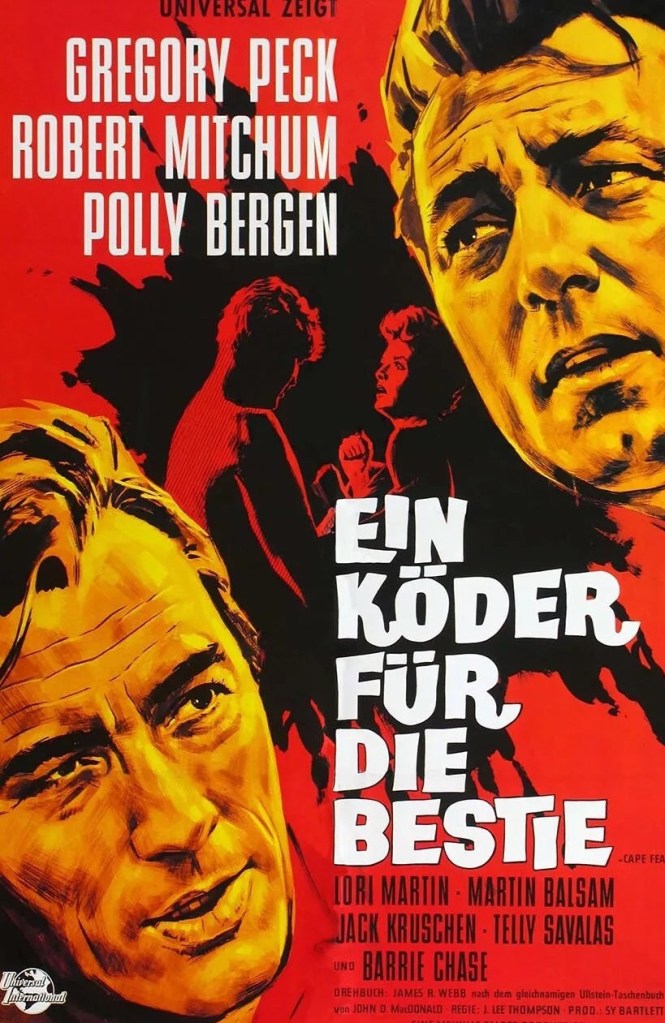
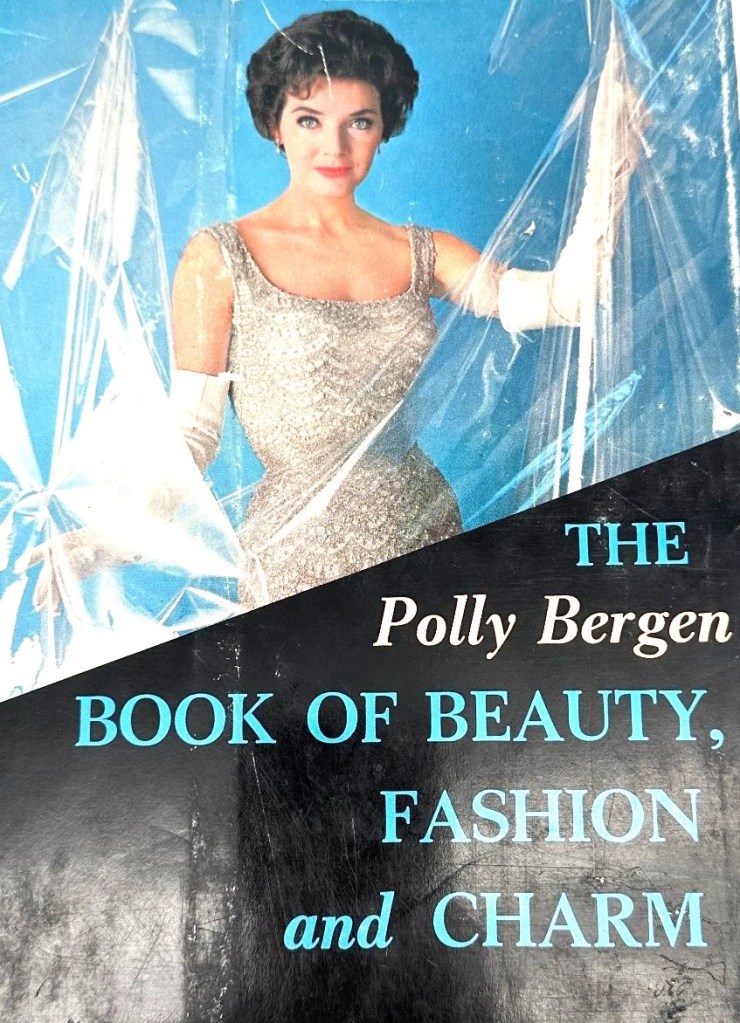
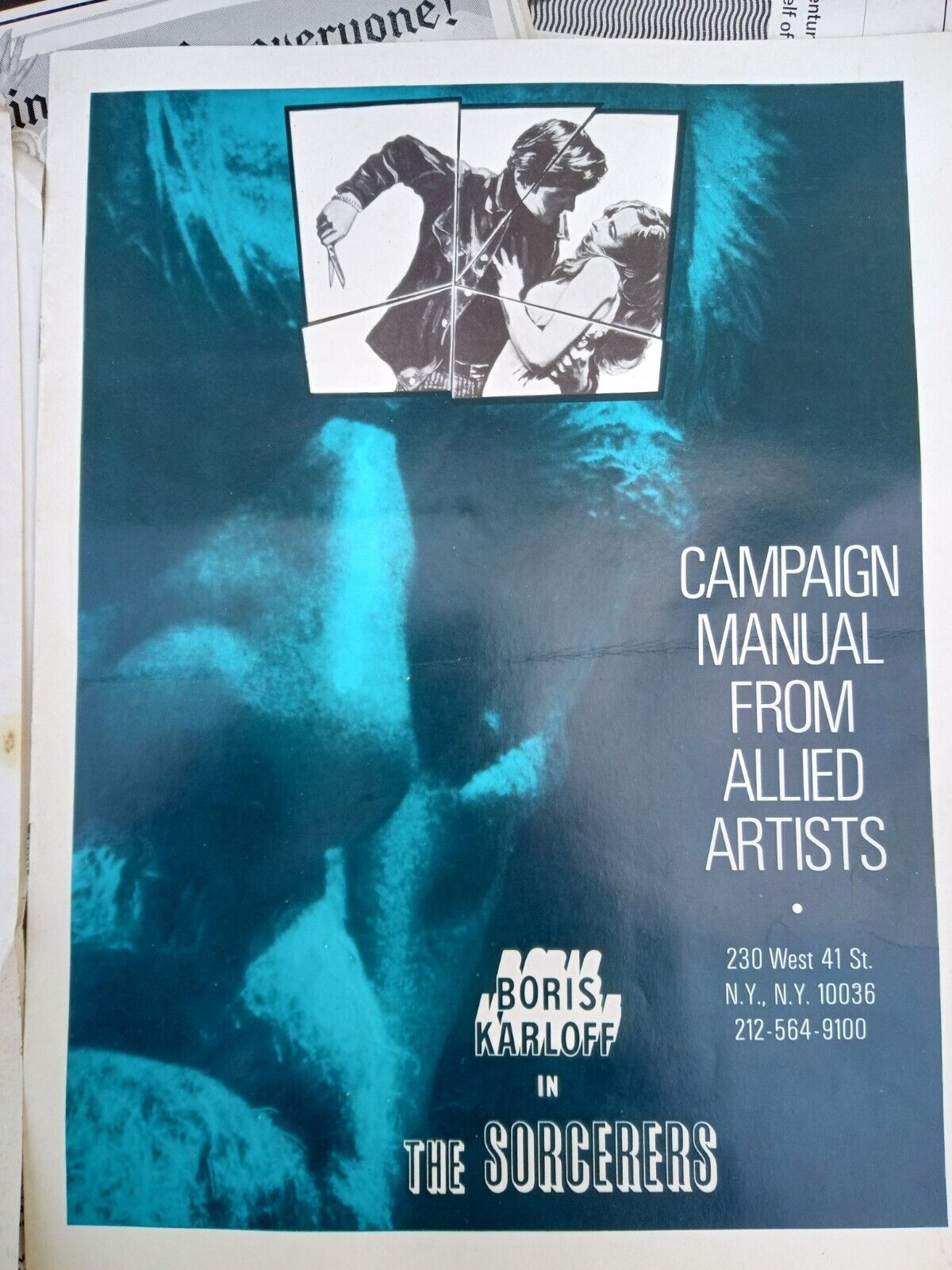
Selling Boris Karloff, Or At Least Trying To: Pressbook for “The Sorcerers” (1967)

Exhibitors measured a movie’s commercial potential in large part by the size and shape of the Pressbook. There was a correlation between a studio’s marketing budget and box office expectation.

This was the era of the 16-page A3 (twice size of a sheet of A4 paper) Pressbook/Campaign Manual that would contain what a cinema manager required to make the most of the picture through newspaper exploitation. This included snippets that would be passed on as nuggets for the editor of the entertainment section – incidents that occurred on set, details of location, hitherto unknown facts about the stars, interesting quotes – and for the newspaper’s non-editorial section that came in the form of a series of  different advertisements, six or seven not unusual.

These adverts were core to what you might see in your local newspaper. The cinema manager simply cut out the preferred size of advert – they were offered a huge range of sizes that often took up to half the Pressbook – and handed that in to the newspaper which duly, with cinema name attached, used it to make up the printed ad.

The point of the A3 Pressbook was to accommodate ads that size (11.7 x 16.5 inches / 297 x 420mm) and encourage the cinema manager to consider paying for such a hefty space in a newspaper. Beginning with the giant size indicated studio confidence, which, it hoped, the cinema manager would match. Of course, should he or she not, then there was a wealth of smaller-sized ads – which might themselves start at roughly A4  (8.3 x 11.7 inches / 210 x 297mm) that the cinema manager might feel more appropriate to the picture house’s marketing budget.

The various ads accommodated a number of different taglines and images, so that a cinema manager could choose the best one for targeting their specific audience – most commonly, for example. an action picture might be sold on the love interest.

The Sorcerers was released in the U.S. by Allied Artists. Once a big name, producing Friendly Persuasion in 1956, it had now fallen on harder times and largely reverting to its Monogram origins except for a financial boost from the unexpected success of the French-made A Man and a Woman (1966). Whatever imapct that had on Allied’s coffers did not translate into expenditure on the Pressbook for The Sorcerers. Cinema mangers would not have been filled with any great confidence. In size and in the advertisement material it did not shout box office winner.

This is an ad from the British campaign which showed more originality than in the U.S.

The Pressbook was 8-pages A4, of which more than half was advertisements, one full-page A4. But there was only, effectively, one ad, though presented over five pages in twelve different sizes, from the aforementioned A4 down to what would be little more than a slug, one inch running the width of one newspaper column (about two inches).

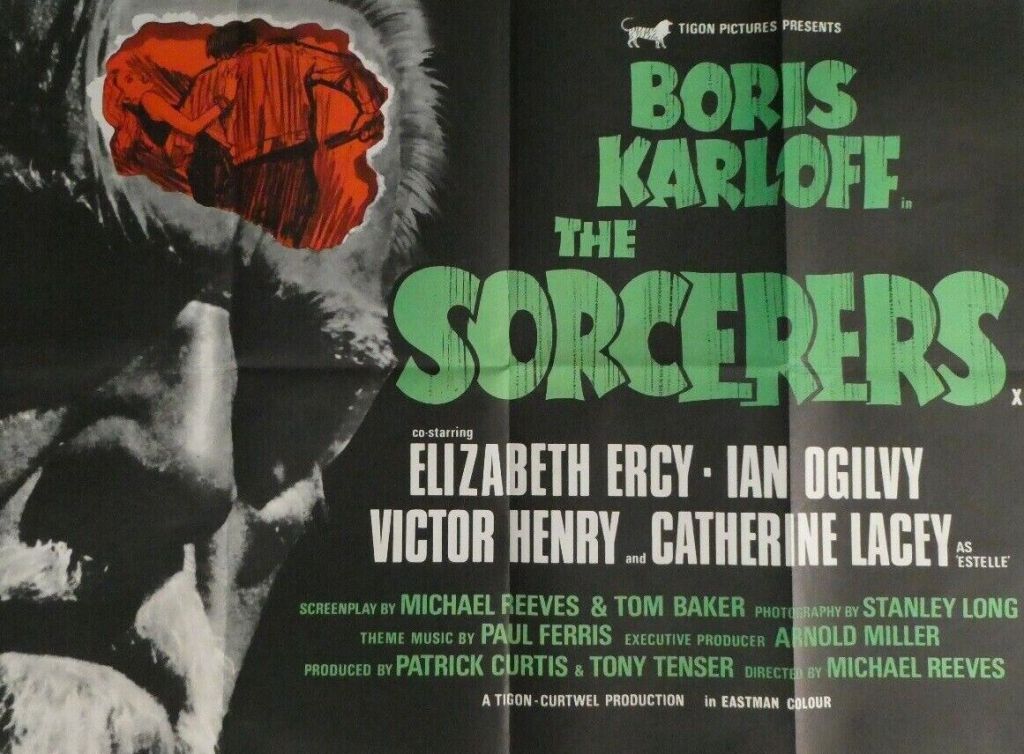
Boris Karloff’s brooding features, intercut with a man knifing a woman, dominate the advert. There is a tagline: “He turns them on…he turns them off…to live…love…die or KILL!” At the foot of the ad is a montage of young things, dancing, kissing, a girl in backless dress the height of the titillation portrayed. The rest of the near-dozen adverts are all exactly the same, with, as the adverts grow smaller, bits of the main ad dropped out.

The problem with marketing any film starring Boris Karloff was the actor himself. Although a legendary name in movies thanks to Frankenstein, that career-making role had been three decades before and anyone who had seen it in the 1960s had done so on television where it was shorn of a lot of its power. Karloff had only intermittently popped up in horror movies during the 1960s, most recently in Die, Monster, Die (1965).

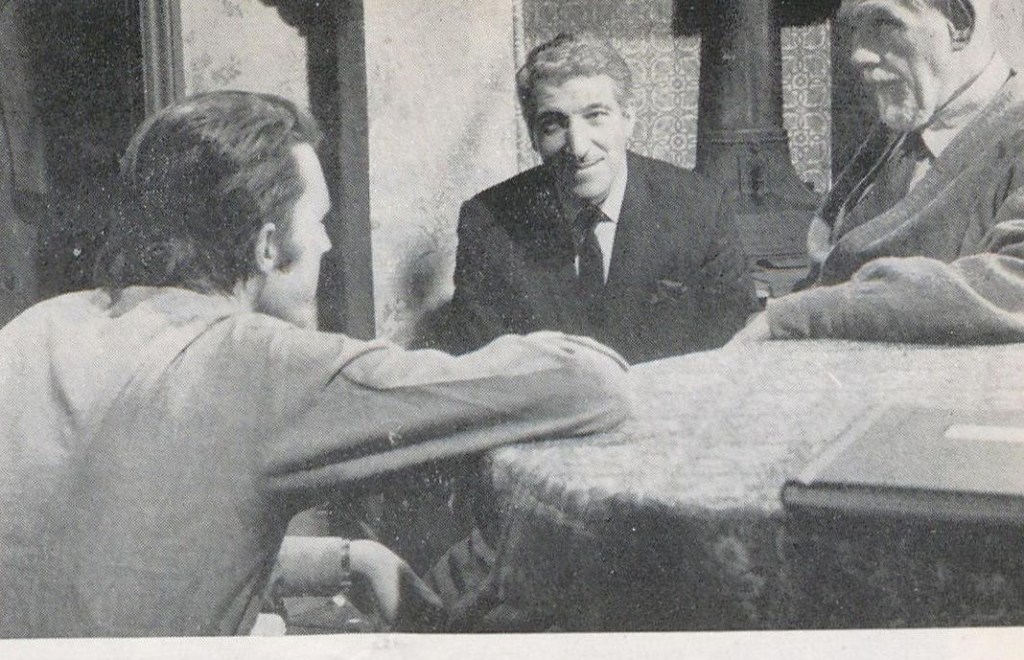
Director Michael reeves (left) with Tony Tenser of Tigon and Karloff.

Karloff was not, to put it mildly, a major marquee attraction. And part of the reason was his determination not to be typecast. So, in the 1940s and 1950s he was more likely to be seen on stage, in Arsenic and Old Lace or The Lark, for example, or on television. He only made eight movies during the 1950s.

There had been some kind of horror comeback in 1963 with The Raven, The Terror, Black Sabbath and The Comedy of Terrors, but since then movie appearances had been sparse. And, of course, for an actor of his age, there was nothing new to say, although perhaps just to remind people that he had been born William Henry Pratt in England.

None of the other performers were remotely well-known. Ian Ogilvy had supporting roles in She Beast (1966) and Stranger in the House / Cop-Out (1967). Elizabeth Ercy had small parts in Doctor in Clover / Carnaby M.D. (1966) and Fathom (1967). Each was given an one-eighth page biography. Despite directing She Beast, Michael Reeves wasn’t mentioned at all.

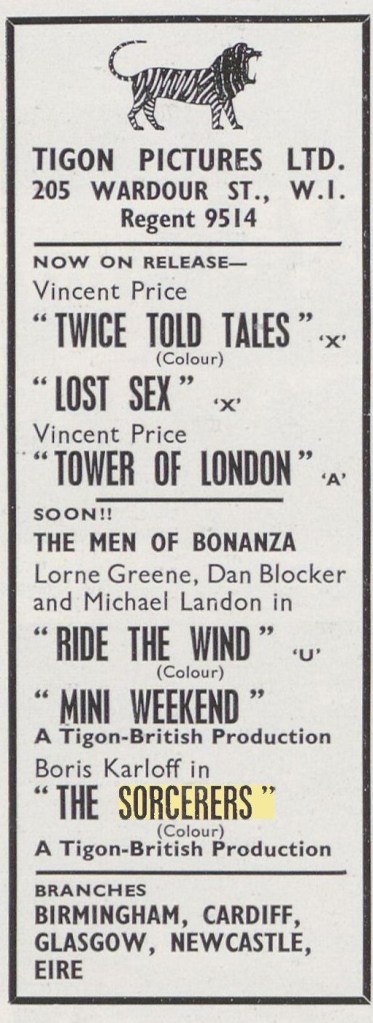
The company you keep. Tigon’s line-up for 1967.

So you get the distinct impression from the Pressbook that it’s Karloff or nothing and since the actor, as noted, was hardly a major player, nobody was going to much trouble to sell the picture.

The Pressbooks I’ve presented in previous features in the Blog have all had considerably more going for them, but this was the downside of the movie business. When there wasn’t much to sell, the distributor wasn’t going to waste his money trying to achieve the impossible.

The Pressbook, printed in 1967, did not appear to achieve any success. The movie did not win a single first run or showcase booking in any of the major cities whose box office was reported by Variety magazine. However, in July 1968, the film was awarded the Grand Prix at the Trieste Sci Fi Festival, with Elizabeth Ercy named Best Actress. That did not appear to brighten the movie’s prospects.

But in 1969, it turned up at the bottom of two horror triple bills. In Boston in first run at the Center it grossed $7,000 (Variety, February 19, 1969, p8) supporting Island of the Doomed (1967) and Castle of Evil (1966). In Los Angeles in a Karloff triple, it was topped in the billing by The Comedy of Terrors and The Raven, earning a decent $110,000 from 12 houses. (Variety, April 30, 1969, p8), it was top-billed in first run in Chicago taking in a “neat” $5,500 at the Monroe (Variety, October 15, 1969, p8).

But it’s possible these few bookings and doubtless others on the drive-in circuits and in smaller towns might still have helped turn a profit on the picture since it only cost $210,000 to make in the first place.

Selling James Bond: Part Two – Pressbook for “Thunderball” (1965)

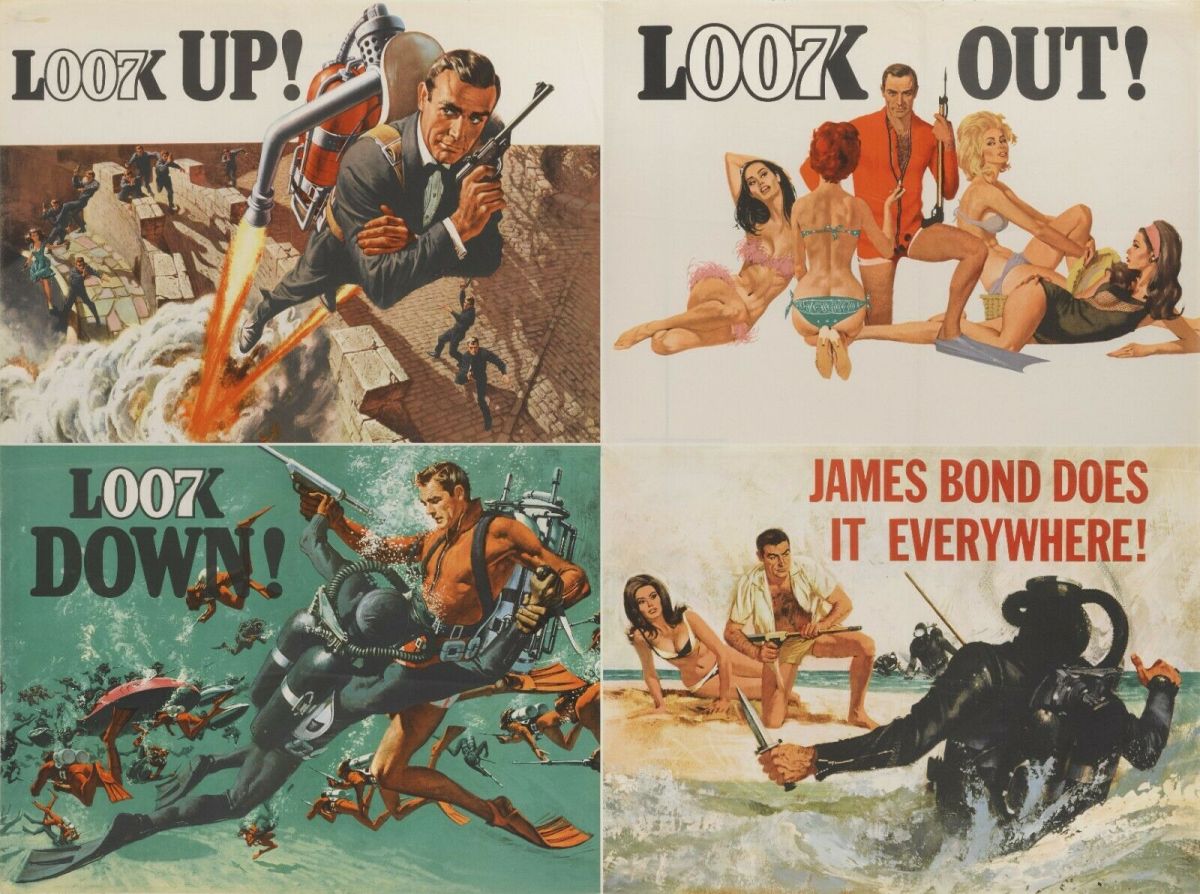
Wooing the audience was no longer required after Goldfinger (1964) had broken the box office bank. Thunderball, claimed producers Cubby Broccoli and Harry Saltzman, was “the hottest merchandise campaign you have ever handled” as the first four pages of the Pressbook went to show. No longer was there a retailer free-for-all with companies which had nothing to do with endorsements jumping on the Bondwagon.

The potential for promotional tie-in was so high that retailers and manufacturers were willing to spend a fortune to become involved and, in so doing, provide a massive spread of free advertising. Colgate had an entire line of toiletries for men including after shave, shaving lotion, deodorant, and talcum powder, each item branded with the 007 logo with Colgate investing in a massive advertising campaign aimed not just as men but the women who buy for men.

Shoe-wear manufacturer Endicott Johnson set up a nationwide contest through the Montgomery Ward chain of stores. Customers were invited to participate in a free sweepstake and store managers were encouraged to become active in promoting Thunderball at sales points throughout their shops.

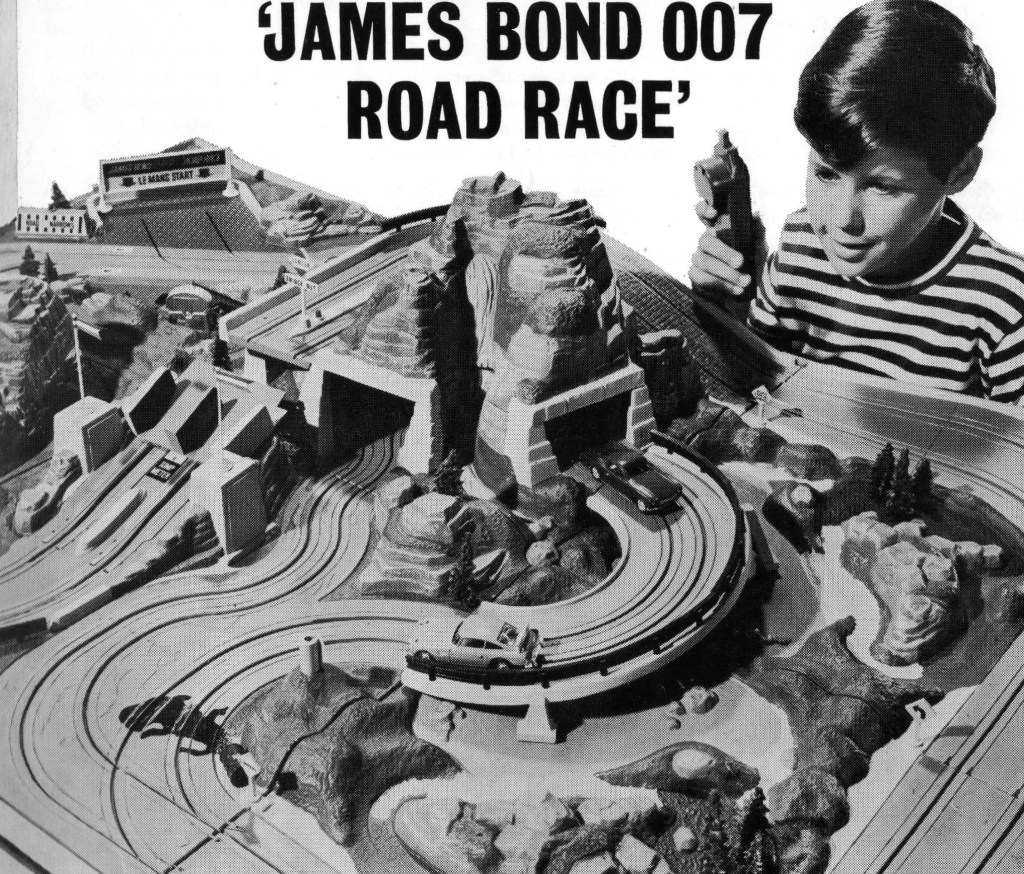
Toy manufactuer A.C. Gilbert had devised a James Bond 007 Road Race which would be promoted in the biggest marketing campaign in Sears Roebuck history to 60 million homes. The catalog would feature a five-page spread. “Beatles fans will be reached through a TV buy that Sears has made advertising the Road Race on ABC-TV’s Beatles Cartoon Show.” Adlers Slacks was the exclusive licensee for James Bond 007 Boys Slacks – with two hidden pockets. Revere Knitting Mills was promoting four sweaters “as worn by James Bond.”

Other licensed products included The Official James Bond Secret Agent 007 Shooting Attache Case, Harry Diamond sports shorts with the Bond logo, Allison tee-shirts and sweat shorts, bubble gum and trading cards from the Philadelphia Chewing Gum Corp, and a walkie-talkie set from Gabriel. In addition, Weldon was selling “007 Pyjamas – Go to Bed Dressed to Kill,” Voit manufactured underwater equipment, Spatz advertised its trenchcoats in Playboy, Trimount clothing range included items for men and boys, and Milton Bradley had four board games and six jigsaw puzzles.

So for the first time in history, exhibitors had to do nothing to attract customers, no zany attention-grabbing gimmicks required, because the massive cross-promotional campaign devised by the producers ensured that potential moviegoers could hardly go anywhere without coming across something alerting customers to the movie.

All this was in addition to the normal standard promotional tools such as original soundtrack album and paperback movie tie-in. Tom Jones had released a single and six other artists had brought out instrumental singles and albums. Trade magazine Cash Box noted that the Bond name signified “something big in the worlds of film and music…many labels have themed LPs after the valuable James Bond Agent 007 image.” Signet had brought out the movie tie-in paperback with artwork on front and back covers.

The bulk of the Pressbook was taken up with advertising and information about the licensed products leaving just three pages for the editorial section. By now of course Sean Connery was a big box office star so he received considerable coverage, explaining that he had been chosen for Dr No as a result of a London newspaper poll. There was space too for the movie’s playgirls – former Miss France Claudine Auger, villainess Luciana Paluzzi best known to American audiences through the Five Fingers television series, Molly Peters and a return for Martine Beswick who had appeared in From Russia with Love.

Not surprisingly, the Aston Martin DB5, which had caused a sensation in Goldfinger, also returned. The customised version cost $45,000 (worth $400,000 today), compared to the usual price of $13,000, and came complete with twin Browning machine guns, tire slashers, revolving number plates, radar screen, ejector seat, and retractable bullet proof shields.

Selling James Bond – Pressbook for “From Russia with Love” (1963)

United Artists had two concepts in mind when it came to marketing the second in the James Bond series From Russia with Love (1963). The first, and quite audacious notion, was to tell anyone who hadn’t seen Dr No (1962) much they had missed. Producers Cubby Broccoli and Harry Saltzman reckoned 69 million moviegoers across the world had seen Dr No, but America only accounted for a small fraction of that total. So their mission was to ensure that American audiences did not miss out again on the “throbbing world of hot-blooded excitement.”

To target that marketplace, the adverts were more like a relaunch, not a sequel, and the taglines began with “Meet James Bond, Secret Agent 007.” And then, “For those unlucky few who missed Dr No…You are unprepared for the sophisticated mayhem and polished lovemaking. The James Bond bug has not bitten you. But take heart! There is still time to jump on the Bond bandwagon with the second James Bond adventure From Russia with Love. See it and we guarantee – you will be hooked for good.” The final exhortation: “Don’t you think it’s time you met secret agent 007?”

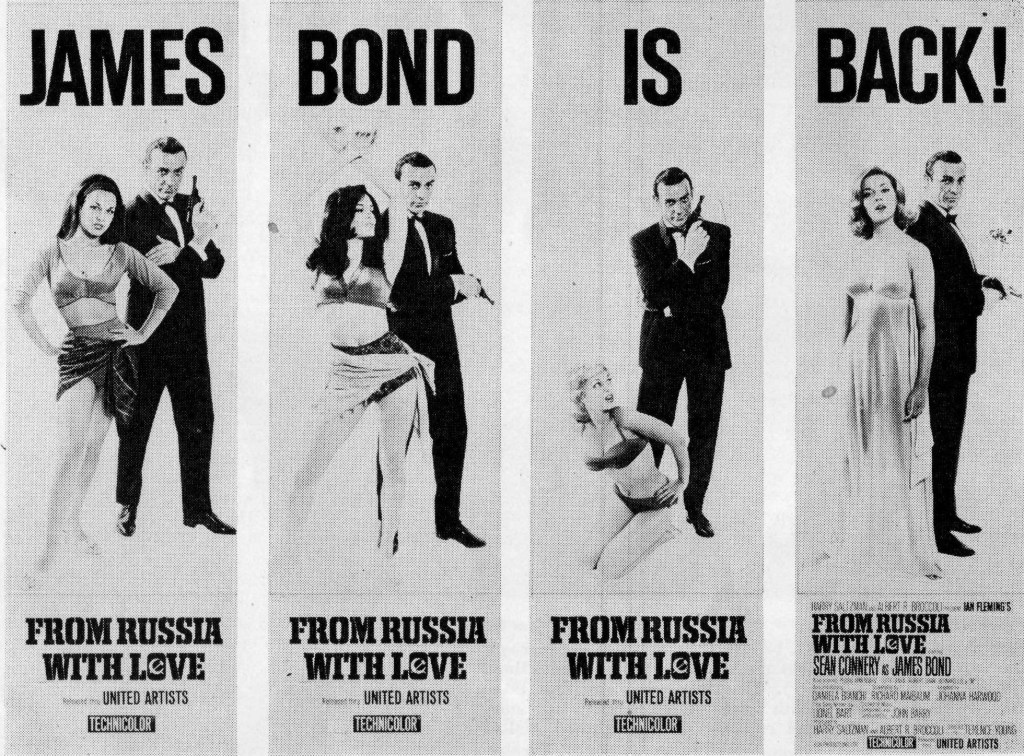
But of course James Bond already had some kind of fan club in the States. “James Bond Is Back!” screamed the alternative advertisements. For both, however, the emphasis was on the new. “His incredible new women! His new incredible enemies! His new incredible adventures!”

“Target: the unkillable James Bond 007. Blast him! Seduce him! Bomb him! Strangle him!” The tone of the adverts suggested something entirely new. While heroes in thrillers could expect to face danger at every turn, and while a romance might sweeten the pot, there would not be a selection of alluring scantily-attired women. “For those who saw Dr No, consider yourself fortunate. Now you are prepared for the further fantastic adventures of that master of intrigue and women, secret agent 007 James Bond, join him in his new thriller From Russia with Love.

To whet the appetite of local newspapermen there was a host of snippets. Oxford University had organized an 007 Society whose members included three lords and the heir to one of the the country’s largest department stores. While James Bond never uses a Windsor knot in his ties, Sean Connery does. Ian Fleming’s Bond novels had sold 30 million copies including six million of From Russia with Love. Four Istanbul mosques featured in the new film as well as an underground cistern a millennium old.

Door posters five feet high.

Beauty queens were always a good bet for coverage – Miss Universe runner-up Daniela Bianchi  won the role of James Bond’s girlfriend after a screen test and former Miss Israel Aliza Gur and former Miss Jamaica Martine Beswick played the fighting gypsy girls. Lotte Lenya was married to Kurt Weill who, with Berthold Brecht, wrote The Threepenny Opera. Sean Connery was fitted out by his own Savile Row tailor Anthony Sinclair and during filming got through ten customized shirts, eight suits, two top coats and a dress suit.

Highly sought-after these days in the memorabilia market are the door panels – measuring 20 inches x 60 inches – which exhibitors would stick to lobby doors but which could also be utilized as displays in stores. Signet brought out a movie tie-in paperback which came with its own promotional material. As there were already other books in the series, booksellers would be inclined to set up a Bond display. As well as the John Barry original soundtrack album, other artists recording material from the film included Matt Monro, Jackie Gleason, Kenny Ball, Al Caiola and Si Zetner, all creating promotional tools.

“Bondmanship” was the overall name given to lifestyle items worn by Bond or which he might wear so tie-ups with fashion stores and retailers were encouraged “no direct endorsement is necessary.” So, for example, restaurants were encouraged to offer “ a menu good enough for James Bond.” It didn’t matter that Bond did not wear a manufacturer’s shoes, ties or suits in the film, just that he might wear them if they were of sufficient quality.

The marketeers came up with a simple stunt: send a set of keys to a newspaper, turn up the next day with a dispatch box handcuffed to your wrist, open it and find inside various promotional items. Or the keys don’t open the case and you need to send for a locksmith. Either way it was important to have a photographer to hand.

Selling The Rat Pack: Pressbook for “Robin and the 7 Hoods” (1964)

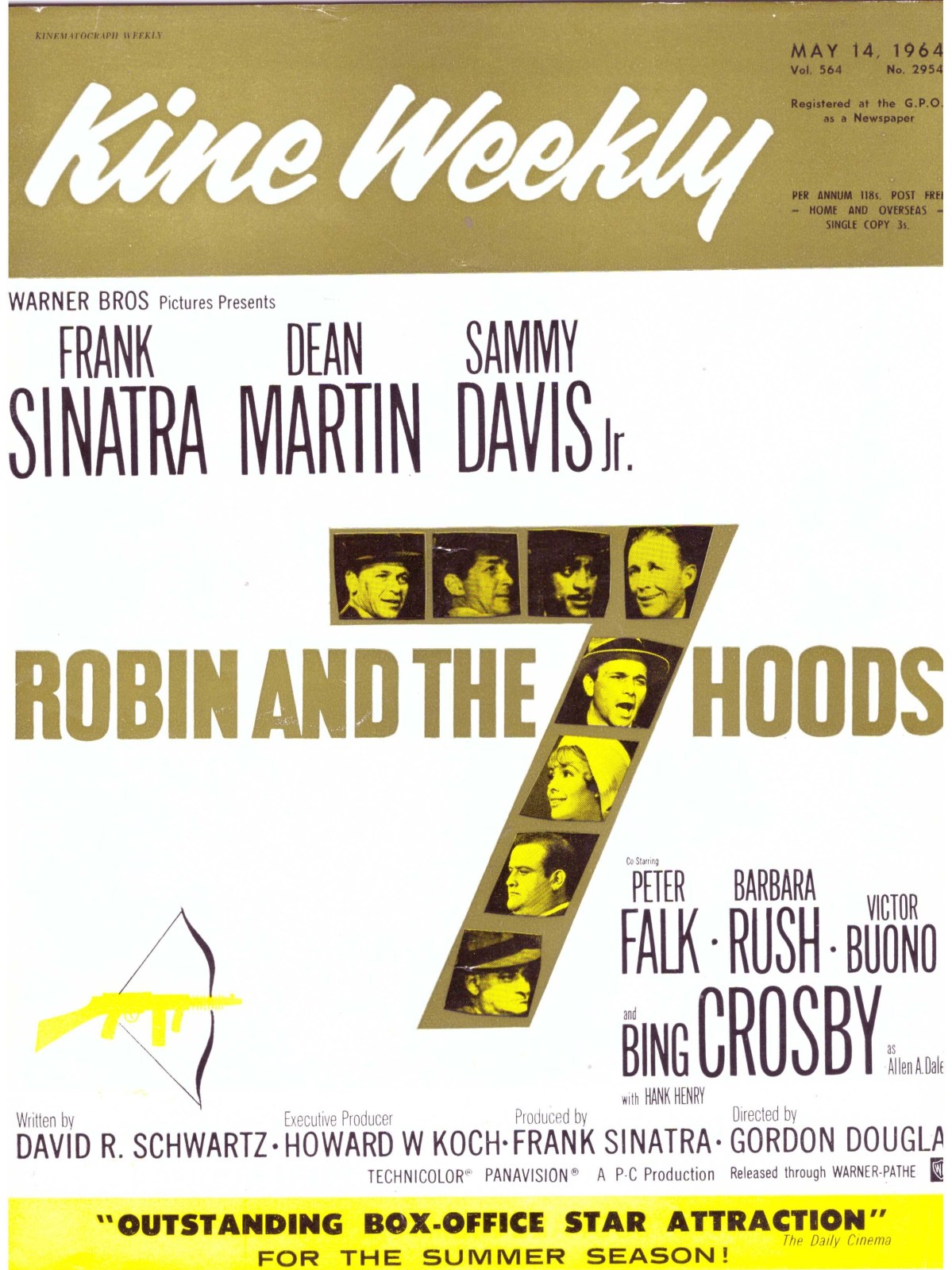
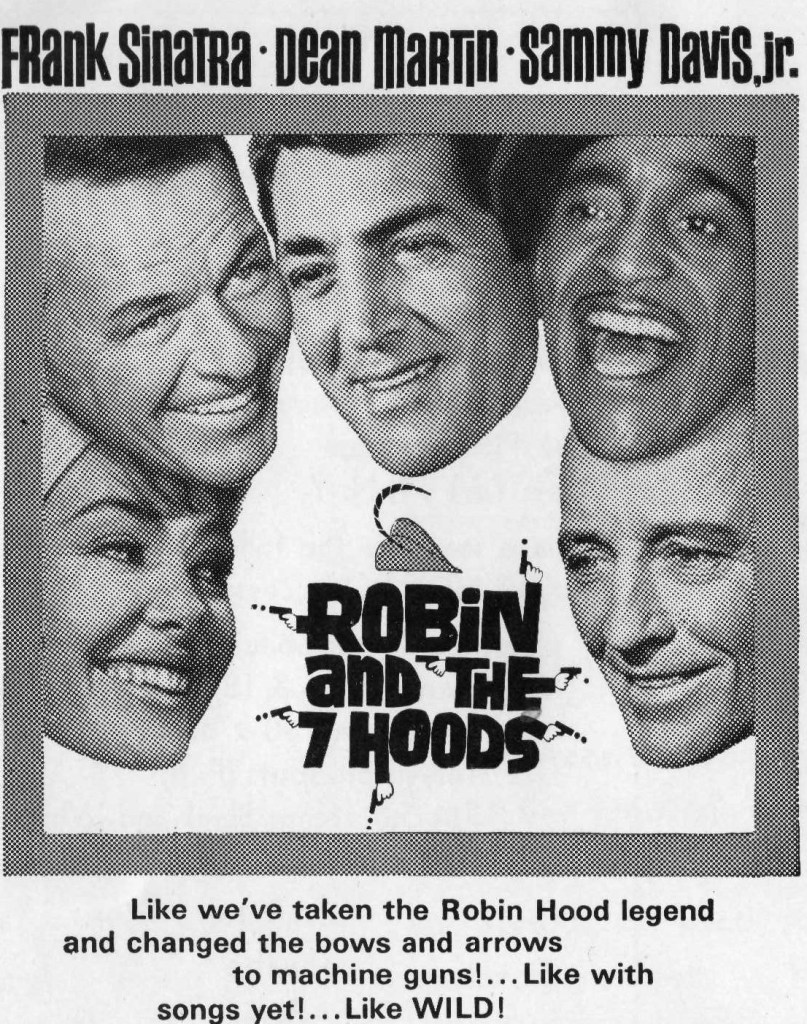
Warner Brothers pushed the boat out for Robin and the 7 Hoods with this lavish Pressbook. Apart from roadshows, most pressbooks of the era were around 16-pages A3. But this stretched to 28 pages with a tremendous range of advertisements, taglines and tie-ups plus, easier to accommodate from the exhibitor’s perspective, a healthy number of relatively straightforward marketing suggestions. On top of that, always a great incentive for cinema managers to rack their brains for good promotional ideas, the studio was offering seven cash prizes worth a total of $1,500 – about $14,000 today – for the best individual campaigns as well as a “special bonus prize” of the golf clubs used by Frank Sinatra, Dean Martin, Sammy Davis Jr. and Bing Crosby for the most original stunt.

With Pressbooks popping through a cinema manager’s door at the rate of one or two or three a week – dependent on how often a picture house changed its program – this one would certainly have made an impact, not so much from its size, but its commitment to the exhibitor. Most Pressbooks began either with information on the stars and the filming or with the advertisements and there was a sense of exhibitors being called upon to fit in with a pre-conceived campaign. Warner Brothers was not the first studio to go down the prize-giving route as a means of attracting attention, but in making the competition the first item on the promotional agenda – two of the first four pages were devoted to it – it certainly ensured it was high priority.

Following the competition came four pages of suggestions for gimmicks, stunts and tie-ins. WB had already tied-up with the The Antique Automobile Club of America and its members were being encouraged to lend out their vehicles to any movie theater planning a stunt. Exhibitors were told that car owners were “pleased to show them off.” There were over 100 chapters/branches of the Club so no shortage of eager participants. A parade of old-time cars in the town or a rally outside the cinema or even a race was guaranteed to attract publicity.

The Roaring 20s was another concept easily adopted – flapper fashions, the Charleston being performed outside the theatre or a dance competition, or girls dressed up in the outfits of the day strolling around town “carrying phonographs and camp stools; at busy intersections they can sit down and play one of the Robin tunes.”  Reward posters could be put up for famous gangsters of the speakeasy period, with photographs of the film’s characters included. A jazz parade was another possibility complete with straw hats and blazers. Setting up a gambling den was another suggestion using “actual gambling equipment captured by the police.”

And all this was before exhibitors could let fly with ideas based on the archery motif since “the words Robin Hood and archery and practically interchangeable.” Archery contests could be staged in a sports store, park, shopping mall or in front of the cinema. Robin Hood hats made of simulated felt with a feather sticking out – or bullet-riddled – were available at a low cost and ideal for giving away to children and to be worn by ushers and other staff as well as employees in other organisations participating in any promotion. Or just handed out to a local restaurant.

On top of that, since this Rat Pack picture was actually a denoted musical in which all the principals sang, there was the best tie-in of all – an original soundtrack album, an easy marketing tool for record shops. WB had also arranged for a book tie-in with Pocket Books, novelization written by Jack Pearl and stocked in 120,000 outlets.  The record, promised WB, would be “on every radio station night and day.” Even though Sinatra was no longer a top recording artist – “My Kind of Town” did not break the Cashbox Top 100 singles chart – his voice and that of his co-stars were exactly the kind of easy listening that appeared to radio addicts fed up with the British Beatle invasion.

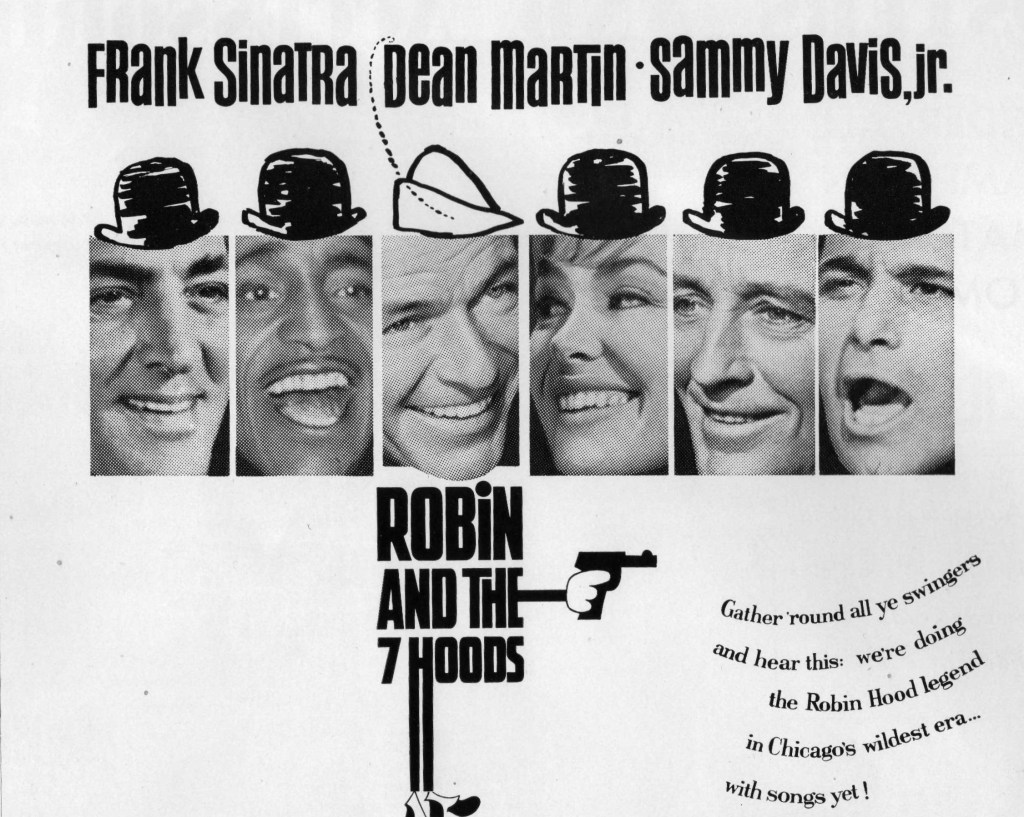
The advertising campaign was fairly straightforward consisting of as many of the stars as could be crammed onto a poster – usually the main four plus either Barbara Rush or Peter Falk, occasionally all six. The tagline went hip: “Like we’ve taken the Robin Hood legend and changed the bows and arrows to machine guns…! Like with songs yet!…Like Wild.” The last word might be changed to “Wow.”  An alternate tagline along similar lines went: “In Merrie Olde Chicago, in the days when King Al ruled the land…” And “Gather round all ye swingers and hear this…we’re doing the Robin Hood legend in Chicago’s wildest era…with songs yet!” A final version ran: “Warner Bros right merrily presents the wild idea of doing the Robin Hood legend in Chicago’s wildest era.”

With the box office and recording firepower of Sinatra, Martin, Davis and Crosby and the range of promotional ideas, there was little need to jazz up the Pressbook with journalistic nuggets, but WB did not stint on this count. The appearance of Edward G. Robinson in the genre and studio where he made his name three decades before in the like of Little Caesar was too good an opportunity to miss – more so when the wardrobe department discovered his suit size had not changed. Other cinematic stalwarts from the early gangster picture days included Allen Jenkins and Jack La Rue, now a restaurant owner and making his first WB movie in 23 years.

Elegance was a keynote for Barbara rush’s femme fatale. Designer Don Feld created a range of dinner gowns, coats and negligees which served almost as a disguise for the hard-as-nails operator. Commented Rush, “I am as tough as daddy and just as blood-thirsty. But I play it sweet throughout and never become hard or evil. The role has more substance when you realize this sweet girl has the ruthlessness of a cobra.” Pool hustler Harold ‘Red’ Baker was hired to teach Dean Martin how to perform like a champion player and also set up the shots for the game between Sinatra and Martin. Baker. But the editorial section ran for only two pages, which was a mighty small proportion of the overall Pressbook.

Selling Oscar Winners – Pressbook for “The Slender Thread” (1965)

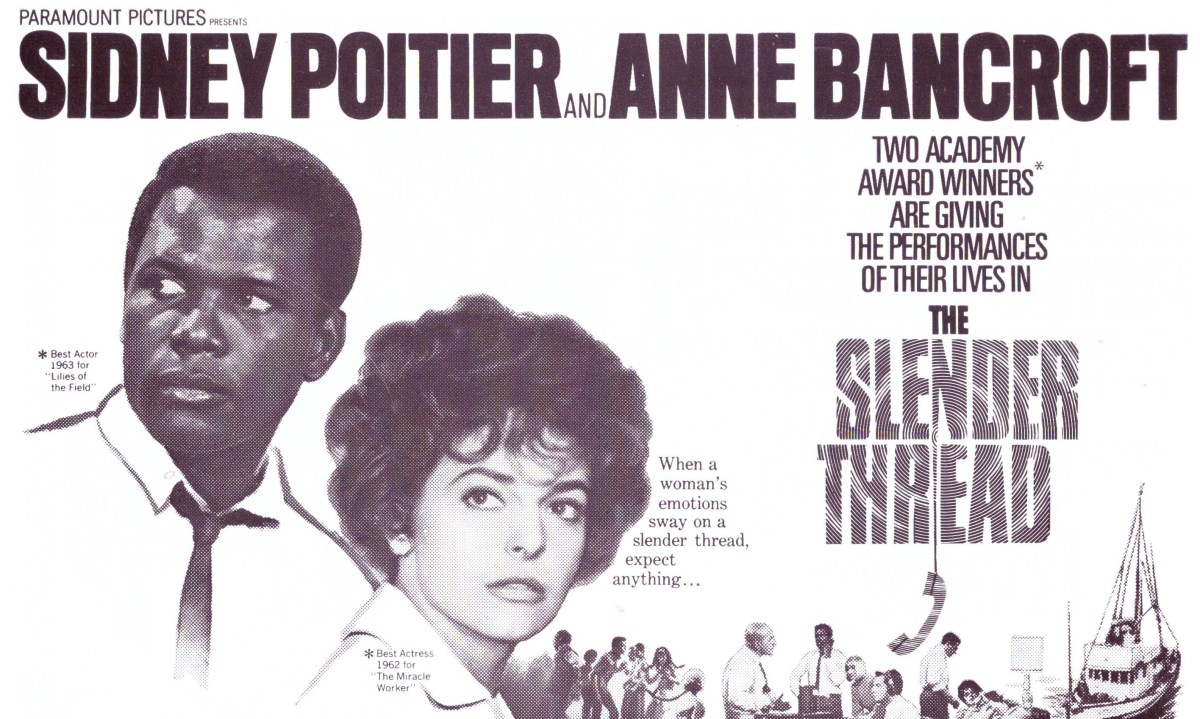
Just how do you sell a movie about a suicide to an audience for whom such a subject is still taboo? The answer is – you don’t. Instead, you fall back on your stars – and the fact that they are both Oscar winners.

We are pretty used these days to advertising campaigns, especially trailers, focusing on Academy Award recognition – The House of Gucci (2021), for example, boasting umpteen winners and nominees – but it was far rarer in the 1960s when exhibitors expected Pressbooks to provide them with sufficient marketing information to lure in the customers. Oscar success might have been mentioned in passing, forming part of a participant’s biography, but it would not be the entire focal point of the campaign.

The 16-page A3 Pressbook for The Slender Thread does nothing but. There was, of course, a link between the two stars in that Anne Bancroft recipient of the Best Actress Oscar for The Miracle Worker in 1962 had the following year presented Sidney Poitier with his Best Actor gong for Lilies of the Field (1963).

“Two Academy Award winners giving the performances of their lives” is pretty much as far as the tagline writers went in providing exhibitors with something to sell. The subsidiary tagline “when a woman’s emotions sway on a slender thread expect anything” offer little in the way of explaining the film’s content. An image of a phone plays a prominent role in artwork but again without clarifying its purpose. In much smaller writing, at the end of another reference to the Oscars, is the mention of “a motion picture rarely, if ever, surpassed in suspense” but again minus clarification.

You might actually come away with the notion that the drama takes place on the high seas since a ship features in the advertising.

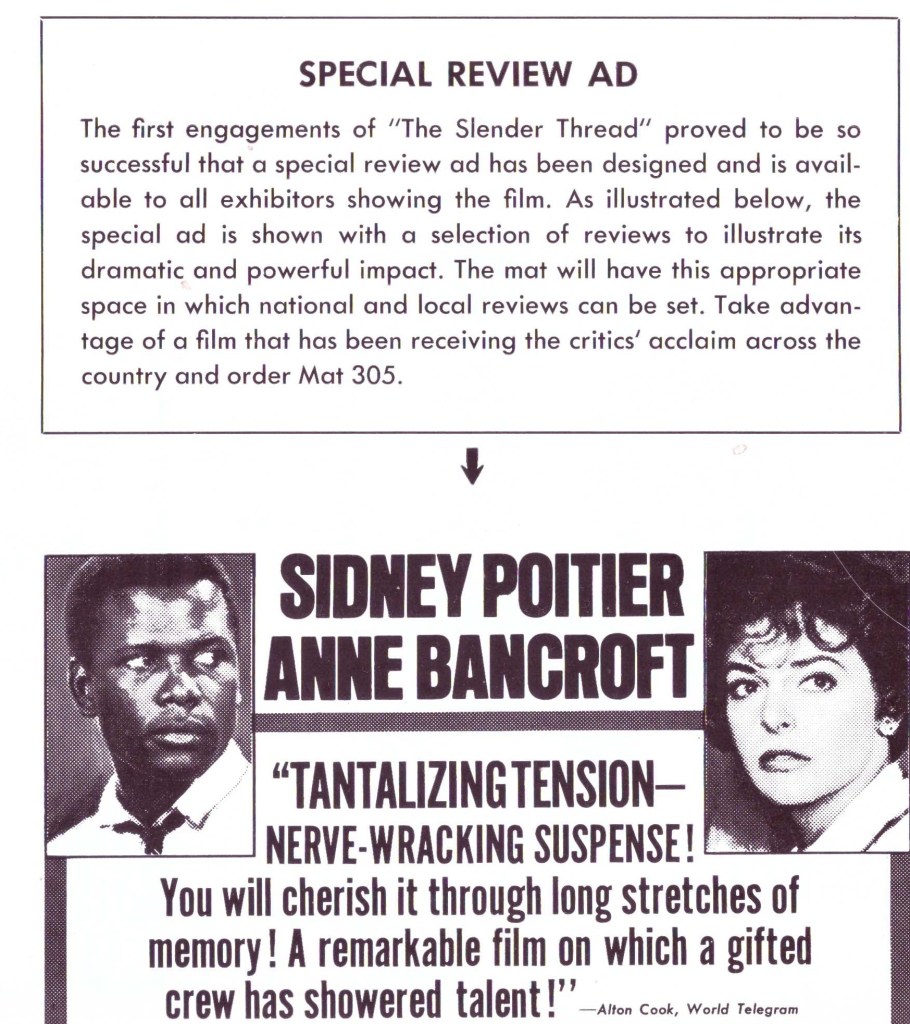
The only other assistance given exhibitors came in the form of reviews which make more mention of suspense. Cue magazine termed it “gripping, bristling tension and suspense all the way.” Kate Cameron in the Daily News concurred – “a high tension suspense film” as did Alton Cook of the World Telegram (“Tantalizing Tension! Nerve-Wracking Suspense!). Nobody mentioned what caused the tension and suspense.

The best bet for tie-ins came from record stores since record label Mercury has organised a “giant merchandising campaign” promoting the Quincy Jones soundtrack. The studio took the chance that exhibitors might take it into their own hands to organise some tie-ups with beauty salons, telephone companies and discotheques since these make an appearance in the picture.     

Quite how 16 pages of the same repeated artwork was meant to inspire exhibitors into, first all, booking the picture, and then, consequently, selling it to moviegoers is never explained.

Discover WordPress

A daily selection of the best content published on WordPress, collected for you by humans who love to read.

The Atavist Magazine

by Brian Hannan

WordPress.com News

The latest news on WordPress.com and the WordPress community.