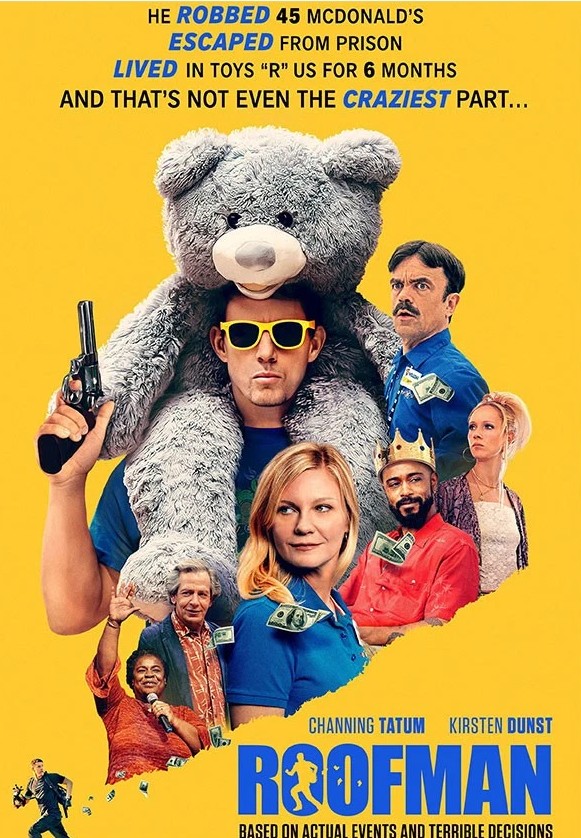
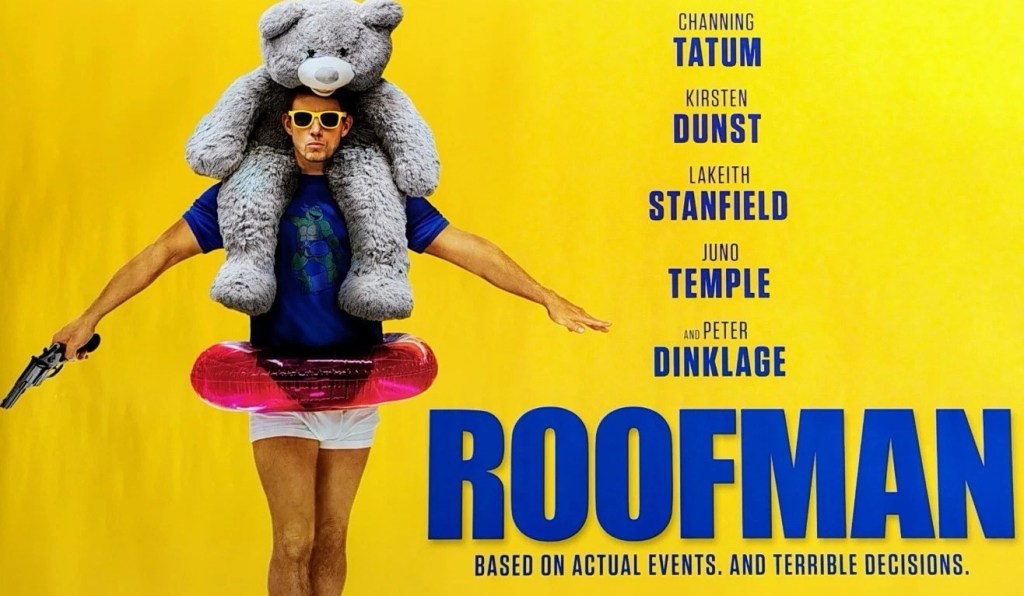
This sounds like one of those scams you’re always reading about. Too-good-to-be-true handsome hunk Jeffrey Manchester (Channing Tatum) arrives in the life of struggling single mom Leigh (Kirsten Dunst). Only difference is he’s not ripping her off for cash, but demolishing her emotions and the faith in goodness of her two innocent kids, Jade (Kirana Kulic) and Joselyn (Gabriella Cila).
Another movie glorifying some dude you’ve never heard of, just because, at least in the movie version, he’s cute to the point of goofyness and for some reason has been left behind by society. And like Smashing Machine (2025), there’s virtually no narrative to hang onto or even that makes sense, beyond the delusion inflicted on the God-fearing family who can’t see past the armloads of gifts and fall too easily for the notion that’s he’s some kind of undercover government agent.
Maybe you can live for six months on peanut M&Ms, great piece of promotion for M&Ms should that be the case, and maybe the manager, Mitch (Peter Dinklage), of the Toys’R’Us store you’re hiding out in is so dumb he doesn’t realize boxes and boxes of the stuff is leaving the store without registering on his till. Or that his store is also being looted of all its computer game inventory.
And it’s true that Jeffrey has an unusual set of skills, and that if he stopped stealing for a moment and found an ordinary job anywhere someone would soon cotton on the fact that he’s a walking encyclopedia of observation and surely it wouldn’t be long before he could bring added-value to any business simply by pointing out such facts.
You could start off with the fact that he’s found a weak spot in the security of most businesses. Most stores have ample security at the front, but nobody’s given a thought to how accessible they might be from the roof for a guy armed with little more than a hammer.
But, wait, Jeffrey isn’t a bad guy’s bad guy, he’d be rejected by the likes of Martin Scorsese, he’s only turning to crime because he can’t afford to buy a bike for his kid. So bringing those observation skills to the fore, he works out that McDonalds is relatively easy prey and before he’s caught he’s collected tens of thousands of dollars in his own version of Happy Meals.
In prison he turns once more to his specific set of skills and in the only interesting scene in the entire picture escapes through an ingenious method, then holes up in a Toys’R’Us where he constructs a little hidey-hole, switches off the security alarms (another set of skills), and comes out to play every night when the store is closed.
Mitch is a hardass and makes life hard for that nice single mom Leigh so Jeffrey intervenes and amends her work schedule to better suit her domestic life. And when Mitch refuses to pony up with a donation for the toy charity event she’s hosting at the local church, Jeffrey steps in.
You wouldn’t know it but these little churches are packed full of single moms just gagging for it. No sooner has Leigh coaxed our hero out on a date than she’s having first-date sex and then, armed with armfuls of gifts, he’s pretty much invading the home, younger daughter delighted with his attention, older daughter a tougher nut to crack.
Are you still interested? I wasn’t. I sat there like a member of the famed Disgruntled Audience, wondering what made anyone imagine this no-story story was worth a good two hours of my time.
So criminals are actually ordinary guys at heart, wanting a home life like the rest of us, and not all going around abusing their wives or beating up on their kids of sitting home stoned?
That’s about as much insight as we’re going to get as long as we (the audience) go in for the delusion that it’s somehow going to have a happy ending.
I’m reminded of the Richard Pryor character in one of the Superman pictures who, despite some genius, was so dumb he was always going to get caught and couldn’t think of a single way outside of criminality to find a home for his set of special skills.
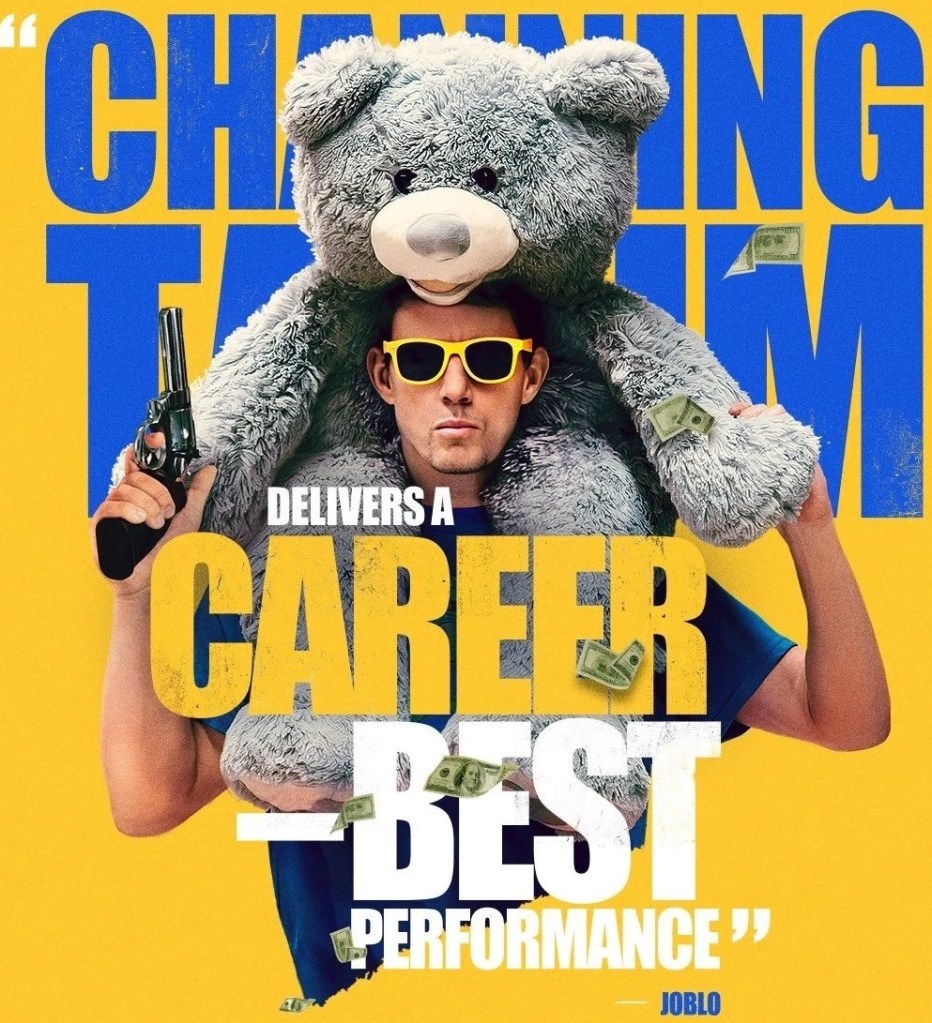
Sure, Channing Tatum (Blink Twice, 2024) is watchable but soon wears out his welcome in a tale that doesn’t go anywhere fast and Kirsten Dunst’s (Civil War, 2024) character has some surprising aspects. But really?
Derek Cianfrance has a decent track record for interesting drama – Blue Valentine (2010), The Place Beyond the Pines (2012) and The Light Between Oceans (2026) – but this is a serious miscalculation of audience endurance. Kirt Gunn (Lovely By Surprise, 2007) wrote it.
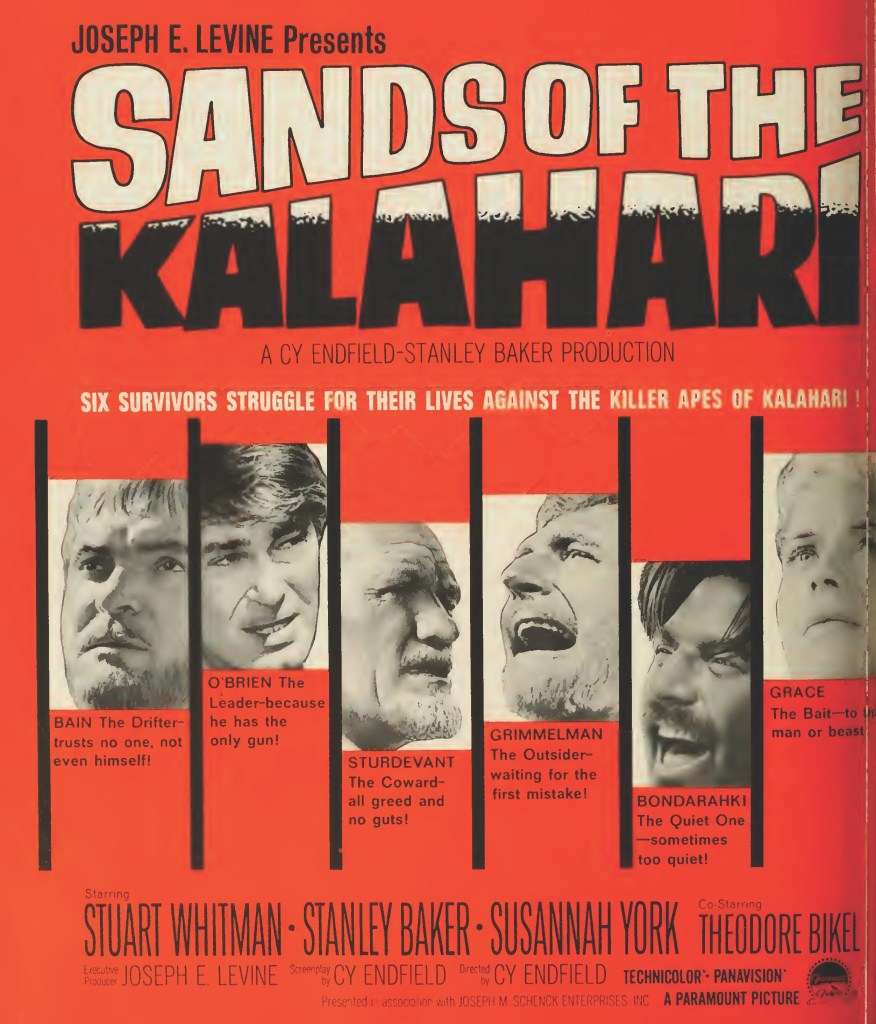
You know the score: plane crashes in inhospitable territory (in this case a desert), personalities clash as food/water is rationed, tempers run high and/or depression sets in as attempts to attract attention fail, someone goes for help, someone else has an ingenious idea and eventually everyone rallies round in common cause. That template worked fine in The Flight of the Phoenix (1965).
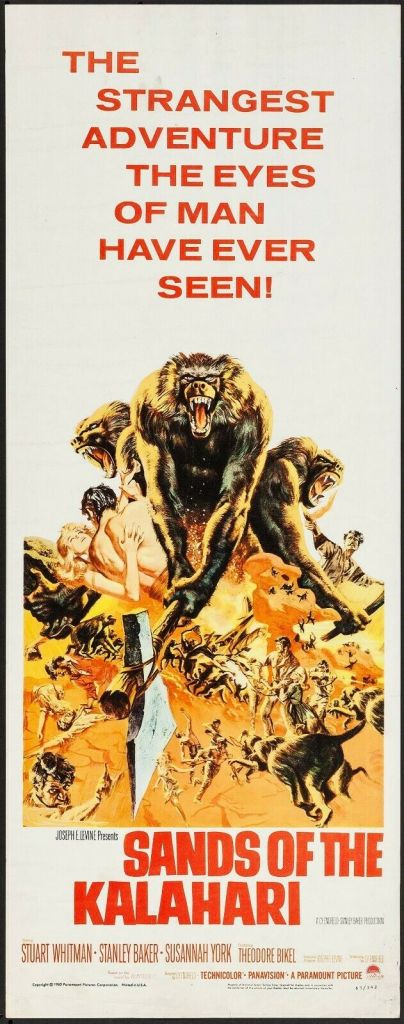
It doesn’t here. This is not quite as inhospitable. There is water. Caves offer shelter from the blazing sun. There is food – lizards trapped, game hunted with telescopic rifle. But the food is lean, not fattened through farming for human consumption. And you have to watch out for marauding baboons not to mention scorpions. And this group is split, two alpha males intent on exerting dominance with little interest in common cause.
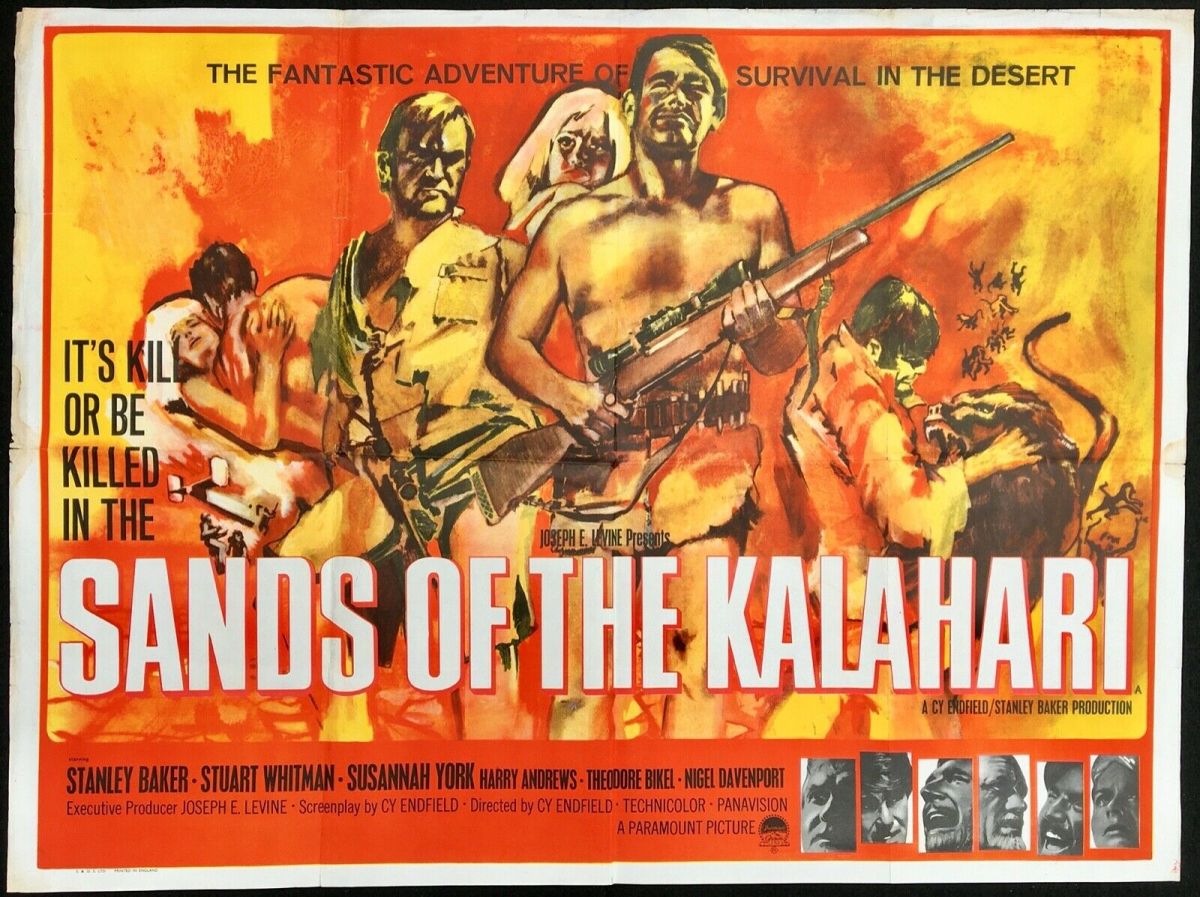
Producer Joseph E. Levine came up with the poster without close examination of the picture’s content.
Of the six survivors of this crash, Sturdevan (Nigel Davenport) decides his leadership status entitles him to sole claim over the only woman, Grace (Susannah York). But when he accepts the genuine responsibilities of leadership, he sets off across the desert to get help. That leaves Grace to fall into the hands of O’Brien (Stuart Whitman), so alpha he could be auditioning for Tarzan, shirt off all the time.
It soon transpires O’Brien has a rather unusual idea of survival – getting rid of his companions so that he will have no shortage of food until rescue arrives. It takes a while for the others to catch on to his plan. And then rather than common cause and camaraderie, it becomes every man/woman for himself, a battle for individual survival, a return to the primeval.
The most likely challenger to O’Brien’s authority is Bain (Stanley Baker), but he has been badly injured in the crash and no match for the other man’s brawn or his weapon. So it becomes a game of cat and mouse. Except it’s in the desert, it’s the law of the jungle and the rule of autocracy brought home with sudden force to people accustomed to the comforts of civilization and democracy.
The movie’s structure initially takes us down the obvious route of common purpose – Grimmelman (Harry Andrews) knows enough survival lore to devise a method of water transportation that would permit the group to escape the desert, Dr Bondrachai (Theodore Bikel) formulates a method of trapping lizards, and O’Brien, at least at first, appears willing to take on the role of protector, warding off baboons with his gun.
The change into something different is subtle. While the others are desperate to escape, it becomes apparent that O’Brien has found his metier. We discover little about the lives of each individual prior to being stranded. Whatever O’Brien’s standing in society, it would not have been as high as here, where his superior skills stand out. Reveling in his supremacy, he doesn’t particularly want to go home.
Like any psychopath Bain knows how to manipulate so at first it seems his decisions are for the greater good. And only gradually does it emerge that he blames others for his own mistakes and intends to eliminate his rivals for the food supply one by one. Because he is so handsome, it is impossible to believe he could be so devious or so evil.
The three principals all play against type. Stanley Baker (Zulu, 1963) and Stuart Whitman (Murder Inc., 1960) made their names playing heroic types. Here Baker is too ill for most of the picture to do any good and Whitman plays a ruthless killer. But Susannah York (Sebastian, 1968) is the big revelation. Audiences accustomed to her playing glamorous, perhaps occasionally feisty, gals will hardly recognize this portrayal of a coward, not just abjectly surrendering to the alpha male but seeking him out for protection and guilty of betrayal.
Even though this picture is set in the days before gender equality and the independent woman was a rarity, Grace’s acquiescence to the powerful male is disturbing, in part because it takes us back to the days when a woman was impotent in the face of male dominance. Such is York’s acting skill that rather than despise this woman, she earns our sympathy.
While for the most part Harry Andrews (Danger Route, 1967) and Nigel Davenport (Sebastian, 1968) appear in their usual screen personas of strong males, here their characters both are changed by the circumstances. Theodore Bikel (A Dog of Flanders, 1960) has the most interesting supporting role, the only one who takes delight in the adventure.
Director Cy Endfield (Zulu) – who also wrote the screenplay based on the William Mulvehill novel – delivers a spare picture. There is virtually no music, just image. Aerial shots show tiny figures in a landscape. The absence of character background frames the story in the present. As a reflection on the animal instinct, how close to the primordial a human being still operates, no matter how enlightened, this works exceptionally well, and melds allegory with thriller.
It took three attempts by different producers before Birdman of Alcatraz finally hit the screens. After the novel by Thomas E. Gaddis was published in 1955, Ingo Preminger, brother of director Otto Preminger, a year later was first to throw his hat in the ring – on behalf of director Joshua Logan.
Logan was on a roll, Oscar-nominated for Picnic (1955) starring William Holden and lining up Marilyn Monroe for Bus Stop (1956). Explained Preminger, “I knew Joshua Logan was looking for something off the beaten path for a personal project…(and found) exactly what he was looking for in the controversial novel.” Given Ingo’s track record – he wouldn’t produce his first film until Mash (1970), admittedly a smash – it was small wonder he didn’t make it to first base.
Twentieth Century Fox, under the aegis of Buddy Adler, had the movie on its schedule until abruptly dropping the project in 1958 when he failed to secure the cooperation of the Federal Bureau of Prisons. In fact, the Feds actively opposed the production, feeling the oxygen of publicity for the prisoner was undeserved.
Next up was accomplished independent producer Harold Hecht, who had formed a partnership with Burt Lancaster – Apache (1954), Trapeze (1956), The Unforgiven (1960). He was no more successful with the prisoner authorities – denied permission to shoot in Alcatraz or Leavenworth. But at least with Lancaster on board, he had a marketable commodity. Although he had a close relationship with United Artists, Birdman of Alcatraz was initially set up at Columbia and while shot on that studio’s backlot it was released through UA as a part of a 46-film three-year production package promising to be “as diverse, offbeat and box office” as previous offerings.
Lancaster had abandoned the actioners which had made his name and moved on to more challenging pictures. These days you’d call it virtue-signalling as he took on subjects as varied as evangelism (Elmer Gantry, 1960), juvenile delinquency (The Young Savages, 1961) and the Holocaust (Judgement at Nuremberg, 1961).
Neophyte Stuart Millar was brought in as director. He had set up in partnership with former agent Lawrence Turman (The Graduate, 1967) with a deal to make six movies in three years. His tenure at the helm didn’t last long and eventually he moved sideways to take on the role of producer. (He didn’t land a directing gig for another decade).
Though Lancaster had his eye on Jules Dassin (Never on Sunday, 1960), next in line was Charles Crichton (The Lavender Hill Mob, 1951) but he didn’t last long either. A decidedly odd choice, he fell foul of Lancaster’s impatience and was quickly replaced by John Frankenheimer (Seconds, 1966), one the new breed of directors emerging from live television, and who had made his debut on The Young Savages. Frankenheimer, going through a divorce, was reluctant to set foot in Los Angeles, and was lured there on another pretext by the actor who announced that, having just seen a cut of Young Savages, he was ideal for Birdman.
Not only was Frankenheimer he intent on revolutionizing the movie business, but he had the notion that he could reinvent television. After the demise of television’s Playhouse 90, he planned to set up a “creative stock company” of his former television colleagues and make two-hour programs for the small screen with the aim of helping “the medium out of its degradation.” He expected to win the backing of the likes of Arthur Penn, George Roy Hill, Delbert Mann, Ralph Nelson, Robert Mulligan and Sidney Lumet, who would all become major figures in Hollywood, as well as significant writers like Rod Serling and Horton Foote.
More pertinently to the project at hand, he intended to transition from mere director (i.e. gun for hire) to producer (in charge of his own career) and learn to function at “the business end of production” and to that extent was seeking overseas finance and lining up a $1 million adaptation of William Styron’s 1951 novel Lie Down in Darkness (never made) and Flowers of Hiroshima (never made). “Frankenheimer meant a new voice just at the time Lancaster needed it.”
Lancaster embarked on the picture as a campaign to free Stroud, who by now had served 40 years of a 50-year sentence in solitary confinement (a record). Obsessive by nature, the actor excelled himself, immersing himself in a study of Stroud’s books, letters, coverage of the case and penal law. Despite the enormity of the obstacles, Lancaster thought the movie and its attendant publicity would persuade the authorities to release the prisoner. Nor was Stroud much help. “Stroud will not kowtow,” said Lancaster, “He will not make polite amends for what he has done.” He was impressed by the fact that “Stroud took a miserable unnatural existence and yet made it a meaningful thing.”
While the actor saw Stroud as rehabilitated through his ornithology, the Feds begged to differ, viewing him as a double murderer who was a danger to society. Lancaster turned down other more lucrative work – though still managing to squeeze in a $750,000 payday for Judgement at Nuremberg – in order to “tinker and groom this very uncommercial” picture.
Writer Guy Trosper (One Eyed Jacks, 1961) was hired to make the character, within a realistic framework, as appealing as possible.
The film was budgeted at $2.65 million though that included some of the losses incurred on The Sweet Smell of Success (1957) and The Bachelor Party (1957) It proved a major collaboration between actor and director. “We blocked scenes,” explained Frankenheimer, “We decided to do the whole business of building the birdcage, of finding the first bird, of working with the birds – everything.” The movie was made in sequence to aid the ageing of the character. Lancaster didn’t wear a bald cap. His head was shaved halfway to the back and each gray and white hair was added individually
Lancaster spent two weeks rehearsing with 2,000 canaries imported from Japan as well as sparrows, until he could persuade the birds to hop onto his hand and peck at birdseed. To assist the recalcitrant birds, feathers were clipped so they couldn’t fly away. The method of achieving the scenes where the birds got sick and dropped from their perches was achieved by pouring lighter fuel down their throats.
The original cut ran four-and-a-half hours. The first half of the picture was rewritten and reshot. Editing would last another three months. Prior to release, Lancaster began his campaign to win Stroud a release, touring the country, addressing groups and journalists. He walked out of a television interview with Mike Wallace. Issues arose about Stroud’s homosexuality and the public opposition to Lancaster’s campaign soon derailed it.
United Artists planned an experimental release for the movie. Instead of going down the tried-and-tested route of the movie opening in big cinemas in big cities and working its way down stage by stage to the fleapits, A wanted to open the picture in as many houses as possible in new York in what it dubbed a “Premiere Showcase” (I’ve written about this elsewhere).
In one of those quirks that trade journalists pick up, it was noted that there was an ornithological cycle – on the path to release or in production were Bye, Bye, Birdie, To Kill A Mockingbird, The Sweet Bird of Youth, The Birds and Birdman of Alcatraz. The movie managed to see the inside of a jailhouse but only for a screening at Wayne County Jail in Detroit. Relations with the prison authorities otherwise remained frosty – Stroud was denied gifts and cards sent to him by stars and crew of the film.
Simultaneous with screenings at the 1094-seat Astor on Broadway and the 550-seat Trans-Lux 85th arthouse, UA opened the movie in eight other New York theaters (a process known then as daydating). The haul was $490,000 over three weeks. Stage two was an immediate moveover to 54 houses which locked up $196,000 in five days. Elsewhere it attracted the type of business expected of a prestige drama, not a prison movie as such. It finished the year with $2.2 million in rentals (the studio share of the box office gross) – enough for 27th spot on the annual chart – though observers reckoned it might be good for another $1 million or so once the effect of the ~Oscars (it was nominated for four and Lancaster was named Best Actor at the Venice Film Festival) kicked in.
It was successful overseas, ranked 25th of all the movies released in Italy over a two-year period. (Interestingly, in the same list poorer performer at the domestic box office The Notorious Landlady and The Counterfeit Traitor came eighth and 13th respectively, It was televised in October 1964.
SOURCES: Kate Buford, Burt Lancaster, An American Life, (Aurum,2008) pp 207-210; “Clips from Lots,” Variety, June 13, 1956, p24; “Banks Read Titles,” Variety, June 20, 956, p13; “Feds Veto Alcatraz,” Variety, October 19, 12958, p3; “Stuart Millar,” Variety, October 12, 1960, p17; “New York Sound Track,” Variety, November 23, 1960, p4; “Feds Not Helpful,” Variety, December 7, 1960, p19; “Cruel and Unusual Punishment,” Variety, February 15, 1961, p2; “Playhouse 90 Alumni Band Together,” Variety, March 8, 1961, p25; “If Changes in UA Plans Due,” Variety, October 18, 1971, p7; “To Be Creative Not Enough,” Variety, February 11, 1962, p11; “Homosexual Question Raised at Birdman Feed,” Variety, May 2, 1962, p2; “Audubon Influence,” Variety, May 2, 1965, p3; “Birdman Jail Screening,” Variety, July 4, 1962, p64; “Frankenheimer Thinks Out Loud,” Variety, July 18, 1962, p13; “Premiere Showcase,” Variety, August 22, 1962, p7; “Big Rental Pictures of 1962,” Variety, January 9, 1963, p13.
It always helps a prison picture if your character has been wrongfully convicted (The Shawshank Redemption, 1994) or is incarcerated through an unfortunately set of circumstances including self-destructive tendencies (Cool Hand Luke, 1967). Whatever the case, the malevolence of the wardens or the emergence of his own engaging personality will ensure that your character is sprinkled with enough sympathy to transform into our hero.
But that’s not the case here and it takes a strong chunk of bravura acting from Burt Lancaster (Elmer Gantry, 1960) to pull this off.
Oddly, this works in the main not because it’s your typical prison picture with endless confrontations with guards and preventing your dignity being sliced and diced by a ton of humiliating actions. Walt Disney couldn’t have done a better job of hooking the audience with its nature true-life approach. I guarantee you will be chuckling to watch a newborn chick trying to shuck off the top half of its egg.
Robert Stroud (Burt Lancaster), a pimp, was certainly no innocent, a two-time killer, who only escapes execution through the efforts of his mother (Thelma Ritter) in persuading U.S. President Woodrow Wilson to commute his sentence. However, there is an evil Catch-22 which infuriated prison governor Harvey Shoemaker (Karl Malden) invokes. While awaiting sentence, and assuming execution is inevitable because he murdered a prison guard in front of hundreds of witnesses, the local judge has decreed that Stroud should be kept in solitary confinement.
Shoemaker, nettled by Stroud’s defiance, interprets that as being able to keep the prisoner in solitary confinement for the rest of his term – which amounts, as it happens, to 40 years. None of this bugs Stroud that much. He’s averse to human companionship, as likely to bully a cellmate and cause ructions elsewhere, and certainly not ever going to give in to the prison system with its endless rules.
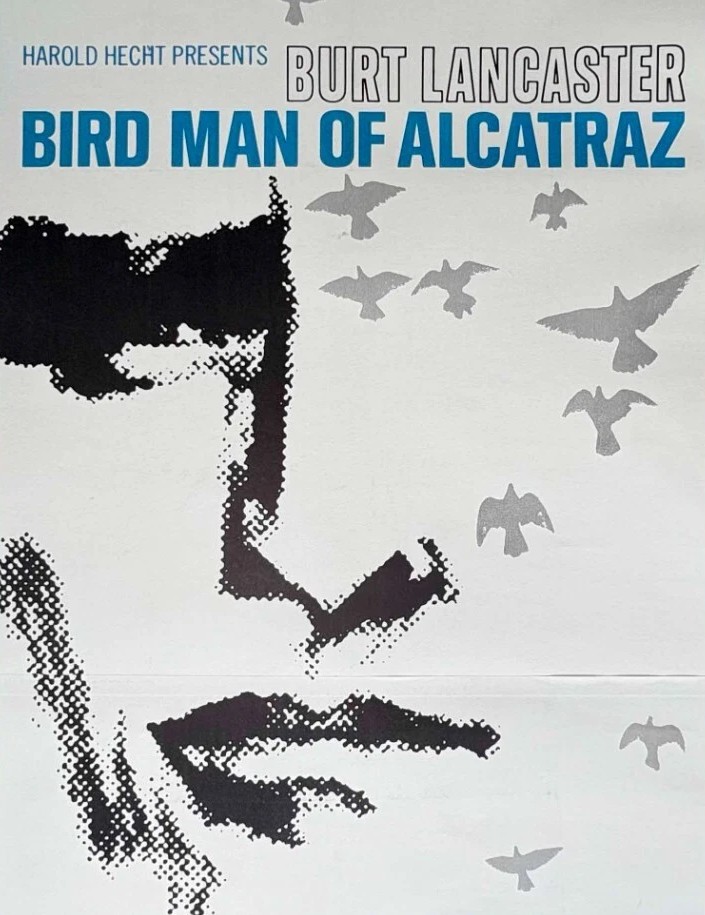
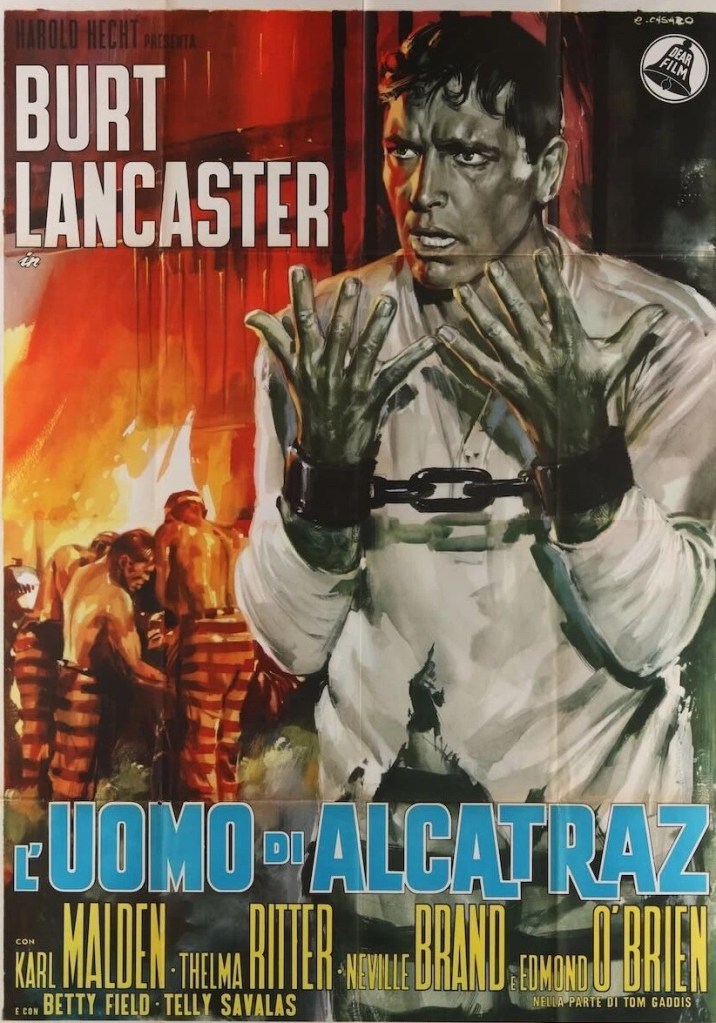
The marketeers have taken some liberties with the title. But Alcatraz is certainly a bigger lure to moviegoers than Leavenworth. By the time Stroud reaches Alcatraz he’s devoid of birds. All the breeding activity takes place in Leavenworth.
And while there are aspects of Stroud’s character you will never warm to, he’s got us hooked the minute he embarks on the bird breeding, in part because it’s the antithesis of his character to be so humane, and in part because the dedication involved in painstakingly building cages or other toys (a little wooden chariot a bird is taught to drive) from nothing but wooden boxes with rudimentary tools he has fashioned himself is wondrous to behold. That section of the movie is just enthralling.
Although he’s rescued a chick from a broken nest that lands in the prisoner courtyard during a storm, it takes him a while to cotton on that the bird needs fed, which he does with his version of a toothpick. He coaxes the frightened bird to fly and eventually starts breeding the damn things, persuading a new governor to allow him to buy birdseed and encourages his hobby, so much so that after extensive study Stroud becomes a noted ornithologist with a couple of publications to his name. His case became widely known after a bird researcher Stella Johnson (Betty Field) publicizes his activities and eventually marries him.
But when he’s shifted to Alcatraz, he encounters Shoemaker who forbids the birds. So Stroud starts to write a history of the U.S. penal system. Despite being prone to violence, he is instrumental in ending a prisoner uprising. He is never released, despite various petitions.
So while there’s no happy ending it’s an absorbing picture. Burt Lancaster is at the top of his form, winning another Oscar nomination. Telly Savalas (Crooks and Coronets, 1969), playing another prisoner, was also nominated. Karl Malden (One Eyed Jacks, 1961) is an excellent foil and any time Thelma Ritter (A New Kind of Love, 1963) pops up she steals the show.
While it’s on the long side for a prison picture and lacks the epic quality that the 150-minute running time would suggest, director John Frankenheimer (The Manchurian Candidate, 1962) takes an almost documentary approach to his subject. You might call it an intimate epic. Screenplay by Guy Trosper (The Spy Who Came in from the Cold, 1965) from the book by Thomas E. Gaddis.
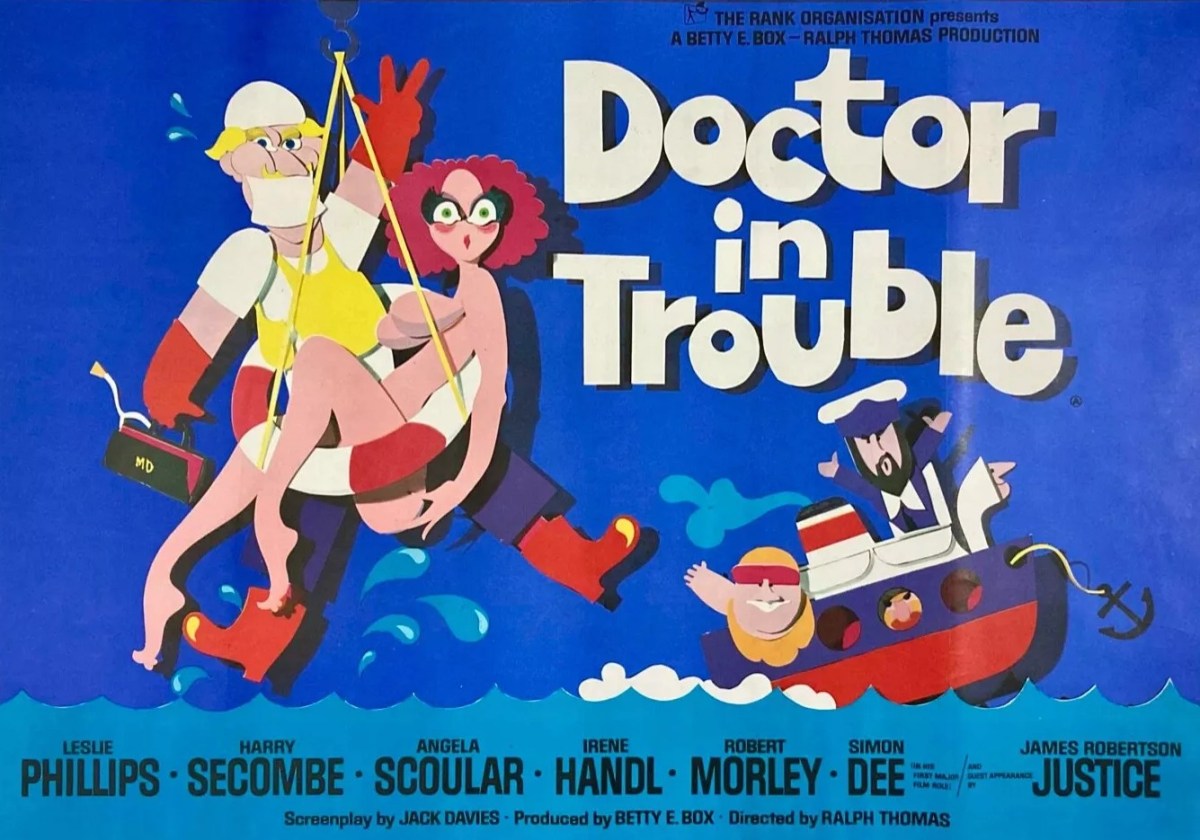
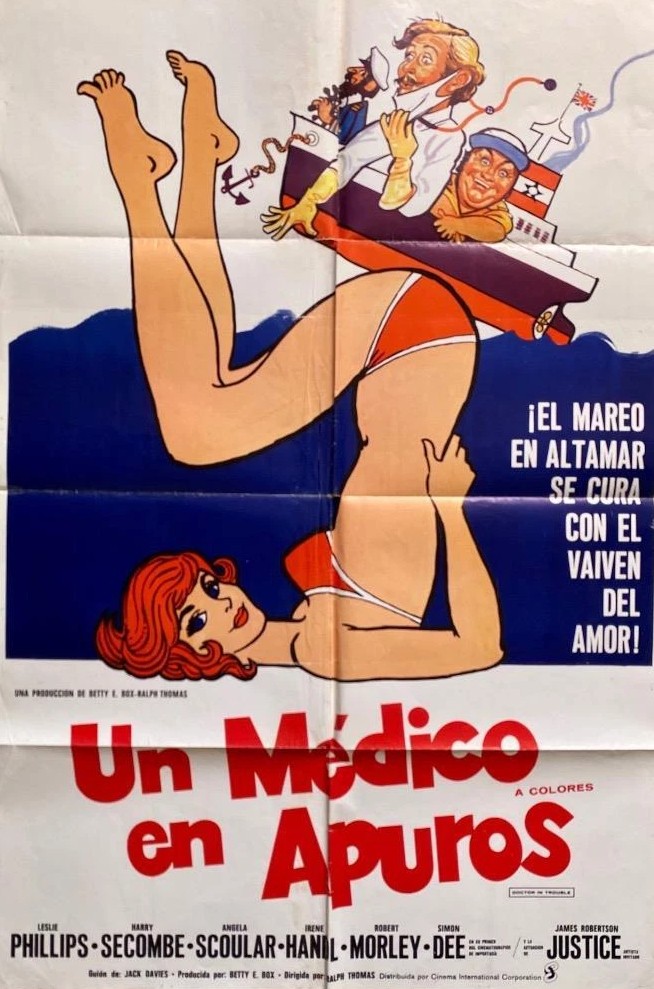
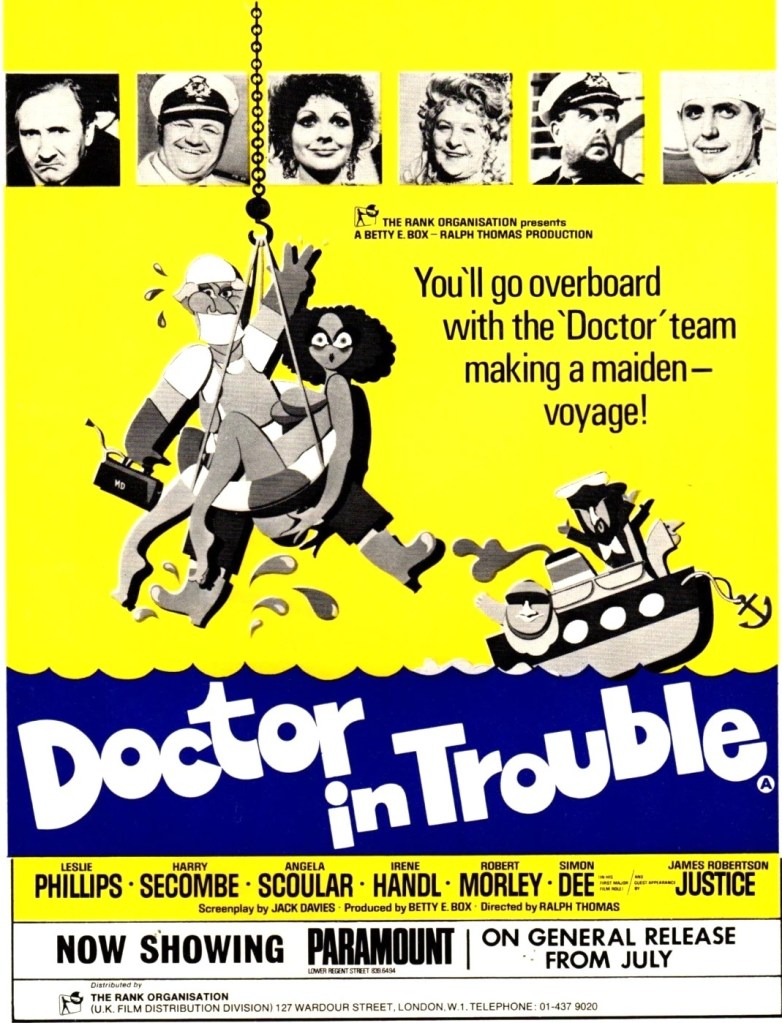
Limp ending to a fine series. Torpedoed by too many oddities. Leslie Philips returns in the top-billed role, but he’s not playing the suave Dr Gaston Grimsdyke of the previous iteration, but instead a more hapless version of Dr Paul Burke, the character he played a decade before in Doctor in Love (1960).
Confused? You will be. It’s clearly set up for James Robertson Justice to play two characters, a la Sinners (2025), his usual Sir Lancelot Spratt and his presumably identical brother, ship’s captain George Spratt. But Justice fell ill and the naval part was taken by Robert Morley, of similar bombastic ilk, but in diction more long-winded and fluffy and lacking the bite of the surgeon.
In the last two episodes I’d seen there had been an obnoxious salt-of-the-earth character who turned out to be surprisingly artistic. Here, we have to settle for the nouveau riche Pools-winner (a gambling game of the era) who is channeling his inner Sidney James, all leer and not much else. And if you want proof that it’s never a good idea to hire a television personality merely because he has a large following, look no further than Simon Dee.
Several notions will not endear themselves to the contemporary audience – the cross-dressing, the cliché gays, and the Englishman in brownface playing an Indian. That’s not to mention the pratfalls and endless falling into swimming pools.
There’s even less of a plot than in the last outing. Dr Burke (Leslie Philips) accidentally stows away on a cruise ship after pursuing model girlfriend Ophelia (Angela Scoular) who’s working there. He also comes up against actor Basil Beauchamp (Simon Dee), an old school bete noire, who plays a doctor in a television soap.
Dr Burke is hounded by the ship’s Master-at-Arms (Freddie Jones) so occasionally it lurches into farce. And there’s any number of sexy debutantes either desperate to climb into bed with the TV star or hook the gambler.
If it had settled on one tone – slapstick, sex comedy or farce – it might well have worked even in the face of the poor script. Cor blimey, there’s even some fleeting nudity from Ophelia and Leslie Philips and a striptease that’s way out of place for what was originally a much gentler comedy than the Carry Ons. In terms of style it’s all over the place and not a single member of the cast is appealing enough to rescue it.
Had Leslie Philips been in traditional “ding-dong” comfort zone it might have passed muster but here he’s just the butt of all the jokes without generating an ounce of sympathy. Robert Morley (Some Girls Do, 1969) isn’t a patch on James Robertson Justice. Angela Scoular (On Her Majesty’s Secret Service, 1969) seems off-key, Freddie Jones (Otley, 1969) as if he’s in a different picture while the constantly leering Harry Secombe (Oliver! 1968) belongs in a Carry On. Graham Stark (The Picasso Summer, 1969) is deplorable as the Indian waiter Satterjee.
The only person to rise above their station is Joan Sims (Doctor in Clover, 1966) who makes a cameo appearance as a Russian nurse. In bit parts you might spot Yutte Stensgaard (Zeta One, 1969) and Janet Mahoney in her debut.
Directed as usual by Ralph Thomas. Script by Jack Davies based on a Richard Gordon bestseller.
After this, the series was reimagined for television and returned to its gentle comedy roots.
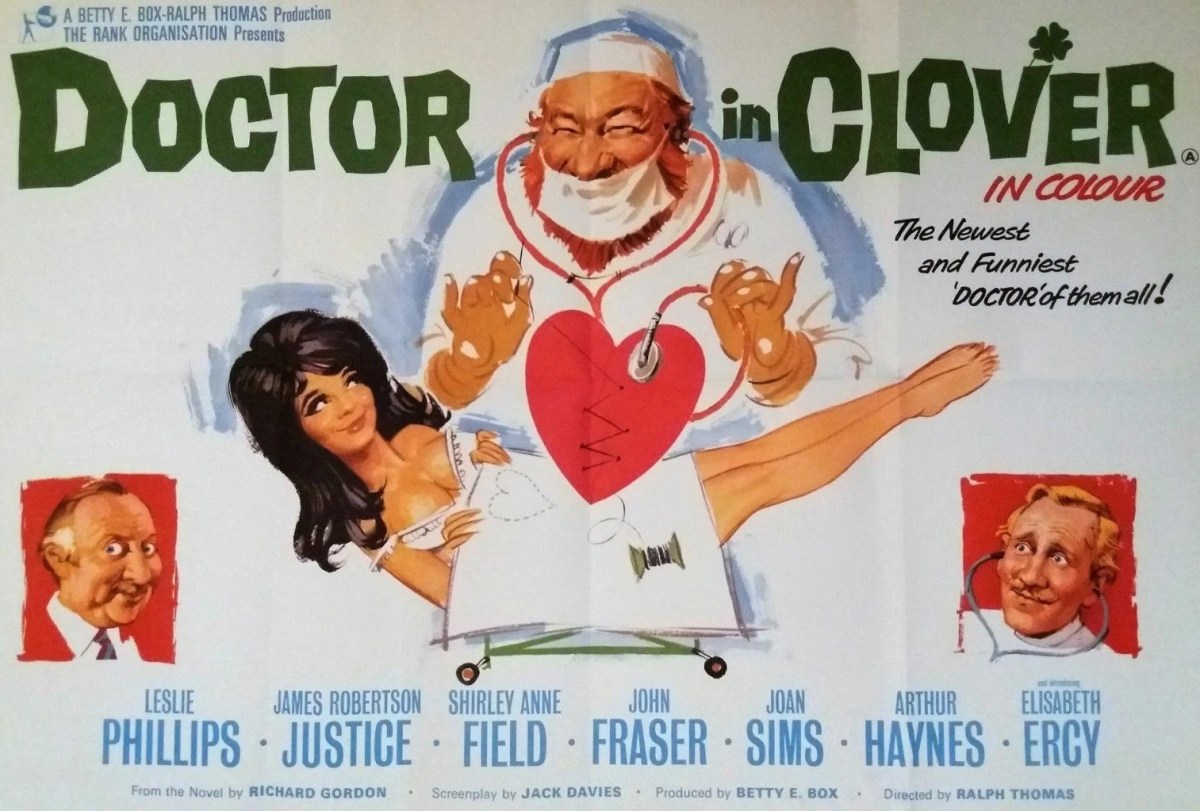
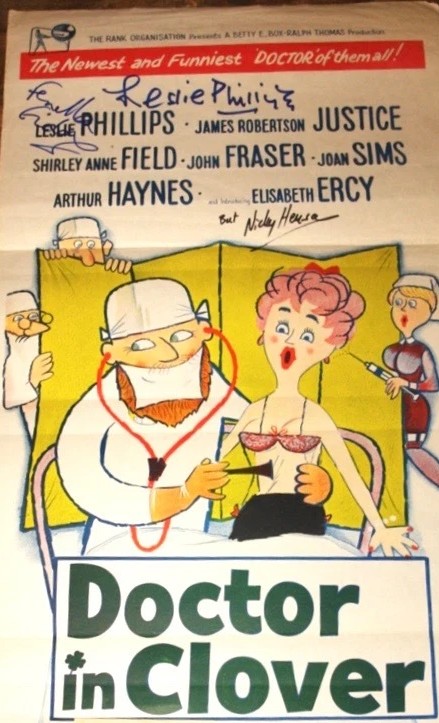
Ding dong! All change. Out go the dithering twerps and in comes the seductive lothario. Dirk Bogarde after one last charge and no longer the country’s top attraction at the box office has departed for the more receptive arthouse climes of King and Country (1964), Darling (1965) and Accident (1966). In his place, at St Swithins, has come Dr Gaston Grimsdyke (Leslie Phillips) who imbues the character with trademark seductive purr.
With Gaston able to be upfront in his intentions, there is less reliance on the innuendo that suffocated rival Carry On series, and seemed to cover all manner of male deficiencies, most obviously the ability to pursue a girl in the normal acceptable manner. The exceptionally slight narrative is more a series of sketches and falls back on slapstick, some of which is hilarious – two doctors covering everyone in foam – and others less so (how many times can you fall fully clothed into a swimming pool?).
The patients line up to fill any gaps, headed in the main by “I-know-my-rights” walking medical encyclopedia Tarquin Wendover (Arthur Haynes) who despite his rough exterior reveals a penchant for ballet, and Russian ballet dancer Tatiana Rubikov (Fenella Fielding) determined to attract the male gaze.
Now there are two medics to put everyone in their place, Sir Lancelot Spratt (James Robertson Justice) and starchy Matron Sweet (Joan Sims) who revels in handing out a ticking off and takes on Spratt over what might be deemed these days a support animal in the shape of a parrot – and wins. At least she wins round one. But then her steely resolve crumbles as she believes she is secretly being wooed by Spratt.
But in the days when ageing male Hollywood idols were being teamed up, with nary a concern about the obvious age gap, with women half their age, and the likes of James Bond and Alfie never had to countenance rejection, it’s quite amazing that this piece of froth takes a more realistic approach. The main storyline revolves around the 35-year-old Gaston being knocked back by the 20-year-old French physiotherapist Jeannine (Elizabeth Ercy) who, for plot reasons, appears almost constantly in a swimsuit.
In a bid to make himself more appealing, Gaston embarks on a series of rejuvenating activities and treatments, planning to inject himself with a serum which, as you might he expect, he manages to inject into Spratt with hilarious consequence. He then turns to a “mood-enhancing” gas but that rebounds on him when he finds himself instead falling for the matron. As a subplot he is rival with his cousin Miles Grimsdyke (John Fraser) for a plum job – and is passed over, ironically, because he looks too young.
British audiences were taken by the twists to the formula and turned it into one of the top 15 films of the year at the box office. And I can certainly see its continued appeal. The days of the inept romantic are over. This is the permissive sixties after all. And while Gaston is rejected by Jeannine his flirtatious moves are welcomed by the equally seductive Nurse Bancroft (Shirley Anne Field), though since she is already engaged flirtation is as far as she’ll go and Gaston is disinclined to pursue the matter once he notices the size of her future husband.
There’s even a daring, for its time, sequence involving male hands mistakenly caressing each other, with their owners enjoying such fondling before they realize their error.
Leslie Phillips (The Fast Lady, 1962) is in his element – and he has a far better command of comedy than Dirk Bogarde – and a delight especially as his constant amour is constantly curbed. Despite third billing Shirley Anne Field (Kings of the Sun, 1963) has little more than an extended cameo even though she shines in what little she has to do. James Robertson Justice (Mayerling, 1969) remains the grumpy heart of the picture though Carry On regular Joan Sims runs him close. Elizabeth Ercy (The Sorcerers, 1967) has the delightful job of putting Gaston in his romantic place. Suzan Farmer (633 Squadron, 1964) puts in a brief appearance as do a host of British television names including Arthur Haynes (The Arthur Haynes Show, 1957, 1966), Terry Scott (Hugh and I, 1962-1967) and Alfie Bass (Bootsie and Snudge, 1960-1963)
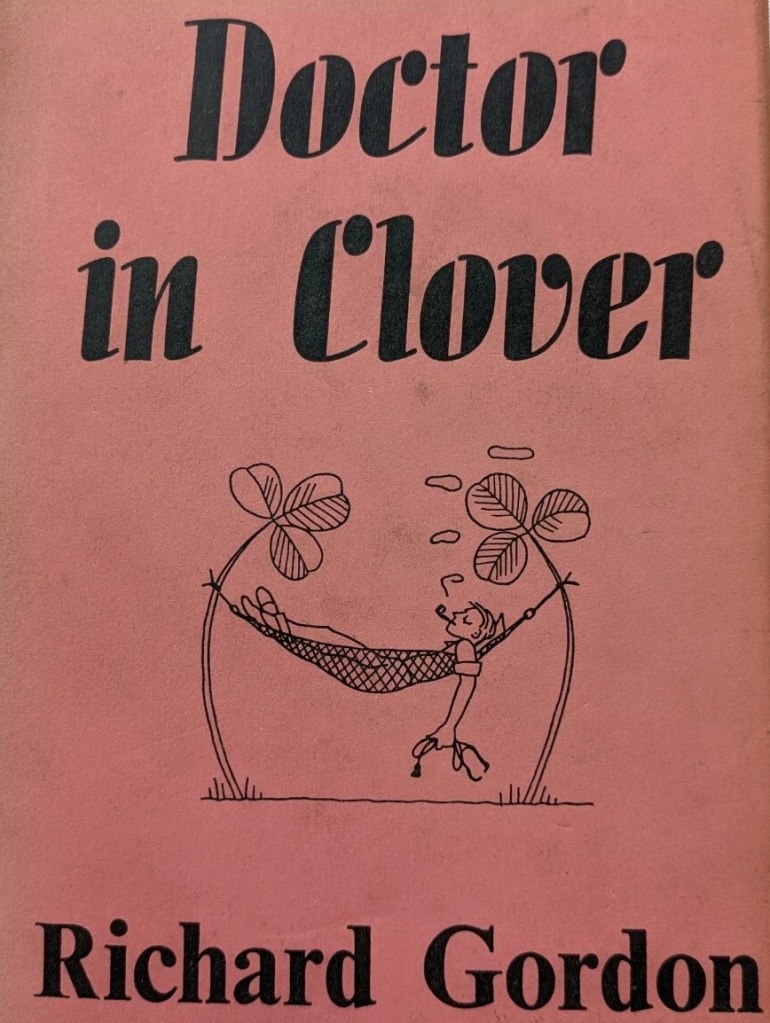
Directed, once again, by series regular Ralph Thomas, taking a break from more serious efforts like The High Bright Sun (1965). Written by Jack Davies (Those Magnificent Men in Their Flying Machines, 1965) from the Richard Gordon bestseller.
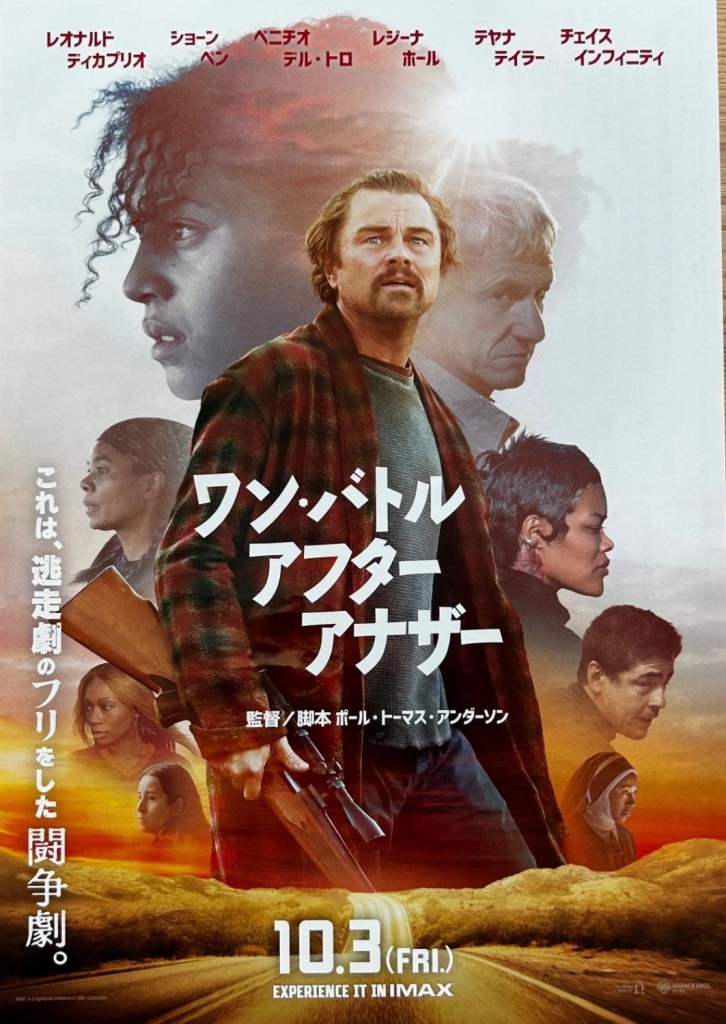
Sorry to be a party-pooper but I didn’t take to this critically-acclaimed shaggy dog story heavy on the satire. It’s partly redeemed by the performances – Sean Penn, in particular – but there’s not much to say that hasn’t already been said, and far more succinctly, about immigration and the rising right-wing influence in America. I’m sure Leonardo DiCaprio’s $20-$30 million standard remuneration fee might account for a good chunk of the $130 million budget but unless rates for extras have soared I can’t see where the rest of the money has gone.
Perhaps Warner Bros, having lost out on cult box office hotshot Christopher Nolan (Oppenheimer), was hoping to replace him with Paul Thomas Anderson, who while generally a critical darling, has none of Nolan’s box office clout. Though let’s not forget Anderson’s highly rated by his peers, otherwise how to explain his three Oscar nominations for direction and four for writing. He should be a good fit for the wild unwieldy sprawling works of Thomas Pynchon, another cult darling, and his previous effort Inherent Vice (2014) made a reasonable stab at capturing, albeit on a smaller scale, the author’s idiosyncrasy, though the writer as often took the blunderbuss approach to his subject.
The only element of directorial bravura that I detected here was the Cinerama effect of mounting and falling down hills in the car chase.
The tale is just lame. Revolutionaries grow old or turn snitch to save their skin. White old guys belong to some secret racist organisation going by the name of the Santa Claus Club or some such. Black gals get to kill people and rattle off machine guns. The nuns, as you might guess, are another secret organisation. The main element of the narrative appears to be whether racist Col Slackjaw – I mean Lockjaw (Sean Penn) – but I mean, who cares, when you give the bad guy such an improbable name you’re stating from the outset that he’s a joke and not the threat he’s meant to be
Anyway, improbable as it sounds, the avowed racist has a thing for dominant Black women – check out his erection at first sight of gun-toting Perfidia (Teyana Taylor) and his predilection for being anally probed by her. She’s sometime revolutionary, sometime aforementioned snitch, sometime boyfriend of revolutionary-cum-hophead Bob (Leonardo DiCaprio), and definitely not maternal material given she walks out on new-born Deandra (Regina Hall) leaving the hophead to bring her up.
The Santa Claus Club gets wind of the fact that Lockjaw might not be as racist as he pretends so that sets it at odds with its very own top racist as he embarks on a scorched-earth quest to find out if he should have a paternal bone in his body.
All sorts of chases ensue, mostly revolving around one-dimensional characters though Benicio del Toro makes a fair stab at humanizing his revolutionary.
It just went on and on, like a latter-day Anora (2023), making same point over and over again, albeit that presumably it is aimed at the intelligent section of the cinematic audience who shouldn’t need to be battered over the head with the message. This is the kind of picture which complains about the treatment of people by the Santa Claus Club but then expects audiences to burst into a round of applause when the club metes out punishment to one of its own.
File under major disappointment.
Leonardo DiCaprio (Killers of the Flower Moon, 2023) is good, but there’s not much for him to get his teeth into, we’ve seen this deadbeat character so many times before, even ones that form emotional ties with their children.
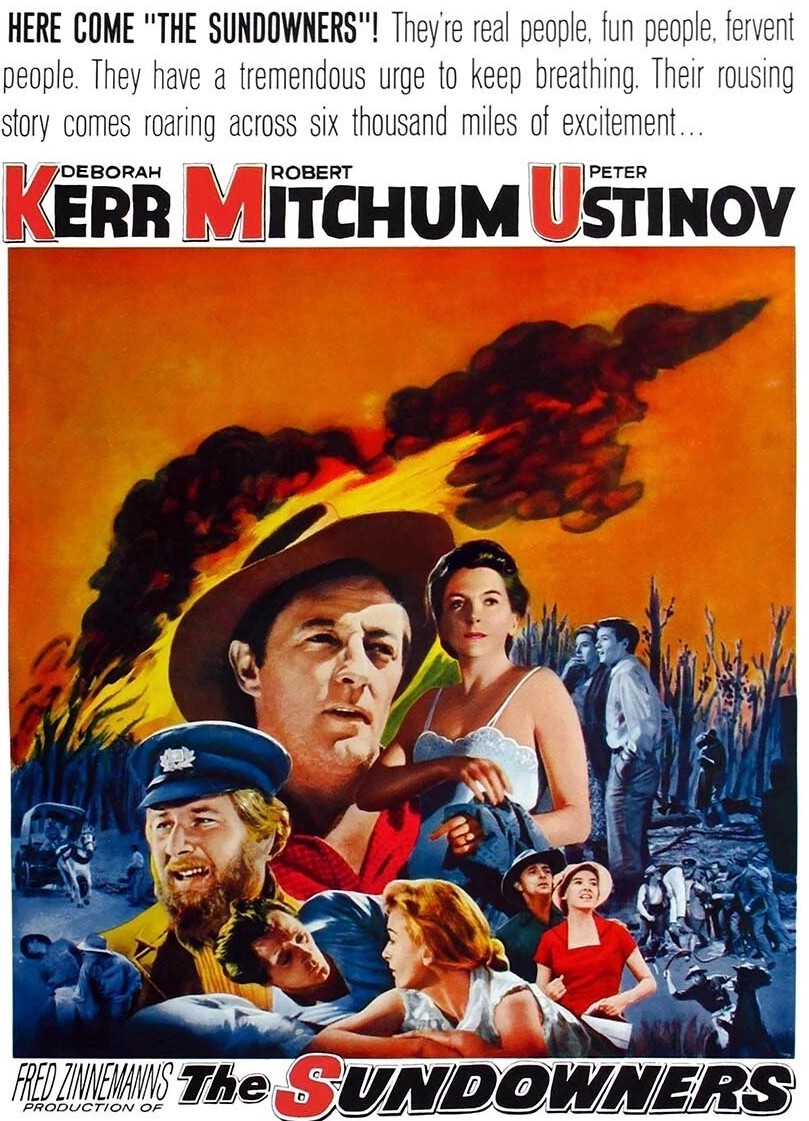
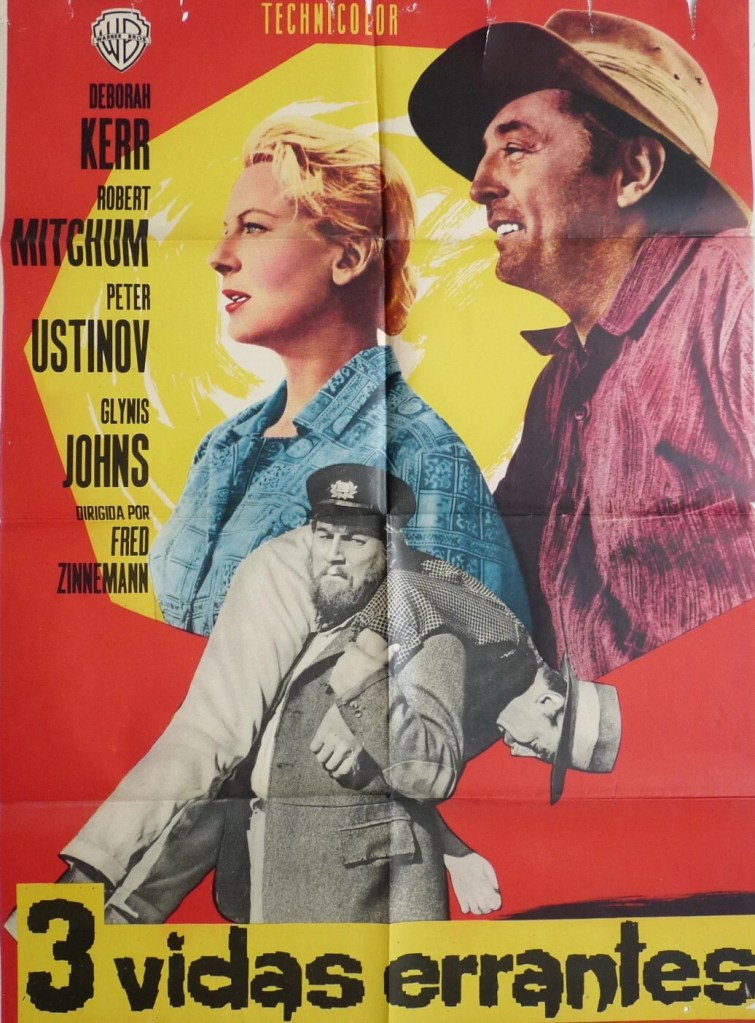
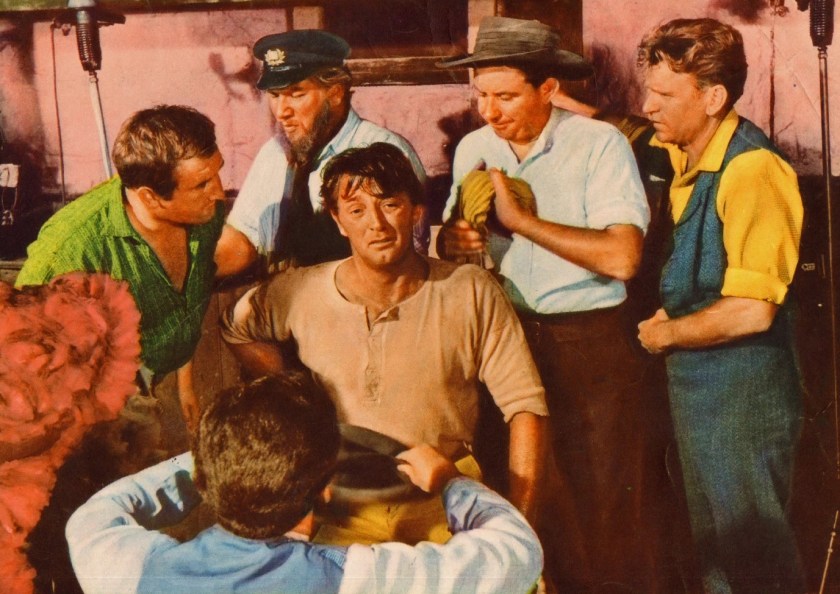
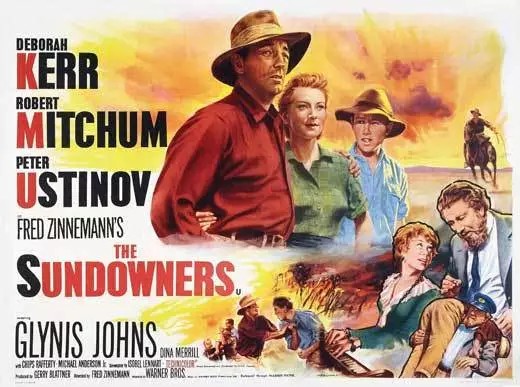
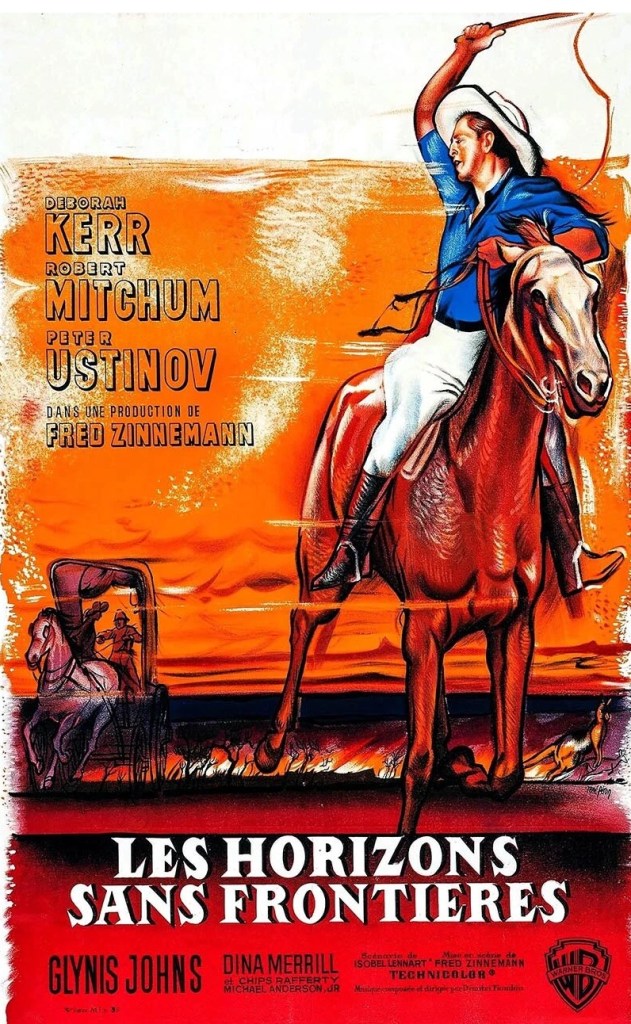
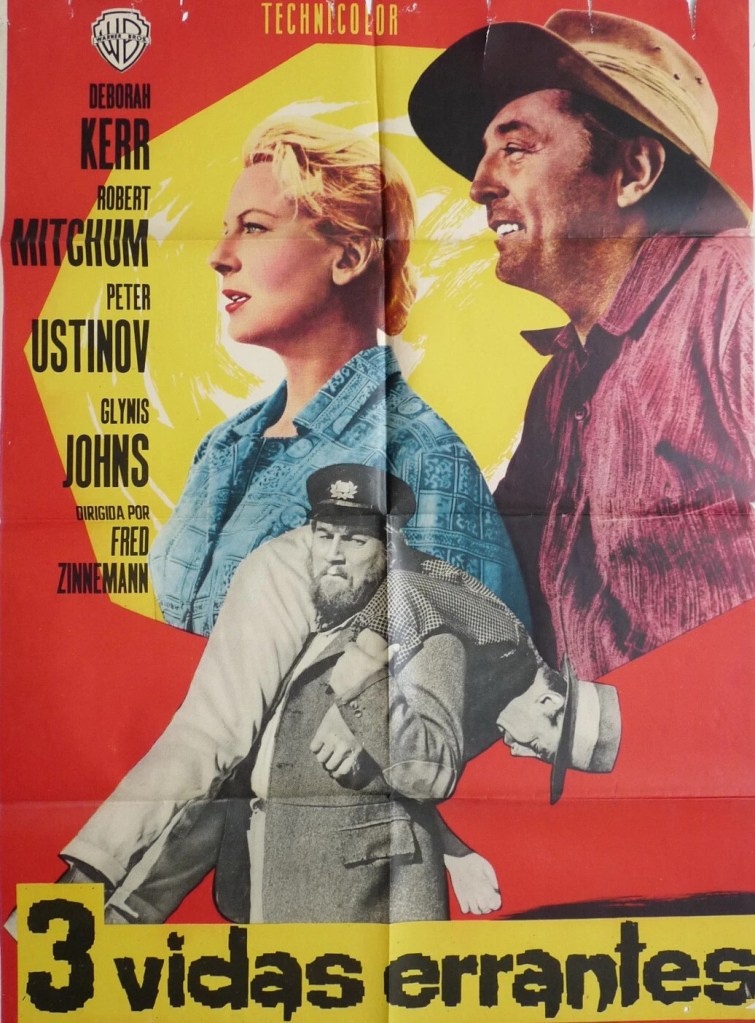
Whereas Deborah Kerr had always been first choice from the moment in 1957 Fred Zinnemann – he had directed her in From Here to Eternity (1953) – announced plans to film the Jon Cleary bestseller about itinerants in the Australian Outback, Robert Mitchum was third choice. Despite having been successfully paired with Kerr for John Huston’s box office hit Heaven Knows Mr. Allison (1957), he was passed over in favor of, initially, William Holden with whom she had starred in the equally successful The Proud and the Profane (1956). When Holden dropped out, he was immediately replaced by Gary Cooper who had scored a big success with William Wyler’s Oscar-nominated Friendly Persuasion (1956)
And rather than Peter Ustinov (Topkapi, 1964) and Glynis Johns (The Cabinet of Caligari, 1962) in the major supporting roles, Zinnemann had hoped to secure the services of Claudette Colbert and Errol Flynn, both of whom had once been substantial box office attractions, though Colbert had been offscreen since Texas Lady (1955) and Flynn’s marquee appeal was spotty to say the least, though he had just signed up John Huston’s Roots of Heaven (1958). That decision was taken out of Zinnemann’s hands by Flynn’s premature death in 1959.
At this point Peter Ustinov was an all-purpose supporting actor and had not appeared in a major Hollywood production in six years but was just about to make a name for himself in Spartacus (1960) while Glynis Johns, at one time a major British star, had lost much of her marquee allure. Kerr and Johns had worked previously on Perfect Strangers (1945) and remained friends.
Nor was Zinnemann first to pounce on the tale. After the novel – based on the lives of the author’s parents – was published in 1952, rights were acquired by producer Joseph Kaufman who commissioned a screenplay from Kay Keavney. But when he failed to secure funding, Zinnemann scooped the rights after being persuaded by Tasmanian-born Dorothy Hammerstein, wife of the lyricist, that Australia would be a great location.
Screenplay duties then fell to Aaron Spelling (Guns of the Timberland, 1960), best known later as an uber-producer in television. After his draft was deemed “unsatisfactory,” he was replaced by Isobel Lennart (Please Don’t Eat the Daisies, 1960), though Zinnemann later claimed that her dialog was “not Australian enough” and author Jon Cleary (uncredited) was called in to solve “these problems.” .
Studio boss Jack Warner wanted Arizona to stand in for Australia but gave in to Zinnemann’s insistence on reality in part because the director had shot the successful The Nun’s Story (1959) in Africa, even though it added $500,000 to the budget. In fact, Warner gave in relatively easily. He understood that “were we to shoot in Arizona,” Zinnemann explained, “it would emerge as a half-assed Western with bars instead of pubs, cowboys instead of sheep-drovers – they move differently, walk and react differently.” It was the first major Hollywood film to be shot there.
In the second half of 1959 the director spent 12 weeks in advance of the stars arriving filming scenery and most of the scenes involving the sheep – 2,000 of them transported 800 miles to the location. Rather than hiring them, Warner Brothers bought them wholesale and afterwards sold them for a profit. Despite their reputation for docility, sheep proved difficult to wrangle. A whole day was lost when the leader of the sheep just decided he would move no further and the entire flock did the same.
The crew was initially based in Cooma, a small town in New South Wales. Second unit camera operator Nicolas Roeg would return to Australia a decade later to director Walkabout (1971). The movie was hit by unseasonal bad weather – heavy rain and hailstones – which added several weeks to the schedule.
“There’s a good deal of Ida in me,” said Kerr, “I can settle anywhere and call it home.” Her second husband, screenwriter Peter Viertel (The Old Man and the Sea, 1958), made life more palatable by venturing out into the backs streets and finding German and Italian makers of foodstuffs and thereafter the stars took turns to cook for each other. “Bob Mitchum had a way with steaks,” noted Kerr, “but we all decided Peter was the best and most imaginative cook.”
It’s worth killing off the canard that Kerr only gained top-billing in this picture thanks to the generosity of Robert Mitchum. In fact, Kerr was by far the bigger star. She had been top-billed in Heaven Knows Mr. Allison ahead of Mitchum, The King and I (1956) ahead of Yul Brynner, Count Your Blessings (1959) ahead of Rosanna Brazzi, The Journey (1959) ahead of Brynner again, Bonjour Tristesse (1958) ahead of David Niven, Tea and Sympathy (1956) and The End of the Affair (1955) ahead of Van Johnson. She only ceded top billing to the likes of William Holden and Cary Grant (An Affair to Remember, 1957). Although many commentators these days assume that Elizabeth Taylor was the top British star of the decade, Kerr was easily her equal and outranked her – five versus two – in terms of Oscar nominations.
In fact, in terms of marquee appeal, Robert Mitchum could not compete with Kerr. Heaven Knows Mr. Allison was his biggest hit since River of No Return (1954) with Marilyn Monroe. The work with which he is most commonly associated, Night of the Hunter (1955), was a flop, and he was in the main reduced to a diet of westerns and war films.
He was more associated with the wrong sort of headlines than box office. His previous film The Night Fighters / A Terrible Beauty (1960) attracted more attention from journalists for his fight in a bar than from audiences. But Zinnemann was a fan and had tried to hire him for From Here to Eternity.
Mitchum’s notoriety went ahead of him and at the airport he was deluged by reporters, most determined to know, for such a renowned hard drinker, what he thought of Aussie beer. He crossed swords with journalists a few days later, complaining that he was misunderstood and nothing like his screen personality. “I’m no tough guy,” he argued, “all the public knows is some silver, chromium-plated jerk. How could they know what I’m really like?” When he pointed out that his marijuana bust had been expunged from the record, one frustrated newspaperman recorded, “He isn’t a jailbird, he isn’t a drunk, he isn’t a brawler.”
Mitchum had no trouble with cast and director. Zinnemann was astounded by the actor’s mastery of the accent, pronouncing it “perfect” and adding “he had the uncanny knack of making any accent sound as though he had been born with it.” Mitchum and Kerr renewed their non-sexual love affair. “It was an honor to feed her lines,” said Mitchum. Zinnemann summed him up, “He has a problem with people who take themselves too seriously.”
But Mitchum was hounded by fans and autograph hunters. An audience gathered to watch him eat in local restaurants, his mood not helped by the solitary confinement imposed when rain prevented filming. One journalist, having inveigled his way into Mitchum’s rented home, was astonished to discover the actor could cook. Jon Cleary sprung to his defense. “Robert Mitchum is anything but a droopy-eyed slob once you get to know him. He is extremely well read and writes beautiful poetry.
When it came to horses, Ustinov was the bigger problem. “He was scared of them and they of him,” said Zinnemann, “and the moment he got in the saddle he would forget all his lines.”
Shooting a bush fire was relatively straightforward since they were a “frequent and devastating occurrence”, so the second unit simply flew near to the area in question, hired a taxi and started shooting. But these fires, fueled by the eucalyptus trees they were burning, moved at terrific speed, jumping along the tops of trees “and scattering their burning fragments fast and wide like projectiles.” But if the fire suddenly switched direction – and it moved at 30 miles per hour – there was a danger, as once occurred, that the crew could be cut off.
When the unit headed for Port Augusta in the south, it was a 45-minute commute to the sheep station at Iron Knob where many scenes were shot. Mitchum had had enough of being an object of curiosity and chartered a luxury cruiser, although he was still fending off young ladies who took to swimming out to the boat.
There was little scenic in the journey to the location. “The dust flew along the whole road,” said co-star Dina Merrill, and Mitchum was taken aback by the size of the sheep and found daunting the task of shearing a 400lb Merino sheep in one go. One mistake and you could cut into a vein and the animal would bleed to death. Mitchum relied on Dutch courage. Interiors were filmed in the more hospitable atmosphere of a London studio. There was an unwelcome sting in the tail for Mitchum – he was sent a tax demand from the Australian authorities which he refused to pay.
Although Jack Warner had given his assent to the overseas shoot, he was incapable of directing the advertising department to produce a poster that didn’t focus on the notion that this was the frisky Deborah Kerr of From Here to Eternity, “a highly-sexed lady who could harldy wait for the sun to go down so she could lay her hands on Bob.” Audiences were naturally disappointed when the projected love affair failed to materialize.
While the critics were generally in favor of the movie and audiences in the U.S. big cities responded well, its attraction faded as it set out across the U.S. However, it did better abroad and not surprisingly was a massive hit in Australia. Mitchum and Kerr re-teamed for Stanley Donen comedy The Grass Is Greener (1960) – with Kerr again billed before Mitchum.
SOURCES: Eric Braun, Deborah Kerr (WH Allen, 1977) pp173-177; Lee Server, Robert Mitchum, Baby I Don’t Care (Faber & Faber, 2001) pp422-429; Fred Zinnemann, An Autobiography (Bloomsbury, 1992) pp173-183.
I kept waiting for Deborah Kerr to turn up and it was a good 20 minutes before I realized that the actress had so immersed herself in the dowdy Ida Carmody that she was turning in what would be recognized as an Oscar-nominated performance. I was less convinced by Robert Mitchum’s Oirish accent but after a time, he, too, buried his normal screen persona under a feckless wanderer. And I was expecting some meaningful point-making stuff from director Fred Zinnemann given he had nursed home such purposeful features as High Noon (1952), From Here to Eternity (1953), A Hatful of Rain (1957) and The Nun’s Story (1959) and would soon be heading back in that virtue-signalling direction with Behold a Pale Horse (1964) and A Man for All Seasons (1966). However, like Day of the Jackal (1973), though for other reasons, this is very much an outlier in the Zinnemann portfolio.
It’s groundbreaking work from the stars. In the first place, Deborah Kerr does the unthinkable for a star of her magnitude – five Oscar nominations so far and a string of hits including From Here to Eternity, The Proud and the Profane (1955) opposite William Holden, The King and I (1956) top-billed ahead of Yul Brynner, An Affair to Remember (1957) opposite Cary Grant and Heaven Knows, Mr Allison (1958) leading Robert Mitchum a merry dance. Here, she is shorn of make-up. Her freckles are everywhere and her cheekbones look as if they are there from hunger not for reasons of fashion. These days, that down-to-the-wire approach would suggest an actress desperately trying to revive her career – Demi Moore in The Substance (2024) or Pamela Anderson in The Last Showgirl (2024) – rather than a star at the top of her game.
Robert Mitchum, too, dumps his screen persona, and provides his most relaxed and naturalistic performance.
The story is pretty straightforward. Ida wants to settle down, husband Paddy (Robert Mitchum), a born drifter, does not. Paddy enjoys drinking and gambling and wandering through the Australian Outback and ekes out enough as a drover to keep them solvent. The plot, therefore, is episodic. But what could have been a series of loosely-linked sequences is held together by a concentration of the reality of an existence revolving around sheep – droving, shearing, rearing – and trundling along in a horse-drawn caravan, putting up a tent at night, cooking over an open fire, other aspects bordering on the primitive. You can be sure that every minor triumph will be torpedoed.
You could be forgiven for thinking that Wyler had set out to make a western what with the preponderance of sweeping location. Make it sheep instead of cattle and you have Red River (1948) in a minor key with the usual shenanigans once the drover makes his destination.
Livening up proceedings are equally responsibility-resistant itinerant Rupert Venneker (Peter Ustinov), whose more basic skills including pugilism belie his posh accent, and innkeeper Mrs Firth (Glynis Johns) who makes a good stab at trying to hold onto him.
The bulk of the emotion plays through the eyes of Ida, desperately trying to save up enough money to buy a house. A bushfire that temporarily separates the couple unexpectedly acts to strengthen their relationship. While Ida is helping deliver a baby, Frank is getting roaring drunk. The tension between the pair is also a metaphor for growing civilization out of a wilderness, the men who tamed the land becoming redundant, a new educated class taking over. Ida wants to be settled to provide her ambitious son Sean (Michael Anderson Jr) with an education as much as she doesn’t want to be a traveller in her old age.
Offers much about a civilization in the making still relying on the old-timers to put in the hard yards while the guys doing all the work don’t have the sense to seek greater or more stable reward. What’s life if it doesn’t go wrong once in a while? Freedom is its own reward. As Paddy points out, he has no restrictions, the entirety of Australia is his bailiwick.
Wyler makes much of what he’s got, the tensions between the couple undercutting the strength of their affection for each other, and just when it looks as if Ida has got her way Paddy manages to cut loose and destroy her dreams.
There’s drama a-plenty, not just the terrifying bushfire, but a pretty engrossing horse race or two. Paddy’s idea of heaven is to hold court in a saloon singing old Irish songs. Sometimes Ida has little but heartbreak to nurse her along.
And while the various episodes make it a tidy drama, really it’s what one critic described as “a no-story movie – an observation of life” and in that regard more concerned with fallibility and vulnerability. Had it been made by a European director, it would remain one of the most talked-about movies of the decade.
Wyler keeps up a tidy pace. Deborah Kerr (The Arrangement, 1969) steals the show and her peers agreed, putting her up for an Oscar, but it was a close-run thing because Glynis Johns (The Cabinet of Caligari, 1962) was also nominated. Peter Ustinov (Topkapi, 1964) was equally impressive, as was Robert Mitchum (El Dorado, 1967). Wyler was also nominated as was screenwriter Isobel Lennart (Fitzwilly / Fitzwilly Strikes Back, 1967) adapting the Jon Cleary bestseller.
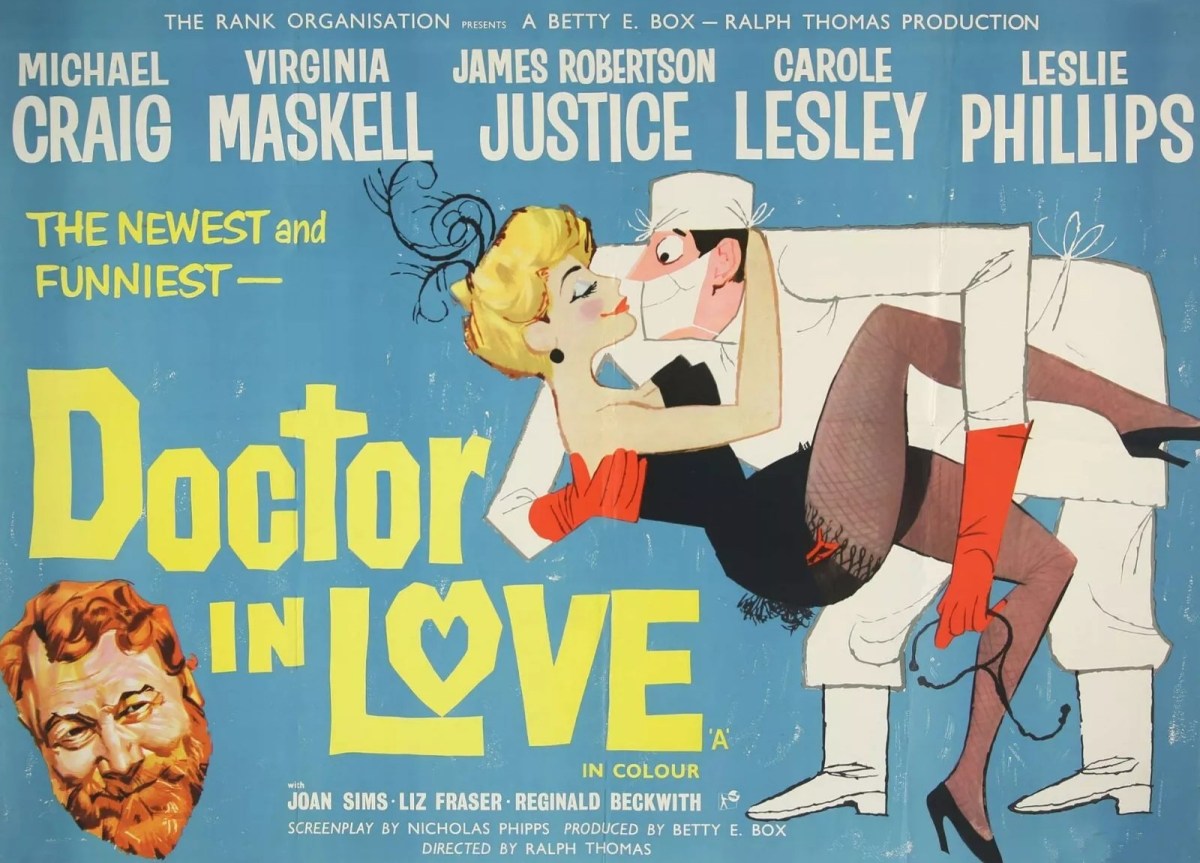
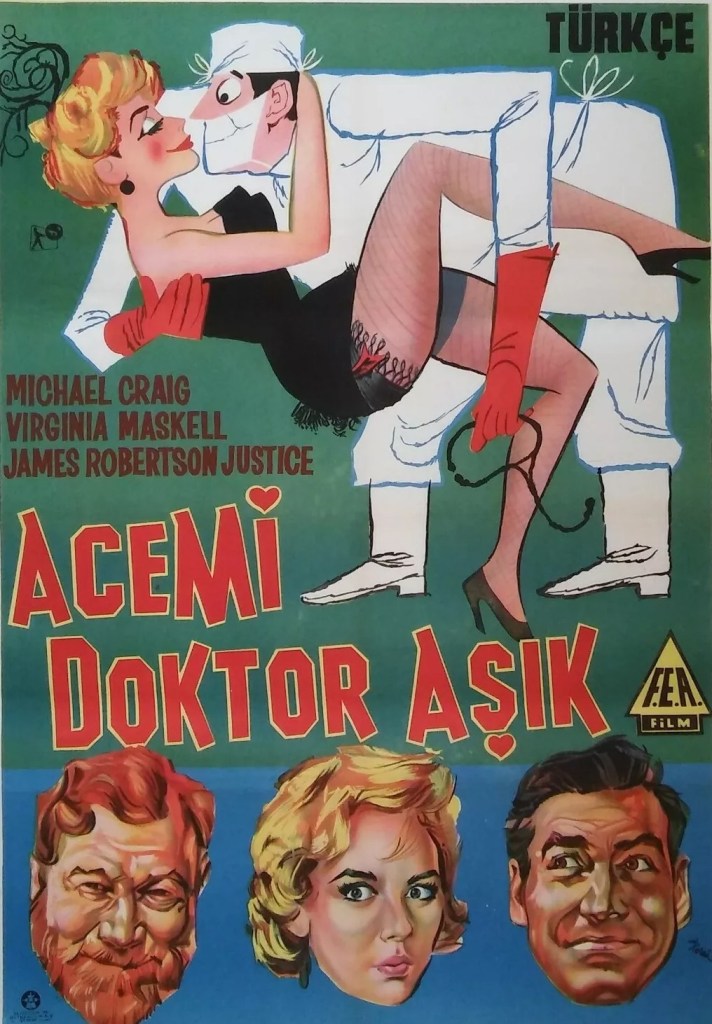
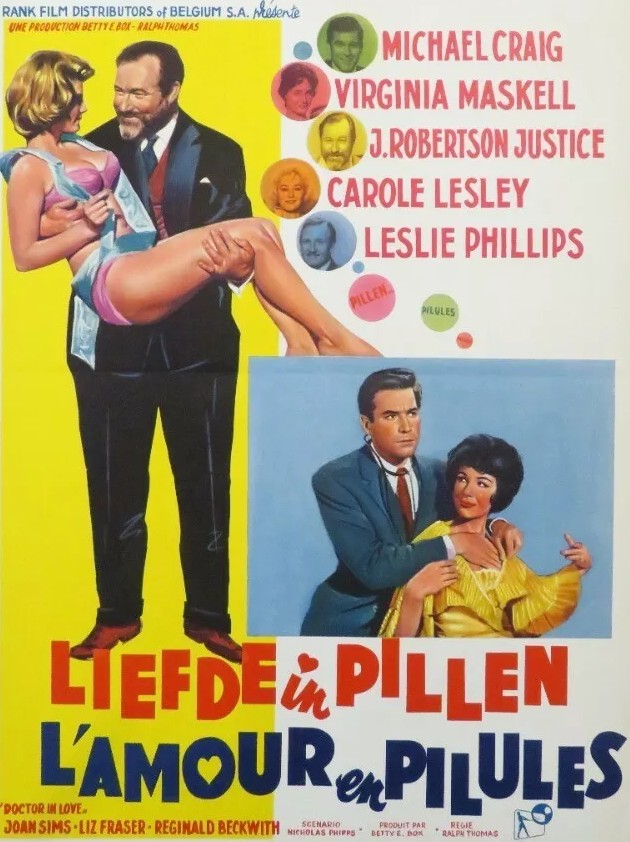
Chortled all the way through. You can see why it was the biggest film at the British box office in 1960. Dirk Bogarde had turned up his nose at repeating the character for the fourth time and went off to make more serious pictures like Victim (1961) which, it transpired, dented his box office appeal. Replacement Michael Craig (Mysterious Island, 1961), while brawnier, passes this particular screen test with flying colors though he has his work cut out to hold his own against such practised scene stealers as James Robertson Justice (Mayerling, 1968) and Leslie Phillips (The Fast Lady, 1962) and once Virginia Maskell (The Wild and the Willing, 1962) enters proceeding her coolness makes the camera her own.
I was surprised how much this relied on innuendo. But this is a gentler exercise in smut than the sniggering guffawing Carry On approach. And there’s little chance of it descending into misogyny since the females hold all the aces. The plot is episodic and none the worse for that and even a diversion into a strip club, which might suggest a narrative clutching at straws, proves a surprising highpoint.
Basic story shifts Dr Hare (Michael Craig) out of hospital and into general practice which provides ample comedic opportunity via patients and colleagues. But, first of all, just to confuse matters and as if the producers were worried the series might not survive outside the boundaries of St Swithins Hospital, the tale begins with him returning to hospital with what turns out to be jaundice.
Cue the booming interventions of Sir Lancelot Spratt (James Robertson Justice) and the first of the love stories wherein Hare and Dr Hinxman (Nicholas Parsons) are rivals for flighty Nurse Sally Nightingale (Moira Redmond), who, in the first of many knocks to the male ego, while playing off one against the other goes off with another man. Before she does, Dr Hinxman takes revenge by prescribing all sorts of medications which will leave Hare so indisposed he is unable to respond to the nurse’s ardor.
Back in civvy street, as a GP, Dr Hare has to fend off predatory female patients and secretary Kitten Strudwick (Carole Lesley) and deal with standard comedic issues such as the boy who gets his head jammed in a cooking pot and the less common task of explaining the facts of life to a 40-year-old virgin. His boss Dr Cardew (Nicholas Phipps) is under the thumb of a wife who has shipped out to California only to summon her husband every now and then. The ever-amorous Dr Burke (Leslie Phillips) fills in and is the prime mover in an episode that involves strippers Dawn (Joan Sims) and Leonora (Liz Fraser). There’s a particularly good reversal in a drunken scene where the totally inebriated Wildewinde (Reginal Beckwith) completes all the police drunk tests (if that’s what they’re called) with ease.
When Dr Burke is incapacitated, his place is taken by Dr Nicola Barrington (Moira Redmond). And that should have been enough of a plot to see the picture through but the movie doubles down on complication. Dr Barrington fends off Dr Hare and when Nurse Nightingale reappears Barrington in due course quits. Dr Spratt is also on board for further scene-stealing duties including ruling the roost in a strip club and undergoing an operation.
The romantic situation is resolved, Dr Spratt is put in his place temporarily and our hero effects a return to the hospital.
I wouldn’t say the writing (by Nicholas Phipps) is of the highest caliber but the jokes come at an assembly line pace and the cast are superb, barely a cast member incapable of stealing a scene. You hire James Robertson Justice and Leslie Phillips at your peril. Without Dirk Bogarde hogging the scenery, this flows much better than others in the series, with the supporting cast being more than just foil to a star who was a major box office attraction at the time. And it helps that the women – Moira Redmond (Nightmare, 1964), Virginia Maskell, Carole Lesley (Three on a Spree, 1961), and Carry On regulars Joan Sims and Liz Fraser – are even more adept at scene-stealing than the men and not merely foil for misogynist jokes as in the Carry On series.
Director Ralph Thomas (The Wild and the Willing) seems to have found a new lease of life without having to deal with Dirk Bogarde and brings a certain verve to proceedings, especially in tripping up male ego.
Comedy is such an odd one to judge. Many a time I have sat through with scarcely a titter movies I’ve been told are hilarious. Other times I’ve been told to give them a free ride because they are making a point. So I stick to my own rule.
Make me laugh – I don’t care how – and this had me laughing all the way through.






 The Magnificent 60s