Behind the Scenes: “The Man Who Haunted Himself” (1970) – The British Are Coming, Part One

The Man Who Haunted Himself (1970) appeared as part of new British production strategy. In fact, the British had been trying to dominate the global film industry since the silent era when  the population of its Commonwealth exceeded that of the United States. At various points, the British had launched various distribution attacks on Hollywood – aligning with U.S. cinema chains, organizing their own distribution system (Gaumont-British in the 1930s for example) and even taking over major Broadway houses as a launch platform for new releases. Come the end of the 1960s , Britain had lost its production grip on the world stage. Though movies were still being made in Britain they were often funded by Hollywood, or were B-movies or genre-specific such as Hammer horror.

In 1969, Associated British Picture Corporation, following a takeover by EMI, relaunched as a major production entity, aiming to provide increased programming for its own 270-strong ABC cinema chain as well as hitting the export market. Bernard Delfont, chairman of ABPC, set up two production strategies that he intended to run in parallel. He brought in director Bryan Forbes (King Rat, 1965) as production chief of ABPC while Nat Cohen, head of ABPC subsidiary Anglo-Amalgamated, would augment that effort.
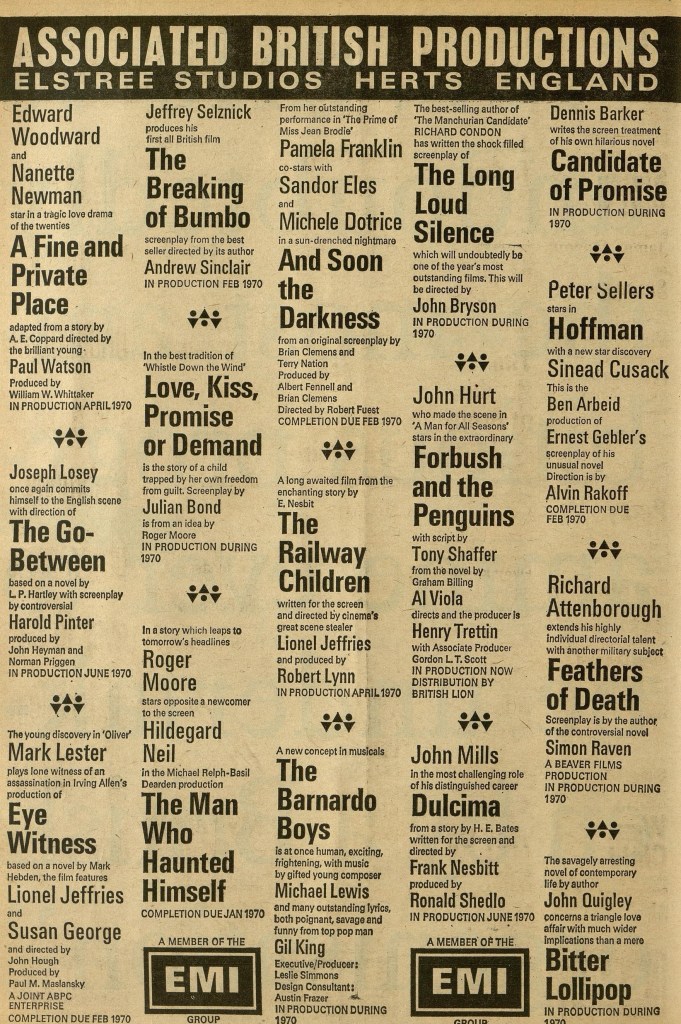
Full page ads (above and below) were taken in “Variety” to promote the MGM-EMI slate.
Of the 26 features planned, only 15 were made.

Forbes took on the role after initially signing a three-picture deal with Delfont which developed into “something wider…at a time of real crisis.” Forbes explained his motivation: “I think if you’ve been a critic as I have over the years…you’ve got to put up or shut up. And if the job is offered to you, you can’t turn it down and then go on criticising.”

The initial slate was being made with no guarantee of foreign distribution. Even getting a foothold in Britain was difficult. “We are very dependent…on getting West End outlets. There’s a long queue and we don’t have any particular pull.”

(In Britain at this point, roadshow – which to a large extent was no longer the favoured release device for big budget pictures in the U.S. – still dominated the West End and the type of picture being envisaged was more targeted towards the circuit. But a West End run was always seen as a mark of quality. The downside of the West End release was that it delayed movies reaching the provinces and by the time they did all the initial media interest was long forgotten.)

Budgets were being assessed to meet the prospect that a very successful film could recover its negative costs on a British release alone, with anything else pure profit. Trying to appeal to the international and/or U.S. market at the outset was too complicated and expensive a proposition. And there was always the prospect that with the production well running dry in American, that a distributor, with a hole to fill, would come calling.
ABPC allocated a total budget of £36 million to make 28 pictures, with Forbes’ outfit taking the lion share, leaving Nat Cohen only $7 million to make 13 movies. According to Delfont, it was the “most ambitious” program ever scheduled by a British company. While certainly an overstatement given the investment by Rank, ABPC and Gaumont-British in the past, it nonetheless captured media attention.

The Forbes project didn’t go according to plan. Hoffman (1970) with Peter Sellers, thriller And Soon the Darkness (1970), The Man Who Haunted Himself (1970) starring Roger Moore, The Breaking of Bumbo (1970) and Mr Forbrush and the Penguins (1971) headlining John Hurt and Hayley Mills all flopped, despite costing a lot less than originally expected. The Railway Children (1971) was the only undeniable hit while The Tales of Beatrix Potter (1971) made a profit. Raging Moon / Long Ago, Tomorrow (1971), with Forbes directing Malcolm McDowell and Nanette Newman, and Dulcima (1971) with John Mills and Carol White also ended up in the red. 

Forbes fared much better heading up MGM-EMI, a co-production unit set up in 1970, which produced hits The Go-Between (1971) and Get Carter (1971). Forbes resigned in 1971.

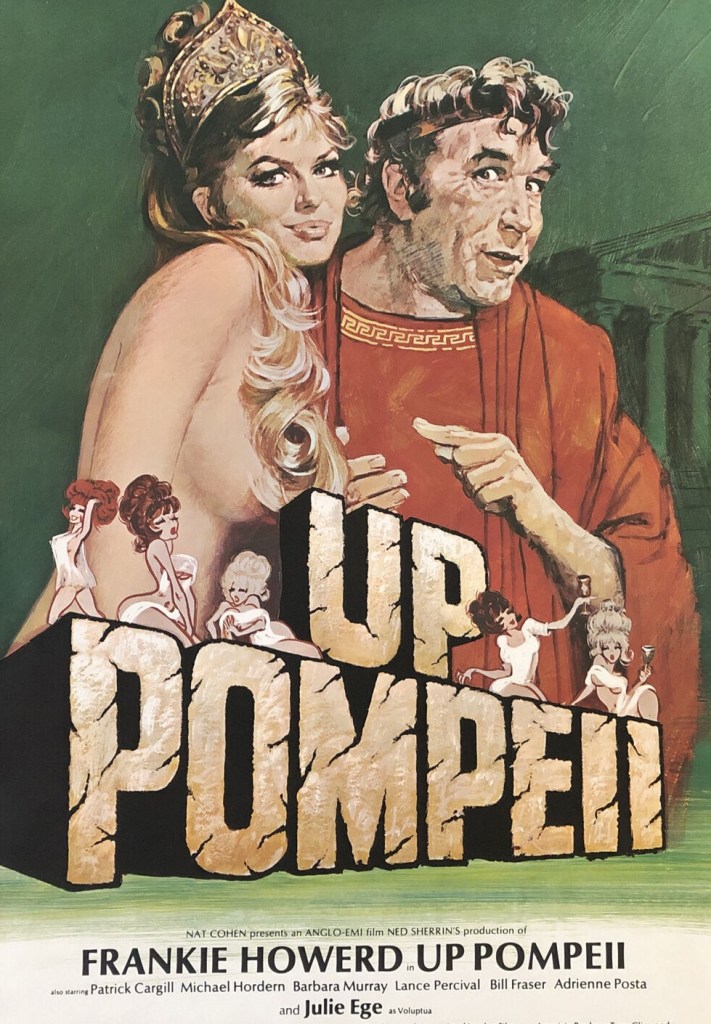
Nat Cohen, while pandering to a lower common denominator, enjoyed more straightforward success with sex-change comedy Percy (1971), and big screen versions of On the Buses (1971), Up Pompeii (1971) and Steptoe and Son (1972) – and their various sequels –  Richard Burton as Villain (1971), Fear Is the Key (1972), and Stardust (1974) while Murder on the Orient Express (1974) with an all-star cast was a huge global hit.

In 1976 Michael Deeley and Barry Spikings became joint managing directors of EMI and aiming for an international audience fronted part of the finance for The Deer Hunter (1978), Sam Peckinpah’s Convoy (1978) and Walter Hill’s The Driver (1978) and had significant investment in Columbia pictures like Close Encounters of the Third Kind (1977) and The Deep (1977).

But the British invasion amounted to very little in the end, as Hollywood, led by gargantuan hits of The Godfather (1972), Jaws (1975) and Star Wars (1977) swept all before them and made it impossible for British-made films to compete either on a commercial or artistic basis.

The experiment was a massive flop. EMI failed to break into the American market and, in fact, the box office achieved was on the dismal side. Best performers were Get Carter and The Go-Between both estimated to achieve rentals of just under $2 million. Tales of Beatrix Potter didn’t reach $1 million and Villain not $750,000. The Railway Children couldn’t manage $500,000 nor Percy $250,000 and none of the others even crossed the $100,000 mark. It was considered such a footnote in British movie history that it didn’t merit a mention in Sarah Street’s Transatlantic Crossing, British Feature Films in the USA (Continuum, 2002).

SOURCES: Alexander Walker, Hollywood England, (Orion paperback, 2005) p426-440; Advert, Variety, January 21, 1970, p12-13; Derek Todd, “The Emperor of Elstree’s First 300 Days,” Kine Weekly, March 7, 1970, p6-8, 19; “MGM-EMI In Joint Deal On British Filmmaking,” Box Office, April 27, 1970, p7; “MGM Setting EMI CoProds,” Variety, June 10, 1970, p3; “MGM-EMI To Produce 12 Films Annually,” Box Office, July 6, 1970, p6; “From $10-Mil and Up, Rentals, to $100,000 and Less,” Variety, November 12, 1972, p5.
Behind the Scenes: The Circuit Breaker Busts the Release System

Every country followed a similar system. Unlike nowadays, new movies would first be released on the biggest cinemas in the biggest cities. Only after the hullabaloo of premieres and publicity in national newspapers did the films move into the bread-and-butter of the release pattern, appearing for a given week on the circuits. Britain had two main circuits, ABC and Odeon, both of whom, unlike their counterparts in the USA, were permitted not just to exhibit movies but to make and distribute them.

In the UK at the start of the 1960s, regardless of how well new movies had done in their opening salvos at the super-cinemas, they were allocated just one week on the circuit. In retrospect, it seemed a weird notion that a big-budget Hollywood movie would be given the same amount of time to sell tickets as a cheaper home-grown product. Even more basic, that demand was automatically limited. Unlike now, a cinema could not hold onto a hit film for as long as it wanted, because the print was already assigned another cinema in another locale. And there was no way of bringing back a hit for a second go-round until years later.

The release system began to change with the introduction of the roadshow, when 70mm movies showing twice a day at increased prices would run for at least a “season” (13 weeks) and could respond to demand by playing for much longer. Following their roadshow run, such films would be fed, at a later date, into the circuit system.

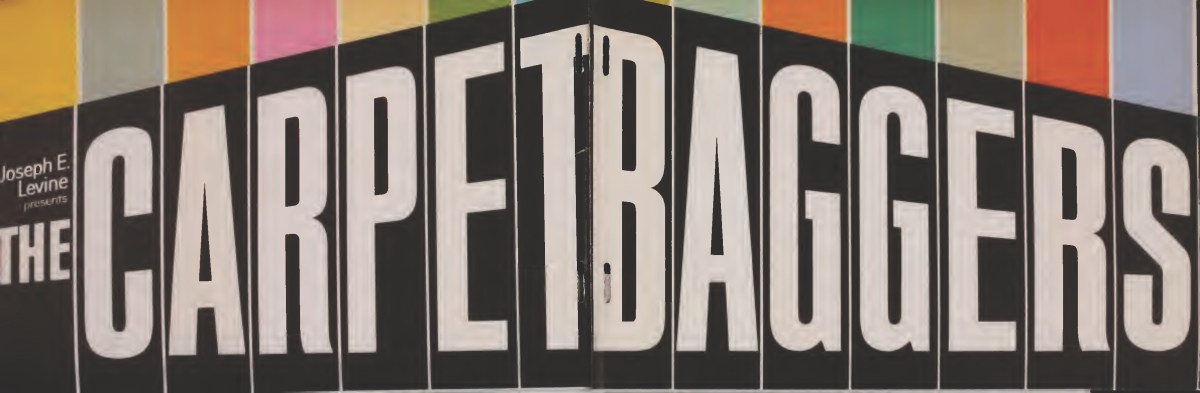
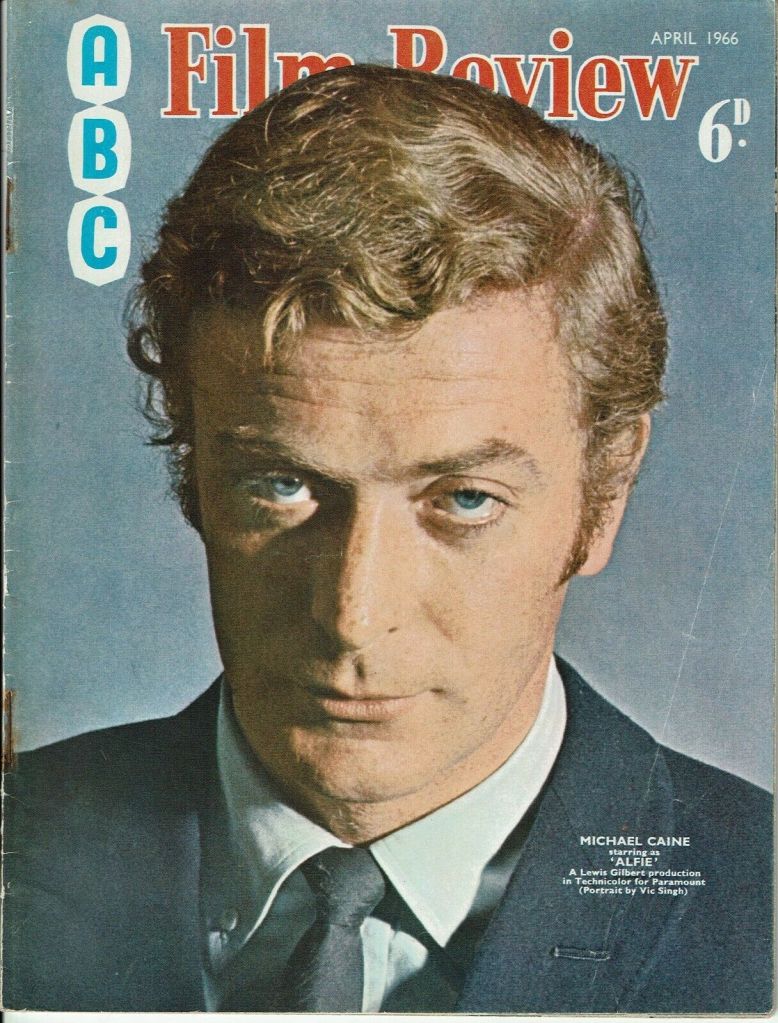
But in 1964, there was the beginnings of a shift on the ABC circuit. Towards the end of the year, instead of the traditional one-week circuit run, The Carpetbaggers, not a contender for roadshow despite its 150-minute running time, was shown for two weeks.  But that proved an isolated incident. It was another two years before ABC repeated the experiment, courtesy of  Alfie starring Michael Caine.

The following year the first two months saw four films go down the same route, Oscar-winning musical My Fair Lady which had been road-shown a couple of years before, Hayley Mills drama The Family Way, The Dirty Dozen, also a roadshow hit, and Bonnie and Clyde (a flop in the USA).

In addition, the circuit had learned to re-evaluate earlier hits. At that point a revival/reissue only made a second showing in the UK about 7-10 years after initial release. But in 1967, just three years after it proved to be a colossal box office success in the UK (it flopped in the USA despite an immense marketing campaign), Zulu was given another week on the circuit, this innovation adding a new dimension to the circuit release system.

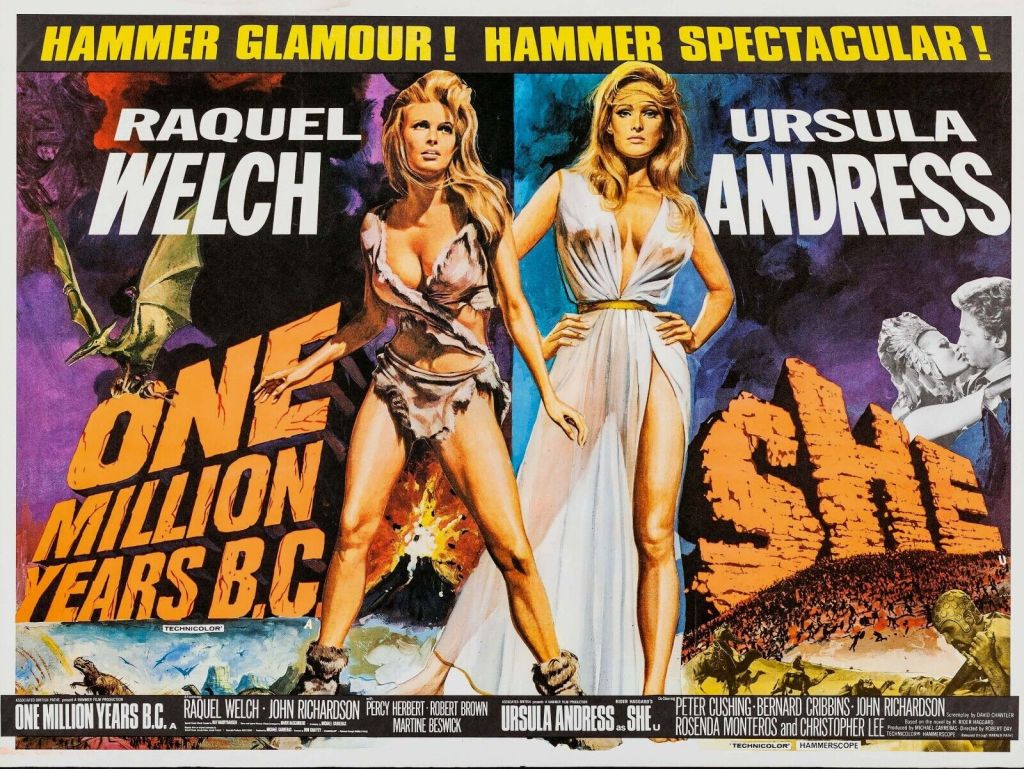
In fact, The Dirty Dozen was afforded yet another week on the circuit in 1968 – in effect, counting the roadshow and the initial circuit release, the public was accorded three opportunities in a very short space of time, The following year One Million Years B.C. (1966) starring Raquel Welch and She (1966) starring Ursula Andress were double-billed in a reissue.

But whether the two-week window had proved a complete success was open to doubt because such clear-cut hits as Bullitt and The Italian Job were only granted one week to make an impact on the circuit box office. In 1969, the circuit had so misjudged the box office potential of Till Death Us Do Part, a movie version of the popular British television comedy series, that it was initially scheduled for a one-week run. But it was such a blockbusting success that ABC tore up its release calendar and slotted it in for a further week two weeks later.

Growth of the multiplex meant big films could be retained for much longer on the biggest houses, switching between two or three or four individual cinemas until demand was deemed fully drained. No longer did a circuit release mean that release dates for the suburban part of the release were set in stone, an approach guaranteed to force the main city center cinemas to remove from its screens a movie that still had pulling power and at higher prices.

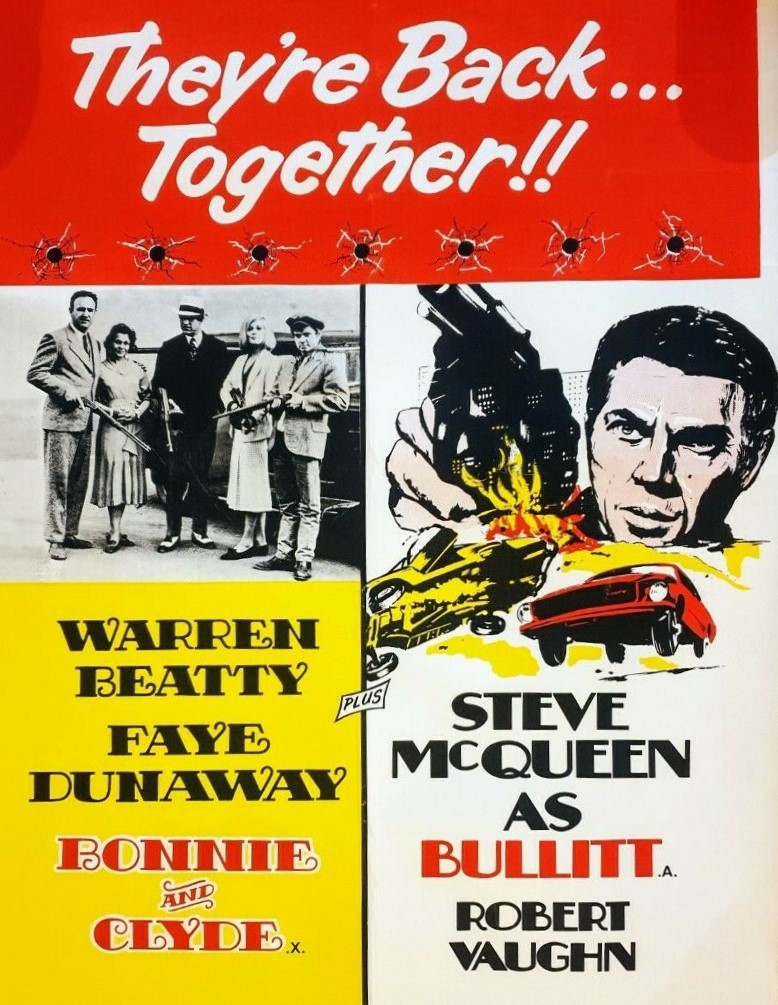
But any kind of change to the circuit release system remained minimal. In 1970, only two movies, Where Eagles Dare, a monumental success when road-shown (a release option denied in the USA), and the home-grown Women in Love were provided with a two-week circuit platform though Bullitt doubled with Bonnie and Clyde made a speedy return as a reissue.

In 1971, a pair of British comedies Percy and Up Pompeii, both made by EMI which had taken over the ABC circuit, were given the two-week treatment. But like Till Death Us Do Part, revisionist western Little Big Man was allocated another week over a month after its initial showing. The Dirty Dozen returned yet again.

In 1972, the circuit introduced unveiled another release strategy called variously a “selective release” or a “pre-release.” This meant, in effect, that in major suburban cinemas, the biggest new pictures would be given two bites of the cherry. A Clockwork Orange and The Godfather were both deemed worthy of a one-week “selective” release with a second week factored in for the following year in what was deemed a “full release.”  A version of roadshow was already in place for both these movies and in the main cinemas in big cities these were retained for a considerable amount of time.

In 1972 there were also re-runs for There’s a Girl in My Soup, Zulu and Paint Your Wagon (a bigger roadshow success in the UK than the USA). But the following year saw a whole wave of reissues beginning with The Ten Commandments (1956) followed by Dirty Harry/Klute (both 1971), The Wild Bunch (1969), Love Story (1970), Coogan’s Bluff (1968)/ Play Misty for Me (1971) while Gunfight at the OK Corral (1957) supported the new Friends of Eddie Coyle.

In 1974, The Sting and Airport 1975 went down the new “selective” plus normal release pattern, enjoying one week in each phase, while Blazing Saddles and The Exorcist received a two-week send-off from the start, Fear Is the Key (1972) was revived to support another television spin-off Holiday on the Buses.

Towering Inferno in 1975 ran for three weeks, the first qualifying as “selective” system but the others two weeks shortly after. But there was another development with Jaws which went out first as “selective”, then a week in “pre-release”  and its third appearance on the circuit deemed a “full release” turned into an extended run. But the “selective”/”full release” of Death Wish, Mandingo,  and Murder on the Orient Express comprised only two weeks. Lisztomania looked set to join the exclusive club but instead of going out on the full release some weeks later it was restricted to a single “selective” week, suggesting it had not fulfilled expectations first time round.  The Godfather Part II also managed two weeks but not sequential, the second week deemed a “re-run” six weeks later. Where Eagles Dare and David Essex duo That’ll Be the Day (1973)/Stardust (1974) were reissued while Uptown Saturday Night (1974) was revived in support of Inside Out. Gone with the Wind (1939) enjoyed another reissue in 1976 as did Zulu and Freebie and the Bean (1974)

In 1977 “pre-release” replaced “selective” as the preferred jargon and was applied to King Kong, Airport 77 and Rollercoaster but in these instances amounted to a total of two weeks counting the later full release. By contrast, When the North Wind Blows and The Eagle Has Landed  enjoyed a straight two-week release.  Ben-Hur (1959) was reissued as were Jaws (1975), The Sting (1973), The Godfather (1972), Clint Eastwood double bill The Outlaw Josey Wales (1976)/Magnum Force (1973) and television spin-off duo All Creatures Great and Small (1977)/It Shouldn’t Happen to a Vet (1976).

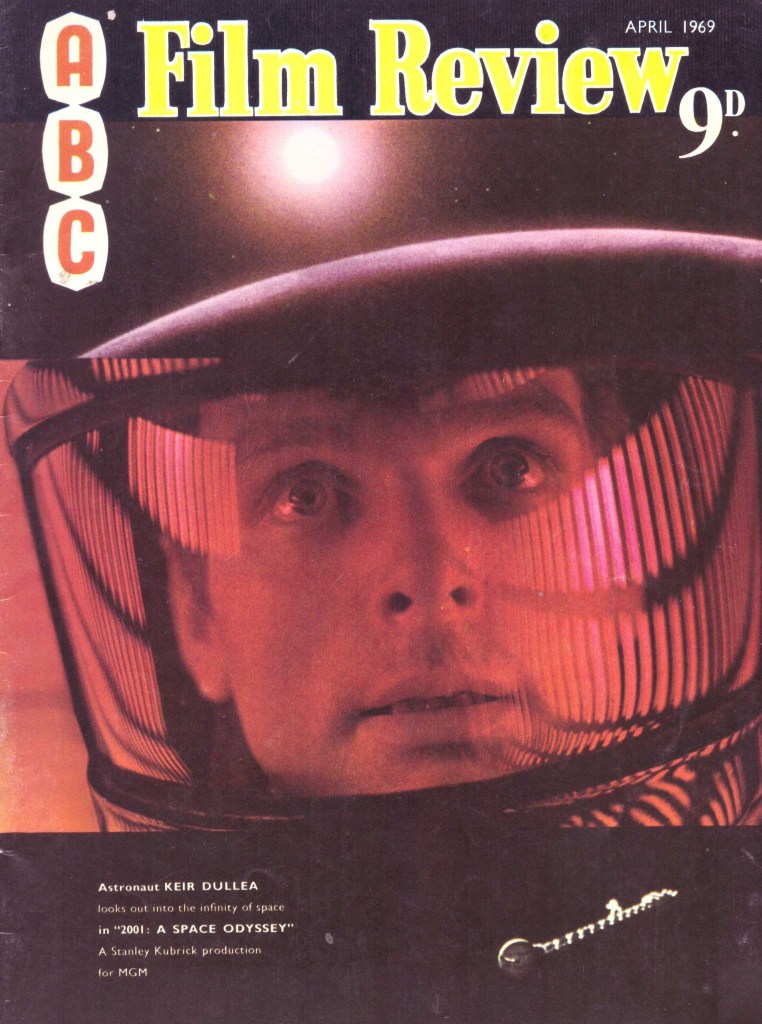
In 1978, 2001: A Space Odyssey (1968) and Jesus Christ Superstar (1973) entered the reissue market along with  revivals of Enter the Dragon (1973)/Death Race 2000 (1975). Charles Bronson western Breakheart Pass (1976) returned  in  support to Michael Caine thriller The Silver Bears, The Car (1977) to Full Circle, Paper Moon (1973) to House Calls and the ribald Adventures of a Taxi Driver (1976) to The Other Cinderella.

However, by this time, the big city center cinemas had begun holding on to major releases for such inordinate lengths of time that they were virtually played out by the time they reached the suburban circuit houses so there was little reason to insist on those cinemas retaining them for two or three weeks. None of the ABC chain’s top hits of the year – including the likes of Saturday Night Fever, Grease and Watership Down – played more than one week when they entered the circuit release.

By 1979 the “selective” and “pre-release” idea and the two-week booking was gone. But the following previous hits were re-cycled: Superman: The Movie (1978), The Goodbye Girl (1977), The Getaway (1972),  The Towering Inferno (1974), the inspired pairings of Blazing Saddles (1974)/Monty Python and the Holy Grail (1975) and Convoy (1978)/Sweeney 2 (1978). More obvious was the dualing of Peter Cushing duo The Ghoul (1975) and Legend of the Werewolf (1975).  Clint Eastwood was back on support duty, The Enforcer (1976) helping out new Boulevard Nights, The Eiger Sanction (1975) bolstering John Travolta romance Moment to Moment while The Land That Time Forgot (1974) boosted to The Brink’s Job.

But by the start of the new decade,  there was little differentiation between a major cinema in a city center and the rest, a new movie, in order to take advantage of advertising, either running for months in the one locale, and sucking the commercial meat out of a movie, or going much wider from the off rather than settling down in any one place for an exclusive run. Though the saturation that’s common today was still a long way off, movies still inclined to be released in regional bursts to save on prints, the circuit business had come a long way in two decades.  

What a Product Shortage Really Meant

The product shortage is nothing new, ask the exhibitors who survived the turbulent 1960s, a decade bookended by studio financial turmoil. Already suffering from a downturn in production thanks to audiences preferring television, the business was hit by the double whammy in 1960 of the Actors Strike and the Writers Strike, which forced an unwanted hiatus on movies already in production, cut short some shooting schedules and removed others not yet in front of the cameras. For exhibitors it rendered the “shortage more acute than before.”

That resulted in the biggest cinemas in the biggest cities holding on to the biggest movies for longer. Smaller cinemas, starved of product, had no such easy fall-back. Since studios were often at war with cinemas anyway, any crisis involving production raised tempers, each blaming the other.

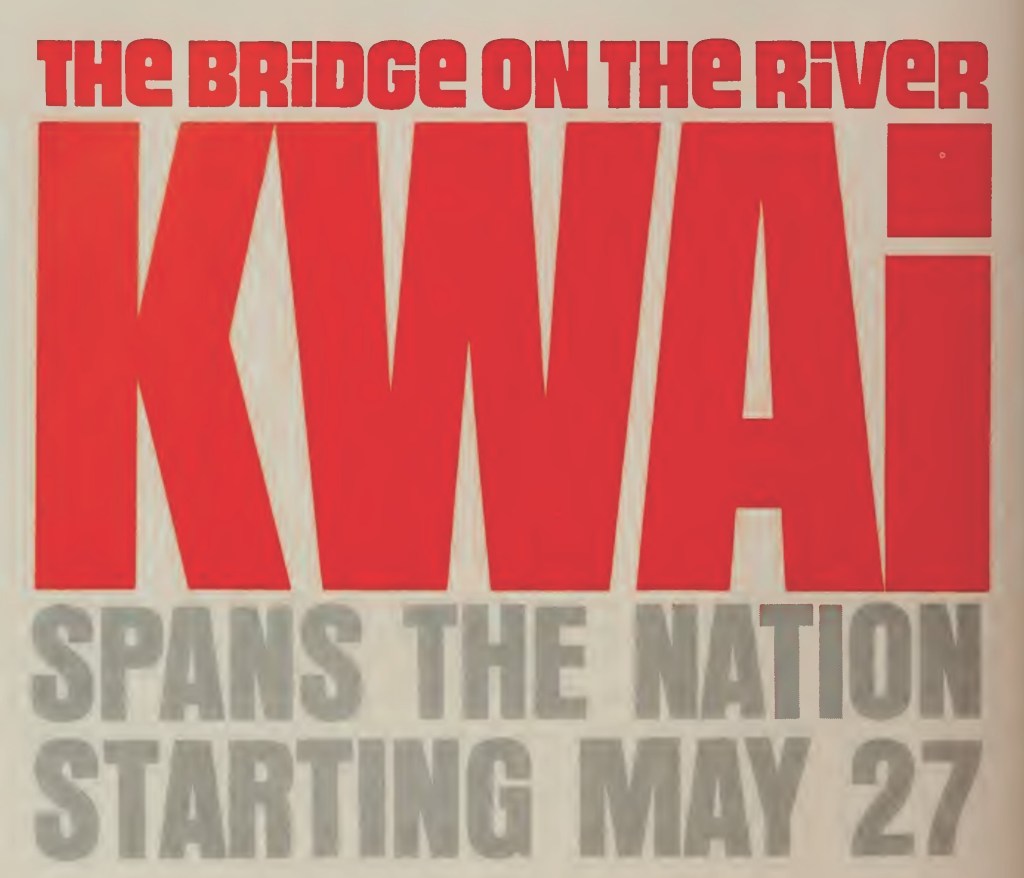
Spans the nation “again” this ad fails to mention.

Exhibitors claimed the shortage would be eased considerably if studios made more prints available of popular movies, rather than rationing their distribution, making cinemas wait longer in order to squeeze more money out of every layer of the food chain. Distributors (i.e. the studios) retaliated that cinemas themselves were to blame for the logjam that stifled the opening of new movies and therefore created a shortage further down the line. By retaining  pictures for months, they prevented new movies entering the distribution system. “Theaters aren’t available for top product at a time when film companies are looking for outlets.”

Reissues which might have offered a solution were not considered the guaranteed source of income they would be after the James Bond revival bonanza kicked in mid-decade after Dr No/From Russia with Love. Richard Lederer of Warner Bros blamed cinemas – “refusing to yield additional coin” – for old movies ending up on television in the first place.

Others argued that television screening was incidental. RCIP Corp took a lease on films already shown on television, such as Republic oldies Wake of the Red Witch (1948), Rio Grande (1950), and The Quiet Man (1952) and positioned them to play a role in filling in, tacked on as the support to a new film, presented as matinees or occasionally topping a bill at the start of the week. Using oldies in this fashion allowed cinemas to retain the traditional twice-weekly change, and some cinemas just went the whole hog and put together an entire month’s program of reissues.

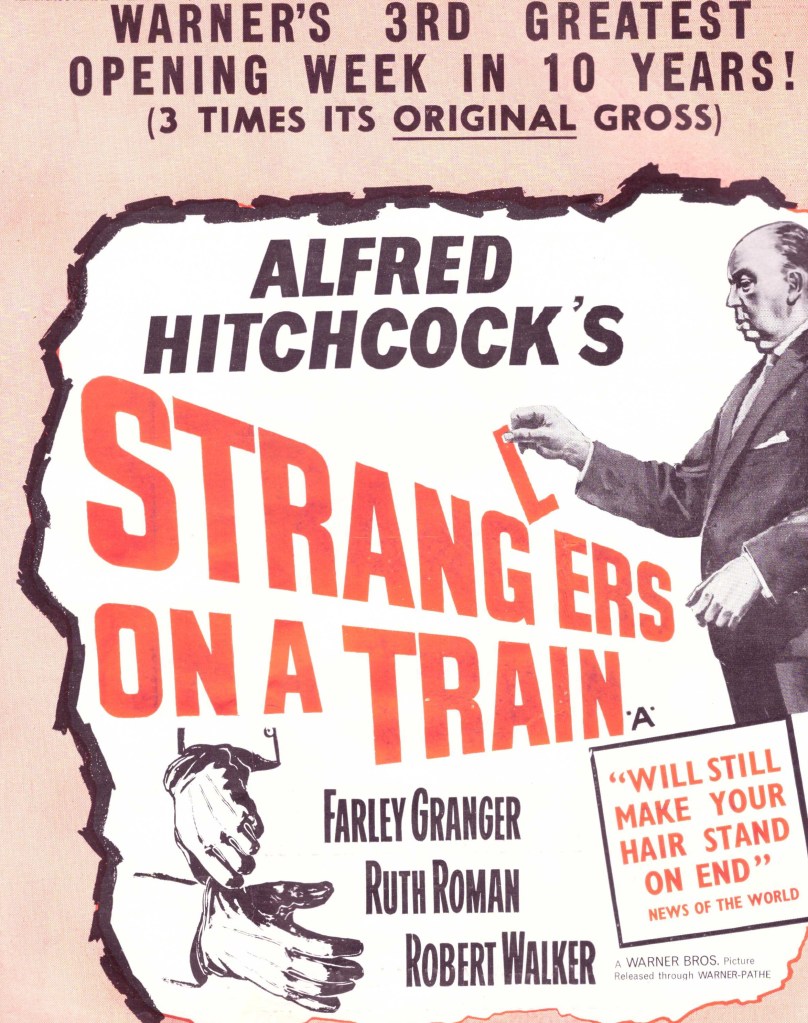
Hot box office in its first few weeks of a revival at the Warner in London’s Leicester Square.

Whoever was to blame, it put both sides under greater pressure with exhibitors increasingly turning to foreign product to fill the gap, a move that could in the long term inhibit U.S. production.

In Britain, where the two biggest chains Odeon and ABC controlled the most lucrative cinemas, reissues were a last resort, the former circuit rarely taking that option.

Between 1958 and 1963, ABC screened only two revivals – Strangers on a Train (1951) and East of Eden (1955) – whereas during the same period Odeon got through 75. In the 1950s Odeon used revivals as the support to prop up a weaker main feature, but by the 1960s the older pictures were the main attraction. The number of revivals presented as the top draw went from five in 1961 to 13 in 1962 and 11 in 1963 (i.e. 20 per cwent of the annual output), with others pulled in as the supporting feature.

Among the movies accorded a second outing were On the Waterfront (1954), The Jolson Story (1946), The Vikings (1958), Three Coins in the Fountain (1954), Trapeze (1956), Bridge on the River Kwai (1957), Red River (1948) and Witness for the Prosecution (1957). Odeon also took advantage of the product gap to bring back relatively recent top performers, Swiss Family Robinson (1961), Sodom and Gomorrah (1962), Psycho (1960) and Saturday Night and Sunday Morning (1960) within a year or so of their original release.

Although there was no sharp increase in movie production during the 1960s and to some extent successful double bill revivals and the retention of hit films like The Family Way (1966) and The Dirty Dozen (1967) for an extra week alleviated any shortfalls, by the end of the decade it was the circuits who came down heavy on the studios.

Films that looked as if they would do poorly on their circuit release were unceremoniously yanked off screens at the start of the week (movies at that time ran from Monday to Saturday) and replaced with something else.

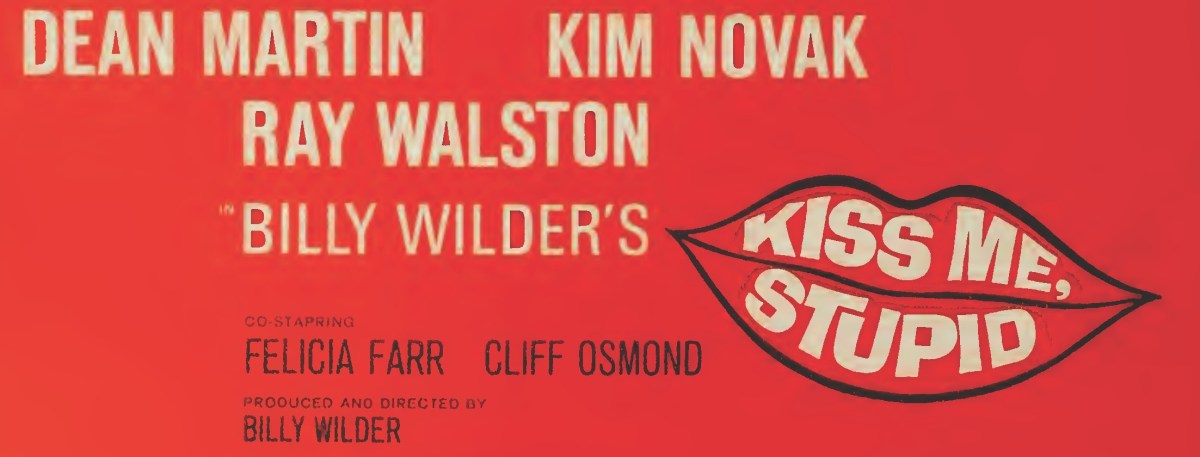
Films that failed to cut the box office ice on the circuits included: Billy Wilder’s Kiss Me, Stupid (1964) with Dean Martin and Kim Novak, Disney’s Monkeys Go Home (1967) starring Maurice Chevalier, thriller Games (1967) starring James Caan and Katharine Ross, Maureen O’Hara in romantic Italian-set drama The Battle of the Villa Fiorita (1965), thriller Brainstorm (1965) with Jeffrey Hunter, Rod Taylor in the adaptation of the Arthur Hailey bestseller Hotel (1967) and British television comedian Charlie Drake in Mister Ten Per Cent (1967).

SOURCES: “Strike Worsened Shortage Beef,” Variety, March 16, 1960, p15; “Flood of Dubs If Shortage Worsens,” Variety, March 23, 1960, p14; “Product Shortage Ends Twice-Weekly Changing,” Variety, May 11, 1960, p7; “Product Shortage Prompts Theatermen Renting of TV-Exposed Features,” Variety, May 18, 1960, p17; “Print Shortage Not Product,” Variety, September 7, 1960, p5; “How Come So Resistive To Reissues While Hollering Shortage?” Variety, February 20, 1963, p15; Gene Arneel, “Distribs: Theater Shortage,” Variety, March 6, 1963, p7; Allen Eyles, ABC The First Name in Entertainment (CTA, 1993) p121-125; Allen Eyles, Odeon Cinemas 2 (CTA, 2005) p204-214.

Behind the Scenes: “Operation Kid Brother / O.K. Connery” (1967)

A new episode in the James Bond legend began on February 23, 1966, when a plasterer from Scotland made an audacious bid for movie stardom. His name was Neil Connery, currently earning $10 a week, shooting for a $5,000 payday as he took part in a screen test in Rome for producer Dario Sabatello (Seven Guns for the MacGregors, 1966) for a film entitled Operation Casbah that would later be tagged Operation Kid Brother (O.K. Connery in Italy).

Sabatello was an experienced producer beginning with The Thief of Venice (1950) starring Hollywood legend Maria Montez. Connery was a skilled laborer living in the four-year shadow of elder brother Sean and with little intention of moving out of that shadow. However, as a result of a work-related incident, he became the subject of a newspaper article and then a radio interview. Nobody was much interested in the reason for the interview – stolen tools – but everyone was impressed by the sound of Neil’s voice. “Sean’s brother spoke exactly like him.”

Archers Assemble! Connery on the bowstring.

The newspaper interview caught the eye of Sabatello, who noted the actor’s likeness to his brother and who flew over to Edinburgh to interview Neil and in so doing becoming aware of his athletic attributes, height and good looks. A month later came an invite for the screen test. Neil’s agent, who had no right to make such a claim, promised that if Neil got the part big brother Sean would play a cameo. For the test, Connery had to “embrace a girl, sing, dance and finally end up in  a hand-to-hand fight with a guy with a knife.” However, the test was so successful that the presence of Sean was not required. Sabatello signed the neophyte actor to a six-picture deal that would generate a six-figure salary if the film turned the Scot into a star.

Italian production giant Titanus sold the world rights (except for Italy) to United Artists, ironically the distributor of the James Bond pictures, thus securing the funding for the $1.2 million three-month shoot that kicked off in Cinecitta in Rome on December 14, 1966. Locations were scheduled to include Monte Carlo, San Remo, Turin, Barcelona, Malaga and Tetuan.

The supporting cast was dominated by actors with a Bond connection including Adolfo Celi, Daniela Bianchi, Anthony Dawson, who had all worked with director Alberto De Martino on Dirty Heroes (1967) and Lois Maxwell and Bernard Lee. Ennio Morricone, another De Martino aficionado, was brought in to do the score.

Affiliates Assemble! Connery with Bond regulars Bernard Lee and Lois Maxwell.

Connery’s boxing training in the British Army came in handy when he had to become an archer. Pulling a bow takes considerable physical exertion. Target practice was held at Adolfo Celi’s house outside Rome. “I had remembered everything about putting the bow down, bringing it up, pull and push, as there was quite a pull on it,” he said. Celi’s arrow managed just a few yards but Connery hit the target. His luck did not hold when filming the real thing in Monte Carlo. Celi’s shot did not go far again but this time Connery’s arrow missed the target.

Although Connery had read the script he was only given his lines in the morning as he went into make-up. He acquitted himself well in the fight scenes, except for one scene which ended with him being taken to hospital.   

The film opened in Britain at the Pavilion in London’s West End on April 25, 1667, with a general release slated for May 5. But it didn’t get a circuit release. That is, it didn’t go out on either of the two main cinema chains, ABC or Odeon, or the lesser Gaumont circuit, so its bookings would have been restricted. It didn’t appear in the United States until November, 1967, having been reviewed without much enthusiasm in Variety which posited “at best the film deserves bottom half bookings”, i.e. the bottom half of a double bill, which means it would play for a fixed rental rather than a percentage.

It did open in first run in a number of city center picture houses in November and December, to occasionally decent but hardly lush box office. Its $20,000 week in Chicago was deemed “good”, as was the $4,000 in Providence, while $13,000 in Philadelphia was considered “brisk” but $5,000 in St Louis considered only “fair.”  There was a first run showing in New York but only at a 600-seater arthouse.

But when it went wider in “Showcase” releases the box office collapsed. In New York it managed only $67,000 from 25 theatres compared to, in the same week, British film The Family Way on $223,000 from 26, and the second week of Point Blank with $145,000 from 25. Business was worse in Los Angeles, just $49,000 from 26 compared to $125,000 from 29 for Barefoot in the Park, and it was dire in Kansas City, only $9,000 from eight houses.

Given the relatively low budget, the film globally may well have broken even but it certainly did not send Neil Connery’s box office status into the stratosphere. He had small parts in two more low-budget movies, The Body Stealers (1969) and Mad Mission 3: Our Man from Bond St (1984) plus some television.

SOURCES: Brian Smith, “Bond of Brothers,” Cinema Retro, Vol 4 Issue 12 2008, p13-19; Allen Eyles, Odeon Cinemas  2, (CTA 2005), p212; Allen Eyles, ABC (CTA, 1993), 123-124; Allen Eyles, The Granada Theatres (CTA 1998)’ p247; Allen Eyles, Gaumont British Cinemas, (CTA 2005), p197; William Hall, “Big Brother Is Watching Him,” Photoplay, June 1967; “International Soundtrack,” Variety, February 23, 1966, p33; “Titanus Sets Pre-Prod Deals for Two UA Pix,” Variety, December 14, 1966, p24; “International Soundtrack,” Variety, December 21, 1966, p24; “Hollywood and British Production Pulse,” Variety, December 28, 1966, p17; Advertisement, Variety, January 4, 1967, p65; “Connery Pix a Family Affair with UA,” Variety, March 8, 1967, p24;  Review, Variety, October 11, 1967, p22; “Picture Grosses,” Variety November 1, November 8, November 15, November 29, December 13, 1967.  

Discover WordPress

A daily selection of the best content published on WordPress, collected for you by humans who love to read.

The Atavist Magazine

by Brian Hannan

WordPress.com News

The latest news on WordPress.com and the WordPress community.