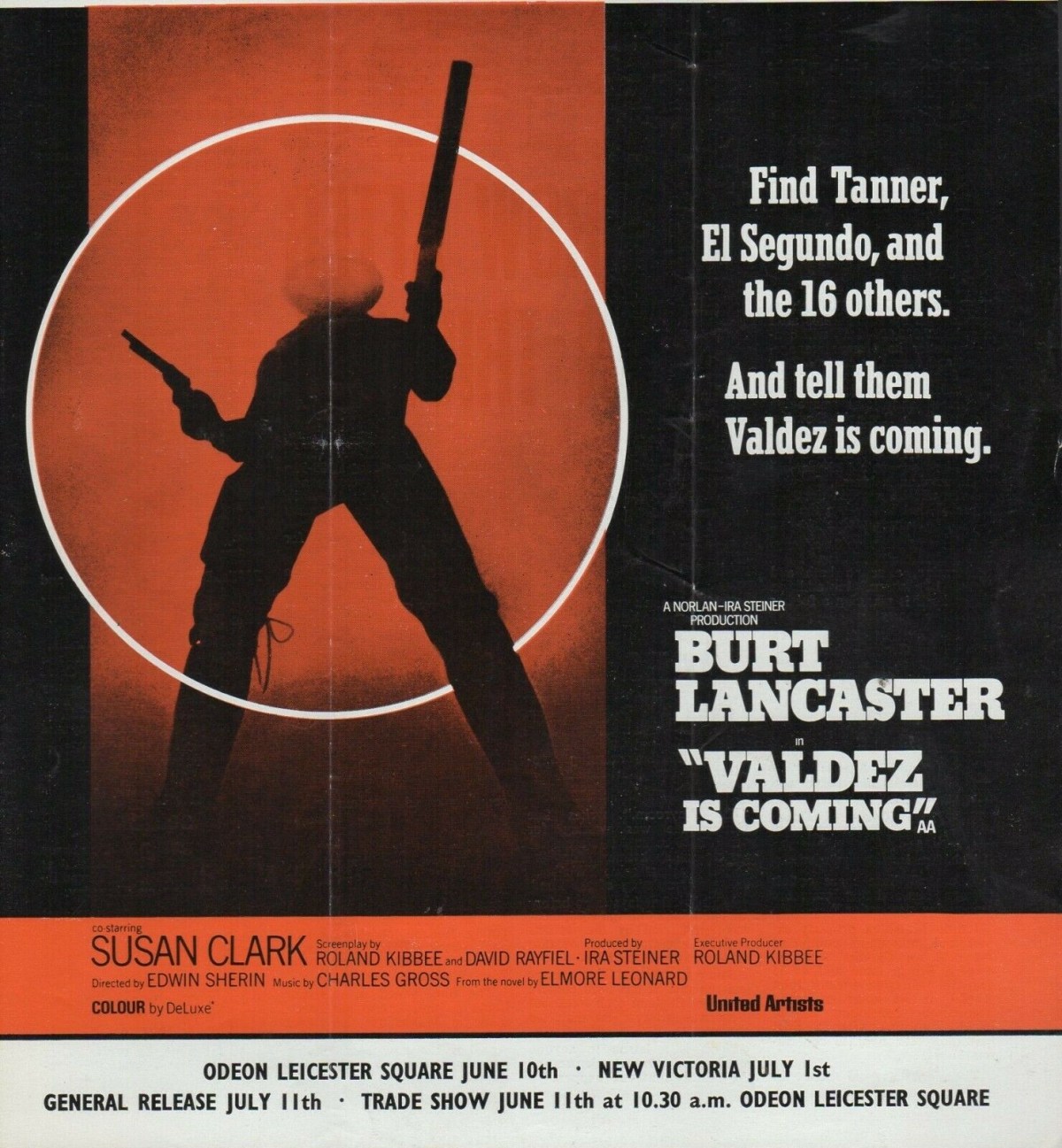
Five-star review for a long-forgotten much-maligned western? Let me explain. Let me start with one of the most stunning cinematic images I have ever seen that in the hands of a better director would be considered one of the greatest ever devised. The titular Valdez (Burt Lancaster) appears on the top of a hill arms stretched out back contorted under the weight of a crucifix strapped to his back. Another director, more conscious of the image potential, would probably have had him straighten up at that point and positioned the camera for a close-up so the image could be captured against the sky. Even so, it’s an extraordinary image for a director, Edwin Sherin, making his debut.
But that’s not the only one. We’re familiar with the innocent man being forced to dance as the area around his feet is peppered with bullets from a sadistic gunslinger. Here, the victim of gunman Davis (Richard Jordan) is an old Native American woman. As she walks from a hut to collect water, he assails her with a barrage of shots. Does she dance? Does she dickey! She doesn’t even pause. As though she’s used to worse.
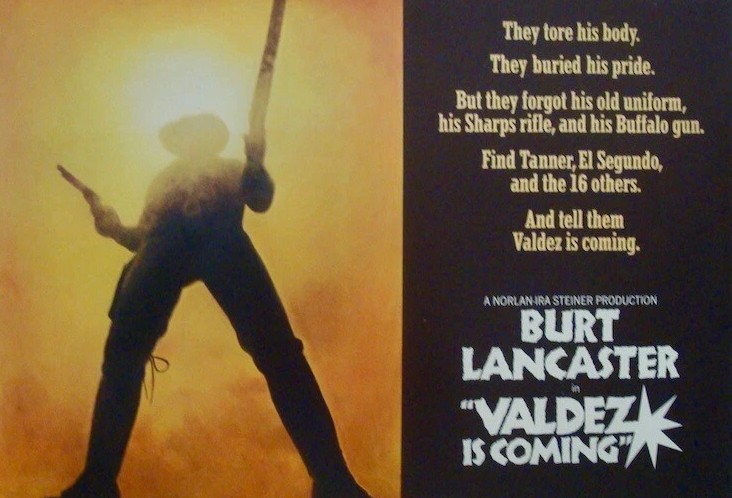
The movie opens with another stunning image. Valdez, a local Arizona Territory constable (presumably a less important title than sheriff though he wears the badge), takes time out from riding shotgun to watch a bunch of young bucks blast away at a target. Which appears to be the hut I mentioned. Takes a while for an explanation to be forthcoming. Said hut houses a fugitive from justice.
There’s another startling image when Valdez is used as target practice by the thugs employed by local bigwig Tanner (Jon Cypher). As if he was the equivalent to the target girl in a knife-throwing act, every space around his body is hit by a bullet.
And that’s before we come to the audacious freeze frame ending which, theoretically at least, leaves matters unresolved.
There’s also a post-modern post-whatever feel to this which should very much appeal to the contemporary audience. Very little is explained. Valdez has anglicized his Christian name of Roberto to Bob. He can’t get rid of his Mexican accent but he talks so softly that mostly you don’t notice. From his later demeanor, it’s quite clear that earlier on he is making a huge effort to fit in, not stand out, in a town dominated by white Americans.
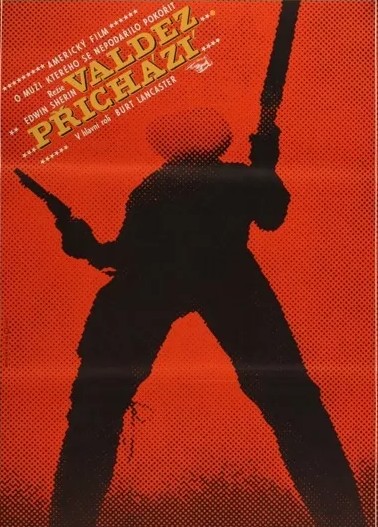
But we also never find out why Tanner is hunting a man. He’s responsible for putting the man in the hut under siege. And although that turns out to be case of mistaken identity, we never find out who Tanner is chasing or why.
Tanner’s live-in girlfriend Gay (Susan Clark), a widow, has murdered her husband and we never find out why either. But she’s not the only unusual character. The gunslinger Davies is a misfit, finding out the hard way that intemperance and impulsiveness are not the way to make friends, and even Tanner has little time for a gunslinger too handy with a gun, but despite the callous exterior he has a softer side. And while that softer side turns out to be lucky at one point for Valdez, the lawman still doesn’t trust the capricious youngster.
The tale, such as it is, is one of principle. Valdez has been tricked into killing the man in the hut. Given the man proved innocent, Valdez thinks it right his widow, the Native American victim of the target practice, should receive some compensation. A hundred dollars seems a small price to pay. But Tanner is insulted at the very thought. In his eyes, the dead man was a no-account African American.
When Valdez insists, he is trussed up in the makeshift crucifix and left to make a humiliating walk home. That’s when he reverts, shuffles off his disguise as a soft-spoken relatively harmless lawman in a town where the most he will be called upon to do is ride occasional shotgun and jail an occasional drunk.
It’s vague too – you’d have to be well up on western lore to know the significance of the photograph he keeps under his bed – regarding his past. But hidden under the bed is what was known as a buffalo gun, a long-range rifle, manufactured by Sharps (hence the term “sharpshooter”) and suddenly he’s a different, more threatening, person, kitted out in his old cavalry uniform, hat brim upturned.
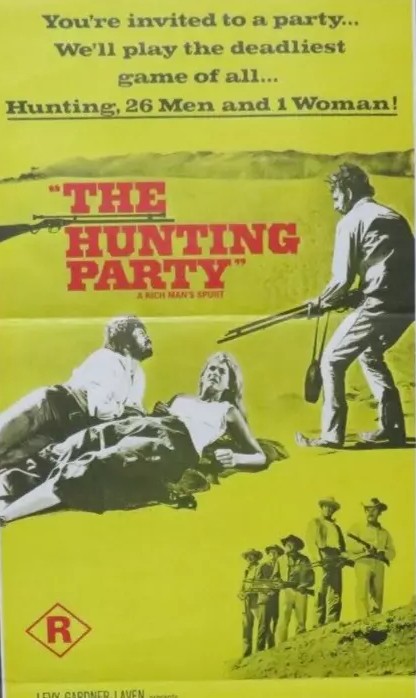
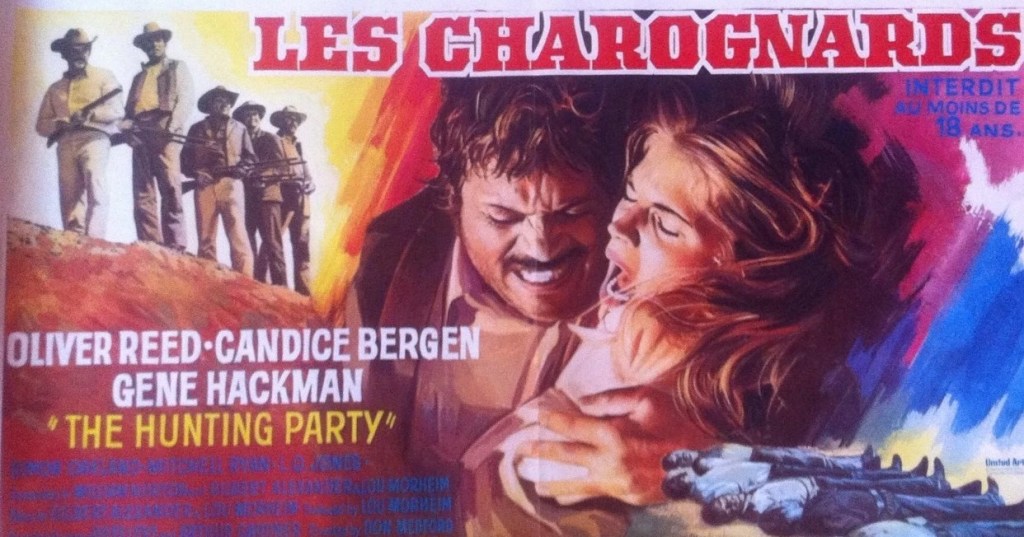
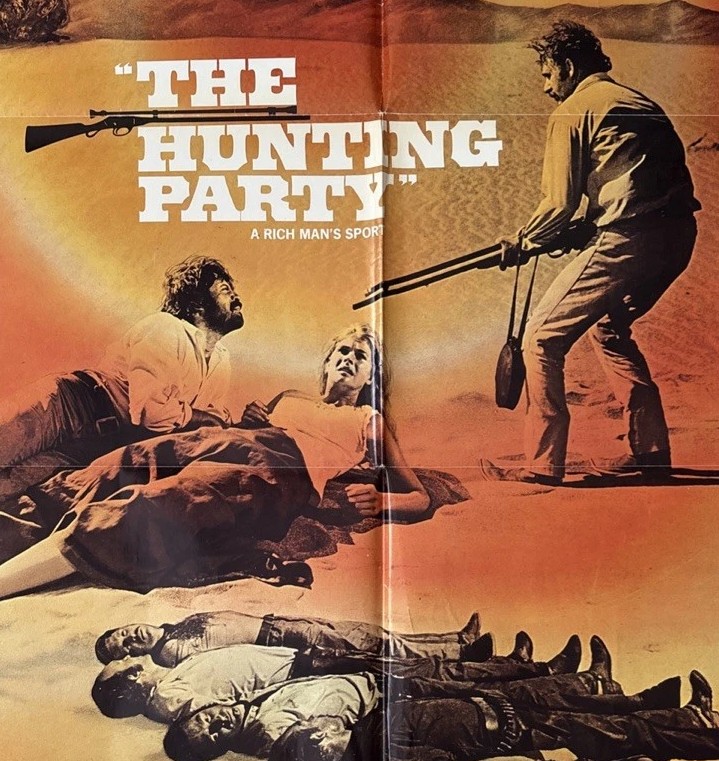
He interrupts Tanner and Gay making love to demand his hundred dollars. He only takes Gay hostage to make his escape, minus the cash, and then kidnaps her to provide him with something to trade. Unlike in The Hunting Party (1971), the weapon doesn’t magically ease his path. He doesn’t just take pot-shots from a distance. He spends most of the time rushing up and down hills, using boulders as cover. He can’t afford to use the gun since that would pinpoint his position. So he’s got to knock out Tanner’s advance scouts in other ways.
Meanwhile, Gay, who initially sympathized with Valdez, is less keen on him once she’s a victim, and spends most of her time trying to escape. In due course, Valdez’s marksmanship reduces the pursuing force by eleven.
He just about escapes but in a spectacular piece of stunt work involving horses colliding and people being thrown from the saddle, he is surrounded. Chief thug El Segundo (Barton Heyman) realizes that he and Valdez have something in common. Valdez wasn’t a buffalo hunter at all, but a stalker of Apaches, the enemy of El Segundo.
So El Segundo pulls back his men leaving Tanner to face up to Valdez alone. Or perhaps pay up the hundred dollars. We never find out because the image is frozen on the screen as the camera pulls back.
Edwin Scherin was rewarded for his boldness by only being allowed to make one more movie (My Old Man’s Place, 1971). This was the first of Burt Lancaster’s western trilogy that encompassed Michael Winner’s Lawman (1971) and Robert Aldrich’s Ulzana’s Raid (1972), completing his move into more of the flawed character he first essayed in The Swimmer (1969). Susan Clark (Coogan’s Bluff, 1968) makes the most of a role that permits her to switch from sympathetic to hard-nosed. Richard Jordan (Chato’s Land, 1972) has a peach of a part as the swithering gunman desperate for attention. Screenplay by Roland Kibbee (The Appaloosa, 1966) and David Rayfiel (Castle Keep, 1969) based on the novel by Elmore Leonard (Mr Majestyk, 1974).
So, sure, justified vengeance but exceptionally well done.
Catch this on Amazon Prime.
Well worth checking it out.






 The Magnificent 60s