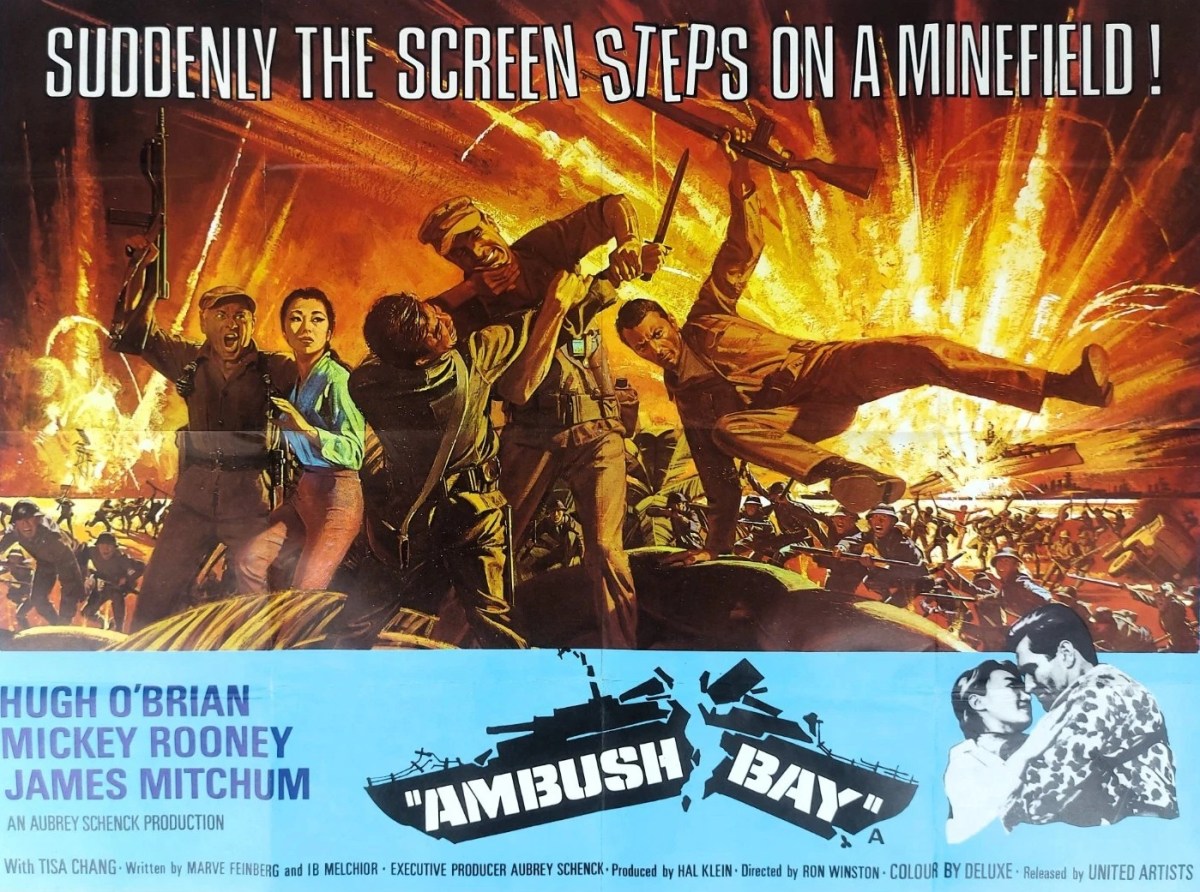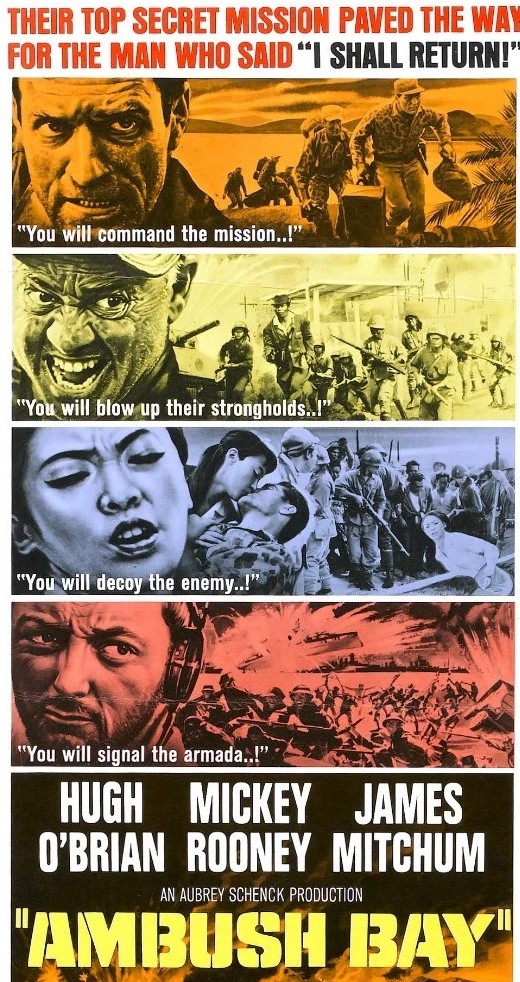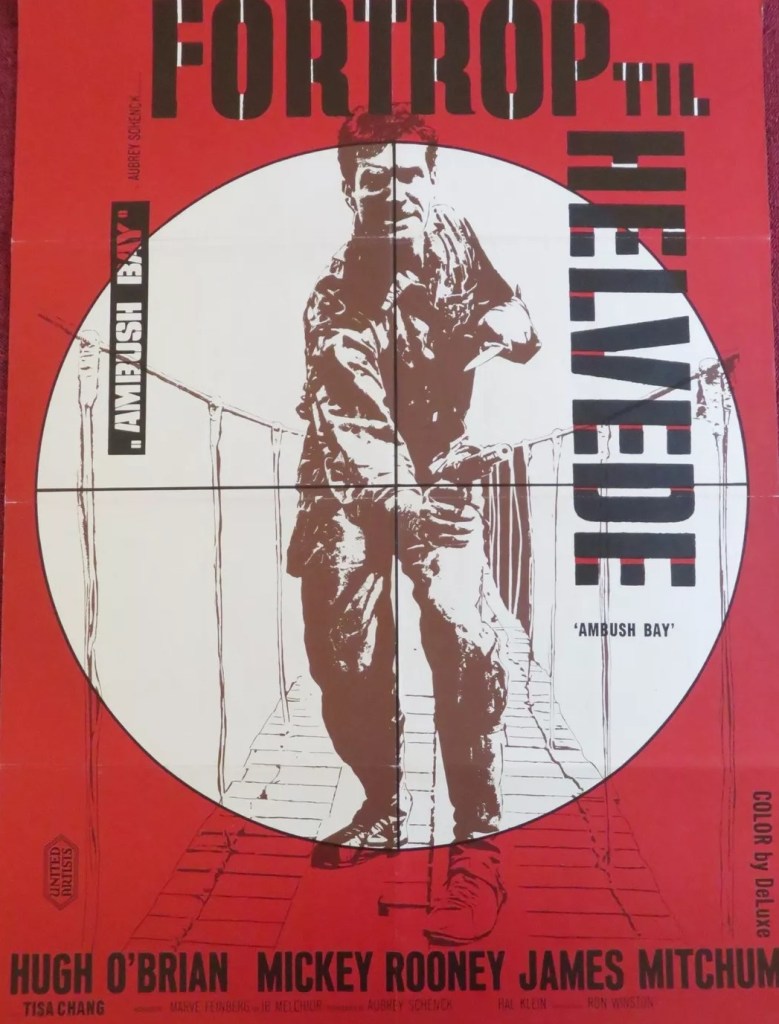
Ambush Bay (1966) ****

I’m going out on a limb on this one. I don’t think anyone’s done anything but give it a cursory examination and mark it down as a standard programmer of the era. But I saw a lot that was considerably impactful.

Generally speaking, although the war picture had gradually shifted from the gung-ho to the more realistic (Operation Crossbow, 1965, Von Ryan’s Express, 1965), it’s generally accepted that it was The Dirty Dozen (1967), Beach Red (1967) and Play Dirty (1968) that ushered in the new era of authenticity and violence.

Oddly enough, this little picture, minus the bloodletting, was the bridge. It’s way tougher than you would expect for a low-budget picture only ever intended to fill out the lower half of a double bill and never going to catch the eye of a critic hoping to find an unknown movie to punt.

Let’s start with the ruthlessness. A bunch of Yanks on a secret mission in the Philippines are hounded by Japanese soldiers. At their first encounter, knives are the weapon of choice so as not to attract attention. We don’t see the knives going in but we hear them slicing into flesh. They capture one of the enemy who begs to be taken prisoner but nobody’s got time to bother with such niceties so they tie him to a tree and come morning he’s dead. Rather than give away their own position, they don’t fire on the pursuing Japanese which results in one of their own being killed. A female American-born Japanese spy, convinced her natural charms can distract the Japanese, volunteers at one point to stay behind, even if that means becoming the sexual plaything of the Japanese commander and then passed on to his men. And when that ploy fails she is ruthlessly sacrificed.

There are other narrative reversals. The Dirty Dozen, for example, begins with a lengthy introduction to each of the condemned men. Here, as the team prepare to land on the Philippines, we are introduced, via voice-over, to each of the team. And then you learn that the real reason for this is that we’ll count up the number of men in the group and become aware that they are gradually being whittled away.

And then there’s the voice-over itself. This not being one of those post-modernist numbers where the narrator is speaking from beyond the grave, audiences know that a narrator is a survivor. But what they’re not going to guess is that he’ll be the only survivor.

Or that he least deserves to survive. Private Grenier (James Mitchum) is a rookie – “six months ago he was stacking shoe boxes” – and he’s truculent and troublesome. His only job is to keep the radio safe, excused fighting duties so that he can broadcast to the waiting General MacArthur the outcome of the mission. But he’s as useless at guarding the radio as he is at everything else and the radio is shot to pieces. He’s so dumb he doesn’t realize the purpose of a Japanese tea house.

There’s not an ounce of the gung-ho. The dialog is delivered in an undertone. Nobody makes a meal of any line of dialog no matter ho juicy. Everything undercuts. When Commander Sgt Corey (Hugh O’Brian) plans to go into serious harm’s way his number two Sgt Wartell (Mickey Rooney) asks what will happen if he doesn’t come back. In matter-of-fact tones, but without the snap of someone thinking he’s delivering a great line, Corey replies, “You get a field promotion and an extra eight bucks a month.”

The Ambush Bay of the title is supremely ironic. It’s the Americans who are going to be ambushed. The Japanese have seeded the sea-bed of the beach where they guess the Americans are going to land with mines. Nothing unusual there. Minesweepers will clear the path. Except these are unusual mines, anchored to the seabed and only loosened by remote control by the enemy.

The initial mission is just to locate the aforementioned spy Miyazaki (Tisa Chang) who turns out to be a sought-after sex worker in the tea house. But when the radio is out of action, they have to disable the radio tower controlling the mines. By this point they’re down to just two men, Corey and Grenier.

Grenier has the ingenious plan of draining fuel from a truck to make a Molotov cocktail, toss it into a fuel dump and in the confusion make their way to the radio tower. Even at this late stage, reversals come thick and fast. Great idea – you got a match? Nope. But the lorry driver is smoking. He discards a lighted cigarette. But when he gets out of his cab he grinds the cigarette with his foot. Luckily, they can revive it.

All the way the dialog is like loaded dice. “Idiot,” muses Grenier, “that’s the nicest thing he’s said to me.”

Miyazaki has some choice lines. “If you’re dead that won’t help me.” And, encountering Corey’s disbelief at her gender,  “Suppose I refused to believe you were my contact.” And in the understated manner of every individual, of the leering Japanese commander, she notes, “He desires me, I think that’s the phrase.”

Visually, this isn’t littered with gems. Most of the visuals are under-stated, brutality generally off-camera but there’s one unforgettable scene. The Japanese commander, having been distracted by Miyazaki puts his pistol in his holster. A few minutes later, realizing he has been duped, he takes it out of its holster.

Hugh O’Brian (Ten Little Indians, 1965) is superb as the non-scene-stealer-in-chief. Mickey Rooney (The Secret Invasion, 1964) has less opportunity for grandstanding than in most of his pictures. And surely this is the recently-deceased James Mitchum’s (In Harm’s Way, 1965) best role, as he shifts from amateur to professional. If you’re looking for an understated scene-stealer Tisa Chang (better known for her stage work – she only appeared in five films) is choice.

Directed by Ron Winston (Banning, 1967) from a script by Ib Melchior (Planet of the Vampires, 1965) and Marve Feinberg in his debut.

The lowest-budgeted film, just $640,000, in the 1966 release schedule of United Artists, on a cost-to-profit scale this proved one of its most successful pictures hammering out $1.7 million in rentals.

Worth going out on a limb for.

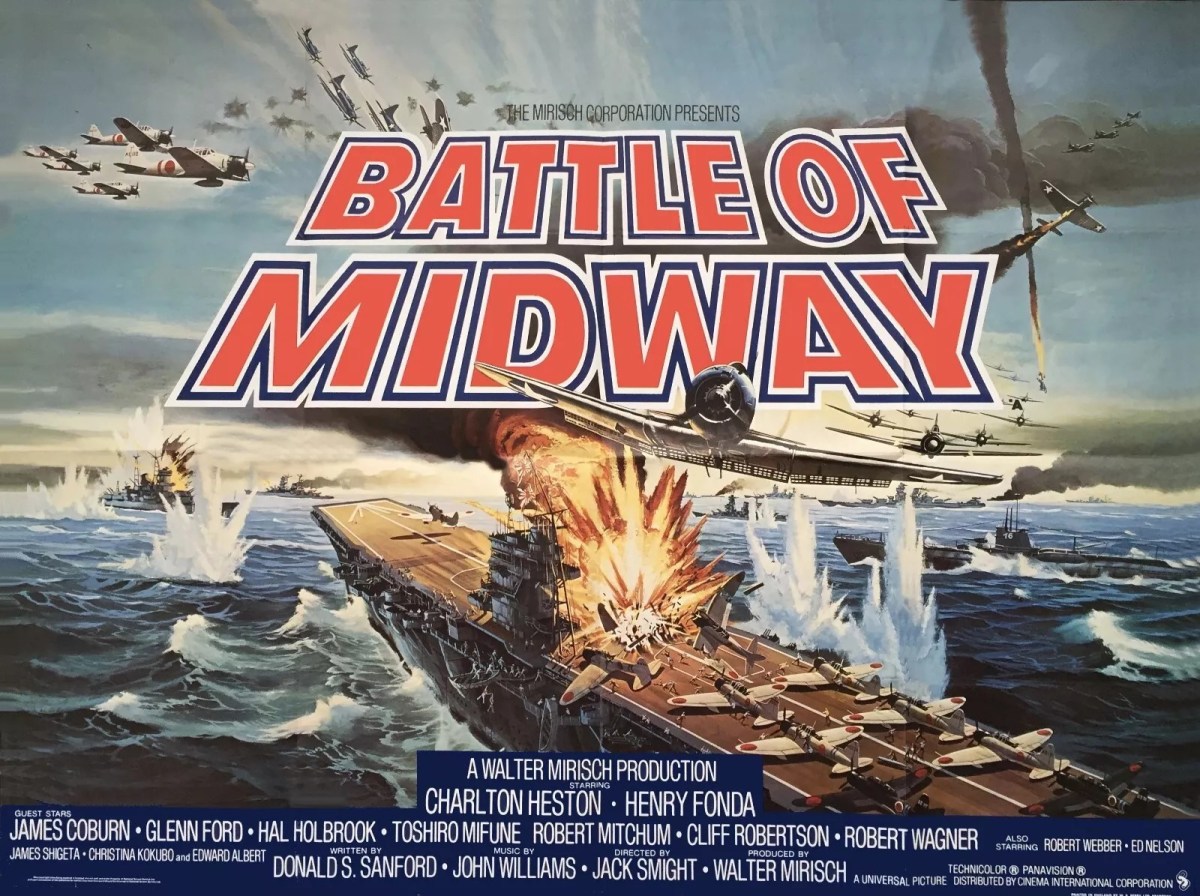
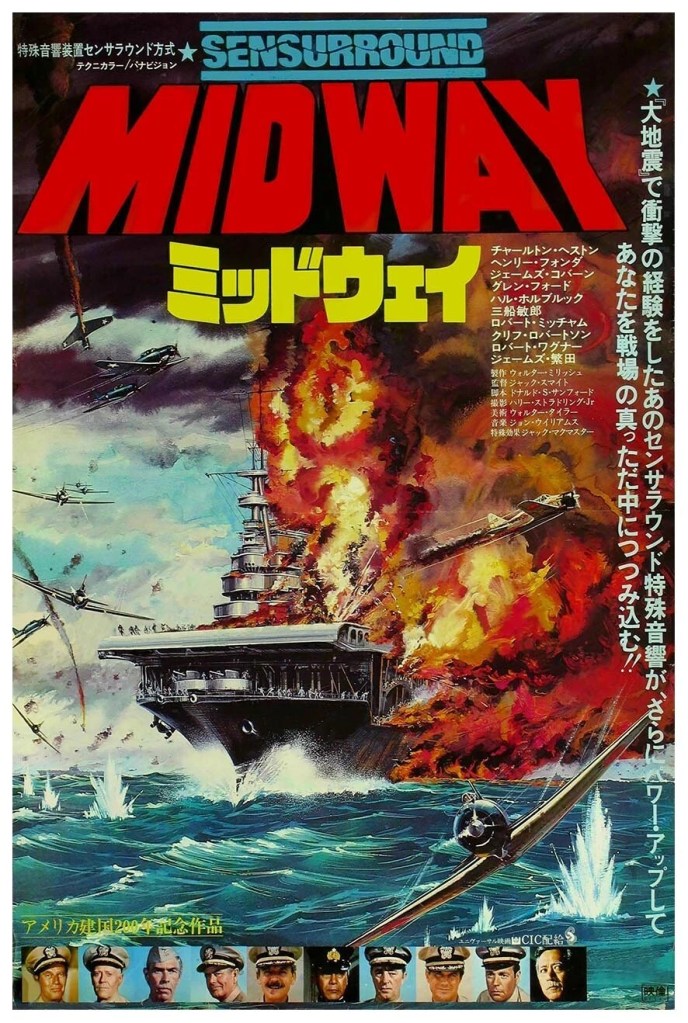
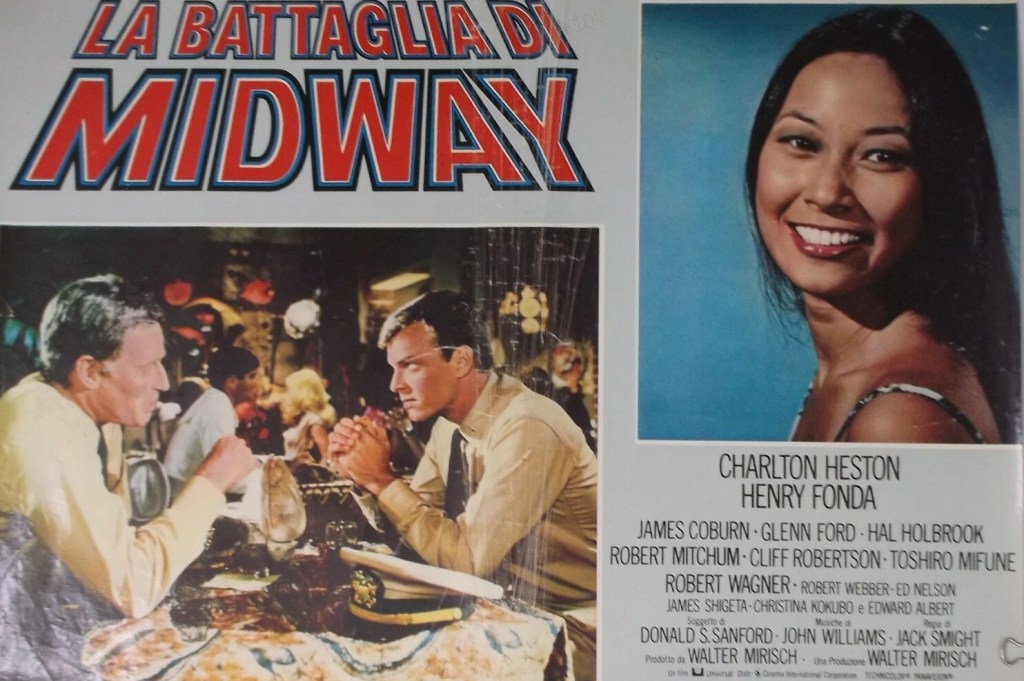
Battle of Midway (1976) ****

Even-handed documentary-style tale recounting of the most famous U.S. naval battle of all time, a turning point in the struggle for control of the Pacific in 1942. Both sides make mistakes, luck and judgement play an equal part.

I’d always assumed Midway was some abstract geographical position without any idea of its strategic importance – did the name mean it was halfway between the U.S. (or Hawaii) and Japan? But here I learned it was an actual island that the Japs planned to invade and the Americans intended to stop them. In some senses, it was bait, a way to draw the U.S. Navy out of Pearl Harbor. But the bait ran both ways. If the Yanks could coax the enemy out into the Pacific, they had a chance of gaining an advantage, even though the Americans were inferior in shipping tonnage.

The Japs have been stung into action by the audacious American bombing of Tokyo. Admiral Yamamoto (Toshiro Mifune) uses the perceived threat of further attacks to gain official approval for his plan to invade Midway.

This is strictly a male show. However, in a bid to lower the testosterone levels a romantic subplot is inserted. The aviator son, Lt Thomas Garth (Eddie Albert), of top aide and former pilot Captain Matthew Garth (Charlton Heston) has an American-born lover Haruko (Christina Kobuko) of Japanese descent who’s being investigated for espionage and subsequently interned. On intervening, the father digs up a hodgepodge of racism – from both sides, Haruko’s parents against her forming a relationship with a non-Japanese. But the plan backfires causing a breakdown between father and son.

But that’s very much on the fringes and although it raises interesting cultural aspects, the movie concentrates mostly on the nuts-and-bolts of heading into a major engagement.

American intelligence, headed by Commander Joe Rochefort (Hal Holbrook), gets wind of the planned attack. But the clues are scant – the old trope of increased radio traffic not enough to convince – and while the audience knows the Japs are on the move with a mighty naval force including four top-class airplane carriers, the Americans remain ignorant almost until it’s too late.

Luckily, Admiral Nimitz (Henry Fonda), heading up the American naval contingent, is keen to inflict a blow on the enemy, even though he’s limited to two carriers and another just out of the repair yard. Each side relies on spotter planes to detect the enemy. But the Japanese, by imposing radio silence, shoot themselves in the foot, unable to switch tactics until too late. The hunch plays an important part.

There’s rarely much opportunity for individual heroics on a ship under fire, beyond rescuing someone. The fighter pilots are a better bet, especially since some of their forays are nearly suicidal given the firepower they attract. Matt Garth, who for most of the picture is an upscale backroom boy, is called into action with unexpected results.  

Most battle films tend to concentrate on the heroics often at the expense of understanding in any detail what’s going on. Thankfully, this is different. We are kept informed of every change in the conflict. And whereas you might think that dull, in fact I wouldargue that it adds substantially to the tension, and the fact that the only one of the commanders who looks as if he could throw a punch (Robert Mitchum) in the manner of John Wayne is confined to his bed thus forcing the movie to concentrate as much on brain as brawn.

Audiences at the time welcomed all the talking and this was a substantial hit. Snippets of old war footage were carefully sewn into the lining of the action, bringing the kind of authenticity that moviemakers reckoned moviegoers craved. For me, there was more than enough going on already.

Nimitz’s decision to go for broke rather than dive for cover results in victory but he’s no gung-ho commander, rather presented as a thoughtful but determined individual. The lack of backstage effort especially in the communications department was partly to blame for the humiliation of Pearl Harbor but here these guys share the glory.

Boasting the kind of all-star cast that used to be the hallmark of the 1960s roadshow, this has a bunch of top-notch actors, albeit most just flit in and out of the picture. Charlton Heston (Planet of the Apes, 1968) effortlessly shoulders the main burden with Henry Fonda (Once Upon a Time in the West, 1969) the fulcrum of all decision-making. Robert Mitchum (The Way West, 1967) , James Coburn (Our Man Flint, 1966), Glenn Ford (Rage, 1966), Cliff Robertson (The Devil’s Brigade, 1968) and Toshiro Mifune (Red Sun, 1971) all feature.

Jack Smight (Harper / The Moving Target, 1966) directs from a script by Donald S Sanford (Mosquito Squadron, 1969).

Thoroughly engrossing.

  • I’m doing a Behind the Scenes tomorrow.

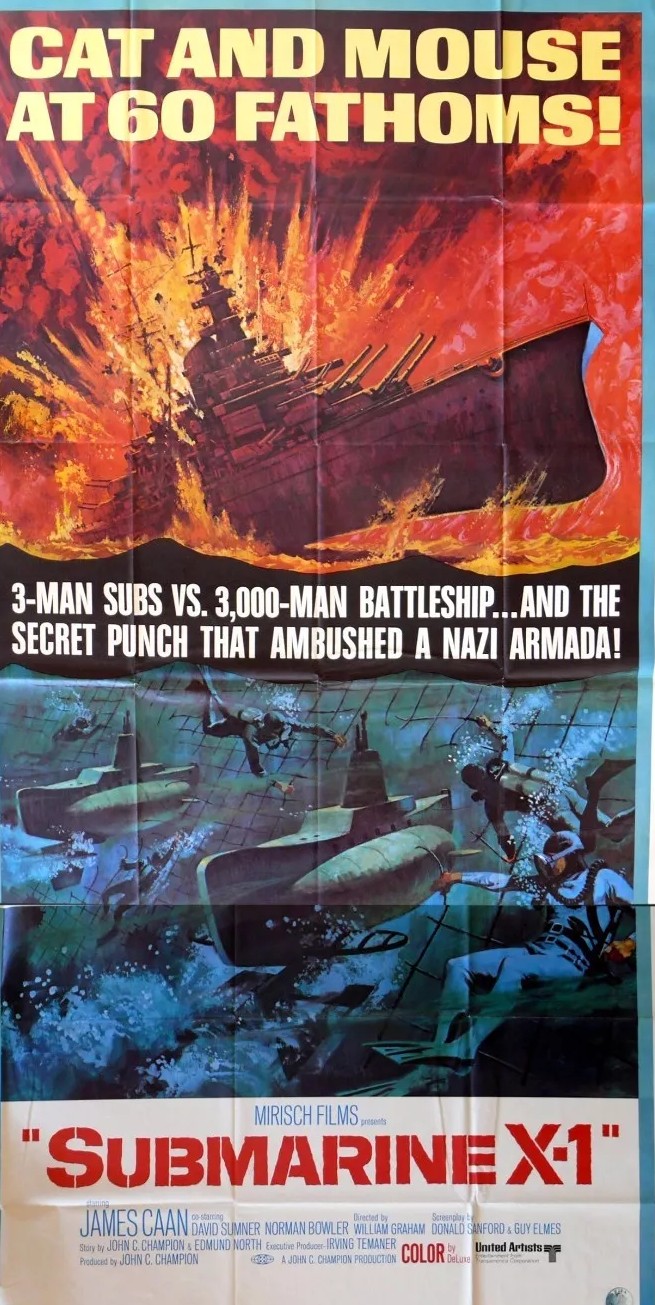
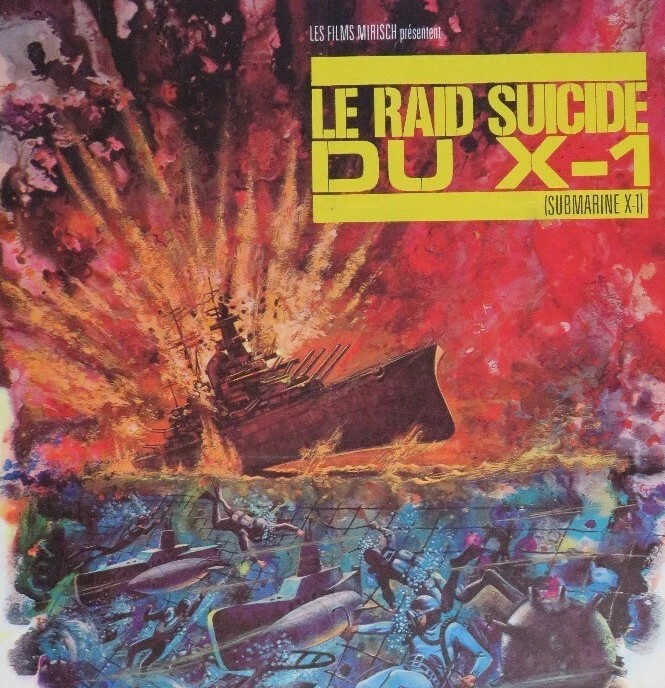
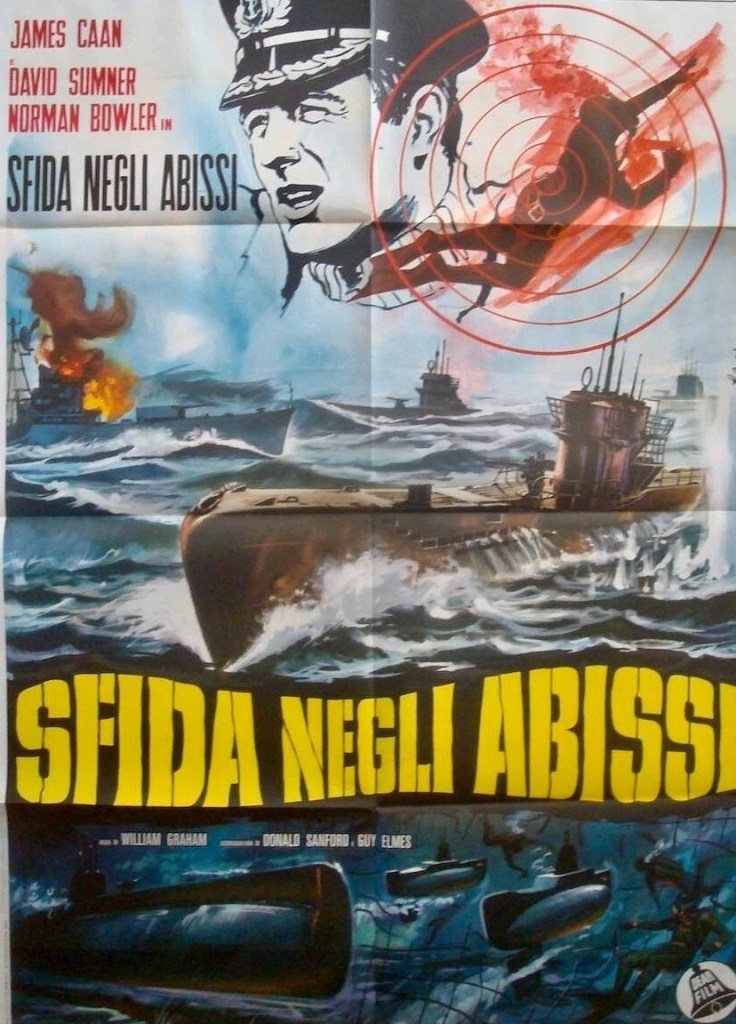
Submarine X-1 (1968) ***

One of the tropes of the World War Two mission picture was that it afforded plenty scope to boost the careers of supporting players – The Dirty Dozen (1967) being the best example given it boasted Charles Bronson, Ernest Borgnine, Donald Sutherland (the denoted breakout star), Jim Brown (another breakout) and Telly Savalas.  Never mind that here you could hardly find an interesting face, never mind well-written character in this one, you were struggling to find the James Caan as defined by The Godfather (1972).

Even with production shrinking and the industry throwing more and more money at the actors who supposedly guaranteed box office, Hollywood was still trying to blood new talent. But most failed to connect – Burt Reynolds was another who took a helluva long time, by movie standards, to find a fanbase.

Though Caan had been chosen by Howard Hawks to headline Red Line 7000 (1965) that had sunk without trace and a supporting role in the director’s El Dorado (1967), while exposing him to a larger audience, had not, as yet, pushed him that far up the Hollywood tree, top billing in neither Robert Altman’s Countdown (1967) nor Games (1967) doing much to bolster his marquee credentials.

His career could go either way – fizz and pop in a part that provided the opportunity to create a defined screen persona or fizzle and die after using up too many Hollywood lives. We all know which way it went so this could be considered a testing ground. And he reins in his screen persona so much he could almost qualify for a Stiff Upper Lip Award.

As ever, Yanks in many World War Two pictures set in Britain had to come in disguise.  Commander Bolton (James Caan) is acceptable in the Royal Navy if he’s Canadian and a volunteer rather than American, though you’d be hard put to distinguish the nationalities by Caan’s accent.

It was also a given of this type of war picture that the recruits hated their leader with a vengeance – Lee Marvin in The Dirty Dozen leading the field, though you could equally point to Frank Sinatra in Von Ryan’s Express (1965) – “why did 600 Allied prisoners hate the man they called Von Ryan more than they hated Hitler” ran the tagline – and William Holden in The Devil’s Brigade (1968). .

Here, Bolton is in hot water for obvious reasons. He was a poor leader, causing the deaths of the majority of his crew on the 50-man submarine Gauntlet after an ill-chosen attack on the German battleship Lindendorf. The movie starts with him and the remainder of the crew staggering out of the water onto dry land. Even when he’s cleared at a tribunal, the stench of incompetence sticks. So it’s any wonder that he’s put in charge of a secret operation with many of the survivors, unless of course it’s the kind of suicide mission that offers redemption.

As it takes forever to reveal, the British have built mini-subs, manned by three men, for a second go at the Lindendorf safely stowed out of the way in the Norwegian fjords. So apart from simmering resentment and mutterings everywhere, the first section is the standard training where, as is par for the course, Bolton is a hard-ass, forcing men dying of exhaustion back into the freezing water to complete the designated exercise.  

Except for incipient rebellion, there’s not much else in the way of plot before we head for the fjords, not even a romance which might make an audience more sympathetic to Bolton. The Germans, somehow, have got wind of this secret mission taking place in a remote part of Scotland (Loch Ness, actually) and send in a parachute team.

On land it’s as dull as ditchwater, but once we head to sea, it’s a more than competent action picture.

If James Caan has learned anything from his first four pictures, it’s not obvious, as mostly what he does is grimace. The supporting stars look as if they knew from the outset that this wasn’t going to do anything for their careers – and with the exception of David Sumner (Out of the Fog, 1962), they made barely a scratch on the movie business.

It didn’t help that the naval operation had been filmed before as Above Us the Waves (1955) starring John Mills (S.O.S. Pacific, 1960) and directed by Ralph Thomas (Deadlier than the Male, 1967).

Directed by William Graham (The Doomsday Flight, 1966) who had just scored a surprising hit with Waterhole #3 (1967). Written by Donald Sanford (The 1,000 Plane Raid, 1969) and Guy Elmes (Kali-Yug, Goddess of Vengeance, 1963).

Torpedoed by the acting, only partially rescued by the action.

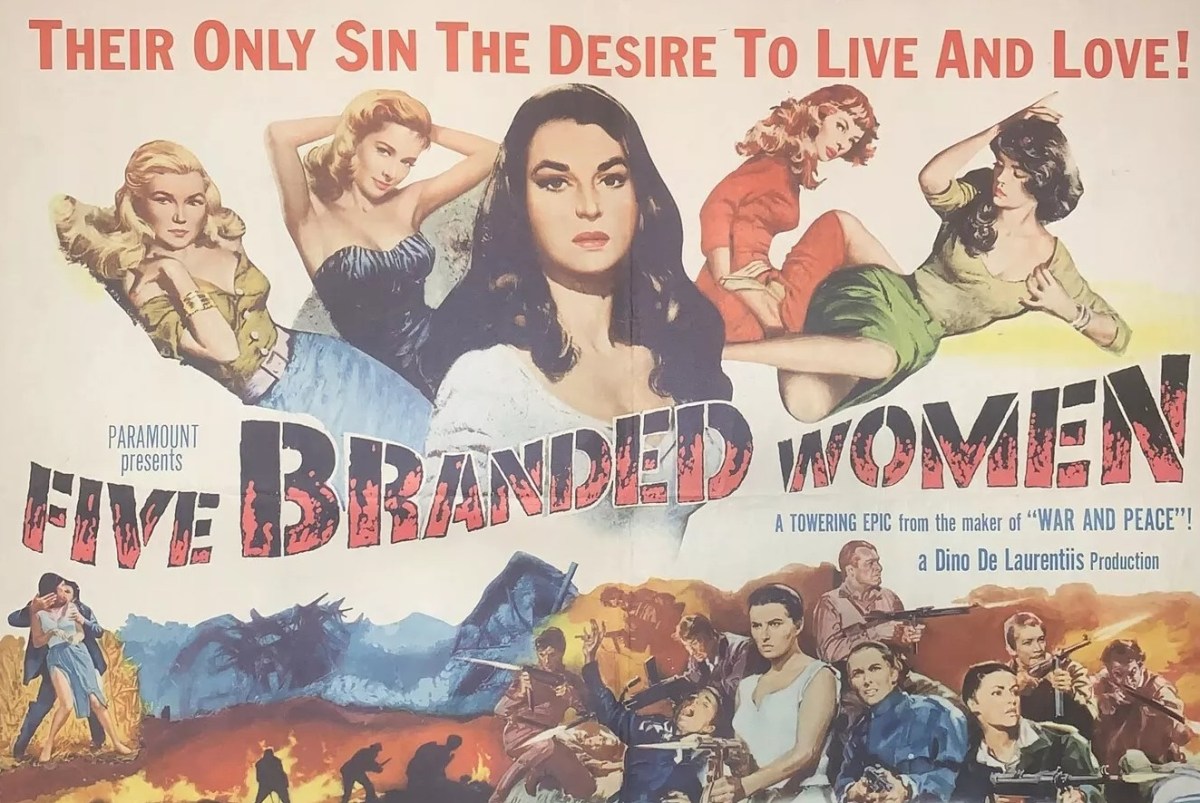
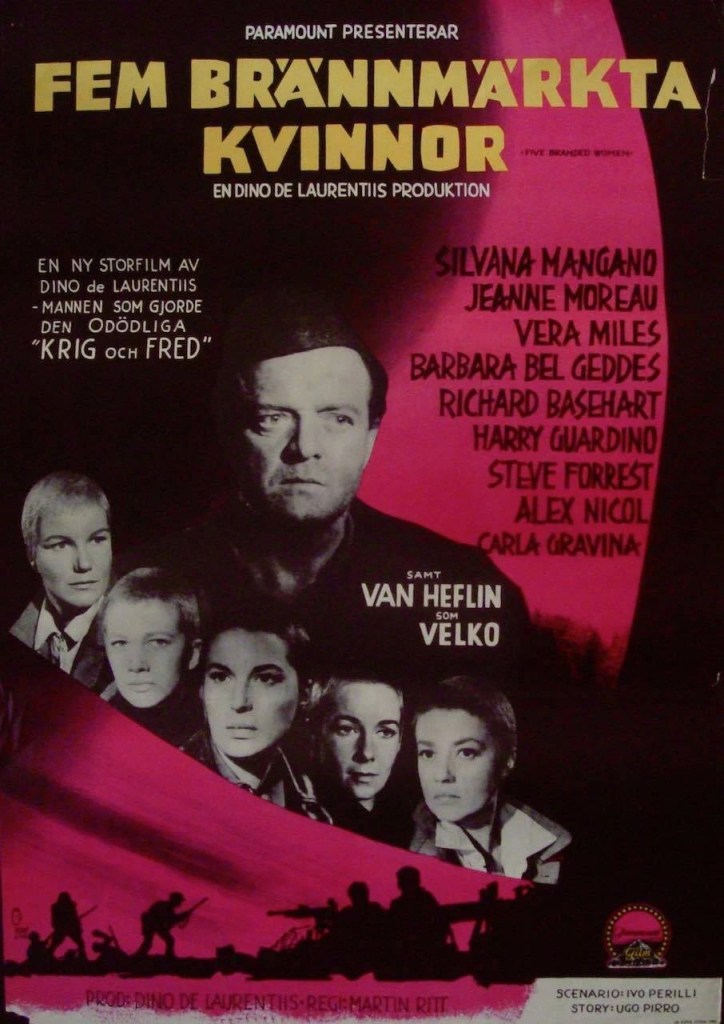
Five Branded Women (1960) ****

Should have qualified as that rare thing – an all-star female cast. Italian Silvana Mangano had led the arthouse revolution and kickstarted the importing of sexy Italians in international hit Bitter Rice (1949), Jeanne Moreau was a leading light in the French New Wave (and another sexy import to boot)  as star of Les Liaisons Dangereuses/Dangerous Liaisons (1959), Vera Miles was hot after Psycho (1960), rising star Barbara Bel Geddes (Vertigo, 1958) another Hitchcock protegee. Never mind that the story was a serious one, the redemption of female collaborators in Yugoslavia in World War Two, there was still time for what had become very much a western genre cliché, the inability of any woman not to strip off at the sight of a waterfall – here all five go skinny dipping.

The narrative should have been clearcut as redemption tales generally are: miscreant finds salvation. But this one is pretty muddled up and the moral confusion gets in the way. While some of the women such as Ljubo (Jeanne Moreau) have sex with the occupying Germans to prevent a brother being sent to a work camp, others such as Jovanka (Silvana Mangano) simply fall in love or like widow Marja (Barbara Bel Geddes) are desperate for a child. All five have been conquests of German lothario Sgt Keller (Steve Forrest) who is castrated by the partisans. The women are humiliated by the partisans who shave their heads and the Germans cast them out of the town, Daniza (Vera Miles) part of the quintet though she denies having sex with Keller.

Like “Deadly Companions” the marketeers major on the promise of female nudity in a pool.

But it’s not just the Germans who are apt to have predatory notions about women. A pair of armed collaborators consider them fair game and attempt to rape Jovanka and Ljubo. Partisan Branko (Harry Guardino) – ostensibly in the category of good guy – attempts to rape Jovanka then seduces Daniza. The lovers are later executed by the partisans for breaking the rule not to have sex with each other. And this is where it gets mixed up. The pair were meant to be on guard when they started having sex. In consequence, three Germans sneaked into their camp and nearly caused disaster. Despite that, Jovanka, who believes she was unfairly treated in the first place in being denied love just because there was a war on, still insists that they shouldn’t be condemned for ordinary human desire.

The movie works best when it sticks to straightforward redemption or is character-driven. Given the chance Jovanka turns into an effective partisan, cutting down Germans with a machine gun, preventing rape of herself and Ljubo by shooting the attackers with a captured pistol. But she rejects an attempt at reconciliation by partisan leader Velko (Van Heflin), the one who had cut off her hair, blaming him for her unnecessary humiliation. He later tries to make amends, by trying to keep her out of brutal action.

Despite taking up arms, the women remain vulnerable to smooth-talking men. Ljubo takes prisoner Capt Reinhardt (Richard Basehart), who might fall into the “good German” category since he isn’t like Keller, was a professor of philosophy and generates sympathy because his wife died in an air raid. Taking his word of honor, Ljubo unties him. She thinks he will be exchanged for a partisan prisoner. But he knows the truth – there are no partisan prisoners available for exchange because the Germans kill them. So he tries to escape, and she machine guns him in the back.

By this point Ljubo is far from a soft touch, not likely to prattle on about women being free to love the enemy or their compatriots, and is the one who shoots Daniza as part of a firing squad when it is left to her or Jovanka to do so.

What saves it is the brutal realism of war, this predates the vengeful citizens who at war’s end would take revenge on local women who slept with any occupying Germans (Malena, 2000, showed this repercussion in Italy and it was the same throughout France). There’s certainly an innocence about female desire and Jovanka defending her right to have sex, though, surely, there would have been shame involved in having sex with even a Yugoslavian before marriage in what would still have been a devout country. So a complex defiant woman, refusing to bow down to male-enforced rules. But there’s a male corelative. Branko equally refuses to obey any rules, and his actions cause harm.

In terms of acting, Silvana Mangano and Jeanne Moreau are streets ahead of their American counterparts, and complement each other, Mangano loud and outspoken, Moreau quiet and brooding. Harry Guardino (Madigan, 1968), Richard Basehart (The Satan Bug, 1965) and Van Heflin (Once a Thief, 1965) are the pick of the males.  

Martin Ritt (The Spy Who Came in from the Cold, 1965), who liked to back a cause, has chosen an odd one here, and after a slow start it picks up. Written by Ivo Perilli (Pontius Pilate, 1962) from the book by Ugo Pirro.

Easily leads the pack of the women-in-wartime subgenre and despite, or bcause of, the moral confusion still well worth a look.

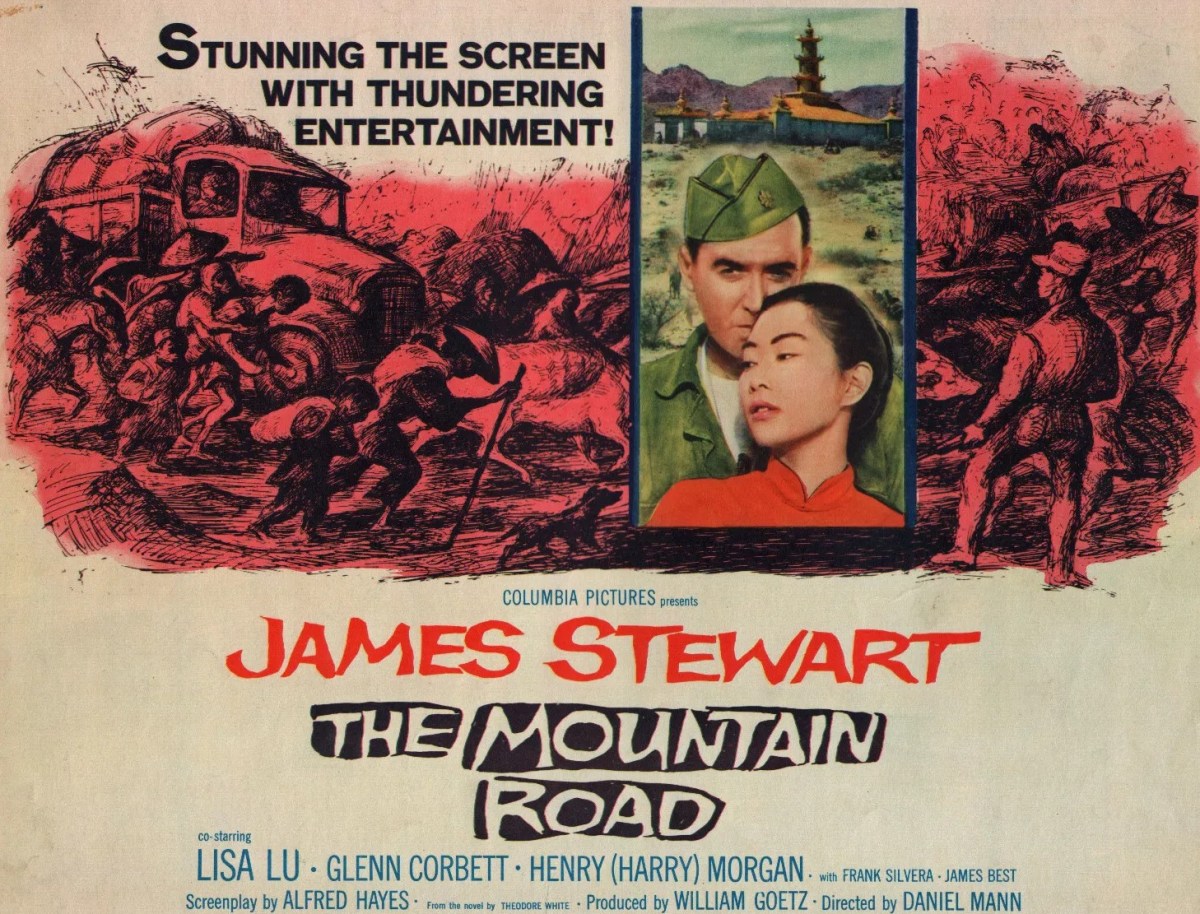
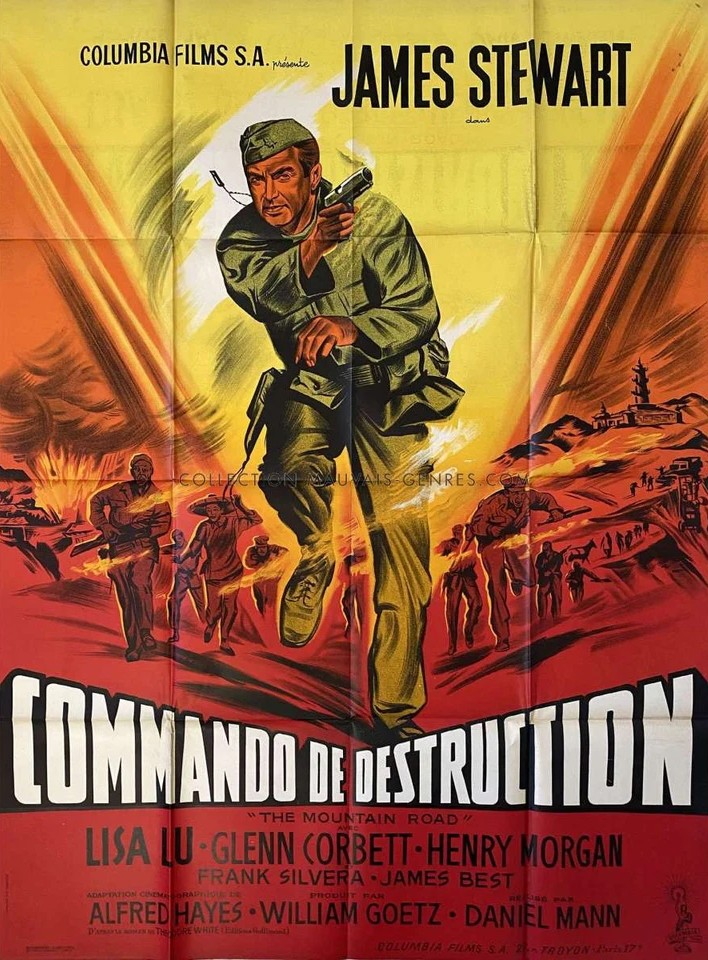
The Mountain Road (1960) ****

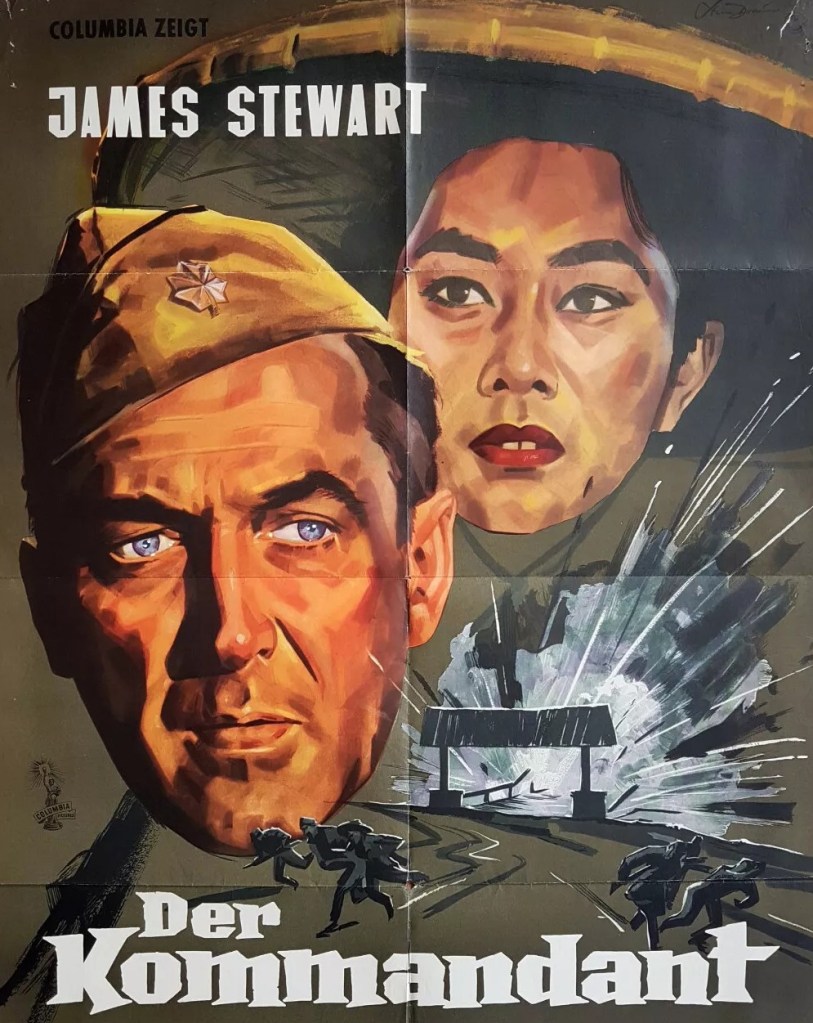
First film to deal with U.S. Army war crimes. Though here’s it’s tabbed as abuse of power but amounts to the same thing when it relates to the wanton killing of innocents. Not the first film to examine a commander totally unsuited to command – The Caine Mutiny (1953) would be your first port of call for that, although that was a career officer rather than a conscript. But the blistering under-rated Oscar-ignored performance by James Stewart (The Rare Breed, 1966) is easily comparable to the Oscar-nominated Humphrey Bogart.

And director Daniel Mann (A Dream of Kings, 1969) is helluva sly. He dupes the audience into thinking this is a mission picture, blowing up a massive ammunition dump to prevent it falling into enemy hands. And if you’re one for the easy action of explosions, this is for you, the kind of fireworks not seen till MCU entered the equation.

And here’s a line that’s going to knock you for six. “China and America are friends.” Say again? You what? As far as I can remember in all my decades of moviegoing, China has always been the enemy, either providing a succession of nefarious villains, or on the brink of starting a nuclear war, or just totally ungrateful for all the efforts the West has made bringing to the country Christianity and the western idea of civilization.

But it’s true. Before Communist China reared its ugly head, the U.S. and China were allies against the Japanese in the Second World War. But towards the end of that conflict, the Japanese had invaded and the Yanks were pulling out. Not wanting to leave anything behind for the enemy – like a huge arsenal or thousands of gallons of diesel – is the trigger for the story.

Except it’s not. Major Baldwin (James Baldwin) doesn’t have to go on any mission. His job is just to blow up a much smaller ammunition dump that’s easily accessible without the need to go on a long trek through the mountains. It’s his choice to take on the bigger job. There’s not even any pressure to do so. It’s entirely at his “discretion.” And you can see in the tone of his superior’s voice that it’s not such a good idea. He can just complete the small job and high-tail it out of there.

But Major Baldwin wants to experience command in action. He’s not a glory hunter in the normal sense but there’s definitely something off in a backroom soldier who’s got that on his wish list. It never occurs to him that there’s more to command than ordering about grunts, many of whom he considers “slobs,” and that the position comes with the task of making difficult decisions.

He’s got a very small team, chief among whom is Sgt Michaelson (Harry Morgan) and translator Collins (Glenn Corbett). Chinese officer Col Kwan (Frank Silvera) is meant to smooth his path and the widow of a Chinese general, Sue Mei (Lisa Lu), is thrown his way, initially you would guess to sweeten the load by becoming a love interest, but actually to become his conscience.

Just to fill you in on the background. China and Japan had been at war since 1937. After Pearl Harbor China became critical to US operations in the Pacific by tying down Japanese forces and after the fall of Burma the US airlifted supplies over the Himalayas.

Baldwin soon discovers that leadership equates to callousness. He has little sympathy for the refugees swarming over the mountain roads seeking sanctuary from the invading Japanese. He blows up a bridge and creates an impasse on the road to delay the Japanese without giving any thought to how that will endanger the natives.

He’s pretty inhuman in his treatment of one of his men, suffering, it later transpires, from pneumonia and might be taking all his cues from General Patton who hated all wounded soldiers. While he’s trying to convince the soldier to get back on his feet all the grunt can do is whimper, “Milk! Milk” like a child. Baldwin even sees little problem in stacking the ill man beside a corpse on the back of a lorry.

It would help if Baldwin had been trained in command, in making decisions, rather than picking faults everywhere and letting the pedantic side of his nature run wild. Sei Lei to some extent tries to rein him in, accusing him of blatant racism, treating the Chinese as if they were a lower form of humanity.

When he does relent and orders surplus food to be handed out one of his men is killed in the stampede. The last straw is Chinese bandits who kill and strip three of his men. So he leads a raid on a Chinese village, rolling a barrel of fuel stacked with dynamite down a hill to destroy the village and innocent villagers.

Up till then things were going along nicely on the romantic front, Sei Lei clinging to him when the massive ammunition dump goes up, and kissing on the cards. She’s westernized after all, spent a lot of time in America, well educated, and so easily a contender for marriage. But she tries to stop the barrel-rolling, telling him this action is unjustified, pure revenge.

He thinks she’ll accept an apology, that some madness came over him, he was consumed by power. But she’s having none of it.

Mission accomplished but human flaws exposed.

This isn’t the James Stewart you’ve come to expect, far from it. There’s certainly times in his career when he’s been mean or ornery and in his Hitchcock excursions a bit creepy, but he’s never been so awful as here, the guy desperate for power without knowing how to use it or draw the line. Purely in a technical capacity, working out where to plant explosives and plan a demolition, he’s in his element, but let him loose on human beings and he’s a loose cannon trying to rein himself in, stuck in a mess of his own making, unable to understand consequence. But sometimes even guilt isn’t enough.

This was an unlikely role for Stewart because, after his own experience in World War Two, a pilot in Bomber Command flying missions over Europe, he had turned down every war picture. Perhaps this movie reflected the guilt he felt of dropping bombs and knowing there would be civilian collateral damage, that sense of power over the powerless might equate to the feelings Baldwin has over the Chinese.

This is by far the most human character Stewart ever played, doing away with both the aw shucks everyman and the commanding often truculent cowboy, and instead portraying someone who’s way out of his comfort zone.

Ace scene-stealer Harry Morgan (Support Your Local Sheriff, 1969) is the pick of the support though Lucy Lu (One Eyed Jacks, 1961), being the conscience of the piece, has all the best lines.

Just as with A Dream of Kings, Daniel Mann takes a flawed individual and doesn’t hang him out to dry. But in retrospect, the war crime, of blowing up the innocent civilians, would not have received such a free pass, which puts a different slant on Baldwin. Alfred Hayes (Joy in the Morning,1965) wrote the script from the Theodore H. White bestseller.

Much to ponder.

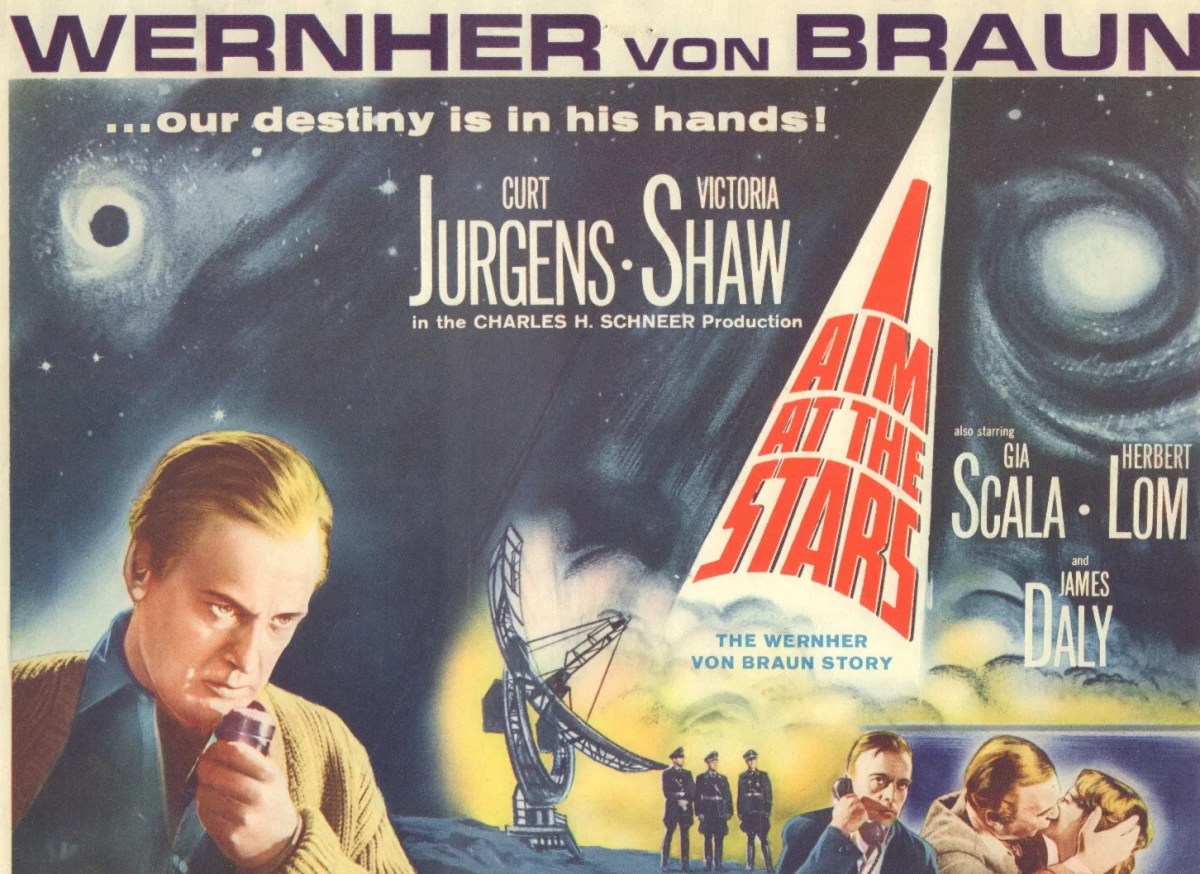
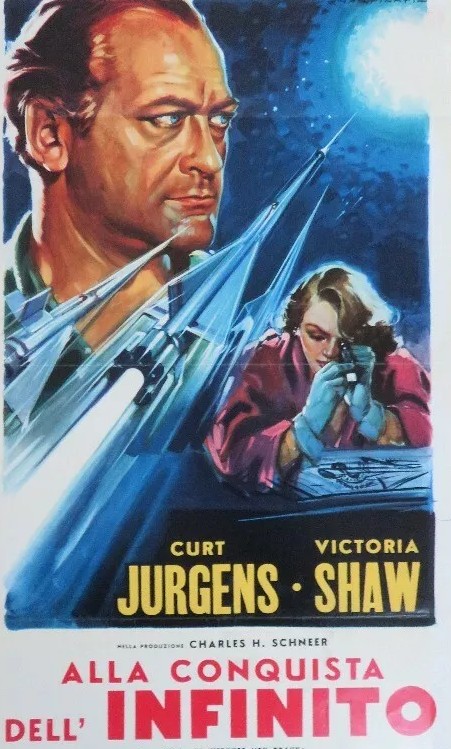
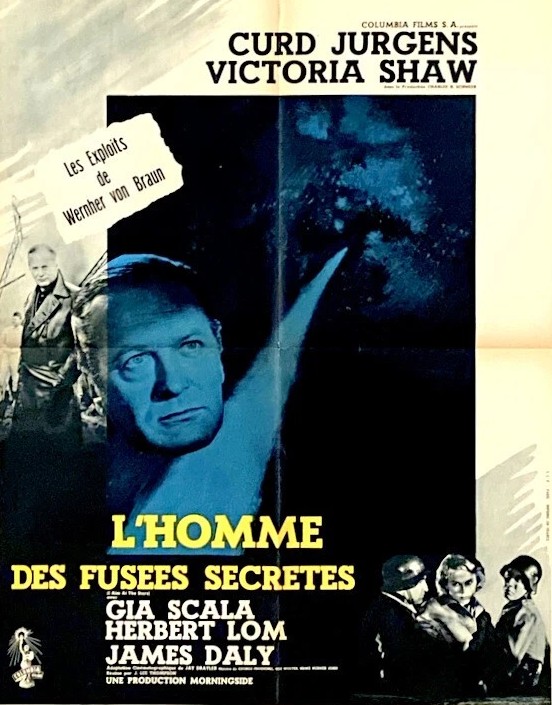
I Aim at the Stars (1960) ***

Could not be more controversial or contentious. But we’ve been here far more recently than six decades ago. Oppenheimer (2023) covered similar ground in terms of a scientist harnessing his brain to create a weapon of awesome destructive power. J. Robert  Oppenheimer was also condemned as a traitor and though he did not switch allegiance he was excluded from the nuclear community after the Second World War.

Director J. Lee Thompson (The Guns of Navarone, 1961) sets out to achieve the impossible – create a valid biopic while trying to deal with the central issue that while German Werner von Braun (Curd Jurgens) directed the U.S. operation to put an unmanned rocket into orbit around the Earth he was also responsible for the V1 and V2 rockets that devasted London towards the end of the Second World War.

The first half of the movie is straightforward biopic, genius scientist overcomes obstacles to reach his achievement. Von Braun was “addicted to rockets” from a very early age and when the Nazi Government sought to use his skills to create a missile, he didn’t show much opposition. Although occasionally indiscreet about Hitler and the Nazi Party, he was able to overlook their shortcomings in the interests of science.

What could have been a dry biopic is filled out with romance. Von Braun eventually finds time to marry Maria (Victoria Shaw) who occasionally has reservations about his aims. His assistant Anton (Herbert Lom) has a more interesting relationship with the widowed Elizabeth (Gia Scala), Von Braun’s secretary. While refusing to marry him, she does carry on a longish affair (whether sex was involved is unclear) with him and you are given the general impression that she is more in love with her boss.

But that turns out to be a clever piece of sleight-of-hand. The reason she spends so much time with Von Braun is that she’s a British spy, copying blueprints with an ingenious miniature camera disguised as a working lipstick. And when she is caught by Anton, he is too much in love to expose her, though her reason for the espionage is that the Germans by mistake killed her husband.

At the end of the war, Anton is the only one among the top scientists who refuses to desert his country. The others decide to become traitors, choosing to defect to the Americans rather than the Russians. And at this point Von Braun comes face to face with his “conscience” in the shape of U.S. Major Taggart (James Daly) who initially is determined to try Von Braun as a war criminal. When higher-ups in the U.S. Government intervene and send the scientists to America to continue their rocket research, Taggart continues his verbal assault on the German.

The spy also turns up and clearly her regard for Von Braun outweighs her conscience, although she enters, eventually, into a relationship with Taggart (who goes back to his former profession of journalist), and attempts to soften his attitude.

Von Braun refuses to take personal responsibility for the thousands of Londoners who died as the result of his invention. He represents the idea of invention without repercussion or personal consequence. But it’s fair to say that all the arguments against the man are given a good airing.

However, there’s a serious omission in the narrative. The conscience of the higher-ups never comes into it. Nobody in a senior position in Government explains why Von Braun deserved a get-out-of-jail-free card and never entering the discussion – not even in the sense of realpolitik – is the issue of how the British must have felt when their ally appropriated the skills of one of their most dangerous enemies.

Ultimately, the picture leaves too many questions unanswered with the American people seemingly eventually worshipping the man who put an American craft into space. The British shunned the picture on release.

Technically, it looks pretty good. I couldn’t really tell from seeing it on the small screen whether the rocket footage was taken from newsreel or academic footage or whether it was shot specifically for the movie.

As played by Curd Jurgens (Psyche 59, 1964) Von Braun is not an easy character to like. Though billed higher, Victoria Shaw (Alvarez Kelly, 1966) makes less of an impact than Gia Scala (The Guns of Navarone), who has the best role in the picture, while Herbert Lom (Bang! Bang! You’re Dead!, 1966) does good work as the patsy and loyalist. James Daly (The Big Bounce, 1969) is mostly the mouthpiece for all the accusations you’d like to fling at someone like Von Braun.

J. Lee Thompson does as well as you might expect within the restrictions of the material. Written by Jay Dratler (Laura, 1944) in his final screenplay.

Flawed but interesting.

The Green Berets (1968) ***

Apart from attempts to justify the Vietnam War and a hot streak of sentimentality, a grimly realistic tale that doesn’t go in for the grandiosity or self-consciousnesss of the likes of Apocalypse Now (1979), The Deer Hunter (1978) and Platoon (1978). It’s been so long since I’ve watched this that my DVD is one of those where you had to turn the disc over in the middle.

The central action sequence is a kind of backs-to-the-wall Alamo or Rorke’s Drift siege. There’s no sense of triumphalism in the battle where the best you can say is that a reasonable chunk of the American soldiers came out alive but only after evacuating the staging post they were holding, more like Ridley Scott’s Black Hawk Down (2001) where survival is all there is to savor. It’s all pretty brutal stuff, the Americans handicapped by having to also look after the fleeing Vietnamese villagers taking refuge in their camp.

There are plenty grim reminders of how war has become even more devastating in the aftermath of World War Two. The Vietcong take, literally, no prisoners, seen as killing civilians as easily as soldiers. The Americans, for their part, have no compunction in using more sophisticated weaponry, with the addition of targeted air strikes.

Into the mix, somewhat unnecessarily, comes left-wing journo George (David Janssen) whose main job is to change his mind about the work the soldiers are doing, though admitting that to report the truth will lose him his position. He’s slung into the middle of a defensive action headed up by Col Kirby (John Wayne) to hold a position under threat against superior (in numbers) forces. There’s a fair bit of the detail of war but virtually zero about the strategy, whether that’s the U.S. Army’s plan to defeat the enemy or this individual unit’s method of defending this position. Apart from extending the perimeter of the camp to create a more effective killing zone, it’s hard to work out what the heck is going on, no matter how often orders are barked through field telephones or walkie talkies. There are squads out in the field and units in the camp and how the whole operation is meant to mesh is beyond me.

There’s not much time to flesh out the characters, save for “scrounger” Sgt Peterson (Jim Hutton) who adopts an orphan, Vietnamese soldier Capt Nim (George Takei) and Sgt Provo (Luke Askew). The rest of the motley bunch are the usual crew of monosyllabic tough guys and friendly medics and whatnot.

Though the emotional weight falls on Lin (Irene Tsu), fearing shame and being ostracized by her family for befriending the Vietcong general who killed her father and for whom she now lays a honeytrap, Kirby expresses guilt at having to kill anybody.

Despite being sent out to reinforce the position, the Americans are forced to retreat and enjoy only a Pyrrhic victory when the cavalry, in the shape of an airplane, arrives to mow down the enemy after they have captured the position.

The fighting is suitably savage, and there is certainly the notion that the Americans are not only being out-fought but out-thought and that no amount of heavy weaponry is going to win the day.

Possibly to prevent the idea of defeat destabilizing the audience, the movie shifts into a different gear, more the gung-ho commando raid picture that the British used to do so well, where Kirby heads up an infiltration team to capture the Vietcong general who has been seduced by Lin. This sets up a completely different imperative, all stealth and secrecy, the kind of operation that in the past would have been a whole movie in itself rather than the tag-end of one.

While the prime aim of this is to have the audience leave the cinema happier than if they had just witnessed the retreat from the camp, in fact it also serves two purposes. One is worthwhile, to emphasize the sacrifices made by the Vietnamese. Lin, having agreed to prostitute herself, fears being cast out as a result. But the other outcome of this mission is to kill off Sgt Peterson thus leaving the little Vietnamese lad even more orphaned than before.

John Wayne (The Sons of Katie Elder, 1965) doesn’t attempt to gloss over the weariness of his character. Jim Hutton (Walk, Don’t Run, 1966) shifts with surprising ease from comedy to drama. Even as a cliché David Janssen (Warning Shot, 1966) is underused. Watch out for Aldo Ray (The Power, 1968), George Takei (original Star Trek series), Raymond St Jacques (Uptight, 1968), Luke Askew (Flareup, 1969) and Irene Tsu (Caprice, 1967).

Three hands were involved in the direction: John Wayne, veteran Mervyn Leroy (Moment to Moment, 1966) and Ray Kellogg (My Dog, Buddy, 1960). Written by James Lee Barrett (Bandolero!, 1968) from the book by Robin Moore. Worth pointing out the score by triple Oscar-winner Miklos Rosza (The Power, 1968) especially the low notes he hits to provide brooding tension.     

Certainly a mixed bag, the central superb action sequence weighted down by the need to find something to shout about.

You Can’t Win ‘Em All (1970) ***

Charles Bronson travelogue. Slowest action picture you will ever come across. Director Peter Collinson forgets all he learned about tension from The Penthouse (1967) and action from The Italian Job (1969) and in trying to create a Turkish version of the visual delights of David Lean’s Lawrence of Arabia (1962) comes a cropper, not least because he hasn’t counted on the dust resulting in endless scenes of men on horseback being obscured. There must be about 10-15 minutes of just travelling by horse, train and boat through boring scenery.

There’s an interesting story in here somewhere but you’ll need all your patience to stick with it.  Soldiers of fortune Adam (Tony Curtis) and Josh (Charles Bronson) are the type of characters who buddy up one minute and stitch each other up the next. Their attitudes are ingrained from the outset – Josh robs shipwrecked Adam who takes revenge by stealing his boat. They team up to take advantage of the chaos ensuing in Turkey in 1922 following the collapse of the Ottoman Empire, setting themselves up as mercenaries before their small force of like-minded fellows, armed with Tommy guns,  is hired by Governor Osman Bey (Gregoire Aslan) to escort a consignment of gold to Cairo. They soon discover that’s just a cover. The only gold on the gold bars is as much as it takes to provide a golden sheen to blocks of lead. There are actually more valuable prizes: Bey’s daughters and a trunk of priceless jewellery.

So far, they’ve beaten off various attacks, the submachine guns making short work of rebels armed only with rifles, and this looks as if it’s heading into fairly standard territory whereby the scoundrels will evade their captors and make off with the loot. But halfway through it does a U-turn. We discover that Adam is actually in the country to repossess one of his father’s ships lost in World War One. This is tweaked into an important plot point – the Turks have been blockaded by the Brits but a ship flying an American flag would be permitted safe passage.

Then it twists on its axis once again and we’re dropped into femme fatale land. The daughters are being escorted by the beautiful but wily Aila (Michele Mercier). She’s a step up from the usual two-timing female of the species. She’s a three-timer, attempting to woo in turn the governor, Adam and Josh. Actually, she returns to two-timing when she knifes the governor to death. And her plans go awry when Josh rejects her advances with a vicious slap.

Even so, he’s not averse to teaming up with her to betray Adam and make off with the loot. Adam, who has considered himself worldly wise, is furious and eventually traces Josh and Aila to the port of Smyrna.

It doesn’t end well, Josh and Adam are captured. But then it does end well. Aila, revealed as a spy, negotiates their freedom. After all, inadvertently, they helped her to transport the real treasure, an ancient Koran, while keeping the jewels for herself.

Leo Gordon (Tobruk, 1967) has penned a very wayward screenplay. Charles Bronson (Farewell, Friend, 1968) and Tony Curtis (The Boston Strangler, 1968) play well off each other, occasionally exchanging decent quips, with the kind of personalities that might congeal into an acceptable screen pairing, guys, while minus an honor code, who don’t stray into unacceptable behaviour. And it might have worked equally as well if the Michele Mercier (Angelique, 1964) strand had been introduced at the beginning and we had a three-way romantic dilemma. But director Collinson takes forever to get the two elements of the tale to mesh and wastes countless minutes, as previously noted, as our heroes laboriously grind their way towards their destination. The introduction of Mercier – sudden light catching her eyes in the darkness – is the only composition of note. And while Bronson and Curtis are a sparky pairing most of the time they flounder in an incomprehensible tale.

You can either catch this on YouTube and have your viewing interrupted by an advert every two minutes or on Amazon Prime where such interference is minimal.

Mosquito Squadron (1969) ****

Surprisingly somber, unusually reflective and exceptionally well-constructed. Except for taking the easy way out at the end, could easily have found itself in the classic finale stakes in the same league as Casablanca (1942) or The Third Man (1949) where true love is thwarted. More than enough aerial action for aficionados and an excellent battle sequence.

In addition we have that very contemporary trope of the human shield and the argument by British officers of obeying orders that would take on a different significance from the enemy perspective at the end of World War Two. Throw in an unexpected slug of guilt, a number of understated scenes, and a very clever wheeze from the Germans and you have a movie that rises well above the standard programmer.

Quint Munroe (David McCallum) is an orphan, taken in at a young age by the family of Squadron Leader “Scottie” Scott (David Buck) whom he regards as a brother. Also a pilot, Quint watches Scottie’s plane explode in a bombing raid over France. Next in line for promotion, Quint, with the usual survivor’s guilt, takes over.

In the first of the sequences that are notably out of place in a standard gung-ho World War Two picture, Quint is sent to tell the bad news to Scottie’s wife Beth (Suzanne Neve). He doesn’t have to say a word. She recognizes the look on his face. Quint had barely escaped from his own burning cockpit, a fact that’s gone unreported to Beth, but when she comes to her husband’s quarters at the air base, she gasps at the burn marks on the back of his jacket. There are four or five instances, again understated, in this scene when Beth is brutally reminded of her husband’s death. And Quint’s colleague Douglas (David Dundas) rejoices in the fact that he’s lost an arm because that’s saved his life, it’s his “ticket” to remain earthbound, and he can safely get married in the knowledge his wife won’t be receiving a knock on the door anytime soon.

This is a mission picture in case you haven’t noticed from my concentration on the other more interesting aspects of the movie. The RAF needs to bomb an experimental station developing the next range of German rockets that’s buried underneath a chateau in France. Flattening the area in the normal fashion won’t do it, the bombers need to be able to hit a very small target indeed, the entrance of the secret hideaway. So they turn to a version of Barnes Wallis bouncing bomb (see The Dam Busters, 1955) and have to practise like billy-oh against a very tight deadline to hit such a target.

Meanwhile…meanwhie…meanwhile. There are three dramatic meanwhiles. Quint begins an understated romance with Beth, he filled with remorse at stealing his dead pal’s wife, she less concerned because there was a hint of earlier romance between them. The Germans protect the chateau behind a human shield of captured RAF pilots. In carrying out the attack, the pilots are condemning colleagues to death, a worry knocked on its head by the gung-ho likes of Air Commodore Hufford (Charles Gray), but other more sensitive high-ranking officers resort to the “obeying orders” routine. Final twist: among the prisoners is Scottie.

Nobody outside the base is permitted to know about the prisoners in case taking such an action damages public morale, so now Quint is in a bind. There’s a final twist to the twists – Scottie has lost his memory so badly that even if he could return to Britain it’s doubtful if he would know who Beth was, though, of course, they would still be married, so that would scupper Quint’s chances unless the story went onto a fourth act in the vein of Random Harvest (1942).

The French Resistance are called in to launch a daring raid to free the prisoners and assuage guilt all-round. Quint is shot down and joins the brutal battle action in which, as predicted by Hufford, the escapees are mown down by superior German firepower. He finds Scottie, who doesn’t recognize him at all. Scottie is also of the gung-ho brigade and dies stopping a German tank.

Meanwhile, Douglas has got into trouble for telling too many people about the prisoners. He’s very good friends with Beth.

You can see the cinematic opportunity. Quint returns knowing he is free to marry Beth only to find Beth turns away from him because he went on an expedition that could kill her husband. But the producers bottle it and go for the happy ending instead.

David McCallum (Sol Madrid/The Heroin Gang, 1968) remains in low gear throughout, and though Suzanne Neve (Naked Evil, 1966) more than makes up for him, you would wonder at the wife of a dead pilot taking up with another flier who could end up the same way.

Director Boris Sagal (Made in Paris, 1966) is to be commended for spending so much time on the themes of guilt and loss and keeping reality to the forefront. Some of the sequences have been stolen from other movies or are stock footage. Written by Donald S. Sanford (The Thousand Plane Raid, 1969) and actress Joyce Perry in her big screen debut.

Raises far more issues than the normal war movie, certainly blown away at the box office by the bigger-budgeted all-star-cast Battle of Britain the same year, but more than holds its own, and if it had been an American low-budgeter with some better-known lesser stars would have probably been re-evaluated long before now.

Impressive.

The Thousand Plane Raid (1969) ***

Let’s be honest. Like 633 Squadron (1964) and perhaps even, despite its all-star cast, Battle of Britain (1969), many in the audience will only be there for the hardware, the chance to see the flying battle buses that took the Allies to victory in World War Two. There’s not going to be much of a story anyway – rivalry between commanders, tension on the ground, a romance beginning or breaking apart, a stash of info dumps. That can hardly compare to the grace of the big birds in the air, usually a mixture of stock footage and new work with refurbished old planes.

This one has even re-purposed – perhaps stolen would be a better word – a mission from earlier in the war which was planned and carried out by the RAF so that it could be planned and in part carried out by the Yanks. Still, it was the Yanks putting up the money so I guess they can change history whenever they like.

U.S. Air Force Col Brandon (Christopher George), leading an American bomber group stationed in England, has worked out that while night-time missions result in fewer casualties they are increasingly failing to get the job done, only one on five bombs hitting the designated target. He reckons a gigantic air attack in daylight is the only way to succeed. His boss General Palmer (J.D. Cannon) grants him the chance to pitch his idea to the assembled RAF high command. Despite the risks, they agree and then need to come up with about million gallons of fuel and about a million-and-half tons of bombs, and requisition 30 airfields for the bombers and the same number for the fighter support.

Various elements make life tougher for Brandon. The mission chosen is much further afield than he originally imagined, the deadline is brought forward, his crew is unprepared and needs toughened up, plus his romance with WAC Lt Gabby Ames (Laraine Stephens) has hit a sticky patch and he’s having to deal with a cocky RAF fighter pilot Wing Commander Howard (Gary Marshal) who’s been seconded to the operation. To annoy Brandon further Howard befriends disgraced American pilot Lt Archer (Ben Murphy) who’s been accused of cowardice.

Before we can get to the big event, Brandon also undergoes a crisis of confidence and it’s as much as he can do to pull himself together in time. The screenwriter has arranged for the three main characters to end up in the one plane, allowing Archer to prove himself in battle and Howard to manage some heroics.

The sight of a huge array of WW2 planes in the air without the help of CGI still takes the breath away. Even though the final action pales in comparison with 633 Squadron or Battle of Britain it’s visually powerful enough to see us through.

By the end of the 1960s, B-pictures cost a lot more, but that didn’t necessarily result in better performances. Christopher George (El Dorado, 1966), signed up to a five-picture deal by United Artists, isn’t the breakout star. In fact there isn’t one, neither Laraine Stephens (40 Guns to Apache Pass, 1967) nor Gary Marshal (Camelot, 1967), in his second and final movie, making much of an impression. However, the picture was more notable for members of the supporting cast including J.D. Cannon (Krakatoa: East of Java, 1968), Ben Murphy (Alias Smith and Jones TV series, 1971-193), Bo Hopkins (The Wild Bunch, 1969), future director Henry Jaglom (A Safe Place, 1971) and Tim McIntyre (The Sterile Cuckoo, 1969).

One who certainly made the step up was director Boris Sagal (Made in Paris, 1966); in a couple of years he would be helming cult number The Omega Man (1971). Written by Donald S. Sanford (Midway, 1976).

Discover WordPress

A daily selection of the best content published on WordPress, collected for you by humans who love to read.

The Atavist Magazine

by Brian Hannan

WordPress.com News

The latest news on WordPress.com and the WordPress community.