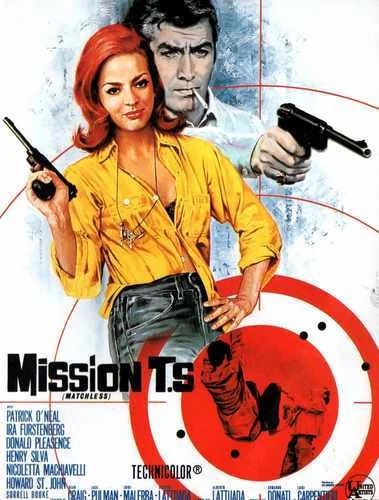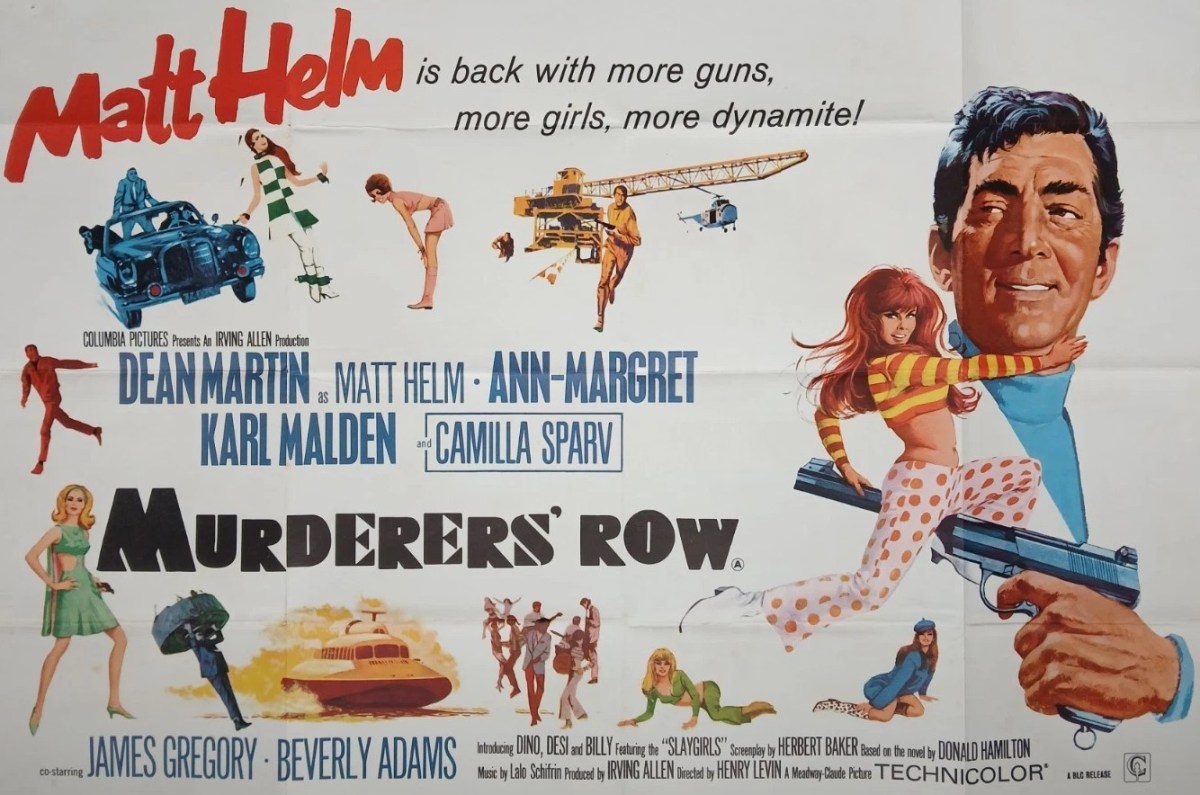
Operation Kid Brother / O.K Connery (1967) ***

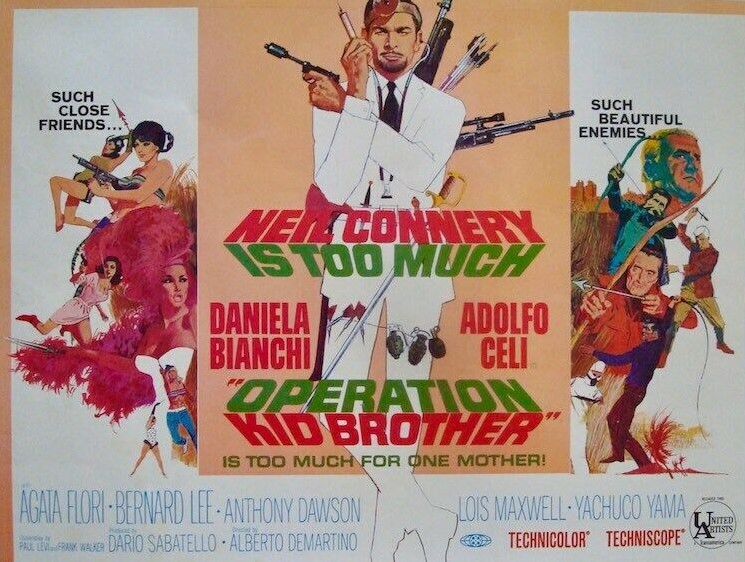
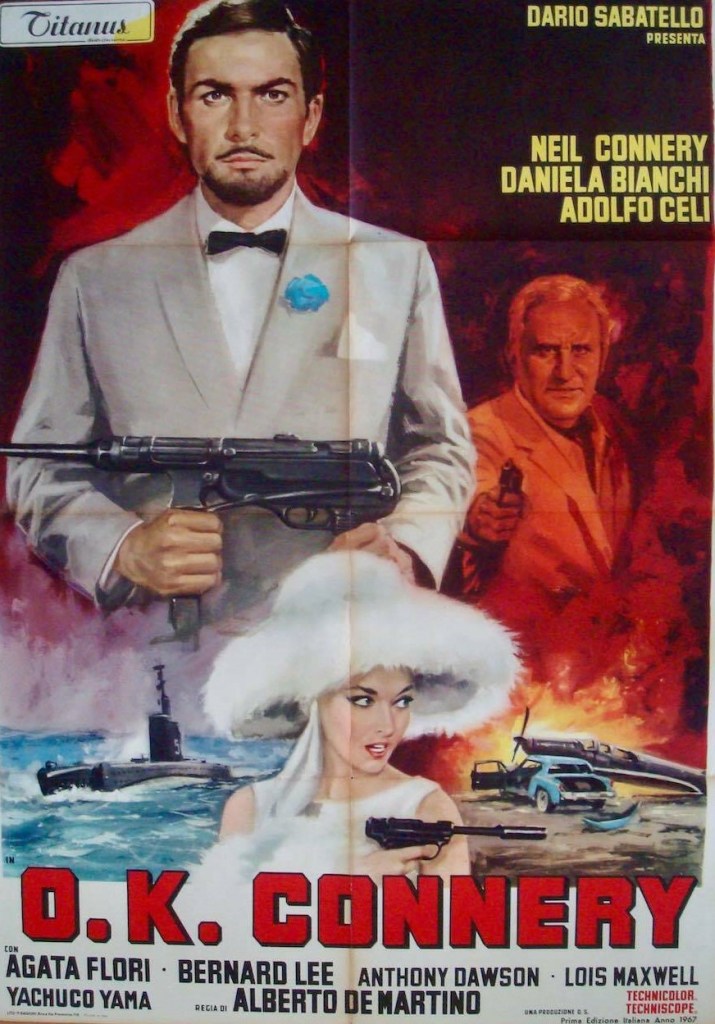
Half a century ago it would have blasphemy to do anything but mock this oh-so-obvious James Bond rip-off. That was the year, if you remember, when another bigger-budgeted spoof, Casino Royale, took an almighty chunk out of the box office of You Only Live Twice.  Where the former had a multitude of Bonds, Operation Kid Brother settled for the premise that its main character was the brother of the famed secret agent.

Far from being a disaster, it is, to use the alternative title, “O.K.”, and in parts more than acceptable, especially in its anticipation of ideas that would later become Hollywood tropes: packages concealed in the brain (Total Recall, 1990 and Johnny Mnenomic, 1997), driverless cars (from The Love Bug, 1968, to Tomorrow Never Dies, 1997, and beyond), electronic global blackout and its current equivalent the gravity wave (Moonfall, 2022), and even a poison ploy that popped up in The Princess Bride (1987). Perhaps you could also reference The Bourne Identity (2002), the newspaper weaponized there could be traced back to the harmless belt here. And if you want to get really contemporary – the hero has a superpower: hypnotism. Bear in mind too that sly references to “the other guy” were made in On Her Majesty’s Secret Service (1969), the first in the series not to feature Sean Connery.

Dr Neil Connery (Neil Connery) belongs to the sub-genre of innocents caught up in espionage (Hot Enough for June, 1964). As with the main character, this is more of an affectionate pastiche of the Bond films than any attempt to make fun of the series. This Connery is a plastic surgeon from Edinburgh (birthplace of his real-life brother Sir Sean) who has invented a method that permits secrets to be carried inside the brain – in essence viewed as an “impregnable safe.”

Bond alumni include Adolfo Celi (Largo in Thunderball, 1965), Daniela Bianchi (From Russia with Love, 1963), Anthony Dawson (Blofeld in From Russia With Love), Bernard Lee (M in the original series) and Lois Maxwell (Miss Moneypenny). Apart from a villainous female gang masquerading as the Wild Pussy Club, a reference to Pussy Galore in Goldfinger (1964) and a few sly references to the brother, the film is played straight.

Megalomaniacs Alpha (Anthony Dawson) and Beta (Adolfo Celi) belong to secret organization Thanatos intent on global domination by stealing atomic nuclei that will send magnetic waves across the world. Using intellect more than brawn, and with a sideline in lip-reading, Connery becomes involved because he can unlock the secrets hidden in the mind of Yachuko (Yee-Wah Yang), who is then kidnapped by Maya (Daniela Bianchi).

In Britain it was inexplicably released with a film that had an “adults only” certificate.

The costumes are slightly outre, Beta out of his depth in red leather, Maya in a hazard suit, Connery susceptible to kilts while Beta’s female yacht crew are decked out (pardon the pun) in tartan mini-skirts and pompoms. There is clever reversion to old-fashioned weaponry as archers assemble to assault the lair.

But all in all it is enjoyable. Yes, some of the pleasure derives from the twists on the Bond clichés, but Connery, complete with his brother’s pursing of the lips, is a decent enough stand-in. Daniela Bianchi (Special Mission Lady Chaplin, 1966), Adolfo Celi (In Search of Gregory, 1969) and the no-longer-deskbound Lois Maxwell (The Haunting,1963) join in the fun without making fun of the concept.

The direction by Alberto De Martino (Dirty Heroes, 1967) is competent but in the absence of a bigger budget perhaps exhilaration is too big an ask. The typical Italian production technique of lip-synching once the movie is completed does distance the picture.  Three writers stitched the enterprise together – Frank Walker, in his only screenplay, Stanley Wright (Marenco, 1964) and Paulo Levi (Seven Guns for the MacGregors,1967).

Ebay is your best bet for a DVD of this one.

Check out also the “Behind the Scenes” article on this picture.

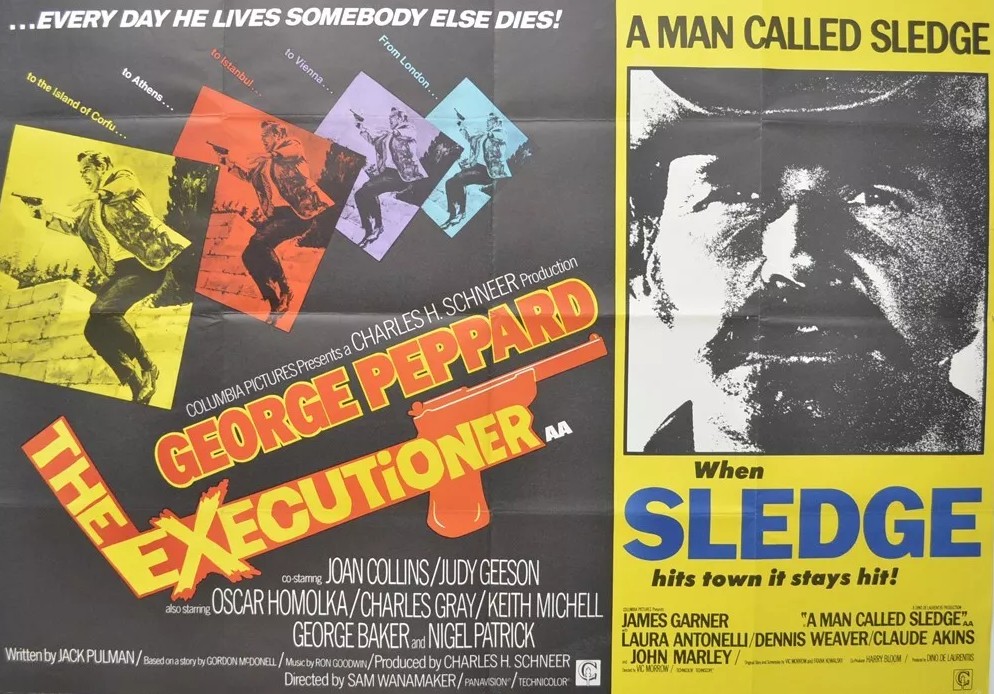
The Executioner (1970) ****

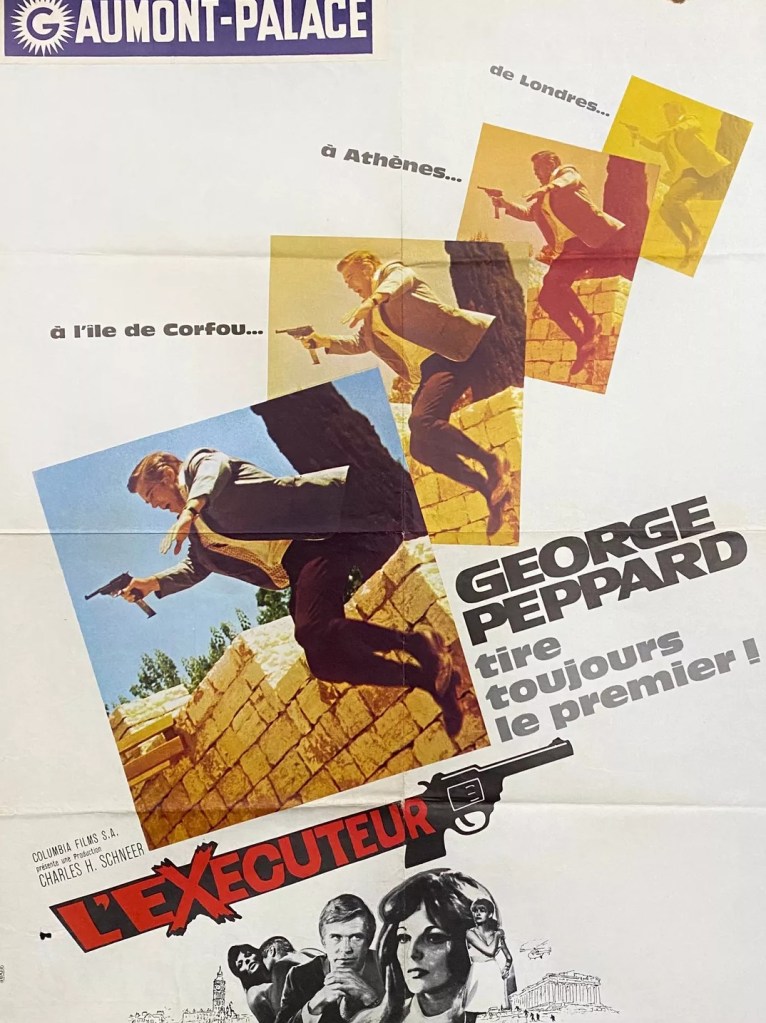
Minor gem. One of the espionage films of the era ignored by audiences because it lacked the verve of James Bond, no car chases or bedhopping hero to maintain interest when the narrative stretched credulity. Ignored by critics because it starred the vastly underrated George Peppard. Yet if you wanted an actor to show pain, to suffer from humiliations to his dignity, there was no one better, in part because on screen (and apparently in real life) arrogance was key to his persona. Here, you can add confusion to that mix of unwelcome emotions.

Beginning a scene with the aftermath of slaughter has become a modern thriller trope – see The Equalizer 3 (2023),  The Accountant 2 (2025) for the most recent examples –  but this is where the idea began and it’s how this picture opens, the only survivor of the massacre being the wife Sarah Booth (Joan Collins) whom our hero John Shay (George Peppard) covets. An immediate flashback shows them consummating their love. So you’re guessing there’s something of the James Bond in Shay, carrying on an illicit love affair.

But in fact that’s just one of the clever titbits of misdirection director Sam Wanamaker (The File of the Golden Goose, 1969) throws our way. And, gradually, we realize this is not so much about dirty dealings in the espionage business, the usual hunting down of a double agent, our hero clashing with disbelieving and frosty upper class bosses, but more about how the flaws in human nature turn characters inside out.

It’s no surprise that Shay is an outsider, not with that American accent standing out a mile in the British secret service run by the cut-glass accents of the likes of Col Scott (Nigel Patrick) and Vaughn Jones (Charles Gray). He’s not a member of the club, old boy. He bristles at not belonging – “belong to me!” wails girlfriend Polly (Judy Geeson). And he’s been passed over  by love of his life Sarah for another agent Adam Booth (Keith Michell) not because the latter has wealth and status but because Shay’s mind is too often elsewhere.

Though you are initially led to believe that Shay is having an affair with Sarah, that turns out to be far from true, although the glances he casts at her are enough to make Polly think they still are. And part of the reason his superiors distrust his assertion that Adam is a double agent is because they think he just wants rid of his rival so he can make another play for his former lover.   

Shay is so convinced that he is right that he gets Polly, who also works in the secret service but in the backroom department, to sneak out top secret files. When he stitches up enough information to make the case against Adam, it backfires and he’s suspended. But then, egged on by a discovery by top boffin Crawford (George Baker) working on some top secret stuff,  he decides to kill Adam and chuck the body out of a plane into the English Channel – hence becoming the executioner of the title.

Then the twist is truly in when Shay takes Adam’s place on a mission to Greece, which has also been planned as a second honeymoon for Adam and Sarah. This latter fact doesn’t dissuade Shay from making a romantic play for Sarah. However, there are nefarious dealings afoot espionage-wise but in what proves the first of many miscalculations Shay comes unstuck and is beaten up by the opposition and Sarah kidnapped. The ransom the Soviets demand is Crawford.

The massacre that we saw at the start solves that problem.

But it turns out Shay has let desire for Sarah muddle his brain for Adam was not a secret agent. Shay has been further duped into that belief by Crawford who also has romantic designs on Sarah, though it has to be said in her defense that Sarah has encouraged neither of these potential suitors.

There is one final twist but that’s just another nail in the coffin.

So what sets out to be a different kind of spy thriller turns into the polar opposite of what audiences might have expected, playing more on the human frailty of the hero than hitherto in the genre.

George Peppard is excellent, especially when expressing emotional pain and confusion, continuing a superb run of acting roles – ignored by the critics of course but tossing his screen persona away – that ran from Rough Night in Jericho (1967) and P.J. (1967) to Pendulum (1969). Judy Geeson (Brannigan, 1975) has the better female role as the disgruntled but faithful girlfriend. Aside from the occasional acidic remark, Joan Collins (Subterfuge, 1968)  is strictly there for the glamor.  Written by Jack Pulman (Best of Enemies, 1961) from a story by Gordon McDonnell (Shadow of a Doubt, 1943).  

Well worth a look.

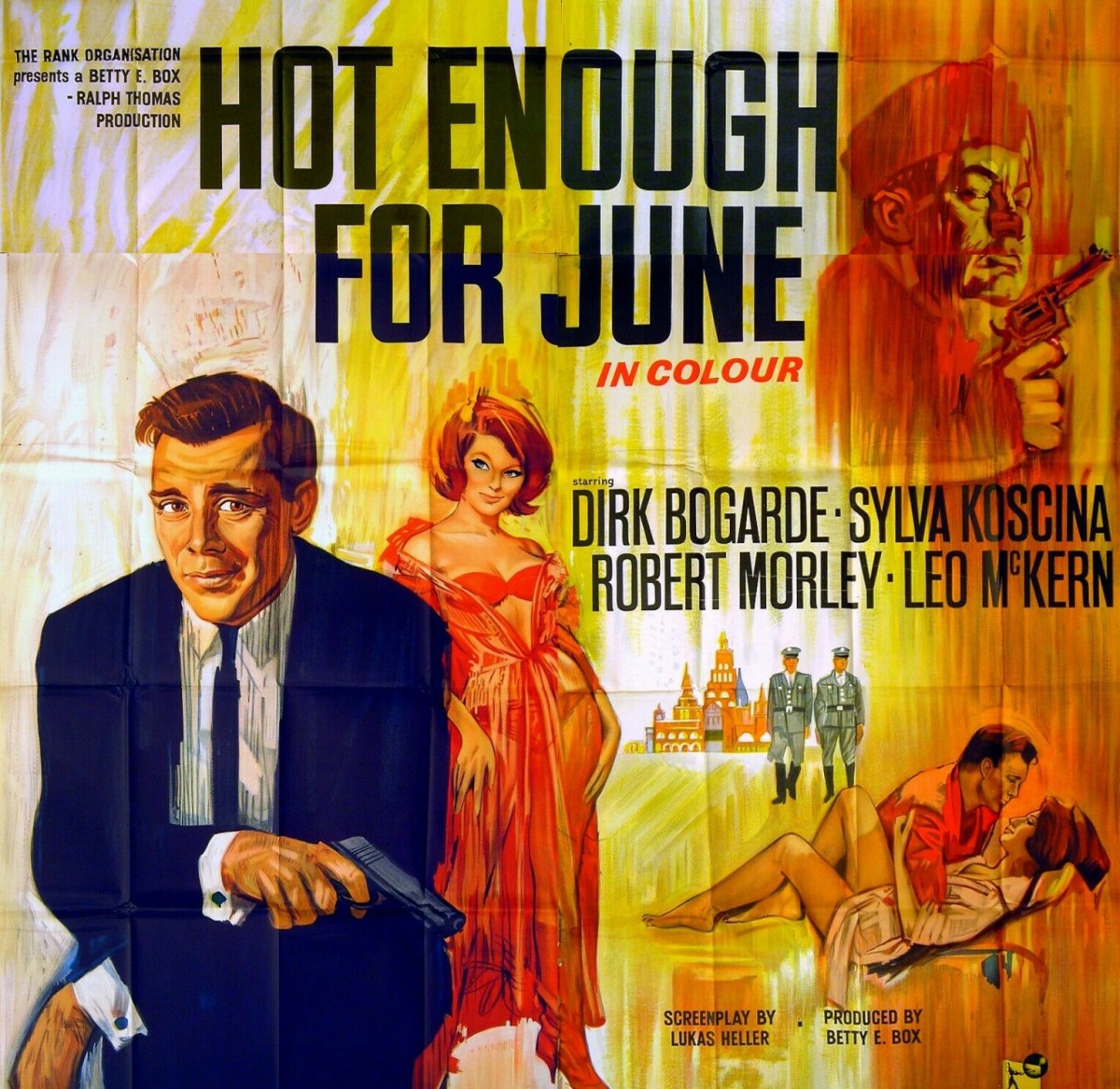
Hot Enough for June / Agent 8 3/4 (1964) ***

Thanks to his language skills unemployed wannabe writer Nicholas (Dirk Bogarde) is recruited as a trainee executive on a too-good-to-be-true job visiting a Czech glass factory  only to discover that while engaged on what appears a harmless piece of industrial espionage is in fact considerably more serious.  Complications arise when he falls in love with his chauffeur Vlasta (Sylva Koscina) whose father, Simenova (Leo McKern), is head of the Czech secret police.

Eventually, it dawns on Nicholas that he is in the employ of the British secret service headed by Colonel Cunliffe (Robert Morley). Soon he is on the run. Adopting a variety of disguises including waiter, Bavarian villager and milkman, he evades capture and makes a pact with Vlasta that neither of them will participate in espionage activities.

A chunk of the comedy arises from misunderstandings, Iron Curtain paranoia, the destruction of indestructible glass, password complications, Nicholas’s contact turning out to be a washroom attendant, and from the essentially indolent Nicholas being forced into uncharacteristic action. Soon he is adopting the kind of ruses a secret agent would invent to outwit the opposition, including burning the hand of a man with his cigarette and stealing a milk cart.

The romance is believable enough and Vlasta has the cunning to shake off the secret agent shadowing her, although the ending is unbelievable and might have been stolen from a completely different soppy picture. Although Nicholas is clearly in harm’s way several times that is somewhat undercut by the espionage at a higher level being presented as a gentleman’s game.

There are unnecessary nods to 007 and the kind of gadgets essential to Bond films, although none come Nicholas’s way. But these attempts to modernise what is otherwise an old-fashioned comedy largely fail. Taking a middle ground in comedy rarely works. You have to go for laughs rather than plod around hoping they will miraculously appear. And in fact the comedy is redundant in a plot – innocent caught up in nefarious world – that has sufficient story and interesting enough characters to work.

That the movie is in any way a success owes everything to the casting. Dirk Bogarde, though well into his 40s, still can carry off a character more than a decade younger. He can turn on the diffidence with the flicker of an eyelash. And yet can call on inner strength if required. He is the ideal foil for light comedy, having made his bones in Doctor in the House (1954), reprising the character for Doctor in Distress (1963) and dipped in and out of serious drama such as Victim (1961) and the acclaimed The Servant (1964), released just before this.

In some respects it seems as if two different pictures are passing each other in the night. The Bogarde section, excepting some comedy of misfortune, is played for real while in the background is a bit of a spoof on the espionage drama.

Sylva Koscina (The Secret War of Harry Frigg, 1968) is excellent as the beauty who betrays her country for love. Robert Morley (Topkapi, 1964) and Leo McKern (Assignment K, 1968), although in on the joke, are nonetheless convincing as the secret service bosses.  Look out for a host of lesser names in bit parts including Roger Delgado (The Running Man, 1963), Noel Harrison (The Girl from U.N.C.L.E. 1966-1967), Richard Pasco (The Gorgon, 1964) and stars of long-running British television comedies John Le Mesurier, Derek Fowlds and Derek Nimmo.  

This was the eighth partnership between director Ralph Thomas and Dirk Bogarde, four in the Doctor series but also three serious dramas in Campbell’s Kingdom (1957), A Tale of Two Cities (1958) and The Wind Cannot Read (1958). In themselves the comedies and the dramas were successful, but mixing the two, as here, less so. Written by Lukas Heller (Flight of the Phoenix, 1965) from the bestseller by Lionel Davidson.

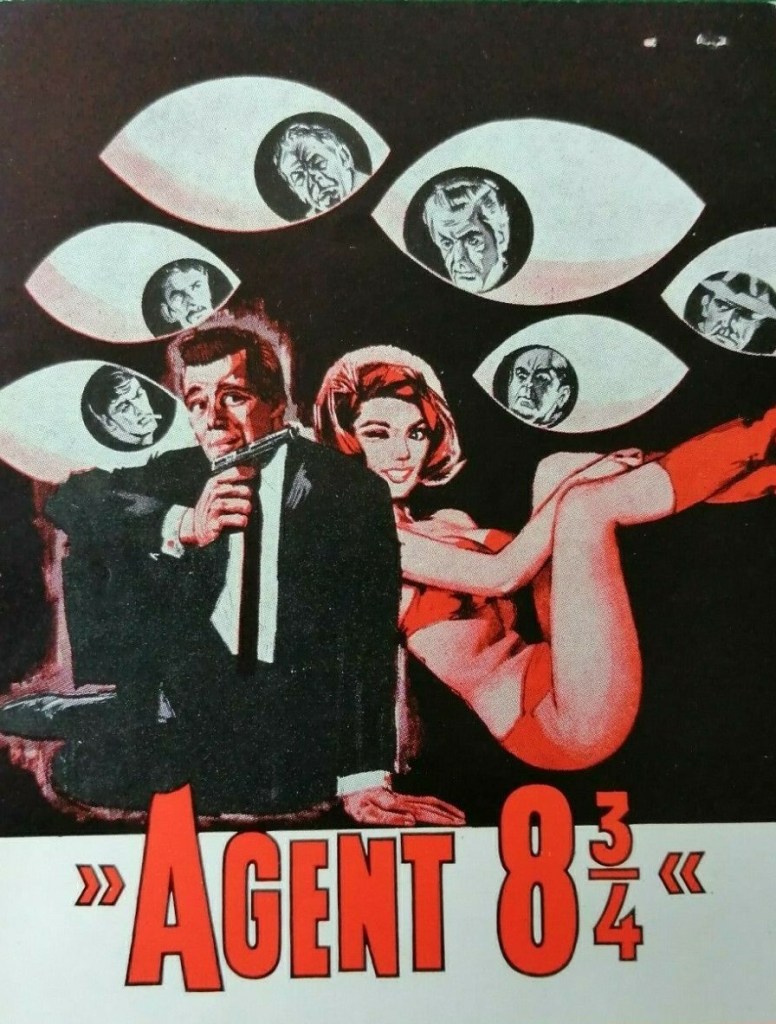
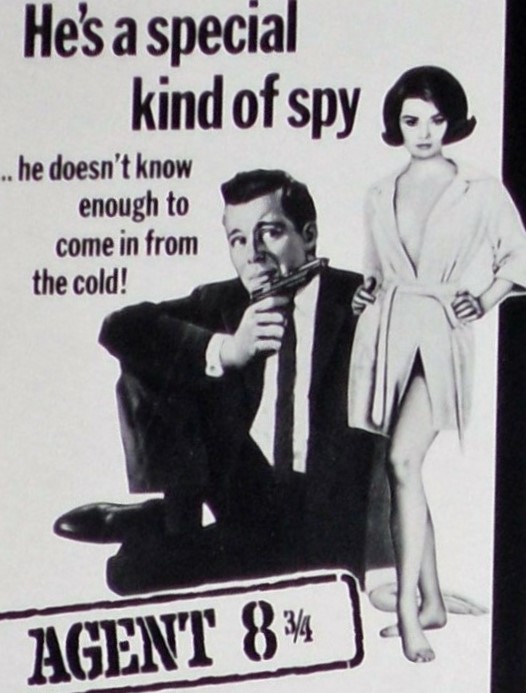
American distributors were less keen on this picture and it was heavily cut for U.S. release and retitled Agent 8¾ presumably in an effort to cash in on the James Bond phenomenon. I’ve no idea what was lost – or perhaps what was gained – by the editing.

The end result of the original version is a pleasant enough diversion but not enough of the one and not enough of the other to really stick in the mind. 

Should you be interested in how the book was translated into the film, there’s another article here covering that. Link below.

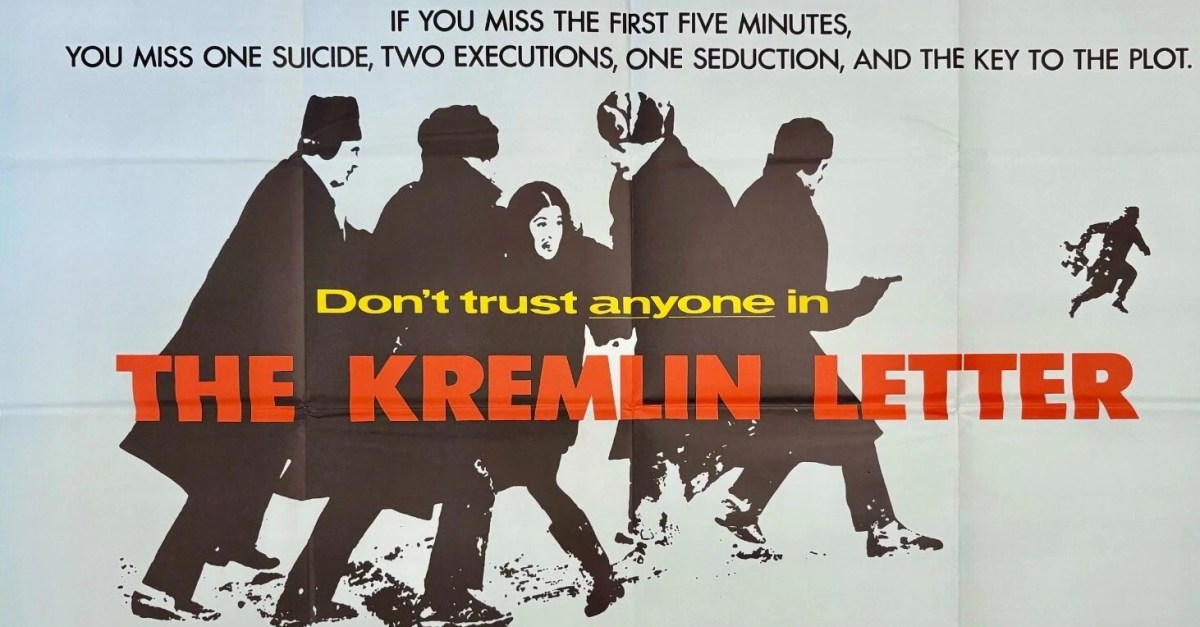
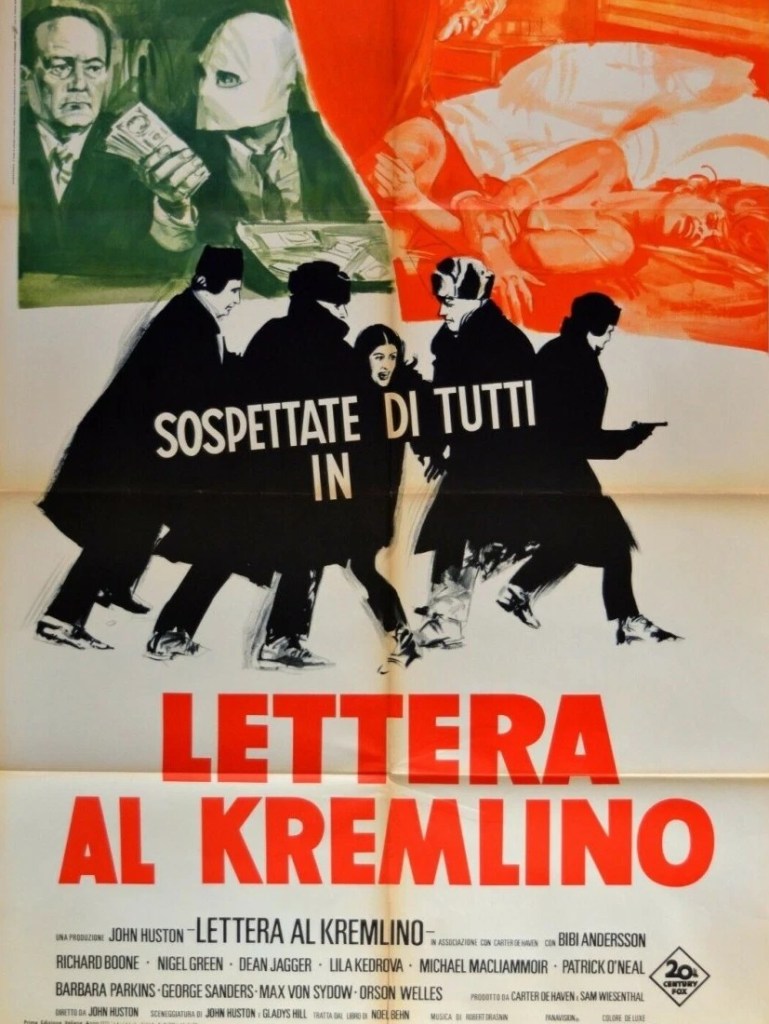
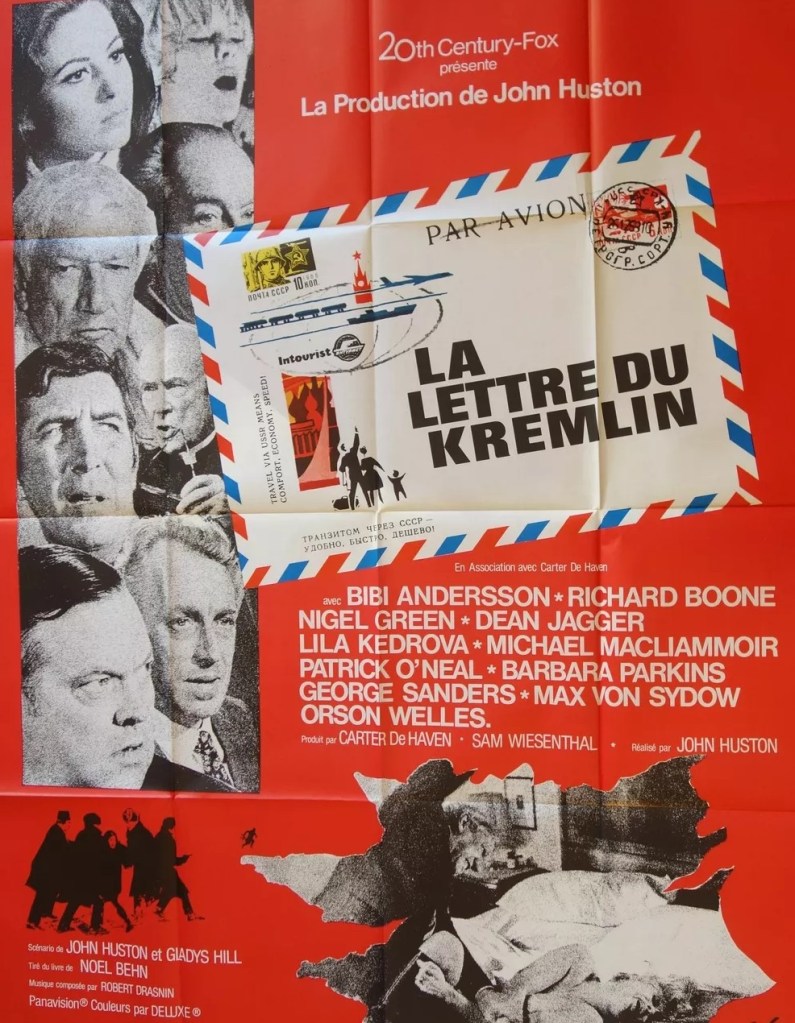
The Kremlin Letter (1970) ****

Audiences weaned on glossy spies surrounded by pretty girls and generally their own country taking a straight moral path turned up their noses at this more realistic portrayal of the espionage business where dirty infighting was the stock in trade. The Spy Who Came in from the Cold (1965) was saintly by comparison.  

Complaints about a complicated plot were led by critics who rarely had had to work their way through a tricky narrative, unless it was from the likes of Alfred Hitchcock who was apt to add twists to his stories. The fact that the bulk of the characters went by strange monikers –  The Highwayman, Sweet Alice, The Warlock etc – also seemed to upset critics. (In the book by Noel Behn, the author points out that these spies were constantly adopting new identities, it made it easier for others to keep tabs on them if they were always referred to by nicknames which were constant.)

A contemporary audience, accustomed to things never being what they seem and all sorts of double-dealing, would be more at home here.

None of the characters, even the supposed good guys/gals, get off lightly. Personal unsavory sacrifice is unavoidable. Charles Rone (Patrick O’Neal) and B.A. (Barbara Parkins), who have fallen in love with each other, both have to prostitute themselves for the cause. And when the going gets too tough, suicide is the only way out. There’s hefty financial reward for those who survive the mission, but the substantial pot will be split between the survivors and not the dependents of those who don’t come home.

At the crux of the story is recovering a letter which promises that the USA and Russia will conspire against China and destroy its atomic weaponry. Espionage expert The Highwayman (Dean Jagger) recruits a team to infiltrate Moscow consisting of Rone, burglar and safe cracker B.A., drug dealer The Whore (Nigel Green), Ward (Richard Boone) and ageing homosexual The Warlock (George Sanders) who is a dab hand at knitting.

More than a few have a dodgy past, Ward an art dealer of ill repute, The Whore a pimp, even Col Kosnov (Max von Sydow), the target of the US operation, betraying his own countrymen. B.A. has to learn how to use sex to trap the enemy and, to get past the starting gate, loses her virginity to the obliging Rone.

The Whore sets up in the brothel business with Madame Sophie (Lila Kedrova), keeping the sex workers docile by filling them up with heroin, which he imports. As instructed, B.A. shares out her favors with the enemy while Rone seduces the wife, Erika (Bibi Andersson), of Col Kosnov.

You always go into a spy picture expecting double cross and this is no different. B.A., The Whore and The Warlock have their covers blown, the latter committing suicide, the girl failing to do so but paralyzed as a result. Ward kills Kosnov. But his motive seems odd – blaming the Russian for betraying his countrymen – and his action only becomes clear at the climactic double cross when Ward is revealed as a double agent in the pay of the enemy. For which, it has to be said, he doesn’t suffer. If anything, with B.A. in his hands, he has Rone over a barrel.

While this was never going to be a by-the-book espionage number, it’s elevated by exploring the emotional price that has to be paid, both in hiding some feelings and feigning others.

While possibly it made sense to present the stars in alphabetical order, suggesting nobody took precedence in the billing, most have the opportunity to play against type. Barbara Parkins (Valley of the Dolls, 1967) is excellent as the girl embarking on a career for which she has, emotionally, little aptitude. Bibi Andersson (Duel at Diablo, 1966), usually cast in repressed roles, has a ball as woman giving in to impulse. Tough guy Patrick O’Neal (Stiletto, 1969) must knowingly betray his true love. Richard Boone (The Night of the Following Day, 1969) is already playing a secret role and effortlessly dupes his colleagues.

There’s not much of the John Huston (Sinful Davey, 1969) visual magic but he makes up for that by allowing the actors to delve deeper into their characters. But he doesn’t attempt to spin a happy ending and the downbeat climax suggests that the USA lost this battle. The one memorable image is a ball of red wool rolling across the ground, indicating that The Warlock is dead.  Written by Huston and Gladys Hill (The Man Who Would Be King, 1975) from the bestseller by Noel Behn (The Brink’s Job, 1978).

While the themes didn’t appeal then, they resound now.

Has aged very well.  

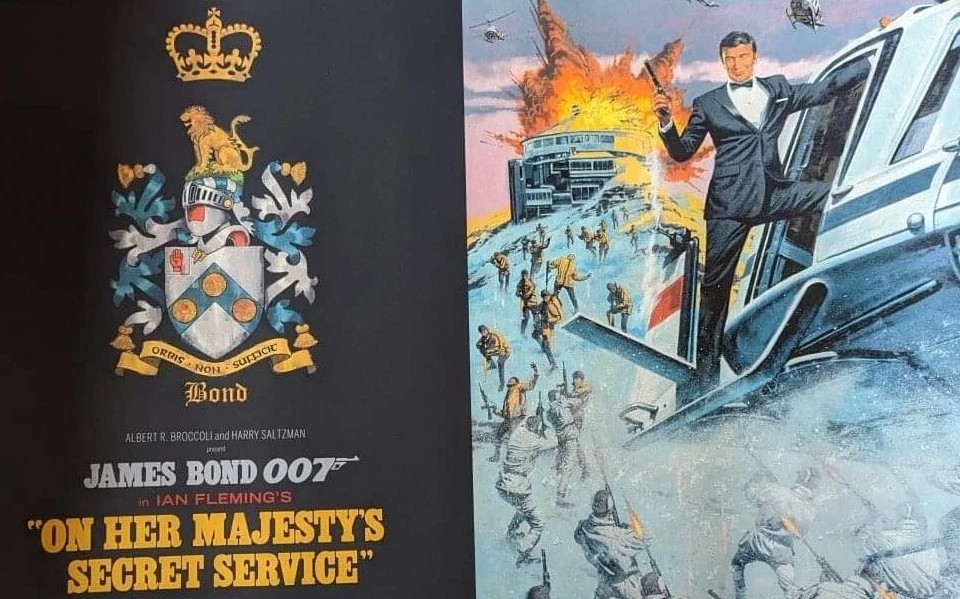
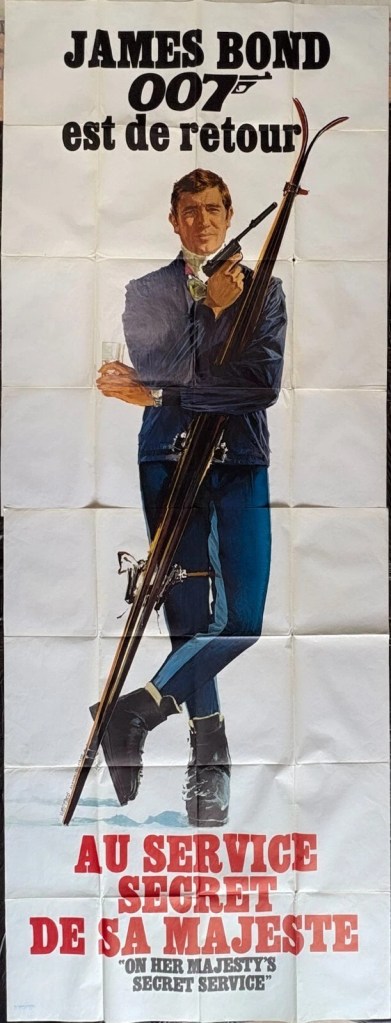
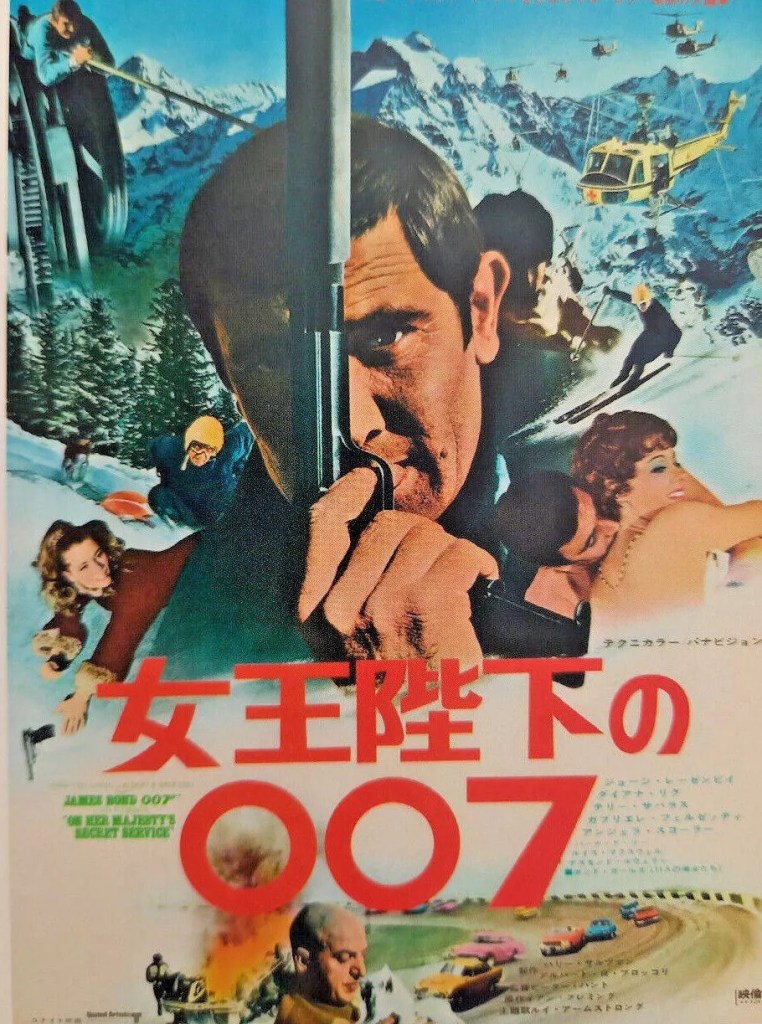
On Her Majesty’s Secret Service (1969) ***

Holds a special place in my movie heart because it was the first James Bond film I ever saw and the first soundtrack I ever bought. Having, by parental opposition, been denied the opportunity to see any of the previous instalments and therefore having little clue as to what Sean Connery brought to the series I wasn’t interested in the fact that he had been replaced. I can’t remember what my younger self thought of the downbeat ending but on the current re-view felt that a rather cursory storyline was only saved by the stunning snow-based stuntwork, two races on skis, one on a bobsleigh, car chase on ice and the kind of helicopter framing against the sun that may well have inspired Francis Ford Coppola in Apocalypse Now (1979).

The heraldic subplot bored me as much to tears as it did the assorted dolly birds (to use a by-now-outlawed phrase from the period) and I was struggling to work out exactly what global devastation could be caused by his brainwashed “angels of death” (the aforementioned dolly birds). This is the one where Bond threatens to retire and gets married. Given the current obsession with mental health, the bride has a rather more contemporary outlook than would have been noted at the time. We are introduced to her as a wannabe suicide. Good enough reason for Bond to try and rescue her from the waves, and her mental condition not worthy of comment thereafter.

Turns out she’s the feisty spoiled-brat daughter Tracy (Diana Rigg) of crime bigwig Draco (Gabriele Ferzetti) and Bond persuades that Mr Big to help him snare the bigger Mr Big Blofeld (Telly Savalas), hence the convoluted nonsense about heraldry. There’s the usual quotient of fisticuffs and naturally James Bond doesn’t consider falling in love with Tracy as a barrier to seducing a couple of the resident dolly birds.

I takes an awful long time to click into gear but when it does the stunt work – perhaps the bar now having been raised by Where Eagles Dare (1968) – is awesome. Apart from an occasional bluescreen for a close-up of Bond, clearly all the chases were done, as Christopher Nolan likes to say, “in camera.” And there’s about 30 minutes of full-on non-stop action.

Pre-empting the future eyebrow-raising antics of Roger Moore, I felt George Lazenby was decent enough, bringing a lighter touch than Connery to the proceedings without his inherent sense of danger (which Moore also lacked). Diana Rigg, I felt was miscast, more of a prissy Miss Jean Brodie than a foil for Bond, even if this one was a substitute for the real thing. It was a shame Honor Blackman in Goldfinger (1964) had taken the slinky approach but that would have worked better to hook Bond than earnestness.  

I’m not entirely sure how Blofeld planned to employ his angels of death but the prospect of a gaggle of dolly birds gathering in fields or rivers and being capable of distributing enough toxic material to destabilize the world seems rather ill-thought-out.

Theoretically, this is meant to be one of the better ones in the series but that’s mostly based on the doomed romance and the downbeat ending and I guess that Diana Rigg (The Avengers, 1965-1968) supposedly brought more acting kudos than others in the female lead category. Adopting something close to her Avengers persona would have been more interesting but I guess she was fighting against being typecast.

If you get bored during the endless heraldry nonsense, you can cast your eye over the assortment of Bond girls who include Virginia North (The Long Duel, 1967), Angela Scoular (The Adventurers, 1970), Joanna Lumley (Absolutely Fabulous, 1992-2012), Catherine Schell (Moon Zero Two, 1969), Julie Ege (Creatures the World Forgot, 1971), Anouska Hempel (Black Snake, 1973) and Jenny Hanley (Scars of Dracula, 1970), who, as graduates from this particular talent school, made a greater impact in entertainment than many of their predecessors.

Second unit director Peter Hunt made his full directorial debut but focussed more on his speciality – action – than the drama. Written by series regular Richard Maibaum (Dr No, 1962) and Simon Raven (Unman, Wittering and Zigo, 1971) and more faithful than usual to the Ian Fleming source novel.

Top marks for the action, less so for the rest.

The Ambushers (1967) ***

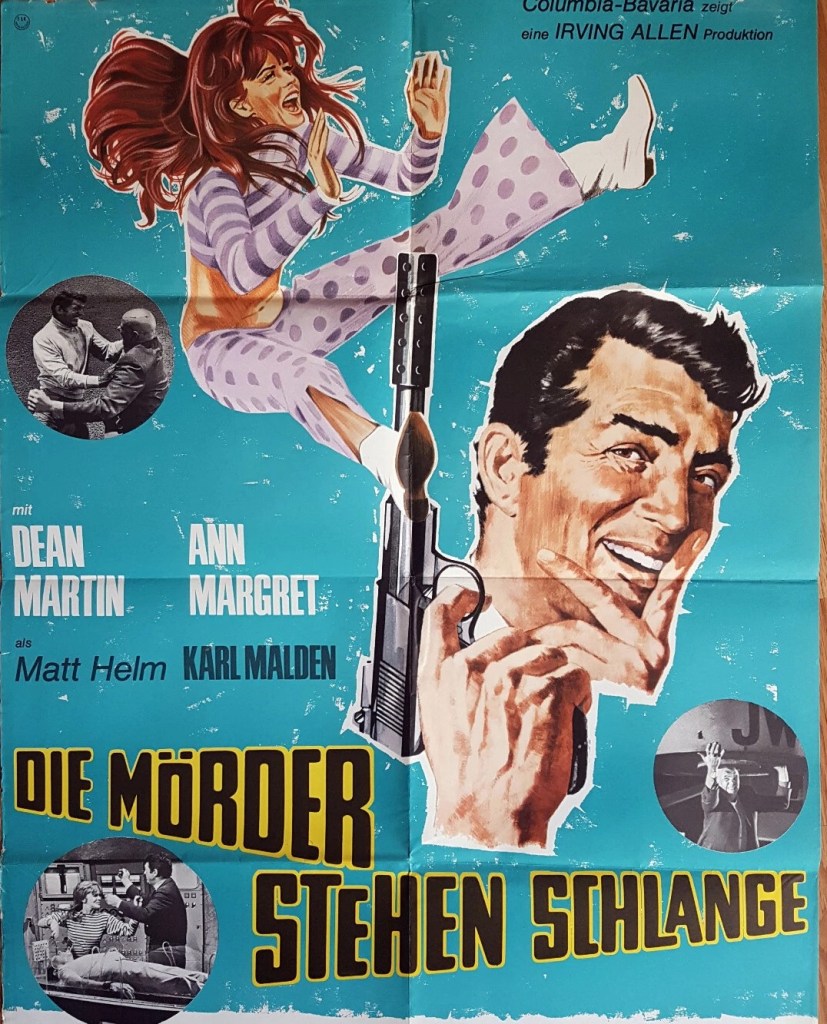
Don’t get too hung up on the supposed rampant sexism in this third iteration the Matt Helm series. These women – bikini-clad or not – are weaponized to the hilt rather than our hero Matt Helm (Dean Martin) who has to make do with a gun disguised as a camera. In fact, he makes pretty good use of the gadget created for the females – the one that melts metal, designed to get rid of the clasp on men’s belts, forcing their trousers to fall down, which, as any student of farce knows, is the easiest way to disable the male.

There’s also a weapon triggered from a bra and a sedative concealed inside lipstick so that males seduced into intimacy will soon be snookered. And it’s also a woman, secret agent Sheila (Janice Rule), who’s impervious to the electromagnetic waves which kill off the opposite gender. Of course, to be fair, it’s not Matt Helm we see sinuously dancing around a playboy mansion in Acapulco the way the women do, although for Francesca (Senta Berger) that appears a clever method of entering the enemy’s lair. Who’s going to question another sexy dancing queen? And the bad guy has one of those devices that make the zips on female attire unzip. (James Bond purloined that one.) But it’s Matt who has the ideal rescue weapon, the levitation gun.

If you’re looking for a more male-oriented theme, how about beer? At various points Matt Helm is literally swimming in the stuff. I wouldn’t have been at all surprised had the plot concerned beer manufacturer Ortega (Albert Salmi) planning world domination through poisoning the global supply of beer or arming his beer gals with bullet-spraying bras. Even though this is largely a spoof, more so than the first in the series, it’s not that much of a spoof and Ortega has more serious intent. Using lasers, he’s hijacked the U.S. Government’s secret flying saucer and plans to sell it to the highest bidder.

Sheila, the pilot, also hijacked, has gone off piste after her experience, and is thrown together with Matt Helm as husband-and-wife, a role they previously played on another mission, to hunt down the villain and recover the missing spaceship. Francesca is also after same, and happy to seduce, trick or sedate Matt in order to achieve that end. Despite believing (from the previous encounter) that she is still Matt’s wife, Stella, despite an instant blow-up tent being laid on, takes a while to understand her duties include getting hot’n’heavy even if she’s less comfortable in the bikini department. Eventually, Matt and Sheila team up with Francesca. Turns out she works for supervillain Big O but is first to find the flying saucer.

More than the earlier entries in the series, this one relies on a series of unlikely events. The switcheroos when the lights in the train go out. But the firing squad sequence is hilarious. The in-jokes about Dean Martin’s recording rivals continue, but the bevy of bikini girls disappear from view pretty much after the opening section.

Janice Rule (Alvarez Kelly, 1966) is generally seen as a class above the previous female leads in the series but that would only be if you ignored Ann-Margret’s performance in Once a Thief (1965), the Stella Stevens of Rage (1966), the Senta Berger of The Quiller Memorandum (1966) and especially the stunning playing of Daliah Lavi in The Demon (1964). Dean Martin was on the cusp of much finer work in Rough Night in Jericho (1967) and Firecreek (1968) so this might just have been a warm-up.

Directed by Henry Levin (Genghis Khan) from a screenplay by Herbert Baker based on the Donald Hamilton novel.

Doesn’t take it itself seriously, which is just as well.

Beyond the Curtain (1960) ***

Richard Greene had been a childhood idol as that dashing hero Robin Hood in long-running British television series (The Adventures of Robin Hood, 1955-1960) and movie Sword of Sherwood Forest (1960) so I was rather at a loss to discover that his career appeared to stumble thereafter. Only one movie in seven years and then a short stint as the hero in The Blood of Fu Manchu (1968) and The Castle of Fu Manchu (1969).  What I hadn’t realized given his eternal youthful demeanor was that he was already approaching 40 when he first donned the tights for Robin Hood and that he was coming to the end of a reasonable stint as a leading man in both Hollywood and domestically.

So I shouldn’t really have been surprised that he turned up in this Cold War B-picture. Precisely because he was the star the movie didn’t make the inroads it should have done, given the subject matter and the sensitive playing of Hungarian female lead Eva Bartok (Blood and Black Lace, 1964) whose career was equally foundering after a promising start as Burt Lancaster’s squeeze in The Crimson Pirate (1951).

Audiences were probably baffled by the technicality on which the story pivots. As the Cold War begins – the titular Curtain is The Iron Curtain –  air space was as important a national border as land and venturing into foreign air space was construed as deliberate provocation.

East German stewardess Karin (Eva Bartok), a refugee in Britain from her home country, is arrested when her airplane touches down in East Germany after losing its way in a storm. Pilot fiancé Capt Jim Kyle (Richard Greene), who is let go by the Soviet-influenced authorities, returns to East Germany to try to rescue her.

This resonates more than it did at the time when the Berlin Wall was not yet in existence and the Cold War consisted more of saber-rattling than anything as perilous as the Cuban Missile Crisis. And there’s a definite Kafkaesque tone. Karin is treated as a traitor for attempting to flee her native land and is equally used as bait by her captors to attempt to draw out of hiding her dissident brother Pieter (George Mikell). Outside of Kyle, there’s a sense of romantic revenge, old friend Hans (Marius Goring) now leading the forces hoping to entrap her brother.

There’s plenty of the usual escape ploys, and the atmosphere has noir-antecedents with lighting that exploits shadow and night. And while the thriller aspects work well enough, especially the exciting climax in a tunnel, they carry less impact than the emotions. Karin is terrified of not just being held against her will and interrogated by the fierce secret police, but the prospect of repatriation – or more likely imprisonment – in a country she now despises and had managed to escape is proof that you can’t go home again.

If you remember the scene in Doctor Zhivago (1965) of Omar Sharif after the war returning to his palatial apartment and finding it filled up with other occupants and his family relegated to a very small space, this is its precedent. Karin’s family home is ruled by a sinister landlady-cum-busybody-cum-informant and her suicidal mother (Lucie Mannheim) lives in the attic and suffers delusions. The despair of living in a totalitarian regime comes across very well.

While reminiscent of elements of The Third Man (1949) and thoroughly overtaken in the espionage genre by the likes of The Spy Who Came in from the Cold (1965) and The Quiller Memorandum (1966), this makes it mark by concentrating on entrapment and lack of freedom.

Richard Greene is in his element as the dashing hero, but he’s outshone by Eva Bartok who has much more to lose.

Final feature of British stalwart Compton Bennett (King Solomon’s Mines, 1950) who injects occasional style into proceedings. Written by the director and John Cresswell (Spare the Rod, 1961) from the bestseller by Charles F Blair and A.J. Wallis.

More thought-provoking than you might expect.

Black Bag (2025) *** – Seen at the Cinema

Explain to me how this cost anything like the reported $50 million. Unless the cost of a nightclub scene has gone through the roof. Or someone has slapped an almighty tariff on shooting in Zurich. Or such middling box office attractions as Cate Blanchett and Michael Fassbender, against the laws of marquee valuation, are pulling down salaries in the region of $10 million apiece.

Because this is nothing but a glorified chamber piece, most scenes shot indoors or in secluded locations. There’s no car chase, one minor explosion (drone-triggered), not even a pursuit on foot. Some clever marketing oik has dressed up what’s no more than a BBC TV film as an expensive espionage picture in the hope of hooking a larger audience.

It’s short, little more than 90 minutes, so that’s on the plus side. But the plot’s full of holes, you’re scarcely going to swallow Fassbender and Blanchett, faces welded to stiff upper lip,  as a hot middle-aged couple, and I wouldn’t have been at all surprised to see  Hercule Poirot or more likely Miss Marple lurch into view for the grand finale with all the potential culprits being set to rights around a dinner table.

Fassbender is so impassive at the best of times his character hardly needs to be expanded to include some OCD, and the most expressive he becomes is, wait for it, hand shaking when he pours a glass of water. The theme, wait for it, is that people who lie for a living are not to be trusted in their domestic lives. And just to polish the virtue-signalling credentials there’s still running amok in MI5/MI6/Black Ops/CIA some rogue top dog who thinks he can stop the unnamed war – presumably Ukraine – by causing a nuclear power plant meltdown in Russia.

And when Pierce Brosnan steals the show in a small supporting role you know your movie’s in trouble.

That said, there’s enough going on to keep you entertained. Top British agent George (Michael Fassbender) begins to suspect – or does he really – that his wife, also a top British agent, Kathryn (Cate Blanchett), is up to no good. So he begins to investigate. Mirror is piled upon mirror, complicated by the occasional murder, so that we are soon knee-deep in the kind of narrative where you don’t know who trust – but, equally, unfortunately, don’t much care because none of the characters is remotely attractive.

At least one them, Freddie (Tom Burke), would have been considered a security risk. So  often does he stray he would be catnip for any passing honeytrap. But you might also have asked questions about his current squeeze, analyst Clarissa (Marisa Abela), paranoid as a posse of schizophrenics, who knows exactly how to pass a polygraph test (clenching the anal sphincter one of the tricks in case you’re interested), and as likely as not to ram a carving knife into unfaithful boyfriend Freddie’s hand at the dinner table. Naturally, it doesn’t do much harm, because Freddie is back at work next day with bandaged hand and not investigated by cops over a knife wound that could hardly be covered by the old slipping the shower routing.

Then we’ve got straitlaced psychiatrist Dr Zoe Vaughan (Naomie Harris) with a penchant for erotic fiction, sex in the office (including breaking the cardinal rule of her profession, sex with a patient), and stringing along two men at once, both of whom, Freddie and Col James Stokes (Rege-Jean Page), are engaged in other affairs.

George soon realizes he’s being played as a patsy, and that his investigation has compromised another operation, and facilitated the handover of a top secret document to the Russians.

In the current dearth of movies for the over-40s, make that over-30s not yet suffocating in superheroes and multiverses, this is what passes for entertainment aimed at an adult audience. And it is short, as I said, but this is exactly the kind of low-budget movie with a decent cast that traditionally ends up on a streamer.

For once, director Steven Soderbergh (Magic Mike’s Last Dance, 2023), whose career is littered with self-indulgence, sticks to the knitting, and it’s a more than passable espionage thriller, but the kind that would be more at home on the small screen. Written by David Koepp (Indiana Jones and the Dial of Destiny, 2023).

Neither Fassbender (Next Goal Wins, 2023) nor Blanchett (Tar, 2022) do the most basic task required of a marquee name, which is to set the screen alight, and all the rest, excepting the much-in-demand Pierce Brosnan (Black Adam, 2022) – seven pictures in the last two years –  merely trundle along in their wake, saddled with scenes where they express alarm at their deepest secrets being revealed like they have drifted in to some shopworn melodrama.

For all the actual investigation that takes place you could have set this in the kind of remote spot favored by Agatha Christie and played it out in traditional Poirot/Marple fashion.

Interesting but ultimately disappointing.

And the big question remains – where did the $50 million go? And, did it exist in the first place?

Sebastian (1968) ***

Decoding the emotional life of mathematics professor Sebastian (Dirk Bogarde) lies at the heart of a spy thriller mainlining on loyalty and trust. The presence of a flotilla of potential Bond girls has opened this picture up to charges of being a spoof, but I saw the mini-skirted incredibly-bright lasses as being a reversal of the standard secretarial pool. And a supposed  representation of the “swinging sixties” would hold true if shot in the environs of Carnaby St  rather than the bulk of locations being arid high-rise buildings. 

In roundabout fashion, intrigued after literally bumping into him in Oxford, Rebecca (Susannah York) is recruited into an espionage decoding department staffed entirely by gorgeous (but brainy) women. Among the older employees is chain-smoking left-winger Elsa (Lili Palmer) whom security chief General Phillips (Nigel Davenport) suspects of passing on secrets. When romance ensues with SY, Sebastian dumps dumb pop singer girlfriend Carol (Janet Munro) who is already having an affair and spying on Sebastian.

Although there is no actual beat-the-clock codes to be unraveled, tensions remains surprisingly high as in best Turing manner, breakthroughs are slow. There’s an undercurrent of electronic surveillance, eavesdropping on recruits, bugs planted in the houses of even the apparently most trusted personnel, seeds of distrust easily sowed, codes shifting from numbers to sounds.  The occasional nod to the contemporary, a disco, pop songs, Rebecca doing a fashion shoot in the middle of traffic, is background rather than center stage

Sebastian, though worshipped by is female staff, is “more whimsical than predatory.” Nonetheless, introspective and often morose, unable to deal with emotions, it falls to Rebecca to take on the task of sorting him out which naturally leads to complications.

Most reviewers at the time complained it was a victory of style over substance, but somehow they managed to overlook the essential questions about trust the picture asked. That said, it does follow an odd structure, the third act dependent on directorial sleight-of-hand.

Dirk Bogarde (Hot Enough for June/ Agent 8 ¾, 1964) is always highly watchable and Susannah York (Sands of the Kalahari, 1965) catches the eye with an impulsive, slightly kooky character who turns out to be down-to-earth. Nigel Davenport (Play Dirty, 1969) brings his usual cynical malevolence to the party but with the twist of not knowing whose side he is really on. John Gielgud (Becket, 1964) is a delight. There’s a brief appearance by a pipe-smoking Donald Sutherland (The Dirty Dozen, 1967). Miss World Ann Sidney is one of “Sebastian Girls”

David Greene’s (The Shuttered Room, 1967) direction is mostly competent but the opening aerial tracking shots set the precedence for occasional bursts of style.  Jerry Fielding supplied the score. Written by Leo Marks (Peeping Tom, 1960) and Gerard Vaughan-Hughes (The Duellists, 1977).

Some Girls Do (1969) ****

Enjoyed this sequel to Deadlier Than the Male (1967) far more than I expected because it sits in its own little world at some point removed from the espionage shenanigans that dominated the decade. Hugh (nee Bulldog) Drummond (Richard Johnson) is neither secret agent nor involved in espionage high jinks, instead employed in the more down-to-earth domain of insurance investigator, albeit where millions are at stake. Although his overall adversary is male, the smooth-talking Carl Petersen (James Villiers), adopting a series of disguises for most of this picture, the real threat comes from a pair of villainesses in the shape of Helga (Daliah Lavi) and Pandora (Beba Loncar). If anything, this pair are a shade more sadistic than Irma and Penelope from the previous outing.

The sequel doubles up – or doubles down – on the female villainy quotient, Petersen having created a race of lethal female robots who spend their time dispatching scientists working on the world’s first supersonic airliner. Global domination is only partly Petersen’s aim since he also stands to gain £8 million ($134 million today) if the plane doesn’t launch on schedule. Livening up proceedings are Flicky (Sydne Rome), a somewhat kooky Drummond fan who has her own agenda, Peregrine “Butch” Carruthers (Ronnie Stevens), a mild-mannered embassy official assigned bodyguard duties, and chef-cum-informant Miss Mary (Robert Morley).

Villiers has found a way of turning an ultrasound device intended originally to aid cheating in a boat race into something far more dangerous. But, of course, for Helga seduction is the main weapon in her armory, and Drummond’s first sighting of her – a superb cinematic moment – is sitting on the branch of a tree wielding a shotgun. Equally inviting are the squadron of gun-toting mini-skirted lasses guarding Petersen’s rocky fortress.

The movie switches between Helga, Pandora and the robots raining down destruction and Drummond trying to prevent it. Dispensing with the boardroom activities that held up the action in Deadlier than the Male, this is a faster-moving adventure, with Drummond occasionally outwitted by Helga and calling on his own repertoire of tricks. Dialog is often sharp with Drummond imparting swift repartee.

The action – on land, sea and air – is a vast improvement on the original. The pick is a motorboat duel, followed closely by Drummond in a glider coming up against a venomous aeroplane and saddled with a defective parachute. And there are the requisite fisticuffs. Various malfunctioning robots supply snippets of humour.

Richard Johnson (A Twist of Sand, 1968) truly found his metier in this character and it was a shame this proved to be the last of the series. Although Daliah Lavi never found a dramatic role to equal her turns in The Demon (1963) and The Whip and the Body (1963) and had graced many an indifferent spy picture as well as The Silencers (1966), she is given better opportunity here to show off her talent. Beba Loncar (Cover Girl, 1968) is her make-up obsessed bitchy buddy. Sydne Rome (What?, 1972) makes an alluring debut. James Villiers (The Touchables, 1968) is the only weak link, lacking the inherent menace of predecessor Nigel Green.

There’s a great supporting cast. Apart from Robert Morley (Genghis Khan, 1965) look out for Maurice Denham  (Danger Route, 1967), Adrienne Posta (To Sir, with Love, 1967) and in her first movie in over a decade Florence Desmond (Three Came Home, 1950). The robotic contingent includes Yutte Stensgaard (Lust for a Vampire, 1971), Virginia North (Deadlier Than the Male), Marga Roche (Man in a Suitcase, 1968), Shakira Caine (wife of Sir Michael), Joanna Lumley (television series Absolutely Fabulous), Maria Aitken also making her debut, twins Dora and Doris Graham and Olga Linden (The Love Factor, 1969).  Peer closely and you might spot Coronation Street veteran Johnny Briggs.

The whole package is put together with some style by British veteran Ralph Thomas (Deadlier than the Male). Screenplay by David Osborn and wife Liz Charles-Williams (Deadlier than the Male) is based on the book by “Sapper”.

Discover WordPress

A daily selection of the best content published on WordPress, collected for you by humans who love to read.

The Atavist Magazine

by Brian Hannan

WordPress.com News

The latest news on WordPress.com and the WordPress community.