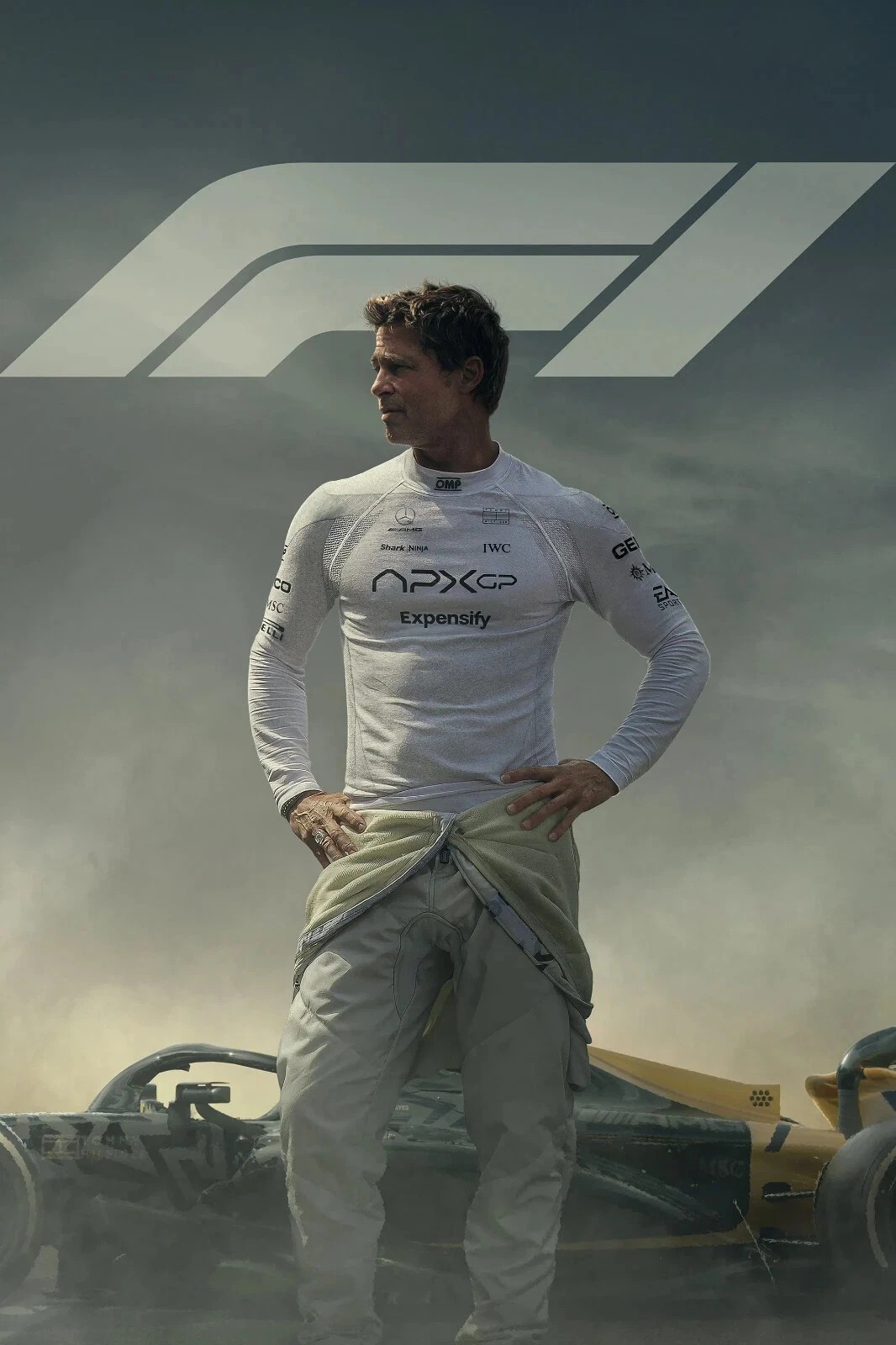
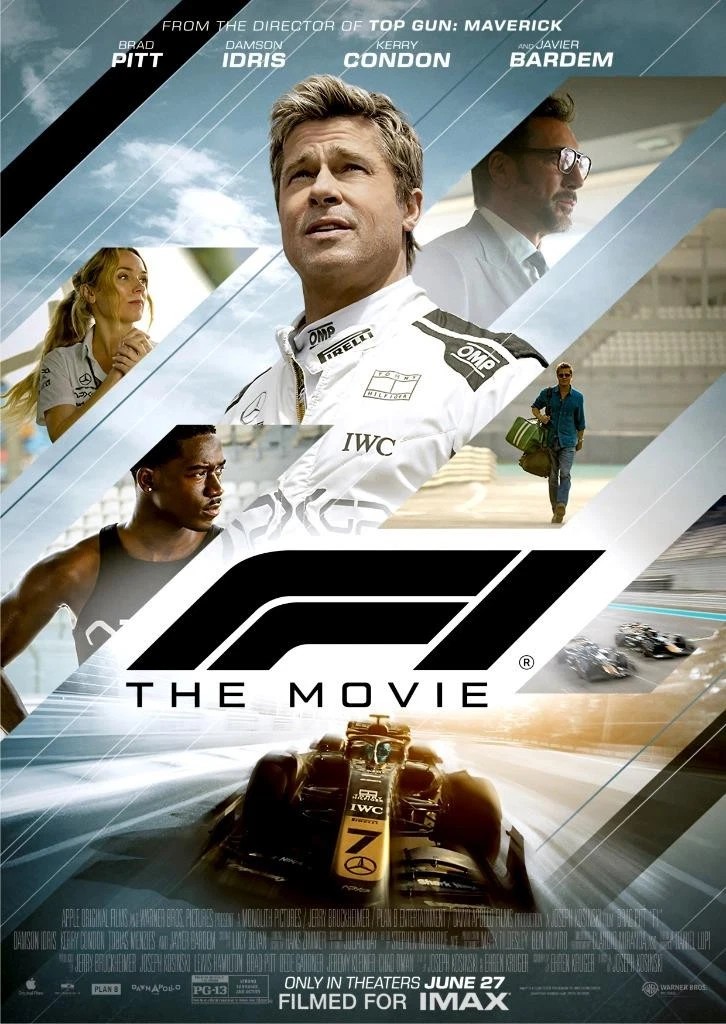
F1: The Movie (2025) **** Seen at the Cinema in Imax

Buckle up – the summer blockbuster is here. And if you’ve got the sense to see it in Imax double buckle up because you’ve just never seen the like. As regular readers will know I’m a sucker for race pictures – Grand Prix (1966) that invented the genre, Rush (2013) and Ford v Ferrari/Le Mans ’66 (2019) the top trio in my book. And all driven by interesting narrative, a shade too much soap opera in the first, a real-life on-track duel in the second, and the machinations of big business in the third. And the last two with scenes that took place outside the racetrack that have stuck in my mind since – in Rush Niki Lauda (Daniel Bruhl) kicking into high gear in an ordinary motor to impress his soon-to-be wife, Carroll Shelby (Matt Damon) taking Henry Ford II (Tracy Letts) for a terrifying spin.

This one has jettisoned narrative complexity for thrills on the track and the sheer screen charisma of star Brad Pitt (Bullet Train, 2022) off it. For all my love of movies about motor racing I’ve never been compelled to watch any of the current F1 action or a single episode of the seven-season (and counting) Netflix series Drive to Survive, so my understanding of the rules is rather vague.

Here, you might come away with the notion that tires/tyres are more important than speed and that if you are mighty clever you can fry those rules within an inch of their lives and get away with it. And I’m not sure if the climactic set-up where the race is reduced to the equivalent of a golf play-off between four cars over three circuits of the track is actually a genuine element of the business.

So, ex-gambler thrice-divorced itinerant Sonny Hayes (Brad Pitt) who 30 years before was an up-and-coming Formula One Driver before an accident wrecked his career is tempted to return to the greatest arena of all by old buddy Ruben (Javier Bardem) whose racing team is on the point of collapse. He’s recruited as wing man to cocky up-and-coming talent Joshua (Damson Idris) who is repulsed by the idea of giving a second chance to an elderly citizen. The idea that Sonny will mentor the young guy is torpedoed when the younger ace nixes that notion.

But Sonny has got street smarts and knows how to win dirty. There are the usual reversals and obstacles, mostly self-imposed, before the team learn to back Sonny’s combat instinct.

And while the racing footage will take your breath away – even not seen in Imax it’s going to be a thundering visceral involving experience – it’s Brad Pitt who brings this one home. He’s one of only three surviving Hollywood stars, Leonard DiCaprio and Tom Cruise would be the others (though you could maybe make a case for Matt Damon), whose attachment can greenlight a picture and put the bucks into the box office.

One of a posse of producers and one of the many real-life participants to make an appearance.

Ever since a glorious entrance in Thelma and Louise (1991) he’s strode the Hollywood firmament like, as they say, a colossus, never taking the easy role, backing his own judgement, and often putting his own dough into projects (his Plan B shingle is one of the many production outfits credited here) and lighting up the screen with an easy charm.

Luckily, the screenplay by Ehren Kruger (Top Gun: Maverick, 2022) crackles and Pitt’s realism cuts through the social media engagement world inhabited by Joshua and the jargon-ridden world of the back-office team. “Hope isn’t a strategy,” he snaps. And there’s a lively verbal duel with designer Kate (Kerry Condon) and a couple of scenes where he takes what’s coming, especially from Joshua’s irate mum Bernadette (Sarah Nile), and one of those classic scenes where he dupes the youngster into thinking he’s won.

Usually enigmas aren’t this captivating, even Sonny can’t explain what drives him, but beyond a skeletal backstory, we don’t need to learn much about him because his whip smart delivery and scathing lines keep the audiences on their toes.

So Brad Pitt at the top of his game, excellent support from Javier Bardem (Dune: Part Two, 2024) and Kerry Condon (The Banshees of Inisherin, 2022). While Damson Idris (Snowfall, 2017-2023) isn’t in the breakout league of Glen Powell in Top Gun: Maverick, he still looks a talent to watch. Tobias Menzies (Outlander, 2014-2018) as a sneaky financier has a stand out supporting role.

Joseph Kosinksi (Top Gun: Maverick) does for earthbound speed what he did for supersonic speed in the Tom Cruise sequel.

Summer has arrived. Go see.

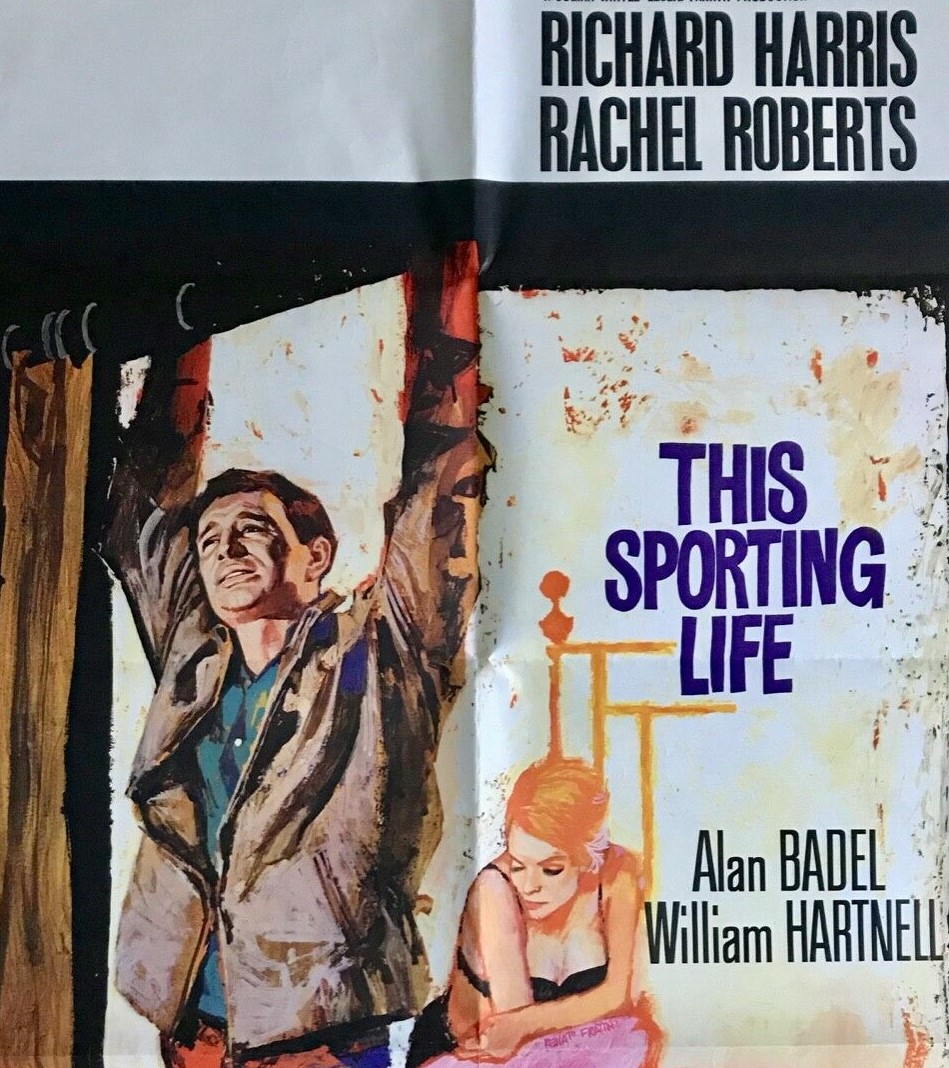
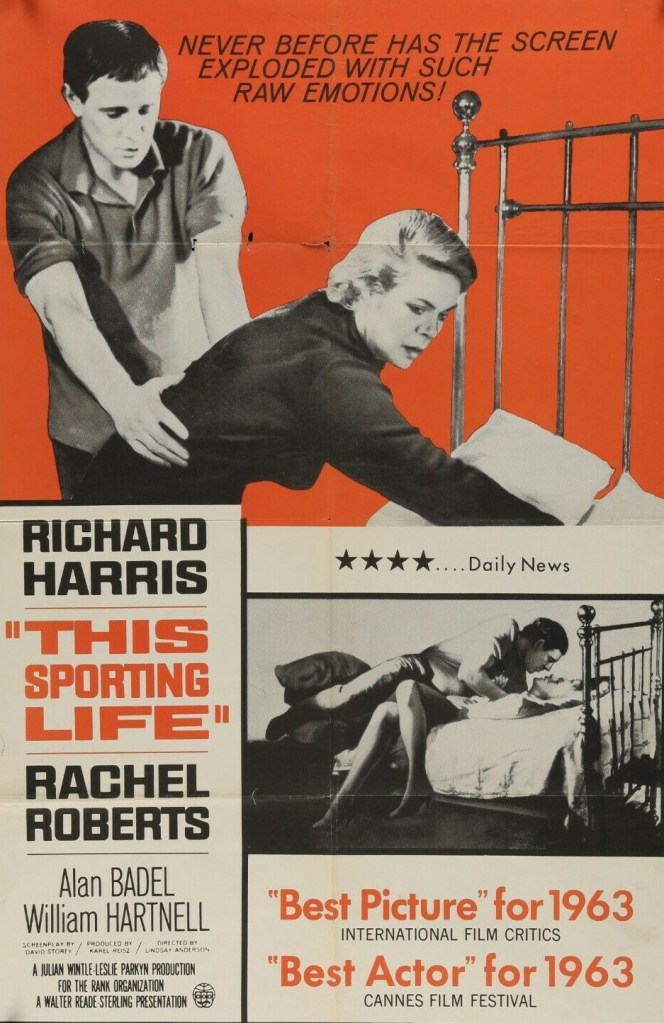
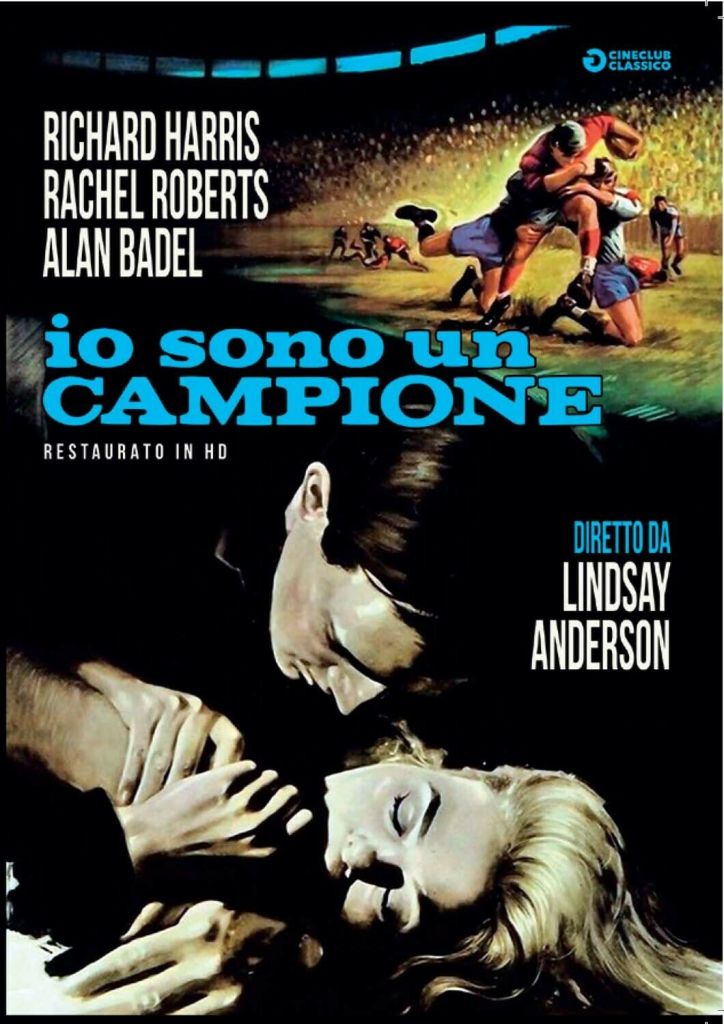
This Sporting Life (1963) ****

What began as the last gasp of the British New Wave working class kitchen sink drama has now after a six-decade gap resolved into a struggle over political and sexual ownership. Macho athlete Frank Machin (Richard Harris) jibes against his paymasters at a Yorkshire rugby league club – in similar fashion to Charlton Heston in Number One (1969) – while trying to hold sway over widowed landlady Margaret (Rachel Roberts). While documenting the class divide over which British writers and directors obsess, Lindsay Anderson’s debut takes a wry look at power.

Machin belongs to the Arthur Seaton (Saturday Night and Sunday Morning, 1960) class of loudmouth boors, determined to take as much as they can, riding roughshod over anyone who gets in their way, even attacking players of his own team. Although a fan favorite, his position at the club still requires backing from the moneyed directors, support that appears go awry when he rejects overtures from Mrs Weaver (Vanda Godsell), wife of a board director (Alan Badel). While Margaret eventually succumbs, her actions fill her with shame, the presents he buys making her feel like a kept woman.

Both Machin and Margaret are the rawest of creatures, forever appearing ready to topple into some emotional crevasse of their own making. At a time when marriage was the rock of society and women had little independence, a woman could dwindle away from the scorn of neighbors, while a man lacking emotional intelligence would crumble in the face of his own fears.

The non-linear narrative blurs some aspects of the story. There is no reference to Machin’s background save that he was once a miner and still works somewhere unspecified to supplement his footballer’s income. He rejects the paternalism of ageing scout Johnson (William Hartnell) while appearing to be seeking to resolve maternal issues, the widow with two small children at least a decade older, and although he could easily afford better accommodation refuses to move out.

His obsession with Margaret is never properly explained, except by her, who sees him as acting like an owner. Equally, Margaret is the opposite of the women in virtually every movie of the period, for whom marriage is the sole ambition. Whether she still grieves the loss of her factory worker husband, who may have committed suicide, or loathes Machin’s dominant nature is never explained. It might have been better if both had married for unhappy husbands and wives tend to give each other both barrels, emotions never concealed. Or she could be in the throes of an undiagnosed depression expressed as anger.

Machin is the other side of the British Dream – that anyone who escapes going down the pits or the mindless grind of the factory will automatically enjoy happiness. While Machin revels in his celebrity, he has no idea how to make his life happier. This is in contrast to the other footballers who either enjoy womanizing and drinking or are married or engaged and accept the unwritten rules of the game rather than fighting everyone.

There is plenty grime on show, and the football field has never been so pitiless, and as a social document it fits in well to the small sub-genre of films depicting working class life, but the picture’s thrust remains that of two opposites who will clearly never meet except in the delusional head of Machin.

Power is demonstrated in various ways. Weaver has the clout to give Machin a hefty signing-on fee against the wishes of the board, his wife takes her pick of the footballers to satisfy her sexual needs, Machin believes he is entitled to berate waiters in an upmarket restaurant, while Margaret is demeaned by accepting his present of a fur coat.

As ever with these films of the early 1960s there is a wealth of acting talent. Both Harris and Roberts were Oscar-nominated. Others making a splash in the cast were Alan Badel (Arabesque, 1966), Colin Blakely (The Vengeance of She, 1968), Jack Watson (The Hill, 1965), and if look closely you will spot double Oscar-winner Glenda Jackson (Women in Love, 1969). Future television stalwarts included William Hartnell (the first Doctor Who), Arthur Lowe (Dad’s Army, 1968-1977), Leonard Rossiter (Rising Damp, 1974-1978), Frank Windsor (Softly, Softly, 1966-1969) and George Sewell (Paul Temple, 1969-1971).

Lindsay Anderson (If… 1969) no doubt believed he was making an excoriating drama about the class struggle, but in fact has delivered a classic thwarted love story. David Storey wrote the screenplay based on his own novel.

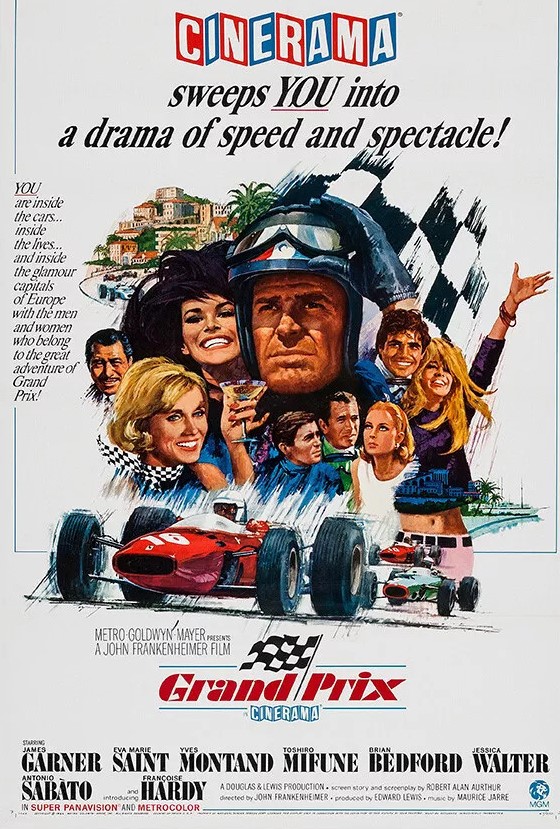
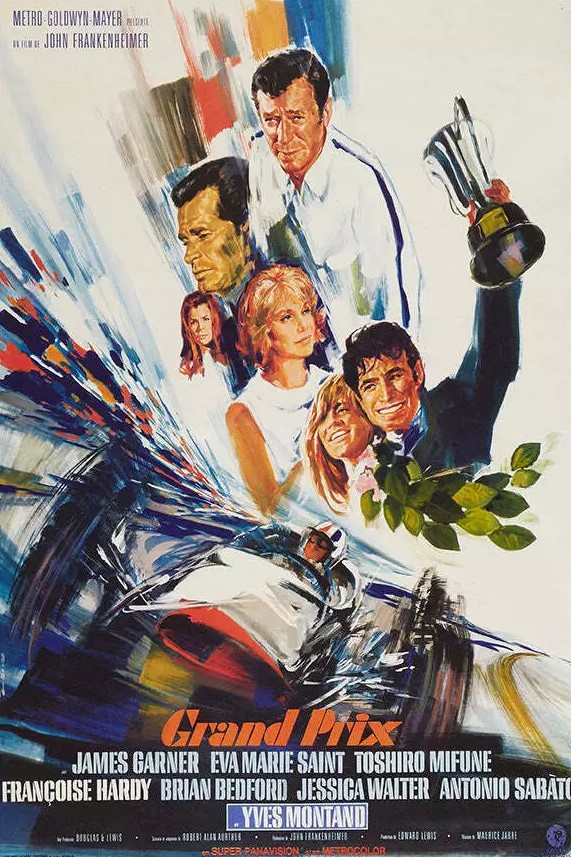
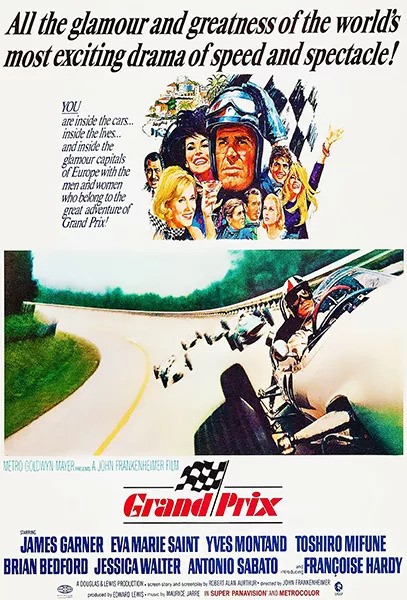
Grand Prix (1966) *****

If ever there was a case to be made for six-track stereophonic sound or, for that matter, split screen Grand Prix would form the first line of defense. That it was made in Cinerama 70mm was merely a bonus. Most roadshow movies start with an overture, a ten-minute or so musical introduction that would thematically at least give the audience some indication of the picture they were about to watch. Thrumming and roaring engines formed the montage opening to Grand Prix, a noise that almost shook a cinema to its foundations.

Cinerama had been built on its ability to create almost primeval effects. There was always a downward rush, a runaway train, a roller coaster, something to set an audience on the edge of its seat in pure exhilaration. But the visual had nothing on the aural and what set Grand Prix apart was danger, that constant thrum of engines rising to impossible crescendos. Split screen allowed the director to tell several stories at once as competitors chased each other round perilous circuits at a time when death was a racing driver’s constant companion and in fact of the thirty-two professional participants including Graham Hill, Jim Clark, Juan Fangio and Jack Brabham five were dead within two years of the movie’s completion. Nobody needed to remind an audience how hazardous the sport was, they could read about the continuous carnage in the newspapers, but what was less easy to convey, although such events were well attended, was the pure thrill of being at a race meeting. Grand Prix set out to rectify that problem.

At nearly three hours long it had room to tell several stories and in that respect it was more of an ensemble picture than something like Lawrence of Arabia (1962) which took even more time to tell just one story. Many of these stories came to an abrupt end as the character died in an accident.

Steve McQueen and Paul Newman, both racing aficionados, were front runners for the leading role but it went instead to James Garner, also a racer who did all his own driving (though not necessarily at the speeds indicated). And to properly represent the competition it required an international flavor so other drivers were played by Yves Montand (The Wages of Fear, 1953) in a part first offered to Jean-Paul Belmondo and Antonio Sabato (in his second film) with Adolfo Celi (Thunderball, 1965) as the Ferrari boss and Toshiro Mifune (Seven Samurai, 1954) as a Japanese team owner. Swedish star Harriet Andersson (Through a Glass Darkly, 1961) was cast as the female lead but dropped in favour of Eva Marie Saint (Exodus, 1960) in a role turned down by Monica Vitti (Modesty Blaise, 1966).

Garner and Saint had previously worked together in thriller 36 Hours (1964) and it said a lot for his marquee credentials that he was still best known for The Great Escape (1963). Although he had reached top billing status, films like The Art of Love (1965) and Mister Buddwing (1966) did not deliver commercially. Saint’s career had been as peripatetic after Exodus (1960) as before, star of All Fall Down (1962) but third-billed in The Sandpiper (1965) and second-billed in The Russians Are Coming, The Russians Are Coming (1966), the latter two both big hits.

Frankenheimer had directed Saint in All Fall Down and enjoyed a distinguished career with The Birdman of Alcatraz (1962), The Manchurian Candidate (1962) and Seven Days in May (1964) although the high regard in which he was generally held was somewhat tarnished by The Train (1965) and thriller Seconds (1966), the latter a spectacular flop. Grand Prix was not only the biggest film of his career, though The Train had given him a grounding in action, but also his first in color.  The movie was filmed on existing legendary circuits with Formula 3 racing cars adapted to look like Formula 1 and a thousand other incidental details including an appearance by a Shelby Mustang (with Carroll Shelby as technical adviser) that made it an accurate depiction of the sport. Eighteen cameras were used to film the races.

The narrative arc follows the Grand Prix season and while the actual competition dominates the movie it is against the background of the emotional turmoil the sport wreaks on the drivers and the wives and girlfriends who have to live with the knowledge that their partners might not come home at the end of the day. Garner is considered too reckless for the top spot in a racing team and in a bid for redemption signs for a new company. Former world champion Montand is coming to the end of his career. English actor Brian Bedford makes his mainstream movie debut as a driver recovering after a horrific crash caused by Garner. The emotional subplots comprise Garner having an affair with Bedford’s wife (Jessica Walter); Montand embarking on an affair with Saint who plays a magazine writer, with French actress  Francoise Hardy (better known as a chanteuse) involved with Sabato. In addition, there are some telling sequences in which the drivers unload about their fears.

Frankenheimer does a terrific job in marshalling all the effects and the minute details, and the fact that there is no big star in the mix makes the battles between the characters more realistic.  

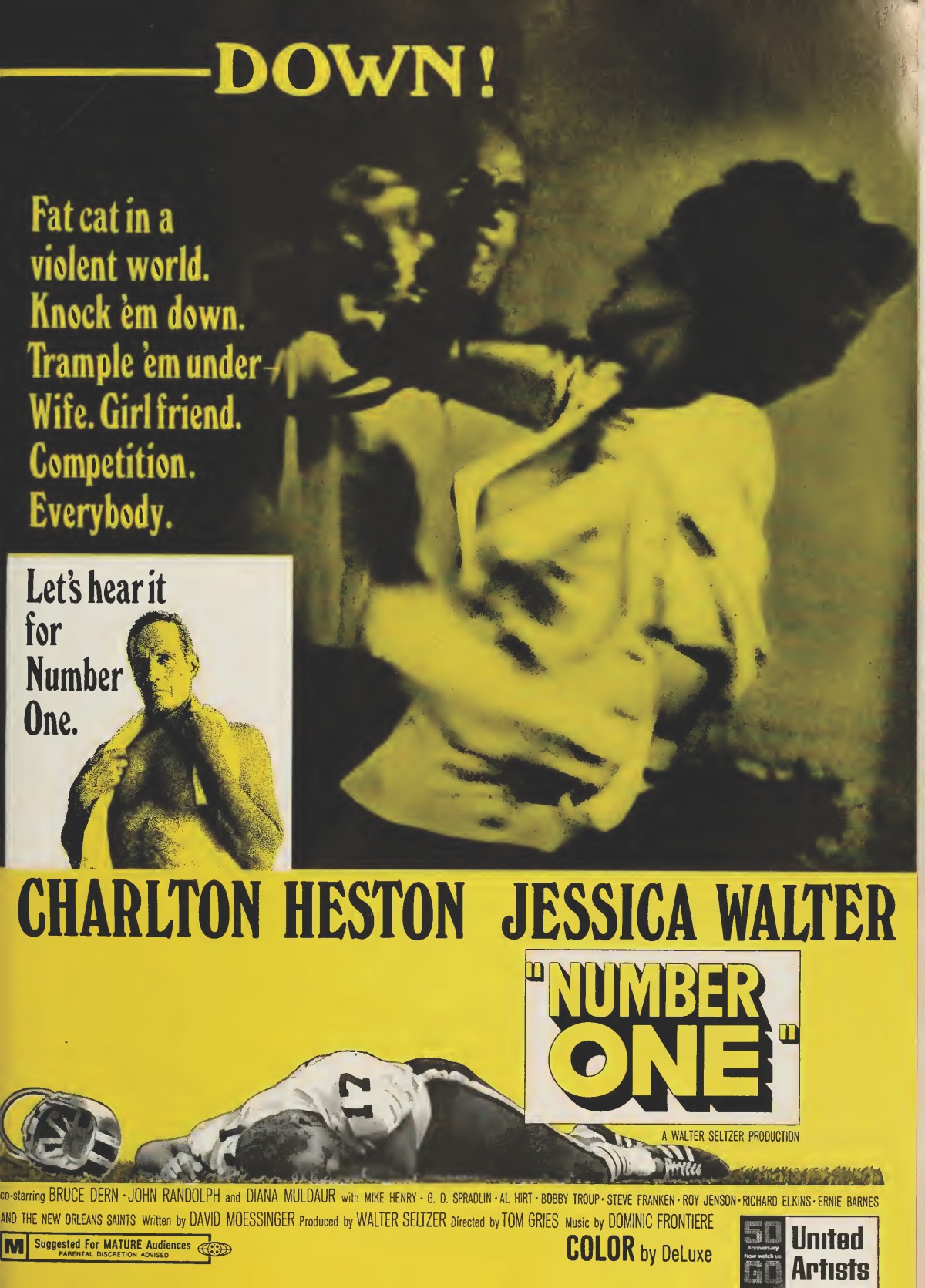
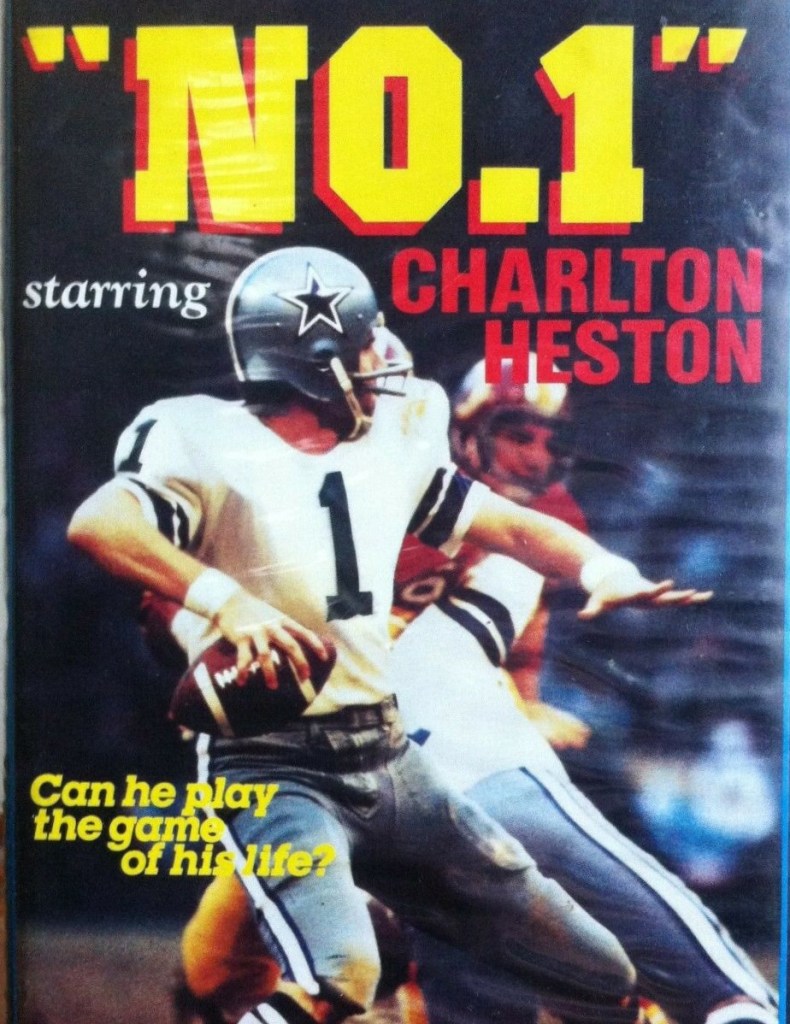
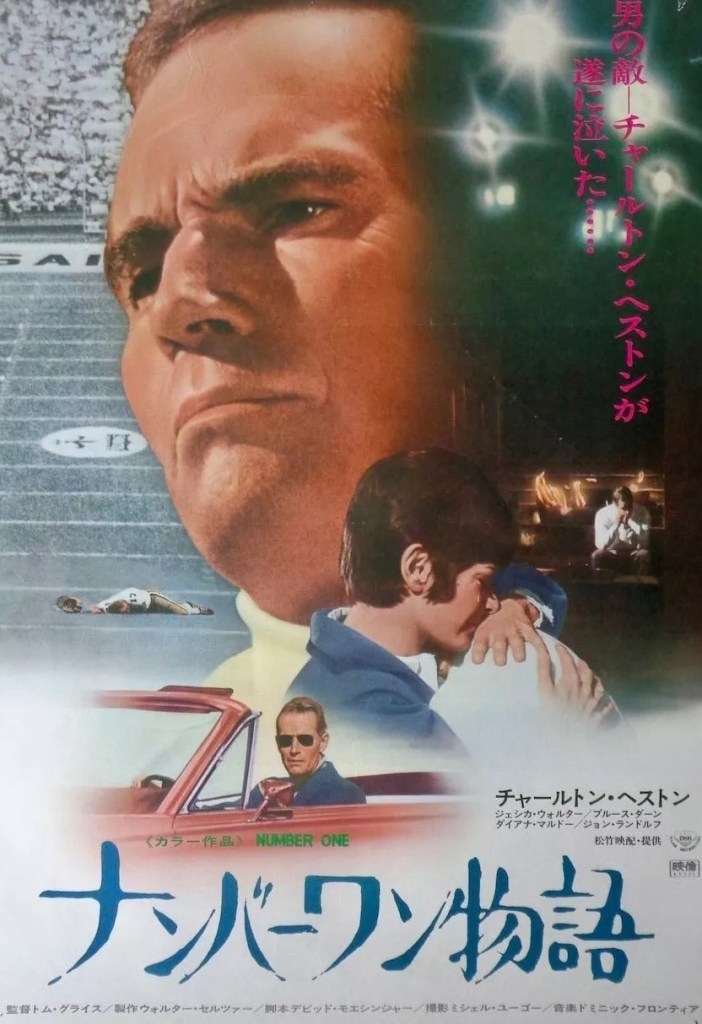
Number One / Pro (1969) ****

Quite possibly Charlton Heston’s best performance – as an ageing pro footballer refusing to bow down to the inevitable. Ron Catland (Heston) has much in common with Ned Merrill (Burt Lancaster) in The Swimmer (1968) as characters who believe they have been let down by the American Dream. And like that picture, plot is in short supply, it’s mostly a character study with sideswipes at the realities and inanities of American football.

An injury puts star quarterback Catland’s career in doubt. The media write him off, a younger quarterback Kelly (Richard Elkins) is waiting in line, while former colleague Ritchie Fowler (Bruce Dern) offers him a job in his car leasing business, or he could opt for a second career in computers, but Catland wants the only life he has ever known to go on forever.

There’s nothing inherently likeable about Catland. In fact, he’s downright mean most of the time, in part because of the falsity of his profession, management buttering you up when it’s contract time, then on your back once you have re-signed. He’s got a hero’s arrogance, has ignored from the outset the coach’s instructions, at odds with independent fashion-designer wife Julie (Jessica Walter), no children to shore up their marriage. Hardly surprising he drifts into another affair, “an occupational hazard” his wife calls it, this time with the fey Ann (Diana Muldaur) who owns a tennis shop.

You are probably familiar with the kind of football picture which climaxes with a last-minute touchdown or the more realistic movies like North Dallas Forty (1979) or the superlative Any Given Sunday (1999) where nonetheless the focus is on winning and characters are ramped up for dramatic effect. Or you might imagine Hollywood had been routinely churning out football movies like Knute Rockne All-American (1940) and Jim Thorpe All American (1951) for decades. But strangely enough the movie industry had not focused on this particular sport for well over a decade until the NFL documentary They Call It Pro Football (1967) and comedy Paper Lion (1968).

Number One sets out to set the record straight on the reality of being a football hero. And it’s by far the most realistic of the species. For every good-looking gal wanting to pass him a note on a napkin in a restaurant there are plenty fans turning on him for refusing to sign an autograph. For every sports reporter writing a puff piece, there are others tearing him to pieces in print.

The documentary-style approach by director Tom Gries (100 Rifles, 1969) serves the film well. This is a different kind of football team to the later fictional depictions. It’s a lonely life for a start. The players are rivals, not comrades.  There’s little camaraderie. The dressing room is like a morgue. No practical jokes and tomfoolery. No over-the-top team talk by the coach and thank goodness no padre who pretends to walk every aching mile in their shoes. Any exhortation is almost a plea. Injury is mostly ignored. Legs are constantly strapped up. And when your career is over you might be reduced to bumming a loan from a current star. The politics are brutal.

New Orleans Saints cooperated with the production so the game scenes come across well though not obviously with the razzamatazz of Any Given Sunday and Heston has the physique for a sportsman. Primarily a television writer, David Moessinger (The Caper of the Golden Bulls, 1967) only crafted two films in the 1960s and this, the second and last, was an unusual effort, as the character twists and turns trying on the one hand to escape the cage of his career and on the other determined to squeeze the last drop out of his golden imprisonment.

Catlan still sees himself (at the age of 40, no less) as the best quarterback in the business and simmers with anger that his body is letting him down and that he has nothing in place to fill the gap that abandoning the game will create. Underneath the volatility is a hole of pain. There’s no sense either that he has enjoyed his time at the top, just that it has always one way or another been a struggle.

Although the movie was marketed with Heston as an aggressive individual, in fact it calls for a far wider range of emotions from Heston, and for this part he delivers in spades. Jessica Walter (Grand Prix, 1966)  gives as good as she gets, Bruce Dern (Hang ‘Em High, 1968) as the fast-talking salesman and Diana Muldaur (The Swimmer, 1968) are excellent. But this is Heston’s film. It’s more of a reflective piece, none of the dramatic highs and lows of other football pictures.

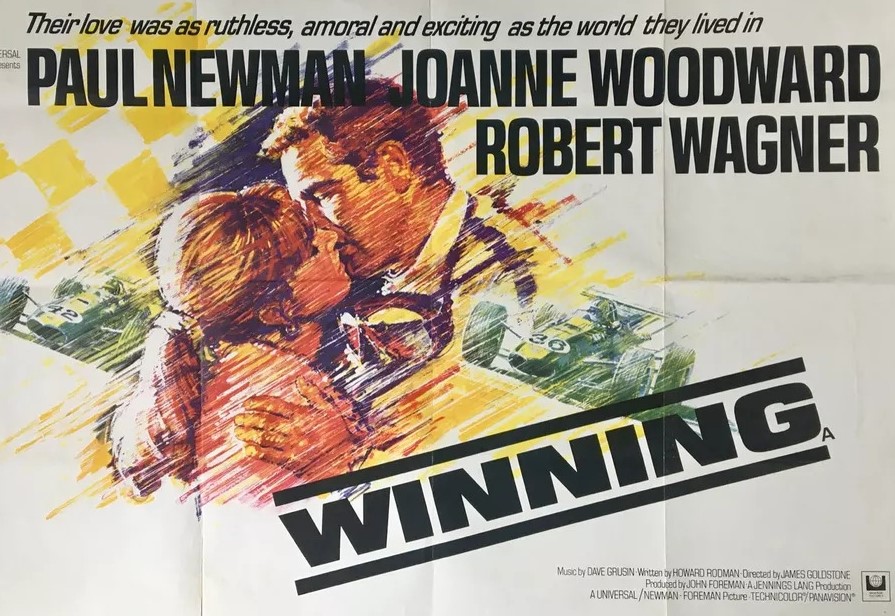
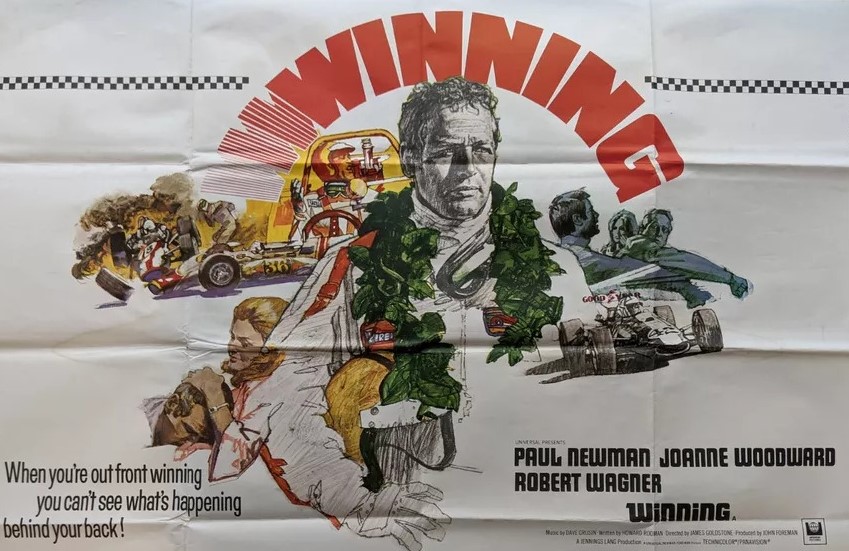
Winning (1969) ****

Boasting more marquee firepower than Grand Prix (1966) but less throttle on the track, faces the same problem as all racing pictures, namely, what to do with the cast when the camera’s not watching cars hurtle round and round. The John Frankenheimer Cinerama epic brought audiences much closer to the actuality of the circuit, though it fell down at the box office because U.S. moviegoers were less interested in Formula One than their home-grown variety, and filled up the off-track narrative with a clever concoction of politics, romance and revenge.

Le Mans ‘66/Ford vs Ferrari (2019) is the acknowledged ace of racing pictures, with terrific speed action, detailed engineering background, and the true-life tale of the manufacturing kingpin of America trying to wrest a crown from the European monarch, and with romance kept strictly off screen; I’ve no idea if Carroll Shelby had a wife or kids, that’s how disinterested this picture was in moving away from the central situation.

So what you inevitably have here is, to use the football idiom, a picture of two halves. And from today’s perspective, oddly enough it’s the off-screen maneuvers that take center stage. For the time, the racing sequences would have been interesting, not in the Grand Prix league, but then that didn’t make as much money as MGM would have liked, so it made sense to try and back up the spinning around with a more interesting story.

And this one’s a zinger, and the only reason the picture doesn’t work as well as it should is because the racing keeps on getting in the way of two hard-nosed individuals. There’s nothing particularly unusual about race ace Capua. He’s not of the win-at-all-costs league of Charlton Heston in Number One (1969), there’s no dodgy dealings for example, but he’s got the standard winner’s mindset, everything, including wife, takes second place to achieving his goal which in this instance is winning the Indy 500 (a 500-mile race round the same circular track about 200 times, not the twisting-and-turning racetracks of Grand Prix).

Even when he does win he lacks the champagne’n’sex personality of rival Erding (Robert Wagner) who’s usually got a girl on both arms and both knees and knows how to party. You’re more likely to find Capua wandering alone and drunk through the streets late at night with an empty hotel bed awaiting.

That’s where he meets single mum Elora (Joanne Woodward) shutting up shop (the hours they work!) in a car rental outlet (Avis, if you must know, since presumably they paid for the plug), the type of gal who looks a lot more straight-up than she turns out. She’s happy to dump her son on her mother and hightail off with new lover and he’s so smitten it’s not long before they’re married and she has to come to terms with the fact that he’s a lot more monosyllabic as a husband than a skirt-chasing Romeo.

What should have upset the applecart is her son, Charley (Richard Thomas), but Capua’s taken a shine to the teenager and spends a whole weekend – mum packed off elsewhere – getting to know him. Movies of this era didn’t waste any time on father-son bonding, kids mostly getting in the way of either romance or family life, and played for comedic effect (The Impossible Years, 1968, etc) or already having flown the nest and getting stoned. So this is pretty unusual territory and it’s well done.

But the real twist is Elora. Setting aside that she’s the kind of woman that dumps her son when a handsome hunk hoves into view, she looks like your typical mom, happy to sit on the sidelines and wait for hubby to come home and console him should he be on a losing streak. But Elora’s not that kind of woman at all. She needs attention. And if she doesn’t get it from a husband too wrapped up in his work she’s going to look elsewhere.

There’s an absolutely stunning scene that has little place in a sports picture when said handsome hunk, sporting god, top dog, finds her in bed with Erding. This has got to be Paul Newman’s best ever acting. And cleverly directed. The movie’s been toddling along with a nifty romantic score and that music’s playing as Capua heads home. But it shuts off suddenly when he opens the motel door. Tears brim in Capua’s eyes. The wife reacts from shame. No words are spoken. It’s all in looks.

Consequently, Charley takes against the erring mom and in a fast-forward to contemporary complicated maternal relationships she wants him to be her “friend.”

Of course, with her out of the way, Capua can get down to the serious business of winning, but that still leaves an emptiness inside. You’ll probably remember the famous freeze-frame ending of Butch Cassidy and the Sundance Kid (1969), perhaps it’s no coincidence that Newman and producing partner John Foreman were in charge of that as well, because here they resort to the same technique. While, theoretically, this leaves audiences on an edge, it doesn’t at all, it just, as in the western, stops short of spelling things out. Elora’s much more self-aware than Capua, she’s making no moves to welcome a second chance, and you’re pretty darned sure this marriage ain’t going to get over her betrayal.

All the noise and razzamatazz of seeing the Indy 500 on the screen obscured the fine acting. Coming at it now with the racing sequences not appearing half as exciting as they must have been back in the day, and the twisty character of Elora to the fore, plus the exploration of the father-teenage son relationship, this has got a lot more to offer.

My guess is it gets marked down because the racing isn’t up to modern day expectations but ignore that and watch the acting. Joanne Woodward (A Big Hand for the Little Lady, 1966) steals the show, and, except in that one scene, beats Paul Newman (The Prize, 1963) hands down but that’s taking little away from the actor.  In his debut Richard Thomas (Last Summer, 1970) shows definite promise,  Robert Wagner (The Biggest Bundle of Them All, 1968) better than I’ve seen him. James Goldstone (When Time Ran Out, 1980) directed from a script by Howard Rodman (Coogan’s Bluff, 1968).

That bedroom scene takes some beating.

Time for a reappraisal.

Challengers (2024) ** – Seen at the Cinema

Am getting a bit fed up with critical wishful thinking where reviewers pump up the latest effort from a “visionary” director, the movie they wish they had seen rather than the dreadful evidence of overblown miscalculation in front of their eyes. Hammy television-sized performances, fidgety faces, actors who don’t know what to do in a close-up, and a director who doesn’t know how to tell even as simplistic a tale as this without indulging in slow-mo, bizarre camera angles and sex in a storm.

Luca Guadagnino (Bones and All, 2022), in making easily the worst sports movie of all time, is an early contender for this year’s Razzies. And I’m hoping not too many people are going to fall for the marketing line that this is sizzling with sexuality when it is one of the most tepid you will ever see, beyond the kind of dialog that would have shamed Porky’s (1981).

And if you’re going to go down the Christopher Nolan flashback route, try and do it without just the title of “earlier” – if it had gotten any earlier we would have been back in the twentieth century. Any insights into tennis are restricted to the jaw-dropping revelation that there are winners and losers and not everyone’s teenage dreams can come true, and that the prom queen isn’t going to pick the sexiest lad but the one with the most financial promise.

If you’re interested, the plot goes something like this. Best pals and tennis prodigies Art (Mike Faist) and Patrick (Josh O’Connor) both fancy the same woman, Tashi (Zendaya), a cut above them in the prodigy stakes, and she thinks they actually fancy each other and engineers a scene where the two boys kiss each other. Having initially chosen the charismatic Patrick as her love mate, she changes her mind and opts for Art. A dozen or so years later – the chronology is less than exact – the rivals meet up again in a low-level tennis tournament, Art, supposedly a U.S. Open champ, Patrick a long-time loser who hasn’t made the grade.

None of the principals look as if they know one end of a tennis racquet from the other, but that doesn’t matter because the director is so busy with the dizzying visuals (including a tennis ball POV) he could have turned performing dogs into champs. Luckily for us, the moment there’s some kind of emotional climax (or attempt at one) the director hits us with some heavy music.

Josh O’Connor (Lee, 2023) has the saving grace of some screen charm but Zendaya (Dune: Part Two, 2024) blows her screen credibility with a gurning performance.

Awful.

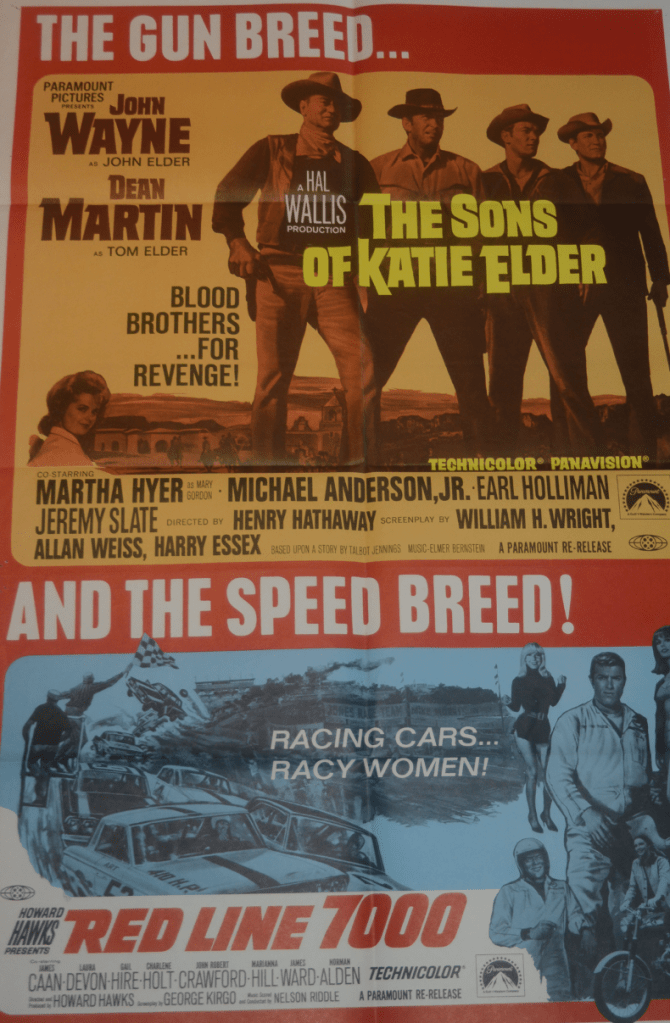
Red Line 7000 (1965) **

Quentin Tarantino is probably alone in preferring this movie mishap to John Frankenheimer’s Grand Prix (1966) – or I have somehow missed a “cult” picture. There was no doubt director Howard Hawks could handle speed. Check out the action in Hatari! (1962) as jeeps battle across tougher terrain than NASCAR racing circuits. But for some reason, he thought he would get away with interspersing footage of races and spectacular crashes with shots of actors behind the wheel. Any time something exciting is about to happen we’re alerted by the commentator saying “oh oh” or “wait a minute” or “hold it.” There’s none of the feverish excitement or authenticity of Grand Prix.

Hawks hired a no-name cast in a bid a) to become a star-maker, b) to prove he did require the marquee wattage of the likes of John Wayne and c) to show he could make a movie cheaply. He failed on all three counts. He probably didn’t think he was taking any kind of gamble at all, as a man approaching 70, in trying to depict the lives of people around 50 years younger. James Caan, in his sophomore outing, comes out best, but that’s not saying much since he has very little to do except growl and look broody. Marianna Hill (El Condor, 1970) is also believable.

While the racing footage has dated in a way that Grand Prix has not, the main problem is just a jumble of characters getting lost in a jumble of stories. No sooner has one character been introduced than we are onto another. There’s none of the cohesive story-telling that marked out The Big Sleep (1946) or Rio Bravo (1959) and, frankly, none of the characters are particularly interesting. And what possessed him to stick in a song sung by a character (Holly, played by Gail Hire) who cannot sing – she talks the lyrics – with a backing group made up of waitresses, I can’t begin to guess.

The most fun to be had is spotting in bit parts people famous for other reasons. Carol Connors, for example, who co-wrote the lyrics to “Gone Fly Now” (Rocky, 1976) appears as a waitress. As does Cissy Wellman, daughter of veteran director William Wellman. Comedian Jerry Lewis has a cameo. It says much for Hawk’s star-spotting abilities that of two female leads, Laura Devon only made five pictures and Gail Hire just two.

Henry Hathaway and Howard Hawks…Together!

Of the main supporting males, this was the beginning and end of John Robert Crawford’s movie career while Skip Hire made a bigger splash as a producer of television series The Dukes of Hazzard. Co-written by the director, George Kirgo (Spinout, 1966) and Steve McNeil (Man’s Favorite Sport, 1964)..

However, the French had a word for it – “genius.” Despite being dismissed as a rare misstep by the bulk of critics worldwide, Cahiers du Cinema decided it was one of the year’s Top Ten pictures. So what do I know?

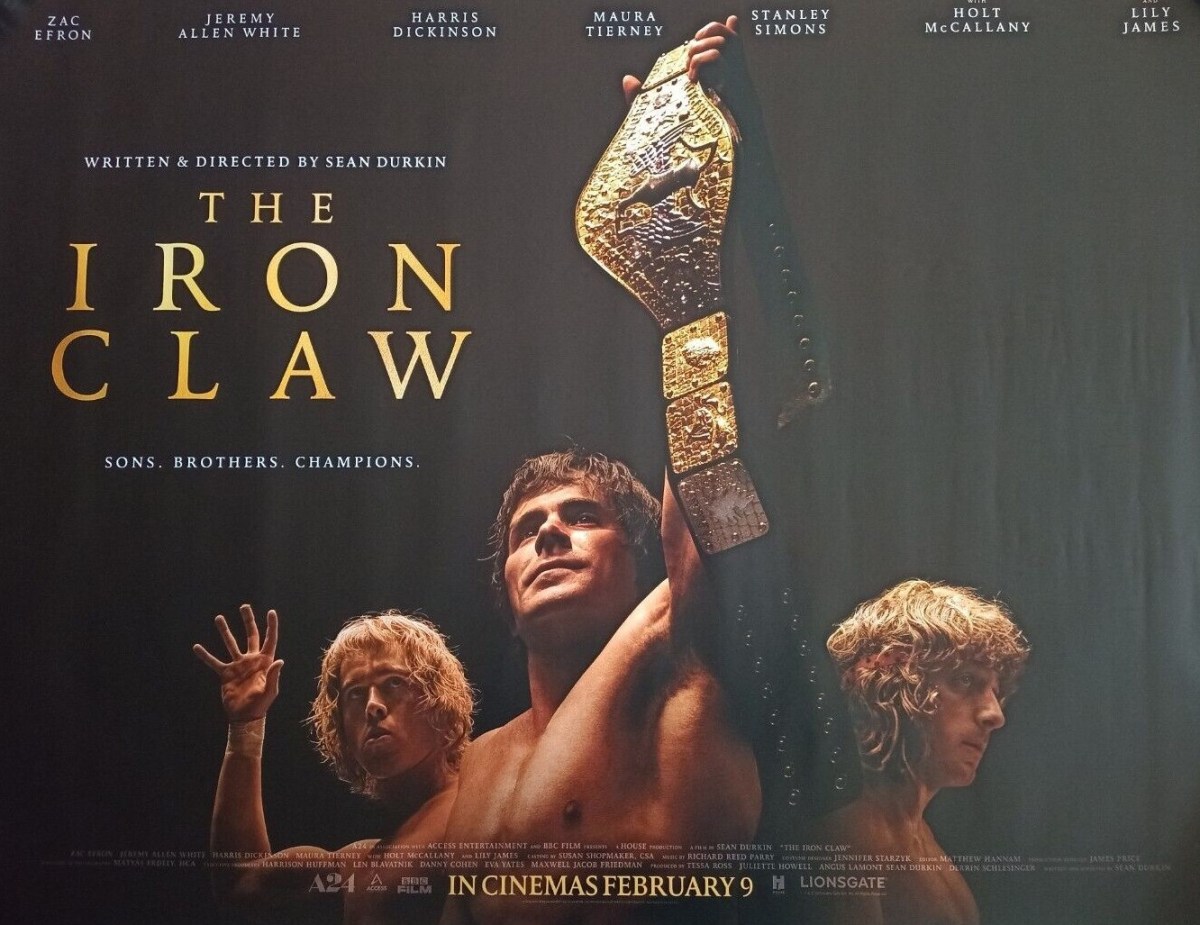
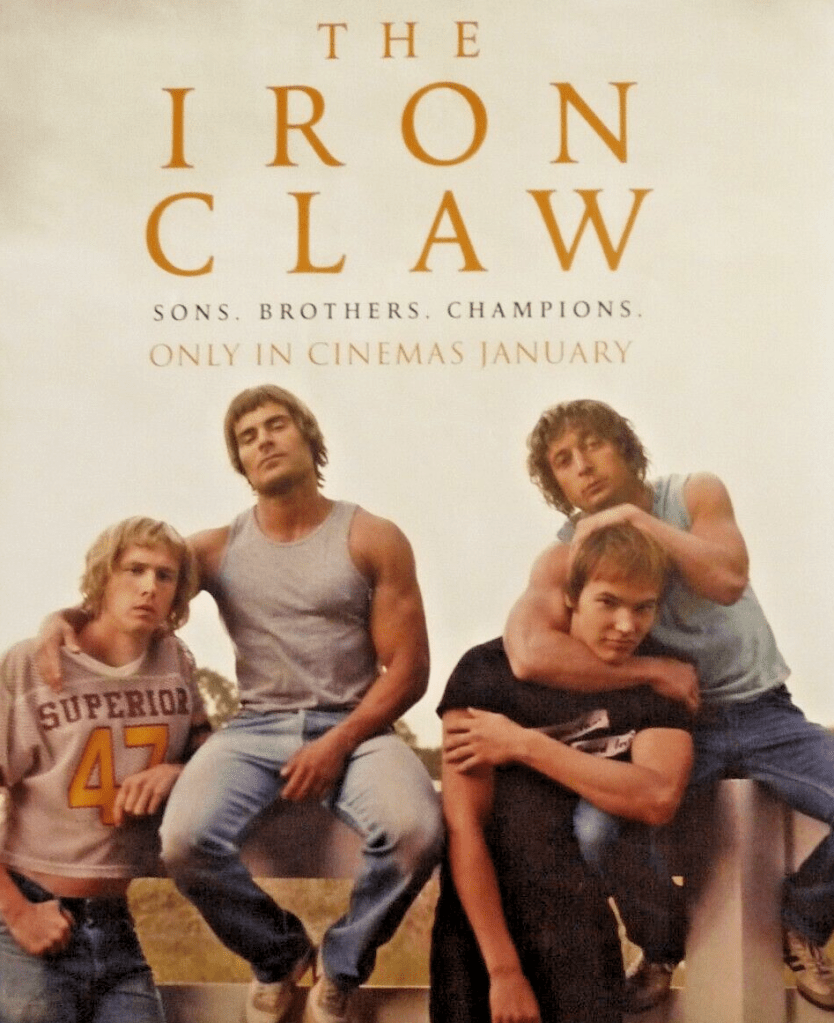
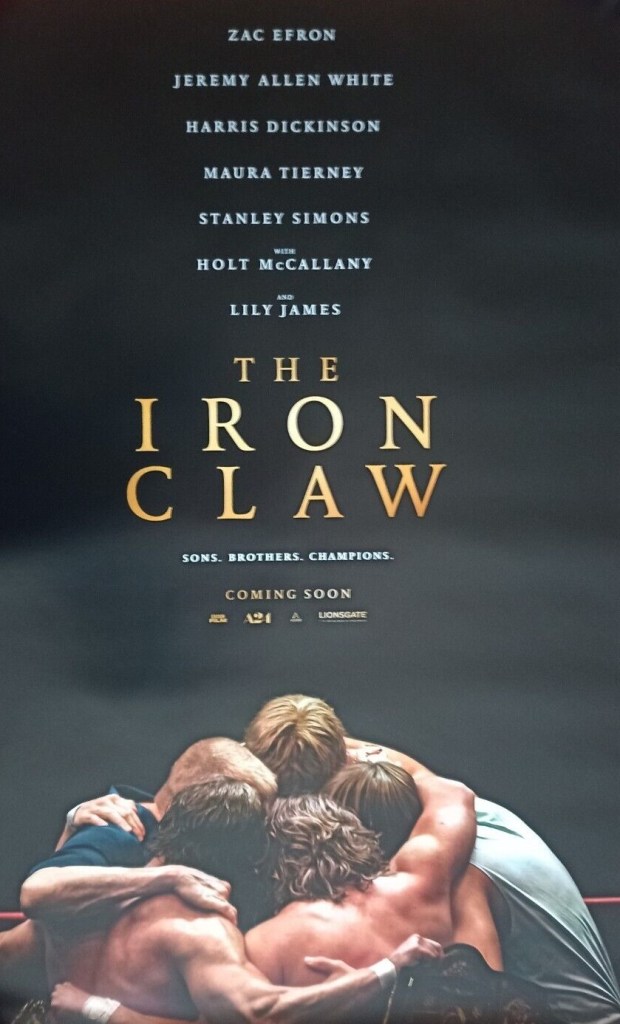
The Iron Claw (2023) *** – Seen at the Cinema

When I was growing up there was a beloved character in British comic The Valiant called The Steel Claw. After one accident he lost a hand and after another the replacement artificial hand, made of steel, if touched by electricity, rendered him invisible, apart from the claw which floated in the air like some avenging angel. He started out a villain but in the kind of character development that rarely occurs in this world turns into a crime-busting hero.

I mention this not because I made the mistake of assuming the characters here would be super-heroes (though spandex does play a role) but because character development is in serious lack. And, to be honest, I’m getting a bit fed up – stand up The Holdovers – of repressed male characters holding it all together for the sake of a director who wants to make a point about repressed males. At least in The Holdovers the main character broke out of his emotional prison once in a while. Here, all we have is emotional blackmail. And a director who in true artistic fashion shies away from any real dramatic incident so that it can be dealt with in very clever long shot or occur offscreen or in shock follow-up sequence (one of which did work very well, I admit).

“I used to be a brother,” laments Kevin (Zac Elfron) at the end of the picture in homage no doubt to Marlon Brando’s famous line in On the Waterfront, as he sheds a tear in retaliation at having to keep up a stiff upper lip for the rest of the movie. By this point, he’s the sole survivor of five siblings, but the way the boys are ruled by the iron father, not a sniffle is allowed when anyone else passes away.

This is another of those biopics that won’t mean a thing to anyone outside America. At one point (long before WWF) wrestling was huge in the U.K., ruling Saturday afternoon telly when everyone was waiting for the football/soccer results, but it was so obviously faked nobody took it seriously. So, one of the issues here is the fraudulent aspect of the “sport.” Sure, you got to be fit to fake it, unless you’re a world champion with a tub of lard for a gut.

There’s a scene where Kevin earnestly explains – he’s nothing but earnest throughout – to future wife Pam (Lily James) that there is some skill involved in wooing the crowd and by dint of performance (aka acting) if you win enough people over you get to be world champion. And even if you end up getting thumped by the current world champion, if you shout it loudly or eloquently enough the audience will be convinced you’re actually the winner.

So the meat, such as it is, isn’t the wrestling (although that does occupy too lengthy a time) but how the four sons (one is dead when the picture starts) are corralled by father Fritz (Holt McCallany), now a wrestling promoter, into following him into the sport. Some of the boys ain’t so keen – Kerry (Jeremy Allen Wright) is a junior world discus throwing champion (as was dad), Mike (Stanley Simons) shows musical promise (as did, bizarrely, dad) – but still buckle down to the training and discipline. Even if it’s all faked, the body still takes a hammering. Some need pills to get them through.

One by one they all die off, Mike and Kerry by suicide, David (Harris Dickinson) after ignoring initial signs of internal bleeding. Still, mostly they grin and bear it, until, being the only brother left standing, Kevin takes against his father and tries to strangle him. Meanwhile, in the background, Mom (Maura Tierney) is as stoical as the others, her only rebellion refusing to wear the same funeral dress twice.

It’s mostly turgid, though, all the sons showing signs of depression, yet there’s some kind “happy ending” because all Kevin’s kids and grandkids end up living together to make up, I guess, for the loss of the siblings. There’s also good old-fashioned family values and the sons appear to truly bond instead of knifing each other in the back and leaving home at the earliest opportunity. But Dad never appears to blame himself for his hard line and Mom is unwilling to intervene.

I feel sorry for Zac Elfron (17 Again, 2009), the movie equivalent of being in a boy band, who’s muscled up and set himself up for Oscar contention. But, just as Wicked Little Letters was plagued by over-acting this is riddled with the opposite and no amount of macho posturing can make up for not having a decent character for an audience to root for.

The shock scene, in case you’re wondering, concerns Kerry. Despondent, he climbs on his motorcycle. We see the road, we see the distant lights of oncoming vehicle, but the camera just pulls back and pulls back with exceeding artiness. You think he’s dead, but, no, there he is shuffling around on crutches – minus a foot.

Written and directed by Sean Durkin (The Nest, 2020).

Please, sir, can we go back to dramas that are full of drama.

The Boys in the Boat (2023) ***** – Seen at the Cinema

Remarkable. I never thought George Clooney (Good Night and Good Luck, 2005) had it in him. His previous offerings had all been worthy but dry. Here, he conjures up a gripping drama of underdogs pitted against the rich and powerful of the USA and then the  might of Nazi Germany at the 1936 Olympics.

Rowing is generally considered an elite sport, contestants plucked from elite universities – in Britain it was always associated with the annual Oxford vs Cambridge Boat Race though from 1984 the country has won at least one gold at the Olympics and Sir Steve Redgrave, who lacked an alma mater, won five on the trot.

Except for athletics and golf, most popular sports are team games – football/soccer, American football, baseball – but the media and Hollywood tends to treat them as opportunities for individual excellence, the striker scoring the winning goal, the quarterback the winning touchdown, the baseball player the winning home run. The team aspects of these sports are rarely touched upon, even though you need a specific quantity of personnel working in tandem in order to compete.

What makes rowing so unusual is that, as one of the characters comments, you don’t have eight men in an eight-man crew you have one – in other words the guys have to be so in synch that they act as one. I probably learned more about the technicalities of sport from this one picture than any other sports-related movie I’ve ever seen and yet that information is passed out in dramatic form.

In terms of the feel-good factor, this comes closest to Chariots of Fire (1981), but in some regard exceeds that because it’s not about individuals coming good or coming from behind to win a medal, but about group dynamics. And it’s quite astonishing that with the narrative covering three key races, none much different from the other, just boats on water, that director Clooney manages to rack up so much tension.

And like Oppenheimer (2023) it’s a throwback, to those old days of men with hats. Unusual, too, that, like Moneyball (2011) or Any Given Sunday (1999) as much concerned with management as playing.

So, in the middle of the Great Depression, the young men who queue up to battle for a place on the eight-man rowing squad at the University of Washington (in Seattle not the national capital) are kids desperate to feed themselves, not those born with a silver spoon in their mouths, because making the team comes with a scholarship, a bed and meals. But qualifying is a massive attack on the human physique, not to mention psyche, as the combatants need to learn to breathe different and wear out muscles in a way no human being should.

There’s not room to showcase all the athletes so the narrative weight drops on Joe Rantz (Callum Turner), the hobo, abandoned by parents when young, living in a car wreck, skimping on food. He’s got a crush on well-to-do Joyce (Hadley Robinson) who has to do most of the running to get their romance over the line. Next in line is Don (Jack Mulhern), with a Charles Bronson haircut and taciturnity, no social skills but a handy piano player, his respiratory illness threatening to torpedo the team’s chances. In any other picture the cox Chuck (Thomas Elms) would hog the limelight because he’s the one who disobeys the coach’s commands and beats verbal hell out of the team.

Al Ulbrickson (Joel Egerton) is the coach fighting for his career, taking on the shady politics and rules-rigging and a system that wants to only reward the rich. Sidekick boatbuilder George (Peter Guinness) is the kind of backroom character who is mostly silent unless he has a pithy word of wisdom. Al manages two teams, the veterans if you like, who’ve been training together for three years and the juniors, comprising the Depression kids, but it’s the driven newcomers who impress the most and against all odds are selected to represent the university.

I had always assumed there was nothing to do in Poughkeepsie except “pick your feet.” Turns out its river is the locale for the annual rowing championships and so popular it’s not just a huge gala event but there’s even some kind of railway cars packed with passengers that runs along the side of the water so the elect can keep up with the rowers.

Most reviews of this picture have been on the niggardly side but I found it not only deftly done, but very moving, a couple of heart-tugging tear-snagging moments as it pounds its way to feel-good conclusion. The women, who are relegated to bit parts, are exceptionally good, Hadley Robinson (who I had just seen in a completely different role in Anyone But You, 2023) dances across the screen while Courtney Henngeler, as the coach’s wife, has a couple of the best lines in the entire picture. But probably the absolute zinger has to go to a blink-and-you-miss-it moment featuring Jesse Owens (Jyuddah James) when asked if he was going to “show” the Germans what he could do, replies that, no, he was going to show his countrymen back home, indicating the racial prejudice he had to overcome to win selection.  

Terrific turn from Joel Edgerton (Red Sparrow, 2018) who has been hovering around for donkeys without delivering a career-defining performance. Breakthrough, too, for Callum Turner (Divine, 2020) and Jack Mulhern (Pet Sematary: Bloodlines, 2023) though I have a sneaky feeling you’ll go away thinking British character actor Peter Guinness has stolen the picture. Top notch script by Mark L. Smith (The Revenant, 2015) from the bestseller by Daniel James Brown.

All the elements that appear essential to a contemporary sports picture, namely sex, drugs and violence, are missing and what a difference that makes, allowing the picture to streamline forward without getting bogged down. And critics, believing something critical is missing, are missing the point. At the opposite end of the pizzazz scale from Oppenheimer but with as interesting and adult-oriented tale to tell. And for once allows audiences the chance to let their hearts rule their head. And at just over two hours, doesn’t overstay its welcome. This ain’t made by a streamer so catch it in the cinema where it belongs.

Instant classic.

Downhill Racer (1969) ***

Robert Redford rarely took the easy option. Even his big romantic number, The Way We Were (1973), with Barbra Streisand had a serious center, Jeremiah Johnson (1972) focused on ecology and he used his star power to get studio backing for All the President’s Men (1976). Even starting out, and before Butch Cassidy and the Sundance Kid (1969) anointed him a star, when he could, or should according to some observers, have been capitalizing on his good looks he did not shrink from playing unlikeable characters.

Idealizing heroes is endemic. Most films which portray sport stars with feet of clay generally begin with an attractive personality who presses the self-destruct button through alcohol, sex or drugs (or all three) such as Number One (1969) with Charlton Heston. The general consensus is that this approach to the sports movie was not rescinded until the brutal boxer exposed in Scorsese’s Raging Bull (1980).

But it turns out Scorsese was not the first. In this ski drama Chappellet (Robert Redford) is a loner who cares for no-one but himself. Alienated from his father (Walter Stroud), his girlfriend at home little more than a sex object, the obsessed skier proves a constant source of friction for his national team manager Claire (Gene Hackman) and not above the kind of dirty tricks as typified in Slap Shot (1977). He sees nothing wrong with making no bones about the fact that he is in the game for fame.

Totally lacking in self-delusion, he’s a farm boy and few steps up from being illiterate. The world of the professional skier was hardly the obvious subject for a sports drama. There’s certainly an excitement in the action that couldn’t be captured on television, but the essential competitive element, the race against the clock, is not so riveting as the last-minute touchdown or winning home run.

Pretty much Chapellet’s only attractive feature is that he is played by Robert Redford, and the film plays upon the conceit that as handsome a man as this will at some point turn into a good guy.  There’s an interesting debate – and one that would last decades – about whether Redford’s looks got in the way of the characters he portrayed. Imagine Robert Duvall in the part, for instance, and relentless determination would not be called into question.

This leaves the film with only pity as a way to provide the character any sympathy, the sense that if he turns into a loser the audience will warm more to him than if he is a champion, but that arrives outside the competitive circle, and perhaps is even more touching, when his hopes of genuine romance with top-notch blonde Carole (Camilla Sparv) are dashed. 

Michael Ritchie (The Candidate, 1972), making his directing debut, opts for a documentary-style approach, so minimalist it’s almost perfunctory. This is a decent option given there’s very little going on beyond lonely hotel rooms, and an endless round of competitions and an occasional outburst from the manager. The skiing scenes, sensational at the time, are boosted by Blu Ray. Although it gained good reviews, audiences failed to respond although Redford was on a career high after Butch Cassidy and the Sundance Kid (1969).

While it was a brave choice for the actor, the script by James Salter (Three, 1969), based on the Oakley Hall bestseller, doesn’t bring enough insight, though you could argue it was intended to keep the character at arm’s length.  A novel can be engaging enough just by opening up an unusual world, but a movie needs to do more. This is pre-chuckle Gene Hackman (The Gypsy Moths, 1969)   and at this point you would probably have bet on him remaining a supporting player.

Redford, the thinking man’s actor, in embryo.

https://amzn.to/3MonLzM

Discover WordPress

A daily selection of the best content published on WordPress, collected for you by humans who love to read.

The Atavist Magazine

by Brian Hannan

WordPress.com News

The latest news on WordPress.com and the WordPress community.