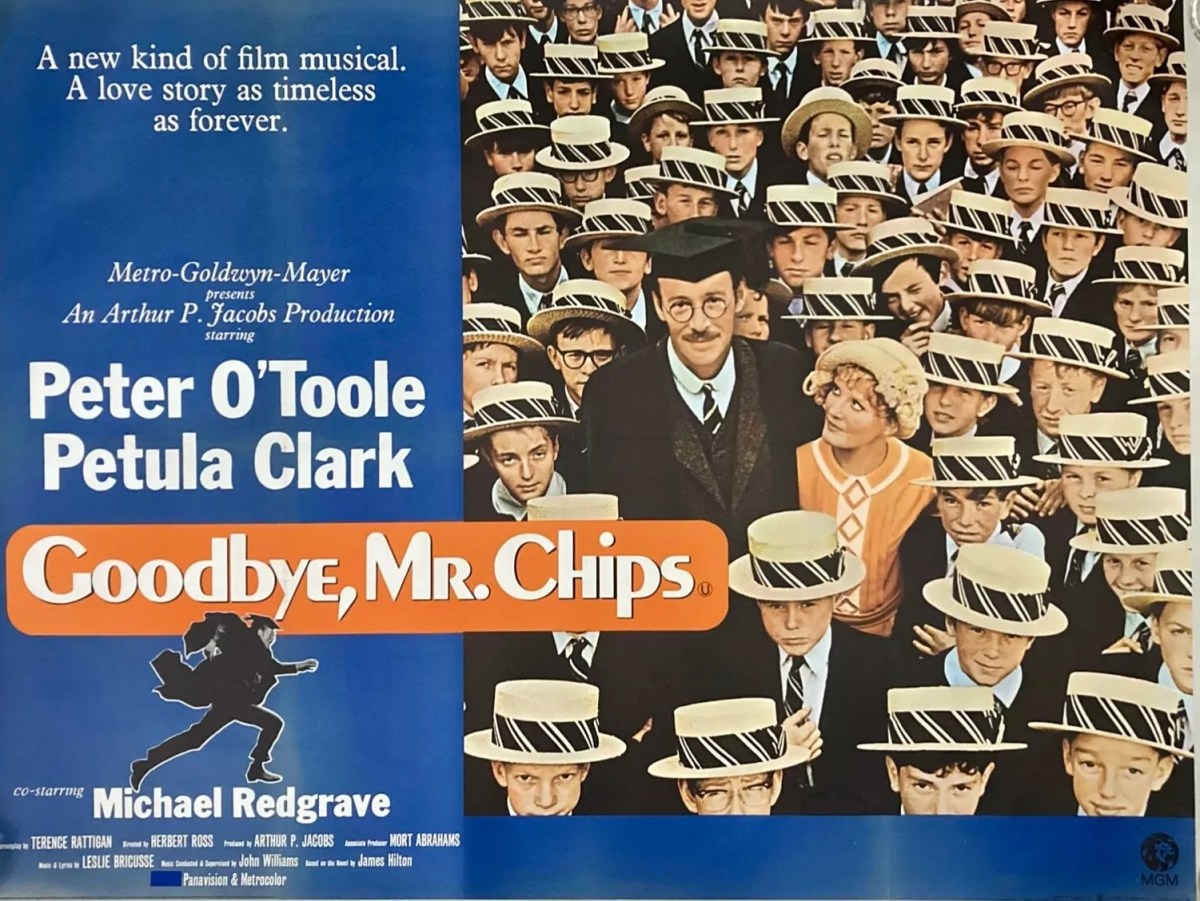
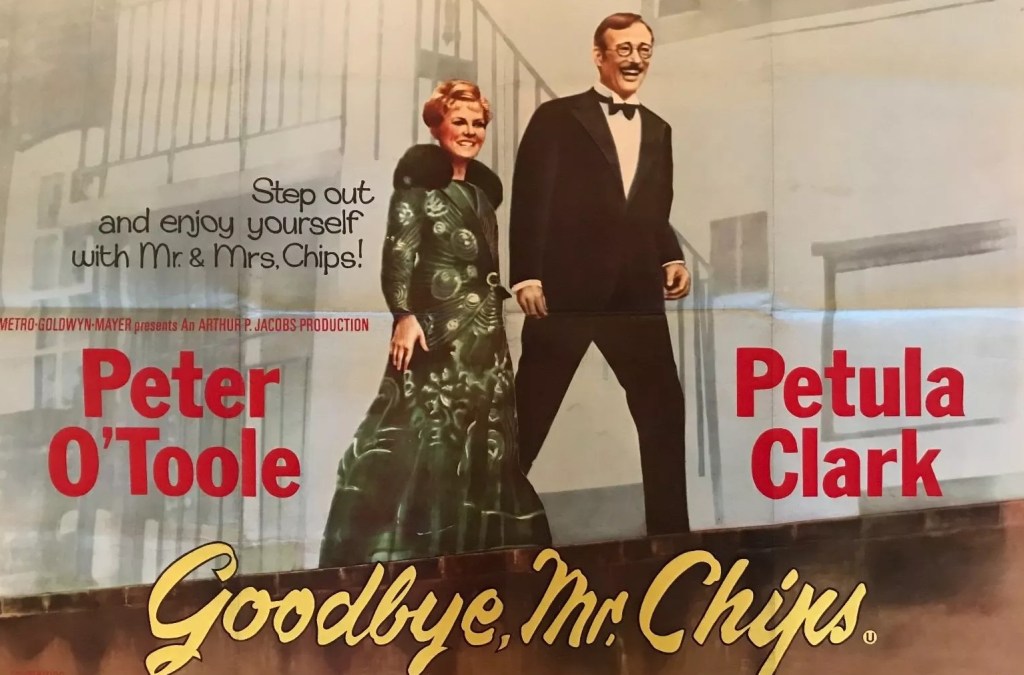
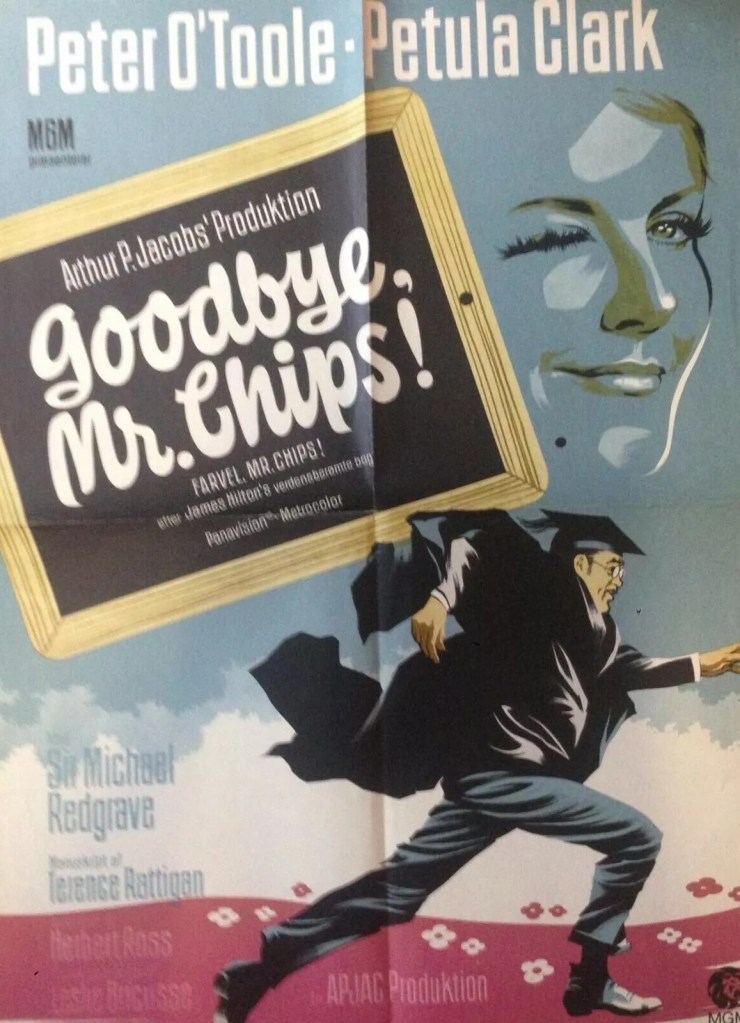
Goodbye, Mr Chips (1969) ****

Stunning revelatory performance by Peter O’Toole (The Night of the Generals, 1967) and unexpected screen chemistry with former British child star turned pop singer Petula Clark (Finian’s Rainbow, 1968) lift a relatively humdrum musical remake of the 1939 classic. Musicals entrusted with roadshow-sized budgets usually came with the proviso that they had already conquered London’s West End or Broadway – The Sound of Music (1965), Oliver! (1968) et al – and so came with an inbuilt audience. A movie musical original with little audience familiarity was always a risk.

There had been a trend away from the choreographic splendor, star exuberance and lightweight narratives that held the key to the golden era of Hollywood musicals. The movie musical had embraced both the introspective and weightier tales – Camelot (1967) the most obvious example. Male stars who couldn’t sing could simply “talk” their way through a tune following the example of Rex Harrison in My Fair Lady (1964).

The proper stretching of vocal chords is sensibly left to Petula Clark, but none of the songs by Leslie Bricusse (Doctor Dolittle, 1967) leave much of an imprint, and you might question why MGM was in such a hurry to commission a remake at all except for O’Toole’s Oscar-nominated turn. By now audiences were well aware of the actor’s screen tics and the intensity he could bring. But moviegoers might as well have been embracing a new star because everything you ever knew about O’Toole was left at the door.

In some respects the realism of his performance plays against the picture, which, effectively, save for the ending, has a lightweight narrative. There’s nothing remotely charming about his characterization of Arthur Chipping. He’s not the kind of eccentric fuddy-duddy that was a common feature of the British movie. Duty has got in the way of likeability. We are introduced to him denying a poor lad the opportunity to become a school tennis champion on the last day of term simply because the match had been scheduled to take place within teaching hours. Small surprise that he is actively disliked, although he takes that, in some respects, as a mark of his teaching prowess.

Unexpectedly, he is introduced to music hall singer Katherine (Petula Clark). What would be the standard meet-cute turns into a meet-awful as unintentionally he delivers a series of insults. Unexpectedly, they meet again, this time in the kind of surroundings that suit his mentality, a Greek amphitheater where he can demonstrate his academic skill, filling her on the acoustics and on the fact that sound travels upward so it’s easier for the person seated above to hear the person standing below than the other way round. Cinematically, this is superbly done, the best scene in the picture from a visual perspective.

Even though, initially, he has no recollection of their previous meeting, a spark is lit and catches fire so that when he returns to school it’s with a somewhat “unsuitable” bride. The best scene in the movie from an emotional perspective is driven by Katherine as she injects some verve into the stodgy school hymn so much so that she soon has the entire school singing with gusto and as though they have for the first time understood the lyrics.

It’s not long before her influence softens the harsh schoolmaster. But she is not a welcome addition in many eyes, her background not what would be expected of a schoolmaster’s wife, and a couple of sub-plots revolve around the impact of her unsuitability on her husband’s career. There’s not much more to go on beyond the sad ending and as I said the songs are treated in low-key fashion rather than full-on energy with dancing schoolboys in the background.

But you don’t really need the songs to enjoy this. Peter O’Toole’s sensational performance more than justifies the remake while the pairing with Petula Clark works surprisingly well.

Herbert Ross (Play It, Again, Sam, 1972) makes his directorial debut. Terrence Rattigan who had previously delved into the public school system to find lonely teachers with The Browning Version (1948) updates the original tale by James Hilton. This is not the performance Peter O’Toole fans would generally nudge you towards, because it’s such an oddity in his portfolio, but, truly, this deserves much wider appreciation

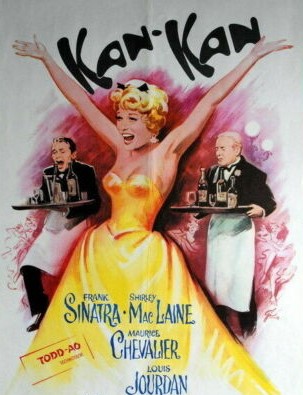
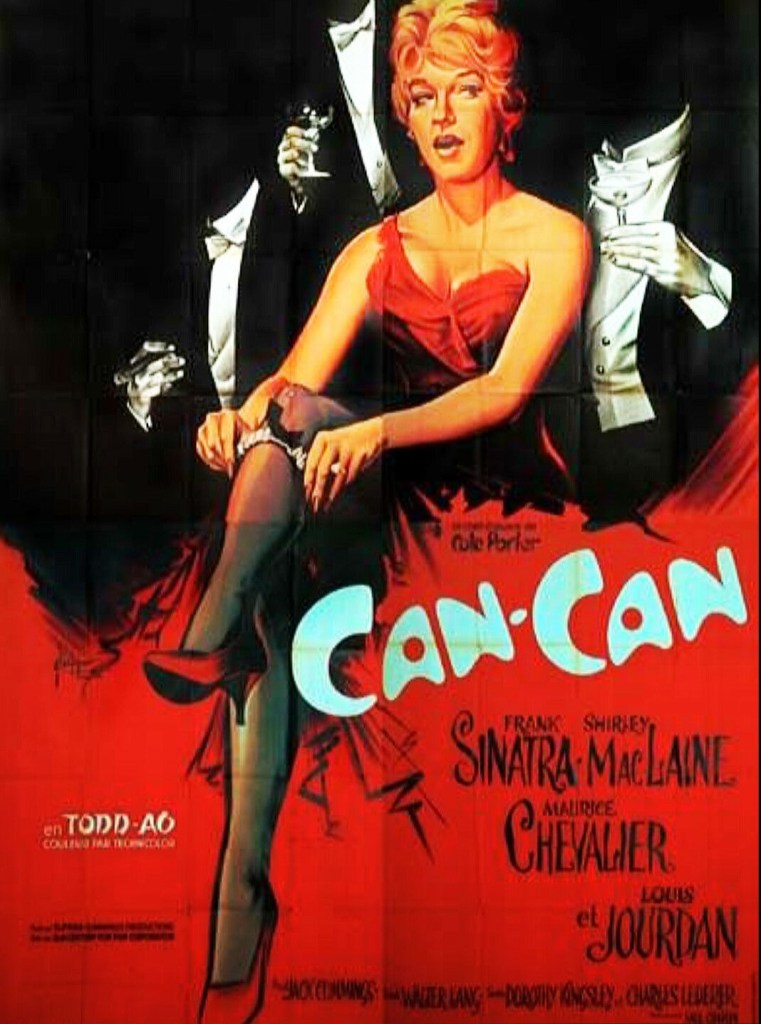
Can-Can (1960) ***

A sterling cast does justice to some great Cole Porter songs in an entertaining musical typical of the period. Apart from appropriating some stock footage, nobody was going to bother to head out on location when a Hollywood-ized version of Paris could be recreated on the set. While the film is ahead of its time in several ways – Simone (Shirley Maclaine) owns the nightclub and the women in the title dance are meant to be minus their panties, hence attempts by authorities to shut it down – the plot features an old-fashioned love triangle.

While the chief magistrate (Maurice Chevalier) turns a blind eye to the lewd dance, his younger colleague Phillippe (Louis Jourdan) does not and ensures Simone is arrested. Complications arise when Philippe falls in love with Simone who already has a lover, the lawyer Francois (Frank Sinatra) who is averse to committing to marriage. The four stars are all very charming and there is gentle comedy and effortless acting as the romantic knots are tightened and then unpicked. Hypocrisy is tested and found wanting. The courtroom scenes are amusing and most of the story focus is on how Phillippe can get round his principles and legal obligations to successfully woo Simone.

But in reality, the audience is here for the music, and to hear classic Porter songs interpreted by Sinatra and Chevalier. While the songs are top-drawer, what captured my imagination most was the “Garden of Eden” ballet with a stunning design and superb dancing by Simone and Claudine (Juliet Prowse).  The “Apache Dance” also boasts some singular choreography but otherwise while the “Can-Can” itself is rousing and well-done this is for obvious reasons a censored version.

The Cole Porter contribution includes: “I Love Paris,” “C’Est Magnifique,” “It’s Allright With Me,” “Let’s Do It,” and “Just One of Those Things.”

Walter Lang was a safe pair of hands in this genre having helmed Call Me Madam (1953), There’s No Business Like Show Business (1954) and Oscar-nominated for The King and I (1956). The screenplay was a harder slog. The original Broadway musical was a romance between the judge and the nightclub owner. Adding the lawyer Francois to the mix necessitated major changes to the story. But Dorothy Kingsley also had form, having been responsible for the screenplays of  Kiss Me, Kate (1953), Seven Brides for Seven Brothers (1954) and Pal Joey (1957). Co-writer Charles Lederer, although involved in Kismet (1955), had a better grasp of comedy, as seen in Gentlemen Prefer Blondes (1953) and It Started with a Kiss (1960).

Although not universally admired by the critics, it won two Oscars – color costume design for  Irene Sharaff and best music for Nelson Riddle. It didn’t hit a home run at the box office either and the finger was pointed at Twentieth Century Fox for committing the mortal sin of inflating revenue figures on its initial launch.

While not one of the all-time great musicals and put in the shade when compared to West Side Story (1961) and The Sound of Music (1965), it’s an enjoyable confection.

Bye, Bye, Birdie (1963) ***

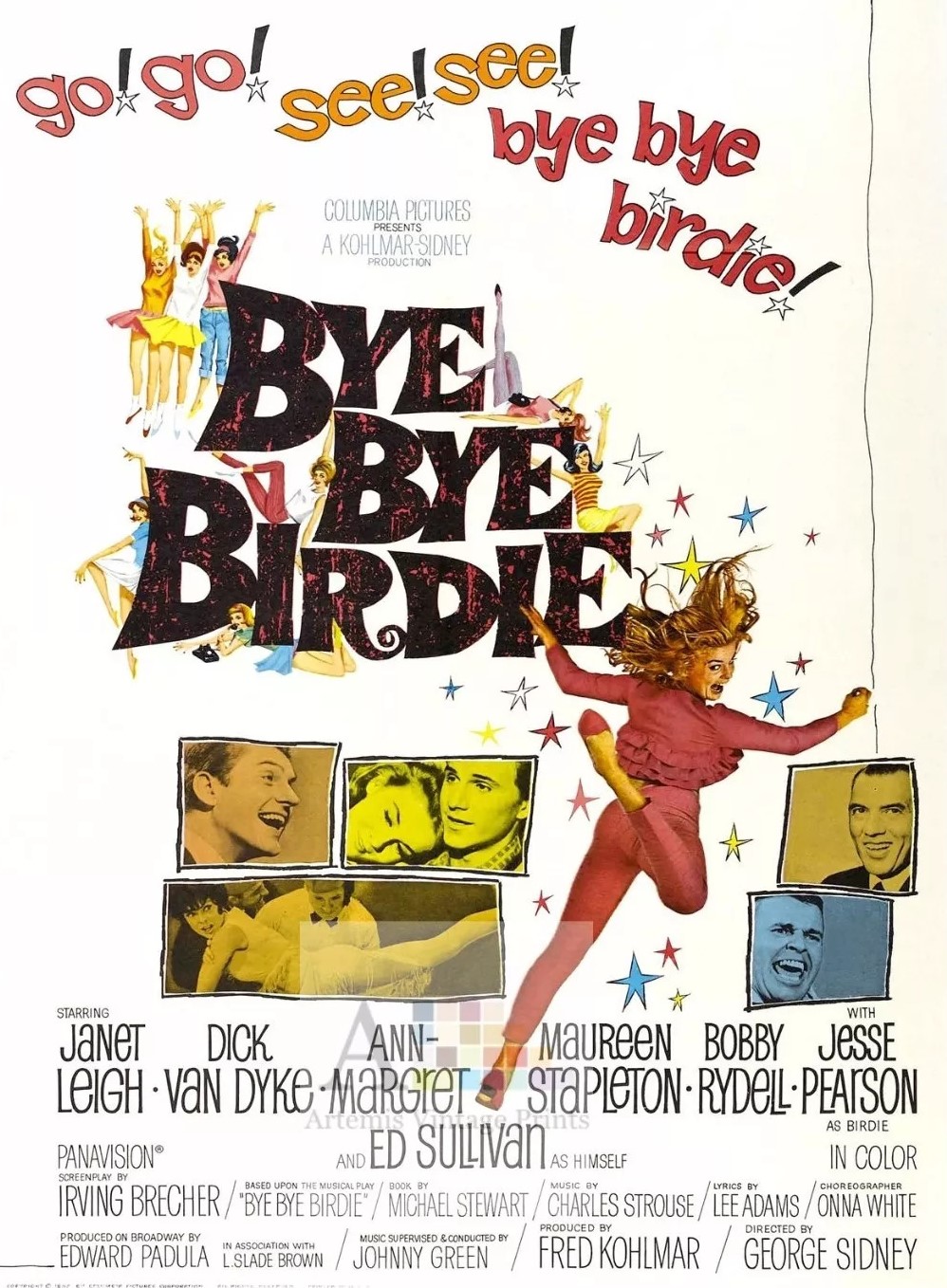
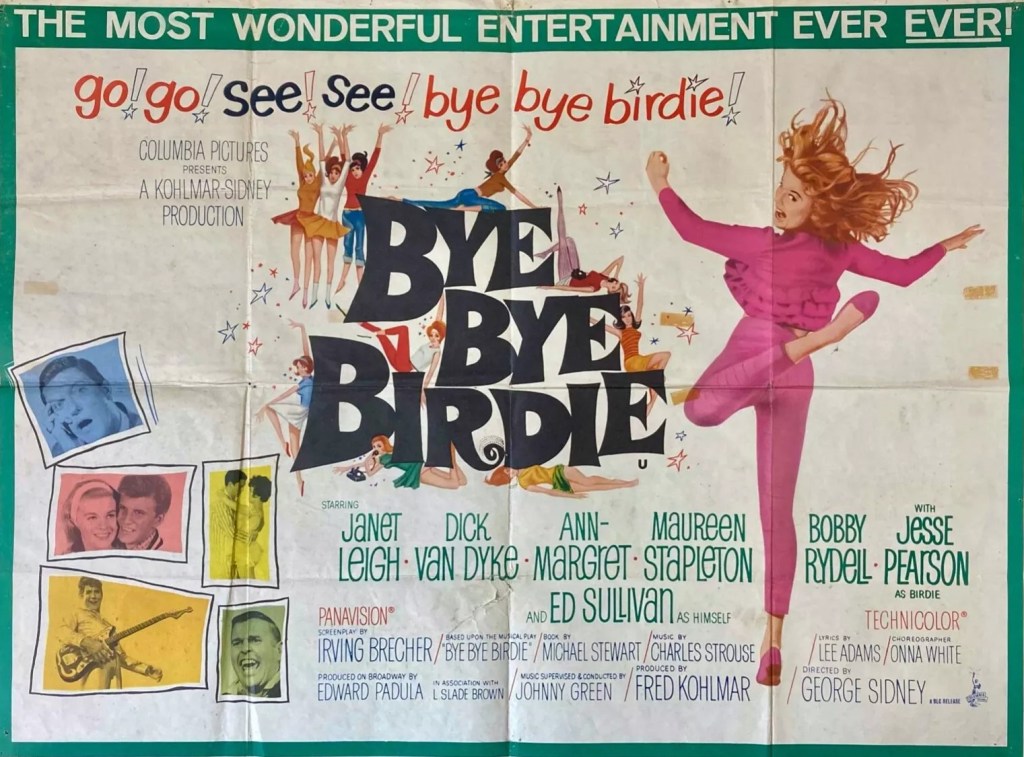
Marketeers employ a cute trick to get round the contractual billing required on movie posters. The position and size of a star’s name in any movie – even now – is stipulated long before a single camera rolls. This is where all the “name above the title” malarkey stems from comes from, that stipulation setting the reals stars apart from the wannabes.

However, whoever was in charge of drawing up the standard boilerplate template was only concerned with names, not images. That left a loophole to be exploited. Should you have a female rising star, whose face or figure might be a darn sight more attractive than the top-billed male, well, by heck, there was nothing to stop you plugging the contractually-less-dominant person all over the poster at the expense of the top-billed star.

The marketeers did it with Marilyn Monroe, they did it with Audrey Hepburn, and now they’re stooping to the same loophole to promote Ann-Margret as virtually the only star of any importance. Admittedly, this was before top-billed Dick Van Dyke achieved much of a reputation as a hoofer in such spectaculars as Mary Poppins (1964). But his second-billed female lead, Janet Leigh, whose features the camera had very much taken a shine to, was also elbowed out of poster prominence.

And small wonder. Excepting Monroe, no actress ever in the last decade burst onto the screen with such pizzazz. By the time Bye Bye Birdie  – her third movie – opened Ann-Margret’s asking price had zoomed to $250,000 and she had struck a two-picture deal with MGM, was contracted to five for Twentieth Century Fox, three for Columbia and another three for Frank Sinatra’s movie production arm.

So a heck of a lot was in the balance. And, boy, does she deliver. Her energy is untouchable and, excepting again Monroe, there was never a sexier singer.

Shame the musical itself is so trite, at its best in homage to those innocent days of the 1950s, that were a more Technicolor version of those 1940s musicals that invariably were sugary confections. The story rips off the Elvis Presley legend. Conrad Birdie (Jesse Pearson) is a pop singer who has been drafted. Songwriter’s secretary Rosie (Janet Leigh) comes up with a publicity gimmick, Conrad singing a song, “One Last Kiss,” written by Albert (Dick Van Dyke) sung on the Ed Sullivan Show, his last gig before joining the Army, with a specially-chosen gal to be recipient of said smooch.

To fill you in, Rosie has had a tough time getting boyfriend Albert, eight years into their relationship, across the wedding finishing line. Bridie fan Kim (Ann-Margret) also has a boyfriend Hugo (Bobby Rydell) who naturally objects to his beloved kissing the pop singer on air in front of millions even it is a publicity stunt. Meanwhile, Albert’s Mama (Maureen Stapleton) is trying to drive a wedge between Rosie and her son. The out-of-sorts Rosie and Hugo conspire to sabotage the television show.

So pretty much the will-she-won’t-she is delivered in wishy-washy style with the plot (call that a plot!) interrupted every few minutes for a song. The narrative seems out of place for a section involving arrest for statutory rape and racism, but that gives the movie some much-needed muscle.

No question that Ann-Margret (The Swinger, 1966) steals the show. That would hardly be surprising given the lack of competition. But she certainly has the song-and-dance chops, and her energy is second to none. She gets a march on everyone by singing the title number over the credits, the credits themselves very much pushed into the background. The other prospective breakout musical star Dick Van Dyke only has one solo and Janet Leigh (Psycho, 1960) wasn’t going to effect a change of screen persona any time soon.

George Sidney directed from a screenplay by Irving Brecher (Oscar-nominated for Meet Me in St Louis, 1944) and Michael Stewart (Hello, Dolly!, 1969) from the original Broadway hit by Charles Strouse (music), Lee Adams (lyrics) and Stewart (book).

Refreshingly lightweight. Ann-Margret lights up the screen.

The Young Girls of Rocheforte / Les Damoiselles de Rochefort (1967) **** – Seen at the Cinema at Bradford Widescreen Weekend

In effervescence and color palette a close cousin to Barbie (2023) with the bonus of being able to call on one of Hollywood’s greatest hoofers, Gene Kelly, in a surprise cameo. He swoops and sways like he was Singin’ in the Sun. And he’s just the icing on the cake in this exuberant throwback to 1950s Cinemascope but with the sensibility of a 1940s musical in which dreams are delivered after a few minor setbacks.

Throw in a long-lost love, an affair that literally went south, an artist who has painted his ideal woman, a couple of literal-minded running French jokes – a woman called Madame Dame and a young sailor whose departure is immi-Nantes – and given the overall light-hearted treatment you would have to treat the presence of a sadistic murderer as being in the comedy vein.

Twins blonde Delphine (Catherine Deneuve) and brunette Solange (Francoise Dorleac) make a living running a music class. Delphine dreams of meeting the ideal man, having already rejected gallery owner Guillaume (Jacques Riberolles) and not too keen on itinerant carney (George Chakiris), while Solange wants a career as a composer, befriending music shop owner Simon (Michel Piccoli) who can put her in touch with old buddy and now renowned pianist Andy (Gene Kelly).

As you might expect the narrative is driven by misunderstandings and meetings choreographed by the minute to fail. This is the kind of film where an actor playing the role of a piano player is not expected to learn to play the piano, just stare into space as though channeling an internal muse or glancing at the sheet music.

There are songs by the dozen – possibly too many (27 singing or dancing sequences), more like a continuous ballet than a traditional musical – but none we’re still humming today, not like tunes from West Side Story (1961), The Sound of Music (1968) or Funny Girl (1968) – though “The Twins Song” probably comes closest. That’s not to put down Michel Legrand’s inventive score, but perhaps to suggest a cultural/language divide. Outside of Danielle Darrieux (Loss of Innocence / The Greengage Summer, 1961) , the singing voices were dubbed, even that of Gene Kelly who lacked the range for the material.

And probably you don’t need to worry about the quality of individual songs as you’ll be swept along by Jacques Demy’s infectious direction. Most of the dancing style reflects West Side Story but with a lighter edge. And it takes little or nothing for characters to burst into song or dance, sometimes that activity going on spontaneously in the background of another scene.

Set in the real seaside town of Rochefort in France and making use of genuine locations, the action kicks off on an unique type of bridge as the carnival comes to town. While not strictly a feminist endeavour, men are mostly put in their place, overtures rejected, marriage offers turned down and bad employers shown the door.

The appearance of Gene Kelly, who hadn’t worn his dancing shoes in more than a decade, gives this an enormous fillip as his classic style shows the others just how it’s done. But it’s the lightness of touch, as well as being able to plumb a well of emotion, that gives this film its grounding, Deneuve and Dorleac as well as Darrieux carrying the movie. George Chakiris (Diamond Head, 1962) looks more at home here than in any film other than West Side Story.

Jacques Demy and Michel Legrand had teamed up previously for The Umbrellas of Cherbourg / Les Parapluies de Cherbourg (1964). Catherine Deneuve (Mayerling, 1969) and Francoise Dorleac (Genghis Khan, 1965) were sisters. Tragically, Dorleac was killed in a road accident prior to the film opening.  

But the whole enterprise is so effortless and appealing you can’t help being drawn in.

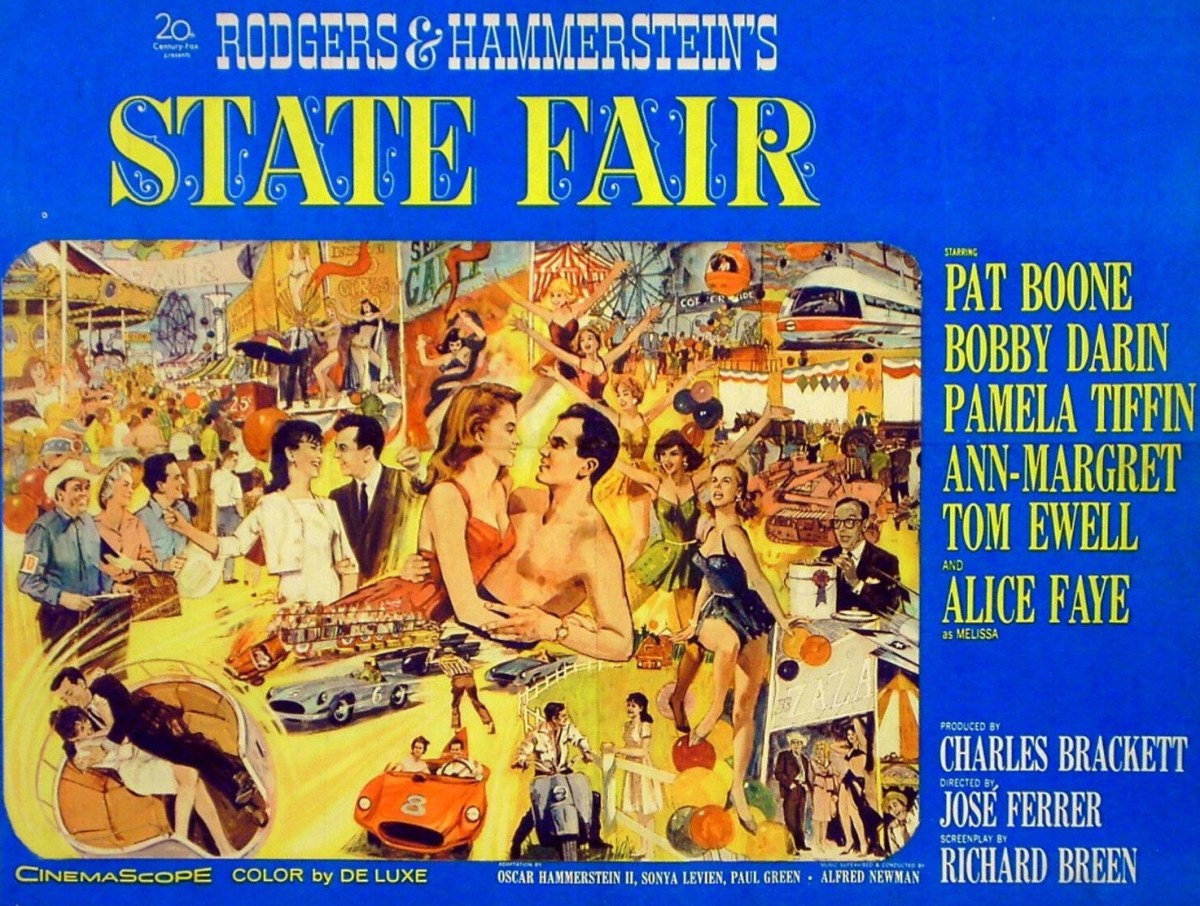
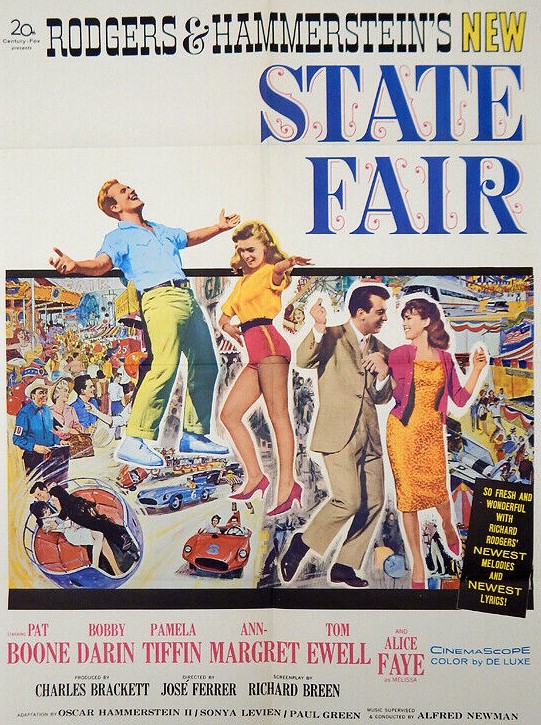
State Fair (1962) ***

Ann-Margret lights up this corny-as-they-come musical. A car-racing sub-plot is about the only attempt to update it from the previous version in 1945. But if you like a love story, you’ve got three, that is if you include Blueboy the pig’s amorous advances. The remake avoids the edginess that had been introduced to movie musicals by West Side Story (1961) and settles for family-friendly and lightweight.

But there is something very American about the Frakes, a family of farmers. They all want to be winners at the annual state fair, parents Abel (Tom Ewell) and Melissa (Alice Faye) desperate to come home with trophies, she for her mincemeat, he with his pig. Son Wayne (Pat Boone) is also intent on victory, in a car race. Daughter Margy (Pamela Tiffin) would be happy with a bit of romance.

Wayne is very taken by showgirl Emily (Ann-Margret) while commentator Jerry (Bobby Darin) has eyes for Margy. The romances are not quite as innocent as you’d expect. Emily makes it clear she’s had other men, making her in Wayne’s eyes “a bad girl,” and that anything that happens at a state fair stays at a state fair, while she goes merrily on her way to her next conquest. Jerry is considerably less open with Margy, happy to string her along until he gets his chance at the big time.

Blueboy, who snorts like billy-o on seeing a female pig in the next stall, has to do all his courting behind bars.

This is more of a musical than the original. Oscar Hammerstein II now deceased, Richard Rodgers adds four more songs on his own, so there’s a bit more mooning and prancing about.

Although “It Might as Well Be Spring” was viewed as the standout song, the standout performance belonged to Ann-Margret who adds spectacular zip, showing off her figure is a series of dance moves on stage leading a male ensemble.

Oddly enough, of all the prospective competition winners, Wayne is the only loser. But that’s out of choice as he rams into a rival to drive him off the track and prevent him winning. Equally oddly, in this context, that’s seen as something of a victory, putting a bully in his place. The racing sequence, and thankfully minus any song, is a highlight.

The humor, deriving mostly from the parents, is slightly labored. Blueboy is let down by the script which doesn’t permit him to build up enough personality to make the audience root for him. But the sequence where three judges taste the alcohol-enhanced mincemeat works well. While at the outset the parents appear merely there as filler, they eventually come into their own in a demonstration of mature love.

Ann-Margret brings a touch of Vegas to the state fair.

Quite what made director Jose Ferrer (Return to Peyton Place, 1961) – an Oscar-winning actor – think he was cut out for a musical is anybody’s guess since, in the first place, this would only be his seventh picture in 11 years and, in the second place, he had no experience in this line. There are too many scenes just of the fair, a souped-up job that was more like an outdoor exhibition than a mom-and-pop local affair. While he lacks the flair of the big time Hollywood directors of musicals, for most of the songs he just points the camera and lets the actor get on with it, the dramatic scenes working reasonably well.

But since only Ann-Margret is called upon to show any real angst he’s quite limited in opening up the movie’s emotional appeal.

Ann-Margret (The Swinger, 1966), changing from natural brunette to flame-haired, steals the picture by far, not just on stage but revealing the screen persona that would take her to the top. Pamela Tiffin (The Pleasure Seekers, 1964, where she played second fiddle to Ann-Margret) is left in the shadows by Ann-Margret’s sizzling performance. Pat Boone (The Main Attraction, 1962) and Bobby Darin were better known as crooners which tends to mean they’re better with songs than dialogue, as is the case here, though Darin was excellent in the non-musical Pressure Point (1962).

Former top Fox star Alice Faye (In Old Chicago, 1938), making a comeback after 17 years, has little to do but frown and Tom Ewell (Tender Is the Night, 1962) has little to do but gurn and moon over his pig.

But, hey, it’s a musical and different rules apply. Fairly passable entertainment with some decent songs and the added bonus of Ann-Margret.

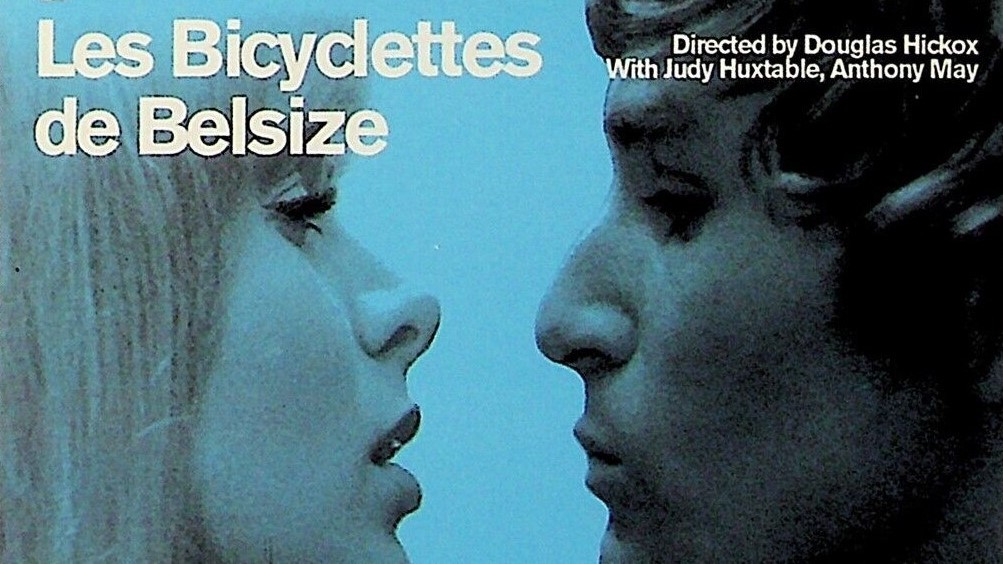
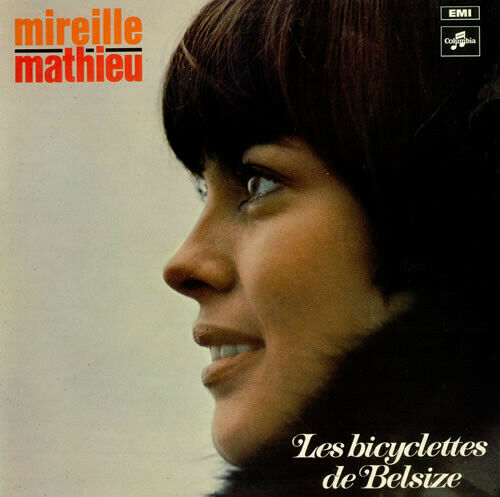
Les Bicyclettes de Belsize (1968) ***

So, John Wayne, what first attracted you to working with British director Douglas Hickox for tough cop thriller Brannigan (1975)? Was it his work on tough thriller Sitting Target (1973)? Or could it be you were entranced by his directorial debut on this whimsical low-budget  London-based musical?

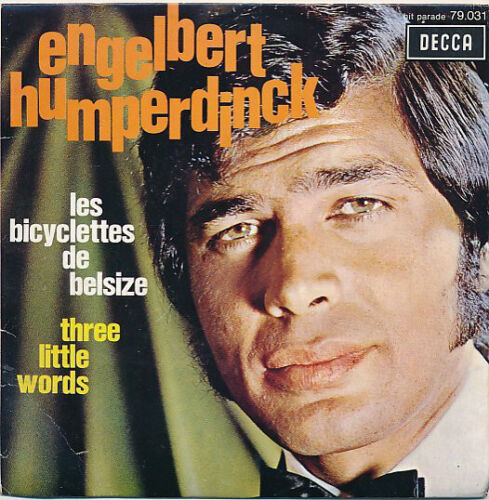
Credit for making a splash in turning the operetta into something that might appeal to the cntemporary youth didn’t go to The Who with Tommy or Andrew Lloyd Webber and Tim Rice for Joseph and His Amazing Technicolor Dreamcoat, but with middle-of-the-road song-writing team Les Reed and Barry Mason, best known for supplying a constant stream of hits for Tom Jones and Engelbert Humperdinck. They need a string of songs here as the opera format excludes dialog, so the music carries both story and emotion.

The theme tune gave British pop star Engelbert Humperdinck a Top Ten hit.

Belsize, in case you are unaware, abuts Hampstead, the most upmarket suburb of London, devoid of the garish tourist scene, immune to the wrecking balls that demolished the same year’s The London Nobody Knows. Hampstead Heath is a huge swatch of parkland, untouched by moviemakers more concerned with Swinging London, red buses and Big Ben. This has more in common with the London of Mary Poppins, rooftops prominent, the camera often lofty.

The French title, suggesting arthouse fare, could not be more misleading except that to some extent it emulates Jacques Demy’s Les Parapluies de Cherbourg (1964). However, the French picture had a more serious theme. This just concentrates on the simplicity of falling love.

At first it’s puppy love as, after a collision, a female child (Leslie Goddard), on a tricycle, follows a young man Steve (Anthony May) on his bicycle. He crashes through a billboard featuring a model Julie (Judy Huxtable) – or a model advertising something called “Julie” (it’s not clear) – and falls in love with her. And, coincidence being the essence of movie romance, bumps into her outside a shop.

She is somewhat disenchanted with the whole model business, constantly turned this way and that for the definable pose, and looking for true love. Initially, though separated by a window, their eyes have met, and they are drawn to kiss each other through the glass. Much to the little girl’s displeasure, Steve pursues Julie but the disappointed youngster soon makes a match of her own with someone her own size.

French singer Mirieille Mathieu had the chart hit in France.

Apart from the songs, this is surprisingly well done. The fantasy elements, which failed to click on movies like Wonderwall (1968) and Can Hieronymus Merkin… (1969), work a treat here, never galloping off into the unlikely, but remaining core to the movie’s light-hearted mood.

But it is directed as an audition piece, Douglas Hickox attempting more with the camera than with the script. There’s use of the fish-eye lens, the rarely-seen wipe, this time in vertical rather than horizontal fashion, long tracking shots, and characters silhouetted on the skyline.

We open audaciously with a spinning chimney pot before panning across rooftops to a shaving mirror on top of a chimney pot and watch Steve, mounted on his bike, reach the ground in a series of acrobatic moves. There’s unexpected comedy. The little girl is fond of blowing a raspberry. Doing so at a bus stop causes the waiting passengers to blame each other, the scene degenerating into unexpected slapstick. There’s a Cinerama moment as Steve loses control of his bike and the screen races past.

But once Julie is introduced in person it shifts to something deeper. The eyes meeting across an empty space and the lips approaching each other through the glass is very well done. But that’s undercut by the model being treated as a puppet.

There are some audacious cuts. A car swings by and a door opens and the next thing Julie is in the back seat twisting round to look out the back window while male fingers yank her face back to the ever-present camera. She’s constantly prodded into position. Her look changes with every wig.

The fashion is more mainstream than Wonderwall, hippie dress and headband, short red dress and matching red tights, a striped fur coat, a mini skirt and knee-high boots. By the time the camera focuses on the model, she is the one afflicted with angst, Steve more happy-go-lucky and it’s a tribute to the direction that Julie’s face is more reflective, expressive.

Given the lack of dialog, Judy Huxtable (The Touchables, 1968) is to be applauded for creating an immediately recognisable character. Anthony May (No Blade of Grass, 1970) managed less emotion in his part.

I didn’t mention that this was hardly a full-length feature, coming in at around the 30-minute mark, and hardly set Hickox up for the action genre, any more than his next picture Entertaining Mr Sloane (1970). The team of Francis Megahy and Bernie Cooper (Freelance, 1970) plus Michael Newling devised the screenplay.

Innovative and interesting with hummable tunes. You can catch it on YouTube.

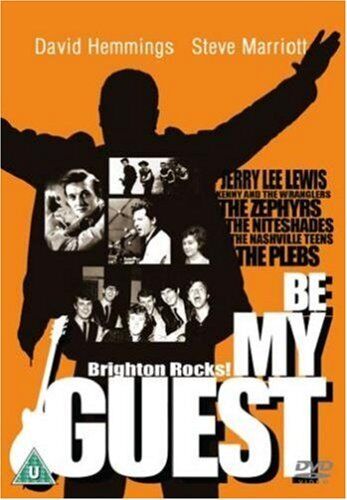
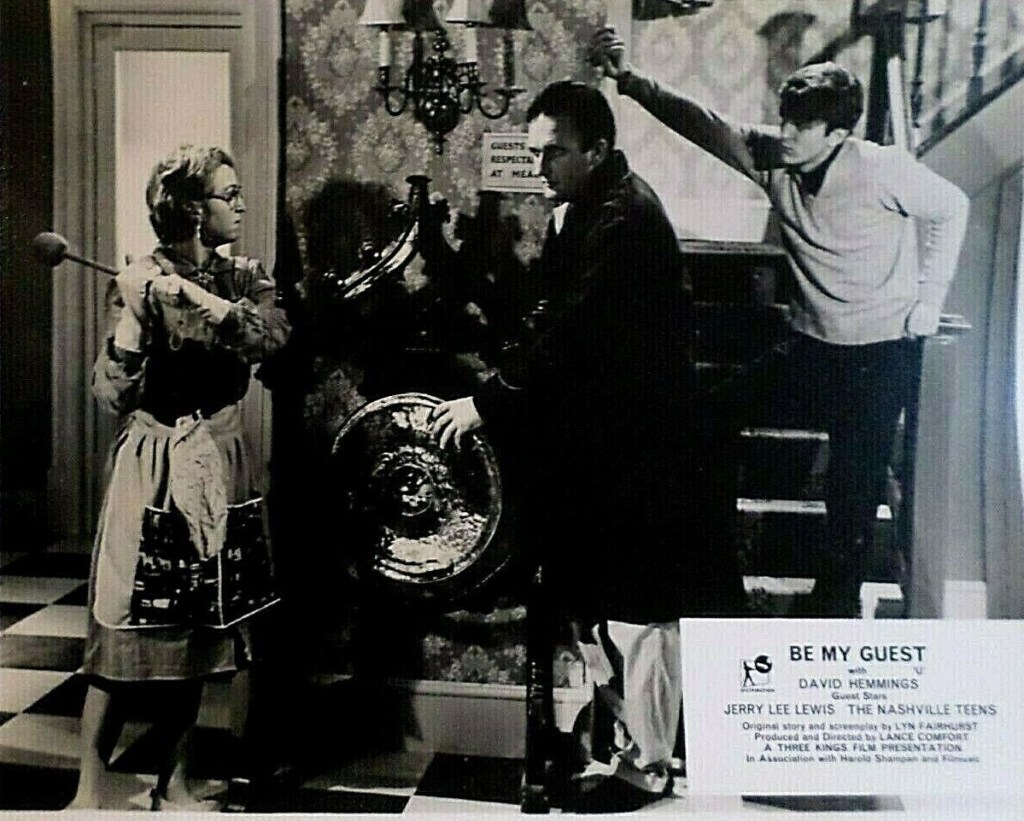
Be My Guest (1965) ***

Every genre produced a B-movie spin-off and the pop music sub-genre, revitalized by the appearance of The Beatles, was soon submerged in quick knock-off numbers that acted primarily as a showcase for various, hopefully, up-and-coming bands and, alternatively, whoever was to hand at the time. They were not viewed as star-making vehicles and the chances of, for example, a debuting player like Raquel Welch in A Swingin’ Summer (1965) hitting the big time was remote.

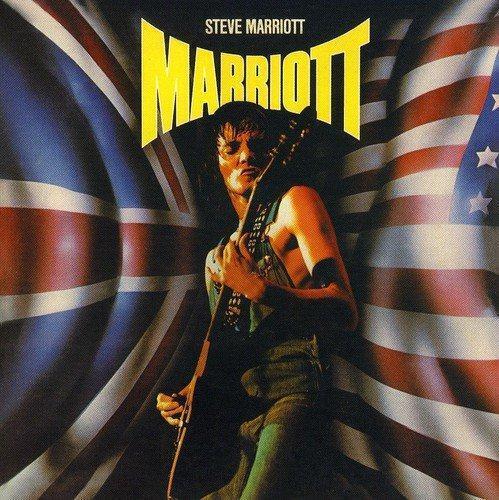
So nobody was counting on floppy-haired youngster David Hemmings (Blow-Up, 1966) making a breakthrough in this ho-hum-plotted let’s-put-on-a-show hardly-slick production set in the musical netherworld of Brighton, England. Had he not surfaced as a potential future star it would remain better known for the appearances of Jerry Lee Lewis and Steve Marriott, predating his fame as guitarist with The Small Faces and Humble Pie.

Astonishingly, this was actually a sequel, Hemmings reprising the character Dave from Live It Up (1964) in which he played a band member. Here, relocated to Brighton where his parents have taken on a hotel, Dave, now an ex-musician, tries his hand at journalism and in due course re-forms his group to participate in a talent contest. 

There’s the requisite American lass, Erica (Andrea Monet), a dancer, and the usual baloney reason for her ending shacked up (though not with Dave – too early in the decade for such blatant permissiveness) in the parental hotel. Most of the running time is taken up with Dave and his band getting into scrapes such as falling out with the local planning officers and blameless ideas misconstrued by those with more lascivious minds.

There’s a marvellous almost 1940s Hollywood innocence about the entire endeavour coupled with a brave, though failed, attempt to inject Beatles-style humor into the proceedings. And if you had any doubt, Hemmings has definite screen appeal. The hair became a trademark, almost a sign of inherent rebelliousness, which suited many of the characters he played. He had a very open face and eyes that, more than revealing internal conflict, were better for reflecting what he saw.

Interesting, too, the difference the camera makes of a persona when an actor is the lead rather than a support. There’s time to play on the features, to let the actor relax, rather than pushing himself forward to steal what few scenes he is in. Previously, he had always been noticeable. Now he acquires an aura and even in a bauble like this he shines. Andrea Monet, in her only movie role, is certainly no rival in the star-building stakes.

And since the movie is not filled with the usual run – or quality – of British character actors there’s no one trying to steal scenes from him, though you might look out for veteran Avril Angers (The Family Way, 1966).

Of course, there’s only so long you can admire an actor when there’s not much genuine acting to do, and this script does him no favors drama-wise. But luckily the music covers up most of the other deficiencies. Apart from Jerry Lee Lewis and Steve Marriott, there’s a chance to gawp at The Zephyrs, The Nashville Teens, Joyce Blair and Kenny and the Wranglers.

Director Lance Comfort (Devils of Darkness, 1965) does his best.

Three Hats for Lisa (1965) ***

Until the triumphant arrival of Oliver! (1968), the bar for British musicals was set very low. This just about scrapes through, thanks primarily to the enthusiastic cast and a rare opportunity to hear Sid James warble, though that may well be a detrimental factor.

At this point the British movie musical was kept aloft by pop stars, Cliff Richard (Summer Holiday, 1963) injecting box office life into a moribund mini-genre, The Beatles (A Hard Day’s Night, 1964) adding artistic credibility. Any pop star could front a musical, hence Ferry Across the Mersey (1965) starring Gerry and the Pacemakers, or if you filled the picture with enough stars (Gonks Go Beat, 1964) that was deemed sufficient.

You would be hard put to place Joe Brown, leading man of Three Hats for Lisa, in the Cliff Richard/Beatles class and no British effort could come close to West Side Story (1961), Gigi (1958) or South Pacific (1958).  Despite a paucity of hit singles – three Top Ten hits in 1962-1963 the extent of his chart success, Brown, voted UK Vocal Performer for 1962, and with a distinctive brush-cut, had already starred in What a Crazy World (1963), an adaptation of a stage musical, directed by Michael Carreras (The Lost Continent, 1968) which featured singers Susan Maugham, Marty Wilde and Freddie and the Dreamers.

But there was an emergent generation of stage songsmiths led by Lionel Bart (Oliver!, stage debut 1960) and Leslie Bricusse (Stop the World I Want To Get Off, stage debut 1961) and even the venerated John Barry (The Passion Flower Hotel, stage debut 1965) had tried his hand. Bricusse, on a publicity high after co-writing the lyrics for Goldfinger (1964), already had a movie musical to his name, Charley Moon (1956).

If Joe Brown had no proven box office cachet he was in good company. Frenchwoman Sophie Hardy had little musical experience that I’m aware of (unlike namesake Francoise Hardy), was making her English-speaking debut (as an Italian) and was best-known for Max Pecas’ number The Erotic Touch of Hot Skin (1964), a title that suggested far more than presumably the picture delivered. Una Stubbs, later famous for Till Death Us Do Part comedy series, was equally unknown.

Joe Brown is the one in the middle.

Narrative was the least consideration when crafting a British movie musical. This gets by on the notion that three irrepressible Cockneys – Johnny (Joe Brown), Flora (Una Stubbs) and Sammy (Dave Nelson) – somehow get entangled with a sexy Italian movie star Lisa (Sophie Hardy) who wants to dodge out of work commitments and collect a selection of typical British hats: a bowler, a busby (bearskin) and policeman headgear. Taxi driver Sid (Sidney James) is along, literally, for the ride. The rest of the time it’s a Swinging Sixties London travelog, an opening aerial shot of the capital, iconic sites to the fore, setting the scene, and subsequently cramming in as many tourist attractions as possible.

Every couple of minutes, for no particular reason, they burst into song and faux-West Side Story choreography. In fact, it’s stuffed with songs, fourteen over a short running time. Some are clearly spoofs – “The Boy on the Corner of the Street Where I Live” for example, or “Bermondsey” and none are particularly hummable. On the plus side, all the song-and-dance numbers are exteriors, though presumably because it was cheaper than hiring studio space. That London remained dry enough to accommodate such spectacles is probably the only miracle on show.

It’s far from dreary, and the story is daft enough, in the vein of 1940s Hollywood musicals, to get by, and the young cast fling themselves about quite splendidly, and there’s certainly an innocence to the proceedings, Johnny settling for just a kiss on the cheek from Lisa, and it would have probably stretched the imagination even more had serious romance beckoned. It seems a shame to mark down such effervescence, and though it’s in reality a two out of five, it’s not in the execrable league so I’m giving it the benefit of the doubt especially as it was directed by Sidney Hayers (Night of the Eagle/Burn, Witch, Burn, 1962) who usually manages to salvage something from unprepossessing material. And also because neither Sid James nor Talbot Rothwell, the Carry On series resident writer, give in to the temptation of the double entendre.

Sweet Charity (1969) **** – Seen at the Cinema

Never mind Bob Fosse’s debut, this was unusual for a number of reasons: a hilarious meet-cute, a raft of one-liners and being based on Fellini’s Nights of Cabiria (1957). So it could easily have been remembered mostly as a quiz question. But with Fosse at the helm it was a lot more than the sum of those particular parts and introduced a new-style director whose verve, choreography, stylistic flourishes and adult subject matter had wowed Broadway audiences.

Star Shirley MacLaine (Gambit, 1966) adds another layer to her trademark portfolio of losers in love. Hope Valentine Charity (MacLaine) is overly optimistic given her circumstances, robbed of her savings by her fiancé, nearly drowning in the process, the prospects of her switching from a career as a dance hall hostess severely limited by her lack of formal education and basic office skills.

So it’s just as well that she lands millionaire Vittorio (Ricardo Montalban) and might have enjoyed an indulgent romantic interlude had their evening not been interrupted by his wife Ursula (Barbara Bouchet), Charity condemned to spend a humiliating night hiding in the closet.

A chance meeting with the claustrophobic Oscar (John McMartin), doom-laden and intensely shy, appears to lead to unlikely redemption. Her presence cures him of a bunch of neuroses and marriage is on the cards until reality raises its ugly head, and the movie ends on a surprisingly negative note for a musical.

A dance hall hostess – taxi dancer in the parlance because she is hired by the half hour – is equivalent to the modern laptop dancer except that there is no nudity involved. On the other hand, there is none of the hands-off policy exercised in such contemporary operations, and  men buying her time believe that she should accommodate their straying hands. So it’s somewhat unexpected that her colleagues remain so good-tempered and backstage is presented as a bitching-free zone, some accepting their reality, others, like Charity, inclined to the fantasy that a Prince Charming will rescue them.

In terms of song quality it’s not in The Sound of Music (1965) league, boasting only two numbers – “Hey Big Spender” and “If My Friends Could See Me Now” – that you were likely leave the cinema humming. And it certainly suffers by MacLaine not having the voice of a Julie Andrews or Barbra Streisand, or the dance skills of Gwen Verdon who originated the part on Broadway, but otherwise she invests the character with enough believability and exudes charm by the bucketload. She has to be applauded for taking on such a gritty role in the first place.

Of course, the movie belongs to the director, the embryonic Fosse, who brings a new look to the movie musical, from the bored dancers draped in unexpected physical shapes during “Hey Big Spender” to the finger-snapping, angled choreography and the celebration of the seedy, the opposite of the glossier Rodgers & Hammerstein, Lerner & Loew vehicles. A few years later, further acceptance of permissiveness would allow him to explore such worlds in more realistic depth, check out Cabaret (1972) and All That Jazz (1979).

There’s a great turn from Sammy Davis Jr (Ocean’s Eleven, 1960) as a snake-hipped hippie preacher, his appearance somewhat out of place though offering contemporary comment, Oscar taking Charity to this literally underground service because he belongs to a Church-of-the-Month Club.

There’s a goodly number of laughs courtesy of the original Neil Simon book for the musical and the meet-cute of the couple trapped in an elevator is very funny.

John McMartin, in a rare movie leading role, is good as the hapless romantic, Ricardo Montalban (Sol Madrid, 1968) as his opposite, and there’s sterling support from Stubby Kaye (Cat Ballou, 1965), Barbara Bouchet (In Harm’s Way, 1965) and Chita Rivera in her debut.

It was probably too much to ask that this hit the ground running, what with Hollywood in financial meltdown in part as a result of budgetary excesses like this (it cost $10 million), a movie that never quite extended a grip on the roadshow audiences necessary to turn it into a hit, a star lacking an exceptional voice, and a storyline that appeared to alienate musical lovers. Most people who viewed it on initial general release saw a heavily truncated version.

It stands up much better today, mostly thanks to Fosse’s direction, but also due to the sleazy background, and it has to be said, setting aside any vocal deficiencies, this is one of Shirley MacLaine’s best performances.

Of course, I saw it at its best, on the big screen at the Widescreen Weekend in Bradford, so I might be slightly biased, but it does have genuine vigor and a refreshing originality.

Let’s Make Love (1960) ***

Despite a luminous performance by Marilyn Monroe (Some Like it Hot, 1959) , in revealing outfits half the time, this backstage musical drama barely staggers over the line. Whatever relationship the actress enjoyed off-screen with co-star Frenchman Yves Montand (Grand Prix, 1966) fails to register here. In this fish-out-of-water tale of the Broadway intrigue involved in putting a musical together, watching klutz billionaire Jean-Marc Clement (Montand) getting his act together as neophyte actor-cum-singer fails to fly.

It’s always difficult observing a good actor trying to be bad. If he’s a really good actor, it’s going to be an awful watch. And unless he’s got the comedic chops to trigger a bucketload of laughs it’s painful to observe. Gregory Peck reportedly quit this role in favour of The Guns of Navarone (1961) because there was too much Marilyn Monroe in it, and possibly an awkward Peck would have been more fun to watch though comedy was scarcely his forte, but without Monroe the movie would have been virtually unwatchable.

The story’s familiar, a twist on Cinderella with Clement being the ugly duckling in terms of talent. The billionaire businessman, notorious for his love life, attends a rehearsal of a show intending to register outrage at its veiled portrayal of him. Instead, he is mistaken for an auditioning actor and offered a role. He falls for Amanda (Monroe) but she shows little interest, either obsessed with her knitting or trying to improve her education at night class, and appears far more interested in her stage co-star Tony (Frankie Vaughan).

In order to sharpen up his act, Clement hires a bunch of well-known thespians: Milton Berle, Bing Crosby and Gene Kelly.

This is where the show could be get interesting. Genuinely learning the secrets of a great comedian, singer and dancer should at the very least provide a fascinating insight into their skills. Of these, Crosby is the pick, demonstrating the importance of raising or dropping your voice at various points in order to maximize the emotion in a song, in other words a singing masterclass. Berle has too much screen time and does little to justify it.

Whatever, regardless of what the script says, Clement seems to take on board little of what he is taught. Montand was a gifted crooner in any case, having begun his career as Edith Piaf’s protégé, and it just seems like he switched instantly from being a bad singer to a good one. In contrast, when Amanda has to take direction, she immediately shows how simple it is to improve a number by adding some actions.

Luckily, Monroe is such a mesmeric screen quality that she can rescue any indifferent movie.  This would work better with a more charismatic leading man – and the prospect of Peck teaming with Monroe was intriguing – but regardless of who she acts opposite Monroe will always blow them away. This is a different kind of role for her because in a sense she is neither the girl adored nor the victim of romance gone wrong. For the most part she’s just a career girl focusing all her attention on getting on. She’s almost just the foil in the dramatic sequences for Montand. But once she has the stage or screen or to herself she dazzles.

Discover WordPress

A daily selection of the best content published on WordPress, collected for you by humans who love to read.

The Atavist Magazine

by Brian Hannan

WordPress.com News

The latest news on WordPress.com and the WordPress community.