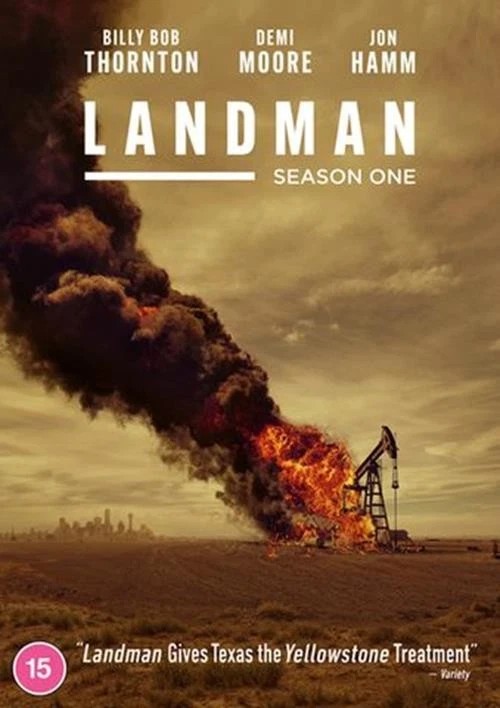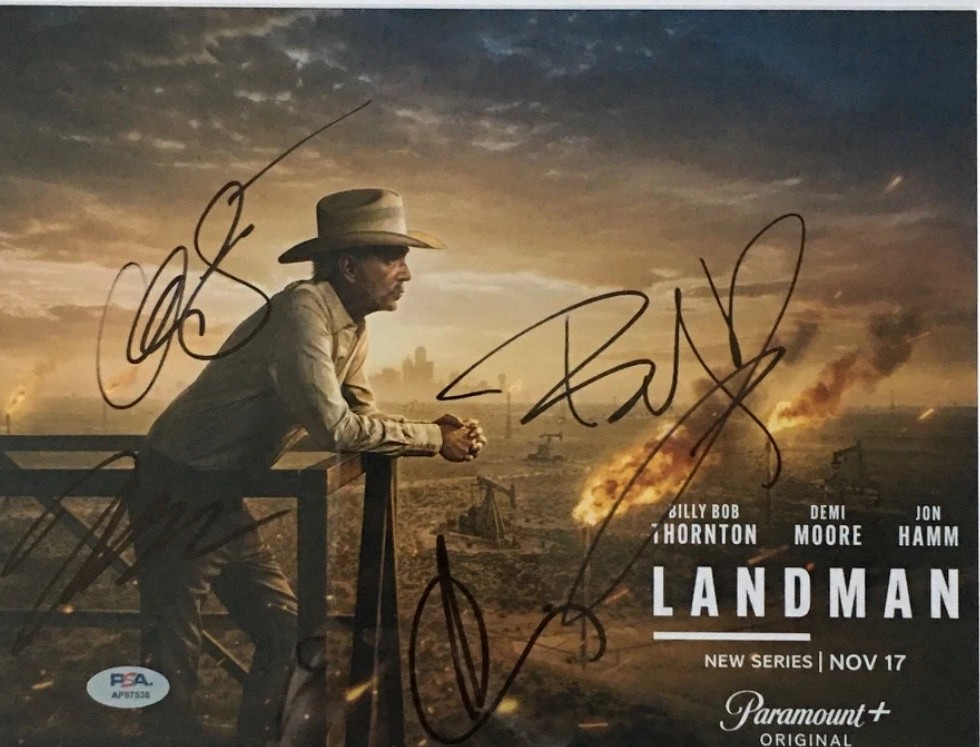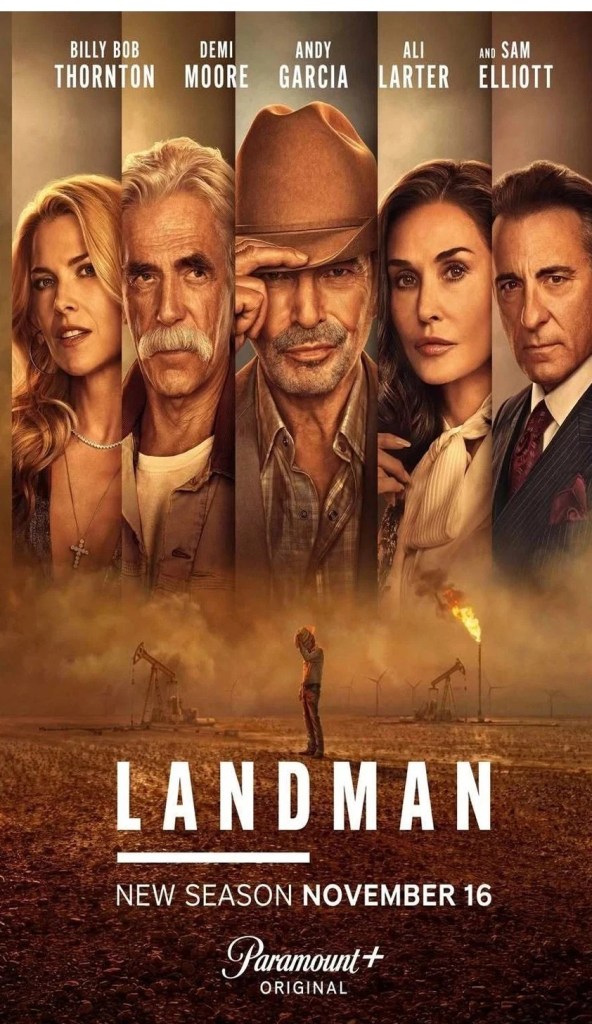
Landman (2024) *****

The blue collar worker has not taken up much of Hollywood’s time. There was a movie  disdainfully called Blue Collar (1978) but the best pictures about people doing actual physical hard work was Five Easy Pieces (1971) about a fella who was putting in the long  yards to spite his old man and The Molly Maguires (1968) which was more about politics and anarchy. The British did it better, but concentrating on the monotony, in such ventures as Saturday Night and Sunday Morning (1960) and Gold (1974). though images of anyone  getting their hands dirty was fleeting

Generally, films about work are movies or television series about management (Wall St, 1989 or Succession, ) and/or a soap opera (Dallas). Most commonly, there’s a picture about farming – Grapes of Wrath (1940), The River (1984)– but there’s very little farming involved. You get a better idea of what it’s like to till the earth from the recurrent image in Gladiator (2000) when Maximus smells the soil.

Until Taylor Sheridan came along and realized the immense dramatic potential of actual hands-on dirty work and rode Yellowstone (2018-2024) to enormous critical success and sufficient commercial endowment to be able to write his own ticket. I rarely buy DVDs these days, not because I’ve already got thousands of themd, but because that old impetus is long gone, the days when we desperately waited for a movie to turn up at the video rental store, one that you couldn’t otherwise get your hands on or missed on its cinema release, one that you wanted to own so you could watch it again and again.

Now I tend to buy DVDs if I don’t have a subscription to a particular streamer. I did it for Yellowstone and I did it for this Taylor Sheridan enterprise Landman.

On the face of it, this might seem like another oil or big business venture where the emphasis is on wheeling and dealing and heirs fighting over money and how to spend it and everyone just the hell arguing because that’s instant drama. The element devoted here to wheeling and dealing is negligible, restricted to oil tycoon Monty Miller (Jon Hamm), one whisky away from a heart attack, at the other end of a phone getting agitated and taking out his frustration on anyone in sight.

Instead, it’s about very dirty work, the kind where workmen come home saturated in filth and the kind where you could in a flash lose your hand or your life. There have been four instantaneous deaths so far and I’m only at episode six of Series One. We’re not in the all-action Hellfighters (1968) business of quelling fires, but in the dull maintenance part of ensuring that wells with 35 years accumulated wear and rust are kept going.

I might have to buy into Paramount+ to catch the second series.
Don’t think I could wait for the DVD.

It’s the job of Tommy Norris (Billy Bob Thornton) to make sure these wells keep producing and all it takes is a stray spark or a moment’s lack of concentration and the coffins are mounting up. Along the way, we are brought up to speed on how the oil business works – or doesn’t.

Exposition used to be a hell of an issue for screenwriters until those Game of Thrones dudes invented “sexposition” where acres of naked flesh kept the audience awake through the dull stuff. Here, however, Sheridan manages something of a coup by having Monty or Tommy gush like oil wells while setting others right about the business.

This series kicks off with an oil tanker tearing along at 60mph crashing into small airplane that’s parked on a road to disburse its cargo of drugs. And that triggers two increasingly fraught, sometimes thrilling, elements. First, we’ve got the drug dealers seeking revenge and recompense. Secondly, you’ve got legal repercussions in the shape of the all-time Jaws of a lawyer Rebecca Falcone (Kayla Wallace) and how Tommy has to snake through the vagaries of the law, not, for example, pursuing thieves who steal the company’s planes or tankers to shift their ill-gotten gains because the law will invariably impound such items of transport for the couple of years it takes to get a case to court and because the drug dealers are only borrowing them for a short period and return them after use.

On top of that, Tommy is trying to blood son Cooper (Jacob Lofland) into the business, starting off as a roughneck, while turning up out of the blue are glamorous ex-wife Angela (Ali Larter) and daughter Ainsley (Michelle Randolph), who views philanthropy as a tax dodge.

There’s some terrific humor from Tommy’s housemates Dale (James Jordan) and, mostly in reaction shots, Nathan (Colm Feore).

You won’t have seen any of these storylines before, not even the returning wife and daughter, because all the characters are so original and the performances so powerful. Billy Bob Thornton (Bad Santa 2, 2016) has eschewed all his acting tropes, dumped the sarcasm and temper tantrums, and instead plays a weary debt-laden foreman who fails to resist the lure of his trophy wife.

I remember Ali Larter from such unchallenging fare as the original Final Destination (2000) so she is something of a revelation. While Angela is as vapid as any other trophy wife, majoring on shopping and looking good, actually she’s an education in how an ageing trophy wife stays the course. She is a fabulous cook, for starters, and she puts in the hours at the gym to keep trim. But she’s also a manic depressive and so her emotions spin on the toss of a coin, extremely charming, not to mention endearing, one minute, a venomous snake the next. This is a performance reverberating with depth that should qualify for an Emmy.

Jacob Lofland (Joker, Folie a Deux, 2024) is Gary Cooper reborn. The stillness, the reticence, and yet when necessary, taking no prisoners. He’s way out of his depth not just with the crew he’s landed with, but in unexpected romance with young widow Ariana (Paulina Chavez). But that’s not the last of the star-making turns. Kayla Wallace (When Calls the Heart series, 2019-2025) is phenomenal as the ball-busting lawyer eating up misogyny for breakfast and heading for a showdown with anyone in sight. Sassy Michelle Randolph (1923 series, 2022-2025) has many of the show’s best lines.

And that’s before we come to Jon Hamm (Mad Men series, 2007-2015) and Demi Moore in a more believable role than The Substance (2024). And the simple earworm of a score by Andrew Lockington (Atlas, 2024).

Truly original and riveting.

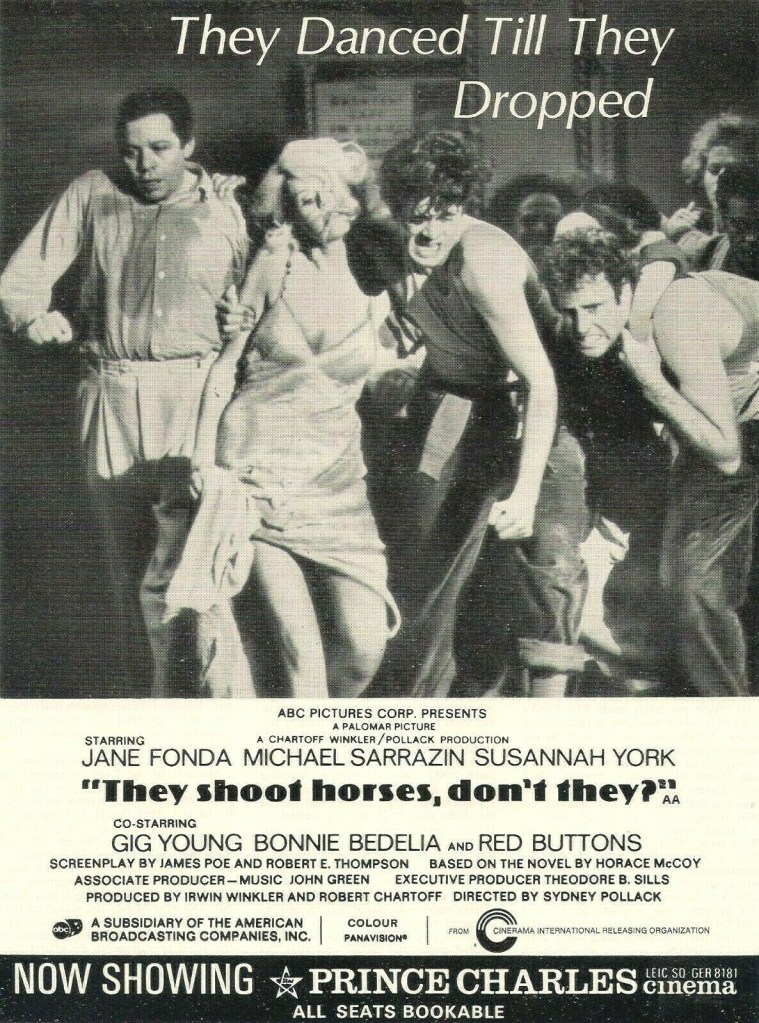
They Shoot Horses, Don’t They (1969) *****

Fans of reality television shows will be only too aware how participants volunteer for ritual humiliation, but swallowing a few locusts and being stuck with a couple of snakes has nothing on the realities facing individuals during the Great Depression who would literally dance non-stop for days on end with a ten-minute break every two hours. It’s impossible to imagine that anybody could think of dreaming up such a degrading circus to take advantage of the desperate. But then this is America, land of opportunity and the MC Rocky  (Gig Young) continues to spout aphorisms and continues to promote the American Dream even as it disintegrates in front of him.

When the partner of Gloria (Jane Fonda), out-of-work actress and one of the more physical and cynical of the candidates hoping to scoop the $1,500 first prize (no prizes for coming second, of course), is ruled out through bronchitis – in case he passes it on to others rather than more any humane consideration – she pairs up with dreamer Robert who initially wanders in as spectator rather than participant. Glamorous platinum blonde aspiring actress Alice (Susannah York) is already coming apart. Sailor (Red Buttons) is a former war hero and James (Bruce Dern) drags his heavily pregnant wife (Bonnie Bedelia) around the dance floor.

There is not a great deal of story except to watch everyone grow mentally and physically incapacitated. There is betrayal and lust and survival instinct leads characters into sexual situations. When Alice seduces Robert, in retaliation Gloria dumps him and then has sex with Rocky, while attempting to retain control of that situation, but clearly needing at the very least consolation and confirmation of her attractiveness and at best some sign of favoritism.

As well as non-stop dancing, Rocky throws in stunts to keep the audience, who can sponsor a pair, interested. So there are 10-minute races, the last three to be eliminated. So determined are some of the competitors they will even lug their dead partner over the finishing line. Another of Rocky’s wheezes is to have Gloria and Robert marry, worth $200 in terms of the gifts they will receive from a sentimental audience, in the middle of the dance floor.

They are literally dancing for hours, over 1,000 in over 40 days so gradually the dance floor becomes less crowded as dancers collapse from exhaustion or cannot take it anymore. The spectators, we are reminded, are only there because “they want to see someone worse than them.” Just when you think nothing can shock you any more, it is revealed that the first prize is minus the cost of feeding, sheltering and looking after the winner.

Those who think they are tough find that the demands of mental and physical endurance are beyond them. This is a shocking film and there’s no doubt it will stay with you for a long time. I saw it first when it came out but not again until now and thank goodness for forgetfulness otherwise I doubt if I would have chosen to sit through it again.

It’s doubtful if any actress had achieved such a speedy transition from glamorous leading lady to serious actress as Jane Fonda. From stripping in space in Barbarella (1968) to stripping away the last vestiges of her humanity here. Suddenly, she appears in a brand-new screen persona with the grating voice, the chip on the shoulder, the feistiness and worthy inheritor of father Henry’s acting genes. It’s also a bold role for Susannah York, in an extension of the weak character she essayed in Sands of the Kalahari (1965) but far more delusional, believing in a rainbow that will never appear. Michael Sarrazin (In Search of Gregory, 1969) initially appears out of his league but his character calls for a gentle innocence that is well within his scope.

Gig Young steals the picture, offered the opportunity to bring alive a multi-faceted character, as big a spiel-merchant who ever crossed the screen, but engaging in a marathon of optimism, and at some points, such as when coaxing a demented Alice out of the shower, earning our sympathy.  Red Buttons (Stagecoach, 1966), Bruce Dern (Castle Keep, 1969) and Bonnie Bedelia (Die Hard, 1988) also put in sterling work.

The movie received nine Oscar nominations but was ignored in the Best Picture category. Only Gig Young won for Best Supporting Actor.  Jane Fonda and Susannah York both received their first Oscar nominations, for Fonda the first of many, for York the one and only. It was also a debut nomination for Pollack, a future winner.

Sydney Pollack directs with simplicity, concentrating on the indignities of the event and focusing mostly on the personalities draining away, and even the drama is undercut, most of those scenes directed in straightforward style. However, Pollack plays around with the innovative fast forward – flashes into scenes that have not yet taken place. James Poe (Lilies of the Field, 1963), at one time down to direct, and Robert E. Thompson, a television writer making his first venture on the big screen, wrote the screenplay from the Horace McCoy novel.

Check out the Behind the Scenes article on this one.

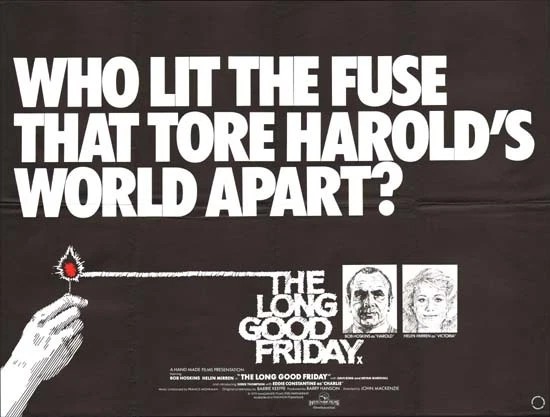
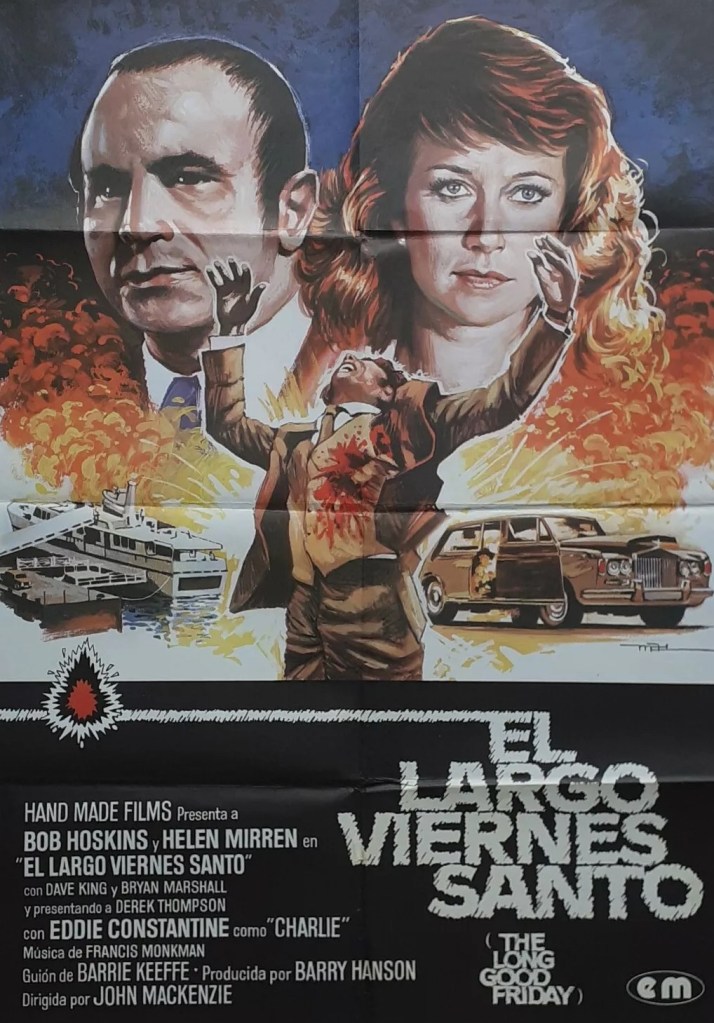
The Long Good Friday (1980) *****

Got two predictions correct – that the conversion of London Docklands into upmarket housing was a potential goldmine and that London would become the beating financial heart of Europe. Though I would have thought everyone, even as arrogant a character as gangster Harold Shand (Bob Hoskins), would have known not to tangle with the IRA. Of course, he hasn’t done this deliberately, that’s just the sting in the tail, unravelling the complex mystery of who’s got it in for him.

This would be a fitting addition to the 1970s trilogy of British gangster pictures par excellenceGet Carter (1971), Villain (1971) and Sitting Target (1972) –  except you could argue it’s better than the lot. Here we’re on The Godfather Part II territory, the big-time hood who’s gone legit. Harold already owns a casino, upmarket restaurant and pubs, and swans around in a luxury yacht but he’s got his eye on bigger game, investment in the Docklands, an ideal money-laundering concept, and he’s hooked a potential partner in American Mafia chief Charlie (Eddie Constantine).

Much as Harold would like to show off his svelte businessman side, his attempts to ooze class disappear at the first sign of trouble and soon he is working those teeth so hard he could be auditioning for Jaws. We’ve got an inkling of what’s going on but it takes a good while for everything to add up and even then Harold is convinced someone’s got their sums wrong since he’s ruled the London underworld for a decade and nobody with any sense would take him on.

The businessman façade falls away when his close aide and longtime buddy Colin (Paul Freeman) is murdered and his Rolls Royce and a pub are blown up. And it takes virtually the whole picture for Harold to discover just why a woman on her way to a funeral stopped the car long enough to spit in the face of one of Harold’s top henchmen, Jeff (Derek Thompson).

So mostly what we’ve got is Harold reverting to old-style violence, presumably using the methods that got him to the top in the first place, as he tortures and terrifies everyone in sight. Some of the brutality is inventive stuff as movie torture goes, one fellow having his naked backside sliced open by a machete, the rest of the top gang leaders rounded up in an abattoir as if they were sides of beef awaiting slaughter.

Meanwhile, wife Victoria (Helen Mirren), a version of what used to be known as “posh totty”, tries to keep the deal active by charming the pants off every male who comes within a sniff of her, some so driven by temptation they declare they “want to lick every inch of her.”

So, on the one hand, it’s big business and all the jiggery-pokery that goes in the legitimate world even among illegal contenders, and on the other hand it’s all the jiggery-pokery that goes on in the illegal world among all the illegal contenders.

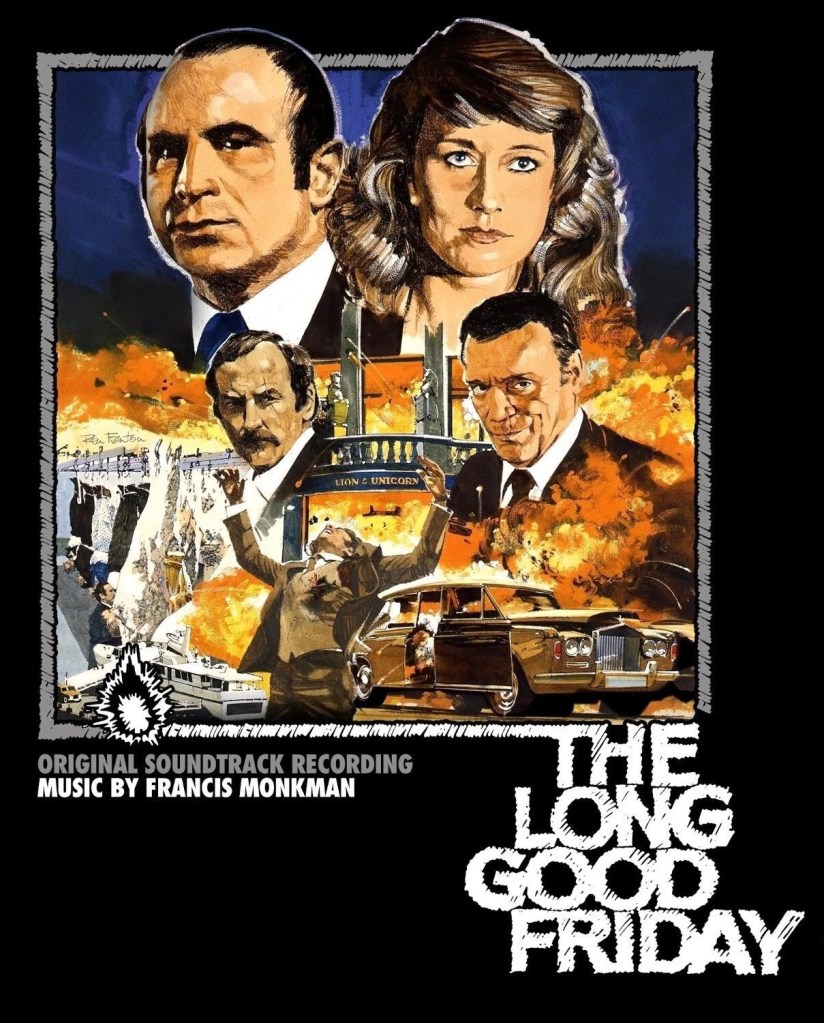
Incredible score by Francis Monkman. Why he wrote so few is a mystery.

While there are many standout moments – and you’d be hard put to beat the climactic scene of Harold in the back of a taxi facing his demise – and director John MacKenzie wields his camera with considerable verve, his ace in the hole is always the expressive face of Harold. Whether he’s practising his bonhomie, or stiffening at the latest outrage, or letting loose physically and verbally it’s a fabulous acting tour de force as if James Cagney had met Al Pacino. And like Oliver Reed in Sitting Target, simmering rage is smoothed over by feminine companionship, the close bond between Harold and Victoria one of the key ingredients.

Turned Bob Hoskins (Zulu Dawn, 1979) into a star and had the British end of the industry been in better shape he had might made a smoother transition to the top echelons instead of waiting for Mona Lisa (1986) to polish his credentials.

Although we Brits like to think the acting of “national treasure” Helen Mirren was always being recognized on the domestic front, long before she achieved unquestionable credibility from pocketing an Oscar for The Queen (2006), in truth by this point her movie career was in limbo. Hardly any screen work since her breakthrough in Age of Consent (1969) and three of her last four pictures – Caligula (1979), S.O.S. Titanic (1979) and The Fiendish Plot of Fu Manchu (1980) – counting as calamities. This was a fresh take on an actress who, too often for her own good, had been seen as better naked than clothed.

It was almost a homage to cult to employ Eddie Constantine (S.O.S. Pacific, 1960) but it was surprising how many of the supporting cast came good including future James Bond Pierce Brosnan as a gay killer, Paul Freeman (Raiders of the Lost Ark, 1981), Derek Thompson (nearly 40 years on BBC series Casualty), and future director Dexter Fletcher (Rocketman, 2019).

Original screenplay by Barrie Keefe on his debut.

Still stands up as a gangster great.

From Noon Till Three (1976) *****

Charles Bronson in a feelgood movie? Charles Bronson the romantic comedy lead? Charles Bronson’s character impotent? The hell you say!

Certainly, Bronson’s boldest role, and if the original concept had played out the way audiences might have expected, the star’s career might have taken the kind of pivot afforded Arnold Schwarzenegger when he took on Twins (1988).  But a third act which probably baffled audiences half a century ago plays straight into the hands of the contemporary filmgoer and spins such a twist – almost a horror version of “print the legend” – that nobody has ever invented a better one.

This isn’t just Bronson as you’ve never seen him before but it’s also Jill Ireland in the role of her life, proving not just that she can act but putting on a brilliant performance.

So, this isn’t like any Charles Bronson character you’ve ever seen, light years away from the monosyllabic justified or unjustified killers he had hitherto portrayed for most of the decade. He’s not even the leader of the gang of outlaws and has a decidedly cowardly streak. And this isn’t Jill Ireland, his wife, either, in some punched-up supporting role. Here she essays her inner Katharine Hepburn or prissy Maggie Smith and engages in the kind of male-female verbal duel that hasn’t been seen since The African Queen (1952).  

When his horse pulls up lame Graham Dorsey (Charles Bronson) decides not to accompany his four outlaw buddies on a bank robbing expedition and despite the prospect of “borrowing” a horse from rich widow Amanda Starbuck (Jill Ireland) he goes along with her pretense that no such beast exists because he’s had a presentiment that the heist will go awry. The gang agree to pick him up on their return at a tension-sodden three o’clock – hence the title, a mild play on High Noon (1952).

Amanda is more than capable of dealing with his kind despite him spinning her a tale of having lost a similar mansion to her grand three-storey affair after the Civil War and being widowed for seven years and so depressed at his impotency he’s contemplating suicide.

In the way of opposites attracting, one thing leads to another and soon they are waltzing, dressed up to the nines, in her elaborate rooms and taking a dip au natural in a lake. When word comes back that the robbers have been caught and are all set to hang, much against his natural inclination not to jeopardize his newfound love, he agrees, at her behest, to go save them. Although he intends doing nothing of the sort and simply lying low, he is pursued by a posse and only evades capture by swapping clothes with a dentist he captures.

And then the tale deftly switches. The posse kills the real dentist. Seeing only his blood-drenched clothes at a distance, Amanda believes it’s Graham. Meanwhile, he’s locked up after being convicted of the dentist’s crimes. She’s so enthralled by the unlikely romance that she writes a book about it that turns into the kind of publishing phenomenon that triggers tours of Graham’s grave and the house where it all happened.

When Graham is released, you expect the sting in the tale will be that she’ll have gone off and married someone else. But she hasn’t. Except she doesn’t recognize him. Because in the writing she transformed him into a much taller more handsome figure and her imagination can’t deal with reality. Any time he reminds her of an intimate moment, she cries out “it’s in the book.” Finally, somewhat rudely, he does convince her but then, afraid of letting down the millions of fans captivated by the legend, rather than reviving their romance, she kills herself so the story cannot be challenged.

Worse, nobody believes Graham and he is accused of being a fraud and ends up in a lunatic asylum. Charles Bronson the madman, you didn’t see that coming I bet.

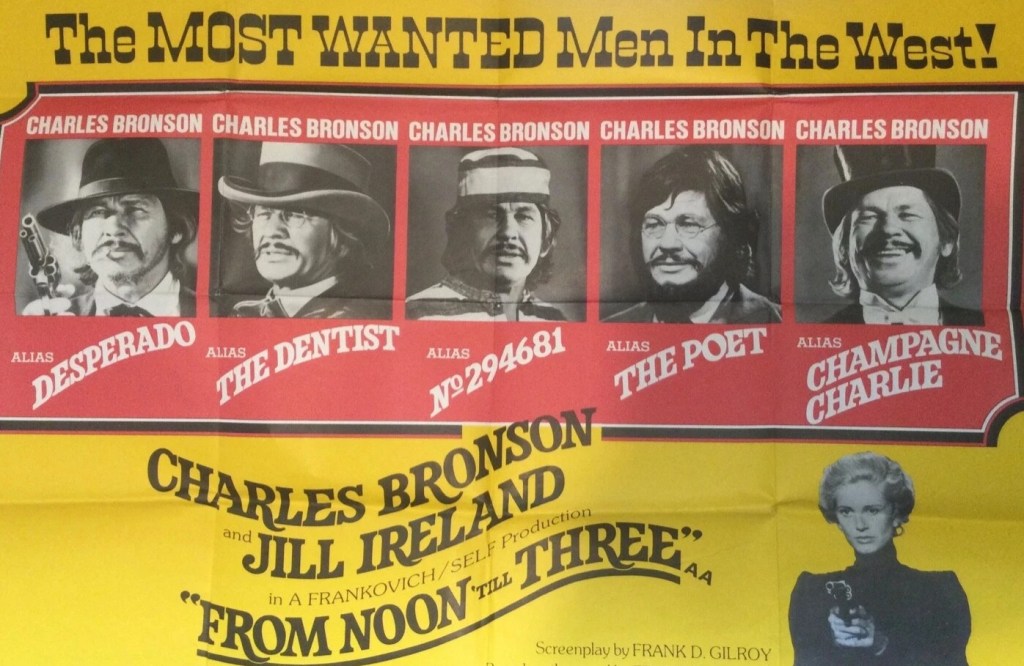
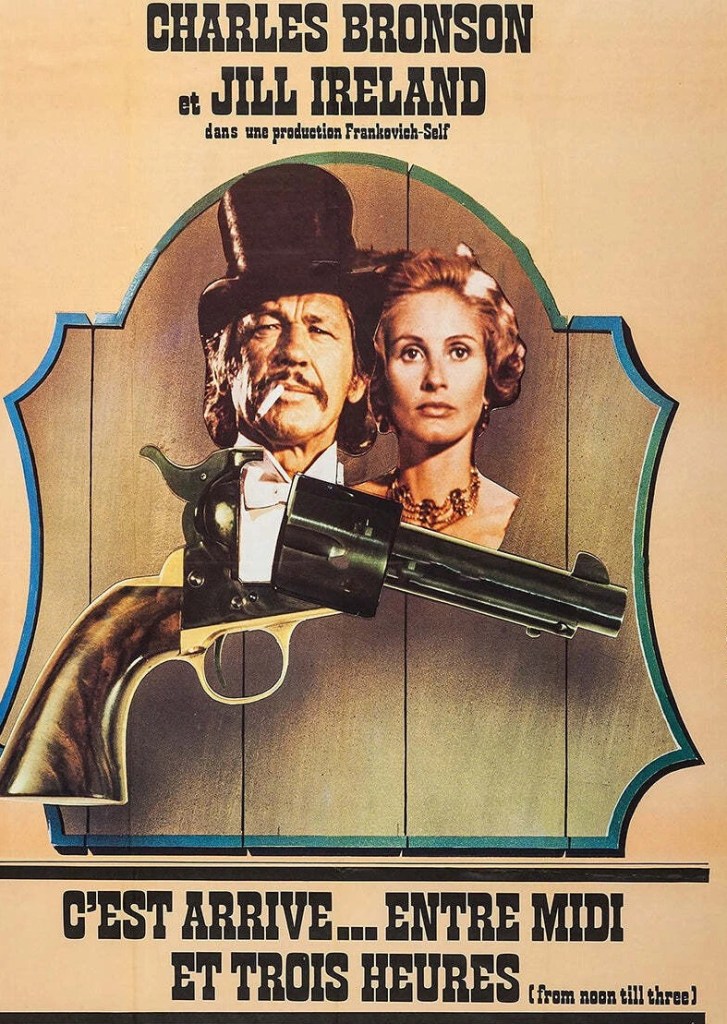
As you can tell from the posters, United Artists had no idea how to sell it and it lacked the single immediately visually-appealing gag of Twins, so it was a rare flop at this point in Bronson’s career. But a third act that was viewed as somewhat deranged satire has, in the half century since, now come into its own when questions about identity and point of view and “your own truth” and “recollections may vary” and imposter narrative and reality reinvention and fake news are endemic. In this case “print the legend” comes to haunt Graham.

But what was a flop in 1976 deserves reassessment and should be welcomed by a contemporary audience more able to deal with the sudden shift in tone. It might also put to rest the notions that neither Charles Bronson (Once Upon a Time in the West, 1969) nor Jill Ireland (Rider on the Rain, 1970) could act. This is a wonderfully spirited double act and had the movie been remotely successful might have set them up as a latter-day Tracy-Hepburn. I should note in passing a wonderful tune, “The Trouble With Hello Is Goodbye,” lyrics by Alan and Marilyn Bergman and music by Elmer Bernstein. Had the movie not been so quickly dismissed, that had all the making of a torch song.

Writer-director Frank D. Gilroy (Desperate Characters, 1971) has produced some scintillating dialog as well as bringing out the best in the couple. As clever on the spoofery front as Blazing Saddles (1974) and Support Your Local Sheriff (1969) but with a harder satirical edge.

I chuckled all the way through. It was a delight to see Bronson and Ireland playing such refreshing characters and the rom-com element worked out really well. So two bangs for your buck – a reinvented Bronson in the kind of role you never thought he could manage, and the kind of satire that hits home today.

Put aside all thoughts about what Charles Bronson and for that matter Jill Ireland can do or should do and sit back and enjoy this unexpected gem.

You can catch it on Amazon Prime.

The Waterfront (2025) ***** – Netflix

I’m no casting director but in the absence of anyone with any degree of actual menace (in the De Niro/Pacino/Willis vein) stepping up to the plate, you could do worse than Holt McCallany, star of this engrossing number. You might remember him from the short-lived Mindhunter (2017-2019) series and as head of the wrestling clan in The Iron Claw (2023). But mostly he’s second (often third and fourth) banana or wasted in a series of supporting roles – he turned up in The Amateur (2025) and Mission Impossible: The Final Reckoning (2025).

He doesn’t always get to exude menace, but to my mind that is his forte. He’s got a helluva mean stare and he’s built like a pro football player. Plenty actors around bristle with six-packs and muscle but very few look as though in real life they could actually hurt you. Holt sure does.

Creator Kevin Williamson has come a long way from the slasher genre.

While there are a bunch of twists here, most of the spade work is emotional, characters engaging in activities you might not expect and the set up is a lulu. Harlan Buckley (Holt McCallany) runs a fishing empire in North Carolina. His dad was a gangster but went legit and Harlan has kept away from crime. Except he’s run the business into the ground, what with his drinking and womanizing.

So wife Belle (Maria Bello) and son Cane (Jake Weary) have started a side hustle in drug running, acting as seaborne mules. But Cane is double-crossed and now owes some Mr Big $10 million. So no matter how much he tried to keep himself out, Harlan is drawn back in, and proves to have a natural aptitude for the business.

Meanwhile, Cane’s sister, recovering addict Bree (Melissa Benoist) is acting as an informant for DEA agent Marcus (Gerardo Celasco), also a recovering addict, with whom she is having an affair. She’s a piece of work, not only in the past burning her house down but estranged from her son (she sees him only under supervision) and also having such a beef against her brother that she’s intending to hang him out to dry for the DEA.

Belle has a second side hustle, trying to sell off for development a piece of land that holds such enormous sentimental value for her husband that he has resisted overtures to sell it. And besides, she’s snookered by the seduction technique of real estate agent Wes (Dave Annable).

Melissa Benoist has come a long way from caped crusader activity.

Adding further complication is the reappearance of Cane’s high school squeeze Jenna (Humberly Gonzalez), supposedly happily married as for that matter is Cane (to Peyton). The final piece of the jigsaw is a new bartender Shawn (Rafael L. Silva) acting so weird Belle suspects he’s a DEA plant.

But the soap opera setup is driven by character, the various twists usually by someone acting out of character or haunted by the past. There’s plenty confrontation and punchups for your buck and Harlan shows that he’s inherited a fair chunk of his old man’s criminal smarts, though he does sometimes thinks with his fists.

But the narrative is confident and springs the surprises in regular fashion. You think it’s the son gone a bit wild and trying to earn some extra pocket money running drugs ($100,000 per delivery) until you learn his mother’s in on the deal. You think Bree is just a nutcase mum until you find out she’s hellbent on revenge. The DEA agent as an ex-addict you didn’t see coming though Cane rekindling his affair with Jenna you could spot a mile off.

But each episode ends with major revelation/twist. In the first episode, Harlan has to rescue his son and dip his toes in the waters of criminal enterprise. The second has three stingers – Mr Big is revealed as the local sheriff Clyde (Michael Gaston), the suspicious-acting barman is Harlan’s son and gangsters torch Peyton (Danielle Campbell). That last still has me shaking my head.

Holt McCallany is easily the star turn but Maria Bello (A History of Violence) runs him close. I’m unfamiliar with others in the cast but Melissa Benoist was TV’s Supergirl for six seasons, Jake Weary was in Animal Kingdom for the same length of time and Humberly Gonzalez appeared in Tarot (2024).

Created by Kevin Williamson, inventor of the Scream and I Know What You Did Last Summer horror movie franchises, who reverts to his Dawson’s Creek (1998-2003) persona but twists away from straight soap opera by injecting the criminal element.  

Two episodes in and I’m hooked.

PS I wrote this review before Topher Grace turned up as a psychopathic gangster and the whole endeavor ratched up a notch. On the basis of the first two episodes I had ranked this as four-star, but now, with all the complications twisted the characters in knots, it’s in the solid five-star category.

Catch it on Netflix.

The Finger Man / Le Doulos (1962) *****

Stunning tour de force combining narrative complexity with technical audacity. Set up the template for later crime epics like Reservoir Dogs (1992) and The Usual Suspects (1995) and influenced Scorsese and Coppola. For the likes of me who revels in technical achievement, a delight, long tracking shots, two scenes over five minutes long shot in single takes, and rare use of the wipe. But technique is nothing without story. Luckily, here we are offered a  riveting tale of double crossing, honor, revenge and that rare beast, irony. There’s a veritable tsunami of twists at the end but all the way through there’s the kind of sleight-of-hand that deserves a round of applause.

Jean-Pierre Melville hadn’t named his picture The Informer for the obvious reason of it being considered, erroneously, a remake of the John Ford 1935 Oscar-winning classic or just the danger of being unfavorably compared with it. But the pre-credit titles tell us that Le Doulos is underworld slang for an informer so we’re prepared for that element of the story. What we’re not prepared for is what comes next.

Maurice (Serge Reggiani), just out of prison after serving a six-year sentence, turns up at the house of fence Gilbert (Rene Lefevre) who’s helped him get back on his feet by setting him up with a safe-cracking job. Gilbert is appraising a cache of stolen jewels. Maurice shoots him, steals the jewels and a bundle of cash, burying the loot under a lamppost.

Maurice meets up with his partner Remy (Philippe Nahon) and another gangster Silien (Jean-Paul Belmondo), previously considered untrustworthy, who supplies the tools for the planned heist. While Maurice and Remy set off to burgle a house, Silien phones a cop, Inspector Salignari (Daniel Crohem). Silien viciously beats up Maurice’s girlfriend Therese (Monique Hennessey) and kills her.

The robbery doesn’t go according to plan, the cops turning up unexpectedly. In the shoot-out, Salignari and Remy are killed, Maurice wounded. Maurice passes on details of where he buried the loot to another buddy Jean (Philippe Marche).

Silien is picked up by the police as a known associate of Maurice. The interrogation scene, which lasts five or six minutes, is a piece of cinematic bravura. Shot in a single take the camera follows chief interrogator Clain (Jean Desailly) as he paces round the room, Silien only coming into view when the cop stops in front of him and asks him a question. While refusing to rat on Maurice, Silien agrees, under pressure from the cops who threaten to expose his drug racket, to phone around the various bars where Maurice might be holing up. This triggers another virtuoso piece of filmmaking as Melville employs the wipe. Maurice is located, reading a newspaper report on Therese’s death.

There follows another colossal technical achievement, Maurice interviewed in another long single take, this time the interrogator pacing in front of the prisoner. Maurice is jailed, where he shares a cell with an assassin.

Meanwhile, Silien gets hold of the jewels and cash. He enrols old girlfriend Fabienne (Fabienne Dali), currently the unhappy squeeze of top gangster and club owner Nuttheccio (Michel Piccoli), and hatches a scheme that makes little sense to the audience. So we just have to watch. Silien breaks into Nutthecio’s club and in the guise of selling the gangster the jewels gets him to hold some of the items, thus, we quickly realize, covering them with his fingerprints.

Silien kills Nuttheccio then waits for the club-owner’s partner Armand (Jacques de Leon) to arrive, kills him and stages the scene to look like they killed each other over the jewels which he deposits in the safe. One of the jewels was found at the failed robbery so that’s enough to free Maurice.

Then we play out the revelation, the same kind of scenario repeated in The Usual Suspects, where the audience learns the truth. Therese was the snitch. That’s why she was killed. Gilbert was shot by Maurice because the dealer in stolen goods had drowned Maurice’s previous girlfriend Arletty. Even though you could argue that was justified, Maurice not being a good judge of character and not aware, as Gilbert was, that Arletty was also a police informer.

It was pure coincidence that Silien phoned Salignari on the night of the burglary. Despite being on opposite sides of the law, they were friends and the gangster was merely inviting the cop to dinner.

Silien proves to be such a straight-up guy that he hands all the stolen cash to Maurice. Silien plans to get out of the business and retire with Fabienne to a house in the country. Then we learn that Maurice has distrusted Silien after all and arranged for the assassin he met in jail to kill Silien. To try and prevent that, he races to the country house, fortuitously arriving before Silien and is, ironically, shot by the assassin. When Silien arrives shortly afterwards he, with more savage irony, is also despatched.

I watched this initially thinking what a huge risk Jean-Paul Belmondo (Borsalino, 1970) was taking in playing, as I initially believed, not just a police informer, but stealing from Maurice the buried loot and leading the police to him. It would have been a hell of a note if the narrative had continued in the same hard-nosed vein especially after Silien’s absolutely brutal treatment of Therese. The slap he administered came out of nowhere and resounded like a gunshot. He then tied her up, again venomously, and poured a bottle of whisky over her head. 

That it turned out to be a story of honor among thieves was perhaps the biggest twist of all.

Jean-Paul Belmondo is outstanding in an underplayed role, Serge Reggiani (The Leopard, 1963)  convincing as the two-timing crook.  

Deservedly recognized as one of the most influential crime pictures of all time, this is nothing short of a masterpiece by Jean-Pierre Melville (Army of Shadows, 1969). Written by the director from the novel by Pierre Lesou.

Beg, borrow or steal this one.

Blackeyes (1989) *****

Absolutely mesmeric. Would be catnip for contemporary audiences with its shifting time frames, juggling perspectives, narrative sleight-of-hand, and heavily feminist-oriented outlook with its slating of misogyny. Ripe for a remake and with the adventurous directors around these days they should be vying for the opportunity. But I should warn you, steer clear of the version that showed on Amazon Prime which cut the four-part television series in half.

British screenwriter Dennis Potter was something of a national institution before this appeared, the BBC ponying up vast sums (in television terms) for his experimental programs that included the likes of Pennies from Heaven (1978) – remade as a movie three years later with Steve Martin – and The Singing Detective (1986) (remade seventeen years later with Robert Downey Jr) and his blend of pastiche and males struggling with raw emotion had made him not just a household name but accorded him worldwide acclaim.

However, just as Peeping Tom (1960) put the kibosh on the career of Michael Powell, Blackeyes proved a major critical reversal and after the mauling it received and outraged headlines in the national media Potter somewhat lost his mojo and automatic critical favor although Lipstick On Your Collar (1993) helped a certain Ewan McGregor to make his mark.  

In part, Blackeyes is way ahead of its time in the use of the stylistic devices mentioned above which when incorporated into the works of, for example, David Lynch or Christopher Nolan, were hailed as groundbreaking.

So this is a three-hour-plus show setting precedents that not only break all the rules of narrative but blows them sky-high and has so many layers you can hardly keep up and that narrative spinning continues to the very end. You could almost entitle it “Whose Story Is It, Anyway?”

Elderly author Maurice (Michael Gough) has fashioned the experiences of his model niece Jessica (Carol Royle) into a bestselling literary novel. Leading character Blackeyes (Gina Bellman) is taken advantage of so often by men that she commits suicide, wading out dressed in sexy night attire into a lake.  Although Maurice makes a fine specimen suited-and-booted and talking to admiring audiences at book fairs, in reality he’s a sodden old drunk living in a threadbare apartment with a teddy bear. But he’s intellectually adroit as shown with his verbal duels with a smug journalist who spouts artistic jargon.

Jessica is so annoyed that she has not been acknowledged as the source of her uncle’s novel – he claims it is a work of imagination – that she begins to write her own fictional version of her life story, calling into question some of the events in her uncle’s account. So that’s two perspectives already. Stand by for a third, that turns the entire story on its head.

It appears Blackeyes (Gina Bellman) has not committed suicide. Detective Blake (John Shrapnel) is convinced she has been murdered, especially after he finds a list of names stuck in her vagina (yes, despite Blake gamely searching for every euphemism under the sun, the actual word, to add to the shock and horror of an audience and especially critics reeling from the sex and nudity, was used on the BBC) and later finds her diary which provides another version of events.

He’s an old-school detective, and while not beating anyone up, not above handing out a good thump in the ribs to anyone giving him lip. So while following Maurice and his niece, we are also finding out more about Blackeyes via the cop’s investigations and how she was taken advantage of in the advertising profession and world of photographic modeling. She is even the one who gets the blame when someone tries to rape her.

Her life could be viewed in two ways, as a sexually independent woman or as a victim of MeToo.

To counteract what is presented as a sordid existence there comes into her life a gentler soul, advertising copywriter Jeff (Nigel Planer) and he’s writing and rewriting versions of a more old-fashioned romance where they enjoy a meet-cute (of sorts) and get talking and move onto romantic walks along the seaside. But Jeff’s too diffident a fellow to appeal to Blackeyes and he doesn’t even get to first base. But it also turns out that he’s been watching Jessica through binoculars (they live across the street from each other) and there’s a marvelous moment when he realizes that Blackeyes occupies the same apartment as Jessica and that he could at that very moment be watching himself.

All the way through there’s been a male voice-over, measured, commenting on the action, advising on twists in the story, adding a different perspective to characters, offering many polished bon mots, and it takes you quite a while to realize that this is an entirely new voice, and doesn’t belong to either Maurice or Jeff. In the ordinary run of things, this character would turn out to be the Hercule Poirot of the piece, putting the jigsaw together, explaining all.

In fact, he’s another element of the jigsaw. He’s not just the narrator. Everyone we’ve seen are characters in his fiction. But they don’t always obey the rules and at the very end Blackeyes escapes.

So just a stunning piece of television. Although Michael Gough (Batman Returns, 1992) received the bulk of what little plaudits there were, the series is carried by New Zealand actress Gina Bellman (Leverage, 2008-2012, and Leverage: Redemption, 2021-2023) who is simply superb. She rises above what could easily have been a cliché – and in some respects was written as a cliché version of the “dumb blonde” at male beck and call. Her comic timing for a start turns many scenes on their heads. But what’s often been overlooked is her transitional skill. She moves from male fantasy figure to believable human being and from there to rebel. And that takes some doing.

Gina Bellman hates talking about this series, my guess on account of the nudity and the backlash that created for a young actress, but she should be proud of her achievement. This is more than solid stuff.

Writer Dennis Potter also directed and his camera is always prowling around the edges.

The word auteur was over-used but this genuinely fits that category.

A masterpiece.

Any Given Sunday (1999) *****

It’s always with trepidation that I go back to a banker, one of my favorite films, hoping that it will remain timeless, and still good enough for a place on my all-time personal Top Ten. I’d planned a double bill of Kingdom of Heaven (2005) and this but the former proved so disappointing that it took me a while to pluck up the courage to watch Oliver Stone’s kaleidoscopic American football epic.

My fears proved misplaced and this is bearing in mind that I know nothing about the sport and have little understanding of what always appear arcane rules that make little sense to someone brought up on the  more disciplined (at least in my eyes, rules-wise) football/soccer (or the hybrid “soccerball” as my grandkids refer to it). I’ve always been a fan of sports movies, which means American sports movies, because with the exception of Chariots of Fire (1981) the British don’t seem to have the knack. So I’m used to following movies where I don’t necessarily understand what’s going on the field of play.

This is driven by three compelling narratives – all power duels of one kind or another, between owner Christina Pagniacci (Cameron Diaz) and various politicians, between her and coach Tony D’Amato (Al Pacino), and between Tony and arrogant rising star quarterback Willie Beaman (Jamie Foxx). And while all these battles are a mixture of discreet management and full-blown blood-and-thunder shouting matches, the movie is liberally sprinkled with tiny cameo moments that add depth.

There’s a blink-and-you-miss moment when team physician Dr Mandrake (James Woods) is seen in conversation on the sidelines with a blonde cheerleader. The next time you see her is when she chooses not to follow Mandrake when he is fired, as curt a signal as you’ll ever find that position rather than personality equates to worth. She appears for one more nanosecond and this time in conversation with his replacement Dr Powers (Matthew Modine).

The saddest moment is when cute sex worker Mandy (Elizabeth Berkley) tries to let Tony down gently that theirs is purely a financial, not romantic, transaction. But that’s run close when Willie’s girlfriend Vanessa (Lela Rochon) is given the brush-off by the established WAGs. And the toughest scene, amidst all these high-powered testosterone-driven adrenalin male and female junkies, is when injured star quarterback Cap Rooney (Dennis Quaid) is given the mother of all slaps by wife Cindy (Lauren Holly). All such moments are merely incidental to the three main narratives, as is the battle for music supremacy in the dressing room, when the head-bangers among the team turn the volume up to eleven.

Revenge is a theme. And that can run from setting loose your baby alligator in the team shower room, taking a buzz saw to a rival’s ultra-expensive automobile or his team-mates punishing Willie for his overweening arrogance by not protecting him on the field and allowing him to be battered by the opposition. Though there’s little as sweet as Tony handing Christina her come-uppance by stealing away Willie for his new team. But that’s run close by the grim smile of satisfaction on the face of the Football Commissioner (Charlton Heston) when he, too, brings her up short. And by Tony stiffing cocky pundit Jack Rose (John C. McGinley). Indulgence, by comparison, is sniffing coke off a naked woman’s breast. There’s even moments of comedy, Willie being duped into taking flowers to the coach when invited for dinner, and the holding-up-the-hand scene.

And all of this is before we get to the meat of the movie, the games that mean absolutely everything – more than sex, family and drugs – to the participants. Sometimes Tony, a 30-year-old veteran, conjures up the words to inspire his team, sometimes he doesn’t, occasionally he turns away from them in disgust, occasionally it’s left to the padre (in the days when “take a knee” meant something else) to inject some common sense into the overloaded equation.

If all these characters are larger-than-life that’s no surprise because there’s little room in the hard world of top-level sport for the shy and withdrawn. So shouting matches are titanic. Lives play out only in the fast lane. Winners get the prom queen, losers get…nothing. And unlike sports originating from Britain – like football/soccer/soccerball or cricket – there are no draws. If you’re not a winner, then you’re a loser.

The essential tale of staying on top, maintaining a winning role, reversing a losing one, getting to the playoffs, the holy grail of winning the Super Bowl (known here as the Pantheon) and the coveted ring that accompanies victory, is always going to be packed with drama. But director Oliver Stone (Platoon, 1986) adds other layers, the daughter whose father wanted a son, the coach who’s driven away everyone who ever loved him and now pays through the nose for nights of affection, the quarterback so infused with self-belief and victim mentality that he learns the hard way he needs help.

You can’t deny Stone his quirks, the lightning bolts or seemingly endless snatches of pop tunes and shadowy figures who appear out of nowhere, and cuts to cheerleaders or crowds, and the paraphernalia that surrounds the game. But not a moment is wasted.

The acting is top-notch. Al Pacino (The Godfather, 1972) gives one of his best performances, Cameron Diaz (The Mask, 1994) upends her cute screen persona, James Woods (White House Down, 2013) plays another version of his screen schemer, Jamie Foxx (Back in Action, 2025) gives notice of his talent. Written by John Logan (Gladiator, 2000), the director and Daniel Pyne (The Manchurian Candidate, 2004).

Best-ever sports movie (though maybe tied with Field of Dreams, 1989).

Without doubt retains its place on my All-Time Top Ten.

This City Is Ours (2025) *****

Knockout! Just stunning! I’m running out of superlatives for this one, the best crime series since The Wire (2002-2008). For sure, it takes a lead from The Godfather (1972) in that the core concerns family. But in a far more emotional manner than the Coppola epic where apart from a couple of scenes between Michael (Al Pacino) and his father (Marlon Brando) actual male expression of feelings is kept to an absolute minimum as though that might contaminate the pot.

Here, women, both in their relationships with husbands/fiancés, and their own naked ambition are very much to the fore. The new generation of males are vulnerable because of their desire for family, utterly exposed by love for babies and unborn babies, as opposed to old school boss Ronnie Phelan (Sean Bean) who spent little time with his son. And the fear of those on the fringes of being excluded from the “family” or those on the inside being cast out gives the narrative an iron soul.

The nail-biting climax is driven by three incidents involving the most vulnerable and therefore the most loved members of the clan. There’s betrayal, revenge and double-crossing but none of the infidelity or drug/alcohol abuse that was often a hallmark of the genre.

The tale pivots on three events. The first is of the brooding variety. Ronnie has allowed Michael Kavanagh (James Nelson-Joyce), almost an adopted son, to take the lead in crucial negotiations with Spanish drugs kingpin Ricardo (Daniel Cerqueira) much to the annoyance of his son Jamie (Jack McMullen). The second is that, in consequence, Jamie decides to hijack the next shipment. When Ronnie discovers his son is behind the plot, he decides not to follow up, and Michael realizes that blood is indeed thicker than water and that he will be squeezed out of his position in the organization. So he kills Ronnie and assumes command.

Except Jamie doesn’t take too kindly to this notion and, although generally not too bright and certainly way too impulsive for his own good (the Sonny, to keep The Godfather parallel going, of this particular gang), works out that only Michael had the motive to commit the murder which of course Michael strenuously denies. Both convince themselves the only way to take control is to rub the other out.

And then we’d be in standard gangster territory except for the other, emotionally-driven, plotlines. Jamie has a son he absolutely adores. Michael, with an unexpectedly low sperm count for a hardman, is hoping for an IVF baby with his girlfriend Hannah (Diana Onslow), a respectable businesswoman but hiding a very dark secret. Michael’s sidekick Banksy (Mike Noble) is grooming his son in the business. Ronnie’s wife Elaine (Julie Graham) treats Michael like a son and is inclined to take his side against Jamie. Rachel (Laura Aikman), wife of Jamie’s sidekick Bobby (Kevin Harvey), has ambitions way above her station of lowly book-keeper. She finds a way of finessing the fact that she physically controls the organization’s cash – and that it’s Ronnie’s wife whose name is on anything the gang owns – to exploit the divisions in the family as a means of of becoming the de facto “Godmother.”

Meanwhile, Ricardo, for good reason, distrusts Jamie and will only do deals with Michael, for whom he acts as mentor (so, if you like, Michael has two dads)  although Jamie plans to sidestep the Spanish connection and go elsewhere for drugs which would have the dual effect of leaving Michael isolated and, with Rachel controlling the purse strings, potentially millions of pounds in debt. And hovering in the wings is a crafty cop, causing problems in every sneaky way possible, and a liability Cheryl (Saoirse Monica-Jackson), stuck with keeping to the code of omerta even though she guesses Ronnie wiped out her husband.

So it’s a game of shifting loyalties, grasping after power, with uber gangsters laid emotionally low by commitments to babies and pregnant wives. There’s none of the posturing of The Godfather, no making excuses for career choice or murderous thugs who draw the line at dealing drugs or women purportedly unaware of what their husbands do for a living.

Directed with occasional elan and pace and a great nose for the cliffhanger. Terrific writing by Stephen Butchard (The Last Kingdom, 2015-2018), both in dialog and twists on character interaction, and with a marvellous sense of narrative. You never know which way it’s going to go.

But most of all bursting with outstanding talent. You won’t see a deader eye this side of Clint Eastwood than James Nelson-Joyce (A Thousand Blows, 2024-2025) in his first leading role, who’s as comfortable exploring his own emotions as planning destruction. Mother hen Julie Graham (Ridley, 2022-2024) could easily turn into Ma Barker. Hannah Onslow (Belgravia: The Next Chapter, 2024) is tormented by her secret. Laura Aikman (Archie, 2023) manipulates and schemes. Virtually the entire cast are seasoned television actors, yet they’ll never have been lucky enough to encounter such character depth before.

Get on to your local streamer/television station and harangue them to buy this from the BBC.

As I said I’ve run out of superlatives.

The Untouchables (1987) *****

The greatest crime picture ever made, outside of The Godfather Parts I and II (1972/1974). A sledgehammer of a narrative that moves like an express train, only slowing down for a number of bravura sequences. Riddled with fabulous lines, built on great performances, and seeded early on with subsidiary characters who will later play significant roles. In any analysis it reads like a greatest hits.

The bloodied finger of Al Capone (Robert DeNiro) holding court to fawning journalists; the little girl’s plaintive cry of “Mister” before she’s blown to kingdom come; the love note included in the lunch of Elliot Ness (Kevin Costner); “poor butterfly” as the first raid goes wrong; the introduction of Malone (Sean Connery) “here endeth the lesson”; the trading of racist insults with recruit George Stone (Andy Garcia); Capone bludgeoning an associate to death with a baseball bat; in the safety of a church, Malone explaining “the Chicago way”; the first big cinematic sequence – the shootout at the border with meek accountant Oscar Wallace (Charles Martin Smith) making his bones and sneaking a drink of beer; Malone “killing” the dead man; “touchables” smeared in blood in the lift; Malone’s fistfight with crooked boss Dorsett (Richard Bradford); Malone’s murder by hitman Frank Nitti (Billy Drago); the second, and greater, bravura sequence – the shootout on the steps of the railway station; Ness pushing Nitti off the rooftop; the disbelieving Capone sentenced.

And those are just the broad strokes. Peppered throughout is the issue of Capone’s tax evasion, the crime that brings him down, with virtually all Wallace’s contribution being reading from documents relating to this. Nitti appears in the second scene, leaving the bomb that will blow the little girl to kingdom come, and again at Ness’s house.

And this is so old-fashioned that not only are we rooting for the good guys but none of those involved has marital or alcohol problems. Cops like Malone may be disillusioned but they don’t take their disenchantment out on the bottle. Anyone who talks about marriage agrees it is a good thing.

Character introduction doesn’t go down the iconic route of The Magnificent Seven (1960) or The Dirty Dozen (1967). Chicago’s Finest sneer at Ness behind his back. Another director would have been tempted into a bolder entrance for Malone. But he’s a loser, still a beat cop in middle age, and on the late shift at that. He doesn’t just know his job, detects Ness is packing a gun, but he’s capable of a sardonic quip or two. Who’d claim to be working for the humiliated Treasure Dept is they weren’t? And he’s not so stand-up as he appears, playing with a key chain like worry beads, keeps a sawn-off shotgun in his record player.

And that’s before we go into the dialog. Screenwriter David Mamet (Glengarry Glen Ross, 1992), revered as America’s greatest living playwright, turns on the style. “You can get further with a kind word and a gun than with just a kind word”;  “They pull a knife, you pull a gun”; “do you know what a blood oath is?”; “team!”; “brings a knife to a gun fight”; “all right, enough of this running shit;” “can’t you talk with a gun in your mouth?” “his name wasn’t in the ledger,”  “did he sound anything like that?”

And that’s before we get to the score by Ennio Morricone, his best in terms of the consistency of theme (rather than just one standout tune) since Once Upon a Time in the West (1969). Or the rocking title sequence.

Turned Kevin Costner (Horizon, An American Saga – Chapter 1, 2024) into a star, a position, with dips here and there, he’s maintained for half a century. Andy Garcia (Black Rain, 1989), too, though for a shorter duration. Not everyone was impressed by Robert DeNiro’s (The Alto Knights, 2025) florid interpretation, but I wasn’t one of them. Brought Sean Connery (The Russia House, 1990) long overdue recognition for his acting, though it’s worth remembering that the Oscar voters who gave him a standing ovation could have handed him the gong a good time before for any number of excellent portrayals.

Director Brian DePalam (Carrie, 1977) was an Oscar shut-out. And when I look at the films that took precedence in the Best Film nominations, there’s only one, Moonstruck, that I’d seek out.

This is a thunderous achievement, and I can’t wait for 2027 when Paramount surely will bring it back to the big screen for a 40th anniversary celebration.

Unmissable.

Discover WordPress

A daily selection of the best content published on WordPress, collected for you by humans who love to read.

The Atavist Magazine

by Brian Hannan

WordPress.com News

The latest news on WordPress.com and the WordPress community.