Of Love and Desire (1963) ***

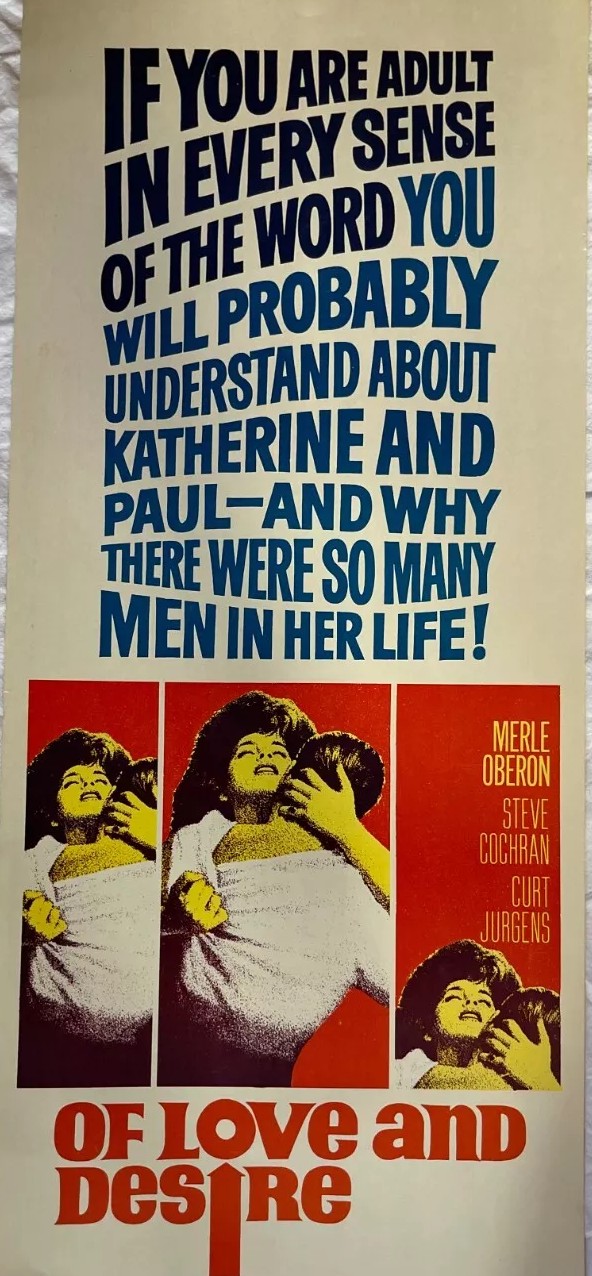
As contemporary as you could get with the core theme of a sexually independent woman picking and choosing her men. Otherwise, a smorgasbord of talent. Star Merle Oberon (Hotel, 1966) hadn’t appeared in a movie in seven years, for co-star Steve Cochran (Tell Me in the Sunlight, 1967) the screen absence was two years, Curd Jurgens (Psyche 59, 1964) was still very much a jobbing actor restricted to playing good and bad Germans, and director Richard Rush (Psych-Out, 1968), in his sophomore effort, was as erratic in the early part of his career as he would be in his later (six years between Freebie and the Bean, 1974, and The Stunt Man).

Of course, this being a somewhat mealy-mouthed decade, psychological mumbo-jumbo was required to explain the woman’s actions rather than the notion that a woman could enjoy being sexually unrepressed and free of desire for marital security. So if you manage to separate the actual movie from the required fitting-in to moral standards, it’s a darned interesting examination of the kind of free spirit later exemplified by Darling (1965) or Modesty Blaise (1966).

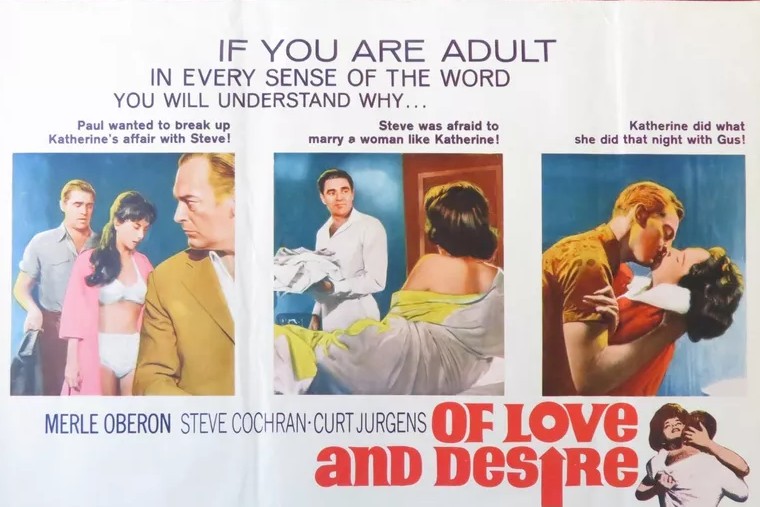
Mining engineer Steve (Steve Cochran) on a job in Mexico begins an affair with wealthy Katherine (Merle Oberon), half-sister of his employer Paul (Curt Jurgens). There’s nothing of the usual will-she-won’t-she in this romance, she virtually flings herself at him. Not only that, the morning after, she arranges for all his belongings to be shipped to her splendid mansion, proof of who is usually in control. Just as, more traditionally, males are instantly aroused by beautiful women, she is excited in the presence of an attractive man and makes no bones about it, not too bothered about consequent scandal even though she does her best to keep her activities discreet.

Paul isn’t so happy with the affair. He clearly prefers her unhappy and dependent on him for emotional support. And a bit like Julie in Steve Cochran’s later picture Tell Me in the Sunlight, there’s certainly an assumption that she jumps from man to man, though out of boredom rather than financial security.

So Paul sets out to sabotage the affair by putting in Katharine’s way previous boyfriend  Gus (John Agar) who feels he is owed some sex and is determined she repay the debt. Although she almost succumbs and is subsequently ashamed of how easily her desire is inflamed, she resists and after he has had his way with her attempts to commit suicide.

But the question of rape is never raised and to Steve it appears she has merely resorted to type, falling into bed with the closest man. And in the time it takes to resolve the situation, we are treated to the psychological mumbo-jumbo which falls into two parts. In the first place, there has clearly been a strong sexual attraction between Paul and Katharine, and the strength of their emotional bond is in some ways a substitute for not indulging in incest. Secondly, her fiancé, a fighter pilot, was killed in the Second World War. Based on no evidence whatsoever, she has convinced herself that he committed suicide because she refused to have sex with him before marriage. To make up for that, she gives herself to any man who comes along. Yep, claptrap with a capital C. Which somewhat torpedoes the picture, which had been heading comfortably towards a feminist highpoint.

Merle Oberon almost turns the clock back a couple of decades to Wuthering Heights (1939) and her role there in physically expressing forbidden desire. You can almost feel her quivering with pent-up sexuality and she is unexpectedly superb, in what is essentially a B-picture, especially as the opportunity to tumble into melodrama – which she can’t escape in the final act – so obviously beckons. That the first two acts work so well is primarily down to her believable characterization. And Steve Cochran is no slouch either, shaking off the coil of his pervious incarnation as a tough guy. Curt Jurgens is creepy and sinister.

Director Richard Rush manages to hold his nerve until the end and then it all runs away from him into turgid melodrama. Screenplay contributions from the director, producer Victor Stoloff, Jacquine Delessert  in his debut and Laszlo Gorog (Too Soon to Love, 1960, Richard Rush’s debut)

Nearly but not quite a feminist breakout.

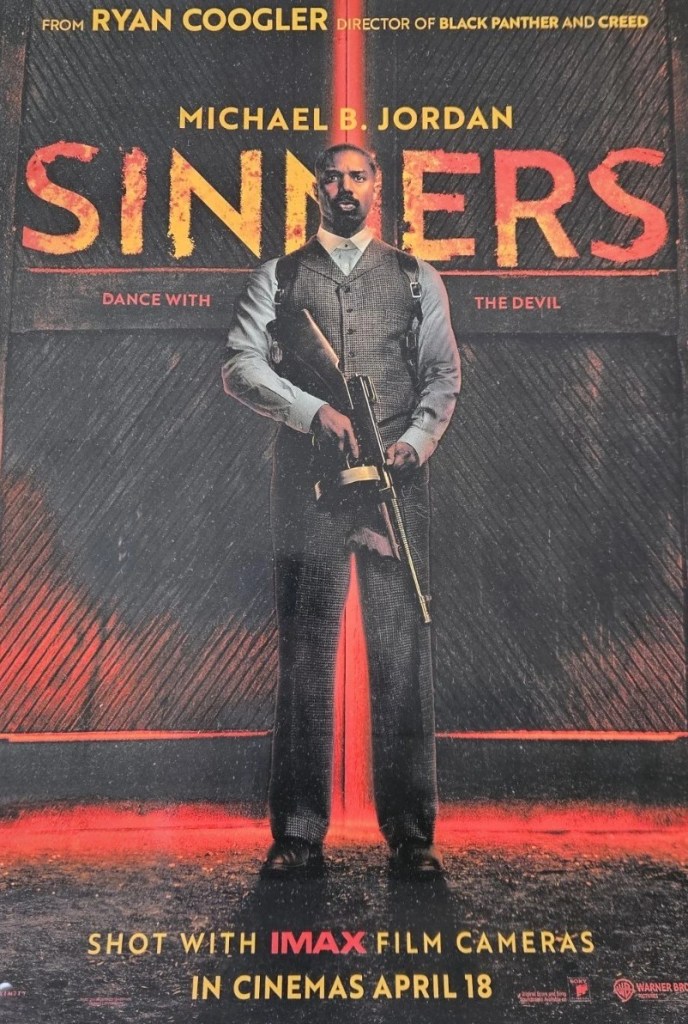
Sinners (2025) ***** – Seen (Twice) at the Cinema

A great movie is more than the sum of its parts. There’s something indefinable, something as they used to say “in the ether”, or “hits the zeitgeist” or, more aptly “hits the spot” because the area in question can never be defined, yet somehow we know it’s there. A writer from several generations past came up with “only connect.” And that’s a pretty food summation. Audiences are not really interested in movies that connect with critics – we’ve been served up too much dross too often to trust critics, Anora (2024) a recent case in point. When movies scarcely drop any percentage of revenue at the box office in the second weekend it’s not because of a ramped-up advertising budget, but because movies have hit the spot, connected with audiences, acquired that elusive word-of-mouth quality. For sure, this is going to be an Oscar contender, which probably means all the fun will be knocked, as its supporters get all preachy on us about its importance as a social document.

But a great movie comes from nowhere and sets up its own tent, creates its world, its own logic. There were gangster pictures before The Godfather (1972), westerns before The Searchers (1956) or Once Upon a Time in the West (1969) and sci fi before Avatar (2009) but what such pictures owe to their genres is derivative in a minor key. And so it here, Sinners takes the vampire movie and tosses it every which way but loose.

You got the blues, the most appealing vampires you’ll ever come across (and not in the svelte style of another game-changer, The Hunger, 1983), the need for community, the duping of the poor through religion, music than can summon up Heaven and Hell, raw sexuality, belonging, mothers, orphans, genius, cotton, a world where African Americans who fought for their country discovered their country didn’t want to fight for them, where the white man is going to take your money and then, for sport, kill you, and the plaintive despair of never feeling the warmth of the sun again as long as you live – which is forever. And connections – there’s myriad connections that will hit home.

In fact, you might not be aware you’re watching a vampire movie for roughly the first half. You might imagine this is more akin to The Godfather Part II (1974) with gangsters trying to go straight. First World War veterans identical twins Smoke and Stack – I have to confess right till the credits I didn’t realize these were both played by Michael B. Jordan (Creed, 2015) – descend on a small southern town intending to make an honest buck from a dance hall, convinced they have acquired the necessary business acumen. The motley bunch enrolled in this endeavor include neophyte bluesman Sammie (Miles Caton), veteran alcoholic bluesman (Delroy Lindo), singer Pearline (Jayme Lawson), storekeepers Grace (Li Jun Li) and Bo (Yao), bouncer Cornbread (Omar Miller), Smoke’s estranged wife Annie (Wunmi Musaki), who has knowledge of the occult, and Stack’s ex-girlfriend Mary (Hailee Steinfeld). Coming a-calling is Irish immigrant Remmick (Jack O’Connell) recruiting new members for his vampire flock.

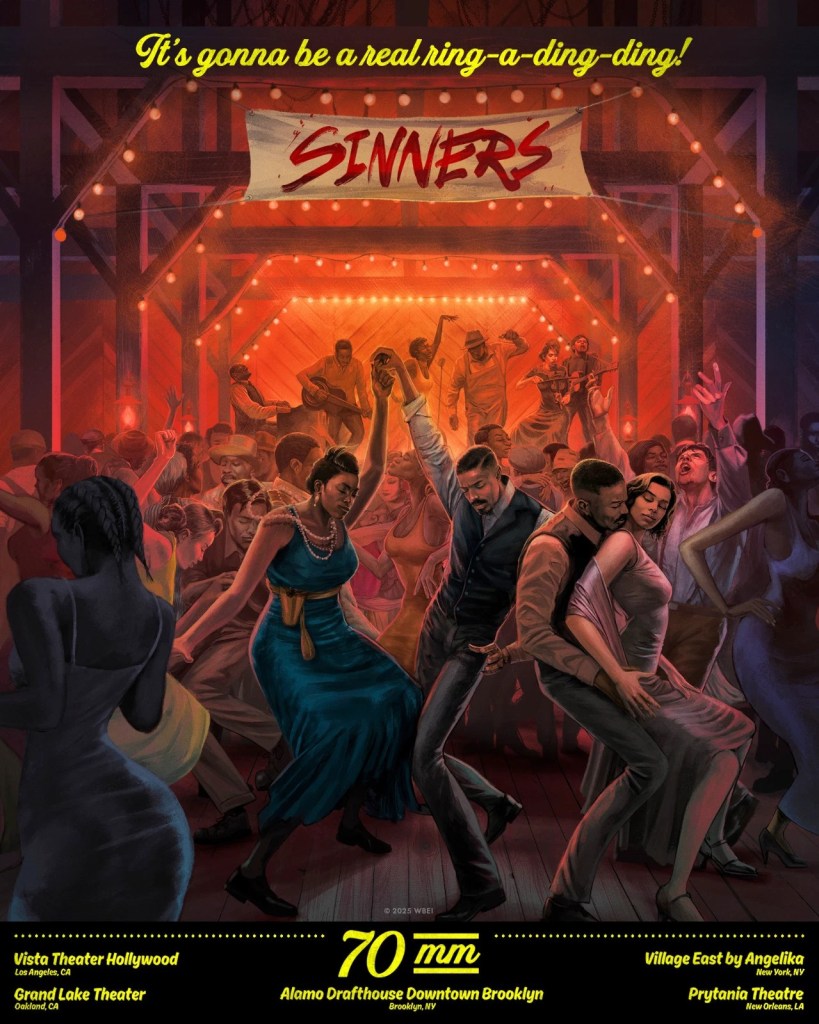
The movie doesn’t take flight so much in the unwinding of intertwined lives, or with the rocking action, as with two dance sequences that transcend anything you’ve seen before in the cinema, the first conjuring up music of the past, present and future, the second a routine by the vampires. Trying to save himself from vampires, Sammie begins reciting the Lord’s Prayer only to hear the sacred words echoed by the undead. A guitar is buried in Remmick’s head. And there’s a fascinating coda, if you wait through the credits.

Michael B. Jordan is the obvious pick, striding across both characterizations with immense aplomb (the Oscars will be calling) but Miles Caton in his debut, Delroy Lindo (Point Break, 2025), Hailee Stainfield (The Marvels, 2023), and especially the seductive blood-lusting Jack O’Connell (Ferrari, 2023).

Writer-director Ryan Coogler came of age with Creed and the Black Panther duo but this takes him into the stratosphere, a genuine original talent, not just with something to say but the visual smarts to match. He could have harked on a lot more. Too many worthy pictures have turned virtue-signaling into an art form, but one boring beyond belief. Coogler is much more subtle, he slips in his points.  

But all the subtlety in the world wouldn’t count for a hill of beans if he couldn’t tell a story in way that connected big-time with the audience who wanted to tell their friends to go-see.

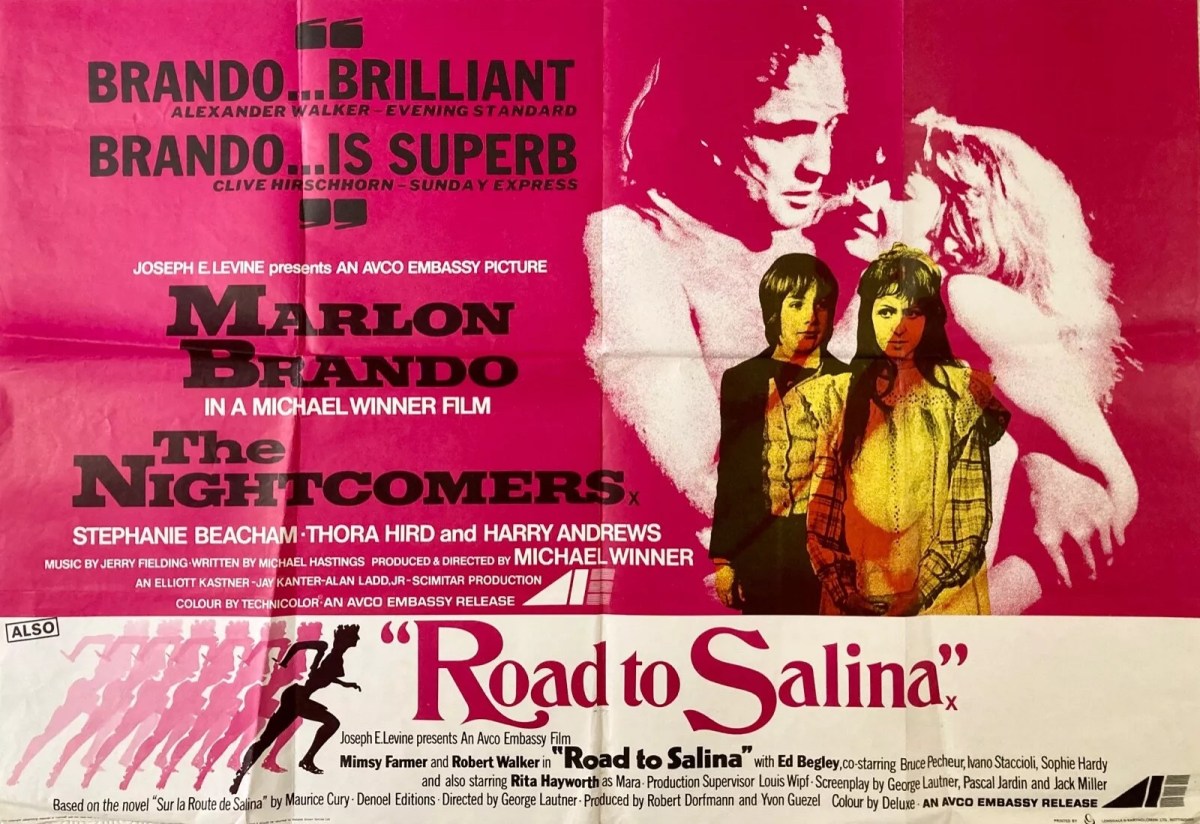
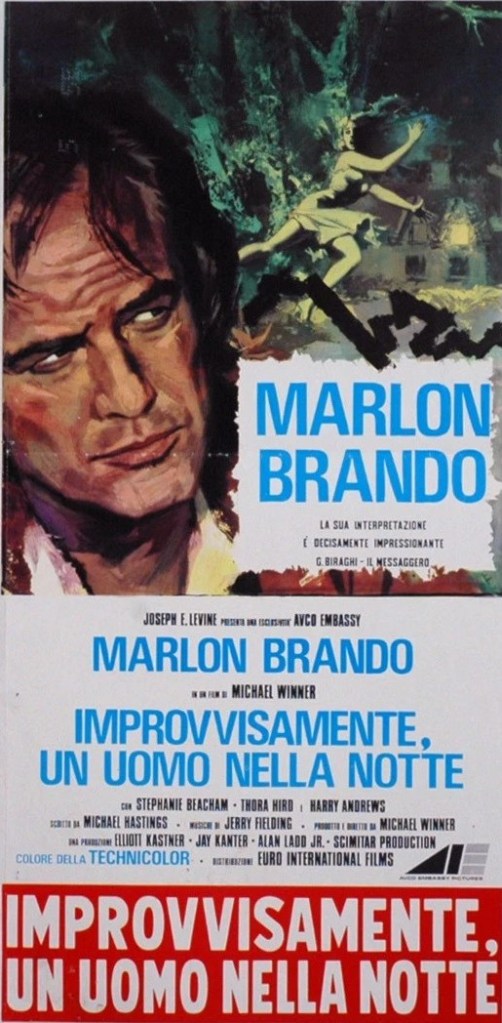
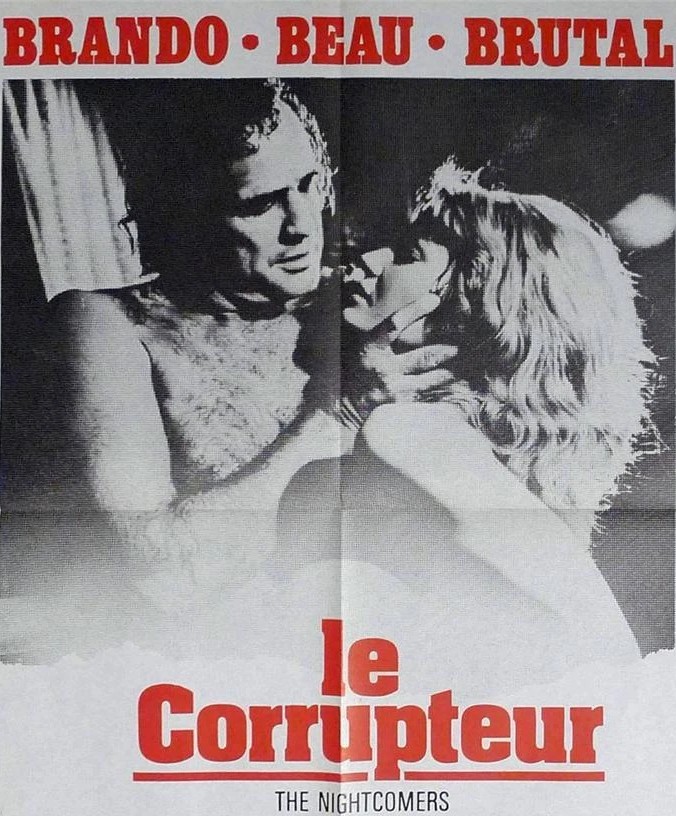
The Nightcomers (1972) ****

Originally dismissed as meretricious trash, contemporary re-evaluation reveals it as uncommonly prophetic. You can start with the feral children, abandoned by their guardian, lack of parenting allowing space for pernicious ideas to foment. Or with the pornography correlative, the young, posited as unruly voyeurs, conditioned by the internet into believing that violent sex is the norm. Or with the influencer seeding notions that demolish the accepted Establishment views. Or impressionable children creating a distorted world view based on their interpretation of adult behavior.

Audiences and critics back in the day were taken in by the most cunning Maguffin of all, that this was some kind of more realistic Downton Abbey/Upstairs, Downstairs power struggle  played out among the servants against the background of a sadistic/masochistic affair. Lives can be ruined on a whim. A letter to the absent landlord can destroy a career. Remember from Downton Abbey the importance in the servant hierarchy of the role of the owner’s valet. To be summarily demoted from that lofty position to gardener, forced to tug your forelock in gratitude at not being cast out, and you can see where power lies.

Instead, consider this a slow-burn, deliberately understated drama where, against the style of the usual horror picture, the score (by Jerry Fielding) offers no clues, a virtually anonymous piece to lull you into thinking this is a pastoral setting where genuine evil, as opposed to acts of mean inconsideration, can flourish.

Watching it entirely from the perspective of the children, ignoring the appeal of the top-billed Marlon Brando engaging in licentious and disturbing sex with the governess Miss Jessel (Stephanie Beacham) he has groomed, and a completely different movie emerges. It reveals more than any other study of children unexpectedly grown violent how vulnerable young minds are to suggestion and that in the absence of adult intervention how easy it is for them to devise a fantasy whose fabric is drawn from their misinterpretation of the real world.

My guess is that back in the day the attempts by teenage Miles (Christopher Ellis) and younger sister Flora (Verna Harvey) to copy the bondage scenes and violent sex witnessed by the voyeuristic boy would have had the audience in stitches rather than reeling in shock. There would have been very little in the audience experience beyond teenage gangs to suggest that young children could be guilty of such depravity – this is long before the murder of Jamie Bulger in England or the mass shootings by teenagers in America. So laughter would be the natural response.

But times are different now. We know that children existing outwith genuine adult supervision are prone to suggestion and acting on impulse. Miles and Flora have been taught by gardener Quint (Marlon Brando) to ignore traditional views of Heaven and Hell, to imagine that torture of small creatures is acceptable, and that love is hate, and that only in death can true lovers be united. Miles has been taught to shoot with a bow-and-arrow by Quint and there’s more than a touch of irony in how quickly the young fellow masters this skill that leads to a grisly climax.

While the adults largely ignore the children, the children are not ignoring the adults. They are in thrall to what they see and hear and make up their own minds about how to put the world to rights. Had the children been adults driven by loneliness and abandonment to such acts, they would viewed simply as evil monsters. But here they are demonstrably not evil, just misguided, and by the very people who should be guiding them. Quint takes inherent joy in corrupting the young, it’s the simplest type of revenge he can enact against his master, filling the heads of the next generation of overseers with information that runs counter to the accepted.

The British censor left largely untouched the rape scenes in The Straw Dogs and A Clockwork Orange out the same year. He was much tougher on this, excising the bondage sequences, as if such prurience would diminish the impact. Certainly, that did the trick at the box office for audiences, denied shock content, ignored it.

If all this isn’t enough to trigger reconsideration of the picture, then the grooming of the governess (Stephanie Beacham), her submission to male control, will strike a contemporary chord. Despite the respectability of her position, she is revealed as eminently vulnerable, born out of wedlock, witnessing how tough life was at home without a protective male figure, not just prone to accepting Quint’s brutality but conditioned herself to wait in a more romantic setting for the gentler lover of her imagination who never arrives. While the housekeeper (Thora Hird) comes over as any powerless functionary exerting what little power she has.

Marlon Brando (The Chase, 1966) is especially good and the scene where he blackens his teeth to amuse the children might have been a dress rehearsal for the sequence in The Godfather where, unintentionally, he frightens the child. Except for Dracula A.D. 1972 (1972) in Italian crime tale Mafia Junction (1973), rising star Stephanie Beacham’s star failed to significantly rise, and she never again enjoyed such an important, and difficult, screen role, especially in those scenes where she attempts to exert control.

Written by Michael Hastings (The Adventurers, 1970).  

It might be a contradiction in terms to suggest that much-maligned British director Michael Winner (Hannibal Brooks, 1969) ever came close to producing what you might term a masterpiece, but within his own portfolio this is surely the chief contender.  

You can catch in on Talking Pictures for free.

Well worth a look.

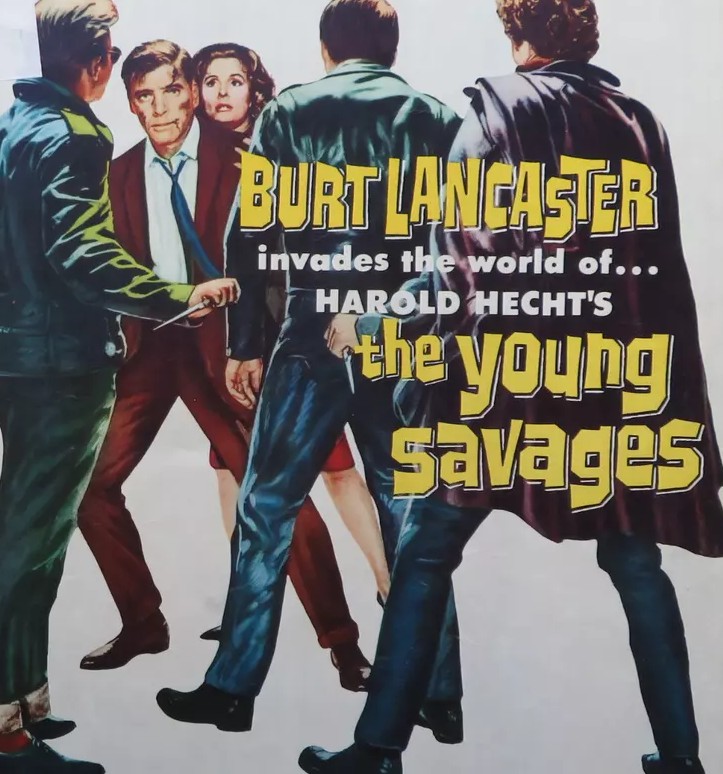
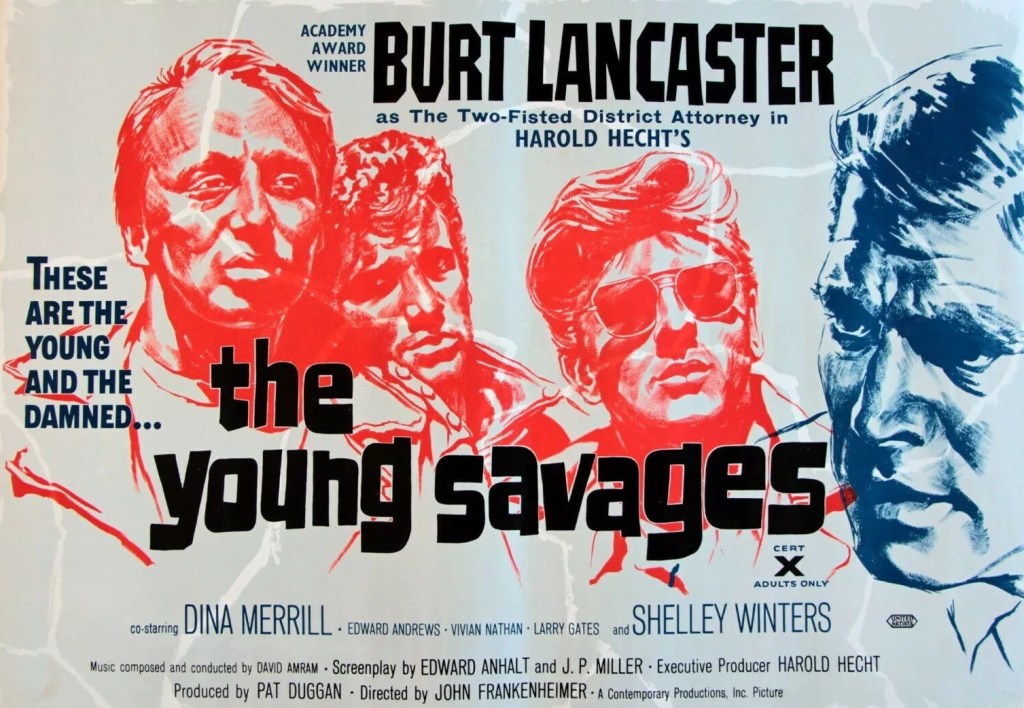
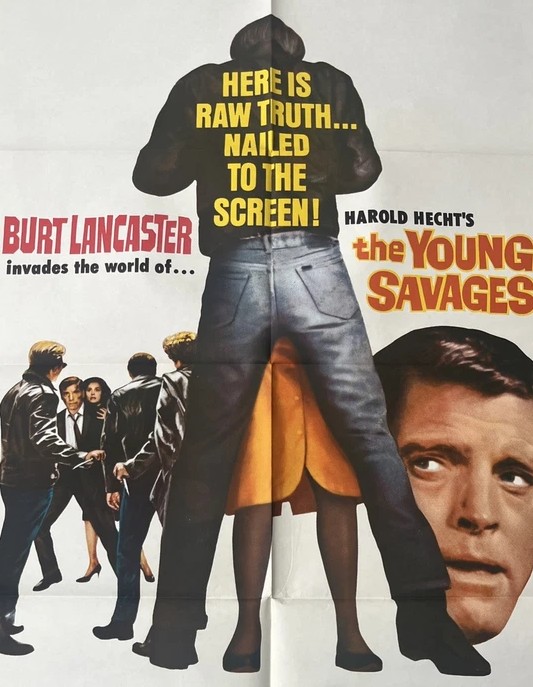
The Young Savages (1961) ****

You have to put out of your mind any thoughts about West Side Story, released the same year and also dealing with teenage gangs in New York. But whereas the musical tapped into Shakespeare and tugged at audience heartstrings with a tragic love story, The Young Savages is what used to be called an “issue picture,” a realistic portrayal of a growing problem in society.

Rather than the sullen relatively harmless rebels of Rebel without a Cause (1955) or this decade’s Easy Rider (1969), the question of youth disenfranchisement and the growth of a culture, here majoring in violence, at an opposite extreme to social norms, was beginning to take hold. Where earlier immigrants emerging from New York housing hellholes had tended to graduate to straightforward crime, which occasionally spilled over into the main street, now youths were engaging in turf wars, knives rather than machine guns the weapon of choice, which took place in full view of a terrified population.

Oddly enough the movie opens with the same motif as West Side Story, the feet of a gang, but rather than expressing their frustration through dancing, these feet, belonging to three members of the Italian-American Thunderbirds mob, are marching through the streets of New York, brushing aside passersby, knocking over toy prams, on their way to kill a member of the rival Puerto Rican Horseman gang.

When arrested, they claim self-defense. The only flaw in that argument is the victim Roberto Escalante (Jose Perez) is blind.  Naturally, there is a public outcry and calls for the death penalty. Prosecutor Hank Bell (Burt Lancaster), who had grown up in the same streets as the gangs but managed to make a life for himself outside its confines, is hellbent on extracting the maximum punishment. Bell was born Bellini but changed his name to hide his background, make it easier for him to serenade Vassar graduates and advance his career.

That leads to complications, and it’s hard to say which is the more compelling. His more liberal wife Karin (Dina Merrill), the Vassar item, is appalled. District attorney Dan Cole (Edward Andrews), who fancies his chances as a politician, faces public backlash if he doesn’t take tough action. And Hank had a romantic fling in the past with the mother Mary DiPace (Shelley Winters) of one of the accused.   

But Hank hasn’t quite thrown off the shackles of his upbringing, and though currently an upstanding member of society, he finds his principles taking a battering when he is himself attacked and discovers just how easy it is to resort to violence. Karin, too, finds her liberal attitude shot to pieces when she is also attacked.

Even without personal involvement of the husband and wife in being forced to face up individually to the violence pervading the city, the focus is on the exploration of how such violence becomes endemic in those parts of society left behind in the pursuit of the Great American Dream.

There’s plenty issues to deal with: poverty for a start, lack of ethnic tolerance, hatred of one immigrant group to another, politicians making capital out of the situation, parents powerless to prevent their children growing up as hoodlums, youngsters seeking identity and respect from joining a gang, and the growth of the gangs themselves as a social dynamic.

As you might expect, there are no easy answers. In fact, there are no answers at all. A movie like this can only lift the stone without being able to effect what’s happening underneath. But in some respects, that’s the aim of the issue picture, an early type of virtue-signaling. None of the issues raised have gone away, more likely they’ve just got worse.

But that’s not to downplay the film’s impact. There’s an inherent honesty here in the decision of debutant director John Frankenheimer (The Manchurian Candidate, 1962) not to take sides.    

Burt Lancaster (The Swimmer, 1969) delivers another excellent performance. Dina Merill (Butterfield 8, 1960) thrives in a solid role and Shelley Winters (A House Is Not a Home, 1964) is effective. Watch out for the debut also of Telly Savalas (The Assassination Bureau, 1969).  Written by Edward Anhalt (Becket, 1964) and J.P. Miller (Days of Wine and Roses, 1962) from the bestseller by Evan Hunter, who had explored similar youth issues in The Blackboard Jungle filmed in 1955.

Still powerful stuff.

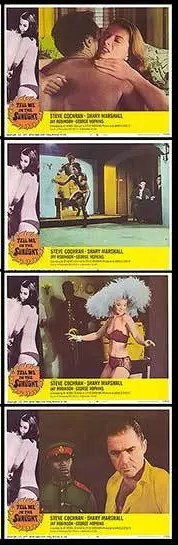
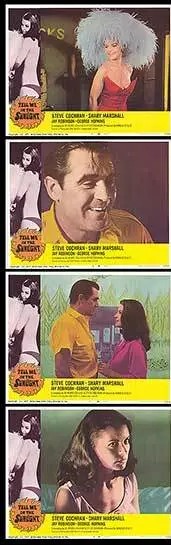
Tell Me in the Sunlight (1967) ****

Had this emanated from France or Italy or arrived bearing an arthouse imprimatur it might well have gained some critical traction. Not just because it is as far from the screen persona of star Steve Cochran (Mozambique, 1964) as you could get, but since this is largely a tale of loneliness and with some quite imaginative touches.

In a cramped apartment so small there’s nowhere to sit and eat Julie (Shary Marshall) sets out a picnic on the floor for merchant seaman Dave (Steve Cochran), the fare modest in the extreme, nothing more than heated-up soup from a tin. There’s an unlikely trigger point – a light switch that doesn’t work. In anticipation of Dave’s return, she not only bakes a “Welcome Home” cake but has painted on the walls an idyllic scene of the house she expects the couple to occupy.

But there’s a central issue. They’re both itinerants, Dave due to his job, and presumably not having an ounce of the settling-down bug, and Julie because she drifts from man to man, primarily out of necessity. She’s an exotic dancer and although she initially denies it – and he has to pretend to believe her in order to grease the wheels of incipient romance – she accepts financial favor from customers to the nightclub. In fact, she has a current boyfriend, Paul (Harry Franklin), a distinguished-looking doctor, an older man much fussed over by the club management due to the amount he spends.

The meet-cute’s been done before – they are both at the scene of an accident involving a young boy. They stroll away together. Their conversation is not intense, and the only way we realize that he has struck a spark is when she returns to her night-time gig sand is fined for arriving late. He watches her striptease act, and waits for her and they do some more strolling before returning to her flat, where she rustles up the picnic but before affairs can take a sexual turn she falls asleep in his arms.

More in keeping with the Steve Cochran screen persona.

This is very desultory stuff, no nudity or even obvious sex, and in the context of Hollywood output scarcely qualifying as a romantic drama, but place it in the European arthouse sphere and it proves much more rewarding from the very fact that nothing is overplayed. Little is even outwardly stated. Without a word suggesting this, both realize this is a chance to change random lives.

While there’s no commitment either side, when he leaves for a temporary job on another ship, he asks her to see him off on his midnight flight. That would mean her skipping a shift and to do so would risk being fired. At the last minute, she turns up. When she leaves as his plane is announced as imminently departing, he follows her for one last fleeting kiss and spots her outside in the arms of another man.

Unaware of this, she decorates her apartment in the manner described. He returns in a bad mood, gets drunk and on appearing at her apartment notices someone else must have fixed the light switch, tosses money on the floor and they make love as a financial transaction.

In the morning while she is distraught, he remains furious, scoffing at her painting on the wall and the cake. She explains that while the man at the airport was indeed her former lover Paul, he was only there in the capacity of a friend, who had driven her out, the only way she had of skipping out of the club and returning before being spotted and fined or dismissed. In any case she has been fired because the rejected Paul has abandoned the club and his absence has reduced the nightly take. And she paid for the light switch to be fixed.

Theoretically, in the hope of a happy ending, they reconcile. But a future together seems unlikely after the events of the previous night, which showed both in their true character, he as a paying customer, she as a paid sex worker. Neither show capacity for change, certainly not to find the kind of work that might bring marital stability.

Loneliness is the theme, how to cover up the cracks in fragile lives. In his job, women are non-existent, the only time he will meet one is on shore leave, and if he’s not shelling out for sex, he’s trying to pick up a vulnerable woman as is shown in the opening scene. As much as she needs extra dough to buffer her existence, she also needs someone to hold her at night.

This should have received some recognition at the time. Steve Cochran’s directorial debut was not accorded the same interest as other actors who had turned to direction such as Frank Sinatra (None but the Brave, 1965), Laurence Harvey (The Ceremony, 1963) or John Wayne (The Alamo, 1960).  As an actor Cochran wasn’t on the critical radar, his tough guy roles hardly on a par with those of Humphrey Bogart or Richard Widmark who found greater fame.

However, the biggest obstacle to critical recognition was that Cochran died before they movie could be released and it took another two years before it hit movie screens by which time he was long forgotten.

Not only is the direction tone perfect but so is Cochran’s acting. Although strictly a B-movie actress, Shary Marshall (The Street Is My Beat, 1966) is very effective.

An unsentimental realistic drama that doesn’t fall into the traps of either into exploitation or melodrama

This is one of those forgotten pictures that is well worth a look.

Alice in Wonderland (1966) **

Young bucks wanting to make a bigger splash are apt to rampage through sacred texts and treat unwary audiences to avant-garde notions. Thus, Jonathan Miller (Take a Girl Like You, 1970), in his debut, set aside all expectations and in fairness purists had decried Walt Disney’s 1951 telling of the Lewis Carroll classic. In truth audiences weren’t so in love with the Disney version either, an unusually low hitter for the company, and one that only really found its niche when reissued to catch a whiff of the stoned hippies who had drooled over 2001: A Space Odyssey (1968).

This 1966 reimagining might have been buried in the vaults after its initial showing except that Jonathan Miller went on to become something of a British institution, renowned directed of opera and stage plays, writer and presenter of a number of highly-regarded television projects and a regular on the talk show circuit. That his career had begun in sensational fashion, one of the hands on the tiller of the satirical Beyond the Fringe stage show (a hit in the West End and Broadway) and television program, meant that when he decided to spread his wings into the movies, no expense was spared.

Big stars flocked. What other neophyte could attract stars of the caliber of Peter Sellers (The Pink Panther, 1964), John Gielgud (Khartoum, 1966), Michael Redgrave (Goodbye, Mr. Chips, 1969), Leo McKern (Bunny Lake Is Missing, 1965), Peter Cook (The Wrong Box, 1966) and playwright Alan Bennett (The Madness of King George, 1994)? All admittedly in small parts but that was the nature of the all-star enterprise.

And that would have been fine if they had all been employed to supply the voices. Or if audiences had the fun of trying to determine who was who when hidden under the ton of make-up required to turn them into White Rabbits or Mock Turtles or Caterpillars or Lobsters cutting a quadrille.

But Miller had determined that not only was the Disney version short of the mark but for too long readers had missed the entire point of the Lewis Carroll book. He decided the point of the story wasn’t humor at all, nor a succinct exploration of the pitfalls of language, but about a young girl adrift in a adult world of confusion. So that was bye-bye to the cuteness.

He even broke a cardinal role. Alice doesn’t fall down a rabbit hole. The whole thing is a dream.

They’ve been adapting the book since the early days of cinema. This poster dates from 1915.

So you need to listen carefully to find out, with the lack of make-up, which actor is playing which fantasy character. And this isn’t set in any fantasy world either, certainly far removed from the famous illustrations that accompanied the book. It takes place in Victorian times which, yes, reflects the era in which the book was written, but, no, seems an extremely odd decision to give what is still fantasy some kind of realism.

It’s as if the director didn’t really have the courage of his convictions. That said, if he was catering to the arthouse mob, it’s got that kind of cinematic sensibility, with voice-over and unusual compositions.

Just to help you out, let me tell you that Peter Sellers plays the King of Hearts, John Gielgud the Mock Turtle, Michael Redgrave the Caterpillar, Alan Bennett the Mouse, Finlay Currie the Dodo, Leo McKern the Duchess and Peter Cook the Mad Hatter. The part of Alice went to 13-year-old Anne-Marie Mallik who never made another movie.

While it retains enough of the original to be recognizably based on the book – with all the catchphrases, “off with their heads” etc – the locale is just totally at odds with the story. And while it’s a tonic to hear the mellifluous tones of John Gielgud uttering the author’s immortal words, it would have been better just to hear his voice.

My guess is this is only still available because Miller made such a name for himself. You can catch it on Talking Pictures.

Curiosity or mess, it’s hard to decide.

https://www.facebook.com/TalkingPicturesTV/videos/easter-on-tptv/654499693946106

The Killing of Sister George (1968) ***

Somewhere between camp classic, hilarious comedy and bitchiness-on-speed, loaded down with a May-December narrative, too much of the genuine soap opera element of the filming of a soap opera but lifted up by some very touching moments. This started life as a black comedy and its stage antecedents are only too obvious, many scenes running way too long for a movie, and in the unlikely hands of director Robert Aldrich – at this point best known for male actioner The Dirty Dozen (1967) rather than the equally bitchy Whatever Happened to Baby Jane (1962) – asks audiences to ingest a great deal more seriousness.

The sex scene was so shocking in its day that, in the reformed U.S. censorship system, earned one of the first mainstream X-certificates, thus torpedoing its box office potential as newspapers routinely refused to accept adverts for such. Yet while it is tender, and to some extent galvanized by the astonishment of older lesbian Mercy Croft (Coral Browne), a high-ranking television executive, at having such a young and adorable lover as Alice (Susannah York), it is sabotaged by Alice’s gurning.

Whereas Beryl Reid’s performance as aging soap opera actress June (aka Sister George) about to be cut adrift by the television production which has made her name is pretty much spot on as a drunken, insecure, needy, dominant, older lover. Susannah York (They Shoot Horses, Don’t They, 1969) just seems out of control as the bonkers dumb blonde. While same sex relationships between men had only just become legal in England, and the specter of blackmail, public scandal or imprisonment that had hung over many generations now removed, there had never been a correlative for women. Though a newspaper headline might well kill a career.

The best sequence in terms of the harmonious gay relationship comes in the gay club where women hold each other for a slow dance and it seems so normal and touching. Of course, relationships, straight or gay, don’t necessarily run smoothly, but the longstanding affair between June and Alice belongs to the Who’s Afraid of Virginia Woolf (1966) playbook. Alice may well be a gold-digger for all she does, but since the May-December aspect of male-female relationships was a standard Hollywood trope it seems fair enough to apply the same rationale to a single-sex partnership.

There’s some uncomfortable sadism when, as punishment for mild misdemeanor, Alice is forced to eat a cigar butt and told in no uncertain terms just how stupid she is. There had been a recent rash of on-set bitchiness, star tantrums and studio power struggles from pictures like The Carpetbaggers (1964), Harlow (1965), Inside Daisy Clover (1965), The Oscar (1966) and Aldrich’s own The Legend of Lylah Clare (1968), so none of production shenanigans bring anything new to the table.

However, when June lets rip, embarrassing management or forcing her fellow actors to laugh during a tragic scene, this is comedy gold. Her alcohol intake and arrogance aside, it seems a step too far for June to attempt to sexually assault two nuns in a taxi – this unseen sequence key to her downfall. You might be inclined to question how Alice came into the sexual orbit of June and Mercy in the first place, and wonder if the two older women are not guilty of what would be termed these days inappropriate behavior in taking advantage of clearly a vulnerable young woman.

Beryl Reid (The Assassination Bureau, 1969) walks a fine line between self-indulgence and character insight. I felt Susannah York’s over-acting got in the way. The tight-lipped Coral Brown (The Legend of Lylah Clare) was too close to the cliché for my liking.

Robert Aldrich just about gets away with it. Lukas Heller (The Dirty Dozen) adapted Frank Marcus’s play.

The Damned / Gotterdammerung / Twilight of the Gods (1969) **

Ponderous, gratuitous, offensive. Let’s start with the pedophile, spoiled grandson Martin (Helmut Berger) of industrialist patriarch Joachim (Albrecht Schonhals). We already guess he has this kind of predilection for young girls as that’s suggested during a game of hide-and-seek at the family mansion and by a scream in the night that is ignored. He keeps a mistress Olga (Florinda Balkan) and is drawn to the young girl in the apartment next door, bringing her the kind of expensive present that her impoverished mother believes she must have stolen. So we know what he’s all about. It’s discreetly enough stated without the inclusion of a scene which I doubt would pass the censor these days and should the young actress be still alive in these MeToo times might be considering legal action for being taken advantage of.

Although the storyline is similar to the director’s earlier The Leopard (1963) of the powerful – there a wealthy landowner, here an arms manufacturer – trying to hold onto their status in times of change (then the invasion of Sicily by forces wanting to unite Italy, now the rise to eminence of Hitler), there’s little of the cinematic flair of the latter. Long scenes are played out at dinner tables or in bedrooms. And most of that is machination, someone or other wanting to take over the family firm or be the power behind the throne.

You need some knowledge of German history to understand the significance of some events. Hitler, then the German Chancellor, burned down the Reichstag (the German Parliament) in 1933 in a ruthless bid for power. Hitler employed two factions, the predominantly working class brownshirts (the SA) and the mainly middle class blackshirts (the SS), the former a paramilitary organization committed to actions against Jews and backing his early bid for power. In 1934, in the Night of the Long Knives, the SS obliterated the SA.

The first section of the picture straddles these two events with a Succession-style drama. In reaction to the burning of the Reichstag, Joachim replaces Herbert (Umberto Orsini), his top executive and outspoken anti-Nazi, with boorish nephew Konstantin (Reinhard Koldehoff) who is a high-ranking member of the SA.

This doesn’t sit well with Friedrich (Dirk Bogarde), who expected preference. Urged on by lover Sophie (Ingrid Thulin), Joachim’s widowed daughter-in-law,  and Aschenbach (Helmut Griem), Joachim’s nephew and an ambitious high-ranking SS official, Friedrich kills Joachim but pins the blame on Herbert who has to flee.  

Konstantin is thwarted because although technically in charge it’s now Martin who owns the business and nudged by Sophie gives Friedrich the top management role. So Konstantin resorts to blackmail, having uncovered the pedophile. In steps Sophie who uses Aschenbach to thwart him again. Though there’s not much need because Konstantin is eliminated as one of the SA members executed in 1934 at some kind of gathering where the attendees all appear to have homosexual tendencies.

Aschenbach and Martin nurse grievances. Aschenbach feels Friedrich isn’t ostentatious enough in support of Hitler and Martin is furious that Sophie manipulated his difficulties with Konstantin to Friedrich’s benefit. So the SS man and the dissolute conspire. In the way of this kind of heightened melodrama it’s revealed that Friedrich killed Joachim. That doesn’t send Friedrich to trial, instead wins him a get-out-of-jail-free card by turning into a radical Nazi.

Martin, meanwhile, is also a member of the SS. He rapes Sophie, Friedrich loses his way and in one of those moments Francis Ford Coppola would appreciate Martin kills them on their marriage day.

There are a couple of oddities. It’s hard to believe a young girl – we’re talking a 7-8-year-old – would actually manage the mechanics of hanging herself. And when Friedrich is drawn into joining the slaughter of the SA members, there is over-emphasis on his perceived sensitivity  when previously he had cold-bloodedly despatched Joachim.

So glorified soap opera with too much virtue signalling for its own good. Excepting Herbert and wife Elizabeth (Charlotte Rampling) and another grandson, who play minor roles, there’s not  a single character to care for.

Despite the unusual backdrop, there’s nothing particularly unusual about the succession/inheritance scenario. The tough self-made millionaire or latest head of a wealthy family seeks to maintain power and guard against diminishing its status and lineage by ensuring the correct successor is groomed and that capital is not dissipated through unsuitable marriage or indulging weaker offspring. Thomas Mann, who fled the Nazis in the 1930s, covered this ground more successfully in his debut novel Buddenbrooks, although admittedly with less decadence.

Setting The Damned against the rise of the Nazis is an attempt to give it more artistic status than it merits because it’s really not much more than a standard study of ambition and ruthlessness.  

Identity Unknown (1960) ***

The disaster picture in embryo. Well, the disaster picture without the actual disaster, but setting up the disaster narrative formula of who lives and who dies.

But before we go on to that, spot the deliberate mistake – in the poster I mean. At least I’ve realized it comes from an entirely different movie whereas imdb and Rotten Tomatoes clearly do not. But I’m using it as I guess for the same reason they did – due to the lack of a genuine poster for this picture.

Just to confuse you further, this is a lobby card from the wrong picture,
the one from 1945 not the one being reviewed.

Regarding the survival lottery, your card is somewhat marked, this being the innocent start of the 1960s and not a few decades later where screenplays adopted a more cynical – and shock-bait – approach to narrative. The minute you know that the lives of four children depend on the survival of various adults involved in a plane crash in the Swiss Alps then you can guess pretty much who will come out of the disaster scot-free.

But as would later be de rigeur for the disaster movie, the narrative concerns itself with a limited number of characters. There are only ten people on board the plane. We know from the outset only three have survived. So the question is – who?

But instead of following the survivors as they battle the crash and the snowbound mountains and fierce storms and freezing cold and whatnot, instead we focus on the back stories of the passengers and crew through John (Richard Wyler) and Jenny (Pauline Yates), seasoned and novice reporter, respectively, as they go through their door-stepping paces.

So, essentially, it’s an expanded portmanteau, ten stories, ten families’ lives in the balance.

Our cross-section of society includes a few who might benefit from someone not surviving – lawyer Jamieson (John Gabriel) hoping the main witness against his villainous client won’t be able to testify, adulterous wife Mrs Sylvester hoping her husband’s death will leave her free to marry lover Ray (John Carson). To counter those conniving characters, we have the heart-tugging tales of two child refugees from Poland awaiting the arrival of their adoptee mother Mrs Phillips, parent Ken (Vincent Ball) whose child will die if an eminent surgeon doesn’t return, and pilot’s wife Pam (Nyree Dawn Porter) in a maternity ward with a newborn baby.

Movie agent Charlie (Martin Wyldeck) takes advantage of unexpected publicity for his ageing client, praying survival will boost her fading career. But he’s cynical enough to already be imagining headlines: “Farewell Performance” if she dies, “Return Farewell Performance” if she lives.

The journalists are not as hard-bitten as they imagine. Sure, Ken does report fraudster Philbert (Peter Elliott) to the police, but he stops short of revealing the fact that her daughter is on the plane to a blind mother whose family are keeping the news from her. In theory, Jenny, is the more conscience-stricken of the journalists, but that’s only if you excuse the tape recorder hidden in her handbag.

By the time our motley crew head out to Switzerland to meet the rescuers coming down the mountain and find out if their loved ones have made it, some home truths have been spelled out. Mrs Sylvester discovers her lover only seduced her to win a job from her husband. “Think I’ve been hanging around here for the pleasure your company?” snarls Ray. “If your husband’s dead you’re no use to me.” Not one to take a put-down lying down, she chats up a smooth gangster in Switzerland. “I’ll ring you some time,” he says when they part. “You don’t know my number,” she wails.

By the time the journos and those waiting are assembled in the bar at the Swiss airport, you might have expected Hercule Poirot to waltz through the door and start interrogating them – generally the only reason for such an assembly.

By this point, John and Jenny have cosied up, at least she’s cooked him a meal, though that proves not a precursor to seduction. But the movie skips past the joy of the child-related survivors and ends on a couple of telling visuals: the welcome home cake for the daughter who won’t return and the tape unspooling from the recorder as Jenny decides being a hard-nosed journalist isn’t for her. While in some senses Mrs Sylvester gets her come-uppance, husband dead, lover fled, this is no morality tale – the villain gets off with murder.

As usual, with these trim British B-pictures, don’t expect much in the acting department, but the story is well told, sufficient and interesting variety of characters, especially when the narrative goes outside the point-of-view of the reporters and focuses on facial expression of those involved.

Pauline Yates (Darling, 1965) has more spark than Richard Wyler (The Ugly Ones, 1966) while Nyree Dawn Porter (BBC’s The Forsyte Saga, 1967) and Vincent Ball (Echo of Diana, 1963) flesh out minor roles. Valentine Dyall (The City of the Dead/ Horror Hotel, 1960) plays a grumpy newspaper editor.

Directed with occasional nifty touches by Frank Marshall (A Guy Called Caesar, 1962) from a screenplay by Brian Clemens (The Corrupt Ones / The Peking Medallion, 1967).

Another plum on Talking Pictures TV.

Goodbye Again / Aimez-vous Brahms (1961) ***

Something of a feminist icon with middle-aged single woman choosing her lovers. I should warn you that there’s a May-December trope, which was very common at this period, as older female stars, engaging on romance with younger males, catch up with the unchallenged notion that any ageing male star should be accorded a younger female partner regardless of the age difference.

Paula (Ingrid Bergman), a lady of independent means, is tiring of philandering lover Roger (Yves Montand). After five years, he still can’t keep his hands off any young girl – known as “Maisies” – who come within reach. Paula is pursued by a younger man Philip (Anthony Perkins) and eventually succumbs to his ardent wooing. They differ on whether their relationship has much of a future, she the more pragmatic of the two, as, I would guess, are the audience.

While he’s refreshing and energetic, the spoiled rich boy exhibits childish tendencies. There’s a clash between the independent woman and the older macho misogynist male who expects his lover to be at his beck and call, even when his disappearances are the result of assignations with other lovers.

A middle-aged woman was as much on the hook to an unfaithful lover as a married woman. While she doesn’t want to be married, she wants to enjoy the same sense of trust that marriage might bring. However, she’s not destroyed, as a married woman of the period might have been, by her partner’s infidelity. And precisely because they are not bound by legal obligation, she is perfectly within her rights to choose another lover.

Still, there is an intense melancholy that she cannot make Roger settle down with just the one woman – her – and that if their affair is to continue it must be on his unacceptable terms. Yet she is terrified of being alone and except for the appearance of Philip and her independence there is the sense that she might subdue tragic instinct and settle for the crumbs from Roger’s table.  

Glorified soap opera, no doubt, but it survives on the playing of Ingrid Bergman (The Visit, 1964) who shares with Deborah Kerr the ability to show conflict and sadness in her eyes. She brings so much depth to her character you are apt to forget you are watching a soap opera. That she remains attracted to Roger beyond the realms of logic compounds her tragedy.

Anthony Perkins (Pretty Poison, 1968) is very charming, ridding himself in the main of the jumpiness that appeared to fit his screen persona. While Perkins and Bergman make an unlikely screen couple, they are a believable one.

Yves Montand (Let’s Make Love, 1961) doesn’t have to drift much outside his screen persona of male fantasy figure, the one who has all the dames at his feet.

This is one of those very well-made Hollywood movies, full of gloss, trimmed with an edginess that soon takes center stage. Made in the 1940s it would be a classic weepie. The ending will take you by surprise.

Directed by Oscar-nominated Anatole Litvak (The Night of the Generals, 1967) in determined old-fashioned style from a screenplay by Samuel A. Taylor (Topaz, 1969) based on the Francoise Sagan bestseller.

An old-fashioned treat.

Discover WordPress

A daily selection of the best content published on WordPress, collected for you by humans who love to read.

The Atavist Magazine

by Brian Hannan

WordPress.com News

The latest news on WordPress.com and the WordPress community.