Suitable Flesh (2023) *** – Seen at the Cinema

Lollapalooza! Trash horror is back. Step aside the relatively classy Blumhouse offerings and the torture porn of the Saw dynasty, what the world needs now is a throwback to the so-bad-it’s-good style of horror where blood flows like a burst dam and reanimated corpses trail yards of intestines.

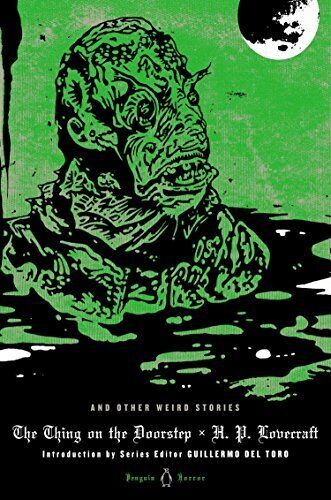
Not forgetting that the star turns are either pop-eyed or garnish every line with a smirk. H.P. Lovecraft may well be turning in his grave, or relishing every camped-up ramped-up moment of this updating of his tale of gender-bouncing possession The Thing on the Doorstep. Throw in hypnosis, bdsm, smoking treated as illicit pleasure, and the kind of sexuality that used to be the prerequisite of the DTV scene.

Dr Derby (Heather Graham) has to be the dumbest psychiatrist ever to hit the screen, breaking the golden rule of never seeing a client, especially one as deranged as Asa (Judah Lewis), in their house. But, sensing a book or at least a write-up in a journal, she discovers he’s possessed by nasty father Ephraim (Bruce Davison). Or by a creature going back centuries whose main aim in life/death is to jump like an eternal parasite from person to person, indifferent to gender.    

Such transference works magic with the sex genes, the good doctor soon capable of playing the kind of sex games her husband never imagined while the snarky Asa is turned into a sex god with magnetic appeal to women. So, when everyone isn’t at it like rabbits, they get a tad worried about seizures.

In a nod to Dracula, it’s brains not hearts that have to be put out of commission, and there’s a whole bunch of demonic mumbo-jumbo served up to make this sound believable but by this point the audience is beyond caring. More, we call out, give us more – gore, sex, transgendering gone mad, references to Dunwich, bitchfights, corpses that won’t die – who the hell cares.

Mostly, it’s the kind of slam-bam horror fest that dominated the 80s/90s, with prime specimens of either sex to the fore. There’s a desultory pair of cops who do little more than add narrative confusion: who died, or did they even die, and was it all in Dr Derby’s mind? And once the sly Dr Upton (Barbara Crampton), also a dumb psychiatrist, who is either Derby’s sister or best pal, with a shady past, enters the picture the possibilities multiply.

Whoever is in charge of pushing a movie into cult territory better have a look at this especially when you consider the ropey camerawork – shaky or spinning screens dominate – not to mention that idea that was once the preserve of cartoons where the screen disappears into a dot. Cinematically, if anyone is remotely interested in that, there’s one scene of note, where the usual stunt of following action in a rearview mirror becomes seeing it from a vehicle’s reversing screen.

At times Heather Graham looks as if she’s walked in from playing the pop-eyed innocent of Austin Powers: The Spy Who Shagged Me (1999), other times she’s time traveling back to the uninhibited Killing Me Softly (2002). Whatever, she has worked out subtlety is not required. Judah Lewis pays homage to Bruce Willis and Mickey Rourke by reviving their trademark smirk. Johnathan Schaech (That Thing You Do, 1996) spends most of his time shirtless, showing off his pecs and hairy chest, and trying to get obsessive wife to drop her  workload and jump into the sack. Craching additiont to the Bruce Davison (Last Summer, 1969) can, and Barbara Crampton (Alone with You, 2021) has a sackload of this kind of thing (left on a doorstep or not) in her closet.

Dennis Paoli (Re-Animator, 1985) did the updating, Joe Lynch (Point Blank, 2019) the camping up to high heaven.

Judging from size of the cinema audience when I saw it, this isn’t going to last more than a week at your local multiplex. So drop your planned schedule and get there now.

Otherwise Shudder has this for streaming in January.

Call the cult police!

https://amzn.to/3MsP8J1

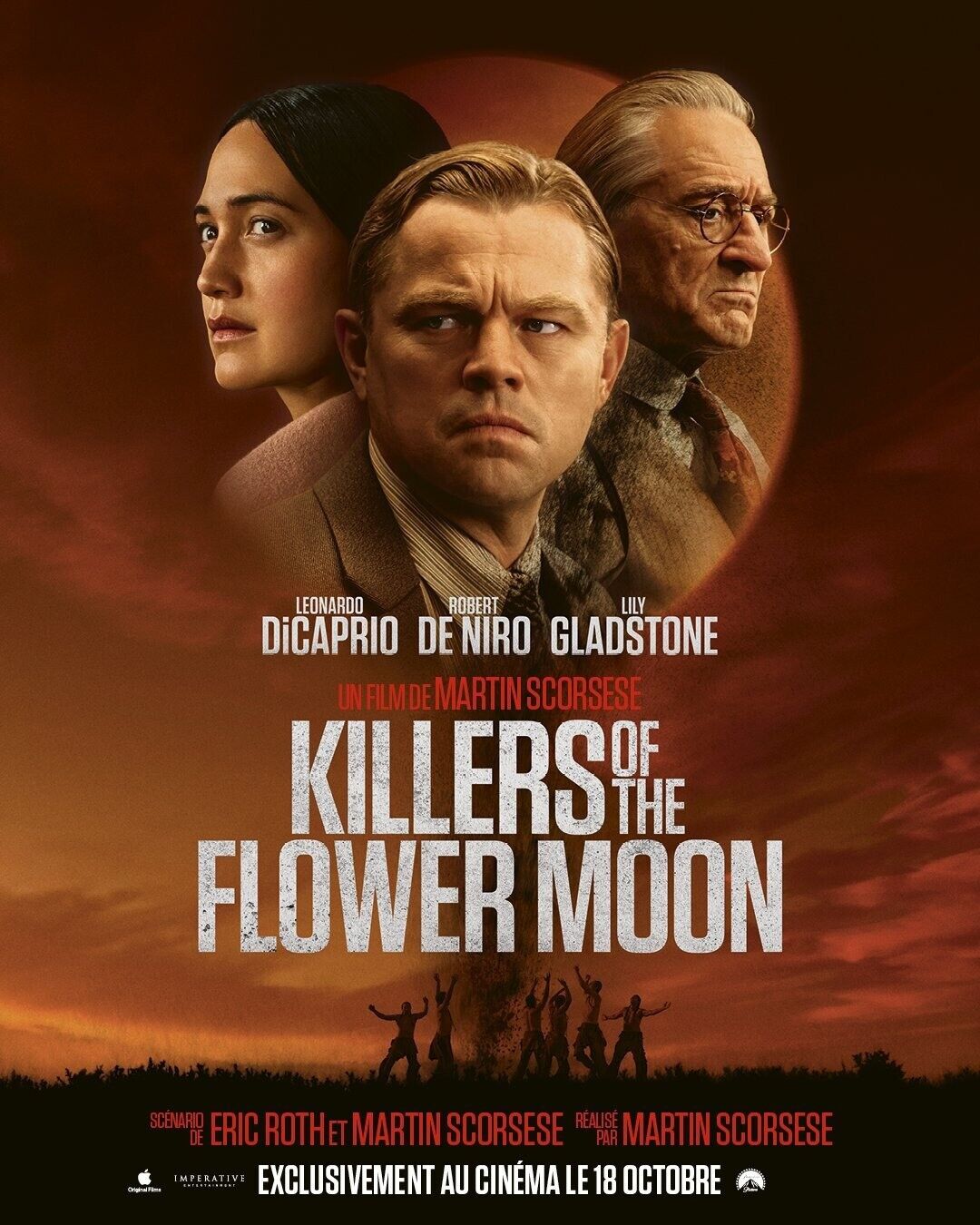
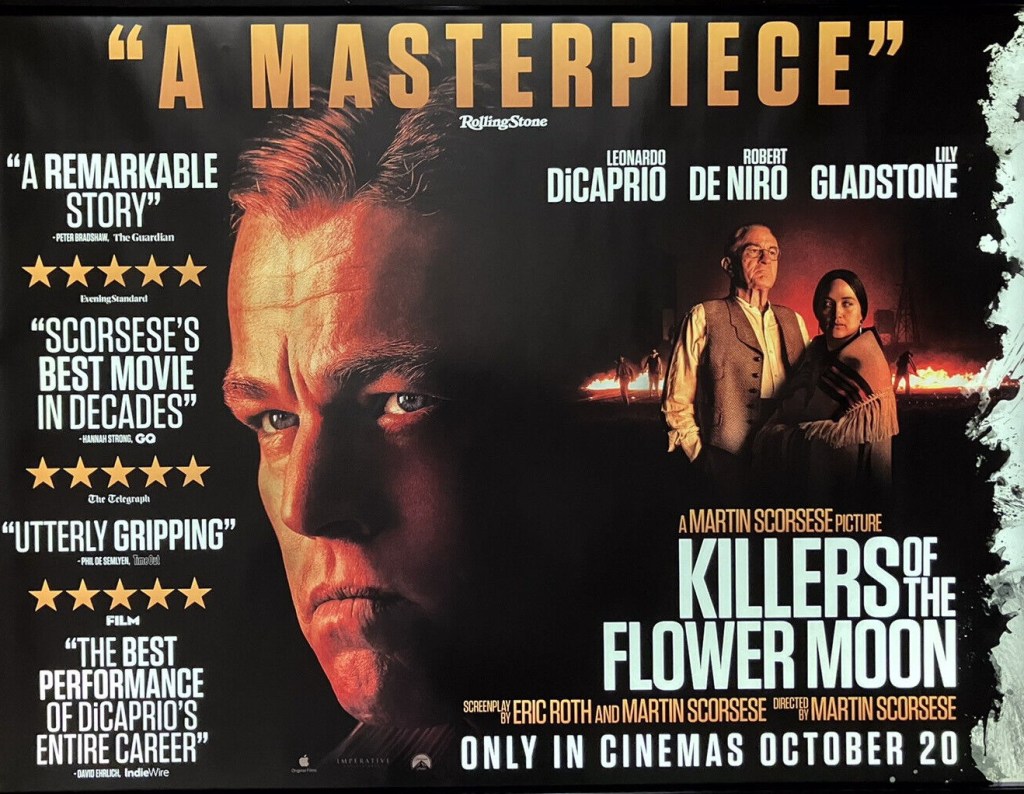
Killers of the Flower Moon (2023) *****

Let me stop you right there. This isn’t a review of this particular movie, you’re probably sick to death of those already, and it’s not some kind of Scorsese retrospective, but an expression of what it’s like to live through the transformation of one of the greatest directors Hollywood has ever produced. That zipping excitement when you first encounter a new Hollywood animal and when he charges down a different track or seems to lose control.

Catching up on a director’s life work via a carefully-curated retrospective hasn’t got an ounce of the flavor of living through it, from the days when film festival break-outs were not the carefully-orchestrated distribution and publicity machines they are now.

I first encountered Scorsese before a clever journalist had coined the rather derisory notion of a  Brat Pack, when the director was just another new voice clamoring for attention in a world of considerably more cinematic noise than exists today, when MCU and streaming didn’t exist, and audiences could find massive variety every time they attended the cinema.

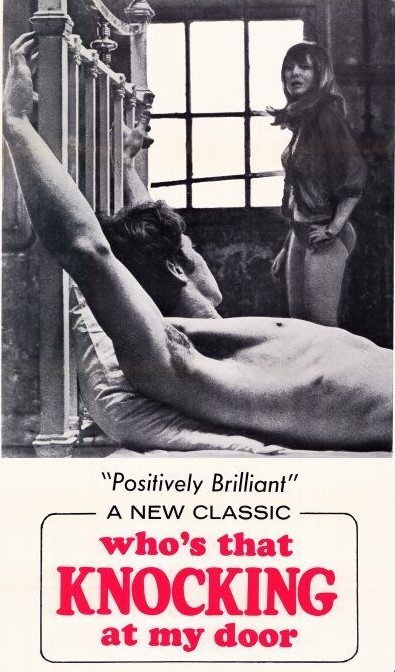
Who’s That Knocking at My Door slipped through the arthouse cracks in 1967 – the year of The Graduate, Guess Who’s Coming to Dinner, In the Heat of the Night, The Dirty Dozen and El Dorado. I didn’t see it then. I would be surprised if anyone did. Nobody was ready for that brash style with its insistent use of pop/rock music. I caught up with a few years later when the Scorsese we know now was still in embryo form.

Sure, Mean Streets (1973) gave strong indication of the gangster path towards which Scorsese was inclined, but it wasn’t so obvious then that he would make that genre his own, not when he interspersed that with a tale of Depression-era hobos, Boxcar Bertha (1972), and Alice Doesn’t Live Here (1974), a proto-feminist narrative whose stunning tracking opening set out his technical directorial credentials. And it was anybody’s guess which way he’d go from here. 

And I doubt if anyone expected Taxi Driver (1976), the moody glimpse of the New York underbelly with a psychopath hero, and certainly after that exploded at the box office and had critics purring, nobody would guess his career would take a musical turn, New York, New York and The Last Waltz in consecutive years. You might consider Raging Bull (1980), prototypical Scorsese. But the truth is, he was never typical. He jumped from project to project in a manner that only appeared to make sense to himself.

Some choices were so atypical you wondered if there had been any through-thread – what possibly connected King of Comedy (1982) to The Age of Innocence (1993) and Hugo two decades later. Certainly, when he imbibed a deep spiritual draft, you could make a thematic connection between The Last Temptation of Christ (1988), Kundun (1997), and Silence (2016).

But by this point he had achieved Hollywood nirvana, the mixture of critical adulation that put him top of the hitlist of those studios with one eye on the Oscars and bouts of box office glory that kept the same studios sweet. If he ever felt the need to revive a fading career he could churn out the likes of apparently mainstream but dark-tinged Cape Fear (1991), The Aviator (2004), Shutter Island (2010) and The Wolf of Wall Street (2103). And at the back of your mind, as a fan, was the question of how long would it take him to return to the gangsters. If you had Goodfellas (1990) forever etched on your mind, Casino (1995), Gangs of New York (2002), The Departed (2006) and The Irishman (2019) seemed almost always within reach.

Of course, he can hardly be separated from Robert DeNiro, his go-to star, ten teamings in all including the current number. And for a DeNiro substitute, Scorsese didn’t go far wrong with Leonardo DiCaprio, six including the new one. Stars with an edgy side were attracted to Scorsese and vice-versa.

It’s perhaps no coincidence that DeNiro and DiCaprio play murderous relatives in Killer of the Flower Moon, but the performances both deliver are so subtle, so far removed from what Scorsese’s asked of them before, as to point them both in the direction of the Oscar.

You think you kind-of know what you’re going to get with Scorsese, but, more than any other director, he whips the ground out from under you. Killers of the Flower Moon is bereft of the Scorsese trademarks, voice-over, exuberant violence, thumping soundtrack.

So when you’ve been watching his movies for over half a century, you look on him as you might a favored son, delighted in his achievement. But you don’t want him to stop, you want him to keep going. There must be one more film in him. Like Ridley Scott, he’s more bankable than ever, especially if the streamers are looking for a short-cut to hooking up with the best talent available.

Like Oppenheimer, this one is unmissable.

https://amzn.to/3MeEe9U

https://amzn.to/3Q6Lw0p

Arabesque (1966) ***

By this point in the 1960s, Gregory Peck’s career was pretty much at a standstill. Prestige had not saved Behold a Pale Horse (1964) from commercial disaster, thriller Mirage (1965) went the same way, other projects – The Martian ChroniclesIce Station Zebra – failed to get off the ground or like The Bells of Hell Go Ting-a-Ling-a-Ling were abandoned once filming began.  So, he was the main beneficiary of Cary Grant’s decision to retire.

Stanley Donen had Grant, with whom he had made the highly successful thriller Charade (1963), in mind for the role of the hieroglyphics professor caught in in a web of intrigue in Arabesque.  In some ways Peck was an adequate replacement but lacked the older actor’s gift for comedy and failed to master the art of the double-take. Arabesque was almost a counterpoint to Charade. In the earlier movie Audrey Hepburn is continually suspicious of Cary Grant. The new movie sees a gender reversal, Peck constantly puzzled as to where Sophia Loren’s loyalties lie.

The story itself is quite simple. A code has been put inside a hieroglyphic and a variety of people are trying to get hold of it either to decipher the secret within or to stop someone else finding out what it contains. When the scientist who has the code is killed, the man who ordered the killing, the sinister Beshraavi (Alan Badel), approaches Prof Pollock (Gregory Peck) to unravel the code, but is turned down. The professor is then kidnapped by Arab prime minster Hassan Jena (Carl Duering), whom he admires, to ask him to take up the job. Beshraavi’s provocatively-dressed wife Yazmin (Sophia Loren), flirting outrageously with Pollock, is also after the code. 

There follows more twists and double-crosses than you could shake a stick at, leaving the amenable Pollock mightily confused.  “What is it about you,” he asks Yazmin at one point, “that makes you so hard to believe?” It looks like director Donen is playing a variation of the famous Raymond Chandler maxim, that when a plot begins to flag, “have a man come through the door with a gun in his hand.” Sometimes, there is actually a gun or similar weapon, but mostly it’s just another twist. If Pollock doesn’t know what the hell is going on, then the audience is in the same boat.

But it is stylish, set in appealing parts of Britain (antique university, Ascot), Yazmin decked out in glamorous Dior outfits and even Pollock gets to wear a morning suit. Drop in a couple of action sequences, Hitchcock-style chases in a zoo and pursuit by a combine harvester, Pollock nearly run over by horses in a race, and the pair of them having strayed into a builder’s yard facing demolition by the British equivalent of a wrecking ball. But the standout scene is when Yazmin hides the professor in her shower (curtain drawn) while being interrogated by her suspicious husband and then steps in naked and then they play footsie with dropped soap. And she proceeds to expound, “If I was standing stark naked in front of Mr Pollock, he’d probably yawn.”

Beshraavi’s jealousy over his wife’s flirtation with Pollock adds another element of tension. Beshraavi is a very sinuous, sensuous bad guy, who can turn a harmless massage into a matter of life and death. He also has a pet falcon with a habit of ripping people’s cheeks. But even in the face of obvious threats, Pollock holds his own. In one scene as Beshraaavi  attempts to retrieve what he believes is the code from Pollock’s dinner plate, where it has fallen from the hiding place in the professor’s clothing, Pollock taps the man’s invading fingers with the sharp tines of his fork.

And there is some accomplished dialogue. When Pollock offers the falcon a date and is brusquely told the bird of prey only eats meat, he responds, “I thought he looked at it rather wistfully.” Beshraavi retorts, sharply, “It must have been your fingers.”

Donen had not made a film in the three years since Charade, so there was some critical feeling that he was a bit rusty and used experimentation – big close-ups, odd camera angles – to cover this up. He was living in London by this point and had been for nearly a decade. But there was very little that fazed him in any genre, and he had switched from musicals like Singing in’ the Rain (1952) to romantic drama (Indiscreet, 1958) and comedy (The Grass Is Greener, 1960). And though there is no question the film would have been better with Cary Grant, Peck proves a reasonable substitute.

The movie’s main drawback is the lack of romance since falling in love with someone you believe is either a traitor or a compulsive liar is a hard trick to pull off. But if you like the idea of pitting your wits against the screenwriters – Peter Stone (Charade), Julian Mitchell (Another Country, 1984) and Stanley Price (Gold, 1974), the latter pair in their movie debuts  – then this is one for you.

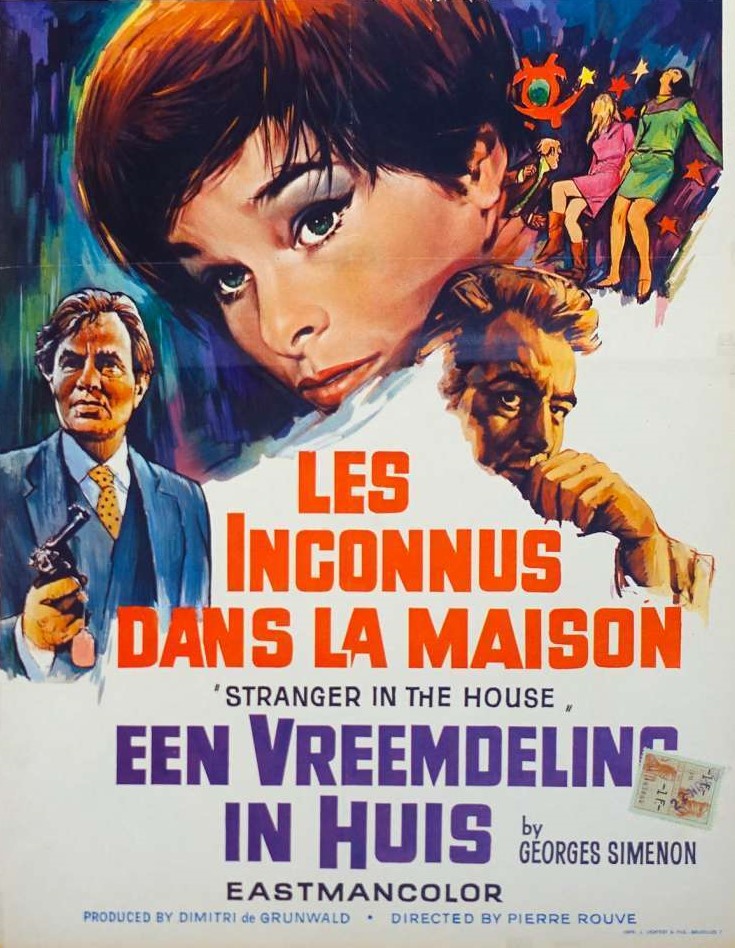
Stranger in the House / Cop-Out (1967) ***

Standout performance by James Mason (Age of Consent, 1969) holds together this curiosity. Based on a novel by Georges Simenon from 1951, it is updated to the Swinging Sixties and transposed from France to the English provincial town of Winchester (possibly chosen thanks to the hit single the previous year). While featuring an investigation, but minus Maigret, it’s essentially a character study.

Given John Sawyer (James Mason) is a depressed, divorced, retired lawyer, it could easily have sunk under the weight of cliché. Realistic portrayals of depression, except amongst those confined to institutions, were rare in this era. The bulk of the audience would probably view him just as a grumpy old man.

Sawyer is not only estranged from everyone, distancing himself from daughter Angela (Geraldine Chaplin), but sliding into oblivion and even when offered potential redemption can scarcely lift his head above a parapet of boredom, almost catatonic in his attitude, overwhelmed by the loss of wife and, presumably, the esteem that came with his career. A member of the upper middle-class, he shows surprising sensitivity to the underprivileged, outsiders, especially migrants, usually dismissed with a racist epithet, and sex workers whom he treats as victims rather than a corrupting influence.

When the corpse of young American ship’s steward Barney (Bobby Darin) is found in his disused attic, suspicion falls on his daughter’s unemployed Greek boyfriend Jo (Paul Bertoya). Turns out Barney is a nasty piece of work, blackmailing Angels and her friends for trespassing on his ship.

As well as being put up initially in an empty warehouse by Desmond (Ian Ogilvy) whose father, a department store magnate who owns the building, a former cinema, and later in Sawyer’s attic, Barney extracts cash and sexually humiliates his victims. Attempted rape of Angela comes with his conviction that she’ll “thank me for it.”  

Eventually, Sawyer is convinced to take on the case and is up against his daughter’s pompous employer and his wife’s lover Hawkins (Bryan Stanion). Maigret would have solved this in a trice but the joy of this is Sawyer’s indifference to the police procedural. He spends most of the time during the trial attempting to make a necklace out of paper clips, asks virtually no questions of witnesses, and makes no pretence of interest in the proceedings.

Among his unusual techniques are summoning up references to Dostoevsky’s Crime and Punishment.  Unusually, the pay-off doesn’t come in a courtroom but at the twenty-first birthday celebration of the entitled Desmond when to attract attention Sawyer whips off a tablecloth, sending glasses and crockery crashing, and introduces a woman in red.

Estrangement from his daughter could easily be his fault, too wrapped up in a high-flying career to pay the child much heed, but that indifference might as easily be ascribed to the possibility, as his wife taunts him, that the girl is not his.

There’s much to admire in the observations of ordinariness, loneliness, a class system filled with puffed-up mediocrities revelling in the slightest sliver of power, female advancement often requiring dispensing sexual favors to predatory employers or some form of begging.

There’s a brief appearance by Eric Burdon and the Animals, a modelling assignment using the cathedral as backdrop, and drugs. Difficult to imagine though that the pistol holstered by a carnival booth operator could be the real thing.

James Mason’s employment of a limp (result of a war wound) probably went against any genuine assessment of the subtlety of his performance. Geraldine Chaplin (The Hawaiians, 1970) builds up her character with action rather than dialog, showing tenderness where you might expect anger. Bobby Darin (Pressure Point, 1962) essays another creepy thug.

Paul Bertoya (Che!, 1969) is underused. Ian Ogilvy (The Sorcerers, 1967) is so smug you want to thump him. Look out for Pippa Steel (The Vampire Lovers, 1970), Moira Lister (The Double Man, 1967) and Yootha Joyce (Our Mother’s House, 1967).

In his sole directorial assignment Frenchman Pierre Louve, who wrote the screenplay, has better luck dissecting English mores than finding the essence of Simenon, whose non-Maigret novels generally concentrated on a man under pressure. While Mason delivers a fine performance, and his depression is obvious, there’s no sense of him teetering on the edge, more a general decline. In fact it’s the opposite, returning to the legal fray provides him with redemption.  

Breathless / A Bout de Souffle (1960) ****

I’m conscious of puncturing a sacred arthouse cow. While applauding the cinematic bravura of Jean-Luc Godard’s debut feature that launched the French New Wave, what are we to make of a leading man who is a sexist pig? Michel (Jean-Paul Belmondo) refers to women repeatedly as “dogs”, complains about their driving skills, accuses them of cowardice, steals from them, forbids them to see other men, chases after them in the street to lift their dresses, constantly gropes his sometime girlfriend Patricia (Jean Seberg), and boasts of other sexual conquests.

While attempting to ape hero Humphrey Bogart, he hasn’t a shred of that star’s romantic inclination, all his energy directed towards getting sex from the nearest available female with nary a notion of love.  He’s not just hard-boiled, he’s hard work, as close to the despicable males of Guide for a Married Man (1967) as you could get.

I’m no proponent of woke, but I guess audiences these days who happily accept him as thief and murderer will draw the line at his attitude to women. I found myself squirming at times at being asked to swallow this amoral character in what was otherwise a homage to the Hollywood B-picture. And it says a lot about the directorial skills that he ends up with any audience sympathy at all. And part of that certainly comes from his proximity to the more existential-minded arty Patricia. Not for the first time are we asked to re-examine our instinctive reaction to a charming thug because a sympathetic woman in either loving him or appearing to offer him understanding provides a conduit between audience and character, asking us to see him from her less judgemental perspective, no matter how misguided that might be.

You can see the connection between the Cecile of Bonjour Tristesse (1958) and Patricia here but it’s hardly as clear-cut as Godard suggests. Patricia has qualms not just a nice comfort blanket of guilt. She’s not, as Michel wishes, some kind of sidekick or accomplice. He fails  to unlock her criminal tendency as Clyde would later in the decade with Bonnie in Arthur Penn’s gangster picture. But, just as Cecile rids herself of a rival in Bonjour Tristesse, Patricia finds it relatively straightforward to turn in to the police a man for whom she has no feelings and who would prove, without the parachute of love, an irritation in her life.

Certainly, Michel is the quintessential bad guy but with entitlement issues. He wants it all, or nothing. If Santa came knocking, top of his wish list would be death. He’s a dab hand at stealing cars, can whack anybody over the head, and not above rifling through a girlfriend’s purse. But, essentially, he’s the delinquent who never grew up and Patricia is one of the many saps he’ll try to con throughout his life.

But, in fact, if you were making this today, the angle would be different. It would be the vengeful woman, as epitomized by Jenna Coleman in television mini-series Wilderness, relishing the prospect of being tagged a “bunny boiler” or predatory wolf. Much as Patricia is happy to spend some time with Michel while working out her feelings towards him, given that he is the father of her unborn child, she is far from the soft touch he imagines, betrayal in her genes.

I’m guessing budget issues contributed to much of the cinematic bravura. It’s much cheaper to eliminate close-ups, and to film outdoors where light is less of an issue than indoors, and where nobody’s bothering to seek civic approval to shoot. So, there’s certainly a freshness, a boldness, the kick in the pants that stuffy Hollywood with its insistence on certain procedures required.

The camera is restless, not just in the tracking shots (especially the famous final one), but in bobbing around, as if questioning just what was the Hollywood obsession with nailing everything down, keeping it fixed, as if the camera was merely a tool rather than a means of directorial expression. And Godard does bring to exceptional life characters who would otherwise be passersby, dreamers who are more likely to fail than succeed, who try to provide themselves with codes as if that will assuage inner doubt.

Except for her self-preservation instincts and urge for independence, there’s every chance that Patricia would end up the dissatisfied housewife, especially with baby in tow. Michel is a dumb criminal, not the heist genius of so many other movies. Cocking a snook at authority  might be the only true freedom he ever attains.

I’m not sure this was part of Godard’s thinking, but it’s plain to me that Michel’s biggest problem is crossing over into the real world. The minute he comes up against a woman who lives an ordinary life, albeit with elevated expectation, he comes a cropper because she doesn’t subscribe to his limited world-view. It’s not exactly a clash of cultures, because, in reality, she’s every bit as vicious as him. If she loved him, it might be a different story. But as with Jenna Coleman in Wilderness, fail to safeguard that love and it’s curtains.

Without doubt a singular earthquake of cinematic proportions, freeing up a generation to filmmakers to challenge the hierarchy, but requiring reassessment in view of its dubious attitude to women.

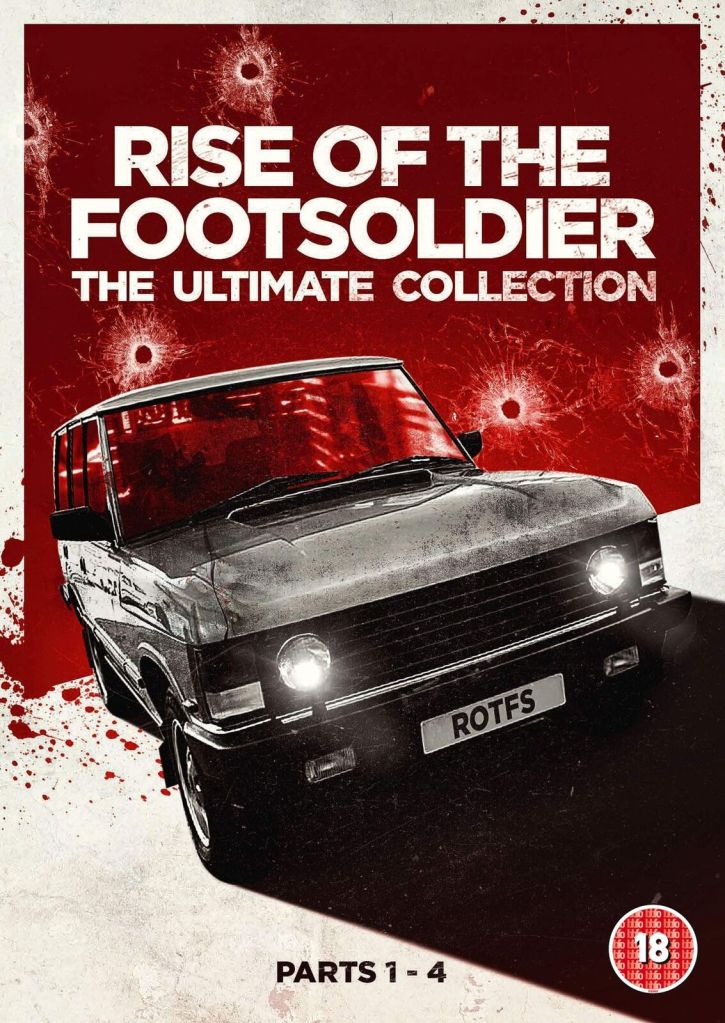
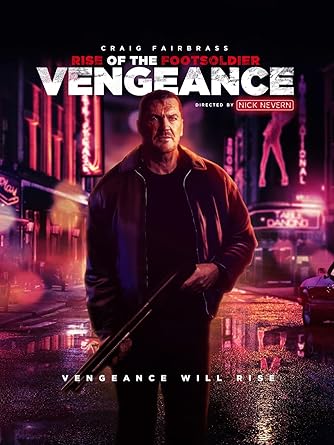
Rise of the Footsoldier: Vengeance (2023) *** – Seen at the Cinema

If a train strike hadn’t forced me to drive to the Bradford Widescreen Weekend and threat of a storm ensured I set off early in the morning, leaving me an afternoon to kill, and if my hotel wasn’t slap bang next to a multiplex, I might not have been tempted. And I guess you could add to this list of possibilities that if cinemas had not been so strapped for product, it might have gone straight to streaming or DVD. So I’m happy to report that the British B-picture is alive and kicking.

Revenge is the order of the day, no surprise there in a crime flick, but here’s the twist: while ostensibly it’s just Tate (Craig Fairbrass) seeking vengeance for the death of a gangster buddy, in fact he’s also got a target on his back, three figures from his past intent on payback.

Previous entrant to the series.

So, the plot is complicated to say the least, but here’s the other twist: it’s the family element that stands out. Not “family” Mafia-style where omerta rules and only women are allowed to shed a tear. But family as in, tough as they are, these criminals have emotions. One particularly hard-boiled specimen bursts into tears in front of his cellmates on hearing of the death of a loved one. A budding gangster, boxer and drag artist (take your pick at which he shows the most talent) Billy the Kid (Ben Wilson) – who, father foolishly uses the same moniker for his stage act as his boxing – is terrified of coming out to trainer father Fergus (Stephen McCole), relying on his aunt Margo (Tara Fitzgerald) for a shoulder to cry on.

Mental and physical scars are on greater display than normal. Every time it looks like the violence quotient is about to up the ante, in sneaks a moment of humanity, a hood with a baby, the aforementioned reactions.

Set in the 1990s drugs scene, the movie has a Point Blank (1967) sensitivity (if that’s the word), Tate constantly confounded by what’s going on. No matter how many people he kills, the situation just gets murkier. To be honest, I’m not surprised, I was confused.

The low-budget dictates we stay pretty well removed from any period detail. The cars and the gentlemen’s club – the movie’s virtually an advert for the real-life Platinum Lace – and the fact that the bright lights of central London conceal a lot, is as far as we go. Hazy backgrounds and longshot keep the past out of sight.The attractions in the club are such that the punters are not diverted by the entrance of  bloodied gun-toting gangsters and the first gunshots pass them by.

Neat touches abound. The young girlfriend Charlotte (Emily Wyatt) of chief crook Hexell (Phil Davis) is in reality a safecracker and at the first opportunity heading off to foreign parts with a hefty haul. When Tate makes the mistake of driving into Fergus’s breaker’s yard he has not taken into account how easily his vehicle, shades of Mickey One (1965), can be scooped up and crushed to oblivion. Faulty information results in a heist being a bust. There’s some comedy with an out-of-date grenade and a machine gun firing blanks. In a more horrific echo of The Long Good Friday (1980) a miscreant is trapped in a car and burned alive.

But the best scene, amidst the carnage necessarily for a revenge picture, is a dying man accepting his son’s right to live his own life. And there is some honor among thieves, or at least an old pals act to fall back on.

There’s plenty violence for your buck. Knife, bullet, gas, grenade, fire, the permutations are endless and would need to be because so many people require to be dealt with. In individual combat, of course Tate wins the day, but given he is constantly outfoxed his fists and guns don’t always achieve their long-term purpose.

While Tate is not in the John Wick/Rambo league, he could certainly sit on a second tier that might encompass the movies of Dolph Lundgren, Steven Seagal, Jean-Claude Van Damme, though he’s not as athletic as the last two.

The marketeers were handed an unlikely bonus in the shape of a three-star review from  normally morally upright British newspaper The Guardian, and my guess it would be for the same reasons as I was impressed, the refusal to toe the DTV line and invest the picture with some humanity.

This series kicked off in 2007 and this is the sixth. The services of original star Ricci Hartnett were dispensed with after the second film. Fairbrass was top-billed for the next pair but ceded that to Vinnie Jones. The original was based on a true-life memoir but has gradually evolved into a more wide-ranging gangster series. Most have gone straight to streaming/DVD.

Good performances all round. Craig Fairbrass (Villain, 2020) should get a shot at something bigger. Directed with some elan on a tight budget by Nick Nevern (The Hooligan Factory, 2014) and the screenplay by producer Andrew Loveday (involved in two others in the series) and Jason Maza, also incidentally a producer, in his screen debut, has left an opening for a sequel.

The Brotherhood (1968) ****

Minimal violence and no sex was the wrong recipe for this Mafia picture – as proven at the box office – but this is an absorbing, underrated drama nonetheless.

It bears a surprising number of parallels to The Godfather (1972). Pure coincidence, extraordinary though that may appear, because The Brotherhood premiered in December 1968 while the Mario Puzo novel was printed in March 1969 (and delivered to the printers long before), so no opportunity at all for plagiarism.

The two films could be opposite sides of the same coin. For a start, both begin with a wedding. Vince Ginetta (Alex Cord), brother of Mafia kingpin Frank (Kirk Douglas), is marrying Emma (Susan Strasberg), daughter of another Mafia chief Dominick (Luther Adler). Like Michael (Al Pacino) in The Godfather, Vince is just out of the army, well-educated and primed for a life outside the business. And like Michael is called upon to commit an act of supreme violence. There’s even a hint of Tom Hagen (Robert Duvall) in the relationship between the brothers, Frank having brought up the much younger Vince after his father’s premature death.

And just as Don Corleone (Marlon Brando) refuses to join the other Mafia families in a new business venture (in that case, drugs) so Frank bows out of an incredibly high risk (but amazingly prescient) scheme to invest in electronic firms involved in military work for the government, a deal that not only promises huge profits but a potential hold over the powers-that-be.

Frank’s wife Ida (Irene Papas) is like Don Corleone’s wife, not wanting to know anything about the business, but both Emma and Frank’s daughter Carmela (Connie Scott) are thematic cousins to Kay Adams (Diane Keaton) as initial implicit trust is wiped away. When Frank dances with Carmela at the wedding, that is reflected in Don Corleone dancing with his daughter at her wedding. Like The Godfather our first sight of the other Mafia chieftains – including Jim Hagen (Murray Hamilton) and Don Peppino (Eduardo Cianelli) – is at the feast where they are viewed with suspicion by Frank’s clan. And the scene where Frank uses a banana to tease his nephew will remind you of Don Corleone spooking his grandson with an orange.

However, the twist, if you like, is that, unlike Michael, Vince is desperate to join the Family and is instrumental in developing legitimate enterprises, which is echoed by Michael Corleone’s strategic shift to Las Vegas. In some respects, Frank is more like Sonny (James Caan), happy to take personal command of murders which the other Mafia chiefs now scrupulously delegate to “mechanics” in Los Angeles. He is more old-school whereas the others have assumed the personas of respectable businessmen.

And then it becomes a question of loyalty. Which side the ambitious Vinnie will take is crucial to the story. Frank is under pressure on all sides, from the other Mafia leaders, a government investigation, Vinnie, and the need to exact revenge on the man who caused his father’s death.

There is authentic detail here as well – religious procession in Sicily, Frank playing boccia (the Italian version of the French boules) with his old pals, family dinner, canary stuffed in the mouth of a stool pigeon, but it is less spaghetti-drenched than The Godfather. Screenwriter Lewis John Carlino (The Fox, 1967), also listed as technical adviser, claimed to be drawing on his intimate knowledge of organized crime.

There are only three moments of violence – four if you count a shocking moment of someone spitting on a corpse at a wake – a pair of straightforward murders that bookend the film, plus a scene of Godfather-style brutality in which a man slowly strangles himself to death after being hogtied. Everyone is happily married, Ida very old-school to the extent of removing her husband’s clothes (and shoes) when he returns home drunk, Vince in a good relationship.

Kirk Douglas (Cast a Giant Shadow, 1966) is excellent in a difficult role that presents a fully rounded character, playful with his daughter, loyal to his wife, holding his own against the other mob bosses, enjoying the company of the old-timers who resemble his father, and the changing nature of his relationship with brother Vince. Alex Cord, whose work I initially dismissed (Stiletto, 1969), I have come to more fully appreciate, especially here, where he makes the transition from adoring brother to threat. It is a masterpiece of restraint.

The supporting cast is terrific, a rare Hollywood sojourn for Irene Papas (The Guns of Navarone, 1961), Luther Adler  (Cast a Giant Shadow, 1966) as one of the hoodlums exasperated by Frank’s recalcitrance,  Murray Hamilton (The Graduate, 1967) but, except at the start, Susan Strasberg (The Trip, 1967) is underused.

While director Martin Ritt (Hombre, 1967) is at times guilty of melodrama, his rendering of family life is much more nuanced than Coppola’s. There are very tender moments between Frank and his wife and Frank and his daughter, as well as moments where Ida plays a more maternal role.

For nearly half a century, The Brotherhood has lain in the shadow of The Godfather simply because they both deal with the Mafia. But this is an excellent movie in its own right.

The Groundstar Conspiracy (1972) ****

Gripping thriller that set up the template for the decade’s later conspiracy mini-genre exemplified by The Conversation (1974), The Parallax View (1974) and Three Days of the Condor (1975). Under-rated compared to that trio, and considerably less cinematically self-conscious, it nods in the direction of The Manchurian Candidate (1962), The Mind Benders (1963) and Seconds (1966) while clearly influencing Memento (2000), The Bourne Identity (2002) and Inception (2010).

Touches on themes of surveillance, brainwashing, amnesia, invasion of privacy and government control,  and for good measure may even have invented water boarding. Brilliantly structured with superb twists right to the end and peppered with red herrings. Audiences these days will be more easily misled than back in the day by references to an alien. Innovative and extensive aerial footage, and like Figures in a Landscape (1970) helicopters play a major part in pursuit.

A series of explosions at a secret government facility kills six men. One other, Welles (Michael Sarrazin), badly disfigured, escapes, potentially with vital secrets. Security chief Tuxan (George Peppard) leads the investigation. From the off the case is shrouded in mystery, not least because Tuxan refuses government high-ups access to the site and the ongoing probe, instead relying on government PR man Carl (Cliff Potts) as a conduit.

Of course, if Welles was innocent he’d hand himself in rather than running away to the house of Nicole (Christine Belford).  Naturally, although she calls an ambulance, she is deemed guilty, too, for providing just too handy a hideout. Under extreme interrogation, Welles, claiming complete amnesia, refuses to talk.

Without the benefit of a trial Welles is shipped out to a maximum-security unit but the transportation is driven off the road and he escapes, returning to Nicole. Passion ensues, but even she, conceivably from the audience perspective a government plant, fails to elicit much information from him beyond that he speaks Greek and had some unnamed life-changing experience in that country, possibly involving water.

Turns out Welles is bait. Tuxan has arranged the escape. Nicole’s house is bugged – for sight and sound and nobody has the decency to cringe when watching the couple make love. Tuxan reckons that at some point Welles’ co-conspirators will surface. But when they do, they are a good bit smarter than Tuxan anticipates. The plot thickens when, even to them, Welles sticks to his story of being an amnesiac.

And the plot continues to twist and turn right to the very end which contains a just fantastic twist, two actually. Audiences these days more accustomed to the clever climax might guess the twist, but I really doubt it.

By this stage both George Peppard (Rough Night in Jericho, 1967) and Michael Sarrazin (The Sweet Ride, 1968) were finding a perch at the top of the Hollywood tree hard to hold onto, the fact that the movie, not notably highly budgeted, featured two supposed top stars proof of that. But it wouldn’t work unless Welles was played by an actor whose screen persona would make an audience both question his innocence and guilt. Sarrazin wouldn’t be the first actor to play on audience expectation to portray a bad guy.

In fact, both are excellent. Sarrazin is able to drop the fey aspect of his character and the narrative helps enormously, puzzlement and confusion an ingenious assist, to depict him as a person of more depth. The disfiguring of a handsome movie idol shifts audience expectation from the off.

I’ve become a bigger fan of George Peppard than I ever imagined after watching a series of quite different portrayals that tossed around his screen persona from The Third Day (1965) through The Blue Max (1966) and the unsettling mystery trilogy of P.J / New Face in Hell (1967), House of Cards (1968) and Pendulum (1968).

Directed with considerable assurance and occasional elan by Lamont Johnson (A Covenant with Death, 1967), this avoids the cinematic indulgence of  The Conversation (1974), The Parallax View (1974) and like Three Days of the Condor (1975) sticks more to narrative. Water, more normally associated with tranquility, takes on a disturbing quality. Sometime writer-director Douglas Heyes (Beau Geste, 1966) discarded half that hyphenate to turn in a slick screenplay based on the bestseller by Leslie P. Davies.

Minor gem.

Day of the Nightmare (1965) ***

As you can imagine back in the day audiences struggled with accepting cross-dressing never mind transgender instinct – both deemed psychological aberrations – so it was understandable that the only treatment of the subject appeared in the sexploitation genre where budgets were so low a flop incurred no great financial loss. But even so, perhaps astonishingly so, despite a tendency towards violence, and what would amount to raw shocks, there was some implicit understanding of the need to shed one gender in order to take on the other.

More sympathetic in treatment than Homicidal (1961) but still from a narrative perspective taking the noir route, although, in reality, you could view the action as metaphor, hard-case chrysalis evolution.

Housewife Barbara (Beverly Bain) is being stalked by a blonde in a checked jacket and dark glasses, only saved from being slashed to pieces by unexpected appearance of a neighbour. Husband Jonathan (Cliff Fields), an illustrator, is often away to Los Angeles on business so she’s lonely and the marriage is under strain.

Meanwhile, Det Sgt Harmon (John Ireland) is investigating a potential murder. The tenant in the flat below heard a scuffle in the apartment above. But when the police arrive the only victim is a dog and, as we all know, it wasn’t a crime to kill a dog in the U.S. But someone else witnessed a trunk being dragged down the stairs from the apartment.

The trunk ends up in Barbara’s garage. Once the police start stitching clues together, the finger points at Jonathan. The dog was killed in his apartment (where he lives while working in L.A., home being too distant to commute) but his alibi stands up, and in the absence of a corpse it’s still no crime to kill a dog. But when Barbara opens the trunk with a screwdriver she doesn’t find a corpse, just drawings of a woman. Given that it’s Jonathan’s business to draw women she sees that as no big deal.

Jonathan’s father Dr Crane (John Hart), a psychiatrist, blames himself for his son’s marital problems, as it was his adultery that caused his own marriage break-up. Meanwhile, Barbara continues to be stalked, the killer getting a good deal closer. The cops feel Barbara is hiding something and if she is she doesn’t know what.

While she’s kept in suspense, the audience isn’t. Jonathan pulls on stockings and female apparel and kills his father. Once Barbara discovers her husband conversing with himself as both genders the game is soon up, but not before another terrifying chase.

Noir seems as good a genre as any for exploring the sexual psyche. That the misunderstood feel obliged to kill off anyone who knows them by their birth, rather than their desired, gender fits in with the notion often essential to noir of a criminal getting rid of traces of evidence. Given the era and the lack of gender exploration it would have been unfeasible to present a more sensible approach to the issue.

At the time I am guessing this was dismissed as sheer sexploitation. But, now, it appears to have considerably more depth. The afflicted repressed male with no way of expressing his female side coalesces with a movie maker with no way of tackling the subject in realistic fashion and so turns to the cliché of the person trying to start a new life by killing off all remnants of the old one. Although sold as a serial killer thriller, it’s nothing of the sort, Jonathan not on some sort of murderous spree as a result of repression.

As a bonus, there’s John Ireland (The Fall of the Roman Empire, 1964) and some humorous banter between the cops plus former B-picture star Elena Verdugo (How Sweet It Is, 1968), in her first movie in nearly a decade, as a boss.

Directed with some sensivity by John A. Bushelman (The Broken Land, 1962) from a screenplay by Leonard Goldstein in his only movie.

It’s definitely flawed, sexploitation is rarely anything else, but this falls on the right side of interesting. Viewed in a contemporary light, the sexploitation tag falls away, and it’s revealed as a more compassionate attempt to deal with what was then a taboo subject.

Ukryta Siec /Hidden Web (2023) *** – Seen at the Cinema

What appears a routine conspiracy thriller fleshed out with contemporary hooks about body shaming, victim shaming and the dark web suddenly explodes in the third act as consequence gets personal. If you’re of an arthouse bent you’ll equate Polish cinema with Andrzej Wadja (Man of Marble, 1977), Roman Polanski (Knife in the Water, 1962), Jerzy Kawalerowicz (Pharaoh, 1966) Krysztof Kieslowski (Three Colours Trilogy, 1993-1994) or Pawel Pawlikowski (Ida, 2013) and you’ve probably turned a blind eye to the boom in commercial Polish cinema of recent years, mostly concentrating on corrupt cops, gangsters, the Mafia, and strong-minded women.

Luckily, my local multiplex, which lacks arthouse inclination, has been running the biggest hits from Poland on a regular basis. The latest arrival lacks the bombast and outlandish narrative of previous entries and while following a standard investigative narrative eventually twists into a more personal reflection on crime.

Adapted from this Polish bestseller.

Journalist Julita (Magdalena Kolesnik) investigating the suicide of well-known television presenter Gustaw  (Mariusz Czajka) finds evidence of a murder plot. After publishing her story, she becomes an even bigger story when her sex video is made public. Her outraged editor demands she apologise for embarrassing the news website. When she refuses, she is fired. Widowed father Henryk (Andrzej Sweeryn) – wife committed suicide way back – disowns her, older sister Magda (Wiktoria Gordecka) chucks her out of her flat.

The journalist ploughs on, but hunting down her own hacker puts her back on target to uncover a man who could conceivably possess the computing skills – that once upon a time could have only existed in the fictional James Bond/Fast and Furious universe but now with the driverless car upon us less a figment of the imagination – to force the television presenter’s vehicle over a bridge. She’s more determined than resourceful, tempting a security guard out of his office by setting off a smoke alarm, escaping from another security guard by ramming his hands with a car door.

She is assisted by Chinese chef Emil (Piotr Trojan), a part-time computer whiz, whose Army background makes him a suspect. Eventually, with more digging and a good deal of luck, she finds the hacker. Instead of turning him in, she agrees to give him a stay of execution.

For why? He has evidence Gustaw was part of a child sex abuse ring of which the hacker was an early victim.  He wants to employ more computer wizardry vigilante style to knock off another member of the abuse ring. He promises to stop after that, leaving it to Julita to make a decision on whether to go to the police.

I’m going to have to issue a spoiler otherwise this will just seem too routine a thriller. This is where it gets emotionally harrowing and spins completely on its axis, away from standard investigative journalism and into another realm entirely. The twist is that the hacker’s next victim, murdered by tampering with a dialysis machine, is her father. He was another legendary television figure.  Now her mother’s suicide makes sense as does her sister’s reluctance to let her son anywhere near her grandfather.

Now what? Not enough to be the already humiliated daughter of a sex offender, but to realize the hidden role this has played in her family, and to decide whether further exposure would be in anybody’s interest.

Despite a car chase and being hounded, this doesn’t quite get to the boil in terms of conspiracy thriller as though director Piotr Adamski (Eastern, 2019) knew that the final act would blow everything that went before out of the water. But given this is the director’s sophomore outing and he didn’t want to go the all-out violence-ridden crime route, it’s tense enough and with some interesting news-room background, sniping colleagues, an editor pumping breast-milk at her desk, electronic scorecard ranking journos by the minute. Surprised, to be honest, some of the images that the censor passed.

But Magdalena Kolesnik (Sweat, 2020) plays this just right. Too self-reliant to be out of her box with fear, too independent to let her emotions get the better of her, meaning that when the big reveal hits she can dive into all that repressed emotion.

If you’ve not dipped into modern commercial Polish cinema, this is as good a place to start as any. If you’re already a fan, you’ll know what to expect, and come up somewhat shaken at how this pans out.

Worth a look.

Discover WordPress

A daily selection of the best content published on WordPress, collected for you by humans who love to read.

The Atavist Magazine

by Brian Hannan

WordPress.com News

The latest news on WordPress.com and the WordPress community.