Le Samourai / The Godson (1967) ****

The current trope for giving assassins nicknames – viz Day of the Jackal (2024) – doesn’t stem from Jean-Pierre Melville’s spare picture, the title here more suggestive of the idea of killing as an honorable profession. One of the most influential crime movies of all time, it resonates through Michael Winner’s The Mechanic (1972) – though few critics would give that the time of day -Walter Hill’s The Driver (1978), John Woo’s The Killer (1989), Anton Corbijn’s The American (2010), Nicolas Winding Refn’s Drive (2011) and David Fincher’s The Killer (2023). Even so, few acolytes can match the opening scene of a room empty except for a whiff of smoke in a corner that indicates the presence of recumbent killer Jef (Alain Delon).

There’s none of the false identity malarkey of Day of the Jackal and no high-echelon ultra-secret secret service figures involved in tracking him down. In fact, one of the delights of the movie is the police procedural aspect, with the top cop, here known only as the Commissaire (Francois Perier), insisting on dragging in at least 20 “usual suspects” from each district. Though living a Spartan existence, Jef at least has the sense to acquire an alibi from the lover Jane (Nathalie) he shares with a wealthier man. Nor is he killing public figures. Instead, more like someone from Murder Inc., rubbing out other gangsters.

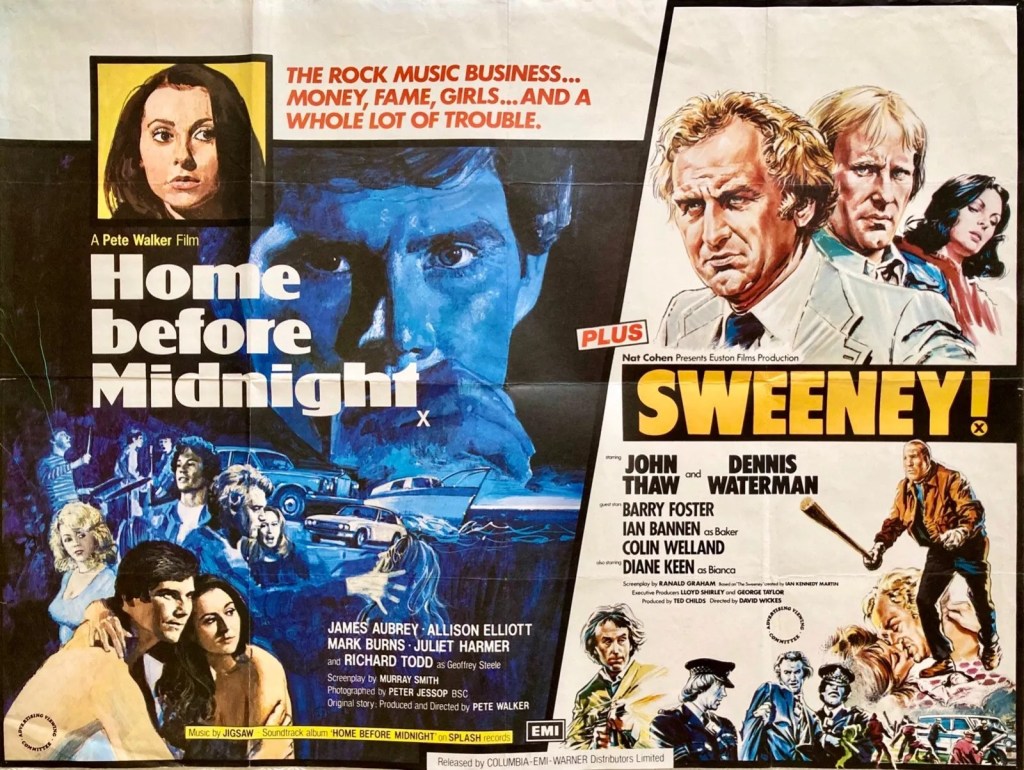
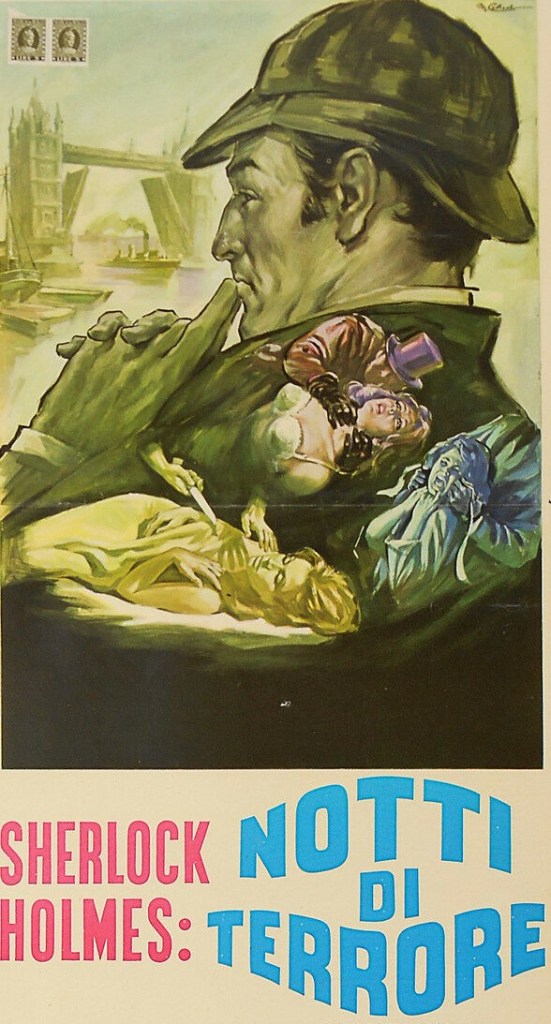
Shameless attempt to cash in on “The Godfather” after U.S. distributors held off for five years from releasing it.

The witnesses provide conflicting information on the man they saw, but the Commissaire does not entirely trust Jef’s alibi, putting pressure on Jane to recant. Her paying lover Weiner (Michel Boisrond) provides a pretty accurate description of Jef. While the cops bug his apartment and  start to shadow him, Jef falls foul of his anonymous employer who is alarmed at the attention the assassin has attracted and to avoid the possibility of being implicated sets an assassin onto the assassin.

Wounded, refusing to accede to Jane’s demand that he acknowledge he “needs” her, he tracks down the assassin’s boss, Oliver Rey (Jean-Pierre Posier), who happens to be the lover of Valerie, a nighgclub singer Jef takes a shine to. It’s worth noting that there’s an innocence – or perhaps an honor matching that of the samurai – in the police behavior. The Commissaire exists in a world where rules are not bent or broken, where suspects are not beaten up, and where often the cops are hamstrung by procedure and must take special care in arriving at a conclusion. To convince himself that Jef is indeed the correct suspect, the Commissaire makes him swap hat and coat with others in a line-up, only for the witness to identify the coat, hat and face that he believes he saw. It’s only Jane’s unbreakable alibi that keeps Jef safe.

Most of the picture is pure bleak style. You never enter the assassin’s head. There’s no background or backstory to shed any light on action. Even the most appealing characters, Jane and Valerie, occupy moral twilight. I’m not sure Melville’s in a mood for homage, though Robert Aldrich was in the Cahiers du Cinema hall of fame, but the ending comes close to replicating that of Aldrich’s The Last Sunset (1961), not just for the climactic action but for the inherent self-realization of unavoidable consequence.

Despite sparseness of the style, there’s enough going on emotionally and action-wise to keep an audience enthralled. While his outfit echoes the Humphrey Bogart private eye of the 1940s, and while walking the same mean streets, Jef is the antithesis of that untarnished hero.

Melville belonged to the hard-boiled school of cinematic crime, summoning up the gods of noir, and providing a new breed of French star with tough guys to kill for.  He died young, just 55, and left behind 14 pictures, at least three or four considered masterpieces including Army of Shadows (1969) and The Red Circle (1970). You might have thought his minimalist style would appeal more to critics than moviegoers but in his native France, in part because stars queued up to be in his movies,  he was highly popular.

When you compare the Delon of this to Once a Thief (1965) or Texas Across the River (1966) you can see how much acting goes into the restraint of the character here, producing one of Delon’s best performances. His wife of the time, Nathalie Delon (The Sisters, 1969) shines but briefly.

Recommended.

The Switch (1963) ***

Dr No (1962) was more famous for kick-starting nascent careers – step forward Sean Connery and Ursula Andress – rather than reviving careers that had looked dead and buried as was the case with Zena Marshall. I had just come across Ms Marshall in her last picture, The Terrornauts (1967), a cult sci fi from Amicus, that I had been asked to provide an audio commentary for (you’ll have to wait till next year for that) and was intrigued to discover that, while never becoming a big star, she had managed to eke out a decent living since her debut in Caesar and Cleopatra in 1945. She’d never achieved much more than rising star status, B-movies more her line. She hadn’t made a picture in five years until Dr No but thereafter managed leading lady once a year until her retirement.

Director Peter Maxwell (Serena, 1962) fell into much the same movie backwater but still had the knack of generating interesting narratives. The screenplay turns on some interesting realism, an unusual gadget (especially for this genre)  as well as a couple of entertaining happenstances and in  Zena Marshall one of two very self-assured females who light up a picture otherwise peppered with dour males.

The eagle-eyed among you will have noted that I’ve used a still from “Dr No” as the main picture. Similarly, this is one of Zena Marshall’s earlier movies.
Extant posters of “The Switch” are non-existent, it appears.

A joint police and customs operation has snared a smuggler in a sting. But, almost immediately after Inspector Tomlinson (Dermot Walsh) and Customs Agent Bill Craddock (Anthony Steel) latch onto their prey, their informant ends up in the River Thames and they hit a dead end trying to find the Mr Big behind the high-class watch smuggling racket.

Meanwhile model Carolyn (Zena Marshall), on holiday in France, is taken for a romantic meal by seductive Frenchman Lecraze (Arnold Diamond) while his colleagues stuff her petrol tank with watches.

Takes a while for Carolyn to become a suspect. There’s quite a lot of fun to be had from unexpectedly inept gangsters. When she returns home, she finds her flatmate’s cousin John Curry (Conrad Phillips) having a bath. With his car parked in her garage, she finds somewhere else to stay. His car is mistakenly stolen, as is the car she exchanges at the garage while the original one she brought back from France is in for repairs. The crooks repeatedly steal the wrong car.

Eventually, the cops break open her petrol tank and find the hidden watches. Although under suspicion she is freed, and, being a confident young lass, and quite accustomed to men of all ages taking her out for dinner and buying her presents, is nonetheless surprised when her latest admirer John presents her with his firm’s latest invention, a miniature radio transmitter hidden inside a cigarette case.

Which is just as well because the Frenchman reappears and kidnaps Carolyn hoping to find out from her what happened to her car. Meanwhile, the cops dig up gangster’s moll Janice (Dawn Beret) whose boyfriend is mixed up in the villainy and has herself unwittingly brought stolen goods into the country in her petrol tank after being chatted up by a smooth Frenchman. She’s a cheeky young thing,  as self-assured as Carolyn, suggesting to the straight-laced inspector that if he’s not doing anything at the weekend they could get married.

Meanwhile, John has teamed up with the good guys while they manage to survive Janice’s stream of quips and attempt to track down the kidnapped Carolyn. She doesn’t manage to hold out for long, not when Mr Big removes the gloves.

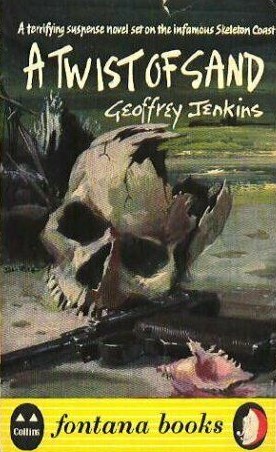
All in all, it’s cleverly done, playing all the time with audience expectation, not just the cocky confidence of the two women, who are clearly accomplished at leading men astray, but the quirks of the storyline – including a failed escape up a chimney – the details of the smuggling operation, and the introduction of the James Bond-style gadget. There’s even some cheeky self-awareness, John seen sitting up in bed reading the movie tie-in edition of Dr No which features Zena Marshall on the cover.

Apart from Zena Marshall, there’s an interesting cast. Anthony Steel (The Story of O, 1975), husband of Anita Ekberg, was just back from a stint in Rome. Conrad Phillips (The Secret Partner, 1961) had played William Tell in the television series and Dermot Walsh Richard the Lionheart in similar. It marked the last screen appearance of Susan Shaw (Fire Maidens from Outer Space, 1956) and perky Dawn Beret (Victim, 1961) looked promising. In bit parts look out for Carry On regular Peter Butterworth  and Rose Alba (Thunderball, 1965)

This sat on the shelf for a year before going out on the Odeon circuit as support to spy picture Hot Enough for June/Agent 8¾ (1964) starring Dirk Bogarde.

Except for horror, Britain didn’t stoop to having B-Movie Queens, but if they had Zena Marshall would wear the crown.

The Detective (1968) ****

Perhaps the boldest aspect of this raw look at the seamier side of life as a New York cop is that perennial screen loverboy Frank Sinatra plays a cuckold. Prior to what is always considered the more hard-hitting cop pictures of the 1970s – Dirty Harry (1971), The French Connection (1971), Serpico (1973) – this touched upon just about every element of society’s underbelly. Despite an old-school treatment, more a police procedural than anything else, homosexuality, nymphomania, corruption, police brutality, and a system that ensured poverty remained endemic all fell into its maw. And, for the times, several of these issues were dealt with in often sympathetic fashion.

Joe Leland (Frank Sinatra), an ambitious but principled detective gunning for promotion, investigates the murder of a prominent homosexual while dealing with the disintegration of marriage to Karen (Lee Remick) and colleagues on the take. When other cops want to beat confessions out of suspects or strip them naked to humiliate them, Leland intervenes to prevent further brutality. He is not just highly moral, but takes a soft approach to criminals, not just playing the “good cop” part of a good cop/bad cop double-act but genuinely showing sympathy. Not only does Leland leap to the defense of those he feels unfairly treated, but he trades punches with those meting out unfair treatment. In addition, he clearly feels guilt over sending to the electric chair a man he believes should be treated in a mental institution.

Although at first glance this appears a homophobic picture, it is anything but, Leland showing tremendous sympathy towards homosexual suspect Felix (Tony Musante) – whom his colleagues clearly despise – to the extent of holding his hand and gently cajoling him through an interview. Later, rather than condemn a bisexual the film shows empathy for his torment. Certainly, some of the attitudes will appear dated, especially the idea of sexual expression as a brand of deviancy, but the film takes a genuinely even-handed approach.  Through the medium of Leland’s perspective, it is clearly demonstrated that it is other police officers who have the warped notions.  

Having solved the first murder, Leland takes up the case of an apparent suicide at the behest of widow Norma McIver (Jacqueline Bisset), only for this to lead not only to civic corruption on a large scale but back to the original investigation. Leland also has a wider social perspective than most cops and there is a terrific scene where he berates civic authorities for creating a system that perpetuates poverty. The ending, too, casts new light on Leland’s character.

By this point, most screen cops were defined by their alcoholism and ruined domestic lives, but this is altogether a more tender portrait of an honest cop. Leland’s relationship with Karen is exceptionally well done. Normally, of course, it is the man who strays. This reversal in the infidelity stakes adds a new element. Karen has more in common with an independent woman like the Faye Dunaway character in The Arrangement (1969).

While playing the good cop would come relatively easy to an actor like Sinatra, carrying off the role of the hurt husband is a much tougher ask. Coupled with his sensitive approach to criminals, this is acting of some distinction.  This is the last great Hollywood role by Lee Remick (No Way to Treat a Lady, 1968) and she brilliantly portrays a woman trapped by her self-destructive desires.

Jacqueline Bisset leads an excellent supporting cast that includes Jack Klugman (The Split, 1968), Ralph Meeker (The Dirty Dozen, 1967), Robert Duvall (The Godfather, 1972), Lloyd Bochner (Point Blank, 1967) and Al Freeman Jr. (Dutchman, 1966).

While Gordon Douglas (Claudelle Inglish, 1961) was viewed very much as a journeyman director, he brings an inventive approach and some surprising subtleties to the picture. He opens with a very audacious shot. It looks like you are seeing skyscrapers upside down, as if a Christopher Nolan sensibility had entered a time warp, until you realize it is the city reflected off a car roof. There are some bold compositions, often with Sinatra appearing below Remick’s sightline, rather than the normal notion that the star must be taller or at least the same height as everyone else.

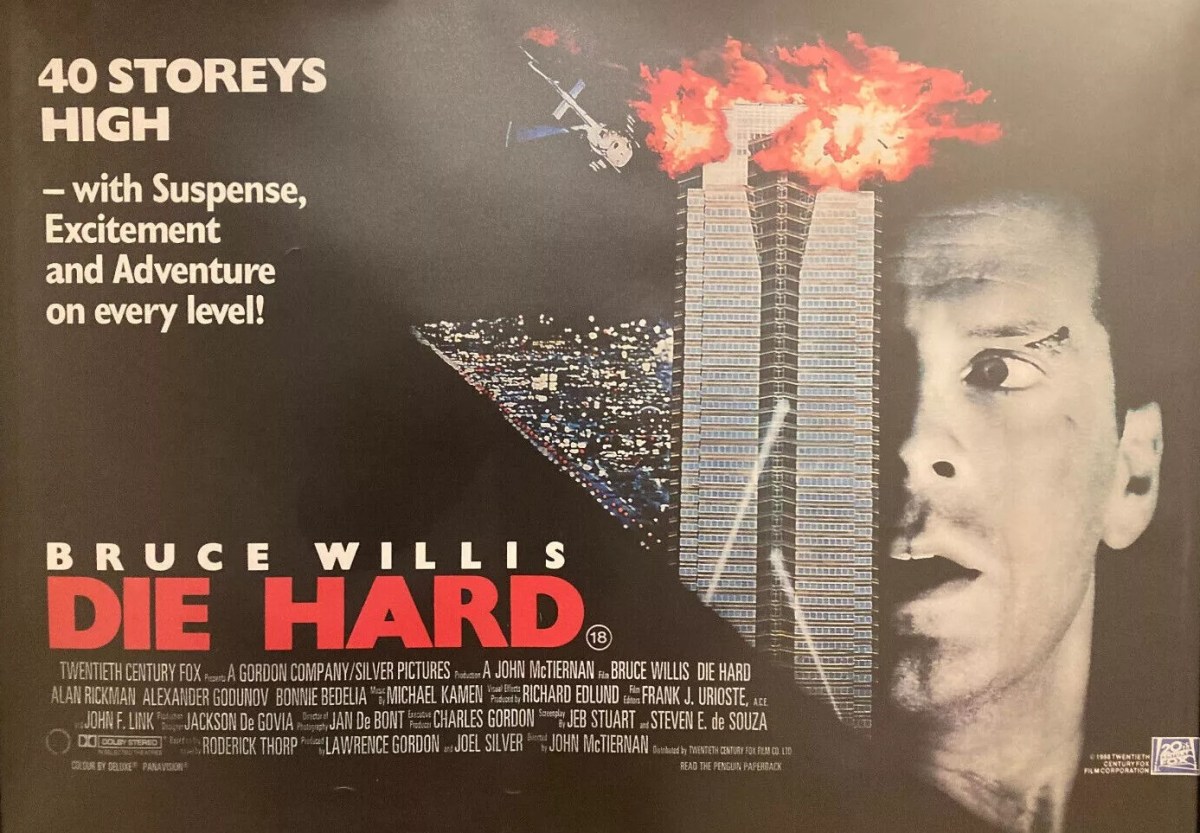
Oscar-winning Abby Mann (The Judgement at Nuremberg, 1961) adapted the bestseller by Roderick Thorp who achieved greater fame much later for writing the source novel for Die Hard (1988). Nothing Lasts Forever was a sequel to The Detective. For the Bruce Willis film Joe Leland became John McClane. Sinatra, although 73 at the time, was offered that role first as part of his original contract for The Detective.

Sinatra’s wife Mia Farrow was initially contracted to play the part of Norma McIver but pulled out when Rosemary’s Baby (1968) overshot its schedule. Partly in revenge, Sinatra sued her for divorce.

The Psychopath (1966) ****

As evidenced by its popularity in Italy often considered a forerunner of the giallo subgenre. While the involvement of Robert Bloch brings hints – mother-fixation, knife-wielding killer –  of his masterpiece Psycho (1960), here some of those themes as reversed. And the stolid detective and younger buddy suggests the kind of pairing that would populate British television from The Sweeney (1975-1978) onwards. Surprising, then, with all these competing tones that it comes out as completely as the vision of director Freddie Francis (The Skull, 1965), especially his use of a rich color palette that would be the envy of Luchino Visconti (The Leopard, 1963).

Theoretically mixing two genres, crime and horror, the resonance figures mostly towards the latter. Considering the crime element just for a moment, this features a serial killer, in the opposite of what we know as normal multiple murder convention, who leaves a memento at the scene of the crime rather than taking one away such as a lock of hair or something more intimate. Also, the list of suspects rapidly diminishes as they all turn into victims, still leaving, cleverly enough, a couple of contenders.

What’s most striking is the direction. Francis finds other ways rather than gore to disturb the viewer. The first death, a hit-and-run, focuses on the violin case, dropped by the victim, being crushed again and again under the wheels of the car. There’s a marvelous scene where a potential victim tumbles down a series of lifeboats.

The camera concentrates more on the villain’s armory than their impact: noose, knife, oxy-acetylene torch, jar of poison, the lifeboats, the aforementioned car. There are intriguing jump-cuts. We go from the smashed violin to a very active one, part of a string quartet. From toy dolls in rocking chair to skeletal sculpture. From a string of metal loops choking a victim to a man forking up spaghetti.

We go from the very conventional to the jarring, serene string quartet and loving daughter to wheelchair bound widow talking to the dolls, so real to her she shuts some naughty ones away in a cupboard. We move from one cripple to another, from real toys to human toys, to a human who talks like a wind-up toy.

It soon occurs to our jaded jaundiced cop Inspector Holloway (Patrick Wymark) that the victims are connected, all members of the string quartet who were on a war crimes commission during the Second World War. At each murder the memento left, a doll with the face of the victim, leads the detective to investigate doll makers and then a doll collector, Mrs von Sturm (Margaret Johnson), widow of a man the commission condemned. Could it be the simplest motive of all – revenge? But why now?

The string quartet are an odd bunch, and on their own, you wouldn’t be surprised to find all of them capable of murder – sleazy sculptor Ledoux (Robert Crewdson) with naked women in his studio, the wealthy Dr Glyn (Colin Gordon) so weary of his patients he wished he’d become a plumber instead, the selfish over-protective father Saville (Alexander Knox) whose neediness prevents his daughter Louise (Judy Huxtable) marrying. Her American fiancé, Loftis  (Don Borisenko), a trainee doctor, is also in the frame.

Mrs von Sturm could be the killer, her wheelchair a front – apparently housebound she manages a visit to Saville, though still in her chair. Her nervy son Mark (John Standing) also appears an odd fish.

As I mentioned, Holloway scarcely has to disturb his grey cells, the deaths of virtually all the suspects eventually make his job pretty darned easy. But Francis’s compositions let no one escape. Long shot is prime. Staircases fulfil visual purpose. The creepiness of the doll scenes wouldn’t be matched until Blade Runner (1982). Stunning twists at the end, and the last shot takes some beating.

Margaret Johnson (Night of the Eagle, 1962) is easily the standout, but she underplays to great effect. Patrick Wymark (The Skull, 1965) steps up to top-billing to act as the movie’s baffled center, with more of the cop’s general disaffection than was common at the time. Alexander Knox (Fraulein Doktor, 1969) knows his character is sufficiently malignant to equally underplay. The false notes are struck by Judy Huxtable (The Touchables, 1969) and Don Borisenko (Genghis Khan, 1964), both resolutely wooden.

Freddie Francis is on top form. Not quite in the league of The Skull. Commendably short, scarcely topping the 80-minute mark.

Well worth a look.

Smokescreen (1964) ***

Little gem with a terrific central performance. We tend to be condescending to these old British crime B-features. Occasionally one achieves cult status but mostly critics these days are as dismissive as back in the day. You might be surprised to learn that audiences treated them with a good deal more respect. In making up the support on a double bill, they represented value for money.

It’s also easy to forget that at this point the public were not inundated with television detectives and the true-crime genre had not been invented. Tales like this one, while lacking a big budget, proved very satisfactory viewing, especially if they were as clever as this. I could see the plot of Smokescreen being easily remade for a television one-off or as part of a series.

Main character, insurance agent rather than police detective, in his personal awkward demeanor, reminds me a great deal of the current BBC hit Ludwig.

Significant effort has gone into developing Roper (Peter Vaughan). For someone meant to be upholding the law, he skirts the rules in the matter of his personal expenses, ensuring he always finds the correct price for a taxi or a hotel meal before doing without and claiming it. So he doesn’t at all come across as an attractive character. He looks sly, sleekit, and he’s not smart enough to know how to butter up the office secretary Miss Breen (Barbara Hicks), who always wants minor attention, a postcard or similar.

Like Charles like Nothing but the Best (1964), he’s a sponger, without that character’s class or charm. Sent out on a case to Brighton on England’s south coast, hoping to find a missing man still alive and his wife making a false claim, he ensures that a professional colleague Carson (Trevor Bayliss) does all the driving, saving Roper on taxi fares which he can illicitly claim back. There’s an excuse for this unattractive behavior, but I preferred him less obviously redeemed.

Anyway, he’s a joy to watch, a real person with ordinary flaws rather than the usual ones afflicted contemporary detectives such as alcohol or drug abuse or failing marriage or an affair or requiring serious redemption for past major error.

All the characters have been well fleshed out. Carson nurtures secret feelings for supposed widow Janet (Yvonne Romaine). But she doesn’t at all come across as a femme fatale, which goes against the actress’s screen persona. There’s a great scene with a doctor (Derek Francis) whom his colleague upsets – Roper tiptoes away from the trouble – and who then demands a fee for being professionally consulted even if it’s only a few minutes in his garden.

Local cop Insp Wright (Glynn Edwards) is similarly offhand and down-to-earth, there’s a nice piece of comedy with a station master (Derek Guyler) and a great scene where Roper is way out of his element – and his league – trying to pump information out of a very attractive secretary (Penny Morrell) by getting her drunk, and wincing every time she puts an expensive cocktail on the bill.

Roper’s diligence pays off in the end, but there’s no grandstanding, as there is with Ludwig or any other cop, when he solves the case.

It’s a very clever story well told, enough interest to keep an audience feeling it has been entertained and if the main feature comes up to scratch back in the day would come out of the cinema very satisfied indeed. Roper manages proper detection, miffed when said colleague is correct in an assumption Roper dismissed, and the diligence that requires.

With little of a budget to speak of, these B-features had to make up for the lack of expensive location shots or camera tricks by ensuring the script not just ticked along nicely and provided an interesting resolution but that the characters appeared real, making up for lacking the cosmetic of attractiveness by reminding an audience of real people. Everyone would know a penny-pincher like Roper’s boss or a snippy secretary who can bring employees to heel or a sleekit colleague who’s doing a minor bit of ducking and diving.

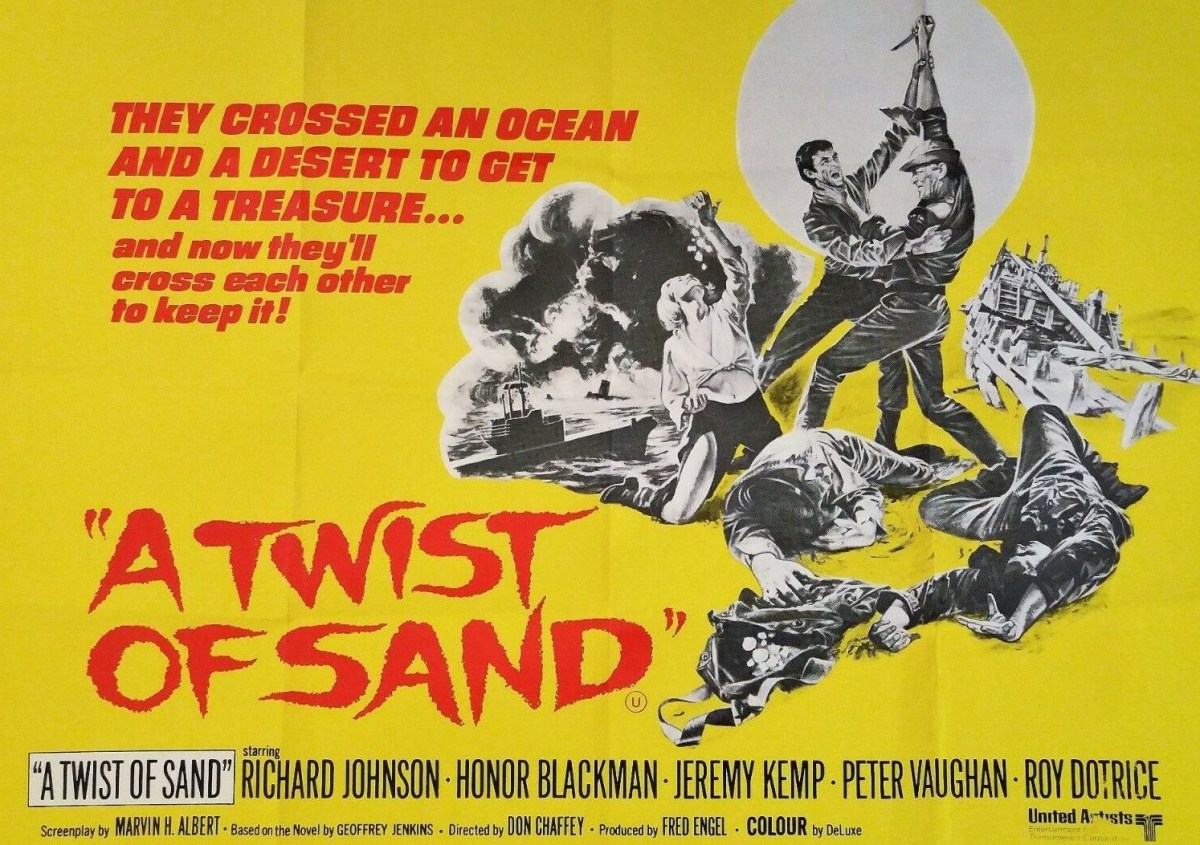
This is a particularly significant turn by Peter Vaughan – who you might remember as the elderly Maester in Game of Thrones – because he made his name playing villains generally lacking any nuance. He was the titular evil criminal mastermind in Hammerhead (1968), a thug in Twist of Sand (1968),  a nasty piece of work in Straw Dogs (1971). Although he found regular work as a character actor, he might find it somewhat disappointing that he was never again let near anything quite as finished as this piece.  Yvonne Romain (Return to Sender, 1963) toys with her screen persona. Future British television dependables pop up everywhere, Gerald Flood and Sam Kydd in addition to Glynn Edwards and Deryck Guyler

Writer-director Jim O’Connolly (The Valley of Gwangi) writes some great stuff and is lucky to have the actors who can pull it off.

Great characters, solid detection and excellent twists.

Farewell, Friend / Adieu, L’ami (1968) ****

This heist picture made Charles Bronson a star, though, like Clint Eastwood a few years previously, he had to go to Europe, in this case France, to find an audience appreciable of his particular skill set. This was such a box office smash in France that it was the reason that Once upon a Time in the West (1968), a major flop virtually everyone else, turned into a huge hit in Paris. After a decade as a supporting actor, albeit in some quality offerings like The Magnificent Seven (1960), The Great Escape (1963) and The Dirty Dozen (1967), Bronson developed a big following, if only initially in Europe.

It could also lay fair claim to stealing the title of  “first buddy movie” from the following year’s Butch Cassidy and the Sundance Kid (1969) because, apart from the heist that is central to the story, it is essentially about the forging of a friendship. But it wasn’t released in the U.S. for another five years, in the wake of Bronson’s Hollywood breakthrough in The Valachi Papers (1972), and then under a different title, Honor Among Thieves.

And you can see why it was such a star-making vehicle. Bronson goes toe-to-toe with France’s number one male star Alain Delon. He had the walk and the stance and the look and he was given acres of screen time to allow audiences to fully appreciate for the first time what he had to offer. Like Butch Cassidy, the duo share a lot of screen time, and after initial dislike, they slowly turn, through circumstance and a shared code of honor, into friends.

Dino Barran (Alain Delon) is the principled one, after a final stint as a doctor in the French Foreign Legion, originally turning down Bronson’s overtures to become involved in a separate major robbery. Franz Propp (Charles Bronson) is an unsavory customer, making his living as a small-time thief who uses a stripper to dupe wealthy marks. Barran agrees to rob a corporation’s safe during the three-day Xmas holiday of two million dollars as a favor to the slinky widow Isabelle (Olga Georges-Picot) of a former colleague, for whose death he retains guilt. Propp more or less barges his way into the caper.

It’s a clever heist. Isabelle gets Barran a job as a company doctor whose office is next door to the giant vault. But there’s a twist. Surveillance reveals only three of the seven numbers required to open the vault. But Barran reckons three days is sufficient to try out the 10,000 possible combinations.

Barran and Propp despise each other and pass the time playing juvenile tricks, locking each other into a room, stealing all the food from the one dispensing machine, winding each other up, while they take turns trying different combinations. But it opens after only 3,400 attempts and they face a shock. The vault is empty. They have been set up to take the fall for a previous robbery that must have been completed before the building closed for Xmas.  

And there’s no way out. They are in lockdown, deep in a basement. The elevators can only be opened by a small squadron of guards upstairs. Food long gone, they are going to run out of water. If they use a lighter to see in the dark, or build a fire to get warm, the flames will eat up the oxygen they need to survive in the enclosed space. So the heist turns into a battle for survival and brute force, facing a deadline to escape before the building re-opens and they are discovered, exhausted and clearly guilty.

But that’s only the second act. There is a better one to follow, as their friendship is defined in an unusual manner. And there are any number of twists to maintain the suspense and tension. Butch Cassidy and the Sundance Kid were close friends when that western began. Here, we see the evolution of a friendship between two forceful characters who express their feelings with their fists.

Delon was a known quantity, but Bronson really comes to the fore, more than holding his own against a top star who oozed charisma. This is Bronson in chrysalis, the emergence of the tough guy leading man screen persona that would turn him into one of the biggest stars in the world. Surprisingly, given his later penchant for the monosyllabic, here he does a lot of talking, perhaps more actual acting than he ever did later when his roles tended to fall into a stereotype.

He has the two best scenes, both character-defining, but in different ways. He has a little scam, getting people to gamble on how many coins it would take for an already full-to-the-brim glass to overflow when a certain number of coins were dropped in. While this is a cute, it’s that of a small-time con artist, but watching it play out, as it does at critical moments, is surprisingly suspenseful. The second is the strip scene which shows him, as a potential leading man, in a very poor light, and although thievery is the ultimate aim, it is not far short of pimping, with Bronson standing back while the woman (Marianna Falk) is routinely humiliated. It’s the kind of scene that would be given to a supporting actor, for whom later redemption was not on the cards. It says something for Bronson’s command of the screen and the development of his character that by the end of the picture the audience has long forgotten that he could stoop so low.

It is a film of such twists I would not want to say much more for fear of giving away too much, suffice to say that Olga Georges-Picot and her friend, mousy nurse Dominique (Brigitte Fossey), are also stand-outs, and not just in the sense of their allure.

Director Jean Herman, in his sophomore outing, takes the bold step of dispensing with music virtually throughout, which means the audience is deprived of the usual musical beats, indicating threat or suspense or change of mood, during the critical heist sequence, but which has the benefit of keeping the camera squarely on the two leading characters without favoring either. Most pictures focusing on character rely on slow-burn drama. In the bulk of heist pictures characters appear fully-formed. Here, unusually, and almost uniquely in the movie canon, character development takes place during an action film.

Even without Bronson, this would have been a terrific heist picture. With him, it takes on a new dimension.

Serena (1962) ***

Might have been pitched higher had it appeared after Honor Blackman Moment to Moment, 1966) began her stint as Cathy Gale in hit television show The Avengers. As it is, still a neat job. Few stylistic flourishes – a zoom shot (highly unusual), use of silhouette, camera swivel, substantial location work and some judicious use of the overhead camera. But mostly a crime picture that delivers in tidy fashion. As another plus point, it’s short.  

Ideal support material, the kind of movie that was easy to get off the ground in the U.K. because of the Eady Levy (a tax break) and the quota system whereby cinemas had to show a certain percentage of home-grown movies. Films capitalizing on this were known as “quota quickies” and most deserved to disappear from view shortly after being made.

This is an exception, and damned clever it is too, and though a few of the “clues” wouldn’t register with a contemporary audience, it piles on the twists and turns so it’s one narrative beat after another.

Detective Inspector Gregory (Patrick Holt) and Sergeant Conway (Bruce Beeby) come calling on artist Howard Rogers (Emrys Jones) with news his wife has been murdered. They’re separated three years, divorce unlikely due to the wife’s Catholicism.  Howard is putting the finishing touches to a painting of voluptuous brunette model Serena, who subsequently can’t be found to substantiate his alibi.

The blonde wife’s face has been blown apart by shotgun pellets so there’s a question-mark over her identity. So when said wife Ann (Honor Blackman) turns up, it’s clear someone else is dead. Ann is all set for reconciliation and the couple plan to head off for France to live off the £280,000 left in her father’s will.

Soon becomes apparent to the doughty investigation team that the murderer has killed the wrong woman. Ann, fearing she was being followed and worried about her safety, had called in old chum Cathy, an actress, also a blonde, to dress up in her clothes and pretend to be the wife. Clothes are found in the river. The finger of suspicion points at the missing Serena, in love with the artist and perhaps wanting to bump off her rival.

The clues, such as they are, are infinitesimal, though of course in those days there was little recourse to forensics. But they don’t mount up to much and their importance to the investigation – a modest piece of sleight of hand – is kept from the audience, spared the endless poring over red herrings to be found in modern detective tales, so it’s only at the end that the culprits are found.

And you can see why the director withheld crucial evidence because the climax is exceptionally well done. Ann’s lawyer is executor of the will, so, perforce, she would have had several meetings with him.

When the police arrive as the reconciled couple are packing their bags before hopping over the Channel, the ever-helpful cops offer them a lift to the train station. But, in fact, plan to take them to the police station. In the car for no apparent reason is the lawyer. But no words of greeting are exchanged between him and the wife.

Ergo, she’s not the wife.

That’s Serena in the car. Howard and Serena conspired to kill the wife. Clever use of wigs turned Serena into the brunette model and then the blonde wife. Two clues – plus the continued absence of the model – had led Insp Gregory to this conclusion. They found spirit-gum on the clothes found in the river, and that’s used to attach wigs, and in church the false Ann was seen crossing herself with her left hand rather than her right, de rigeur for that religion even if you were left-handed.

So, as I said, tidily done, mystery stoked high until the end.

Peter Maxwell (Impact, 1963) was mostly a jobbing television director only afforded a handful of movies, and all of these B-pictures, into which he injects the occasional stylistic touch, but which fitted well into the supporting picture category.

Patrick Holt reminded me of Peter Finch (The Legend of Lylah Clare, 1968), same build, haircut, stolidness and pursing of the lips, but he’s not asked to plumb any emotional depths. You might well have forecast a bright future for Honor Blackman after this movie but she was already established enough, making the transition to adult roles from child star, and since she’s not called upon to play a femme fatale, there’s not much for her to get her teeth into either. Emrys Jones (The Trials of Oscar Wilde, 1960) is good as the schemer.

Quite a few hands involved in tricking out the screenplay including the director, Edward and Valerie Abraham (Dominique, 1978) and Reginald Hearne (The Sicilians, 1964) .

One of the best examples of the “quota quickie.”

Day of the Jackal (1973) *****

The original – and unlikely ever to be topped no matter the best intentions of Sky’s current remake. Possibly the greatest thriller of all time, certainly in the top two or three, and broke every rule going. No music, excepting the first few minutes, for a start. Could easily have been packed with the easily-recognizable all-star-cast found in roadshows, a few British acting knights thrown in for good measure, but instead has a no-name cast.

You would have had to be particularly vigilant as a moviegoer to have even heard of Edward Fox, too old (aged 36) at this point to be considered a rising star, and without the portfolio (outside of a Bafta supporting actor nomination for The Go-Between, 1971) to suggest he had ever particularly shone.   

Didn’t realize there was a 70mm version.

Apart from their job, every character, especially the chameleon-like Jackal (Edward Fox), is anonymous, virtually nothing of home life intrudes in the sharply-drawn story. The brilliant script by Kenneth Ross (The Odessa File, 1974) jettisons every unnecessary detail, and the even better editing pares every scene down to the bone.

That there is even an iota of tension given we know the outcome is quite extraordinary, but, as with the book, it is wound up taut. Not will he-won’t he, but how, when, where? Every time the police get a lead, they discover he is one step ahead.

What director Fred Zinnemann (A Man for All Seasons, 1966) has the good sense to retain is much of the fascinating detail that author Frederick Forsyth packed into his runaway bestseller. How to create a false identity, how a nibble of cordite can make you look old, where to conceal a rifle in the chassis of your car, and my favourite, how to wind a rope round a tree to ensure your shooting arm is steady.

And, except for the gunman and the rebels he represents, not a maverick in sight. None of this Dirty Harry, Madigan, nonsense, nobody railing against authority, but still the dead weight of bureaucracy, the high-ups only too happy when the moment comes they can dismiss an underling who might steal a sniff of glory.

This shouldn’t work at all, there’s far too much of the dogged detective, cops on both sides of the Channel tearing through reams of paperwork, hundreds of hotel registration cards, lost passport forms, birth certificates, death certificates. Cops stopping every blonde male of a certain height. Most of the minions you never see again, regardless of the vital tasks they fulfil. Virtually the only way characters are permitted emotion is to take a longer drag on their cigarette.

The only feeling permitted is the reaction of the would-be femme fatale Denise (Olga Georges-Picot) when her superior burns the love letters and photographs of her French soldier boyfriend killed in action. The late twist to that element of the story, when one of the politicians is discovered to have fallen into her honey-trap, comes when the cabal of politicians realises that French detective Lebel (Michael Lonsdale) has tapped all their phones.

There’s a constant sense of peak and trough, every breakthrough a dead end, yet endless accumulation of tiny detail allows for maneuver at the end, when we discover that the Jackal is not, as we have been led to believe, an Englishman going by the name of Charles Calthorp.

Given the intensity, there’s still space for nuance. The other murders the Jackal commits are visually discreet. None of the extended hand-to-hand combat of Jason Bourne and John Wick. A karate chop for one victim, another ushered out of view, the hand of a compromised lover grows limp. The torture scene is visually classic. The tortured man, seen from behind, tries to duck away from the glaring light and when he succeeds that light glares in the face of the audience leaving backroom staff to glean his tape-recorded words in between his screams

The money Zinnemann saved on star turns probably went on achieving French cooperation which minimized outlay on building on a set to show the parades and all the military razzamatazz that went with a realistic depiction of Liberation Day, a major French event. The assassin’s target, French President De Gaulle, was dead by the time the movie was made, so could not object, and since the assassination failed in part due to the brilliance of the French police perhaps it was felt this was one movie worthy of such collaboration.

Edward Fox is superb at the chilling bisexual assassin but the support cast is excellent – Cyril Cusack (Fahrenheit 451, 1966) as a gunsmith, Michael Lonsdale (Caravan to Vaccares,1974), a young Derek Jacobi (Gladiator, 1999), Barrie Ingham (A Challenge for Robin Hood, 1967), Alan Badel (Arabesque, 1966) as a snooty minister, Olga-Georges Picot (Farewell, Friend / Adieu L’Ami, 1968) and Delphine Seyrig (Accident, 1967).

Based on his Oscar-heavy record – two wins, four nominations – you wouldn’t have picked Fred Zinnemann for such populist fare. Unless you recalled that he followed From Here to Eternity (1953) with musical Oklahoma! (1956). He had never made a thriller before, but he instinctively knows how to make the material sing.

Hollywood went down the remake route once before with indifferent results despite a top-class cast of Bruce Willis, Richard Gere and Sidney Poitier in The Jackal (1997). The current television series is getting a good vibe but it will have to go some, even with around eight hours to play with, to match this.

Masterpiece.

Return to Sender (1963) ***

The B-film’s B-film. Where American B-pictures invariably focused on sleaze, sci-fi- horror or violence, their British counterparts often exuded class with solid acting, clever plots, excellent though simple sets and good composition. Edgar Wallace, the world’s most prolific writer, had regained sudden popularity thirty years after his death, and movies made from his works made ideal subjects for B-pictures fed into the British double-bill system. His thrillers are all story, racing along with twist after twist.

On the verge of being arrested for fraud, high-class businessman Dino Steffano (Nigel Davenport) hits on blackmail as a means of forcing investigator Robert Lindley (Geoffrey Keen) to drop the case. He sets up associate Mike Cochrane (William Russell) to fake photographs involving sexy Lisa (Yvonne Romain) and Lindley in compromising positions. So Lisa, pretending to hold vital evidence, lures him to her flat where this can be staged.

Meanwhile Lindley’s daughter Beth (Jennifer Daniel) chats up Cochrane after overhearing him asking questions about her father’s cottage. Cochrane has history with Lindley, having been sent for an 18-month prison sentence as a result of a previous encounter. He also resents Steffano over previous double-dealing and is planning to take his own revenge while carrying out the master plan.

I doubt if you will be able to see the twists coming. Suffice to say, nothing is what it seems. The closer Lindley gets to uncovering the mystery, the darker it becomes and the more danger he appears to be in. Even when characters reveal their plans, you can be sure they will have a different one up their sleeve. Steffano’s exceptional charm masks his ruthlessness. While Lindley is dogged, he is no match for the slinky Lisa who can play the vulnerable female with ease. Artist Beth treasures her independence so much that it takes her down some devious alleys, especially when trying to pump Cochrane for information. And it all leads to a terrific climax, involving further twists and double-dealing.

Most of this is played out in classy apartments with log fires burning and Steffano drinking brandy and smoking cigars, or on a yacht, or Lindley’s equally splendid chambers.

The stars are either up-and-coming movie stars or destined for small-screen fame. Many of these Edgar Wallace thrillers would prove stepping stones for new talent.

Nigel Davenport (The Third Secret, 1964) is the pick and would become an accomplished supporting actor in films like Play Dirty (1969). Yvonne Romaine had already made a splash in The Frightened City (1961) and would go on to play the female lead in Devil Doll (1964) and The Brigand of Kandahar (1965). Geoffrey Keen (Dr Syn, Alias The Scarecrow, 1963) would make a bigger impact on television in Mogul (1965-1972). As would William Russell (The Great Escape, 1963) who went on to become a long-running sidekick of Dr Who (1963-1965). Jennifer Daniel became a horror favorite with female lead in The Kiss of the Vampire (1963) and The Reptile (1966). 

Making his movie debut director John Hales clearly benefits from a couple of decades as an editor in films like The Seventh Veil (1945) and Village of the Damned (1960) and he nips quickly from one scene to another to keep the plot ticking along while showing some gift for framing characters within a scene.  

I should point out you will easily find flaws. Strictly speaking, if you know your police procedural, Lindley would not be an investigator, and it would not be too hard to find strains of implausibility showing. But that should not detract from this enjoyable movie.

British studio Anglo Amalgamated churned out these Edgar Wallace thrillers as double-bill fodder and, even though compromised in the budget department, they were generally well-made. Wallace was a brand-name, a best-selling author on account of his 200-plus novels, most still in print long after his death, and a byword for a good read. American television edited the features down to fit into a television series. So if you are hunting these down make sure you get the original features rather than the edited versions.

The Criminal / The Concrete Jungle (1960) ****

You’d be hard put to imagine from this hard-nosed gangster picture that both director Joseph Losey and star Stanley Baker would be capable of a more discreet arthouse offering like Accident (1966). Except for the director’s penchant for introducing a jazz score more often than suits the material – witness a brutal beating in a prison – this is an exceptionally gruelling blast through the British underworld, as though the domestic film industry had suddenly inhaled a narcotic comprised of Cagney and Bogart at their meanest.

With hardly a redemptive character in sight, it makes terrific demands of both director and star that anyone comes out achieving audience sympathy. Hollywood usually fell back on the trope of the innocent prisoner to instigate character empathy, but there’s no question from the outset that career criminal Bannion (Stanley Baker) is as tough as they come. In the opening section he arranges for rival Kelly (Kenneth Cope) to be viciously beaten with prison guard Barrows (Patrick Magee) turning a blind eye.

Out after a three-year stretch, Bannion plans a robbery of a race track with a partner, American Mike (Sam Wanamaker). But it turns out the track is owned by another gangster. After that, the double-crosses come thick and fast, nobody to be trusted, everyone out for themselves. He ends up back in prison, wanted by both sides of the law, the gangsters desperate to get their hands on the hidden loot.

Inside, he is protected by Italian mob boss Saffron (Gregoire Aslan), ruling his empire from prison, in return for a share of the loot. In due course, he instigates a riot, and double-crossing the other inmates, secures a shift to a low-security prison, and he is rescued from the transfer van. But there’s no escape. It’s a bleak ending all round. He dies on a beach, but without revealing where he has stowed the loot.

There are a couple of gals in the mix. The first, his ex-, Maggie (Jill Bennett) he treats in appalling fashion. The second, something of a present for his release, Suzanne (Margit Saad), sees the better side of him, although you have a sneaking feeling that she’s a plant.

But, really, nobody’s got a better side here. The prison scenes are grittier than had previously been the case in British movies, but the whole gangster set-up has a realistic “goodfellas” feel to it, boozing gangsters welcoming him home even as they are planning to stitch him up. And while Bannion may be unaware of ownership of the race track, clearly Mike isn’t, and Bannion is being set up to take the fall.

Joseph Losey (The Damned, 1962) takes an original approach to the material, cutting out the “big job” element entirely in favor of repercussion. He keeps up a brisk pace, which helps build tension, instead focussing on the relationships between the criminals and the prison hierarchy. Especially in the early prison scenes, more is made of vulnerability than toughness, many of Bannion’s confederates presented as weak and easily controlled rather than constantly challenging, prison guards complicit.

Stanley Baker (Where’s Jack, 1969) has such a malevolent appearance he was often as his best in the toughest arenas and perhaps Losey is making the point that even the toughest of tough guys can be duped by gangsters with more brains. There’s a terrific support cast: Sam Wanamaker (Warning Shot, 1966), Gregoire Aslan (Lost Command, 1966), Patrick Magee (Hard Contract, 1969), Jill Bennett (The Charge of the Light Brigade, 1968), Patrick Wymark (Where Eagles Dare, 1968) and  Laurence Naismith (Jason and the Argonauts, 1963). German star Margit Saad (The Magnificent Two, 1967) lends an air of mystery to her character.

This was the third – of four – teamings for Losey and Baker. The British censor took a mighty mild attitude to the unexpected levels of nudity and violence. Alan Owen (A Hard Day’s Night, 1964) and Jimmy Sangster (The Devil-Ship Pirates, 1964) are credited with the script.

Takes no prisoners.

Discover WordPress

A daily selection of the best content published on WordPress, collected for you by humans who love to read.

The Atavist Magazine

by Brian Hannan

WordPress.com News

The latest news on WordPress.com and the WordPress community.