Triple Bill of Duds: “May December” (2023) * / “Saltburn” (2023) ** / “A Forgotten Man” **

The selection process for my weekly Monday visit to the cinema has sorely let me down. I never refer to reviews in advance, not wishing to learn anything, however inadvertently, about the story. So, I went into this arthouse trio – all showing I hasten to add at my local multiplex – with high hopes.

May December

I find it impossible work out how anyone, least of all a brace of Oscar-winners like Natalie Portman (here listed as producer) and Julianne Moore, could seriously consider making a movie about someone convicted of child sex abuse. In this case, I guess, the excuse is that because it’s a woman it’s either a) understandable or b) excusable. But if the subject was a male sex abuser I doubt if he would be given the same latitude.

This is one of those films that would have been far better dealt with as a documentary where the facts can be treated more straightforwardly rather than deliberately clouded by fictional elements and sympathetic treatment. Supposedly, the audience is provided with perspective since the movie revolves around an actress Elizabeth (Natalie Portman) doing preparatory  work 20 years after the event as a prelude to playing the character in a television movie.

The fact that Gracie (Julianne Moore), the married woman convicted of having sex with a 13-year-old boy, denies that she committed any crime, maintaining a) that it was true love and b) that she was the victim, that the boy was “in charge” and the seducer, seems a very deliberate attempt to muddy the waters. Especially, when it becomes clear that the boy, Joe (Charles Melton), now of course a man, has been forced to bury his true feelings about the subject.

With the usual showbiz entitlement, Elizabeth sees nothing wrong with disrupting what is, on the surface at least, a reasonably happy family, forcing the children of this relationship to come to terms with the fact that at least one of them was born from an illegal coupling.

Not to mention the damage this will do to the innocent children of the couple on whom the story was based, Mary Kay Letourneau (since dead) and Vili Fualaau. That Elizabeth turns out to be pretty creepy herself – explaining to a shocked teenage audience that she gets aroused during sex scenes and seducing Joe – seems to be an attempt at mitigation (oh, look, we all do crazy things once in a while!).
Saltburn

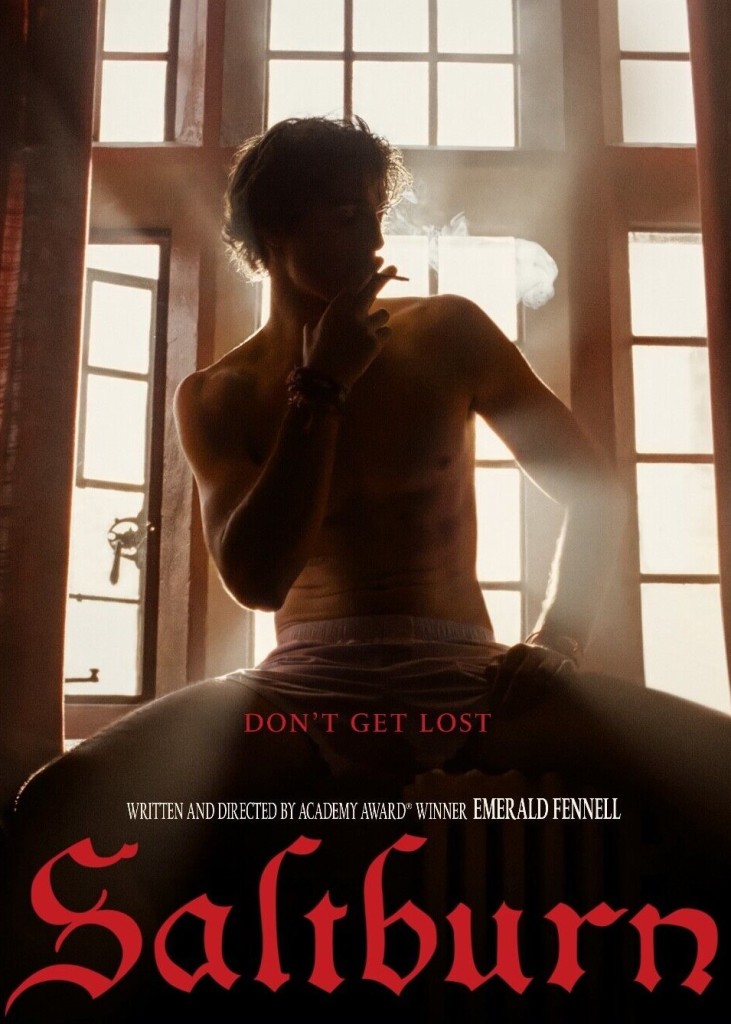
Brideshead Revisited Meets Carry On Downton Abbey. Wouldn’t surprise me if that’s the way it was actually pitched, it’s just so uneven, veering through several different styles without ever finding a target. The shock elements are, unfortunately, just risible. Via the trailer this appeared to be a moody, atmospheric picture about entitlement, the downside, if you like, of Downton.

Instead, it’s just plain barmy, which might well have worked if its take on the bizarre had been consistent, but, really it’s a contender for the coveted So-Bad-It’s-Good Award with Rosamund Pike odds-on to nab a gong for Best Maggie Smith Impression. .

Oliver (Barry Keoghan) is supposedly a scholarship student at Oxford, coming from a sinkhole estate in Liverpool, parents drug dealers etc etc. Out of his depth, by chance he latches on to sex god Felix (Jacob Elordi) and is invited to spend the summer at the latter’s stately home complete with sneering butlers and demonic family all graduates of the Over-Acting Academy.

Turns out we’ve not been watching Downton Abbey at all, but The Usual Suspects, Oliver not an innocent little bookworm but an extremely malevolent character who manages – in the absence (luckily) of post-mortems – to bump off the entire family in order to inherit (don’t ask!) Saltburn in order to, in a bizarre nod to Risky Business, dance naked through it.

The only reason it gets any points at all is Jacob Elordi, who exhibits tremendous screen charisma, and because the barmy extremely self-centred and out-of-it Rosamund Pike does elicit a few laughs and maybe, courtesy of Richard E. Grant, has a haircut to enter some kind of Hall of Fame.

Couldn’t find a poster for “A Forgotten Man” so thought I would temper proceedings
with this old British poster for a seaside resort.

A Forgotten Man

This wants to say something important about the neutrality stance of Switzerland during the Second World War. But unless you live in Switzerland, you won’t have a clue what it’s trying to say. And if you thought The Crown was off-the-wall in summoning up the ghost of Princess Diana, wait till you start counting the number of ghostly apparitions here of young Swiss chap Maurice (Viktor Poltier), whom the protagonist Henrich (Michael Neuenschwander), while Swiss Ambassador to Berlin during the war, failed to prevent being executed.

I’ve no idea if this aspect is based on a true story. Either way, fictional or not, it’s a preposterous central conceit. Supposedly, Maurice had been arrested for trying to assassinate Adolf Hitler. Theoretically, we should all be applauding his actions. He should get a free pass for trying to rid the world of a monster. But, in reality, how would you expect an Ambassador to go about pleading clemency for one of his citizens who tried to murder the ruler of Germany?

There’s clearly some angst about the fact that Switzerland managed to emerge unscathed after a war which left the rest of Europe in turmoil. But it’s pretty hard to summon any sympathy for anybody, least of all the director because whatever point he’s trying to make is made so obliquely it fails to register. That it gets any points at all is due to its brevity and that, as the first movie in my self-selected triple bill, I came out of it in a far better mood than the other two.   
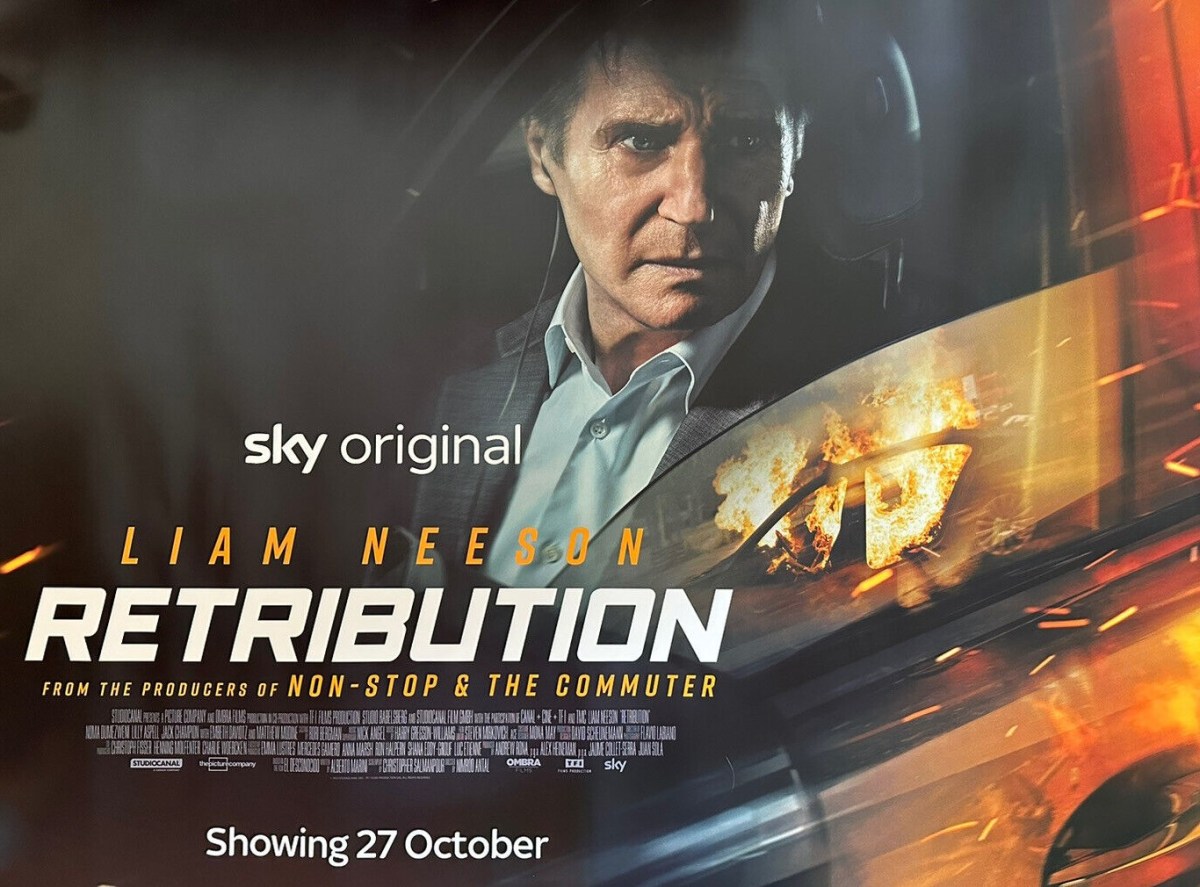
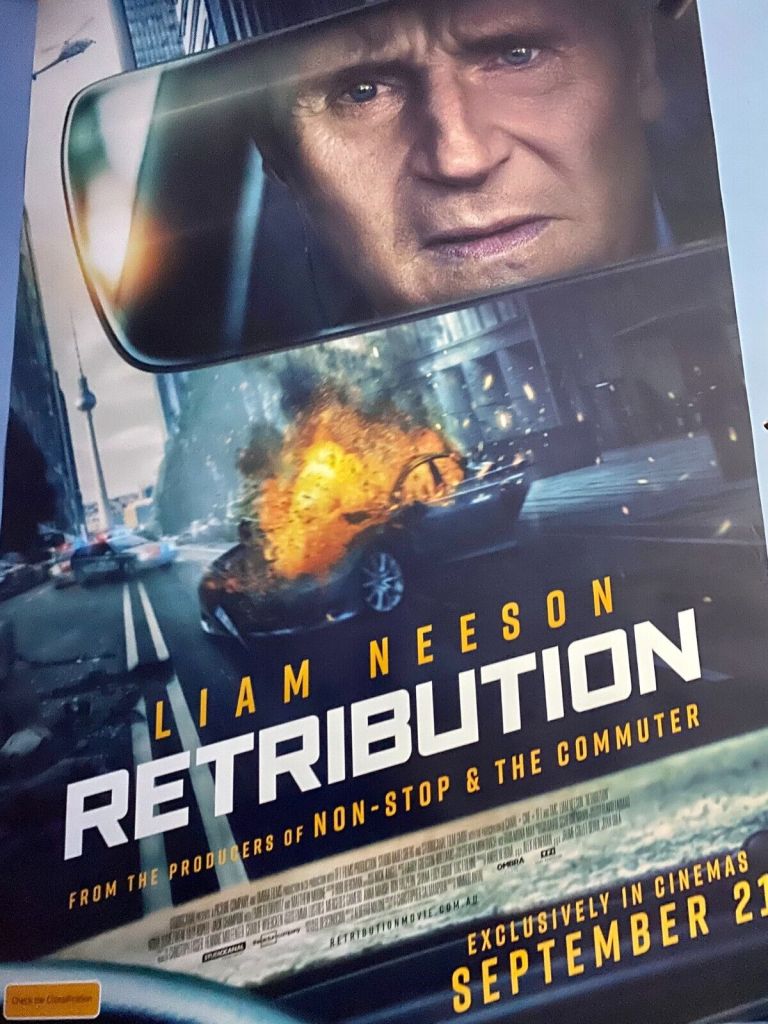
Retribution (2023) **** – Seen at the Cinema

Take a renowned screen tough guy and turn him into a nervous wreck. Stick a bomb under his car seat. Hobble him further by saddling him with his kids in the back. Ensure he is so  frazzled by constant explosions that he lacks the time to do the clever things that heroes in his position, no matter how dicey the situation, generally manage. And the usual running and gunplay is out of the question. Screw that lid down tight.

And play around with Liam Neeson’s Taken (2008) screen persona, show him demolishing a punch bag at the very start to convince us he still has the cojones, with a special set of skills to take down the bad guys. But that image is quickly shredded.

Once he is blamed for a series of devastating car explosions and can’t escape the electronic voice in his ear and the bad guy five steps ahead of everyone, this just ramps up the stakes and in the Neeson portfolio nestles a shade below Unknown (2011) where the actor was equally disorientated, though that time by amnesia.

Matt (Liam Neeson) is a financier having a tough time. It’s just his bad luck he needs to take the kids, rebellious Zach (Jack Champion) and precocious Emily (Lilly Aspinall), to school because, unknown to him, wife Heather (Embeth Davidz) needs time out to consult a divorce lawyer. Now he’s being held hostage in his own car by a tech whiz kidnapper.

Sure, there are shades of Speed (1994) but thank goodness fewer echoes of the likes of Phone Booth (2002) and a few plot holes and a fair bit of misdirection – wife Heather (Embeth Davidz) perhaps having a lesbian affair, financial shenanigans catching up with him, mysterious motorcyclist on his tail – but precisely because Matt has no leeway and the running time is lean (under 90 minutes once you remove the credits) it works like a dream. Just no let-up.

There’s a surprise reveal at the end and a neat get-out-of-jail that Bryan Mills in his element might have dreamed up but mostly it’s pedal-to-the-metal.

After a few direct-to-streaming losers like Marlowe (2022), this is Neeson back at his best, relying far more on his acting talent than his action chops. Even the title is against type. Mention the word retribution and you expect it will be the actor doing the seeking, not being its object.

With the exception of Schindler’s List (1993) – and that’s three decades away – most people can’t remember when Liam Neeson was being touted as a genuine Oscar contender. Producers didn’t seem to know what to do with him. Every star turn in a compelling drama was accompanied by a supporting role in some big-budget extravaganza (not least his Star Wars episodes). And, miraculously, just as it appeared his career was winding down, he reinvented himself as Bryan Mills and was forever typecast in thrillers, but the law of diminishing returns meant that he was as synonymous with Nicolas Cage in making pictures that couldn’t get a cinema release break.

Here’s a movie that depends entirely on facial expression. And no escape from that. Which means relying on whatever he can tick in the acting box. Which, luckily, Neeson still has in spades.

This is kind of movie Sky used to make, a low-budget effort with a big name down on his luck, killed off by poor production values and low-end direction. But if this is the way Sky is heading, upping its game in the face of Netflix and Apple’s clever manipulation of cinematic release, then this movie deserves a wider showing.

Remake of a 2015 Spanish picture, directed by Dani de la Tore and scripted by Alberto Marini, the new version sticks to the knitting, no complicated sub-plots involving the kids, just them sitting in the back waiting to become collateral damage.

Nimrod Antal (Predators, 2010) does an excellent job teasing out the tale, throwing in a car chase through the streets of Berlin, but keeping the camera squarely on the trapped trio. With an inferior star, this could easily have failed to grip, but Neeson pulls it off with ease.

If you can’t catch it in the cinema, where my guess it will only last a week, put it on your must-watch list elsewhere.

Destined to become a DVD “sleeper.”

https://amzn.to/3QDjHhH

Suitable Flesh (2023) *** – Seen at the Cinema

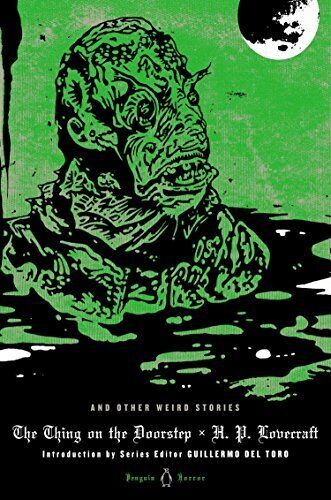
Lollapalooza! Trash horror is back. Step aside the relatively classy Blumhouse offerings and the torture porn of the Saw dynasty, what the world needs now is a throwback to the so-bad-it’s-good style of horror where blood flows like a burst dam and reanimated corpses trail yards of intestines.

Not forgetting that the star turns are either pop-eyed or garnish every line with a smirk. H.P. Lovecraft may well be turning in his grave, or relishing every camped-up ramped-up moment of this updating of his tale of gender-bouncing possession The Thing on the Doorstep. Throw in hypnosis, bdsm, smoking treated as illicit pleasure, and the kind of sexuality that used to be the prerequisite of the DTV scene.

Dr Derby (Heather Graham) has to be the dumbest psychiatrist ever to hit the screen, breaking the golden rule of never seeing a client, especially one as deranged as Asa (Judah Lewis), in their house. But, sensing a book or at least a write-up in a journal, she discovers he’s possessed by nasty father Ephraim (Bruce Davison). Or by a creature going back centuries whose main aim in life/death is to jump like an eternal parasite from person to person, indifferent to gender.    

Such transference works magic with the sex genes, the good doctor soon capable of playing the kind of sex games her husband never imagined while the snarky Asa is turned into a sex god with magnetic appeal to women. So, when everyone isn’t at it like rabbits, they get a tad worried about seizures.

In a nod to Dracula, it’s brains not hearts that have to be put out of commission, and there’s a whole bunch of demonic mumbo-jumbo served up to make this sound believable but by this point the audience is beyond caring. More, we call out, give us more – gore, sex, transgendering gone mad, references to Dunwich, bitchfights, corpses that won’t die – who the hell cares.

Mostly, it’s the kind of slam-bam horror fest that dominated the 80s/90s, with prime specimens of either sex to the fore. There’s a desultory pair of cops who do little more than add narrative confusion: who died, or did they even die, and was it all in Dr Derby’s mind? And once the sly Dr Upton (Barbara Crampton), also a dumb psychiatrist, who is either Derby’s sister or best pal, with a shady past, enters the picture the possibilities multiply.

Whoever is in charge of pushing a movie into cult territory better have a look at this especially when you consider the ropey camerawork – shaky or spinning screens dominate – not to mention that idea that was once the preserve of cartoons where the screen disappears into a dot. Cinematically, if anyone is remotely interested in that, there’s one scene of note, where the usual stunt of following action in a rearview mirror becomes seeing it from a vehicle’s reversing screen.

At times Heather Graham looks as if she’s walked in from playing the pop-eyed innocent of Austin Powers: The Spy Who Shagged Me (1999), other times she’s time traveling back to the uninhibited Killing Me Softly (2002). Whatever, she has worked out subtlety is not required. Judah Lewis pays homage to Bruce Willis and Mickey Rourke by reviving their trademark smirk. Johnathan Schaech (That Thing You Do, 1996) spends most of his time shirtless, showing off his pecs and hairy chest, and trying to get obsessive wife to drop her  workload and jump into the sack. Craching additiont to the Bruce Davison (Last Summer, 1969) can, and Barbara Crampton (Alone with You, 2021) has a sackload of this kind of thing (left on a doorstep or not) in her closet.

Dennis Paoli (Re-Animator, 1985) did the updating, Joe Lynch (Point Blank, 2019) the camping up to high heaven.

Judging from size of the cinema audience when I saw it, this isn’t going to last more than a week at your local multiplex. So drop your planned schedule and get there now.

Otherwise Shudder has this for streaming in January.

Call the cult police!

https://amzn.to/3MsP8J1

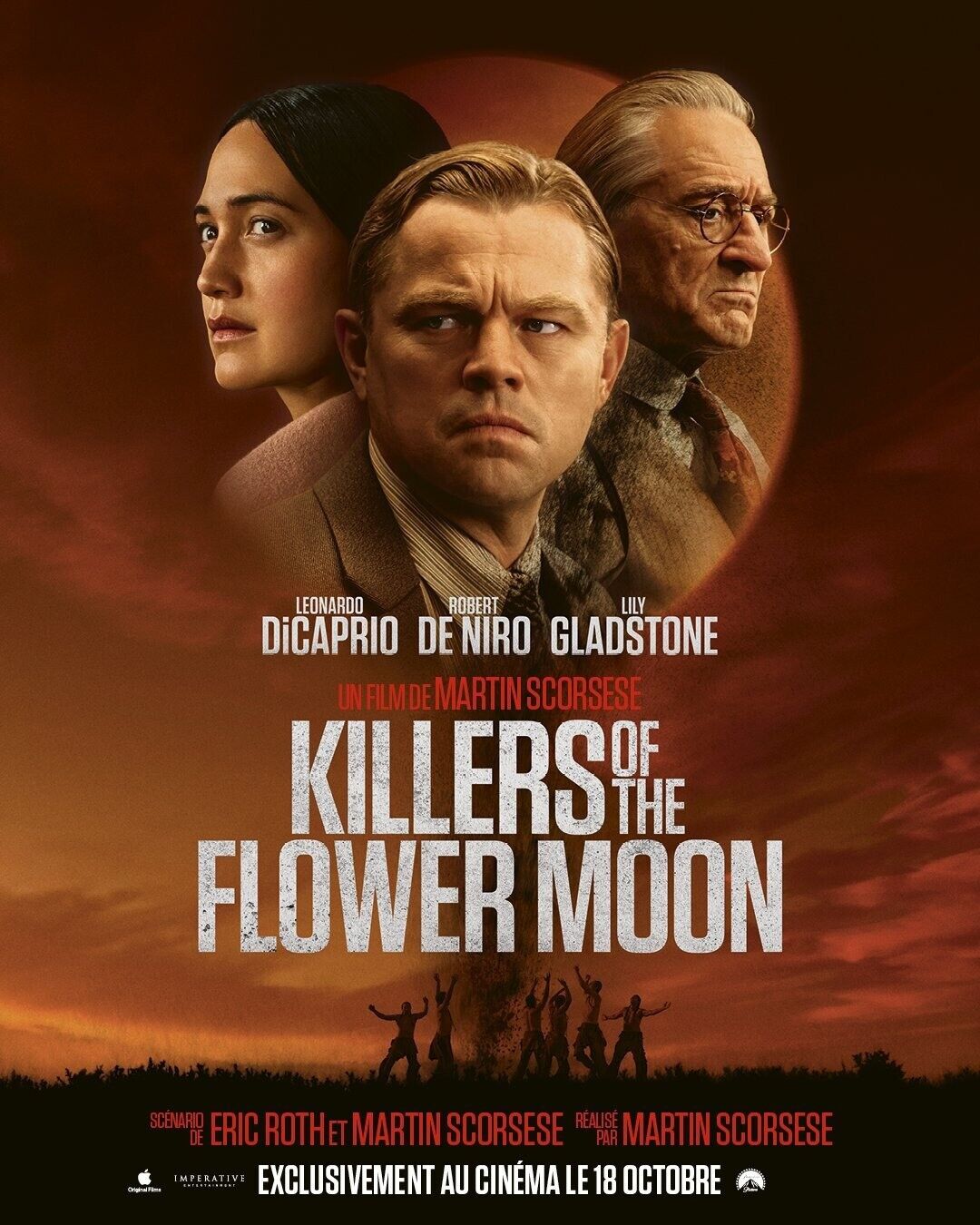
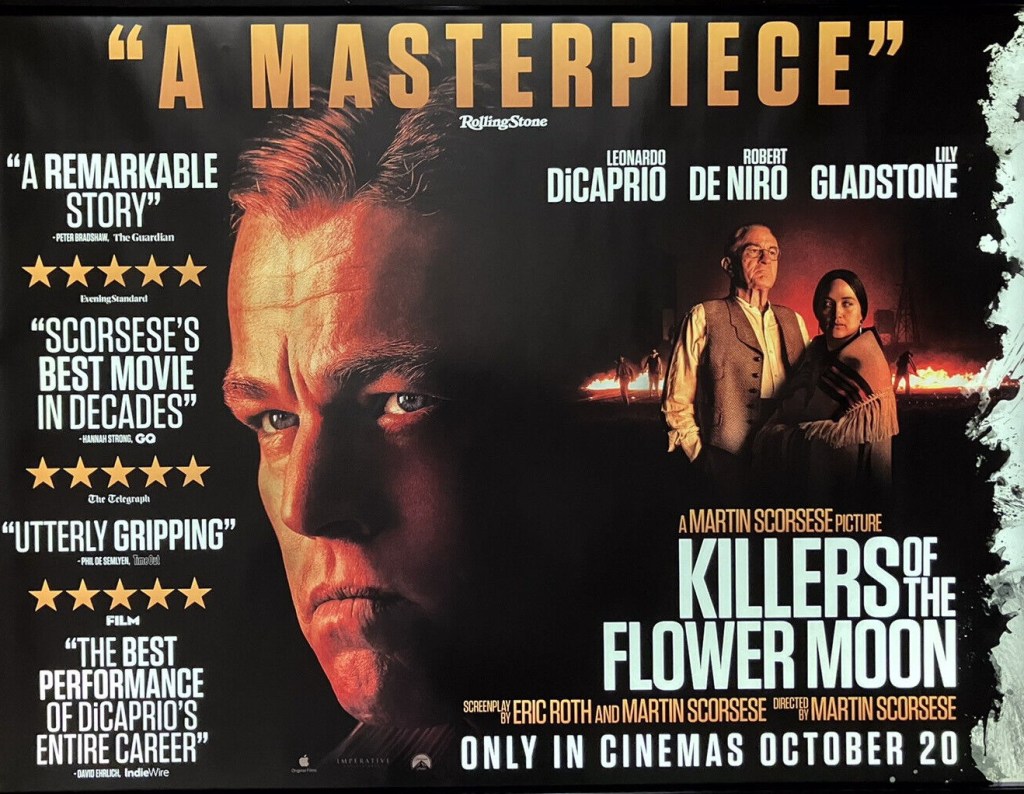
Killers of the Flower Moon (2023) *****

Let me stop you right there. This isn’t a review of this particular movie, you’re probably sick to death of those already, and it’s not some kind of Scorsese retrospective, but an expression of what it’s like to live through the transformation of one of the greatest directors Hollywood has ever produced. That zipping excitement when you first encounter a new Hollywood animal and when he charges down a different track or seems to lose control.

Catching up on a director’s life work via a carefully-curated retrospective hasn’t got an ounce of the flavor of living through it, from the days when film festival break-outs were not the carefully-orchestrated distribution and publicity machines they are now.

I first encountered Scorsese before a clever journalist had coined the rather derisory notion of a  Brat Pack, when the director was just another new voice clamoring for attention in a world of considerably more cinematic noise than exists today, when MCU and streaming didn’t exist, and audiences could find massive variety every time they attended the cinema.

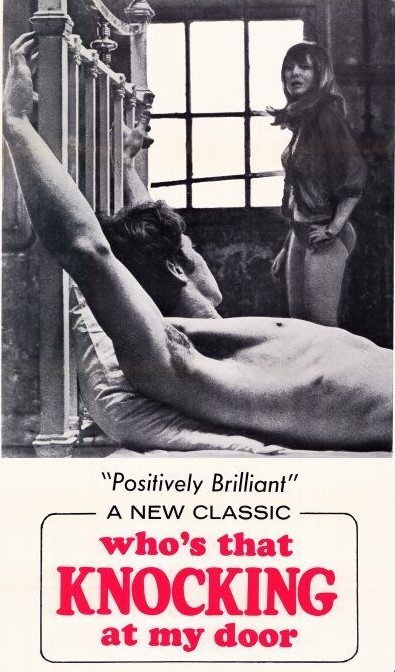
Who’s That Knocking at My Door slipped through the arthouse cracks in 1967 – the year of The Graduate, Guess Who’s Coming to Dinner, In the Heat of the Night, The Dirty Dozen and El Dorado. I didn’t see it then. I would be surprised if anyone did. Nobody was ready for that brash style with its insistent use of pop/rock music. I caught up with a few years later when the Scorsese we know now was still in embryo form.

Sure, Mean Streets (1973) gave strong indication of the gangster path towards which Scorsese was inclined, but it wasn’t so obvious then that he would make that genre his own, not when he interspersed that with a tale of Depression-era hobos, Boxcar Bertha (1972), and Alice Doesn’t Live Here (1974), a proto-feminist narrative whose stunning tracking opening set out his technical directorial credentials. And it was anybody’s guess which way he’d go from here. 

And I doubt if anyone expected Taxi Driver (1976), the moody glimpse of the New York underbelly with a psychopath hero, and certainly after that exploded at the box office and had critics purring, nobody would guess his career would take a musical turn, New York, New York and The Last Waltz in consecutive years. You might consider Raging Bull (1980), prototypical Scorsese. But the truth is, he was never typical. He jumped from project to project in a manner that only appeared to make sense to himself.

Some choices were so atypical you wondered if there had been any through-thread – what possibly connected King of Comedy (1982) to The Age of Innocence (1993) and Hugo two decades later. Certainly, when he imbibed a deep spiritual draft, you could make a thematic connection between The Last Temptation of Christ (1988), Kundun (1997), and Silence (2016).

But by this point he had achieved Hollywood nirvana, the mixture of critical adulation that put him top of the hitlist of those studios with one eye on the Oscars and bouts of box office glory that kept the same studios sweet. If he ever felt the need to revive a fading career he could churn out the likes of apparently mainstream but dark-tinged Cape Fear (1991), The Aviator (2004), Shutter Island (2010) and The Wolf of Wall Street (2103). And at the back of your mind, as a fan, was the question of how long would it take him to return to the gangsters. If you had Goodfellas (1990) forever etched on your mind, Casino (1995), Gangs of New York (2002), The Departed (2006) and The Irishman (2019) seemed almost always within reach.

Of course, he can hardly be separated from Robert DeNiro, his go-to star, ten teamings in all including the current number. And for a DeNiro substitute, Scorsese didn’t go far wrong with Leonardo DiCaprio, six including the new one. Stars with an edgy side were attracted to Scorsese and vice-versa.

It’s perhaps no coincidence that DeNiro and DiCaprio play murderous relatives in Killer of the Flower Moon, but the performances both deliver are so subtle, so far removed from what Scorsese’s asked of them before, as to point them both in the direction of the Oscar.

You think you kind-of know what you’re going to get with Scorsese, but, more than any other director, he whips the ground out from under you. Killers of the Flower Moon is bereft of the Scorsese trademarks, voice-over, exuberant violence, thumping soundtrack.

So when you’ve been watching his movies for over half a century, you look on him as you might a favored son, delighted in his achievement. But you don’t want him to stop, you want him to keep going. There must be one more film in him. Like Ridley Scott, he’s more bankable than ever, especially if the streamers are looking for a short-cut to hooking up with the best talent available.

Like Oppenheimer, this one is unmissable.

https://amzn.to/3MeEe9U

https://amzn.to/3Q6Lw0p

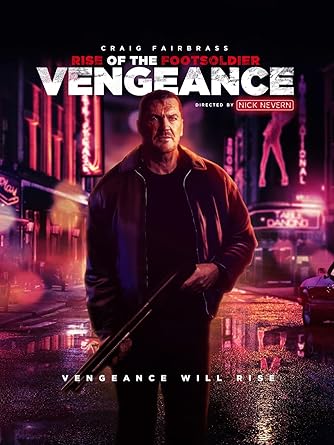
Rise of the Footsoldier: Vengeance (2023) *** – Seen at the Cinema

If a train strike hadn’t forced me to drive to the Bradford Widescreen Weekend and threat of a storm ensured I set off early in the morning, leaving me an afternoon to kill, and if my hotel wasn’t slap bang next to a multiplex, I might not have been tempted. And I guess you could add to this list of possibilities that if cinemas had not been so strapped for product, it might have gone straight to streaming or DVD. So I’m happy to report that the British B-picture is alive and kicking.

Revenge is the order of the day, no surprise there in a crime flick, but here’s the twist: while ostensibly it’s just Tate (Craig Fairbrass) seeking vengeance for the death of a gangster buddy, in fact he’s also got a target on his back, three figures from his past intent on payback.

Previous entrant to the series.

So, the plot is complicated to say the least, but here’s the other twist: it’s the family element that stands out. Not “family” Mafia-style where omerta rules and only women are allowed to shed a tear. But family as in, tough as they are, these criminals have emotions. One particularly hard-boiled specimen bursts into tears in front of his cellmates on hearing of the death of a loved one. A budding gangster, boxer and drag artist (take your pick at which he shows the most talent) Billy the Kid (Ben Wilson) – who, father foolishly uses the same moniker for his stage act as his boxing – is terrified of coming out to trainer father Fergus (Stephen McCole), relying on his aunt Margo (Tara Fitzgerald) for a shoulder to cry on.

Mental and physical scars are on greater display than normal. Every time it looks like the violence quotient is about to up the ante, in sneaks a moment of humanity, a hood with a baby, the aforementioned reactions.

Set in the 1990s drugs scene, the movie has a Point Blank (1967) sensitivity (if that’s the word), Tate constantly confounded by what’s going on. No matter how many people he kills, the situation just gets murkier. To be honest, I’m not surprised, I was confused.

The low-budget dictates we stay pretty well removed from any period detail. The cars and the gentlemen’s club – the movie’s virtually an advert for the real-life Platinum Lace – and the fact that the bright lights of central London conceal a lot, is as far as we go. Hazy backgrounds and longshot keep the past out of sight.The attractions in the club are such that the punters are not diverted by the entrance of  bloodied gun-toting gangsters and the first gunshots pass them by.

Neat touches abound. The young girlfriend Charlotte (Emily Wyatt) of chief crook Hexell (Phil Davis) is in reality a safecracker and at the first opportunity heading off to foreign parts with a hefty haul. When Tate makes the mistake of driving into Fergus’s breaker’s yard he has not taken into account how easily his vehicle, shades of Mickey One (1965), can be scooped up and crushed to oblivion. Faulty information results in a heist being a bust. There’s some comedy with an out-of-date grenade and a machine gun firing blanks. In a more horrific echo of The Long Good Friday (1980) a miscreant is trapped in a car and burned alive.

But the best scene, amidst the carnage necessarily for a revenge picture, is a dying man accepting his son’s right to live his own life. And there is some honor among thieves, or at least an old pals act to fall back on.

There’s plenty violence for your buck. Knife, bullet, gas, grenade, fire, the permutations are endless and would need to be because so many people require to be dealt with. In individual combat, of course Tate wins the day, but given he is constantly outfoxed his fists and guns don’t always achieve their long-term purpose.

While Tate is not in the John Wick/Rambo league, he could certainly sit on a second tier that might encompass the movies of Dolph Lundgren, Steven Seagal, Jean-Claude Van Damme, though he’s not as athletic as the last two.

The marketeers were handed an unlikely bonus in the shape of a three-star review from  normally morally upright British newspaper The Guardian, and my guess it would be for the same reasons as I was impressed, the refusal to toe the DTV line and invest the picture with some humanity.

This series kicked off in 2007 and this is the sixth. The services of original star Ricci Hartnett were dispensed with after the second film. Fairbrass was top-billed for the next pair but ceded that to Vinnie Jones. The original was based on a true-life memoir but has gradually evolved into a more wide-ranging gangster series. Most have gone straight to streaming/DVD.

Good performances all round. Craig Fairbrass (Villain, 2020) should get a shot at something bigger. Directed with some elan on a tight budget by Nick Nevern (The Hooligan Factory, 2014) and the screenplay by producer Andrew Loveday (involved in two others in the series) and Jason Maza, also incidentally a producer, in his screen debut, has left an opening for a sequel.

Ukryta Siec /Hidden Web (2023) *** – Seen at the Cinema

What appears a routine conspiracy thriller fleshed out with contemporary hooks about body shaming, victim shaming and the dark web suddenly explodes in the third act as consequence gets personal. If you’re of an arthouse bent you’ll equate Polish cinema with Andrzej Wadja (Man of Marble, 1977), Roman Polanski (Knife in the Water, 1962), Jerzy Kawalerowicz (Pharaoh, 1966) Krysztof Kieslowski (Three Colours Trilogy, 1993-1994) or Pawel Pawlikowski (Ida, 2013) and you’ve probably turned a blind eye to the boom in commercial Polish cinema of recent years, mostly concentrating on corrupt cops, gangsters, the Mafia, and strong-minded women.

Luckily, my local multiplex, which lacks arthouse inclination, has been running the biggest hits from Poland on a regular basis. The latest arrival lacks the bombast and outlandish narrative of previous entries and while following a standard investigative narrative eventually twists into a more personal reflection on crime.

Adapted from this Polish bestseller.

Journalist Julita (Magdalena Kolesnik) investigating the suicide of well-known television presenter Gustaw  (Mariusz Czajka) finds evidence of a murder plot. After publishing her story, she becomes an even bigger story when her sex video is made public. Her outraged editor demands she apologise for embarrassing the news website. When she refuses, she is fired. Widowed father Henryk (Andrzej Sweeryn) – wife committed suicide way back – disowns her, older sister Magda (Wiktoria Gordecka) chucks her out of her flat.

The journalist ploughs on, but hunting down her own hacker puts her back on target to uncover a man who could conceivably possess the computing skills – that once upon a time could have only existed in the fictional James Bond/Fast and Furious universe but now with the driverless car upon us less a figment of the imagination – to force the television presenter’s vehicle over a bridge. She’s more determined than resourceful, tempting a security guard out of his office by setting off a smoke alarm, escaping from another security guard by ramming his hands with a car door.

She is assisted by Chinese chef Emil (Piotr Trojan), a part-time computer whiz, whose Army background makes him a suspect. Eventually, with more digging and a good deal of luck, she finds the hacker. Instead of turning him in, she agrees to give him a stay of execution.

For why? He has evidence Gustaw was part of a child sex abuse ring of which the hacker was an early victim.  He wants to employ more computer wizardry vigilante style to knock off another member of the abuse ring. He promises to stop after that, leaving it to Julita to make a decision on whether to go to the police.

I’m going to have to issue a spoiler otherwise this will just seem too routine a thriller. This is where it gets emotionally harrowing and spins completely on its axis, away from standard investigative journalism and into another realm entirely. The twist is that the hacker’s next victim, murdered by tampering with a dialysis machine, is her father. He was another legendary television figure.  Now her mother’s suicide makes sense as does her sister’s reluctance to let her son anywhere near her grandfather.

Now what? Not enough to be the already humiliated daughter of a sex offender, but to realize the hidden role this has played in her family, and to decide whether further exposure would be in anybody’s interest.

Despite a car chase and being hounded, this doesn’t quite get to the boil in terms of conspiracy thriller as though director Piotr Adamski (Eastern, 2019) knew that the final act would blow everything that went before out of the water. But given this is the director’s sophomore outing and he didn’t want to go the all-out violence-ridden crime route, it’s tense enough and with some interesting news-room background, sniping colleagues, an editor pumping breast-milk at her desk, electronic scorecard ranking journos by the minute. Surprised, to be honest, some of the images that the censor passed.

But Magdalena Kolesnik (Sweat, 2020) plays this just right. Too self-reliant to be out of her box with fear, too independent to let her emotions get the better of her, meaning that when the big reveal hits she can dive into all that repressed emotion.

If you’ve not dipped into modern commercial Polish cinema, this is as good a place to start as any. If you’re already a fan, you’ll know what to expect, and come up somewhat shaken at how this pans out.

Worth a look.

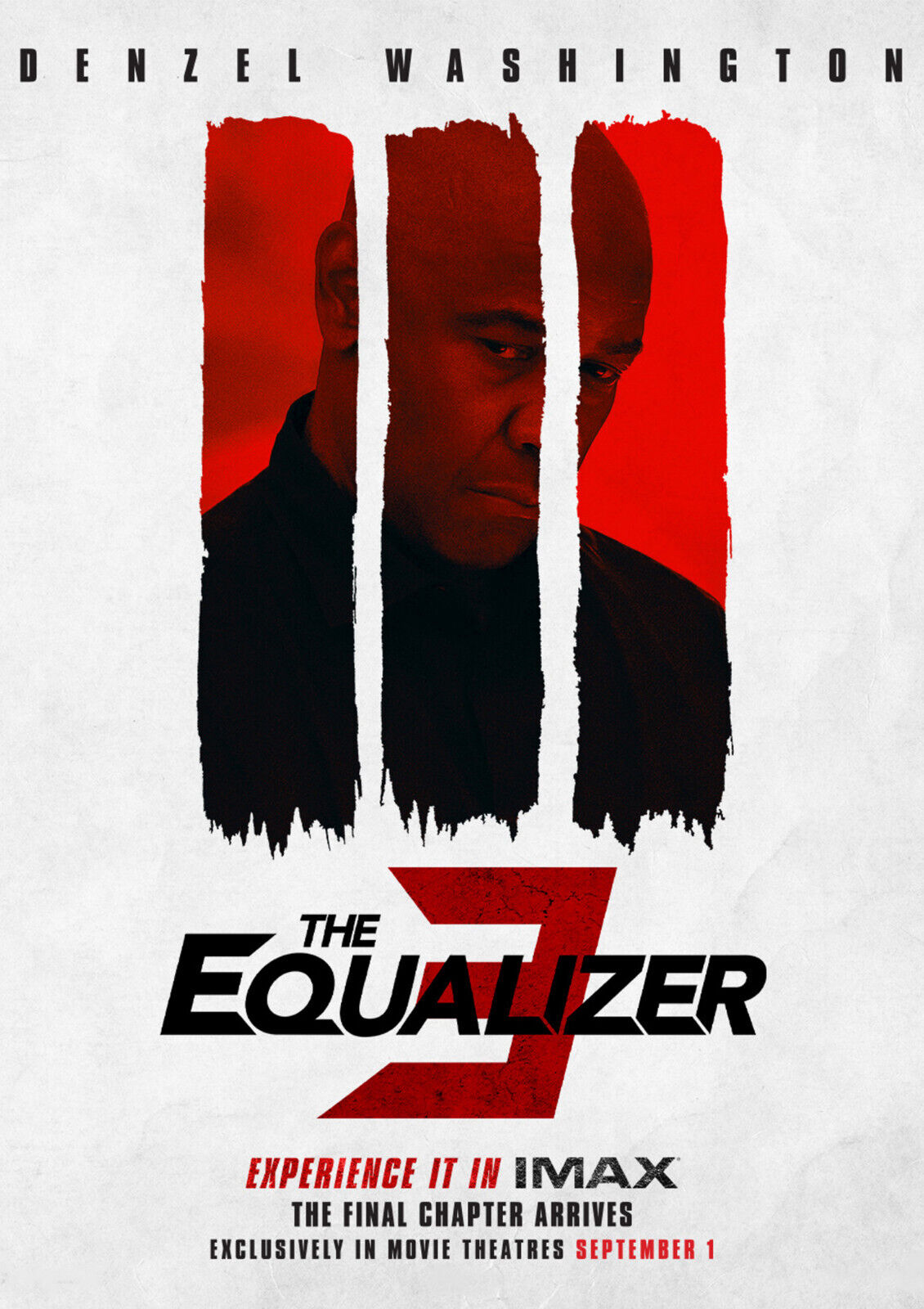
The Equalizer 3 (2023) **** – Seen at the Cinema (three times)

Stylish, triumphant, conclusion to a vigilante series that stands comparison with John Wick as the best of the new century. Oddly enough, the pair share some motifs, not least a mountainous stairway to a medieval church. And there are nods to The Godfather, killings against the backdrop of a religious procession and fruit spilling onto a corpse, a dagger pinning a hand to a table. And you might find shades of Apocalypse Now in the brooding remorseful figure of Robert McCall (Denzel Washington) convalescing in a remote fishing village in southern Italy. And it’s fully contemporary with a nod to the power of the mobile phone in depicting live events.

For an actioner it’s chockful of mystery. To begin with, you think we’re at the end, the aftermath of some gun battle, but, in fact, it’s just the start. Quite why McCall has ended up in a Mafia fiefdom in Sicily is held back till the end as is explanation regarding helping young C.I.A. agent Emma (Dakota Fanning) track down Mafia drug dealers, both narrative hooks adding to the subtlety and nuance that filters through this reflective actioner. Sure, there’s brutality, when is there not with McCall around, but there’s also reality, marvellously evocative scenes of village life, the vigilante sipping his trademark tea in a café, buying fresh-caught fish, joining exuberant locals celebrating a famous win at soccer.

Assisted by local physician Enzo (Remo Arisio) and local cop Gio (Eugenio Mastandrea) in recovering from a life-threatening bullet-wound, it’s all McCall can do to hobble down the steps with the aid of a walking stick. No Rocky-style reinvention dynamics here, no weight-training or running regime, no taking to the target range. When McCall struggles up a flight of steps your heart is in your mouth.

Meanwhile, a story unfolds of a power grab, legitimate and illegitimate, by Mafia chief Vincent (Andrea Scarduzio). But when the gangster’s younger brother Marco (Andrea Dodero) pushes his weight around once too often in McCall’s presence the rumbling volcano starts to erupt. But in temperate fashion to begin with, McCall relying on being able to locate a particular nerve (a physical one) enough to send the young thug scarpering.

Worth noting that the movie avoids two obvious traps. Agent Emma isn’t fighting a gender war, she’s no feminist battling for approval from male counterparts; in fact, if anything, she’s accorded full praise for her work and makes sure that she never acknowledges McCall’s input to her superiors, which seems even more realistic.

You might expect by now that widower McCall would be ripe for romance but though waitress Aminah (Gaia Scodellaro) takes a shine to him that goes little further than a pleasant walk along the beach sampling local delicacies. So you might also expect that, sticking to the core, this would be just a lean rip-off sequel. Instead, it’s rich in composition and detail. Many scenes play out in what appears to be atmospheric black-and-white. While not in the operatic league of John Wick 4, it’s a joy to watch.

Plenty bang for your buck but an interesting storyline that meshes drugs, terrorism and the Mafia. Deceptively subtle performance from Denzel Washington (The Magnificent Seven, 2016). He could have coasted home with his brooding persona. Instead, he walks like a man half-dead, reacts as if bewildered to still be alive, and finds he is no longer an outsider. Dakota Fanning (Once Upon a Time in Hollywood, 2019) plays down her role, there are no dramatic fireworks, she’s a confident individual, not giving an inch in her quiet duel with McCall, but no histrionics either.

Long-lasting director-actor teamings generally bring richer rewards as the partnership grows. This is the fifth film for Washington and Antoine Fuqua, beginning with Training Day  (2001) and incorporating The Magnificent Seven and the two previous Equalizer outings. It has the feel of a famous partnership along the lines of John Wayne-John Ford, James Stewart-Anthony Mann and Gregory Peck-Henry King.

Nod to Richard Wenk, third time in the writer’s chair, for the screenplay and espcially to Marcelo Zarvos (Emancipation, 2022) for a score that combines haunting theme tune and screeching guitar for the action.

I was so taken with this I’ve already seen it three times. Might well head back a fourth time next week for more nuance – and more bang.

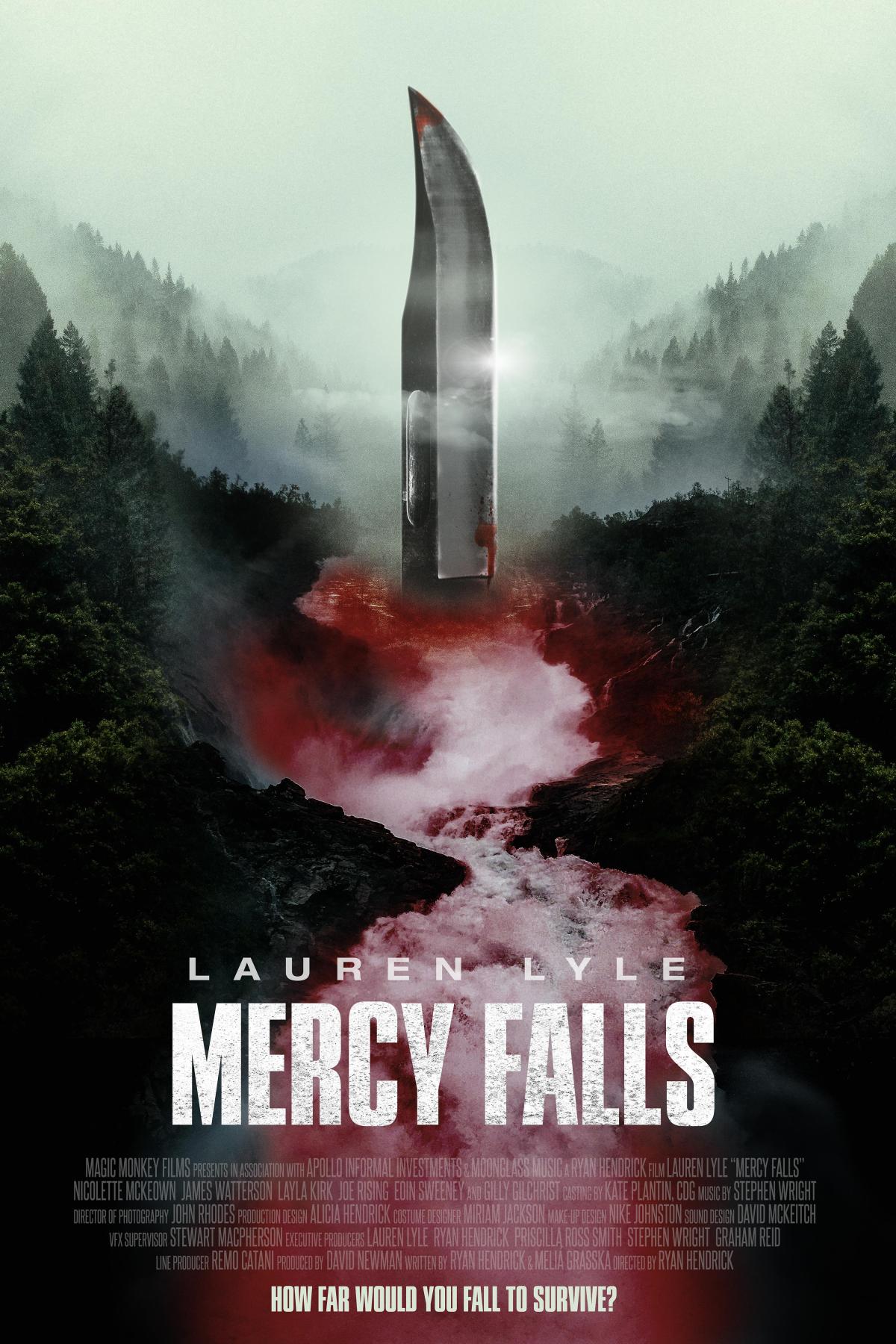
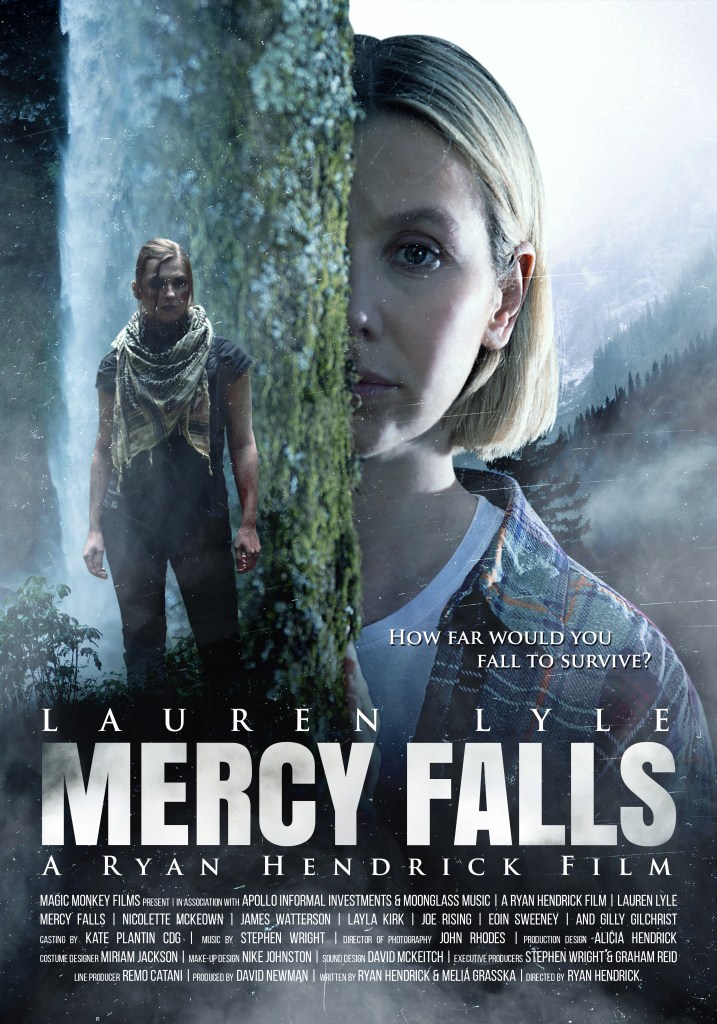
Mercy Falls (2023)

The long tradition of Scottish-made or Scottish-set movies – from Whisky Galore (1949), Brigadoon (1954), The Prime of Miss Jean Brodie (1969) and The Wicker Man (1973) to Local Hero (1983), Highlander (1986), Braveheart (1995) and Trainspotting (1996) – has fallen fallow in recent years. And while Outlander has done its best to fill the gap, the most we can hope is Glasgow or Edinburgh being called upon as brief locales or as substitute locations in blockbusters such as F9 (2021) or Indiana Jones and the Dial of Destiny (2023).

So, as a native Scot, I approached Mercy Falls out of a sense of duty. Anything more meant setting aside the odd notion that a movie set in the wilderness will carry the same dread in a horror scenario as the more usual claustrophobic setting. Or that short of a drug-fuelled bear, speedy surprise will be in short supply. And there’s a struggle in coming to terms with the MacGuffin, that a young lass and her four companions will set off to find a cabin whose whereabouts are largely a mystery and with nobody who can read a map.

Putting aside such misgivings, it’s a refreshing change from the torture porn / mad robots / occult offerings of the more recent Hollywood horror cycle. And since it’s mercifully not funded by government agency Creative Scotland no slavish need to turn backdrops into tourist promotional material. Not a whiff of tartan in sight, much less majestic peaks, and the grass, far from being a sweeping green, is burned an unattractive summer brown, though mists do appear to appear as if by magic and you will wonder how such an accomplished wee folk band just happened to be playing in a remote Scottish pub.

Our cast of potential corpses includes uptight heiress Rhona (Lauren Lyle) and her theoretical boyfriend Donnie (Joe Rising), sex-mad Heather (Layla Kirk) and her definite current Steady-Eddie boyfriend Scott (James Watterson) and opportunistic one-night-stand Andy (Eoin Sweeney).  They are joined by bad-ass hitchhiker Carla (Nicolette McKeown). Tension in the early part is mostly sexual in nature, although you have to wonder if they will ever reach their destination.

As with Shallow Grave (1994) and television series Guilt (2109-2023) accidental death turns the trip into a nightmare. Tell the truth and five people go to jail as culprits or accessories, tell a lie and dump the body under a remote waterfall and everyone gets off scot free. Or that would be the case except ex-soldier Carla has escaped from a mental institution.

Some sequences appear to have escaped from other movies – climbing a cliff-face and crossing a ravine Indiana-Jones-style across a rickety log – but once the gore count rises it’s game on and the meek Rhona channels her interior super-bitch to take on Carla in a winner-takes-all finale.

The men are uniformly useless, the females the sexual or physical predators. And it’s realistic, too. While Carla has honed her killing techniques on the battlefields of Iraq, Rhona has to rely on more basic materials, an axe, knives, and petrol found in the cabin. Rhona, it turns out, is also handy with that Glaswegian thug’s weapon of choice, the bottle, but when she lays out her opponent with it, rather than break open the bottle and slash her opponent’s throat, she scarpers to a convenient cave where she has laid a “trap,” clearly forgetting that with the enemy at your mercy it’s darned foolish to run and give her another chance.

Still, this isn’t the kind of movie where slick characters think straight, otherwise why would the remaining fella, determined to demonstrate his dexterity, just think you could switch on an old-fashioned heavy-duty radio and yell “Mayday! Mayday!” into it and expect to be picked up. Nobody’s going to win an Oscar and the acting is generally at entry-level, eyes steadfastly revealing little of character, but by and large, it’s an acceptable low-budgeter.

Blame or praise Ryan Hendrick (Lost at Christmas, 2020), also co-writer with Melia Grasska in her debut. Nicolette McKeown (Lost at Christmas) is the pick but that’s mostly because she doesn’t have to emote much beyond lust and hatred while Lauren Lyle (Outlander, 2017-2022) is so emotionally drenched she has to occasionally shed a tear.

This will probably quickly end up on a streamer near you so worth a watch for taking a different tack to horror and as a pointer to future Scottish talent.

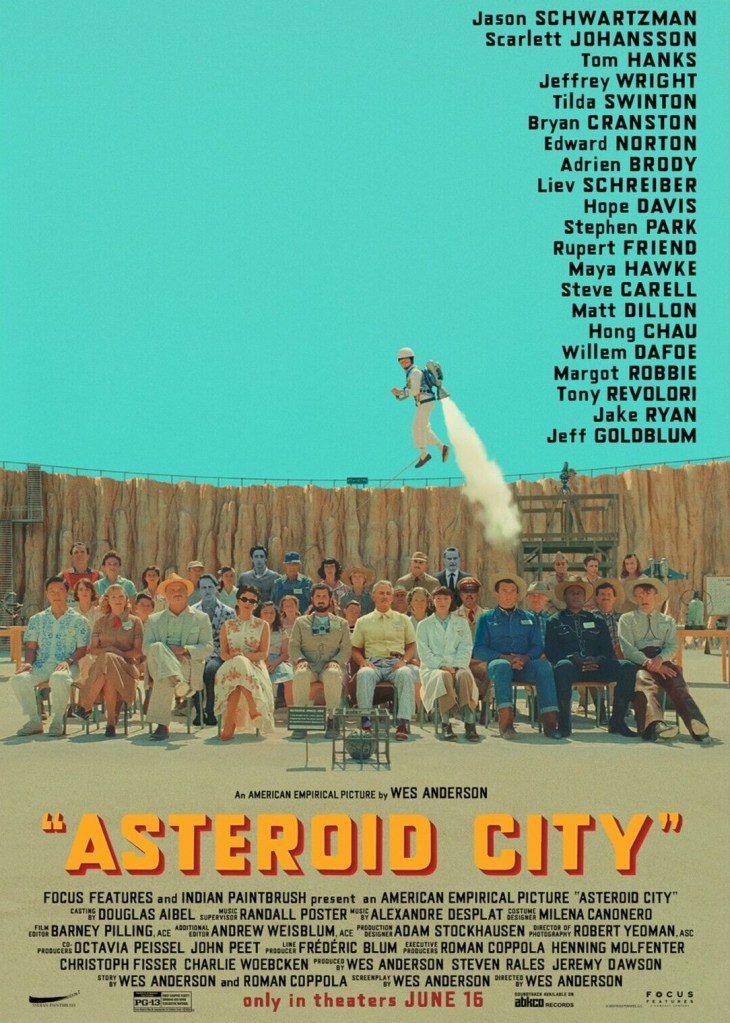
Asteroid City (2023) **** – Seen at the Cinema

“Up to his clavicle in whimsicality,” is the best I can do. While acknowledging that quote is not mine, I should also make clear it could apply to any Wes Anderson picture. He strikes me as critic-proof. With a hard core of fans, whether his movies enter box office heaven depends on the oldest and most elusive of marketing tricks: word-of-mouth.

I am going to be telling everyone to go-see without really being able to explain why they should. I might not be able to describe the plot without putting everyone off. I might get the plot wrong. Ostensibly, it’s about a bunch of disparate characters coming together in the titular city (pop: 87!!) to celebrate in the mid-1950s the gazillionth anniversary of the landing of an asteroid, a pock-marked rock about the size of a giant watermelon.

The motley crowd includes scientists, U.S. Army representatives, schoolkids taking part in a science competition, sightseers and some characters stranded there and, halfway through, an alien who commits the heist of the century, though unlike most caper pictures there’s none of the usual pre-robbery set-up.

While Anderson has a consistency of outlook that delights/bewilders/infuriates critics, he has a stunning sense of originality. He doesn’t repeat himself and reveals an astonishing freshness when it comes to the myriad methods employed to tell a story. At least here, the narrative is, roughly, straightforward not breaking off into various routes (or even cul de sacs) as in his previous outing The French Dispatch, which struggled in the old word-of-mouth department but which I adored.

To help me along here with what the film was all about I looked up the lead review in Imdb. Not only was it no help at all, it was pretty dispiriting. Poor old Wes Anderson gets walloped for lack of plot. I couldn’t care tuppence for plot as long as I’m entertained. And I went along quite happily with the ultra-post-ironic (post-something anyway) notion that we were watching the filmed version of a famous play or possibly the situation which inspired the play but cutting between both and the actors in the movie version not only playing characters but dropping into their genuine personalities – or perhaps not, maybe these were the characters from the play.

And here, the last thing I want to do is put you off. So, yeah, if you think narrative isn’t just watching a bunch of people who’ve never met before interact, a category into which I guess you would chuck movies as different as The Towering Inferno (1974) and Titanic (1997), and think they have to be gathered for a doomsday scenario, and ignore the likes of Bus Stop (1956) then just go ahead and talk yourself out of that rare sighting on the Hollywood hills, an adult movie with nary a superhero (discounting said alien of course, whose back story might include super-heroism for all I know) involved.

This might just be one long litany of jokes, but why would you complain about that? Anyway, for the sake of anyone who has come here for a proper review, here goes.

Grieving widower Augie (Jason Schwartzmann) is unexpectedly stuck in Asteroid City when his car goes into meltdown. His three young children think they are auditioning for Macbeth, constantly casting spells and intent on burying their mother’s ashes, contained in a Tupperware bowl, in the desert, and generally acting weird. His equally widowed father-in-law Stanley (Tom Hanks), dressed as if coming straight from the golf course, turns up to pretty much tell him how much he dislikes him. Augie has a short affair with movie star Midge (Scarlett Johansson) while her science-minded daughter gets to experience first love and proves a whiz at some extremely complicated memory game that I might have played when young but can’t remember the name of or which could equally be a Wes Anderson invention.

Please sir, that’s as much plot as I can remember. Various other characters appear, flitting in and out, and don’t behave as you might expect. Oh, some do, there’s a hotel owner selling plots of real estate, but there’s also the apparently straight from Central Casting General Gibson (Jeffrey Wright) whose speech sounds more like an elevator pitch for a novel. See, I told you, explaining it won’t help. You just gotta go see it.

You might spend the whole picture rubber-necking, spotting stars in cameo roles, but except for Edward Norton and to some extent Tilda Swinton none of them are doing what they are famous/infamous for. Maybe Wes Anderson has a constant queue of A-list applicants for small roles just because a) they get to play someone completely different from normal and/or b) they get to work with the great man.

Roman Coppola (Moonrise Kingdom, 2012) was drafted in to help write the screenplay maybe just so the director can get to share the blame if it’s a critical dog.

Go see.

Did I already say that?

John Wick Chapter 4 (2023) ***** – Seen (three times) at the cinema

The Godfather Part II of action movies. It’s taken me three visits to fully appreciate the visual, aural and thematic splendor. Usually when someone pays homage to the likes of John Ford, David Lean, Francis Coppola, Akira Kurosawa, Luchino Visconti, Ridley Scott, Michael Mann, James Bond (yup) and the myriad directors who filmed a car chase, the result is rarely top-notch. That’s not the case here.

Let’s begin with sound. The bone-jarring punch that opens this picture is easily the best aural opening of any picture and would make the case for Imax straight off the bat. That’s followed by thematic motifs, the sun (I can’t tell if it’s rising or falling) and the stairs that will figure so prominently, the sun especially a gorgeous palette, whether streaming through the Eiffel Tower or in fabulous sunrise mode to indicate the beginning of the climactic duel, a throwback to the classic western, and as operatic in its composition as anything Sergio Leone could throw at us.

Not to mention that this is essentially a story of bounty hunters, and that puts it squarely in the window of the spaghetti western. And could you get any closer to Leone than naming one of the pair of assassins in pursuit Mr Nobody? As the price on John Wick’s head reaches dizzying proportions – $40 million – it’s open season. Setting aside the punching and kicking and whacking and ramming with cars, nobody has filmed shoot-outs like these since the glory days of Michael Mann.  

And that’s before we come to Hollywood’s best-ever dog, a cojones-chewing throat-mauling nutcase that can turn cute at any given moment. And if you are looking for thematic completion there you have it, this entire series began because an idiot killed John Wick’s dog. This is a dog as if it had somehow been born out of John Wick.

Perhaps the best element of the spoken and unspoken brotherhood that infuses the picture is  the underlying cynicism that accompanies it. You save someone and they owe you. Mr Nobody (Shamier Anderson) comes to Wick’s rescue twice, once cynically because the price on his head is not yet high enough and then out of acknowledgement for his enemy’s action regarding the dog.

And it takes a moment, given Wick is never permitted explanation, to realise that Wick’s final action will provide a satisfactory outcome to all concerned.

Only a director of note would think to capture the sound of sand tricking through an hourglass and the silence when it stops, or the tap of a tiny spoon against the tip of a tiny coffee cup. The Marquis (Bill Skarsgard), tasked by the invisible High Table with bringing down Wick, enjoys such extraordinary wealth you wonder what more does a man need – except of course to satisfy his ambitions within the closed circle of the High Table. Probably no supporting member of any cast has ever been provided with such elegant narrative.

Underneath blazing chandeliers in a room the size of a small town, he chooses one cake from an immeasurably large selection – the rest of which presumably go to waste – and only, delicately with a fork, eats half. As if never sated, he must lick the last of his coffee from his spoon. The female riders in his stables are practising with sabers, you imagine for more than acrobatic purpose. His final act reveals the man in all his arrogance and cowardice.

You wonder where the heck did Chad Stahelski come from to make a movie of such majesty. Yes, I know he’s a former stunt man but that’s like asking Yakima Canutt to conjure up something as iconic as The Searchers. The preceding Wick trilogy, as good as they are, did not set you up for this.

There’s not a single wasted character. The previous betrayer Winston (Ian McShane) returns and is not just blamed for the whole debacle but finds his prospects tied in even more closer to his one-time buddy. The Harbinger (Clancy Brown), who begins as messenger and  transitions to intermediary and finally judge,  has such a mythical presence  you wish Marvel could pay heed and hire someone with his gravitas.

Stahelski has such command of his material that he can set up twists for which his narrative skills provide solution. Instead of the traditional sons of gangster pictures, and bear in mind it was an errant son who started this whole business off, it’s daughters, one innocent of her father’s occupation, the other complicit. Some codes are replete with honor, others more practical.

Once the deadline is set for a duel to resolve the situation, blind assassin Caine (Donnie Yen) needs Wick to make it, but, having assisted him, evens the odds by slicing through his hand. At the end of a tortuous ordeal fending off the multitudes in Paris, Wick has a 200-step climb to his final destination. Further multitudes lie in wait. He gets to the top before he rolls back down and has to start all over again, the clock ticking.

And there can’t have been a better final image than in  Wick loosening his belt.

Brilliant script by Shay Hatten (Army of the Dead, 2021) and Michael Finch (Predators, 2010), with some lines that will enter the screenwriting Hall of Fame, and Wick and his supporting cast are stupendous, but in the end this film belongs to the director and a movie that calls out to be seen in the cinema and to be called a masterpiece.

I’ll probably go back next week.

Discover WordPress

A daily selection of the best content published on WordPress, collected for you by humans who love to read.

The Atavist Magazine

by Brian Hannan

WordPress.com News

The latest news on WordPress.com and the WordPress community.