In her first top-billed role Angie Dickinson (Jessica, 1962) delivers a strong performance as an American nurse/missionary in the Belgian Congo at the start of the Second World War. The usual Hollywood trope of “heathens” needing to be educated by imperialists – from The Bitter Tea of General Yen (1933) and The Keys of the Kingdom (1944) through to The Nun’s Story (1959) – was to some extent turned on its head here.
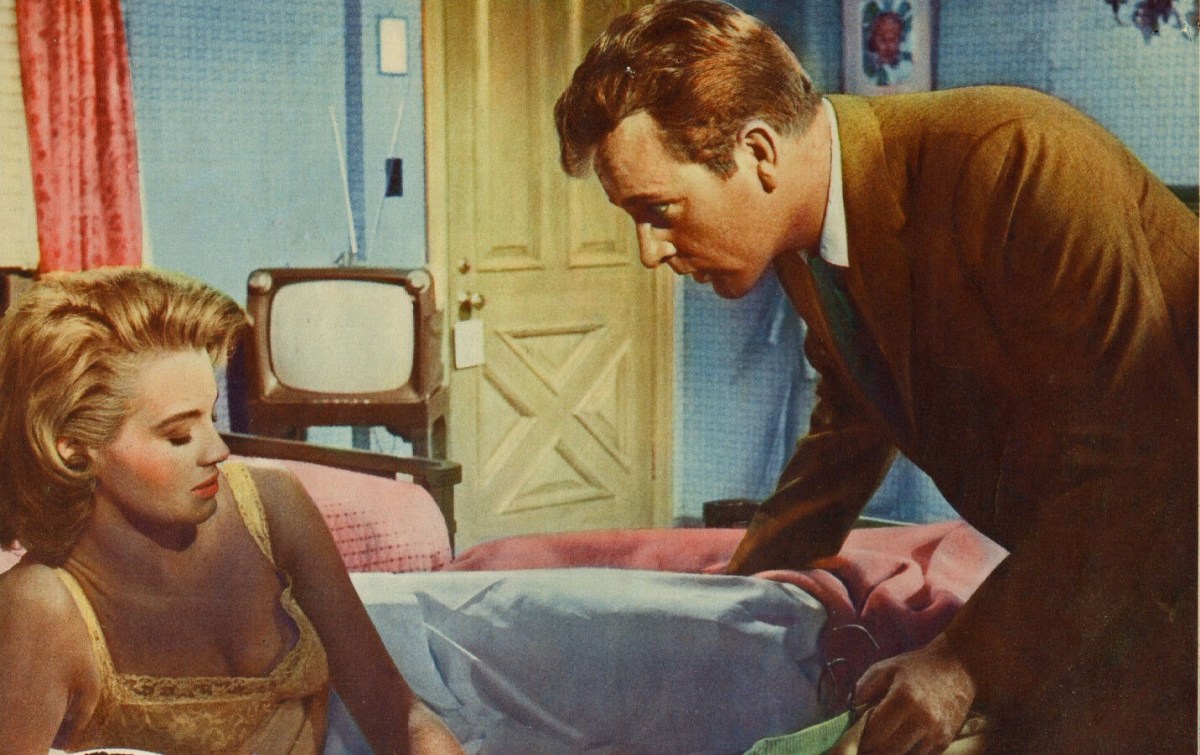
Just as Rachel Cade (Angie Dickinson) arrives at a hospital in a small village, resident Dr Bikel (Douglas Spencer) dies. Not only does the hospital have no patients, the local Belgian commissioner Col Derod (Peter Finch) wants her to leave, believing her presence will act as provocation to the local high priest Kalanumu (Juano Hernandez) and witch doctor Muwango (Woody Strode). After standing up to all three, Rachel embarks on refurbishment of the hospital aided by assistant Kulu (Errol John).
Patients remain non-existent until she cures a small boy of appendicitis, as a result of which Muwango places a curse on her that she will lose her Protestant faith and promises the local god will take his revenge on anyone who supports her. Of course, her skills are not infinite and not only is there another boy who dies in her care but she cannot cure – and does not attempt to cure – the infertile third wife of the local chief.
While she warms to her patients and they to her, she cannot come to terms with their acceptance of incest (if a husband is called away, his brother must make love to his wife), polygamy, vaginal mutilation, the sexuality of their dancing and the fact that sin does not exist in their culture. Meanwhile, she distrusts the visions seen by the most convinced of her converts, Kulu.
When the sexually repressed Rachel rejects Derod’s advances in favour of the dashing but money-oriented Dr Paul Winton (Roger Moore), thus violating her own teachings, she becomes enmeshed by the principles she holds so dearly and which the Africans refute. A twist in the tale pivots the picture on whom she will marry, the sensible Derod, the cavalier Winton, or retain her own independence in defiance of the standards of the time.
A battle of the hierarchies – the female nurse and her supporters versus male supremacy – maintains the tension but underneath is a philosophical struggle between the two faiths. The Christian religion which boasts of forgiveness is in the end unforgiving of those who break its moral code, while the African religion does not force onto its believers such ludicrous rules. On top of that is Rachel’s acceptance of her own passion, the realization that love cannot be restrained by commandment, and that men are more likely to betray her.
The reality of imperialist rule is not underplayed but since this predates the Mau Mau uprising in Kenya in the 1950s that precipitated widespread rebellion and Derod can call on soldiers for protection in the Belgian colony and is in fact a generally tolerant (though at times patronising) overseer, political issues remain in the background.
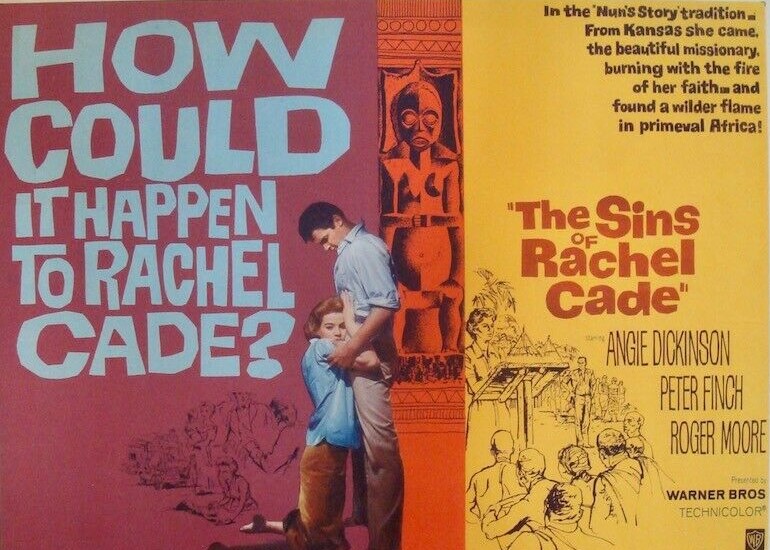
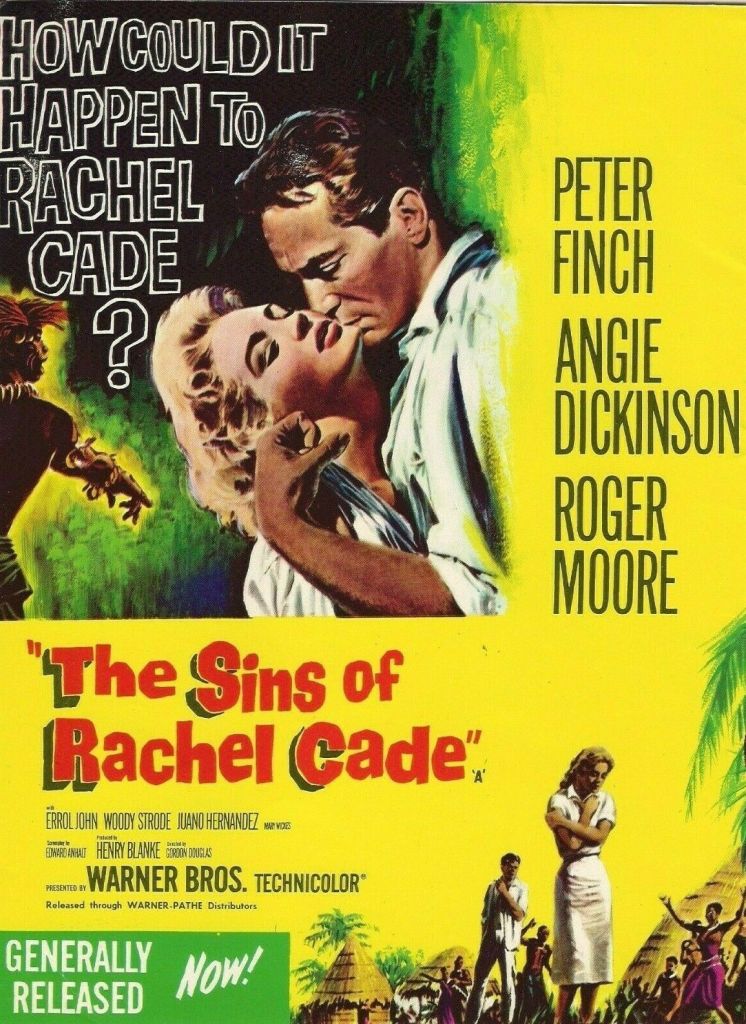
Angie Dickinson gets the movie star build-up in this British trade advertisement.
Director Gordon Douglas (Claudelle Inglish, 1961) keeps the focus on the transition of the naïve American while not ignoring nor appearing to ridicule the rituals and beliefs of the tribe – although a cynic might consider that the sexuality of the dancing, while repellant to Rachel, might be included more with an eye to attracting an audience. Overall, it appears an honest even-sided presentation, with the high priest getting the better of Rachel in arguments over the frailties of Christianity. Angie Dickinson brings conviction to a role that sees her start out a shade saintly until brought back down to earth by human weakness. Peter Finch, by coincidence the leading man to Audrey Hepburn role in The Nun’s Story, fills out his normal stoic screen personality with touches of grief. Roger Moore (Vendetta for the Saint, 1969) had not yet mastered the art of the raised eyebrow and so brought a more rounded performance to his role and is entirely believable as the lover with the mercenary streak.
The pick of the supporting parts is Mary Wickes (Sister Act, 1992) as Derod’s wisecracking housekeeper. Woody Strode (The Professionals, 1966), Scatman Crothers (The Shining, 1980), Juano Hernandez (The Pawnbroker, 1964) and Errol John (The Nun’s Story) provide stiff opposition for the incomers. Edward Anhalt (The Satan Bug, 1965) based his screenplay on the bestseller by Charles Mercer.
CATCH-UP: Featured in the Blog so far are the following Angie Dickinson pictures: Ocean’s 11 (1960), A Fever in the Blood (1961), Jessica (1962), The Chase (1966), Cast a Giant Shadow (1966) and Point Blank (1967).
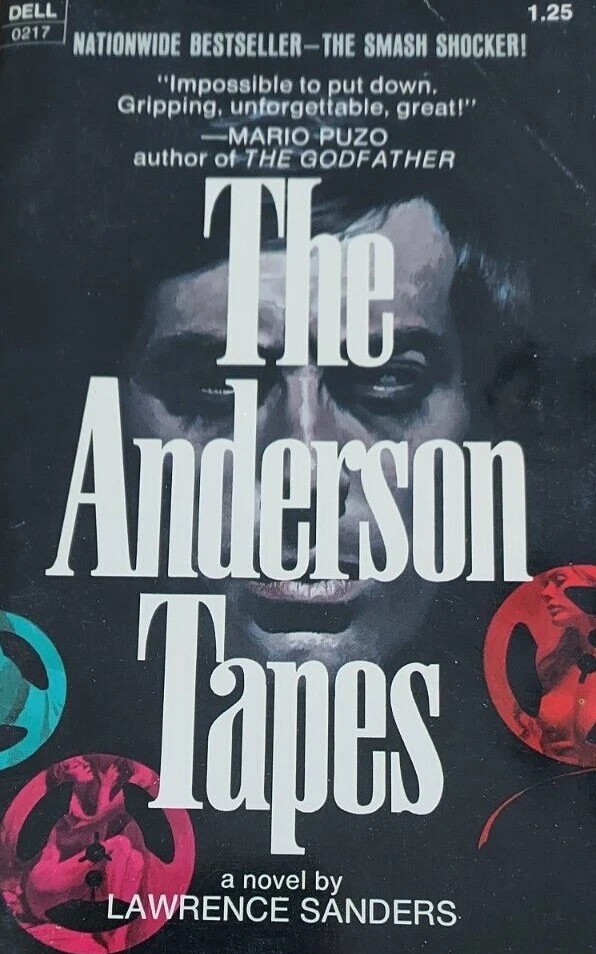
Had Sean Connery played the character of Duke Anderson as written, rather than reigniting his career it would have risked killing it off. It was already a significant ask for a star to shift from portraying good guys – even if James Bond had an immoral streak – to essaying a bad guy, though here was precedent – Paul Newman in Cool Hand Luke (1967) and Steve McQueen in some style in The Thomas Crown Affair (1968).
However, it would be difficult enough for audiences to accept a star who is two-timing his girlfriend, never mind one who in turn exhibits sadistic and masochistic streaks.
So that was the first problem for Oscar nominated screenwriter Frank Pierson (Cool Hand Luke) and not surprisingly he settles on the elimination route. The character’s sexual tendences are never mentioned. Theoretically, Pierson gets round the two-timing issue by merging the two girlfriends, Ingrid Macht and Agnes Everleigh, into one, Ingrid Everly (Dyan Cannon).
But Ingrid Everly has little connection to Agnes beyond that she lives in a luxury apartment. In the book, Agnes is a casual pickup, a woman he meets in a bar. She was separated from her husband and retained possession of the apartment, which was in his name. In order to find the legal grounds on which he could regain the apartment, her husband had bugged the apartment.
In the film, the apartment is still bugged, but by her rich jealous boyfriend Werner (Richard B Shull) so, technically, it’s Ingrid who’s doing the two-timing. Whereas in the book Agnes’s husband is perfectly happy for her to be entertaining other men as he hopes this will enhance his chances in the divorce settlement, in the film Werner is the opposite, and does not embrace the notion of what he views as his “property” being involved with anyone else. Ingrid, who was genuinely Anderson’s ex-girlfriend, in the film comes to realize a sugar daddy is a better bet than a criminal no matter how handsome. The only oddity in the picture that when Anderson is confronted and Werner explains that, via his surveillance, he knows Anderson is planning a robbery, that he doesn’t give two hoots about that.
Other changes are equally sensible. In the book, the robbery is intended to take place in the middle of the night. The ploy the thieves planned to use to get the apartment residents to open their doors was that the building was on fire. This wasn’t by triggering the fire alarm but by running from door to door, shouting “Fire! Fire!”. Pierson gets rid of that cumbersome device.
He also knocks into touch the notion that Tommy (Martin Balsam) would find supposedly legitimate reason to gain access to apartments to scout the premises in advance by pretending to be doing a survey for a civic group. In the book Tommy is a two-bit low-level hood and not involved in the actual robbery but with some knowledge of art and expensive items. In the film he transforms into a smooth-talking antiques dealer and Frank Pierson comes up with the idea that the management of the building is planning a refurbishment and wants to ensure that residents have the opportunity to align their interior décor with what is being planned.
In the book as well as eight luxury apartments, there are, on the ground floor two businesses, a doctor and a psychiatrist, but these are also thrown on the scrap heap, although in the book the doctor turns out to have $10,000 hidden away from the taxman as well as medicines that could be sold on the black market.
The pompous Capt. Delaney (Ralph Meeker) who organizes the offensive on the robbers, is drawn virtually word for word from the book. But there’s not room to incorporate all the criminal slang. I was especially intrigued to discover that what I always believed was called “a big job” was known to the criminal fraternity as “a campaign.” Nor the details of organizing such a robbery.
And there are a couple of interesting snippets in the book that Pierson had no room for in the movie. Firstly, author Lawrence Sanders includes verbatim a newspaper report dated 2nd July, 1968, to the effect that a new electronic communications office has been opened by the police to help cut down, initially, response times. The report included another fascinating fact. Prior to this date to report a crime the American public had to call a seven-digit number. That was reduced to the ”911” emergency number that operates today.
The second element is the call to unite all the different operations running criminal surveillance. Here, including Werner, there were four separate surveillance teams, none in contact with any of the others.
The book is a terrific read. I devoured it in one sitting. It is Sanders who introduces the flash forwards, interviews or somesuch with victims, while in real time the robbery is under way.
But the screenplay is an ideal example of how to trim a book to the bone without removing any of the essentials.
Sanders was also the author of The First Deadly Sin which was filmed with Frank Sinatra in 1980 and reviewed here earlier.
Elmore Leonard novels were catnip to the movies. From The Tall T (1957) and 3:10 to Yuma (1957) a shelf load of his books have been filmed by Hollywood – some of them (3:10 to Yuma, 52 Pick Up,The Big Bounce, Get Shorty) twice. What he brings to the table is a lean story and an interesting lead character, whether in the western – Hombre (1967), Joe Kidd (1972) – or crime division such as Mr Majestyk (1974) or Get Shorty (1995).
What you probably don’t realize is that pulp fiction (books that made their debut in paperback) were generally short, limited to 50,000-60,000 words rather than the 120,000-150,000 blockbuster “airport” novels, published first in hardcover, that dominated the bestseller lists. The shorter novel led to a leaner narrative, less characters, little in the way of subplot and information drop.
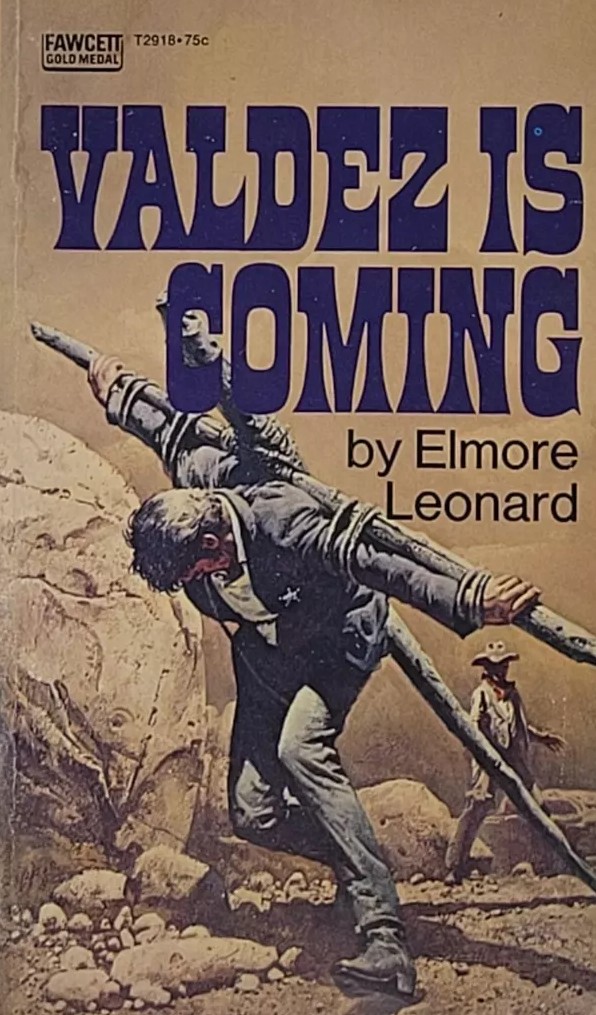
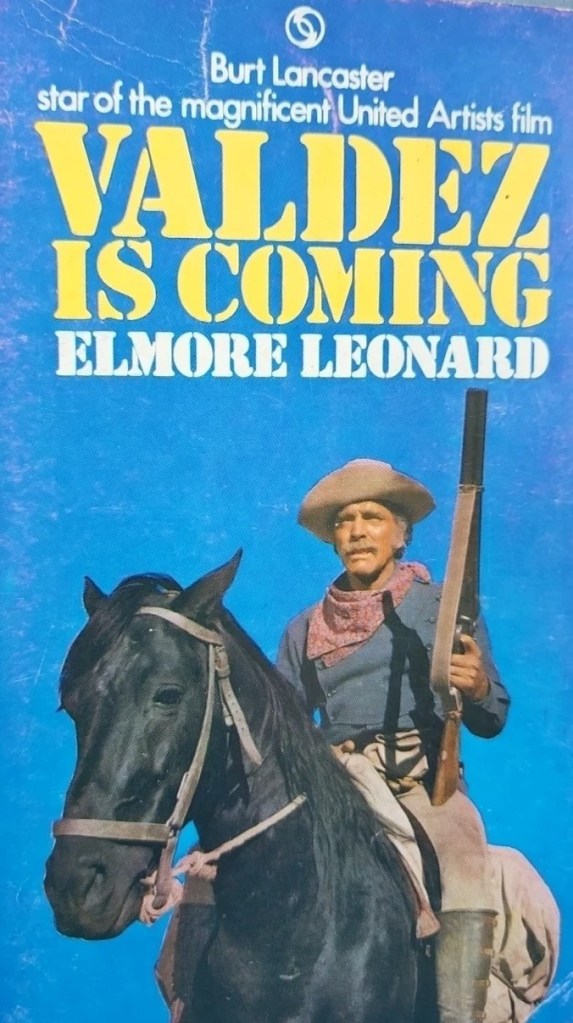
Valdez Is Coming made a speedy transition from paperback (published by Fawcett in the US in 1970, though it did achieve a hardcover edition in the UK) to movie (United Artists release 1971) and it’s interesting to see what changes, if any were made by screenwriters Roland Kibbee (The Appaloosa, 1966) and David Rayfiel (Castle Keep, 1969). You could literally transpose Leonard’s dialog and it would easily stand up in a movie. So the basic, very simple, plot is retained.
Mexican sheriff Valdez (Burt Lancaster in the film) gets it into his head that the mistaken killing of an African American requires monetary compensation and determines that cattle baron Frank Tanner whose mistake led to the killing should be the one to cough up. Tanner sees is differently, sends Valdez packing and when the sheriff returns a second time to plead his case exacts brutal punishment in the form a rudimentary crucifixion.
This triggers a personality change in Valdez. He reverts from being the subservient suit-wearing lawman to the feared sharpshooter who previously hunted down Apaches.
So one of the alterations in the book to film is this transition. In the book we know from the outset he has kept buried his older self in order not to attract attention and to live a peaceful life. That is verbalized via internal monologue and a scene with brothel keeper Inez, who is absent from the film. In the movie his past is visualized, as he pulls out from under his bed a hidden armory and a photo of his previous self.
In the film he is introduced riding shotgun on a stagecoach. He works part-time as a “constable” rather than a sheriff. In the book riding shotgun is the bigger job, keeping the peace requiring little of his time.
All the main incidents – initial rebuff by Tanner, the shooting of bullets around Valdez, the crucifixion, the kidnapping of Tanner’s wife Gay (Susan Clark), the involvement of wannabe gunslinger RL Davies (Richard Jordan), the picking off one-by-one of Tanner’s men and the final stand-off (a Mexican stand-off if ever there was one) – come straight from Elmore Leonard.
But the screenwriters make some critical changes. In the film the kidnapping is accidental, Gay snatched as a hostage as Valdez escapes from a gunfight at Tanner’s house. In the book, there’s no shoot-out at the house, Valdez kidnaps Gay in order to have something to trade with.
In the film it’s – rather surprisingly given his role so far – the weaselly gunman Davies who cuts Valdez free of the bonds of the crucifix. But that’s a considerable simplification from the book. For quite a long time in the book, Valdez believes that Gay cut him loose. And until Davies challenges that assertion, she lets Valdez believe it was her.
For the biggest change is the screenwriters’ decision to eliminate the Valdez-Gay romance. After being captured, in the book she makes overtures to him, whether initially out of survival instinct is unclear, and they make love and he begins to fall for her. We learn why she killed her husband – domestic abuse. Also that Tanner is a convicted felon and that he is a gunrunner supplying arms to Mexican rebels.
So by the time we come to the end there’s more riding on it in the book. Tanner is left isolated not just by his gang boss backing off but by his lover siding with Valdez.
One other point, I noted that in the film the guy called El Segundo (Barton Hayman) was referred to as “the segundo” (in lower case letters) in the book. So I looked it up. Literally, “Segundo” means “number two” which made sense either way.
I’ve been so used to comparing blockbuster novels with their movie adaptation and trying to work what they kept in – and why – that it never occurred to me that one of the reasons so many pulp fiction books were purchased by the movies was because screenwriters had to tussle with less plot and fewer characters.
If you’ve never read any Elmore Leonard this is as good a place as any to start.
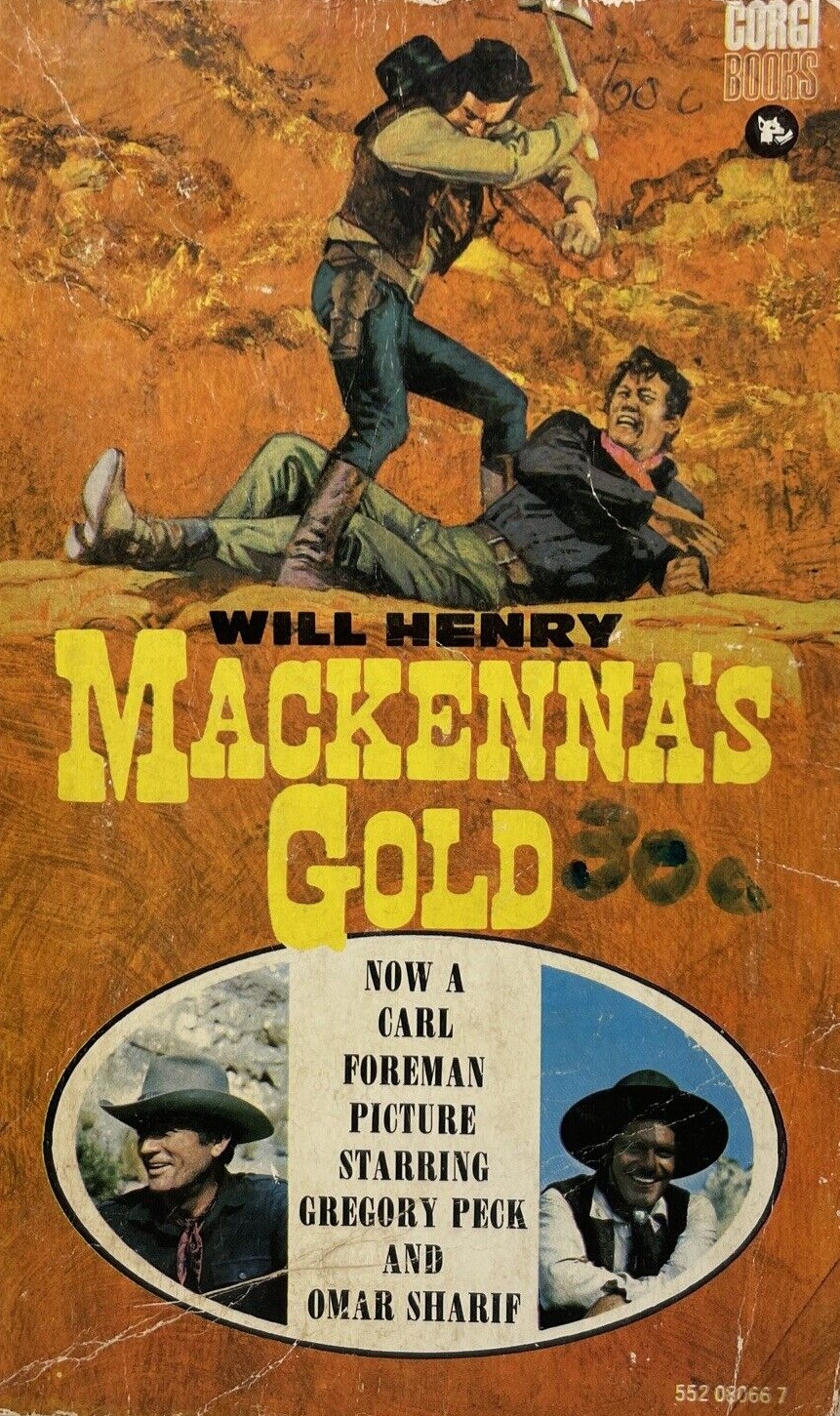
Will Henry’s 1964 source novel was, by today’s standards, a slim volume. The principal idea of Mackenna being given a map by a dying Indian comes from the book, as does the capture of the white woman (named Francie in the novel), and the surprisingly erotic description of Hesh-Ke’s attempted seduction of Mackenna in the pool, the Apache mysticism, and, equally surprisingly, the earthquake denouement.
Some white men do join the party, but they are of rougher stock, the “Good Men” of Hadleyburg entirely producer Carl Foreman’s invention. Foreman turned Mackenna into a lawman rather than just a prospector, made the map more tangible (in the book it was drawn in the sand), gave Mackenna a past with Hesh-Ke and with the outlaw Colorado (named Pelon in the book), and, just as Sergio Leone did with Henry Fonda in Once Upon a Time in the West, realized that a handsome attractive villain was far more interesting than the “jug-eared, ugly man” described in Henry’s book.
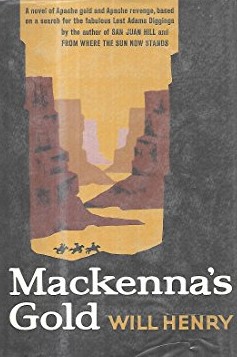
First edition cover.
Foreman made Tibbs a sergeant and added 20 years to the raw-boned youngster of the book. But in the original, Hesh-Ke was killed, accidentally, just after the pool incident, and it was another of the outlaws, Hachita, who killed Colorado so that the climactic fight on the ledge was between the axe-wielding Hachita and the unarmed Mackenna rather than between Mackenna and Colorado, but Henry had the woman taken hostage kill the Indian.
The various shoot-outs and chases are primarily a Foreman invention. He gives Mackenna more depth, and the vices of gambling and alcohol. Most important of all, it was Foreman who added the visual grandeur. There is no Shaking Rock in the source material, and no waiting for sunrise or for a shadow to point the way to the entrance to the canyon.
A writer-producer was the worst kind of hyphenate as far as a director was concerned in that, as suggested previously, the producer might be more apt to protect his original vision and dialog than adapt the screenplay, which is always only ever intended as a blueprint, to other ideas as the movie went into production.
The opening of the picture is pure Foreman, on a par with the introductory section of The Guns of Navarone, and the extensive use of narration ran counter to a director who felt the camera should tell the story. The greed aspect is spelled out well enough in the original novel, and comparisons with the classic examination of how gold turns men inside out was portrayed best as far as most people were concerned in The Treasure of the Sierra Madre (1948) so quite why Foreman felt obliged to hammer the point home so obviously in Mackenna’s Gold is anybody’s guess, except that the producer saw himself as a man with a message, the anti-war themes of The Guns of Navarone (1961) and The Victors (1964) having eliciting critical approval. You get the impression the original novel didn’t require as much tampering as this to be turned into a more than adequate picture.
Will Henry was a pseudonym, one of two he used for writing westerns, the other being Clay Fisher. His real name was Henry Wilson Allen and he began in the movies, joining MGM in 1937 as a screenwriter for cartoon shorts. He also wrote screenplays for cartoon shorts under the pen names Heck Allen and Henry Allen. Many of these were Tex Avery cartoons written between 1944 and 1955 which were considered some of the funniest ever made. He also worked on Woody Woodpecker and other cartoon characters. When he started writing novels in the 1950s he did so under a pseudonym to avoid attracting unwanted attention from his studio employers. He was a five-time winner of The Spur Award including for From Where the Sun NowStands (1960) – which also won The Saddleman Award – and The Gates of the Mountains (1963).
Westerns made from his novels were Santa Fe Passage (1955) starring John Payne, The Tall Men (1955) directed by Raoul Walsh and starring Clark Gable and Jane Russell, Pillars of the Sky (1956) starring Jeff Chandler, and Yellowstone Kelly (1959) starring Clint Walker. At the same time as Mackenna’s Gold was sold, his 1960 book Journey to Shiloh was being set up under the title Fields of Honor to be directed by veteran Mervyn LeRoy and when this fell through was made into a film under the original title in 1969 with newcomer James Caan while Who Rides with Wyatt would be released as Young Billy Young starring Robert Mitchum in fall 1969.
In the Alistair MacLean book there’s no speedboat chase through the canals of Amsterdam. There’s not one female assistant but two, Maggie (Barbara Parkins in the film) joined by a Parisian, Belinda, (played by Suzanna Leigh, except her part was cut) on her debut assignment. The espionage newcomer’s role in the book is to question the actions of boss Paul Sherman (the film’s Sven Bertil-Taube), provide more of an outsider’s perspective on his character, since, as his lover, Maggie is much more accepting of his behavior. I can see why Belinda never made it into the film, the movie’s emotional heart, little as it is, coming from Sherman’s relationship with Maggie.
Needless to say, Paul Sherman is British in the book, not American, as is Maggie. Amsterdam cop Inspector Van Gelder (Patrick Allen) doesn’t have a niece, Trudi (Penny Casdagli), addicted to heroin but an adopted daughter. In the book, he is far closer to her than in the film, to the extent of conducting an illicit affair.
It’s always fascinating to see what changes from book to film especially since, as in this case, author Alistair MacLean has a screenplay credit, and that, from Where Eagles Dare (1968) onwards, he tended to write his books with movies in mind.
Like many Alistair MacLean characters, Sherman has a physical disability, the two sides of his face not matching following plastic surgery after a plane crash. So that’s the first element from the narrative of the novel (it appears on the opening two pages) excised from the novel. Nor does the book begin with an anonymous assassin gunning down three addicts. Instead, it starts at the airport where Sherman witnesses a colleague murdered.
Maggie doesn’t meet him in Amsterdam (as in the film) but is his companion on the plane along with Belinda. The novel sees Sherman attempting to prevent the shooting of his colleague Duclos rather than being a mere observer to the airport slaying. And again, rather than keeping out of the way to safeguard his anonymity, he pursues the killer and in so doing knocks over Astrid Lemay (Ania Marson).
On leaving his hotel (via the roof as in the movie) Sherman dodges his follower by nipping into a restaurant not (as in the film) the room of a sex worker. His pursuer is old not young. Sherman follows him on the subway not by foot. But when the tables are turned and Sherman is the pursuer, the man does enter the Morgenstern premises (trimmed from the book’s more unwieldy Morgenstern & Mugganthaler and with only one owner rather than two partners). The man he finds in his room is not the assassin but the hotel floor-waiter, an addict. After a fight, Sherman dangles him over the balustrade before killing him.
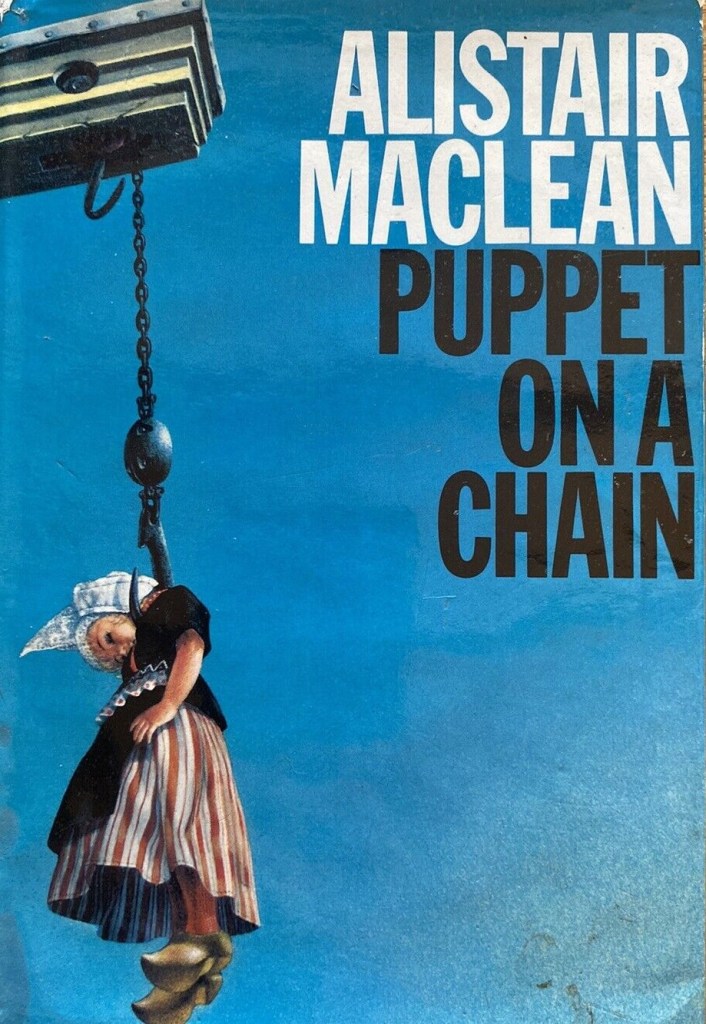
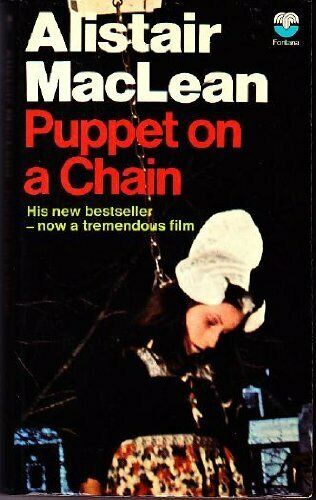
The paperback movie tie-in – see below – was virtually identical to the original cover of the first edition of the hardback.
Sherman’s first meeting with Colonel de Graf (Alexander Knox) is in the latter’s office not the more scenic canal boat as in the film. Understandably, the movie attempts to cash in on Amsterdam’s tourist and more sordid elements. The movie makes much more of the canals and not just the aforementioned prostitute-in-the-window (the only capital in the world where sex workers are a tourist attraction). The nightclub is tamer in the book, little more than an old-fashioned bait-and-switch type of strip club, and certainly lacking the panache of the more modern variety with topless waitresses and cool sexy dance routines worthy of a Bob Fosse or at least Pan’s People. But Morgenstern isn’t one of the club’s customers in the book and neither does Astrid reject his advances. In fact, one of the sub-plots of the book is that Astrid makes herself scarce, flying out of Amsterdam.
Obviously, a book can invest more in characters. Trudi is introduced as having “the nicest voice for speaking bad English I’d come across in a long time” but rather than, as with the film, just speaking of her addiction, Sherman simply leans over and rolls up her sleeves.
With two female assistants rather than one, the job of tailing various characters can be split. So it’s Belinda who follows Astrid from the church. Although the notion of the puppet dangling on a chain is a major theme, it’s not the way Maggie dies as in the film. Instead she is pitchforked to death by a bunch of women in what appears, in true Hitchcock fashion, initially to be little more than a harmless pagan rite. And the impotent Sherman gets to watch rather than just discovering the corpse as in the movie.
That’s about the most horrific scene in the book but it’s closely matched by Sherman sticking two recalcitrant villains, the nightclub owner and a slimy associate, in a safe until they decide to spill the beans. These two guys are part of a sub-plot the movie just doesn’t have time to fit in.
The purpose of having a pair of girls in the book is to heighten the tension when Maggie dies, leaving Belinda, betrayed and captured, ready to endure hanging by hook.
Alistair MacLean is clearly a student of heinous ways to die, topping hanging and murder by pitchfork with torture by the high-pitched amplified sound of chiming clocks. Quite why a villain sophisticated enough to dream up such means of death would tie a captive up with electrical wire is anybody’s guess. You couldn’t expect a criminal to imagine that his opponent would have the brainpower to consider sticking the exposed wires in a plug, thus shorting the power supply and ending the torture. But film follows book in anointing this unlikely escape. Once free, there’s no thought in Sherman’s head, as in the film, of making use of a speedboat and pursuing the villain through the canals. He merely takes the more normal route back to the puppet premises.
As I mentioned, the film makes greater use of the canals. When Sherman is trying to find the boat, Marianne, in the film he takes to the water, in the book he remains on shore and locates it via binoculars. The scenes of Sherman getting aboard the barge and the clandestine collection of contraband from the sea are largely lifted entirely from the book, although there’s no helicopter involved as in the film.
The climax of the film, as in the book, involves Trudi revealed as not an addict and Van Gelder trapped on the hauling chain. Shame they left out the wonderful MacLean line, “Her mental age is not eight, it’s older than sin itself.”
As you may be aware, this blog is quite unusual, you might say unique (although to prove it I’d have to check a gazillion sites) in paying attention to the way films are made rather than just the movie itself. Casting issues, directorial squabbles, source material, the myriad on-set dramas are all covered here.
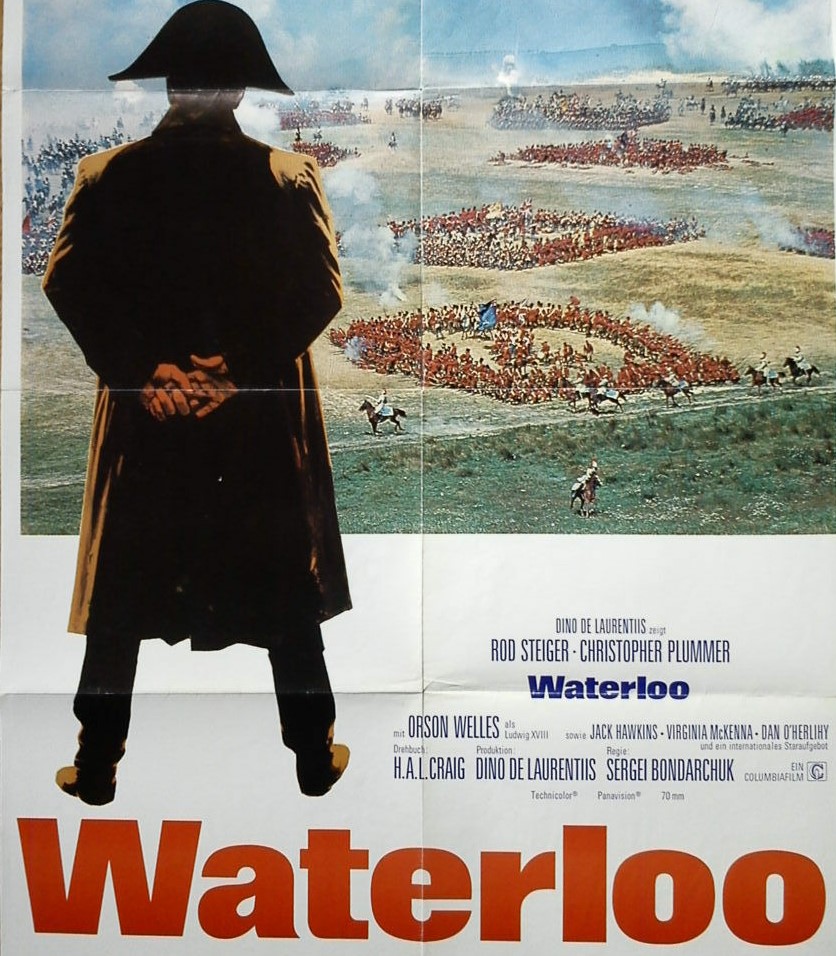
Waterloo (1970). The making of the film was more fascinating than the film itself.
Ice Station Zebra (1968). Alistair Maclean’s Arctic thriller went though a ton of casting changes and embraced new techniques to get to the screen.
In Harm’s Way (1965). No Otto Preminger picture is without incident but with one of his most top-notch casts including John Wayne and Kirk Douglas it was always going to be an incendiary set.
The Satan Bug (1965). Director John Sturges got into all sorts of tangles trying to film Alistair MacLean plague thriller.
Cast A Giant Shadow (1966). Melville Shavelson, better known for comedies, risked his reputation on this Israeli biopic, re-teaming John Wayne and Kirk Douglas with Angie Dickinson and Senta Berger as the love interests.
Spartacus (1961). Not the version you know so well but the one Yul Brynner attempted to make at the same time.
Naked Under Leather / The Girl on a Motorcycle (1968). The erotic, the psychedelic and controversial clashed in Jack Cardiff drama starring Marianne Faithfull and Alain Delon.
Battle of the Bulge (1965). The epic Cinerama production had to see off a rival production before encountering horrendous weather in Spain.
The Guns of Navarone (1961). After first choice stars dropped out, the production was nearly cancelled when it was scheduled to film in a war zone. David Niven nearly died, the biggest set was destroyed, the budget muschroomed and producer Carl Foreman battled Columbia in an attempt to win a prestigious roadshow release.
100 Rifles (1969). Never mind the miscegenation, the violence caused an uproar as Raquel Welch and Jim Brown teamed up in more ways than one to topple a ruthless Mexican regime. Also starring Burt Reynolds. Hot sex and an even hotter shower scene.
When Global Box Office Didn’t Exist. In the 1960s movies lived or died by the U.S. box office figures. In an exclusive report, I reveal how movies actually fared when you took overseas box office into account.
Sink the Bismarck (1962). British World War Two drama overcomes endless obstacles.
The Deadly Companions (1961). The producers were so dismissive of Sam Peckinpah’s maiden effort that the only way they could think of selling it was on the back of a nude dip in a pool by star Maureen O’Hara.
The Cincinnati Kid (1965). Another Peckinpah disaster. He was fired for filming an unscripted nude scene. Steve McQueen was sent to Las Vegas to gamble with the studio’s money while they found a replacement.
Night of the Living Dead (1968). Poster boy for the low-budget shocker. Astonishing that it ever saw the light of day.
The Shoes of the Fisherman (1968). MGM roadshow that tried to fuse the Vatican and the Communists.
Top of the Box Office Flops – box office figures were much harder to come by in the 1960s. Here, I exclusively reveal the extent of the films made by United Artists between 1965 and 1969 that bit the dust.
They Shoot Horses, Don’t They (1969). Originally mooted in the 1930s, various previous developments were halted in their tracks for financial or artistic reasons.
The Bridge at Remagen (1969). The location of the actual bridge for the famed World War Two battle was long gone, but when the production opted to film in Yugoslavia it hadn’t counted on being caught up in an uprising.
The Borgia Stick / F.B.I. vs Gangsters (1967). How one of the earliest movies specifically made for American television won a cinema release overseas. Rather than investing in occasional one-offs, Universal wanted to create a brand, the “World Premiere” series, but it had to rely on up-and-comers like Inger Stevens and fading stars like Don Murray.
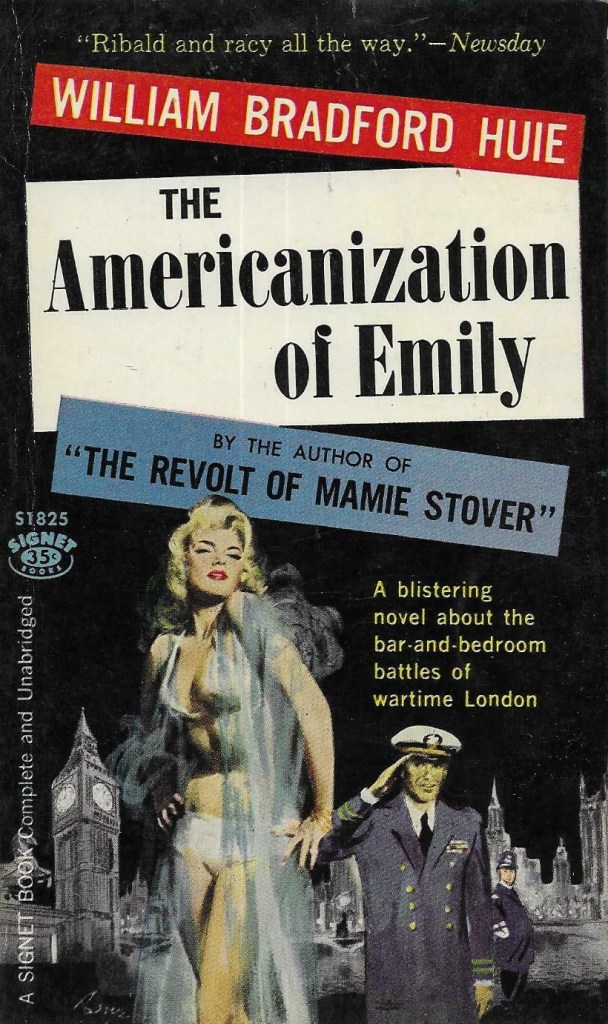
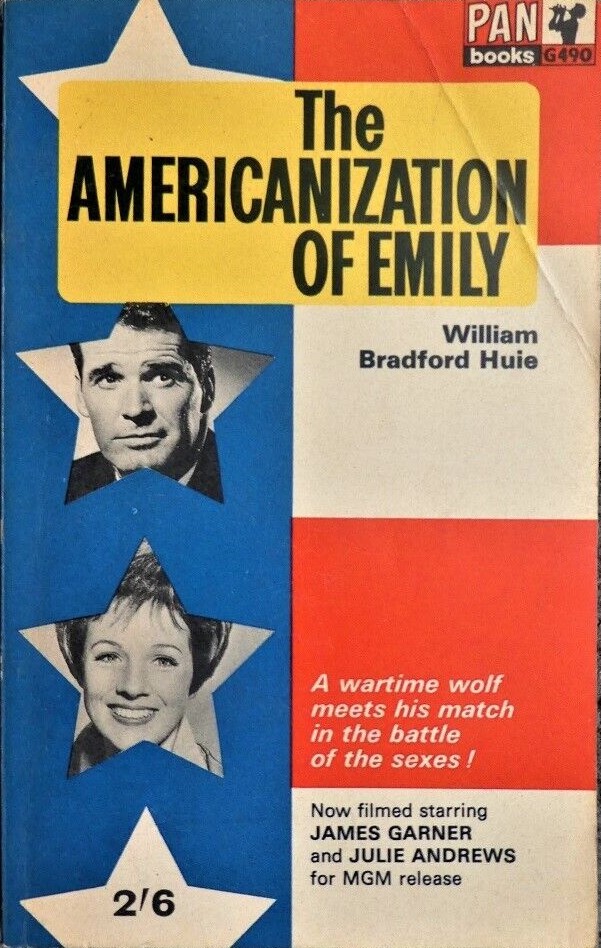
Author William Bradford Huie’s cry of outrage could be heard from one side of Hollywood to the other.
Not that anyone would commiserate. A bestselling writer dealt with the movie industry at his or her peril. If you succumbed to the lure of Hollywood gold you might as well kiss goodbye to any expectation they were actually going to film the book you had written.
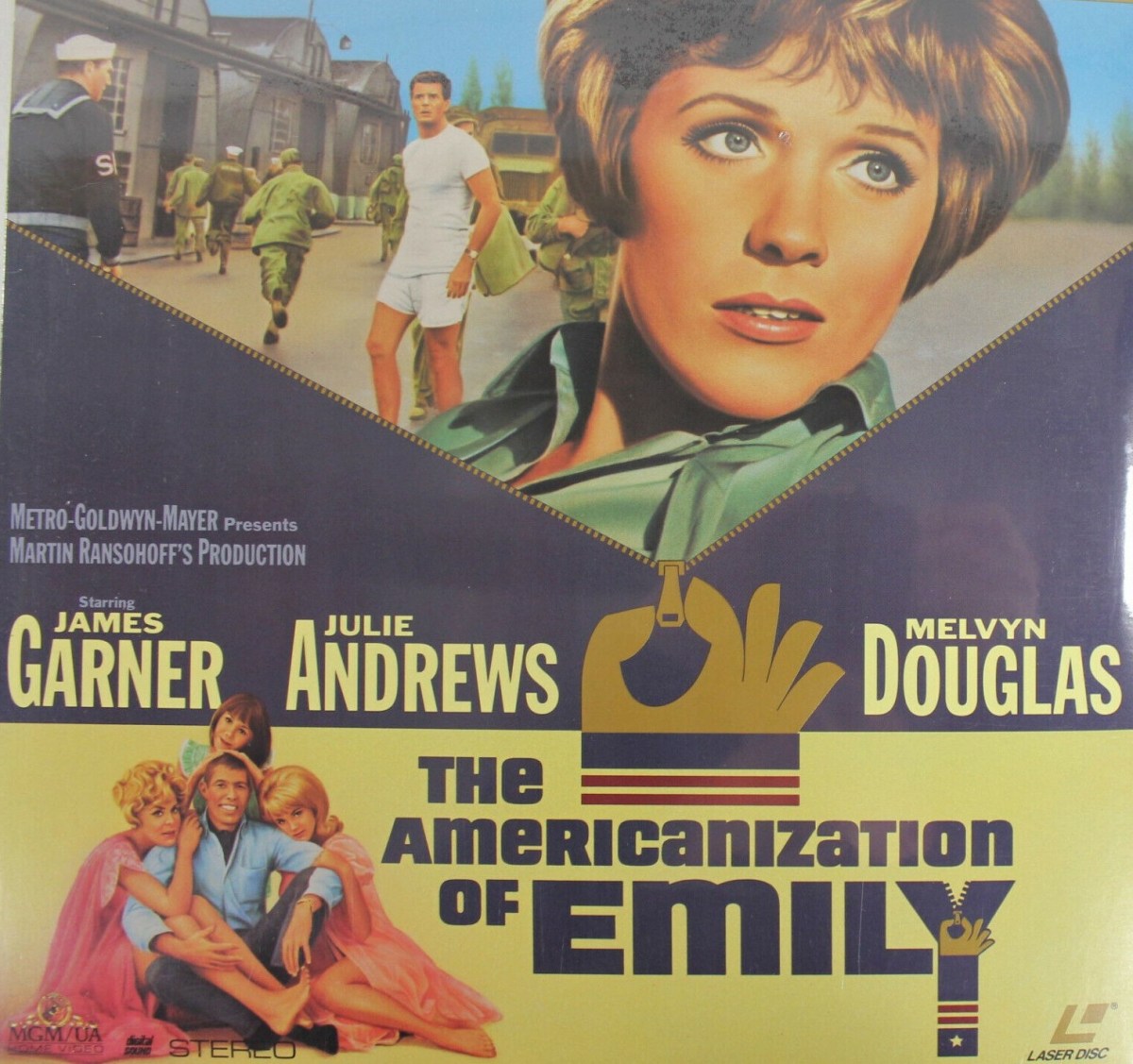
In this case, screenwriter Paddy Chayefsky stuck to the plainest of knitting, the romance between oversexed Yank Lt Col Edison (James Garner) and English rose Emily (Julie Andrews). He kept in the “dog-robbing,”* Edison stashing away crates of steaks, whisky, nylons, chocolates, whatever will keep the admiral happy and at the same time smooth the path for whatever officer or politician he was trying to schmooze.
But Huie’s tale went down a different route that Chayefsky chose to ignore. Yes, D-Day played a part, forming the climax, and the author did intend to score a political point. In Huie’s version, Edison’s role in D-Day was merely to film some of the proceedings. Keen to highlight the risk to the common soldier, the hero was prone to film the sordid aspect of war, focusing as much on death and injury as heroism. He even opened with a prologue, a dedication to the three men who died in the making of the film.
But his film never saw the light of day. Or at least not his director’s cut. He was forced to eliminate all scenes of dead Americans. Dead Germans were okay, just not dead Americans. Especially irksome was a sequence showing bulldozers covering American corpses with sand. He only won one battle with his superiors, refusing to stick in the cliché of a chaplain praying over sailors before they embarked on the D-Day vessels, but only because there was no chaplain present and he refused to shoot such a scene.
Of course, since he didn’t die in Huie’s book, there was no reason to come back from the dead. In fact, post D-Day, he and Emily spend a good chunk of time together before he is despatched elsewhere on another task with the admiral and there is a happy ending, fourteen months later, a reunion as Emily turns up where he is now stationed.
So where did all the cowardice malarkey come from? The mind of Paddy Chayefsky is the simple answer. In the book, the hero, as much as the next man, does not want to die in the war, but his fears are the normal ones, he doesn’t go out of his way to avoid action, profess his cowardice and stand up for the rights of cowards everywhere. So the book isn’t larded with long speeches about the horrors of war.
What attracted a producer like Ransohoff to the picture was the film the hero wanted to make. Not one that glorified war. A film that refused to see heroism as a great and noble thing was, of course, the same as sticking up two fingers to all those who could only justify war if it provided the opportunity for heroism as a sop to the wives and children the dead left behind. It was a strong point to make. And, prior to filming, there was plenty Edison had to say on the subject. While the admiral saw the landing as a great success because the casualties were much lower than expected, Edison felt for every man killed.
There’s no need in the book for the admiral to be a loony because it would be quite plausible to film for documentary or PR purposes action on World War Two beaches – what were John Ford and other famous directors doing if not that? Lt Cummings (James Coburn) who comes up with the dastardly idea of killing off Edison does not come up with such a dastardly idea in the book. In fact, in the original novel he’s a relatively minor character. And the much-vaunted nudity, revolving in the main around Cummings, is not particularly obvious in the novel, though Huie is perfectly blunt about the role of the bulk of the women. The novel opens with the classic line: “Twelve Englishwomen, known as Sloane’s Sluts, served America during the Second World War.”
However, the said Sloane is eliminated from the film, in order to provide the immoral Edison with something of a moral tinge. In the movie, with so many women easily available, he doesn’t indulge beyond a bit of bottom slapping. But in the book, he has sex with said Sloane while romancing Emily and again at the end while separated from her.
The Chayefsky version is peppered with dialogue about war that is primarily, even though Edison’s life is at stake, in the aesthetic vein. Huie, on the other hand, provides a salutary commentary on the war, filling the reader in on aspects rarely covered, the kind of unfamiliar material that would later be the bedrock of the airport bestseller like, well, Arthur Hailey’s Airport.
* “A dog-robber is a personal attendant of a general or an admiral. To ensure his superior has the best food and lodging, a dog-robber is willing to rob not only troops, widows and orphans but even the goddam dog.” So runs Huie’s description, a little note at the bottom of a page just in case the reader did not quite work out to what depths this ultra-scrounger would go to satisfy his boss.
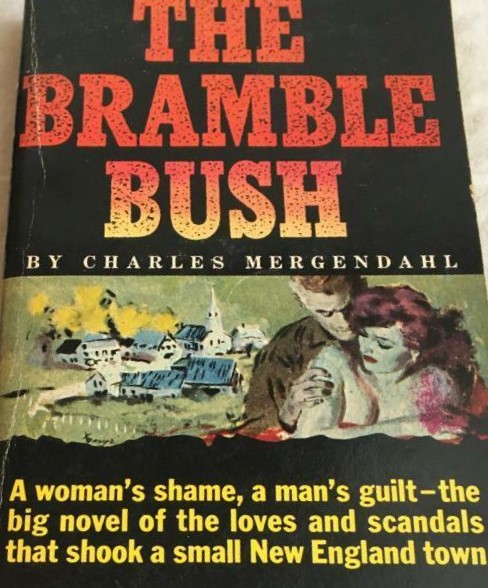
Few novels have been as abruptly shorn as Charles Mergendahl’s massive bestseller – seven million copies sold – The Bramble Bush. The last quarter of the original story was just dumped. For screenwriters seeking to heighten every emotion this was a very strange decision for it is in the last section that the book delivers huge dramatic punch.
The film – SPOILER ALERT – ends with Guy (played in the film by Richard Burton) judged not guilty of the murder of dying best friend Larry. Guy’s one-night stand with Larry’s wife Margaret (Barbara Rush) has made her pregnant but now widowed she leaves him on the grounds that he will be unable to live with what he has done. It’s a sad enough ending but it’s nothing compared to the book.
The trial section takes place three-quarters of the way through the novel. In the film, it is placed much closer to the end so there are only five minutes or so to tidy up in a rather ho-hum manner, nothing highly dramatic, no floods of tears, just Margaret leaving him behind.
Following the trial in the book, however, Margaret’s departure is much more sudden. There is no goodbye. She just vanishes. While judged innocent of murder, Guy has lost his license to practice so in the absence of professional commitments is free to spend months hunting for her. And find her he does.
The dramatic point you would have thought would be simply whether she can ever accept as a lover the man who has injected her husband with a fatal dose of morphine regardless of whether this was done with the best of intentions and could be construed as a mercy killing. But the author isn’t finished with these characters yet. Yes, they are reconciled and in fact get married.
But it’s too late. Margaret has tuberculosis – a considerably more dangerous condition in those days than now, and in some cases as untreatable as the incurable Hodgkin’s Disease that afflicted her husband. That puts both her life and that of her unborn child in danger. Guy faces another dilemma, just as he did with her husband. If he has to choose, whose life would he want to save.
The baby is born, and both survive. But only for the time being. Margaret’s TB has not abated. Since Guy’s license has by now been restored, they return to the town. But he’s in for a shock. The town is outraged. The public which had stoutly defended him and the jury which had set him free now turn against both, aware through the arrival of the child that they must have had an affair while the husband was still alive, which therefore clouds the issue of exactly why Guy committed euthanasia.
But before Guy can decide to move elsewhere and nurse his sickly wife and care for his newborn child – called Larry after the dead husband – Margaret dies.
That turns the book into a three-handkerchief tragedy that the film never was. Except for running time, you wonder why the screenwriters elected to miss all this out. Maybe the movie would have run over the two-hour mark, perhaps two hours fifteen minutes, but that would hardly make it so undesirable to exhibitors nor so offensive to the public given the ending was so much more dramatic.
Even then, the author isn’t finished. He provides an ironic ending The rejected Fran – dumped also by this point by Bert, Guy’s lawyer– determines that she will look after the child, allowing Guy to recover from his ordeal. And there is the hope – although she would not press her love for Guy on him – that in due course he will come to appreciate her and reciprocate her love.
Quite a different ending indeed from that foisted on moviegoers. Hard to say whether readers were disappointed, but when a novel is such a huge success it is generally because the public likes the story the author has devised. So to rob them of that seems extremely odd.
The novel had raced to the screen. The book was published in September 1958 and the film opened in February 1960, barely seventeen months later. When the gap between novel and movie is so short, it generates feverish public anticipation. And it seems almost perverse to deny the waiting audience the movie they expected.
Naturally, in the transition from book to screen there are other eliminations – and additions. And there is also the usual welter of changes made for no particular reason, for example the town of East Dereham becomes East Norton in the film.
Certainly, the aim of a movie being to heighten drama and combine disparate elements into a more cohesive whole, you can see why in the film it raises the stakes for the lawyer Bert Mosley (Jack Carson) to already be campaigning for district attorney rather than, as in the novel, only dreaming about it. Although both his parents are dead, Guy came from far more prosperous stock in the film than the book, the hospital named after his father in the film but not the novel.
Some of the changes must have seemed to create more drama, but I’m not so sure. What difference did it make whether it was Guy or the dying Larry (Tom Drake) to be the one returning home? In the film it’s Guy, in the book Larry. In the book Guy is kind to the town drunk Stew (James Dunn) but it’s the opposite in the book, hostile and physical abusive to him from the outset. In the book we learn why – Stew was Guy’s mother’s lover and their affair triggered the suicide of his father – from an internal monologue, but in the film this plays out in more dramatic fashion when Margaret confronts Guy about what she sees as his unfair treatment of the older man.
There’s an elimination that’s so shocking you can’t understand why it was left out by the screenwriters. In the book we discover that Stew is in fact Guy’s father, a fact ignored in the film. And in the last section of the book when Guy is tracking down Margaret in different towns he takes Stew’s surname as his own. And one core element of the film – Larry pushing Guy and Margaret together – is the screenwriters’ invention. (Perhaps audiences would view Guy in a lesser light if he simply took advantage of his friend’s illness to sleep with his wife). And to tie things up more neatly, it’s Guy in the film who prescribes sedatives for Margaret whereas in the book that’s not part of his role.
On the other hand Larry’s father Sam is hostile to Guy for reasons that are kept from us in the film – but in the book we find out it’s because Sam blames Guy’s father (also a doctor) for his wife dying in childbirth, an incident that caused him to lapse into the insanity mentioned in the trial scene in the film.
You can see why some elements of the book are not included. The creepy newspaperman Welk (Henry Jones) who blackmails Fran (Angie Dickinson) into posing nude for him later dupes his assistant into doing the same. Bert falls for a tough Boston reporter Sylvia for whom he quits town and dumps Fran. On discovering she is pregnant by Guy, Margaret’s initial reaction is to seek an abortion. And there’s a section where hospital chief Dr Kelsey and Fran discuss the various ethical ways doctors have of letting exceptionally ill babies die. The judge suggests to the jury that Guy could be acquitted due to temporary insanity. And there is a bunch of peripheral characters whose main purpose is to highlight the jealousies inherent in small-towns.
But there are two character turnarounds the screenwriters choose to ignore. The first is that the drink-sodden Stew becomes a recovering alcoholic after discovering he is a grandfather. The second is more touching. After Fran was rejected early on by Guy and later dumped by Bert she had resigned herself to a life of “doing terribly immoral things.” But the book ends with, as mentioned above, her taking a huge emotional leap by giving herself the task of nursing both motherless child and widowed father.
It’s always fascinating to see how screenwriters tee up a book for the big screen treatment, deciding what to leave in and what to take out, occasionally (as in Mirage, for example) using little more than the title and the original idea and jettisoning the rest. Of course, limitations may be imposed on the screenwriters of which we are unaware, star demands or budget impositions and other factors. Here, I felt that screenwriters Milton Sperling (also the producer) and Philip Yordan did not get the best out of the book.
Shooting might have been less stressful and cheaper if director Martin Ritt had stuck to his initial schedule but when the shoot start-date was pushed back from late fall 1964 to January 1965 he lost original star Burt Lancaster (planning to play the original Englishman as a Canadian). At relatively short notice, Richard Burton stepped in, but for an eye-watering fee of $750,000, at that time the biggest salary paid in Hollywood. (Due to Ritt’s involvement there had been rumors Paul Newman would star.) And although Burton pushed for his wife Elizabeth Taylor for the small role of Nan, he was overruled on the issue of cost, and that audience expectations would be unfairly raised.
It didn’t matter, though, if Ritt refused to cast Elizabeth Taylor. He got her anyway, and her vast entourage, generally happy to remain out of the way but occasionally arriving on location in the middle of Dublin in her white Rolls-Royce sending fans into convulsions. There were two schools of thought as to which woman caused more disruption: the jealous wife exerting 24-hour surveillance on a husband with a wandering eye or one of his previous lovers, Claire Bloom, who was playing Nan. (The name changed from Liz in the book.)
“It was not a happy picture and the central reason fort that was: Claire Bloom,” averred Burton’s biographer Melvyn Bragg. “The real problem was not from Bloom but from Elizabeth Taylor’s jealousy,” claimed Sam Kastner. That Burton incurred Bloom’s wrath was not without doubt. But it wasn’t the first time. Prior to Taylor, but while he was married to Sybil, Burton and Bloom had been lovers.
Burton was “not prepared for Bloom and found it very difficult to handle.” The pair had met on a touring production of The Lady’s Not for Burning in the 1940s but their romance remained unconsummated. A few years later in the early 1950s the affair began in earnest and continued on and off for five years. When both were cast in Look Back in Anger (1959), Bloom expected them to pick up where they had left off. But that notion was dashed when Burton appeared, still married, on the arm of Susan Strasberg (Sisters, 1969).
The other elephant in the room was, of course, Burton’s alcohol intake. A very heavy drinker, verging on the alcoholic, his hand had begun to tremor until he received liquid sustenance. If Burton had an equally boisterous co-star as in Peter O’Toole in Becket (1964) or a very indulgent director as with John Huston in The Sandpiper (1965), his drinking would not attract comment. But “Martin Ritt did not approve of Burton’s heavy drinking and Burton resented that.”
Never mind Burton’s issues with ex-lover and wife, he was having difficulty delivering the performance Ritt demanded. The director wanted a stripped-down character, minus the oratory which had made the actor famous, the acting so flattened as to “make him anonymous.” Author John le Carre would have preferred James Mason or Trevor Howard for the “embattled” personas they presented, and which would have fit more into the director’s perception of the character. “For Burton this time there would be no strong sex, no oratory, no action, no charm.” The director wanted that Burton intensity, but coiled, not sprung. As the production wore on, director and star were barely speaking. “Ritt had come to despise Burton whom he saw as a spoiled and self-indulgent actor who had dissipated his talent.”
The initial screenwriter Guy Trosper made changes that seemed out of kilter with the book, for instance sending Leamas to psychiatric hospital rather than jail for punching the grocer. When he became ill he was replaced by Paul Dehn who did not veer so far from the book. Le Carre was brought in at the last minute at Burton’s insistence to do rewrites. But that merely added to the existing aggravation. While waiting for nightfall to shoot the escape sequence, Le Carre was obliged to keep the actor company, trying to consume most the available whisky so that Burton did not go on set drunk. While little of Le Carre’s rewrites found their way into the finished product, he did provide a new scene for Fiedler (Oskar Werner).
Ritt had a revolutionary picture in mind, not just filming in black-and-white to downplay the glamor of the espionage business as evidenced by James Bond, but to employ “a point of view that’s never been found before.” He was not a believer in the end justifying the means nor of depicting the enemy as rabid. “Most of the time,” he explained, “you have actors playing Communists as if they’d just switched over from playing Nazis in World War Two pictures…the Communists in this picture are people and one of them at least …is an honest, ethical man.”
While the decision to film in black-and-white was a creative decision, intended to give the film a realistic edge, he knew it would not necessarily go down so well with the end user, the exhibitor. “The needs of creative people and the needs of exhibitors are completely different. Exhibitors want pictures and creators want to express themselves and those two factors don’t always satisfy each other.” Although the movie was Oscar-nominated and critically well-received and did well in key city first-run, it was condemned by exhibitors in small towns, one of whom discouraged others from booking it and complained that the black-and-white aspect made the film impossible to view on old projectors.
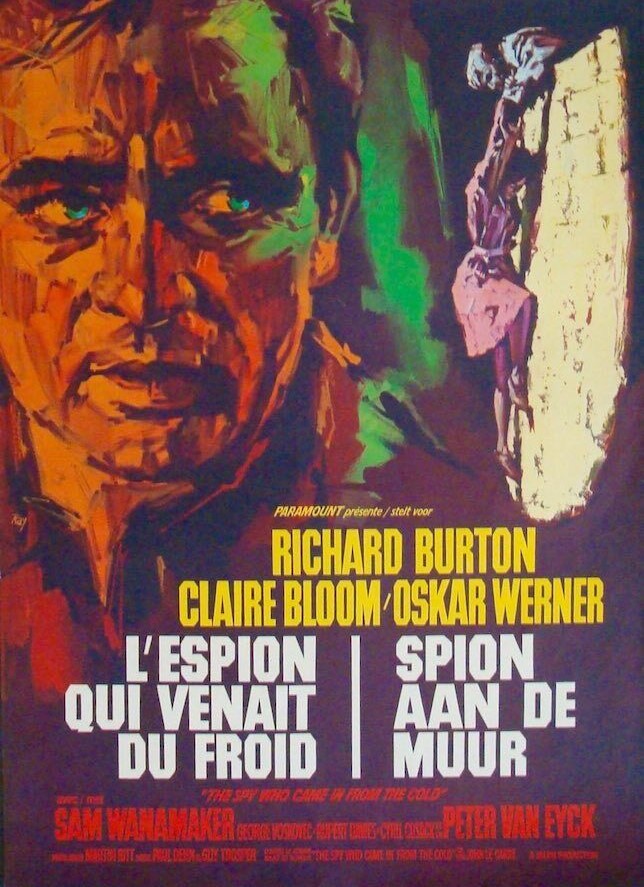
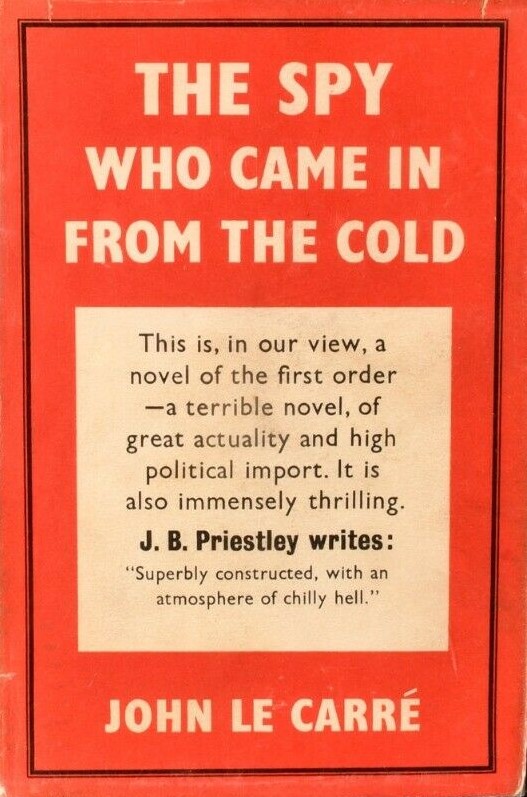
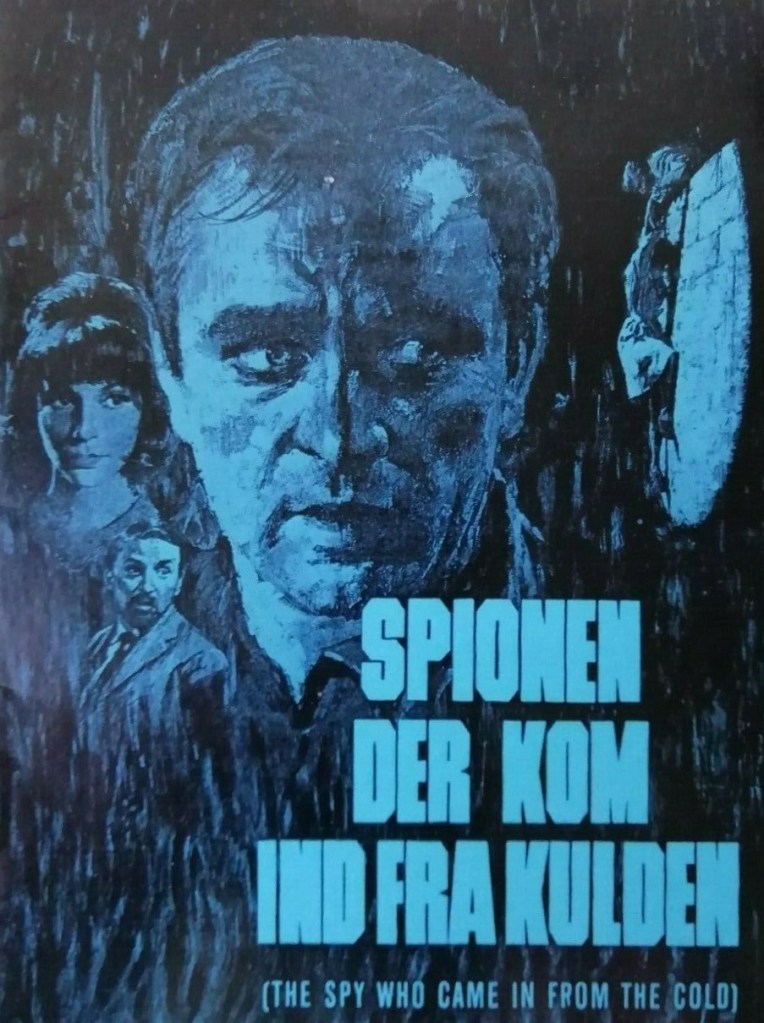
Author John le Carre was an unknown, two previous books published to no great sales. But The Spy Who Came in from the Cold proved a phenomenon. Debuting in the number spot in February 1964, the book spent 35 weeks topping the hardback bestseller chart. It ended up the hardback number one title in the U.S. during 1964, a quarter of a million copies sold, winner of the Edgar Award for Best Mystery, initial paperback order topping two million copies, five million books in print by the time the film appeared. So it seemed all the more astonishing that the movie rights had been snapped up for a mere $21,000 (with escalating clauses based on sales that took it up to $38,000). Martin Ritt claimed glory for that astute purchase, making a bid to a hard-up author when the book was in galley form. “When I bought it nobody else was running to buy it,” claimed Ritt. But it turned out the real star was Kay Selby, a Paramount story editor, who had dug it out of a pile of novels submitted. Le Carre did not make the same mistake again, movie rights for his next book The Looking GlassWar were sold for $400,000 and the paperback rights for the same
When the film had still been a relatively low-budget production, Paramount planned to film exteriors in London and interiors in Hollywood. But Ritt wanted “to capture the full brunt of the winter atmosphere for dramatic emphasis” and there was very little Hollywood could bring to the party to recreate an actual bleak British weather.
The bulk of the film was shot in Ireland at the defunct Ardmore studios in Bray – Ritt rented them from the Official Receiver, the first production there since November 1963 – and on location in Dublin, the historic Cornmarket standing in for Checkpoint Charlie while with the addition of breezeblock, barbed wire and an iron ladder, Dublin Square was transformed into the Berlin Wall, though some scenes set in East Berlin were shot in the London Docklands.
However, shooting kicked off in London, at Shepperton studios on January 9, 1965, before switching for two months to Ardmore, wrapping up there a week early, heading for location filming in Amsterdam (briefly) and 9-10 days in Garmisch (Germany) before returning to Shepperton in April. Ritt brought the picture in under budget.
Paramount launched a teaser campaign in November 1965 New York – the idea stolen by United Artists for A Fistful of Dollars the following year – with a 1,000-strong two-sheet poster campaign in the city’s subway, promoting the film but missing out the opening date and the cinemas it would play, that information supplied closer to the launch which took place over the lucrative Xmas period in 1965, coincidentally just in time to qualify for Oscar consideration.
And also in time to face a spy box office tsunami called Thunderball and the roadshow epic Doctor Zhivago among the 20-plus movies launched for the festive season. In fact, the Bond films had triggered a resurgence of spy pictures. As the Ritt picture got underway, others on the starting grid include “The Matt Helm Project,” The Ipcress File, James Garner in Welcome Mr. Beddoes (A Man Could Get Killed) and Masquerade starring Cliff Robertson. In addition the potential line-up also included female spy Christy O’Hare, Aaron Rosenberg’s Smashmaster and Strangers on a Bridge; the first two were never made, the last one taking over half a century to hit the screen as Steven Spielberg’s Bridge of Spies.
Burton was Oscar-nominated, but in the year when Thunderball (1965), Torn Curtain (1966), The Silencers (1966) and Our Man Flint (1966) all featured in the top ten films of 1966, The Spy Who Came in from the Cold did not prove a counter-programming smash, sitting at 32nd in the annual chart with $3.1 million in rentals. Although the movie was critically well-received and did well in key city first-run, it was a bust in smaller towns. Don Stott of the Calvert Drive-In in Prince Frederick, Md, complained “it was one of the lousiest pictures I’ve ever had my displeasure to exhibit and lose my shirt on…the print was so dark…it was barely visible.” Added Arthur K. Dame of the Scenic Theater in Pittsfield, N.H., “it comfirms the fact that we are not going to do well with spy films.”
SOURCES: Adam Sisman, John Le Carre, The Biography (Bloomsbury, 2013) p258, 266, 273, 277-280; The Richard Burton Diaries (Yale University Press, 2012), p79-80; Melvyn Bragg, Rich: The Life of Richard Burton, (Hodder and Stoughton, 2012) p200-203; Sam Kashner, Furious Love (Harper Perennial, 2019) p120-131; “Burt Lancaster Plans More Pix Of His Own,” Variety, January 1, 1964, p27; “Bestseller at $20,000,” Variety, March 25, 1964, p15; “Broadway,” Box Office, April 20, 1964, pE5; “Director Martin Ritt: Big Dig Is Scripts You Can Sell to Producers,” Variety, May 13, 1964, p13; “Six for Paramount in Alien Locales,” Variety, July 15, 1964, p18’“Richard Burton Receives Role in Spy by Martin Ritt,” Box Office, August 24, 1964, pW1; “Voices in the Diplomatic Pouch,” Variety, December, 9, 1964, p7; “Ritt Starts Spy Who Came in from the Cold in London,” Box Office, January 18, 1965, pE5; “Spy Success Sires Speedy Sequel, Le Carre Learning Loot Lesson,” Variety, February 17, 1965, p3; “Martin Ritt May Wind Berlin Wall Episodes on Spy This Month,” Variety, February 24, 1965, p28; “Paperbacks Up their Covers and Advance $,” Variety, March 3, 1965, p1; “Burton Winds Irish Shooting Spy Film,” Variety, April 14, 1965, p20; Maxwell Sweeney, “Harassed Irish Studio Revives,” Variety, May 12, 1965, p54; “Kay Selby’s Coup,” Variety, August 11, 1965, p3; “Subway Posters First Step in Promoting The Spy,” Box Office, November 29, 1965, pA2; “Review,” Box Office, December 20, 1965, 1965, pA11; “Three Paramount Pix To Open in N.Y. Dec 23,” Box Office, December 20, 1965, pE16; “Martin Ritt Is Promoting His Spy for Paramount,” Box Office, December 20, 1965, pE12; “Espionage Shown in Its Dirty Clothes,” Variety, December 22, 1965, p4; “The Exhibitor Has His Say,” Box Office, June 13, 1966, pA4 and October 10, 1966, pB4; Big Rentals of 1966,” Variety, January 4, 1967, p8.
Screenwriters Ben Maddow and Mitch Lindemann earned their keep on this one. The source was a literate historical novel by A.B. Guthrie which, despite winning the Pulitzer Prize, was seen primarily as a western. In considerable detail, it covered what a wagon train heading to Oregon needed to do and know in order to make the 2,000-mile trip. It is a fascinating read, told from many points of view. But very little of the book found its way into the film.
It wouldn’t have been much of a film if the screenwriters had simply followed the book structure, for much of that was internalized, thoughts and feelings of the settlers, dramatic incident not so much. So if this was going to be a big-budget western it needed a lot more.
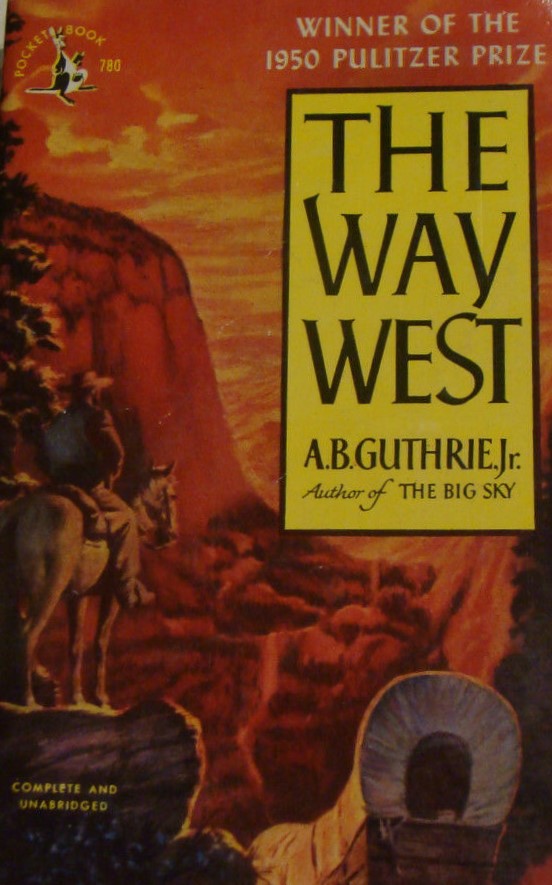
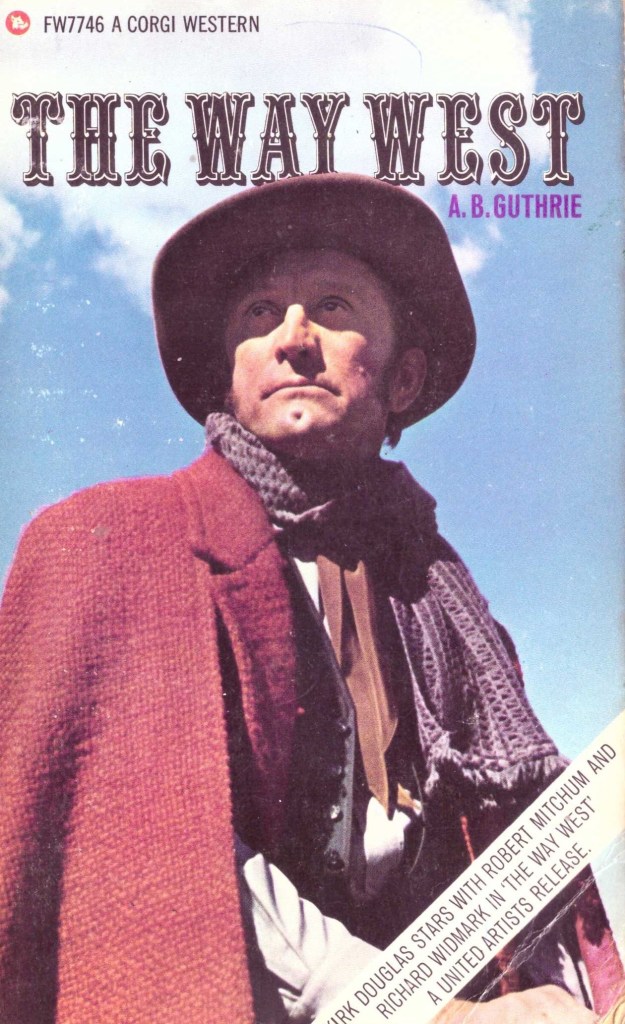
The paperback was sold as a western not as a novel of literary merit so it was inevitable that the Native Americans who played a minor role in the book took center stage on the book cover to target the expected audience.
What isn’t in the book: Tadlock (Kirk Douglas) isn’t a Senator for a start, he’s not a widow and doesn’t have a child. He’s not a visionary either with some grandiose map of how he envisages the town he’ll build. He doesn’t hang a man, get a whipping or die falling over a cliff. He’s quit the wagon train long before the cliff section. And he stopped being the leader of the expedition less than halfway through the book.
What isn’t in the book: Evans (Richard Widmark) isn’t overfond of alcohol, doesn’t create an unforced halt in order to celebrate Independence Days several days too soon, doesn’t have a grandfather clock whose loss causes him to lose his rag with Tadlock, in fact it’s he who picks the fight after discovering Tadlock intends to hang a thieving Native American.
What isn’t in the book: Dick Summers (Robert Mitchum) isn’t losing his eyesight, though recently widowed his wife wasn’t a Native American, and he doesn’t have a lucky necklace to pass on to a young man or woman.
So there’s a whole passel of wonder right there. The screenwriters have instantly dramatized all three leading characters by providing them with different attributes, making Tadlock and Summers more sympathetic than in the book, rendering Evans less sympathetic. The problem with the book’s Summers is that what makes him interesting is his lore, his knowledge of everything to do with the West, little of which translates to the screen. So providing the toughest of them all with an impediment allows him an immediate story arc.
What isn’t in the book: a Native American child is not killed by a settler, there’s no settler hanged by Tadlock to placate the warring tribe. There’s no warring tribe. There’s no race with other wagon trains at the outset and no racing across a river to get ahead of a rival. There’s no stowaway preacher either, though there is a preacher (Jack Elam). There is only one stop along the way in the film, at Fort Hall, but two in the book, the other being Laramie.
What isn’t in the book, I’m sorry to say, is the wonderful sequence of lowering wagons down a cliff, and Brownie (Michael McGreevy) marries Mercy (Sally Field) because otherwise she’s going to leave the wagon train at Fort Hall and he doesn’t make a pledge in public that her unborn child is his. And there’s no part for Stubby Kaye.
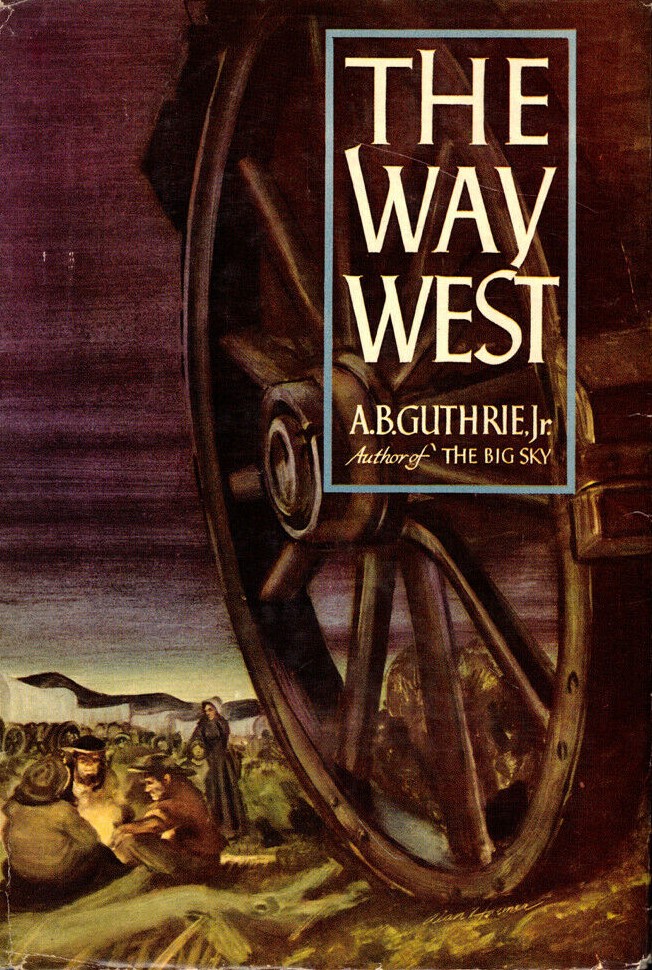
This hardback cover gives far better representation of the novel’s content.
Some of the more solid emotional material is retained. The frigidity of Mrs Mack (Katherine Justice) remains, giving her husband (Michael Witney) the excuse to seduce Mercy, considerably more innocent in the book, where she is described not as sassy but awkward in adult company, “growed up in body and not in knowing.” While not loving Brownie, she marries him for convenience, though she learns to love him. Brownie gets advice on handling Mercy from Summers and much of that dialog is imported straight from the book.
From the book comes the idea of the settlers chiseling their names on the rock, of Brownie, while doing so, being captured by Native Americans and being traded back to his father.
Cover of the British Corgi movie tie-in paperback printed in 1967.
But there are some ideas lifted from the book out of sequence that the screenwriters build up into major dramatic incidents. The river crossing at the start of the film is taken from the river crossing near the end of the book. Close to the start of the novel, Mack kills a Native American, whose tribe seek justice but are sent away empty handed by Tadlock. That becomes a key sequence in the film when Mack is hanged by Tadlock. A child is killed by a rattlesnake and that is transferred to a different father who gives full expression to his grief.
The screenwriters exacerbate the tensions between the characters, create more moments of high drama, invent the visionary element, and are responsible for the vast bulk of crisp dialogue. While the dialogue in the book sounds authentic, it lacks the brittleness and thrust of the words spoken in the film.
A.B. Guthrie was a celebrated American novelist, a journalist who had come to fiction late, over 40 when he produced his first book, a mystery novel set in the West. But after winning a fellowship to Harvard, his writing took a literary turn, and his West did not take the traditional romanticized view. Two of his novels had been filmed – The Big Sky (1952) starring Kirk Douglas and These Thousand Hills (1959) directed by Richard Fleischer – and he had written an Oscar-nominated screenplay for Shane (1953), based on the Jack Schaefer novel, as well as for The Kentuckian, based on the Felix Holt book. The Way West had become such a touchstone for originality and an acclaimed masterpiece that it seemed impossible to turn it into a film.
Whether the film’s negative critical reaction and audience disregard was down to the screenplay veering so far away from what was considered a classic novel is hard to say. This is a very good example of a book that appeared unfilmable being somehow turned into a more than watchable film.




 The Magnificent 60s