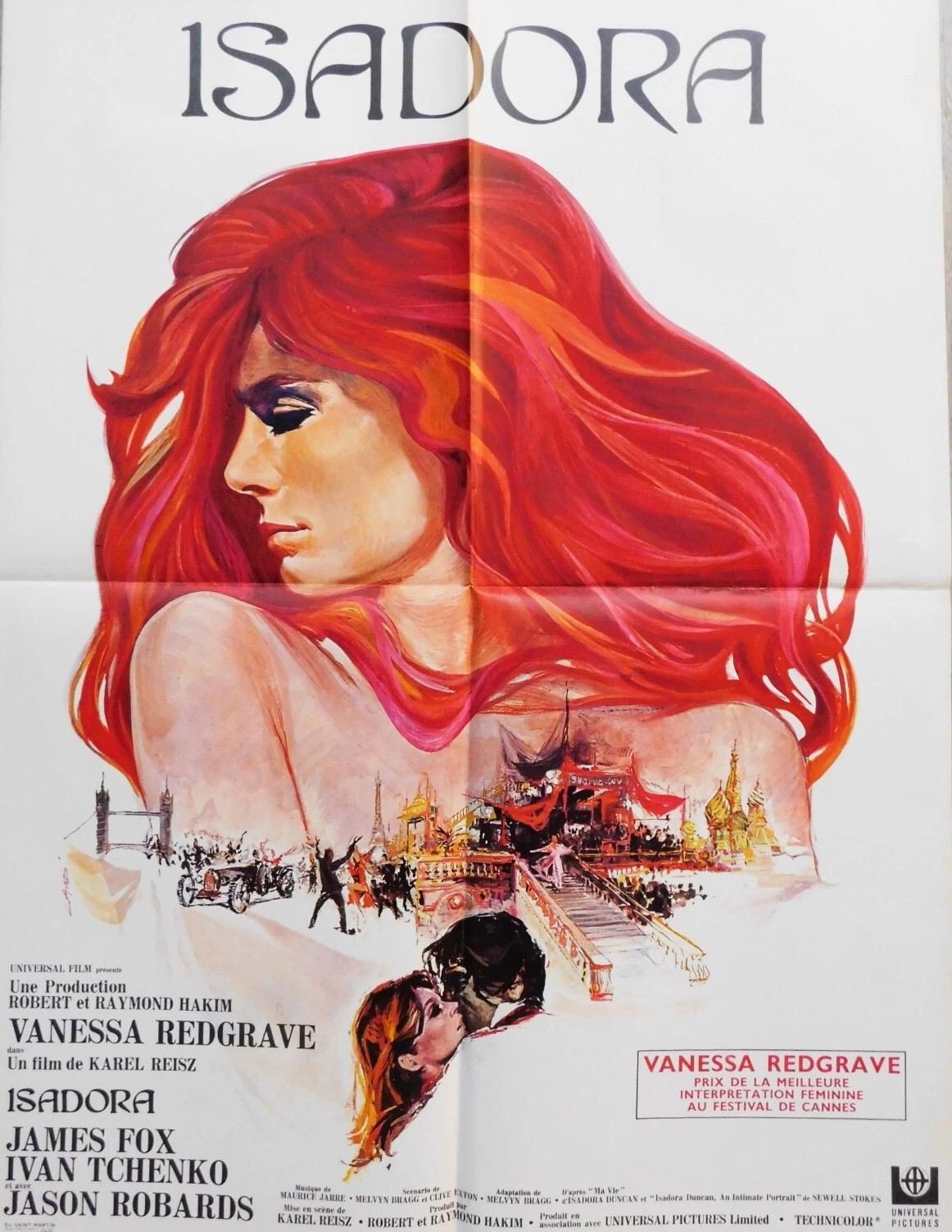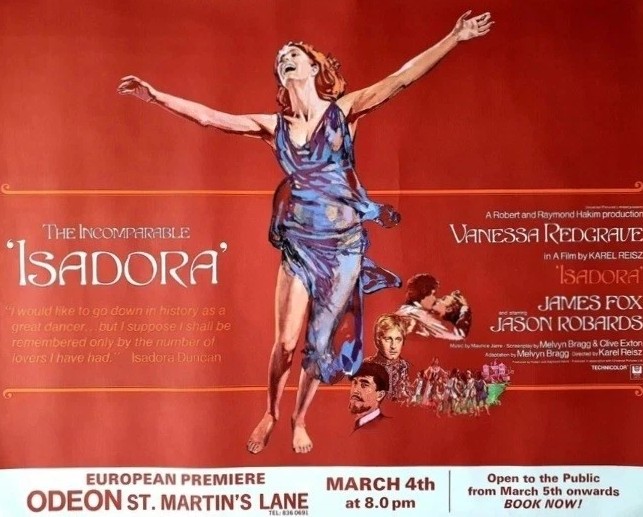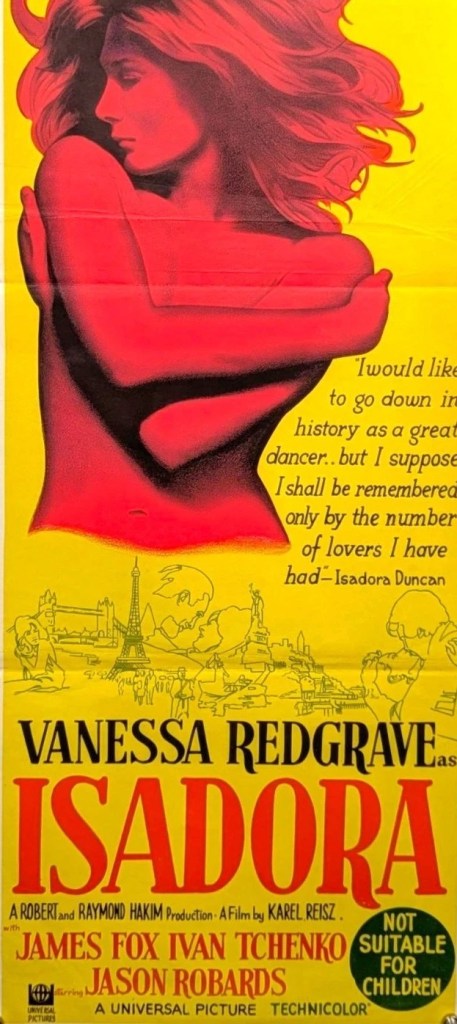
Isadora / The Loves of Isadora / The Incomparable Isadora (1968) ***

We’re two years away from the 100th anniversary of the death of feminist icon and pioneering dancer Isadora Duncan, but this movie has been in cold storage virtually since its release, so I’m wondering whether its sudden appearance on Amazon will trigger any interest in this long-forgotten, heavily edited, commercial flop of a movie.

Due to the clumsy structure it’s occasionally heavy going. We start off in Nice in the South of France where Isadora (Vanessa Redgrave) is dictating her memoirs to journalist (not lover) Roger (John Fraser) and the whole picture is rendered in flashback. And there’s something morbid about this structure, because essentially we’re waiting for her to die. Unfortunately, what she is most remembered for is getting her trademark long scarf tangled in the wheels of a moving Bugatti and snapping her neck. So we’re sitting around waiting for her to hop into a passing Bugatti with a Bugatti (Vladimir Leskovar).

The rest of her life was somewhat fractured, consisting of her leaping from one lover/husband – Gordon Craig (James Fox), Paris Singer (Jason Robards), Romano Romanelli, Sergei Essenin (Ivan Tchenko) – to the next so characters appear and then disappear. Never mind her rebellious nature and determination to forge her own way  and reinvent dance, her life was peppered with tragedy – all three of her children died, two drowning in the Seine (a fact repeated in a variety of ways to get the full emotional punch) – so there’s more than enough angst.

Her dancing is exuberant and uninhibited – she wore flowing dresses which looked as though any minute they would slip off her slender frame and there was scandal at one point when she bared her breasts during a performance. The first time she hits the stage is exceptionally ho-hum because it’s in a Paris nightclub and she’s a conventional, if very attractive, dancer of the ooh-la-la persuasion. But when she gets into her stride as a serious dancer, then visually it’s a treat, as she commands the stage – and screen- in a series of sexually provocative sinuous movements.

But, unfortunately, once is enough. You’d have to know a lot more about artistic dance than I do – and I guess the bulk of the original and contemporary cinematic audience – to know what changes she implemented and how, apart from her individual style (she danced solo not as part of an ensemble), her act developed and how it impacted on dance. She ran her own dance schools which probably liberated a ton of young women who were in the mood to be liberated.

But, as a biopic, even with 30 minutes knocked out, it’s way too long at the remaining 140 minutes, and the rest of the cast struggle to offer any competition to the lustrous Isadora.

Vanessa Redgrave, Oscar-nominated, is the best reason to watch and she is certainly compelling and, oddly enough, though there is plenty of incident and drama it somehow isn’t dramatically compelling.

She is generally naïve in her politics and her innocence in this department works to the advantage of the character. But mostly, we flit like a mobile time capsule through different periods, each well defined cinematically, and even though it’s clearly much harder to (in visual terms on film) convince as a genuine dancer than as, for example, a pianist, unless you were an expert on dance you wouldn’t know what to complain about.

You end up with a biopic about an interesting woman rather than a fascinating biopic. Vanessa Redgrave (Blow-Up, 1966) delivers another of her flawed characters and holds the screen effortlessly. The same cannot be said of the insipid males, James Fox (Thoroughly Modern Millie, 1967) and a miscast Jason Robards (Hour of the Gun, 1967).

Hard to know what the plans were of director Karel Reisz (Morgan!/Morgan, A Suitable Case for Treatment, 1966) because this isn’t his 168-minute version (the one that was released in the U.S. after disastrous opening weekend was trimmed to 128 minutes and in the UK to 140 minutes). Written by Melvyn Bragg (Play Dirty, 1969) and Clive Exton (10 Rillington Place, 1969) from a number of sources.

Sheds an interesting, but not enough, light on a legendary character.

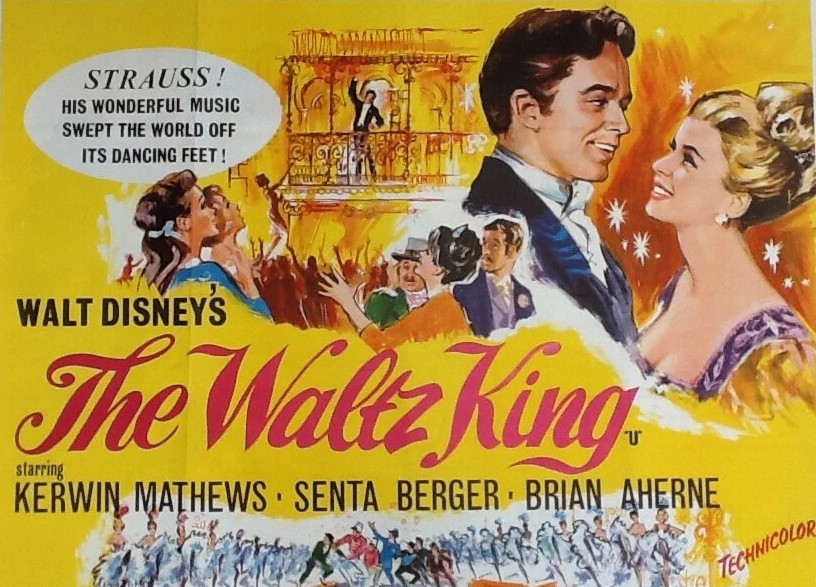
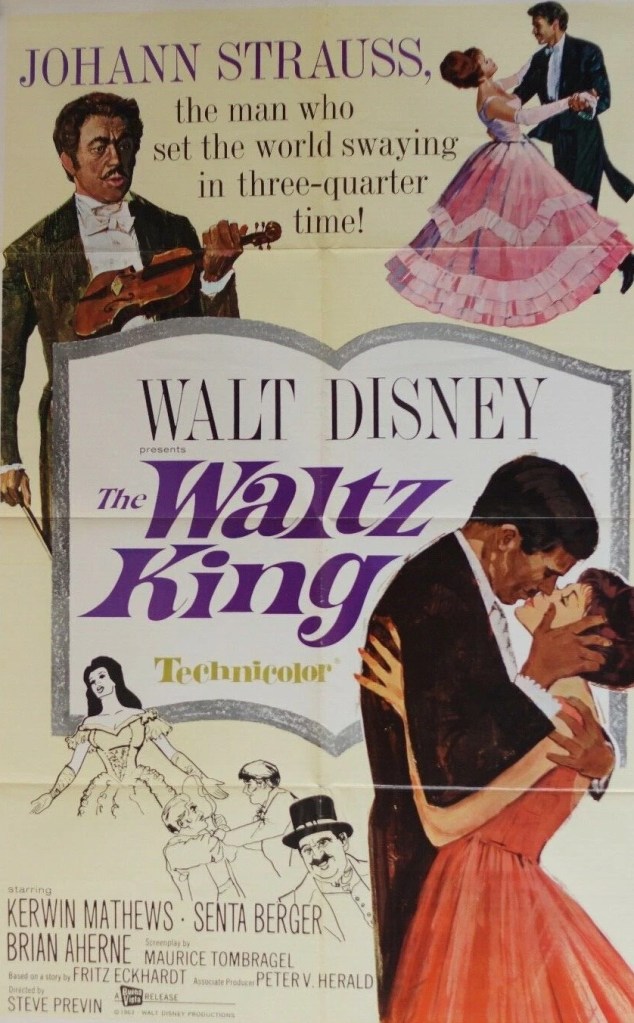
The Waltz King (1963) ***

The Twist, the Macarena, Twerking, none of these routines can hold a candle to the Waltz, which has dominated the dance world for centuries. You think maybe Queen invented the idea of audience participating in a tune by dancing and clapping in “We Will Rock You”, well, that had been an integral element of waltzes with a faster rhythm equally for centuries.

The movie had an unusual trigger. Walt Disney, taking time out from overseeing theme parks and enjoying a period of dominance in Hollywood, had spent some time in Vienna which resulted in this film and the same year’s Miracle of the White Stallions about the World War Two escapades of the Spanish Riding School in Vienna.

As you know I am a conscientious researcher in the matter of Senta Berger Studies and came to this via that connection, but I have always enjoyed movies about creativity whether it is struggling writers, struggling painters, struggling sculptors and struggling composers – you notice the prefix “struggling” is an essential component of such films.

And this will chime also with a contemporary obsession – the nepo baby. There already was a Waltz King in Vienna – Johan Strauss’s (Kerwin Matthews) father (Brian Aherne) also called Johan. He didn’t want this son following in his footsteps not so much because he feared the competition but because he disdained his own work, being at the beck and call of greedy concert promoters and music publishers, being assailed by hundreds of female fans behaving in much the same way as female fans during the rock/pop era, though instead of throwing underwear onto the stage they were apt to bombard the composer with bouquets of flowers each delivered with a note expressing ardent passion.

Father Johan Strauss (known to classical music fans as Johan Strauss I) insists son Johan Strauss ( Johan Strauss II in the classical music business) enter a proper profession, one where position in society was not dependent on the whims of the public. So the young lad was forced to become a lawyer, moonlighting as a violinist with other orchestras hoping his father would not find out. When old man Strauss did find out he was apt to take strenuous action and destroy the young man’s violin.

The elder Strauss was so powerful in his field that music publishers did not dare take on any of the works of his son. So it was lucky that in order to persuade a music publisher to listen to his composition he sits down at a piano in the shop and begins to play at the same time as opera singer Henriette Treffz (Senta Berger) is present. She likes the music and takes a shine to Johan and coughs up so he can employ his own orchestra.

The old man is so angry at being usurped that he conspires to wreck the son’s debut concert by employing a small army of people to hiss, boo and catcall and disrupt the event. Luckily, that plan fails and audiences applaud and the son is on his way. Paternal enmity continues but that matters less as Johan Strauss II becomes a brand name, although he’s subjected to the by-product of fan mania when jealous husbands threaten him with a duel.

But just as The Who and other bands aspired to something more than popular music, so Johan wanted to move beyond the simplicity (in musical terms) of the waltz and up the classical music hierarchy by putting his mind to creating operettas and more sophisticated tunes. That battle involved finding his own voice and once again overcoming opposition.

This being a Disney confection it skirts over politics. Father and son were on opposite sides during the failed Austrian Revolution of 1848 – Strauss Snr composing one of his most famous pieces, the Radetsky March, as a result, the son out of royal favor for a long time. Nor is there time to regale audiences with how Strauss Jr changed his religion to get out of a tricky second marriage.

But like most biopics about classic composers including such Oscar-acclaimed fare as Amadeus (1984) this is a jukebox piece and if nothing else takes your fancy you can sit back and listen to the Johnan Strauss II’s greatest hits which include “The Blue Danube Waltz,” Die Fledermaus and Tales from the Vienna Woods.

Kerwin Matthews (Maniac, 1963) is solid enough in role that in a Disney picture requires less than the likes of Amadeus. And anyway he makes the mistake of signing on for a picture with Senta Berger (Kali-Yug, 1963) who is at her dazzling best. Brian Aherne (Lancelot and Guinevere, 1962) almost twirls his moustache as villain of the piece.

Director Steve Previn (Escapade in Florence, 1962) does a decent enough job with the music an eternal get-out-of-jail-free card. Written by Fritz Eckhardt (Rendezvous in Vienna, 1959) and  Maurice Trombagel.(Monkeys, Go Home!, 1967).

Lightweight, for sure, but entertaining and informative enough.

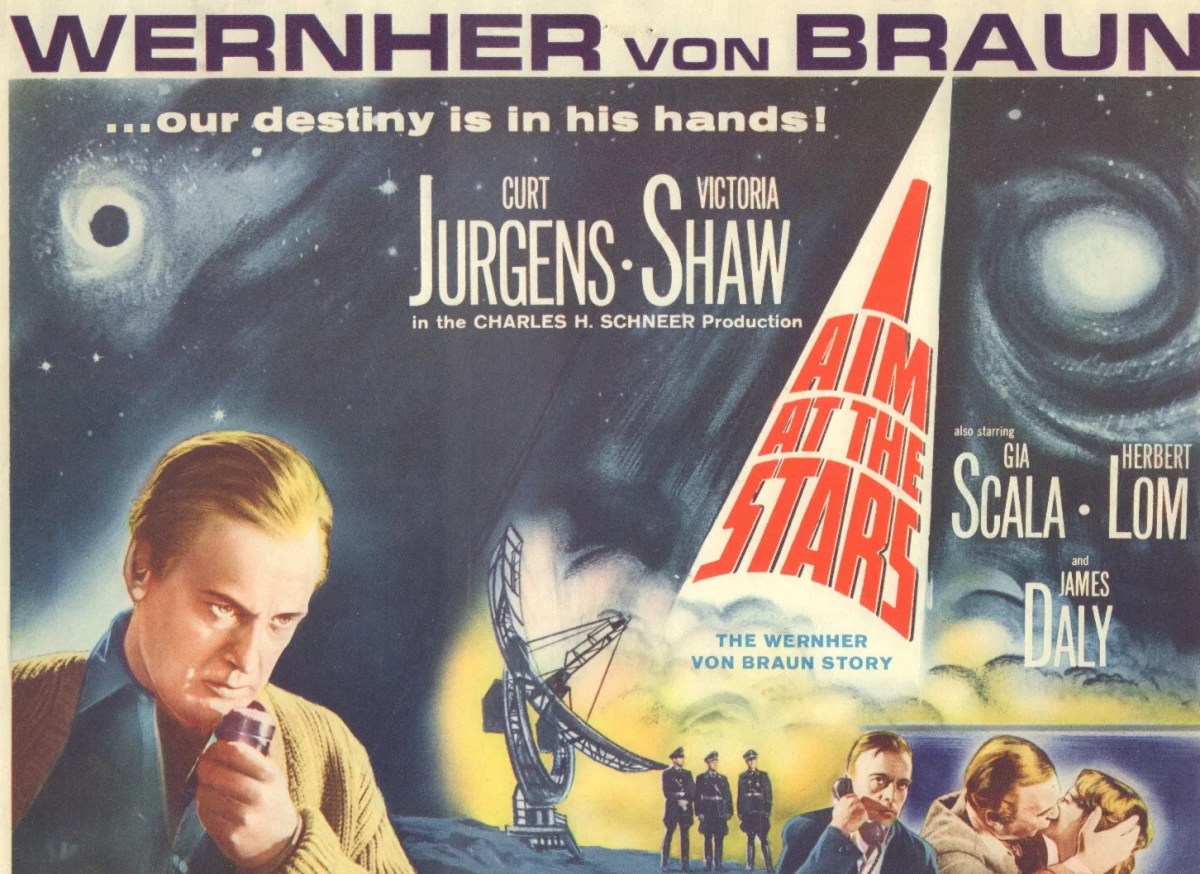
I Aim at the Stars (1960) ***

Could not be more controversial or contentious. But we’ve been here far more recently than six decades ago. Oppenheimer (2023) covered similar ground in terms of a scientist harnessing his brain to create a weapon of awesome destructive power. J. Robert  Oppenheimer was also condemned as a traitor and though he did not switch allegiance he was excluded from the nuclear community after the Second World War.

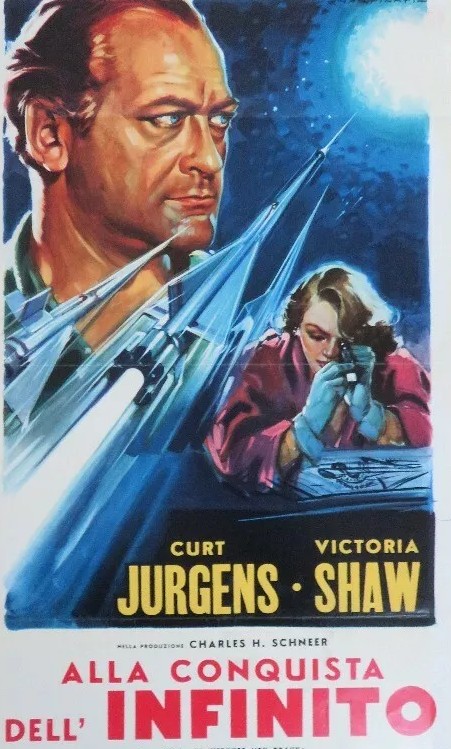
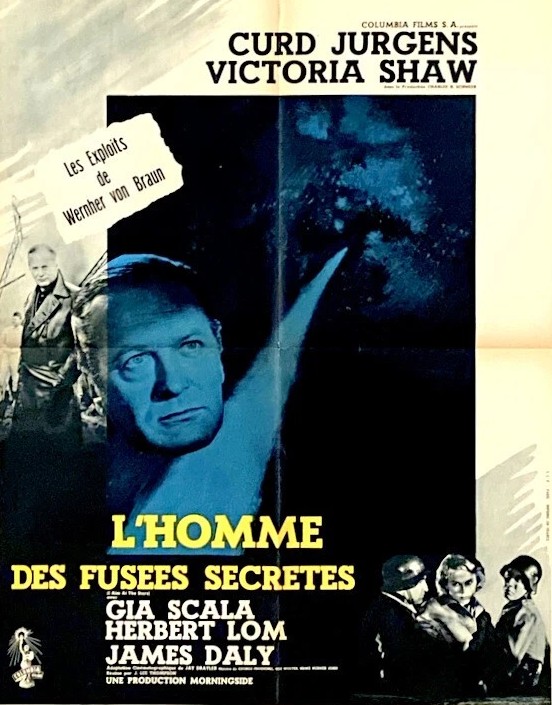
Director J. Lee Thompson (The Guns of Navarone, 1961) sets out to achieve the impossible – create a valid biopic while trying to deal with the central issue that while German Werner von Braun (Curd Jurgens) directed the U.S. operation to put an unmanned rocket into orbit around the Earth he was also responsible for the V1 and V2 rockets that devasted London towards the end of the Second World War.

The first half of the movie is straightforward biopic, genius scientist overcomes obstacles to reach his achievement. Von Braun was “addicted to rockets” from a very early age and when the Nazi Government sought to use his skills to create a missile, he didn’t show much opposition. Although occasionally indiscreet about Hitler and the Nazi Party, he was able to overlook their shortcomings in the interests of science.

What could have been a dry biopic is filled out with romance. Von Braun eventually finds time to marry Maria (Victoria Shaw) who occasionally has reservations about his aims. His assistant Anton (Herbert Lom) has a more interesting relationship with the widowed Elizabeth (Gia Scala), Von Braun’s secretary. While refusing to marry him, she does carry on a longish affair (whether sex was involved is unclear) with him and you are given the general impression that she is more in love with her boss.

But that turns out to be a clever piece of sleight-of-hand. The reason she spends so much time with Von Braun is that she’s a British spy, copying blueprints with an ingenious miniature camera disguised as a working lipstick. And when she is caught by Anton, he is too much in love to expose her, though her reason for the espionage is that the Germans by mistake killed her husband.

At the end of the war, Anton is the only one among the top scientists who refuses to desert his country. The others decide to become traitors, choosing to defect to the Americans rather than the Russians. And at this point Von Braun comes face to face with his “conscience” in the shape of U.S. Major Taggart (James Daly) who initially is determined to try Von Braun as a war criminal. When higher-ups in the U.S. Government intervene and send the scientists to America to continue their rocket research, Taggart continues his verbal assault on the German.

The spy also turns up and clearly her regard for Von Braun outweighs her conscience, although she enters, eventually, into a relationship with Taggart (who goes back to his former profession of journalist), and attempts to soften his attitude.

Von Braun refuses to take personal responsibility for the thousands of Londoners who died as the result of his invention. He represents the idea of invention without repercussion or personal consequence. But it’s fair to say that all the arguments against the man are given a good airing.

However, there’s a serious omission in the narrative. The conscience of the higher-ups never comes into it. Nobody in a senior position in Government explains why Von Braun deserved a get-out-of-jail-free card and never entering the discussion – not even in the sense of realpolitik – is the issue of how the British must have felt when their ally appropriated the skills of one of their most dangerous enemies.

Ultimately, the picture leaves too many questions unanswered with the American people seemingly eventually worshipping the man who put an American craft into space. The British shunned the picture on release.

Technically, it looks pretty good. I couldn’t really tell from seeing it on the small screen whether the rocket footage was taken from newsreel or academic footage or whether it was shot specifically for the movie.

As played by Curd Jurgens (Psyche 59, 1964) Von Braun is not an easy character to like. Though billed higher, Victoria Shaw (Alvarez Kelly, 1966) makes less of an impact than Gia Scala (The Guns of Navarone), who has the best role in the picture, while Herbert Lom (Bang! Bang! You’re Dead!, 1966) does good work as the patsy and loyalist. James Daly (The Big Bounce, 1969) is mostly the mouthpiece for all the accusations you’d like to fling at someone like Von Braun.

J. Lee Thompson does as well as you might expect within the restrictions of the material. Written by Jay Dratler (Laura, 1944) in his final screenplay.

Flawed but interesting.

The Untouchables (1987) *****

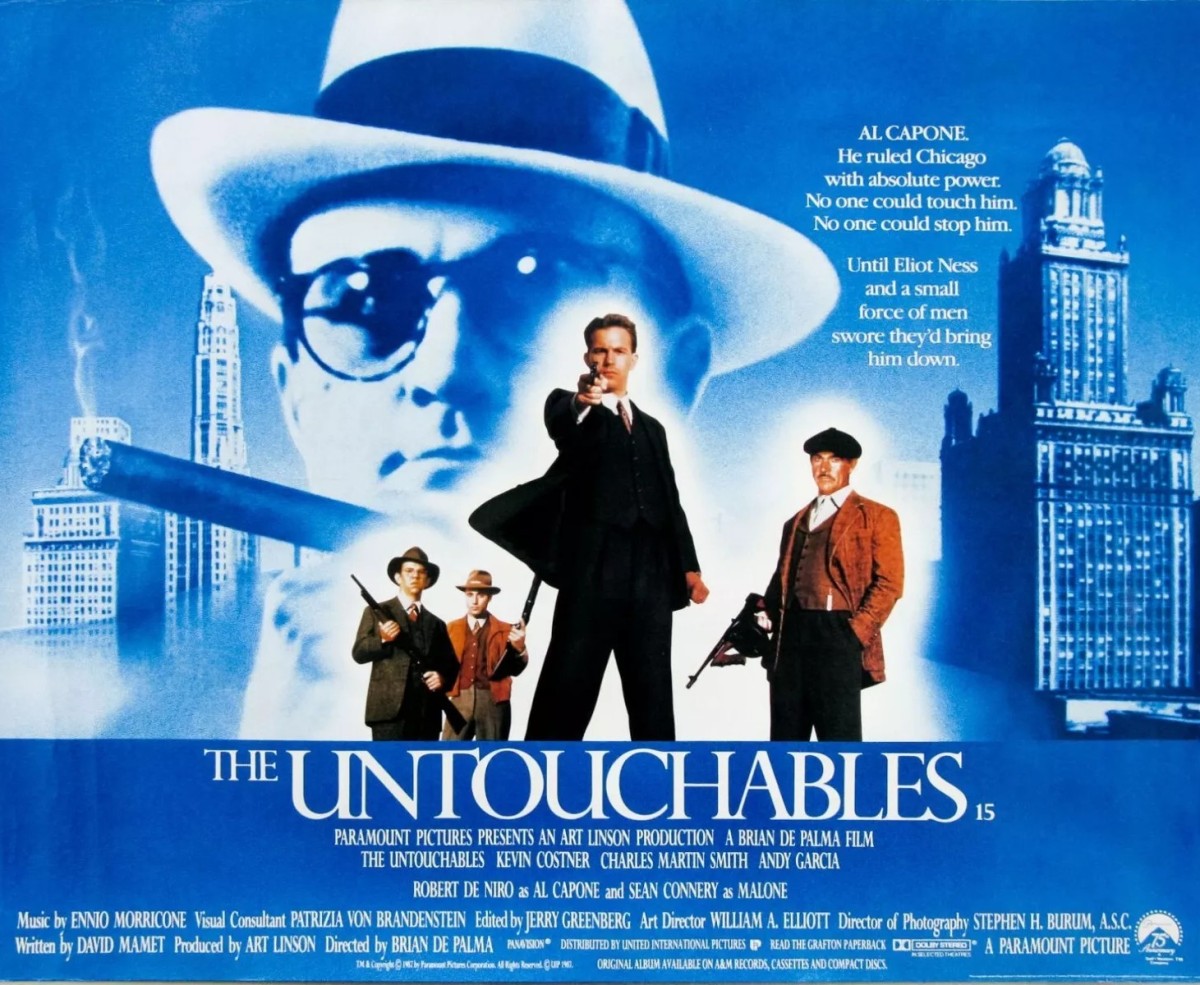
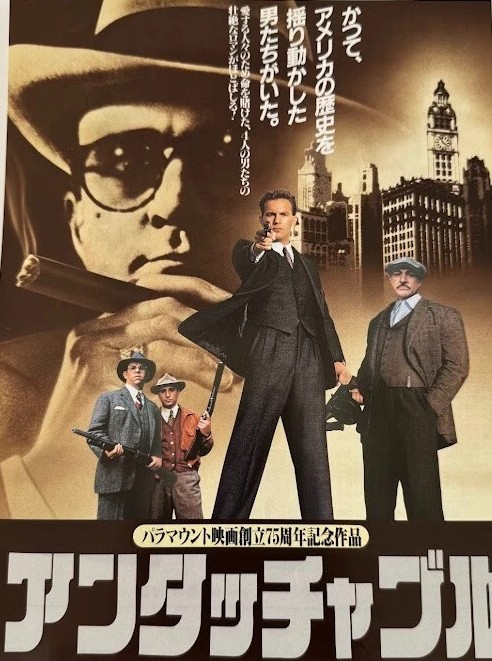
The greatest crime picture ever made, outside of The Godfather Parts I and II (1972/1974). A sledgehammer of a narrative that moves like an express train, only slowing down for a number of bravura sequences. Riddled with fabulous lines, built on great performances, and seeded early on with subsidiary characters who will later play significant roles. In any analysis it reads like a greatest hits.

The bloodied finger of Al Capone (Robert DeNiro) holding court to fawning journalists; the little girl’s plaintive cry of “Mister” before she’s blown to kingdom come; the love note included in the lunch of Elliot Ness (Kevin Costner); “poor butterfly” as the first raid goes wrong; the introduction of Malone (Sean Connery) “here endeth the lesson”; the trading of racist insults with recruit George Stone (Andy Garcia); Capone bludgeoning an associate to death with a baseball bat; in the safety of a church, Malone explaining “the Chicago way”; the first big cinematic sequence – the shootout at the border with meek accountant Oscar Wallace (Charles Martin Smith) making his bones and sneaking a drink of beer; Malone “killing” the dead man; “touchables” smeared in blood in the lift; Malone’s fistfight with crooked boss Dorsett (Richard Bradford); Malone’s murder by hitman Frank Nitti (Billy Drago); the second, and greater, bravura sequence – the shootout on the steps of the railway station; Ness pushing Nitti off the rooftop; the disbelieving Capone sentenced.

And those are just the broad strokes. Peppered throughout is the issue of Capone’s tax evasion, the crime that brings him down, with virtually all Wallace’s contribution being reading from documents relating to this. Nitti appears in the second scene, leaving the bomb that will blow the little girl to kingdom come, and again at Ness’s house.

And this is so old-fashioned that not only are we rooting for the good guys but none of those involved has marital or alcohol problems. Cops like Malone may be disillusioned but they don’t take their disenchantment out on the bottle. Anyone who talks about marriage agrees it is a good thing.

Character introduction doesn’t go down the iconic route of The Magnificent Seven (1960) or The Dirty Dozen (1967). Chicago’s Finest sneer at Ness behind his back. Another director would have been tempted into a bolder entrance for Malone. But he’s a loser, still a beat cop in middle age, and on the late shift at that. He doesn’t just know his job, detects Ness is packing a gun, but he’s capable of a sardonic quip or two. Who’d claim to be working for the humiliated Treasure Dept is they weren’t? And he’s not so stand-up as he appears, playing with a key chain like worry beads, keeps a sawn-off shotgun in his record player.

And that’s before we go into the dialog. Screenwriter David Mamet (Glengarry Glen Ross, 1992), revered as America’s greatest living playwright, turns on the style. “You can get further with a kind word and a gun than with just a kind word”;  “They pull a knife, you pull a gun”; “do you know what a blood oath is?”; “team!”; “brings a knife to a gun fight”; “all right, enough of this running shit;” “can’t you talk with a gun in your mouth?” “his name wasn’t in the ledger,”  “did he sound anything like that?”

And that’s before we get to the score by Ennio Morricone, his best in terms of the consistency of theme (rather than just one standout tune) since Once Upon a Time in the West (1969). Or the rocking title sequence.

Turned Kevin Costner (Horizon, An American Saga – Chapter 1, 2024) into a star, a position, with dips here and there, he’s maintained for half a century. Andy Garcia (Black Rain, 1989), too, though for a shorter duration. Not everyone was impressed by Robert DeNiro’s (The Alto Knights, 2025) florid interpretation, but I wasn’t one of them. Brought Sean Connery (The Russia House, 1990) long overdue recognition for his acting, though it’s worth remembering that the Oscar voters who gave him a standing ovation could have handed him the gong a good time before for any number of excellent portrayals.

Director Brian DePalam (Carrie, 1977) was an Oscar shut-out. And when I look at the films that took precedence in the Best Film nominations, there’s only one, Moonstruck, that I’d seek out.

This is a thunderous achievement, and I can’t wait for 2027 when Paramount surely will bring it back to the big screen for a 40th anniversary celebration.

Unmissable.

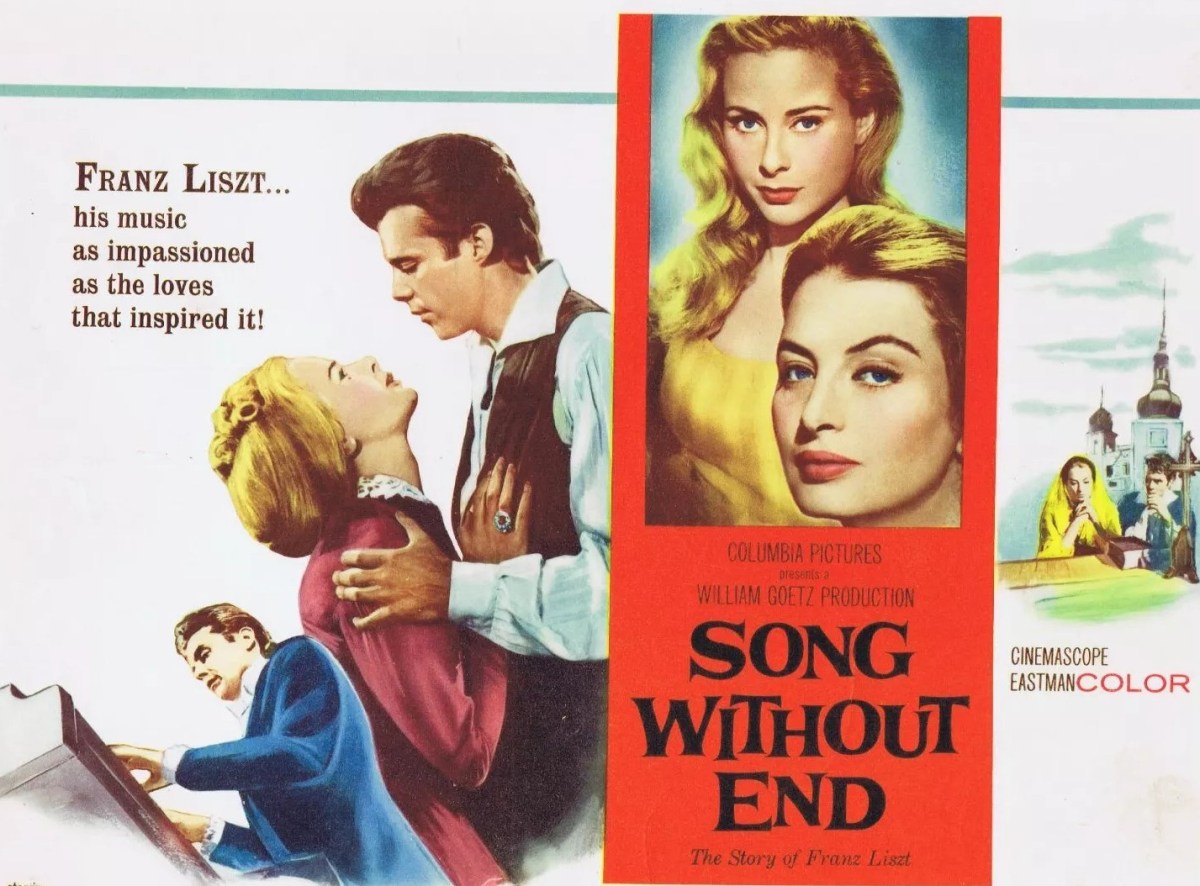
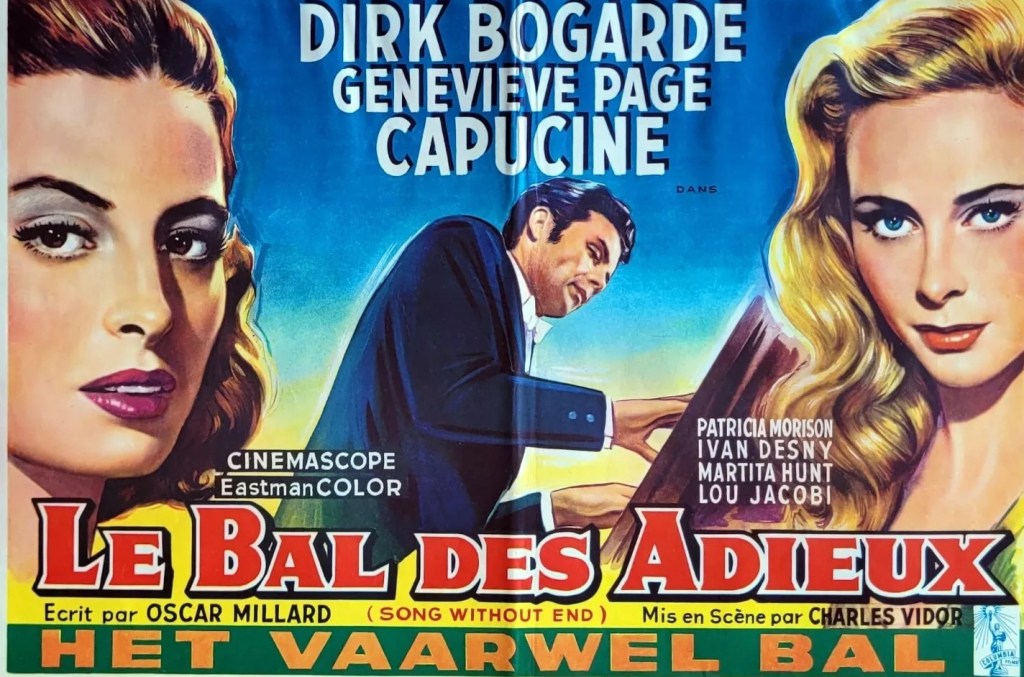
Song without End (1960) ***

Contemporary audiences will be familiar with the jukebox picture. Moviegoers attending biopics of Queen or Elton John can be guaranteed a greatest hits package and if the narrative isn’t driven by problems facing rock superstars nobody is really bothered by an over-confected storyline such as Mamma Mia (and sequel) as long as the soundtrack is filled with beloved classics. On top of that we have the modern phenomenon of Event Cinema where cinemagoers pay to see a live performance, mostly plays, but Andre Rieu taking care of anyone who requires live music.

Song without End is more liberal than most when it comes to the music choices. As well as focusing on the tunes of Hungarian composer Franz Liszt, it also takes time out for snatches of Chopin or Wagner. These days a star like Dirk Bogarde would be a shoo-in for an Oscar nomination for all the training he put in to prove he could actually play the piano – and in  demonic style – rather than showing him knocking out a couple of chords before cutting away to his face or any other shot of the piano except one involving his fingers.

And that’s both the plus and minus point of the movie. Plenty sequences of the maestro at the piano to satisfy the most ardent fan, plenty shots, too, in cutaway, of audiences, that element mostly boring until we are shown the rabid female fans who created the term “Lisztomania.” But the music comes at a price. Unless you are a big fan of the composer you’re faced with the same scene over and over again. Yes, he plays different compositions, and not always his own, and although the fingers move to different keys on the instrument, still it’s nothing but a guy sitting at a keyboard for ages.

So, if the music does it for you, a joy. Otherwise, not so much going on or could be explored in any great depth at the time. Franz Liszt (Dirk Bogarde) was a bit of a lad – when the picture opens he’s living with married woman Marie (Genevieve Page), a countess, and is about to dump her for married Carolyne (Capucine), a Russian princess. Outside of his adultery, the main storyline is him making the transition from pianist to composer. And he helps along newcomer Richard Wagner (Lyndon Brook) – they became great friends until Wagner married Liszt’s daughter, though that’s outwith the movie’s remit.

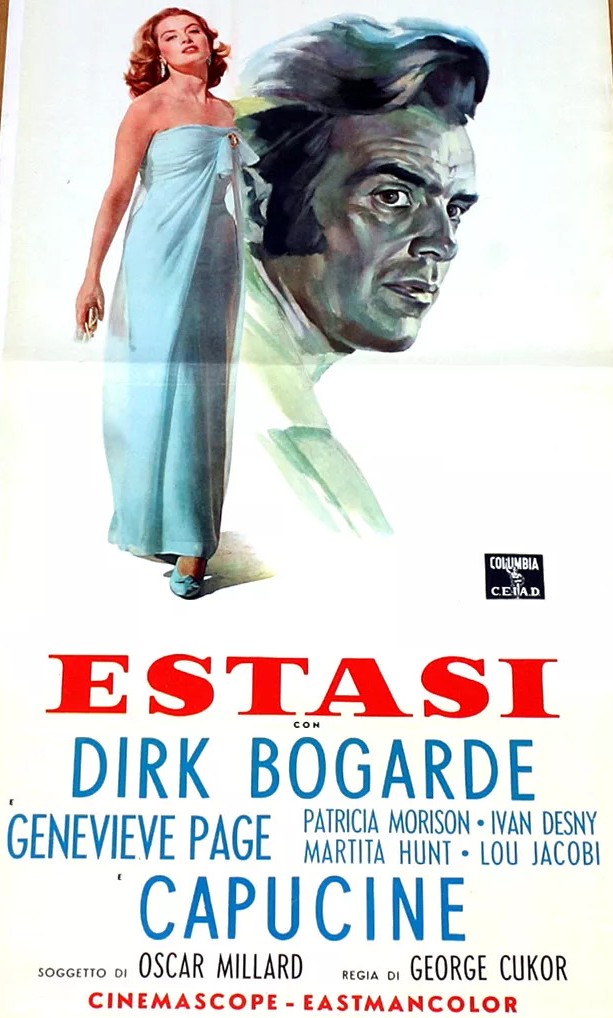
George Cukor gets the directorial credit on this poster.

But he’s something of a contradiction – zest for the high life with buddies Chopin (Alex Davion) and George Sand (Patricia Morison) countered by religious ideals (not shared, it transpires, by the countess). Liszt is very much the “artiste”, given to flouncing around, and having a hissy fit with the Czar of Russia for keeping him waiting. You could surmise that Tom Hulce modelled his portrayal of Mozart in Amadeus (1984) on this kind of charismatic character. Slap him in a pair of tight-fitting trousers, and given his good looks and flowing locks, and you’d have a modern day rock god. .

You’ll not be surprised to learn the movie gives a wide berth to the way he developed music; he was credited with several technical innovations. If you knew what you were looking for, probably you’d pick them out from his performances. He fair batters that piano as if trying to extract every last conceivable note.

This was something of a departure for British star Dirk Bogarde (Victim, 1961). His standard screen person was more prim, tight-lipped, straight-laced, repressed, so this feels like a monumental release, a cathartic moment. He’s certainly put in the work to come across as a proper piano player. The head-tossing and flouncing and heart-breaking is a doddle by comparison.

Columbia French starlet Capucine (The 7th Dawn, 1964), an MTA, made her debut with the kind of icy performance that became her fallback.

Columbia had been trying to make the picture for a decade and it nearly fell at the final hurdle. Director Charles Vidor, who had helmed A Song to Remember (1945) about Chopin, died soon after filming began. George Cukor (Justine, 1969) took over, adding trademark lushness and altering the ending, but, critically, giving Vidor sole credit. Oscar Millard (The Salzburg Connection, 1972) handled the screenplay.

Bogarde is pretty good, especially on the piano stool, and the music is terrific. So, ideal for music lovers not expecting much else. Bit of a let down for the general audience with not so much in way of narrative to get your teeth into.

Jukebox triumph.

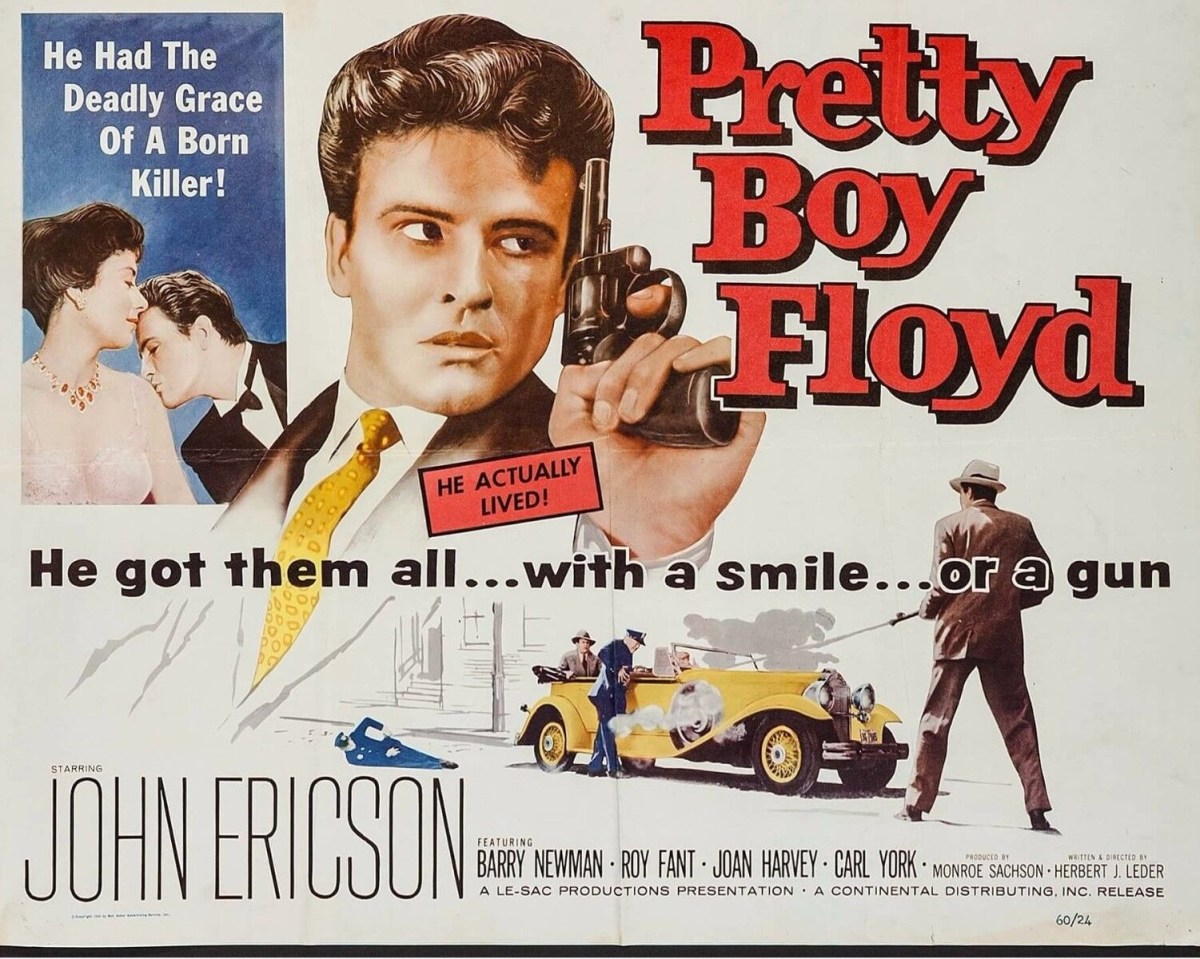
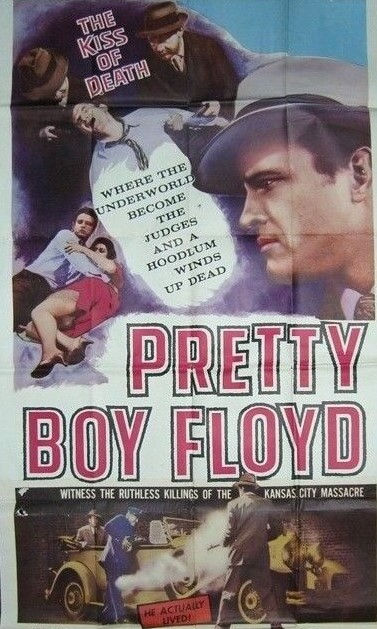
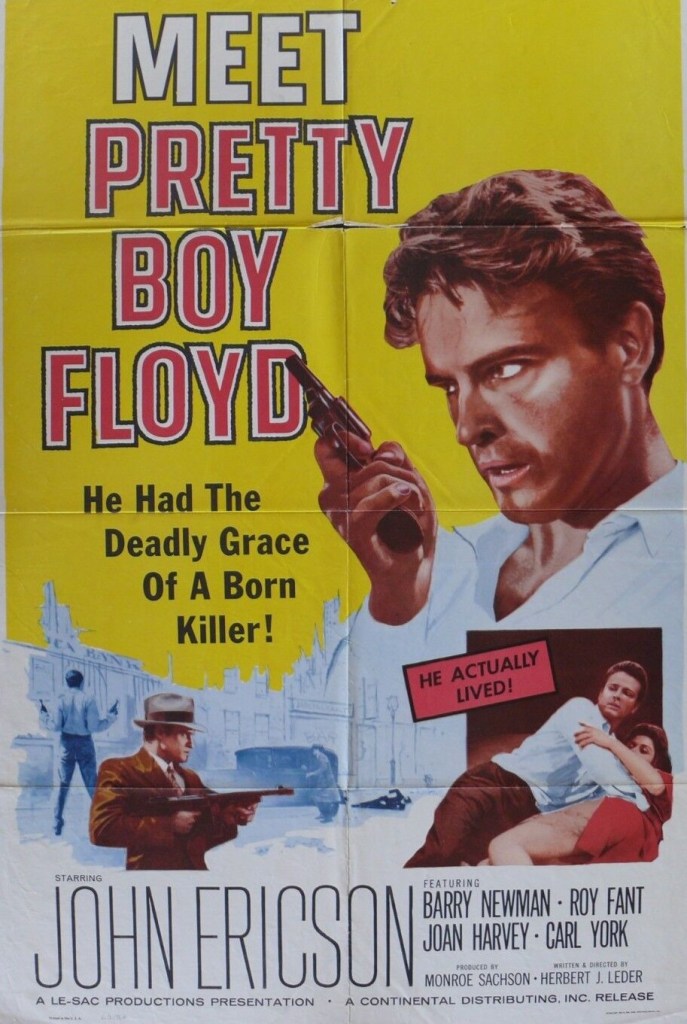
Pretty Boy Floyd (1960) ***

The makers of Oppenheimer (2023) and Napoleon (2023) cast light on the major problem of a biopic – what to leave out. Here, no such problem was actually countenanced. Hell, they just threw everything in – some job given the lean running time. That does mean, however, some mighty info dumps, as we are filled in on the gangster’s past and present. Not much of his life goes unturned.

There was a spate of gangster pictures around the turn of the decade. The success of Machine Gun Kelly (1958) starring Charles Bronson, The Bonnie Parker Story (1958) and Al Capone (1959) spurred a hot lead deluge the following year including Murder Inc (Lepke), Ma Barker’s Killer Brood, Pay or Die, The Rise and Fall of Legs Diamond and Pretty Boy Floyd. In 1961 came Mad Dog Coll, Portrait of a Mobster (Dutch Schulz) and King of the Roaring 20s (Arnold Rothstein).

But if you thought this would lead to a noir revival, think again. Nobody would give finesse the time of day. Not with so many facts to pack in. And to explain – love of power and ambition the only psychological insight available – why of all the millions of Americans brought to their knees by the Great Depression Floyd was one of the few who turned to violent crime. His own saving grace – if it can be called that, given the length of the murder sheet – is his Robin Hood-ism, he gives way a lot of his stolen loot

We pick up Pretty Boy Floyd (John Ericson) towards the end of his short-lived boxing career – by which time he’s already been sent away for five years by Sheriff Blackie (Jason Evers), annoyed the gangster had taken up with his sister. Floyd now beats up the husband of his lover, works on the oil rigs but loses his job for concealing his criminal record. Returning to Oklahoma, he discovers his father has just been shot by a character called Grindon, who got away with the crime.

He tries to go straight but is turned down for a loan by the bank. He locates Grindon and ices him. Partnering with hood Shorty Walters (Peter Falk), he enters the bank-robbing business, but Shorty’s loud mouth gets them caught. On the way to prison, they escape and rob the bank that refused him a loan.

He heads for Kansas City because until the FBI came along you could commit a crime in one state and vanish over the border to another knowing you were out of the original jurisdiction and couldn’t be tracked down. He finds another married woman, Lil Courtney (Joan Harvey), to romance, but the husband wants to turn him in for the reward, by now substantial. Returning to Oklahoma and teaming up with the vulnerable childhood pal Curly (Carl York), he gets into his stride, robbing a bank every two weeks.

You get the picture. This is biopic at full throttle. Every “I” is dotted and every “t” is crossed and still we don’t get any real idea what made him tick beyond he was as mad as hell and wasn’t going to take it anymore. I could have got all of this from a book.

The one ace fact I learned was where the term “kiss of death” comes from. Apparently, if you committed a crime against the mob – such as killing someone you were paid to rescue – you were put on trial before three Mob guys. The verdict had to be unanimous and was decided thus: a gun was passed between the three men, if each of them picked up the pistol and kissed it you were a dead duck.

The problem with all the gangster pictures is they all end the same way. Nobody is long for this world and nobody can evade justice.

This is straightforward stuff, shot on a tiny budget, and except for the info dumps and pausing here and there for a spot of philosophy/psychology or sympathy, tears along at a fair old pace. That’s very much on the plus side. On the minus side is the lack of depth and you would have to say lack of acting.

It’s not much of a stretch for John Ericson (The Money Jungle, 1967) to look mean, but he’s closer to James Dean than Charles Bronson. Peter Falk (Machine Gun McCain, 1969) is generally perceived as the standout but my money is on Barry Newman (Vanishing Point, 1970) as Floyd’s trainer and later criminal partner. Shame Joan Harvey (Hand of Night, 1962) only made three pictures, as she excels in a small part.  

The whizz-bang approach from writer-director Herbert J. Leder (It!, 1967) ensures that, like Napoleon, you need Google open to check out the flood of names racing towards you. You might be baffled and confused, but never bored.

Worth it for the “kiss of death.”

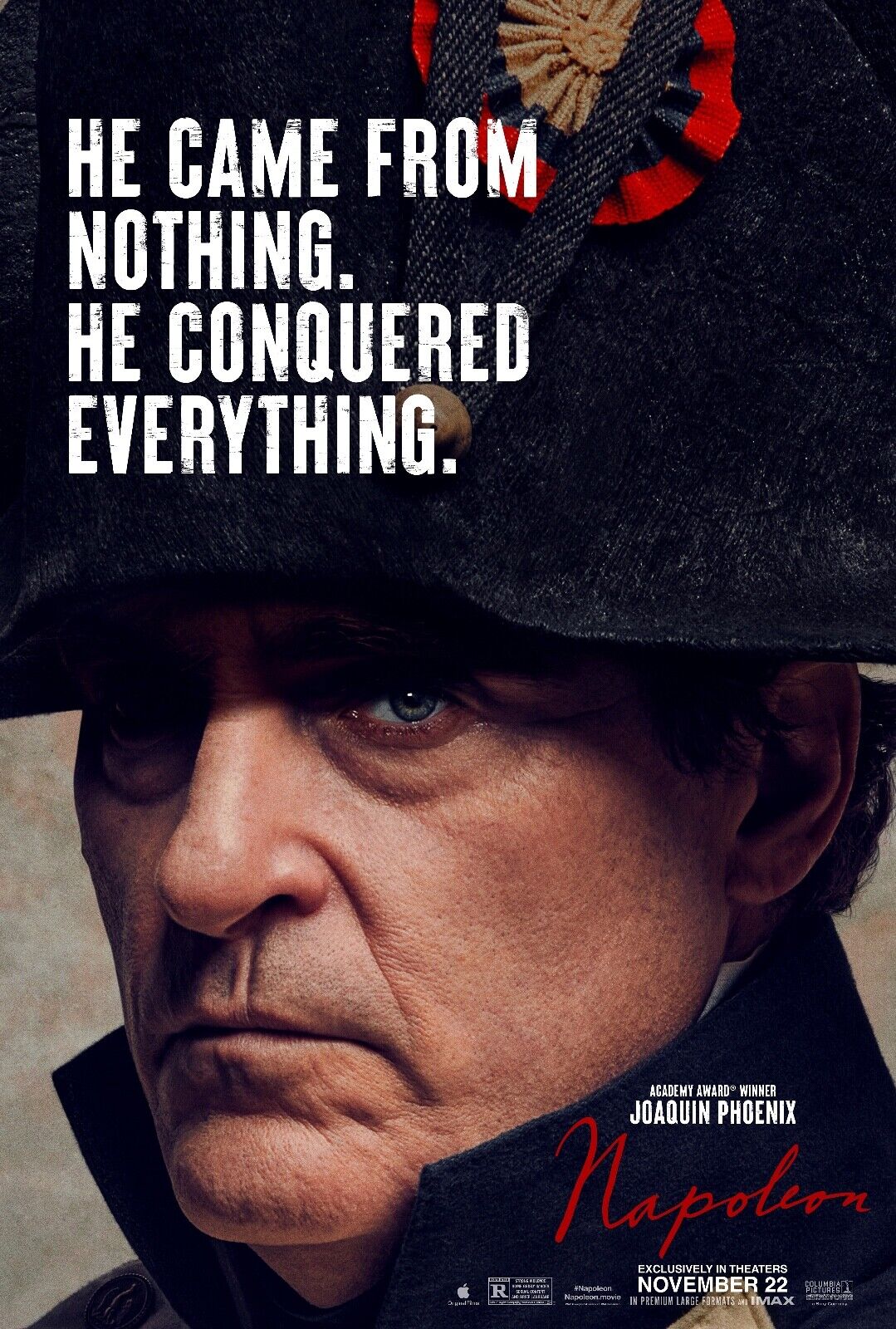
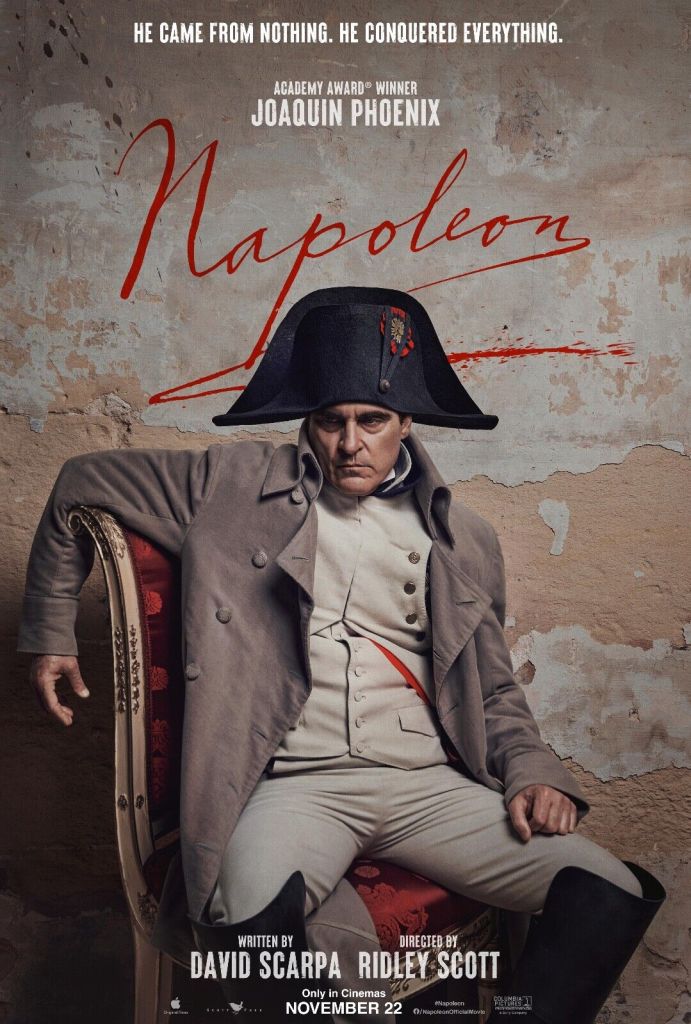
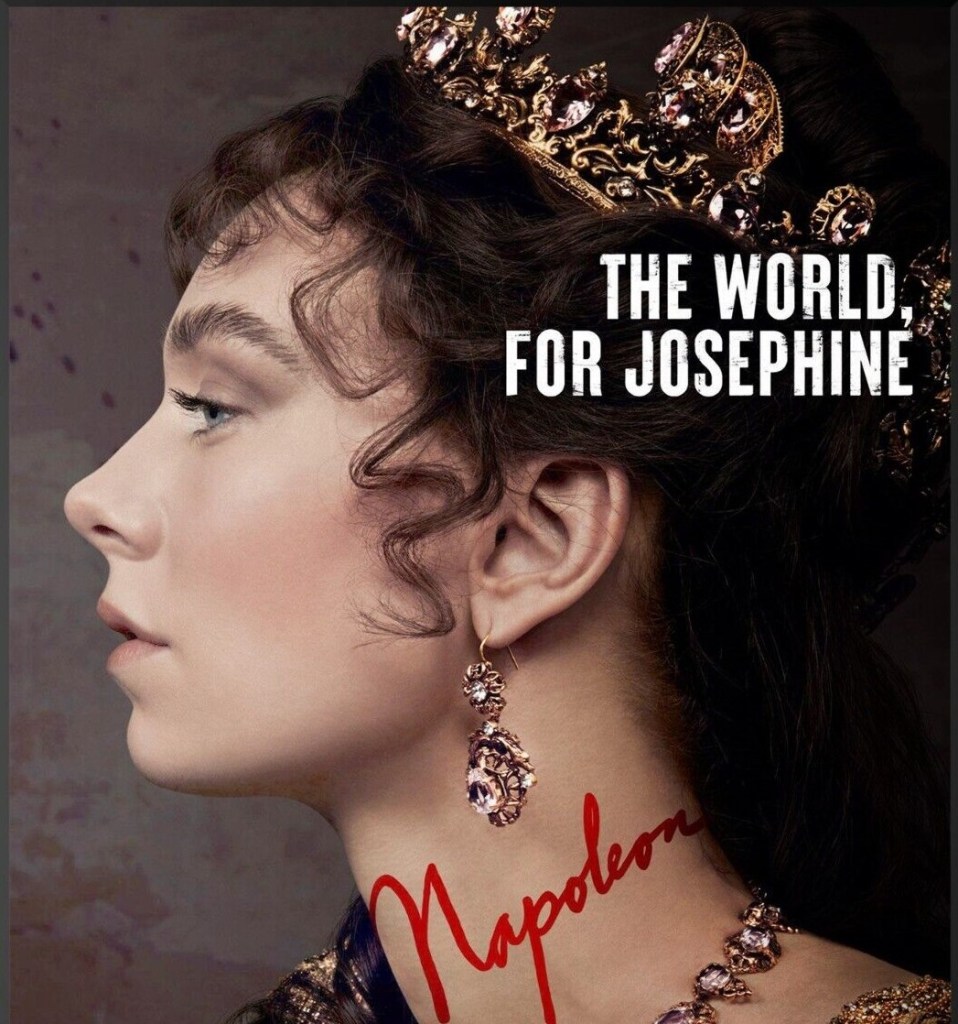
Napoleon (2023) ***

I come at this with a disadvantage since I’m all Napoleoned-out what the various Abel Gance projects and that of Stanley Kubrick. So I suffer from over-familiary with the subject matter. Most of the audience won;t have viewed a Napoleon movie in their lifetime, but I’ve already sat through six-seven hours of this material.

In the end length defeats them all, the magnitude of the task of encapsulating an extraordinary career ends up as a mad dash through history. Setting any deliberate distortions aside, those scenes fictionalized for dramatic effect providing directors with a free pass, it’s just too much to find a central thread on which to encompass the man. Here, Ridley Scott makes a good stab at using romance as that glue, but it’s hampered by the great emperor (Joaquin Phoenix) being such an oaf in terms of seduction. Although he is as ruthless as any dictator whose risen from poverty to the absolute heights.

On the other hand, Josephine (Vanessa Kirby) is shown as a more complex character in more complex times, effectively taking up with this oaf for mercenary reasons, her clever plan only coming adrift because she cannot provide him with an heir. I doubt if that many among the audience are looking for an actual history lesson, which is just as well, because it feels, in part because of length restrictions, that this is inevitably going to come up short.

Little is made of the political situation in a world terrified of the revolution that changed France seeping into the countries of Europe. Theoretically, Britain was a democracy, but in reality it was ruled by an elite land-owning cabal, with poverty as rife as in France. Every other country in Europe had an unelected monarch. So Napoleon didn’t so much intend to conquer Europe from power lust but prevent his country being attacked by those who feared an end to the status quo.

Of course, if you had included more history you would have to accommodate an endless stream on one-line characters trying to explain the situation. Scott makes more use of subtitles to provide the audience with its historical bearings but still isn’t afraid to simply fall back on the Austerlitz trick of using protocol to announce a new one-line character.

In terms of actors, this has more the feel of a mini-series than a movie. Hardly anyone of box office significance and being weighed down with British character actors, virtually nobody is on screen long enough to make a mark. Certainly, none command the screen the way the veterans of the old-style all-star cast like Ralph Richardson (Khartoum 1966) or John Gielgud (Becket, 1964), and I’m sorry but Rupert Everett as the Duke of Wellington is sorely miscast.

Anyway, you could go through this entire picture pulling it to pieces, instead of concentrating of what does work. Napoleon’s insecurities contrast nicely with his rampant ambition and arrogance and every now and then someone delivers a historical bon mot. As annoying as it is, I doubt if many males of the period gave any thought to female pleasure during sex, so Napoleon’s amateur love-making can be ignored.

Except for the verbal sparring with Josephine, it’s the military duels that bring this up to scratch at least within the Ridley Scott canon. The taking of Toulon, the bloody putting down of the royalist revolt and Austerlitz are the outstanding scenes, though anybody who has dared to sit through Abel Gance’s Austerlitz might not come out thinking the frozen ice splintering is quite as novel as it might appear.

I’m guessing that the four-hour version planned for streaming might fill in some of the holes, but I’m worried that, like Austerlitz, it will be more of the boring stuff, a potted history filled out with more balls and costume-heavy scenes. If this is all the insight into the life of Napoleon that $200 million buys, then it will take another streamer with even deeper pockets to make a serious dent at tackling the full story of Napoleon.

I usually go back to see a Ridley Scott film at least once – I saw The Martian (2015), Gladiator (2000) and American Gangster (2007) four times each in the cinema – but I’m not sure this holds the same attraction. The director’s cut of Kingdom of Heaven (2005) even with a miscast Orlando Bloom totally transformed that movie so I’m hoping the longer version here might achieve the same. But the latter had a marvellous score, which I had bought as a CD and was a virtual earworm for me, whereas the music here is an uneven as the picture.

I’d love to give this a better score, especially as it may be the director’s last cinematic outing, but it’s too disappointing.

Time – or lack of it – does not sit well here.

Napoleon (1927) *****

That Fritz Lang’s Metropolis (1927) dominated the foreign film scene in the silent era was only because Abel Gance’s majestic Napoleon the same year was butchered on release and rarely seen outside its native France. Audiences who might fancy waiting for streaming to view Ridley Scott’s new epic on the grander four-hour scale might prefer to test their stamina against this early masterpiece that broke incredible new cinematic ground.

You could easily get the impression from the vast amount of innovation on display here that one man – and a Frenchman at that – had single-handedly decided to revolutionize the entire medium. Of course, France had been instrumental in the birth of cinema. Alice Guy was key to the development of narrative cinema although the world being male-dominated that singular achievement was erroneously handed over to George Melies.

Here’s the list of Abel Gance’s innovations: split screen (in fact, triple images), underwater shots, tinting, fast cutting, hand-held shots, extensive close-ups, point-of-view shots, superimposition, use of multiple cameras, mosaic shots and multiple exposure. Perhaps even more astonishing was that at the time the bulk of movie cameras were static.  Even if the result had been, dramatically speaking, as dull as ditch water, it would have been of historical cinematic importance, possibly on a par with This Is Cinerama (1952) or House of Wax (1953), the first 3D.

And it if had been as visually striking and cinematically interesting as The Robe (1953), Twentieth Century Fox’s first demonstration of Cinemascope, it would have more than passed muster as a cinematic footnote.

Instead, it is just stunning. You couldn’t ask for a bolder storyline, the biopic of one of the most fascinating characters who ever lived, Napoleon Bonaparte, who resurrected France after the Revolution of 1789, conquered most of Europe, and rose from defeat and captivity to rally his troops for one final battle at Waterloo in 1815. Wisely, Abel Gance doesn’t attempt to cover all that territory, only going as far as the invasion of Italy, which marked the Little General’s rise as a battle master.

Unlike other directors such as Orson Welles who scarcely made another movie after one of his first efforts was butchered on release, Gance kept plugging away despite the debacle of Napoleon.
“Venus of Paris” was shown in 1941.

Which version you see – the most common one comes in at around the four-hour mark but if you have the stamina there’s enough in the longer version to keep you engrossed for another couple of hours – will inform your assessment of the authenticity of the narrative and attest to the compelling nature of the tale.

Beginning with a young Napoleon revealing his military skills just to engage in a snowball fight, it moves with narrative focus and cinematic flair through his difficult time at school to the invasion of Italy. Some of the imagery is haunting, a freed pet eagle returning out of choice to his side, the French flag used as a sail, lightning illuminates hand-to-hand combat (that battle taking place in the kind of driving rain Kurosawa would employ in Seven Samurai, 1954), scenes change color, and the final unfurling of the triptych (three connected screens a la Cinerama) is one of the most visual climaxes in cinema.

But even the shortest version contains the bulk of the innovation, perhaps proving that dialog was the most redundant of all the cinematic developments. The trailer, which you can catch on YouTube (see link below), is almost jukebox cinema, a compilation of many of the greatest scenes. Unless you are familiar with silent cinema style, you might recoil at some of the acting, but, once you get into the swing of it, that seems to jar less.

Much as I am a huge fan of Ridley Scott (the extended version of Kingdom of Heaven, 2005, a long-time fave), I doubt if his version (even the longer one promised for the Netflix screening) will come anywhere close to the almost cinematic perfection of Abel Gance.

Don’t take Stanley Kubrick and martin Scorsese’s word for it, this is a must watch.

https://amzn.to/47HcFyd

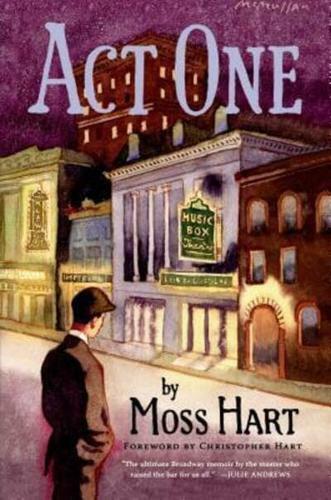
Act One (1963) ****

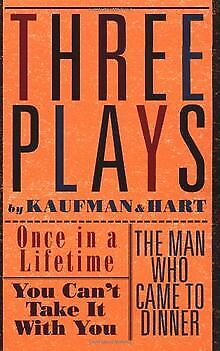
Highly enjoyable and surprisingly good. Could be viewed as a companion piece to Two Weeks in Another Town (1962), swapping movies for Broadway. I have to confess I had only seen the writing team of George S. Kaufman and Moss Hart in the context of movies – Frank Capra’s Oscar-winning You Can’t Take It With You (1938) and The Man Who Came to Dinner (1942). I hadn’t realized these had begun as plays and the movie tells the story of the beginning of their partnership when Kaufman was an established playwright and Hart a neophyte.

Perhaps because this was the only directing gig for Dore Schary, better known as a screenwriter (Boys Town, 1939), producer and head honcho at MGM, there’s none of the melodrama of Two Weeks in Another Town. In fact, except for an occasional appearance by Kaufman’s exasperated wife, there’s hardly a woman in sight and certainly no complicated nuptials or even romance.  It’s basically a two-hander, the relationship between the two writers and their struggle to turn the play Once in a Lifetime (1930) into a hit.

It’s helped along by what must be most subdued and subtle performances in the careers of either George Hamilton (Two Weeks in Another Town) or Jason Robards (Once Upon a Time in the West, 1969). This is easily Hamilton at his finest and it is one of Robards’ better performances. Rather than gung-ho turns, all sturm and drang, emotions out of control, the two actors inhabit their characters. Once only is Hamilton let off the leash, in an unfair tirade against buddie Joe (Jack Klugman) and is far more effective in a scene where he doesn’t say a word, and Schary has employed a film noir technique of leaving a face, apart from the eyes, in darkness, as he comes to terms with the realization he has a hit on his hands.

The story simple enough. In 1929, cigar-maker father out of work, family struggling to cope with the onset of the Great Depression, Hart is a struggling playwright, first five serious works rejected. But turning to a comedy about Hollywood, he strikes gold. Or at least some gold dust. Because a play on paper is scarcely the finished work. Teamed up with a recalcitrant, grumpy, introspective, monosyllabic Kaufman, Hart finds out the hard way just what it takes to turn prospect into success.

Mostly, it’s rewrites. And more rewrites. What’s wrong with the initial play is everything bar the idea. What’s wrong after that is everything they haven’t been able to fix. Gets to the stage where Kaufman – remember, the more experienced one – is ready to quit.

So once Kaufman appears, it’s mostly two guys in a room or backstage trying to sort out a myriad of problems. There’s some nice interaction. Kaufman never eats, so Hart is constantly famished. Kaufman hates Hart’s cigar smoke. Eventually, they come to an agreement, constant food in exchange for extinguishing the cigars (a pipe deemed an acceptable substitute).

There’s a cast of interesting characters, famous producer (Eli Wallach) and Hart’s support network, talented unsung writers and actors (including Archie Leach before he went Hollywood and became Cary Grant, his attraction to females a constant refrain), and a scene-stealing George Segal (The Quiller Memorandum, 1966). At a party we briefly meet the Alqonquin Round Table set, all insufferable and barely a bon mot between them.

Movies about the stage invariably involve an actor so this makes a refreshing change. And most films about writers concern the literary artist rather than the more overtly commercial variety. But I’m guessing the level of endeavour is much the same.

But it’s the lack of grandstanding that makes this work. Rather than lading down characters with tons of dramatic dialogue much of the piece is carried by small bits of business, the fastidious Hart snipping loose threads from a shirt, pressing his trousers under his mattress, the equally finicky Kaufman constantly washing his hands and the scourge of sentimentality. Sure, it’s showtime, so there’s a measure of bitchiness, a marvellous scene where Kaufman imagines a producer’s positivity is intended to put him off.

Unexpectedly excellent acting lifts this. Not easy to find, Ebay would be the best place.

The Wonderful World of the Brothers Grimm (1963) *** – Seen at the Cinerama

With Hollywood already snagging the best characters of the Grimm inventory – Snow White, Cinderella, The Sleeping Beauty and Tom Thumb – and others like Rumpelstiltskin not deemed cute enough, George Pal (The Time Machine, 1960) had a battle on his hands to come up with a decent enough second string. Spurning for no obvious reason contenders like Hansel and Gretel and The Frog Prince, he plumped for a strange hybrid.

He incorporated three fairy stories – The Dancing Princess, The Elves and the Shoemaker and The Singing Bone – in a drama about the authors. Both sides of this tale had a common background, 19th century Germany with its rich vein of fairy castles and cobbled streets where kings ruled. The Grimms are posited as wannabe writers but with warring personalities.

Unmarried Jacob (Karl Boehm) wants to stick to the knitting and complete the work, a biography of the Duke (Oscar Homolka), they are being paid for while married Wilhelm (Laurence Harvey) prefers to use that time instead to write down the stories he has collected from a variety of sources.

The stories Pal chooses to bring to life pop into the narrative by the simple devices of telling kids a bedtime story or overhearing the tale. Jacob is actually more interested in academic writing; books on law and grammar are what capture his imagination. The narrative switches between the brothers falling out, enduring poverty and Jacob falling in love with Greta (Barbara Eden) but lacking the romantic touch mostly making heavy weather of it.

The first tale in the triptych – The Dancing Princess – is simple enough. A King (Jim Backus) promises the hand of his daughter (Yvette Mimieux) in marriage to whoever can find out what she does at night which a humble woodsman (Russ Tamblyn) manages with the help of a cloak that makes him disappear. In the second story elves come to life to save the skin of a shoemaker more interested in helping orphans than his rich clients.  

The third, demanding the biggest special effects, less successfully translates to the screen since it involves the creation of a dragon to be slaughtered. However, it is saved by humor, since the knight (Terry-Thomas) is too cowardly to do the job and relies on servant Hans (Buddy Hackett) for the actual slaying, and by the most gruesome of endings.

Plus, since it is in Cinerama, something speeding is required seen from the audience point-of-view or a hero who could fall into a canyon. And in the best fairy tale tradition the heroes are unsung and under pressure.

Laurence Harvey (A Dandy in Aspic, 1968), Karl Boehm (The Venetian Affair, 1966) , Claire Bloom (Two Into Three Won’t Go, 1969) and Barbara Eden (I Dream of Jeannie television series, 1965-1970) are just about buoyant enough to keep the main story ticking along and carve out a piece of Disney territory without so much as a decent song to help proceedings. Three unexpected twists – four if you count a miraculous recovery from serious illness – nudge this in unexpected directions.

The first is the solidity of brotherly love, with one having to choose wife over his close bond with his sibling – the kind of emotional hit that would be more common in an adult picture, though kids obviously couldn’t care less. The second is the appearance of virtually all the famous Grimm characters in what amounts to a cameo. Last is a proper fairy tale ending where it’s the kids who elevate the brothers to literary success.

Laurence Harvey hides his snide side and does his best Dirk Bogarde impression as the errant brother whose imagination brings his family to near-ruin. Despite being offered love on a plate, Karl Boehm remains steadfastly dour, while Claire Bloom as Wilhelm’s wife has little to do. Scene stealing honors go to Oscar Homolka (The Happening, 1967) while Terry-Thomas (How to Murder Your Wife, 1965) just about shades it in the comedic duel with Buddy Hackett (The Love Bug, 1968).

George Pal concentrated on the fantasy elements with Henry Levin (Genghis Khan, 1965) directing the drama so it’s a mixture of very grounded and very flighty. It’s not really long enough for a true Cinerama roadshow movie but with an overture and intermission it stretches enough.

It was filmed with the traditional three Cinerama lenses and would have been projected with three projectors but at the Bradford Widescreen Weekend  I saw a new restoration that does away with the vertical lines. For contemporary audiences who only view fairy stories through the microcosm of animation and for whom live-action means Ray Harryhausen, the special effects here will come as something of a disappointment. But on the other hand it is still George Pal, so enjoy.

William Roberts (The Magnificent Seven, 1960), Charles Beaumont (Mister Moses, 1965) and David P. Harmon (Dark Purpose, 1964) cobbled up the screenplay.

As I said I saw this in the magnificence of the big screen and in widescreen Cinerama to boot so I am bound to be a shade benevolent but this still holds up, the drama dramatic enough, as a biopic interesting, and kids who might be taken with the fairy stories are way too young to complain about the effects.

Discover WordPress

A daily selection of the best content published on WordPress, collected for you by humans who love to read.

The Atavist Magazine

by Brian Hannan

WordPress.com News

The latest news on WordPress.com and the WordPress community.