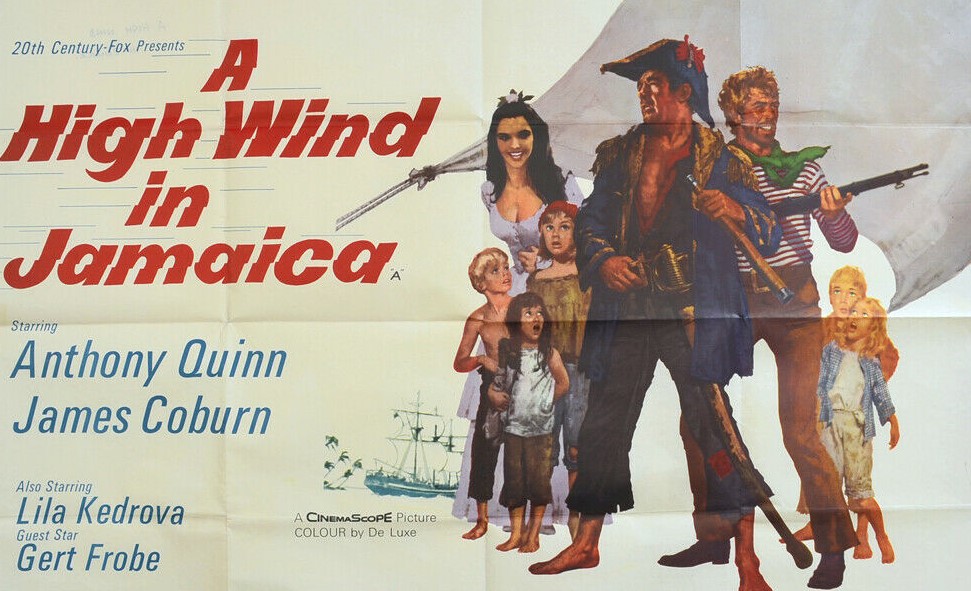
A High Wind in Jamaica (1965) ***

Forget swashbuckling shenanigans in the Captain Blood (1935) and Pirates of the Caribbean (2003) vein, this has more in keeping with Lord of the Flies (1963) as a bunch of third-rate pirates get more than they bargained for after kidnapping a bunch of English children.

The pirates are clever enough when required, using the ruse of pretending to be a ship in distress to defeat an enemy, capable of torturing a captured captain into revealing concealed treasure, or hiding from pursuit by disguising the masts with palm leaves, but generally short on intelligence. That the kidnapping is unintentional, no sensible pirate wanting the British Navy breathing down its neck, gives an indication of the mentality of Captain Chavez (Anthony Quinn) and his mate Zac (James Coburn). Nor are the children Disney-cute and far from being petrified they see it as a great adventure while the crew are superstitious about having the youngsters aboard.
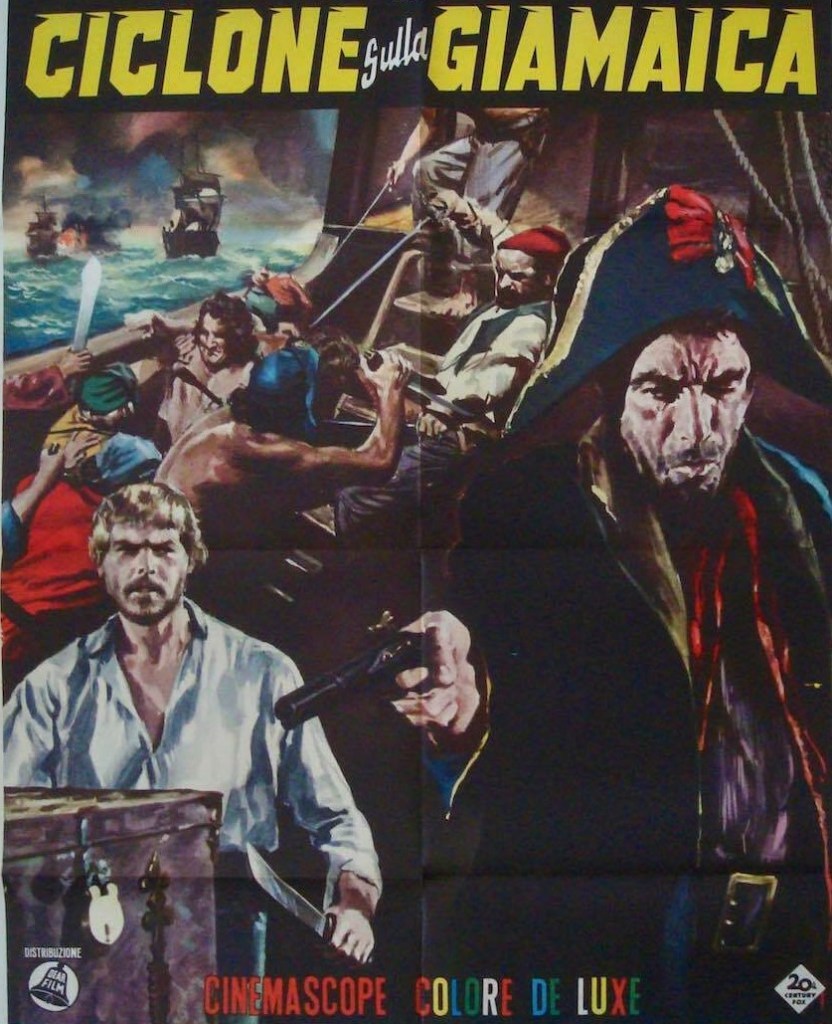
The kids have great fun running rings round the pirates, stealing Chavez’s hat, climbing the rigging, and ringing the bell, while turning round the ship’s figurehead provokes another bout of superstition. When the kids are eventually imprisoned in a rowboat to prevent upsetting the crew they still manage to do so by playing a game that the crew take too seriously.

An attempt to abandon the children on the island of Tampico fails when the oldest boy John (Martin Amis) dies by accident. The children are unperturbed by his death, the only question raised is who can have his blanket. Much to his surprise Chavez discovers he has a strong paternal side, protective when he discovers that one of his captives is a young woman rather than a child, and going against the wishes of his crew when he tends to a knife wound on Emily (Deborah Baxter).

The children are far more grown-up and matter-of-fact than the childish crew, consumed by superstition, and Chavez, consumed by emotion. Although there is considerable comedy to be had from the children’s endeavors, it’s largely an adult film about children. In general, they don’t react the way they would in a Disney picture, nor in the manner which many adults would expect. The sexual tension of the book is considerably underplayed. But the fact that the adults are brought into harm’s way by sheer folly, and their reactions to life are essentially childish, creates a contrast with the more savage attitudes of the children. Emily essentially exposes Chavez’s guilty conscience.
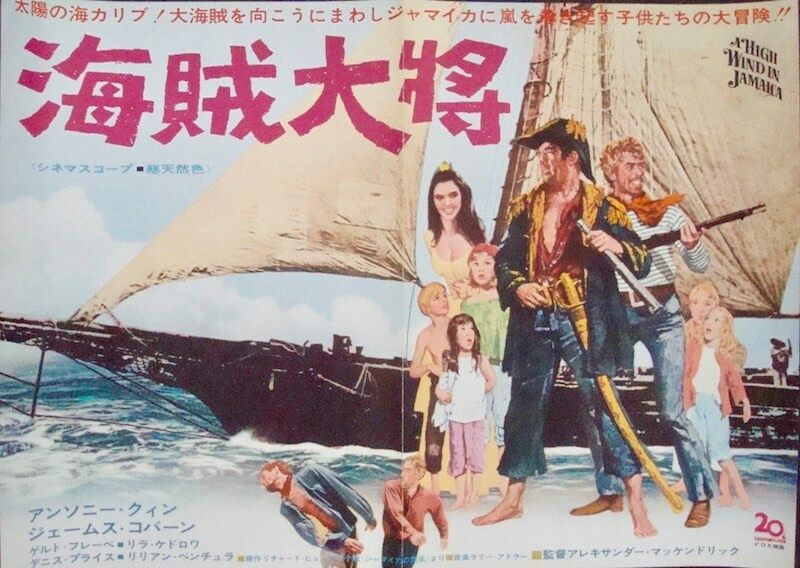
While there is ambivalence aplenty, the depths the book explored go unexplored here, much to the benefit of the picture. The movie dances a tightrope as the children who would otherwise expect to trust an adult grow to learn how to distrust, a rather sharper lesson in growing up than they might have anticipated from their middle-class innocent lives.

Alexander Mackendrick (The Ladykillers, 1955) excels in ensuring the tightrope remains in place while taking advantage of the opportunity for comedy, the realization that this adventure is far from fun only becoming gradually apparent.

Anthony Quinn (Shoes of the Fisherman, 1968) reins in his tendency to ham things up, and his development from unbridled pirate to responsible adult is an interesting one. James Coburn (Dead Heat on a Merry-Go-Round, 1966) reins in the flashing teeth and reveals a more ruthless side than his captain anticipated. Deborah Baxter (The Wind and the Lion, 1975) is easily the pick of the kids although future novelist Martin Amis with his trademark sneer gives her a run for her money.

Lila Kedrova (Torn Curtain, 1966) appears as a brothel madam, Nigel Davenport  (Sebastian, 1968) as the father and Gert Frobe (Goldfinger, 1964) as the captured captain. The cast also includes Dennis Price (Tamahine, 1963) and Vivienne Ventura (Battle Beneath the Earth, 1967).

Stanley Mann (Woman of Straw, 1964), Ronald Harwood (The Dresser, 1983) and Denis Cannan (Woman of Straw) wrote the screenplay based on the celebrated Richard Hughes novel.
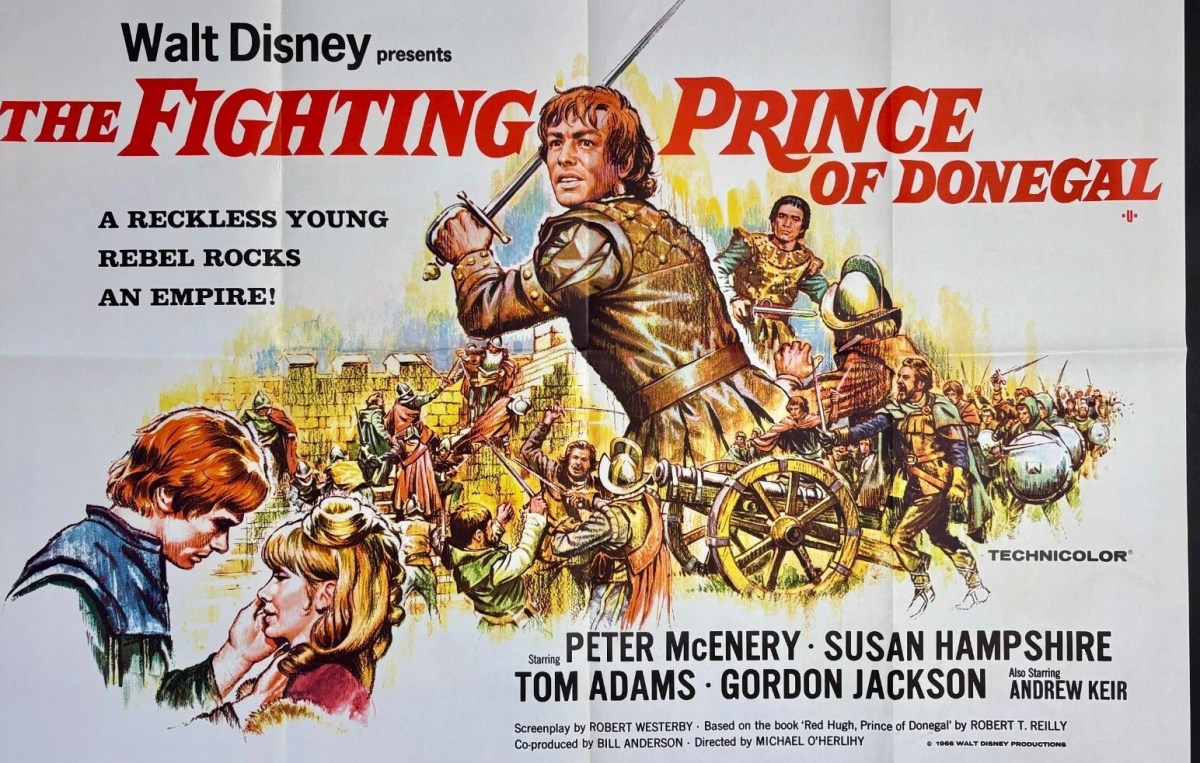
The Fighting Prince of Donegal (1966) ***

I’m amazed I sat through this without complaint as a kid. This was a rare outing for me, given I grew up in a town without a cinema and the only time I went was for a roadshow musical at Xmas or if we were away on holiday for the summer in towns that were bursting with picture houses. No doubt my parents, of Irish descent, were seduced by the last word of the title while assuming that the second word would be enough to keep us kids happy.

Unfortunately, the title is something of a misnomer. The titular character Hugh O’Donnell (Peter McEnery) spends more time sitting on his backside in a prison than he does engaging in any form of fighting. And in another annoying dupe, swords are scarcely in evidence, the weapon of choice being a wooden club of sorts, so it hardly qualifies as the swashbuckler the poster suggests.

Where Walt Disney was happy to play fast and loose with other aspects of history in other movies, here he cleaves close to the truth – though Hugh didn’t marry a McSweeney and his father didn’t die – so what we get is some kind of rebellion story, as the Irish attempt to rise up against the occupying English in the 1580s. If you are aware of your history, you will know that Oliver Cromwell is to blame for the English re-conquest of Ireland. Various rebellions followed, of which this is one.

It starts off promisingly enough with a nice bit of myth, that when Hugh becomes chief of the Clan O’Donnell he triggers a prophecy that insists the Irish will become free. That’s easier said than done due to the lack of a cohesive rebellion force thanks to infighting and historical distrust between the clans. And when Hugh does attempt to stand up against the British he’s promptly imprisoned – again and again.

A better title would be The Escapologist of Donegal because that’s mostly, except for the beginning and final sections, what this is about. He escapes, is betrayed and recaptured, or escapes, racing through the streets of Dublin, and remains free and then manages to gather the clans under his banner and take on the English.

And, actually, Hugh is not that keen on the use of force to win freedom. He prefers negotiation. So you can imagine how exciting that is for the kids in the audience. He wants to unite all the clans and hope the English will see sense. Luckily, for the frustrated kids in the audience, the English are not inclined to sit around a negotiating table. So, at last, we get a battle.

To save it from just being a history lesson, a romance is sneaked in between Hugh and Kathleen McSweeney (Susan Hampshire), daughter of another clan chief, and who already has an ardent admirer. A wedding is the easiest way to create unity between clans, but, luckily, this isn’t just the political matchmaking that occurred in England and Europe.

But that nascent romance is put on the back burner for most of the picture while Hugh sits in jail or runs around the country in escape mode.

So, a few fights with cudgels and fisticuffs, some bonding with other prisoners, some wooing of the clans until at last at last there is the semblance of a battle.

Nearly 60 years on from first viewing I am not won over. The politics and maneuvering is certainly more interesting to an adult, but I am still miffed at the absence of much actual swordplay – and you know how fond I am of a swashbuckler. It’s just too earnest in setting up a rebellion tale and the escapes have none of the ingenuity we have come to expect from such.

Peter McEnery (The Moon-Spinners, 1964) looks distinctly uncomfortable as a matinee idol of the kind groomed by Disney, especially when you see what he was capable of a few years later in the more scandalous Negatives (1968). Susan Hampshire (The Trygon Factor, 1966) only tops and tails the picture and her entire Disney experience was clearly so miserable she excised it from her biography.

Directed by Michael O’Herlihy (Smith!, 1969) from a screenplay by debutant Robert T. Reilley based on the Robert Westerby novel.

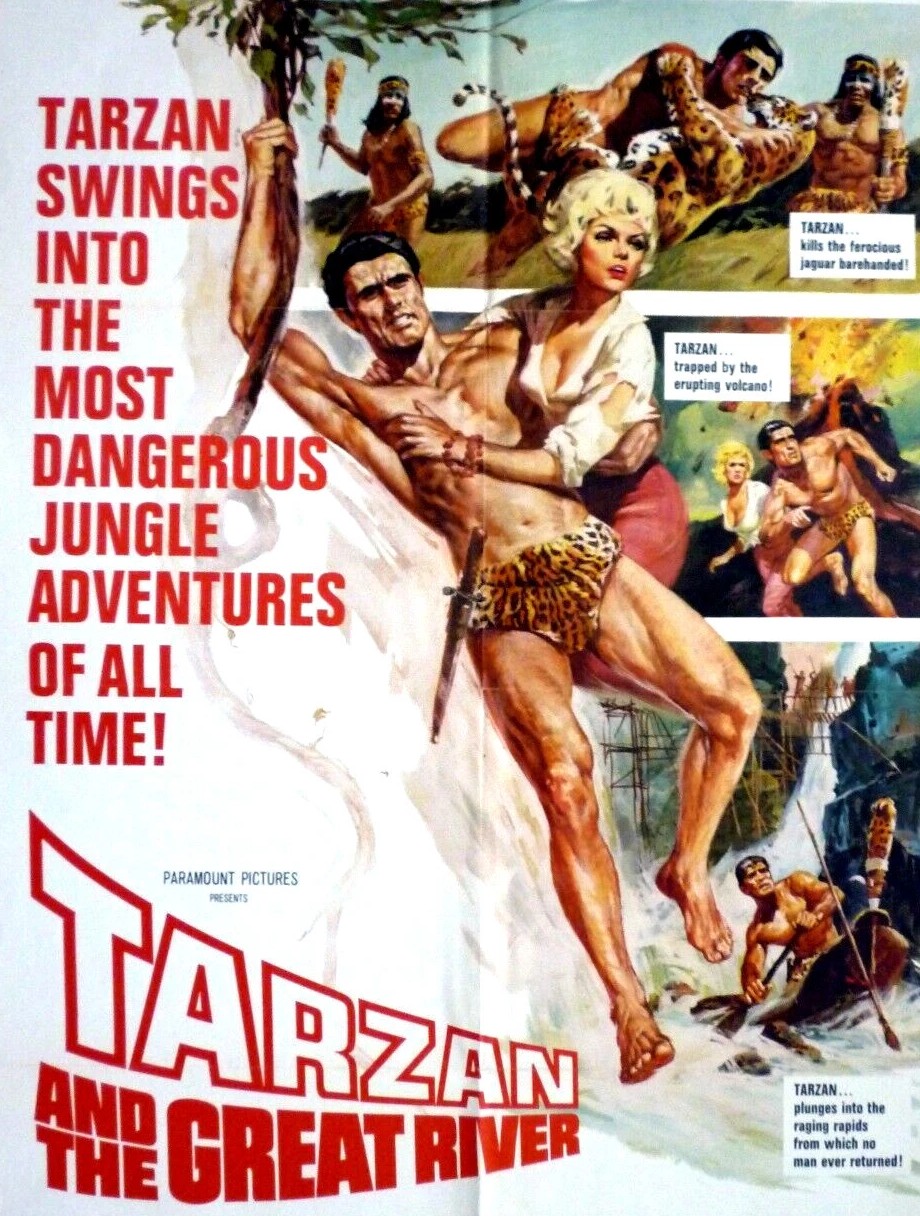
Tarzan and the Great River (1967) ***

Tarzan (Mike Henry) has been repurposed as an international adventurer dropped into trouble spots an ocean away from his African roots. He’s the male equivalent of the bikini-clad females peppering the espionage genre, kitted out in only a loincloth, torso kept bare for the titillation of the ladies. And just like the James Bond series, there’s an evil personage, and while not in the business of taking over the world still wanting to dominate a good chunk of it in South America. Barcuna (Rafer Johnson), espouses the Jaguar death cult, terrorizing villages and enslaving their inhabitants for the purpose of searching for diamonds.

To fill out the narrative, a good chunk of the picture is spent with riverboat Captain Sam Bishop (Jan Murray) and the native orphan Pepe (Manuel Padilla Jr.) he has unofficially adopted and their comic shtick mostly involving the older man cheating at cards is all we’ve got to keep the drama going until the female in distress, Dr Ann Philips (Diana Millay), turns up. But, as you know, Tarzan is no lothario, unlike his colleagues in the espionage department, so we don’t have to wonder if romance is going to raise its ugly head.

Wrong continent. No tigers were used in this film.

In the meantime the producer has scoured the vaults for stock footage and clearly is of the opinion that if you can transplant Tarzan from his natural African habitat you can do the same with hippos. Tarzan wrestles a lion and a crocodile and despatches Barcuna’s henchmen on land and in the river, swimming underwater and tipping over canoes to do his part in keeping the local crocodiles well-fed.

Barcuna, meanwhile, roasts alive anyone caught trying to escape, though he allows the good doctor to escape either because he’s not partial to blondes or he reckons she won’t be much good at hunting for diamonds or, as suggested once he burns her village, because he wants her to let everyone know that he’s the big cheese around here.

There’s the usual plague subplot. Dr Millay is waiting on the arrival of a vaccine to fight a new plague – Bishop is delivering the stuff – but she has a job getting the natives to accept inoculation and it’s only when Pepe offers himself as a guinea pig that the others queue up.

Devoid of the gadgets, speedboats and fast cars of the espionage genre, Tarzan relies on the speed of his legs as if he was auditioning for the Tom Cruise role in Mission Impossible or that of Liam Neeson in the Taken series. There’s a spectacular fight between Tarzan and Barcuna for the climax.

Harmless stuff, as innocuous as the others in the trilogy featuring former football player Mike Henry (The Green Berets, 1968). They were filmed back-to-back in 1965 and released at the rate of one a year from 1966. This was the third time producer Sy Wintraub’s had reinvented Tarzan. He had previously shepherded home a pair – starting with Tarzan’s Great Adventure (1959) – starring Gordon Scott. Jock Mahoney inherited the mantle with Tarzan Goes to India (1962) and lasted for one more adventure.

This was the last of a quartet of outings with Tarzan for director Robert Day (She, 1965). Written by Bob Barbash (The Plunderers, 1960).

Perfect Saturday matinee material.

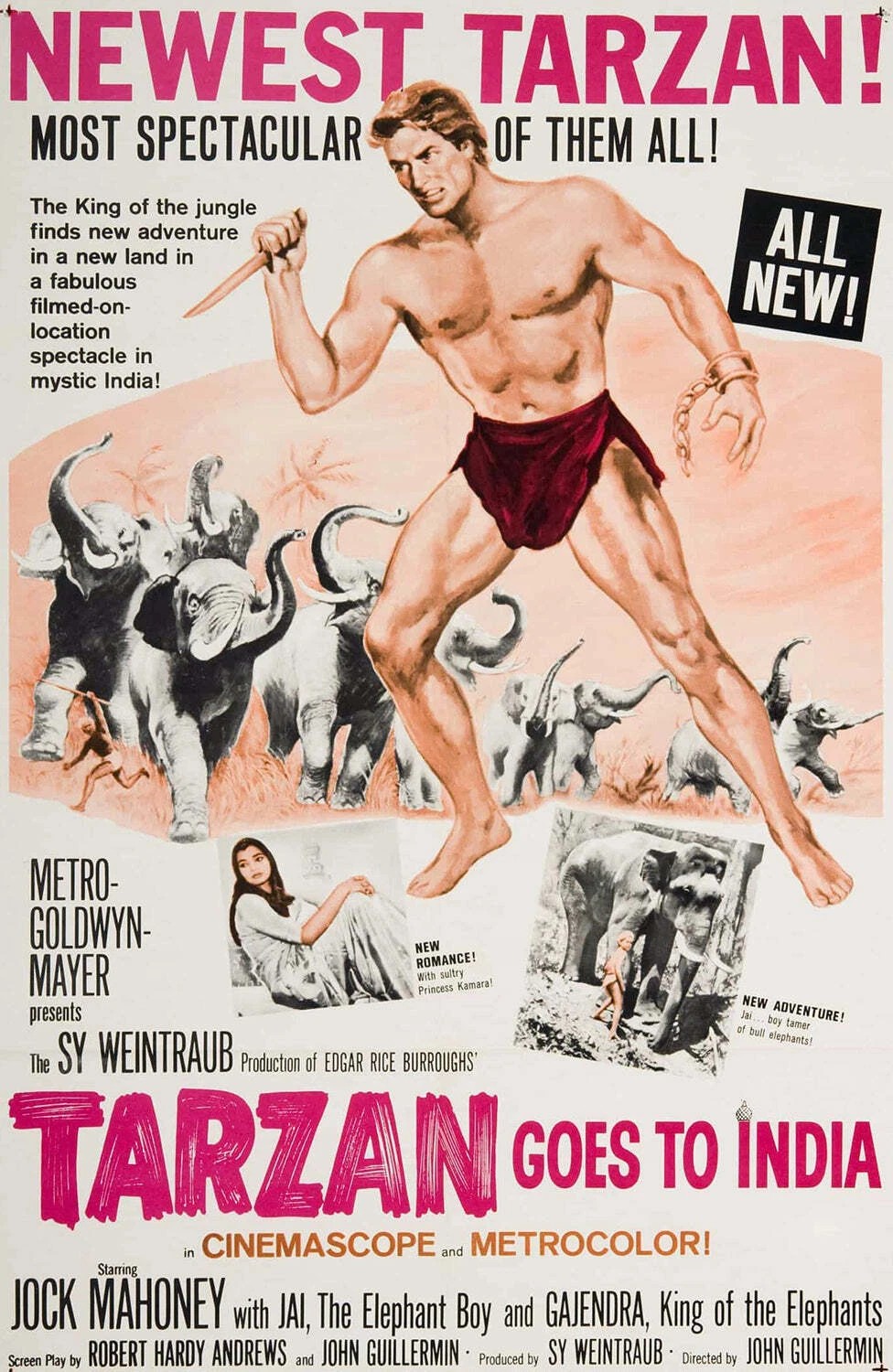
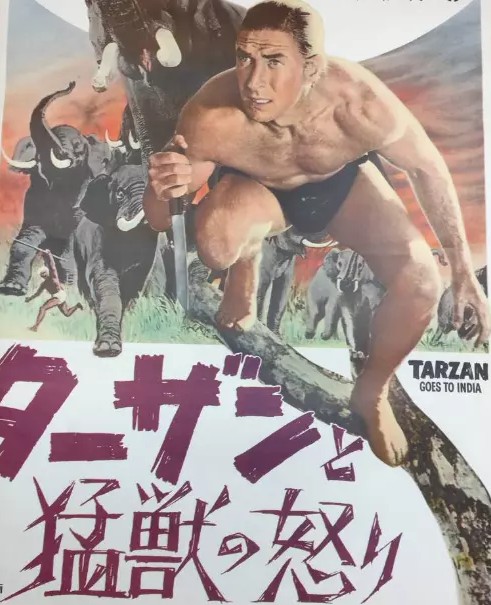
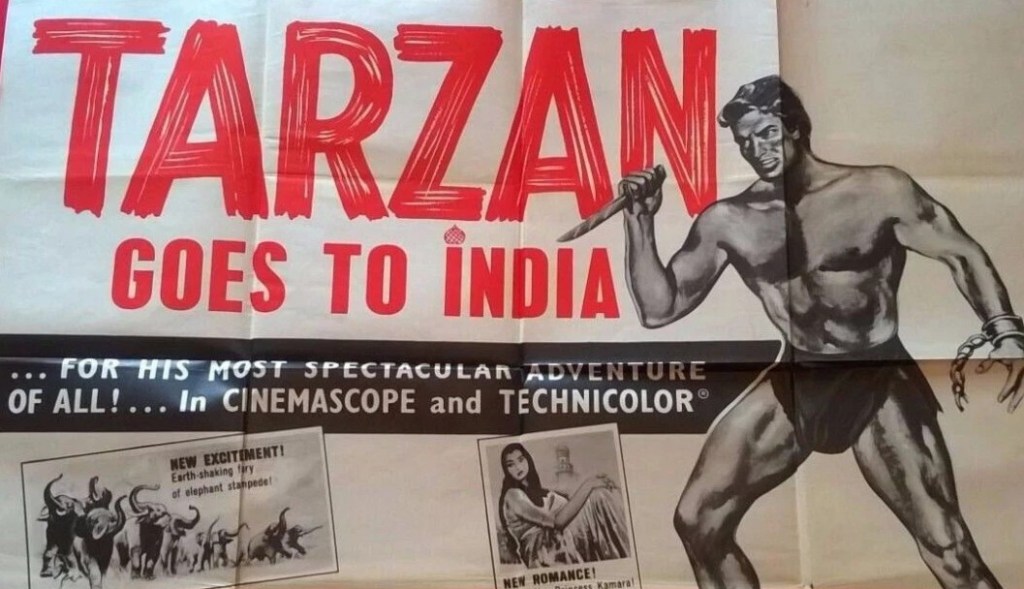
Tarzan Goes to India (1962) ***

Helluva fillip for reissue and credibility purposes to be able to point to the picture being helmed by the director – John Guillermin – of The Towering Inferno (1974), not to mention King Kong (1976) and The Blue Max (1966) – which suggested top-notch skills if not the budget to match. Guillermin, who also had a share in the screenplay, does a pretty good job of tailoring the picture to highlight issues that in others of the series are treated in more comedic fashion and making tremendous use of the location, far more than subsequent directors do with South American scenery. Elephants go mano a mano, Tarzan has a tussle with a leopard, but for sheer realism there’s little to beat a tiny mongoose putting a cobra in its place.

But what could be more timely for today’s audiences than presenting Tarzan (Jock Mahoney) as an eco-warrior. He is brought in to rescue a herd of 300 wild elephants being drowned when a much-needed hydroelectric dam is opened. Dam engineers Bryce (Leo Gordon) and O’Hara (Mark Dana), who show no compunction about the high death rate among the native laborers, are even less concerned about the fate of the elephants especially as have very tight deadline – the onset of the monsoon season  – to meet. Princess Kamara (Simi Garewal), daughter of an old friend from Tarzan’s Africa days, is trying to get villagers out of the way as well. She’s not helped by Bryce’s top engineer Raj (Jagdish Raj) who sides with Bryce.

The main problem is that elephants can’t climb hills and are led by Bala, a rogue of the species, whom Tarzan determines he’ll have to eliminate. He’s helped by a small boy Jai who rides his own elephant Gajendra. Jai’s not there for comedic purpose and Tarzan helps him grow up, their bond facilitated by Tarzan saving the ivory-tusked beast from Bryce in white hunter mode.

Baits abound. Tarzan is chained to a tree by Bryce to entice a leopard. The boy is used, again by Bryce, as lure to draw Tarzan out into the open at the climax. Raj changes sides on seeing how cheaply Bryce treats life, but there’s no time for him to get lovey-dovey with the princess. Which is just as well because Tarzan’s got a lot on his plate. His plan to put an arrow through Bala’s brain goes awry, triggering the Gajandra-Bala duel, which is very well done.

Although set in India, this feels more like the real thing than the sojourns in South America. We never see Tarzan in a suit but I don’t think anyone thought to compare his entrance, emerging from a river clad only in loin-cloth, with the other more famous screen entrance of the year, that of Ursula Andress in Dr No. Tarzan does plenty of swimming, even employing the breathing through a reed trick, and swings through the trees, and runs a lot barefoot, and gets to ride on the back of an elephant. The absence of his usual animal sidekicks is no hindrance. His scenes with the young boy are touching rather than sentimental or clumsily jokey. The kid’s pretty smart, which helps.

Kamara’s there merely to help along the subplot rather than for romantic purposes. Given the lean running time (86 minutes) that kind of palaver would only get in the way. This was shot entirely on location, and it shows, no awkward switches to studio set-ups, glorious scenery all the way.

Best of all John Guillermin, who also helmed Tarzan’s Greatest Adventure (1959), knows how to construct a scene, and how to get the best out of actors whose acting skills would not be considered their main attributes. So it looks good whichever way you cut it.

Former stunt man and athlete Jock Mahoney makes the switch from Tarzan nemesis (Tarzan the Magnificent, 1960) to Tarzan with ease. Less muscle-bound than his predecessors, he brings a more mature tone to proceedings, exuding thoughtfulness more than being gung-ho.

One of the better Tarzans of the decade.

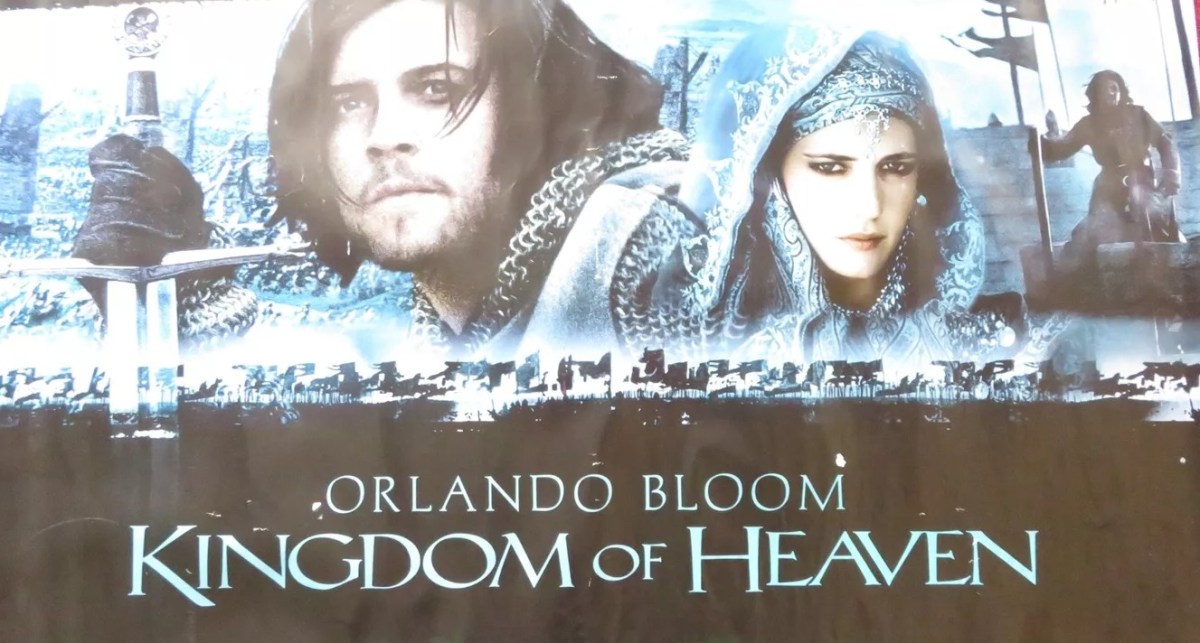
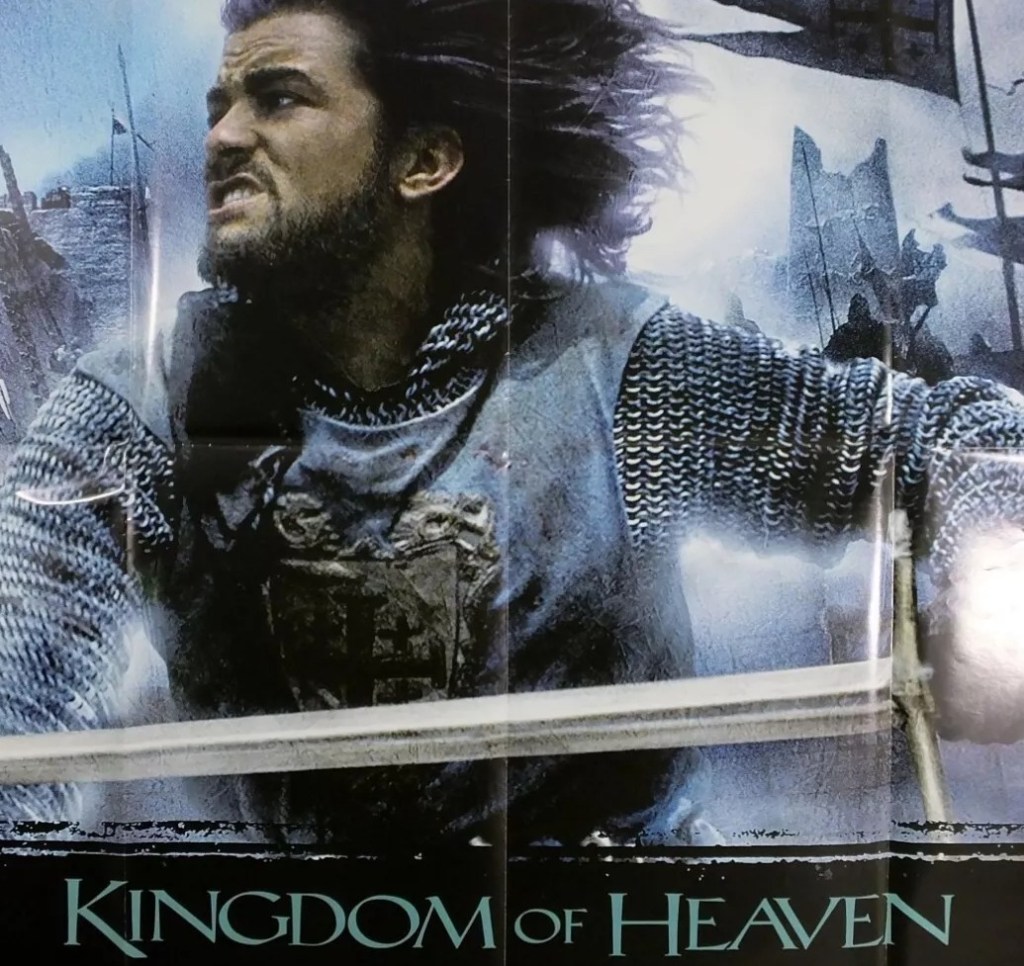
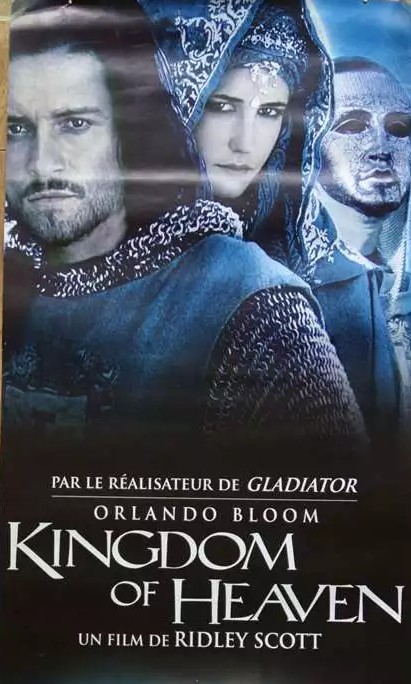
Kingdom of Heaven (2005) ***

I’m conscious of entering contentious waters especially as a new 4K DVD edition of the 195-minute Director’s Cut – expanded from the original 144-minute version – is being released by Twentieth Century Fox to coincide with today’s theatrical 20th anniversary theatrical release. Normally, that would have filled me with joy because I was a huge fan of the original Director’s Cut, which, it is true, added considerable depth to the film as initially screened.

But in watching the Director’s Cut as the first part of a proposed All-Time Top Ten double bill with Any Given Sunday (1999) I discovered to my horror it was not the film I remembered and had for many years championed. The flaws were all too obvious, it was extremely wordy, rammed full of characters and a narrative that ran all over the place trying to keep up with itself.

We should begin with the major flaw and that’s the casting of Orlando Bloom, fresh from his breakthrough role in Pirates of the Caribbean: Curse of the Black Pearl (2003), as Balian the blacksmith. The role was written for Russell Crowe but schedule clash prevented his involvement. Director Ridley Scott went ahead anyway and Bloom doesn’t remotely convince as a leader.

Though most of the picture is based on historical fact, the initial MacGuffin doesn’t make sense. For the purposes of the narrative we need to get blacksmith Balian to the Crusades. Balian’s wife (Nathalie Cox), seen briefly (and happily) in flashback, has committed suicide because of a miscarriage which seems a mighty odd reason, and we are never made privy to whatever other  mental problems afflicted her. In those days, if you committed suicide you could not be buried in sacred ground and furthermore your head was chopped off. Now, admittedly, the local priest (Michael Sheen), Balian’s half-brother, is a creepy character, but it hardly seems to justify Balian thrusting a sword through his heart and setting him on fire.

But, don’t you know it, if you run off to the Crusades you win a get-out-of-jail-free card rather than being hung for your crime. So Balian joins up with his dad Godfrey (Liam Neeson) who has returned briefly from the Crusades and initially been rejected by his son. They’re attacked by soldiers seeking to arrest Balian but, wouldn’t you know it, after a few lessons from his old man, Balian turns out to be an ace swordsman.

Eventually, after a few adventures and shipwreck and fortuitous encounter with Muslim Imad a-Din – remember the name because he later plays a critical role – he reaches Jerusalem and is confronted with a wordfest, a heavy distillation of philosophy, a narrative that flits around fragile peace between Christian and Muslim, and woman of intrigue Sibylla (Eva Green) whose husband Guy happens to be the leader of the anti-Muslim forces.

It might have helped if Godfrey hadn’t inconveniently died, of wounds while protecting his son, because Liam Neeson strikes you immediately as a leader and not the kind of actor like Bloom who is only a leader because the script says so. Anyways, before we can get down to any of the stirring and visually commanding action for which Ridley Scott is rightly acclaimed, Balian, who remember is a blacksmith, turns before our eyes into a wizard of an engineer and before you know it a parched piece of land is fully irrigated. It’s a lovely sequence, to be sure, and accompanied by my favorite piece of music (score by Harry Gregson-Smith) in the film, but not particularly believable.

Nor is the romance, Sibylla now deciding on adultery with her husband’s enemy. And, again, to be sure, much of the extra footage does fill out her character, but that still leaves a jumble of other characters fighting for political power – the dying masked King of Jerusalem, Baldwin IV (Edward Norton), a leper; City Marshal Tiberias (Jeremy Irons); the aforementioned Guy and his sidekick Raynald (Brendan Gleeson); assorted Knight Templars who are ferociously anti-Muslim; and parked outside the city gates Muslin chief Saladin (Ghassan Massoud).

The story, if you can still keep sight of it amongst all this intrigue, is that Guy and Raynald and the Knights Templar want to spark a Holy War, ending years of peace, restoring Jerusalem to sole ownership of the Christians, rather than being equally shared (though, noticeably, no Muslims on any of the ruling factions).

Anyway, eventually, after we’re done with philosophizing and Balian making hay with Sibylla, we get to the action and at last the movie takes flight, and though you no longer particularly believe in Balian as a leader of men he does show some tactical awareness. There’s a superb pitched battle against superior forces and a magnificent siege. Written by William Monahan (The Departed, 2006).

But watching the Director’s Cut again I came away wishing for the shorter version, though very little could compensate for the casting of Orlando Bloom.

I might change my mind if I get to see it in the cinema again but for the moment it’s lost its coveted place in my All-Time Top Ten.

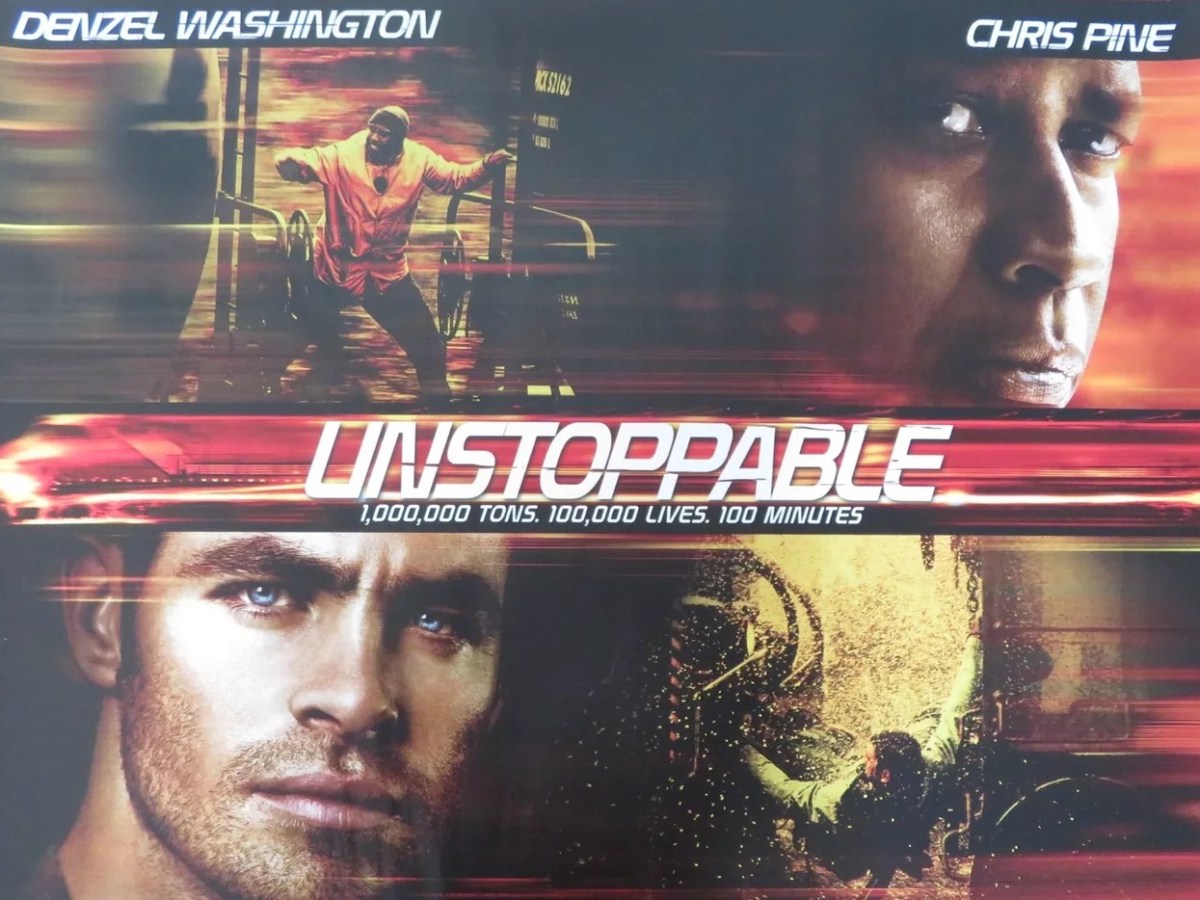
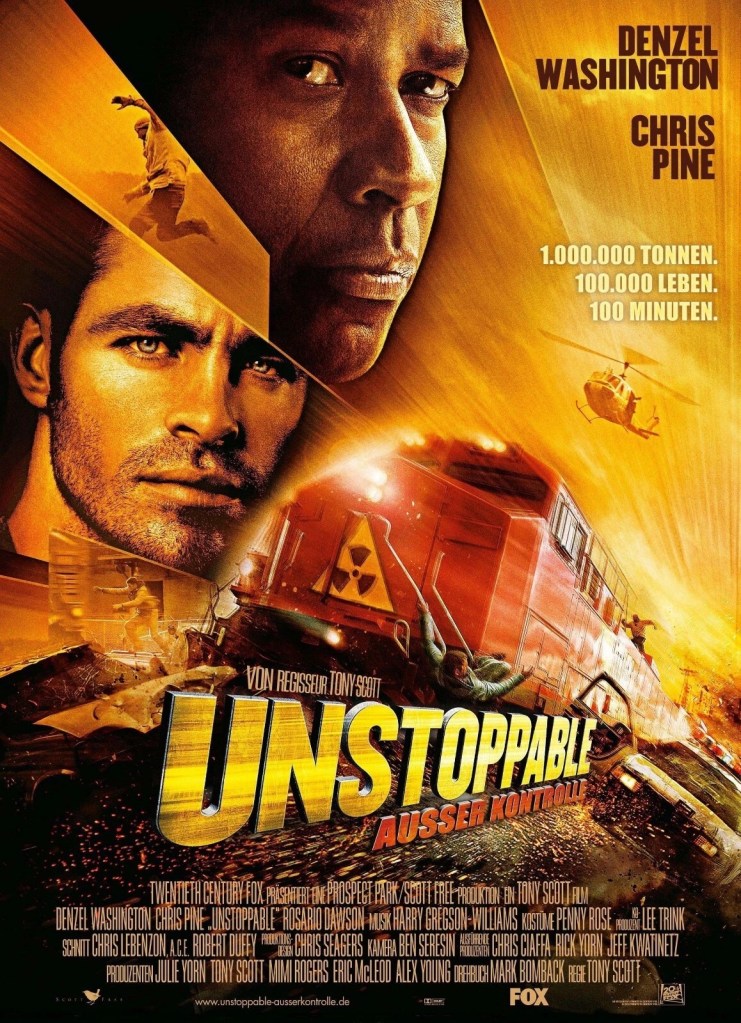
Unstoppable (2010) ****

Fitting swansong for director Tony Scott (The Hunger, 1983). Throwback to the disaster movie of the 1970s when something enormous is going to be decimated, and lives, in this case three-quarters of a million citizens, are put at deadly risk. Distant cousin to Speed (1994), which bears no comparison in the potential mayhem department, since an ordinary bus carries a fraction of the power of a train with 30-odd train cars (carriages to the English) filled with deadly toxic cargo barreling along at 60mph. Basically, “a missile.” And while other trains can be sidelined to get out of its way, it’s headed for an unavoidable obstacle, a piece of raised track in a major city which bends so sharply it can only be safely negotiated at 20mph or thereabouts.

And while said train is a wrecking ball when it comes to anything that happens to be on the track at the same time, the tail end of another train for example or a horse-box, it runs not so much on action as character. The various explosions are just there to remind us how dangerous the damn thing is and to raise tension by perilous degrees.

On board are two opposites, veteran driver Frank (Denzel Washington) and entitled surly know-it-all rookie Will (Chris Pine), who’s the train conductor and technically, I guess, in charge. Not quite open hostility but not far off it.

Frank’s a widower with two daughters who work, as he shamefacedly admits, in Hooters (look it up) while Will has been slapped with a restraining order from his wife and lucky not to be facing a jail sentence for pulling a gun on a cop. On top of that, in a money-saving ploy, Will’s the kind of employee recruited by the company to replace Frank, who, it turns out, is only three weeks away from enforced retirement. So that’s a twist on the gangster trope of the character planning one last big job.

I should point out that thanks to a lazy employee, this is a runaway train, no driver on board, air brakes unconnected, other safety elements unharnessed, nothing to stop it picking up speed and heading straight to hell. Luckily, it’s not full of passengers. I’m being a bit cynical here because a trainload of shrieking passengers and back stories to take account of would have dissipated, rather than increased, the tension.

But there’s also in the back office boss Connie (Rosario Dawson) trying to do her job in the face of the corporate greed, money-grabbing chief executive Galvin (Kevin Dunn) more concerned about the $100 million the company will lose if this goes belly-up, not to mention the catastrophic effect on the share price, so he’s full-on in on barmy schemes to stop the train, including parachuting someone onto the train and trying to bring it to a halt in a much smaller town which can be more easily evacuated than one with a 750,000 population.

Needless to say, none of these dumb ideas work, but it’s fun to watch the high-ups get egg on their faces and watch the cost of the collateral damage escalate. All the while, this being Tony Scott, we’ve got helicopters whizzing around, a huge flotilla of cop cars on blue light duty, uniforms everywhere, and that amazing technical trick that Scott has mastered of having the camera racing past characters who are stock still.

Frank and Will operate like a tag team when it comes to saving the day, Frank hopping from car roof to car roof having come up with the great wheeze of applying the brakes on each individual train car (carriage to you English) and Will at a lower level engaged on similar hazardous enterprise and then not just leaping from a train doing 60mph to a vehicle racing  alongside doing 60mph but leaping back onto the train from said car going at an even higher speed.

Denzel Washington (Gladiator II, 2024) – who had been train bound the year before in Scott’s remake of The Taking of Pelham 123 (2009) – and Chris Pine (Don’t Worry, Darling, 2022) are on top form. As too is Rosario Dawson (Trance, 2013), for once given a decent role rather than just as a sidekick/love interest/femme fatale.

Written by Mark Bomback (Dawn of the Planet of the Apes, 2014). It’s worth noting that  actors looking for career longevity could do worse than follow the example of Denzel Washington who, since he became a top-billed star, has worked consistently with three directors, Tony Scott, Ridley Scott and  Antoine Fuqua.

A cracker.

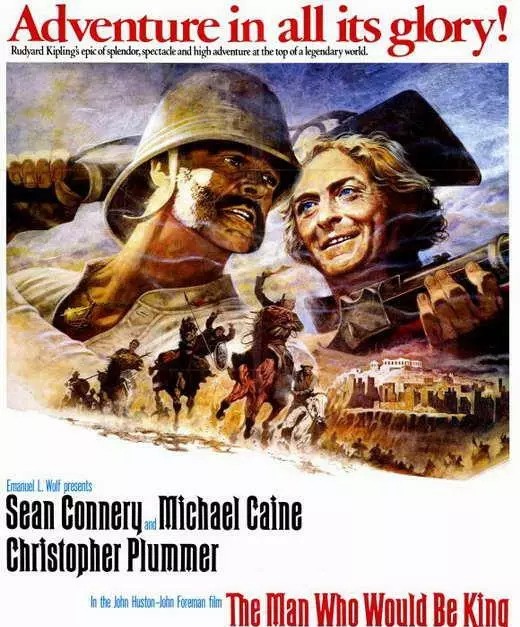
The Man Who Would Be King (1975) ****

Variation on the director’s earlier The Treasure of the Sierra Madre as a pair of British ex-military cheekie chappies whose reach exceeds their grasp come unstuck when confronted by powerful religious elements. Enticingly presents a marvellously ironic puzzle – you can have everything your heart desires except anything that would make you human. And elevated less by John Huston’s cinematic achievement than by terrific performances by the two stalwarts of the British film industry at the time, Sean Connery and Michael Caine, the former taking the acting kudos by a nose as the less intelligent of the duo. Given Connery’s standing at the time, this was somewhat playing against type. Yes, he exudes screen charisma and is a macho as ever, but nonetheless not quite as quick on the uptake as the more calculating Caine.

Story is told in flashback after a maimed Peachy Carnehan (Michael Caine) turns up as the offices of journalist Rudyard Kipling (Christopher Plummer). They originally met when Peachy had stolen the writer’s watch, returning it on realizing they were fellow freemasons. With buddy Daniel Dravot (Sean Connery), they attempt to enlist Kipling in a blackmail scheme and in due course the soldiers set off to make their fortunes in the forbidding land of Kafiristan, at the top of the Indian sub-continent, where no white man has set foot since Alexander the Great.

Their scheme is simple – to hire themselves out as mercenaries to various tribes, bringing modern warfare skills and weaponry to primitive society and ascending the ranks of power. When Daniel appears unhurt after plucking an arrow out of his chest, the natives confer on him the status of god, and so he is elevated to kingshippery and all the gold he could want. But in this Garden of Eden there is a humdinger of a Catch 22, the apple he must not touch.

He can’t take a wife.

You can see the logic. As a god you should be above base earthly desires. A god could not possibly wish such intimacy with a human. Otherwise he would lose his otherworldly sensibilities, not to mention that the chosen woman would expect to physically explode. While the more sensible Peachy has been all the time calculating just how he’s going make a getaway with as much gold as he can carry, Daniel becomes trapped in the notion that he can have his cake and eat it.

The religious hierarchy says otherwise and it doesn’t end well.

Audiences may well have been disappointed at the lack of action. There’s only one battle and it’s over in a minute, albeit that there’s a timeout to make the point about the power of religion. And although our boys endure a momentous trek it’s fairly standard stuff and Huston lacks the vision of a David Lean to turn the journey into anything more dramatically or visually memorable. A whole bunch of indigenous background material – including the ancient version of polo where the ball is a human head – doesn’t make up.

What does transform this relatively slight tale is the playing. Connery and Caine are a delight, the kind of top-of-the-range double act on a par with the cinemagical pairing of Paul Newman and Robert Redford in Butch Cassidy and the Sundance Kid (1969) and The Sting (1973). They spark each other off just a treat. Caine, surprisingly, is the one in charge, Connery adrift in  matters of arithmetic, strategy and, when it comes down to it, common sense even though when called up to judge on civil matters proves himself relatively astute and fair.

The writing, too, seems to understand implicitly how to get the best out of the characters. When they fall out, it is so subtle you would hardly notice. Caine scarcely bristles when Connery explains that Caine really should be falling in line with the rest of his subjects and bowing his head, but if you are astute reader of an acting face you can see the chasm that has opened up in their relationship.

To employ a Scottish phrase, Connery gives it “laldy” – acts with gusto – when playing the part of a madman, whirling around like a demented dervish, but mostly reins it in.

The intricacies of freemasonry would wait a few decades before called to the cinematic altar in The Da Vinci Code (2006) but here the mumbo-jumbo proves less important than, as with the Dan Brown epic, a symbol, and, again with the lightest of narrative strokes, we are left considering its mystic origins.

John Huston (Sinful Davey, 1969) back on top form but he’s more than helped by exceptional acting by Sean Connery (The Hill, 1965) and Michael Caine (Play Dirty, 1968) with Christopher Plummer (Nobody Runs Forever / The High Commissioner, 1968) in unusually subtle form as well. Gladys Hill (Reflections in a Golden Eye, 1967) and Huston were Oscar-nominated for the  the screenplay based on the Kipling short story.

Impressed by this performance I should warn you I feel a Sean Connery binge coming on.

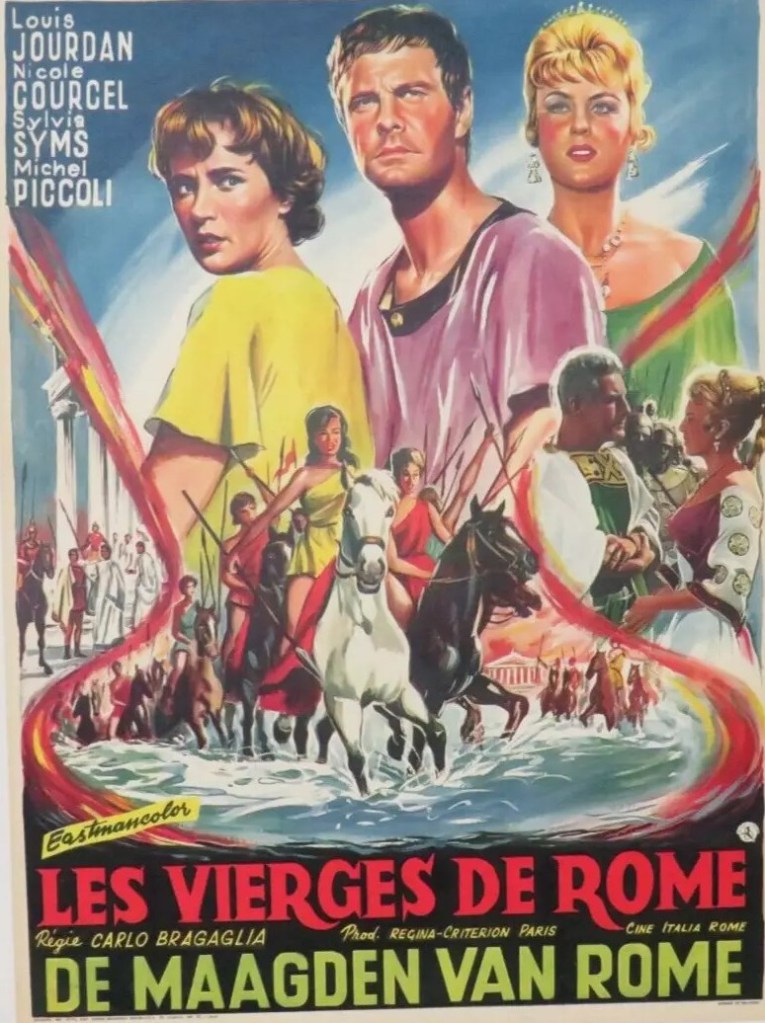
Amazons of Rome / Virgins of Rome (1961) ****

Starting with the cast  and the intelligence of the narrative a pretty unusual addition to the peplum subgenre. While there was no shortage of foreign stars hoping to find marquee redemption in Italy, I was frankly astonished to find leads of the caliber of Frenchman Louis Jourdan, fresh from Twentieth Century Fox big budget musical Can Can (1960), and rising English star Sylvia Syms coming off her biggest Hollywood role to date albeit as second female lead in The World of Suzie Wong (1960).

At the time of release, Jourdan did not seem a good fit for a genre that relied more on musclemen than the kind of suave charmer that he essays here. Syms equally seemed an odd choice, better known for prim Englishwomen than action. In fact, you’d have been hard put to find any American or British actress who would sign up for such a role. Although Sophia Loren in El Cid and Jean Simmons in Spartacus had significant roles in historical mocvies, they weren’t called upon to buckle a sword.

Given they start out as sworn enemies, Drusco (Louis Jourdan),  a barbarian laying siege to Rome, Cloelia (Sylvia Syms)  a besieged inhabitant, it was going to take some considerable narrative sleight of hand to contrive a happy ending. How it’s done is entirely believable, pivoting on ideals of honor that are initially foreign to this vicious war full of scores to be settled, unbridled ambition, deviousness and ruthlessness.

The civilized Etruscans backed by a barbarian horde headed up by Drusco have dealt a killer blow to the Roman armies led by one-eyed Horatio (Ettore Mani). Never mind the lack of obvious muscle Drusco isn’t anyone’s idea of a warrior leader. We are introduced to him munching on a watermelon and then chomping down on an apple on the edge of the battlefield. While other Etruscans, namely Stavros (Renaud Mary), want to raze Rome to the ground Etruscan leader Porcena (Jean Chevrier) wants peace. But it comes at a price – tons of gold in tribute and a thousand hostages. But since Rome is short of able-bodied men to fulfill that part of the deal, the Etruscans make up the numbers with a battalion of untested female warriors led by Cloellia.

Adding spice to the mix is Lucilla (Nicole Courcel), now an aristocratic Roman married to a noble, but originally an Etruscan captive, married to Porcena, who wants revenge on the Romans for her original harsh treatment at their hands. She finds a willing ally in the devious Stavros. 

initially merely amused by Cloelia and her warriors, impounded in a stockade outside the Etruscan camp, Drusco responds to their smarts. Devoid of weapons, the women find clever ways of stealing swords from their captors and secreting them in the stockade. However, when the scam is discovered, Cloelia volunteers to take whatever punishment is meted out. Porcena cedes choice of punishment to Lucilla who wants Cloelia to endure the same humiliation as was once handed out to her – to be whipped and then stripped naked in public.

But she hasn’t counted on Drusco’s cleverness. The minute one lash is administered, Drusco steps in, and pretty much on a technicality, announces that a “whipping” – number of strokes not specified – is complete. When Lucilla starts to strip Cloelia, he musters his soldiers to conceal this from the slavering Etruscans.

Cue some flirting but of course they are still on opposite sides. And in any case Lucilla puts paid to nascent romance, ensuring Drusco is chucked out of the camp for defying her. Infuriated, she sides with Stavros who has decided that mass rape will put the captives in their place. 

His scheme is thwarted by Cloelia who sets fire to the compound, escaping with her army after bullocks stampede. Pursued by Etruscan cavalry, they are saved by the intercession of Drusco. Embarassed by their escape, Porcena is now persuaded to restart the war. Back in Rome, Cloelia disobeys orders not to get involved and leads her army out through the sewers to attack the Etruscan rearguard. Porcena, realizing he has been used, calls for a truce. Lucilla is reunited with her Roman husband and Drusco, made a freeman of Rome, is able to marry the enemy.

Porcena comes over as an enlightened ruler. An early advocate of the zero sum game, his guiding rule for peace is “no victor, no vanquished” and he draws the line at the kind of ruthlessness espoused by his cohorts and although still attracted to Lucilla finds her attitudes distasteful and arranges for her to bury the hatchet with her Roman husband rather than continuing to foment her anger. There’s a lot more interesting dialog  than you’d expect in a picture like this.

But Louis Jourdan is what makes it special. His light comedic touches not only make his character much more human and attractive than the normal musclebound jerk, but also serve to underline his humanity. And since he’s so good anyway on the seductive side, the romantic elements catch fire rather than just limping along as was more normal in the genre. The only downside is he challenges George Hamilton in the over-tanned department.

Sylvia Syms, too, makes it all work. There’s no slacking in the action department and clearly no stand-in for the horse-riding, crossing of a river and a sewer on horseback. And without resorting to the athleticism of a Wonder Woman, the most recent example of the Amazon variety, and perhaps precisely because there’s no kowtowing to that, she is a believable heroine. No feminine wiles are required, either, just genuineness. 

Lucilla’s deviousness reminded me of Ian Bannen in Suspect, that spirit trapped by humiliation, revenge the only release. And though Nicole Carcel isn’t in Bannen’s league, she manages to essay the dark side of her nature with ease.

There are plenty narrative plot holes – how do the women emerging soaking from the river manage to burn the Etrucan battering ram being the pick – but the spirit of the picture more than compensates. 

The elements that made it stand out for all the wrong reasons back in the day are the very elements that make it so appealing to a contemporary audience. 

Highly enjoyable.

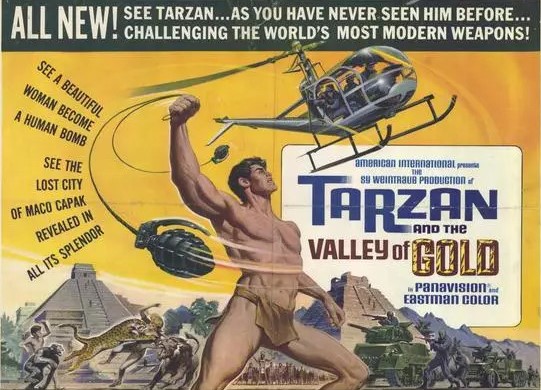
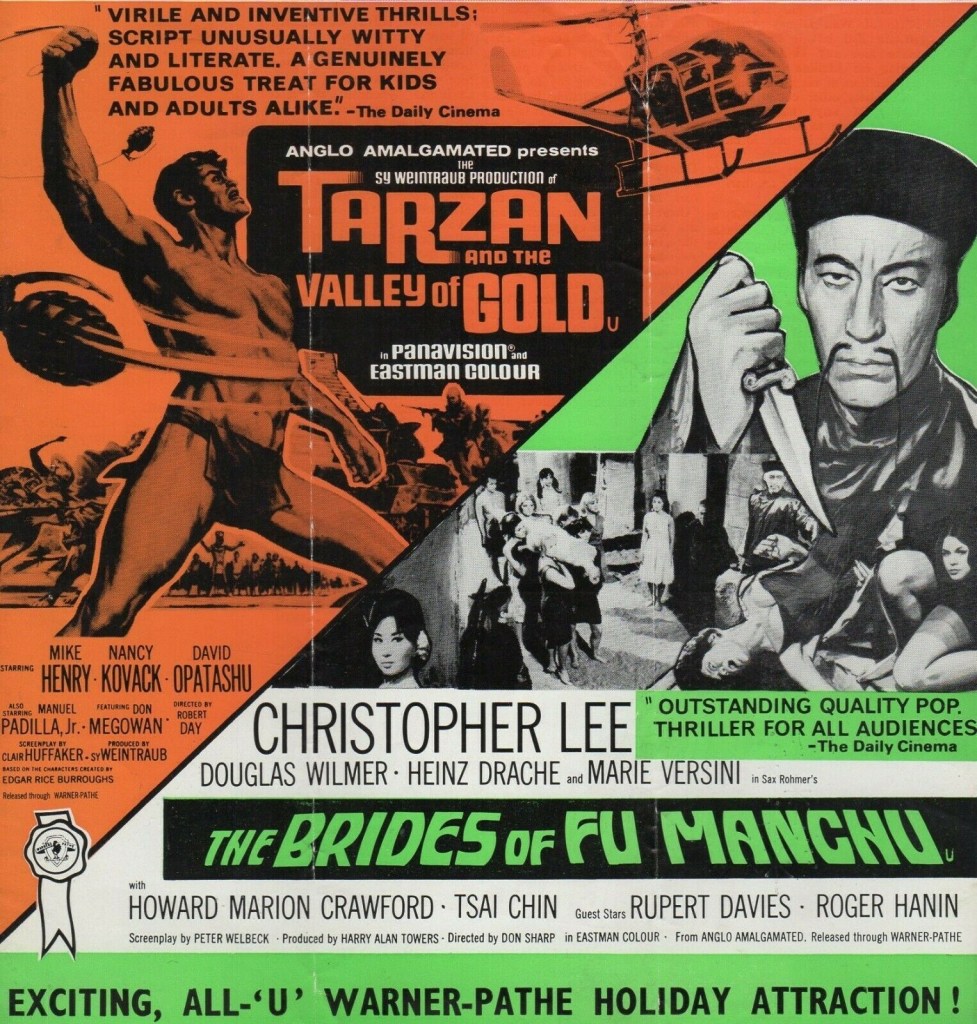
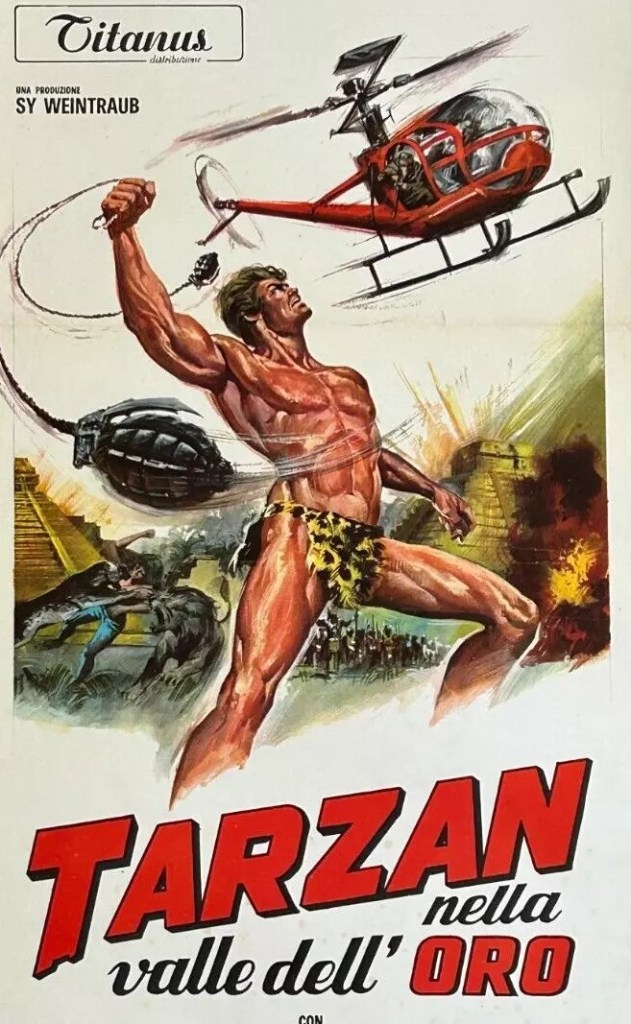
Tarzan and the Valley of Gold (1967) ***

Hooray for hokum. What should have been termed Tarzan: The Next Generation takes our hero temporarily out of loincloth but equips him with a hefty Browning machine gun and rudimentary grenade launcher, not to mention the neat tricks of  repurposing a giant Coca-Cola bottle and bringing stalactites down on the heads of pursuers. Hardly surprisingly he’s toting such weaponry given he’s not just, as was more common, wrestling pesky crocodiles and punching the living daylights of any villain stupid enough to get in his way.

Sadistic evil mastermind Vinero (David Opatashu), has raided the Army Surplus stores for a World War Two M5A1 Stuart light tank, an M3 half track and a Bell 47 helicopter to augment his battalion of 40-odd mean-looking mercenaries. Though he hardly requires them since his favored device is an exploding watch.

Vinero has kidnapped a small native boy Ramel (Manuel Padilla Jr. who reputedly knows the way to an ancient El Dorado complete with Aztec pyramid. Yep, we’re in Mexico, which, incidentally, should screenwriter Clair Huffaker so require, does boast crocodiles as well as jungle. Tarzan is called in to rescue the lad.

He only wears a suit long enough to dispatch an assassin who has dumped him in a football stadium. Once he smells the wild it’s into the traditional loin cloth. He teams up with a Dirty Quarter Dozen comprising chimp Dinky (recruited for his scouting skills, you understand, and his three wise monkeys impersonation), lion Major (specialty: human flesh) and the boy’s pet leopard who will lead our merry crew to the child.

Quite how Ramel was found wandering in the jungle is never explained though it’s perfectly believable that, once lost, he wouldn’t know his way back and would rely on that well-known human compass Tarzan to help him find the way.

There’s quite a lot of trekking one way or another, but, thankfully, that’s interrupted by spurts of sadistic behaviour, an entire village gunned down by Vinero’s henchmen and the big bad guy only too delighted to take time out to demonstrate his incendiary ability in despatching unworthy lieutenants.

To be honest, the jungle doesn’t provide much cover, helicopter ferreting out Tarzan with little problem, only to be downed by his inspired trick of throwing a home-made hand-grenade bolus at the aircraft.

You won’t be surprised to find there’s a fair maiden involved. Her task, unlike previous incursions into this kind of  jungle, is not to be discovered deshabille swimming in a pool. Instead, she’s bait. It’s hard to get a precise fix on Sophia (Nancy Kovack) since for most of the picture she’s Vinero’s mistress. It’s taken her quite some time to become disgusted by his sadistic tendencies. Probably, her rescue is to demonstrate Tarzan’s inherently gentle nature, given he’s got to separate her from a deadly necklace that will explode, so we have been led to believe, by the slightest tremor.

When they reach the lost city – who am I to quibble that a pyramid that can be seen for miles around hardly qualifies as a valley – they discover it is of a distinctly pacific nature, the chief willing to give away all their gold rather than sacrifice a single life, the kind of attitude that conspires against the traditional Hollywood notion of collateral damage.

Chief’s not much trusting of Tarzan and Sophia either and locks them up. Oddly enough, there could easily be an exquisite zero-sum-game at work, a winners-take-all scheme where everyone is a winner, except Tarzan has no truck with the chief’s notion of letting the bad guys get away with as much as they can carry, and Vinero literally digs his own grave by insisting on taking more than he can carry (though I doubt if this is where the makers of Witness, 1985, found their silo death scene).

Mike Henry (The Green Berets, 1968) hulks up pretty well, Nancy Kovack (Marooned, 1969) – replacing Sharon Tate – adds to the scenery, David Opatoshu (Torn Curtain, 1966) underplays the villainy to good effect. Clair Huffaker (Hellfighters, 1968) sufficiently updates Tarzan to a James Bond world. Robert Day (She, 1965) – who had also directed Gordon Scott in the role – delivers the goods.

Enjoyable matinee fare.

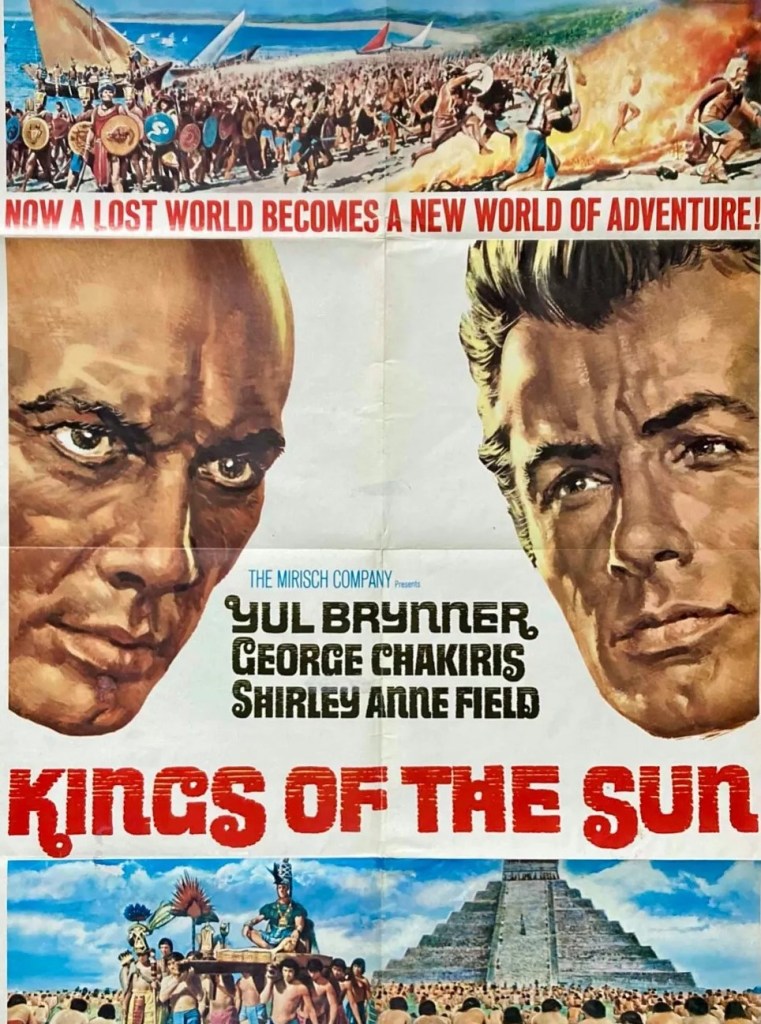
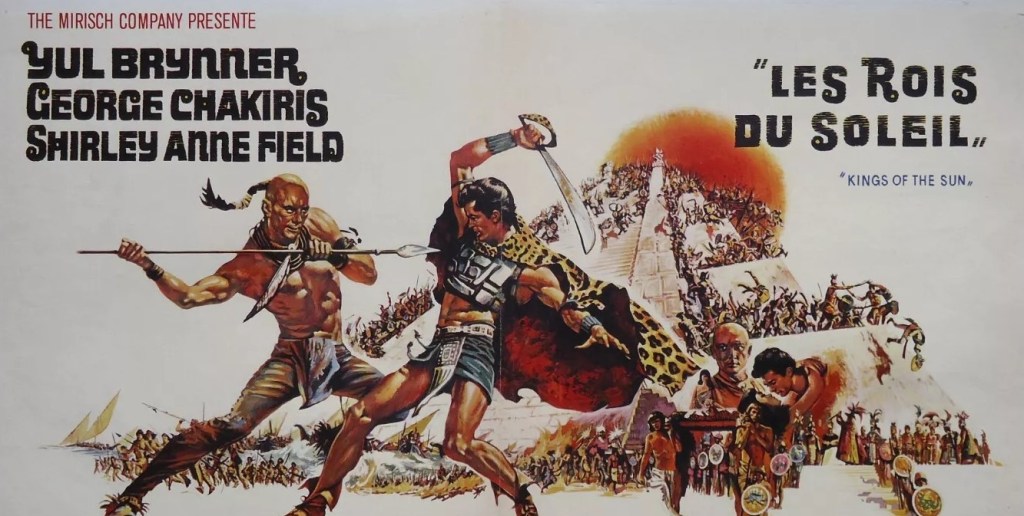
Kings of the Sun (1962) ****

With the current Conclave  bringing the subject of organized religion to the fore, no better time to examine a religion that Christianity put to the sword back in the day. While Christianity centers on unwelcome crucifixion transformed into willing sacrifice, in other cultures sacrifice was viewed as the highpoint of a life. And as demonstrated here, not a cruel expression of power, but a person executed in order to carry a message to the gods.

Of course, that could still be interpreted as barbarity and state vs religion is one of several themes here. Sold as an action picture but actually a thoughtful discussion of contemporary issues and worth viewing alone for an extraordinary performance by Yul Brynner, whose screen persona is turned completely upside down. As epitomized by The Magnificent Seven (1960), Brynner was Mr Cool. He was rarely beaten, and if he couldn’t talk his way out of trouble then guns or fists would do the job for him. For the most part here, he’s a prisoner, setting up the kind of template that Clint Eastwood would later inherit, of the brutally battered hero, except in this case there’s no murderous revenge.

And the movie cleverly switches perspective, so we move from sympathy with a defeated fleeing Mayan tribe and their efforts to rebuild their lives in a foreign land to the problems their unexpected incursion creates among the inhabitants of the new country.

Forced out of his homeland by invaders, King Balam (George Chakiris) leads his tribe across the seas of the Gulf of Mexico, trying to prevent high priest Ah Min (Richard Basehart) giving in to a predilection for sacrifice every few minutes. In order to keep the peace between two warring elements of the tribe, an unwilling Ixchel (Shirley Anne Field) has been promised in marriage to the king.

The Mayans adapt quickly to their new circumstances, fishing, building houses, diverting rivers to grow crops and building a pyramid. When they capture Black Eagle (Yul Brynner), a local Native American chief, they plan to sacrifice him to the gods.

Complicating matters is that Ixchel has taken a shine to the prisoner. As a potential sacrificial victim, living like a king for a day, the prisoner is entitled to impregnate any woman he pleases. Although Black Eagle has also taken a shine to Ixchel, he rejects her when she doesn’t come to him with open arms. She, equally, takes against Balam because, while he can’t prevent such congress (to use a Biblical expression), he doesn’t express his dissatisfaction in the process.

While a prisoner, Brynner has been impressed with the Mayan diligence, their ability to extract a living from what appeared harsh soil, and Balam, for his part, was hoping the two tribes could work out a way of co-existence. Where Black Eagle is voluble, Balam suppresses his emotions. It turns out that Ixchel, while responding to Black Eagle’s ardent wooing, would rather it was the more monosyllabic king uttering such words.

The action is kept to the minimum, probably accounting for initial audience disinterest. And the fact that it seems to be hewing towards peaceful co-existence rather than open warfare ensured that the expected battle took a long time coming. Sure, there’s a duel of sorts between the two leaders, but the more important battle of wits concerns who wins the woman.

In the end, Balam turns against this religion and sets Black Eagle free which is convenient because the armies which have chucked Balam out of his native land have pursued him across the seas and now attempt an invasion. Balam and Black Eagle unite to drive back the invaders. However, Black Eagle dies in the conflict, removing the love triangle.

From the moment Black Eagle was captured, I was expecting a different outcome. There’s some allegorical mischief at play here, with the prisoner splayed out in crucificial fashion,  arms and legs tethered by rope. But I was expecting such an obvious muscle-bound angry hero to escape and wreak revenge. However, that scenario avoided, it permits considerable discussion on co-existence as well as the nature of marriage, the old-fashioned manner (to prevent war or build a dynasty) vs the more liberated version (for true love).

Brynner is easily the standout, provided with far more opportunity for emotion than usual. George Chakiris (Diamond Head, 1962), range of expressions limited through both emotional incontinence and immaturity, appears sulky rather than majestic. Shirley Anne Field (Saturday Night and Sunday Morning, 1960) would appear miscast except she can convey so well inner feelings through her eyes.

No idea why anyone thought a disquisition on ancient religion and morality, with an anti-war sub-theme, would play with audiences of the period brought up on blood and thunder, and even when presented with notions of peaceful co-existence, as with any number of westerns featuring stand-offs between settlers and Native Americans, could rely on gun-runners to kickstart the shooting.

The action scenes, when they come, are good but it’s what happens in between that makes this perhaps more worthy of comment now than on initial release. Directed by J. Lee Thompson (The Guns of Navarone, 1961) with a screenplay by James Webb (How the West Was Won, 1962) and Elliott Arnold (Flight from Ashiya, 1964)

Carries surprising contemporary heft and Yul Brynner as you’ve never seen him before.

Discover WordPress

A daily selection of the best content published on WordPress, collected for you by humans who love to read.

The Atavist Magazine

by Brian Hannan

WordPress.com News

The latest news on WordPress.com and the WordPress community.