I am a published author of books about film - over a dozen to my name, the latest being "When Women Ruled Hollywood." As the title of the blog suggests, this is a site devoted to movies of the 1960s but since I go to the movies twice a week - an old-fashioned double-bill of my own choosing - I might occasionally slip in a review of a contemporary picture.
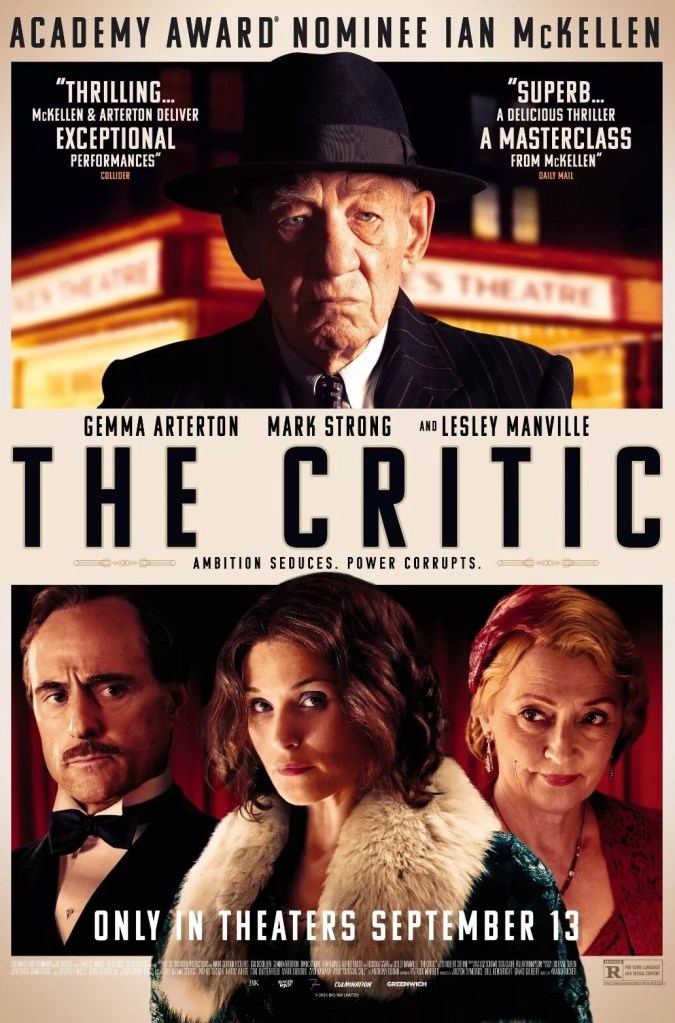
Can we get over all this “national treasure” (a favorite of Britain) baloney, please? If we’re going to drag our esteemed acting knights of the realm out of their armchairs (you notice I didn’t say retirement because actors almost never officially retire, Kathy Bates and Gene Hackman to the contrary) could we please give them something more than an opportunity to overact and turn themselves into ripe old hams at the age of (in this case) eighty-five. Sir Ian McKellen (Gandalf and Magneto to you and me) deserves better.
Because there’s nothing at all in this beyond Falstaffian monster Jimmy (Ian McKellen), the eponymous theater critic, relishing his power and taking revenge when’s on the verge of losing it. Frankly, if this was called The Tie-Pin Killer, the serial murderer in the book on which this is based, and Jimmy, as in that book, was relegated to a bit part, albeit a juicy one, it might have been a lot more interesting.
While it touches upon 1930s London Fascists and the plight of the homosexual (a criminal offence to participate) these are kind of tossed into the scenario as if to placate an audience who might complain this is very thin gruel indeed. Presumably, we are somehow meant sympathize with this cruel, odious, character because from time to time he finds himself confronted by blackshirts, who take a dislike to his black companion Tom (Alfred Enoch), who acts as his secretary and presumably not anything else because Jimmy prefers “rough trade.”
In revenge for being fired, he sets up actress Nina (Gemma Atterton) to seduce his employer David Brooke (Mark Strong). Blackmail’s the tool of reinstatement. Apart from general actor insecurity, it’s not entirely clear why Nina should be so determined to keep in Jimmy’s good books. There’s some unbelievable stuff about becoming attracted to acting through reading his articles, which seems quite bizarre since his nasty reviews would put people off going, as he proudly explains is one his aims.
So Nina prostitutes herself for a good review. Yep, must happen all the time. And despite her supposed success – these are, after all, West End plays she is starring in – she lives in a bedsit where hot water is rationed. But she is, romantically, in a bind. She’s just dumped her married lover Stephen (Ben Barnes) whose wife Cora (Romola Garai) just happens to be the daughter of Brooke.
And although Brooke’s wife is “bonkers” (though that’s very much on the periphery) he’s that old-fashioned upper class English gent who only feels shame at adultery when he’s caught out and then of course does the right thing which is to blow his brains out. Which leaves Nina racked with guilt which drives her, as it would, back into the arms of Stephen only for him (another adulterer with principles) to reject her on the grounds that she slept with his father-in-law. When Nina begins to talk about confessing to her role in conspiracy, what’s an upstanding chap to do but drown her in the bathtub?
In the original book Jimmy was a minor character.
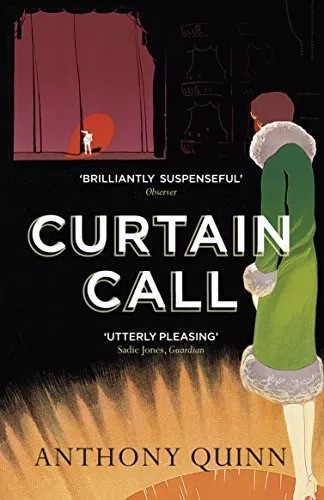
Crikey, and we complain about the plotting in the multiverse. This is just bonkersverse. Presumably, Oscar-nominated screenwriter Patrick Marber (Notes on a Scandal, 2007) happened upon Anthony J. Quinn thriller Curtain Call in which Jimmy exists on the periphery of the actual narrative though as a larger-than-life character and decided to forget the whole tie-pin killer thing and rearrange the tale so it revolved around McKellen in the hope nobody would notice, in the midst of McKellen roistering and boistering to his heart’s content, the lack of any sensible tale.
You could certainly have more easily hooked it on Nina, who falls into the Patrick Hamilton category of easily-led character on the edge with impulse inclined to cut her adrift.
If you want ham, McKellen’s your man, none of the subtlety which has impelled other performances. Gemma Atterton (The King’s Man, 2021) has a few moments tormented by conscience but the part is woefully underwritten. This is the reined-in Mark Strong (Tar, 2022) rather the one with the veins standing out on his neck. Lesley Manville (Mrs Harris Goes to Paris, 2022), potentially another future national treasure, has a brief role as does Romola Garai (Atonement, 2007).
Maybe wanting to burnish his artistic credentials, director Anand Tucker (Leap Year, 2010) is predisposed to the extreme close-up and for viewing a scene in extreme long shot through a corridor, window or door.
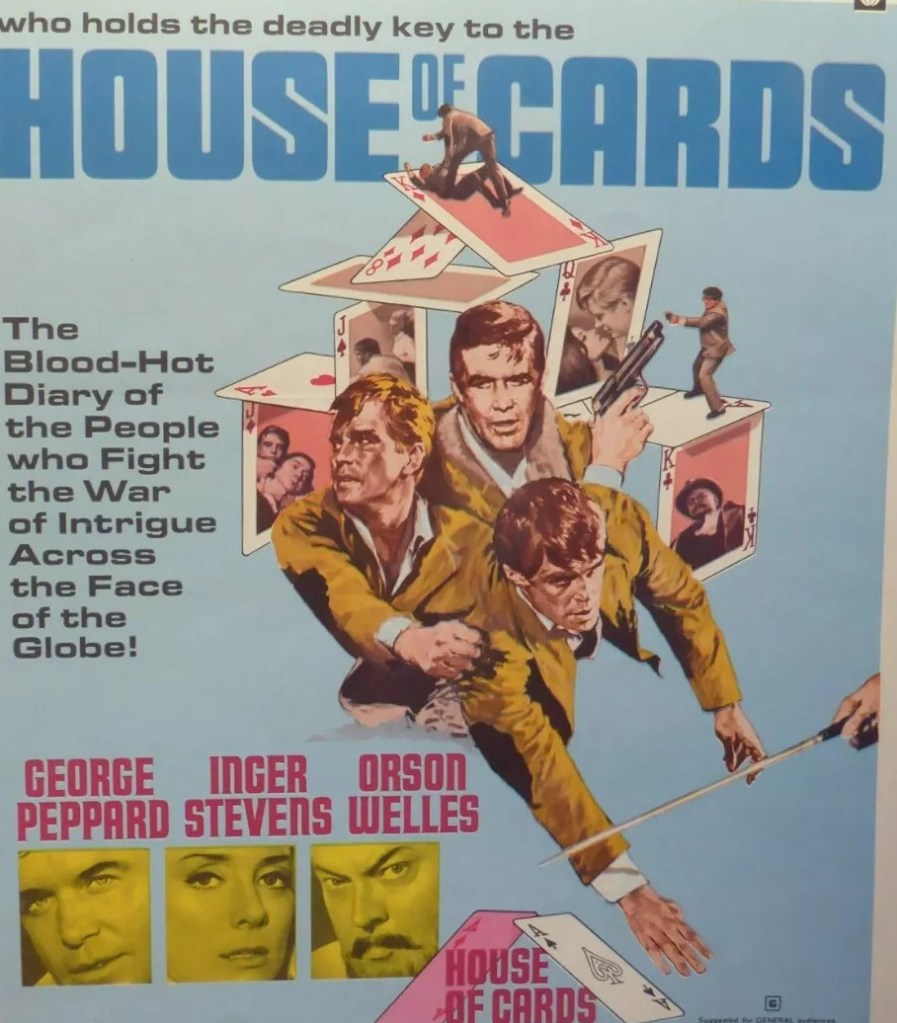
American boxer Reno Davis (George Peppard) stumbles on an international conspiracy when hired by rich widow Anne de Villemont (Inger Stevens) in Paris to look after her eight-year-old son Paul (Barnaby Shaw). All roads eventually lead to Rome and a showdown with arch-conspirator Leschenahut (Orson Welles) in this thriller which throws in a couple of measures of Gaslight (1944) and, more obviously, North by Northwest (1959), to the extent of Anne being an icy blonde of the Eva Marie Saint persuasion and the couple, on the run, sharing a compartment on a train.
The boy’s previous tutor has been murdered. After months in a sanatorium, Anne, paranoid about her son being kidnapped, is in virtual house arrest in the family mansion, watched over by arrogant psychiatrist Dr Morillon (Keith Michell) who has diagnosed her as unstable, neurotic and a danger to the boy.
After an assassin on a bridge on the Seine takes potshots at Reno and Paul, Reno is framed for murder but escaping from the police returns to the mansion to find it empty, the furniture covered in dust sheets. I half-expected Reno to be told that the job was all in his imagination and that Anne did not exist, but instead finds out that mother and son have been taken to a castle in Dijon, in reality a fortress with a platoon of armed guards. Only Paul has been already been transported to Italy. So it’s attempted rescue, imprisonment, escape, fistfights, chase, clever moves and countermoves, twists and double twists as Reno and the still icy Anne head for Rome.
In among the mayhem are a few humorous moments, a play on the Trevi fountain scene from La Dolce Vita, a monk mistaken for a killer, a bored girl only too happy to be taken hostage, an over-familiar American who gives away valuable secrets because he mistakenly believes Reno is a co-conspirator, Dr Morillon making the error of treating Reno as a servant. And characters involved in assisting escape extract a high price, one seeking financial reward, another that her husband be killed in the process. There is also a flirtatious but spiky maid Jeanne-Marie (Perette Pradier) and a couple of excellent reversals.
Reno is somewhat innovative in the weaponry department, the hook of a fishing rod, for example, while the son is rather handy with a pistol. But given the opposition are armed with machine guns, knives and swords that seems only fair.
George Peppard seems to have found his niche in this one, dropping the innate arrogance of The Blue Max (1965) and Operation Crossbow (1965), no chip on the shoulder, a good bit more attractive as a screen presence, a nice line with the ladies, more than able to take care of himself, a sprinkling of wit, completely at ease. Inger Stevens comes off well though her psychological problems and concerns for her son get in the way of any burgeoning romance with Peppard. But she has quite a range of emotions to get through, from wondering if she is mad, to dealing with the controlling family, and letting go of her son enough to allow the boy to bond with Reno, and despite her vast wealth down-to-earth enough to see a toothbrush as an essential when on the run.
Orson Welles (Is Paris Burning?, 1966), as ever, looms large over everything, with dialog so good you always have the impression he improvised on the spot. Keith Michell, a couple of years away from international fame in BBC mini-series The Six Wives of Henry VIII (1970), does a very good turn as the psychiatrist.
John Guillermin, who directed Peppard in The Blue Max, has a lot to do to keep the various balls in the air, especially keeping track of a multiplicity of characters. The screenwriting team of Harriet Frank Jr. and Irving Ravetch (Hud, 1963) pulled this one together from the novel by Stanley Ellin. Francis Lai’s memorable score is worth a mention, with distinctive themes for various parts of the story.
Eva Renzi (Funeral in Berlin, 1966) was originally down for the part of Anne and Italian actress Rosemary Dexter (Romeo and Juliet, 1964) has a small part.
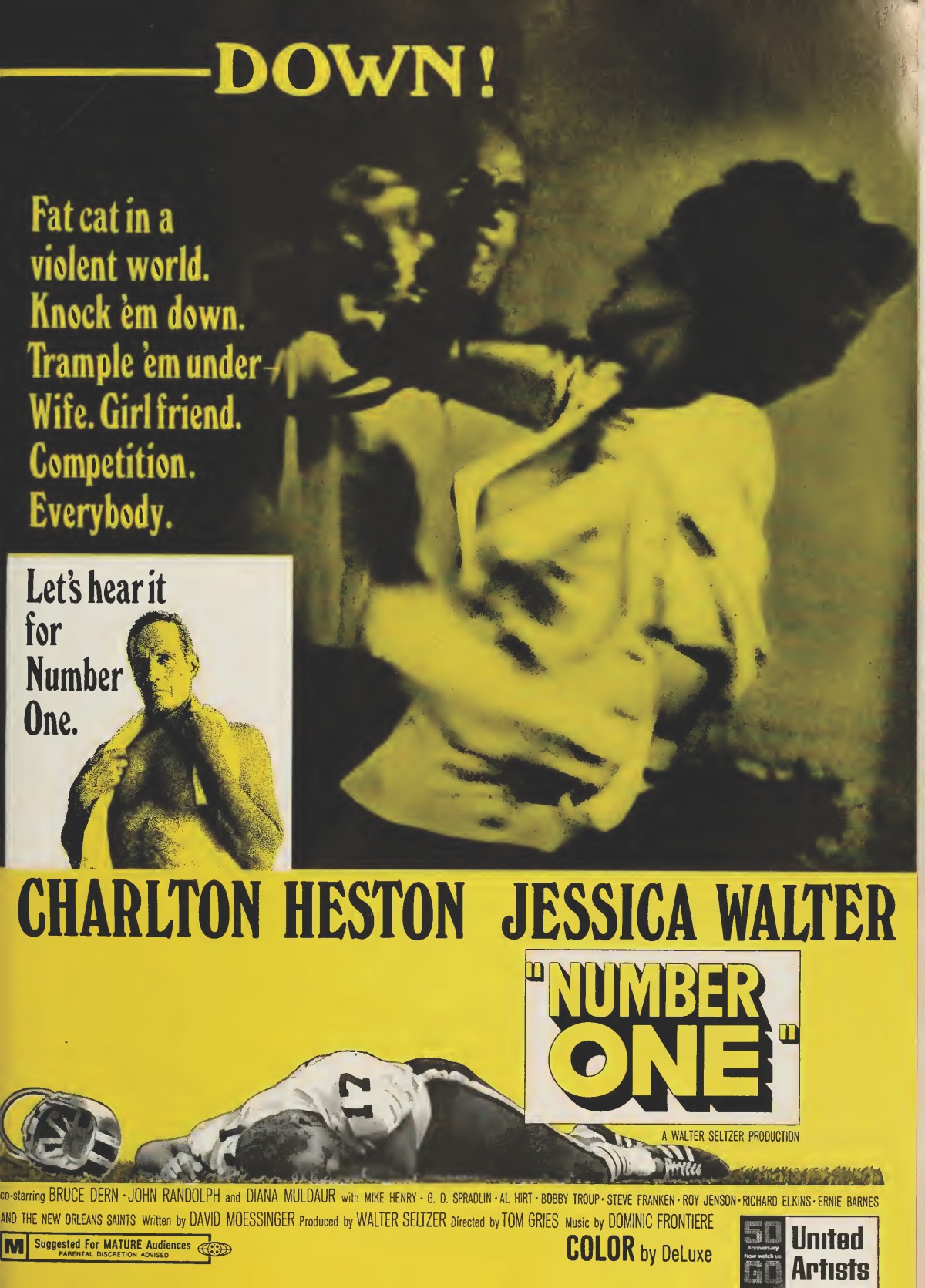
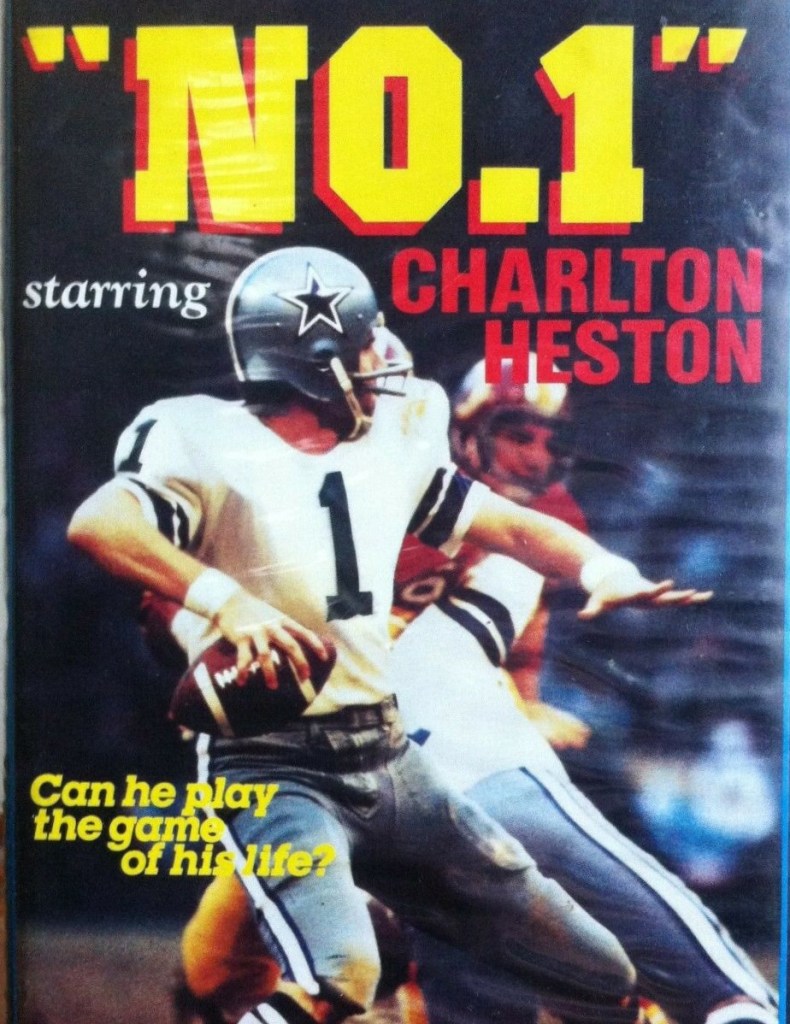
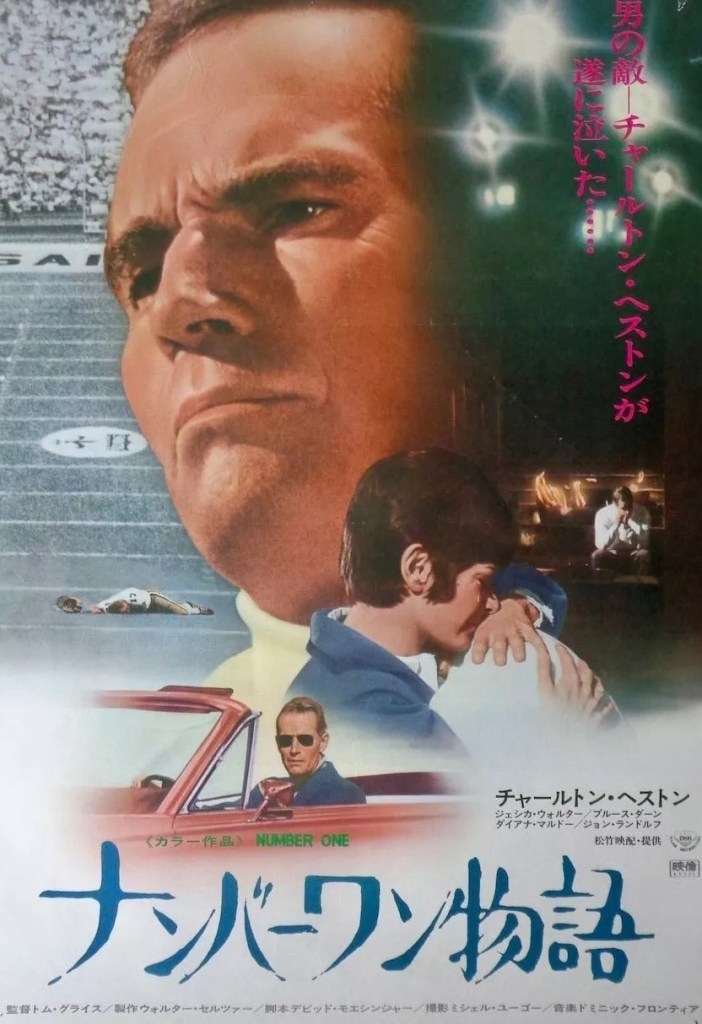
Apart from Ben-Hur and El Cid, most of Charlton Heston’s movies in the 1960s were domestic box office disappointments. Despite this, he was deemed to be still flying high at the marquee, placed seventh in the annual star rankings just as negotiations began in 1967 for Pro (the title changed to Number One just a few months before release). Given there was little interest in American sports in the rest of the world, it was deemed a gamble. That was not just reflected in the budget – a miserly $1.15 million- but in Heston’s salary of $200,000. He and director Tom Gries (Will Penny, 1968) agreed to “work at substantially lower incomes in exchange for a bigger percentage.”
But to make any decent money, of course the movie had to be a big hit. Compare that to the $750,000 he stashed away for The Hawaiians (1970), admittedly after Planet of the Apes (1968) hit the jackpot, but still. From The War Lord, Heston had “learned actors should not put their own money into scripts,” but taking a pay cut appeared a more sensible route.
The movie was a long time coming to fruition. Initially, the idea had been rejected by National General and Martin Ransohoff of Filmways who worked with MGM. By April 1966, Heston was dejected. “Nothing stirring on Pro,” he recorded in his journal. But he understood the need not to “peddle the project” since “it tarnishes my image as an eminently in-demand actor.” Franklin Schaffner (Planet of the Apes) was initially keen, but dropped out after United Artists insisted on smaller fees against a bigger back end, star, director and producer to share 75 per cent of the profits, the kind of deal you get offered “when you want to make a film more than a studio does.” Tom Gries (Will Penny, 1968) was the next directorial target.
By June 1967, the deal was done for Heston, Gries and Selzer. ”I’m damned if know who will write the script,” noted Heston, “No one very expensive, I guess.” In July, he was in San Diego “investigating pro footballers in their natural habitat.” The NFL agreed to allow the New Orleans Saints to participate. David Moessinger had written two screenplays, Daddy-O (1958) and The Caper of the Golden Bulls (1967), but struggled to meet Heston’s expectations.
The actor felt the writer hadn’t “succeeded in dramatizing the most difficult and the most important element of the story. Why Caitlin feels as he does.” His wife, Lydia, agreed. “If women’s can’t relate to the story, then it’s just a picture about a football player and we’re in trouble.” UA had set a deadline and the screenplay would decide whether it was a go or no. Heston planned to get Gries to work on the script, and he subsequently nailed the vital scene.
Even when UA gave the go-ahead there were problems integrating the shooting schedule with that of the Saints which would require filming training camp in summer 1968 and the rest in the fall. Bob Waterfield was teaching Heston how to quarterback. Soon he would have “delusions of adequacy.” But the training took its toll in the shape of a pulled muscle. In his first proper game, he was “blitzed” 16 times. He ended one day “taped and doped, in the traditional bed of pain.”
Meanwhile, casting proceeded. Heston had “mixed feelings” about Eva Marie Saint (The Stalking Moon, 1968) and Joanne Woodward (Big Hand for a Little Lady, 1966). Suzanne Pleshette (A Rage to Live, 1965) was considered as well as Jean Simmons (Rough Night in Jericho, 1967) – “I think she’d be good for it,” noted Heston. Finally, he pushed for Jessica Walter (Grand Prix, 1966) – “old enough to be plausible as the wife, young enough to manage the flashbacks” – only to find Gries not so keen and preferring Anne Jackson (How to Save a Marriage and Ruin Your Life, 1968). When the situation was resolved in favor of Walter, Heston discovered she was being lined up for a television drama about pro football. The second female lead went to Diana Muldaur.
Meanwhile, Heston was having trouble with Gries. “His attitude towards this film…is very questionable…perhaps it has to do with his recent achievements as a director in theatrical films…he’s finding the wine a bit heady.” Gries fell behind schedule, but finished ahead of it, saving about $30,000. An important scene showing Walters and Heston in bed before the wedding didn’t work and was cut.
Keeping tabs on the budget was producer Walter Selzer, who had worked with the star on The War Lord (1964) and Will Penny, and, would team up with him again for The Omega Man (1971), Skyjacked (1972), Soylent Green (1973) and The Last Hard Men (1976). “You have to be realistic about the subject matter,” said Selzer. “Every story has a certain price and if you try to cheat on your requirements it shows on screen.” That said, he was king of the penny pinchers. “We didn’t use a single piece of new lumber,” he boasted, meaning they didn’t built a single set, instead adapting or re-using old ones.
On location, he negotiated “locked-in” costs, “a flat pre-arranged price” for variety of elements which had a tendency to become variable, increasing costs, such as space on a sound stage, equipment and the editing suite. Cameraman Michel Hugo had to agree to shoot in any weather. “This is very important. Very often a cameraman will refuse to shoot if the weather is questionable, claiming the shots won’t match and then you have the whole company idle for a day when on location.” He nailed down composer Dominic Frontiere (Hang ‘Em High, 1968), paying him a flat fee, with Frontiere left with the task and cost of hiring an orchestra and rehearsal and recording space.
Despite showing his rear end in Planet of the Apes, Heston was touchy about the sex scene. “It’s not really a nudie scene but an intensely sexual scene,” he explained, “There’s not a bare breast seen.” Heston had enough controversy elsewhere. As president of the Screen Actors Guild he appeared not to note the irony that while he was pocketing hundreds of thousands of dollars a picture, he could complain that extras were the cause of the “major increase in costs” of movies.
He was also accused of being hypocritical, signing for Eagle at Escombray, directed by Alexander Mackendrick, to be made by CBS while at the same time, as union leader, pressurizing the Department of Justice to prevent television companies such as ABC and CBS entering the movie business. (It was never made.) For that matter, he shouldn’t have been trying to get National General to fund Pro either, since it owned a cinema chain, and that, too, went against previous Department of Justice rulings.
While Heston like the movie – “some of the best contemporary work I’ve done” – UA did not. The title changed to Number One. By the time the movie appeared, in August 1969, Heston couldn’t have been hotter, thanks to the unexpected success of Planet of the Apes. So the world premiere in New Orleans was allocated a full array of razzamatazz – in the parade were the New Orleans football team, its mascot, cheerleaders and a stream of antique cars, but there was a fire in Heston’s hotel.
Box office was less rosy. There was a decent $179,000 from 32 in New York, a “big” $9,000 in Washington, a “hotsy” $24,000 in Baltimore (and $20,000 in the second week), a “neat” $12,000 in San Francisco and a “trim” $27,000 in St Louis but mostly the figures were “mild”, “okay”, or “fair.” Outside of first run it couldn’t run up any juice. Estimated rentals were $1.1 million, so just about break-even, but United Artists, understandably despite Heston’s contention that it was about a man not American football, refused to give it any meaningful release overseas.
SOURCES: Charlton Heston, The Actor’s Life, Journals 1956-1976 (Penguin, 1980); “All-American Favorites of 1966,” Box Office, March 20, 1967, p19; “Charlton Heston Denies Conflict Between Eagle Role, SAG Policy,” Box Office, January 15, 1968, pW3; “Sports, Flop-Prone Theme Still Dared,” Variety, September 25, 1968, p2; Army Archerd, “Hollywood Cross-Cuts,” Variety, December 18, 1968, p22; Army Archerd, “Hollywood Cross-Cuts,” Variety, February 5, 1969, p34; “Number One Parade To Precede Premiere,” Box Office, August 18, 1969, pSE5; “Falling Stars,” Variety, September 3, 1969, p70; “Critics Wrap Up,” Variety, September 24, 1969, p26; “Variety Box Office Charts Results 1969,” Variety, April 29, 1970, p26. Weekly box office figures – Variety, 1969 : August 27, September 3, September 10, September 17, September 24
Quite possibly Charlton Heston’s best performance – as an ageing pro footballer refusing to bow down to the inevitable. Ron Catland (Heston) has much in common with Ned Merrill (Burt Lancaster) in The Swimmer (1968) as characters who believe they have been let down by the American Dream. And like that picture, plot is in short supply, it’s mostly a character study with sideswipes at the realities and inanities of American football.
An injury puts star quarterback Catland’s career in doubt. The media write him off, a younger quarterback Kelly (Richard Elkins) is waiting in line, while former colleague Ritchie Fowler (Bruce Dern) offers him a job in his car leasing business, or he could opt for a second career in computers, but Catland wants the only life he has ever known to go on forever.
There’s nothing inherently likeable about Catland. In fact, he’s downright mean most of the time, in part because of the falsity of his profession, management buttering you up when it’s contract time, then on your back once you have re-signed. He’s got a hero’s arrogance, has ignored from the outset the coach’s instructions, at odds with independent fashion-designer wife Julie (Jessica Walter), no children to shore up their marriage. Hardly surprising he drifts into another affair, “an occupational hazard” his wife calls it, this time with the fey Ann (Diana Muldaur) who owns a tennis shop.
You are probably familiar with the kind of football picture which climaxes with a last-minute touchdown or the more realistic movies like North Dallas Forty (1979) or the superlative Any Given Sunday (1999) where nonetheless the focus is on winning and characters are ramped up for dramatic effect. Or you might imagine Hollywood had been routinely churning out football movies like Knute Rockne All-American (1940) and Jim Thorpe All American (1951) for decades. But strangely enough the movie industry had not focused on this particular sport for well over a decade until the NFL documentary They Call It Pro Football (1967) and comedy Paper Lion (1968).
Number One sets out to set the record straight on the reality of being a football hero. And it’s by far the most realistic of the species. For every good-looking gal wanting to pass him a note on a napkin in a restaurant there are plenty fans turning on him for refusing to sign an autograph. For every sports reporter writing a puff piece, there are others tearing him to pieces in print.
The documentary-style approach by director Tom Gries (100 Rifles, 1969) serves the film well. This is a different kind of football team to the later fictional depictions. It’s a lonely life for a start. The players are rivals, not comrades. There’s little camaraderie. The dressing room is like a morgue. No practical jokes and tomfoolery. No over-the-top team talk by the coach and thank goodness no padre who pretends to walk every aching mile in their shoes. Any exhortation is almost a plea. Injury is mostly ignored. Legs are constantly strapped up. And when your career is over you might be reduced to bumming a loan from a current star. The politics are brutal.
New Orleans Saints cooperated with the production so the game scenes come across well though not obviously with the razzamatazz of Any Given Sunday and Heston has the physique for a sportsman. Primarily a television writer, David Moessinger (The Caper of the Golden Bulls, 1967) only crafted two films in the 1960s and this, the second and last, was an unusual effort, as the character twists and turns trying on the one hand to escape the cage of his career and on the other determined to squeeze the last drop out of his golden imprisonment.
Catlan still sees himself (at the age of 40, no less) as the best quarterback in the business and simmers with anger that his body is letting him down and that he has nothing in place to fill the gap that abandoning the game will create. Underneath the volatility is a hole of pain. There’s no sense either that he has enjoyed his time at the top, just that it has always one way or another been a struggle.
Although the movie was marketed with Heston as an aggressive individual, in fact it calls for a far wider range of emotions from Heston, and for this part he delivers in spades. Jessica Walter (Grand Prix, 1966) gives as good as she gets, Bruce Dern (Hang ‘Em High, 1968) as the fast-talking salesman and Diana Muldaur (The Swimmer, 1968) are excellent. But this is Heston’s film. It’s more of a reflective piece, none of the dramatic highs and lows of other football pictures.
The concept of “national treasure” – perhaps in itself a purely British conceit – wasn’t invented back in the day but if it had Dame Edith Evans would fall into the same coveted category as Maggie Smith and Judi Dench do today. She was certainly among the most honored of British thespians in the 1960s – Oscar nominations for Tom Jones (1963), The Chalk Garden (1964) and The Whisperers (1967) – so what she’s doing in this unfunny mess is anybody’s guess. She was 80 at the time and while easily the best thing in it, the switch between battiness and cleverness is hardly new.
Everyone is oh so British, including the gangsters led by Frank (Harry H. Corbett), and it should be the old trope of Yanks not coming to grips with English life and customs, which sometimes can strike a note, but instead the set-up is so dire and the acting so uninspiring. Warren Oates (The Thief Who Came to Dinner, 1973) is at his worst – when I tell you his best scene is his discomfort at having to hold a plate and cup-and-saucer at the same time, you’ll guess why. Telly Savalas attempts to be charming but it just comes off as an overheated version of his usual thug.
Story is lame. Herbie (Telly Savalas), just out of the slammer, finds he is in hock to mob boss Nick (Cesar Romero), so with buddy Marty (Warren Oates) sets off for England to fleece Lady Sophie Fitzmore (Edith Evans) only to discover that her stately pile is also in hock (you want to discover about British death duties, this is the one for you). British mob boss Frank doesn’t like the idea of the Yanks infringing on his territory, so is keeping a close watch and in the end decides to raid Sophie’s joint himself, by which time the Yank villains have become so enamored of Sophie that they’re on her side and set up the kind of defense that would have been axed from cockanamie comedies like The Great Race (1964) for not being funny enough. Sure, Edith Evans in goggles and racing in on a biplane looks good on paper but not when the thugs scatter like the Keystone Cops.
Edith Evans was exceedingly wary of the movies. She only made 14 – and just six pre-1960 and two of those in the silent era – in all those decades when she was otherwise devoting her time to the theater and best remembered by movie audiences for The Importance of Being Earnest (1952). According to Sir Laurence Olivier she only gave the movies another bash when her memory started failing her and the notion of only having to remember a few lines at a time exerted its attraction.
While she’s good fun here, she’s saddled with mutton for co-stars. Telly Savalas (The Assasination Bureau, 1969) theoretically wins his first leading role, but in fact that went to Edith Evans and better actors than him had faded away in Dame Edith’s slipstream. Quite what Warren Oates thought he could do with the part is anybody’s guess because he does nothing.
Written and directed by Jim O’Connelly (The Valley of Gwangi, 1969).
Breaking Bad Goes to Yale. Or Good Guy Does Bad In Order To Do Good. Can’t say the current title is any more inviting than those – I guess this character isn’t at all known outside the U.S. where a book was written about him (it’s “based” on a true story, we are told) – but at least gives more of an idea of the level of complication we’re dealing with. The film lacks the sharp ironic intelligence required to make such a complex tale work and direction is so shapeless, diffuse, at times that it’s hard to keep going. And it falls prey to the Martin Scorsese trope of the voice-over telling us more about what’s going on in a character’s mind than his interplay with other characters. Yet, this is an interesting story and you wish it had been better told.
On the one hand any time the eponymous character gets into a financial snit he just falls back on drug dealing. On the other, though you could argue his father is a victim of blatant racism, Rob (Jay Will) never plays this particular card. We are constantly told he has a special gift for bringing people together, but the only evidence of that is when weed is on the table and in his entrepreneurial dealings which revolve around making a fortune from refurbishing empty homes in the neighborhood.
Blame the structure for the fact it appears to bounce around all over the place. A few neatly-placed flashbacks would have solved the problem, focused on present, rather than taking us on a near 20-year stretch mapping out an entire life. Rob, mathematical whizzkid, growing up in a tough locale, gets sent to private school for black kids run by a white priest, courtesy of single mom (Mary J. Blige) working three jobs, and manages to get some sort of scholarship to Yale where he’s got the kind of brain apparently capable of the radical thinking scientific breakthroughs require. Unfortunately, the only breakthrough he makes is of the Breaking Bad kind, setting up a lab on the premises, selling a better class of dope to his classmates.
When his dope-dealing father Skeet (Chiwetel Ejiofor, who also directs) is jailed for murder, Rob – who, by the way, has changed his name so no one will make the connection with the jailbird – takes up his case, through a loophole gaining his father a few weeks of freedom. Then he turns to dope-dealing to fund a lawyer to argue his father’s case and also to fund the experimental drugs required to keep his old man alive when he succumbs to brain cancer.
Put front and center those two elements would have been enough for a very sharp drama, especially as Rob begins to doubt his father’s innocence after discovering he was physically abusive to his mother. The best scene in the movie, spoiled by some over-acting by Ejiofor, is when the dying father realizes his son has these doubts.
There’s an awful grey area at the heart of the movie. You’d have thought someone of Rob’s intelligence could have dug up the court records and presented more evidence pointing towards his father’s innocence and that he’s been the victim of a fit-up and it kind of skates over the supposed racist element here but common sense tells you it’s not going to be a white guy that’s infiltrated somehow this black enclave and shot dead two black women.
Towards the end of the picture one of his buddies points out that it’s not the duty of the son to look after the wayward father, and that aspect, the almost saintly aspect, isn’t dealt with much either.
A lot of scenes could be cut. One sequence of him playing water polo would be enough, one of him mooching around smoking dope, one of carving the turkey etc. Nobody appears honest enough. His mom doesn’t tell him her husband was a violent man or ask why the son is wasting his life, risking his future, for the man who after all abandoned him. And just exactly why is never gone in to. Rob himself doesn’t question his own ethics, returning to the life he is presumably trying to escape in order to fund the lawyer and the doctors suggests a lack of self-awareness. There’s none of the chutzpah that made American Gangster (2007) so riveting. You can see a life being thrown away through self-justified crime. He goes back to the drug-dealing when his real estate company goes bust during the sub-prime mortgage scandal, incurs the wrath of the full-time drug-dealers who fear he’s invading their turf and kill him.
I’m not sure how you deal with ambiguity in a movie but one way is not to ignore it.
On a poor day for moviegoing, on a double double bill, this was the second best picture I saw all day, way behind a return to the sumptuous Count of Monte Cristo, but way ahead of the buffoonish mess of Beetlejuice Beetlejuice and the nonsense of Afraid.
Could sure do with a remake so an interesting tale could be more sharply told.
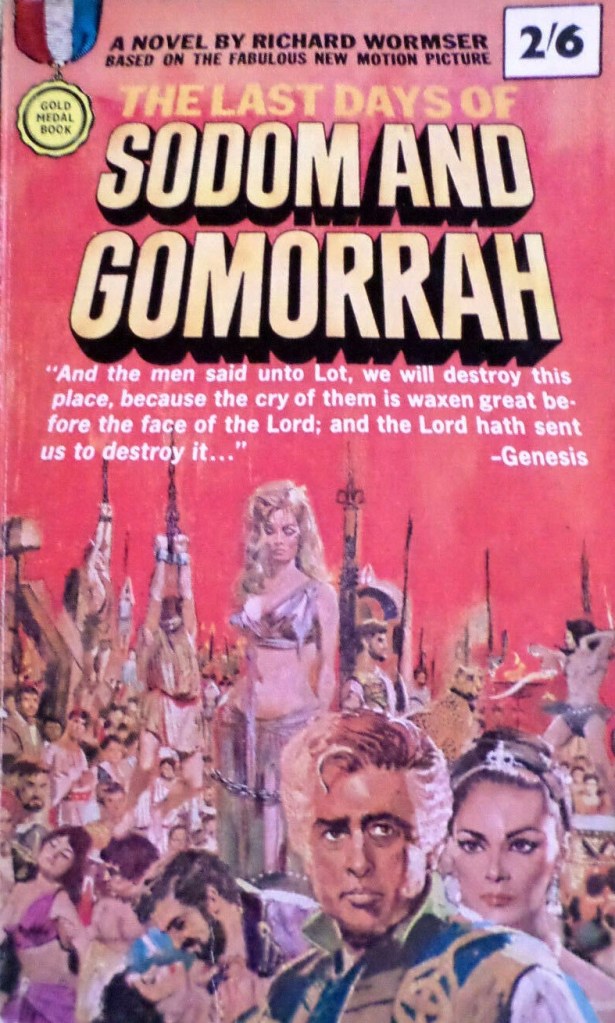
Setting aside the Biblical angle and need to inject as much sin as the censor at that time would permit this works very well as a historical drama filled with political intrigue, twisting on the morality/sin axis, and with a terrific battle scene. The set up is superb. Bera (Anouk Aimee), Queen of the titular twin cities, allows Hebrew leader Lot (Stewart Granger) to settle along the River Jordan in order to provide a buffer between her kingdom and the marauding Elamite tribe. Meanwhile, her treacherous brother Astaroth (Stanley Baker) intends using the Elamites to dethrone his sister.
The Sodom-Hebrew arrangement is ugly from the start. Sodom owes its wealth to salt. And it relies for its salt mining and processing on thousands of slaves, literally worked to death, corpses piled high on wagons and dumped in the desert. The Hebrews abhor slavery. But having wandered in the desert for so many years, Lot is in no position to argue and assumes that his people can live peacefully enough alongside the heathens, even accommodating Sodom to the point of returning fleeing slaves.
In fact, in agreeing to live in such close proximity to Sodom, Lot is already in the throes of seduction. In what appears a gesture to seal the deal, Bera presents Lot with her chief female slave Ildith (Pier Angeli), a cunning move designed to undermine Hebrew culture. Naturally, Lot grants Ildith her freedom but her presence creates disharmony, Melchior (Rik Battaglia) leading the dissenters. Astaroth seduces both of Lot’s daughters Shuah (Rosanna Podesta) and Maleb (Claudia Mori).
Eventually, of course, the Hebrews succumb to many of the pleasures of Sodom, especially after discovering their own salt deposits, which instantly make them wealthy, while Astaroth continues to stir up trouble. Lot the politician is more to the forefront than Lot the good and faithful servant, ignoring the slavery for the sake of peace. However, politics remain a sticky maneuver and, in the end, of course, it is God who intervenes, smiting the wicked.
There are surprising depths to the story. Ildrith initially rejects Lot’s overtures of marriage on the grounds that it will diminish his goodness. In trying to improve living conditions for the Hebrews, Lot does the opposite, jeopardizing their beliefs, his actions rendering virtually invisible the distinctions between the opposing cultures, especially when he is up close to the dancing female slaves and men being burned alive on a wheel. Queen Bera is a political genius, skilled at keeping her enemies closer, not just taking advantage of Lot’s weakness but ensuring that Astaroth never catches her cold.
Stewart Granger (The Secret Partner, 1961) is surprisingly good as the Hebrew leader. He might lack the physical presence of the likes of Charlton Heston but proves himself no mean adversary in the various action scenes, two fights with Astaroth for example, the battle itself and in quickly dealing with dissent in the ranks. It would never have occurred to me that a shepherd’s crook was much of a weapon, but in Granger’s hands it proves very effective. He knows he is being seduced, first by Ildith, and then by Sodom, but, as a human being rather than figure of spirituality, is powerless to stop it. Stanley Baker (The Guns of Navarone, 1961) as the queen’s treacherous brother, on the other hand, just looks shifty and mean throughout.
Anouk Aimee (The Appointment, 1969) is excellent as the politically astute monarch, and save for God’s intervention, would have got the better of everyone. Pier Angeli (Battle of the Bulge, 1965) is touching, initially angry at being cast out of Sodom, gradually warming to Lot, but only too aware that in succumbing to her charms he might spoil his own innate goodness, like a femme fatale only too wary of her own powers. Rosanna Podesta (Seven Golden Men, 1965) is good in a supporting role as is Scilla Gabel (Colossus of the Arena, 1962) in a smaller part. Look out, too, for Gabrielle Tinti (Esther and the King, 1960), later best known for his marriage to Laura Gemser of the Black Emmanuelle series, and future spaghetti western anti-hero Anthony Steffen (Django the Bastard, 1969).
Robert Aldrich (The Last Sunset, 1961) creates an excellent addition to the genre, the pace of the drama, with various storylines, never slacking. As a historical picture this aims higher than mere pulp where sexiness and torture are the audience hooks. His battle sequence is outstanding, unusual in that the balance of power shifts throughout, in part through treachery, between the participants. Ken Adam (Dr No, 1962) headed up the production design and Wally Veevers (The Guns of Navarone, 1961) among the half dozen experts contributing to the special effects. Screenplay by Hugo Butler (The Legend of Lylah Clare, 1968) and Giorgio Prosperi (The Golden Arrow, 1962) from the novel by Richard Wormser. Sergio Leone helped out in the direction.
Big difference between the manufactured maudlin of a weepie and middle-aged characters so ill-at-ease and discomfited that they are painful to watch, circumstances not redeemed by comedy. Audiences and critics didn’t take too kindly to this because the two stars were way out of their comfort zones. Glenn Ford (Rage, 1966) dropped his take-charge quiet-tough-guy persona, and didn’t even play that for laughs, and Geraldine Page (The Sweet Bird of Youth, 1962) rid herself of the tragic face that sacrificed itself on the altar of Oscar (at this point she was three-eights into her Oscar nominations haul).
The whole unremittingly sad enterprise would have been made for today’s generations, more acceptable of the sour ending and the clunkiness of romance that fails to gell.
Harry (Glenn Ford), a greetings card salesman who falls back on his own profession in his chat-up lines, thinks he has achieved his goal of settling down with widow Phyllis (Angela Lansbury) and becoming father to her young son, enjoying domesticity, extended family round for dinner, playing baseball and larking about with the boy. Evie (Geraldine Page) is too much and not enough, too big in her personality, not enough of whatever it takes to make her a long-term proposition for the opposite sex. They meet at a convention, hers, she’s a postmaster, he’s just staying at the same hotel.
She’s at least the more self-aware, wants more than the one-night stand of convention life, reluctant to take her place among the singletons, can’t work out why if she’s the life and soul of the party that at party’s end she’s still sitting on the shelf. But she also wants recognition – of some kind – makes fictitious calls to hotel reception so that a bellboy will troop round the lobby calling out her name. She brings her own lightbulbs, to replace the low-wattage ones in a bedroom, forever trying to adjust the world o her own vision, teasing bedroom curtains out in a different fashion, mild invention that keeps her sane regardless of how insane some actions are, charging ahead to open every door in the expectation that she shouldn’t count on male gallantry (this is the 1960s after all).
Harry’s the guy who does open doors for women, but cursed with loneliness, caught in embarrassing gaffes, chatting up the dumb kiosk blonde who’s a good bit more savvy. Most of the comedy hurts. He’s late to meet his boss because he stopped off for a martini at the apartment of an occasional lover and when he trips out too many excuses is told, tartly, that while one excuse is acceptable, three or four (train late, weather, can’t get a taxi, taxi stuck in traffic etc) is the sign of a liar. He does the whole unnecessary explanation routine when booking a hotel room for a tryst with the blonde whom he pretends is his wife not noticing the receptionist’s cynical eyebrows, and brought down to earth when said blonde breezes in and calls out a greeting to the receptionist.
Evie works out how to get a table in a packed restaurant, passing onto Harry the clever trick of saying you are waiting for a date and then apologising when they don’t turn up. When he tries this out, the waitress upends him with, “Why not join this lady (Evie), she can’t imagine either what happened to her date.”
There’s nothing cute about either of them so no chance of a meet-cute. She’s continually awkward, independent, and he doesn’t know how to spell out his troubles or work out why he’s walking into an unsuitable marriage. The only room this movie has for comedy is the sudden appearance in Harry’s life of a bearded teenager who usurps his bedroom (girlfriend constantly in the bath). This lad is Phyllis’s grown-up son Patrick (Michael Anderson Jr.) yet Harry’s been led to believe, or thinks he has, that the boy would be much younger, judging by the treasured photo given him by his fiancée. On the one side is a slab of situation comedy, on the other an out-of-his-depth Harry not knowing if he’s been duped and realizing how little he knows of genuine fatherhood. He’s awkwardness grown ten feet tall.
It’s not as if Harry and Evie actually conduct a romance, there’s some kind of attraction that neither can fully recognize, every time it sparks up as likely to wilt, and he’s prone to letting her down, sudden arrangement with son taking precedence over pre-arranged dinner with her, except, she’s mollified because he left her a note at the desk, and she doesn’t get those unless she manufactures them herself and then in her ungainly way lets everyone know someone has tried to contact her, as if that’s a sign of importance, or explanation for her feeling of being so let-down.
Phyllis turns out not to be the smalltown housewife of whom Harry dreams. She’s had enough of being a housewife. She wants what she sees as the high life, living out of hotels, “From now on I just want to pick up the telephone” and order food, cocktails, laundry, newspapers, whatever. Just what different paths they are on is detailed in a killer of a line. When he complains – it would be an accusatory tone if he could muster up the courage – about why she gave him this particular photo of the boy, as a kid not a man, comes the rejoinder, “Because that’s the best picture of me that’s ever been taken.”
You’d be lucky to find romance in this sullen snarky version of New York, filled with uncivil, unhelpful staff, bursting with indifference, nary a touch of sympathy for any customer, whether they are seeking a room in a city jam-packed with conventions or just a cup of coffee.
If you believe in the tagged-on happy ending, you’ll believe in anything. This pair are so discordant, so jarring, that they are probably the most realistic couple to ever grace the screen. Ignored as their performances are, they are probably the best of their careers, in part because neither is central to the bigger story that a high-end drama or western or thriller might entail., in part because they go out on an acting limb, light years away from their established screen persona. They are just so darned realistic your heart bleeds because you just know they are doomed into making relationship mistakes, most likely with each other, and will remain among the jittery unfulfilled, wondering how everyone else manages it.
Director Delbert Mann’s been here before – Oscar-winner for Marty (1955), drawing an Oscar-winning performance from David Niven in Separate Tables (1958) and James Garner’s best performance in Buddwing (1966) – and makes acceptable viewing out of what in the hands of a Harold Pinter would be an impossible watch. But even so, it comes close. Tad Mosel (Up the Down Staircase, 1967) wrote the screenplay.
Had this been an an arthouse picture, it would be drenched in awards.
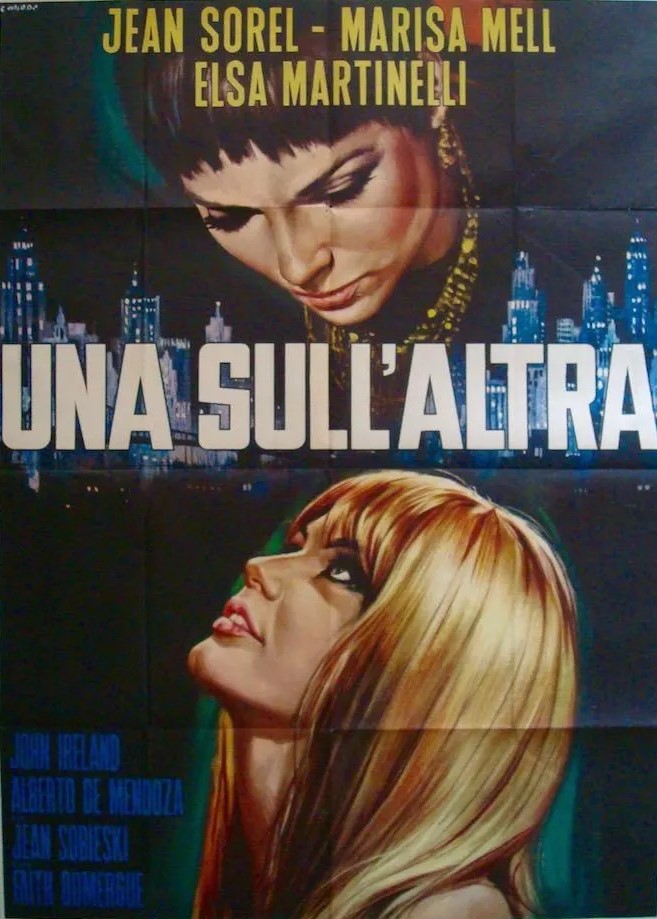
No idea how they thought they’d market this one. Neither of these titles would recommend it to first run, more likely sending it down the exploitation route. Which would be a pity because, although there is enough nudity and sex to satisfy those patrons, it is, almost to the very end, clever noir, femme fatales to the fore, and the kind of male patsy who would later decorate the likes of Body Heat (1981). And if it played out as all instinct – except that of a happy ending – told you, it would have been an absolute cracker. As it is, it’s more Hitchcock than giallo, director Lucio Fulci’s, known at that time for comedies, first dabble in crime, and with excellent cinematography and plot twists.
As it is, said sucker has a hell of a time, turned inside, beset by paranoia and trickery until he’s all set for the electric chair and it boasts a classy cast. It’s set in San Francisco, though I found those hilly streets a distraction as any minute I expected to see Bullitt racing over the top or Sean Connery demolishing a streetcar before heading to The Rock.
Asthmatic sickly wife Susan of top surgeon George (Jean Sorel) dies from accidental overdose in the first few minutes. The good doctor isn’t so upset, he’s having an affair with fashion photographer Jane (Elsa Martinelli) and is astonished to discover he’s about to inherit a couple of million from her insurance. That’ll come in handy because his business is going down the tubes.
But an anonymous tip sends him into a topless bar where the star performer and sometime sex worker Monica (Marisa Mell) bears a startling resemblance to his wife, blonde where she was brunette, brown eyes rather than green, but otherwise almost a dead ringer. But he’s seen his wife’s stone-cold corpse so he gets the doppelganger heebie-jeebies. Still, it’s not long before he’s testing out his theory and in the most intimate fashion.
But there’s an insurance agent on his tail, taking note of the philandering, and his concerns force the cops to re-open the case and discover Susan was poisoned and with George the obvious beneficiary that makes him the obvious suspect. Meanwhile, Jane’s trying to find out what’s Monica’s game, to the extent of giving her a fashion gig that goes a few steps beyond the Blow-Up playbook.
Top cop (John Ireland) isn’t slow to put two and two together and reckon Monica and George are in it together and bumped off Susan. He finds evidence of Monica perfecting Susan’s signature. But while Monica skedaddles, George is on the hook and eliminating all that annoying courtroom guilty/not guilty objection sustained palaver, the movie cuts to the chase and the surgeon is lined up for an appointment with the chair, knowing full well he’s innocent.
In a terrific twist I didn’t see coming turns out his brother Henry (Alberto de Mendoza), partner in the business, has been having an affair for years with Susan who – yep – is Monica after all, and takes delight in telling George what a sucker he’s been. Henry will inherit the dosh and take up where he left off with Monica/Susan. George hasn’t exactly elicited audience sympathy, although he’s occasionally staring moodily in the camera as his brain can’t compute what’s going on, and he’s a two-timing swine – no, make that three-timing – no, two-timing if Monica actually is his wife. Anyway, he doesn’t cover himself in glory whereas Monica is a class act, not just sexy as all-get-out but playing him beautifully, so you kind of want her to get away with it especially as you didn’t see the brother angle coming, and you just marvel at how cleverly George has been duped.
George is saved and the picture unaccountably suffers at the last minute when out of the blue a jealous client Benjamin (Riccardo Cucciolla) turns on the getting-away-with-it pair and blasts them to high heaven.
George is an unusual character, dominated by both women. When we first encounter Jane she’s on the point of dumping him, after a bout of sex first of course, and he’s the one who chases after her. But Susan clearly enjoys stringing George along, taking control in their lovemaking in a manner she clearly didn’t when being Susan, as if her new-found has freed her from her inhibitions.
My guess is this was heavily cut for U.S. and U.K. release and also that the moviegoers coming along expecting sexploitation might have been somewhat surprised to find themselves watching a Hitchcockian homage, but with the bad girl as the heroine.
A few plot flaws don’t hole this beneath the waterline. Great acting all round, Marisa Mell (Danger: Diabolik, 1968) the pick, but Elsa Martinelli (Hatari!, 1962) every bit as calculating and seductive. You feel sorry for Jean Sorel (Belle de Jour, 1967) caught between the two.
Lucio Fulci (A Lizard in a Woman’s Skin, 1971) makes the most of the locations and ensures the women, rather than the man, take center stage.
Take away the exploitation elements and you’ve still got a great thriller that turns on its head all expectations.
The shooting of Le Feu Follet in 1963 had proved so depressing for director Louis Malle that halfway through the filming, alone on a Sunday afternoon in his Parisian apartment, he jotted down the two pages that turned into Viva Maria! He had worked with Brigitte Bardot before on A Very Private Affair/ La Vie Privee (1962) but even with her presence it was made in virtual isolation. So he was unprepared for the brouhaha that awaited. The media had created a rivalry between the two stars – Bardot and Jeanne Moreau – which was ironic given it was a film about friendship.
Since this was Brigitte Bardot’s first movie-related trip across the Atlantic, her arrival presaged a media firestorm. Over 250 journalists, most representing international outlets, turned up for the first day of shooting. That media pressure created “an almost unbearable atmosphere.” Days were lost due to publicity commitments, as print journalists, photographers and television crews – including one from France making a 52-minute documentary – descended on the production. Such was the potential for chaos, paparazzi were banned. Bardot was more accustomed to media intrusion than her director, batting back inane questions with practised repartee. The qustion: “What was the happiest day of your life?” brought the response, “It was a night.”
This was only Malle’s sixth film. Unlike other directors who came to the fore in the French New Wave he had not first been a critic, but had attended cinematography school in Paris and his breakthrough came on the Jacques Yves-Cousteau documentary The Silent World (1956). Hired as camera operator, he was promoted to co-director. Both Elevator to the Gallows (1958) and the controversial The Lovers (1960) had starred Moreau. On the back of the critical success of Le Feu Follet/The Fire Within (1963), which won the Special Jury Prize at the Venice Film Festival, Malle struck a four-picture deal with United Artists.
He had been attracted to screenwriter Jean-Claude Carriere after becoming aware of his work on Diary of a Chambermaid for Luis Bunuel. They worked together on the script of Viva Maria! while Malle was directing the opera Rosenkavalier in Spoleto, where he had shot A Very Private Affair. Like most French filmmakers of his generation the western was “a very cherished genre.” With Viva Maria! he intended a spin on the American notion of two men, “two buddies,” in action together, along the lines of Robert Aldrich’s Vera Cruz (1954) starring Burt Lancaster and Gary Cooper.
But in movies like Vera Cruz, Fort Apache (1948) with John Wayne and Henry Fonda or John Wayne and Montgomery Clift in Red River (1948), the two stars, even if eventually settling their differences, were at odds for most of the picture.
“We thought it could be fun to put Bardot and Moreau in the same situation as Cooper and Lancaster,” said Malle. Both director and screenwriter had enjoyed a rich childhood fantasy based on the book editions of magazines like Le Monde illustre, so, in terms of locale, they provided inspiration. The movie aimed “to combine an evocation of childhood fantasies with a pastiche of traditional adventure films…it was never intended to be realistic – more projection of the imagination. Ideally, I was hoping the spectator would see it with the wonderment of the child.”
The notion of “floating between genres” didn’t sit easily with French critics and he was accused of “trying to do too many different things.” As with any big budget picture, problems multiplied, not just the difficult logistics but with the Mexican government, which, as John Sturges had found on The Magnificent Seven (1960) could take a tough line with movie makers. A previous censor Senorita Carmen Baez had stipulated that movies could not mention the 1910 Mexican Revolution, so to comply with that regulation the action was moved to an earlier date, 1904, and in an “unnamed South American country”
A combination of the number of locations – as well as Churabasco studios in Mexico City, the unit travelled to Guautla, Morelia, Tepotzlan, Cuernavaca, Vera Cruz, Puebla, Guanajuota and Hacienda Cocoyoc – and budget meant that the production could not afford to linger at any one locale, scenes had to be finished off within the planned schedule because the entire unit had to be on the move the next day.
In terms of shooting, Malle explained, “I always had to adjust and compromise…the sky was…desperately blue – the very hard light was a problem for the girls.” Ideally, Malle would have preferred shooting in the early morning or late afternoon, but time pressures and the production caravanserai meant the main scene was shot “with the sun at its zenith.”
Malle was later conscious that the film envisioned in the screenplay didn’t make it onto the screen. The irony, for example, of George Hamilton being cast as a Jesus Christ figure was lost on an audience which took him more seriously than intended. “It was comedy,” observed Malle, “but it was easy not to perceive it as comedy.” Similarly, Moreau’s “Friends, Romans, Countrymen” speech didn’t come across as humorous. “The audience either didn’t get it or took it seriously. That’s the danger of pastiche. It’s a very risky genre.”
He worried that the film’s budget – originally set at $1.6 million – and top-name stars might get in the way of the style of movie he was trying to make. At one point he suggested to UA that they cut the budget, switch to English and hire younger stars like Julie Christie and Sarah Miles, neither of whom at that point had enjoyed career breakthrough roles. The presence of the big stars “transformed the film into something else.”
The shoot was plagued by illness. Bardot and Malle were incapacitated while when Moreau slipped on a stone stairway breaking a shin bone and requiring stitches to a cut under her chin it was the third time she required time off, including suffering an affliction on her first day of shooting. An extra was killed on 24 May 1965 during the filming of the cavalry charge. Whether Malle took time off to get married to Anne Marie Deschodt on April 3 is unclear because, by then, staff were already having to work overtime to make up for lost days. The budget mushroomed to $2.2 million. Four weeks behind schedule, the movie, which had begun shooting on 25 January 1965 finally wrapped in June.
For its opening bookings in New York, at the Astor and Plaza, beginning 20 December 1965, the film was subtitled – by playwright Sandy Wilson of The Boyfriend fame no less – but thereafter was dubbed, Malle unhappy with the outcome, especially with the actress for Bardot. In the run-up to the launch, there was media overkill. Bardot was mobbed by the media on arrival at JFK airport (and also on departure) and held another press conferences in New York.
Small wonder the press were so hyped. Bardot, considered the sex symbol of the decade, was putting in her first personal appearance in the U.S. While the movie opened to “smash” business at the Astor and Plaza first run, and knocked up a decent $127,000 from 25 houses on New York wide release – not far off A Patch of Blue on $160,000 from 27 but miles behind The Chase with $292,000 from 28 – that level of box office wasn’t repeated elsewhere.
In retrospect, it was obvious Bardot lacked the marquee status the studio anticipated. The bulk of her movies had played at arthouses or seedy joints, and they had all been sold on the kind of sexuality that kept them outside the mainstream. Noted Variety, “Brigitte Bardot has not made a box office dent in more than three years but her popularity with the press doesn’t seem to have flagged.” A not unknown phenomenon, of rampant media coverage not translating into receipts. A battle with the local censor in Dallas didn’t help. So all the hoopla was to no avail – it flopped in the U.S.
Elsewhere, the publicity teams took a more upscale approach. In Paris, the Au Printemps department store, the largest in the city, devoted a series of window and internal displays to the movie promoting different fashionable aspects. It finished third for 1966 at the Parisian box office, with 602,840 admissions not that far behind Thunderball’s 806,110 admissions but had twice the audience of the nearest U.S. competitor Mary Poppins and did three times the business of Those Magnificent Men in their Flying Machines, the next American movie on the list.
In Britain, flamboyant hairdresser Raymond created 24 different hairstyles as a fashion tie-in while Le Rouge Baiser created a different lipstick for each of the two main characters. Overall, it proved “one of the most successful fashion tie-ups ever,” the results seen at the box office.
It opened in London’s West End at the newly-built Curzon Mayfair which specialized not so much in arthouse pictures but upmarket, classy, fare, Who’s Afraid of Virginia Woolf (1966) followed it. It ran for eight weeks before embarking on a circuit release and returned to the West End the following year as support to another Moreau vehicle 10.30pm Summer. Bardot and Moreau were nominated for Baftas in the Best Foreign Actress section. It was ranked third out of foreign releases in Switzerland, sixth in Germany and made the top ten in Japan
Oddly enough, in socialist countries “it was very well received” and at Berlin University, according to Rainer Werner Fassbinder, “they were fascinated.” The two women represented different aspects of the struggle against repression, one promoting armed struggle, the other trying to achieve revolution without violence.
Overall it was a profitable venture. The poor $825,000 in U.S. rentals was compensated by an overseas tally of $4.1 million which meant, in the United Artist profit league for 1966, it finished seventh.
Malle only completed two pictures in his four-picture UA slate – Le Voleur / The Thief of Paris (1967) being the other. Another project set in the Amazon in 1850 came to nothing as did a separate deal to direct Choice Cuts for Twentieth Century Fox.
SOURCES: Malle on Malle, edited by Philip French (Faber and Faber, 1993) pp45, 49-54; “Bardot Due in Mexico,” Variety, December 9, 1964, p26; “Louis Malle’s Four for United Artists,” Variety, January 13, 1965, p3; “Bardot Swamped by Mex City Newsmen,” Variety, February 3, 1965, p17; “Filming Viva Maria in Mexico,” Box Office, February 15, 1965, p12; “Arnold Picker Chides Malle’s Pace,” Variety, April 7, 1965, p2; “No Newsmen at Can-Can,” Variety, April 28, 1965, p13; “Jeanne Moreau Injury,” Variety, May 19, 1965, p3; “Complete Viva Maria,” Variety, May 25, 1965, p15; “Extra Killed in Viva Maria Bit,” Variety, June 2, 1965, p5; “UA’s Viva Maria Booked for Astor, Plaza for Xmas,” Box Office, November 8, 1965, pE2; “Paris Window Display,” Box Office, November 22, 1965, pB1; “Malle Dickers UA on Three Films,” Variety, December 15, 1965, p5; “Picture Grosses,” Variety, December 22, 1965, p9; “International Sound Track,” Variety, December 22, 1965, p26; “TV Crafts Greeting to Bardot,” Variety, December 22; “Maria Viva $110,000,” Variety, December 29, 1965, p20; “Curzon Premiere for Viva Maria,” Kine Weekly, February 24, 1966, p3; “Viva Maria,” Kine Weekly, February 24, 1966, p21; “New York Showcase,” Variety, March 23, 1966, p10; “UA’s Location Plans Span Globe,” Kine Weekly, May 26, 1966, p36; “Thunderball As Topper,” Variety, June 1, 1966, p3; “1965-1966 Paris Film Season,” Variety, June 15, 1966, p25; “Story As Before,” Variety, July 13, 1966, p17; “Texas High Court Denies Viva Maria Re-Hearing,” Box Office, October 31, 1966, p7; “U.S. Majors,” Variety, January 18, 1967, p24.











 The Magnificent 60s