A House Is Not A Home (1964) ***

While perhaps best remembered these days as the debut film for Raquel Welch (One Million Years BC, 1966), the rest of the film is worth a look.

Hypocrisy had its heyday in The Roaring 20s when prohibition made bootleggers millionaires, helped bankroll other criminal activities like prostitution and encouraged cops and politicians to seek their share of the loot. The biography of real-life madam Polly Adler (Shelley Winters) covers all elements of corruption.  

Thrown out of her own home after being raped, she finds a knight in shining armor in the shape of bootlegger Frank Costigan (Robert Taylor) and is soon, at first apparently innocently, pimping out her friends. The reality of what becomes her profession is not ignored, the word “whore” bandied around, with one girl, Madge (Lisa Seagram), turning junkie as a result, another, Lorraine, committing suicide. Like Go Naked in the World (1961) Polly realizes that true love has no place in her world, a relationship with musician Casey (Ralph Taeger) unsustainable.

Adler, in her many voice-overs, explains why vulnerable women become sex workers – poverty, lack of family and lack of hope is her take on it – and she professes to view it as a business and preferable to working in a factory for pitiful wages, but the movie is at its best in linking the nether worlds of infamy and showing that the woman is always the loser.  

While any attempt to properly portray the period is hampered by lack of budget, it does provide an array of interesting and occasionally real-life characters, Lucky Luciano (Cesar Romero) for example. A brothel proves an ideal location meeting place for crooks and politicians, the latter easily bought by contributions to their campaign funds. Nor are cops   shy about asking for donations to their Xmas funds, or using the facility.

The Adler operation puts a glossy shine on the shady business since all her girls are glamorous. But still the movie pulls no punches except in the case of the madam herself, presented too often as an innocent and as a person who never sold her own body and who saw nothing wrong in taking as much advantage of the vulnerable girls in her employ as the  clients who paid for them.    

Oscar-winner Shelley Winters (The Chapman Report, 1962), more often a supporting player at this point in the 1960s than the star, grabs the role with both hands and although unconvincing as the younger girl delivers a rounded performance minus the blowsy affectations that marred much of later work. One-time MGM golden boy Robert Taylor, pretty much in the 1960s reduced to television (The Detectives, 1959-1962) and low-budget pictures, shows a glimpse of old form as the smooth bootlegger.

Cesar Romero (Oceans 11, 1960) and Oscar-winner Broderick Crawford (All the Kings Men, 1949) head up a checklist of old-timers filling out the supporting cast. Future director Lisa Seagram (Paradise Pictures, 1997) as the junkie hooker makes the biggest impact among the girls.

A flotilla of wannabes made up Polly’s girls. Apart from Raquel Welch, the only one to break into the big time was Edy Williams (Beyond the Valley of the Dolls, 1970). In the main they comprised beauty queens – Amede Chabot (Miss America), Danica d’Hondt (Miss Canada) and Leona Gage (Miss Universe) who had a small part in Tales of Terror (1962). Otherwise Sandra Grant became the most famous – for marrying singer Tony Bennett. Patricia Manning had the most screen experience, second-billed in The Hideous Sun Demon (1958), bit parts in television shows, and fourth-billed in The Grass Eater (1961). Inga Nielsen would later turn up as bikini fodder in The Silencers (1966), In Like Flint (1967) and The Ambushers (1967).

Director Russell Rouse (The Fastest Gun Alive, 1956) was better known for the screenplay of D.O.A. (1949) and had a story credit for Pillow Talk (1959). In fairness, although the film has no great depth, Rouse keeps it ticking along via multiple story strands although occasional lapses into comedy do not work. Written by Rouse and Clarence Greene (The Oscar, 1966) based on Adler’s autobiography.

Promise Her Anything (1966) ***

You ever wonder what William Peter Blatty got up to before he scared the bejasus out of everyone with The Exorcist (1973)? He was a screenwriter, churning out somewhat formulaic comedies like this. There were two approaches to this subgenre. The potential lovers hate each other on sight and spend the rest of the film annoying each other before they discover they are actually in love. Or, they are kept apart by the simple process of one of them being in love with someone else.

Here Michele (Leslie Caron), widowed single mother, is trying to get her hooks into boss Dr Brock (Robert Cummings), a child expert, because she thinks he would make a great father. So, largely, she ignores the seduction attempts of nudie film director Harley (Warren Beatty). What Michele doesn’t know is that Dr Brock hates children – though some of his concepts (mocked at the time) seemed quite prophetic such as “corporal punishment is an admission of failure by the parents.” But, basically, she offloads the kid onto neighbors, keeping him out of the way till she gets her man.

Meanwhile, her cute baby John Thomas (Michael Bradley) is doing all the work of bringing the couple together. He more or less adopts Harley as a surrogate father and filming him turns out to be the refreshing new idea the director needs to satisfy irate backer Angelo (Keenan Wynn).

This could as easily have been entitled Babies Behaving Badly for John Thomas is introduced to the audience escaping from his mother and wrecking a jewellery story and spends most of the picture getting into trouble, for which his cuteness provides the requisite get-out-of-jail-free card. (The child’s name probably was the only thing guaranteed to raise a chortle among British audiences).

You spend a lot of time waiting for Michele and Harley to get it together, during which time neither of the alternative narratives – the Michele-Dr Brock subplot and the filming of the child – offer much in the way of sustenance. Theoretically, Harley isn’t the standard seducer of the period, the well-off kind who lives in a cool or plush pad and does something financially or artistically rewarding for a living. He lives in a crummy apartment in Greenwich Village and struggles to make ends meet, blue movies not as remunerative as you might expect.

Michele’s character is stuck in the 1950s more than the more liberated 1960s, with the ideas that a child needs a father, that you should marry for security, and that there’s nothing wrong with snaring a man by devious means. She’s pretty uptight and old school.

Warren Beatty’s career was on a distinctly shaky peg. Since his breakthrough in Splendor in the Grass (1961) he had been bereft of a commercial hit and not found critical acclaim, though there were some takers for Arthur Penn’s Mickey One (1965). Like other actors had before him, he had fled to Europe in the hope of finding better opportunities, but all he managed was this (though set in New York it was filmed at Shepperton Studios in Britian) and heist picture Kaleidoscope the following year, neither of which solved his marquee issues.

Leslie Caron hadn’t quite found her niche either. Nothing she had done had topped Gigi (1958) and though Father Goose (1964) had been a commercial success it put her in the comedy category whereas her more interesting work of the decade had been in the drama genre – Guns of Darkness (1962) and The L-Shaped Room (1962). In fact, as a Hollywood leading lady, this was pretty much her swansong.

Robert Cummings (Five Golden Dragons, 1967) is good value and the cast includes Keenan Wynn (Point Blank, 1967), Hermione Gingold (The Naked Edge, 1961), Lionel Stander (Once Upon a Time in the West, 1969), British television actor Warren Mitchell (The Assassination Bureau, 1969), Margaret Nolan (Goldfinger, 1964) , Viviane Ventura (Battle Beneath the Earth, 1967) and a blink-and-you-miss-it role for Donald Sutherland (Riot, 1969). Directed by Arthur Hiller (Penelope, 1966).

Tame stuff.

Die Hard (1988) ***** – Seen at the Cinema

Kiss goodbye to your suicidal small town banker helped by a passing angel who had dominated the Xmas reissue horizon for half a century. There’s a new Xmas sheriff in town and he doesn’t play by any merry rules. Some marketing whiz has hit upon the notion that an action picture with a pretty vague Xmas background would be a better bet for the contemporary audience than James Stewart in the snowbound It’s A Wonderful Life (1946) that owed a great deal of its popularity to the fact that it was out of copyright and could be played on extremely inexpensive terms – a better Xmas present a cinema owner could not expect.

This is one of these moves that cries out to be revisited on the big screen. I saw it on Monday this week and was astonished to find that it had attracted a full house. You forget how much of a revelation this was, a complete rethink of the action hero. Sure, it owed something to the muscular heroics of Sylvester Stallone and Arnold Schwarzenegger, but they always seemed like they were looking for trouble. Albeit that he’s a cop, Bruce Willis was a throwback to the kind of movie where a relatively innocent character gets caught up in mischief.

And it’s surprisingly contemporary in its attitude to romance, New York cop John McClane (Bruce Willis) left behind by careerist wife  Holly (Bonnie Bedelia), who reverted to her maiden name when she headed out to Los Angeles with the kids. He’s made the trip to try and stitch back their marriage, but only comes to terms with his failings as a careerist cop once he’s battered and bloodied in the Nakatomi tower where his wife and 30 other employees are being held hostage by heist merchant Hans Gruber (Alan Rickman), posing as a terrorist in order to steal 600 million bucks from one of the most secure vaults in the world.

This isn’t one of those robberies where we’re told in advance of the plans, instead as the strategy takes shape we can only marvel at Gruber’s brilliance and ruthlessness. He’s not, as would be the norm, trying to hijack cash on the quiet, but instead needs the “assistance” of the FBI to complete his program.

Bruce Willis had been struggling to establish a big screen persona that took him away from the smirking quip-slinger of Moonlighting (1985-1989). Blake Edwards romantic comedy Blind Date (1987)  and the same director’s Hollywood drama Sunset (1988) had signally failed to advance his marquee credentials. Donning a vest, losing his shoes, picking glass from his feet, blasting away at all and sundry, and using brains as much as  bullets to outwit the robbers, set him on a new career path.

Director John McTiernan was a rising star having helmed Predator (1987) but this was a different kind of actioner to the Schwarzenegger sci-fi malarkey. There’s nothing trim about the timing – it comes in a just under two-and-a-quarter hours – but that allows not just for a proper three-act set-up and several twists, but, more importantly, through a series of clever devices, permits the character to breathe. Through intermittent contact with street cop Sgt Powell (Reginald VelJohnson), we learn a good deal more about McClane and, critically, his change of heart about his marriage.

Unusually, for an action picture it’s riddled with interesting characters, not just bureaucratic nincompoops and FBI gunslingers fully conversant with acceptable collateral damage, but two kings of smugness, one a television reporter (William Atherton), the other a high-ranking executive who has his eye on Holly.

And that’s before we come to the villains. For Gruber, British actor Alan Rickman was drafted in from the stage, no movie credentials at all, and created a silky supervillain every bit as memorable as those who challenged James Bond. In fact, in other circumstances his sidekick, former ballet dancer Alexander Gudonov, should have stolen the show as he had threatened to in Witness (1985). Perhaps the most surprising casting was Bonnie Bedelia. She’d been a female lead or top billed (The Stranger, 1987) for more than a decade, and what she brings to the role is the quiet skill of not over-acting.

If you weren’t particularly interested in the well-drawn characters, you would be more than happy with the extensive action sequences which set new highs for the genre. This should have revived Frank Sinatra’s career since he had first dibs on the character, a sequel to The Detective (1968). And Clint Eastwood for a time had the rights. Screenplay by Jeb Stuart (The Fugitive, 1993) and Steven E. de Souza (48 Hrs, 1982) from the novel by Roderick Thorp.

But yippee-ki-yay, it sure made a star out of Willis.

Top notch.

Behind the Scenes: All-Time Top 20

You might be surprised to learn that many of the “Behind the Scenes” articles that feature in the Blog have become more popular than some of the reviews. As regular readers will know I am fascinated by problems incurred in making movies. Most of the material has come from my own digging, and sources are always quoted at the end of each article. Alistair MacLean still exerts fascination – three films in the Top Ten. Last year’s positions in brackets.

  1. (1) Waterloo (1970). No doubting the effect of Ridley Scott’s Napoleon in increasing interest in this famous flop that had Rod Steiger’s French emperor squaring off against Christopher Plummer.
  2. (9) Man’s Favorite Sport (1964). Howard Hawks back in the gender wars with Rock Hudson being taken down a peg by Paula Prentiss.
  3. (3) In Harm’s Way (1965). Otto Preminger takes off the gloves to expose problems in the American military around Pearl Harbor.
  4. (7) The Guns of Navarone (1961). The ultimate template for the men-on-a-mission war picture with an all-star cast and enough jeopardy to qualify for a movie of its own.
  5. (2) Ice Station Zebra (1968). A complete cast overhaul and ground-breaking  special effects are at the core of this filming of another Alistair MacLean tale.
  6. (4) Battle of the Bulge (1965). There were going to be two versions, so the race was on to get this one to the public first.
  7. (6) The Satan Bug (1965). The problems facing director John Sturges in adapting the Alistair MacLean pandemic classic for the big screen.
  8. (5) Cast a Giant Shadow (1965). Producer Melville Shavelson wrote a book about his experiences and this and other material relating the arduous task of bringing the Kirk Douglas-starrer to the screen are told here.
  9. (10) The Girl on a Motorcycle / Naked under Leather (1968). Cult classic starring Marianne Faithful and Alain Delon had a rocky road to release, especially in the U.S. where the censor was not happy.
  10. (New Entry) The Sons of Katie Elder (1965). First envisioned nearly a decade before, Henry Hathaway western finally hit the screen with John Wayne and Dean Martin.
  11. (11). Tora! Tora! Tora! (1970). Richard Fleischer dispenses with the all-star cast in favor of even-handed verisimilitude.
  12. (New entry) Mackenna’s Gold (1969). Tortuous route to the screen for Carl Foreman-produced roadshow western, filmed in 70mm Cinerama, with an all-star cast including Omar Sharif, Gregory Peck and Telly Savalas.
  13. (8) Sink the Bismarck! (1960). Documentary-style British World War Two classic with Kenneth More exhibiting the stiffest of stiff-upper-lips.
  14. (13). The Bridge at Remagen (1969). British director John Guillerman hits trouble filming World War Two picture starring George Segal and Robert Vaughn.
  15. (New entry) The Trouble with Angels (1966). Less than angelic Hayley Mills sparring with convent boss Rosalind Russell. Directed by one-time star Ida Lupino.
  16. (New entry) For a Few Dollars More (1965). Sergio Leone sequel to first spaghetti western brings in Lee van Cleef to pair with Clint Eastwood.
  17. (New entry) How The West Was Won (1962). First non-travelog Cinerama picture, all-star cast and all-star team of directors tackling multi-generational western and all sorts of logistical problems.
  18. (New entry) Bandolero! (1968). Director Andrew V. McLaglen teams up with James Stewart, Dean Martin and Raquel Welch to fight Mexican bandits.
  19. (New Entry) The Train (1964). John Frankenheimer replaced Arthur Penn in the directorial chair to steer home unusual over-budget World War Two picture with Burt Lancaster trying to steal art treasures from under the nose of German Paul Schofield.
  20. (17) The Collector (1963). William Wyler’s creepy adaptation of John Fowles’ creepy bestseller with Terence Stamp and Samatha Eggar.

All-Time Top 40

Not my pick of the flicks, but yours, the films viewed most often since the Blog began in June 2020. There’s no shaking Ann-Margret, a brace of her movies retaining the same top two spots as last year. Other standouts – i.e. more than one entry in the list –  include Raquel Welch, Gina Lollobrigida, Charles Bronson, Alain Delon, Angie Dickinson, Roger Moore and Jean Seberg.

The figures in brackets represent the previous year’s position and New Entry is self-explanatory.

  1. (1) The Swinger (1966). All hail Ann-Margret, second year in a row at number one. Bouncy sex comedy that manages a sprinkling of innocence. 
  2. (2) Stagecoach (1966). No prizes for guessing that it’s the presence of Ann-Margret (again) rather than Alex Cord that has hit a chord in this decent remake of John Ford’s famous western.
  3. (4) Fraulein Doktor (1969). Grisly realistic battle scenes and a superb score from Ennio Morricone help this Suzy Kendall vehicle in which she plays a World War One German spy going head-to-head with Brit Kenneth More and taking time out for romantic dalliance with Capucine.
  4. (34) In Harm’s Way (1965). Under-rated John Wayne World War Two number. Co-starring Kirk Douglas, Patricia Neal, Tom Tryon and Paula Prentiss. Director Otto Preminger surveys Pearl Harbor and after.
  5. (7) Fireball XL5. The famous British television series (1962-1963) from Gerry and Sylvia Anderson, now colorized. “My heart will be a fireball…”
  6. (6) Once Upon a Time in the West (1969). Along with The Searchers (1956) now considered the most influential western of all time. Sergio Leone rounds up Claudia Cardinale, Henry Fonda and Charles Bronson and that fabulous Morricone score.
  7. (3) Jessica (1962). Angie Dickinson as a young widow incurring the wrath of wives in a small Italian town.
  8. (New Entry) Thank You Very Much/ A Touch of Love (1969). Sandy Dennis as academic single mother in London impregnated by Ian McKellen.
  9. (13) Pharoah (1966). Delighted to see this holding fast, climbing back up the table this year. Polish epic set in Egypt sees the country’s ruler at odds with the religious hierarchy.
  10. (11) Baby Love (1969). Controversy was the initial selling point but now it’s morphed into a morality tale as orphaned Linda Hayden tries to fit into an upper-class London household.
  11. (5) The Sins of Rachel Cade (1961) Angie Dickinson (again) as African missionary falling foul of the locals and Commissioner Peter Finch. Roger Moore in an early role.
  12. (10) Vendetta for the Saint (1969). A more typical trademark role from Roger Moore. Two television episodes of the popular series combined sees our hero tackle the Mafia.
  13. (New Entry) The Appointment (1969). Inhibited lawyer Omar Sharif discovers the secrets of Anouk Aimee in under-rated and little-seen Italian-set drama from Sidney Lumet.
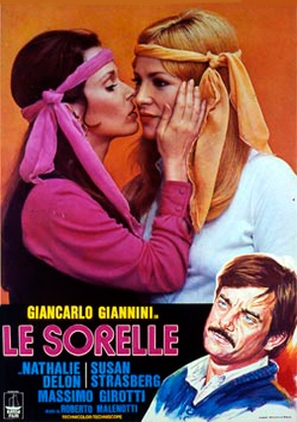
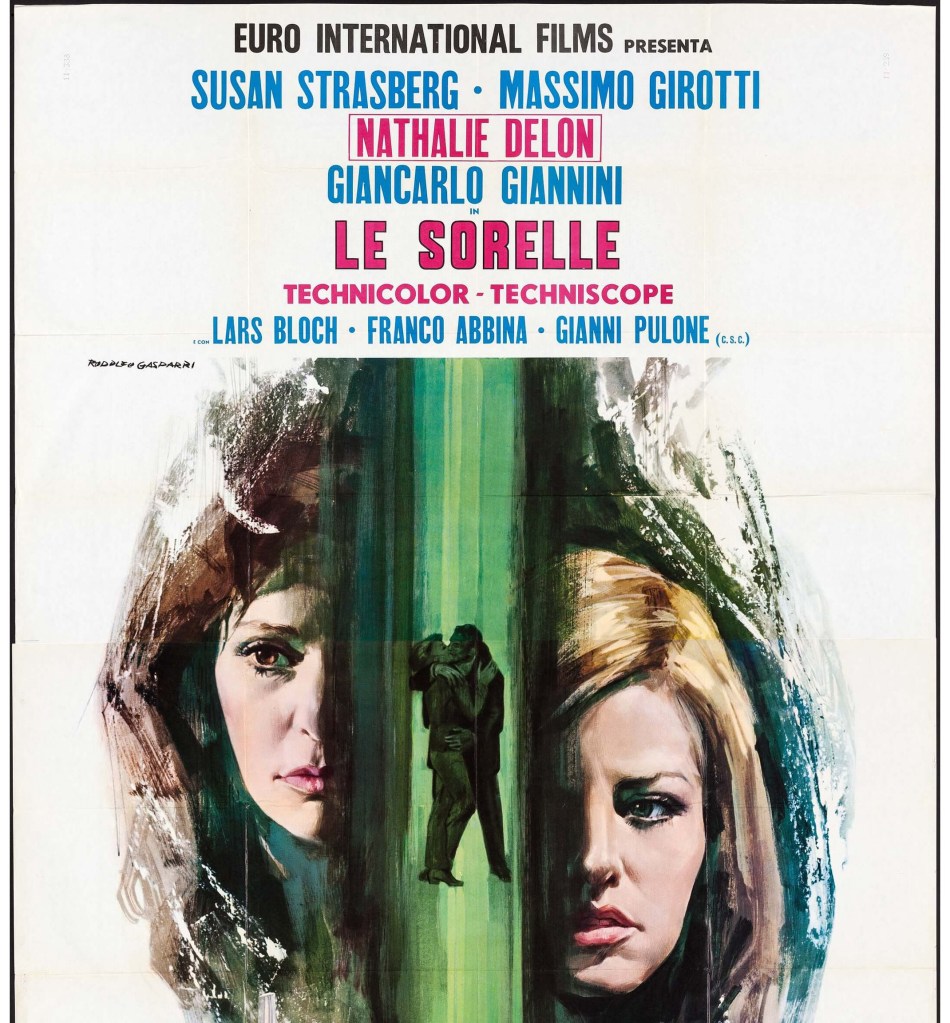
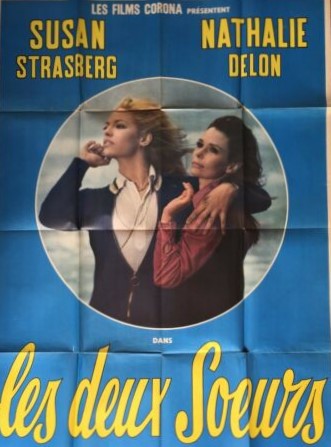
  14. (12) The Sisters / My Sister, My Love (1969). Incest rears its head as Nathalie Delon and Susan Strasberg ignore husbands and lovers in favor of each other.  
  15. (21) Go Naked in the World (1961). Gina Lollobrigida finds that love for a wealthy playboy clashes with her profession (the oldest). Look out for highly emotional turn from the usually taciturn Ernest Borgnine.
  16. (New Entry) Diamond Head (1962). Over-ambitious hypocritical landowner Charlton Heston comes unstuck in love, politics and business in Hawaii. George Chakiris, Yvette Mimieux and France Nuyen turn up the heat.
  17. (9) Moment to Moment (1966). Hitchcockian thriller set in Hitchcock country – the South of France – as unfaithful Jean Seberg is on the hook for the murder of her lover.  Also featuring Honor Blackman.  
  18. (20) The Golden Claws of the Cat Girl (1968). Cults don’t come any sexier than Daniele Gaubert as a French cat burglar.
  19. (22) Pressure Point (1962). Nazi extremist Bobby Darin causes chaos for psychiatrist Sidney Poitier. Stunning dream sequences.
  20. (New Entry) Young Cassidy (1965). Julie Christie came out of this best, winning her role in Doctor Zhivago as a result. Rod Taylor as Irish playwright Sean O’Casey.
  21. (14) Can Heironymus Merkin Ever Forget Mercy Humpe and Find True Happiness? Fellini would turn in his grave at the self-indulgence of singer Anthony Newley who manages to lament that women falling at his feet cause him so much strife. Joan Collins co-stars.
  22. (8) The Secret Ways (1961). The first of the Alistair MacLean adaptations to hit the big screen features Richard Widmark trapped in Hungary during the Cold War. 
  23. (New Entry) The Chalk Garden (1964). Wild child Hayley Mills, trying to break out of her Disney straitjacket, duels with governess Deborah Kerr.
  24. (23) A Dandy in Aspic (1968). Cold War thriller with Laurence Harvey as a double agent who wants out. Mia Farrow co-stars.  
  25.  (16) Pendulum (1968). Fast-rising cop George Peppard accused of murdering unfaithful wife Jean Seberg
  26. (25) Once a Thief (1965). Ann-Margret again, in a less sexy incarnation, as a working mother whose ex-jailbird thief Alain Delon takes a detour back into crime.
  27. (New entry) Fathom (1967). Raquel Welch models a string of bikinis as a skydiver caught up in spy malarkey.
  28. (New entry) Farewell, Friend / Adieu L’Ami (1968). A star is born – at least in France, the United States a good few years behind in recognizing the marquee attractions of Charles Bronson. Alain Delon co-stars in twisty French heist thriller featuring Olga Georges-Picot and Brigitte Fossey.
  29. (New Entry) Woman of Straw (1964). More sub-Hitchockian goings-on as Sean Connery tries to frame Gina Lollobrigida in a dubious scheme.
  30. (28) The Girl on a Motorcycle / Naked under Leather (1968). How much you saw of star Marianne Faithfull depended on where you saw it. The U.S. censor came down heavily on the titular fantasizing heroine, the British censor more liberal. Alain Delon co-stars.
  31. (New entry) Claudelle Inglish (1961). Diane McBain seeks revenge for being stood up at the altar in the Deep South.
  32. (15) The Best House in London (1969). David Hemmings tries to do right by Victorian sex workers.
  33. (19) Lady in Cement (1969). Raquel Welch models more bikinis as the gangster’s moll taken on as a client by private eye Frank Sinatra in his second outing as Tony Rome.
  34. (30) She Died with Her Boots On / Whirlpool (1969). More sleaze than cult. Spanish director Jose Ramon Larraz’s thriller sees kinky photographer Karl Lanchbury targeting real-life MTA Vivien Neves.  
  35. (New entry) Horizon: An American Saga – Chapter 1 (2024). So I wasn’t the only one to enjoy Kevin Costner’s majestic western that became one of the biggest flops of the year.
  36. (New entry) Prehistoric Women / Slave Girls (1967). Raquel Welch look away now. Martine Beswick attempts to steal the One Million Years B.C. crown.
  37. (New entry) Five Card Stud (1968). Entertaining Henry Hathaway western thriller with Dean Martin, when not dallying with Inger Stevens, investigating a serial killer. Robert Mitchum as a preacher.
  38. (31) The Misfits (1960). Last hurrah for Clark Gable, fabulous turns from Montgomery Clift and Marilyn Monroe in John Huston tale of losers. 
  39. (New entry) Plane (2023). Die Hard on a desert island with Gerard Butler as a pilot tackling terrorists in the Pacific.
  40. (32) Rage (1966). Glenn Ford and Stella Stevens combat pandemic in Mexican town.

Le Samourai / The Godson (1967) ****

The current trope for giving assassins nicknames – viz Day of the Jackal (2024) – doesn’t stem from Jean-Pierre Melville’s spare picture, the title here more suggestive of the idea of killing as an honorable profession. One of the most influential crime movies of all time, it resonates through Michael Winner’s The Mechanic (1972) – though few critics would give that the time of day -Walter Hill’s The Driver (1978), John Woo’s The Killer (1989), Anton Corbijn’s The American (2010), Nicolas Winding Refn’s Drive (2011) and David Fincher’s The Killer (2023). Even so, few acolytes can match the opening scene of a room empty except for a whiff of smoke in a corner that indicates the presence of recumbent killer Jef (Alain Delon).

There’s none of the false identity malarkey of Day of the Jackal and no high-echelon ultra-secret secret service figures involved in tracking him down. In fact, one of the delights of the movie is the police procedural aspect, with the top cop, here known only as the Commissaire (Francois Perier), insisting on dragging in at least 20 “usual suspects” from each district. Though living a Spartan existence, Jef at least has the sense to acquire an alibi from the lover Jane (Nathalie) he shares with a wealthier man. Nor is he killing public figures. Instead, more like someone from Murder Inc., rubbing out other gangsters.

Shameless attempt to cash in on “The Godfather” after U.S. distributors held off for five years from releasing it.

The witnesses provide conflicting information on the man they saw, but the Commissaire does not entirely trust Jef’s alibi, putting pressure on Jane to recant. Her paying lover Weiner (Michel Boisrond) provides a pretty accurate description of Jef. While the cops bug his apartment and  start to shadow him, Jef falls foul of his anonymous employer who is alarmed at the attention the assassin has attracted and to avoid the possibility of being implicated sets an assassin onto the assassin.

Wounded, refusing to accede to Jane’s demand that he acknowledge he “needs” her, he tracks down the assassin’s boss, Oliver Rey (Jean-Pierre Posier), who happens to be the lover of Valerie, a nighgclub singer Jef takes a shine to. It’s worth noting that there’s an innocence – or perhaps an honor matching that of the samurai – in the police behavior. The Commissaire exists in a world where rules are not bent or broken, where suspects are not beaten up, and where often the cops are hamstrung by procedure and must take special care in arriving at a conclusion. To convince himself that Jef is indeed the correct suspect, the Commissaire makes him swap hat and coat with others in a line-up, only for the witness to identify the coat, hat and face that he believes he saw. It’s only Jane’s unbreakable alibi that keeps Jef safe.

Most of the picture is pure bleak style. You never enter the assassin’s head. There’s no background or backstory to shed any light on action. Even the most appealing characters, Jane and Valerie, occupy moral twilight. I’m not sure Melville’s in a mood for homage, though Robert Aldrich was in the Cahiers du Cinema hall of fame, but the ending comes close to replicating that of Aldrich’s The Last Sunset (1961), not just for the climactic action but for the inherent self-realization of unavoidable consequence.

Despite sparseness of the style, there’s enough going on emotionally and action-wise to keep an audience enthralled. While his outfit echoes the Humphrey Bogart private eye of the 1940s, and while walking the same mean streets, Jef is the antithesis of that untarnished hero.

Melville belonged to the hard-boiled school of cinematic crime, summoning up the gods of noir, and providing a new breed of French star with tough guys to kill for.  He died young, just 55, and left behind 14 pictures, at least three or four considered masterpieces including Army of Shadows (1969) and The Red Circle (1970). You might have thought his minimalist style would appeal more to critics than moviegoers but in his native France, in part because stars queued up to be in his movies,  he was highly popular.

When you compare the Delon of this to Once a Thief (1965) or Texas Across the River (1966) you can see how much acting goes into the restraint of the character here, producing one of Delon’s best performances. His wife of the time, Nathalie Delon (The Sisters, 1969) shines but briefly.

Recommended.

Top 30 2024

Ever since I’ve started writing this Blog, a film starring a female has taken pole position in the Annual Top 30. And this year is no exception though it has gone down to the wire with Sandy Dennis literally pipping John Wayne at the post. I was somewhat surprised to see some movies that featured on this list last year so prominent again. These include Stagecoach, Fireball XL5, Fraulein Doktor and The Sisters.

  1. Thank You Very Much/A Touch of Love (1969). Singleton Sandy Dennis comes to terms with pregnancy in London. Ian McKellen is the male lead.
  2. In Harm’s Way (1965). Otto Preminger war epic based around Pearl Harbor. John Wayne and Kirk Douglas duke it out.
  3. The Appointment (1969). Unusual Sidney Lumet drama set in Italy with Omar Sharif becoming mixed up with Anouk Aimee.
  4. Stagecoach (1966). There’s no stopping Ann-Margret. Interest remains high in remake of John Ford classic also starring Alex Cord and Bing Crosby.
  5. Young Cassidy (1965). Talking of John Ford, he was meant to direct this biopic of Irish playwright Sean O’Casey but took ill, leaving Jack Cardiff in charge. Rod Taylor and Julie Christie star.
  6. Diamond Head (1962). Charlton Heston as hypocritical racist landowner in Hawaii. Co-stars George Chakiris and Yvette Mimieux.
  7. Prehistoric Women/Slave Girls (1967). Martine Beswick is no Raquel Welch in One Million Years B.C. knock-off.
  8. The Chalk Garden (1964). Hayley Mills sheds her puppy fat as wild child brought to heel by Deborah Kerr as a governess with a secret past. Co-stars John Mills and Edith Evans. Directed by Ronald Neame.
  9. Fireball XL5. The colorised version of the Gerry and Sylvia Anderson futuristic classic British television series.
  10. Pharoah / Pharon (1966). Polish epic – religion vs state in ancient Egypt.
  11. Go Naked in the World (1961). Gina Lollobrigida finds out how difficult it is for a sex worker to fall in love. Fine Ernest Borgnine turn as a doting father.
  12. The Swinger (1966). Ann-Margret again. She sings, she dances – she writes? Who cares about a barmy plot when she shakes her booty.
  13. The Beekeeper (2024). Jason Statham kicks off a new action franchise with scintillating turn as black ops operative brought out of retirement. Jeremy Irons tries to keep the peace.
  14. La Belle Noiseuse (1991). French drama in which Jacques Rivette explores relationship between painter Michel Piccoli and model Emmanuelle Beart.
  15. Baby Love (1969). Teenager Linda Hayden unintentionally causing turmoil in dysfunctional middle class family in London.
  16. Pressure Point (1962). Psychiatrist Sidney Poitier coming to terms with racist patient Bobby Darin.
  17. Farewell Friend / Adieu L’Ami (1968). Charles Bronson had to go to France to find stardom in this heist thriller co-starring Alain Delon.
  18. Fraulein Doktor (1969). Suzy Kendall’s finest hour as World War One German spy outwitting Kenneth More.
  19. Immaculate (2024). Sydney Sweeney dons nun garb and encounters horror in Italian convent.
  20. The Count of Monte Cristo (2024). Splendid adaptation of the classic Dumas novel of a wrongly-imprisoned man seeking revenge.
  21. Fear No More (1961). Mentally disturbed Mala Powers mixed up in murder plot.
  22. Woman of Straw (1964). Gina Lollobrigida takes on Sean Connery in Hitchcockian thriller.
  23. Claudelle Inglish (1961). Thwarted bride Diane McBain exploits male desire in the Deep South.
  24. Carry On Up the Khyber (1968). Innuendo gets a cloak of satire as the team make light work of the British in India.
  25. The Trouble with Angels (1966). Hayley Mills again, another wild child, this time challenging Mother Superior Rosalind Russell in convent school.
  26. Lilith (1964). War veteran Warren Beatty bewitched by troubled Jean Seberg at a mental institution.
  27. The Sisters / My Sister, My Love (1969). Another French drama with Nathalie Delon and Susan Strasberg too tangled up with each other to bother with the likes of Giancarlo Giannini.
  28. Five Card Stud (1969). Poker player Dean Martin turns detective as the body count mushrooms in Henry Hathaway western co-starring Robert Mitchum and Inger Stevens.
  29. The Undefeated (1969). John Wayne chases defeated Confederate Rock Hudson into Mexico.
  30. Villain (1971). Heist thriller with Richard Burton and Ian McShane as bisexual gangsters.

This Sporting Life (1963) ****

What began as the last gasp of the British New Wave working class kitchen sink drama has now after a six-decade gap resolved into a struggle over political and sexual ownership. Macho athlete Frank Machin (Richard Harris) jibes against his paymasters at a Yorkshire rugby league club – in similar fashion to Charlton Heston in Number One (1969) – while trying to hold sway over widowed landlady Margaret (Rachel Roberts). While documenting the class divide over which British writers and directors obsess, Lindsay Anderson’s debut takes a wry look at power.

Machin belongs to the Arthur Seaton (Saturday Night and Sunday Morning, 1960) class of loudmouth boors, determined to take as much as they can, riding roughshod over anyone who gets in their way, even attacking players of his own team. Although a fan favorite, his position at the club still requires backing from the moneyed directors, support that appears go awry when he rejects overtures from Mrs Weaver (Vanda Godsell), wife of a board director (Alan Badel). While Margaret eventually succumbs, her actions fill her with shame, the presents he buys making her feel like a kept woman.

Both Machin and Margaret are the rawest of creatures, forever appearing ready to topple into some emotional crevasse of their own making. At a time when marriage was the rock of society and women had little independence, a woman could dwindle away from the scorn of neighbors, while a man lacking emotional intelligence would crumble in the face of his own fears.

The non-linear narrative blurs some aspects of the story. There is no reference to Machin’s background save that he was once a miner and still works somewhere unspecified to supplement his footballer’s income. He rejects the paternalism of ageing scout Johnson (William Hartnell) while appearing to be seeking to resolve maternal issues, the widow with two small children at least a decade older, and although he could easily afford better accommodation refuses to move out.

His obsession with Margaret is never properly explained, except by her, who sees him as acting like an owner. Equally, Margaret is the opposite of the women in virtually every movie of the period, for whom marriage is the sole ambition. Whether she still grieves the loss of her factory worker husband, who may have committed suicide, or loathes Machin’s dominant nature is never explained. It might have been better if both had married for unhappy husbands and wives tend to give each other both barrels, emotions never concealed. Or she could be in the throes of an undiagnosed depression expressed as anger.

Machin is the other side of the British Dream – that anyone who escapes going down the pits or the mindless grind of the factory will automatically enjoy happiness. While Machin revels in his celebrity, he has no idea how to make his life happier. This is in contrast to the other footballers who either enjoy womanizing and drinking or are married or engaged and accept the unwritten rules of the game rather than fighting everyone.

There is plenty grime on show, and the football field has never been so pitiless, and as a social document it fits in well to the small sub-genre of films depicting working class life, but the picture’s thrust remains that of two opposites who will clearly never meet except in the delusional head of Machin.

Power is demonstrated in various ways. Weaver has the clout to give Machin a hefty signing-on fee against the wishes of the board, his wife takes her pick of the footballers to satisfy her sexual needs, Machin believes he is entitled to berate waiters in an upmarket restaurant, while Margaret is demeaned by accepting his present of a fur coat.

As ever with these films of the early 1960s there is a wealth of acting talent. Both Harris and Roberts were Oscar-nominated. Others making a splash in the cast were Alan Badel (Arabesque, 1966), Colin Blakely (The Vengeance of She, 1968), Jack Watson (The Hill, 1965), and if look closely you will spot double Oscar-winner Glenda Jackson (Women in Love, 1969). Future television stalwarts included William Hartnell (the first Doctor Who), Arthur Lowe (Dad’s Army, 1968-1977), Leonard Rossiter (Rising Damp, 1974-1978), Frank Windsor (Softly, Softly, 1966-1969) and George Sewell (Paul Temple, 1969-1971).

Lindsay Anderson (If… 1969) no doubt believed he was making an excoriating drama about the class struggle, but in fact has delivered a classic thwarted love story. David Storey wrote the screenplay based on his own novel.

Dark Intruder (1965) ***

Sumerian demons, Siamese twins separated at birth, a serial killer, oceans of fog, the flower of the mandrake, a climax that revolves around “it’s in his kiss” and a picture so shorn of light it could easily have been titled Dark Fiancé or Dark Wedding. Thematically truncated, too, and you get the feeling that with a little bit more narrative expertise and budget this could have been spun out into something that fitted in with the decade’s later spurt of horror a la Rosemary’s Baby (1968). There’s the bonus of Leslie Nielsen (Airplane, 1980) in a straight part though one which allows him a fair quota of quips.

In San Francisco 1890, occult expert and straight-down-the-line man-about-town toff Brett Kingsford (Leslie Nielsen) is surreptitiously engaged by the cops to investigate a series of brutal murders. Beside each corpse, the killer has left a memento, a tiny statuette that is traced back to Sumerian times, a demon – similar to the larger kind that turn up at the archaeological dig at the start of The Exorcist (1973) – banished from Earth and which attempts to return by entering another person’s body though presumably none of the four victims coming up to scratch.

Among the dead is Hannah, who had been involved in an archaeological expedition and later adopted a mysterious child. She has a connection to Brett’s friend, antiques dealer Robert Vandenburg (Mark Richman) who is engaged to be married to Evelyn Lang (Judi Meredith), another friend of Brett. Though Brett consults Chinese expert Chi Zang (Peter Brocco) and is attacked by the titular intruder who leaves him with claw marks on his shoulder, the bulk of the detection falls to Robert, who exhibits odd behaviour, standing in a daze, sleepwalking, going off in the wrong direction, suffering from blurred vision, and with a strange scar on his spine. He encounters the mysterious Professor Moloki (Werner Klemperer), face concealed, who tells him all will be revealed on the eve of his wedding.

The killings don’t stop, Brett no closer to catching the killer, and no further evidence forthcoming and the tale falls on the shoulders of Robert who is convinced from his own odd behavior that he is the killer. Eventually, he starts to work out the strange elements of his own life and the “invisible force” he is constantly fighting.

Turns out he was the Siamese twin separated at birth, and that Hannah had brought up the other, deformed, twin, who now wants his twin’s life – and wife. All we see of the creature is the claw, the rest of him hidden under a cloak or shuffling along behind curtains. The pair grapple in the darkness and it appears the bad twin is slain.

But is he? It’s Evelyn who gives him away, revolted by his kiss, and the matter is resolved. So really no more than the assembly of an interesting horror story. The claw is well done but as I said most of the detection comes from the mind of Robert rather than the occult detective working up the clues. But the dapper Brett is good value, keeping chatterbox Evelyn in check, and putting on his best Basil Rathbone impersonation.

As a bonus it’s insanely short, barely an hour long, which would have put it squarely in the B-feature category – but of two decades before, not of the mid-1960s. Turns out this was a pilot for a television horror series that wasn’t picked up by any of the three U.S. networks so was extended enough to be feature-length. The actors try desperately to add characterisation to their thin parts, Leslie Nielsen (Beau Geste, 1966) and Judi Meredith (Queen of Blood, 1966) best at that.

Harvey Hart (Bus Riley’s Back in Town, 1965) directed from a script by Barre Lyndon. The movie was released by Universal, who had Nielsen on an exclusive seven-year contract.

The sum of its parts without much else, but intriguing tale calling out to be extended – or remade.

Beat Girl / Wild for Kicks (1960) **

More social document than drama, but that aspect somewhat diluted by the moviemakers’ attempts at exposing rebellious youth while taking for granted more sordid adult behavior. Narrative flow is interrupted now and then to showcase Adam Faith’s singing and to accommodate a few striptease acts. Probably more interesting is the array of new talent on show.

Spoiled teenager Jennifer (Gillian Hill) heads for the wild side of town to experience the beatnik lifestyle in Soho coffee shops and cellars. That there are no drugs involved, and that alcohol is considered “square” – as for that matter is violence – may come as a surprise to students of the period. Apart from one episode of road-racing and playing “chicken” along a railway track, most of the time the gang listen to music or dance until Jennifer gets it into her head that ejoining a striptease show might give her life the thrill it is missing.

This is prompted by the discovery that her new too-young stepmother Nichole (Noelle Adams) has been a stripper and most likely a sex worker in Paris before marrying wealthy architect Paul (David Farrar), cueing a round-robin of confrontations. Strangely enough, from the narrative perspective, none of the young bucks appear romantically interested in the provocatively dressed Jennifer and so it is left to creepy club owner Kenny (Christopher Lee) to make a move.

The gaping hole left by lack of narrative drive is not offset by immersion in the beatnik or striptease scene. Back in the day the British censors took the editing scissors to the striptease but although restored versions available now contain nudity you are left wishing that there was some lost element to the beatnik sections that would have given the picture the energy it required.

Gillian Hill (Les Liaisions Dangereuses, 1959), comes over as a cross between Brigitte Bardot and Diana Dors without having an ounce of the sex appeal of either. All pout and flounce, she is unable to inject any heart into her two-dimensional character, although given her youth and inexperience this was hardly surprising. Former British star David Farrar (Black Narcissus, 1947) was coming to the end of his career and in a thankless role as a frustrated father could do little to rescue the project.

French actress Noelle Gordon (Sergeant X of the Foreign Legion, 1960) could have been Jennifer’s mother given her own tendencies towards wiggle and pout but at least she makes a stab at trying to overcome her step-daughter’s hostility.

In the main, the picture’s delight is bringing to the fore a whole chorus of new faces. Pick of the supporting cast is Shirley Anne Field (Kings of the Sun, 1963) who doesn’t just have a knowing look but looks as if she knows what’s she doing acting-wise. Making his movie debut was teen pop idol Adam Faith, who had made his name playing in coffee bars. He had already notched up a couple of number one singles, but doesn’t quite set the screen on fire. Peter McEnery (The Fighting Prince of Donegal, 1966) plays his inebriated pal.

You can also spot Oliver Reed (Women in Love, 1969), Julie Christie (Doctor Zhivago, 1965), Claire Gordon (Cool It, Carol, 1970) and Nigel Green (Jason and the Argonauts, 1963).

Perhaps the most important debut belonged to composer John Barry. He had already been working with Adam Faith. Barry’s music for the film was the first British soundtrack album ever released, reaching number eleven on the charts, and opening the doors for future soundtrack albums, not least of which was the rich vein of theme tunes produced by Barry in the next few years. 

French director Edmond T. Greville, who brought little panache to the subject matter, would redeem himself with his next picture The Hands of Orlac (1960). 

This doesn’t fall into the “so-bad-it’s-good” category, nor has it been unfairly overlooked, and probably is better known as an example of the kind of exploitation B-picture that the Americans do so much better and a reminder that, except on rare occasions such as The Wild One (1953), older moviemakers seem incapable of capturing the essence of youth.

Discover WordPress

A daily selection of the best content published on WordPress, collected for you by humans who love to read.

The Atavist Magazine

by Brian Hannan

WordPress.com News

The latest news on WordPress.com and the WordPress community.