I Thank a Fool (1962) ***

One of those bonkers pictures whose nuttiness is initially irritating but ends up being thoroughly enjoyable once you give in to the barmy plot and overheated melodrama. Murder, suicide, madness, illicit sex, blackmail – and that’s just the start of this farrago of nonsense. And set in Liverpool before The Beatles made it famous.

Christine (Susan Hayward), a doctor, is jailed when she kills her married seriously ill lover in a mercy killing. She’s not convicted of the murder but of the lesser crime of medical malpractice, but after serving an 18-month sentence finds she is unemployable, even in more lowly professions where her prison stretch counts against her.

When she is hired by the attorney Stephen (Peter Finch) who prosecuted her to look after his mentally ill wife Liane (Diane Cilento), the audience will already smell a rat given that Christine has changed her name and therefore the lawyer must have made considerable effort to track her down. His argument is that since she is no longer a qualified practitioner, she cannot advocate to have his wife committed to a mental institute, as a proper doctor would be required to, since Liane is clearly a danger to herself and other people. Your immediate suspicion is that Christine has been hired to take the rap once Liane is bumped off.

And it doesn’t take long for Christine to work out that not everything adds up. Liane is given enough rope to hang herself, access to a car to cause an accident, access to a horse which could easily bolt or fall.

Liane has been told her Irish father died in an accident where she was driving, the incident that triggered her madness. But when we discover the father, Captain Ferris (Cyril Cusack), is very much alive that’s the cue for a slew of unlikely events. When Liane finds her father, he’s not in the least a candidate for canonization, but an alcoholic. That triggers further mental trauma. And another accident, self-inflicted. After Christine administers pills, the young woman is found dead.

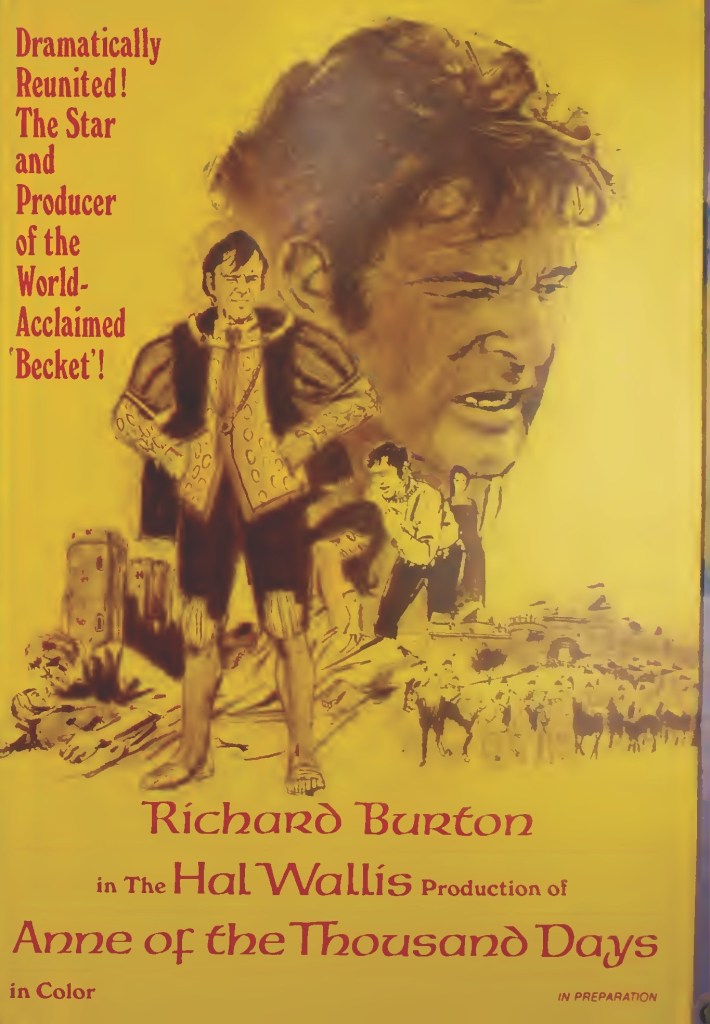
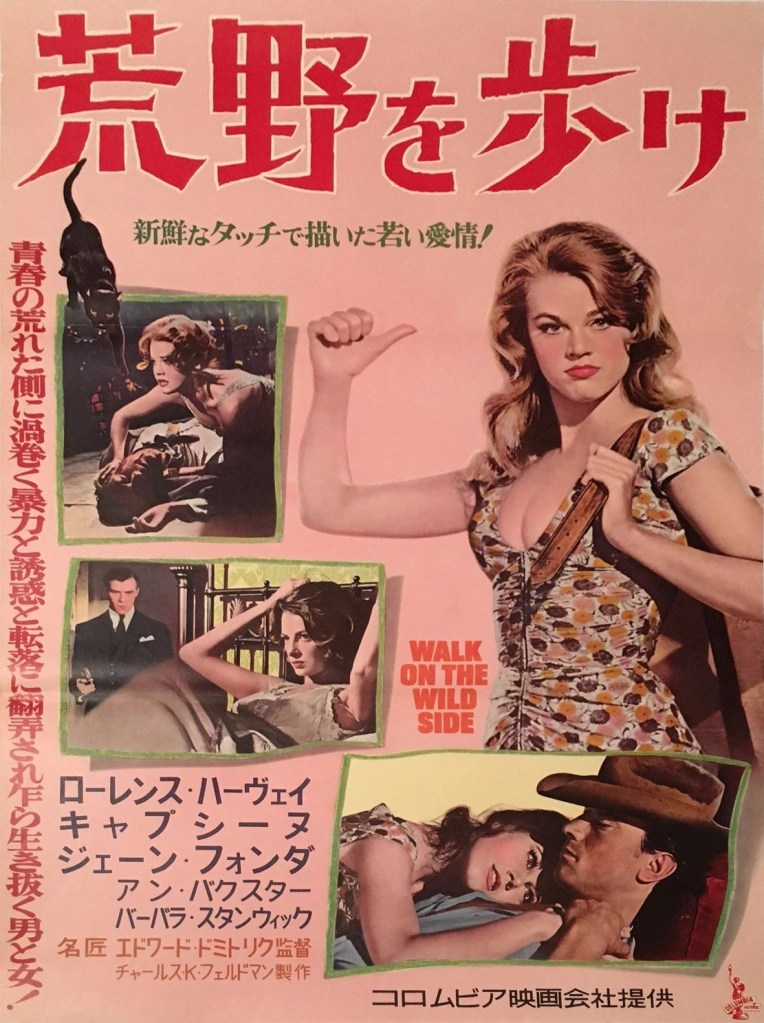
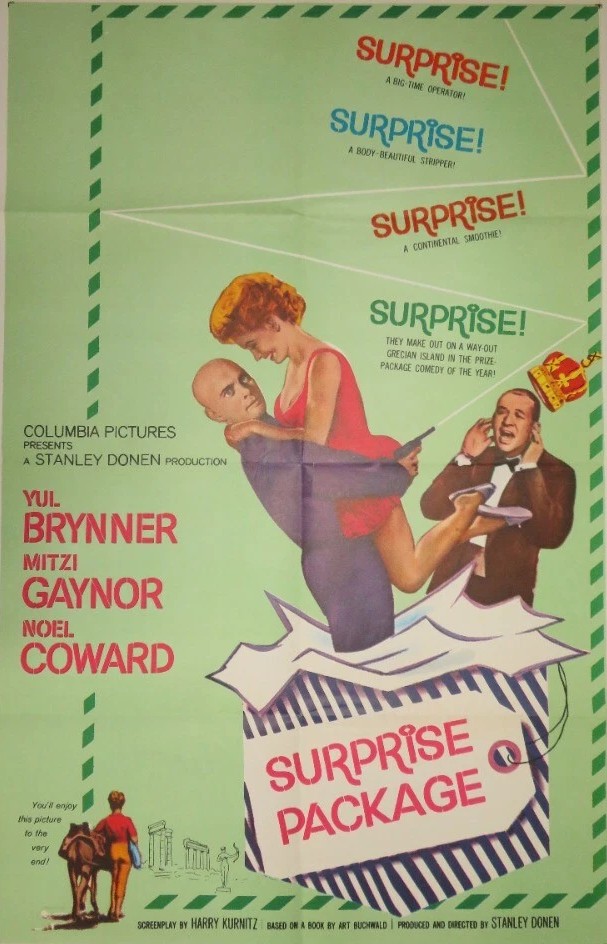
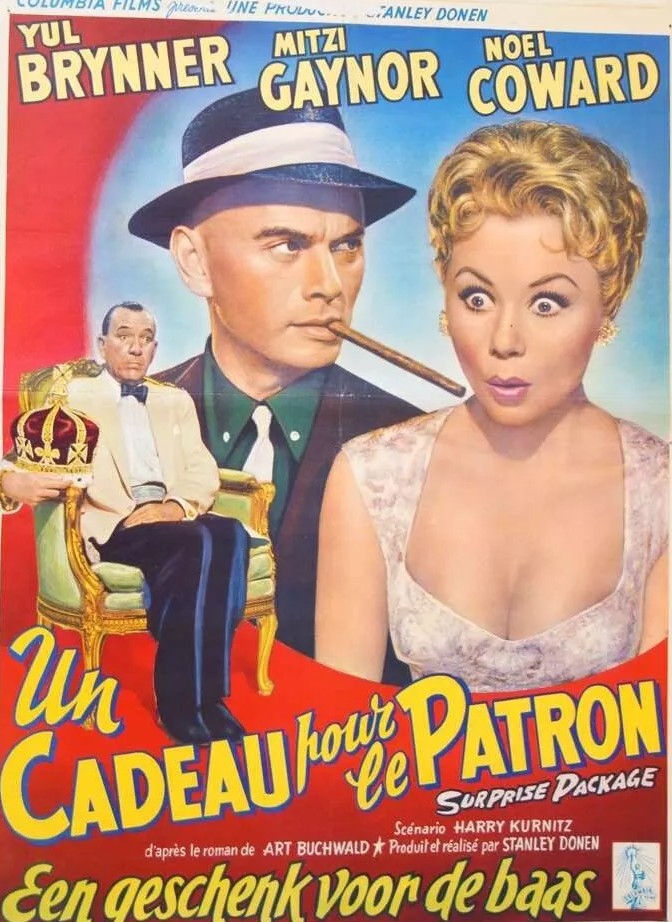
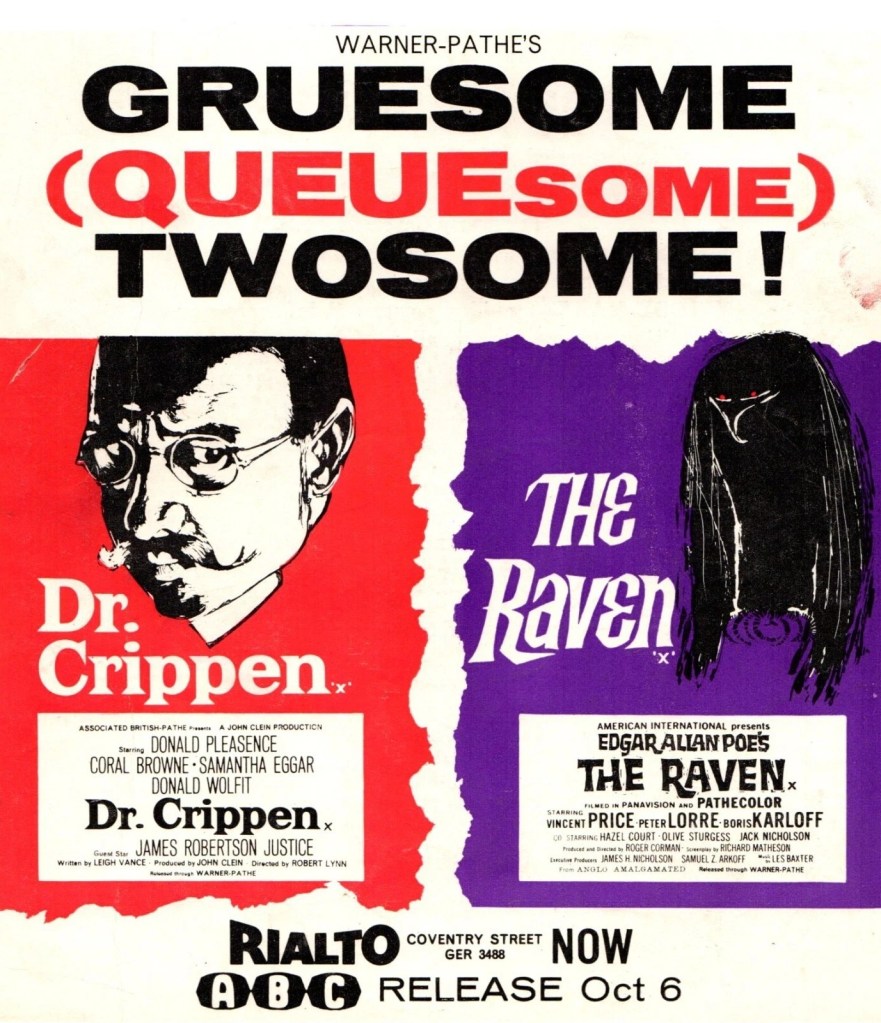
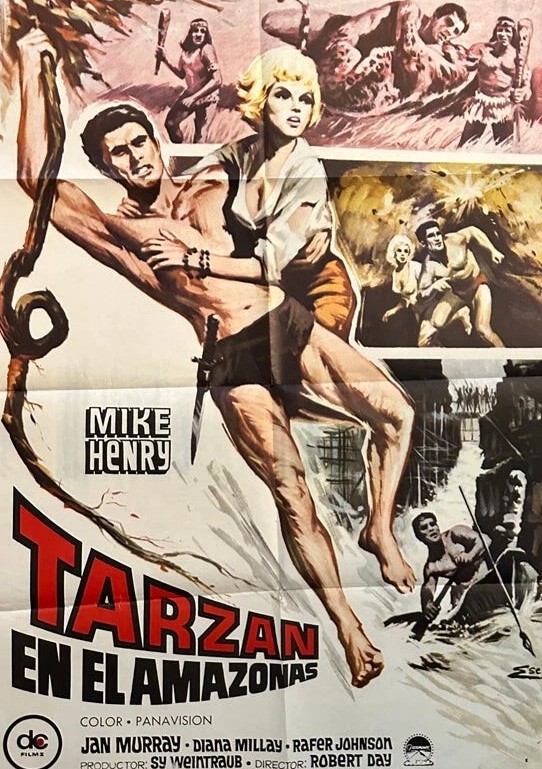
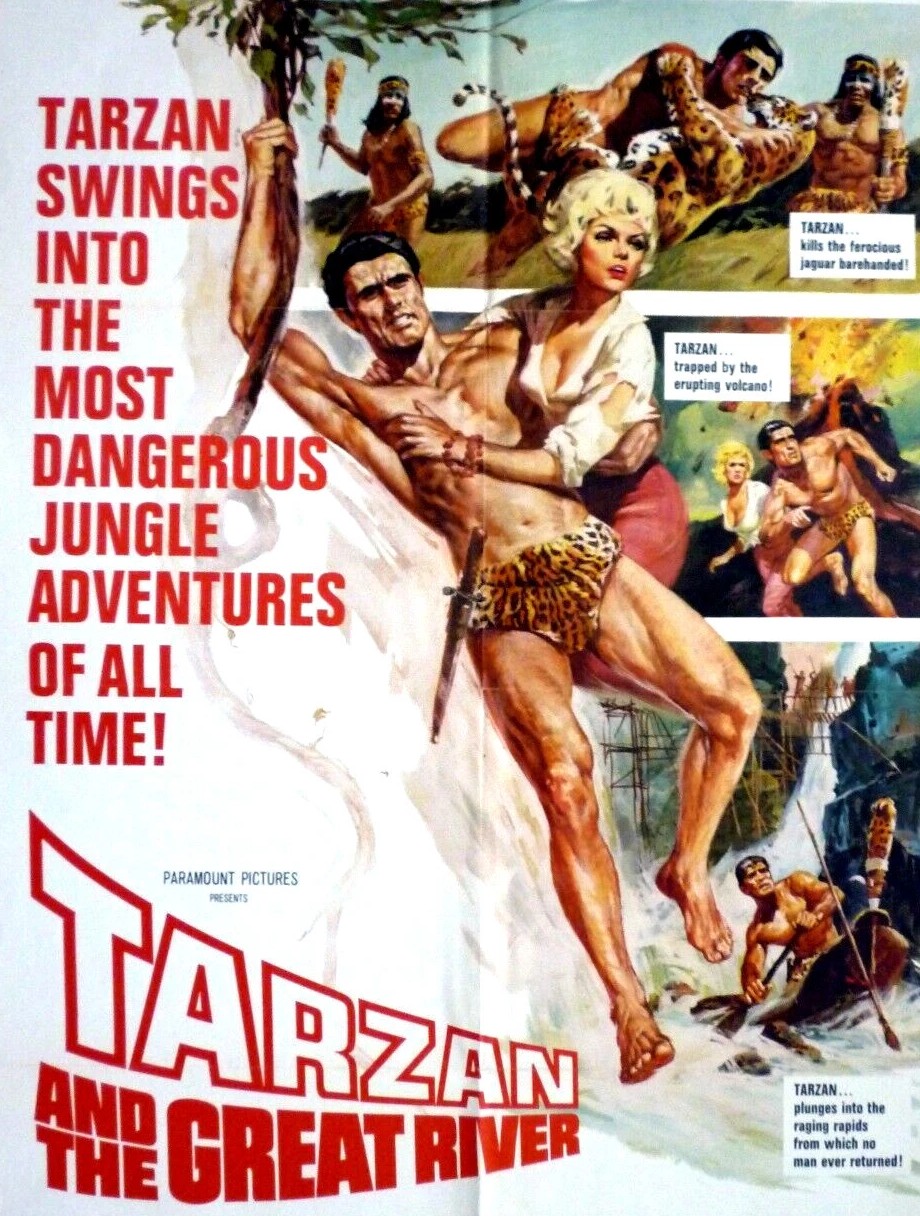
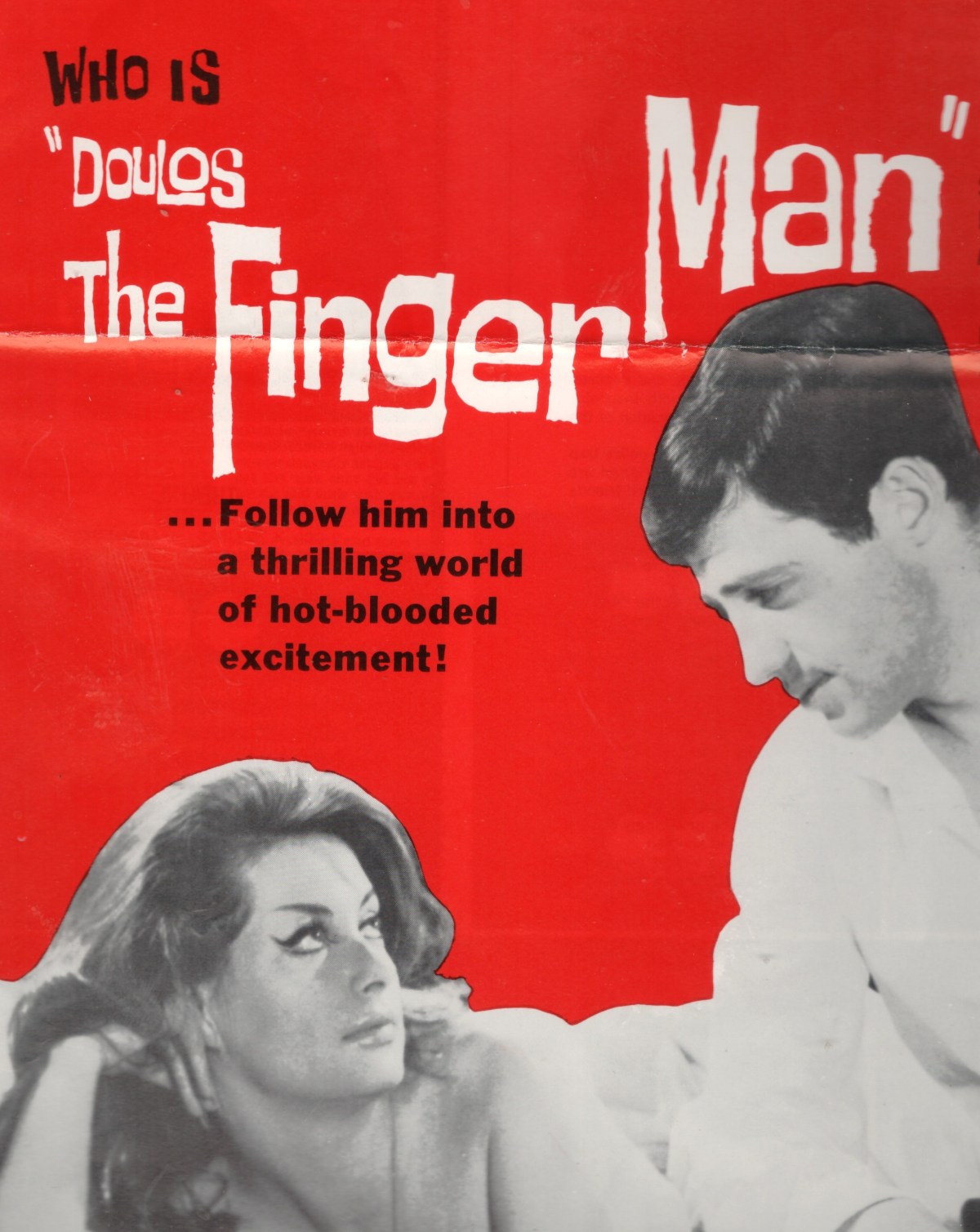
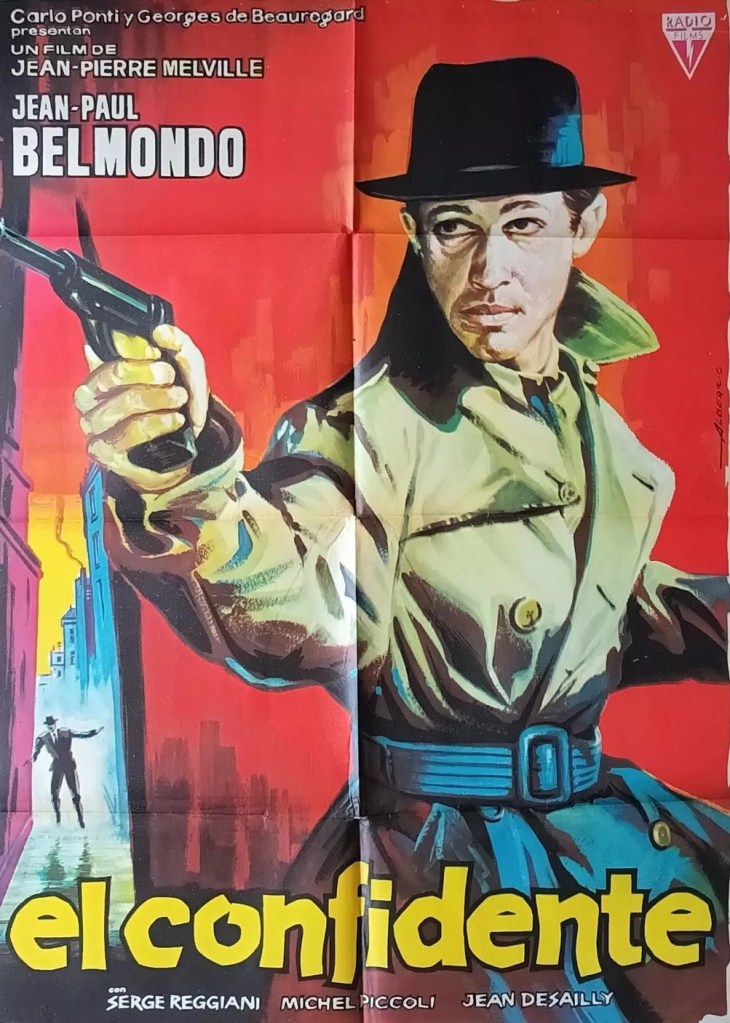
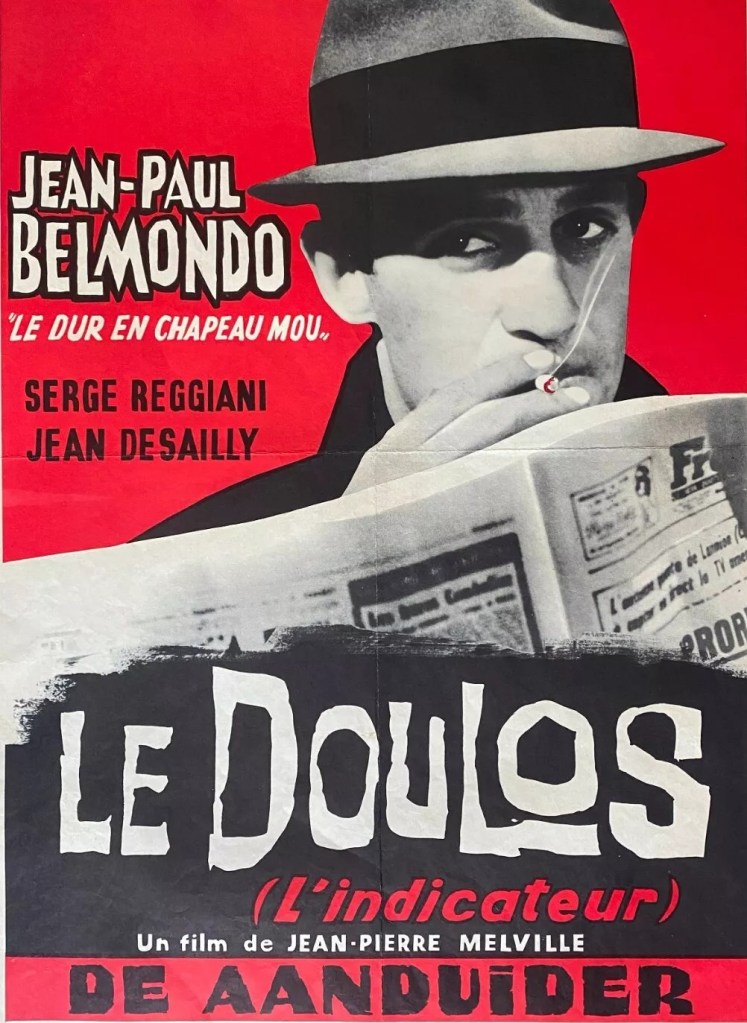
Bit of a stretch to compare it to the movies
mentioned in this poster.

Naturally, an inquest brings up Christine’s past and suspicion falls on her. And that would be par for the course, and it would be up to the condemned woman to find a way to prove her innocence. But that takes us into even murkier depths.

There’s bad blood between Capt Ferris and Stephen and the inference that this was only resolved by the father offering his underage daughter to the lawyer to be followed by the unscrupulous father blackmailing Stephen. Then it turns out there’s no case to answer and that Christine is innocent because, blow me down, Liane committed suicide.

But what should have been a straightforward, if unlikely, murder plot comes unstuck because it can’t make up its mind what it wants to be. Too many ingredients are thrown into the pot and the result is a mess.

Even the queen of melodrama Susan Hayward (Stolen Hours, 1963) can’t rescue this. And the pairing with Peter Finch (Accident, 1966) doesn’t produce the necessary sparks. Despite a variable Irish accent, Diane Cilento (Hombre, 1967) comes off best as the wayward deluded young woman.

Robert Stevens (In the Cool of the Day, 1963) directs from a screenplay by Oscar-nominated  Karl Tunberg (The 7th Dawn, 1964) adapting the bestseller by Audrey Erskine-Lindop.

Had every opportunity to be a star attraction in the So Bad It’s Good sub-genre but fails miserably. Still, if you enter into the swing of things, remarkably tolerable.

The Gauntlet (1977) ****

Clint Eastwood the dumb schmuck. Never thought I’d be writing that. But our hero has parked his Dirty Harry persona and channelled much of his inner James Stewart or Tom Hanks, the upright fella who may be a bit of a jerk but is a decent guy underneath.

Our patsy, Phoenix, Arizona, detective Ben Shockley (Clint Eastwood), unshaven drunken bum, is dumb enough to imagine he’s been selected for a special mission because he’s the kind of cop who gets the job done, rather than because he’s the one most likely to fail. He’s sent off to Las Vegas to collect a witness for a trial. No big deal. Two-bit witness, two-bit trial. As soon becomes par for the course, people are apt to make fun of him, in this case a Las Vegas cop turning him away for asking for a guy by the name of Gus Mally. Guffaws all round till the cop takes pity on Shockley and informs him the witness is a woman (Sondra Locke), a feisty sex worker, who spends pretty much the whole of the movie making fun of him and every other sonova.

Shockley’s kinda disturbed to see that someone has made a book on Mally reaching Phoenix, the opening odds of 50-1 soon lengthening to 100-1. But he’s a trusting sort of fella (translated as dumb schmuck) so he thinks it’s a joke but everywhere he goes he gets ambushed and it takes a helluva long time – and only with Gus’s constant nudging – to realize that every time he phones back his position to his boss Commissioner Blakelock (William Prince) there’s awful consequence.

The firepower at everyone’s disposal – both Mob hoods and the cops – is so fearful that cars and houses are destroyed in a ferocious hail of bullets. The only time Shockley comes into his own, cop-style, is when he hustles some Hell’s Angels down and steals a motorbike. But guess what, the bad guys are still not just one step ahead, but in a different class altogether when it comes to pursuit, calling upon a helicopter armed with a sharpshooter.

Shockley even quails when another cop, co-opted into giving them a ride, starts making creepy sexual remarks to Gus, not realizing she can more than take care of herself as if she’s been dealing with hecklers all her life. Gus is quite a character. When she’s not screaming her head off to gain sympathy from Shockley, she’s trying to seduce him, or taking the piss out of him or just plain mocking his ineptitude and trusting personality.

She’s got better weapons at her disposal than he’ll ever have, a tongue that could strip paint, and a body she’s not frightened to use to get herself out of a sticky situation. Or in one particular instance, to save Shockley’s hide. It’s only after this that Shockley gives her any respect. And they come to more than a mutual understanding, as she begins to show genuine feelings for her escort, and we end up with the kind of relationship that’s always going to be raggedy around the edges because, as you’ve guessed, he’s one for keeping his emotions in check and makes do with a catchphrase, “Nag, nag, nag.”

Just what her purpose is in said trial you couldn’t care less about, she’s just a Maguffin to bring opposites together, soften her hard edges and toughen up his unsuspicious nature. There’s a heck of climax as they ride into town in an armor-plated bus and straight into the same kind of fusillade as they previously endured until between them they manage to nail the corrupt bad guys.

This is a hell of a ride, great concept, terrific believable characters, she’s sharp and sassy, and he’s toned down the arrogance. There’s genuine charisma between Clint Eastwood (Coogan’s Bluff, 1968) and Sondra Locke (The Heart Is A Lonely Hunter, 1968), helped by the fact they were already in an adulterous relationship, and in between falling into difficult situations it’s a blast watching them getting out of them.

Despite the virtual non-stop action, it’s a change of pace for Eastwood, a shift away from the screen persona on which his commercial attraction was built, and in some senses, even counting in the violence, it owes more to the dynamics of the screwball comedy than anything else, especially when the more practical woman is called upon to save the out-of-his-depth man. Written by Michael Butler and Dennis Shryack (they teamed up again for Pale Rider, 1985).

Ably directed by Eastwood, a belter.

Of Love and Desire (1963) ***

As contemporary as you could get with the core theme of a sexually independent woman picking and choosing her men. Otherwise, a smorgasbord of talent. Star Merle Oberon (Hotel, 1966) hadn’t appeared in a movie in seven years, for co-star Steve Cochran (Tell Me in the Sunlight, 1967) the screen absence was two years, Curd Jurgens (Psyche 59, 1964) was still very much a jobbing actor restricted to playing good and bad Germans, and director Richard Rush (Psych-Out, 1968), in his sophomore effort, was as erratic in the early part of his career as he would be in his later (six years between Freebie and the Bean, 1974, and The Stunt Man).

Of course, this being a somewhat mealy-mouthed decade, psychological mumbo-jumbo was required to explain the woman’s actions rather than the notion that a woman could enjoy being sexually unrepressed and free of desire for marital security. So if you manage to separate the actual movie from the required fitting-in to moral standards, it’s a darned interesting examination of the kind of free spirit later exemplified by Darling (1965) or Modesty Blaise (1966).

Mining engineer Steve (Steve Cochran) on a job in Mexico begins an affair with wealthy Katherine (Merle Oberon), half-sister of his employer Paul (Curt Jurgens). There’s nothing of the usual will-she-won’t-she in this romance, she virtually flings herself at him. Not only that, the morning after, she arranges for all his belongings to be shipped to her splendid mansion, proof of who is usually in control. Just as, more traditionally, males are instantly aroused by beautiful women, she is excited in the presence of an attractive man and makes no bones about it, not too bothered about consequent scandal even though she does her best to keep her activities discreet.

Paul isn’t so happy with the affair. He clearly prefers her unhappy and dependent on him for emotional support. And a bit like Julie in Steve Cochran’s later picture Tell Me in the Sunlight, there’s certainly an assumption that she jumps from man to man, though out of boredom rather than financial security.

So Paul sets out to sabotage the affair by putting in Katharine’s way previous boyfriend  Gus (John Agar) who feels he is owed some sex and is determined she repay the debt. Although she almost succumbs and is subsequently ashamed of how easily her desire is inflamed, she resists and after he has had his way with her attempts to commit suicide.

But the question of rape is never raised and to Steve it appears she has merely resorted to type, falling into bed with the closest man. And in the time it takes to resolve the situation, we are treated to the psychological mumbo-jumbo which falls into two parts. In the first place, there has clearly been a strong sexual attraction between Paul and Katharine, and the strength of their emotional bond is in some ways a substitute for not indulging in incest. Secondly, her fiancé, a fighter pilot, was killed in the Second World War. Based on no evidence whatsoever, she has convinced herself that he committed suicide because she refused to have sex with him before marriage. To make up for that, she gives herself to any man who comes along. Yep, claptrap with a capital C. Which somewhat torpedoes the picture, which had been heading comfortably towards a feminist highpoint.

Merle Oberon almost turns the clock back a couple of decades to Wuthering Heights (1939) and her role there in physically expressing forbidden desire. You can almost feel her quivering with pent-up sexuality and she is unexpectedly superb, in what is essentially a B-picture, especially as the opportunity to tumble into melodrama – which she can’t escape in the final act – so obviously beckons. That the first two acts work so well is primarily down to her believable characterization. And Steve Cochran is no slouch either, shaking off the coil of his pervious incarnation as a tough guy. Curt Jurgens is creepy and sinister.

Director Richard Rush manages to hold his nerve until the end and then it all runs away from him into turgid melodrama. Screenplay contributions from the director, producer Victor Stoloff, Jacquine Delessert  in his debut and Laszlo Gorog (Too Soon to Love, 1960, Richard Rush’s debut)

Nearly but not quite a feminist breakout.

Moon Zero Two (1969) **

Not much that’s redeemable from this British sci fi effort. Maybe the idea of the “dirty universe” clogged up by waste with salvage hunters retrieving bits of old satellites and space objects. Or maybe an early version of “unobtainium,” the rare mineral that’s going to make someone very rich, in this a solid block of sapphire and some mined nickel. Or maybe the colonizing of the Moon for gain rather than the advance of science.

But that’s about it. Takes about 30 minutes for a story to emerge, the rest of the time taken up with info dumps and character background, so we know that ace pilot Bill (James Olson) was the first man on Mars and wants to repeat the same feat for Mercury, Jupiter and other distant planets and would rather become a salvager than lower himself to become a passenger pilot. His girlfriend Liz (Adrienne Corri) is an officious official and threatens him with being grounded on safety grounds.

But that kind of bureaucracy is par for the course in British sci fi which liked to clutter up the narrative with accountants (The Terronauts, 1967, et al) and various levels of officialdom. And there’s another British trope. Take a well-known comedian and turn him into an unlikely tough guy of sorts – Eric Sykes as an assassin in The Liquidator (1965) would be in pole position but Carry On regular Bernard Bresslaw runs him close here as a gun-toting bodyguard.

Or maybe the Brits just like a hybrid. Stick some comedy into sci fi. Certainly the animated credits suggest this is going to major on comedy, which turns out not to be the case unless you were laughing at how inept the whole project is.

Especially when director Roy Ward Baker simply resorts to slo-mo to suggest loss of gravity in space. And when the space outfits look as if they were run up by someone’s ancient auntie. Just to show the bad guy is a bad guy, entrepreneur J.J. Hubbard (Warren Mitchell) wears a monocle. He hires Mike to go find the sapphire asteroid and bring it back to the Moon, where it can be dumped on the “far side”, well away from any nosey parkers, to make it look as if it had landed there on its own, thus bypassing Space Law.

But Mike’s already made the acquaintance of Clem Taplin (Catherine Schell) who’s hiked up from earth to search for missing geologist brother and once Mike’s located the sapphire he heads out into the far side of the Moon to find the brother. They find him all right but by this point he’s just a skeleton though he has uncovered nickel deposits. He’s been killed by Hubbard and the couple are ambushed and have to shoot their way out (the efficacy of bullets in space in never explained) in a manner that suggests, as the posters liked to proclaim, a “space western.”

Mike gets his revenge by stranding all the bad guys he hasn’t already killed on the sapphire in space.

It would have probably been okay if any of the actors had shown any screen spark. But they’re all lumpen, although perhaps you can blame the restraints of the space costumes, or maybe even just the script. Oddly enough James Olsen would make his mark in sci fi adventure The Andromeda Strain two years later, but that had both better direction (by Robert Wise) and a more intriguing script (from Michael Crichton).

You might as well have wrapped up Catherine Schell (On Her Majesty’s Secret Service, 1969) in cotton wool for all the impact she was able to make. Warren Mitchell (The Assassination Bureau, 1969) looks as if he’s desperately trying to stifle a grin.

Hammer boss Michael Carreras (The Lost Continent, 1968) wrote the screenplay, and produced, so he should at least share the blame with Roy Ward Baker (Quatermass and the Pit, 1967).

The Accountant 2 (2025) **** – Seen at the Cinema

Rebirth of the semi-feel-good action movie. Take note, Steven Soderbergh et al, boring us to death, this is how to make an intelligent adult thriller. Of course, first of all, you’d have to recruit a writer as savvy as Bill Duque (creator of the Ozark series, 2017-2022) who can make characters come alive through the inconsequential, almost the inheritor of the Quentin Tarantino mantle for the memorably off-beat, who can also build on tetchy pairings – it would be a buddy movie if the main characters weren’t brothers – and throw in a just wonderful dance sequence that will become a classic. And that’s forgetting the setting up of a school where autistic children, with a different kind of a particular set of skills, can thrive.

But we’ve also got the super-smart deduction that’s the hallmark of the superior type of detection thriller, the working through a morass of details, the jigsaw that doesn’t fit, until our hero, having waited patiently for lesser minds to become flustered, steps in and shows it as clear as day.

So we start off with mystery and keep going with it for quite a long time, right down to the climactic pay-off involving the whistling of “Pop Goes the Weasel.” Former top Government official now part-time private eye King (J.K Simmonds) is bumped off while trying to locate a family from El Salvador. Before he dies King scribbles on his wrist “Find the Accountant” sending Medina (Cynthia Addai-Robinson), the chief of an obscure treasury department, off on a wild goose chase to find Christian Woolf (Ben Affleck) who solves part of the problem thanks in part to a code-breaking computer-hacking backroom team.

Woolf calls in estranged brother Braxton (Jon Bernthal), a top-notch hitman who lives out of a suitcase, and whenever the plot slows down this pair are at it with the bitching, settling old scores, creating new reasons for discontent. Soon they are tracking down Anais (Daniella Pineda), Braxton’s equal in the assassination department, at the same time as some thugs who want to kill her.

There’s a good few alleys to go down, some of them blind, while the brothers, to the despair of the devoutly law-abiding Medina, employ illegal tactics to uncover information from drug dealers, money-launderers, sex traffickers and pimps. But part of the joy of the film is that their tactics are always unusual, you never know what’s coming next.

Balancing this out is the bitching. Braxton is sore never to get a call and at having had to look after in his early days a brother who couldn’t conceive of showing gratitude. Christian constantly identifies flaws in his brother’s character, even to the point of determining that if he ever wanted a pet, he’d be better off with a cat rather than a dog.

There’s plenty action, fisticuffs and serious weaponry, and sometimes the bad guys get what’s coming to them and sometimes it’s the good guys. Both brothers are seeking emotional commitment without the foggiest idea how to achieve it, Christian making a breakthrough when after using his obsessive study of detail is rewarded by getting a girl’s name at a line dance, Braxton pure coincidence that they pick up a stray cat.

But this is mightily finely thought-out. We are introduced to Christian as he manages to game a dating club, ending up with all the candidates lining up at his table. For Braxton, we think at the very least he’s working himself up, Taxi Driver style, to face up to a killing or maybe at least an estranged wife until we discover that he, too, is trying to game the system, in this case desperate to buy a puppy ahead of schedule.

Braxton has two other distinctively-written scenes. In the first, we think he has lined up a sex worker, and he maybe has a reputation for violent sex, and that he’s getting a mite ornery, not realizing that she, being German, doesn’t quite catch what he’s saying. Eventually, her fear is explained as Braxton leaves and walks past the people he’s killed. The cat I mentioned, they’re sharing transport with a young boy and Braxton starts moaning that the child is getting to hold the cat more than him. Your heart bleeds. In case you were worried, the brothers do reconcile, all mysteries are solved and there’s a cracking final shoot-out.

Ben Affleck (Air, 2023) benefits from being withdrawn rather than showy. Jon Bernthal (The Amateur, 2025) is all scene-stealing at the outset but soon calms down. Cynthia Addai-Robinson (People We Hate at the Wedding, 2022) has a more cliché role, and having a thing about chairs doesn’t do much to build her character. Daniella Padina (Plane, 2023) is as kick-ass as they come. Wish J.K. Simmons (Red One, 2024) got more roles.

Directed with style and restraint by Gavin O’Connor (The Way Back, 2020).

Saw this in a double bill with Sinners – that’s what going to the movies is all about.

Terrific.

Sinners (2025) ***** – Seen (Twice) at the Cinema

A great movie is more than the sum of its parts. There’s something indefinable, something as they used to say “in the ether”, or “hits the zeitgeist” or, more aptly “hits the spot” because the area in question can never be defined, yet somehow we know it’s there. A writer from several generations past came up with “only connect.” And that’s a pretty food summation. Audiences are not really interested in movies that connect with critics – we’ve been served up too much dross too often to trust critics, Anora (2024) a recent case in point. When movies scarcely drop any percentage of revenue at the box office in the second weekend it’s not because of a ramped-up advertising budget, but because movies have hit the spot, connected with audiences, acquired that elusive word-of-mouth quality. For sure, this is going to be an Oscar contender, which probably means all the fun will be knocked, as its supporters get all preachy on us about its importance as a social document.

But a great movie comes from nowhere and sets up its own tent, creates its world, its own logic. There were gangster pictures before The Godfather (1972), westerns before The Searchers (1956) or Once Upon a Time in the West (1969) and sci fi before Avatar (2009) but what such pictures owe to their genres is derivative in a minor key. And so it here, Sinners takes the vampire movie and tosses it every which way but loose.

You got the blues, the most appealing vampires you’ll ever come across (and not in the svelte style of another game-changer, The Hunger, 1983), the need for community, the duping of the poor through religion, music than can summon up Heaven and Hell, raw sexuality, belonging, mothers, orphans, genius, cotton, a world where African Americans who fought for their country discovered their country didn’t want to fight for them, where the white man is going to take your money and then, for sport, kill you, and the plaintive despair of never feeling the warmth of the sun again as long as you live – which is forever. And connections – there’s myriad connections that will hit home.

In fact, you might not be aware you’re watching a vampire movie for roughly the first half. You might imagine this is more akin to The Godfather Part II (1974) with gangsters trying to go straight. First World War veterans identical twins Smoke and Stack – I have to confess right till the credits I didn’t realize these were both played by Michael B. Jordan (Creed, 2015) – descend on a small southern town intending to make an honest buck from a dance hall, convinced they have acquired the necessary business acumen. The motley bunch enrolled in this endeavor include neophyte bluesman Sammie (Miles Caton), veteran alcoholic bluesman (Delroy Lindo), singer Pearline (Jayme Lawson), storekeepers Grace (Li Jun Li) and Bo (Yao), bouncer Cornbread (Omar Miller), Smoke’s estranged wife Annie (Wunmi Musaki), who has knowledge of the occult, and Stack’s ex-girlfriend Mary (Hailee Steinfeld). Coming a-calling is Irish immigrant Remmick (Jack O’Connell) recruiting new members for his vampire flock.

The movie doesn’t take flight so much in the unwinding of intertwined lives, or with the rocking action, as with two dance sequences that transcend anything you’ve seen before in the cinema, the first conjuring up music of the past, present and future, the second a routine by the vampires. Trying to save himself from vampires, Sammie begins reciting the Lord’s Prayer only to hear the sacred words echoed by the undead. A guitar is buried in Remmick’s head. And there’s a fascinating coda, if you wait through the credits.

Michael B. Jordan is the obvious pick, striding across both characterizations with immense aplomb (the Oscars will be calling) but Miles Caton in his debut, Delroy Lindo (Point Break, 2025), Hailee Stainfield (The Marvels, 2023), and especially the seductive blood-lusting Jack O’Connell (Ferrari, 2023).

Writer-director Ryan Coogler came of age with Creed and the Black Panther duo but this takes him into the stratosphere, a genuine original talent, not just with something to say but the visual smarts to match. He could have harked on a lot more. Too many worthy pictures have turned virtue-signaling into an art form, but one boring beyond belief. Coogler is much more subtle, he slips in his points.  

But all the subtlety in the world wouldn’t count for a hill of beans if he couldn’t tell a story in way that connected big-time with the audience who wanted to tell their friends to go-see.

The Nightcomers (1972) ****

Originally dismissed as meretricious trash, contemporary re-evaluation reveals it as uncommonly prophetic. You can start with the feral children, abandoned by their guardian, lack of parenting allowing space for pernicious ideas to foment. Or with the pornography correlative, the young, posited as unruly voyeurs, conditioned by the internet into believing that violent sex is the norm. Or with the influencer seeding notions that demolish the accepted Establishment views. Or impressionable children creating a distorted world view based on their interpretation of adult behavior.

Audiences and critics back in the day were taken in by the most cunning Maguffin of all, that this was some kind of more realistic Downton Abbey/Upstairs, Downstairs power struggle  played out among the servants against the background of a sadistic/masochistic affair. Lives can be ruined on a whim. A letter to the absent landlord can destroy a career. Remember from Downton Abbey the importance in the servant hierarchy of the role of the owner’s valet. To be summarily demoted from that lofty position to gardener, forced to tug your forelock in gratitude at not being cast out, and you can see where power lies.

Instead, consider this a slow-burn, deliberately understated drama where, against the style of the usual horror picture, the score (by Jerry Fielding) offers no clues, a virtually anonymous piece to lull you into thinking this is a pastoral setting where genuine evil, as opposed to acts of mean inconsideration, can flourish.

Watching it entirely from the perspective of the children, ignoring the appeal of the top-billed Marlon Brando engaging in licentious and disturbing sex with the governess Miss Jessel (Stephanie Beacham) he has groomed, and a completely different movie emerges. It reveals more than any other study of children unexpectedly grown violent how vulnerable young minds are to suggestion and that in the absence of adult intervention how easy it is for them to devise a fantasy whose fabric is drawn from their misinterpretation of the real world.

My guess is that back in the day the attempts by teenage Miles (Christopher Ellis) and younger sister Flora (Verna Harvey) to copy the bondage scenes and violent sex witnessed by the voyeuristic boy would have had the audience in stitches rather than reeling in shock. There would have been very little in the audience experience beyond teenage gangs to suggest that young children could be guilty of such depravity – this is long before the murder of Jamie Bulger in England or the mass shootings by teenagers in America. So laughter would be the natural response.

But times are different now. We know that children existing outwith genuine adult supervision are prone to suggestion and acting on impulse. Miles and Flora have been taught by gardener Quint (Marlon Brando) to ignore traditional views of Heaven and Hell, to imagine that torture of small creatures is acceptable, and that love is hate, and that only in death can true lovers be united. Miles has been taught to shoot with a bow-and-arrow by Quint and there’s more than a touch of irony in how quickly the young fellow masters this skill that leads to a grisly climax.

While the adults largely ignore the children, the children are not ignoring the adults. They are in thrall to what they see and hear and make up their own minds about how to put the world to rights. Had the children been adults driven by loneliness and abandonment to such acts, they would viewed simply as evil monsters. But here they are demonstrably not evil, just misguided, and by the very people who should be guiding them. Quint takes inherent joy in corrupting the young, it’s the simplest type of revenge he can enact against his master, filling the heads of the next generation of overseers with information that runs counter to the accepted.

The British censor left largely untouched the rape scenes in The Straw Dogs and A Clockwork Orange out the same year. He was much tougher on this, excising the bondage sequences, as if such prurience would diminish the impact. Certainly, that did the trick at the box office for audiences, denied shock content, ignored it.

If all this isn’t enough to trigger reconsideration of the picture, then the grooming of the governess (Stephanie Beacham), her submission to male control, will strike a contemporary chord. Despite the respectability of her position, she is revealed as eminently vulnerable, born out of wedlock, witnessing how tough life was at home without a protective male figure, not just prone to accepting Quint’s brutality but conditioned herself to wait in a more romantic setting for the gentler lover of her imagination who never arrives. While the housekeeper (Thora Hird) comes over as any powerless functionary exerting what little power she has.

Marlon Brando (The Chase, 1966) is especially good and the scene where he blackens his teeth to amuse the children might have been a dress rehearsal for the sequence in The Godfather where, unintentionally, he frightens the child. Except for Dracula A.D. 1972 (1972) in Italian crime tale Mafia Junction (1973), rising star Stephanie Beacham’s star failed to significantly rise, and she never again enjoyed such an important, and difficult, screen role, especially in those scenes where she attempts to exert control.

Written by Michael Hastings (The Adventurers, 1970).  

It might be a contradiction in terms to suggest that much-maligned British director Michael Winner (Hannibal Brooks, 1969) ever came close to producing what you might term a masterpiece, but within his own portfolio this is surely the chief contender.  

You can catch in on Talking Pictures for free.

Well worth a look.

The Thousand Plane Raid (1969) ***

Let’s be honest. Like 633 Squadron (1964) and perhaps even, despite its all-star cast, Battle of Britain (1969), many in the audience will only be there for the hardware, the chance to see the flying battle buses that took the Allies to victory in World War Two. There’s not going to be much of a story anyway – rivalry between commanders, tension on the ground, a romance beginning or breaking apart, a stash of info dumps. That can hardly compare to the grace of the big birds in the air, usually a mixture of stock footage and new work with refurbished old planes.

This one has even re-purposed – perhaps stolen would be a better word – a mission from earlier in the war which was planned and carried out by the RAF so that it could be planned and in part carried out by the Yanks. Still, it was the Yanks putting up the money so I guess they can change history whenever they like.

U.S. Air Force Col Brandon (Christopher George), leading an American bomber group stationed in England, has worked out that while night-time missions result in fewer casualties they are increasingly failing to get the job done, only one on five bombs hitting the designated target. He reckons a gigantic air attack in daylight is the only way to succeed. His boss General Palmer (J.D. Cannon) grants him the chance to pitch his idea to the assembled RAF high command. Despite the risks, they agree and then need to come up with about million gallons of fuel and about a million-and-half tons of bombs, and requisition 30 airfields for the bombers and the same number for the fighter support.

Various elements make life tougher for Brandon. The mission chosen is much further afield than he originally imagined, the deadline is brought forward, his crew is unprepared and needs toughened up, plus his romance with WAC Lt Gabby Ames (Laraine Stephens) has hit a sticky patch and he’s having to deal with a cocky RAF fighter pilot Wing Commander Howard (Gary Marshal) who’s been seconded to the operation. To annoy Brandon further Howard befriends disgraced American pilot Lt Archer (Ben Murphy) who’s been accused of cowardice.

Before we can get to the big event, Brandon also undergoes a crisis of confidence and it’s as much as he can do to pull himself together in time. The screenwriter has arranged for the three main characters to end up in the one plane, allowing Archer to prove himself in battle and Howard to manage some heroics.

The sight of a huge array of WW2 planes in the air without the help of CGI still takes the breath away. Even though the final action pales in comparison with 633 Squadron or Battle of Britain it’s visually powerful enough to see us through.

By the end of the 1960s, B-pictures cost a lot more, but that didn’t necessarily result in better performances. Christopher George (El Dorado, 1966), signed up to a five-picture deal by United Artists, isn’t the breakout star. In fact there isn’t one, neither Laraine Stephens (40 Guns to Apache Pass, 1967) nor Gary Marshal (Camelot, 1967), in his second and final movie, making much of an impression. However, the picture was more notable for members of the supporting cast including J.D. Cannon (Krakatoa: East of Java, 1968), Ben Murphy (Alias Smith and Jones TV series, 1971-193), Bo Hopkins (The Wild Bunch, 1969), future director Henry Jaglom (A Safe Place, 1971) and Tim McIntyre (The Sterile Cuckoo, 1969).

One who certainly made the step up was director Boris Sagal (Made in Paris, 1966); in a couple of years he would be helming cult number The Omega Man (1971). Written by Donald S. Sanford (Midway, 1976).

The Young Savages (1961) ****

You have to put out of your mind any thoughts about West Side Story, released the same year and also dealing with teenage gangs in New York. But whereas the musical tapped into Shakespeare and tugged at audience heartstrings with a tragic love story, The Young Savages is what used to be called an “issue picture,” a realistic portrayal of a growing problem in society.

Rather than the sullen relatively harmless rebels of Rebel without a Cause (1955) or this decade’s Easy Rider (1969), the question of youth disenfranchisement and the growth of a culture, here majoring in violence, at an opposite extreme to social norms, was beginning to take hold. Where earlier immigrants emerging from New York housing hellholes had tended to graduate to straightforward crime, which occasionally spilled over into the main street, now youths were engaging in turf wars, knives rather than machine guns the weapon of choice, which took place in full view of a terrified population.

Oddly enough the movie opens with the same motif as West Side Story, the feet of a gang, but rather than expressing their frustration through dancing, these feet, belonging to three members of the Italian-American Thunderbirds mob, are marching through the streets of New York, brushing aside passersby, knocking over toy prams, on their way to kill a member of the rival Puerto Rican Horseman gang.

When arrested, they claim self-defense. The only flaw in that argument is the victim Roberto Escalante (Jose Perez) is blind.  Naturally, there is a public outcry and calls for the death penalty. Prosecutor Hank Bell (Burt Lancaster), who had grown up in the same streets as the gangs but managed to make a life for himself outside its confines, is hellbent on extracting the maximum punishment. Bell was born Bellini but changed his name to hide his background, make it easier for him to serenade Vassar graduates and advance his career.

That leads to complications, and it’s hard to say which is the more compelling. His more liberal wife Karin (Dina Merrill), the Vassar item, is appalled. District attorney Dan Cole (Edward Andrews), who fancies his chances as a politician, faces public backlash if he doesn’t take tough action. And Hank had a romantic fling in the past with the mother Mary DiPace (Shelley Winters) of one of the accused.   

But Hank hasn’t quite thrown off the shackles of his upbringing, and though currently an upstanding member of society, he finds his principles taking a battering when he is himself attacked and discovers just how easy it is to resort to violence. Karin, too, finds her liberal attitude shot to pieces when she is also attacked.

Even without personal involvement of the husband and wife in being forced to face up individually to the violence pervading the city, the focus is on the exploration of how such violence becomes endemic in those parts of society left behind in the pursuit of the Great American Dream.

There’s plenty issues to deal with: poverty for a start, lack of ethnic tolerance, hatred of one immigrant group to another, politicians making capital out of the situation, parents powerless to prevent their children growing up as hoodlums, youngsters seeking identity and respect from joining a gang, and the growth of the gangs themselves as a social dynamic.

As you might expect, there are no easy answers. In fact, there are no answers at all. A movie like this can only lift the stone without being able to effect what’s happening underneath. But in some respects, that’s the aim of the issue picture, an early type of virtue-signaling. None of the issues raised have gone away, more likely they’ve just got worse.

But that’s not to downplay the film’s impact. There’s an inherent honesty here in the decision of debutant director John Frankenheimer (The Manchurian Candidate, 1962) not to take sides.    

Burt Lancaster (The Swimmer, 1969) delivers another excellent performance. Dina Merill (Butterfield 8, 1960) thrives in a solid role and Shelley Winters (A House Is Not a Home, 1964) is effective. Watch out for the debut also of Telly Savalas (The Assassination Bureau, 1969).  Written by Edward Anhalt (Becket, 1964) and J.P. Miller (Days of Wine and Roses, 1962) from the bestseller by Evan Hunter, who had explored similar youth issues in The Blackboard Jungle filmed in 1955.

Still powerful stuff.

Alice’s Restaurant (1969) **

It might have been better if I’d come to this in a hazy glow of nostalgia. But I’d skipped this back in the day and although I’m a big fan of Arthur Penn I was never sparked to seek this out on VHS/DVD. So I’m coming to it for the first time. And I’m sorry to say it just feels like an indulgent mess.

It’s hard enough getting novelists to hack about their sacred texts sufficiently to turn them into workable screenplays, never mind putting the author center stage and not only have him narrate his tale but act it out. And when you discover that he’s not much of an actor, you’re not left with much but almost a documentary with drama coming from outside, from the forces of authority trying to shape the rebellious young to fit the pre-existing mold.

Album cover.

I have to confess I was never a big fan of folk music, excepting Bob Dylan I guess and you can argue he was only a folkie at the outset of his career. I was only vaguely aware of Woody Guthrie and don’t remember in the late 1960s his son ever touching the public consciousness overseas. So this might simply be one of those American movies that didn’t travel, like comedy or most musicals which had trouble matching up with foreign appreciation of those genres which tended to be nationalistic.

The narrative drive is Arlo Guthrie (Arlo Guthrie) dodging the draft. This was a right-of-passage especially for all young creatives, who would tend to be the most openly rebellious, but equally for a whole generation of young men who didn’t want to get themselves killed in a war they saw as senseless and who had gone off the idea of war altogether.

In Britain national conscription had ended in the late 1950s but there were no tales of people trying to dodge the draft. Elvis Presley had done his duty in America but Cassius Clay (later Muhammed Ali) did not – and was stripped of his World Championship. But away from all these high-profile cases, youngsters could avoid the draft by enrolling in colleges or universities, or pretending to have homosexual tendences, or shooting themselves (literally) in the foot, or claiming, as Guthrie did, that he had inherited a genetic illness – his father was dying of Hodgkins Disease – and when that doesn’t work acting mad, which doesn’t either.

What does get Arlo off national service is his involvement in a bizarre incident which made headlines at the time when he was arrested for littering and fined. When he reiterates his lack of objection to littering to the draft board, he is deemed unfit and is let off, as satirical a comment on the war between youth and authority as much as on the Vietnam conflict.

There was a real Alice and there was a real restaurant and there was an unusual tie-in.

There’s a story in here somewhere but it’s so ramshackle that, at the remove of over half a century, it doesn’t even appeal to those who worship the alternative lifestyle. After being chucked out of college, he heads off to join friends Alice (Pat Quinn) and Ray Brock (James Broderick) who have taken over a deconsecrated church in Massachusetts with Alice planning to set up nearby her eponymous restaurant, and not entirely for philanthropic reasons, Arlo composing a jingle to pull in customers.

Alice, disgruntled with lack of attention from Ray, begins an affair with Shelly (Michael McClanathan), an artist and ex-heroin addict, and every now and then Arlo returns to New York to visit his father Woody in hospital (Arlo is nowhere to be seen in A Complete Unknown). There’s a motocross race, and Shelly later dies in a motorbike crash. Woody dies too and Alice and Ray get married in a hippie-style wedding.

But most of this seems viewed even then through a time capsule as if Penn is assiduously recording a counter culture. The commercial success of this film and Easy Rider the same year triggered a cycle of youth-oriented movies that put Hollywood into an even deeper financial hole  

Sorry, folks, this just didn’t click. Maybe I was expecting too much. But the desultory narrative and the lack of any real acting made me switch off. While it has some of the offbeat vibe of Arthur Penn’s Mickey One (1965), it lacked that film’s compelling drive. Written by the director and Venable Herndon in his debut based on the Arlo Guthrie book.

Major disappointment

Discover WordPress

A daily selection of the best content published on WordPress, collected for you by humans who love to read.

The Atavist Magazine

by Brian Hannan

WordPress.com News

The latest news on WordPress.com and the WordPress community.