Divorce American Style (1967) ***

Not so much a comedy about a failing marriage as a guide to the American divorce laws,  a cynical hard-boiled and frightening shape of things to come in a world where the everyman is represented not by the likes of James Stewart or at a stretch Glenn Ford but Dick Van Dyke. It’s possibly only the fact that Van Dyke lacks dramatic chops without the innate vitriol of a Rod Steiger or Lee Marvin that keeps the movie from drifting into devastating black comedy. That, or the filmmakers’ determination to find a happy ending.

When the ever-squabbling Harmons, Richard (Dick Van Dyke) and Barbara (Debbie Reynolds), break up after 17 years and two kids, the chips seem to fall heavily against the husband, the wife walking off with all assets, the husband landed with all the bills and little more than 80 bucks a week to get by on. Such is the supposed injustice of the American divorce laws at a time when most wives did not go out to work and so relied on their husband, married or otherwise, for support.

The only way out of this unhappy financial state for Richard is for his wife to get married again, so a second husband can pick up the tab for her upkeep.  Another divorced couple, the Downes, Nelson (Jason Robards) and Nancy (Jean Simmons), are in the same pickle so Nelson spends his time acting as some kind of pimp for his ex-wife, serving up potential suitors, such as Richard, on a platter. But since Richard is impoverished a helping hand is needed to even things up, so Nelson arranges for Barbara to fall into the arms of rich and single used car dealer Al Yearling (Van Johnson).

There is a big male-female divide, for the most part the guys concentrating on material things like money and what money can buy, the gals leaning more towards emotion, conversation, genuine intimacy.  Richard has given his wife everything she wants, so why can’t he have a few things his own way. Or as Barbara succinctly puts it, it’s a case of supply and demand, the women are in good supply while the men demand. Even after separation, while from the Richard and Nelson perspective the wives are living in the lap of luxury and the men understanding the meaning of penury, female thoughts turn to questions of loneliness, commitment and (not again!) emotion.

While there are moments of observational comedy – an excellent montage of Richard and Barbara opening and closing all sorts of doors while preparing for bed, cleaning out bank accounts before the other can get to them, the problems of accommodating the blended/hybrid family that divorce or multiple divorce can entail – there are not many laugh-out-loud moments.

And probably just as well because without the drama-lite presences of Van Dyke (who still can’t shake off those double takes and involuntary limb functions) and Reynolds, it would have been a much tougher watch. Reynolds is capable of expressing her feelings verbally because, as a female, she is used to expressing feelings verbally, so we know that Al Yearling does not quite hit the spot. But Van Dyke, without resort to the verbal, has his best scenes of emotional loss when he takes his kids to the ball game only to discover that his wife’s new suitor has more treats to offer.

Van Dyke (Lt. Robin Crusoe, U.S.N.) and Reynolds (The Singing Nun, 1966) do a decent job without plumbing any dramatic depths, but Robards (Any Wednesday, 1966) and Simmons (Spartacus, 1960) have more to offer as the conspiring couple, while one-time MGM golden boy Van Johnson (Battleground, 1949) proves that his four-year absence from pictures was premature Hollywood retirement. More a cautionary tale than an outright laffer, this Norman Lear (Come Blow Your Horn, 1963) screenplay without missing many targets provides a more palatable dissection of modern marriage than something as full-blooded and expletive-ridden as the previous year’s Who’s Afraid of Virginia Woolf.  Director Bud Yorkin (Come Blow Your Horn, also) shows a nice grasp of building up situations until they go out of  control.

While, certainly, many of the attitudes are out of date you can be sure that male self-pity is not one of them.

Dr Syn, Alias The Scarecrow (1963) ****

The mysterious masked Scarecrow was the creepiest character thus far put on celluloid by Disney. A lot of the action takes place at dusk so it is soaked in crepuscular atmosphere. Filmed against the sky, every horse seems to thunder past. Gallows swing ominously. Coupled with a strong storyline and clever ruses by alter ago the mild-mannered clergyman Dr Syn (Patrick McGoohan), this is one for the Under-Rated Hall of Fame.  

While the character has antecedents in folk-hero Robin Hood, the Scarecrow is more rooted in the brutal reality of Britain in the mid-1700s when to fund a host of foreign wars King George taxed already-impoverished peasants to the hilt, making smuggling essential to survival. The Scarecrow is not just the underworld kingpin but has operational skills a spy would be proud of, coded messages, secret rendezvous et al.  

Ruthless General Pugh (Geoffrey Keen), sent to rid the countryside of this menace, makes no bones about putting the squeeze on the wives of villagers to force them into providing the information he requires. Outwitted from the off by Dr Syn, the infuriated general begins torching houses. Helped unwittingly by local squire and judge Thomas Banks (Michael Hordern), the general acquires an informer Joseph Ransley (Patrick Wymark).

This is not the bucolic England of Robin Hood or other historical yarns of Hollywood invention featuring glorious scenery and ample female cleavage. Here, a barmaid is likely to use a meat cleaver to defend herself. This was also the era of press gangs, where government-appointed hoodlums would raid a village and carry off young men as unwilling recruits for the Royal Navy. It was a time of imminent insurrection, the King’s subjects in the North American colonies on the point of sedition. And when money – or its lack – infected every area of society.       

Although like any super-hero the Scarecrow occasionally comes to the rescue, the movie is distinguished by the fact that is more often Dr Syn who subverts the General through cunning subterfuge. Victory through force of arms is impossible since violence visited on the king’s troops would result in a multiplication of their numbers. So it is more a battle of wits. In addition, the Scarecrow faces a dilemma – how to punish a traitor with such severity his authority is never questioned again while at the same time upholding the principles of Dr Syn. Just how these issues and others are resolved make for a very involving picture.

Minor subplots – a romance between the squire’s daughter and an officer, a deserter from the Navy and the presence of an American (Tony Britton) – serve the main story. So the narrative remains taut. And, interestingly, that hangs upon what characters have to lose rather than gain. It is not about greed but survival.

For a Disney picture there is considerable directorial vigor, not just the depiction of the smuggling and pounding hooves accompanying peril or escape, but two terrific trial scenes, a masterly escape conducted in the complete absence of on-screen music and, of course, the terrifying vision of the Scarecrow himself.

The acting has a sterling quality. While Michael Hordern was a stage star, the film primarily called upon actors who later achieved fame on British television programs. Patrick McGoohan headlined The Prisoner (1967-1968), George Cole was in Minder (1979-1994), Patrick Wymark and Alan Dobie in The Plane Makers (1963-1965) Geoffrey Keen in Mogul (1965-1972), and Tony Britton in Robin’s Nest (1977-1981). McGoohan had a previous television incarnation as Danger Man  (1960-1961) and Cole had been a con man in the St Trinian’s films. You can also spot in small roles Kay Walsh, a former British leading lady, and a young Richard O’Sullivan, later star of Man About the House (1973-1976).

Director James Neilson was a Disney favorite, having helmed Moon Pilot (1962), Bon Voyage! (1962) and Summer Magic (1963). But these were all lightweight features and it is to his credit he met the challenge of turning Dr Syn, Alias the Scarecrow into a dramatic actioner. British writer Robert Westerby (The Square Ring, 1953), who also created the source material for Kali-Yug, Goddess of Vengeance (1963),  fashioned the screenplay from the books of William Buchanan and Russell Thorndike

Although Disney had cannibalized the Davy Crockett television series in the 1950s, stitching together episodes for feature films, this was something of a reversal. As part of its The Magical Wonderful World of Disney U.S. television program the studio had shown The Scarecrow of Romney Marsh as a three-part mini-series while Dr Syn, Alias the Scarecrow was released as a movie in Britain.  

You will need to go onto ebay or other secondhand sources to find the movie. The television mini-series can be found below.

Reboot Rodeo: Cruella (2021) ** and Spiral (2021)***

Cruella (2021)

Should have X-Certificate written all over it to prevent millions of kids being duped by a cynical marketing ploy that has nothing at all to do with the beloved children’s book or the animated version of 101 Dalmatians (1961) or even the 1996 live-action revamp. Under the pretense of an origin story for villainess Cruella De Ville that is more The Devil Wears Prada than Batman Begins, Disney throws a heap of cartoon characters at a big-budget picture in the hope that it can generate a new series.

Even Emma Stone’s characterization of Cruella sinks under a series of grimaces and clamped lips as she struggles to switch from put-upon orphan deserving of our sympathy to some kind of vengeful criminal mastermind. The two-dimensional earlier cartoon has a good bit more depth than this. Cruella’s nemesis The Baroness (Emma Thompson) is little more than a caricature of an English toff. Cruella is saddled with the comic henchmen from the book – Horace (Paul Walter Hauser) and Jasper (Joel Fry) – while the Baroness has a bunch of one-dimensional sycophants. and a trio of teeth-baring spotty dogs rewiring their inner rottweiler. For the most part there is more going on with the costumes than with the characters, but watching a face-off between dueling fashionistas , more image than substance, soon palls.

Once the comedy is reliant on searching dogshit for jewels, rats let loose at a party, and pulling hairs from people’s noses you can see a picture that has fast run out of ideas. And this is all a pity because there is a decent germ of an idea here since orphan Cruella turns out to be every bit as psychotic as her mysterious mother, presenting the character with the choice of which path to follow. The scenario would have worked a lot better if it had been a stand-alone picture and not one that had its genesis in 101 Dalmatians and just had the guts to go down the dark side that the story clearly requires.

And all of this basically to set up a sequel as this one ends with a composer tinkling out the “Cruella De Ville” theme tune from previous films and the dogs from the original novel, Pongo and Perdita, making an appearance as puppies. As it stands it’s a pantomime where you want to hiss the villain for spoiling a good story.

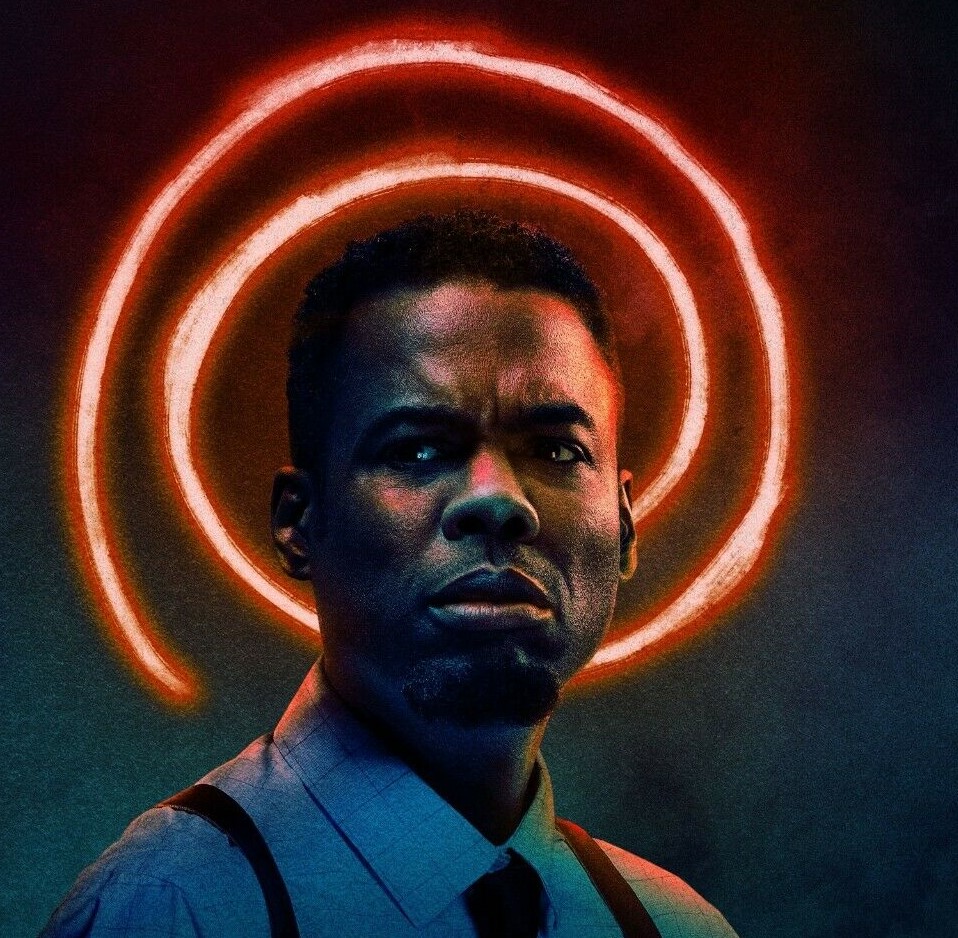
Spiral: From the Book of Saw (2021)

I was never a big fan of torture porn nor for that matter of Chis Rock, too loud and brash for my liking, but oddly enough they make a compelling combination in this unusual idea for a reboot. This is pretty much a police procedural, corruption the background beat, with torture – or at least the victims – providing the clues. I was astonished to realize Rock (Bad Company, 2002) is now in his mid-50s and that could certainly account for the loss of some of his manic energy but the rest I have to admit is down to the emergence of a genuine acting talent.

Like the Russell Crowe character in American Gangster (2000) or Al Pacino (1973) in Serpico he is what cops appear to hate – incorruptible – so he is loner detective Zeke Banks until newbie detective William Scheck (Max Minghella) is forced upon him. Whatever horrific crimes are now being committed appear to point to a past when Banks’s father Marcus (Samuel L. Jackson) was king cop. and to his relationship with Zeke’s current boss (Marisol Nichols).

You could view this as a cynical attempt to revive a series well past its best, and these genre mash-ups rarely work, but in this case, mostly thanks to Rock, it has all the makings of an entirely new series.

As ever, the deaths are inventive and gory. But the gory bits are well sign-posted so you can skip past them and catch up on the detective elements. Max Minghella (Horns, 2013), who has been off the movie screen for over half a decade, makes a good comeback and for once a Samuel L. Jackson character has some depth. Marisol Nichols makes a strong impression also, given that she had mostly been a television player. Perhaps as interesting as the jump taken by rock is that director Darren Lynn Bousman, who has three previous Saw outings in his portfolio, has not just managed to refresh the idea but devoted as much attention to the various detectives as to the gore.

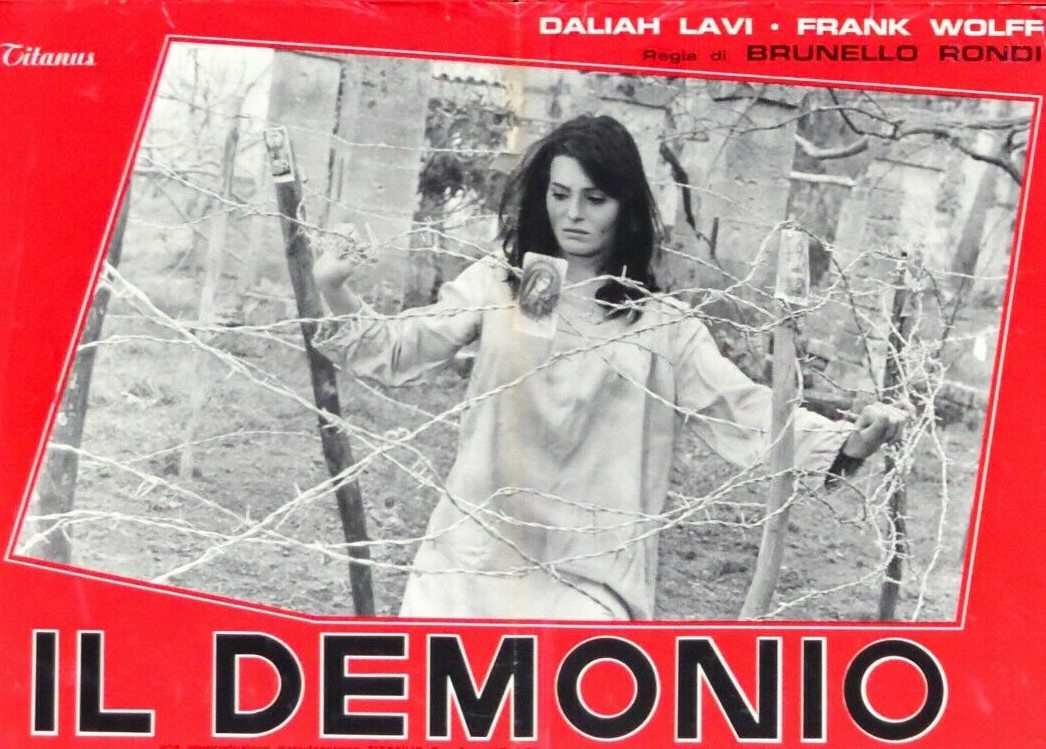
The Demon (1963) *****

I was riveted. Never mind the spider-walk, this is one of the most extraordinary films I have ever seen. Highly under-rated and largely dismissed for not conforming to audience expectation that horror pictures should involve full moons, castles, darkness, fog, costumes, nubile female victims, graveyards, a male leading character, shocks to make a viewer gasp, and the current trend for full-on gore. So if that’s what you’re looking for, give this a miss. Even arthouse critics, spoiled by striking pictures by the Italian triumvirate of Fellini, Visconti and Antonioni, were equally scornful. For the most part this takes place in broad daylight and is set in an impoverished town in the Italian mountains where primitive farmers till the soil with horse and plough and water is collected in buckets from the river.

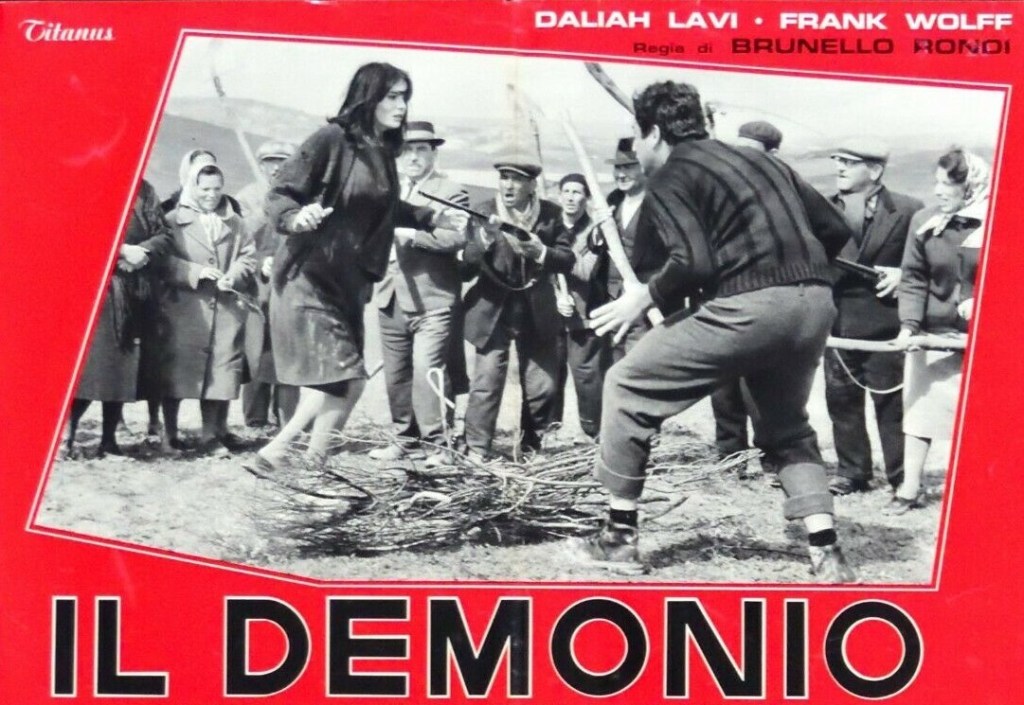
One of the most striking aspects of the picture is that it creates its own unique universe. The townspeople are both highly religious and deeply superstitious, every traditional Catholic ceremony matched by age-old ritual. Even some of the formal traditions seem steeped in ancient belief, sinners marching up a steep hill with people being scourged or carrying a heavy rock, in a convent the tree of a suicide covered in barbed wire. At a wedding in a church, how low the candles flicker is deemed to indicate the length of the marriage. A wedding night rite involves shoving a scythe under the bed to cut short Death’s legs with the bedspread covered in grapes – to soak up evil and discord – arranged in the form of a cross to act as bait for bad thoughts and poison them before they can cause the couple harm. When the people run through the town brandishing torches it is not, as would be genre tradition, to set fire to a castle but to vanquish evil from the air.

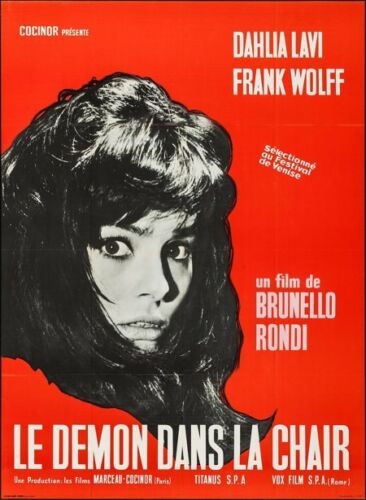
French poster.

It is filmed in austere black-and-white. In the Hollywood Golden Era of black-and-white movies, lighting and make-up transformed heroines, rich costumes enhanced background. Here, if the heroine is wearing make-up it’s not obvious and the only clothes worth mentioning are a priest’s robes or a plain wedding dress. Otherwise the most arresting feature is the stark brightness against which the black-dressed figure of the heroine Puri (Daliah Lavi) scuttles about.

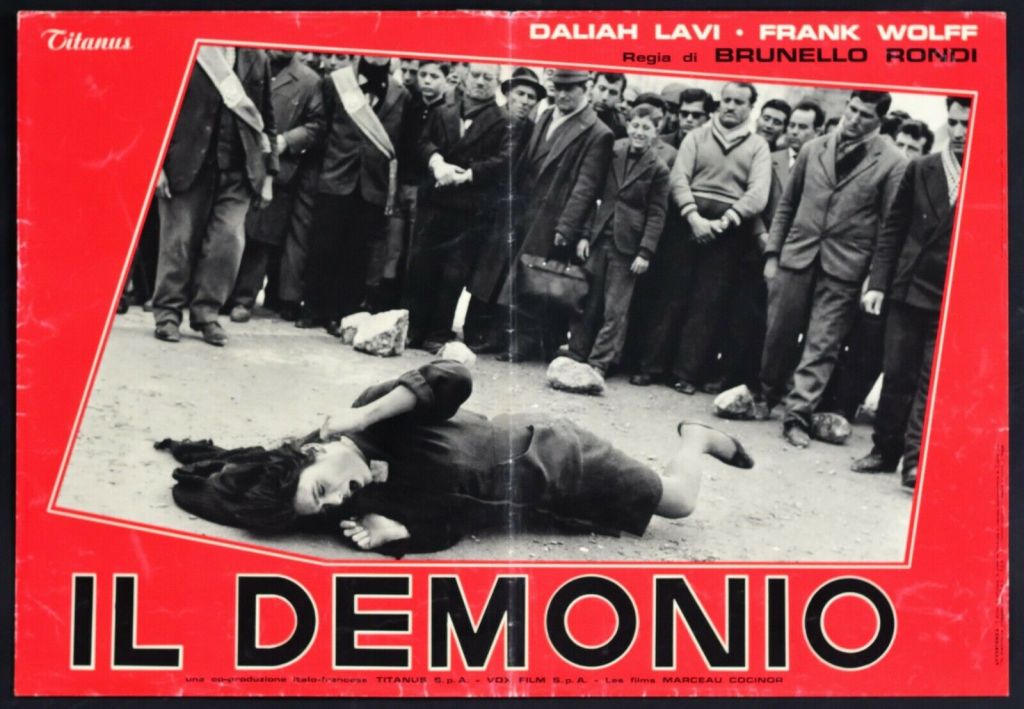
And although there are no jump-out-of-your-seat shocks, there are moments that will linger on in your mind, not least the heroine enduring a vicious extended beating from her father, an exorcism that turns into rape and (Exorcist-fans take note) a spider-walk, the young woman’s torso thrust up high on elongated arms and legs. Virtually the entire success of the picture relies on atmosphere and in places it is exquisitely subtle, the audience only realizing she is being raped by the look on her face.

The picture opens with a dialogue-free scene of stunning audacity, foreshadowing the idea from the start that image is everything. Puri pierces her chest with a needle, cuts off a chunk of her hair to mop up the blood, throws the hair into the oven and rams the crisp remains into a loaf of bread. Not to be consumed, as you might imagine, but as a tool of transport. Shortly after, having failed to seduce Antonio (Frank Wolff), she tricks him into drinking wine infused with the ashes of her bloodied hair, bewitching him, so she believes, to abandoning his betrothed. In an echo of a Catholic sacrament she shouts, “You have drunk my blood and now you will love me, whether you want to or not.”  

The next morning when collecting water at the river she has a conversation with a boy Salvatore, only to discover he has just died. His death is blamed on her because his last words were a request for water, which she is judged to have denied him. She is beaten by women. She is feared by everyone in the village, her family tainted with the same brush, wooden crosses nailed to their door. She is not a ghostly figure, flitting in and out of the townspeople’s lives, an apparition tending towards the invisible, but fully formed, highly visible in her black dress and anguished expression, doomed by her often vengeful actions and forceful words.

Much of the film involves Puri being beaten or chased or captured, at one point trussed up like a hog. Attempts to exorcise her, whether pagan or Catholic, focus on getting the demon to speak his name. The ritual performed by heathen priest Guiseppe involves blowing on a mirror before taking on sexual aspects which culminate in rape. The Catholic version in a church in front of her family is primarily, as it would be in The Exorcist, a duel between the priest and whatever possesses her.

Movie producers who took one look at the beauty of Palestinian-born Daliah Lavi (Blazing Sand, 1960) thought she would be put to better use in bigger-budgeted pictures made in color that took full advantage of her face and figure. So they stuck her in a series of hardly momentous movies such as The Silencers (1966) and Some Girls Do (1969). they should be ashamed of themselves for ignoring her astonishing acting ability. And much as I have enjoyed such films, I doubt if I could watch them again without thinking what a waste of a glorious talent. This is without doubt an acting tour de force, as she alternatively resists possession and adores the being who has taken hold of her mind. She dominates the screen.

The rest of the mostly male cast are dimmed in comparison, as if overawed by the power of her personality. Future spaghetti western veteran Frank Wolff (Once Upon a Time in the West, 1968) comes off best. Director Brunello Rondi (Run, Psycho, Run, 1968) is better known as a screenwriter for Federico Felllini. He made few films, none matching this in scope or imagination, perhaps as a result of the picture not receiving the praise it deserved. Even now it does not have a single critical review on Rotten Tomatoes.

One other point: you may have noticed that in general the proclivities of male horror characters are never in need of psychological explanation. Nobody considers that the Wolfman must have suffered from childhood trauma or that a vampire drinks blood because he was a rejected suitor. Strangely enough, as would be the case in The Exorcist and other instances of female possession, psychiatry is usually the first port of call and here all reviews I have read implicitly see Puri’s actions as based on sexual inhibition and rejection by Antonio.  

I saw this on an old DVD but you can catch it for free on Youtube.

Current Cinema Catch-Up 1 – Nomadland, Judas and the Black Messiah, Godzilla vs. Kong

Before the pandemic and before I started writing this Blog I used to go to the cinema once a week on a Monday, normally catching a double-bill of my own choosing, and occasionally lucky enough to watch three movies in a day. Since cinemas re-opened in my neck of the woods in mid-May I’ve found it impossible not to return to my old habits. So here’s my first triple-bill.

Nomadland  (2020) ****

Easy Rider meets The Grapes of Wrath except in both these cases the travellers had a distinct destination in mind. Like the title implies, the characters in Nomadland are going nowhere, and often just round, though somewhat contentedly, in circles. Deservedly winning Oscars for Best Picture, Best Actress Frances McDormand and Best Director Chloe Zhao, this not so much invests in diversity but in a world we never knew existed, of people who live out their lives in the backs of vans and trailers. In a previous generation, they might be deemed trailer trash, but that’s not the case here. They may be humbled but they are not unprincipled.

Recently widowed Fern (Frances McDormand) takes to the road after unemployment closes down her small town and temporary work at the local Amazon depot dries up  after Xmas. Considering herself “houseless” rather than “homeless” Fern finds herself involved in a peripatetic community of like-minded individuals, some drifting due to circumstance, others wanting to live out their last years as sight-seers. It’s not a drama and it hardly even qualifies as a docu-drama because virtually nothing happens but it is an eye-opener, not just for the visuals but for the way it explores the inherent loneliness in society. Once she has a taste for the road, Fern spurns every opportunity to settle down. The characters encountered are definitely originals and have the feel of genuine nomads – Swankie and Linda May certainly are –  the camera just happened to catch as it tracked by.

A true original with McDormand – her third acting Oscar after Fargo (1996) and Three Billboards Outside Ebbing, Missouri (2107) plus another one as producer here – giving a tremendous performance as a passive individual surrendering, despite occasional indignity and hardship, to the joys of roaming.

Judas and the Black Messiah (2021) ****

Rather than face a jail sentence. car thief Bill O’Neal (LaKeith Stanfield) turns FBI informant and infiltrates a Black Panther group led by Fred Hampton (Daniel Kaluuya). Spurred on by FBI controller Roy Mitchell (Jesse Plemons), O’Neal’s work has disastrous consequences.

As a devastating expose of the criminal activities undertaken by the world’s highest- profile criminal-catching operation, the FBI,  this is a first-class procedural type of picture, where, courtesy of the suspense created by director Shaka King (Newlyweeds, 2013), you find yourself rooting for O’Neal as he comes close to being discovered. But it is also grounded by an impeccable performance by Kaluuya (Queen and Slim, 2019) who portrays Hampton as a gentle soul, shy with women, but with a gift for public speaking that rouses a put-upon generation.

The Black Panthers are shown as instigators of genuine social reform, setting up medical programs etc, rather than just gun-toting rebels. Kaluuya won the Oscar for Best Supporting Actor but in truth he steals the show from the lead Stanfield.  

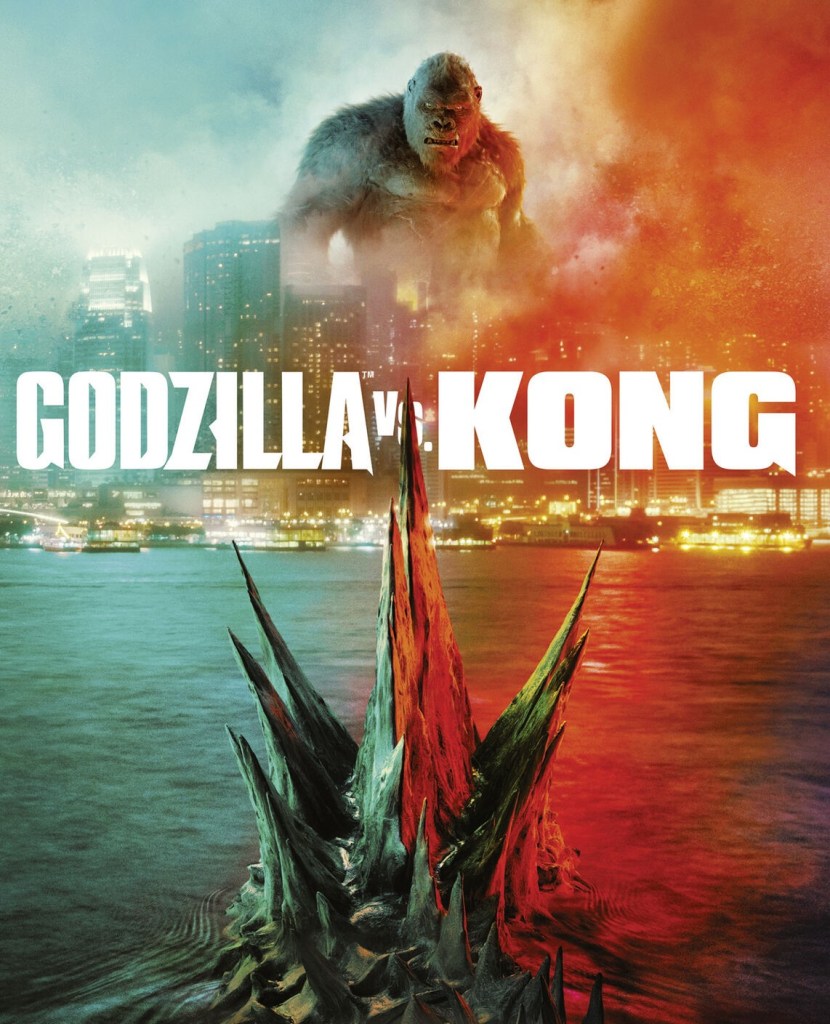
Godzilla vs. Kong (2021) ***

If you can make out what is going on in among all the noise and implausibilities then there is a halfway decent summer blockbuster to be enjoyed. The sci-fi gobbledegook spouted by scientist Nathan Lind (Alexander Skarsgard) leads Kong-whisperer Madison (Millie Bobby Brown) and Ilene (Rebecca Hall) into harm’s way, so far beneath the earth you are likely to poke up in Australia. Naturally, the two ancient behemoths go head-to-head while destroying everything in sight.

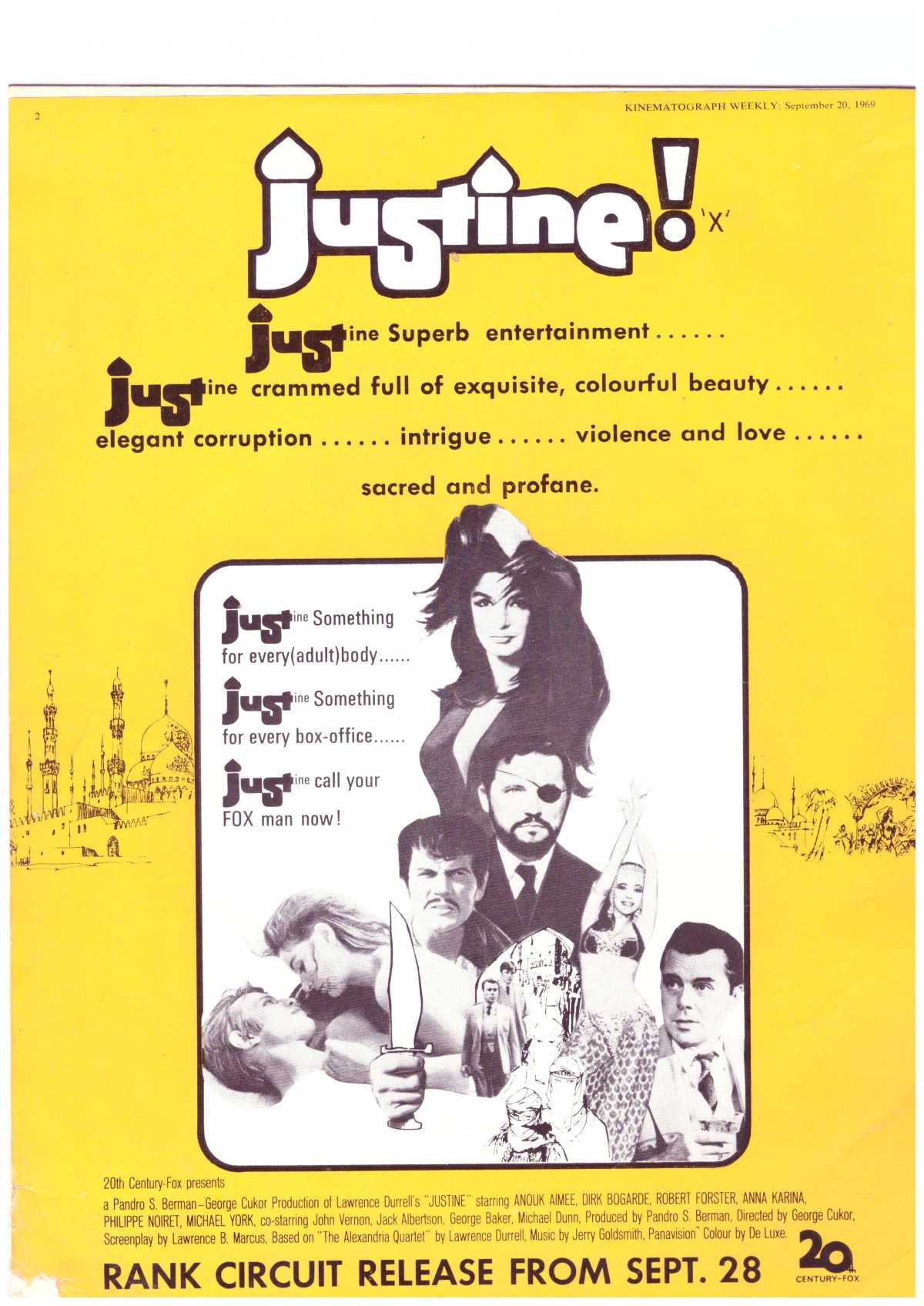
Justine (1969) **

In pre-WW2 Alexandria in the Middle East with the British on the point of departing, impoverished young poet Darley (Michael York) becomes the latest plaything for Justine (Anouk Aimee), wife to Egyptian banker Nessim (John Vernon) who encourages her multiple relationships in order  to smooth the path for his gun-running activities. Matters are complicated since Darley is having an affair with belly dancer Melissa (Anna Karina) and some of Justine’s other lovers float in and out of the picture. Political intrigue which might have anchored the movie also shifts in and out of view. In this cross-cultural hotchpotch various groups – Jews, Moslems, Coptic Christians – look to seize control.

Cluttered is the best way to describe this. Despite excellent performances by Anouk Aimee and Dirk Bogarde it is still a mess. Whatever story there was has been buried by “atmosphere” and too many characters adding too little to the overall outcome. Entangled lives end up being just that – wrapped around each other with nowhere to go. Over-emphasis is placed on the louche background, nightclubs featuring cross-dressing belly dancers and a  massive carnival. Luckily, we can’t entirely blame venerated Oscar-winning director George Cukor (My Fair Lady, 1964). He was picking up the pieces after Twentieth Century Fox fired Joseph Strick (Ulysses, 1967) but was stuck with a lot of footage that had already been shot and a screenplay that didn’t make much sense.

When you realize the movie encompasses religious prejudice, racism, same sex arrangements, incest, child prostitution, nymphomania, revolution, and police and political corruption and is hardly able to give any of these themes more than a fleeting glance you soon realize this is one of those films that is just going to go on and on until sudden conclusion rears up and all is revealed. And that would be fine since many movies of this decade meander at length and sometimes appear to be completely lacking in plot or logic, but whose flaws are more than compensated by outstanding direction or performances. Alas, even the stunning evocation of this city and period cannot save the day.  

And it would have worked if Justine had been a femme fatale of the film noir school or if the politics been more grounded, but that doesn’t occur either and although Justine does have many influential men in her clutches you could hardly say that Darley is one of them. His role is merely to act as narrator and apologist.

One last point which has little to do with the film. In this film and in the same year’s Topaz, John Vernon gives very good dramatic performances, in both cases, coincidentally, wounded emotionally. So what happened that he is mostly remembered for villainous tough-guy roles from the following decade?

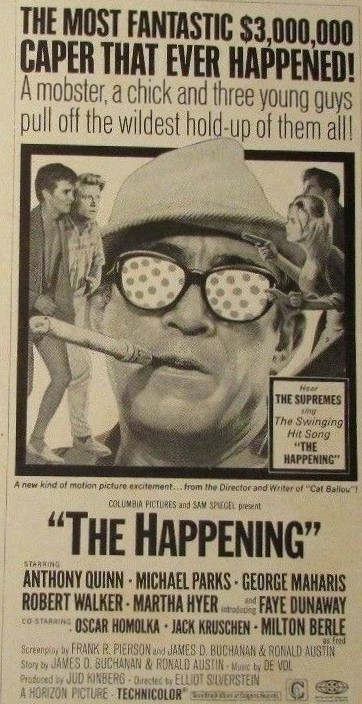
The Happening (1967) ***

Poor casting blows a hole in this picture’s great premise and only an excellent turn by Anthony Quinn as an indignant kidnappee prevents it achieving “so-bad-it’s-good” infamy. In fact for the first third of the movie you could pretty much guarantee it’s going to be a stinker, so dire are the performances of the quartet of hippy kidnappers. Only when the camera cuts  Quinn a bit more slack and the script skids into a clever reversal does the movie takes flight although still hovering dangerously close to the waterline.

Faye Dunaway (Sandy), all blonde hair and pouting lips, looks for the most part as though she has entered an Ann-Margret Look-A-Like Competition. Michael Parks (Sureshot) resembles a fluffy-haired James Dean. George Maharis is condemned to over-acting in the role as ringleader Taurus while Robert Walker Jr. as Herby does little more than mooch around. None shows the slightest spark and behave virtually all the time as if they are in on the joke.

For no special reason, beyond boredom, they kidnap hotel tycoon Roc (Quinn) hoping to make an easy score with the ransom. Unfortunately for Roc, none of those he is counting on to cough up the dough – wife Monica (Martha Hyers), current business partner Fred (Milton Berle), former business partner Sam (Oscar Homolka) and offscreen mother – will play ball. In fact, Monica and Sam, enjoying an affair, would be delighted if failure to produce a ransom ended in his death.

Eventually, while the movie is almost in the death throes itself, Roc fights back, using blackmail to extort far more than the kidnappers require from his business associates and taking revenge on his wife by setting her up as his murderer. It turns out Roc is a former gangster and well-schooled in the nefarious. So then we are into the intricacies of making the scam work, which turns a movie heading in too many directions for its own good into a well-honed crime picture.

Quinn is the lynchpin, and just as well since the others help not a jot. From a kidnappee only too willing to play the victim in case he endangers wife and son, he achieves a complete turnaround into a mobster with brains to outwit all his enemies. But in between he has to make a transition from a man in control to one realizing he has been duped by all he trusted.

Director Elliott Silverstein, who got away with a lot of diversionary tactics in Cat Ballou (1965) – such as musical interludes featuring Stubby Kaye and Nat King Cole – essays a different kind of interlude here, fast cars speeding across the screen at crazy angles. But that does not work at all. Probably having realized pretty quickly that he can’t trust any of the young actors, he mostly shoots them in a group.  

Some scenes are completely out of place – a multiple car crash straight out of It’s A Mad, Mad, Mad, Mad World, for example. But occasionally he hits the mark in ways that will resonate with today’s audience. Sureshot, confronted by a policeman, refuses to lower his hands in case he is shot for resisting arrest. Although drug use is implied rather than shown, Sureshot is so stoned he can’t remember if he has actually made love to Sandy. And like any modern Tinderite, neither knows the other’s name after spending a night together.  

The strange thing about the youngsters was that they were not first-timers. Dunaway had made her debut in Hurry Sundown (1967). George Maharis had the lead in The Satan Bug (1965) and A Covenant with Death (1967), Michael Parks the male lead in The Idol (1966) and played Adam in The Bible (1966) and although it marked the debut of Robert Walker Jr. he had several years in television. Oh, and you’ll probably remember a snappy tune, the music more than the lyrics, that became a single by The Supremes.

I’ve got an old DVD copy but I don’t think this is readily available but you can catch it for free on YouTube, although it’s not a good print. Via Google you should be able to see The Supremes performing the title song.

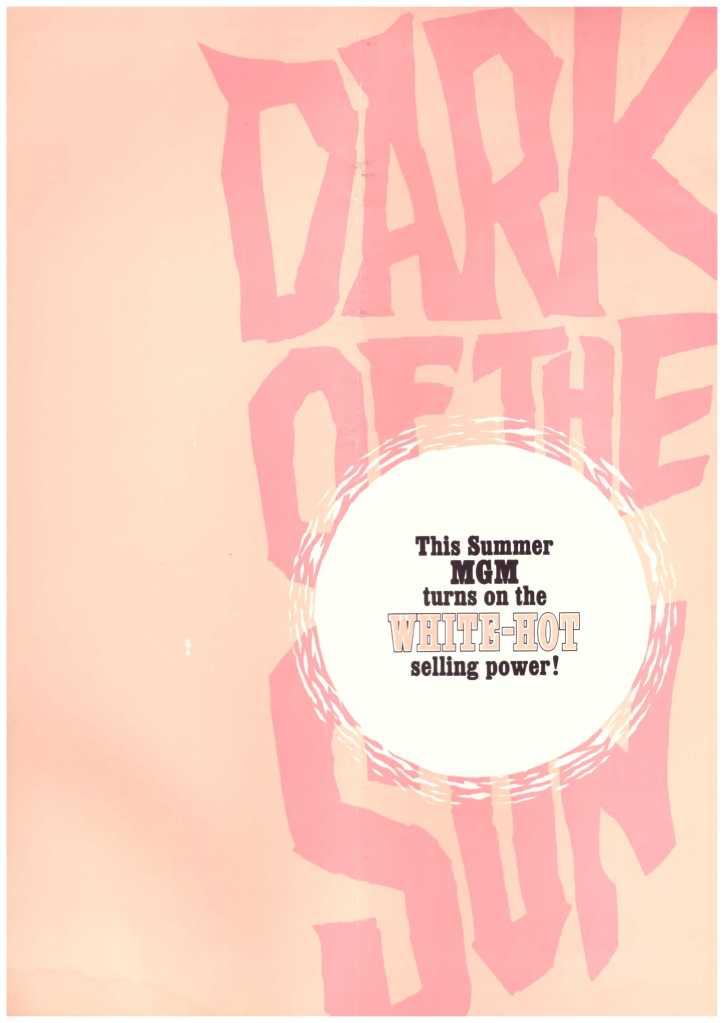
Behind the Scenes: Selling Tough Guys – The Pressbook for “Dark of the Sun”

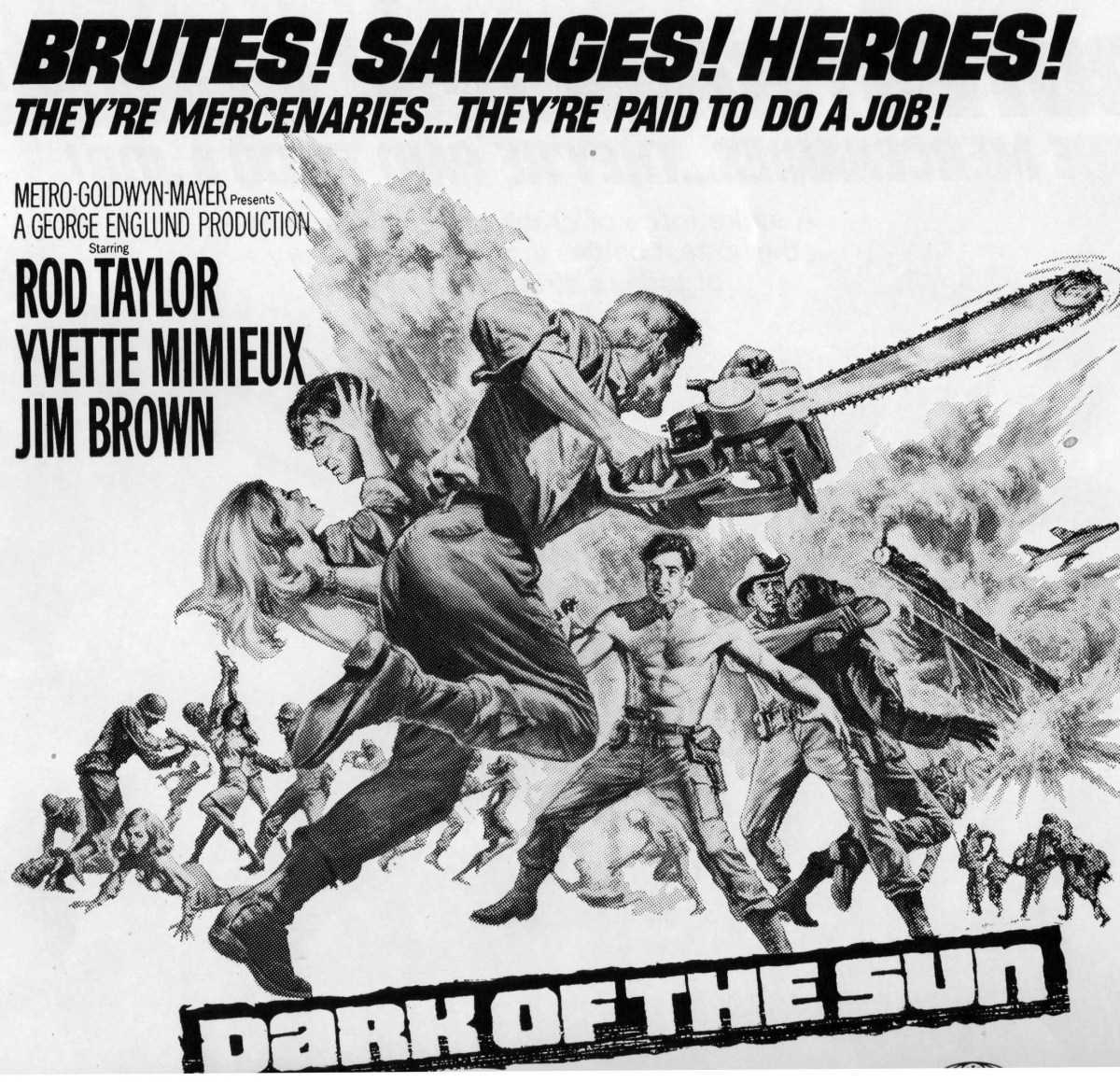
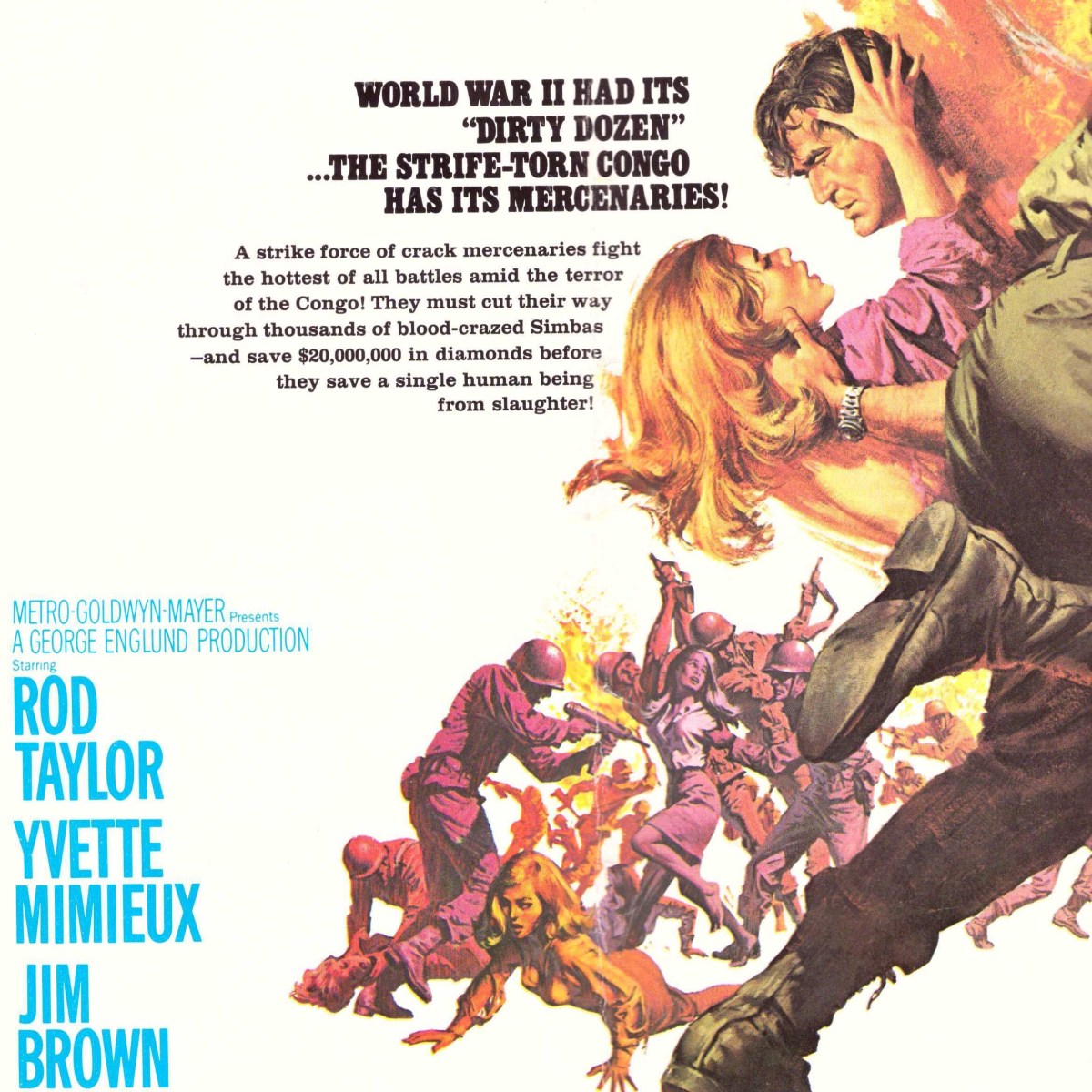
Mercenaries rampaging through strife-ridden Africa, chainsaw the weapon of choice, marketing to The Dirty Dozen crowd a formality, but how do you interest the rest of the paying public?

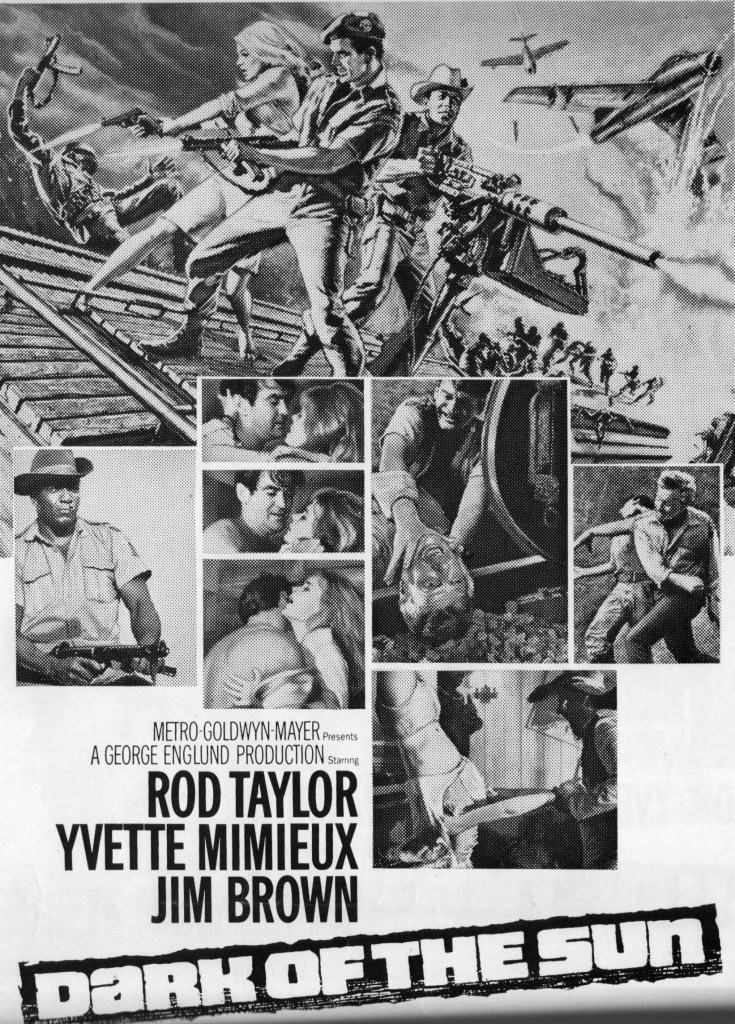
“Bright ideas to boost your box office” as computed by the MGM marketeers in the Pressbook fell into four categories: fashion, jungle, diamonds, and military. Oddly enough, the pick of the bunch was fashion. And not what the chic mercenary was wearing. Instead, the focus was on Yvette Mimieux who “took time off” filming to “model sensational creations by Dorothy McNab of Jamaica Fashions.” This picture is set in the Congo and Jamaica is about 3,000 miles away across an entire ocean so where did Jamaica come into it? Well, it was shot in Jamaica and that appeared excuse enough, and it was hoped that cinemas would link up with department stores showing the seven outfits modelled ranging from casual to elegant evening wear.

Creative license was used here for Mimieux never fought side by side with Taylor and Brown on the top of the train.

The jungle seemed a safer bet so managers were encouraged to kit out doormen and usherettes in jungle outfits while tropical plants and foliage and possibly tropical birds could turn the lobby into a jungle paradise. Local military Army reserve or National Guard units could be persuaded to lend military equipment to add to the display and, as a longer shot, recruitment agencies might choose to get involved. Since the main thrust of the picture involves diamonds the marketeers suggested linking up with large jewelry store chains to give away cheap industrial diamonds prior to launch or as a competition.

Since Toyota land cruisers play a significant part in the movie, MGM had set up a promotional tie-in with 1500 dealers coast to coast with the potential for one of the vehicles mounted on a ramp in front of the theater drawing attention both to the picture showing inside and the car itself. In addition, discounted tickets to members of four-wheel drive clubs might bring in customers. More standard material included an original soundtrack album and a paperback book.

Much of a Pressbook’s job was to provide snippets of information that could be fed to local journalists. Former boxer Rod Taylor did some of his own stunts, 6-foot 3-inch 240lb former gridiron star Jim Brown needed his own bed flown in to location, the temperature was so high the actual film had to be cooled down in giant vats of ice, and certain sequences used live bullets. The giant steam locomotive was a “55” built in 1902 and brought out of retirement.

And there was no shortage of usable quotes. “I don’t believe in love at first sight,” commented Mimieux; “I was warned off directing by some of the finest directors in the business,” said director Jack Cardiff.

Dark of the Sun / The Mercenaries (1968) ****

Rod Taylor made a brisk transition to two-fisted action hero from his previous forte of drama (Hotel, 1967) and comedy foil to Doris Day (The Glass Bottom Boat, 1966) in this violent adventure set in the Congo in the early 1960s. As Captain Curry, assisted by sidekick Sgt Ruffo (Jim Brown) and 40-man local outfit Striker Blue Force, he leads an ostensibly humanitarian mission to rescue settlers cut off by the Simba rebels as a cover for collecting $50 million in diamonds. The loot is essential to save the toppling regime of President Ubi (Calvin Lockhart).  The only feasible transport is train. There is a three-day deadline.

Problems immediately ensue, not least a clash with Capt. Heinlein (Peter Carsten), former Nazi leader of Blue Force, who is even more ruthless than Curry, mowing down two native children who stray too close to the train, and apt to take a chainsaw into a fistfight. The train is attacked by a United Nations plane and on reaching its destination Curry is forced to wait three hours until the time-controlled giant diamond vault can be opened, giving the rebels time to catch up. Then it’s an ongoing battle of one kind or another.

Although the worst of the violence is carried out by the rebels – rape, torture and massacre – a core element of the drama is how a lifetime of killing has affected Curry. Ruffo, a man of principle who grew up in a primitive tribe, acts as his conscience – and that of the audience – spelling out how violence is more than a money-making scheme and essential to upholding order in terrorist times. Curry has some redemptive features, saving widow Claire (Yvette Mimieux) from the rebels and then from Heinlein, sending alcoholic Doctor Wreid (Kenneth More) to help a woman give birth, and eventually acknowledging his strong bond with Ruffo. Although Curry would like to think he is the opposite of Heinlein, they are carved from the same stock and when the savage beast is loose blood lust takes over.  

Mimieux is more or less there as bait, tempting Heinlein and any rebels in the vicinity, but coming into her own in convincing Wreid, paralytic by this stage, to carry out a section on the pregnant woman, and as a reminder of civilization for Curry.

The action scenes are terrific, especially the plane strafing the train, and there is a particularly good ruse, instigated by Ruffo, to outwit the enemy. Hollywood never managed to portray the terror of the native Vietnamese on being overrun by Viet Cong, and this film could easily be that substitute, especially when some of the rescued white settlers realize they will not escape.

This is not one of those films like Born Free (1966) or Out of Africa (1985) which are scenic odes to the continent, in part because the picture was shot in Jamaica, but in the main because director Jack Cardiff (The Long Ships, 1964) chooses to focus on the mechanics of the mission. And in so doing, he writes a love letter to a train. There had been a mini-vogue for war movies set on trains – Von Ryan’s Express (1965) and The Train (1965) come to mind – but none reveal an adoration for the power and perhaps the beauty of the locomotive. Every move it makes (to steal an idea from pop group The Police) is noted on screen and on the soundtrack, the hissing, the belching smoke, the wheels, cabooses, engine, the coupling and uncoupling of links, the screech of brakes, and various tracking and crane shots as the train snakes its way through enemy terrain.

Rod Taylor is excellent in the kind of role he is made for. Jim Brown in a major step up the billing after The Dirty Dozen (1967) is surprisingly good in a part that calls as much for reflection as action. Peter Carsten is the all-time Nazi scum. Yvette Mimieux, who had partnered Taylor in The Time Machine (1960), is also in transition mode, her role a meatier dramatic departure from the likes of the innocuous Monkeys, Go Home! (1967). In what was essentially his last major role – even though it doesn’t amount to much in screen time – Kenneth More wavers considerably from his stiff-upper-lip default.

The score by Jacques Loussier is particularly good, as Quentin Tarantino attested when he incorporated elements of it for Inglorious Bastards, which was a boon for the composer since up till then he was best remembered for the music accompanying the advert for Hamlet cigars. You might get a laugh out of the screenplay credits. Quentin Werty (i.e. Qwerty, the first six letters on a typewriter) the pseudonym of Ranald McDougall, Oscar-nominated for Mildred Pierce (1945), co-wrote the screenplay, adapted from the novel by Wilbur Smith, with television writer Adrian Spies.

An outstanding example of the all-out action mission picture, its occasional outdated attitudes do not get in the way of the picture and half a century later from what we now know of how wars are fought the levels of violence will appear realistic rather than exploitative.   

Catch-Up: This completes a Rod Taylor mini-season – previously features in the Blog are The Liquidator (1965), The Glass Bottom Boat (1966) and Hotel (1967).

Catch it on Amazon Prime.

Pressure Point (1962) ****

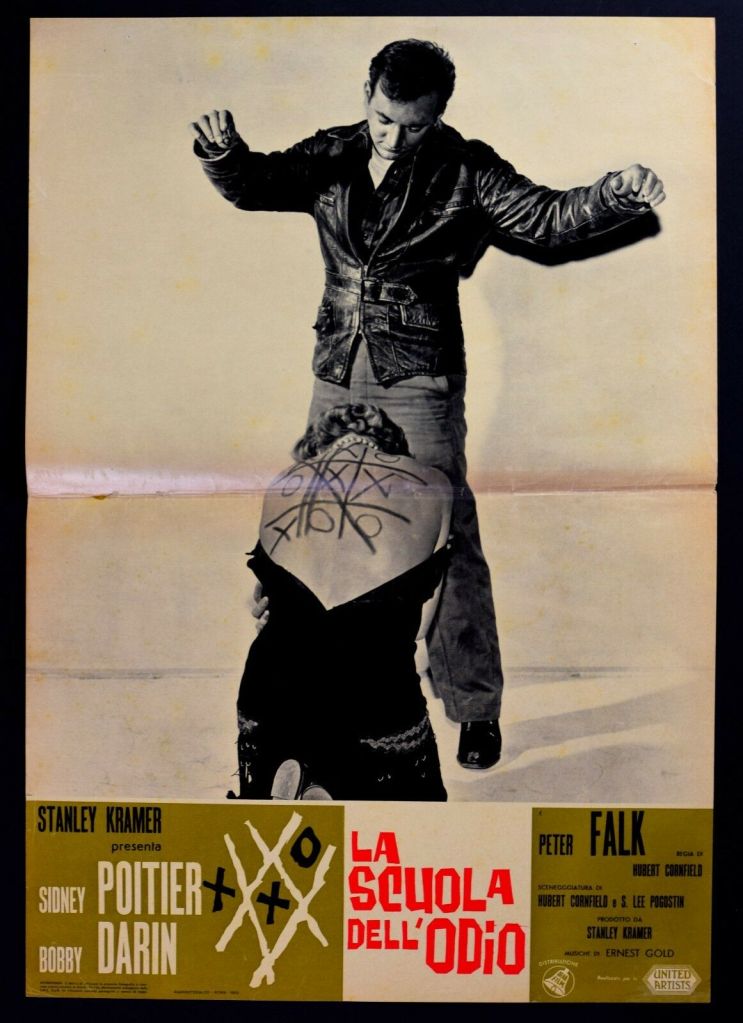
Central to this under-rated tale of psychopathy and racism is one extraordinary scene, possibly the most exceptional bar-room sequence ever filmed. In the annals of imaginative repulsion, it ranks alongside the rape committed by Alex and his “droogs” in Stanley Kubrick’s A Clockwork Orange (1971). It begins with mere intimidation as an unnamed young man (Bobby Darin) begins to etch into a bar counter the lines and symbols of Tic-Tac-Toe (a.k.a. Knots & Crosses or Noughts and Crosses). Discovering tins of paint, the man and his gang proceed to cover the entire bar – floor, walls, ceiling, even tables – with the same symbols.

The humiliation is ratcheted up a notch when the gang leader forces tavern owner (Howard Caine)  to lie on the floor behind the counter where he cannot see the bar hostess (Mary Munday), rigid with fear, being tormented. Using lipstick rifled from her handbag, the man decorates her face in the same fashion before pulling down the back of her dress and doing the same there. Fortunately, the rest of the scene, presumably ending in rape, is left to our imagination.

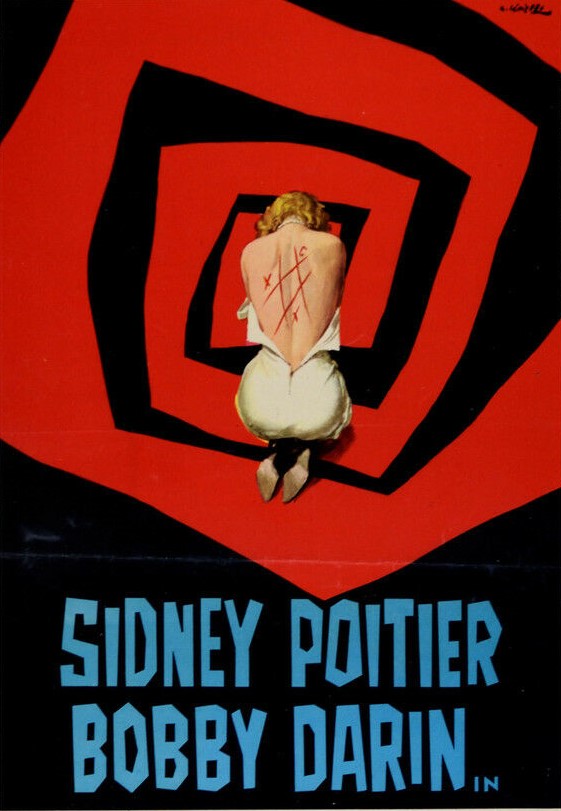
Italian poster showing image from the Tic-Tac-Toe scene. A variation of this was shown in the main image which removed the domineering man and concentrated on the humiliated woman.

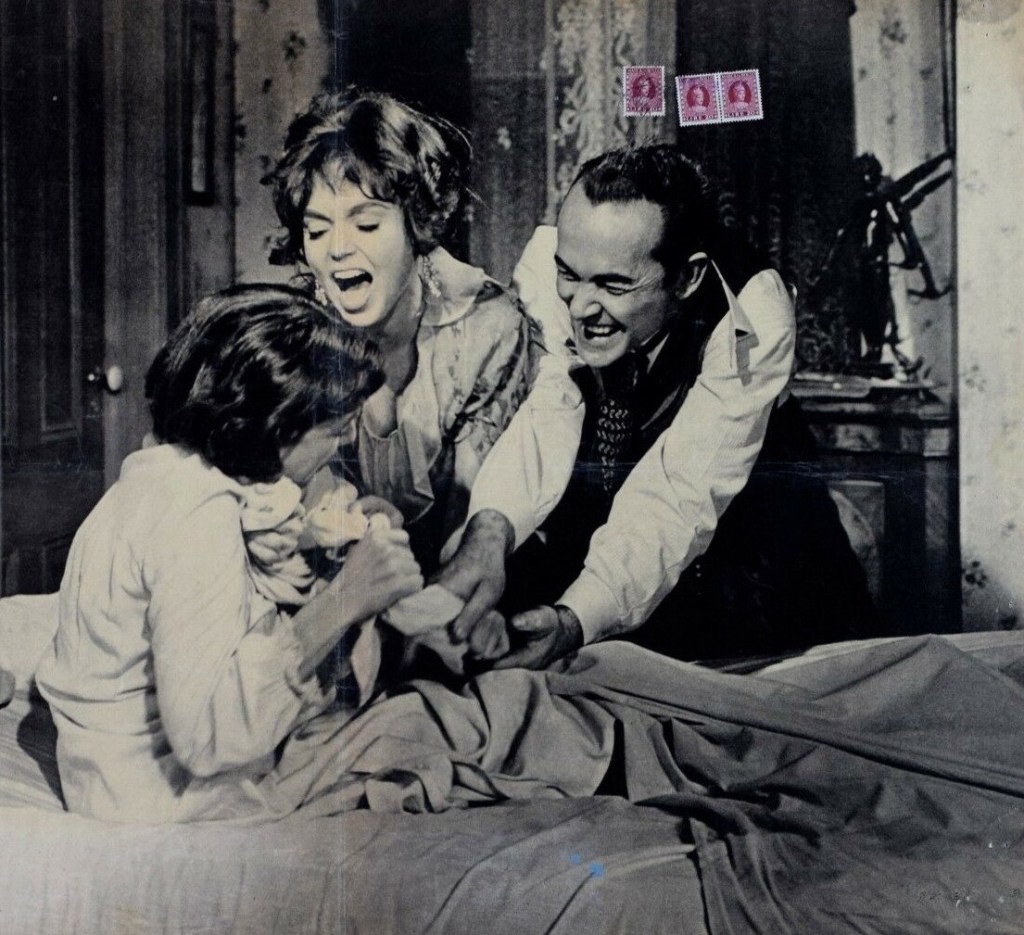
Other potent scenes show how the man arrived at his crazed state, smothered with affection by a weak mother (Anne Barton) who has taken to bed in order to escape his drunken, raucous father (James Anderson) who taunts his ineffective wife by flaunting in her face his casual pick-ups and making love to them in the same room. Indicative of the lonely child’s disturbed personality is that when he invents an imaginary playmate, it is to have someone to subjugate, making his fictional friend lick his boots.

Imprisoned during the Second World War for sedition, the man, suffering from blackouts and nightmares – in which he imagines himself clinging to the edge of a giant plughole before being swept away by a torrent of water from the taps – becomes a patient of a young, also unnamed, doctor (Sidney Poitier) whom he subjects to racial abuse.  The doctor, physically bigger and more imposing than the patient, would like to simply give him a good thumping, but his profession necessitates that he treats this objectionable person as just another patient. And eventually they come to enough of a concord that the patient accepts treatment although the doctor suspects that his core personality has not changed.

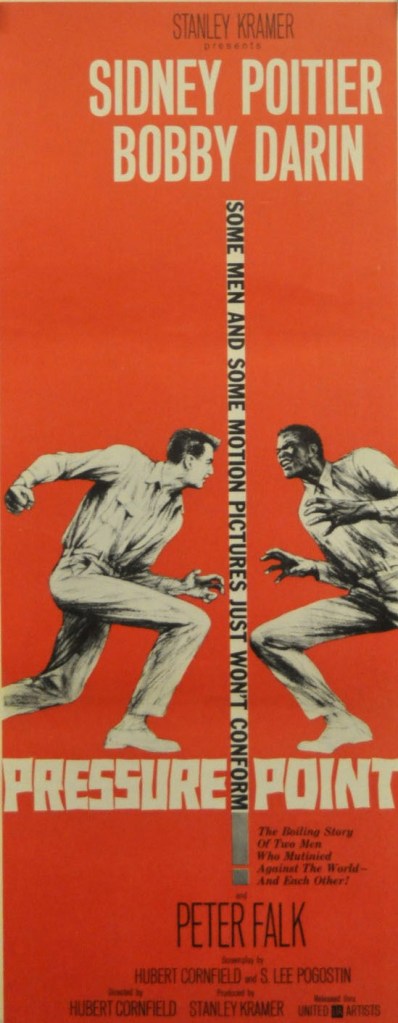
The U.S. poster was different to that used in Italy. This is pretty much a straight rip-off of “The Defiant Ones” (1958).

The movie is layered with themes other than psychopathy and psychiatry. While the racist element is to the fore, including the doctor’s need to prove himself in a white man’s world, and the lack of diversity in this particular medical field at that time, director Hubert Cornfield also explores the growth of right-wing extremism among the disaffected who see no contradiction in still espousing traditional American values, for example giving the Nazi salute while singing in all sincerity the national anthem. The African American doctor has to come to terms with lack of objectiveness when dealing with such an abhorrent person.

The movie flits between scenes between the two protagonists staged in a stagey manner and  expressionistic almost dreamlike sequences representing the patient’s upbringing such as being menaced by his butcher father among the swinging carcasses of the store. The patient flashbacks are shown without dialogue, explanation given in voice-over by either the patient or the doctor.

The father torments the mother by bringing a casual pick-up to their bedroom.

Reliance on visual dexterity, however, detracts from the tension and director Hubert Cornfield (The 3rd Voice, 1960) is also hampered by an unnecessary framing device which results in the story being told in flashback – leading to a conflation of flashbacks: the older Poitier explaining his earlier problems dealing with a difficult patent and listening in turn to the patient’s own life story. So the pressure indicated by the title is often undercut and does not build as much as you might expect. Critical reaction in those days pivoted on the racism elements, but a contemporary audience is almost certainly going to be as influenced by sequences involving the patient, so the picture automatically becomes more involved and Cornfield’s visual mastery more appreciated.

You can detect the influence of producer Stanley Kramer. In his capacity as director he had explored psychiatric therapy and anti-semitism in Home of the Brave (1949) and racism in The Defiant Ones (1958) also with Poitier. As producer he was responsible not only for selection of the original material, based on a short story The Fifty-Minute Hour by Robert M. Lindner, but also imposed the framing device, which Kramer wrote. Those scenes relate to another psychiatrist (Peter Falk) coming to a much older and experienced Poitier for advice after hitting a brick wall with a similarly repugnant patient, Poitier telling the story of his treatment of the Bobby Darin patient as a way of showing that even the worst patients are treatable.

This is quite a different Sidney Poitier than you might be used to. Wearing suit and tie, and spectacles, this is a more restrained, measured performance. Poitier’s taboo-busting Oscar nomination for The Defiant Ones had not progressed his career that much, still restricted to starring roles in low-budget pictures. But Kramer broke another taboo in Poitier’s favor with this one, casting him a role not initially written as an African American.

Bobby Darin (Come September, 1961) had parlayed his status as hit recording artist into a burgeoning movie career but does not quite display the menace necessary for a fully-fledged psycho. The likes of Richard Widmark would have been a more convincing adversary. Peter Falk (Machine Gun McCain, 1969) has a small one-tone role. The jazz-nuanced music by Ernest Gold (Exodus, 1961) is worth a listen. And if someone can tell me who designed the striking credit sequence I would be very pleased.

Incidentally, the title of Lindner’s short story is ironic. Patients pay for one hour of a psychiatrist’s time but in reality only receive 50 minutes in order for the professional to achieve a swift turnaround and keep his/her appointment timetable scheduled to the hour. Tic-Tac-Toe, in case you are unfamiliar with this two-person childhood game, consists of drawing lines to create nine squares and filling those with either a zero or a cross. The object of the exercise is to create a complete line of either symbols.

Catch-Up: Sidney Poitier films previously reviewed in the Blog are The Long Ships (1964), The Bedford Incident (1965) and Duel at Diablo (1966).

Discover WordPress

A daily selection of the best content published on WordPress, collected for you by humans who love to read.

The Atavist Magazine

by Brian Hannan

WordPress.com News

The latest news on WordPress.com and the WordPress community.