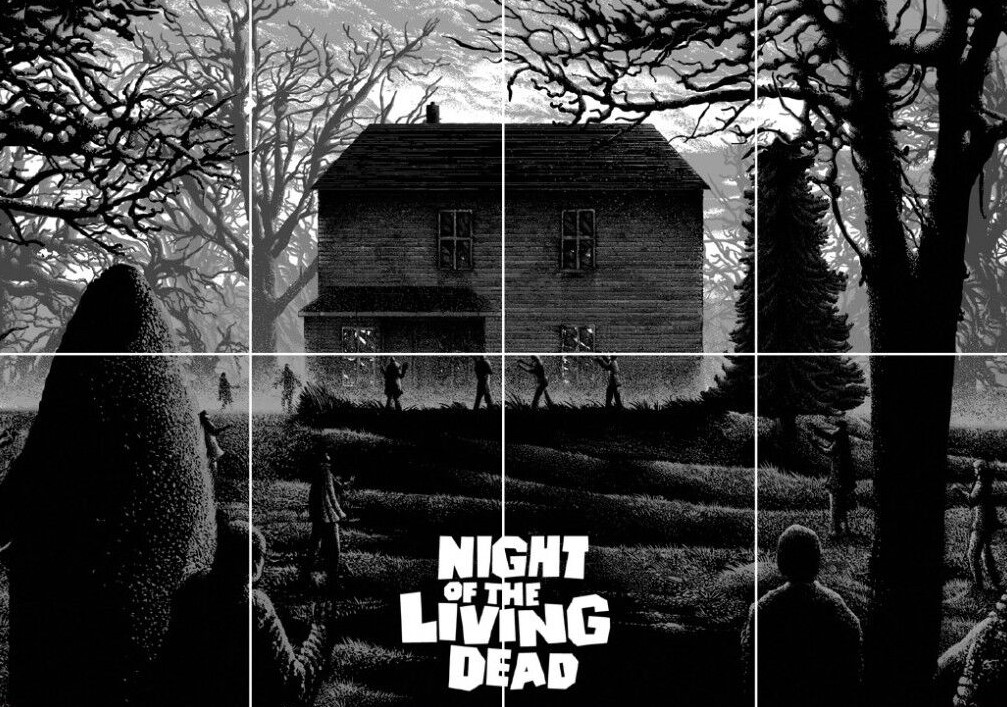
Behind the Scenes: “The Night of the Living Dead” (1968)

Easy Rider, more acceptable artistically, stole Night of the Living Dead’s thunder the following year as the poster boy for a low-budget phenomenon that would, temporarily at least, usher in a new way of Hollywood thinking. But Night of the Living Dead – initially entitled Monster Flick and Night of the Flesh-Eaters – was movie-making as fairy tale, virtually a throwback to the old trope of doughty characters putting on a show in a barn.

Using guerrilla production techniques, the movie took an astonishing six months to make starting July 1967.  Bronx-born George A. Romero specialised in advertisements and industrial shorts through his Latent Image company before branching out in Pittsburgh with some work colleagues from Hardman Associates to form a movie production company Image Ten, the name indicative of the initial ten investors.

But don’t make the mistake of thinking Romero and his gang were movie neophytes out of their depth. Technically, they were pretty accomplished, churning out adverts and shorts at a steady pace, the kind of education the likes of Ridley Scott and Adrian Lyne enjoyed on the London advertising scene. According to Variety, Hardman was “the largest producer of record and radio shows in Pittsburgh…(running) the most completely equipped sound and film studio in the area” while Latent Image was the city’s “biggest producer of video and industrial shorts.”

The principals of both companies proved instrumental to the movie. While Romero took on directing, cinematography and editing duties, the screenplay was down to business partner John A. Russo while another partner Russell Streiner took on the role of producer. Hardman provided actors Karl Hardman, a former RKO contract player, and Marilyn Eastman, who also supervised make-up, costumes and special effects, while Kyra Schon, the dying daughter in the film, was Hardman’s real-life daughter. The rest of the cast were unknowns, Duane Jones in the lead had at least some stage experience, female lead Judith O’Dea had worked with the producers before, while Judith Ridley was a receptionist for the production company. Romance blossomed between O’Dea and Streiner.

Romero’s debut was heavily influenced by Powell and Pressburger’s British bizarre fantasy The Tales of Hoffman (1951) but the final film clearly draws on Richard Matheson’s celebrated 1964 sci-fi novel The Last Man on Earth – filmed in 1971 as The Omega Man and in 2007 as I Am Legend. Where Matheson’s book begins at the end, Romero wanted to show the beginning of how the undead came to rule the world. Since Matheson had used vampires, Romero needed an alternative.

Explained Romero: “I couldn’t use vampires because he did, so I wanted something that would be an earth-shaking change. Something that was forever, something that was really at the heart of it. So I said, what if the dead stop staying dead?” That tapped into the attractive notion of living forever – until you realized what that entailed.
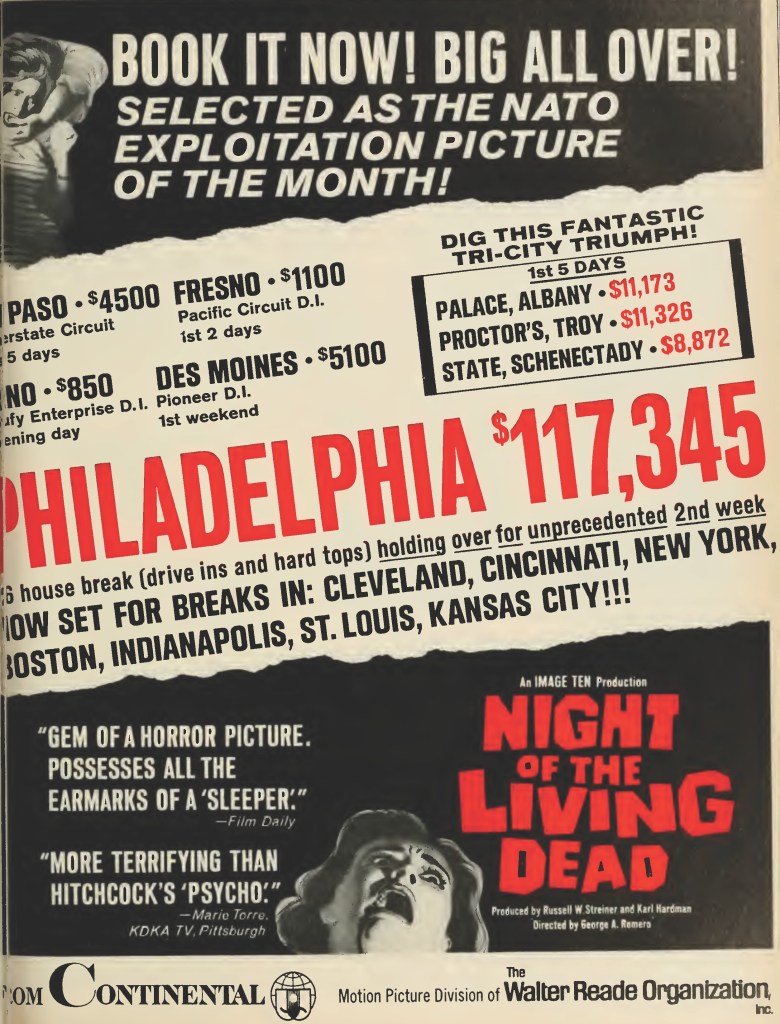
Contrary to expectation – and myth – it didn’t exactly stumble at the box office. A month after initial release its opening salvoes were advertised in “Box Office” magazine (November 25, 1968)
accompanied by some of the better reviews harvested.

Shockerama pictures would be the easiest way to find a foothold on the distribution ladder. Initially devised as a horror comedy it took several drafts, the first couple involving aliens, before arriving at the concept of flesh-eating re-animated corpses.

Ben was originally envisaged as a blue collar truck driver and evolved into the more educated character as a result of rewriting by Duane Jones who objected to playing such a cliché. But improvisation was very much the order of the day. Recalled O’Dea: “I don’t know if there was an actual working script. We would go over what basically had to be done and then just did it the way we each felt it should be done.”

The initial investors ponied up $600 each but that proved insufficient as production developed, the company eventually raising $114,000. (The  average cost of making a movie at that time was $1.6 million.) Budget dictated location be as remote as possible, the main locale a house scheduled for demolition.  Chocolate syrup doubled as blood, human flesh was roasted ham and entrails supplied by one of the actors who was also a butcher. Clothing was anything the cast possessed that they didn’t mind being ripped. Color film was too expensive, and the resulting black-and-white footage has the effect of newsreel, almost a documentary rather than a work of fiction.

Although a myth has arisen that the movie struggled to find its way into the distribution food chain, that was not the case. Studios were desperate to find product and happy to hang their shingle on anything that could keep their clients, cinemas starved of movies, happy. Columbia and American International were both interested, but demanded a happy ending. When Romero stuck to his guns, the movie ended up with the Walter Reade organisation, a noted distributor of foreign and cult pictures, better suited to this kind of fare.

Nor was it sneaked out into cinemas as has been usually assumed. Given that by 1968 cinema managers owners were in part reliant on low-budget shockers, the National Association of Theater Owners instigated a nationwide “Exploitation Picture of the Month” campaign of which Night of the Living Dead was one of the early beneficiaries, as a result of its involvement scooping, for example, $117,000 from 26 houses in Philadelphia. and other pretty decent figures shown in the advertisement above.

Nor did it go out below-the-wire in Pittsburgh. A full-scale black-tie premiere was held on October 1, 1968, at the Reade-owned Fulton attended by Mayor Barr and the city’s safety director Norman Craig and various councillors. It rang a heavy box office bell, knocking up $62,000 – over $500,000 at today’s prices – for 11 theaters, outpointing Rosemary’s Baby (1968) which had played the same houses the week before. The distributor came up with a clever marketing ploy of taking out a $50,000 insurance policy with Lloyds of London against adverse audience reaction.

The film attracted controversy for going out un-rated. There was nothing unusual about that either. Only studios aligned with the MPAA Production Code had to submit their movies for the censor’s rating. Reade, which wasn’t involved in the Code, often imported movies from Europe and part of their attraction was that they were unrated, containing levels of nudity or violence that the official censor at the time would find impossible to pass. Lack of the vaunted Production Code Seal of Approval did not prevent a movie being shown, it just meant certain cinemas would not book it.

Chicago critic Roger Ebert made journalistic hay by complaining that kids were being allowed in to watch the movie. That he might be on hand to witness their shock at the images they saw seems hard to believe since critics usually viewed pictures in advance of opening at special screenings. In any case, in Chicago, Night of the Living Dead didn’t slip through the censorship net, but was passed by the local censorship board. His beef was with them, complaining that while the censors drew the line at nudity they had nothing against cannibalism. And it seems pretty odd that the management wasn’t aware of the film’s shocking content – presumably that being the reason it was booked in the first place – and permitted youngsters to troop in.

Although New York critics gave it the thumbs-down at least the New York Times (Vincent Canby no less), Post and Daily News took the trouble to see it, so it would at least benefit from editorial exposure. The trade press were mixed. While Variety railed that it “set a new low in box office opportunism,” its trade press competitor Box Office reckoned there was “an audience for this particular brand of sadism especially in drive-ins.”

Perhaps surprisingly given critical disapproval Night of the Living Dead enjoyed first-run outings in a variety of cities, though its main target was showcase (wide local release) and drive-ins. In Los Angeles it picked up a “hip” $10,500 at the 1,757-seat first-run Warren. (Multiply by ten to get an idea of how inflation would treat the gross and bear in mind this is pre-multiplex when cinema capacity could reach 5,000 and most city center emporiums seated 500-plus). In Boston it registered a “cool” $8,000 at the 1,250-seat Center. New York’s Broadway had to wait a year when the prestigious roadshow house the DeMille, in the week before it hosted 70mm extravaganza The Battle of Britain (1969), booked Slaves (1969)/Night of the Living Dead, grossing $21,000 in an eight-day fill-in run.

In its first New York showcase, when Night of the Living Dead was the main attraction with Dr Who and the Daleks in support, it scorched through $286,000 from 39 cinemas, the joint top result for the week. Returning a year later, as the support to Slaves put another $125,000 in the kitty from 26 plantations, again the top showcase performer for the week. Among notable wider releases were $14,300 from three in Dayton where it was “weekends at capacity in ozoners” (industry jargon for drive-ins). There was $10,000 from three houses in Minnesota.

Not being a contender for sale to television extended its screen life at a time when even big hits landed on small screens within a few years. As well as Slaves it was revived as the supporting feature to newer items Brotherhood of Satan (1971), Lust for a Vampire (1971) and The Nightcomers (1971). The teaming with Slaves racked up a “rousing” $82,000 in Detroit at the 5,000-seat Fox, and $55,000 the following week. The double bill with Brotherhood of Satan beat the previous week’s pairing of the reissued Butch Cassidy and the Sundance Kid/Mash. It formed part of an interesting triple bill at the 500-seat Plaza arthouse in Boston where it was teamed with Dutchman (1966) and Ulysses (1967).

But it was also building up a head of steam on the midnight screening circuit and began a record year’s run in that slot at the Plaza in Boston. Gradually, as it acquired more artistic credibility it turned up at prestigious New York 538-seat arthouse the Beekman with Invasion of the Body Snatchers in support (gross $5,000), ironically acting as trailer for a six-week programme of revivals based on “Ten Best” selections from critics which had avowedly spurned the movie. And it was chosen as the ideal companion for the once-banned Freaks (1932). Perhaps proof of the breakthrough into respectable cult territory, six years after initial release, was a New York showcase pairing with Pink Floyd: Live at Pompeii (1972), drumming up $63,500 from 29 bandstands.

By the end of December 1970, rentals (the amount the studio collects from cinemas as opposed to overall gross) stood at $1 million – which probably indicated a gross of around  $3 million. It found a British distributor in Crispin and eventually rolled out successfully around the world with an estimated $18 million in global gross.

SOURCES:  John Russo, The Complete Night of the Living Dead Filmbook (Imagine, 1985), p6,7, 31, 61, 70;  Joe Kane, Night of the Living Dead (Citadel Press, 2010) p23; Jason Paul Collum, Attack of the Killer B’s (McFarland, 2004) p3; Roger Ebert, Chicago Sun-Times, January 5, 1969; Brian Hannan, In Theaters Everywhere, A History of the Hollywood Wide Release, 1913-2017 (McFarland 2019), p161; “Pittsburgh Premiere Held for Walter Reade Thriller,” Box Office, October 8,1968, p8;  “Pittsburgh’s Hometown Horror to Reade: Surprise Boff BO,” Variety, October 9, 1968, p17; “Review,” Variety, October 16, 1968, p6; “Big Success Claimed for Image Ten Film,” Box Office, October 21, 1968, pE1; Advert, Box Office, November 25, 1968, p7; “N.Y. Critics: A Shooting Gallery,” Variety, December 11, 1968, p19; “Sun-Times Wants Chicago ‘Absurd’ Censorship Brought to Halt,” Box Office, March 14, 1969, p10; “Pittsburgh’s Latent Image Make 2nd Film,” Variety, December 3, 1969, p4; “Pittsburgh’s Cannibal Film Big Box Office,” Variety, April 8, 1970, p13; Advertisement, Kine Weekly, June 16, 1970, p61; “Big Rental Films of 1970,” Variety, January 6, 1971, p11; “Year of Friday Midnight Showings,” Variety, August 16, 1972, p6.

Box Office Figures from Variety: December 4, 1968, p13; December 11, 1968, p10-p11; December 18, 1968, p8-p13; July 9, 1969, p8; March 4, 1970, p12; October 13, 1971, p8-p12; October 20, 1969, p9;  October 27, 1971, p16;  Mar 17, 1972, p10; April 12, 1972, p10; May 12, 1971, p8; July 19, 1972, p12; August 9, 1972, p8; September 25, 1974, p8.
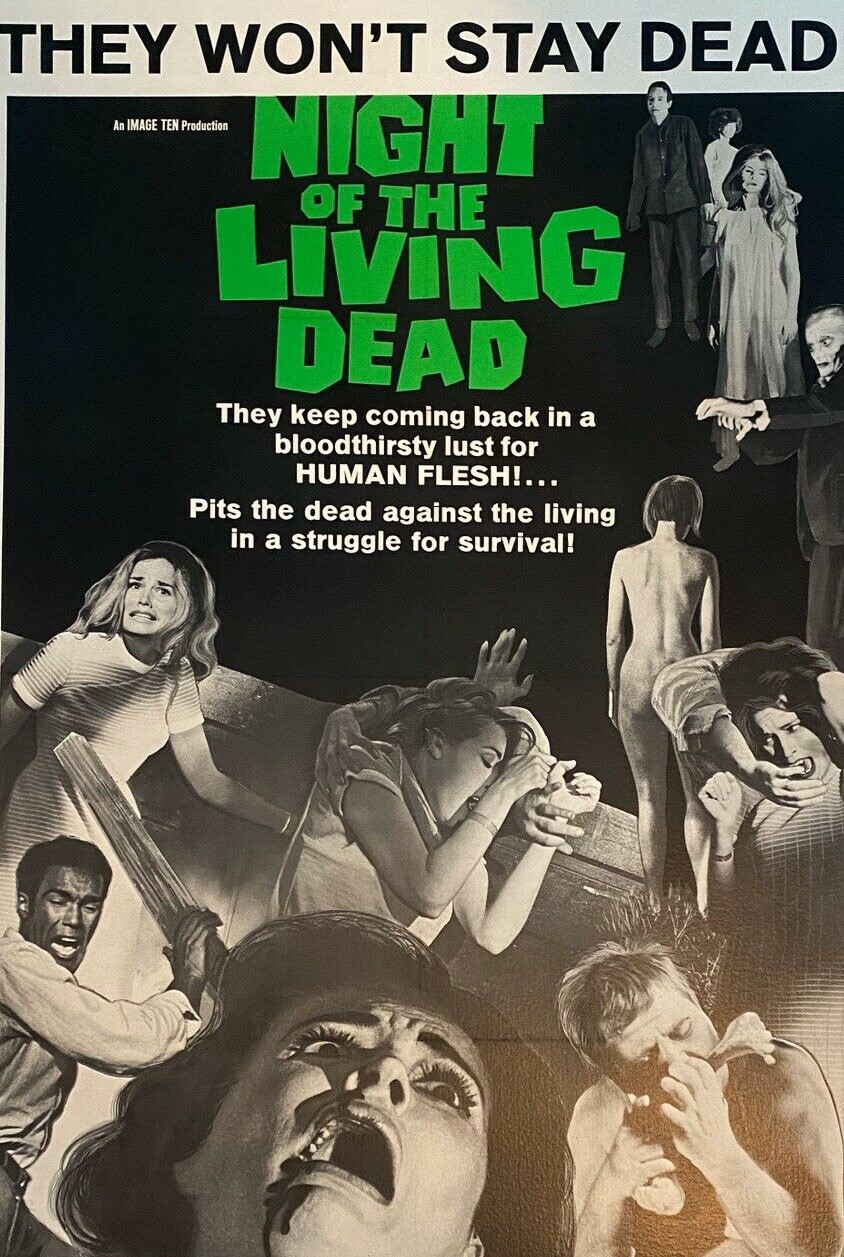
Night of the Living Dead (1968) ****

Ground-breaking thriller in the apocalyptic vein that appeared destined for oblivion after being judged too over-the-top by the AIP/Hammer criteria suitable only for the denizens of late-night horror quintuple bills. I say “thriller” because even by today’s slaughter-fest standards when the heroes/heroines generally escape, it was unheard-of for the entire cast to die, especially considering the post-ironic ending which made a sharp political point.

Brother and sister Johnny (Russell Streiner) and Barbara (Judith O’Dea), having driven 200 miles to visit their father’s grave, are ambushed in a cemetery by a zombie. Johnny is chalked up as victim number one. Barbara escapes to what appears to be an abandoned house, attacked by more zombies, where in a by-now near-catatonic state she is eventually joined by the more action-oriented Ben (Duane Jones) who boards up door and windows and fires at the ghouls with a rifle.

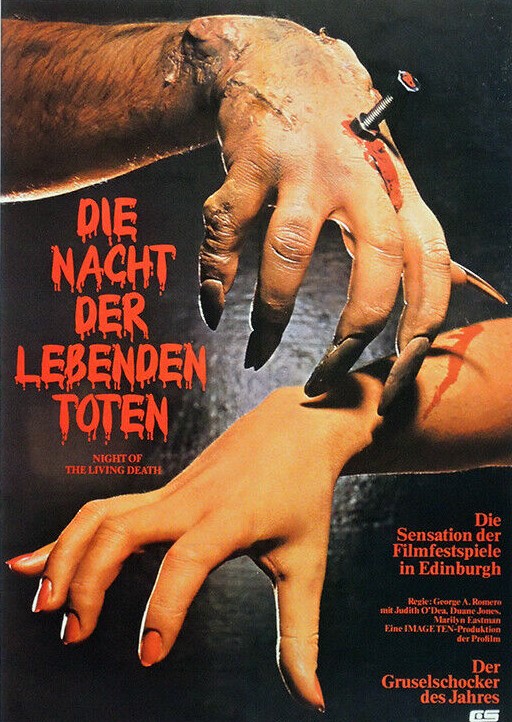
The days when the Edinburgh Film Festival could put its imprimatur on breakthrough movies is long gone.

Hiding in the cellar are the Coopers, Harry (Karl Hardman) wife Helen (Marilyn Eastman) and daughter Karen (Kyra Schon), ill from being bitten by the monsters after their car was overturned, and Tom (Keith Wayne) and girlfriend Judy (Judith Ridley). In the ensuing panic and continued onslaught, the numbers of zombies growing by the minute, Harry determined they would be better off hiding in the cellar and at one point locks Ben out of the house.

Radio and television broadcasts reveal a mass outbreak of people rising from the dead and feasting on the living, the result it appears of radiation in space, caused by man-made accident. The zombies can be killed off by a bullet or blow to the head or being burned. A gas pump being nearby, Ben, Tom and Judy drive there but while Ben lays down a carpet of fire to deter the marauders Tom accidentally spills gas over the truck which catches fire. Ben escapes but the couple are incinerated, turned into a tasty barbecue for the invaders.

While the relentless siege continues, Karen dies and is reanimated. And so, as you don’t expect, there is no escape, the survivors fighting zombies outside and the living dead inside.

The final image, a photographic montage, takes the movie in another direction, down the Civil Rights route, as the corpse of the only African American is hoisted up on meat hooks.

Until George A. Romero (Dawn of the Dead, 1978) took this idea and ran with it, the indie-scene was populated by cheaply-made movies of no discernible artistic credit aimed at the bottom end of the distribution market or by artistically-minded directors who hoped their talents might be acclaimed and lead to a fat Hollywood contract.  

Although there was no shortage of shockers, most had laughable special effects, little in the way of narrative, and certainly no earth-shattering concept like nobody gets out of here alive.

A budget of just over $100,000 ensured there was little room for grandiose special effects but nonetheless the scenes of relentless zombies striding forward, the single creature at the outset joined by a mass, was cinematic genius. Nor were these fragile ethereal beings, but strong enough to physically kill and turn over cars. On top of that was the revelation that death did not sate their hunger, and they weren’t vampirically-inclined either, the tastes lying in the cannibalistic. If you were able to die quickly enough to be reanimated you might escape being turned into a meal.

Taboo-busting came easily. Never mind flesh-eating zombies, and graphic violence, what about matricide? And perhaps a nod towards the power of relentless pressure, the armies of the night here could easily translate to the armies of protesters taking to the streets in broad daylight to march against injustice and Vietnam, whose continued opposition to government would drive change.

No doubt the decision to film in black-and-white was budget-driven, but that turned out to be a boon, no need to invest in gallons of what might pass as red blood, or create bloody corpses, just focus on the relentless threat.

It helped, too, that the characters under siege were very human, Barbara going out of her head with fear, isolationist Harry willing to kill the others to defend his notion of hiding out in the cellar, hoping to escape unscathed.

This was the ultimate word-of-mouth picture, critically dismissed not to say reviled on initial release, but gradually picking up an audience until it became a must-see movie. Romero’s horror approach became widely imitated, though his influence took years to permeate down. Co-writer John A. Russo later became a director, helming Santa Claws (1996).

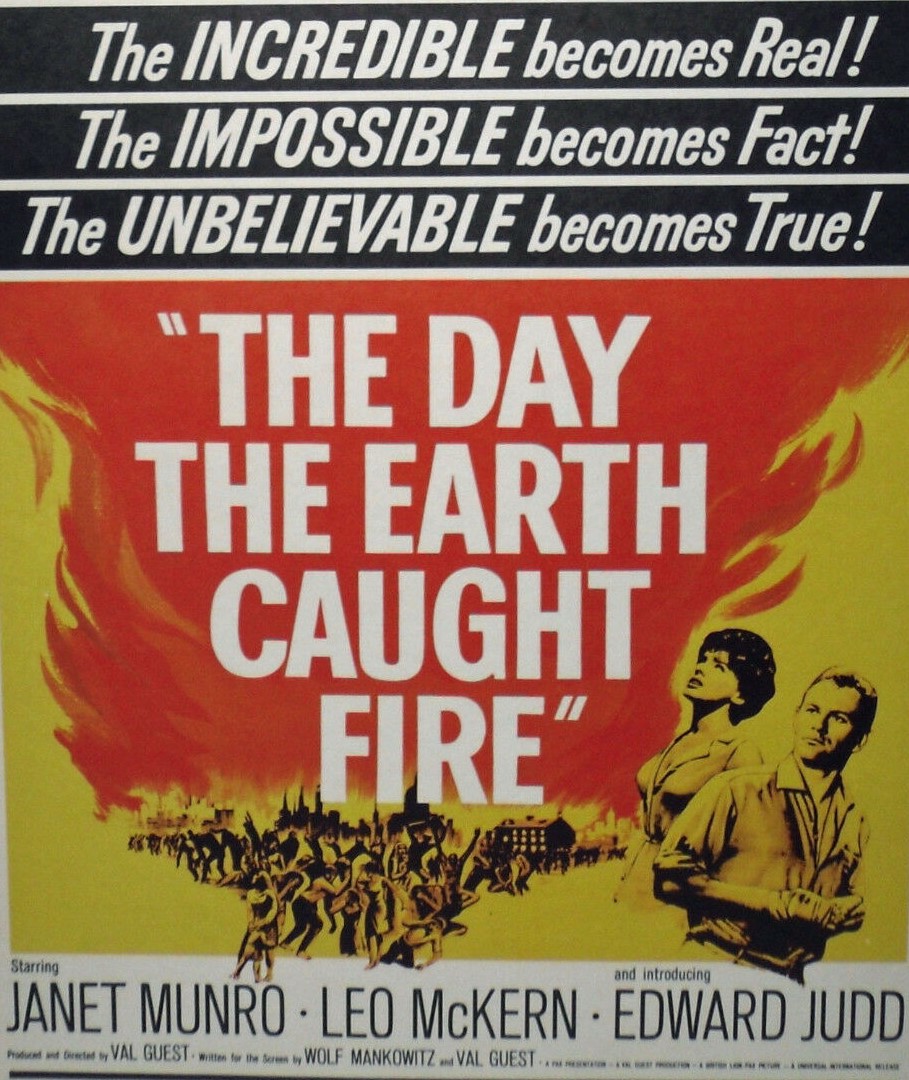
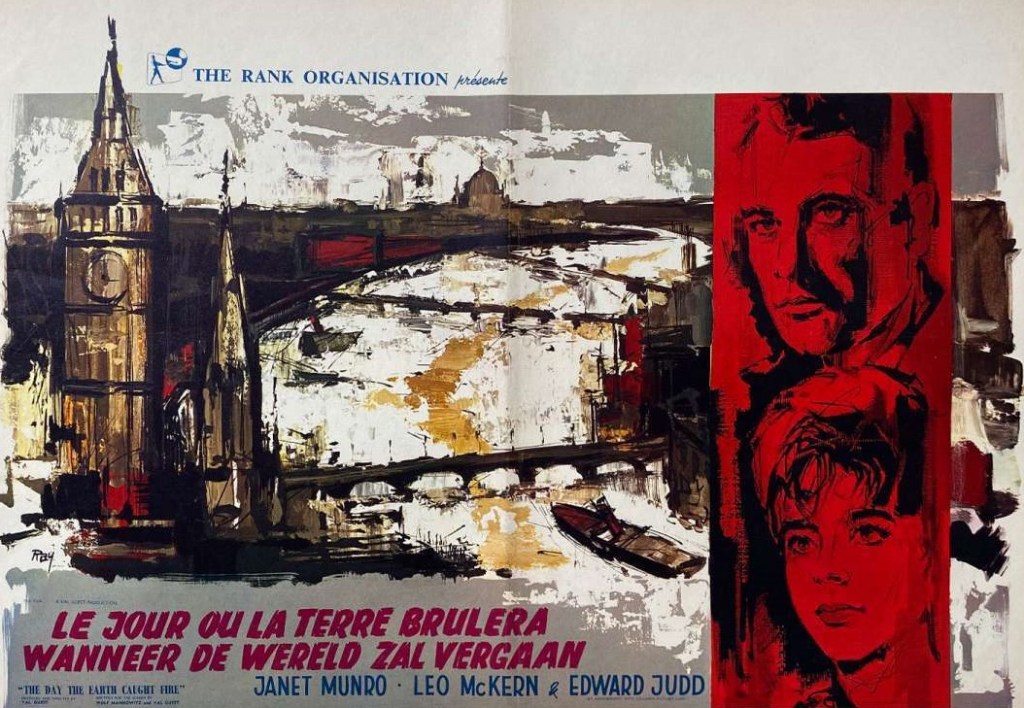
The Day The Earth Caught Fire (1961) ****

A more prescient picture you couldn’t find, tapping into a contemporary audience’s greatest fear – global warming. Its bold cliff-hanger ending would also appeal to a modern audience often left dangling at the climax of a blockbuster. And it cleverly skims on the special effects, relying on the more easily achieved downpours, thick fog, constant sweating, newsreel footage of natural disasters, water rationing and end-of-the-world riots than anything bigger.

But what surprised me more was the sheer pace. Not just a story moving at a frenetic pace but the British characters acting like they had been injected with a heavy dose of New York zap, talking over each other, hardly getting a complete sentence in before interruption, like Howard Hawks had taken command instead of a mere Englishman like Val Guest (Assignment K, 1968), a former journalist.

Front cover of the Pressbook.

It channels the director’s experience into creating the most realistic newspaper office you will ever come across, beating out All the President’s Men (1974) in its representation of how journalism really works, as concerned as much with the general fodder of unheralded stories as the scoops that normally drive such a narrative. And for a story that started off as pure pulp, the dialog is superb, so good it won the Bafta award.

It certainly helped that an actual newspaper editor, Arthur Christiansen (of the Daily Express) lent a guiding hand, playing the role of the editor of this downmarket daily. The summoning of copy boys (actually grown men), the demand for 500 words, the printers ready to switch the front page at a moment’s notice, the inevitable diet of pie and pint, and the emotional casualties as marriages crumble under the strain of a husband more concerned with this next story than wife or children, all serves to ground the film.

And yes, the narrative plays into the usual journalistic tropes, ambitious newspaperman Peter (Edward Judd), career on the line, uses typical wiles, duping lowly scientific secretary Jeannie (Janet Munro) into revealing more than she should. It’s a meet-cute of the old-fashioned variety, she hates him on sight.

Peter is as off-kilter as the world, knocked off its axis by the simultaneous explosion of nuclear devices, unable to come to terms with his divorce, finding solace in the time he spends with his child, and it seems fitting that much of that is spent diving into the darkness of the ghost train ride, the fog equally thematic as he wanders round in circles in that, as aimless as in his life, while a bath is just as cinematically important, not just for the obvious semi-nude scene but as a place of refuge from impending terror.  

These journalists know how to sniff out a story, how to separate the what from the chaff of the official line, digging deeper, and with global connections able to put two and two together far swifter than officialdom. It helps that Peter’s guardian angel Bill (Leo McKern) has a scientific brain and is able to work out the source of the infernal rising temperature.

It’s axiomatic of how clever the screenplay is that Peter and Jeannie come together over a lost child, although Peter, cynical and bitter, but more vulnerable than most, remains a conniving character, happy to risk their burgeoning relationship for the sake of a scoop.

Like Quatermass and the Pit (1967) it’s one revelation after the other as the world hurtles towards oblivion, though not before ending up as the biggest barbecue of all time. The film acknowledges the anti-nuclear demonstrations of the time before piling on proof that man has sown the seeds of destruction on a four-month countdown to doomsday.

We have been here before with end-of-the-world scenarios but this story unfolds not in scientific or official offices, and there’s no President around to add gravitas or take the blame, but in the minds of the dogged journalists, soon appalled by their discoveries, and for once a scoop is unable to save the day or give the villain his just deserts. Whoever is behind the catastrophe remains nameless, although the outcome of superpowers duking it out for supremacy is never in doubt.

Edward Judd (First Men on the Moon, 1964) delivers a star-making performance as the jaded, jagged, journo capable of emotional depths while Janet Munro (Hide and Seek, 1964) escapes Disney tomboy servitude with a very adult role. Leo McKern (Assignment K) has the solid acting chops that would, two decades before television fame as Rumpole of the Bailey, see as a formidable heavyweight addition to any film and a threat to any co-star through jis charismatic ability to steal scenes.

But the film belongs to Val Guest, who constantly turns up the emotional heat and the terror scale, getting the most out of the riveting, sparkling screenplay he co-wrote with Wolf Mankowitz (The 25th Hour, 1967).  

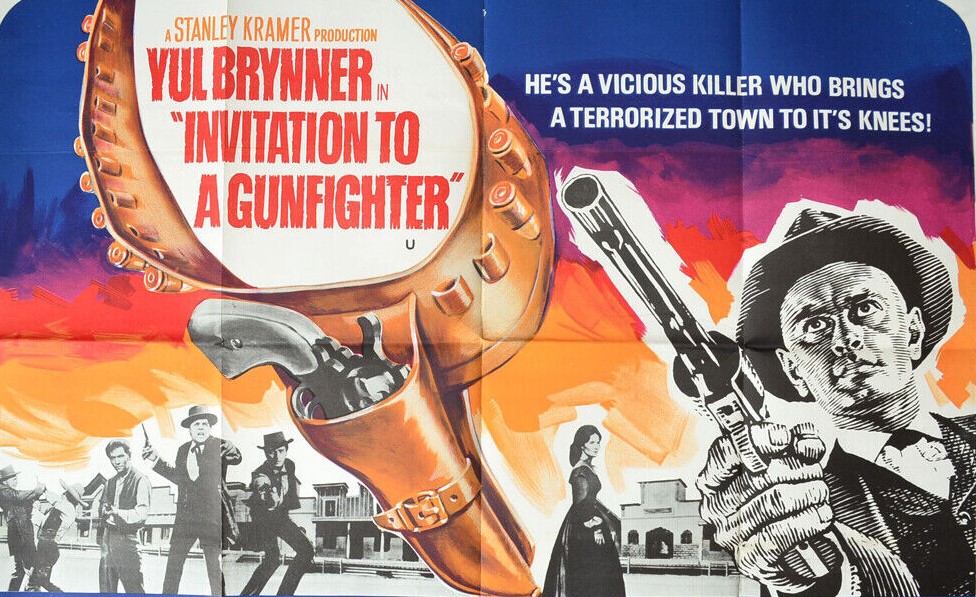
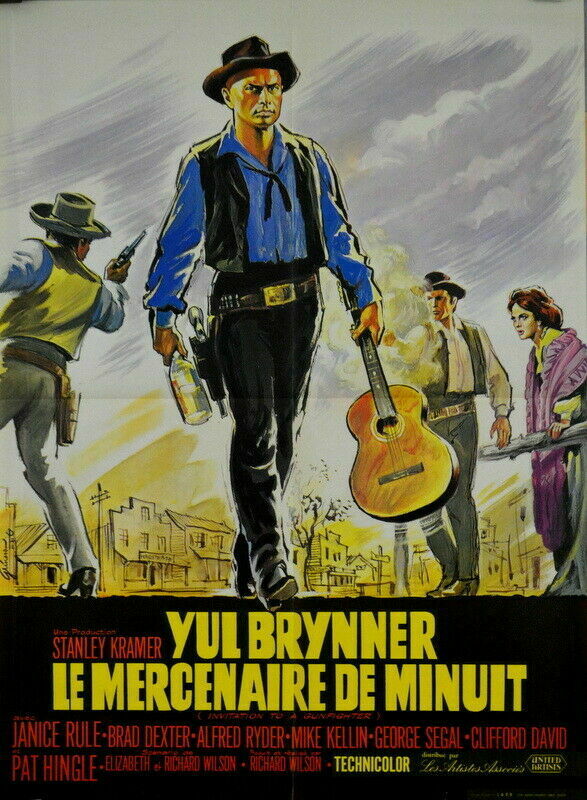
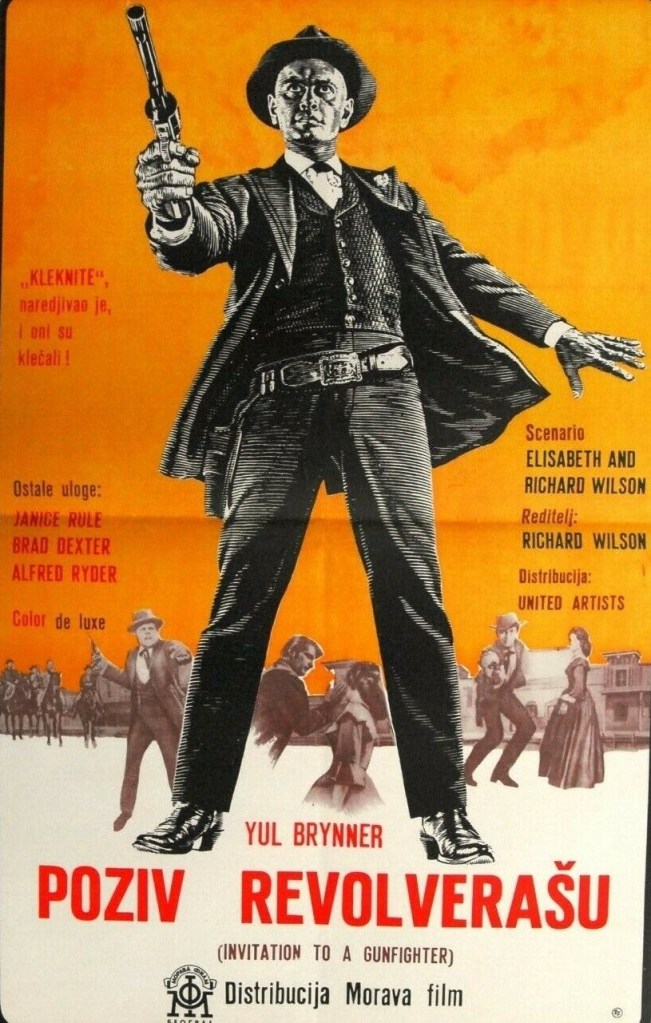
Invitation to a Gunfighter (1964) ****

If ever a movie was in sore need of reappraisal it’s Richard Wilson’s western, which encountered both audience and critical indifference on initial release. If you’ve heard of Wilson at all it will, hopefully, either be down to his connection with Orson Welles or from his crime duo Capone (1959) with Rod Steiger and Pay or Die (1960) with Ernest Borgnine.  On the other hand, you may be more familiar with the name from the Ma and Pa Kettle series in the 1950s or perhaps raunchy comedy Three in the Attic (1968). Or because he was an unlikely contender for the triple-hyphenate position (writer-producer-director) held on the Hollywood scene by the likes of Billy Wilder and less-heralded figures such as John Lemont ( The Frightened City, 1961).

 Wilson was not first choice to direct since the western had been on the Stanley Kramer company slate since 1957 when it was planned for Paul Stanley before it moved in 1961 into Hubert Cornfield’s orbit with a script by James Lee Barratt and then repossessed by Kramer when Rod Steiger was briefly attached. The film, backed financially by Kramer, barely rates a paragraph in the director’s autobiography in which he describes the picture as “an adult western with a somewhat complicated plot.” There’s no getting past the fact that the plot is complicated, but it’s not the plot but the characters that held me in thrall.

Kramer thought the film contained elements of High Noon (1952). But for me the starting point was surely The Magnificent Seven (1960) and not just because Yul Brynner played a gunfighter complete with black outfit and cigar. It wasn’t Brynner’s look in the previous western that brought me to that conclusion, but the scene where the gunfighters sit around talking about where their career has taken them – to precisely nowhere: no wives, no family, no home.

Invitation to a Gunfighter makes more sense as an adult sequel to The Magnificent Seven than any of that movie’s other retreads. Imagine that Brynner, despite the boost to his esteem from beating the Mexican bandits, had not shaken off what we would most likely classify these days as a malaise or a depression. He is trying to make sense of a life that has proved unfulfilled. His options are salvation or suicide. At some point he will come up against a quicker gun, so it is suicide to continue in this profession.

But this gunfighter is also close kin to Clint Eastwood’s man with no name, the mercenary who takes full advantage of his power in lawless towns, and especially to the later embodiment of such a character in High Plains Drifter (1973). (Perhaps Eastwood got the idea of renaming the town ‘Hell’ and painting it red from the scene where Brynner, fed up with the hypocrisy of the righteous townspeople, goes on a drunken wrecking spree.) However, the hired gun Brynner is far from anonymous.

His name is so rich – Jules Gaspard D’Estaing – that the locals curtail it to the more peremptory Jewel. And he is cultured, plays the spinet (a kind of harpsichord) and the guitar, sings, quotes poetry and cleans up at poker. He is sweet to old ladies, but that is in the guise of righting wrongs. And he is defender of the under-privileged, in this case downtrodden Mexicans. He was himself the son of a slave. The most compelling aspect of this picture is that despite knowing so much about him he remains mysterious.

Brynner wasn’t the two-fisted kind of action hero, but more the guy who could disarm the opposition with a mean stare, and charm women with his brooding good looks. As mentioned, the plot is complicated so to get the best out of the picture you need to kind of set that to one side.

Simply put, Confederate soldier Matt (George Segal), returning from the Civil War, finds his farm has been appropriated and his sweetheart Ruth Adams (Janice Rule) has married someone else, the one-armed Crane Adams (Clifford David). D’Estaing is brought in to get rid of Matt whose principled stand is causing a nuisance to the immoral town.

So the story, rather than the plot, is the interaction between these four. Crane Adams clearly wants any opportunity to kill off his rival. Equally, Matt wants to win Ruth back. D’Estaing finds himself unexpectedly drawn to the sad, pensive Ruth, abandoning his planned stagecoach trip to Santa Fe on catching a glimpse of her, only hired when the townsfolk discover his occupation. D’Estaing has a fantasy of taking her away from all this, the pair of them riding off together, and there is no doubt Ruth is tempted as he implants himself in their household and shows himself to have everything her husband, or Matt for that matter, lacks.

Perhaps the best thing about the movie is that nothing is clear cut. Our sympathy shifts from D’Estaing to Matt to Ruth. Even when D’Estaing brings the town’s hierarchy to heel, there is no guarantee that will be enough to win over Ruth. And if he cannot have her, what does he have? The Eastwood loner never seems to care about emotional involvement, he just takes what he wants, but D’Estaing is more sensitive and does not want a one-sided relationship based solely on power.

For the movie to work at all, Ruth needs to engage our sympathies. Having clearly been somewhat mercenary herself in discarding Matt in favor of Crane Adams (presumably not originally disabled), she needs to come across as a woman who is not just going to jump at the next best thing. In this regard Janice Rule is especially good, far better than in more showy roles in Alvarez Kelly (1966) and The Chase (1966). Never given the opportunity to verbalize her emotions, nonetheless in scene after scene her quiet anguish is shown on her face.

Yul Brynner (Villa Rides, 1968) has a peach of a part and does it more than justice. Often derided or ignored for his acting, this shows him at the peak of his powers, portraying a contradictory and conflicted character, arrogance tempered by depression. George Segal (The Quiller Memorandum, 1966), a rising star at this point, has his meatiest role to date. In supporting roles are Pat Hingle, Brad Dexter (The Magnificent Seven), Strother Martin (Cool Hand Luke, 1967), Clifton James (Live and Let Die, 1973) and famed cinematographer John A. Alonzo (Chinatown, 1974).

Five names are attached to the screenplay: Richard and Elizabeth Wilson, Hal Goodman and Larry Klein credited for the story which they had originated as 1957 television drama directed by Arthur Penn, and Alvin Sapinsley for the adaptation.

I certainly saw a different picture to the “offbeat but confusing western” viewed by Variety’s critic and possibly, for once, because the passage of time has allowed this film to be seen in a new light. Rather than a morality play in the vein of High Noon, I recognized saw it as a character study of a gunfighter knocking on heaven’s door.

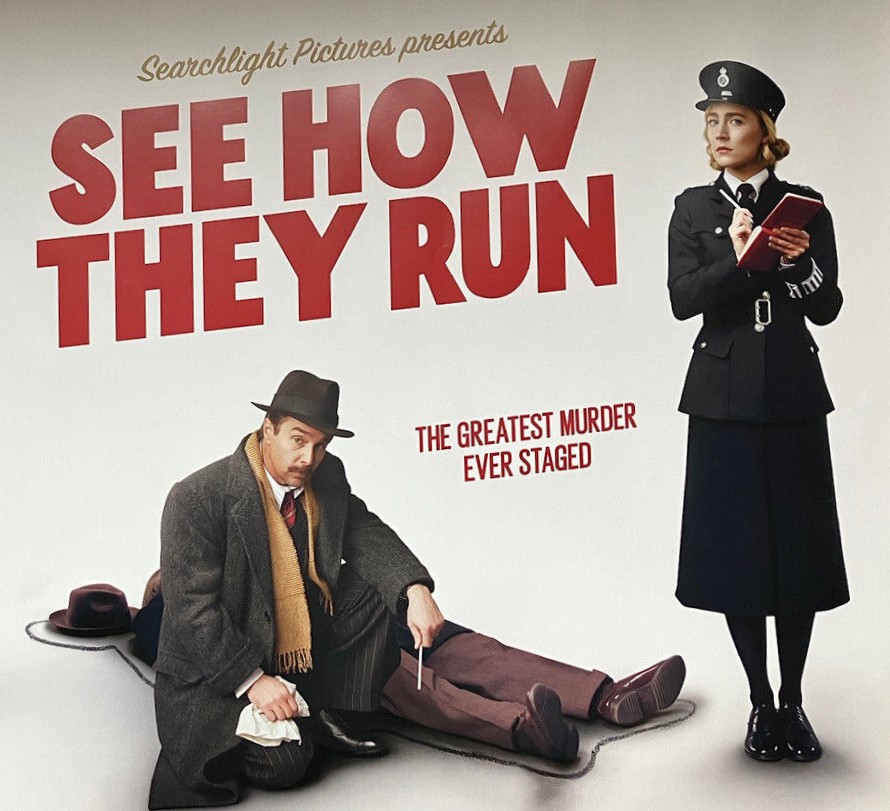
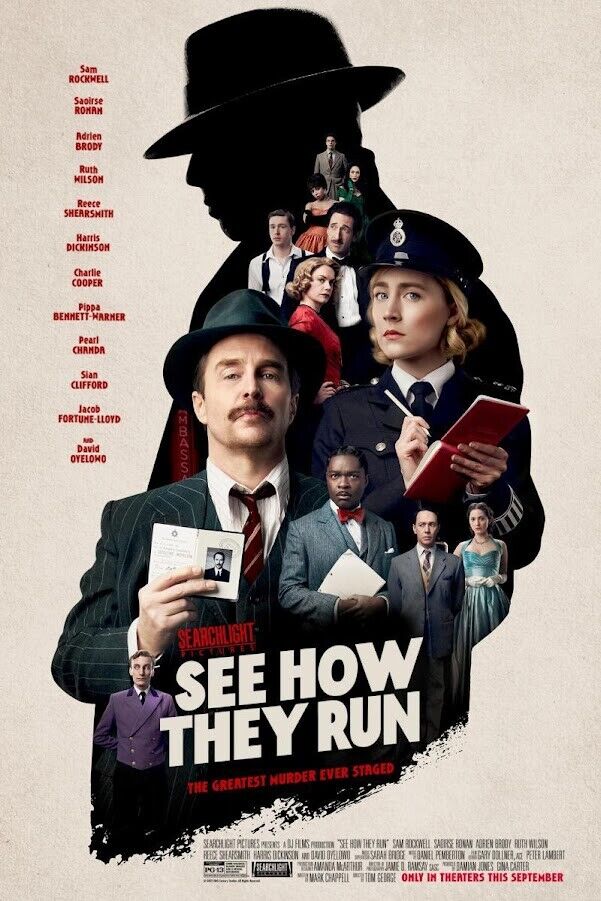
See How They Run (2022) **** – Seen at the Cinema

Kind of film that needs sold on word-of-mouth and a slow platform-release rather than being bundled out to fill the distribution gap. Let the audience sing its praises first before slinging it out in wide release. Because this is a definite audience-pleaser, a fun whodunit. Though a limiting factor might be that appeal may be restricted to those of a certain age familiar with  The Mousetrap. I wouldn’t bet my last dollar, either, on modern young audiences even having a clue who Agatha Christie was, or responding to a picture set in dull, dull, Britain in a year -1953 – when there was a significantly more glorious event that might have suited better the average Downton Abbey moviegoer: the coronation of the recently-deceased Queen Elizabeth II.

Delightful pastiche on the detective story, too much to suggest it’s a piss-take on Knives Out or the latest big-screen veneration of Hercule Poirot, but it certainly has enough going for it even if none of those connections are eventually made. Certainly, there’s some sly humor in scoring points for mentioning, a la Murder on the Orient Express, that the initial murder could have been committed by all the suspects.

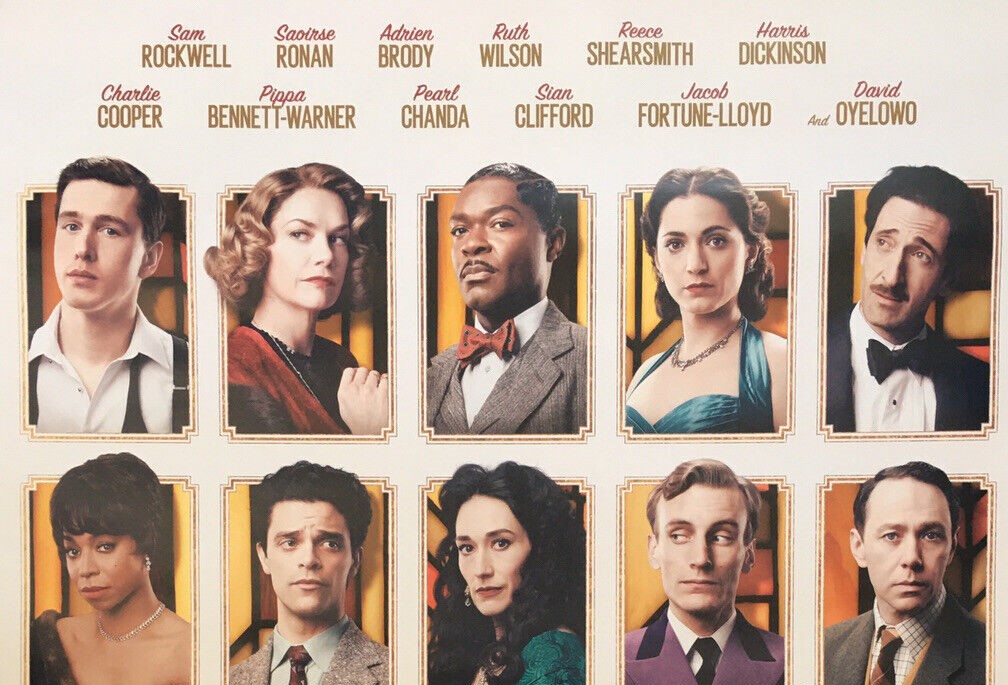
Basically, out of favor war hero and alcoholically-inclined cop Inspector Stoppard (Sam Rockwell) is saddled with rookie Constable Stalker (Saoirse Ronan) – two in-jokes right there, John Stalker being a very prominent British cop, playwright Tom Stoppard the author of The Real Inspector Hound – to investigate the death of Yank Leo Kopernick (Adrien Brody), in London to turn Agatha Christie’s famed play into a movie for real-life producer John Woolf (Reace Shearsmith) who made The African Queen (1951).

Virtually everyone associated with the play becomes a suspect. These include pompous playwright Mervyn Cocker-Norris (David Oyelowo), the play’s petulant producer Petula “Chew” Spencer (Ruth Wilson), real-life actor Richard Attenborough (Harris Dickinson) and even Agatha Christie (Shirley Henderson) is not above a bit of poisoning. Throw into the mix that the cops have assigned the bulk of their resources to tracking down the 10 Rillington Place serial killer – another in-joke, Attenborough playing the murderer in that movie.

One of the movie’s delights is that whereas both Stoppard and Stalker have considerable personal issues, we discover them in passing, and neither character makes a meal of them. Instead, their screen charisma works a treat, Stoppard dogged and the earnest Stalker inclined to jump the gun.

Even the “all-star-cast” is a spoof on films like “Death on the Nile.” The title was a popular one, movies in big-screen or small using it in 1955, 1964, 1984, 1999 and 2006.

The stage shenanigans are a hoot, puffed-up pride and ruthless machinations powering many of the sub-plots. There’s some pretty clever sleight-of-hand not to mention occasional cinematic avant-garde and there’s no shortage of laughs and that out-dated comedy fall-back – slapstick. The climax is particularly excellent, in part because it is a notion immediately discarded as the denouement of the proposed movie version of the play, one that succinctly critiques the differences between British and Hollywood approaches to movie-making.

Red herrings and cul-de-sacs abound, flashbacks remove any plot-holes, while managing to ram in a country-house finale takes some brio. And in among all the jokes, you might be surprised to find a serious point being made about reality vs fiction. Full marks to the virtually laugh-a-minute screenplay by Mark Chappell  (The Rack Pack, 2016) and director Tom George in his movie debut who brilliantly shuffles the deck.

Dramatic heavyweight pair Sam Rockwell (Three Billboards, Outside Ebbing Missouri, 2017) and Saoirse Ronan (Mary, Queen of Scots, 2018) prove a double-act to cherish. In gentle comedic roles at odds with virtually their entire portfolios, a wise producer might already be sizing them up for a re-run. Everyone else gets to be bitchy/scheming/ruthless to their heart’s content and certainly in those categories Adrien Brody (The Grand Budapest Hotel, 2014)  and Ruth Wilson (His Dark Materials, 2019-2022) win hands-down. But spare a thought for excellent performances from David Oyelowo (The Bastard King, 2020), Reace Shearsmith (of League of Gentlemen TV fame), Lucian Msamati (The Bike Thief, 2020) as the imperturbable Max Mallowan, husband of the distinctly perturbed Agatha, played with venomous glee by Shirley Henderson (Greed, 2019).

I went to see it not expecting much at all and came out singing its praises. Definitely worth a whirl.

Diary of a Madman (1963) ***

Contemporary perspectives occasionally raise a film in the estimation. Here, our knowledge of the psychology behind serial killers sheds quite a different light. The idea that a killer can blame outside forces over which he has no control was one of the original tenets when the ordinary mind could not take in that some folks just enjoyed the act of murder so much they were inclined to do it over and over again.

Where I come there there’s a saying – “a big boy did it and ran away” – a device used by small boys in big trouble. And that’s pretty much the idea here. The innocent can be taken over by an evil entity, rather than admitting to surrendering to their most heinous desires.

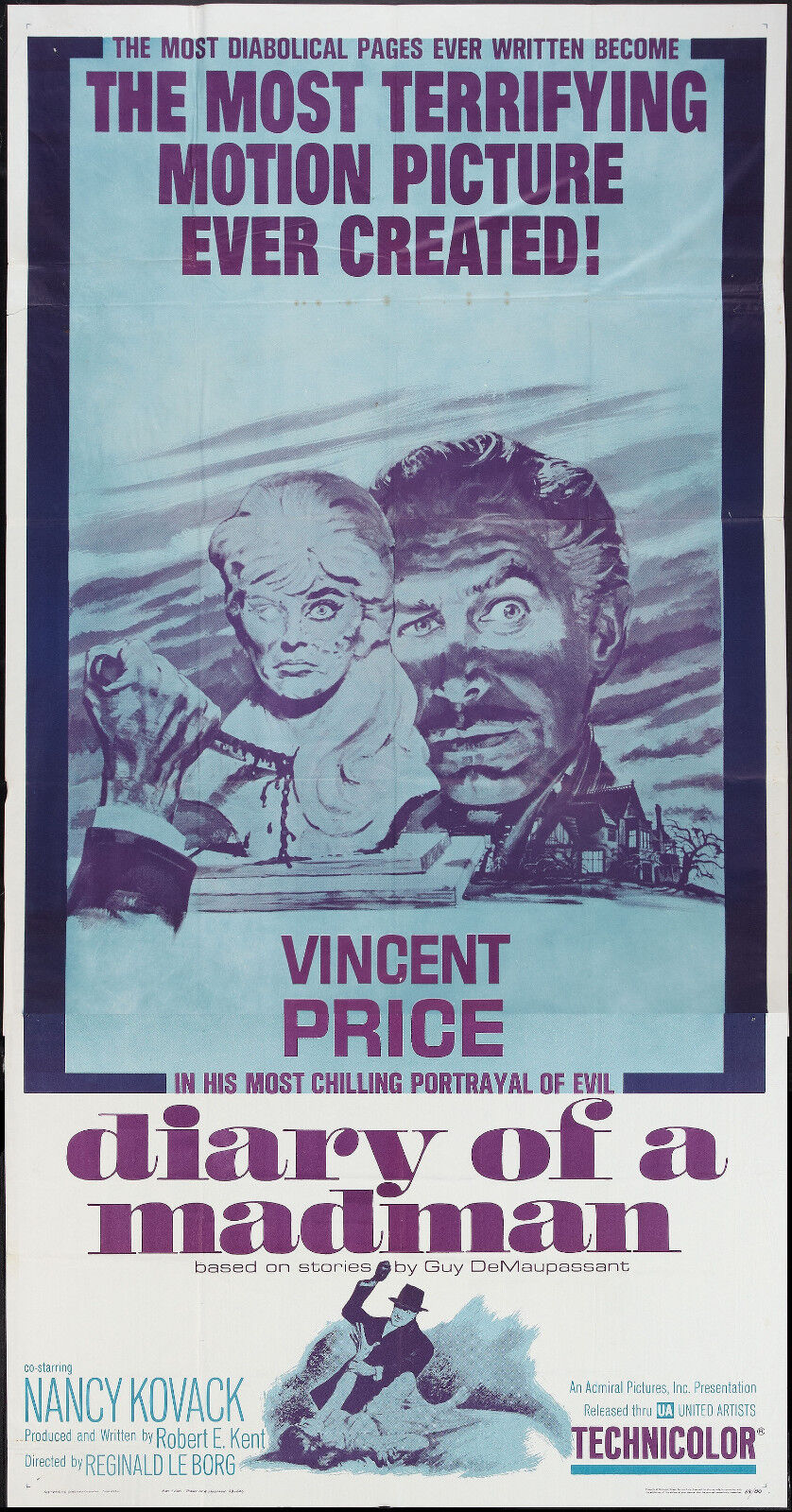
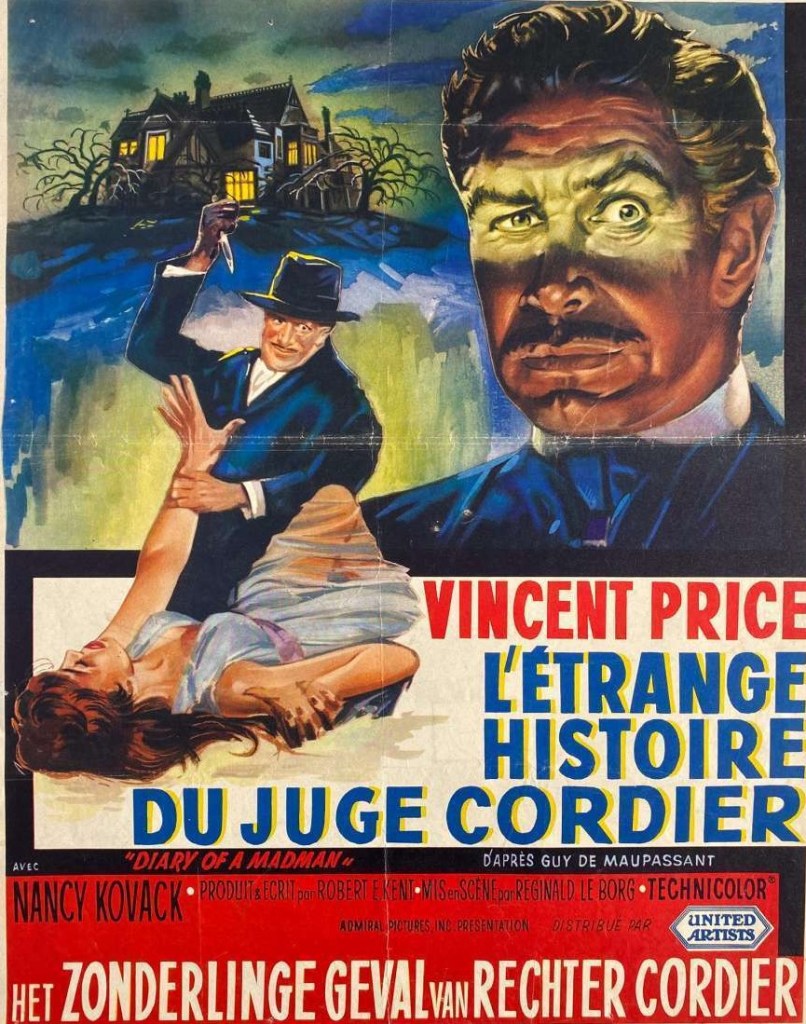
A prisoner condemned to death in 19th century France confides in magistrate Simon Cordier (Vincent Price) that his murdeorus acts were the result of direction by the mysterious and, unhelpfully, invisible “Horla.” Naturally, Cordier dismisses the notion until, in self-defence, he kills the prisoner. Disturbed by his action, he seeks counsel and is advised by a psychiatrist (an “alienist” as such a person was known at the time) to spend more time on his hobby, sculpting.

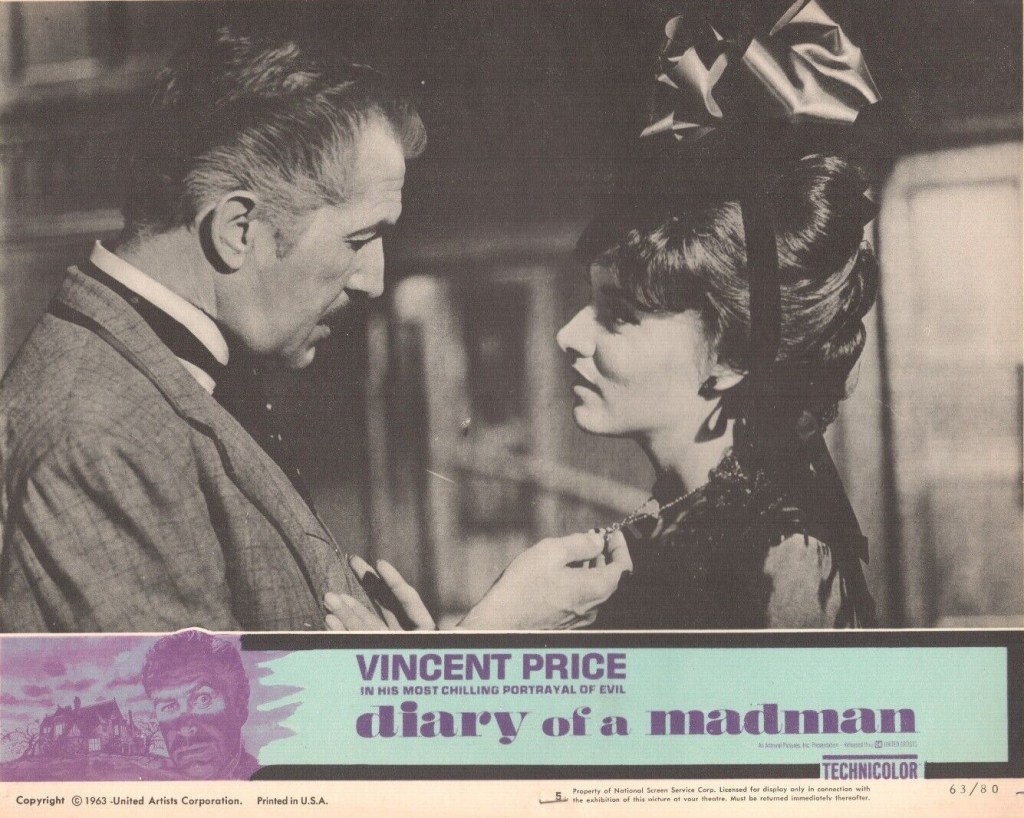
Although Cordier appears to be a model citizen, there lurks in his past a suicidal wife who killed their child, and the notion that somehow he was responsible. Into his world comes woman-on-the-make Odette (Nancy Kovack) who earns more money as an artist’s model than her husband Paul (Chris Warley) does for his paintings. Unaware  that she is already committed, Simon proposes marriage. It doesn’t take long for him to suspect she is not what she seems and he does away with her only for Paul to become the main suspect and be condemned to death.

Cordier, discovering by accident that the Horla, is frightened of fire, lures the entity into his deserted house (servants sent away) and plans to destroy the entity but in the process the fire melts the door handles and Cordier can’t escape, dying in the process.

Price and Kovack.

A modern reading of course would set it up a different way, putting greater emphasis on the past, trying to uncover what drove Cordier’s wife to suicide. That he gives in to overwhelming urges might well be followed by periods of guilt until he realises that the only way out is his own suicide.

But the 1960s moviegoer – possibly still recovering from the murderous goings-on at the Bates Hotel, and grateful that it was fiction, and The Boston Strangler only just getting into his stride – was not quite ready to put any faith in a landscape filled with predators and victims, so it would make more sense for outside forces, voices or the like, to be controlling the ordinary person.

An eerie glowing light comes over the eyes of Cordier (and the earlier convict) any time the urge to kill dominates. But if you were going to set this up as a picture of innocence driven to dark deed you would not populate it with Vincent Price (Witchfinder General, 1968), who had form for dastardly deeds. Nor is Price quite able to pull it off, those sepulchral tones always seeming to indicate something lurking, and he’s hardly in the debonair category so at the very least he belongs to the caste of entitled rich taking advantage of a poor woman to press his case for marriage.

Nancy Kovack (Jason and the Argonauts, 1963) is more convincing as the manipulative object of his desire. I half-expected her to turn into a murderer in order to rid herself of her the husband getting in the way of her chance at a new, wealthier, life. Chris Warfield (Dangerous Charter, 1962) is the talentless dupe, whichever way you cut it, and you have to admire his wife for sticking with him for so long.

Given that director Reginald Le Borg’s career dated back to the 1940s and he had been lumbered with the Joe Palooka series and any number of B-movies, it was perhaps surprising that horror, although still strictly on B-movie budgets, became a forte – The Black Sheep (1956) and Voodoo Island (1957). While this one was clearly filmed on a studio backlot, he does a good job of bringing a bit of lushness to the proceedings.

Perhaps the most interesting element is that the idea originated in the mind of famed French short story writer Guy de Maupassant – you might be surprised to learned that nearly 300 movies and television adaptations have been made from his works, a dozen alone in 1963 including Mario Bava’s Black Sabbath. Worth comparing with Maniac out in the same year where the idea of the mad killer is exploited for a different end.

Very old-school, but with passable sfx.

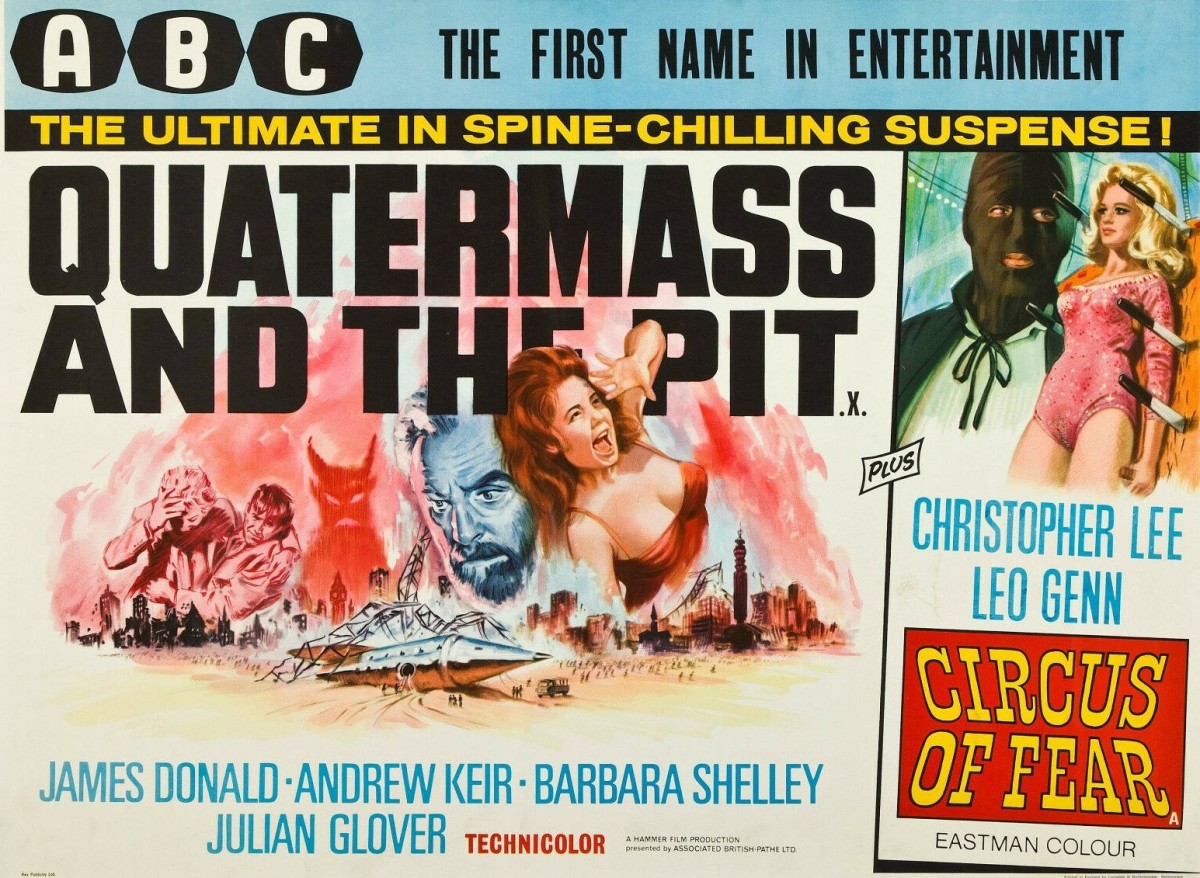
Behind the Scenes – “Quatermass and the Pit” / “Five Million Miles to Earth”

Although it is fairly common these days for Hollywood to raid television for ideas for movies, it was rare back in the 1950s except for a select group of dramas in the early stages of live television in the U.S., and certainly you would not point to the august instutition of BBC as a source of supply. Author Nigel Kneale had kicked off his screen franchise with The Quatermass Experiment (1953) on television followed by a movie version two years later starring Brian Donlevy, repeating the format with Quatermass II – the first digitalizing of a sequel –  on television in 1955 and movie (Roman numerals replaced by ordinary ones) in 1957.

Quatermass and the Pit also originated on BBC television in 1958-1959 so comparatively speaking took an inordinately long time to hit the big screen. British studio Hammer had greenlit the first two Quatermass films, both directed by Val Guest, and purchased the rights to the third, intending to utilize the same team – Kneale, Guest, Donlevy – for a film to go into production in 1963, but Hammer’s Hollywood co-producers Columbia disliked the script. Even a revised lower-budgeted screenplay failed to meet Columbia’s approval and the project went on hold until Hammer struck up a U.S. distribution deal with Seven Arts and Twentieth Century Fox.

The script for the film, although condensed from the television series, largely stuck to the original story, one subplot involved a journalist being deleted, and minor alterations to the climax. None of the movie’s stars had ever headlined a picture so there was a reasonable argument that top billing should fall to James Donald since he had been in the widest-seen movies, namely Bridge on the River Kwai (1957) and The Great Escape (1963) whereas Andrew Keir and Barbara Shelley (both had appeared in Dracula: Prince of Darkness in 1966) were best known for supporting roles in Hammer pictures, never highly budgeted nor monstrous box office hits.

Kneale had objected to Donlevy’s interpretation of the title role and wanted a change. Andre Morell, who had played the part in the small-screen version, did not want to reprise the role. Director Roy Ward Baker later denied he had lobbied for Kenneth More considering the star “too nice” for the part, which would appear an odd assumption given the tough roles he had played in war pictures. Antipathy to More might have had a lot to do with the fact that the actor, a huge British star in the 1950s, was persona non grata after falling out with the head of the Odeon chain of cinemas, thus automatically limiting a movie’s distribution prospects.

Keir described the filming as “seven-and-a-half-weeks…of pure hell” which came as a surprise to the director. “I had no idea,” recalled Baker, “I was presenting him as the star. His performance was absolutely right in every detail.” In fact, Baker had such confidence in the story – “taut, exciting…excellent narrative drive…that all one need to do was cast it and shoot it.”

Ward had fallen on lean times as a movie director after the box office failure of comedy Two Left Feet (1965). He wasn’t first choice but Val Guest was tied up with Casino Royale (1967) and his experience of special effects of films like A Night to Remember (1958) provided him with the credentials for the job. He had been working more in television than cinema in the past five years so this offered a chance of movie redemption.

On a budget of just £275,000, the picture was shot at MGM Borehamwood studios, whose backlot was used to replicate the Underground station. Among the special effects by Les Bowie was the Martian massacre which utilized a mixture of lie locusts and puppets while the destruction of London was achieved through model work.

The same year as the Quatermass and the Pit movie appeared there was a second outing, this time as a TV movie starring Garry MacDonald, for The Quatermass Experiment, and the whole shebang was completed by aptly-titled The Quatermass Conclusion (1979), a big screen venture starring John Mills, that was an edited version of a four-part ITV television production known as Quatermass. That is, until The Quatermass Experiment was re-imagined as another TV film starring Jason Flemyng and Adrian Dunbar (as guess what, a detective) in 2005.

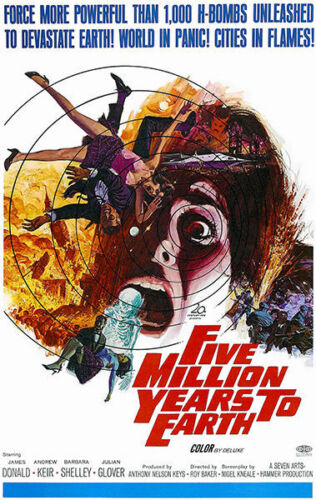
Quatermass and the Pit / Five Million Miles to Earth (1967) ****

Five million dollars.  That’s roughly the budgetary difference between Hammer’s Quatermass and the Pit and Twentieth Century Fox’s Fantastic Voyage. Although the protagonists in the latter face the unexpected, the movie is (as would be 2001: A Space Odyssey, 1968) an exercise in awe, in controlled exploration of wonder, whereas Quatermass, lacking the money for special effects, concentrates more on story and human impact. The government funds the experiment in Fantastic Voyage while Professor Quatermass (Andrew Keir) finds nothing but obstruction from his superiors.

Quatermass and the Pit is a masterpiece of stealthy exposition. Virtually every minute brings another development, gradually building tension, stoking fear. The principals – Dr Roney (James Donald), Barbara Judd (Barbara Shelley) and the professor – are cleverly kept apart during the early stages. A human skull discovered on a building site for a London Underground station is followed by a skeleton. Palaeontologist Roney determines it is five million years old, older than any previous find.

A metallic object is found nearby. First guess is an unexploded bomb from the Second World War. But it’s not ticking. And a magnet won’t stick to it. Col Breen (Julian Glover) is called in along with hostile rocket expert Quatermass. They have been locking horns from the outset.

There’s a whole bunch of apparent red herrings, mostly of the demonic variety. The location, historically associated with weird occurrences, is a nickname for the Devil. A pentagram is detected. Touching the object can give you frostbite. Col Breen argues it’s a leftover German propaganda machine from World War Two. A hideous dwarf and other spectral images are sighted. Telekinesis is involved. And tremendous vibrations.

Some people, such as Barbara, have a more receptive brain and can play memories millions of years old that reveal the alien truth. But this is an alien race with genocidal tendencies and able to unleash psychic energy.

The genre requires the scientists to discover an improbable solution which of course they do. Given the miserly budget, the special effects are not remotely in the Fantastic Voyage league. But that hardly matters. The movie coasts home on ideas, marrying sci-fi, the demonic, dormant and institutionalized evil, the militarization of the Moon and the ancient infiltration of Earth by Martians, no mean achievement, and a vivid narrative.

Director Roy Ward Baker (aka Roy Baker) provides many fine cinematic moments as he chisels away at the story, finding clever methods of revealing as much of the aliens as the budget will permit, focusing on very grounded characters, concentrating on conflict, and human emotions, mainlining fear rather than awe, building to an excellent climactic battle between man and monster.

Barbara Shelley (The Gorgon, 1964) is the pick of the stars, in part because she is at such a remove from her normal Hammer scream-queen persona, but more importantly because she brings such screen dynamism to the role. It’s refreshing to see her step up, as she carries a significant element of the story. Oddlyenough, although she has as good a movie portfolio as Andrew Keir and is certainly superior to James Donald, the denoted star, in that department, she is only billed third.

While Andrew Keir (The Viking Queen, 1967), warm-hearted for an intellectual, and James Donald (The Great Escape, 1963), trying to keep a cool head in the middle of inclination to panic, are good, they don’t bring anything we haven’t seen before. Julian Glover (Alfred the Great, 1969) is never anything but imperious and/or irascible, so ideal casting here.

The innovative electronic music was down to Tristram Cary and the unsettling credit sequence deserves some recognition. Nigel Kneale, who originally explored similar ideas for the character on television, came up with the screenplay.

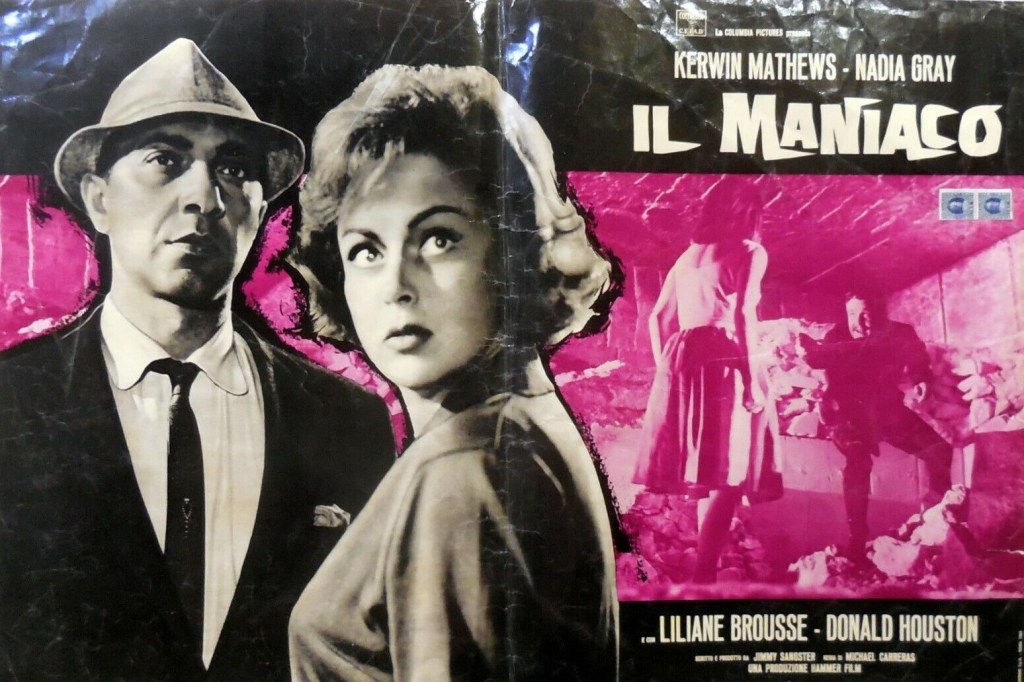
Maniac / The Maniac (1963) ****

Such an ingenious thriller you just have to applaud. Opening with a close-up of a predatory eye, this scarcely draws breath as it dashes through a latter-day film noir maze, spawning out auditory and visual cues, beautiful woman luring dupe, twisting the expected narrative round her little finger.

Artist Jeff (Kerwin Mathews) setting up his easel in the Camargue, hardly one of the most tourist-friendly spots in France, eyes up Annette (Liliane Brousse), the daughter of a hotelier Eve (Nadia Gray), but, in extremely opportunistic style, settles for the mother. In true noir fashion she is using him, seducing him into a scheme to free her husband George (Donald Houston), incarcerated in a mental asylum for torturing and killing with a blowtorch the aforementioned predator who raped Annette four years before.

Eve convinces Jeff that in return for his freedom the madman will effectively give his blessing to their affair. It’s a deal only a besotted dupe would fall for. George has an ally inside the asylum, assisting his escape, but when George turns up, and Jeff drives him to Marseilles, he leaves behind the corpse of his criminal associate in the boot. Jeff dumps the body in the river.

Cue the start of a series of strange events. A fired-up blowtorch is discovered in the garage where Georges committed his initial crime. Annette, jealous of her mother’s relationship with Jeff, plans to leave and go with her father.  

And I’m sorry to say that in order to explain the attraction of this neat little picture I’m going to delve into SPOILER ALERT territory.  

All the while of course you are wondering whether George will keep to his side of the bargain, especially as Eve starts to get antsy with Jeff, and the investigating police inspector seems overly suspicious. And it being this kind of picture you expect a twist.

But not one this clever.

George, blowtorch at the ready, traps Jeff in the garage. He has fished the corpse out of the river. He plans to burn the garage to the ground, leaving behind two dead bodies, assuming the police will imagine that in a further bout of psychotic behavior the murderer gave in to his desires and killed again, but in the process accidentally killed himself.

But that’s not the final twist.

One of the victims survives. But which one? He is so badly mutilated as to be rendered unrecognisable and lies in a hospital bed covered head to foot in bandages. Has Eve’s plan backfired? Has she accidentally killed her lover?

But that’s not the final twist.

Eve knows who the man in the bed is. It’s not her lover. Because Jeff is just the dupe. The body dumped in the river was George. All the time Eve was visiting her husband in the mental asylum she was carrying on an affair with one of the guards. The guard killed George after the escape, retrieved the body from the river, left it in the garage and planned to kill off his competition at the same time.  If you’re going to be tabbed a maniac, you better behave like one.

It’s a shame you can’t see the shock on the face of poor Jeff because he is encased in bandages. And this isn’t just the clever villain unable to stop herself boasting about how clever she has been. This is Eve getting into the murder racket. She switches off his oxygen.

But that’s not the final twist.

Jeff ain’t dead. He wasn’t even on a life-support machine. He was just trussed up to tempt Eve in revealing herself. He had escaped the garage inferno and told the police what was going on. So you can guess the rest, but even then there’s one other ironic twist. Just like Jeff, the imposter George is as taken with the daughter as the mother.

The twists are so well done, the narrative so compelling, that would be enough to make a convincing case for entry into the category of cult. What makes an undeniable case is the directorial style. Sights and sounds drive the story as much as anything. The eerie bright light in the garage, the sound of blood dripping on the floor, the bold close-up of the eye, the advancing blow torch, setting it in a bleak rather than scenic area of France, are cinematic notions belonging to classic movies, not to a tawdry B-picture.

Although The Devil Rides Out (1968) is generally considered the top Hammer picture of the decade, I would argue this runs it a close second, and possibly even tops it.  Taking time off from his studio job Michael Carreras (The Lost Continent, 1968), later Hammer’s managing director, delivers a little masterpiece working to an effortlessly clever original screenplay by future director Jimmy Sangster (The Horror of Frankenstein, 1970).

It’s enough that Kerwin Mathews (The 3 Worlds of Gulliver, 1960) is playing against his screen persona as upright hero. The biggest advantage in casting Nadia Gray  (The Naked Runner, 1967) was that she was unknown and didn’t have the kind of onscreen presence that might have you doubting her motives from the start.  Liliane Brousse (Paranoic, 1963), in her penultimate movie, is initially too much all-arched-eyebrow and pout, only coming into her own when she becomes dutiful daughter rather than wannabe seducer. The pretend George, real name Henri, Donald Houston (A Study in Terror, 1965), hidden beneath dark glasses most of the time, is a dab hand at a pretend psychopath.

Surprisingly effective little gem.

Crimes of the Future (2022) *

An hour of this was enough for me. Which was a shame because it started so well. A trio of short, sharp, scenes – boy on a seashore  with a rusted capsized ship in the background, said boy munch on a plastic bin, said boy suffocated in his sleep by this mother – set up an intriguing premise. Whose significance takes forever to resurface.

Meanwhile, we are thrust into the world of underground performance art based on the notion that surgery is sex or, to put it another way, sex is surgery (the characters seem to think this is a point worthy of dispute). Buried deep is a clever idea: if human beings are pain free, what perversities will they dream up? If they can cut themselves open with impunity, will they just indulge?

And if tumours, rather than being the cause of death, are celebrated, will human beings engage in a competition to see who can grow the best/worst one. There is an actual such competition, called the “inner beauty” contest, presumably an alternative to the Miss World beauty pageants. As if the Alien that used to burst free out of stomachs and caused such terror was now being deliberately grown and harvested for the purpose of entertainment/art.  

Our guides into this bizarre world are Saul Tenser (Viggo Mortensen), the incubator of such phantoms, and his partner former surgeon Caprice (Lea Seydoux) whose job is to tattoo whatever on his unique internal organs before they are summoned in front of audience with a flourish. We know he is Saul Tenser because every time he turns up at a door he is welcomed with “Saul Tenser.”

This might work as black comedy but not as serious drama. I call it drama because it certainly ain’t horror. The whole point of horror is to make the audience jump or at least wince. I’m a very good audience for genuine horror because I jump at the slightest thing and won’t event watch surgical reality television programs. But this looked more like a special effects festival to me rather than something that had a chance of scaring the pants off me.

And in real life – as in real Hollywood life – if there was any chance of humans being able to evolve in tis fashion you can bet your Hollywood dollar that the government would already be backing such a scheme and the story would be about an intrepid couple uncovering such  goings-on.

Anyway, a creepy guy called Wippet (Don McKellar) for no reason at all runs an underground “organ registry” and whose only purpose it seems to me is to have, as in the best horror pictures, an even creepier assistant Timlin (Kirsten Stewart). So, eventually, after wading through tons of boring examples of creative scalpel, with bodies sculpted into all sorts of configurations including a job lot of ears, we come to the crux.

The killer mother has donated her child’s boy to the father Lang Dotrice (Scott Speedman) who is bidding to become the all-time king nutjob by performing a public autopsy on the child, the mother’s assumption being that Lang has somehow given birth to a new kind of human. But, to be honest, by this point I couldn’t care less.

Part of the problem was that all the actors had been allowed to overact. Every face was a gurn fest, every word endless chewed over, as if they had all decided this was a chance for Oscar glory, Timlin the worst example, every line she uttered was just excruciating. In fact, it there was any entertainment to be had, it was to see which actor could put on the greatest show of tics or utter the worst mangled words.

I would even argue that director David Cronenberg, often deservedly acclaimed as a “visionary” director, deserves better than this, except that he’s the cause of the entire mess. Despite the endless exposition it’s still hard to make out key elements. Is Saul in genuine pain, he sleeps in some kind of neo-skeleton contraption with the long arms monsters used to have before special effects grew up, or is he conjuring up pain because that’s the kind of perverse person he is in a pain-free world. If he’s not pain free, how could he possibly endure his body being sliced open to extract the organs? Don’t bother supplying answers, I couldn’t care less.  

I generally make a point of not walking out of movies – maybe three in total in the last five decades of moviegoing – and I left not because I was shocked but because I was bored rigid. I’m giving this one star because I left more than halfway through. If I’d waited till the end it might have been elevated to two stars – or I might have been tempted to give it no stars at all.    

Discover WordPress

A daily selection of the best content published on WordPress, collected for you by humans who love to read.

The Atavist Magazine

by Brian Hannan

WordPress.com News

The latest news on WordPress.com and the WordPress community.