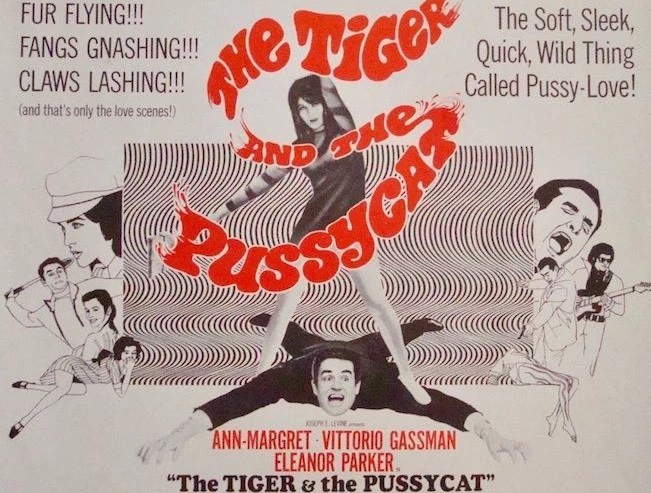
Ann-Margret was taking a leap into the unknown when she decided, temporarily, to turn her back on Hollywood and revive her fading fortunes – and buttress her bank account – by heading to Italy. By the time she made that decision, Clint Eastwood would not have been deemed to set a sparkling template since his spaghetti westerns were not released in the USA until after she had departed for Italy. She may well have had her head turned by such critically acclaimed fare as the Oscar-nominated Marriage Italian Style (1964) or perhaps the prospect, like Burt Lancaster in The Leopard (1963), of being taken up by critically-acclaimed director.
At one point she had easily been the fastest-rising star in Hollywood, with contracts for movies from rival studios, at one time balancing the demands of around a dozen movies. Had she been born in the previous decade she would have headlined any number of pieces of fluff that attracted box office. Even so, after making a number of pictures that scarcely challenged her – from Bye, Bye Birdie (1963) to The Swinger (1966) by way of a couple efforts that stretched her screen person (Once a Thief and The Cincinnati Kid, both 1965) – she had discovered that she was still perceived as little more than a Bond Girl, or the Matt Helm equivalent in Murderers’ Row (1966).
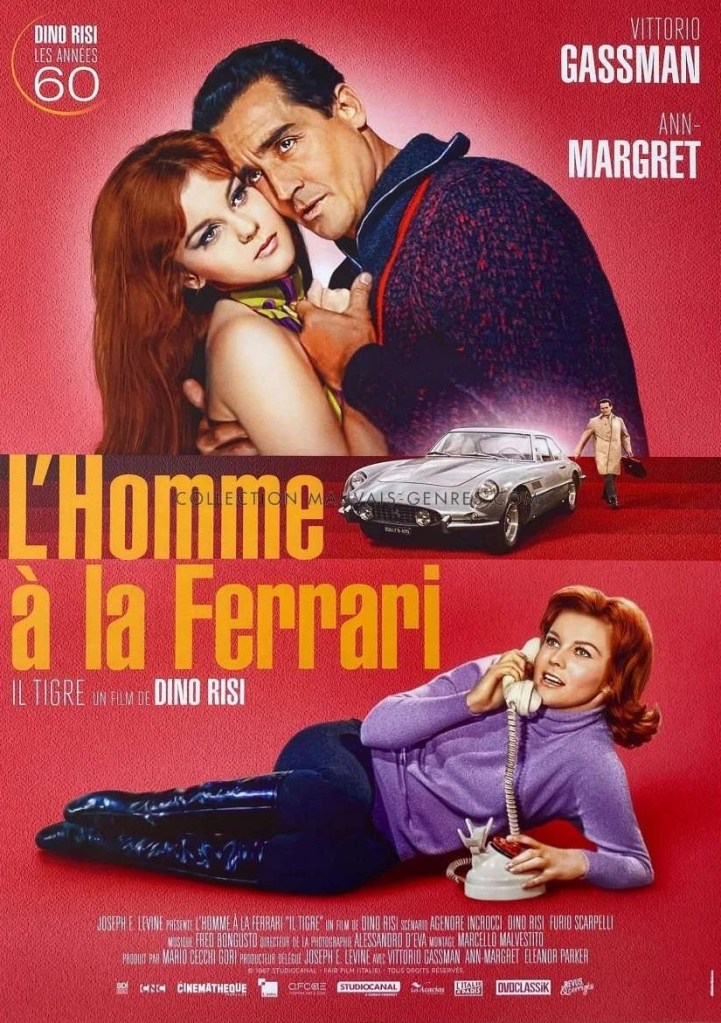
Quite what she expected to find in Italy is anybody’s guess. Probably not a standard Italian comedy. Nor to be playing second banana to Italian star Vittorio Gassman (A Virgin for the Prince, 1965) – three-time winner of a David (the Italian equivalent of the Oscars) – who knew how to frame his performance for an Italian audience. But while a huge star in his homeland he had not crossed-over like Marcello Mastroianni to win international favor.
Top executive Francesco (Vittorio Gassman), alarmed at becoming a grandfather at the age of 45, and believing life has now passed him by, begins a relationship with Carolina (Ann-Margret), an art student less than half his age. She makes a good bit of the running, being attracted to older men.
So a fair chunk of the picture is Francesco unable to make up his mind, or then suffering guilt from an illicit affair, worrying that his wife will find out and at the same time considering running away with the decidedly energetic girl.
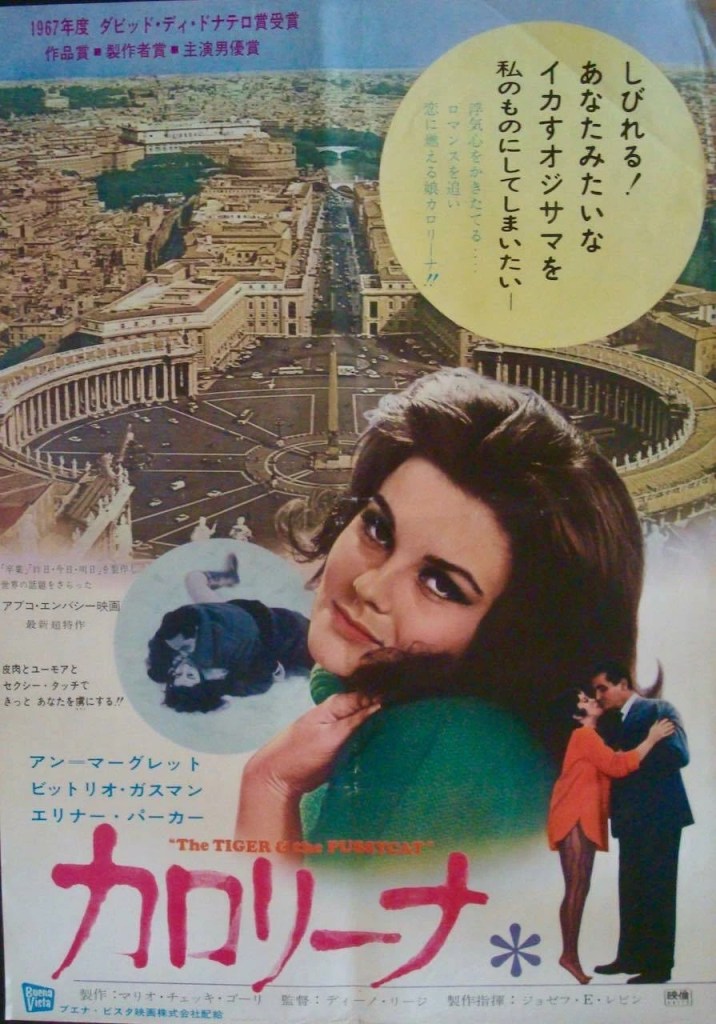
The scenario will be more familiar to Italian audiences than American. Affairs were often seen as opportunities for comedy rather than, as in Hollywood, drama and angst. Francesco has the example of his friend Tazio (Fiorenzi Fionrentina), brought to financial ruin by an affair, and all the friends of his wife Esperia (Dorothy Parker) are divorcees after their husbands have run off with younger women.
Despite his excuses for being away from home mounting up, Esperia is not suspicious. You would have thought his colleagues would have more of an inkling given the number of times he dodges work commitments.
If you are a fan of Italian comedy, this will be right up your street, a number of sequences where Gassman falls back on physical comedy or stretches his features every which way but loose and gives the impression of not being able to follow his dreams at the same time as being suffocated by them.
If you’re here for Ann-Margret, you’ll be baffled. Sure, she has the occasional opportunity to shake her trademark booty, and she has lost none of her screen presence, but the role, effectively of second banana to the male lead, could have been played by a dozen other actresses, and Ann-Margret doesn’t bring anything particularly innovative or exciting to the role.
She went into Italian exile for three years and the movies she made all bombed at the American box office so in effect, as far as Hollywood and American audiences were concerned, she had inexplicably disappeared and there wasn’t exactly a long queue seeking her signature when she returned.
Directed by Dino Risi (Treasure of San Gennaro, 1966) from a script by himself, Enni De Concini (A Place for Lovers, 1968), Adriano Baracco (Treasure of San Gennaro) and Nino Manfredi (Treasure of San Gennaro).
A decent enough comedy. Gassman runs off with the picture but Ann-Margret completists will find little to enjoy.

 The Magnificent 60s
One thought on “The Tiger and the Pussycat (1967) ***”