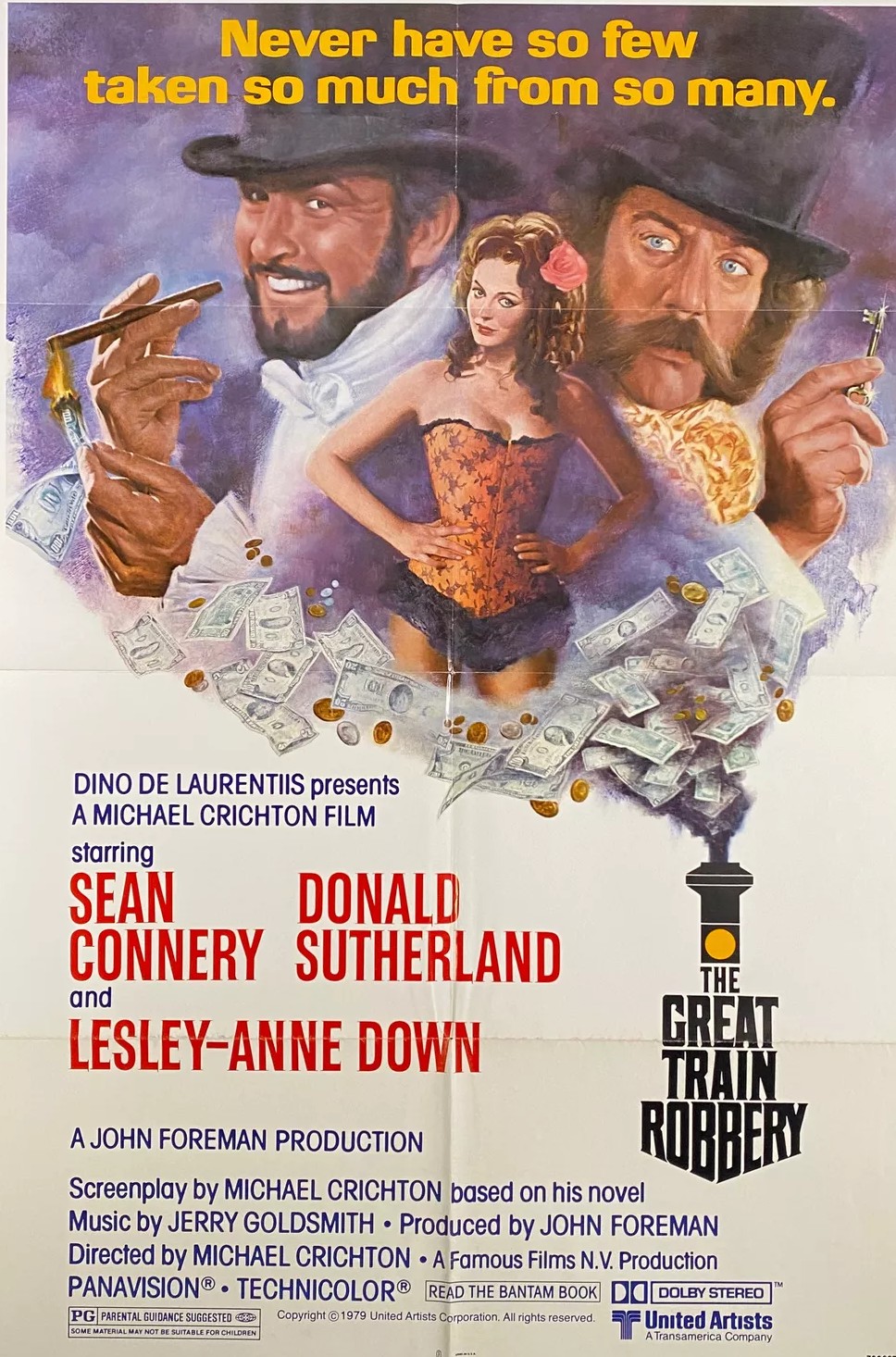
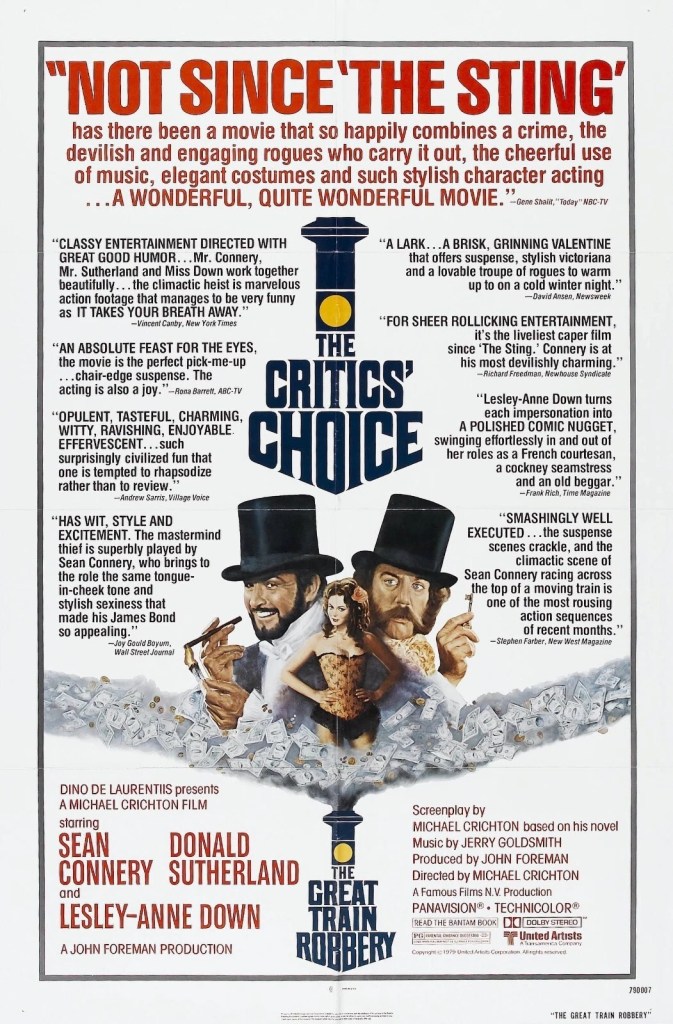
The Great Train Robbery / The First Great Train Robbery (1978) ****

Back in the day your IP was the star. And here Sean Connery (The Hill, 1965) is the essence of that belief. The camera homes in on him. He steals every scene with an effortlessness that takes your breath away even as co-star Donald Sutherland (Don’t Look Now, 1973), complete with bizarre sideburns and winks to the audience, is huffing and puffing to compete.

Come at it as the standard heist movie and you will struggle to enjoy it because it is made up of too many different components. But approach it from a different perspective, that of The Sting (1973) as one critic suggests, and it takes on a different complexion and the getting there becomes a whole lot of fun. The background, Victorian England of the 1850s, doesn’t help so much as the sets look like they’ve been plundered from Oliver! (1968) and dirtied up a bit.
It’s worth remembering that in an era when the Mission Impossible series has been constantly sold on Tom Cruise undertaking his own stunts that Sean Connery did something much more dangerous than anything attempted by Cruise which was to race along the top of a train travelling at 55 miles an hour.  

And if you need some contemporary analogy, look no further than the rich get richer and mostly through plundering. The ending presents the notion of a Robin Hood outwitting the forces of law and order to the acclaim of the public. But that would be to overlook the fact that chief thief Pierce (Sean Connery) is already so wealthy from previous nefarious dealings that he hobnobs with the rich, so accepted in their world of male clubs and high society that, like a financial trader, he is able to pick their pockets of vital information.

Though it’s not quite that easy. The target is a trainload of gold bullion heading for the Crimean War. And the two safes containing the dosh require four keys, each under the control of a different high-up official, requiring several separate audacious thefts. This involves some play-acting from the principals, dressing up in the main from female accomplice Miriam (Lesley Anne Down), clever duping by Pierce and old-fashioned burglary from pickpocket Agar (Donald Sutherland) who waves his fingers around like a demented Fagin, and whose main job is make wax impressions of stolen keys.

So Pierce pretends to be the ardent wooer of the daughter of one of the key holders, and Miriam essays a prostitute to relieve a key holder of the precious possession he wears around his neck. But the other two keys require a more professional approach which involves first of all the springing from prison of cat burglar Clean Willy (Wayne Sleep) to break into the guarded railway premises in a time-dependent operation.
But the cops get wind of the plan and increase security on the train, including adding a new padlock to the outer door. “Find me a dead cat!”, while not quite in the league of “The name’s Bond, James Bond” might well count as one of the best lines ever uttered by Sean Connery.      

Said deceased animal is brought in to supply the necessary stink for a corpse should the cops consider opening the casket containing Agar which is to travel on the train, providing the team with the necessary inside man. But Agar and Miriam as the weeping widow of the supposed dead man have very little to do compared to Pierce who has to climb on top of the train, racing along the speeding top, drop down the side in an improvised harness and pick the padlock, then do the whole thing in reverse.

I may be wrong, and I’m sure someone will correct me if I am, but if this wasn’t the first time running along the top of a moving train was employed in a movie it certainly set a new standard, especially in the willingness of the actor to carry out his own stunts.

Pretty much all that remains after that is the twists that see Pierce captured and then escape. You could pick a few holes in it if you wish. The fact that after Pierce swapping coats (the one that had lain beside a dead cat for hours and provided sufficient stink to convince the lawmen) with Agar, nobody noticed the smell seems unlikely. The same would apply to bank manager Fowler (Malcolm Terris) who fails to spot that the widow he shares a compartment with for the entire journey is the prostitute who duped him, though that prospect does increase the tension.

If you’re expecting a standard heist movie then this takes way too long to come to the boil, but if you go along with the conceit and enjoy the playing especially of Sean Connery and ignore the mugging of Donald Sutherland it is in the forefront of the best robbery pictures.

And it’s worth noting the little gems in Connery’s acting. There’s a scene where Lesley Anne Down is berating him for making her become a prostitute (implicit is her fear she might actually need to have sex with the client). He’s eating an orange. Ignoring her complaints as just part of the job, he offers her some of his fruit as if his main worry is being seen to be rude hogging the fruit to himself.

Connery proves exactly why you hire a star. He carries the picture. There’s a lightness to his overall performance, notwithstanding the few times he needs to take a tougher line, that makes the film a joy. Whereas Donald Sutherland is either too heavy-handed or overacting. This proved a breakthrough role for Lesley Anne Down (British television’s Upstairs, Downstairs, 1973-1975).

Director Michael Crichton (Westworld, 1973) cuts himself too much slack in the first half of the picture which could have been considerably tightened up but comes into his own with the tension and twists of the heist and he has the good sense to rely on Connery’s interpretation of Pierce. He also wrote the script based on his own novel, a fictionalization of the actual original robbery attempt.

There already had been an incredibly famous Great Train Robbery in Britain in 1963, hence the need to differentiate this from that by inserting the prefix “First” to the advertising in Britain.

Great fun and worth a watch.
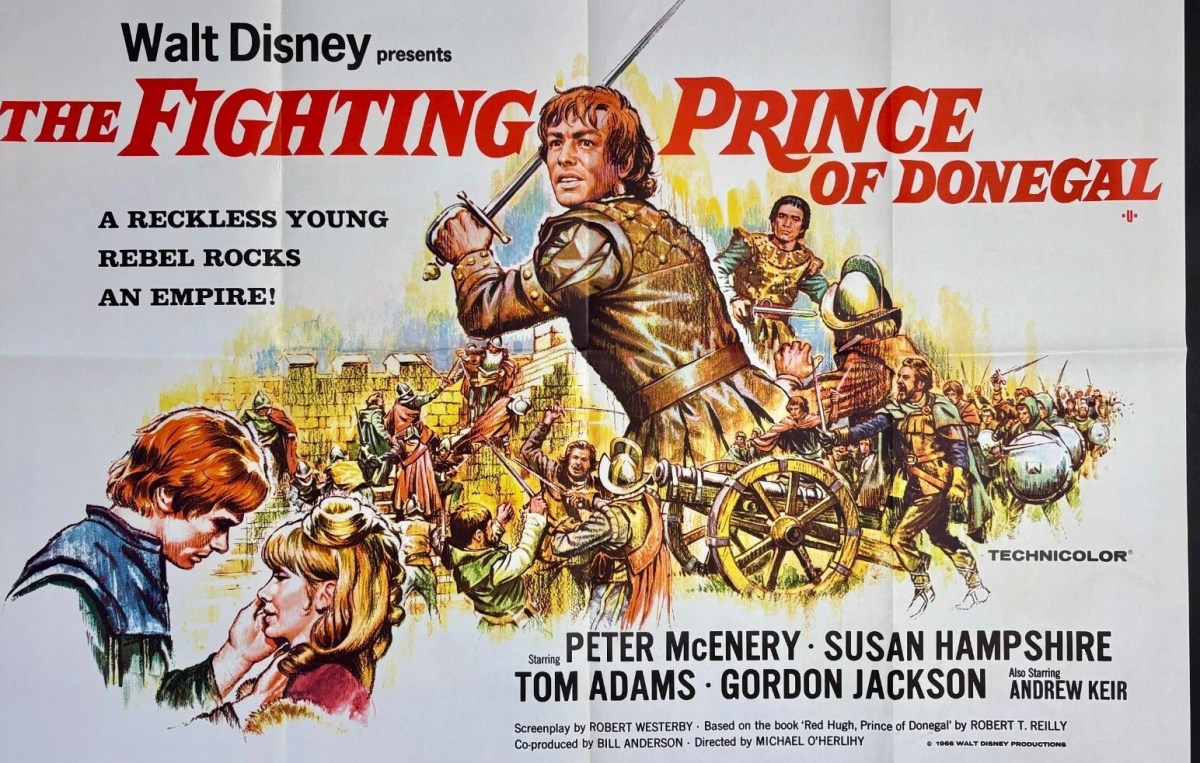
The Fighting Prince of Donegal (1966) ***

I’m amazed I sat through this without complaint as a kid. This was a rare outing for me, given I grew up in a town without a cinema and the only time I went was for a roadshow musical at Xmas or if we were away on holiday for the summer in towns that were bursting with picture houses. No doubt my parents, of Irish descent, were seduced by the last word of the title while assuming that the second word would be enough to keep us kids happy.

Unfortunately, the title is something of a misnomer. The titular character Hugh O’Donnell (Peter McEnery) spends more time sitting on his backside in a prison than he does engaging in any form of fighting. And in another annoying dupe, swords are scarcely in evidence, the weapon of choice being a wooden club of sorts, so it hardly qualifies as the swashbuckler the poster suggests.

Where Walt Disney was happy to play fast and loose with other aspects of history in other movies, here he cleaves close to the truth – though Hugh didn’t marry a McSweeney and his father didn’t die – so what we get is some kind of rebellion story, as the Irish attempt to rise up against the occupying English in the 1580s. If you are aware of your history, you will know that Oliver Cromwell is to blame for the English re-conquest of Ireland. Various rebellions followed, of which this is one.

It starts off promisingly enough with a nice bit of myth, that when Hugh becomes chief of the Clan O’Donnell he triggers a prophecy that insists the Irish will become free. That’s easier said than done due to the lack of a cohesive rebellion force thanks to infighting and historical distrust between the clans. And when Hugh does attempt to stand up against the British he’s promptly imprisoned – again and again.

A better title would be The Escapologist of Donegal because that’s mostly, except for the beginning and final sections, what this is about. He escapes, is betrayed and recaptured, or escapes, racing through the streets of Dublin, and remains free and then manages to gather the clans under his banner and take on the English.

And, actually, Hugh is not that keen on the use of force to win freedom. He prefers negotiation. So you can imagine how exciting that is for the kids in the audience. He wants to unite all the clans and hope the English will see sense. Luckily, for the frustrated kids in the audience, the English are not inclined to sit around a negotiating table. So, at last, we get a battle.

To save it from just being a history lesson, a romance is sneaked in between Hugh and Kathleen McSweeney (Susan Hampshire), daughter of another clan chief, and who already has an ardent admirer. A wedding is the easiest way to create unity between clans, but, luckily, this isn’t just the political matchmaking that occurred in England and Europe.

But that nascent romance is put on the back burner for most of the picture while Hugh sits in jail or runs around the country in escape mode.

So, a few fights with cudgels and fisticuffs, some bonding with other prisoners, some wooing of the clans until at last at last there is the semblance of a battle.

Nearly 60 years on from first viewing I am not won over. The politics and maneuvering is certainly more interesting to an adult, but I am still miffed at the absence of much actual swordplay – and you know how fond I am of a swashbuckler. It’s just too earnest in setting up a rebellion tale and the escapes have none of the ingenuity we have come to expect from such.

Peter McEnery (The Moon-Spinners, 1964) looks distinctly uncomfortable as a matinee idol of the kind groomed by Disney, especially when you see what he was capable of a few years later in the more scandalous Negatives (1968). Susan Hampshire (The Trygon Factor, 1966) only tops and tails the picture and her entire Disney experience was clearly so miserable she excised it from her biography.

Directed by Michael O’Herlihy (Smith!, 1969) from a screenplay by debutant Robert T. Reilley based on the Robert Westerby novel.

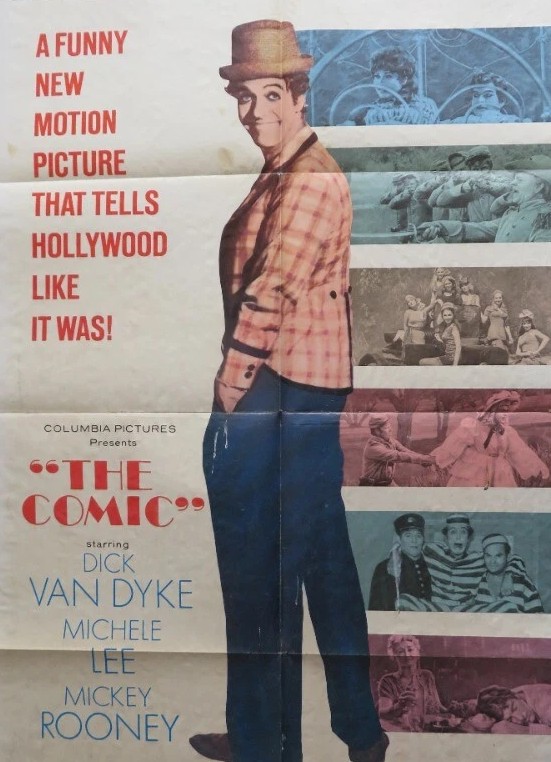
The Comic (1969) ***

It’s a Hollywood trope that successful screen comedians invariably want to test their mettle in more dramatic circumstances. Studios tend to cave in to such self-indulgence, usually with the proviso that the star makes another couple of laff fests with them, but audiences tend to give such enterprises the thumbs down. Dick Van Dyke (Divorce American Style, 1967), on a commercial roll for most of the decade, took the, theoretically at least, easier option of limiting the drama on this one.

Silent films were also on a commercial roll, the oldies having made a comeback via compilation reissues and through slapstick homages such as It’s A Mad, Mad, Mad, Mad World (1963) and The Great Race (1965) so setting the picture in that era in Hollywood’s history seemed a sure thing.

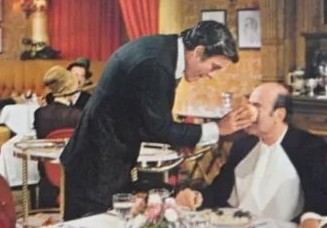
And it starts off bang on the money. A eulogy delivered at a funeral is interrupted by a pie in the face and (as seen above) that device can be utilized at any point.

I’d be telling you to give this complete misfire a miss if it wasn’t for an exceptional final third. The first two-thirds is made up of far too many silent film sequences starring Billy Bright (Dick Van Bright) who goes from vaudeville clown to major star complete with, at the height of his fame, being accorded the honor of a having a clockwork toy made of him.

When it’s not diverted into yet another silent movie sequence, which only serves to show that a modern comedian lacks whatever smarts the silent movie comedians had, the drama takes roughly the same approach, with scenes that could have come from a silent movie if not quite to the utmost.

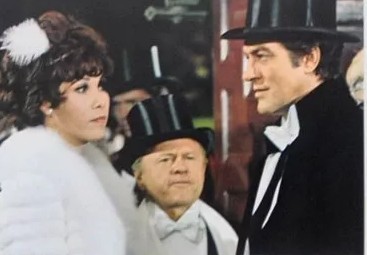
Thanks to a multitude of affairs Billy burns his way through marriage to Mary (Michele Lee) and thanks to an overfondness for the bottle nearly kills off his career before the arrival of the talkies does that for him.

Eventually, and suddenly, we switch to an entirely different picture, a proper drama, very bold indeed for the time for its portrayal of old age and loneliness – a representation that would chime very much with today’s audiences. You don’t quite warm to this old fella because he wasn’t particularly sympathetic to begin with, but still, in its rawness, this section exerts a very emotional pull.

And, indeed, for Dick Van Dyke it was an incredible piece of acting. He morphs from young, tall, and fit with a head full of hair to an old bloke, bent over, shuffling and with the kind of  comb-over that would put Bobby Charlton to shame. He’s been abandoned by everyone except sidekick Martin (Mickey Rooney) whose career has also gone south. They tell lies to each other to keep up their spirits.

The highlight of Billy’s life is getting a set of false teeth and setting the alarm for 4.30am so he can get up and watch reruns of his old movies on television. He lives on boiled eggs and milk.

And he’s still dumb enough to be rooked by a gold-digger. He’s placed an ad in Variety, drawing attention to the fact that he’s still alive, which wins him a spot on a TV chat show which turns into a gig for a commercial which leads a much younger woman to think he must be loaded. He ends up marrying her while in an oxygen tent, but she vanishes when she discovers his newfound fame has led to nothing.

In theory, this is about the side effects of fame, the temptations which few can avoid, and the sudden collapse in income and public awareness when the well runs dry. But, in reality, setting aside the Hollywood overtones, the last third could have been about any lonely old man.  

A film of three thirds for the star, in the first two there’s nothing much to hold onto, in the last one he excels. Nobody else has much to do. Directed by Carl Reiner (The Jerk, 1979) and written by him and Aaron Ruben. Reiner had been the writer of The Dick Van Dyke Show so presumably that played a part in him getting the gig.

Died an absolute death at the box office. Not released outside America for decades and then only on DVD.

If it hadn’t been for the final third this would have been rated a one-star effort, it’s such an ill-conceived concept, and disastrous in its execution, but that final third makes it very worthwhile indeed if you can stick with it.

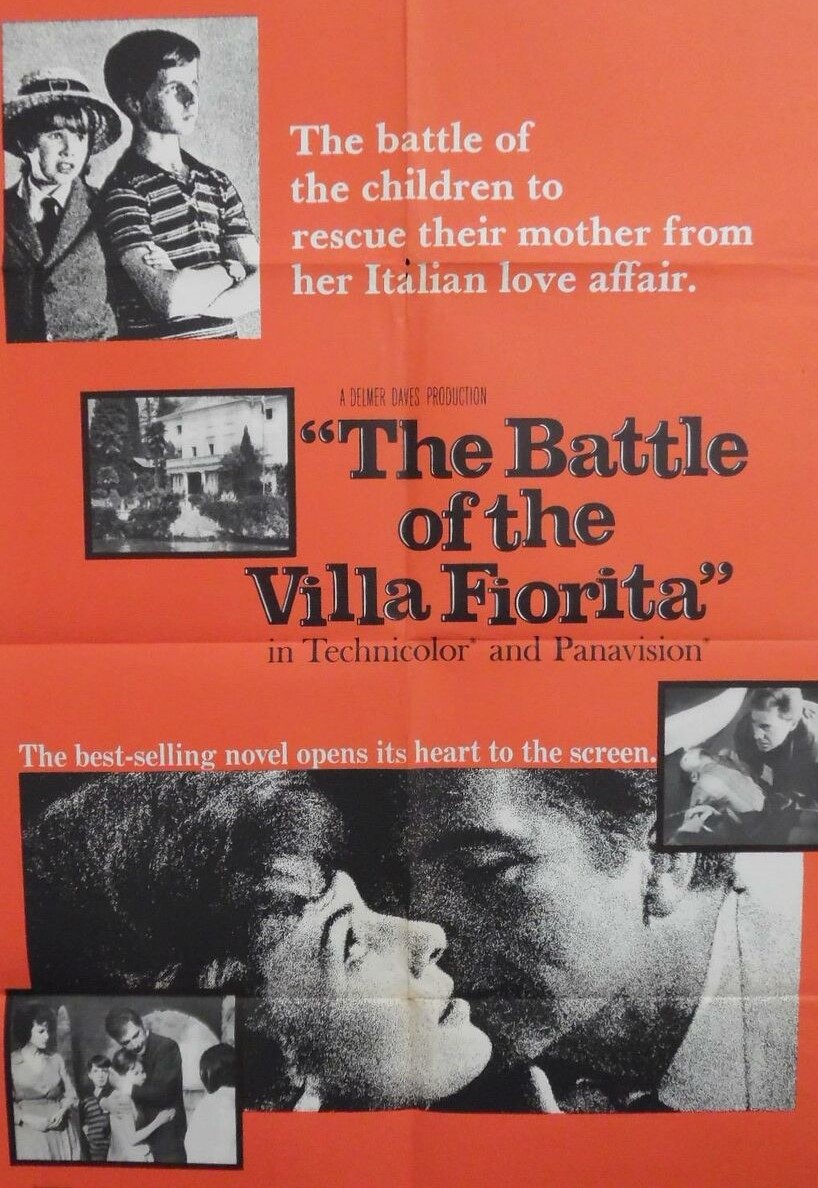
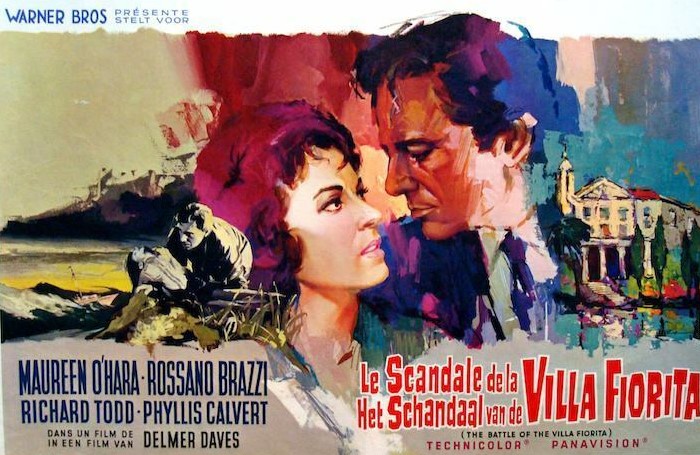
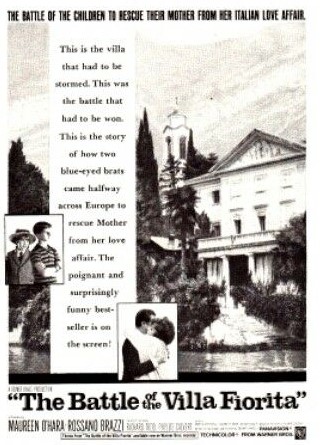
The Battle of the Villa Florita (1965) ****

One of the few romantic comedies of the 1960s to resonate today. Neglected wife Moira (Maureen O’Hara) abandons her two children to fly to the eponymous villa on Lake Garda in Italy to take up with composer Lorenzo (Rossano Brazzi).  While husband Darrell (Richard Todd) accepts the fait accompli, kids Michael (Martin Stephens) and Debby (Elizabeth Dear) set out to bring her back. Although Disney had created a hit on the similar theme with The Parent Trap (1961) – also starring O’Hara – this failed to find an audience primarily because it sailed too close to comfort regarding the reality of the effect of separation and impending divorce on children.

Nor are these kids Disney cute. While Debby occasionally calls upon her internal winsomeness to tug at heartstrings, both she and Michael are made of sterner stuff. Unwilling to use comedy as a means of bringing the errant adults to heel, the movie gets deeper and deeper into darker territory, as the kids embark on a war of attrition, disruption the cushy love-nest and forcing their mother to accept her maternal responsibilities. And the ending is far from what you would term happy.

Moira injects some nascent feminism into her role, determining that she is entitled to happiness rather than merely fulfilling the part of a good mother, running a household,  looking after her offspring and enjoying the life of a well-to-do matron marred by a husband too often away on business and the too-familiar company of boring respectable friends. A Disney picture would have seen the kids relying on the kindness of strangers or harmless subterfuge to make the trip from Britain by boat and train to Italy. Here, they fund the journey by selling Debby’s horse. The trek is not only dull but on their miserable budget they spend most of the time famished, unable to afford food on the train, resigned to watching adults in their compartment stuff their faces (Disney would have had the grown-ups share  out the tasty fare).

Arriving at the palatial villa, where Moira is waited on hand and foot, spoiled by presents and ardently wooed, the children are under no illusion about the uphill battle they face especially when Moira is not immediately stricken enough by conscience to give in to their entreaties. Lorenzo’s initial solution is to fly the children home. Adult fortitude begins to waver when the English offspring join up with Lorenzo’s estranged daughter Donna (Olivia Hussey) on a hunger strike. Lorenzo shows a sharper side to his temperament, Moira a weaker. The children’s solidarity is, however, sorely tested by their own differences.

That there is no easy solution – the kids perhaps joining their mother full-time in Italy or some kind of child-sharing scheme – is what gives this movie its power. The classical idea of a repressed woman finding redemption in the arms of an Italian lover (as with Summertime, 1955, also starring Brazzi) is turned on its head as reality intervenes. It’s as well the kids don’t kill us with cuteness, but instead present a realistic example of what it’s like for adoring children to be abandoned. As the film progresses, and the children turn the screw, they soon face adult realization that, even if they win, the mother they will bring back will not be the mother they knew.

After turns with James Stewart (Mr Hobbs Takes a Vacation, 1962) and John Wayne (McLintock!, 1963), Maureen O’Hara had regained her marquee appeal, and although feisty enough in those outings, this was a different, and more courageous,  performance than her fans might have expected. Her conflict is mostly internalized and especially when her children fail to see her point of view, that feistiness vanishes from view, replaced by a more somber, thoughtful individual. Brazzi is excellent as the lover whose paternal responsibilities he takes lightly compromised by a woman forced to come to terms with motherhood. Martin Stephens (The Innocents, 1961), Elizabeth Dear (The Pumpkin Eater, 1964) and, making her debut, Olivia Hussey (Romeo and Juliet, 1968) make convincing, conniving, children still dealing with their own hormonal and emotional growth.  

Adapting the bestseller by Rumer Godden (Black Narcissus, 1947), this proved to be final movie for veteran director Delmer Daves (Spencer’s Mountain, 1963 – also starring O’Hara.).

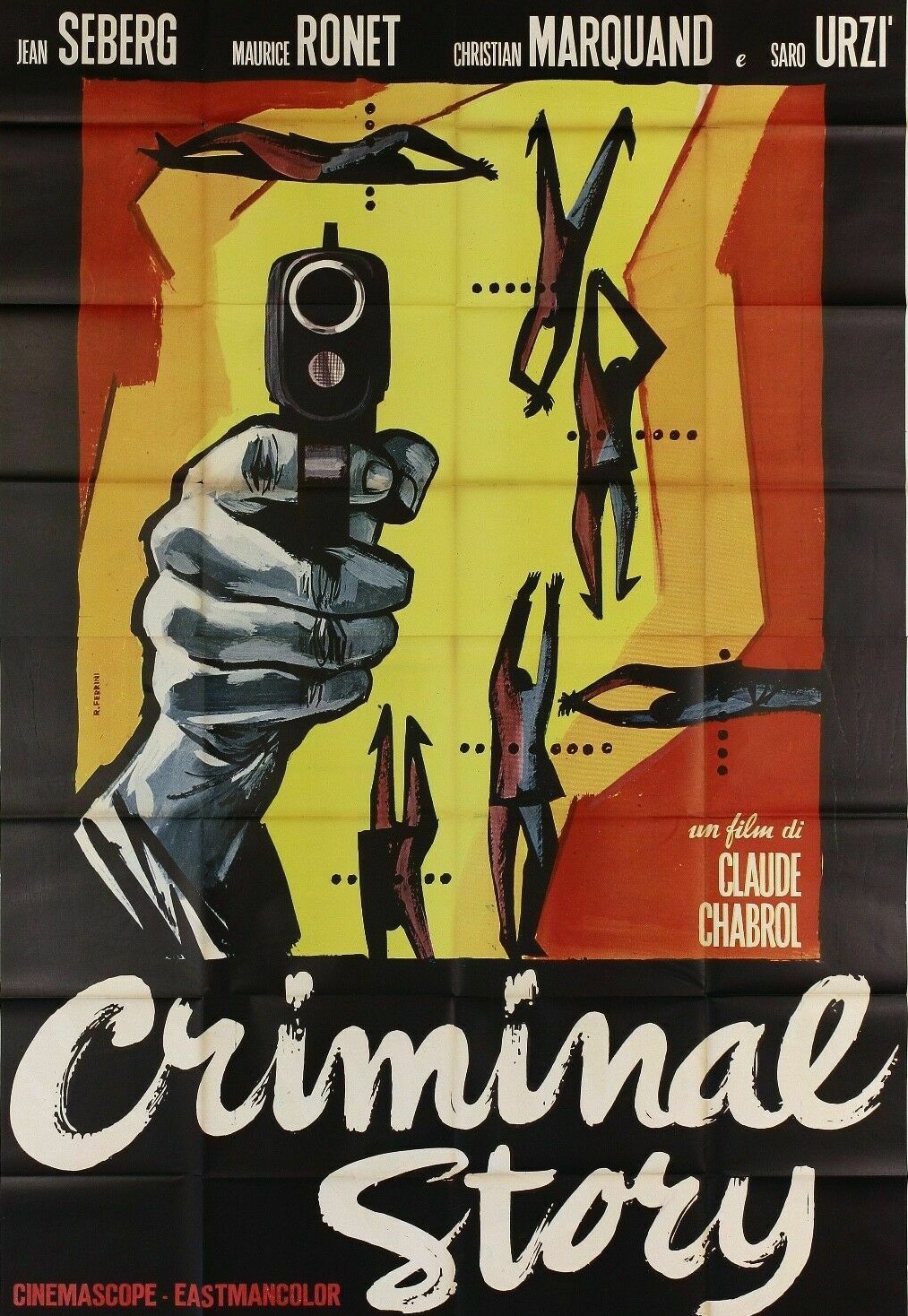
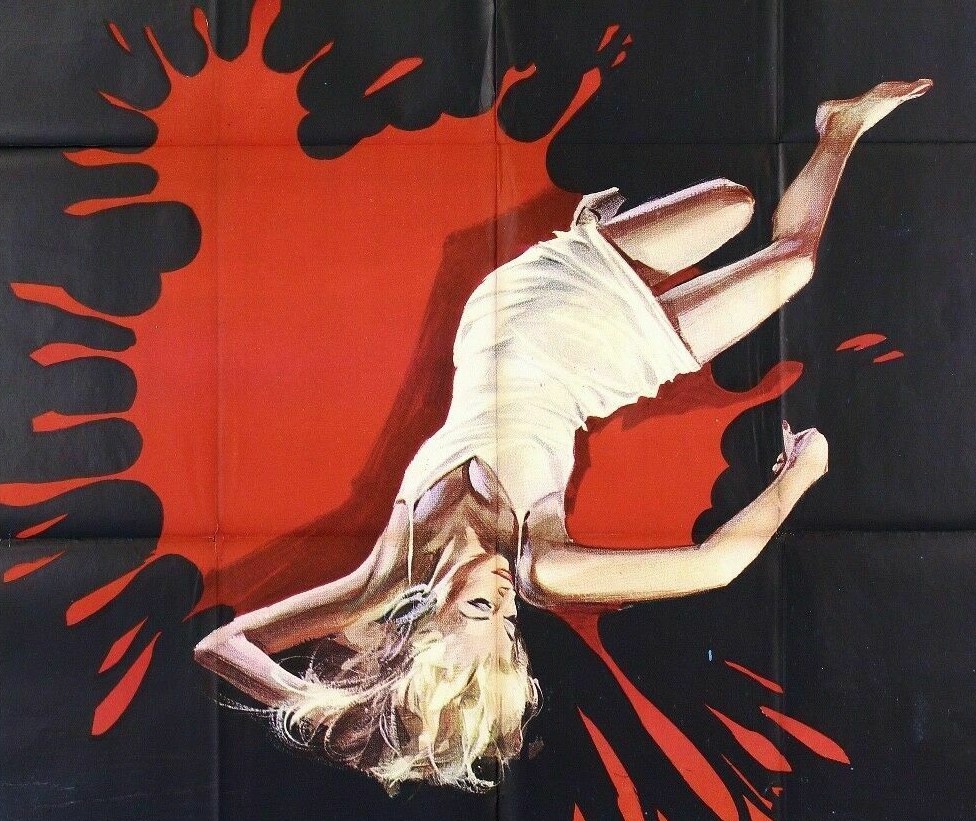
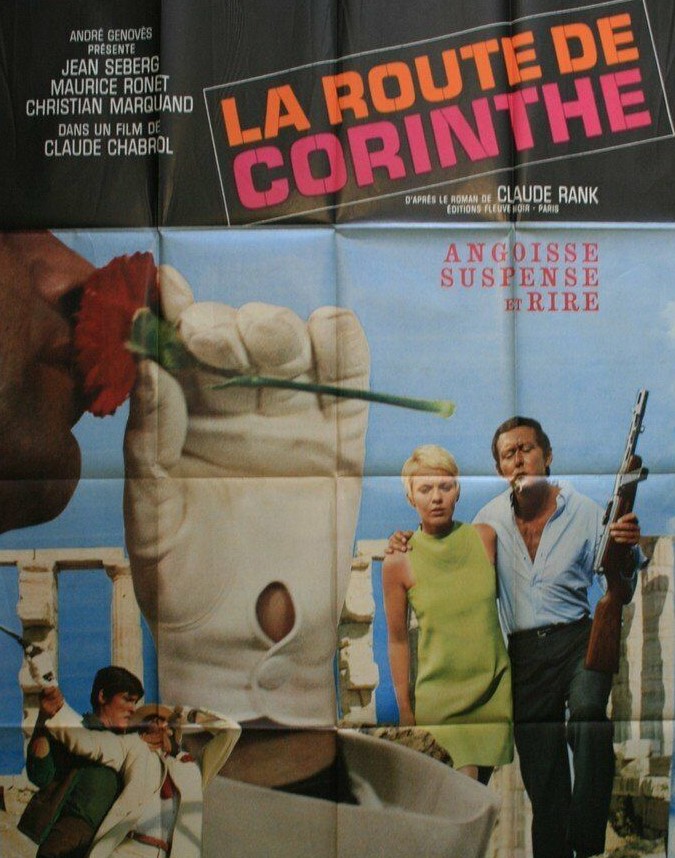
The Road to Corinth / Criminal Story / Who’s Got the Black Box? (1967) **

Top-class cast and occasional stylish direction get in the way of a thriller that can’t make up its mind whether it is in reality just a spoof. On the one hand we have a killer in a white suit complete with straw boater and a secret service boss who sells Turkish Delight, on the other hand a story not so much from James Bond but from Bond imitators.

Agent Robert Ford (Christian Marquand) is on the trail of black boxes that prevent missiles launching. When wife Shanny (Jean Seberg) is framed for his murder she determines to uncover the real killer, aided by Dex (Maurice Ronet), and find the maker of the boxes.

But that’s an over-simplification of an over-complicated plot so it’s best to concentrate on the highlights. For example, when customs officials stop a magician they find white rabbits and doves in his vehicle and, despite severe interrogation, he can, magically, release himself from his bonds enough to swallow a concealed cyanide pill. Instead of the usual cute children that proliferate in these kind of films, there’s a really annoying one. Shanny, imprisoned, has to make dolls. Greek Orthodox priests play a significant role.

Throw in kinky secret service boss Sharps (Michel Bouquet) who relishes being slapped for his inappropriate overtures to Shanny, a porn film starring Madame Phiphi, the heroine dangled from a crane and later lashed down to a dumper, and a villain willing to throw up is villainy for the love of a good woman.

But mostly it’s a picture in a rush. There are chases galore and nods to Hitchcock and lush Greek scenery.

It would be easy to assume that in eye-catching outfits Jean Seberg (Moment to Moment, 1966) is mostly there to provide eye candy but she does manage to outwit her pursuers from time to time although she seems equally to have a knack for being caught. Maurice Ronet (Lost Command, 1966), Christian Marquand (The Corrupt Ones, 1967) and especially Michel Bouquet (La Femme Infidele, 1969) bring an air of quality to the proceedings.  

Apart from the occasional stunning image, this is not the Claude Chabrol (Les Biches, 1968) that lovers of his thrillers would expect.

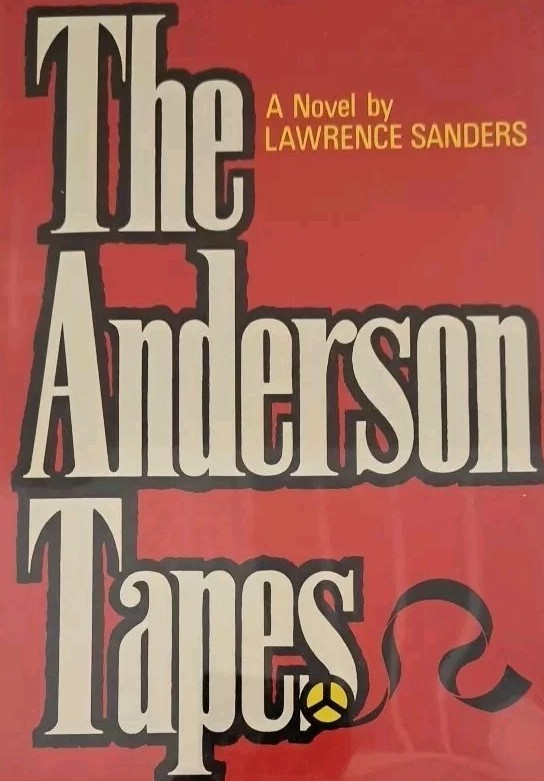
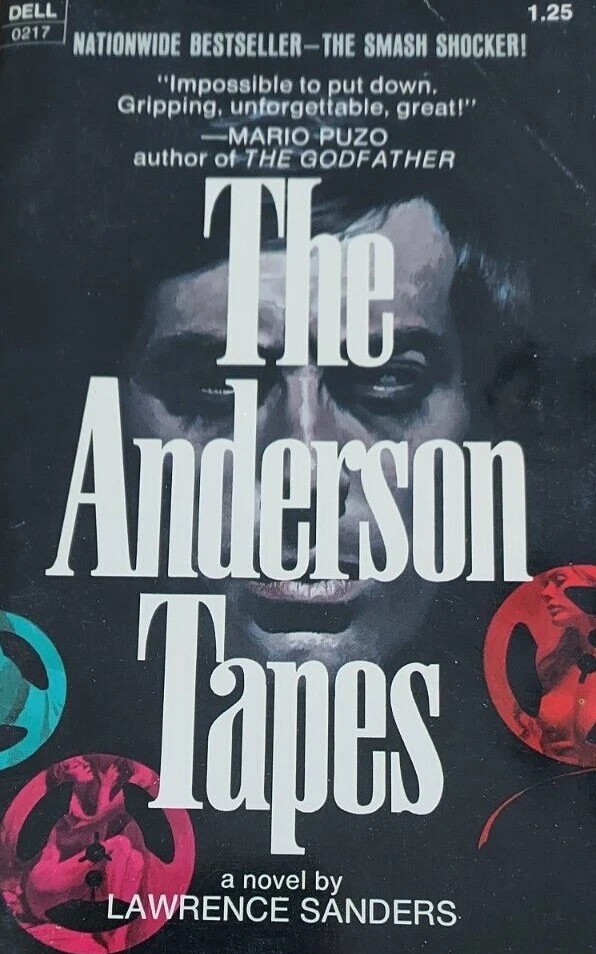
Behind the Scenes: “The Anderson Tapes” (1971) – From Book To Film

Had Sean Connery played the character of Duke Anderson as written, rather than reigniting his career it would have risked killing it off. It was already a significant ask for a star to shift from portraying good guys – even if James Bond had an immoral streak – to essaying a bad guy, though here was precedent – Paul Newman in Cool Hand Luke (1967) and Steve McQueen in some style in The Thomas Crown Affair (1968).

However, it would be difficult enough for audiences to accept a star who is two-timing his girlfriend, never mind one who in turn exhibits sadistic and masochistic streaks.

So that was the first problem for Oscar nominated screenwriter Frank Pierson (Cool Hand Luke) and not surprisingly he settles on the elimination route. The character’s sexual tendences are never mentioned. Theoretically, Pierson gets round the two-timing issue by merging the two girlfriends, Ingrid Macht and Agnes Everleigh, into one, Ingrid Everly (Dyan Cannon).

But Ingrid Everly has little connection to Agnes beyond that she lives in a luxury apartment. In the book, Agnes is a casual pickup,  a woman he meets in a bar. She was separated from her husband and retained possession of the apartment, which was in his name. In order to find the legal grounds on which he could regain the apartment, her husband had bugged the apartment.

In the film, the apartment is still bugged, but by her rich jealous boyfriend Werner (Richard B Shull) so, technically, it’s Ingrid who’s doing the two-timing. Whereas in the book Agnes’s husband is perfectly happy for her to be entertaining other men as he hopes this will enhance his chances in the divorce settlement, in the film Werner is the opposite, and does not embrace the notion of what he views as his “property” being involved with anyone else. Ingrid, who was genuinely Anderson’s ex-girlfriend, in the film comes to realize a sugar daddy is a better bet than a criminal no matter how handsome. The only oddity in the picture that when Anderson is confronted and Werner explains that, via his surveillance, he knows Anderson is planning a robbery, that he doesn’t give two hoots about that.

Other changes are equally sensible. In the book, the robbery is intended to take place in the middle of the night. The ploy the thieves planned to use to get the apartment residents to open their doors was that the building was on fire. This wasn’t by triggering the fire alarm but by running from door to door, shouting “Fire! Fire!”.  Pierson gets rid of that cumbersome device.

He also knocks into touch the notion that Tommy (Martin Balsam) would find supposedly legitimate reason to gain access to apartments to scout the premises in advance by pretending to be doing a survey for a civic group. In the book Tommy is a two-bit low-level hood and not involved in the actual robbery but with some knowledge of art and expensive items.  In the film he transforms into a smooth-talking  antiques dealer and Frank Pierson comes up with the idea that the management of the building is planning a refurbishment and wants to ensure that residents have the opportunity to align their interior décor with what is being planned.

In the book as well as eight luxury apartments, there are, on the ground floor two businesses, a doctor and a psychiatrist, but these are also thrown on the scrap heap, although in the book the doctor turns out to have $10,000 hidden away from the taxman as well as medicines that could be sold on the black market.

The pompous Capt. Delaney (Ralph Meeker) who organizes the offensive on the robbers, is drawn virtually word for word from the book. But there’s not room to incorporate all the criminal slang. I was especially intrigued to discover that what I always believed was called “a big job” was known to the criminal fraternity as “a campaign.” Nor the details of organizing such a robbery.

And there are a couple of interesting snippets in the book that Pierson had no room for in the movie. Firstly, author Lawrence Sanders includes verbatim a newspaper report dated 2nd July, 1968, to the effect that a new electronic communications office has been opened by the police to help cut down, initially, response times. The report included another fascinating fact. Prior to this date to report a crime the American public had to call a seven-digit number. That was reduced to the ”911” emergency number that operates today.

The second element is the call to unite all the different operations running criminal surveillance. Here, including Werner, there were four separate surveillance teams, none in contact with any of the others.

The book is a terrific read. I devoured it in one sitting. It is Sanders who introduces the flash forwards, interviews or somesuch with victims, while in real time the robbery is under way.

But the screenplay is an ideal example of how to trim a book to the bone without removing any of the essentials.

Sanders was also the author of The First Deadly Sin which was filmed with Frank Sinatra in 1980 and reviewed here earlier.

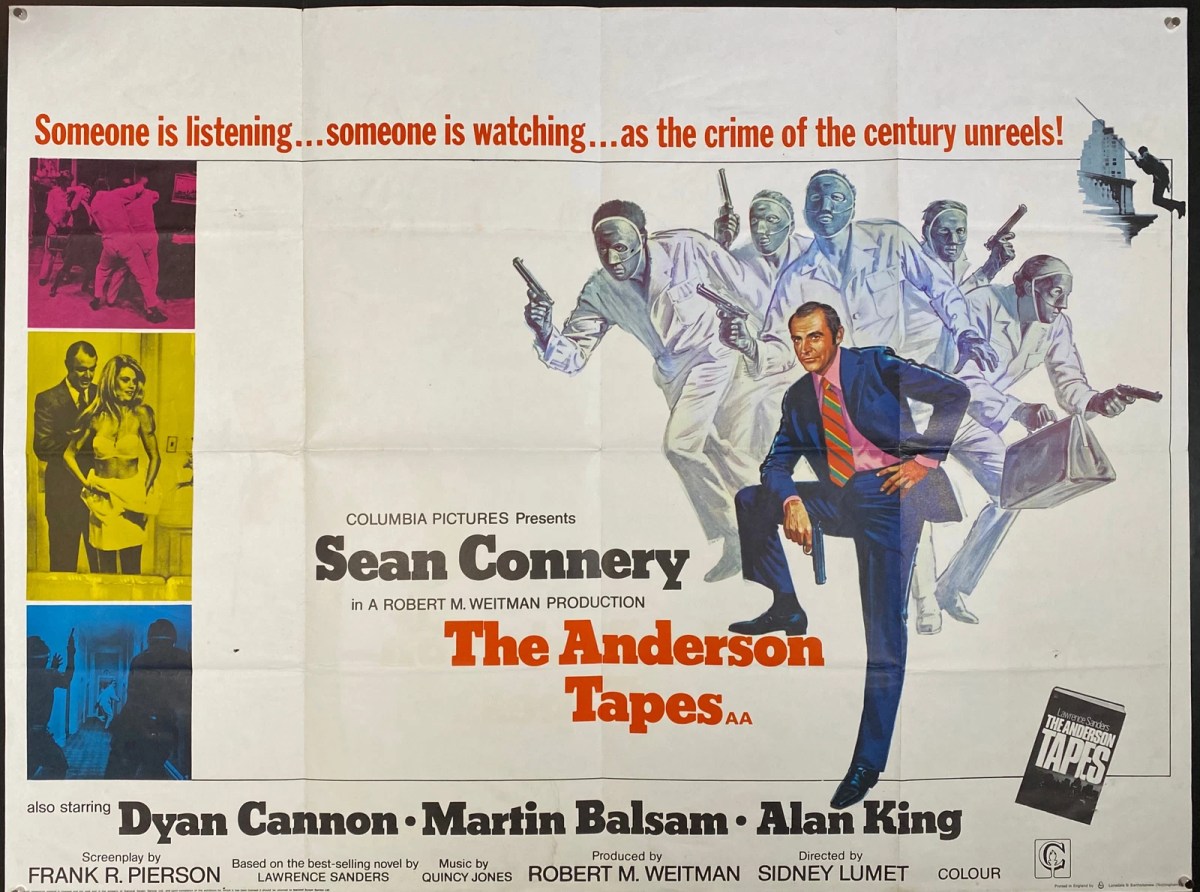
The Anderson Tapes (1971) ****

Director Sidney Lumet has made more critically acclaimed crime pictures – Serpico (1973) and Dog Day Afternoon (1975) earned eight Oscar nominations between them – but none have been as thrillingly entertaining as this mash-up of the heist and surveillance subgenres.  Francis Ford Coppola’s The Conversation (1974) has unfairly dominated the conversation regarding surveillance pictures, in large part down to Gene Hackman’s repressed performance, and because it made the ever-popular suggestion that Big Brother ruled the roost and there was nothing anyone could do about it.

These days The Anderson Tapes would hardly get out of the starting gate before everyone was whimpering about civil liberties and the fact that surveillance did the very job the public wanted it to do, which was to prevent crime and catch wrongdoers, would have been largely overlooked in the welter of lawsuits. A very clever device here prevents anyone getting trapped in that moral maze, so that what we’re left with is the inside gen on a superbly-organized and audacious robbery.

There’s a Thomas Crown Affair (1968) feel to this but where Norman Jewison employed split screen to get his various interlinked narratives across, here Lumet relies on speedy flash forwards intercutting the ongoing story.

The incipient danger of star Sean Connery was kept under wraps in the 007 outings, but here audiences get a blast of the full macho man, the take-charge kind of guy, and no bureaucratic buffoons getting in the way, and with no gadgets to rely upon it comes down to the sheer physicality of a magnetic screen personality.

Duke Anderson (Sean Connery) is no sooner out of prison after serving a ten-year stretch than he’s planning an audacious robbery, cleaning out an entire upmarket apartment block in the Manhattan Upper East Side, in which former girlfriend Ingrid (Dyan Cannon) lives in considerable luxury, over the Labor Day Holiday Weekend. After winning initial funding from the Mafia, he enrols, among others, camp antiques dealer Tommy (Martin Balsam), getaway driver Edward (Dick Williams), and “The Kid” (Christopher Walken), a young expert in alarms and electronics. As part of the deal he agrees to bump off another recruit, Rocco (Val Avery), who has fallen foul of the Mafia.

Everything that occurs is being recorded one way or another. Setting aside the building’s closed circuit television, Ingrid’s sugar daddy Werner (Richard B. Shull) has bugged her apartment and the cops have wiretaps on the Mafia and various others. This being a heist picture headed up by the world’s most popular star, as much as you want the criminals caught you want them to get away with it, Sean Connery having a self-justification scene at the outset to set liberal minds at rest.

So this is part docu-drama and part a whole bunch of cameos from the victims of the robbery as their, often heinous, personalities come into sharp perspective: siblings who rat each other out, the husband willing to allow his wife to be abused rather than give up a single dollar of his vast fortune. Even wealthy Werner couldn’t care less about a robbery as long as Ingrid knows her place, she’s his “property,” and has to choose him rather than Duke Anderson because, as feisty as she is, she relies on his dough for the good things in life.

But it’s driven by the hardnosed Anderson who’s not going to let the fact he’s never killed a man before get in the way of doing so now as the alternative would be the loss of the gig. Despite his macho demeanor and being able to run his gang efficiently, he’s aware he’s a small cog in the organized crime wheel.  

When the cops get wind of the robbery, that triggers some superb stunt work as cops abseil across buildings.

After the disappointing box office of Shalako (1968), The Red Tent (1969) and The Molly Maguires (1970), Sean Connery roared back to form here, as the likeable hood while adding more edge to his screen persona. Martin Balsam (Hombre, 1967) is otherwise the pick of the supporting cast, though Christopher Walken, on his debut, makes his mark and you can’t ignore Dyan Cannon (Bob & Carol & Ted & Alice, 1969).

But this is just terrific stuff from Lumet, who was apt in his more critically-acclaimed pieces to drift into the overly serious, and while he makes a point – at a very early stage, please note – of the ubiquitous power of surveillance, he lets that speak for itself while he concentrates on the more thrilling and more human aspects of the story. Screenplay by Frank Pierson (Cool Hand Luke, 1967) from the best seller by Lawrence Sanders (The First Deadly Sin, 1980). As a bonus, a first class score from Quincy Jones (Bob & Carol & Ted & Alice).

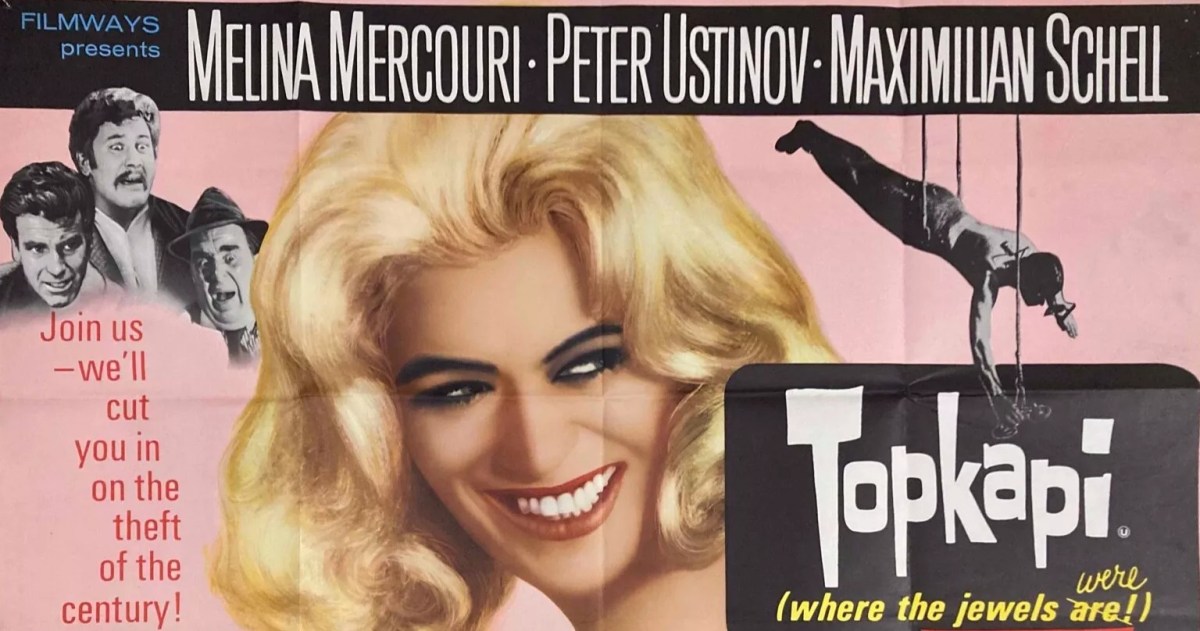
Topkapi (1964) *****

The mother of all heists directed by the father of all heist pictures. Films as diverse as The Italian Job (1969), Mission Impossible (1996) and Ocean’s Eleven (1960) owe director Jules Dassin a massive debt since he pretty much invented this genre with the French-made Rififi (1955). But that involved professional criminals. Outside of masterminds Elizabeth (Melina Mercouri) and Walter (Maximilian Schell), this crew are amateurs, deliberately chosen for their lack of criminal records and with a mind to the specific tasks required. So we have acrobat Giulio (Gilles Segal), upper-class English gadget inventor Cedric (Robert Morley), strongman Hans (Jess Fisher) and driver Arthur (Peter Ustinov).

The target is the impenetrable, complete with sound-sensitive floor, Topkapi Palace in Istanbul where they plan to steal a priceless emerald-encrusted dagger. The plan is ingenious. Arthur is initially only hired to smuggle the weapons essential to the audacious heist across the border. But when he is caught and forced to cooperate with the Turkish secret police, he is enlisted as a replacement for Hans. Minus the rifles and grenades which at first appeared indispensable to the plan, the thieves come up with an even more inspired alternative involving among other things scampering across rooftops, abseiling, a parrot and slowing down the revolutions of a lighthouse.

Originally intending to betray his colleagues as soon as possible, Arthur falls under the seductive spell of Elizabeth and finds himself recruited as the replacement muscles. Elizabeth exudes such sexuality she has the entire gang in her thrall and makes the cowardly, weak acrophobic Arthur believe he can overcome all his fears. Walter engages in a cat-and-mouse game with the police, always one step ahead, with a bagful of red herrings at his disposal, eventually giving the pursuers the slip during a wrestling competition held in a massive outdoor arena.

Interestingly, too, this doesn’t have the trope of gangsters at each other’s throats, planning to double-cross one another or bearing old grudges. Nobody challenges the leader. In fact, the entire crew could not be more docile, content to sit at the feet of Elizabeth and Walter, lapping up the former’s flirtation, wondering at the latter’s skill, as if they are all honored to have been chosen.

The climactic heist, carried out with no musical soundtrack and lasting over 30 minutes, is absolutely superb, setting a very high bar for future imitators, and there is a twist ending. Dassin mixes light comedy and high tension with the sultry attractions of Elizabeth to produce an at times breathtaking picture. As well as the heist itself, the wrestling sequence is stunning and the transition of Arthur forms the acting highlight (Ustinov won the Best Supporting Actor Oscar).

But all four main stars are superb. Audiences accustomed to a more uptight Maximilian Schell (The Condemned of Altona (1962) will have been surprised by his performance. Melina Mercouri (Oscar-nominated for Never on Sunday, 1960) is the archetypal blonde bombshell, liberal with her favors but careful not to favor just one. Although Walter devises the plan, she is actually the criminal supremo, selecting the targets, and then delegating to ensure the tasks are carried out. Robert Morley is having the time of his life. Akim Tamiroff (Lord Jim, 1965) has a cameo as a chef.

A film noir star after Brute Force (1947) and The Naked City (1948) Dassin’s Hollywood career collapsed in the wake of the anti-Communist McCarthy hearings and he was blacklisted. Rififi opened few doors but even the success of Never on Sunday (1960) brought little respite.  Despite returning to the mainstream with such elan through the conduit of Topkapi, albeit with a European cast, he remained on the Hollywood periphery and although Uptight (1968) – previously reviewed in the Blog – involved another heist that was primarily the wrapping for social documentary.

More at home with comedies screenwriter Monja Danischewsky (The Battle of the Sexes, 1960) draws out more humor than the source material, Light of Day by noted thriller writer Eric Ambler, would ostensibly suggest.

A delight from start to finish, the crème de la crème of the heist genre, this is unmissable. Dassin can lay claim to being the John Ford of the crime picture.

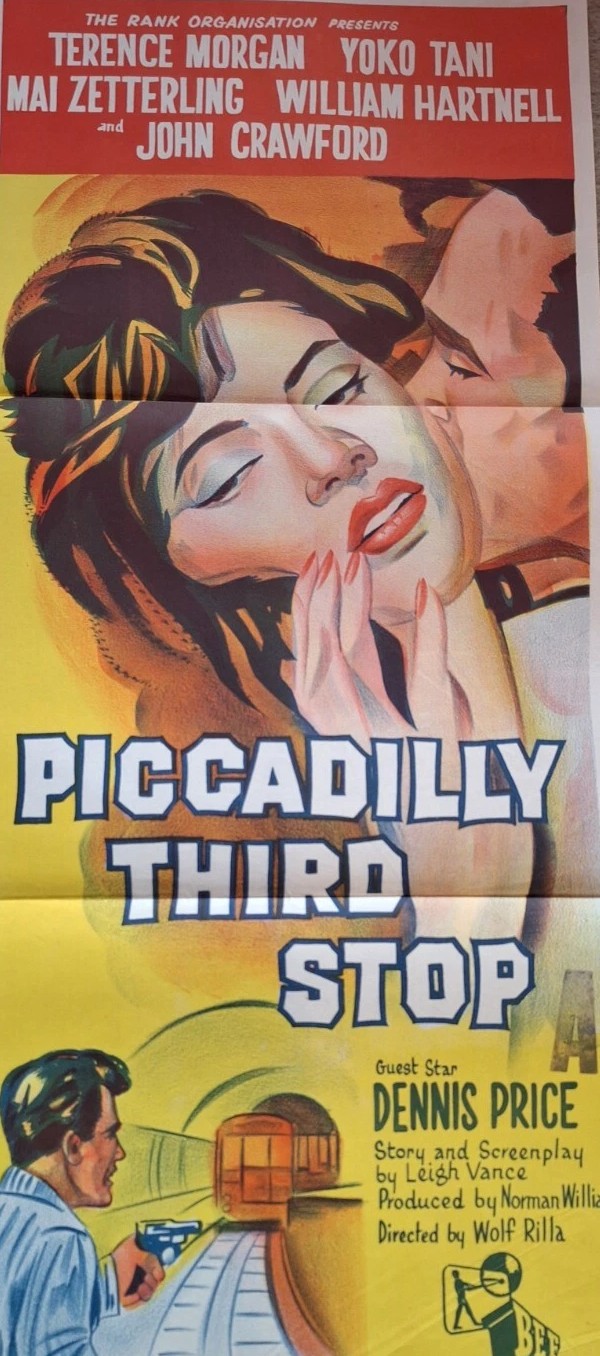
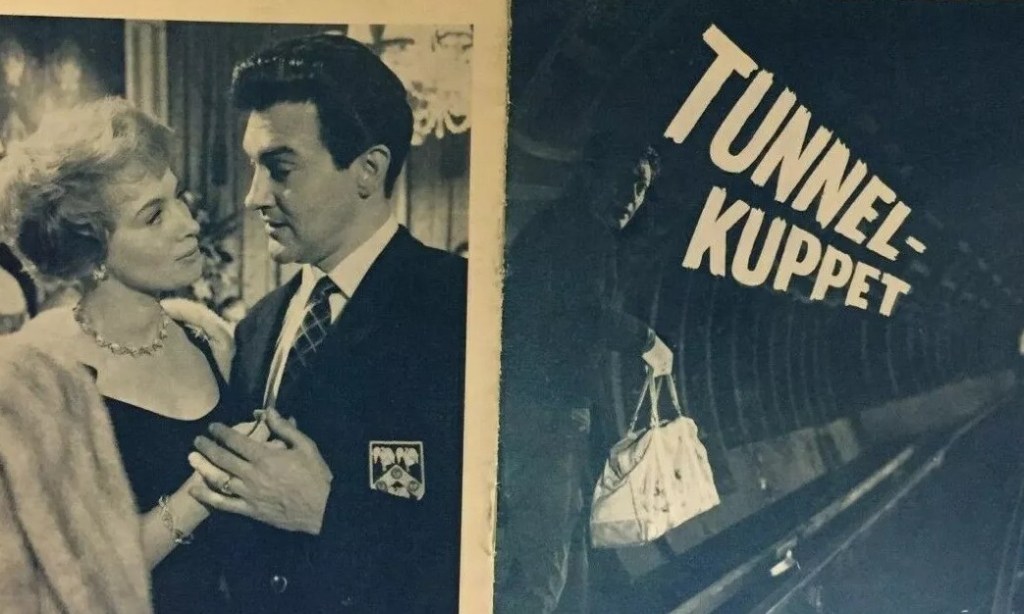
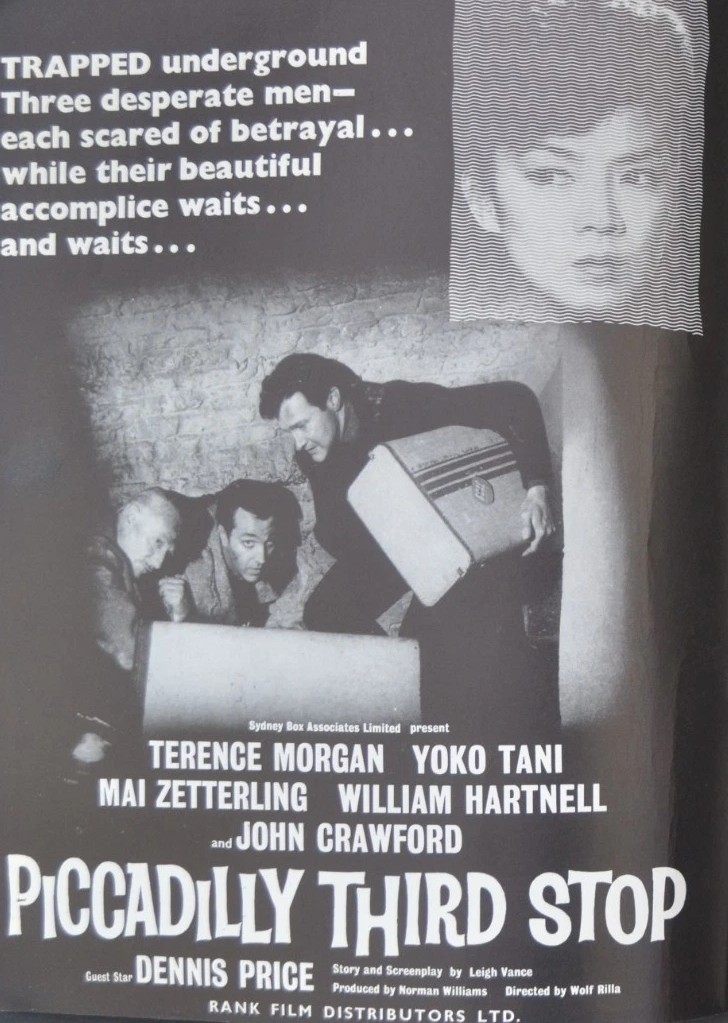
Piccadilly Third Stop (1960) ***

Well-worked full length British thriller that goes against the grain of presenting sympathetic hoods in the vein of Ocean’s Eleven or The League of Gentlemen both out the same year in which audiences largely align with the gangsters in part because they come across as charming and in part because their aims appear thoroughly reasonable.

Unlike the shorter efforts under the Renown umbrella this has time to develop several narrative strands, with deceit the main motivation, and spends a goodly time on the mechanics of robbery, the planning, the percentage split accorded each member, and the heist itself, which is an arduous one, involving digging through a brick wall.

Dominic (Terence Morgan) isn’t exactly a petty thief not when he can dress himself up to the nines, infiltrate a society wedding and make off with an expensive piece of jewellery, which he hides in an unusually clever fashion. But working on his own account is far more lucrative than being an employee in a watch-smuggling ring run by Joe Preedy (John Crawford) who has a classy wife Christine (Mai Zetterling) and life and has so much dough lying around that he’s easy pickings for Dominic who has a side hustle bring dupes to the gambling tables of the pukka Edward (Dennis Price).

Dominic happens to be bedding Christine but that still leaves him time to romance Fina (Yoko Tani), daughter of an ambassador, who casually reveals the embassy safe contains £100,000. She’s so helplessly in love she falls for his tale of them running off together and becomes an accomplice.

With the assistance of Edward, Dominic snookers Joe into supplying the readies to pay for the robbery set-up costs, the tools, gelignite etc. The plan involves digging a hole through the tunnels of the London Underground into the basement of the embassy.

Joe’s share of the spoils will hardly cover his debts so he’s intent on making off with the full amount. As it happens, Dominic has precisely the same idea. Christine is roped in, unknown to her husband, to act as getaway driver.

There’s a hefty dose of characterization unusual in these movies, more than just information dumps about characters. Dominic could easily fund the caper with the cash he would get from selling the stolen diamond, but he holds out for a larger amount from a fence. Joe should easily be able to afford the money, but he’s in dire financial straits because he lost a packet at the gambling tables and his own astuteness in ferreting away all he owns in his wife’s name. That puts his gains well beyond the long arm of the law but leaves him illiquid (I guess is the technical term) and he has to beg Christine to pawn her mink coats.

She’s a smooth operator, an amateur artist, happily living off Joe’s nefarious activities while running around with Dominic and planning to run away with him at robbery end. Joe’s desperate to be seen as a major player, hence his attendance at the casino, and kicking off when he doesn’t get his way, and raging against all the toffs born with a silver spoon in their mouths.

Two of the subsidiary characters are interesting studies. Safecracker the Colonel (William Hartnell) has too much of an eye for the pretty lady and too great a capacity for alcohol, but he’s been careful with his loot, spreading it around in various investments, very secure in his old age, and confident enough in his own abilities that he’s able to negotiate a higher share of the loot. But the prize supporting character is Mouse (Ann Lynn), girlfriend of Dominic’s sidekick Toddy (Charles Kay), who is considered so dumb and harmless that the crooks discuss their plans within her earshot. Except, she’s not concentrating and doesn’t quite get the hang of things and feeds Toddy the wrong information at the wrong time which nearly puts a spoke in the works.

As if the robbery required any more tension. Just how much work is involved in digging a hole through a wall is pretty clear here, should anyone in the audience have ideas of their own. You know double-crossing is also on the cards, not just the Dominic vs Joe and Christine vs Joe but the lovelorn Fina is also due her come-uppance.

And there’s a very nice touch at the end which proves that amateurs are a distinct liability. Any notion Christine has harbored that she would, if only given the chance, prove an ideal getaway driver are misplaced.

Directed by Wolf Rilla (Village of the Damned, 1960) not just with occasional style notes but with a determination to allow his characters room to move from a screenplay by Leigh Vance (Crossplot, 1969). You can catch it on Talking Pictures TV.

All in all a very entertaining little picture strong on tension with a host of interesting characters.

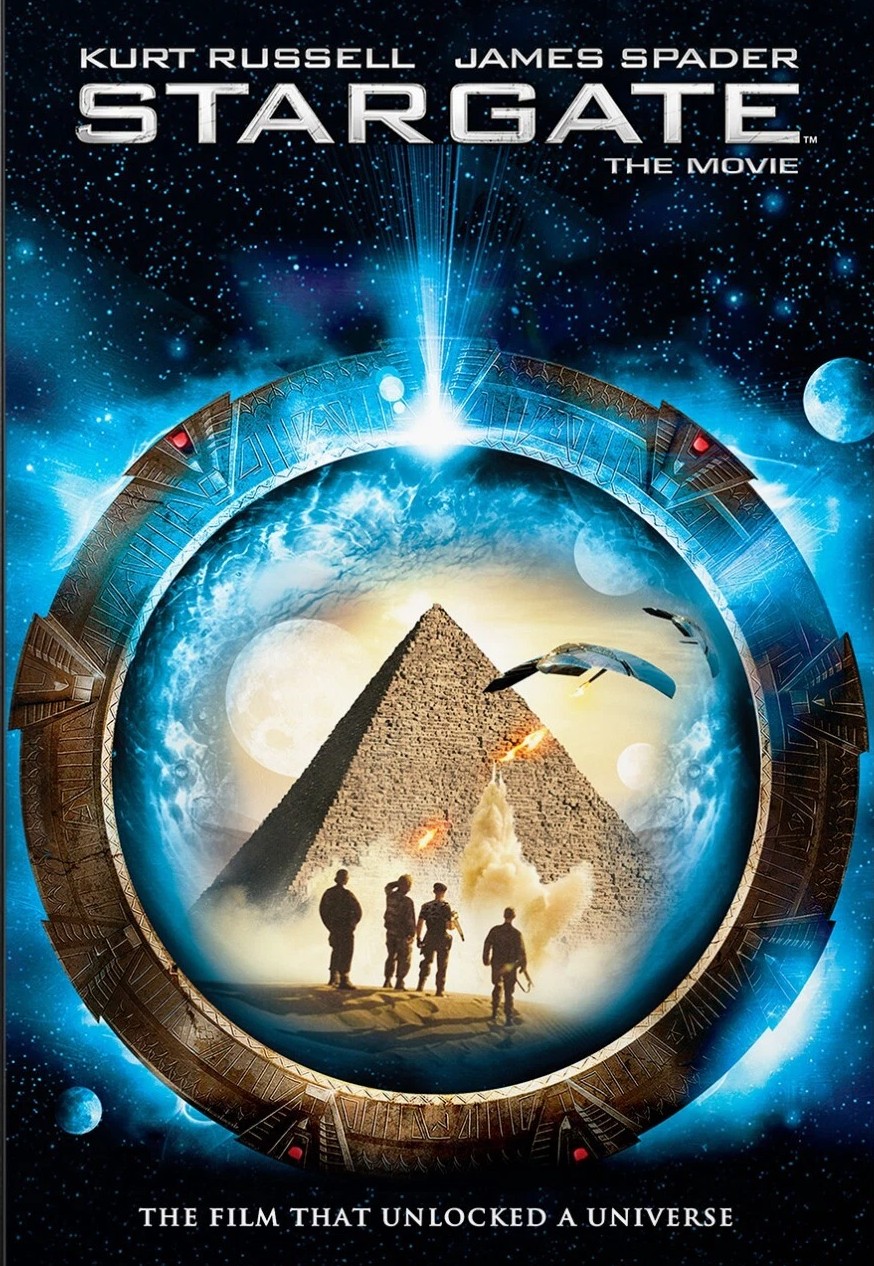
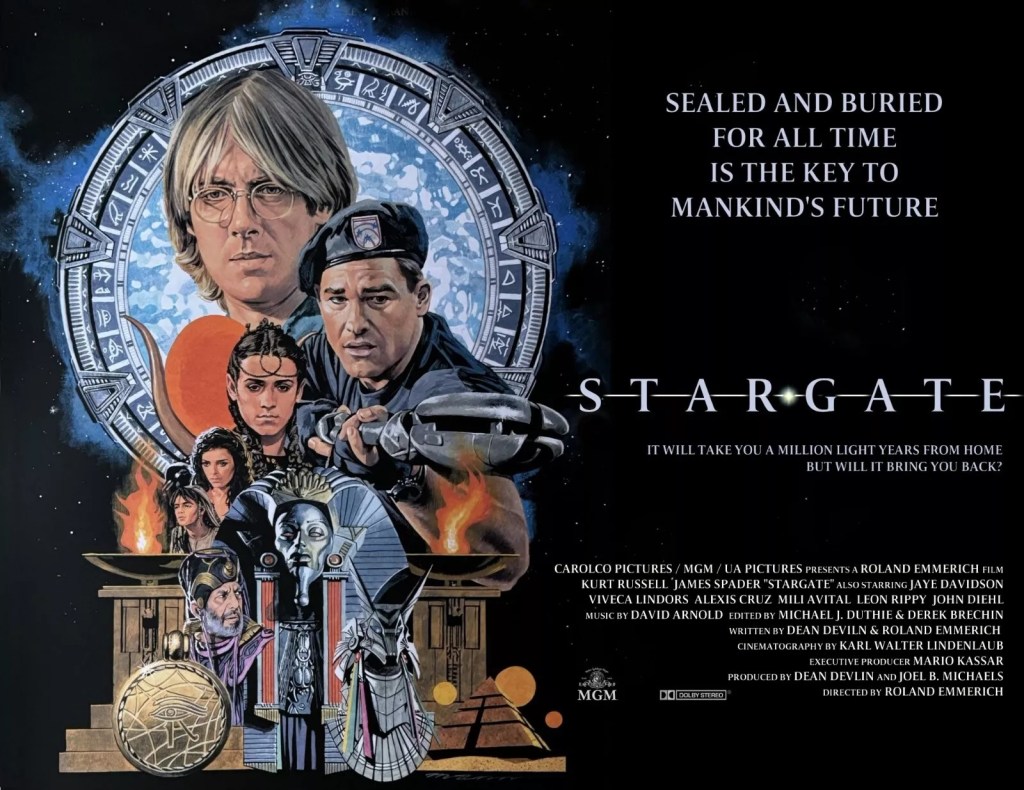
Stargate (1994) ****

Outside of James Bond, why is it that science fiction has generated the biggest franchises? Star Wars, of course, and all the cross-over cross-under twiddledeedee Marvel worlds, three iterations of Planet of the Apes, Alien, Avatar, Star Trek, Terminator and Predator immediately come to mind. I hadn’t thought of including Stargate until I realized that the initial movie has generated three DTV movies and five television series.

When it first appeared I was knocked out by the chutzpah of bumping up the basic idea behind Chariots of the Gods – that the pyramids were built by aliens –  into a big-budget heady adventure. I’ve not seen this in over a quarter of a century so came at it with some misgivings especially as the latest efforts of director Roland Emmerich such as Moonfall (2022) died at the box office, ditto writer-turned-director Dean Devlin (Geostorm, 2017).

The rather basic premise of Universal Soldier (1992) didn’t lead anyone to believe that Emmerich had a much more creative bent and would soon reinvent the invading alien subgenre. But Emmerich takes the greatest imaginings of the popular Egyptologist and produces everything that audience could ever desire, including the curious dog-faced snouts found on statues and of course flying pyramids and ancient gods with a side hustle into a futuristic version of shapeshifting.

Theoretically, Kurt Russell (The Thing, 1982), all brush-cut and snappy diction, is the star as Col O’Neil, heading up some kind of intergalactic task force. But in fact it’s meek Egyptologist Dr Jackson (James Spader), who does the heavy lifting – he even gets the girl –  and who if he’d had a bit more pizzazz about him would have been a latter-day Indiana Jones.

The plot is, of course, preposterous, but that’s the nature of the beast. In true Indiana Jones style Jackson discovers the missing piece of an archaeological jigsaw that points to some kind of wormhole, redefined here as a stargate, that can zip people light years away in the blink of an eye, and in a speeded-up version of the phantasmagorial elements of 2001: A Space Odyssey (1968). And just as in the director’s Independence Day (1996), the U.S. Government is up to some shady stuff, the kind usually designated to Area 51, and has been working on its own stargate.

Quite why Col O’Neil is taking along an atomic bomb for the ride is anyone’s guess. But once we race through the titular stargate we land on a desert planet inhabited by humans building pyramids and in thrall to Ra, who turns up every now and again to terrorize them into submission and/or steal the next body he requires to continue his journey into eternity. There’s plenty mumbo-jumbo and as many plot holes, but Emmerich has such a knack for narrative that it fair zips along. Col O’Neil has signed up for the mission because, frankly, he’s in a suicidal state of mind after his son died in a gun accident. Anyway, without the involvement of Jackson, who has no great scientific standing whatsoever, the US Government has worked out that whoever controls the other end of the stargate needs a good thumping.

Emmerich has the knack of posing verbal questions, leaving them dangling, and providing visual answers, which is all you need to propel a narrative. There’s plenty to play with here, the visuals are outstanding, especially for the time and the budget, and you are soon swept into the futuristic version of Egypt, and sinuous villain Ra (Jaye Davidson), and all the humorous misunderstandings that arise from language miscommunication. There is plenty action, either the kind of advanced aerial fighters emanating from the mothership (as occurred on a larger scale in Independence Day), or the gun-blasters, or the superhuman powers exhibited by Ra’s guards or indeed by Ra himself, not one to let mistakes go unpunished. There’s a clever twist on the regenerating device, and naturally someone has to lead a rebellion, though without spouting poetry.

Despite a few snatches at stardom, James Spader (Wolf, 1994) was still in marquee terms strictly second potato. This turns on its head his usual intense screen persona, and he’s quite a delightful little nerd, and just the guy if you need saved in the nick of time. Kurt Russell is mostly taciturn and, except for being engaged on a secret mission, has too little to do, but his presence still manages to anchor the picture.

All in all the concept works magnificently. I remember being impressed when I saw it on its release (but not so taken to subsequently trawl through the later small screen iterations) and was equally impressed now.

Go with the flow.

Discover WordPress

A daily selection of the best content published on WordPress, collected for you by humans who love to read.

The Atavist Magazine

by Brian Hannan

WordPress.com News

The latest news on WordPress.com and the WordPress community.