Tarzan and the Great River (1967) ***

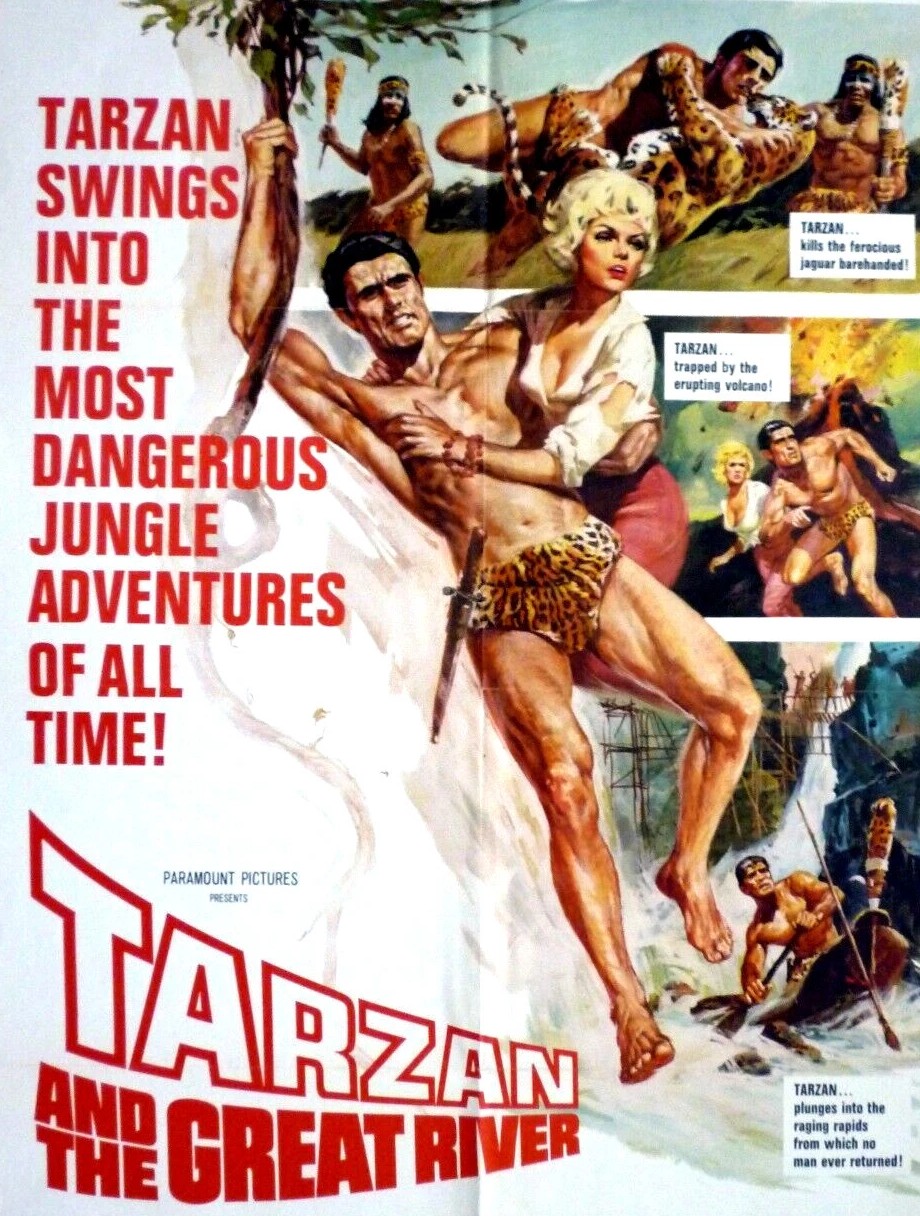
Tarzan (Mike Henry) has been repurposed as an international adventurer dropped into trouble spots an ocean away from his African roots. He’s the male equivalent of the bikini-clad females peppering the espionage genre, kitted out in only a loincloth, torso kept bare for the titillation of the ladies. And just like the James Bond series, there’s an evil personage, and while not in the business of taking over the world still wanting to dominate a good chunk of it in South America. Barcuna (Rafer Johnson), espouses the Jaguar death cult, terrorizing villages and enslaving their inhabitants for the purpose of searching for diamonds.

To fill out the narrative, a good chunk of the picture is spent with riverboat Captain Sam Bishop (Jan Murray) and the native orphan Pepe (Manuel Padilla Jr.) he has unofficially adopted and their comic shtick mostly involving the older man cheating at cards is all we’ve got to keep the drama going until the female in distress, Dr Ann Philips (Diana Millay), turns up. But, as you know, Tarzan is no lothario, unlike his colleagues in the espionage department, so we don’t have to wonder if romance is going to raise its ugly head.

Wrong continent. No tigers were used in this film.

In the meantime the producer has scoured the vaults for stock footage and clearly is of the opinion that if you can transplant Tarzan from his natural African habitat you can do the same with hippos. Tarzan wrestles a lion and a crocodile and despatches Barcuna’s henchmen on land and in the river, swimming underwater and tipping over canoes to do his part in keeping the local crocodiles well-fed.

Barcuna, meanwhile, roasts alive anyone caught trying to escape, though he allows the good doctor to escape either because he’s not partial to blondes or he reckons she won’t be much good at hunting for diamonds or, as suggested once he burns her village, because he wants her to let everyone know that he’s the big cheese around here.

There’s the usual plague subplot. Dr Millay is waiting on the arrival of a vaccine to fight a new plague – Bishop is delivering the stuff – but she has a job getting the natives to accept inoculation and it’s only when Pepe offers himself as a guinea pig that the others queue up.

Devoid of the gadgets, speedboats and fast cars of the espionage genre, Tarzan relies on the speed of his legs as if he was auditioning for the Tom Cruise role in Mission Impossible or that of Liam Neeson in the Taken series. There’s a spectacular fight between Tarzan and Barcuna for the climax.

Harmless stuff, as innocuous as the others in the trilogy featuring former football player Mike Henry (The Green Berets, 1968). They were filmed back-to-back in 1965 and released at the rate of one a year from 1966. This was the third time producer Sy Wintraub’s had reinvented Tarzan. He had previously shepherded home a pair – starting with Tarzan’s Great Adventure (1959) – starring Gordon Scott. Jock Mahoney inherited the mantle with Tarzan Goes to India (1962) and lasted for one more adventure.

This was the last of a quartet of outings with Tarzan for director Robert Day (She, 1965). Written by Bob Barbash (The Plunderers, 1960).

Perfect Saturday matinee material.
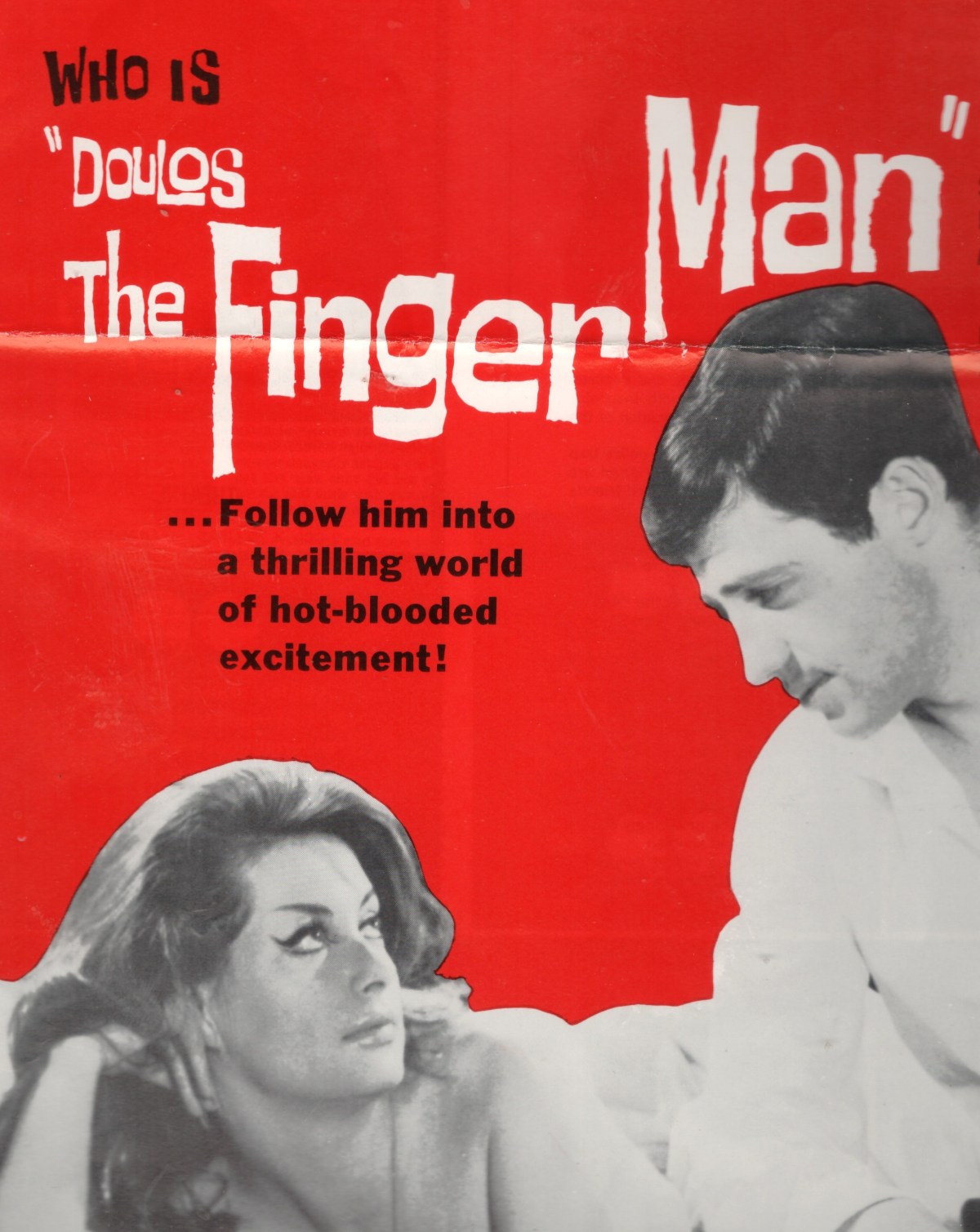
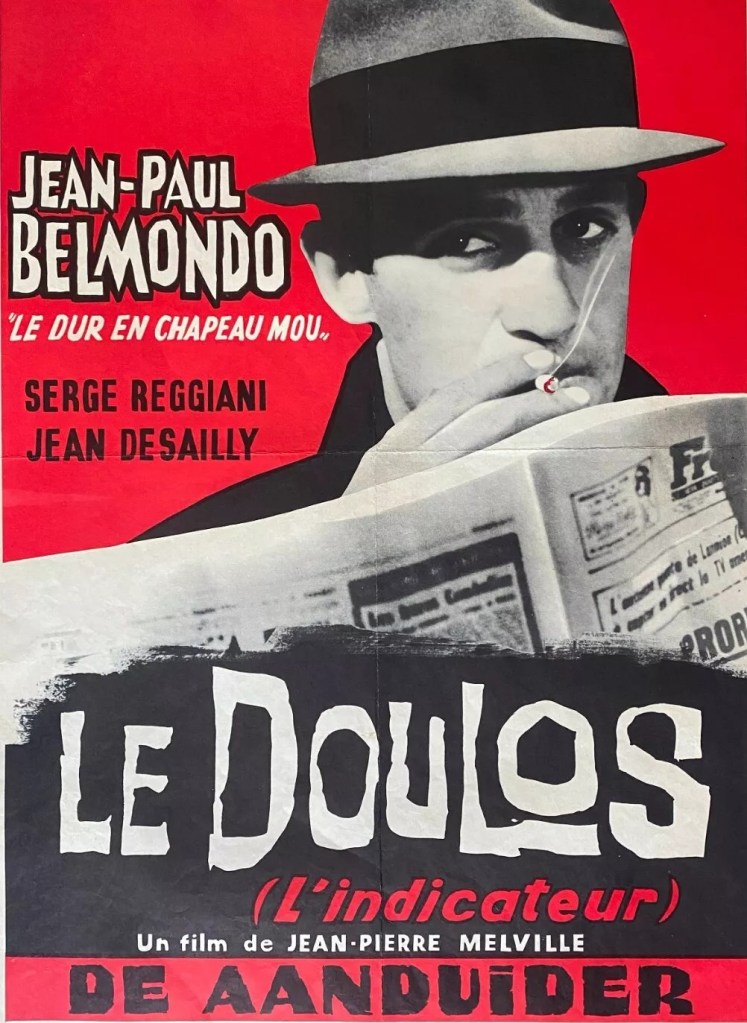
The Finger Man / Le Doulos (1962) *****

Stunning tour de force combining narrative complexity with technical audacity. Set up the template for later crime epics like Reservoir Dogs (1992) and The Usual Suspects (1995) and influenced Scorsese and Coppola. For the likes of me who revels in technical achievement, a delight, long tracking shots, two scenes over five minutes long shot in single takes, and rare use of the wipe. But technique is nothing without story. Luckily, here we are offered a  riveting tale of double crossing, honor, revenge and that rare beast, irony. There’s a veritable tsunami of twists at the end but all the way through there’s the kind of sleight-of-hand that deserves a round of applause.

Jean-Pierre Melville hadn’t named his picture The Informer for the obvious reason of it being considered, erroneously, a remake of the John Ford 1935 Oscar-winning classic or just the danger of being unfavorably compared with it. But the pre-credit titles tell us that Le Doulos is underworld slang for an informer so we’re prepared for that element of the story. What we’re not prepared for is what comes next.

Maurice (Serge Reggiani), just out of prison after serving a six-year sentence, turns up at the house of fence Gilbert (Rene Lefevre) who’s helped him get back on his feet by setting him up with a safe-cracking job. Gilbert is appraising a cache of stolen jewels. Maurice shoots him, steals the jewels and a bundle of cash, burying the loot under a lamppost.

Maurice meets up with his partner Remy (Philippe Nahon) and another gangster Silien (Jean-Paul Belmondo), previously considered untrustworthy, who supplies the tools for the planned heist. While Maurice and Remy set off to burgle a house, Silien phones a cop, Inspector Salignari (Daniel Crohem). Silien viciously beats up Maurice’s girlfriend Therese (Monique Hennessey) and kills her.

The robbery doesn’t go according to plan, the cops turning up unexpectedly. In the shoot-out, Salignari and Remy are killed, Maurice wounded. Maurice passes on details of where he buried the loot to another buddy Jean (Philippe Marche).

Silien is picked up by the police as a known associate of Maurice. The interrogation scene, which lasts five or six minutes, is a piece of cinematic bravura. Shot in a single take the camera follows chief interrogator Clain (Jean Desailly) as he paces round the room, Silien only coming into view when the cop stops in front of him and asks him a question. While refusing to rat on Maurice, Silien agrees, under pressure from the cops who threaten to expose his drug racket, to phone around the various bars where Maurice might be holing up. This triggers another virtuoso piece of filmmaking as Melville employs the wipe. Maurice is located, reading a newspaper report on Therese’s death.

There follows another colossal technical achievement, Maurice interviewed in another long single take, this time the interrogator pacing in front of the prisoner. Maurice is jailed, where he shares a cell with an assassin.

Meanwhile, Silien gets hold of the jewels and cash. He enrols old girlfriend Fabienne (Fabienne Dali), currently the unhappy squeeze of top gangster and club owner Nuttheccio (Michel Piccoli), and hatches a scheme that makes little sense to the audience. So we just have to watch. Silien breaks into Nutthecio’s club and in the guise of selling the gangster the jewels gets him to hold some of the items, thus, we quickly realize, covering them with his fingerprints.

Silien kills Nuttheccio then waits for the club-owner’s partner Armand (Jacques de Leon) to arrive, kills him and stages the scene to look like they killed each other over the jewels which he deposits in the safe. One of the jewels was found at the failed robbery so that’s enough to free Maurice.

Then we play out the revelation, the same kind of scenario repeated in The Usual Suspects, where the audience learns the truth. Therese was the snitch. That’s why she was killed. Gilbert was shot by Maurice because the dealer in stolen goods had drowned Maurice’s previous girlfriend Arletty. Even though you could argue that was justified, Maurice not being a good judge of character and not aware, as Gilbert was, that Arletty was also a police informer.

It was pure coincidence that Silien phoned Salignari on the night of the burglary. Despite being on opposite sides of the law, they were friends and the gangster was merely inviting the cop to dinner.

Silien proves to be such a straight-up guy that he hands all the stolen cash to Maurice. Silien plans to get out of the business and retire with Fabienne to a house in the country. Then we learn that Maurice has distrusted Silien after all and arranged for the assassin he met in jail to kill Silien. To try and prevent that, he races to the country house, fortuitously arriving before Silien and is, ironically, shot by the assassin. When Silien arrives shortly afterwards he, with more savage irony, is also despatched.

I watched this initially thinking what a huge risk Jean-Paul Belmondo (Borsalino, 1970) was taking in playing, as I initially believed, not just a police informer, but stealing from Maurice the buried loot and leading the police to him. It would have been a hell of a note if the narrative had continued in the same hard-nosed vein especially after Silien’s absolutely brutal treatment of Therese. The slap he administered came out of nowhere and resounded like a gunshot. He then tied her up, again venomously, and poured a bottle of whisky over her head. 

That it turned out to be a story of honor among thieves was perhaps the biggest twist of all.

Jean-Paul Belmondo is outstanding in an underplayed role, Serge Reggiani (The Leopard, 1963)  convincing as the two-timing crook.  

Deservedly recognized as one of the most influential crime pictures of all time, this is nothing short of a masterpiece by Jean-Pierre Melville (Army of Shadows, 1969). Written by the director from the novel by Pierre Lesou.

Beg, borrow or steal this one.

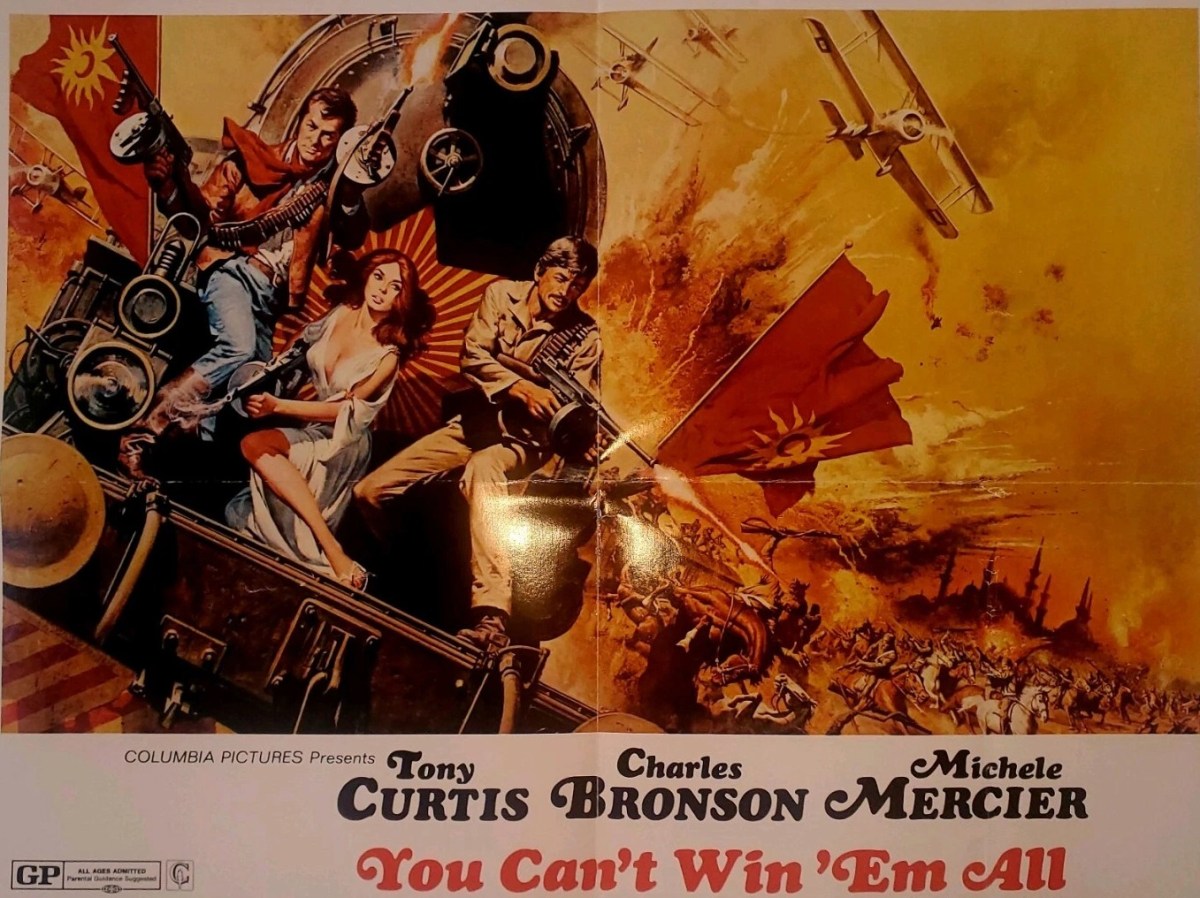
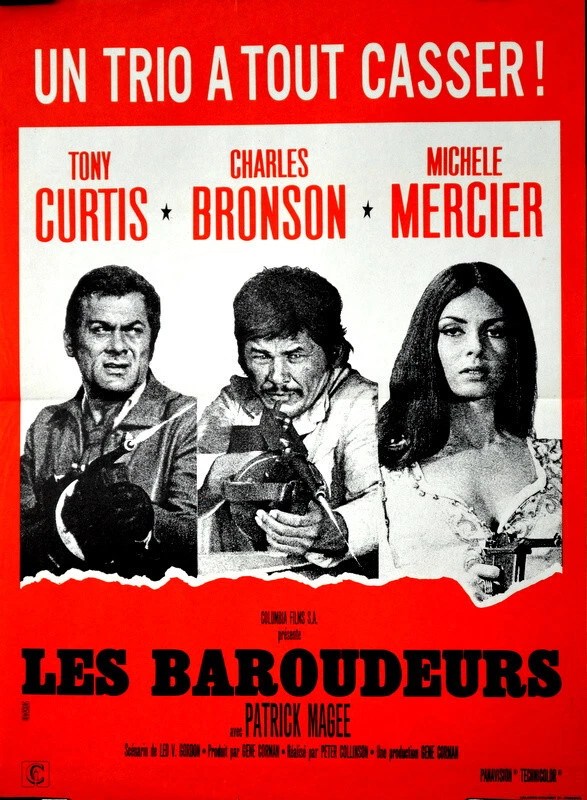
You Can’t Win ‘Em All (1970) ***

Charles Bronson travelogue. Slowest action picture you will ever come across. Director Peter Collinson forgets all he learned about tension from The Penthouse (1967) and action from The Italian Job (1969) and in trying to create a Turkish version of the visual delights of David Lean’s Lawrence of Arabia (1962) comes a cropper, not least because he hasn’t counted on the dust resulting in endless scenes of men on horseback being obscured. There must be about 10-15 minutes of just travelling by horse, train and boat through boring scenery.

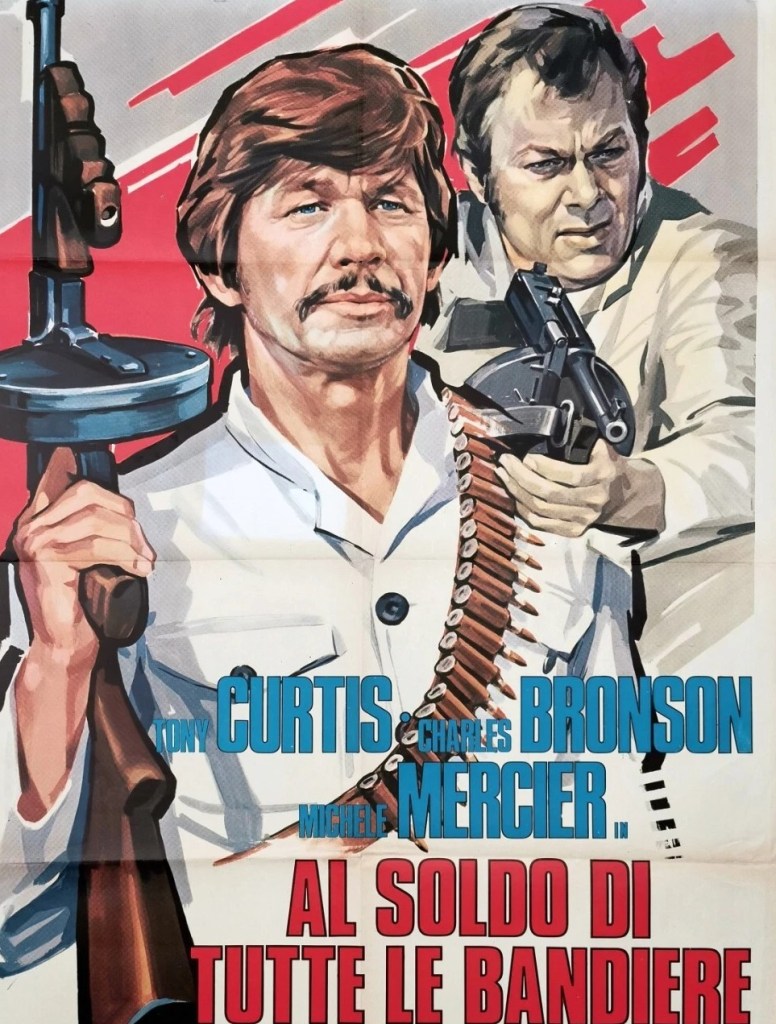
There’s an interesting story in here somewhere but you’ll need all your patience to stick with it.  Soldiers of fortune Adam (Tony Curtis) and Josh (Charles Bronson) are the type of characters who buddy up one minute and stitch each other up the next. Their attitudes are ingrained from the outset – Josh robs shipwrecked Adam who takes revenge by stealing his boat. They team up to take advantage of the chaos ensuing in Turkey in 1922 following the collapse of the Ottoman Empire, setting themselves up as mercenaries before their small force of like-minded fellows, armed with Tommy guns,  is hired by Governor Osman Bey (Gregoire Aslan) to escort a consignment of gold to Cairo. They soon discover that’s just a cover. The only gold on the gold bars is as much as it takes to provide a golden sheen to blocks of lead. There are actually more valuable prizes: Bey’s daughters and a trunk of priceless jewellery.

So far, they’ve beaten off various attacks, the submachine guns making short work of rebels armed only with rifles, and this looks as if it’s heading into fairly standard territory whereby the scoundrels will evade their captors and make off with the loot. But halfway through it does a U-turn. We discover that Adam is actually in the country to repossess one of his father’s ships lost in World War One. This is tweaked into an important plot point – the Turks have been blockaded by the Brits but a ship flying an American flag would be permitted safe passage.

Then it twists on its axis once again and we’re dropped into femme fatale land. The daughters are being escorted by the beautiful but wily Aila (Michele Mercier). She’s a step up from the usual two-timing female of the species. She’s a three-timer, attempting to woo in turn the governor, Adam and Josh. Actually, she returns to two-timing when she knifes the governor to death. And her plans go awry when Josh rejects her advances with a vicious slap.

Even so, he’s not averse to teaming up with her to betray Adam and make off with the loot. Adam, who has considered himself worldly wise, is furious and eventually traces Josh and Aila to the port of Smyrna.

It doesn’t end well, Josh and Adam are captured. But then it does end well. Aila, revealed as a spy, negotiates their freedom. After all, inadvertently, they helped her to transport the real treasure, an ancient Koran, while keeping the jewels for herself.

Leo Gordon (Tobruk, 1967) has penned a very wayward screenplay. Charles Bronson (Farewell, Friend, 1968) and Tony Curtis (The Boston Strangler, 1968) play well off each other, occasionally exchanging decent quips, with the kind of personalities that might congeal into an acceptable screen pairing, guys, while minus an honor code, who don’t stray into unacceptable behaviour. And it might have worked equally as well if the Michele Mercier (Angelique, 1964) strand had been introduced at the beginning and we had a three-way romantic dilemma. But director Collinson takes forever to get the two elements of the tale to mesh and wastes countless minutes, as previously noted, as our heroes laboriously grind their way towards their destination. The introduction of Mercier – sudden light catching her eyes in the darkness – is the only composition of note. And while Bronson and Curtis are a sparky pairing most of the time they flounder in an incomprehensible tale.

You can either catch this on YouTube and have your viewing interrupted by an advert every two minutes or on Amazon Prime where such interference is minimal.

Mosquito Squadron (1969) ****

Surprisingly somber, unusually reflective and exceptionally well-constructed. Except for taking the easy way out at the end, could easily have found itself in the classic finale stakes in the same league as Casablanca (1942) or The Third Man (1949) where true love is thwarted. More than enough aerial action for aficionados and an excellent battle sequence.

In addition we have that very contemporary trope of the human shield and the argument by British officers of obeying orders that would take on a different significance from the enemy perspective at the end of World War Two. Throw in an unexpected slug of guilt, a number of understated scenes, and a very clever wheeze from the Germans and you have a movie that rises well above the standard programmer.

Quint Munroe (David McCallum) is an orphan, taken in at a young age by the family of Squadron Leader “Scottie” Scott (David Buck) whom he regards as a brother. Also a pilot, Quint watches Scottie’s plane explode in a bombing raid over France. Next in line for promotion, Quint, with the usual survivor’s guilt, takes over.

In the first of the sequences that are notably out of place in a standard gung-ho World War Two picture, Quint is sent to tell the bad news to Scottie’s wife Beth (Suzanne Neve). He doesn’t have to say a word. She recognizes the look on his face. Quint had barely escaped from his own burning cockpit, a fact that’s gone unreported to Beth, but when she comes to her husband’s quarters at the air base, she gasps at the burn marks on the back of his jacket. There are four or five instances, again understated, in this scene when Beth is brutally reminded of her husband’s death. And Quint’s colleague Douglas (David Dundas) rejoices in the fact that he’s lost an arm because that’s saved his life, it’s his “ticket” to remain earthbound, and he can safely get married in the knowledge his wife won’t be receiving a knock on the door anytime soon.

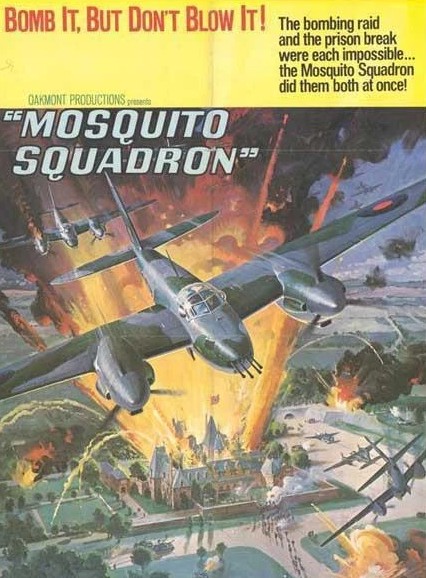
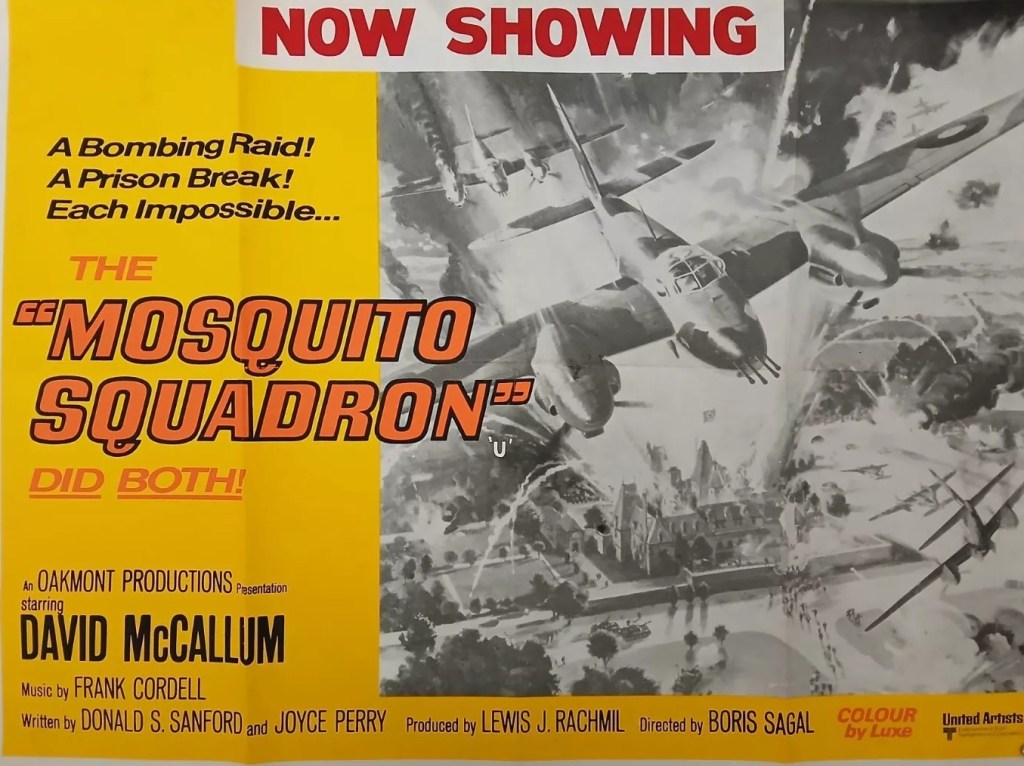
This is a mission picture in case you haven’t noticed from my concentration on the other more interesting aspects of the movie. The RAF needs to bomb an experimental station developing the next range of German rockets that’s buried underneath a chateau in France. Flattening the area in the normal fashion won’t do it, the bombers need to be able to hit a very small target indeed, the entrance of the secret hideaway. So they turn to a version of Barnes Wallis bouncing bomb (see The Dam Busters, 1955) and have to practise like billy-oh against a very tight deadline to hit such a target.

Meanwhile…meanwhie…meanwhile. There are three dramatic meanwhiles. Quint begins an understated romance with Beth, he filled with remorse at stealing his dead pal’s wife, she less concerned because there was a hint of earlier romance between them. The Germans protect the chateau behind a human shield of captured RAF pilots. In carrying out the attack, the pilots are condemning colleagues to death, a worry knocked on its head by the gung-ho likes of Air Commodore Hufford (Charles Gray), but other more sensitive high-ranking officers resort to the “obeying orders” routine. Final twist: among the prisoners is Scottie.

Nobody outside the base is permitted to know about the prisoners in case taking such an action damages public morale, so now Quint is in a bind. There’s a final twist to the twists – Scottie has lost his memory so badly that even if he could return to Britain it’s doubtful if he would know who Beth was, though, of course, they would still be married, so that would scupper Quint’s chances unless the story went onto a fourth act in the vein of Random Harvest (1942).

The French Resistance are called in to launch a daring raid to free the prisoners and assuage guilt all-round. Quint is shot down and joins the brutal battle action in which, as predicted by Hufford, the escapees are mown down by superior German firepower. He finds Scottie, who doesn’t recognize him at all. Scottie is also of the gung-ho brigade and dies stopping a German tank.

Meanwhile, Douglas has got into trouble for telling too many people about the prisoners. He’s very good friends with Beth.

You can see the cinematic opportunity. Quint returns knowing he is free to marry Beth only to find Beth turns away from him because he went on an expedition that could kill her husband. But the producers bottle it and go for the happy ending instead.

David McCallum (Sol Madrid/The Heroin Gang, 1968) remains in low gear throughout, and though Suzanne Neve (Naked Evil, 1966) more than makes up for him, you would wonder at the wife of a dead pilot taking up with another flier who could end up the same way.

Director Boris Sagal (Made in Paris, 1966) is to be commended for spending so much time on the themes of guilt and loss and keeping reality to the forefront. Some of the sequences have been stolen from other movies or are stock footage. Written by Donald S. Sanford (The Thousand Plane Raid, 1969) and actress Joyce Perry in her big screen debut.

Raises far more issues than the normal war movie, certainly blown away at the box office by the bigger-budgeted all-star-cast Battle of Britain the same year, but more than holds its own, and if it had been an American low-budgeter with some better-known lesser stars would have probably been re-evaluated long before now.

Impressive.

A New Kind of Love (1963) ***

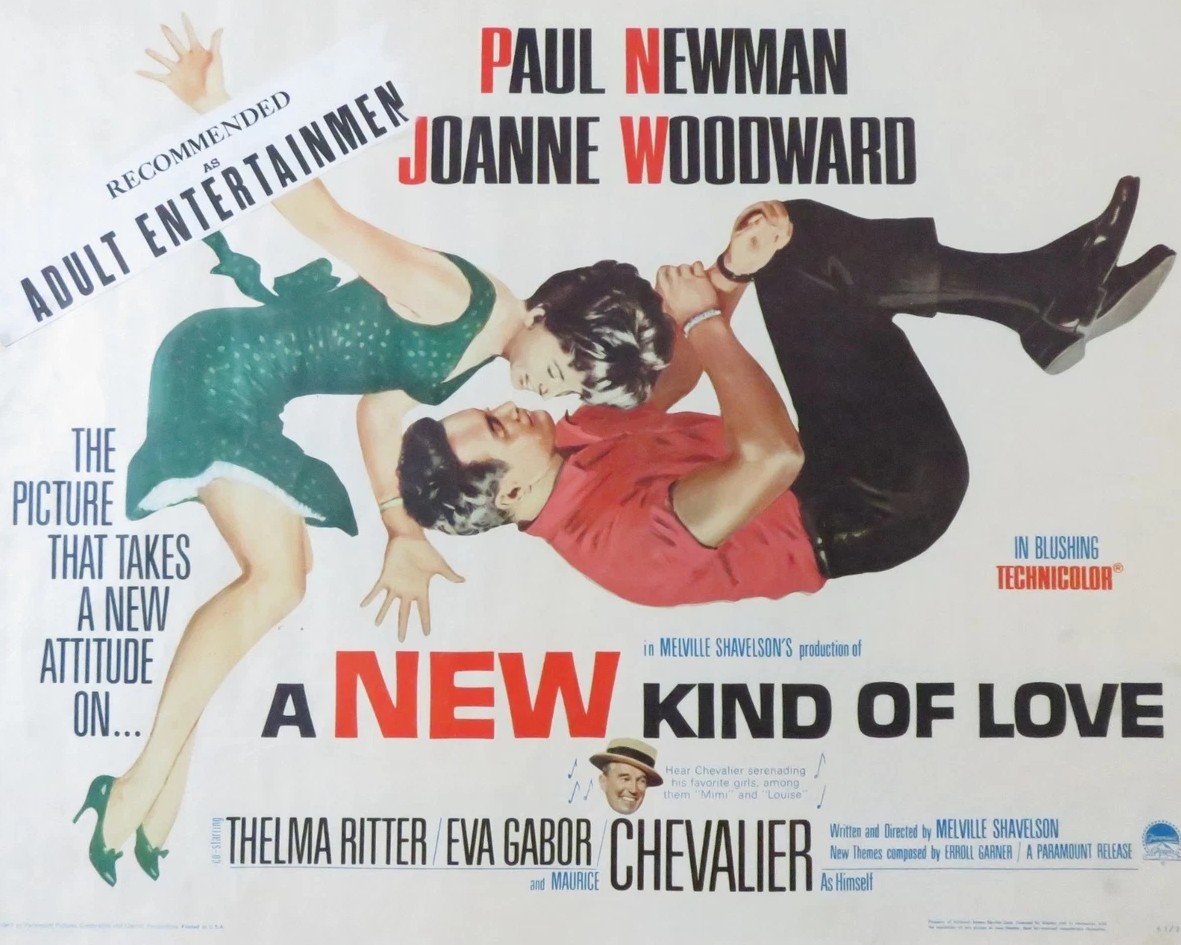
Just about scrapes by, small thanks to Paul Newman’s atrocious Texan accent, Joanne Woodward’s frightful blonde wig – more Lady Penelope than classy Parisian – and Maurice Chevalier serenading a horde of drunken women. Maurice Chevalier? Well, of course this is Paris and Chevalier always sings regardless of being peripheral to the story.

Suffers, too, from being a smart-ass picture, in the vain hope of hitting the satirical bullseye taking swipes at everything in sight, from women barging into a sale to haute couture, airline stewardesses, journalism and even Paris. And there’s a string of fantasy sequences that might (or might not) have worked at the time but fail to gell now. Takes forever for the principals to even be brought close enough together to envisage romance and it doesn’t help that that supposedly most eagle-eyed of creatures, the reporter, can’t see through a simple disguise.

Tomboy Sam Blake (Joanne Woodward) is a pirate. Not the swashbuckling kind, leaping through the rigging, which would be worth seeing I’m sure, but the industrial kind, stealing the designs of better designers for a New York department store.

Steve Sherman (Paul Newman) is piratical, stealing other people’s wives. When his latest conquest turns out to be married to his boss, he is shifted off to Paris as – punishment? Yep, you can see the awry thinking behind this one.

Meanwhile, Sam and a gang from her store, boss Joe (George Tobias) and colleague Lena (Thelma Ritter), are off to Paris on a spying expedition to the annual fashion shows. Lena has her eyes on romance with the boss but is beaten to that prize by the glamorous Felicienne (Eva Gabor). Sam isn’t interested in romance. She’s a career woman, or in the parlance of the day, a “semi-virgin” (though I suspect that description was a screenwriter’s invention). Neither is Steve, for that matter, at least not of the long-lasting kind, he’s happily tearing around with a woman on each arm, enjoying the more nefarious sights of the French capital while Sam is knee deep in work.

After Sam gets a makeover, complete with long cigarette-holder Lady Penelope style, resulting in the bouffant hair style and is sitting in a café, she is approached by Steve who, assuming she is a high-class courtesan, attempts to interview her for the article he hopes will save his job. They’ve bumped into each other, she disdaining his obvious approaches, a couple of times but then she was rigged out in a short haircut and dark glasses. And this is such a complete transformation he doesn’t recognize her. And, in order to make this movie work, the audience has to play along.

As does Sam, keeping up the pretense of being a high-class hooker in order to get her revenge on the man she despises. The fictions she dishes up, of dalliances with powerful men, are published in his column and their success ensures he’s not fired. Felicienne is edged out of the way, revealed as previously a sex worker, so Lena can make her play for Joe.

Before that ploy can work, Steve sets up Sam with Joe who sees through the disguise. There’s a whole bundle of other unlikely shenanigans before we reach the compulsory happy ending.

Hollywood was fairly enamored with the sex worker or goodtime girl – Never on Sunday (1960), Butterfield 8 (1960), Irma La Douce (1963), for example, with the Oscars chipping in to show their support – and another (yes, this had been done before) comedic twist seemed to offer potential especially with two big stars going all risqué.

Paul Newman (The Prize, 1963) never quite worked out how to manage comedy until Butch Cassidy and the Sundance Kid (1969) where he maintained his usual persona and just delivered the lines rather than trying to wring laughs out of them. He also has a bad habit of trying to demonstrate character by fidgeting, so his face, eyes and hands are all over the place.

Joanne Woodward (A Big Hand for the Little Lady/ Big Deal in Dodge City, 1966) is better value initially but when she takes on the disguise there’s too much of the knowing wink. Six-time Oscar nominee Thelma Ritter (Boeing, Boeing, 1965) has a better idea of how to play comedy by just sticking to the knitting.  

Writer-director Melville Shavelson (The Pigeon That Took Rome, 1962) just about makes it work and when it doesn’t throws in sufficient distraction.

Not the Newman-Woodward team’s finest hour.

Behind the Scenes: United Artists’ Mea Culpa: Why Flops Flopped, 1969-1971, Part Three

Box office hits like Never on Sunday (1960), La Dolce Vita (1960), Zorba the Greek (1964), A Man and a Woman (1966) and Z (1969) gave Hollywood the wrong idea. Studios believed they could take advantage of the cheaper costs of shooting in Europe, set up alliances with critically acclaimed French, Italian, Greek, German and Swedish directors as well as several top overseas marquee names, and create a pipeline of product to fill out release schedules with pictures that were as acceptable to neighborhood cinemas as to arthouses.

The reliance of United Artists on this source was as much to blame for the box office crisis it endured as the other films covered in the first two articles in this series. In many cases, the studio gave directors their head, not reining them in on budgets, allowing several final cut, and assuming that critics and awards at festivals like Cannes, Berlin and Venice would do the job of selling the product to the domestic market.

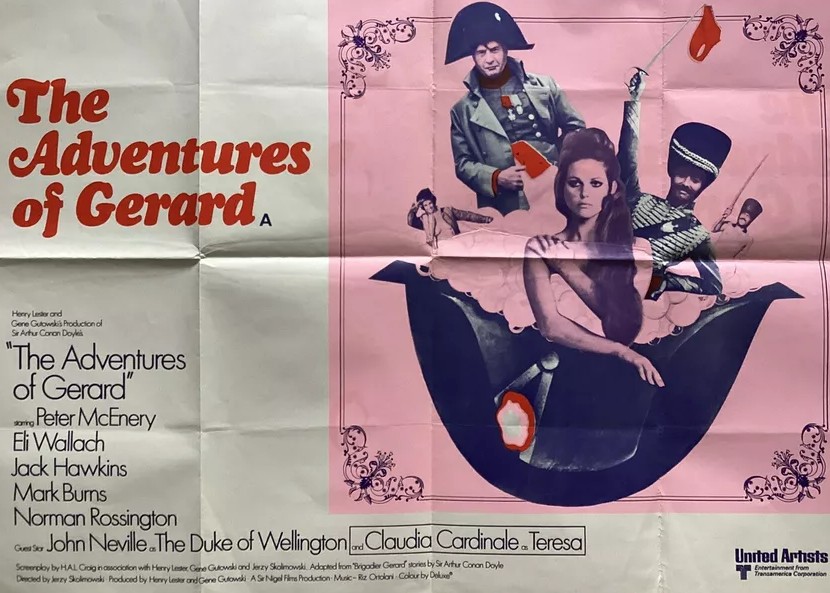
On the basis of Polish director Jerzy Skolimowski winning the Golden Bear at Berlin for Le Depart / The Departure (1967) starring Jean-Luc Godard protege Jean-Pierre Leaud – and its subsequent arthouse success – UA bequeathed him big-budget The Adventures of Gerard (1970), set during the Napoleonic War, based on a book by Sherlock Holmes creator Arthur Conan Doyle, and headlined by rising British star Peter McEnery (Negatives, 1968) and established Italian import Claudia Cardinale (The Professionals, 1966) and a supporting cast including Jack Hawkins and Eli Wallach.

“The picture turned out to be one of the worst disasters in the history of the company,” the company directors told the shareholders. “It was the result of reliance on one of the new fashionable foreign film directors. The picture was beset by problems due to the unprofessional excesses…indulged in by the director.” The outcome was a movie that could not be reshaped into a “more acceptable form” and that ending up occupying “a limbo area between adventure and farce.” Prospects were so poor, the studio doubted if it would even recoup marketing and advertising costs never mind any of the production costs.

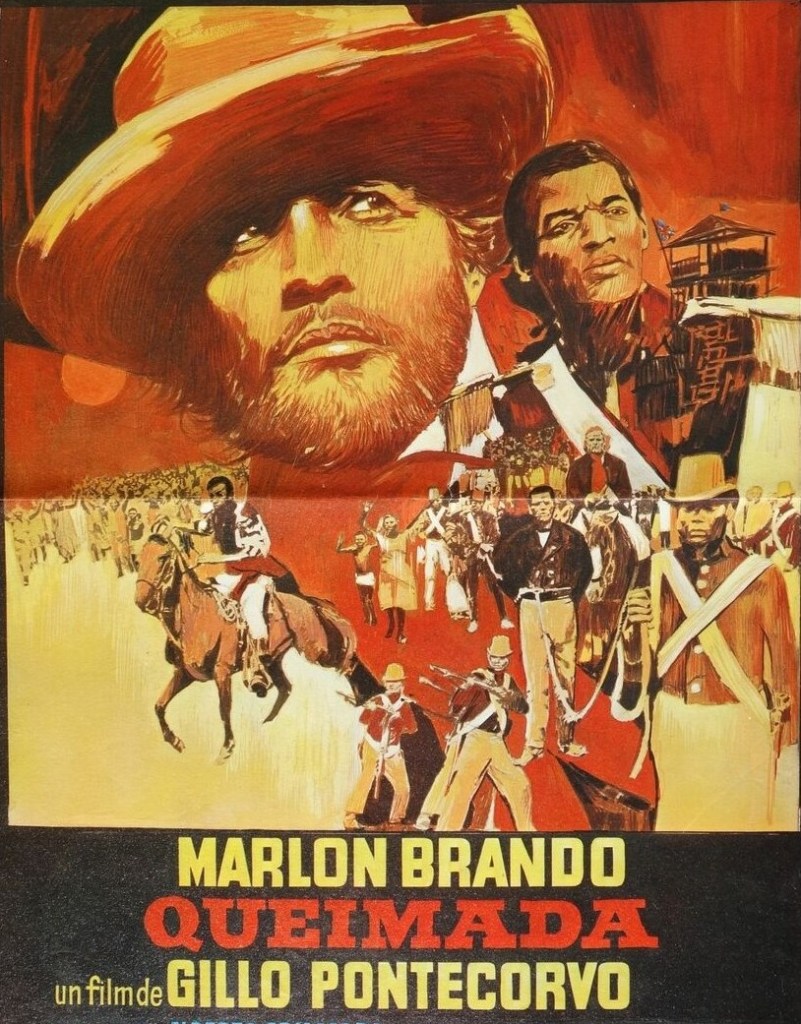
Theoretically, Burn! / Quiemada (1969) should have fared better. At least it had a proper star in Marlon Brando, even though his marquee value was being questioned. This had been placed in the hands of Italian director Gillo Pontecorvo whose The Battle of Algiers (1966) had been nominated for the Best Foreign Language Film Oscar. The studio had hoped to “combine interesting message with entertainment values.” However, personality conflict between director and star saw the picture to go “way over budget.” Prospects remained dim because “despite all efforts to persuade the director to reduce it to realistic length,” it was deemed overlong and “badly cut.” It fell between the stools of the arthouse audience who would have appreciated the message and the action audience who would have welcomed the more commercial elements. It was marked down for “a substantial loss.”

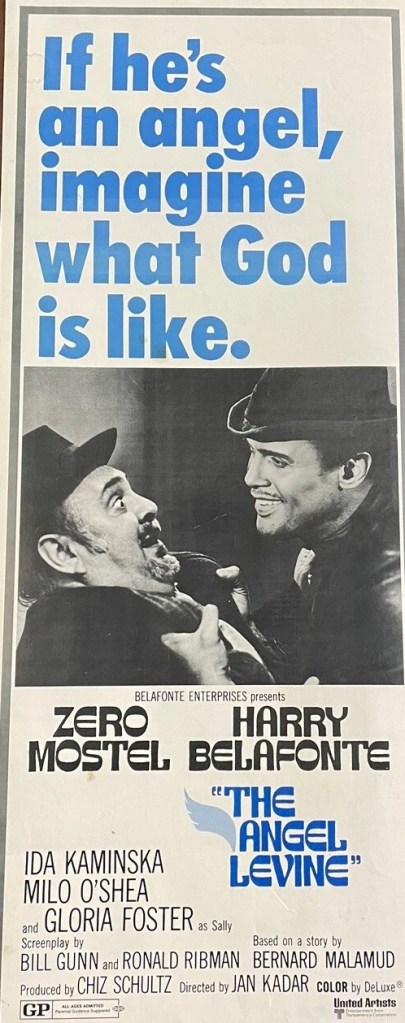
On the strength of a nomination for the Palme D’Or at Cannes for The Shop on Main Street (1965), the studio backed a project by its Hungarian director Jan Kadar.  The Angel Levine (1970) attracted investment because the director had achieved “a certain cult,” the recording career of star Harry Belafonte had reached new heights, and the story was supposed to have a special appeal to ethnic groups. “Everything went wrong. The direction and performance came out slow and leaden. The story…didn’t work.” The picture was over budget and overlong. “The director could not be persuaded to make the necessary cuts” resulting in expectation of another “substantial loss.”

Italian director Elio Petri had enjoyed cult success with the offbeat sci fi The 10th Victim (1965) starring Marcello Mastroianni and Ursula Andress. For A Quiet Place in the Country (1968) he had lined up top British Oscar-nominated actress Vanessa Redgrave and rising Italian star Franco Nero who had played lovers in Camelot (1967). It was greenlit at a time when the studio believed there was a wider market among discriminating audiences for foreign films previously restricted to arthouses. But it had become clear that films in this category faced “inevitable loss.”

You probably haven’t heard of That Splendid November (1969), greenlit to “fulfill a pay-or-play commitment to Italian star Gina Lollobrigida” (Strange Bedfellows, 1965). While targeting the European market, it was hoped it would do additional business in America. It didn’t. Once again, the director (Mauro Bolognini) was allowed too much leeway. He had not been “persuaded to make the changes that would improve its chances” while the studio discovered that La Lollo had lost her marquee luster.

However, United Artists had also committed to potential “breakout” pictures, foreign movies aimed at American arthouses. The bulk of the overseas pictures that had thrived in the U.S. had done so via the arthouse circuit after being favorably reviewed by critics. These were considered relatively low-cost and low-risk investments. But, as events proved, these were as big a gamble as more high-budget projects.

Red, White and Zero / The White Bus (1967) proved “an utter failure” despite the presence of three top British directors, Lindsay Anderson (This Sporting Life, 1963), Oscar-winner Tony Richardson (Tom Jones, 1963) and Peter Brook. Although made for the arthouse market, these proved fewer in number than anticipated when the film was greenlit.

A French heist film entitled Score “would not be made today,” admitted the UA executives. Hoping to capitalize on the caper genre, the studio discovered no one was interested. Three French pictures, Philippe de Broca’s Give Her the Moon (1970) starring Philippe Noiret, The American and Lent in the Month of March (1968), were written off due to the softening of the arthouse market, as was Yugoslavian number It Rains in My village (1968) starring Annie Girardot. French/Brazilian Pour Un Amour Lointain (1968), “one of the poorer foreign pictures,” had such dismal prospects it was denied U.S. distribution. German picture Gentlemen in White Vests (1970) lacked appeal even its home market.

SOURCE: “Comments supplementing notes to Balance Sheet and Statement of Operations of United Artists Corporation for 1970,” United Artists Archive, Box 1 Folder 12 (Wisconsin Center for Theater and Film Research).

Behind the Scenes: United Artists’ Mea Cupa, Why Flops Flopped, 1969-1971 – Part Two

The United Artists strategy was to forge alliances with directors. The studio tended not to finance one-off projects, instead focusing on building long-term relationships. In part, this was a safeguard. Cross-collateralizing eliminated some of the risk between balancing out profit and loss. So a director could not waltz off with profits from a hit leaving the studio to pick up the losses from a flop. Ongoing agreements with major movie makers included Oscar-winners Billy Wilder, Tony Richardson and John Schlesinger plus Woody Allen, John Boorman and Robert Downey. In making such deals, the studio ceded substantial profit percentages and, as importantly for the directors, final cut.

Its relationship with Billy Wilder, for example, went back over a decade.  The mishits of One, Two, Three (1961) and Kiss Me, Stupid (1964) were more than offset by the income from Some Like it Hot (1959), The Apartment (1960), Irma La Douce (1963) and to a lesser extent The Fortune Cookie/Meet Whiplash Willie (1966). Wilder’s cherished Sherlock Holmes project had been on the UA schedule for years. The Private Life of Sherlock Holmes (1970) starring Robert Stephens, hardly a marquee name, stretched the relationship to the limit. “In order to recreate the Sherlock Holmes era,” the UA board explained to shareholders, “the picture cost far in excess of its worth. Since Billy Wilder has absolute control of what he makes, we were unable to make the desired cuts in the film in order to improve it. We have a film that is roughly three times more expensive than it is worth. Substantial loss is…inevitable.”

The studio had reached a new commercial high in the market for adult-oriented critically acclaimed pictures with Midnight Cowboy (1969), which won Oscars for Best Picture and for director John Schlesinger. Following the company’s normal arrangement, it put up the money for his follow-up Sunday, Bloody, Sunday (1971) starring Oscar-winner Glenda Jackson. But that proved a misstep. The film went $600,000 over budget and UA attributed its poor performance to a “very slow-paced film” coupled with “an extremely low-key” narrative plus “Schlinger’s reluctance to cut the film adequately.”

Directorial final cut also proved an obstacle to Ned Kelly (1970). Backing Tony Richardson’s Tom Jones (1963) had proved a masterstroke, opening up a financial goldmine and showering the picture with critical acclaim and four Oscars including Best Film and Best Director. The fact that Richardson’s The Charge of the Light Brigade (1968) had flopped did little to discourage the studio’s faith in him. In addition, the casting of Mick Jagger (“A big personality for the younger audience”) prove misplaced. Again, the director clashed with the studio. Again, the “very slow pace” was an issue. As was directorial control. UA conceded: “We have not been able to persuade him to make the cuts to improve the film.”

Part of the reason for Ned Kelly’s failure was that, with Mick Jagger in the title role, the target audience was the young. But the stream of youth oriented movies, triggered by the success of Easy Rider (1969) was a bubble that burst too soon. UA had invested in two pictures about “the contemporary drug scene.” I’m not sure The Heir was ever released. It had been subject to production delays and “because we don’t have the right to final cut, we can’t get the director to pick up the pace of the storyline.” As a result of the studio’s experience on that picture, approval of a second film on a drugs theme, Born to Win (1971), was held up until the budget was whittled down to $850,000 – and that was a picture that had the advantage of proven star in George Segal (The Owl and the Pussycat, 1970), a completion guarantee and cross-collateralization with another movie.

British director John Boorman was also riding high after Point Blank (1967) and although a reunion with star Lee Marvin for Hell in the Pacific (1968) didn’t come close to matching the thriller’s success, he was “the type of director picture companies were gravitating to in 1969” especially as he had “ a very special  reputation with campus film groups and youth oriented film makers.” UA considered him a great catch. “He was considered one of the voices of a new wave of picture making – daring, innovative, imaginative.” However, the project he sold to the studio, Leo the Last (1970), in retrospect, “could justify a cost of only a few hundred thousand dollars” rather than the extra hundreds of thousands the director spent “trying to achieve his own ideas of perfection.” Once again, attempted intervention was foiled – “by contract he could not be overruled.”

The verdict passed on Woody Allen after the studio had greenlit Bananas (1971) was: “Today we would veto any Woody Allen film at this cost.” Here was another example of the studio backing a nascent talent. This had been given the go-ahead before results were in on the first picture Allen had made (Take the Money and Run, 1969) for another company.

And in retrospect the studio could find no justification for some of the moves it greenlit. The verdict on Norman Lear’s Cold Turkey (1971), which ran $1 million over budget, was brutal: “An overpriced film with a has-been personality (Dick Van Dyke)…a minor American comedy with no overseas value.”

Equally has-been was Rosalind Russell, star of Mrs Pollifax-Spy (1971), “a victim of the reduced potential for old-time star films.” UA had anticipated a “zany, tongue-in-cheek adventure comedy.” What it got was “a run-of-the-mill old-fashioned piece of work…totally unacceptable to younger audiences and too dull for the older audiences.”

Timing was the problem with Hal Ashby’s The Landlord (1970). “What was expected to be provocative material for the new modern film audience of 1968-1969…emerged as a film…of limited interest to the audience of 1970.” While the studio admitted “it was the type of film we intend to continue to make”, that came with the proviso that it could only be realized “at a quarter of the cost.”

Another piece of provocative material that failed to find an audience was Robert Downey’s Pound (1970), described as “a roll of the dice.” Downey had broken out of the indie mold with the satirical Putney Swope (1969). “When this film was programmed, we had every reason to believe that even with a less successful result, this director could reach a personal following type of audience large enough to justify this cost. However, by the time the picture came out, avant garde audiences of this nature had become more selective and increasingly fewer in number.” Again, the verdict pulled no punches: “The picture has little value – domestic or foreign.”

“A daring film on a provocative theme” appeared the main attraction of Pieces of Dreams (1970). It was certainly daring – a disillusioned priest has sex with a social worker. Rising stars Robert Forster (The Stalking Moon, 1968) and model Lauren Hutton (Little Fauss and Big Halsy, 1970) lacked the marquee appeal to save it.  “By the time it came out it was no longer considered daring. “Thought-provoking” but not “dramatic or sensational” enough was the consensus.

The Way We Live Now (1970) is best remembered, if at all, for the debut of Linda Blair (The Exorcist, 1973). It proved “another fatality of the unhappy rush in 1969 to make a so-called “now” picture…At its modest cost it seemed a valid investment at the time. Today it would not be made at any cost.”

SOURCE: “Comments supplementing notes to Balance Sheet and Statement of Operations of United Artists Corporation for 1970,” United Artists Archive, Box 1 Folder 12 (Wisconsin Center for Theater and Film Research).

Behind the Scenes: United Artists’ Mea Culpa – Why Flops Flopped, 1969-1971 – Part One

United Artists – one of the biggest box office hitters of the 1960s – should have emerged relatively unscathed from the financial tsunami of the end of the decade. While pictures like its The Charge of the Light Brigade (1968) certainly hit the buffers, it wasn’t in the position of having to swallow the titanic losses suffered by rivals Paramount (Darling Lili, 1968) or Twentieth Century Fox (Star!, 1968, Justine, 1969).  Even though the studio’s banker, the James Bond series, suffered a downturn in the absence of Sean Connery, On Her Majesty’s Secret Service (1969) still turned a decent profit.

However, when, in 1970, UA was staring down the barrel of a $50 million loss, the cause was more commonplace. Audiences worldwide had changed. Though every studio had followed trends taking them into youth-oriented pictures after Easy Rider (1969) and into more adult realms following Oscar-winner Midnight Cowboy (1969) and indulged the whims of a new generation of directors, something just did not add up. The studio believed it had, based on previous releases, invested in a solid range of movies, that overall would contain strong appeal.

For movies released between 1969 and 1971, UA had spent $80 million. But even before one-third of this output hit the screens in 1971, the studio was already projecting a colossal loss of $50 million, even after including sales to television.

Results in 1970 proved a shock to the system. “For the first time since the present management team assumed control of the company,” reported an internal memo dated February 28, 1971, “very few pictures released through the year showed promise of recouping their negative costs. It became clear that pictures which by our own experience would have brought back their costs or better in other years, would suffer severe losses in 1970. This was true of pictures in all cost brackets, high and low.”

And “after six uninterrupted years of substantial profits,” the studio was struggling to explain this sudden downturn. The situation was even more calamitous because the movies UA had readied for 1971 release were already expected to fare badly. In the light of changes in the marketplace, most of these movies would not have been greenlit in 1970 or made on reduced budgets.

Of course, the studio did not entirely blame itself. “The thirty-five films could not have been  fully and properly evaluated in 1969. The conditions revealing the need for reevaluation…did not occur until 1970.” And even then, the “ominous” signs were only obvious towards the end of the year. Adventurous and more formulaic pictures alike foundered at the global box office.

In an act of mea culpa, United Artists set out the reasons why their flops had flopped. Their output broke down into roughly three sectors – star-led product, risky projects investing in new directors, and movies that targeted critical acclaim or appealed at least initially to the arthouse brigade.

Audience rejection of movies featuring big stars was the biggest pill to swallow.

Of Hornet’s Nest (1969), the studio observed: “In the early and mid-1960s pictures with Rock Hudson as star would do global grosses justifying the cost at which this picture was made. A typical run-of-the-mill action picture of this nature used to be a sound commodity if made within this price range. Our experience with, for instance, The File of the Golden Goose (Yul Brynner, 1969) and Young Billy Young (Robert Mitchum, 1969) made it clear that the global audience for this kind of picture had shrunk considerably and that a substantial loss appeared inevitable.”  

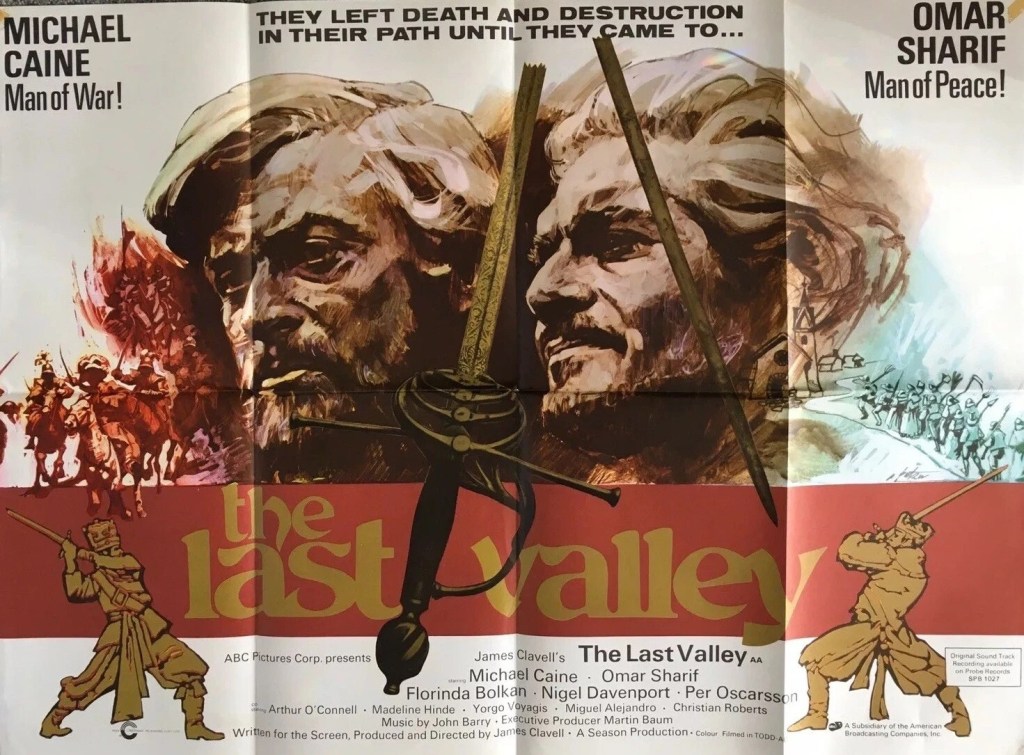
Furthermore, the studio, commenting on the poor performance of Cannon for Cordoba (George Peppard, 1970), noted that “in 1970 there was a marked change in global acceptance of western and adventure films. The results of films of other companies – for instance Mackenna’s Gold (Columbia, 1969), Murphy’s War (Paramount, 1971), The Last Valley (ABC Pictures, 1971) – as well as our own Play Dirty (1968) and Bridge at Remagen (1969), indicated the need for a substantial downward revision in assessing proper budget costs for pictures in this category, even with the so-called big name action stars.”

All had boasted top marquee names – Gregory Peck, Omar Sharif, Michael Caine, Peter O’Toole and George Segal.

Others in this vein expected to suffer in the same way included The Hawaiians (1970) headlined by Charlton Heston, Doc (1971) starring Stacy Keach and Faye Dunaway and Burt Lancaster pair Valdez Is Coming (1971) and Lawman (1971) – though in fact the last-named was saved from box office ignominy by foreign receipts.

The studio concluded: “Pictures with this kind of star are still a commodity but at half the cost.”

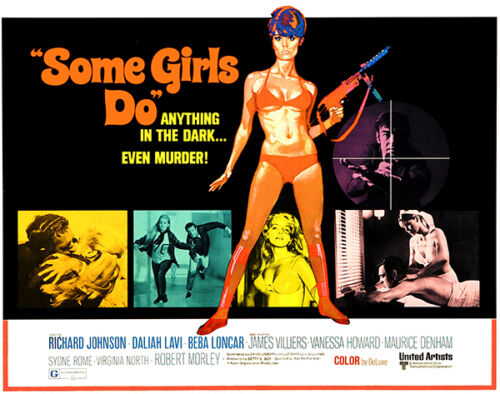
Another category, exemplified by the British-made second Bulldog Drummond outing, Some Girls Do (1969) starring Richard Johnson, was equally affected. “When this picture was programmed,” noted the studio, “many low budget action adventure thrillers had enjoyed a certain global audience – enough to warrant making pictures of this type at this cost. By the end of 1970, this market had dwindled sharply. Whether it is a surfeit of TV programs of a similar nature or a greater selectivity generally – based probably on increasing alternatives for leisure time activity – the fact is that for this type of picture it has to be made at less than half the cost or not at all.”

Included in this category were films like Crossplot (1969) starring Roger Moore, and I Start Counting (1970) featuring Jenny Agutter. However, the latter was considered as much of an artistic failure, attracting the following comment: “An attempt to do a high quality suspense thriller turned out to be an unimaginative second feature of no importance in any market.”

SOURCE: “Comments supplementing notes to Balance Sheet and Statement of Operations of United Artists Corporation for 1970,” United Artists Archive, Box 1 Folder 12 (Wisconsin Center for Theater and Film Research).

Hang ‘Em High (1968) ****

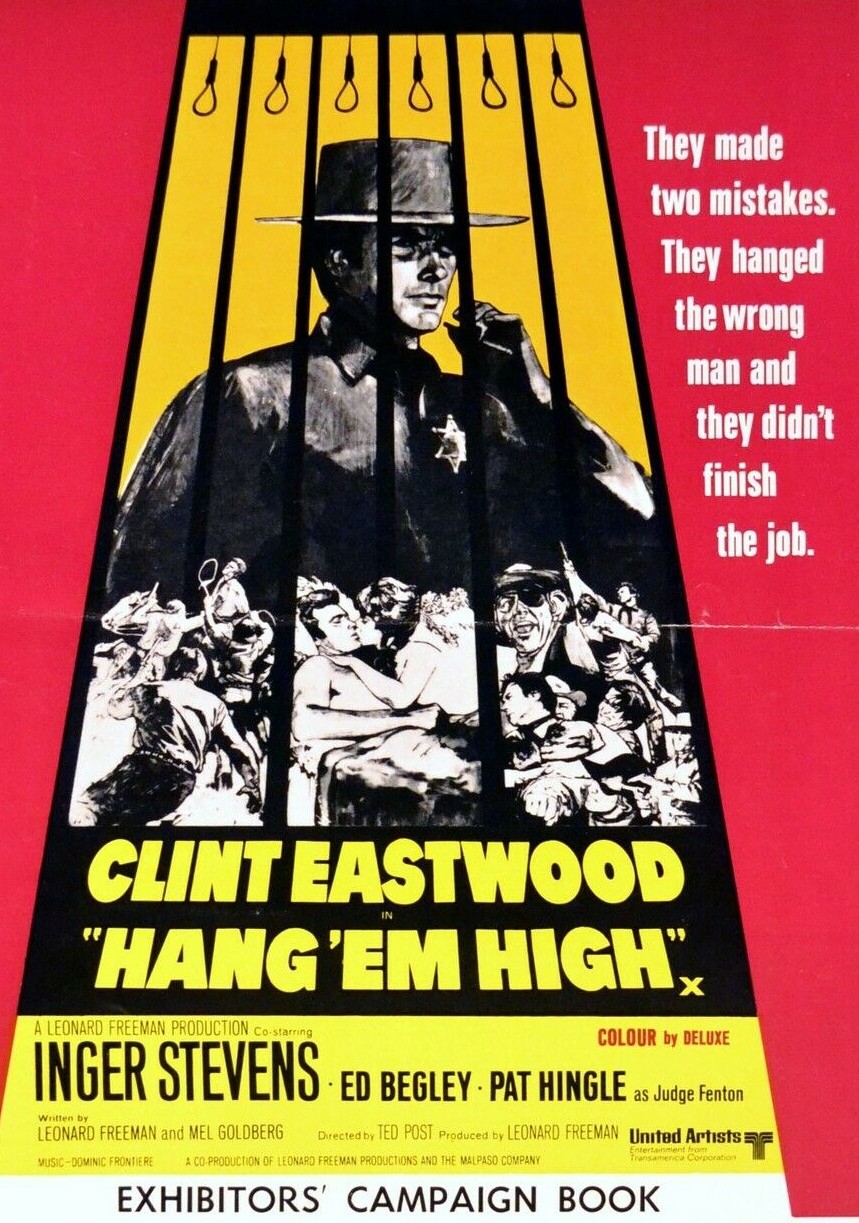
Clint Eastwood didn’t waste much time capitalizing on the unexpected success of the Dollars Trilogy. But the first was not released in the United States till 1967 and despite the success of the series across Europe was generally dismissed as a fluke, until American audiences suggested otherwise. The following year Eastwood appeared in three pictures, Hang ‘Em High, Coogan’s Bluff and Where Eagles Dare, which solidified his screen persona as portraying more with a twitch or a raised eyebrow than digging deep into the dialog.

Contrary to my expectations, Hang ‘Em High doesn’t quite fall into the trademark revenge mode of later westerns. It’s somewhat episodic, Jed (Clint Eastwood) often sent off on a tangent by Judge Fenton (Pat Hingle), allowing the lynch mob who failed to hang him in the first place a second chance at completing the job.

Following the success of the James Bond double bills,
United Artists spun out its Clint Eastwood portfolio at every opportunity.

And while the presence of the second-billed Inger Stevens (Firecreek, 1968) suggests heady romance that doesn’t kick in until the third act and it’s more tentative than anything and its purpose is more, in narrative terms, to provide Jed with a correlative with which to compare his own obsession, bringing to justice the nine men who attempted to kill him.

Just to confuse things, the middle section isn’t about revenge or romance, but about justice. Specifically, it’s about showing that justice will be done, that in the unruly West, with insufficient enforcers of law and order, that crimes will not go unpunished, a gallows on constant display to make the point.

Surprisingly, it’s Jed who argues that some of this justice is just too summarily executed. He tries in vain to prevent the execution of two young rustlers who fell in with one of his potential assassins, Miller (Bruce Dern), but who refuse to take advantage of the situation when Miller overpowers Jed while he’s bringing the trio in to face the judge. Admittedly, they don’t go to his aid either, but the fact they resist piling in allows Jed to escape. However, rustling is a hanging offence, so they cannot escape the noose, certainly not in Fenton’s town.

There’s a switch in the mentality of Jed. Before he’s co-opted by Fenton to return to his former profession of lawman, Jed is of the school of thought that decides to take the law into his own hands. Even wearing a badge, you are allowed to shoot a man stone dead if he’s trying to escape, even if such action is severely hampered by him already being badly wounded, as lawman Bliss (Ben Johnson) demonstrates. But Bliss isn’t as callous as he sounds. He’s a contradiction, too, racing to the aid of Jed dangling in a noose in a tree, freeing him so he can face justice, even if that will most likely result in hanging.

So Jed upholds the law, preventing other citizens from taking the law into their own hands, Miller a target of the family of the owners he slaughtered before making off with their cattle.  

We only see shop owner Rachel (Inger Stevens) fleetingly for most of the picture. She appears any time a new wagon load of criminals is jailed, scanning their faces for who knows what, though likely we’ve guessed it’ll be to find the killer of a loved one. Not only has her husband been killed by two strangers but while his corpse is lying on the ground beside her she’s raped. And although she eventually responds to Jed’s gentle moves, she still can’t let go of her “ghosts.”

Jed is put through the wringer. Not only an inch from death following the initial hanging but ambushed again by the same gang and nearly dying of pneumonia after being caught in a storm, the latter incidents permitting the kind of nursing that often fuels romance.

There’s an ironic ending. Captain Wilson (Ed Begley), leader of the gang, hangs himself rather than be shot by Jed.

The score by Dominic Frontiere (Number One, 1969) lurches. We go from heavy-handed villain-on-the-loose music to eminently hummable echoes of Ennio Morricone.

Clint Eastwood reinforces his marquee appeal, Inger Stevens delivers another of her wounded creatures, and Pat Hingle (The Gauntlet, 1977) is an effective foil. Bruce Dern (Castle Keep, 1969) does his best to steal every scene without realizing that over-playing never works in a movie featuring the master of under-playing.

Host of cameos include veterans Ben Johnson (The Undefeated, 1969), Charles McGraw (Pendulum, 1969) and L.Q. Jones (Major Dundee, 1965) plus two who had not lived up to their initial promise in Dennis Hopper (though he would revive his career the following year with Easy Rider) and James MacArthur (Battle of the Bulge, 1965).

Journeyman director Ted Post made a big enough impact for Eastwood to work with him again on Magnum Force (1973). Written by Leonard Freeman (Claudelle Inglish, 1961) and Mel Goldberg (Murder Inc., 1960).

More than satisfactory Hollywood debut for Eastwood and worth checking out to see that even at this early stage he had nailed down his screen persona.

Discover WordPress

A daily selection of the best content published on WordPress, collected for you by humans who love to read.

The Atavist Magazine

by Brian Hannan

WordPress.com News

The latest news on WordPress.com and the WordPress community.