Tender Is the Night (1962) ***

Hollywood hadn’t had much luck with F. Scott Fitzgerald, now considered one of the three American literary geniuses of the 20th century along with Nobel prize-winners Ernest Hemingway and William Faulkner. His novel The Great Gatsby has easily proven the century’s best-read literary novel. He was an alcoholic wastrel when in the employ of studios, in the latter stages of his life. Although The Great Gatsby had been filmed twice, in 1926 with Warner Baxter and 1949 with Alan Ladd, both versions had flopped.

His biggest seller, debut novel The Beautiful and the Damned (1922) didn’t hit the box office mark either. The Last Time I Saw Paris (1954), based on one of his short stories and starring Elizabeth Taylor, and a modest success, didn’t inspire Hollywood and it took Beloved Infidel, the memoir of his lover, gossip columnist Sheilah Graham, to kickstart further interest. But the film of that book, even with top marquee name Gregory peck, died at the box office in 1959.

So, whatever way you cut it, Twentieth Century Fox was taking a serious gamble – the budget was $3.9 million – trying to mount Tender Is the Night especially with such questionable stars. It was a comeback for Jennifer Jones, at one time a solid performer at the box office and an Oscar-winner besides. But she had been out of the business for five years, a lifetime in Hollywood terms. Male lead Jason Robards was virtually a movie unknown. This was his sophomore outing and his debut By Love Possessed (1961) had flopped. How much his Broadway prowess would attract audiences outside the Big Apple was anyone’s guess.

But Oscar-nominated director Henry King (Beloved Infidel) who had helmed Jones’s breakthrough picture Song of Bernadette (1944) clearly thought he was on to a winner because this had the slow and stately feel – running time close on two-and-a-half-hours – of a movie that’s never going to run out of breath never mind pick up a head of steam.

Truth is, it’s slow to the point of being ponderous. Takes an age to set up the story. Psychiatrist Dr Dick Diver (Jason Robards) living with ex-patient wife Nicole (Jennifer Jones) – an arrangement that would be professionally frowned upon these days – in the French Riviera in the 1920s host a party where the husband takes a shine to Rosemary (Jill St John) and the wife shows she has not shaken off her mental malady. Despite there not being a great deal of actual period detail, we spend a long time at the party as various permutations take shape.
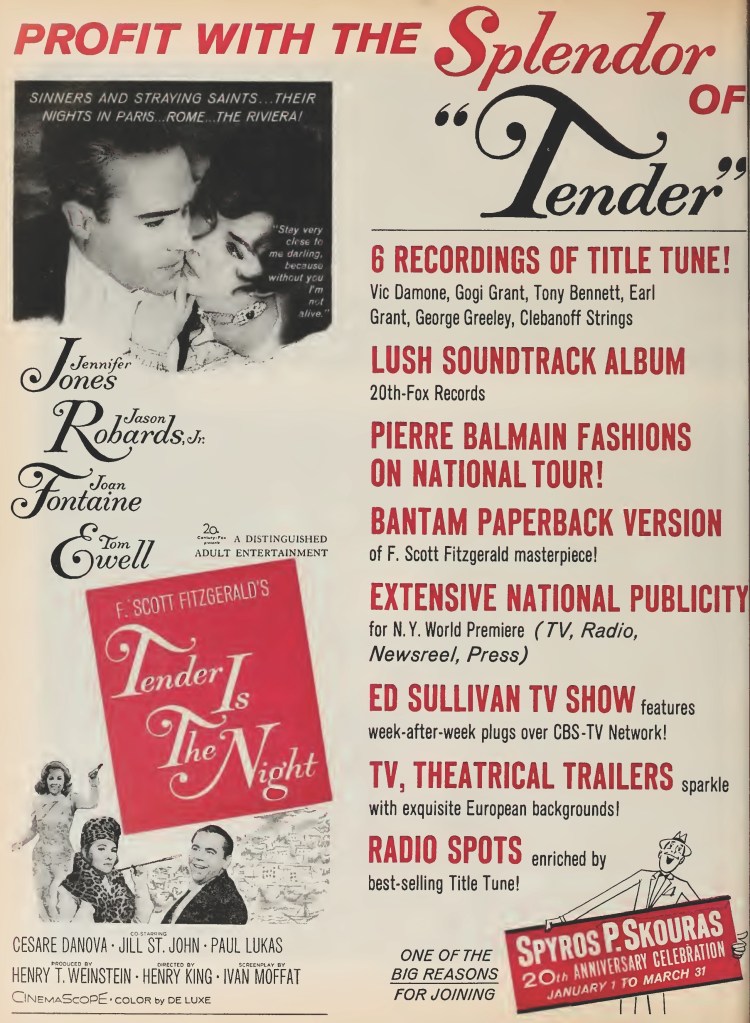
Then we dip into a long flashback to find out how we got here, mostly consisting of Dick falling in love with his patient, abandoning his career  to enjoy a hedonistic lifestyle funded by Nicole’s wealthy sister Baby Warren (Joan Fontaine). There’s a stack of gloss. We swap the South of France for Paris and Switzerland and we’re hopping in and out of posh restaurants and hotels and the kind of railway trains that for the rich never meant a draughty carriage and hard seats.

Basically, it’s the tale of a disintegrating marriage – one that would have been better avoided in the first place as most of the audience would have pointed out – and falls into one of those cases of repetitive emotional injury. Clearly, living on his wife’s sister’s money renders Dick impotent, compounded by the loss of peer regard.

Jennifer Jones (The Idol, 1966) is pretty good, essaying a wide variety of moods, flighty, whimsical, and stubborn, exhibiting the kind of nervous energy that was implicit in her illness and which he managed to tamp down but not fully control. Jason Robards is basically on the receiving end of a character he knows only too well, and he is simply worn down by the force of her personality. So, he can’t come across as anything but pathetic, especially when he wishes to succumb to the temptations of the likes of Rosemary.

For all the strength of his usual screen persona, Robards is miscast. He doesn’t command as he needs to in order for the film to work and for the audience to sympathize with his downfall. At this stage of her career, Jennifer Jones was so far more accomplished it doesn’t take much, even when she’s not letting fly, for her to hog the screen at the expense of a balanced drama. There’s a twist in the tale but by the time that comes we couldn’t care less.

In a less showy role than was her norm, Jill St John (Banning, 1967) is effective.

Ivan Moffat (The Heroes of Telemark, 1965) wrote the screenplay. A box office disaster, it only hauled in $1.25 million in U.S. rentals. Henry King didn’t direct another picture.

Trimmed by 30 minutes, this would have been more effective.
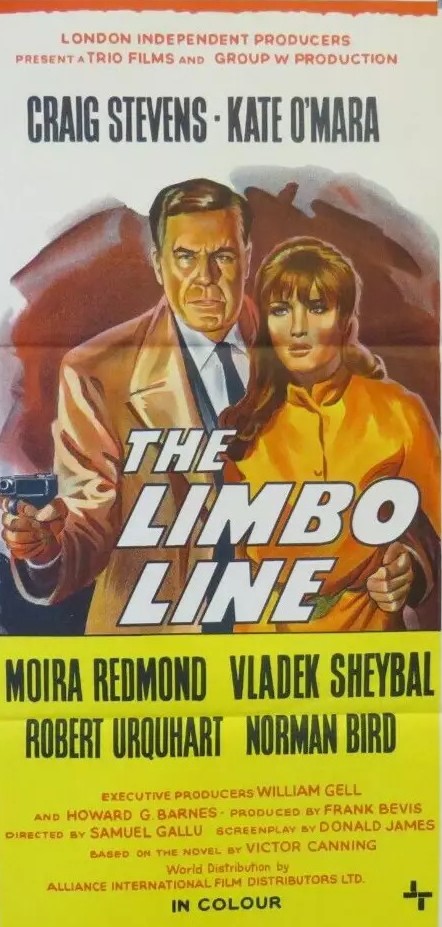
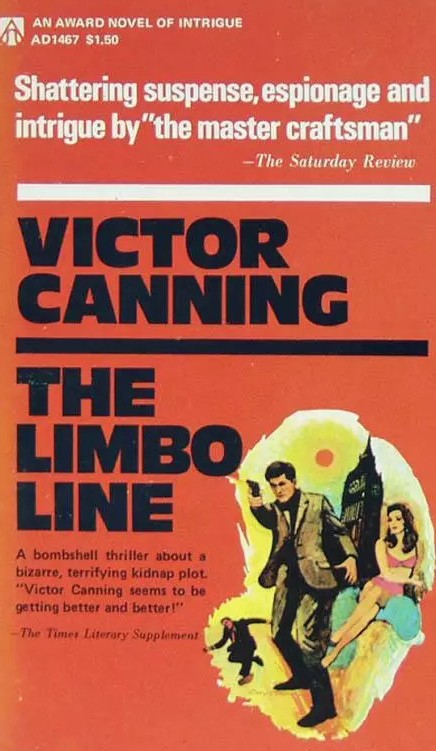
The Limbo Line (1968) ***

Should have been  a classic. The bleakest espionage tale of the decade ends up, unfortunately, in the wrong hands. Betrayal – personal and professional – underlines a sturdy enough narrative of defection, kidnap and rescue, infected with a spread of interesting characters far from the genre cliché.

We open with blonde Russian femme fatale Ludmilla (Moira Redmond), as sleek as they come, killing off her lover once she discovers his true intent. She works for the “Limbo Line,” an organization headed by Oleg (Vladek Sheybal) which whisks Russian defectors back to their home country. In romantic fashion, she inveigles herself into the lives of those who may be, for personal gain, about to take a wrong turn in the service of their country.

Richard Manston (Craig Stevens), meanwhile, is an operative of an undetermined secret unit, getting cosy with Russian ballerina Irina (Kate O’Mara), a defector, in the hope that she will become the next target for Oleg and thus lead him to his quarry. Responding to his amorous advances, she has no concept of this ulterior motives.

But he’s not the only one in the two-timing racket. Oleg lives high on the hog, a lifestyle financed by holding back remuneration due his operatives, who not only want better paid for the risks they are taking, but draw the line at murder. Ludmilla, meanwhile, uses intimacy with Oleg as a way of keeping tabs on him for her superiors.

Everyone, however, is operating under a new code of restraint. Arms limitation talks between the Superpowers currently taking place mean that neither side wants to be publicly seen to be working in the shadows. Hence, the no-holds-barred methods of both Manston and Oleg are frowned upon. Manston and Ludmilla have more in common than one would normally find in the spy movies of the period, the end justifying the means taking precedence over any personal interest in a lover.

The dangerous romantic elements would have been better dealt with in the hands of a more accomplished director. As it is, Samuel Gallu (Theatre of Death, 1967) has his hands full keeping track of a fast-moving tale as Irina is whisked by boat, bus and petrol tanker to Germany, hidden in such confined spaces the more cautious operatives fear she will die.

Nor, despite his fists, is Manston as good as you would expect from a heroic spy, battered to bits by his opposite number, himself imprisoned in the tanker, becoming a pawn to be sold to the highest bidder.

It’s in the tanker that Irina realizes her lover is deceitful, only using her as bait. Similarly, Oleg doesn’t realize he is every bit as dispensable to the ruthless Ludmilla who wishes to avoid public exposure and is only interesting in taking Irina back to Russia where she will be “re-educated.” Chivers (Norman Bird) looks like the nicer sidekick for Manston, the type to demonstrate fair play, except when he has to drown a suspect in a bath. He has the best line in the film, an ironic one at the climax.

The action, while overly complicated, is well done, none of the over-orchestrated fistfights taking place in odd locations. Chivers has a knack of turning up in the nick of time, but he’s the cleverer of the two.

An actress of greater skill than Kate O’Mara (Corruption, 1968) would have brought greater depth to the betrayed lover, but she does well enough to stay alert during the helter-skelter action. Craig Stevens (Gunn, 1967) was never going to be the right fit for a character required to show considerable remorse at his own actions.

The hard core of political reality, the constant betrayal of both innocent and guilty, the shifting sands of romance sit only on the surface and a better director would have brought them more into the foreground, eliciting better performances for deception incurred in the line of duty at the expense of the personal life.

It’s never a good sign when the bad guys are the more interesting characters and while you might expect Vladek Sheybal (Puppet on a Chain, 1970) to steal the show, he is usurped by Moira Redmond (Nightmare, 1964). A bigger budget would have also offered better reward, but even so Gallu comes up with more interesting camera angles than you might expect.  Based on the bestseller by Victor Canning (Masquerade, 1965), he was helped in the screenwriting department by television writer Donald James.

You watch this thinking what might have been.

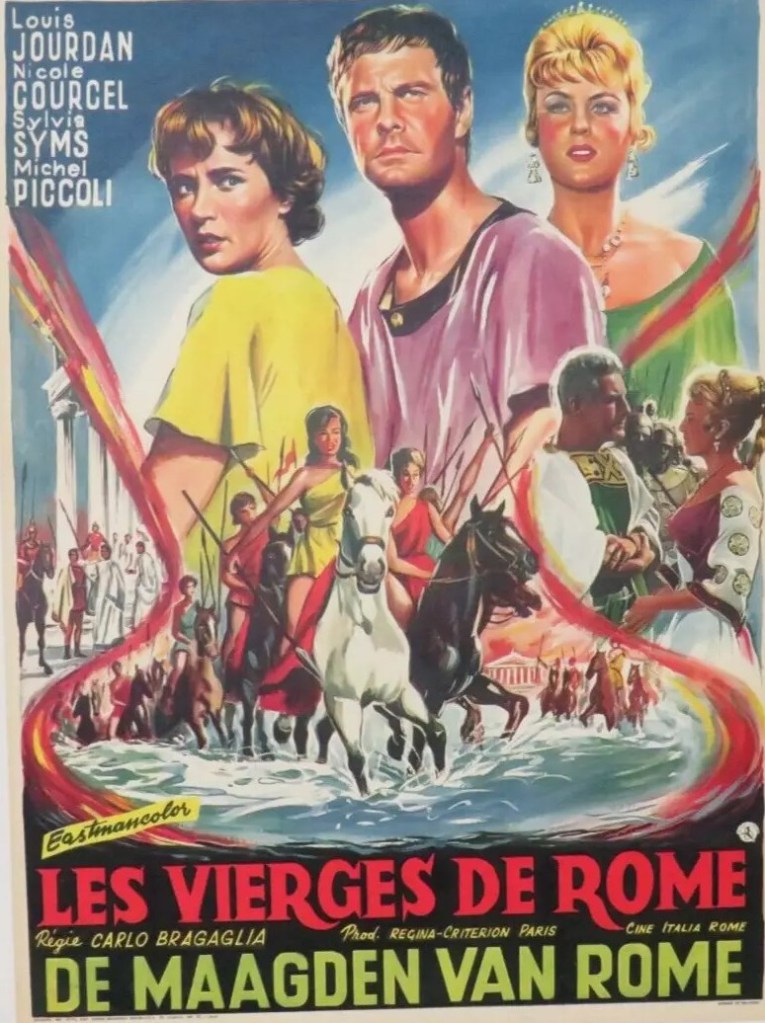
Amazons of Rome / Virgins of Rome (1961) ****

Starting with the cast  and the intelligence of the narrative a pretty unusual addition to the peplum subgenre. While there was no shortage of foreign stars hoping to find marquee redemption in Italy, I was frankly astonished to find leads of the caliber of Frenchman Louis Jourdan, fresh from Twentieth Century Fox big budget musical Can Can (1960), and rising English star Sylvia Syms coming off her biggest Hollywood role to date albeit as second female lead in The World of Suzie Wong (1960).

At the time of release, Jourdan did not seem a good fit for a genre that relied more on musclemen than the kind of suave charmer that he essays here. Syms equally seemed an odd choice, better known for prim Englishwomen than action. In fact, you’d have been hard put to find any American or British actress who would sign up for such a role. Although Sophia Loren in El Cid and Jean Simmons in Spartacus had significant roles in historical mocvies, they weren’t called upon to buckle a sword.

Given they start out as sworn enemies, Drusco (Louis Jourdan),  a barbarian laying siege to Rome, Cloelia (Sylvia Syms)  a besieged inhabitant, it was going to take some considerable narrative sleight of hand to contrive a happy ending. How it’s done is entirely believable, pivoting on ideals of honor that are initially foreign to this vicious war full of scores to be settled, unbridled ambition, deviousness and ruthlessness.

The civilized Etruscans backed by a barbarian horde headed up by Drusco have dealt a killer blow to the Roman armies led by one-eyed Horatio (Ettore Mani). Never mind the lack of obvious muscle Drusco isn’t anyone’s idea of a warrior leader. We are introduced to him munching on a watermelon and then chomping down on an apple on the edge of the battlefield. While other Etruscans, namely Stavros (Renaud Mary), want to raze Rome to the ground Etruscan leader Porcena (Jean Chevrier) wants peace. But it comes at a price – tons of gold in tribute and a thousand hostages. But since Rome is short of able-bodied men to fulfill that part of the deal, the Etruscans make up the numbers with a battalion of untested female warriors led by Cloellia.

Adding spice to the mix is Lucilla (Nicole Courcel), now an aristocratic Roman married to a noble, but originally an Etruscan captive, married to Porcena, who wants revenge on the Romans for her original harsh treatment at their hands. She finds a willing ally in the devious Stavros. 

initially merely amused by Cloelia and her warriors, impounded in a stockade outside the Etruscan camp, Drusco responds to their smarts. Devoid of weapons, the women find clever ways of stealing swords from their captors and secreting them in the stockade. However, when the scam is discovered, Cloelia volunteers to take whatever punishment is meted out. Porcena cedes choice of punishment to Lucilla who wants Cloelia to endure the same humiliation as was once handed out to her – to be whipped and then stripped naked in public.

But she hasn’t counted on Drusco’s cleverness. The minute one lash is administered, Drusco steps in, and pretty much on a technicality, announces that a “whipping” – number of strokes not specified – is complete. When Lucilla starts to strip Cloelia, he musters his soldiers to conceal this from the slavering Etruscans.

Cue some flirting but of course they are still on opposite sides. And in any case Lucilla puts paid to nascent romance, ensuring Drusco is chucked out of the camp for defying her. Infuriated, she sides with Stavros who has decided that mass rape will put the captives in their place. 

His scheme is thwarted by Cloelia who sets fire to the compound, escaping with her army after bullocks stampede. Pursued by Etruscan cavalry, they are saved by the intercession of Drusco. Embarassed by their escape, Porcena is now persuaded to restart the war. Back in Rome, Cloelia disobeys orders not to get involved and leads her army out through the sewers to attack the Etruscan rearguard. Porcena, realizing he has been used, calls for a truce. Lucilla is reunited with her Roman husband and Drusco, made a freeman of Rome, is able to marry the enemy.

Porcena comes over as an enlightened ruler. An early advocate of the zero sum game, his guiding rule for peace is “no victor, no vanquished” and he draws the line at the kind of ruthlessness espoused by his cohorts and although still attracted to Lucilla finds her attitudes distasteful and arranges for her to bury the hatchet with her Roman husband rather than continuing to foment her anger. There’s a lot more interesting dialog  than you’d expect in a picture like this.

But Louis Jourdan is what makes it special. His light comedic touches not only make his character much more human and attractive than the normal musclebound jerk, but also serve to underline his humanity. And since he’s so good anyway on the seductive side, the romantic elements catch fire rather than just limping along as was more normal in the genre. The only downside is he challenges George Hamilton in the over-tanned department.

Sylvia Syms, too, makes it all work. There’s no slacking in the action department and clearly no stand-in for the horse-riding, crossing of a river and a sewer on horseback. And without resorting to the athleticism of a Wonder Woman, the most recent example of the Amazon variety, and perhaps precisely because there’s no kowtowing to that, she is a believable heroine. No feminine wiles are required, either, just genuineness. 

Lucilla’s deviousness reminded me of Ian Bannen in Suspect, that spirit trapped by humiliation, revenge the only release. And though Nicole Carcel isn’t in Bannen’s league, she manages to essay the dark side of her nature with ease.

There are plenty narrative plot holes – how do the women emerging soaking from the river manage to burn the Etrucan battering ram being the pick – but the spirit of the picture more than compensates. 

The elements that made it stand out for all the wrong reasons back in the day are the very elements that make it so appealing to a contemporary audience. 

Highly enjoyable.

Castle Keep (1969) ****

A bit more directorial bombast and this could have matched Apocalypse Now (1979) in the surrealist war stakes. Never mind the odd incidents surrounding a small unit of G.I.s  taking over a magnificent Belgian castle towards the end of World War II prior to what turned out to be the Battle of the Bulge, this has on occasion such a dreamlike quality you wonder if it is all a figment of the imagination of one of the characters, wannabe writer Private Benjamin (Al Freeman Jr.). Throw in a stunning image, for the beleaguered soldiers at the start, of a horsewoman charging by in a yellow cloak, so out of place that it carries as much visual impact as the unicorn in Blade Runner (1982), and we are in definite cult territory.

One of the unusual elements is that, in this unexpected respite from battle, the soldiers are defined by character traits rather than dialogue or bravery as would be the norm. This ranges from baker Sergeant Rossi (Peter Falk) taking over the boulangerie and bedding the baker’s wife (Olga Bisera), mechanic Corporal Clearboy (Scott Wilson) diving into a lake to rescue a Volkswagen and the troops receiving a lecture on art history from Captain Beckman (Patrick O’Neal).

Commander Major Falconer (Burt Lancaster) is not only brilliant in the art of war, but calmly  mentors Beckman through a firefight with an enemy airplane, teaches local sex workers how to make Molotov cocktails and, evoking ancient aristocratic tradition, enjoys conjugal relations with the conquered countess (Astrid Heeren), whose impotent husband (Jean-Pierre Aumont) encourages the relationship since the castle needs an heir.  

There is wistful revelation, Beckman clearly hankering after his turn with the countess, a minister who wishes he had the courage to join the boys in the brothel, the young soldiers there being treated as children rather than customers. And there are juvenile pranks – moustaches are painted on statues, wine bottles used for ten-pin bowling practice.

But the surreal moments keep mounting up. The Volkwagen, though riddled with bullets, refuses to sink in the lake, a hidden German reveals himself by playing the same tune on a flute as one of the soldiers. The countess often appears as an ethereal vision.

Through it all is rank realism. Falconer knows a German previously shared the countess’s bed. The count will do anything to safeguard his castle and maintain the family line, even to the extent of incest, since his wife is actually his niece. But above all, while his troops believe the war is at an end and enjoy the pleasures at hand, Major Falconer prepares for rearguard action by the Germans, filling the moat with gasoline, planning to pull up the drawbridge and control the high ground.

The battle, when it comes, is vivid and brutal, the initial skirmish a hand-to-hand battle in the village before the Germans begin their siege of the castle.

Burt Lancaster (The Swimmer, 1968) is superb, far removed from his normal aggressive or athletic persona, slipping with pragmatic ease from the countess’s bed to battle stations. War films in the 1960s were full of great individual conflicts often won on a twist of ingenious strategy but seldom have we encountered a soldier like Falconer who knows every detail of war, from where and how the enemy will approach, to the details of the range of weaponry, and knows that shooting dead four soldiers from a German scouting mission still leaves one man unaccounted for.

Patrick O’Neal (Alvarez Kelly, 1966) also leaves behind his usual steely-eyed screen persona, here essaying a somewhat timid and thoughtful character. Peter Falk’s (Machine Gun McCain, 1969) baker is a beauty, a man who abandons war, if only temporarily, for a second “home,” baking bread, adopting a wife and child. In a rare major Hollywood outing French actor Jean-Pierre Aumont (Five Miles to Midnight, 1962) carries off a difficult role as a count willing to accept the humiliation of being cuckolded if it improves his chances of an heir. In one of only four screen appearances German actress Astrid Heeren (The Thomas Crown Affair, 1968) makes the transition from a woman going to bed with whoever offers the greatest chance of saving the beloved castle to one gently falling in love.

There is an excellent supporting cast. Bruce Dern (Support Your Local Sheriff, 1969) makes the most of a standout role as a conscientious objector.  You will also find Scott Wilson (In Cold Blood, 1967), Al Freeman Jr. (The Detective, 1968), future director Tony Bill (Ice Station Zebra, 1968) and Michael Conrad (Sol Madrid / The Heroin Gang, 1968).

Two top-name writers converted William Eastlake’s novel into a screenplay – Oscar-winning Daniel Taradash (Hawaii, 1966) and newcomer David Rayfiel who would work with Lancaster again on Valdez Is Coming (1971) and with Pollack on Three Days of the Condor (1973) and Havana (1990)

Sydney Pollack (This Property Is Condemned, 1966), who had teamed up with Lancaster on western The Scalphunters, 1968), does a terrific job of marshalling the material, casting an hypnotic spell in pulling this tantalising picture together, giving characters space and producing some wonderful images, but more especially for having the courage to leave it all hanging between fantasy and reality.

Expressions like  “we have been here before,” “once upon a time,” “the supernatural” and “a thousand years old” take solid root as the narrative develops and will likely keep spinning in your mind as you try to work out what it’s all about.

Behind the Scenes: Go, Fanzine, Go – Prior to the Blog Came the Newsletter

Having just watched The Black Hole (1979) and digging around my voluminous stacks of movie memorabilia in the hope of finding something relevant  I chanced upon this gem from 1979 – the first issue of Science Fiction Media News, a 12-page staple-bound A4  fanzine produced by Martin Hatfield who hailed from Oxford, England. In the days before the Internet and the ubiquitous Blog, movie fans who didn’t have access to the trade press like Variety or Box Office or Screen International would find very lean pickings in the national media who were less keen than they are now on devoting space to details of forthcoming pictures. It was left to chaps like Martin to do the digging. If you were a member of the British Science Fiction Association you got this for free, otherwise it would set you back a princely 25p.

So what was the gen in 1979? The hot news was that Dino De Laurentiis had picked up the rights to Dune for $1 million. He planned a three-hour epic. Screenplay was being written by Frank Herbert who postponed completing the fourth book in the saga to take on the job. Pink Floyd, previously assigned the music score, were out as was Jerry Garcia of The Grateful Dead.

With the success of the likes of Star Wars and Close Encounters of the Third Kind and Hollywood knee deep in a new sci fi cycle, there weren’t enough SFX experts to go round, so budgets were mushrooming. Warner Brothers had to add another $1.5 million to the cost of Meteor and push back the release date by four months. Paramount’s Star Trek was worse hit, the effects budget quintupling from $4 million to a reported $20 million.

If you remember Mike Oldfield for “Tubular Bells,” you might not know that he supplied the music for The Space Movie directed by Tony Palmer. That there’s nothing new in Hollywood is attested by the fact that this newsletter was plugging Nosferatu starring Klaus Kinski while Hollywood spent a good part of the latter end of 2024 hyping, in counter-programming to top all counter-programming, the Robert Eggers version due out at Xmas.

Readers were also kept abreast of forthcoming movies like The Shape of Things to Come  headlined by Jack Palance and Carol Lynley, Roger Corman’s Deathsport, Robert Altman’s Quintet starring Paul Newman, Don Coscarelli’s low-budget Phantasm and Disney’s The Spaceman and King Arthur. Given the evil genius in Moonraker planned to use a space station to destroy Earth’s inhabitants, this was also classified as science fiction (although Mr Hatfield points out “the space content of this film is being pushed as science fact rather than science fiction”).

Films reviewed include Foes starring MacDonald Carey (“may be worth a look just to see how far SF…has NOT progressed since 1950”);  David Lynch’s Eraserhead (“the most original horror story to come along for years”), Nosferatu (“tantalizing”) and Quintet (“eminently watchable”). Also reviewed was Ken Campbell’s stage adaptation of radio serial The Hitch-Hiker’s Guide to the Galaxy.

As ever, not all projects made it onto the screen. Paramount was scheduled to make Interview with the Vampire, but the Anne Rice novel took another 15 years to reach the screen and then through Warner Bros. British company Brent Walker planned to follow up The Stud (1978) and Quadrophenia (1979) with a contemporary vampire picture, Dracula Rocks, alas never made. Pop group The Osmonds were setting up to make a $6 million disaster movie Spaceport. Whatever happened to The Experiment based on the novel by James Clark? Or for that matter Bikers in Outer Space. Fancied seeing Vincent Price in Romance in the Jugular Vein? Too bad, it’s been cancelled. In other news, the novelization of Star Wars sold 896,000 copies in the UK, possibly a record for a novel in the genre.

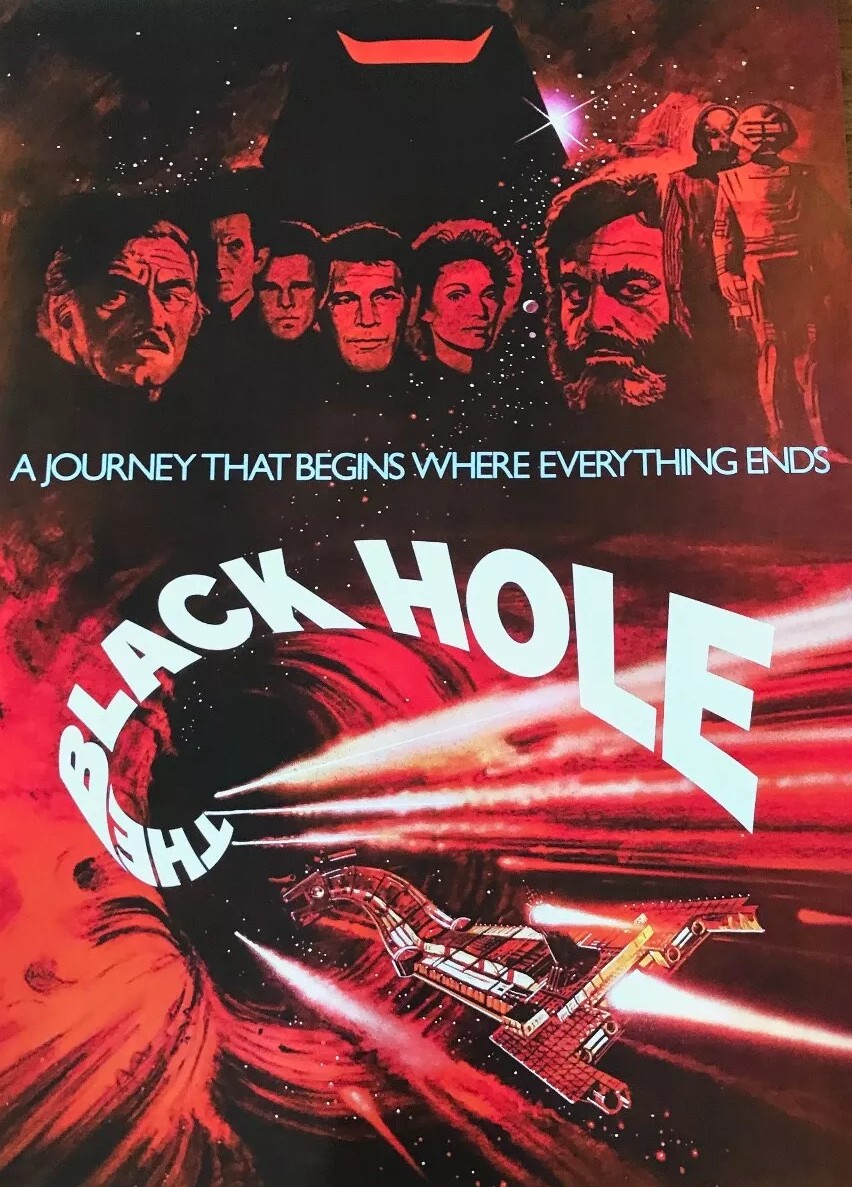
The Black Hole (1979) ***

Think of this as having been made before Star Wars (1977), Close Encounters of the Third Kind, Alien (1979), heck even Star Trek (1979), changed the sci fi world forever and imagine it’s a huge advance SFX-wise on the 1950s vanguard of sci fi pictures and you’ll probably come away very happy. A lot to admire in the matte work and some groundbreaking effects and actually the story – mad scientist lost in space – has a bit more grit than was normal for the genre.

But it’s laden down with talk and the action when it comes resembles nothing more than a first draft stab at the light sabers of  Star Wars and clunky robotic figures that come across like prehistoric Stormtroopers. A bit more light-hearted comedy than in the other three mentioned, various quips at the expense of the robots.

Scientists aboard space ship USS Palomino, a research vessel looking for life in space, is astonished to discover, hovering on the edge of a black hole, a missing spaceship USS Cygnus and are even more astonished to find out it’s not uninhabited, still on board is heavily-bearded Dr Hans Reinhardt (Maximilian Schell) and an army of robots that he has miraculously fashioned during his time lost in space.

This is a bit of an emotional blow to Dr Kate McCrae (Yvette Mimieux) whose father had been part of the crew of the Cygnus. Dr Reinhardt seems kosher enough except for his idea of, in the true spirit of space adventure, blasting off through the black hole. Although Reinhardt has been exceptionally clever in monitoring the invasion from the visitors and nullifying any threat with a blast from invisible laser, once they are on board that monitoring capability appears to vanish, allowing the visitors to search the ship where they find out that Reinhardt’s story doesn’t seem to add up.

Apart from Dr McCrae, the other personnel from the Palomino comprises Capt Dan Holland (Robert Forster), Dr Durant (Anthony Perkins) – the most inclined to follow Reinhardt into the greatest danger in the universe – quip merchant  Lt Pizer (Joseph Bottoms)  and dogsbody Harry (Ernest Borgnine). Plus there’s a cute robot Vincent (Roddy McDowall) constructed along even more rudimentary lines than R2-D2.

Vincent turns out to be a whiz at a basic version of a computer game, something between Space Invaders and Kong. But his main task is to wind up the crew with a head teacher’s supply of wisdom, spouted at the most inopportune moment. Except for the chest-bursting appearance of Alien, this might have garnered more kudos for the creepy mystery element – Reinhardt has lobotomized his crew members, turning them into these jerky robots, after they mutinied in revolt against his plan to dive into the black hole. Dr McCrae nearly joins the lobotomy brigade. And once she’s rescued it’s a firefight all the way. A stray meteor is on hand to add further jeopardy. And in the end the good guys are forced to plunge into the apparent abyss of the black hole, only to be guided by some angelic light and come out the other end unscathed, no worse for enduring the kind of phantasmagoric light show Stanley Kubrick put on in 2001: A Space Odyssey (1968).

By this point Maximilian Schell (Judgement at Nuremberg, 1961) was an accomplished bad guy, covering up inherent malignancy with charm and scientific gobbledegook. Joseph Bottoms (The Dove, 1974) is the pick of the incoming crew but that’s because he’s been dealt a stack of flippant lines. Anthony Perkins at least gets to waver from the straight-laced. But everyone else is a cipher, even Yvette Mimieux (Light in the Piazza, 1962) who might have been due more heavy-duty emotion.

This was the 1970s version of the all-star cast, all the actors at one point enjoying a spot in the Hollywood sun, but now all supporting players. Schell was variably billed in pictures like St Ives (1976), Cross of Iron (1977) and Julia (1977). Robert Forster (Medium Cool, 1969) hadn’t been in a movie in six years. Anthony Perkins was waiting for a Psycho reboot to reboot his career – only another four years to go. Yvette Mimieux had only made four previous movies during the 1970s including Jackson County Jail (1976). The most dependable of these dependables was Ernest Borgnine (The Adventurers, 1970), for whom this was the 24th movie of the decade, including such fare as Willard (1971), The Poseidon Adventure (1972) and Hustle (1975).

It didn’t prove a breakout picture for director Gary Nelson (Freaky Friday, 1976), Screenplay credits went to Jeb Rosebrook (Junior Bonner, 1972) and female television veteran Gerry Day.

Sci fi the Disney way.

Pendulum (1969) ****

It’s better to come at this as a drama rather than the thriller it was marketed as. That the name of George Schaefer, the last to make a movie of the directors who shot to fame in television in the 1950s, should be indication that this is character- and issue- rather than action-driven. It’s more about people being sucked into the system, about the vulnerable members of society, who, whether cop or criminal, have no recourse to some kind of higher power to sort their lives out. As such, it’s a satisfying drama.

A-list male stars playing emotionally vulnerable characters was a growing trend in the late 60s. Think of Rock Hudson in Seconds (1966), Burt Lancaster in The Swimmer (1968), Frank Sinatra in The Detective (1968), Kirk Douglas in The Arrangement (1969) – all reviewed on the Blog, incidentally. Here top Washington detective Frank Matthews (George Peppard) goes through the personal and professional ringer, suspecting wife Adele (Jean Seberg) of an affair then becoming a suspect himself in a murder case. Underlying these plot-driven aspects is an exploration of the political issue of civil liberties, in particular the constitutional rights of criminals, setting this up as one of the earliest law’n’order movies, a trope that would take center stage in films like Dirty Harry (1971).  

At a peak of professional success, having been awarded a medal and promoted to a consultant to a subcommittee on Law and Order headed by Senator Augustus Cole (Paul McGrath), Matthews’ ethics come under scrutiny when alleged murder/rapist Paul Sanderson (Robert F. Lyons), whom Matthews had arrested, is freed on a technicality thanks to the efforts of civil liberties attorney Woodrow Wilson King (Richard Kiley).

Matthews appears distracted much of the time trying to keep track of his wife’s whereabouts.  After delivering a speech in Baltimore, he walks the streets in a fug of depression. Meanwhile, King is disturbed by the fact that a man he clearly believes guilty refuses to seek psychiatric help. The question in the audience mind is where he will strike next. There’s an excellent scene in King’s office where his secretary Liz (Marj Dusay), delighted at the lawyer’s success in overturning Sanderson’s case, instinctively pulls away from the freed man.

When Adele and lover are murdered in Matthews’ bed, he finds himself on the opposite side of the law, undergoing the treatment he has meted out to so many criminals, quickly aware that circumstantial evidence could find him guilty. Front-page news himself now, suspended from his job by a quick-to-judge senator, emotionally isolated and a laughing stock, he retreats further inside himself. Naturally, he evades subsequent arrest, setting out to track down the killer himself, that leads him into the murkier depths of society from which emotionally-abused villains easily spring. 

Other issues are explored in passing, the independent woman for a start, whether it is wanting to have her own career and not play the stay-at-home wife or considering it fair game – as with Karen (Lee Remick) in The Detective or Gwen (Faye Dunaway) in The Arrangement – to upturn accepted morality and take a lover.

But the focus remains squarely on Matthews struggling to cope with life running away from  him, falling deeper into despair and into the maw of the criminal justice system which has the knack of bending its own rules. He has never been the saintly cop and there are moments where violence seems the best option, although not the vicious kind later espoused by Inspector Callahan. It’s ironic that the only solid detection the cop does in the first part of the film is tracking down his wife’s whereabouts.

George Peppard (Tobruk, 1967), generally a much-maligned actor, excels in a part where he can neither charm his way to an audience’s heart, nor confide in someone else about his marital problems, nor resort to action to define his character. That his pain is all internalised shows the acting skills he brings to bear. Oddly enough Jean Seberg (Moment to Moment, 1966), a specialist in emotional pain, takes a different path, coming across as a devious minx, keeping Matthews on the hook while enjoying relations with an ex-lover, whose career, as it happens, has panned out a lot better than her husband.

I only knew Richard Kiley, an American theatrical giant and primarily in the 1960s a television performer, through that mention in Jurassic Park (1993), but he is solid as the attorney who has qualms about releasing a prisoner he knows is guilty. Robert F. Lyons, making his movie debut, brings jittery danger to the unbalanced criminal. Look out also for Charles McGraw (The Narrow Margin, 1952) as the cop determined to take Matthews down and Frank Marth (Madigan, 1968) as the subordinate who gives the suspect too much leeway – to his cost. Madeline Sherwood (Hurry Sundown, 1967) is excellent as the disturbed, needy mother.

George Schaefer, at this point a four-time Emmy award-winner, specialized in thought-provoking drama such as Inherit the Wind (TV, 1965) and Elizabeth the Queen (TV, 1968).  This fits easily into that pattern. The title is a giveaway, too, referring to the pendulum swinging, “perhaps too far,” from all-powerful police to the rights of the accused taking prominence.

This was the only screenplay from Stanley Niss, who died shortly after the film’s release. He was also the producer. And better known as the writer-producer of television series like Jericho (1966-1967) and Hawaiian Eye (1959-1961).

Say hello to a different Peppard.

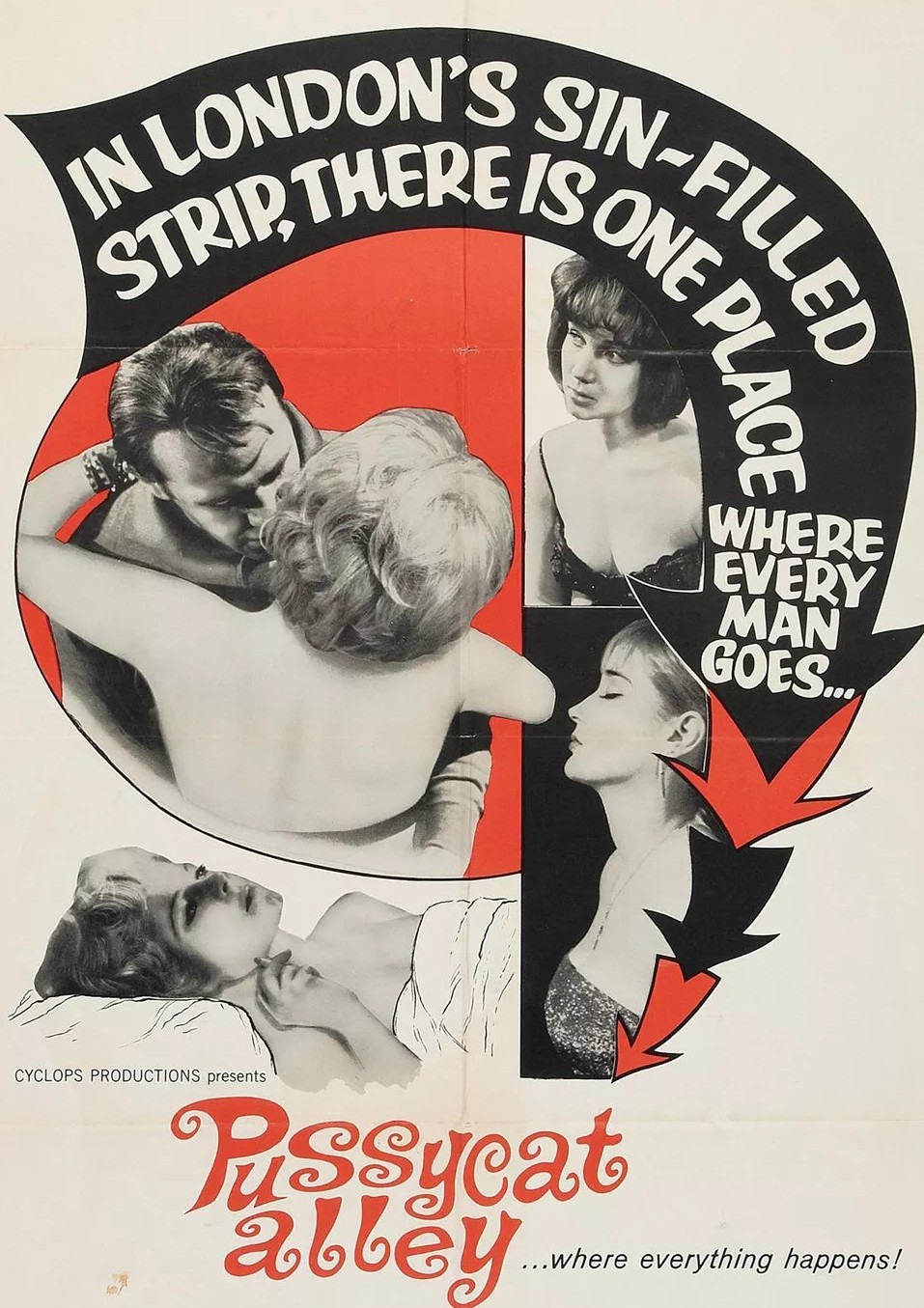
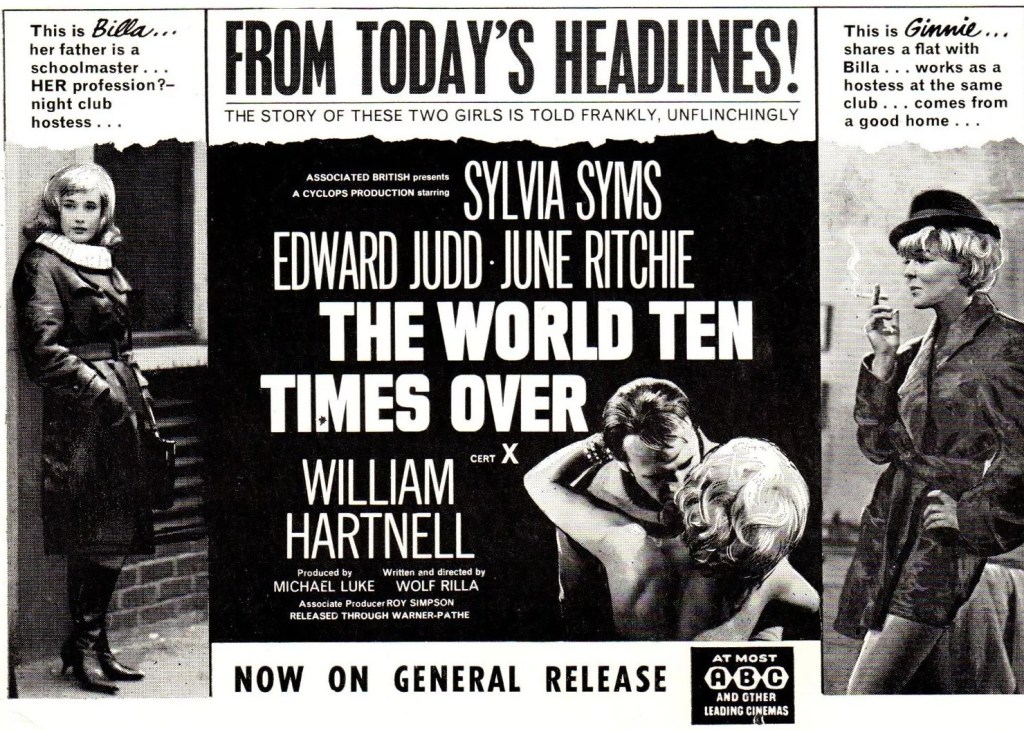
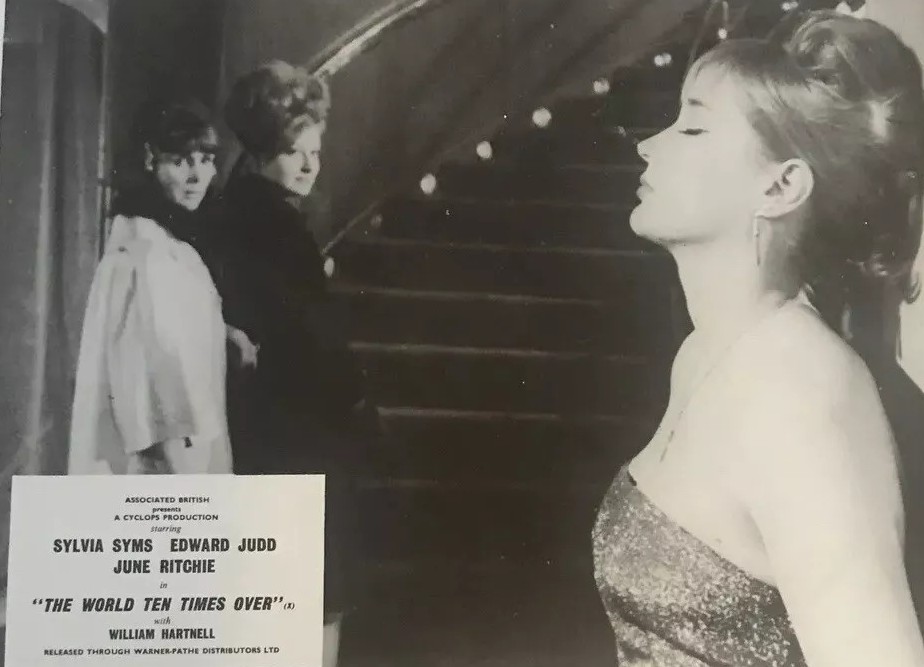
Pussycat Alley / The World Ten Times Over (1963) ***

Sold as sexploitation fare, this is more of a chamber piece as flatmates Billa (Sylvia Syms) and Ginnie (June Ritchie) face up to crises in their lives. For two-thirds of the picture we steer clear of their place of occupation, a Soho nighclub, and only go there for a scene of unsurpassed male humiliation. Unusually, since the expectation would be that the two girls, supplementing their official income with some part-time sex working (implicit rather than explicit), would be treated as victims of wealthy males, in reality they serve up several plates of juicy revenge, but in accordance with their characters rather than as noir femme fatales.

In a very drab London, shorn of tourist hallmarks and red buses and royal insignia, Ginnie sets the tone, furious at lover Bob (Edward Judd), pampered son of a wealthy industrialist, for bringing mention of “love” into what she views as either (or both) an expression of pure pleasure or financial transaction. Bob is the old cliche, the client fallen in love with the girl. Attracted as she is by the pampering and the fact that she can twist him round her little finger, she values her independence too much to commit to such a weak man. In addition, she is so used to getting her way and so wilful that she delights in running rings around him, humiliating him in front of his entire office. 

A contemporary picture like Anora (2024) would find space to excuse or explain her choice of employment, but here, beyond the fact that she left school aged 15 and has no qualifications, we are given nothing to work on, except that her predilection for doing exactly what she wants to do most of the time means she she might find steady employment a drain on her spritely personality.

Billa’s problem is she’s pregnant with no idea who the father might be and becomes infuriated by her widowed teacher  father  (William Hartnell) who can’t let go of his childlike notions of his beloved daughter. Thankfully, no  notions of abuse, but just a dad not coming to terms with a grown-up daughter, shocked that she can knock back the whisky, and whose idea of a treat is taking her to one of the most difficult of the Shakespeare plays. Eventually, suspicions aroused, he tracks her down to the nightclub where she takes great delight in behaving disgracefully, refusing to leave at his presence, parental authority cut stone dead, the staff treating the father like any other punter, even setting him up with a girl (though on the house and he doesn’t take them up on the offer). 

Meanwhile, the over-entitled Bob, failing to get his father to offer Ginnie a job except as an escort for the company’s clients, decides to leave his wife, books plane tickets for an exotic holiday only to be spurned. Ginnie recognizes more easily than him what a disaster marriage would be. She enjoys the fancy restaurants and fast cars but draws the line at commitment. She’s at her best when prancing around, indulging her whims, and yet there is a price to pay for her lifestyle as we discover in more sober fashion at the end.

Billa is sober pretty much all the way through, thoughtful, withdrawn, unable to connect with her father, her biggest emotional support being Ginnie. Despite her failure to go along with her father’s vision of her as an innocent child, her apartment is bedecked with childish paraphernalia, teddy bears, dolls etc. 

Not quite a harder-nosed version of Of Human Bondage, and not far off as far as the males are concerned, but more of a character study of the two women.

Although she has the less showy part, Sylvia Syms is the peach here, and if you consider her portfolio from The World of Suzie Wong (1960) through to East of Sudan (1964) this shows the actress at the peak of her ability. June Ritchie (A Kind of Loving, 1962) is excellent as the flighty piece and Edward Judd (The Day the Earth Caught Fire, 1961) steps away from his normal more heroic screen persona. This was William Hartnell’s last movie before embarking on his time travels for Doctor Who and it’s a moving portrait of an old man whose illusions are shattered.

Directed by Wolf Rilla (Village of the Damned, 1960) from his own screenplay.

Low-life never looked so glam and so shoddy at the same time.

Behind the Scenes: Mirisch Bros at the Box Office 1965-1969

Sinful Davey (1969) was a rare black spot during the second half of the 1960s for acclaimed independent production outfit Mirisch Brothers. With a loss of $2.57 million – counting domestic and foreign rentals –  it was only beaten in the red ink stakes by Blake Edwards war comedy (always a dangerous combination) What Did You Do in the War, Daddy? (1966) starring James Coburn which lost $2.75 million.

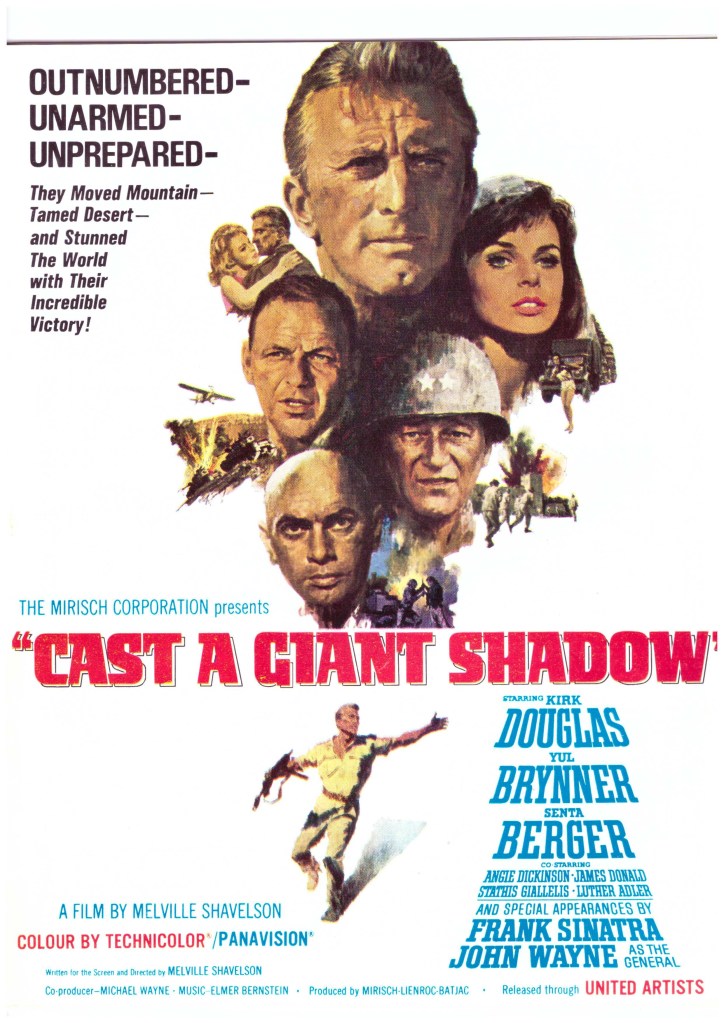
But otherwise this was a banner period for the mini-studio which made a profit of $36.1 million on an expenditure of $69.4 million. Except for the Blake Edwards, its biggest gambles turned out winners or at least scraped by into the black. Hawaii (1966) with Julie Andrews and Max von Sydow, budgeted at $13.9 million, produced $4.9 million profit and the all-star Cast a Giant Shadow (1966) steered clear of disaster, if only just, with a profit of $890,000 on its $5.51 million budget.

That Mirisch came racing home in triumph was largely down to a pair of less conspicuous projects. Getting by on the third-lowest budget of the period, the Oscar-winning In the Heat of the Night (1967) transcended its miserly budget of $2 million to carve out a $16 million notch on the box office rentals bedpost. Norman Jewison Cold War comedy The Russians Are Coming, The Russians Are Coming (1966) pulled in nearly $8 million profit on a $3.9 million budget. Romantic heist thriller The Thomas Crown Affair (1968), pairing Steve McQueen and Faye Dunaway, with double the budget of In the Heat of the Night, scored just shy of $7 million profit.

The sequel Return of the Seven (1966), with Yul Brynner leading a new team of gunslingers, shot up $3.62 million profit on a paltry budget of $1.78 million. A second Blake Edwards comedy The Party (1968), with Peter Sellers, made a profit of $1.5 million on a $3 million.

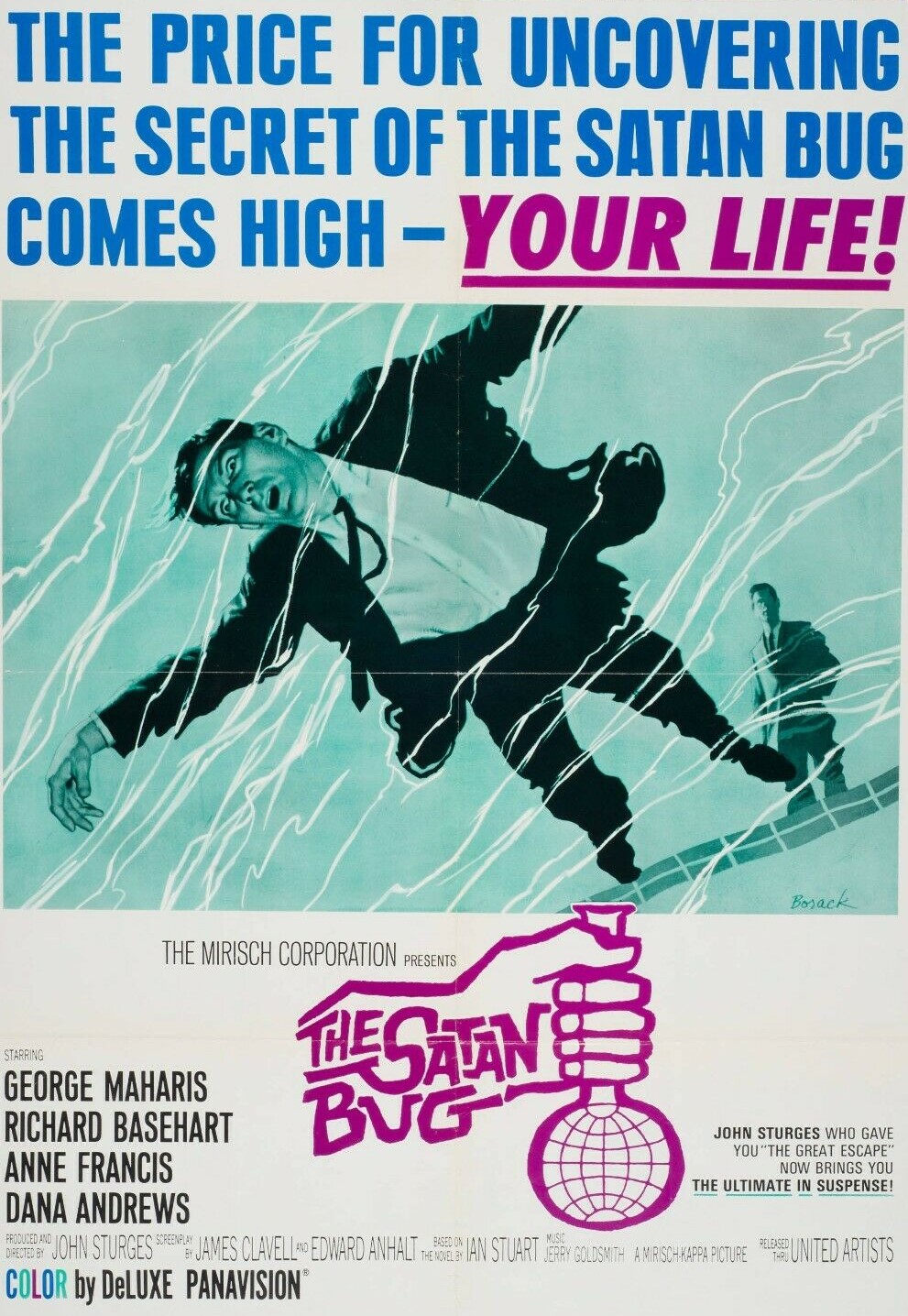
With only four out of 18 movies registering as official flops, the rest of the pack broke even or better. There would be some sighs of relief that John Sturges 70mm western The Hallelujah Trail (1965) starring Burt Lancaster and Lee Remick, limped home with $385,000 in the black after an expenditure of $7.15 million. Sturges did better with the lower-budgeted The Satan Bug, based on the Alistair MacLean bestseller. Making do with a budget of $1.78 million, it was profitable to the tune of $822,000. Billy Wilder’s The Fortune Cooke (1966) with Walter Matthau and Jack Lemmon, made $900,000 on a $3.7 million budget.

Two of the smallest-budgeted items – Return from the Ashes (1965) with Maximilian Schell and Samantha Eggar and Suzanne Pleshette melodrama A Rage to Live (1965) both brought in around $180,000 profit on budgets of $1.56 million and $1.32 million, respectively. The two other outright flops were Fitzwilly/Fitzwilly Strikes Back (1967) starring Dick van Dyke and another John Sturges western Hour of the Gun (1967) with James Garner and Jason Robards heading back to the OK Corral – $300,000 loss for the former ($2.9 million budget) and $600,000 for the latter ($3 million budget). Scraping home, literally by the skin of its box office teeth was the adaptation of Broadway musical How to Succeed in Business without Really Trying (1967) which managed a whole $5,000 profit on a $3.7 million budget.

However, Hollywood had become accustomed to downgrading foreign box office expectations, a caution borne out by the proportionately poor overseas response to the likes of Hawaii which only managed $2.8 million on foreign rentals. The Russians Are Coming, The Russians Are Coming made four times as much in rentals in the U.S. compared to abroad, In the Heat of the Night’s domestic contribution was double that of foreign.

On the other hand, foreign was the major reason Return of the Seven did so well. It pulled in $3.9 million in rentals overseas – the fourth biggest result of the period – compared to a disappointing $1.5 million at home. Similarly, Hour of the Gun would have been an even greater flop after the domestic market delivered only $900,000 in rentals, allowing redemption of a sort with $2.4 million abroad. Even The Hallelujah Trail had foreign audiences to thank for $4.5 million compared to $3 million at home. The Satan Bug did twice as much business away from home as in the U.S.

Of course, when I talk about profit that’s only in reference to rentals compared to budget. Other costs have to be added in before movie is considered a genuine success. That’s best exemplified by earlier Mirisch picture The Great Escape (1963). Budgeted at $3.75 million, it brought in global rentals of $11 million but only made $326,000 in final profit. Some Like It Hot (1959) amassed rentals of $12.9 million on a $2.8 million budget. Profit? Just $487,000.

Who’d be a movie producer?

.SOURCE: “Mirisch First 20-Picture Deal” and “Mirisch Second 20-Picture Deal,” United Artists Archive, Wisconsin Center for Film & Theater Research.

The Russia House (1990) ****

The amateur spy – the innocent caught up in espionage malarkey – had scarcely graced the screen for a couple of decades, Hot Enough for June/Agent 8¾ (1964) or Masquerade (1965) possibly the highpoints of that subgenre. That it turns up at all is probably due to spymaster John le Carre’s Cold War comfort zone evaporating following glasnost and perestroika in Russia in the late 1980s. Of course, the West didn’t entirely trust the Soviets to reform, and had no intention of pensioning off its battalions of secret agents.

The plotline is largely irrelevant here, acting more as a MacGuffin than anything else, because audiences will have long forgotten what was sacred to the West three decades ago. And the picture is devoid of the usual car chase and there’s not even the kind of foot-race that became de rigeur to prove our ageing superstars could still physically hack it – Clint Eastwood in In the Line of Fire (1993) or Liam Neeson in Taken (2008).

So what we’re left with is probably what le Carre was hoping for in the first place – a character study. It may have passed your notice that among the highest ranks of the superstars only Sean Connery could match Tom Hanks in actually changing his appearance – different hairstyle, different beard (yep, you didn’t think that could define character, did you) – to depict character. Of course, nobody was expecting Stallone or Schwarzenegger to alter their look; Harrison Ford got a buzzcut once; but Paul Newman, Burt Lancaster, Kirk Douglas, even going further back to James Stewart, Gary Cooper, their hairstyle remained untouched, and until Connery made it part of his persona Hollywood believed that moustaches were box office disaster.

Barley (Sean Connery) is an upmarket publisher whose business is on the slide, so much so that he doesn’t attend an annual book fair in Moscow. So when Russian single mother Katya (Michelle Pfeiffer) turns up looking for him, she ends up handing a manuscript to Penguin’s representative who, naturally, turns it over to MI6.

Takes a while what with interrogation and flashback to work out why Barley has been selected. Unwittingly, on a previous sojourn to Russia, he had made the acquaintance, over a drunken dinner, with Dante (Klaus Maria Brandauer) who turns out to be Katya’s long-ago first love and, more importantly, a nuclear scientist with secrets to sell or give away. Barley is hooked into returning to Russia to gain the confidence of both Katya and Dante and provide access to secrets  the British Secret Service and their Yank counterparts desire.  

That it doesn’t go the way the high-ups want is because Barley is a “decent human being” and when he realizes he has compromised Katya, and endangered the lives of her two young children, he turns traitor and trades their safety for secrets.

Given the plot and counter-plot thesis, and the various axes that need to be ground over nuclear weapons accumulation and inherent corruption, this cinematic enterprise could have proved way too unwieldy for a contemporary audience. Instead, the very fact that much of the background is now meaningless clears the way for the movie to stand on its own two feet, as yet another wonderful character study in the largely unheralded Sean Connery (The Hill, 1965) portfolio. And with Michelle Pfeiffer turning in a Golden Globe-winning performance, the  movie hinges more on the characters than the espionage.

There’s a fabulous scene where the initial narrative is just turned on its head. You’re already thinking MI6 must be hard put to be even thinking of employing Barley, given he’s a bit of a boozer, the kind of guy who knocks one whisky straight down before sipping the next. Katya, attempting to establish his bona fides and suspicious that he’s actually a spy, asks him, “Are you alone?” Meaning, has he come alone, is he acting independently?

Barley takes a different meaning from the question. “Never been more alone,” he replies, barely concealing the despair in his eyes. “I let people down,” he confesses at another point.

His life is headed in all the wrong directions. He’s fluffed too many lines and no guarantee he’s even capable of looking for redemption. And Katya’s way too wary. He’s like an enthusiastic schoolboy when he falls in love with her. When he dives in for a kiss, she tilts her head so he can only kiss her cheek in the Russian fashion.

His romancing comes unstuck when instead of responding to his ardor she recounts her experiences with Dante. It’s her scene and yet Connery steals it with his slow-burn despair. Her wariness shows in her face. The purported new freedoms her country promotes mean little more than citizens can more freely complain.

While you might not go along with his self-deprecating description of himself as a “large unmade bed” – his physical grace always going to make this unlikely – nonetheless he is a shambles of a man. Even Connery can’t make fashionable the duffel coat, his perennial outfit of choice, an item of clothing that to generations epitomized the unfashionable, a garment worn by those who couldn’t care less about their appearance.

Connoisseurs of Connery’s hair and beard will notice a certain rumpled element compared to the stylish beard he wore in Rising Sun (1993) or the confident full version of The Hunt for Red October (1990).

Outside of the Connery-Pfieffer axis, although the narrative stumbles in accommodating their manoeuvring, the movie boasts a phalanx of interesting supporting actors, some fallen from the marquee heights like Roy Scheider (Jaws, 1975) and James Fox (Thoroughly Modern Millie, 1967), others who would make their mark in television like John Mahoney (Frasier, 1993-2004), Martin Clunes (Men Behaving Badly, 1992-2014), David Threlfall (Shameless, 2004-2013) and Michael Kitchen (Foyle’s War, 2002-2015) and topped up with a wild-eyed indulgent performance from director Ken Russell (Billion Dollar Brain, 1967).

Rather devoid of screenwriter Tom Stoppard’s (Shakespeare in Love, 1998) trademark humor except in a couple of aural jokes about odd sounds emanating from hidden microphones. The first movie to be filmed in Russia after glasnost so a bit more authentic location work than usual. To his credit director Fred Schepisi (The Chant of Jimmie Blacksmith, 1978) allows Connery and Pfeiffer full rein rather than getting bogged down in the inescapable politics and office backstabbing.

Watch it for Connery and Pfeiffer.

Be warned: I feel a Connery binge coming on.

Discover WordPress

A daily selection of the best content published on WordPress, collected for you by humans who love to read.

The Atavist Magazine

by Brian Hannan

WordPress.com News

The latest news on WordPress.com and the WordPress community.