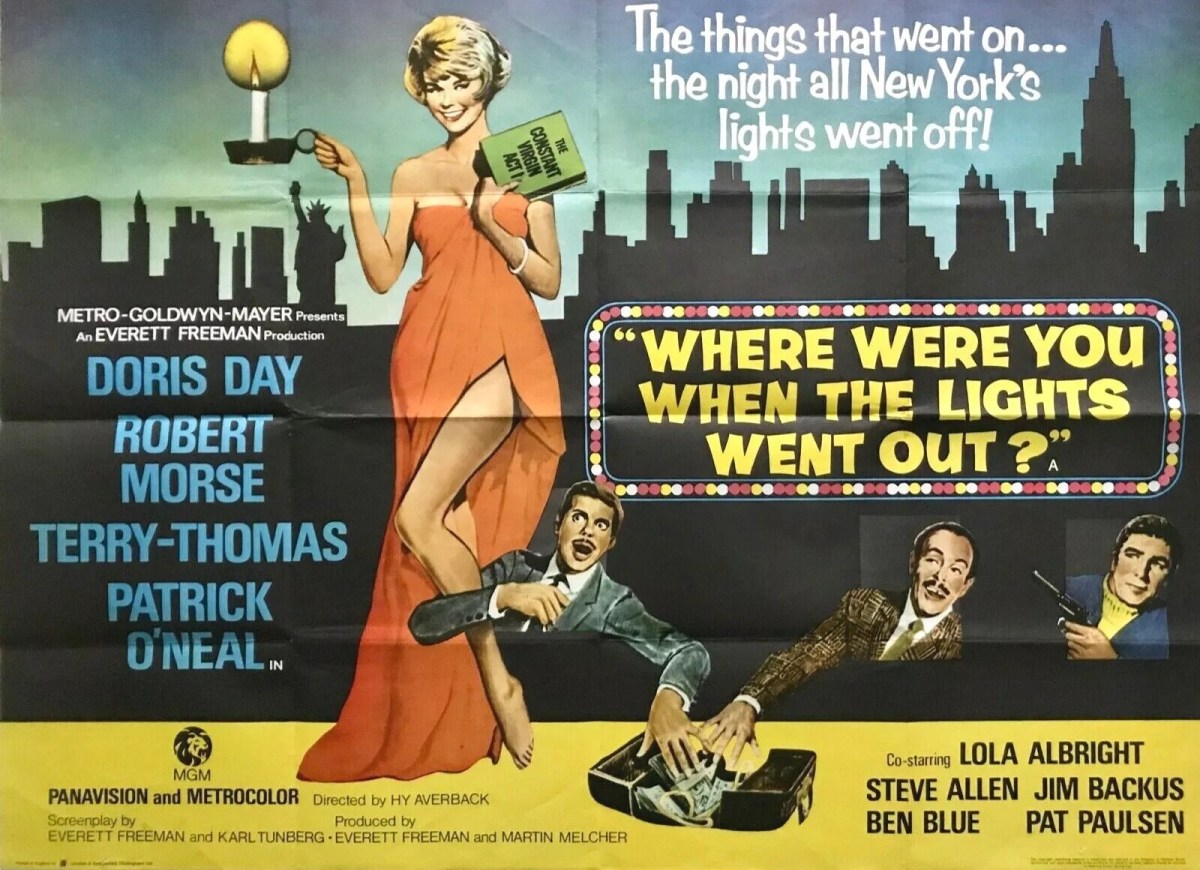
Where Were You When The Lights Went Out (1968) **

Of the 25 million stories you could have chosen when New York and the surrounding area was hit by an electricity blackout in the mid-1960s, you could have elected for something more interesting than this farce-style comedy that after the opening sections resembles nothing more than a stage play. But that’s because, somewhat surprisingly, it is based on a play and one concerning not the great fracas in the Big Apple but a similar occurrence in Paris almost a decade before. Once you know that, the farce element makes sense, but not much else does.

The three constituent parts that eventually coalesce into little more than a collage of double takes and startled expressions are: thwarted businessman Waldo (Robert Morse) making off with a couple of million bucks; Broadway star Margaret (Doris Day) finding architect husband Peter (Patrick O’Neal) in a clinch with journalist Roberta (Lola Albright); and impresario Ladislaus (Terry-Thomas), the most English-sounding Eastern European you ever came across, terrified Margaret is going to quit his play.

The lights going out malarkey is an ill-judged MacGuffin so that all except Roberta can end up in a classy Connecticut apartment and get into a quandary about who loves who and who’s cheating on who and career choices to be made. It’s pretty hard work all round to make all the pieces misalign and then fit. Waldo’s car has broken down so he has no real reason to be there nor to gulp down a beaker of alcohol that knocks him out without noticing that Margaret is fast asleep on the same couch after imbibing the same concoction.

Cue not much hilarity when guilty Peter turns up hoping to win back his wife, not expecting to find her unconscious from booze and once he discovers her bed partner convinces himself that she is as much of a cheat as himself. Meanwhile, Ladislaus tries to keep the jealousy pot boiling in the hope that she will divorce her husband and be forced to continue working.

I’m not sure I really cared whether it all worked out or not. Sure, comedies often pivot on bizarre instance, but this is just awful. More to the point, the structure doesn’t focus sufficiently on Margaret. The Waldo scenario seems wildly out of place and not enough is made of the chaos of the blackout. More to the point, with streets completely jammed and traffic signals not working, just how all four manage to get out of the city is beyond belief.

Sure, Doris Day grew up fast in the decade; at the start we worry about her losing her virginity; by the end it’s whether she’s going to embark on an affair. She’s always on the brink of the kind of sophistication that might tolerate an affair before drawing back in shock at such a notion.

The laffs are thin on the ground, even Doris Day drunk – one of her trademark touches – seems to lack punch. The best written scenes are those between Ladislaus and his cynical psychiatrist

Doris Day does her best but it’s far from the sparkling form of Pillow Talk (1959) that kicked off her very own rom-com subgenre. The quality of her male co-star had diminished over the years, from the peaks of Rock Hudson and Cary Grant to the acceptable Rod Taylor and James Garner but Patrick O’Neal (Stiletto, 1969) acts as if he is curling his lip and about to belt someone in the harder-edged dramas with which he made his name. Robert Morse (The Loved One, 1965) looks as though he’s still trying to work out what his character’s doing there. However, Terry-Thomas (Arabella, 1967) exudes such charm he’s always a joy to watch. Lola Albright (A Cold Wind in August, 1961) isn’t in it nearly enough.

The original French play by Claude Magnier was a sex farce, but casting Doris Day meant the sex angle was played down, inhibiting the movie. An unlikely vehicle for screenwriter Karl Tunberg – Ben-Hur (1959) and Harlow (1965) – who co-wrote with producer Everett Freeman (The Maltese Bippy, 1969). Director Hy Averback (The Great Bank Robbery, 1969) doesn’t come close to demonstrating the lightness of touch required to make such a ponderous effort work.

File under disappointment.
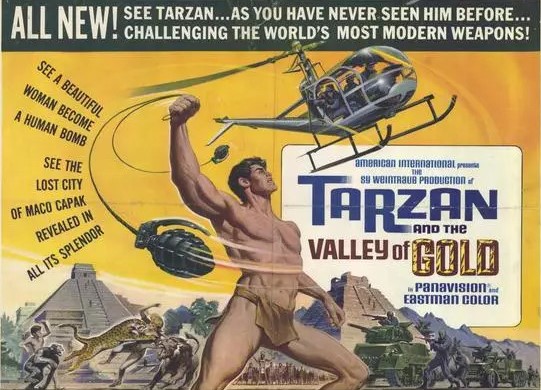
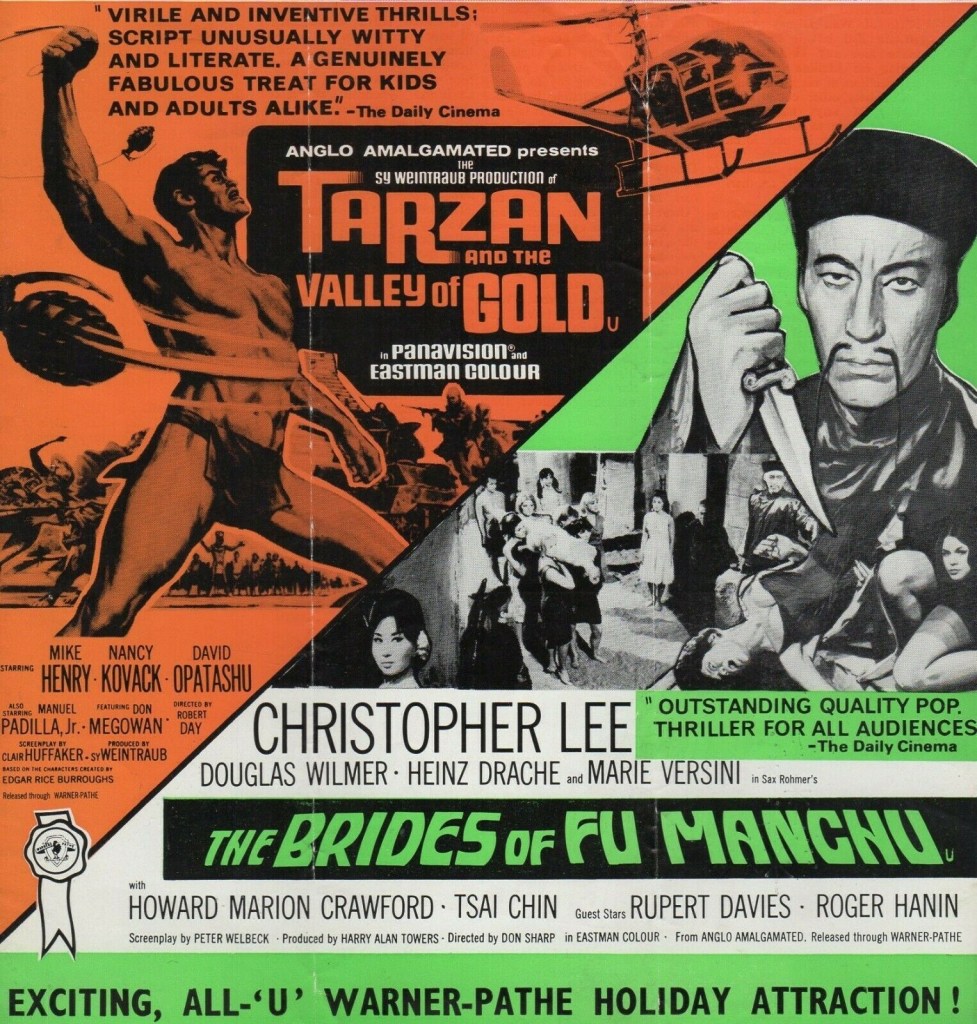
Tarzan and the Valley of Gold (1967) ***

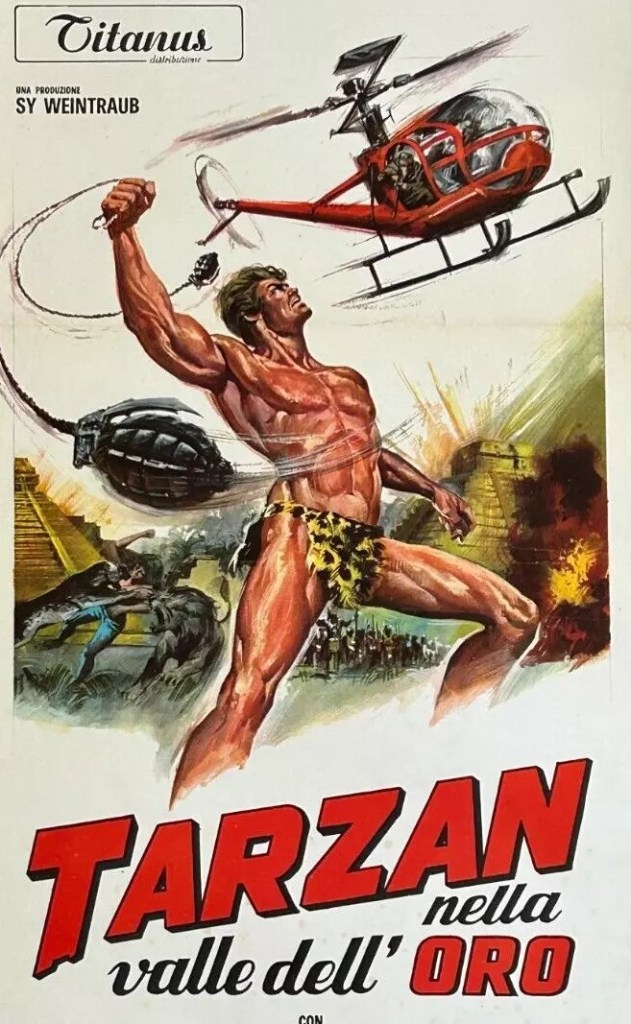
Hooray for hokum. What should have been termed Tarzan: The Next Generation takes our hero temporarily out of loincloth but equips him with a hefty Browning machine gun and rudimentary grenade launcher, not to mention the neat tricks of  repurposing a giant Coca-Cola bottle and bringing stalactites down on the heads of pursuers. Hardly surprisingly he’s toting such weaponry given he’s not just, as was more common, wrestling pesky crocodiles and punching the living daylights of any villain stupid enough to get in his way.

Sadistic evil mastermind Vinero (David Opatashu), has raided the Army Surplus stores for a World War Two M5A1 Stuart light tank, an M3 half track and a Bell 47 helicopter to augment his battalion of 40-odd mean-looking mercenaries. Though he hardly requires them since his favored device is an exploding watch.

Vinero has kidnapped a small native boy Ramel (Manuel Padilla Jr. who reputedly knows the way to an ancient El Dorado complete with Aztec pyramid. Yep, we’re in Mexico, which, incidentally, should screenwriter Clair Huffaker so require, does boast crocodiles as well as jungle. Tarzan is called in to rescue the lad.

He only wears a suit long enough to dispatch an assassin who has dumped him in a football stadium. Once he smells the wild it’s into the traditional loin cloth. He teams up with a Dirty Quarter Dozen comprising chimp Dinky (recruited for his scouting skills, you understand, and his three wise monkeys impersonation), lion Major (specialty: human flesh) and the boy’s pet leopard who will lead our merry crew to the child.

Quite how Ramel was found wandering in the jungle is never explained though it’s perfectly believable that, once lost, he wouldn’t know his way back and would rely on that well-known human compass Tarzan to help him find the way.

There’s quite a lot of trekking one way or another, but, thankfully, that’s interrupted by spurts of sadistic behaviour, an entire village gunned down by Vinero’s henchmen and the big bad guy only too delighted to take time out to demonstrate his incendiary ability in despatching unworthy lieutenants.

To be honest, the jungle doesn’t provide much cover, helicopter ferreting out Tarzan with little problem, only to be downed by his inspired trick of throwing a home-made hand-grenade bolus at the aircraft.

You won’t be surprised to find there’s a fair maiden involved. Her task, unlike previous incursions into this kind of  jungle, is not to be discovered deshabille swimming in a pool. Instead, she’s bait. It’s hard to get a precise fix on Sophia (Nancy Kovack) since for most of the picture she’s Vinero’s mistress. It’s taken her quite some time to become disgusted by his sadistic tendencies. Probably, her rescue is to demonstrate Tarzan’s inherently gentle nature, given he’s got to separate her from a deadly necklace that will explode, so we have been led to believe, by the slightest tremor.

When they reach the lost city – who am I to quibble that a pyramid that can be seen for miles around hardly qualifies as a valley – they discover it is of a distinctly pacific nature, the chief willing to give away all their gold rather than sacrifice a single life, the kind of attitude that conspires against the traditional Hollywood notion of collateral damage.

Chief’s not much trusting of Tarzan and Sophia either and locks them up. Oddly enough, there could easily be an exquisite zero-sum-game at work, a winners-take-all scheme where everyone is a winner, except Tarzan has no truck with the chief’s notion of letting the bad guys get away with as much as they can carry, and Vinero literally digs his own grave by insisting on taking more than he can carry (though I doubt if this is where the makers of Witness, 1985, found their silo death scene).

Mike Henry (The Green Berets, 1968) hulks up pretty well, Nancy Kovack (Marooned, 1969) – replacing Sharon Tate – adds to the scenery, David Opatoshu (Torn Curtain, 1966) underplays the villainy to good effect. Clair Huffaker (Hellfighters, 1968) sufficiently updates Tarzan to a James Bond world. Robert Day (She, 1965) – who had also directed Gordon Scott in the role – delivers the goods.

Enjoyable matinee fare.

Panic in the Year Zero! (1962) ****

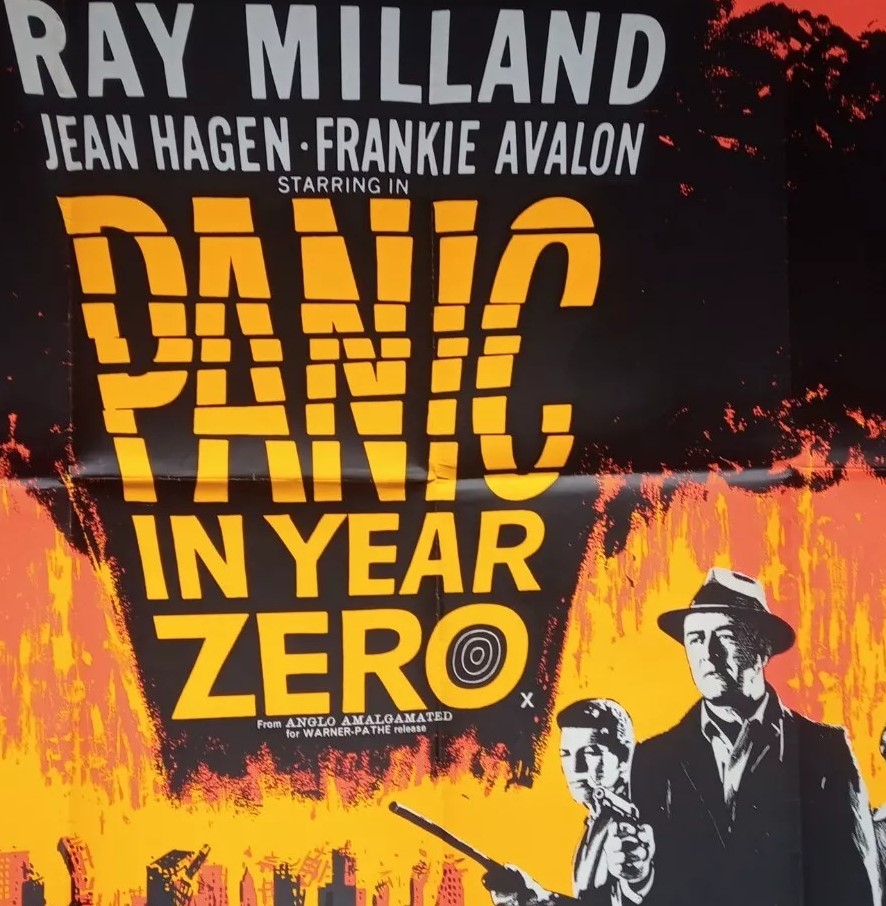
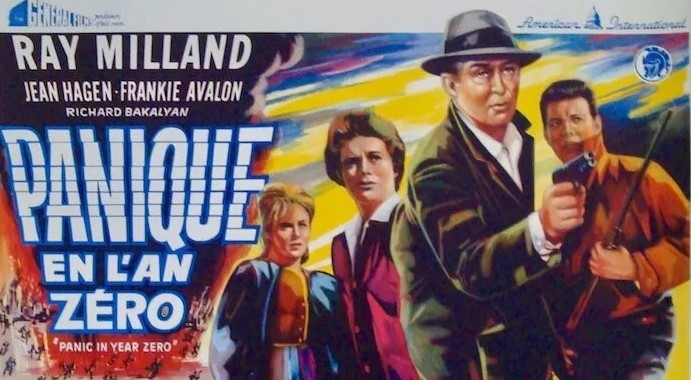
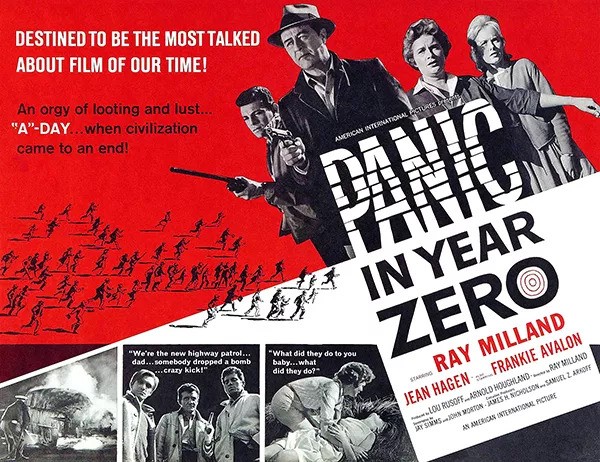
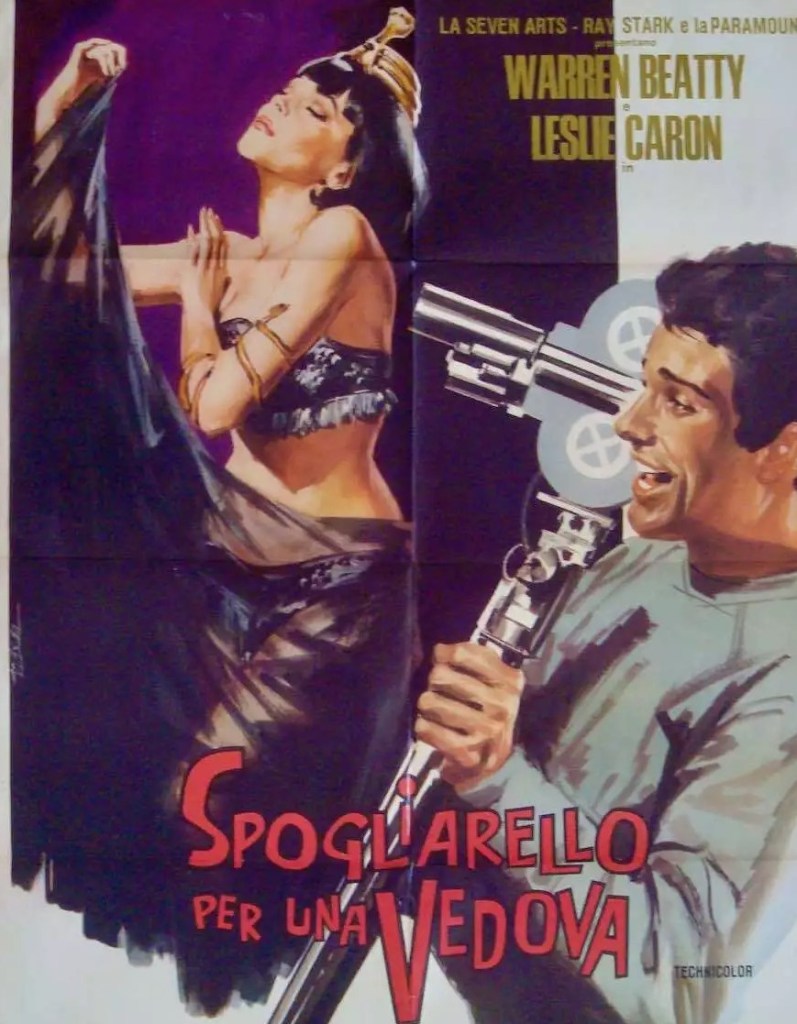
While the release of Conclave and Juror #2 augurs well for the future of movies made for the more mature audience, it’s worth remembering that such fare was commonplace six decades ago, even in the lower-budget strata. Well-structured, well-acted drama was never hard to find. Since I stack my DVDs on their sides and make my selection based on the title on the spine, I rarely glance at cover art, and just as well here, because the poster, I realized, in the process of selling the movie, gave away too much.

Beyond a vague notion that it concerned the aftermath of a nuclear holocaust I had no idea whether this would lean towards the dystopian or the survivalist. And there’s little clue at the start. We open on a typical suburban family holiday scene – husband Harry (Ray Milland) flexing his fishing rod, wife Ann (Jean Hagen) complaining of being overburdened with the loading of the trailer, teenage daughter Karen (Mary Mitchell) and son Rick (Frankie Avalon) moaning about being dragged out of their beds at an unearthly hour.

Not long into the journey they see flashes in the distance and a mushroom cloud above Los Angeles. Harry is alerted to potential danger when he observes a pump attendant being slugged by a driver over four bucks’ worth of fuel. Harry’s clearly the reserved kind of businessman, happily married, still flirting with a wife who giggles at such overt attention. But when the roads are filled with cars speeding away from the disaster area and the radio clams up and telephone lines are down, Harry’s personality undergoes a dramatic change, much to the disgust of his wife.

If this had been made these days, it would focus on the kids as they came to terms with post-apocalyptic catastrophe and some militaristic domineering governing body getting in their way or trying to control them. Or it would be some musclebound jerk only too ready to battle his way out of trouble.

Instead we have a gentleman tugging on his inner tough guy. Harry knocks around a storekeeper (Richard Garland), gets the better of a trio of thugs, charges through a roadblock, carves a route through a busy roadway by setting fire to it, destroys a bridge on a rural road to prevent being followed, and is capable of shooting anyone threatening his family. He’s not gone rogue, though, careful to keep more trigger-happy son in line, warning against civilization going to ruin.

This is so well-constructed you don’t know what’s going to happen next, nor, despite ample warning, to discover that Harry is quite the adaptable survivalist, not just stocking up on supplies, but dumping the trailer in favor of holing up in a remote cave, not quite going back to nature given the quantity of provisions to hand. But, yes, they do wash clothes in a stream, cook on a camping stove, shoot game and sleep in uncomfortable beds.

It’s not an idyll because the storekeeper and the three thugs have chosen the same locale. The hoodlums murder the storekeep’s family, kidnap young women including Marilyn (Joan Freeman) and are always on the prowl for easy pickings, which includes Karen, triggering a climactic shoot-out.

Despite the poster promising orgies of various kinds, there’s no glorifying the violence, Harry more like the frontiersman or law-abiding citizen forced to take the law into his own hands. Ann, whose maternal instinct has focused on its gentler aspects, turns into a lioness defending her cubs. It’s a brutal awakening for all, except Rick who appears to thoroughly enjoy the experience even as his father is trying to steer him clear of such thoughts.

Made by American International on a minimal budget, Ray Milland, doubling up as director, shows just what you can do with a decent script and cunning choice of locale. British-born Milland, a big star for Paramount in the 1930s-1940s and Oscar-winner to boot for The Lost Weekend (1945), read the runes right for the following decade and excepting Hitchcock’s Dial M for Murder (1954) and realizing his marquee value had tumbled, took to direction, beginning with A Man Alone (1955) and Lisbon (1956). He was top-billed in both, joined by Maureen O’Hara (The Rare Breed, 1966) for the second.

His last stab at direction was Hostile Witness (1968). But he only helmed five movies in all. While you wouldn’t say he was a natural stylist, Panic in the Year Zero! is something of a triumph, keeping audiences on edge with both narrative and character-led twists.

Apocalypse wasn’t even a sub-genre at this point, Eve (1951) the only previous example of any note. Timing didn’t help this picture, the Cuban Missile Crisis occurring a few months after its initial release.

Milland makes the most of his gritty characterization, pop star Frankie Avalon (The Million Eyes of Sumuru, 1967) surprisingly good. Written by Jay Simms (Creation of the Humanoids, 1962) and John Morton, in his debut, from source material by Ward Moore.

Rewarding.

A Twist of Sand (1968) ***

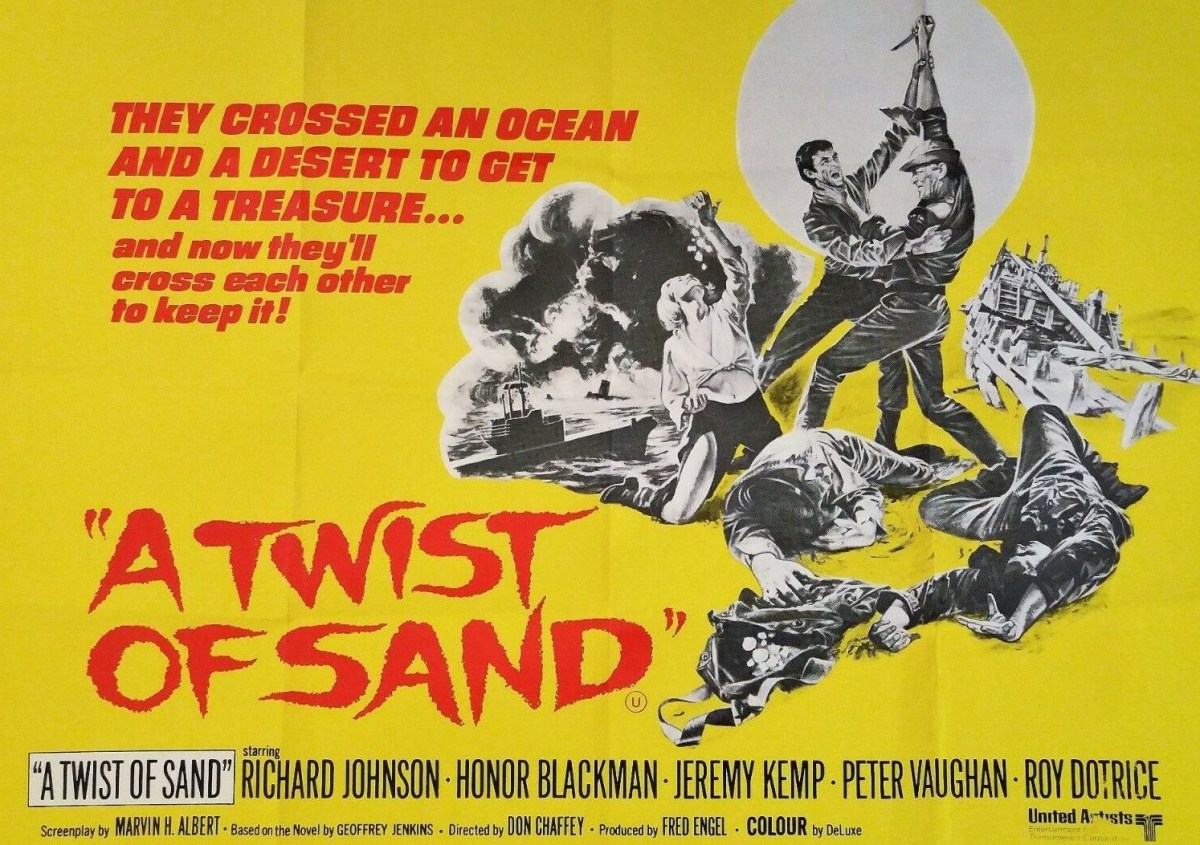
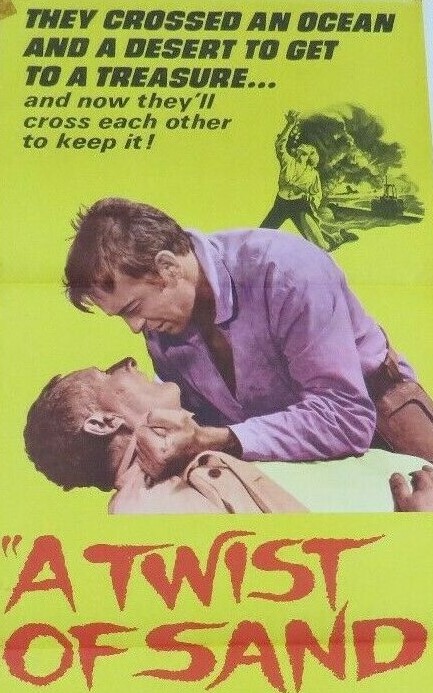
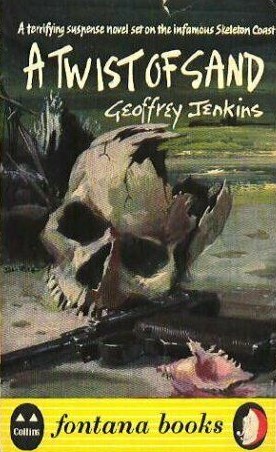
Initially promising, ultimately disappointing thriller that proves you should not go to sea  without a big budget. Because he is the only skipper to have successfully negotiated the Skeleton Coast off Namibia in South Africa, smuggler Geoffrey Peace (Richard Johnson) gets roped into a scheme to collect stolen diamonds by Harry Riker (Jeremy Kemp) and Julie Chambois (Honor Blackman).

Peace knows his way around this area thanks to World War Two submarine exploits and that particular expedition is recalled both in a flashback and its repercussions form part of a plot. Also on board the boat are the goggle-eyed knife-wielding Johann (Peter Vaughn) and Peace’s shipmate David (Roy Dotrice).

Peace has to navigate through the treacherous waters of the Skeleton Coast before the team embark on a trek through the desert to find the diamonds, hidden in the unlikely location of a shipwreck, itself in imminent danger of being buried in an avalanche of sand that could be triggered by sudden movement or sound.

On paper – and it has been adapted from the bestseller by Geoffrey Jenkins – it has all the ingredients of a top-class thriller, but it doesn’t quite gel. For a start, the flashback, where Peace has to hunt down a new class of German submarine and not only sink it but make sure there are no survivors, gets in the way of the action.

The sexual tension you might expect to simmer between Peace and Julie does not appear to exist, the bulk of the threat coming from the villainous-looking pair, Riker and Johann, the former already known to be untrustworthy, the latter too fond of producing a knife at odd occasions. The trek into the desert takes way too long and rather than increase tensions slackens it off and there is no real explanation as to why the ship was lost so far into the desert without entering Clive Cussler archaeological territory.

Extracting the diamonds is certainly a taut scene, with the sand dunes threatening to collapse any moment but the climax you saw coming a long way off and although there is an ironic twist it is not enough to save the picture.

On the plus side, Richard Johnson (Deadlier Than The Male, 1967) shucks off the suave gentleman-spy persona of Bulldog Drummond to emerge as a snarly, believable smuggler. But Honor Blackman (Moment to Moment, 1966) is wasted and this is one of the least effective bad guy portraits from the Jeremy Kemp (The Blue Max, 1966) catalog. Roy Dotrice (The Heroes of Telemark, 1965) is better value while Peter Vaughn (Hammerhead, 1968), menacing enough just standing still, overplays the villain.

Set up as a thriller very much in the Alistair MacLean vein, this shows just how good MacLean’s material was, how great a command he had of structure and not just of action but twists along the way. A Twist of Sand wobbles once too often in its structure and never quite manages to build up the necessary tension between characters. Although the Skeleton Coast sea-scene falls apart due to defective special effects, the other two sequences at sea are well done, the opening section where Peace is chased by Royal Navy vessels, and the underwater attack on the German submarine where murky water manages to obscure the effects sufficiently they appear effective enough.

Don Chaffey (The Viking Queen, 1967) does his best with material that’s not quite up to standard. Marvin H. Albert (Tony Rome, 1967) doesn’t do as good a job of adapting other people’s work as he does his own. 

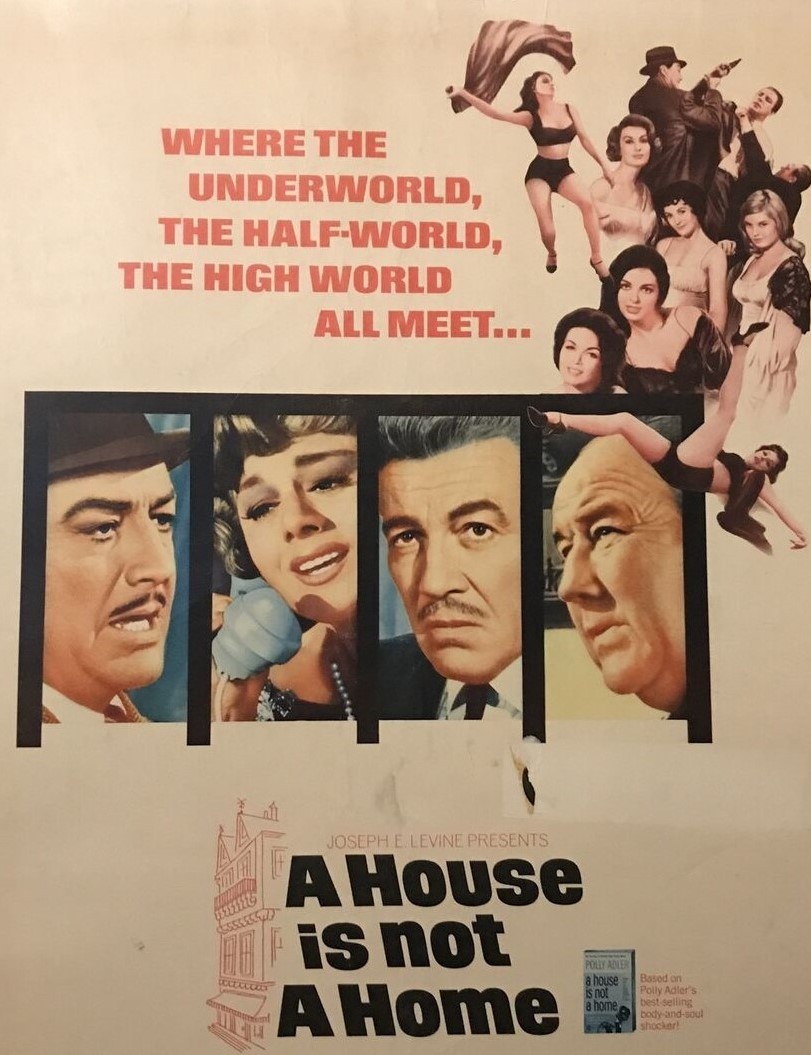
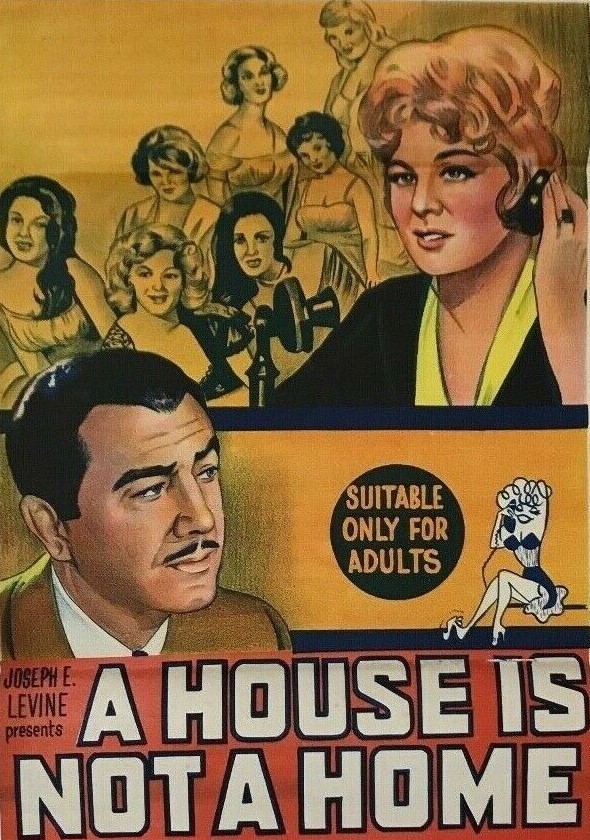
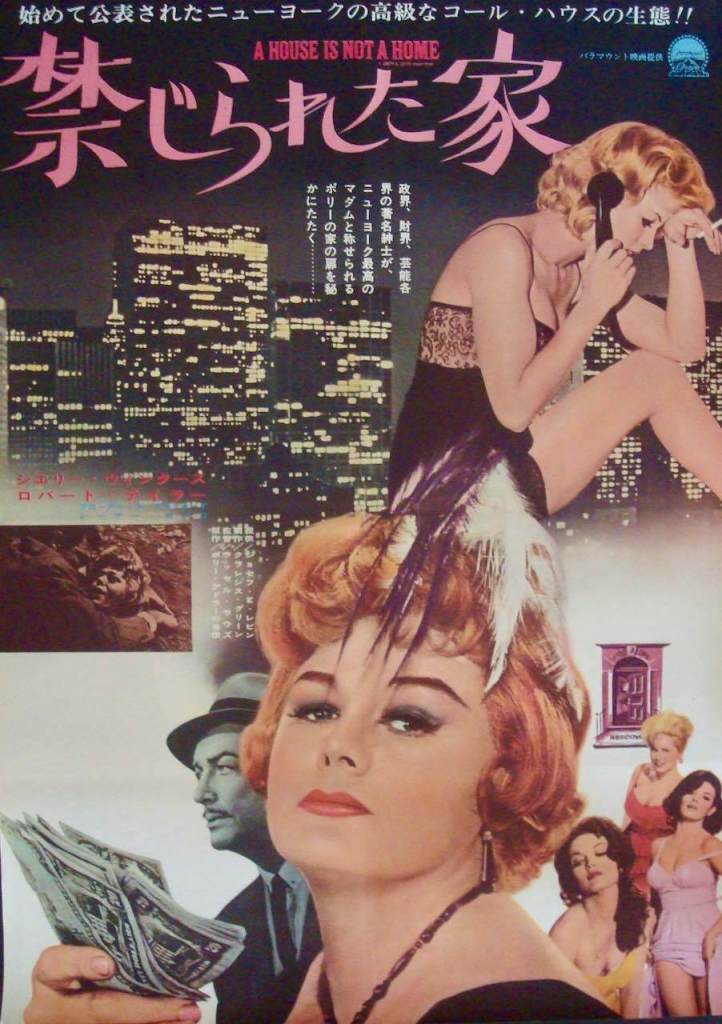
A House Is Not A Home (1964) ***

While perhaps best remembered these days as the debut film for Raquel Welch (One Million Years BC, 1966), the rest of the film is worth a look.

Hypocrisy had its heyday in The Roaring 20s when prohibition made bootleggers millionaires, helped bankroll other criminal activities like prostitution and encouraged cops and politicians to seek their share of the loot. The biography of real-life madam Polly Adler (Shelley Winters) covers all elements of corruption.  

Thrown out of her own home after being raped, she finds a knight in shining armor in the shape of bootlegger Frank Costigan (Robert Taylor) and is soon, at first apparently innocently, pimping out her friends. The reality of what becomes her profession is not ignored, the word “whore” bandied around, with one girl, Madge (Lisa Seagram), turning junkie as a result, another, Lorraine, committing suicide. Like Go Naked in the World (1961) Polly realizes that true love has no place in her world, a relationship with musician Casey (Ralph Taeger) unsustainable.

Adler, in her many voice-overs, explains why vulnerable women become sex workers – poverty, lack of family and lack of hope is her take on it – and she professes to view it as a business and preferable to working in a factory for pitiful wages, but the movie is at its best in linking the nether worlds of infamy and showing that the woman is always the loser.  

While any attempt to properly portray the period is hampered by lack of budget, it does provide an array of interesting and occasionally real-life characters, Lucky Luciano (Cesar Romero) for example. A brothel proves an ideal location meeting place for crooks and politicians, the latter easily bought by contributions to their campaign funds. Nor are cops   shy about asking for donations to their Xmas funds, or using the facility.

The Adler operation puts a glossy shine on the shady business since all her girls are glamorous. But still the movie pulls no punches except in the case of the madam herself, presented too often as an innocent and as a person who never sold her own body and who saw nothing wrong in taking as much advantage of the vulnerable girls in her employ as the  clients who paid for them.    

Oscar-winner Shelley Winters (The Chapman Report, 1962), more often a supporting player at this point in the 1960s than the star, grabs the role with both hands and although unconvincing as the younger girl delivers a rounded performance minus the blowsy affectations that marred much of later work. One-time MGM golden boy Robert Taylor, pretty much in the 1960s reduced to television (The Detectives, 1959-1962) and low-budget pictures, shows a glimpse of old form as the smooth bootlegger.

Cesar Romero (Oceans 11, 1960) and Oscar-winner Broderick Crawford (All the Kings Men, 1949) head up a checklist of old-timers filling out the supporting cast. Future director Lisa Seagram (Paradise Pictures, 1997) as the junkie hooker makes the biggest impact among the girls.

A flotilla of wannabes made up Polly’s girls. Apart from Raquel Welch, the only one to break into the big time was Edy Williams (Beyond the Valley of the Dolls, 1970). In the main they comprised beauty queens – Amede Chabot (Miss America), Danica d’Hondt (Miss Canada) and Leona Gage (Miss Universe) who had a small part in Tales of Terror (1962). Otherwise Sandra Grant became the most famous – for marrying singer Tony Bennett. Patricia Manning had the most screen experience, second-billed in The Hideous Sun Demon (1958), bit parts in television shows, and fourth-billed in The Grass Eater (1961). Inga Nielsen would later turn up as bikini fodder in The Silencers (1966), In Like Flint (1967) and The Ambushers (1967).

Director Russell Rouse (The Fastest Gun Alive, 1956) was better known for the screenplay of D.O.A. (1949) and had a story credit for Pillow Talk (1959). In fairness, although the film has no great depth, Rouse keeps it ticking along via multiple story strands although occasional lapses into comedy do not work. Written by Rouse and Clarence Greene (The Oscar, 1966) based on Adler’s autobiography.

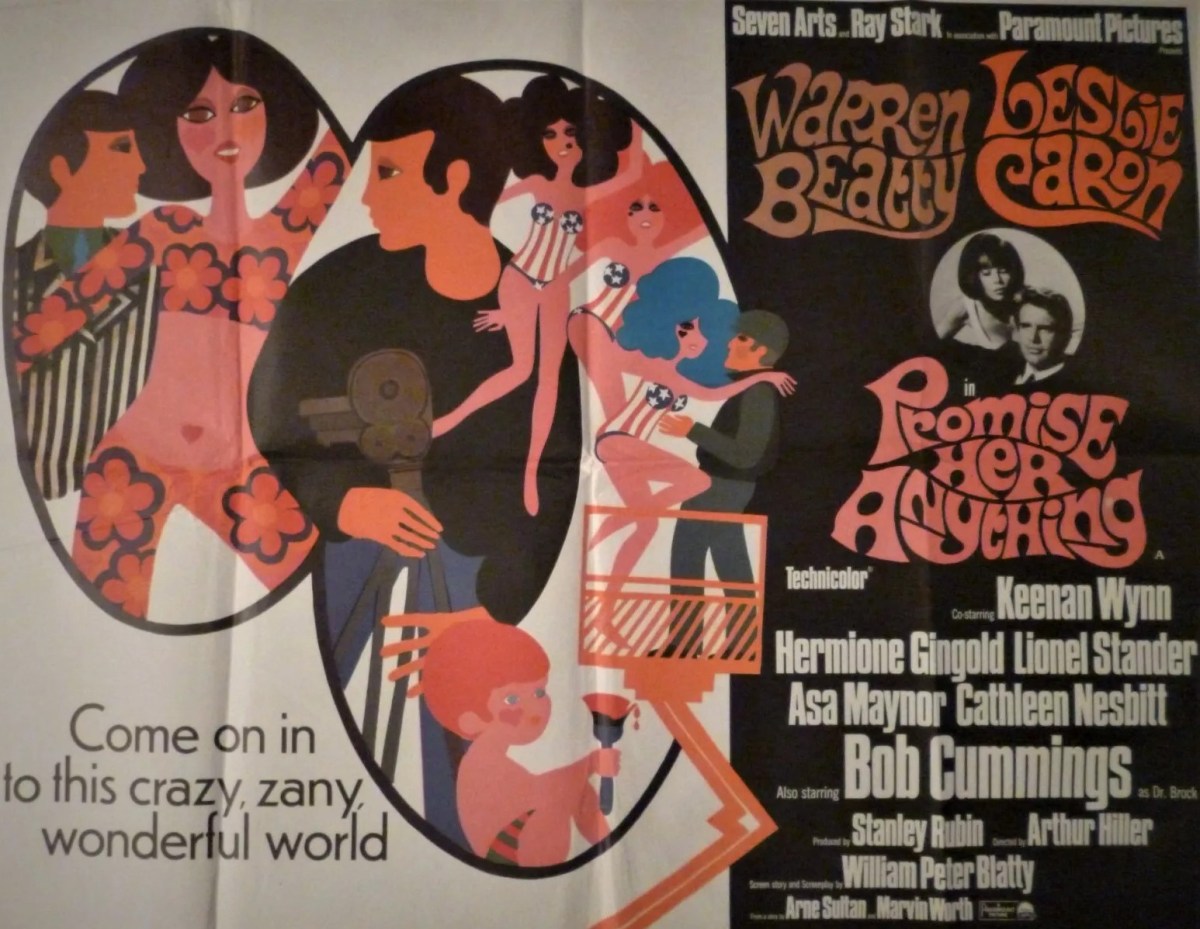
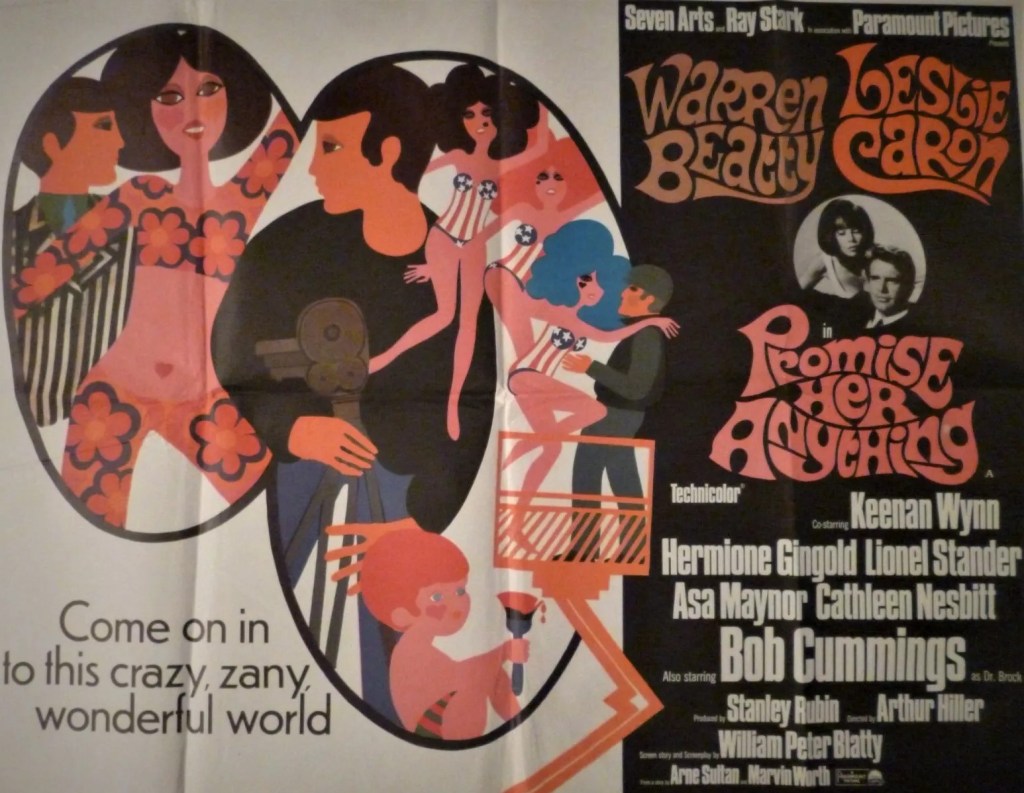
Promise Her Anything (1966) ***

You ever wonder what William Peter Blatty got up to before he scared the bejasus out of everyone with The Exorcist (1973)? He was a screenwriter, churning out somewhat formulaic comedies like this. There were two approaches to this subgenre. The potential lovers hate each other on sight and spend the rest of the film annoying each other before they discover they are actually in love. Or, they are kept apart by the simple process of one of them being in love with someone else.

Here Michele (Leslie Caron), widowed single mother, is trying to get her hooks into boss Dr Brock (Robert Cummings), a child expert, because she thinks he would make a great father. So, largely, she ignores the seduction attempts of nudie film director Harley (Warren Beatty). What Michele doesn’t know is that Dr Brock hates children – though some of his concepts (mocked at the time) seemed quite prophetic such as “corporal punishment is an admission of failure by the parents.” But, basically, she offloads the kid onto neighbors, keeping him out of the way till she gets her man.

Meanwhile, her cute baby John Thomas (Michael Bradley) is doing all the work of bringing the couple together. He more or less adopts Harley as a surrogate father and filming him turns out to be the refreshing new idea the director needs to satisfy irate backer Angelo (Keenan Wynn).

This could as easily have been entitled Babies Behaving Badly for John Thomas is introduced to the audience escaping from his mother and wrecking a jewellery story and spends most of the picture getting into trouble, for which his cuteness provides the requisite get-out-of-jail-free card. (The child’s name probably was the only thing guaranteed to raise a chortle among British audiences).

You spend a lot of time waiting for Michele and Harley to get it together, during which time neither of the alternative narratives – the Michele-Dr Brock subplot and the filming of the child – offer much in the way of sustenance. Theoretically, Harley isn’t the standard seducer of the period, the well-off kind who lives in a cool or plush pad and does something financially or artistically rewarding for a living. He lives in a crummy apartment in Greenwich Village and struggles to make ends meet, blue movies not as remunerative as you might expect.

Michele’s character is stuck in the 1950s more than the more liberated 1960s, with the ideas that a child needs a father, that you should marry for security, and that there’s nothing wrong with snaring a man by devious means. She’s pretty uptight and old school.

Warren Beatty’s career was on a distinctly shaky peg. Since his breakthrough in Splendor in the Grass (1961) he had been bereft of a commercial hit and not found critical acclaim, though there were some takers for Arthur Penn’s Mickey One (1965). Like other actors had before him, he had fled to Europe in the hope of finding better opportunities, but all he managed was this (though set in New York it was filmed at Shepperton Studios in Britian) and heist picture Kaleidoscope the following year, neither of which solved his marquee issues.

Leslie Caron hadn’t quite found her niche either. Nothing she had done had topped Gigi (1958) and though Father Goose (1964) had been a commercial success it put her in the comedy category whereas her more interesting work of the decade had been in the drama genre – Guns of Darkness (1962) and The L-Shaped Room (1962). In fact, as a Hollywood leading lady, this was pretty much her swansong.

Robert Cummings (Five Golden Dragons, 1967) is good value and the cast includes Keenan Wynn (Point Blank, 1967), Hermione Gingold (The Naked Edge, 1961), Lionel Stander (Once Upon a Time in the West, 1969), British television actor Warren Mitchell (The Assassination Bureau, 1969), Margaret Nolan (Goldfinger, 1964) , Viviane Ventura (Battle Beneath the Earth, 1967) and a blink-and-you-miss-it role for Donald Sutherland (Riot, 1969). Directed by Arthur Hiller (Penelope, 1966).

Tame stuff.

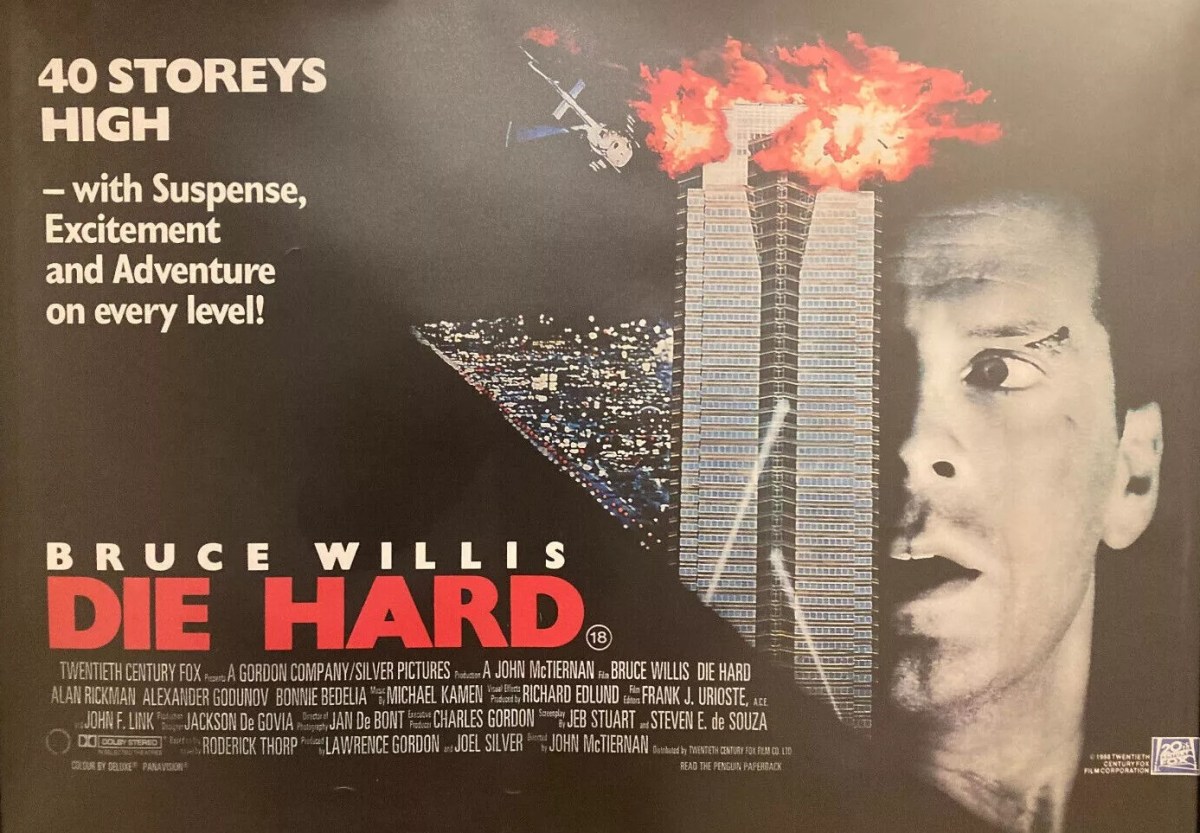
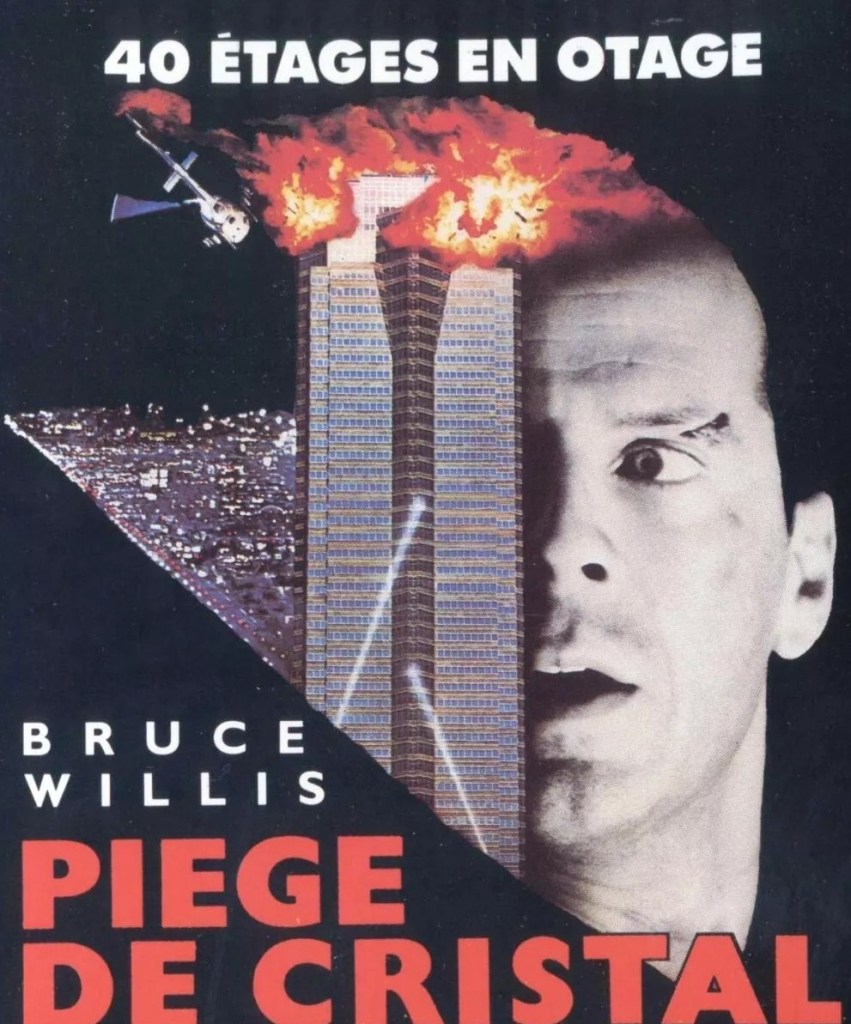
Die Hard (1988) ***** – Seen at the Cinema

Kiss goodbye to your suicidal small town banker helped by a passing angel who had dominated the Xmas reissue horizon for half a century. There’s a new Xmas sheriff in town and he doesn’t play by any merry rules. Some marketing whiz has hit upon the notion that an action picture with a pretty vague Xmas background would be a better bet for the contemporary audience than James Stewart in the snowbound It’s A Wonderful Life (1946) that owed a great deal of its popularity to the fact that it was out of copyright and could be played on extremely inexpensive terms – a better Xmas present a cinema owner could not expect.

This is one of these moves that cries out to be revisited on the big screen. I saw it on Monday this week and was astonished to find that it had attracted a full house. You forget how much of a revelation this was, a complete rethink of the action hero. Sure, it owed something to the muscular heroics of Sylvester Stallone and Arnold Schwarzenegger, but they always seemed like they were looking for trouble. Albeit that he’s a cop, Bruce Willis was a throwback to the kind of movie where a relatively innocent character gets caught up in mischief.

And it’s surprisingly contemporary in its attitude to romance, New York cop John McClane (Bruce Willis) left behind by careerist wife  Holly (Bonnie Bedelia), who reverted to her maiden name when she headed out to Los Angeles with the kids. He’s made the trip to try and stitch back their marriage, but only comes to terms with his failings as a careerist cop once he’s battered and bloodied in the Nakatomi tower where his wife and 30 other employees are being held hostage by heist merchant Hans Gruber (Alan Rickman), posing as a terrorist in order to steal 600 million bucks from one of the most secure vaults in the world.

This isn’t one of those robberies where we’re told in advance of the plans, instead as the strategy takes shape we can only marvel at Gruber’s brilliance and ruthlessness. He’s not, as would be the norm, trying to hijack cash on the quiet, but instead needs the “assistance” of the FBI to complete his program.

Bruce Willis had been struggling to establish a big screen persona that took him away from the smirking quip-slinger of Moonlighting (1985-1989). Blake Edwards romantic comedy Blind Date (1987)  and the same director’s Hollywood drama Sunset (1988) had signally failed to advance his marquee credentials. Donning a vest, losing his shoes, picking glass from his feet, blasting away at all and sundry, and using brains as much as  bullets to outwit the robbers, set him on a new career path.

Director John McTiernan was a rising star having helmed Predator (1987) but this was a different kind of actioner to the Schwarzenegger sci-fi malarkey. There’s nothing trim about the timing – it comes in a just under two-and-a-quarter hours – but that allows not just for a proper three-act set-up and several twists, but, more importantly, through a series of clever devices, permits the character to breathe. Through intermittent contact with street cop Sgt Powell (Reginald VelJohnson), we learn a good deal more about McClane and, critically, his change of heart about his marriage.

Unusually, for an action picture it’s riddled with interesting characters, not just bureaucratic nincompoops and FBI gunslingers fully conversant with acceptable collateral damage, but two kings of smugness, one a television reporter (William Atherton), the other a high-ranking executive who has his eye on Holly.

And that’s before we come to the villains. For Gruber, British actor Alan Rickman was drafted in from the stage, no movie credentials at all, and created a silky supervillain every bit as memorable as those who challenged James Bond. In fact, in other circumstances his sidekick, former ballet dancer Alexander Gudonov, should have stolen the show as he had threatened to in Witness (1985). Perhaps the most surprising casting was Bonnie Bedelia. She’d been a female lead or top billed (The Stranger, 1987) for more than a decade, and what she brings to the role is the quiet skill of not over-acting.

If you weren’t particularly interested in the well-drawn characters, you would be more than happy with the extensive action sequences which set new highs for the genre. This should have revived Frank Sinatra’s career since he had first dibs on the character, a sequel to The Detective (1968). And Clint Eastwood for a time had the rights. Screenplay by Jeb Stuart (The Fugitive, 1993) and Steven E. de Souza (48 Hrs, 1982) from the novel by Roderick Thorp.

But yippee-ki-yay, it sure made a star out of Willis.

Top notch.

Behind the Scenes: All-Time Top 20

You might be surprised to learn that many of the “Behind the Scenes” articles that feature in the Blog have become more popular than some of the reviews. As regular readers will know I am fascinated by problems incurred in making movies. Most of the material has come from my own digging, and sources are always quoted at the end of each article. Alistair MacLean still exerts fascination – three films in the Top Ten. Last year’s positions in brackets.

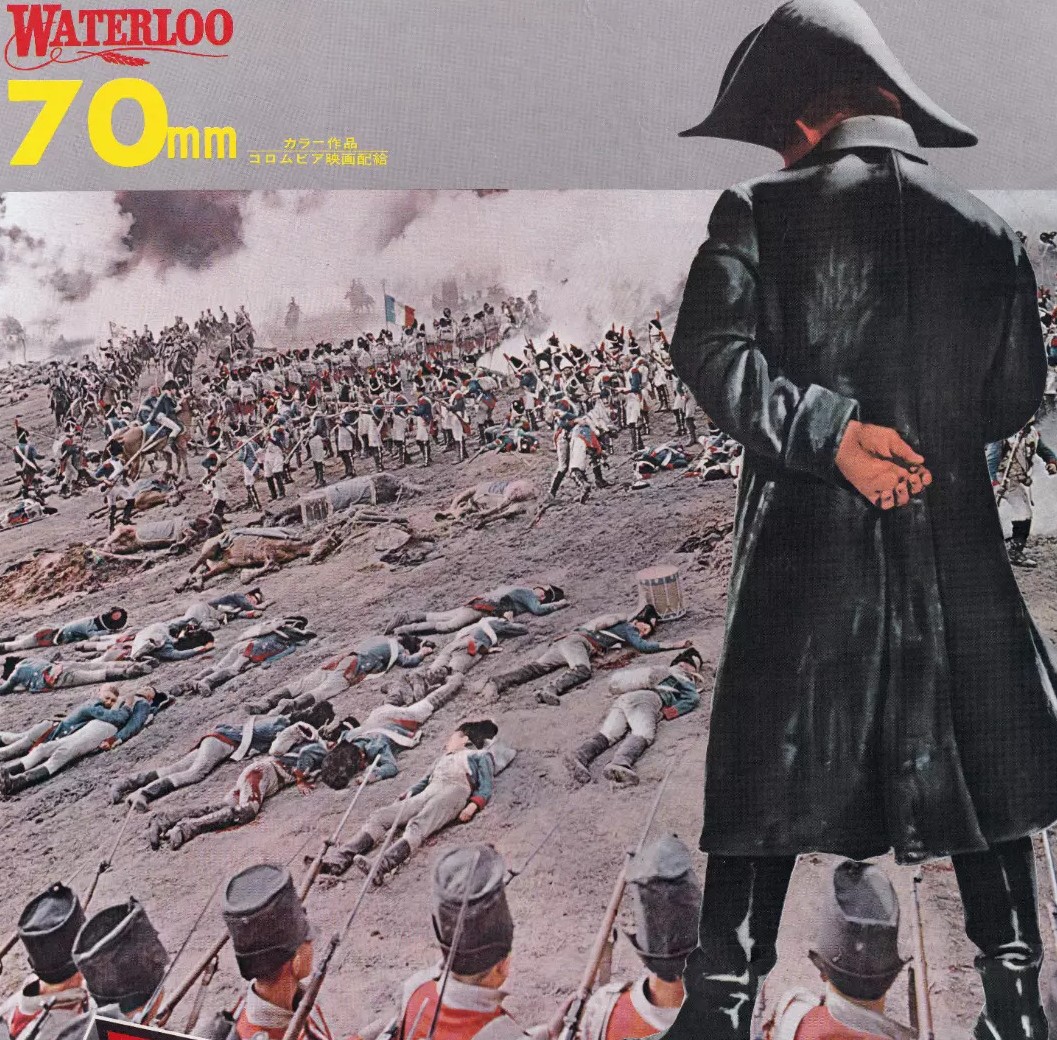
  1. (1) Waterloo (1970). No doubting the effect of Ridley Scott’s Napoleon in increasing interest in this famous flop that had Rod Steiger’s French emperor squaring off against Christopher Plummer.
  2. (9) Man’s Favorite Sport (1964). Howard Hawks back in the gender wars with Rock Hudson being taken down a peg by Paula Prentiss.
  3. (3) In Harm’s Way (1965). Otto Preminger takes off the gloves to expose problems in the American military around Pearl Harbor.
  4. (7) The Guns of Navarone (1961). The ultimate template for the men-on-a-mission war picture with an all-star cast and enough jeopardy to qualify for a movie of its own.
  5. (2) Ice Station Zebra (1968). A complete cast overhaul and ground-breaking  special effects are at the core of this filming of another Alistair MacLean tale.
  6. (4) Battle of the Bulge (1965). There were going to be two versions, so the race was on to get this one to the public first.
  7. (6) The Satan Bug (1965). The problems facing director John Sturges in adapting the Alistair MacLean pandemic classic for the big screen.
  8. (5) Cast a Giant Shadow (1965). Producer Melville Shavelson wrote a book about his experiences and this and other material relating the arduous task of bringing the Kirk Douglas-starrer to the screen are told here.
  9. (10) The Girl on a Motorcycle / Naked under Leather (1968). Cult classic starring Marianne Faithful and Alain Delon had a rocky road to release, especially in the U.S. where the censor was not happy.
  10. (New Entry) The Sons of Katie Elder (1965). First envisioned nearly a decade before, Henry Hathaway western finally hit the screen with John Wayne and Dean Martin.
  11. (11). Tora! Tora! Tora! (1970). Richard Fleischer dispenses with the all-star cast in favor of even-handed verisimilitude.
  12. (New entry) Mackenna’s Gold (1969). Tortuous route to the screen for Carl Foreman-produced roadshow western, filmed in 70mm Cinerama, with an all-star cast including Omar Sharif, Gregory Peck and Telly Savalas.
  13. (8) Sink the Bismarck! (1960). Documentary-style British World War Two classic with Kenneth More exhibiting the stiffest of stiff-upper-lips.
  14. (13). The Bridge at Remagen (1969). British director John Guillerman hits trouble filming World War Two picture starring George Segal and Robert Vaughn.
  15. (New entry) The Trouble with Angels (1966). Less than angelic Hayley Mills sparring with convent boss Rosalind Russell. Directed by one-time star Ida Lupino.
  16. (New entry) For a Few Dollars More (1965). Sergio Leone sequel to first spaghetti western brings in Lee van Cleef to pair with Clint Eastwood.
  17. (New entry) How The West Was Won (1962). First non-travelog Cinerama picture, all-star cast and all-star team of directors tackling multi-generational western and all sorts of logistical problems.
  18. (New entry) Bandolero! (1968). Director Andrew V. McLaglen teams up with James Stewart, Dean Martin and Raquel Welch to fight Mexican bandits.
  19. (New Entry) The Train (1964). John Frankenheimer replaced Arthur Penn in the directorial chair to steer home unusual over-budget World War Two picture with Burt Lancaster trying to steal art treasures from under the nose of German Paul Schofield.
  20. (17) The Collector (1963). William Wyler’s creepy adaptation of John Fowles’ creepy bestseller with Terence Stamp and Samatha Eggar.

All-Time Top 40

Not my pick of the flicks, but yours, the films viewed most often since the Blog began in June 2020. There’s no shaking Ann-Margret, a brace of her movies retaining the same top two spots as last year. Other standouts – i.e. more than one entry in the list –  include Raquel Welch, Gina Lollobrigida, Charles Bronson, Alain Delon, Angie Dickinson, Roger Moore and Jean Seberg.

The figures in brackets represent the previous year’s position and New Entry is self-explanatory.

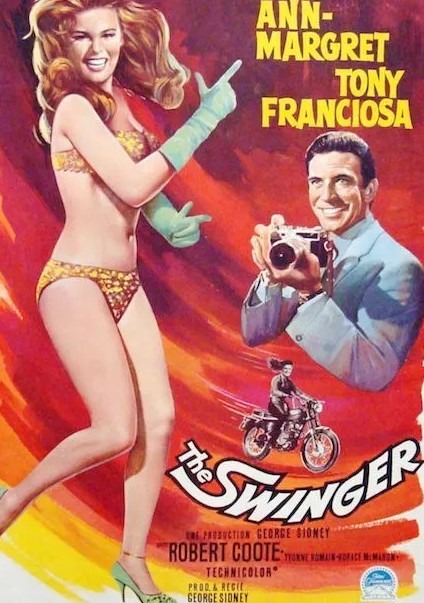
  1. (1) The Swinger (1966). All hail Ann-Margret, second year in a row at number one. Bouncy sex comedy that manages a sprinkling of innocence. 
  2. (2) Stagecoach (1966). No prizes for guessing that it’s the presence of Ann-Margret (again) rather than Alex Cord that has hit a chord in this decent remake of John Ford’s famous western.
  3. (4) Fraulein Doktor (1969). Grisly realistic battle scenes and a superb score from Ennio Morricone help this Suzy Kendall vehicle in which she plays a World War One German spy going head-to-head with Brit Kenneth More and taking time out for romantic dalliance with Capucine.
  4. (34) In Harm’s Way (1965). Under-rated John Wayne World War Two number. Co-starring Kirk Douglas, Patricia Neal, Tom Tryon and Paula Prentiss. Director Otto Preminger surveys Pearl Harbor and after.
  5. (7) Fireball XL5. The famous British television series (1962-1963) from Gerry and Sylvia Anderson, now colorized. “My heart will be a fireball…”
  6. (6) Once Upon a Time in the West (1969). Along with The Searchers (1956) now considered the most influential western of all time. Sergio Leone rounds up Claudia Cardinale, Henry Fonda and Charles Bronson and that fabulous Morricone score.
  7. (3) Jessica (1962). Angie Dickinson as a young widow incurring the wrath of wives in a small Italian town.
  8. (New Entry) Thank You Very Much/ A Touch of Love (1969). Sandy Dennis as academic single mother in London impregnated by Ian McKellen.
  9. (13) Pharoah (1966). Delighted to see this holding fast, climbing back up the table this year. Polish epic set in Egypt sees the country’s ruler at odds with the religious hierarchy.
  10. (11) Baby Love (1969). Controversy was the initial selling point but now it’s morphed into a morality tale as orphaned Linda Hayden tries to fit into an upper-class London household.
  11. (5) The Sins of Rachel Cade (1961) Angie Dickinson (again) as African missionary falling foul of the locals and Commissioner Peter Finch. Roger Moore in an early role.
  12. (10) Vendetta for the Saint (1969). A more typical trademark role from Roger Moore. Two television episodes of the popular series combined sees our hero tackle the Mafia.
  13. (New Entry) The Appointment (1969). Inhibited lawyer Omar Sharif discovers the secrets of Anouk Aimee in under-rated and little-seen Italian-set drama from Sidney Lumet.
  14. (12) The Sisters / My Sister, My Love (1969). Incest rears its head as Nathalie Delon and Susan Strasberg ignore husbands and lovers in favor of each other.  
  15. (21) Go Naked in the World (1961). Gina Lollobrigida finds that love for a wealthy playboy clashes with her profession (the oldest). Look out for highly emotional turn from the usually taciturn Ernest Borgnine.
  16. (New Entry) Diamond Head (1962). Over-ambitious hypocritical landowner Charlton Heston comes unstuck in love, politics and business in Hawaii. George Chakiris, Yvette Mimieux and France Nuyen turn up the heat.
  17. (9) Moment to Moment (1966). Hitchcockian thriller set in Hitchcock country – the South of France – as unfaithful Jean Seberg is on the hook for the murder of her lover.  Also featuring Honor Blackman.  
  18. (20) The Golden Claws of the Cat Girl (1968). Cults don’t come any sexier than Daniele Gaubert as a French cat burglar.
  19. (22) Pressure Point (1962). Nazi extremist Bobby Darin causes chaos for psychiatrist Sidney Poitier. Stunning dream sequences.
  20. (New Entry) Young Cassidy (1965). Julie Christie came out of this best, winning her role in Doctor Zhivago as a result. Rod Taylor as Irish playwright Sean O’Casey.
  21. (14) Can Heironymus Merkin Ever Forget Mercy Humpe and Find True Happiness? Fellini would turn in his grave at the self-indulgence of singer Anthony Newley who manages to lament that women falling at his feet cause him so much strife. Joan Collins co-stars.
  22. (8) The Secret Ways (1961). The first of the Alistair MacLean adaptations to hit the big screen features Richard Widmark trapped in Hungary during the Cold War. 
  23. (New Entry) The Chalk Garden (1964). Wild child Hayley Mills, trying to break out of her Disney straitjacket, duels with governess Deborah Kerr.
  24. (23) A Dandy in Aspic (1968). Cold War thriller with Laurence Harvey as a double agent who wants out. Mia Farrow co-stars.  
  25.  (16) Pendulum (1968). Fast-rising cop George Peppard accused of murdering unfaithful wife Jean Seberg
  26. (25) Once a Thief (1965). Ann-Margret again, in a less sexy incarnation, as a working mother whose ex-jailbird thief Alain Delon takes a detour back into crime.
  27. (New entry) Fathom (1967). Raquel Welch models a string of bikinis as a skydiver caught up in spy malarkey.
  28. (New entry) Farewell, Friend / Adieu L’Ami (1968). A star is born – at least in France, the United States a good few years behind in recognizing the marquee attractions of Charles Bronson. Alain Delon co-stars in twisty French heist thriller featuring Olga Georges-Picot and Brigitte Fossey.
  29. (New Entry) Woman of Straw (1964). More sub-Hitchockian goings-on as Sean Connery tries to frame Gina Lollobrigida in a dubious scheme.
  30. (28) The Girl on a Motorcycle / Naked under Leather (1968). How much you saw of star Marianne Faithfull depended on where you saw it. The U.S. censor came down heavily on the titular fantasizing heroine, the British censor more liberal. Alain Delon co-stars.
  31. (New entry) Claudelle Inglish (1961). Diane McBain seeks revenge for being stood up at the altar in the Deep South.
  32. (15) The Best House in London (1969). David Hemmings tries to do right by Victorian sex workers.
  33. (19) Lady in Cement (1969). Raquel Welch models more bikinis as the gangster’s moll taken on as a client by private eye Frank Sinatra in his second outing as Tony Rome.
  34. (30) She Died with Her Boots On / Whirlpool (1969). More sleaze than cult. Spanish director Jose Ramon Larraz’s thriller sees kinky photographer Karl Lanchbury targeting real-life MTA Vivien Neves.  
  35. (New entry) Horizon: An American Saga – Chapter 1 (2024). So I wasn’t the only one to enjoy Kevin Costner’s majestic western that became one of the biggest flops of the year.
  36. (New entry) Prehistoric Women / Slave Girls (1967). Raquel Welch look away now. Martine Beswick attempts to steal the One Million Years B.C. crown.
  37. (New entry) Five Card Stud (1968). Entertaining Henry Hathaway western thriller with Dean Martin, when not dallying with Inger Stevens, investigating a serial killer. Robert Mitchum as a preacher.
  38. (31) The Misfits (1960). Last hurrah for Clark Gable, fabulous turns from Montgomery Clift and Marilyn Monroe in John Huston tale of losers. 
  39. (New entry) Plane (2023). Die Hard on a desert island with Gerard Butler as a pilot tackling terrorists in the Pacific.
  40. (32) Rage (1966). Glenn Ford and Stella Stevens combat pandemic in Mexican town.

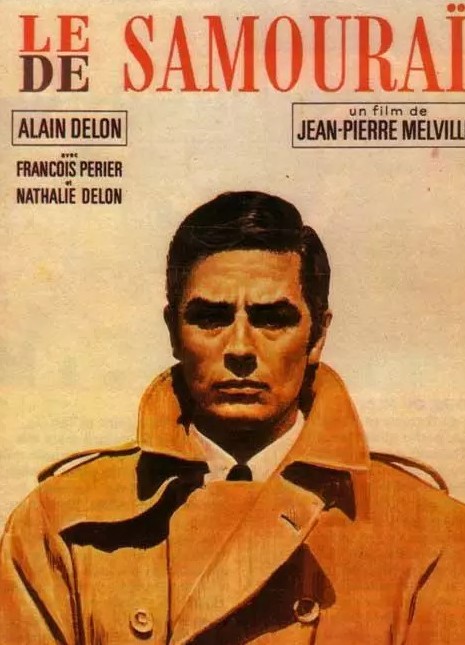
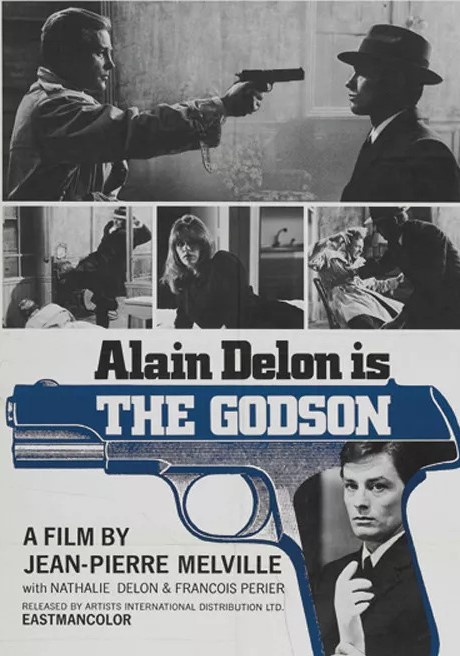
Le Samourai / The Godson (1967) ****

The current trope for giving assassins nicknames – viz Day of the Jackal (2024) – doesn’t stem from Jean-Pierre Melville’s spare picture, the title here more suggestive of the idea of killing as an honorable profession. One of the most influential crime movies of all time, it resonates through Michael Winner’s The Mechanic (1972) – though few critics would give that the time of day -Walter Hill’s The Driver (1978), John Woo’s The Killer (1989), Anton Corbijn’s The American (2010), Nicolas Winding Refn’s Drive (2011) and David Fincher’s The Killer (2023). Even so, few acolytes can match the opening scene of a room empty except for a whiff of smoke in a corner that indicates the presence of recumbent killer Jef (Alain Delon).

There’s none of the false identity malarkey of Day of the Jackal and no high-echelon ultra-secret secret service figures involved in tracking him down. In fact, one of the delights of the movie is the police procedural aspect, with the top cop, here known only as the Commissaire (Francois Perier), insisting on dragging in at least 20 “usual suspects” from each district. Though living a Spartan existence, Jef at least has the sense to acquire an alibi from the lover Jane (Nathalie) he shares with a wealthier man. Nor is he killing public figures. Instead, more like someone from Murder Inc., rubbing out other gangsters.

Shameless attempt to cash in on “The Godfather” after U.S. distributors held off for five years from releasing it.

The witnesses provide conflicting information on the man they saw, but the Commissaire does not entirely trust Jef’s alibi, putting pressure on Jane to recant. Her paying lover Weiner (Michel Boisrond) provides a pretty accurate description of Jef. While the cops bug his apartment and  start to shadow him, Jef falls foul of his anonymous employer who is alarmed at the attention the assassin has attracted and to avoid the possibility of being implicated sets an assassin onto the assassin.

Wounded, refusing to accede to Jane’s demand that he acknowledge he “needs” her, he tracks down the assassin’s boss, Oliver Rey (Jean-Pierre Posier), who happens to be the lover of Valerie, a nighgclub singer Jef takes a shine to. It’s worth noting that there’s an innocence – or perhaps an honor matching that of the samurai – in the police behavior. The Commissaire exists in a world where rules are not bent or broken, where suspects are not beaten up, and where often the cops are hamstrung by procedure and must take special care in arriving at a conclusion. To convince himself that Jef is indeed the correct suspect, the Commissaire makes him swap hat and coat with others in a line-up, only for the witness to identify the coat, hat and face that he believes he saw. It’s only Jane’s unbreakable alibi that keeps Jef safe.

Most of the picture is pure bleak style. You never enter the assassin’s head. There’s no background or backstory to shed any light on action. Even the most appealing characters, Jane and Valerie, occupy moral twilight. I’m not sure Melville’s in a mood for homage, though Robert Aldrich was in the Cahiers du Cinema hall of fame, but the ending comes close to replicating that of Aldrich’s The Last Sunset (1961), not just for the climactic action but for the inherent self-realization of unavoidable consequence.

Despite sparseness of the style, there’s enough going on emotionally and action-wise to keep an audience enthralled. While his outfit echoes the Humphrey Bogart private eye of the 1940s, and while walking the same mean streets, Jef is the antithesis of that untarnished hero.

Melville belonged to the hard-boiled school of cinematic crime, summoning up the gods of noir, and providing a new breed of French star with tough guys to kill for.  He died young, just 55, and left behind 14 pictures, at least three or four considered masterpieces including Army of Shadows (1969) and The Red Circle (1970). You might have thought his minimalist style would appeal more to critics than moviegoers but in his native France, in part because stars queued up to be in his movies,  he was highly popular.

When you compare the Delon of this to Once a Thief (1965) or Texas Across the River (1966) you can see how much acting goes into the restraint of the character here, producing one of Delon’s best performances. His wife of the time, Nathalie Delon (The Sisters, 1969) shines but briefly.

Recommended.

Discover WordPress

A daily selection of the best content published on WordPress, collected for you by humans who love to read.

The Atavist Magazine

by Brian Hannan

WordPress.com News

The latest news on WordPress.com and the WordPress community.