Frozen Alive (1964) ***

Sometimes the stars fail to align, initial promise fizzling out. Mark Stevens, rising post-war star, top-billed in film noir The Street Has No Name (1948) and Between Midnight and Dawn (1950), paired with Olivia de Havilland in The Snake Pit (1949), seemed all set for major stardom. No go. By the end of the 1950s he was mostly seen in low-budget westerns, and too few of them. September Storm (1960) was his first picture in two years. He had tried his hand at direction, but landed in B-movie hell with titles like Escape from Hell Island (1963) and after a bit part in Fate Is the Hunter (1964) hightailed it to Germany for this.

Not quite the sc-fi or noir number it says on the tin, more an exploration of personal and professional jealousies in the scientific community. You probably didn’t know the World Health Organization ran a Low Temperature Unit engaged in cryogenics experiments. Maybe they did, this being promoted as a timely movie.
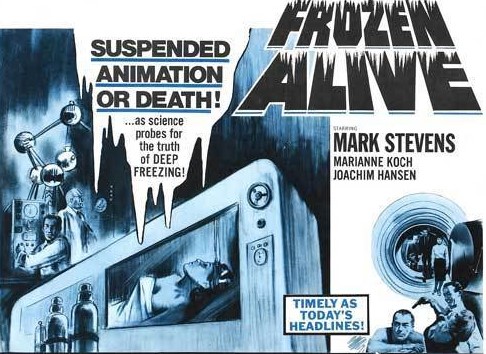
Dr Overton (Mark Stevens) along with lab partner Dr Wieland (Marianne Koch) are on the verge of a breakthrough in their cryogenic experiments with monkeys. Although she has a lover Tony (Joachim Hansen), his unfaithful alcoholic journalist wife Joan (Delphi Lawrence) is jealous of his success and of Wieland and dreads leaving the fast lane for life in  the country and potential motherhood.

Professional jealousy results in the successful scientific team being split up, so before that can be actioned, Overton decides to embark on a human experiment with himself as the guinea pig.

All the tension of watching an inert frozen human being relies on wondering whether he’s going to wake up and will he have all his working parts, brain especially. So, just to heighten that tension, Overton could face a murder charge when he does emerge. And Wieland, in love with him, has to decide whether it’s better to let him die than go to prison.
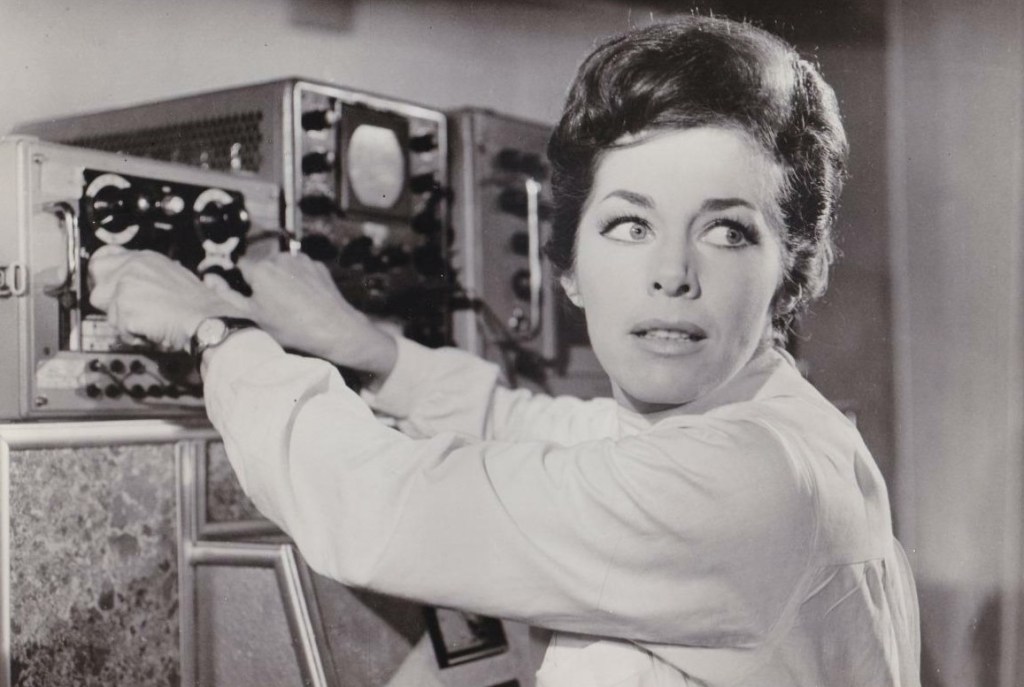
Marianne Koch at the controls. Will she let the suspected murderer live – or die?

The crime aspect is something of an oddity. The time element puts Overton potentially in the frame. And there’s a definite Hitchcockian element to the death, that in one sense robs it of tension, but in the other jacks it up to eleven. Because what we know but Wieland doesn’t is that Joan died by accident, playing with the gun of her lover.

So not only could an innocent man go to jail in the first place, stacked up against him his potential anger at potentially discovering his wife has a lover, but Wieland could let him die only to find out afterwards that he’s innocent all along.

It’s a good job Joan did die because she was stealing the picture. But even being soused in booze doesn’t dampen her zest for life, the kind of woman whose life mostly exists in cocktail bars and smart parties, dressed to the nines, showing enough cleavage to annoy her husband but tease potential suitors, and with enough toughness to dump any lover that gets too close. She’s sassy fun and married the wrong dull guy.

And she’s smart enough with her “intelligent anticipation” to figure out that husband is soon going to cosy up to lab buddy. Overton’s boss notices the signs when he’s not too busy covering his own back. “You sit on the fence and if someone makes a fuss later I take the rap.”

The Mind Benders the previous year covered similar territory but concentrated on the post-experiment after-effects, so this is almost a prologue to that, and interestingly, setting Joan aside, delivered with almost a British stiff upper lip, secret passion kept under wraps, lust revealed in lingering looks, while the cut-throat elements of ambition are played out under the guise of a civil service mentality.

Not quite what you’d expect from the title, but then it’s kind of a cul de sac in sci fi terms, as it’s generally the awakening that produces the problems and this doesn’t go there. But still a decent watch. British actress Delphi Lawrence (Farewell Performance, 1962) steals the show but the simmering turn from Marianne Koch (A Fistful of Dollars, 1964) comes close. Mark Stevens doesn’t have as much to play with and he’s pretty much kept his emotions tamped down up to this point so hardly going to let rip now.  Wolf Rilla (The Secret Ways, 1961) has a small part.

Bernard Knowles (Hell Is Empty, 1967) directed television writer Evelyn Frazer’s only screenplay. You might dwell on the irony that Delphi Lawrence’s star turn here led to nothing as much as Mark Steven’s career dwindled.

Something of a cult possibly because it’s hard to find.

Watchable.
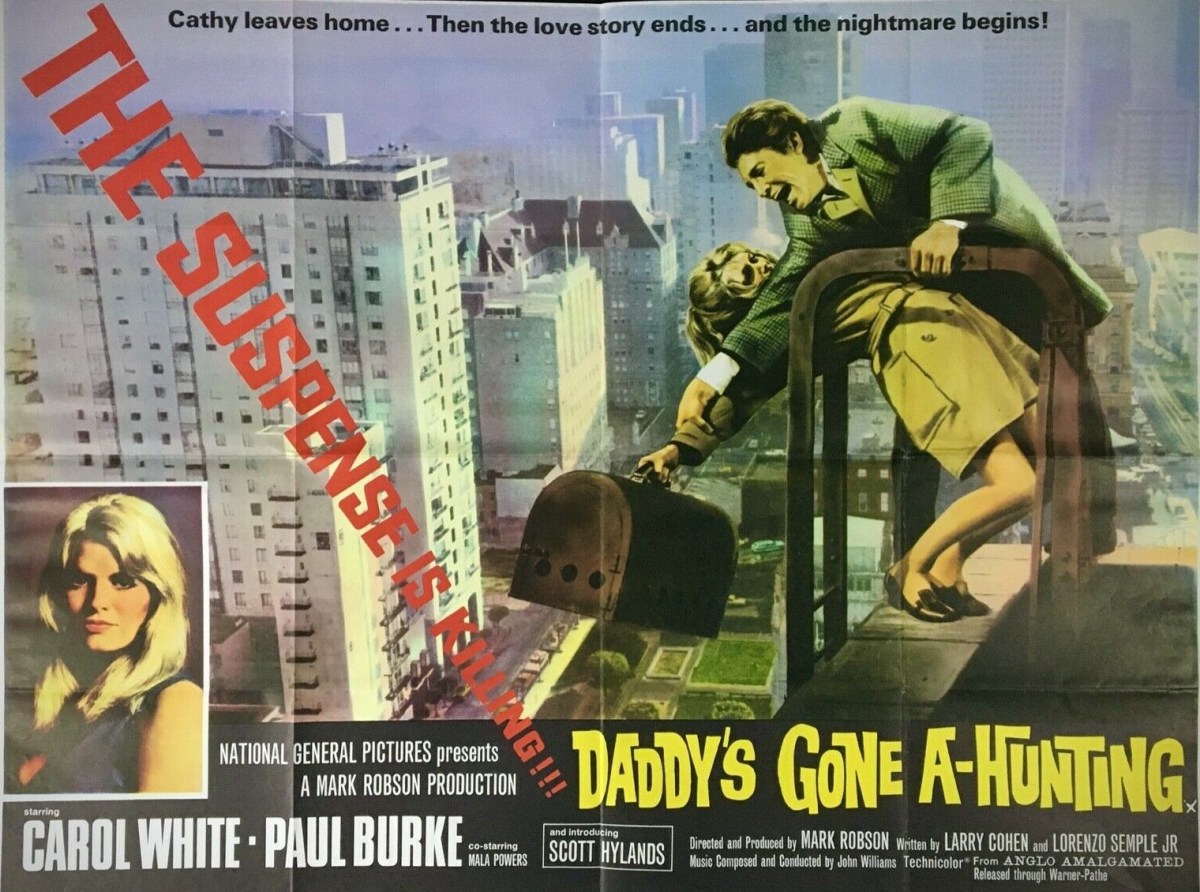
Daddy’s Gone A-Hunting (1969) ***

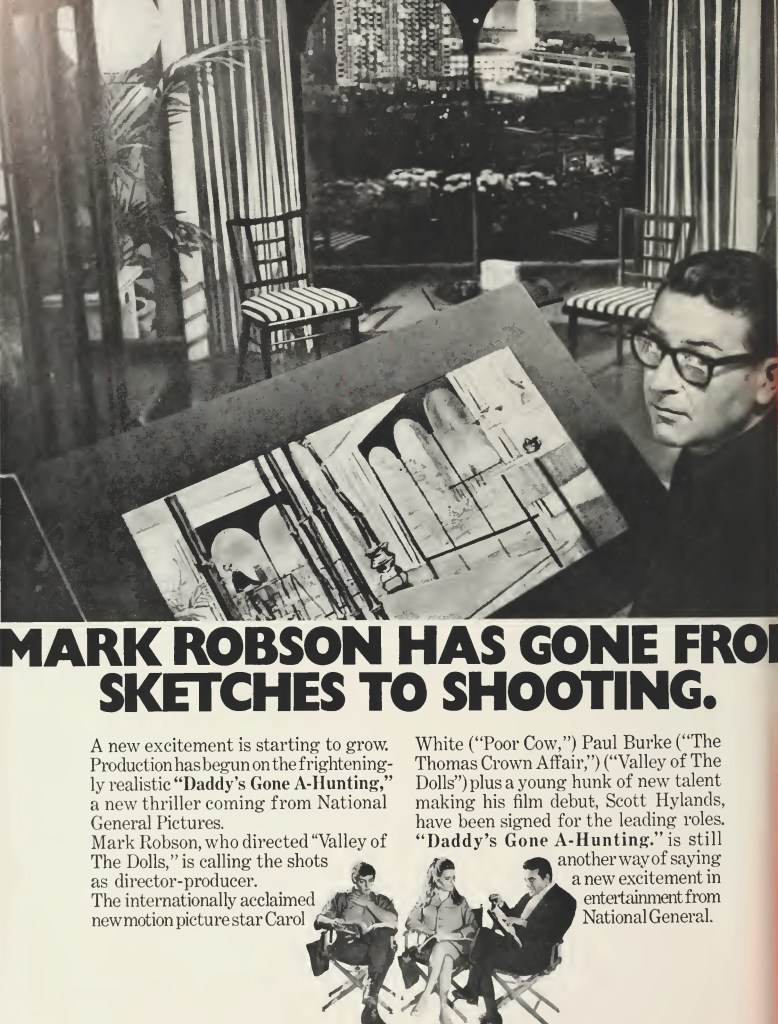
Everyone wants to be a star-maker. Director Mark Robson thought he had some form in this area after Valley of the Dolls (1968) showcased Barbara Parkins and Sharon Tate. There’s no doubt British actress Carol White reveling in critical kudos for Poor Cow (1967) had promise. But not necessarily good professional advice otherwise how to account for a supporting role in Prehistoric Women/Slave Girls (1967) her first picture after success in three BBC television productions. The female lead in Michael Winner’s I’ll Never Forget Whatisname (1967) was followed by a small role in the more prestigious John Frankenheimer drama The Fixer (1968). But none of these films did anything at the box office. Enter Mark Robson.

This thriller might have made her a star had it not been so darned complicated. It veers from paranoia to stalkersville to Vertigo via Gaslight without stopping for breath and some elements are so obviously signposted at the start you are just waiting for them to turn up. Plus, if ever a film has dated, it’s this one, going back to the days when abortion carried automatic stigma and fathers could get away with lines like “you murdered my baby.”

So, one of the few times in history San Francisco got snow (it averages zero inches annually according to Google) the meet-cute is sketch artist Cathy (Carol White) being hit by a snowball thrown by wannabe Kenneth (Scott Hylands, making his debut). But when she realizes how much he enjoys watching cats stalking canaries decides she doesn’t want his baby and aborts it. 

A few years later she marries congressional candidate Jack (Paul Burke from Valley of the Dolls) and when pregnant crosses paths with Kenneth who manages to insinuate himself into her family via her husband. Twist follows twist until we are on the Top of the Mark (a famous city landmark) for a gripping climax.

White does well as she shifts through the emotional gears but she is barely given respite from being overwrought so at times her acting appears one-dimensional rather than varied. In fairness to her, the movie’s plot gives her no chance to deliver a settled performance. Hyland looks as if he’s auditioning for a role as a serial killer, but the depth of his cunning and his twisted perceptions kept this viewer on edge – what it would take for Cathy to make amends will chill you to the bone.

Robson has some nice directorial touches, a scene reflected in the eye of a cat, a clever jump-cut from marriage proposal to marriage ceremony and some flies in milk.  Mala Powers makes a welcome big screen appearance after nearly a decade in television. That this whole concoction emanated from the fertile imaginations of screenwriters Larry Cohen (It’s Alive, 1974) and Lorenzo Semple Jr. (Fathom, 1967) might give you an idea of what to expect.

That Man in Istanbul / Istanbul 65 (1965) ****

Action-packed superior James Bond rip-off belonging to the Eurospy subgenre and elevated by memorable lines, wit and visual imagination. So if you recall any movie where ricochets play havoc in a room, this is where it originated. Flying through a window on a rope and then crashing through a series of rooms and not stopping, ditto. That famous line uttered by Johnny Depp in Pirates of the Carribean (2003) about “the marchandise,” yep, you’ve guessed it. Although it did steal a nice touch from Robin and the 7 Hoods (1964), the one where an illegal drinking den (illegal casino here) is remarkably transformed.

And all the promise star Horst Buchholz showed in The Magnificent Seven (1960) and kept stowed away all these years, that’s back in spades. Chases, fistfights, shootouts, saloon (well, casino, actually) brawl, competing ruffians, safe-cracking, hitmen, infiltration of secret hideout, a pair of femme fatales and the inevitable atomic scientist.

Some clever thugs including Schenk (Klaus Kinski) dupe the U.S. government out of a million bucks by only pretending to hand over a missing scientist, instead pocketing the cash and blowing up a plane with him on board. With for the time suprising use of forensics, the CIA determines the man killed in the plane wasn’t the missing scientist and work out that he might well be getting sold on to China.

Camera footage taken of the plane crash scene points to mysterious underworld figure Tony (Horst Buccholz). Against her superior’s wishes, agent Kelly (Sylva Koscina) heads off to the titular city in pursuit, tracks down Tony with no great difficulty to his illegal gambling den just in time to witness the electronic miracle of the roulette wheels disappearing into the floor when the cops turn up. The electronic scam would have worked except for a drunken customer who demands his chips be cashed and the only way to silence him being for Tony to slug him and trigger a brawl.

Under the cover of which, Kelly sneaks into Tony’s office whereupon finding no evidence of either a million bucks or a missing scientist, she asks for a job. “Strip!” he demands. But that’s not for licentious reasons it transpires, but to examine the labels on her clothing, from which he and his henchmen deduce (I won’t bore you with the details but they do match up) she’s a plant.

However, she is the one, accidentally, to trip over the Chinese conspiracy, in, of all places, a cemetery. Eventually, she persuades Tony to help her out, although that’s for financial rather than patriotic reasons. She’s got a few tricks of her own up her sleeve, and under the guise of kissing him, steals his keys.

Kelly kind of fades in and out of the picture – which is a shame because she’s good value in a feisty seductive clever way – while all the chasing of opposing sets of criminals is down to Tony. First target being the man with the steel hand (though not the steel claw that in the old British comic The Valiant allowed him to become invisible).

The non-Chinese criminals are as likely to kill their own men to stop them coughing up. But mostly, Tony and his gang are stalking the two sets of criminals, Kelly mostly waiting in a car or popping up to ask questions, with Tony being driven off a mountainside, thrown off a tower, duelling underwater and avoiding a scalding in a sauna. But we’re talking the Houdini of spies and none better than when escape involves commandeering a bulldozer and ramping up over a bunch of vehicles (that idea’s got to have appeared in a later film, too).

Kelly’s the good kind of femme fatale, the spy who has to use her wiles to snare the bad (or badd-ish) guy. But she’s a rookie compared to Elizabeth  (Perette Pradier) who leads Tony a merry dance by first of all pretending to be a victim.

But there’s style by the bucket load, clever reversals by the ton. There’s a marvellous scene where Tony knocks out a guy and then with nowhere to hide him props him up at a piano only to be undone when the fella slides over and hits the piano keys. Ever seen someone use the rolling coin distracting device. Or when the rope between two stanchions snaps mid-air casually sliding down the broken end. Or sex indicated by one person hanging their bathrobe over a door after the other person has done the same. Or the hero doing up a bikini top instead of undoing it. And a leading man who spends more time in a state of undress than any of the females. And, for good measure, a couple of times, and this very much  in the contemproary idiom, breaking the fourth wall.

Once we get going it’s the kind of non-stop action we later equated with Taken (2008) or John Wick (2014). Horst Buchholz was never better, a brilliant light touch with the lines and good deal tougher with the fists. Sylva Koscina (A Lovely Way To Die, 1968) has less to do than you’d like once the rival femme fatale appears but she shows just how capable an actress she is in displaying in non-verbal fashion and in a three-shot of all things her jealousy.

If you’re familiar with Spanish director Antonio  Isasi-Isasmendi from They Came to Rob Las Vegas (1968) stick that to one side because this is way better. Screenplay by Giovanni Simonelli (Django Shoots First, 1966), Nat Wachsberger (Starcrash, 1978) and Luis Josep Comeron (They Came to Rob Las Vegas).

Great treat.

Murder Ahoy! (1964) ***

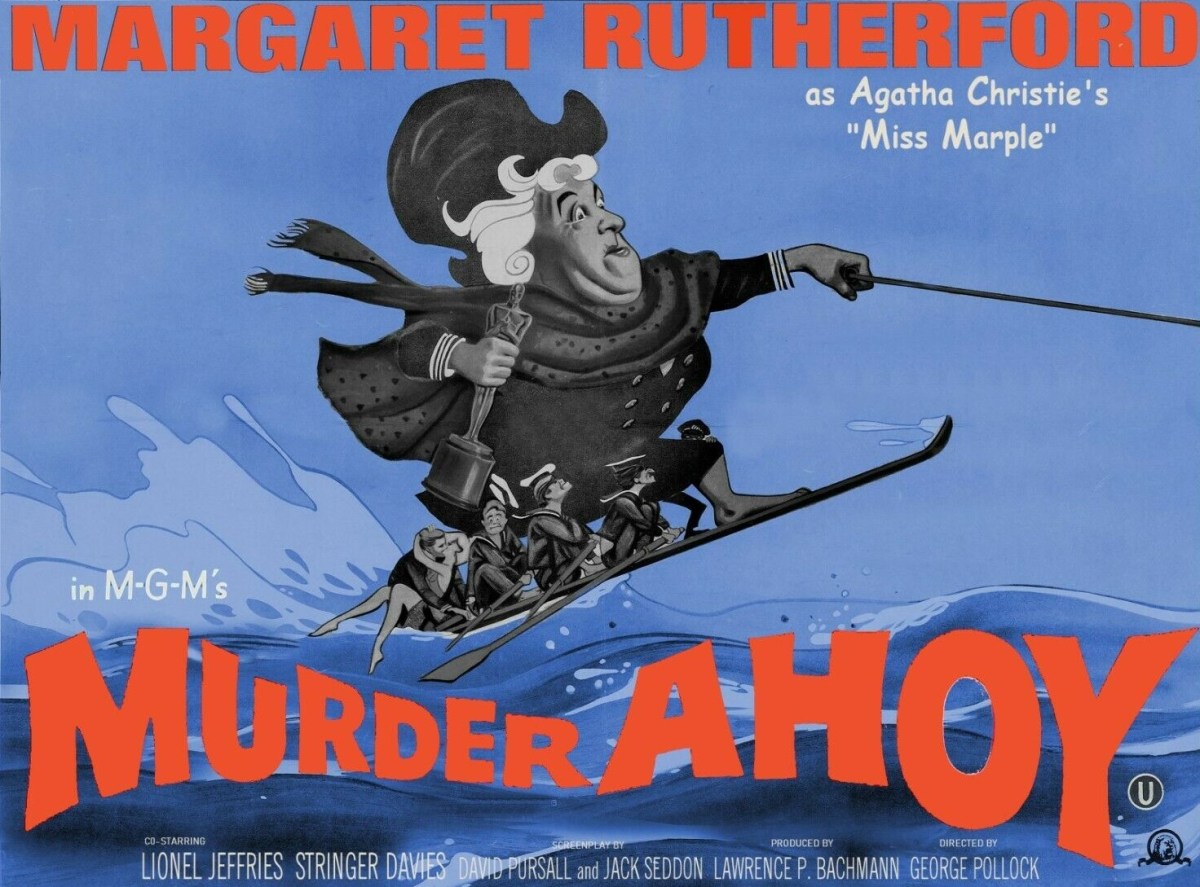
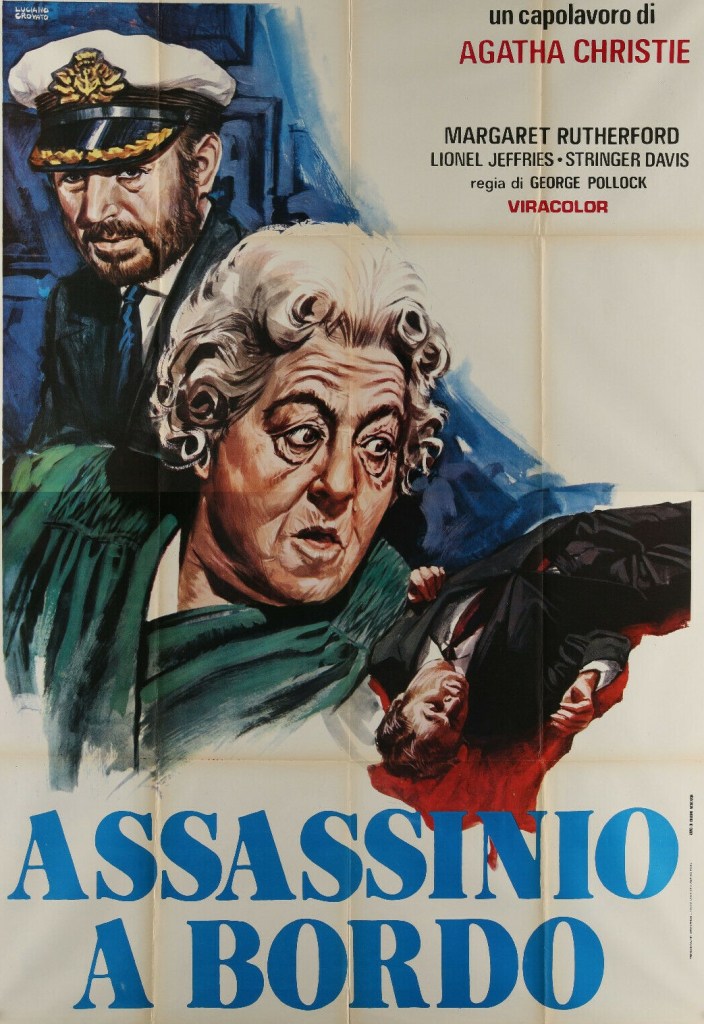
Agatha Christie tales were in a mostly B-movie limbo in the 1960s, despite Billy Wilder’s Witness for the Prosecution (1957) and would have to wait another decade before glorious all-star resurrection in Sidney Lumet’s Murder on the Orient Express (1974). In the meantime, audiences made do with Margaret Rutherford’s Miss Marple in an MGM quartet – all directed by George Pollock – that ended with Murder Ahoy!

Rutherford did not enjoy the national treasure status of the likes of Maggie Smith and Judi Dench these days, but she had been elevated to late-career fame by winning the Best Supporting Actress Oscar for The VIPs (1963). But she never quite made the cinematic impact anticipated after Blithe Spirit (1945) and was mostly seen in roles that called for eccentricity or determination, characteristics associated cinematically with Christie’s second most famous sleuth (although, in reality, the author was furious with her impersonation). And this had nothing to do with any published Christie work, just borrowed the character.

The title had led me to expect a picture set on a liner or a cruise ship. Instead, this being a cheaply-made British black-and-white feature, we are limited to sojourn on a sail training ship which remains moored at all times. Nonetheless, Miss Marple (Margaret Rutherford) is resplendent in naval attire and disports herself as if she were the captain.

Her excuse to get on board is the sudden death of a member of the committee overseeing said ship just before he makes an announcement. Miss Marple relies on a good deal more than Hercule Poirot’s little grey cells and through laboratory experiment determines the man died from strychnine poisoning. Among her other hidden talents are signaling mastery and dexterity with a sword and she drops popcorn on corridor floors to warn of imminent arrivals when she invades cabins.

The suspects include Capt Rhumstone (Lionel Jeffries), Sub-Lt Eric Humbert (Derek Nimmo), Lt. Compton (Francis Mathews) and Commander Breeze-Connington (William Mervyn) while Dr Crump (Nicholas Parsons) is described in double entendre fashion as “brisk.”  

Naturally, there is more murder, and the subplots include burglary, secret romance involving Matron Fanbraid (Joan Benham) and thwarted romance with Shirley (Norma Foster). However, nothing can deter Miss Marple and she soon puts the world to rights.

The first in the series.

It’s an engrossing enough little film, the resolution a surprise, and Rutherford has skill and charm enough to almost trademark the role. At one time in the 1960s in the USA the Marple pictures were revived as double bills but generally in Britain treated with less regard.

Although you could argue that MGM could have bolstered the standards of production, much of the merit derives from the quaintness and the quintessential English lives portrayed. Of course, Margaret Rutherford steals the show but he is ably supported by Lionel Jeffries (First Men in the Moon, 1964), Derek Nimmo, strangulated mannerisms from later BBC’s Oh, Brother not in evidence, William Mervyn (Hammerhead, 1968)  and Nicholas Parsons (ITV game show Sale of the Century.)

As a bonus there are moments of well-observed comedy and a very inventive score from Ron Goodwin (633 Squadron appeared the same year).   Directed by George Pollock (Kill or Cure, 1962) from a screenplay by the team of David Pursall and Jack Seddon (The Secret Partner, 1961).

Taken in the spirit it was intended and acknowledging the low budget, not bad.

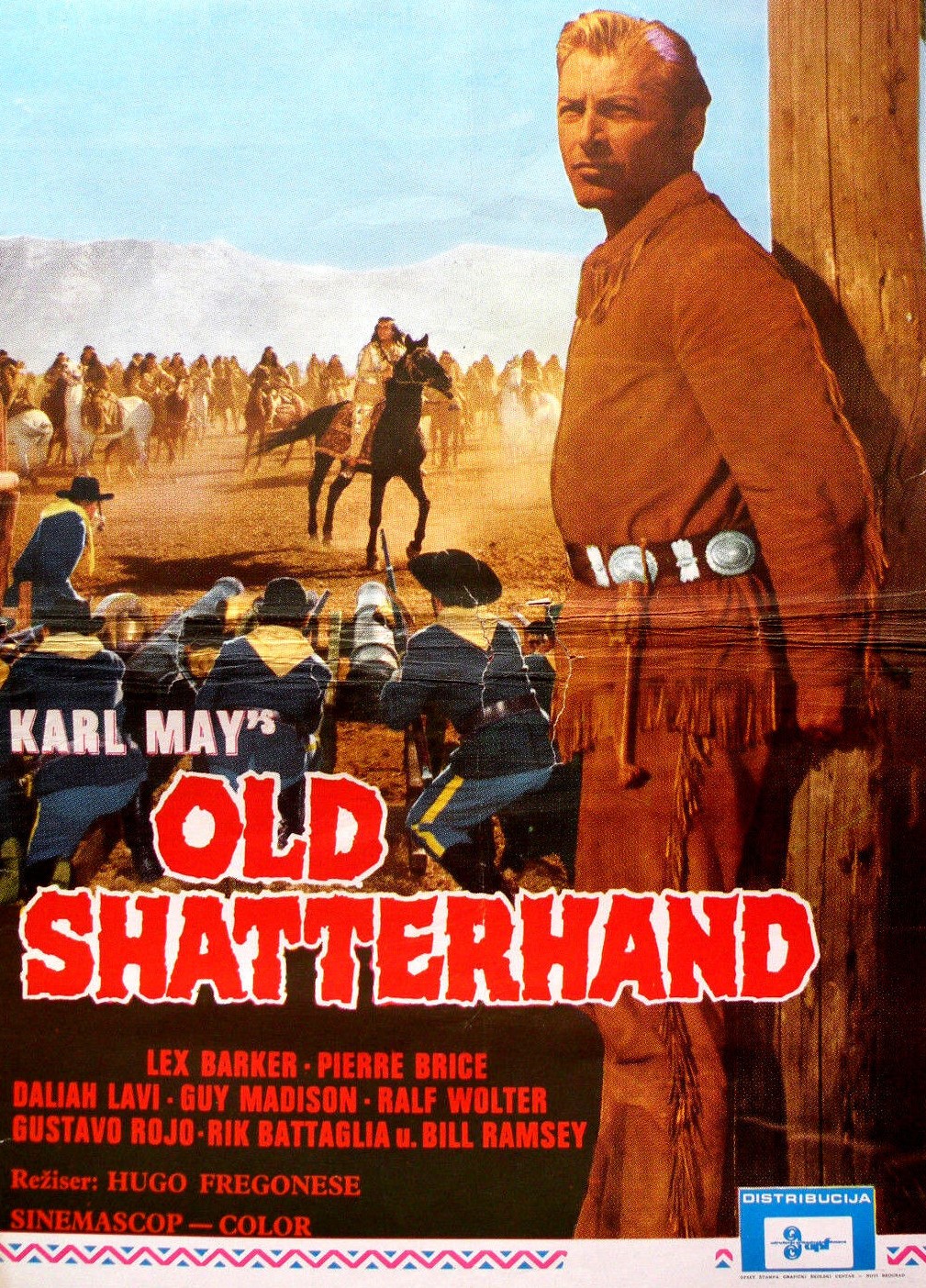
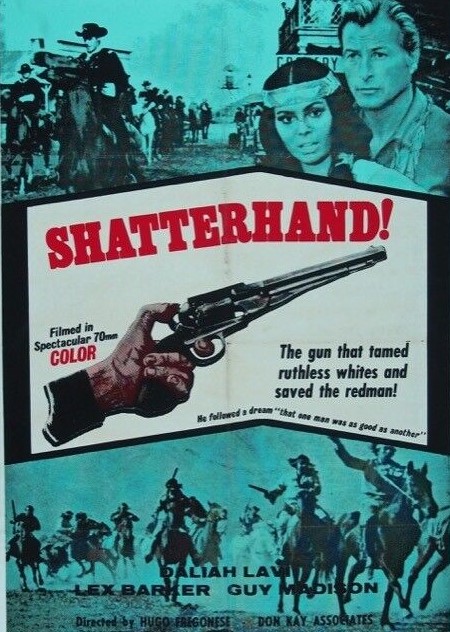
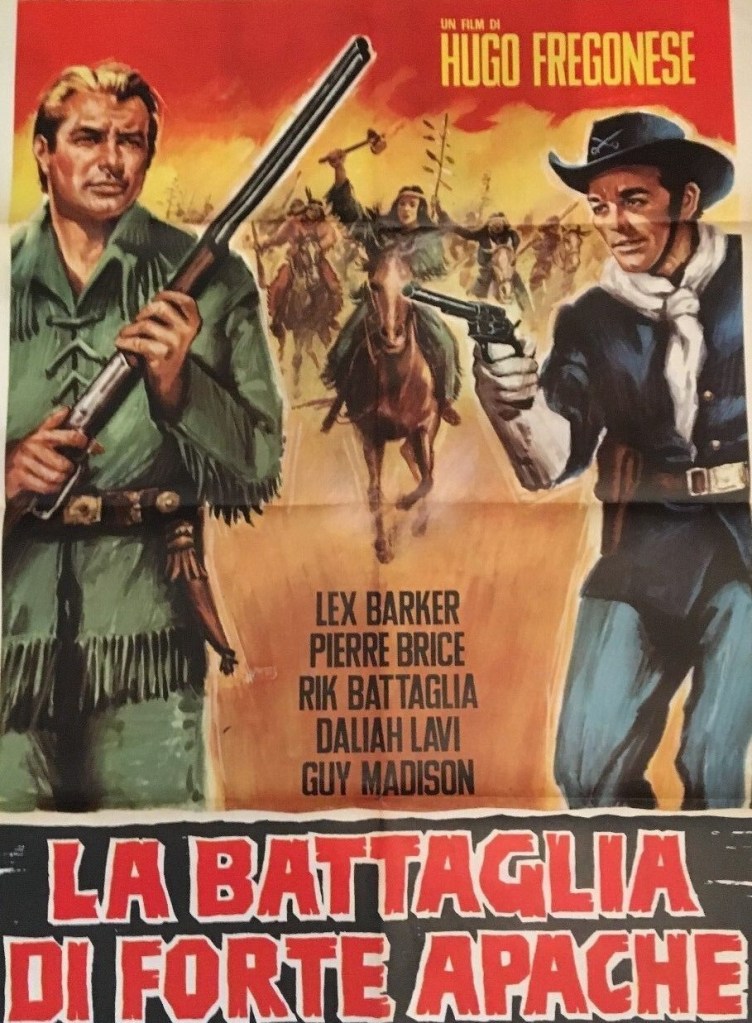
Old Shatterhand (1963) ***

Blame Lex Barker (Pirates of the Coast, 1963) and Daliah Lavi (The Demon, 1963) for my interest in this German-made western. In the aftermath of the spaghetti western and the messianic writings of Christopher Frayling I’d been aware of the Karl May western boom in the early 1960s and a series revolving around cowboy Old Shatterhand and his buddy Apache chief Winnetou, based on the novels of May who died in 1912. Quite why it took the 50th anniversary of his death to make the Germans wake up to his potential is anybody’s guess.

Theoretically, he was the German equivalent of Zane Grey, but unlike the American author whose novels were filmed over 100 times before the 1960s, only six movies were made from May westerns up to that point compared to over 20 and umpteen small-screen features and series since. Treasure of the Silver Lake (1962), the number one film at the German box office that year, was credited with starting the boom.

Story here is quite simple but the cinematography, filmed in 70mm, is breath-taking, even if it’s primarily of Yugoslavia. And there’s an iconic score. Hugo Fregonese (Marco Polo, 1962) isn’t in the Sergio Leone league – he doesn’t come close – but the picture is held together by Lex Barker (Pirates of the Coast, 1963) as Shatterhand and Frenchman Pierre Brice (Samson and the Slave Queen, 1963) as Winnetou with Daliah Lavi popping up as half-breed Paloma, not, interestingly enough, romancing either of the principals, and actually exploring her maternal instinct, looking after the orphaned Tom (Leonardo Putzgruber), more central to the narrative.

Guy Madison (Tobruk, 1967) used his matinee idol looks in kind of a role reversal, the idea of a handsome villain being anathema to audiences of the period, more accustomed to bad guys in the Jack Palance-Lee Marvin vein.

U.S. Cavalry Capt. Bradley (Guy Madison) teams up with the Commanche to frame Winnetou for the murder of settlers in order to disrupt peace negotiations between the Native Americans and the Government. Tom, the only survivor of a massacre, is later brutally murdered by the soldiers. Not quite lingering on the baby blues of ruthless killer Henry Fonda in Once Upon a Time in the West (1969) but still breaking a big taboo.

As you might expect there’s an attempted lynching but you’d be surprised to see this amount of nudity for the time, though, of course, a nice peaceful river always proves too much of a temptation for skinny dipping. There’s some pretty decent action, and the Native Americans get to show off their marksmanship with a bow-and-arrow, and there’s an axe duel instead of the usual fisticuffs. Shatterhand doesn’t always come to the rescue, for the finale he’s tied up. But there’s some interesting authentic detail, a male saloon keeper, for example, hanging out towels to dry, and when Native Americans ambush a wagon train with boulders it is logically achieved – and the boulders look dangerous enough. There’s a pretty big reversal when you’re cheering on a Native American attack on a fort.

Although the American western was about to enter a revisionist period, there was no equivalent to the ongoing friendship between Shatterhand and Winnetou or the idea that the Native American was a regular guy. 

There’s not enough story to support a two-hour movie but the scenery is stunning and you can see why Lex Barker was invited back to the well several times. Daliah Lavi’s talent was often overlooked in favor of her beauty but here, at least, she has a part with some meat.

Interesting.

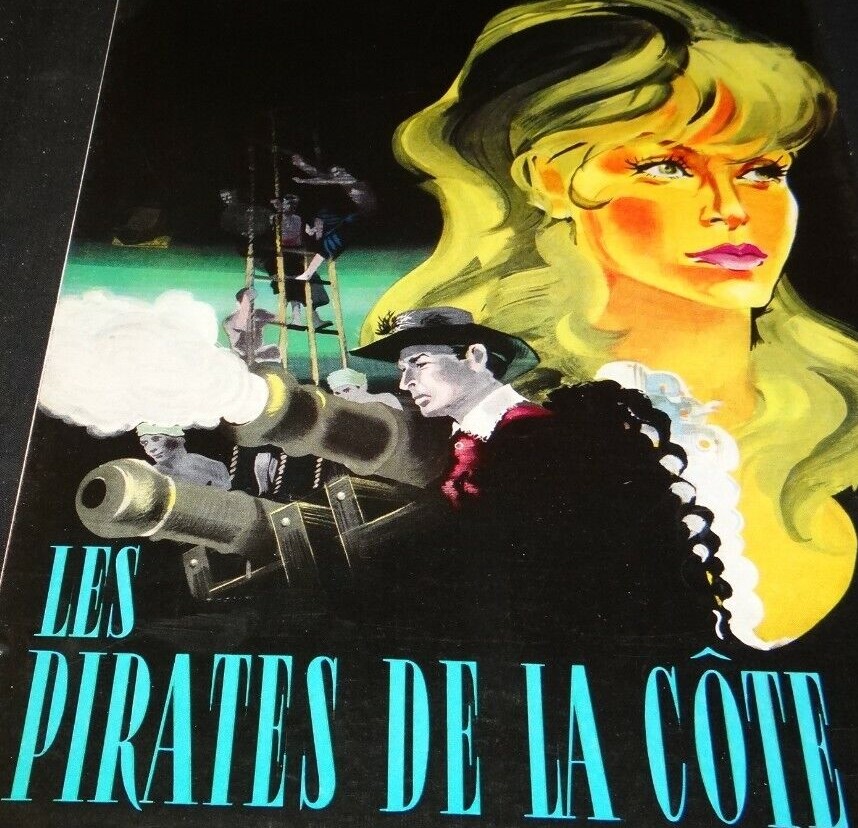
Pirates of the Coast (1960) ***

As you know I’m a sucker for a swashbuckler. And as often I’m suckered. But this is an unexpected delight, as much double-dealing as derring-do, an intelligent plot,  huge slices of cunning on every side, and some decent action.

While esteemed for his nautical skills Capt Luis Monterey (Lex Barker) is less lucky on the romantic side, rejected by wealthy Isabela (Estella Blain), niece to the powerful Governor  Don Fernando (Loris Gizzi) who plans to marry her off to the Governor of Santa Cruz. But Hispaniola is riddled with pirates, just how cunning Monterey discovers when, transporting a shipment of silver, he stops to pick up a raft of shipwrecked womenfolk only to find they have sabotaged his vessel, allowing it to become easy pickings for dread pirate (as William Goldman would say) Olonese (Livio Lorenzon).

Blame for the disaster falls on Monterey and accused of treason is condemned to life in prison, but while being shipped back to to Spain manages to escape, hijack the ship, turn pirate himself, make for Tortuga and team up with Olonese. Monterey gets away (courtesy of the disguise of an eyepatch) with posing as Capt Nobody (the moniker Capt Nemo already being taken, presumably) since Olonese has a terrible memory and can’t place him as the commander of the ship bearing the silver. To prove his worth, Monterey must take part in an attack on Santa Cruz. But while the original pirates raid the town, plunder the gold and make off with Isabela (sent there to romance the Governor), Monterey’s vessel is out-gunned by the island’s fortress and left to founder.

Monterey returns in time to save Isabela from the clutches of Olonese but meanwhile we learn that Olonese and Fernando are in infernal league, plotting to monetize impending war between the English and the Spanish, with Isabela now tossed in as a makeweight for the deal. So of course Monterey has to put the world to rights.

So plenty of twists and turns, the romantic elements complicated by Olonsey’s moll Ana (Liana Orfei) taking a shine to Monterey and, discovering she also has principles, shocked at the pirate chief’s betrayal. Ana is an ideal criminal confederate, as head of the supposed shipwrecked women, leading on Monterey’s crew, getting them drunk on rum, and flooding the hold containing the ship’s supply of gunpowder, making opposition to the raiding pirates hopeless. And there’s time enough for Isabela to rue the error of her ways, not just being stuck with her uncle’s initial choice of consort but being traded off to the pirate.

The costumes are wonderful and the ships look quite splendid and there’s plenty action, including a duel between Monterey and Olonese. It’s helped along by Monterey not being as astute as your normal swashbuckler, dupe in a clever scheme hatched by Fernando, and patsy once again to Olonese. The fact that he’s an unrequited lover means he doesn’t fit into the all-conquering-stud of the Errol Flynn persuasion. So, a more complicated character than normally permitted in the swashbuckler.

Lex Barker had made a steady progression from donning the loincloth (Tarzan’s Magic Fountain, 1949) to muscular heroic figure of B-westerns and adventures before stepping into swashbuckler territory with the likes of The Pirate and the Slave Girl (1959) and he’d make another screen transformation into Old Shatterhand with Winnetou (1963) as well as crime efforts like 24 Hours to Kill (1965). While not an A-list star, he was dependable and given the right material, such as here, cuts quite a dash.

French star Estella Blain (Angelique and the King, 1966), was also a singer, though she commited suicide in 1982, but she has the straight romantic role here, not much to do except appear distant at first then see the error of her ways. Former trapeze artist  Liana Orfei (Hercules, Samson and Ulysses, 1963) has the better role as the spitfire who switches sides.

Colorful and enjoyable.

Candy (1968) **

Ode to the male gaze. Once a cult vehicle, this will struggle to find favor these days what with its backward attitudes. Virtually impossible to excuse the rampant self-undulgence. The sexually exploited naïve Ewa Aulin in the title role didn’t even have the benefit of being turned into a star. The satire is executed with all the finesse of a blunderbuss. And while, theoretically, picking off a wild range of targets, if this movie has anything to say it’s to point out how easy it is for men to deify themselves at the slightest opportunity.

Not much of a narrative more a series of sketches slung together with the slightest connecting thread. Most its appeal lies in watching huge marquee names make fools of themselves. Or, if you’re that way inclined, seeing how much nudity will be imposed on the star, intimacy  rarely consensual, clothes usually whipped off her.  

Teenager Candy (Ewa Aulin) has father issues, daddy (Jack Austin) being a dumb angst-ridden teacher. Randy poet McPhisto (Richard Burton) drives a class of schoolgirls into a frenzy with his lusty reading, inveigles Candy into his chauffeur-driven car, ends up in her basement drunkenly humping a mannequin while Mexican gardener (Ringo Starr) with an accent as coruscating as that of Manuel from Fawlty Towers assaults her on pool table.  Scandalized father packs her off to his twin brother in New York, that notoriously safe haven for nymphettes, while on the way to the airport they are almost driven off the road by the gardener’s vengeful biker sisters (Florinda Balkan et al).

For no apparent reason she is hitching a lift on a military plane commanded by randy Brigadier Smight (Walter Matthau) who, on the grounds that he hasn’t had sex for six years, commands her to remove her clothes for the good of the nation. In the Big Apple, rock star surgeon Dr Krankheir (James Coburn), entering the operating theater to the same kind of waves of acclaim as McPhisto, finds an excuse to have her undress and submit to him, this just after she’s managed to avoid the attentions of her randy uncle. It should come as no surprise that Krankheit treats women as his personal property to the extent of branding them like cattle.

In due course, she encounters a gang of mobsters, an underground movie director and a hunchback (Charles Aznavour) who, in return for her showing pity for his condition, proceeds to rape her. She is arrested. Guess who wants to frisk her. Naturally, when she escapes she runs into a bunch of drag queens.   

Then she finds sanctuary in a semi-trailer truck, home to guru Grindl (Marlon Brando). He’d be convincing enough as a mystic except he, too, finds an excuse to rip her clothes off. There are more cops to contend with and another guru, facial features obscured by white clay. If they’re going to have sex then naturally it must be in a Hindu temple. Turns out the latest person to take advantage of her is her father but he’s been handed a get-out-of-jail-free card because by now he’s brain damaged.

This might all be a dream/nightmare. Candy might even be an alien. It’s dressed up in enough psychedelia to sink a battleship and its highly likely that any lass as gullible as Candy will find herself at the mercy of any man, so in that context it carries a powerful message. I’m sure many beautiful young girls will attest to the truth that men feel they have the right to paw anyone who comes their way without asking permission. And the other message is just as powerful – how many young actresses have been seduced by thoughts of fame to disport themselves in this fashion only to find that all the industry wants is their nudity not their acting talent.

You might say that the target is so obvious it hardly needs pointing out but the MeToo campaign will beg to differ and you would hope that Hollywood has wised up. It’s just a shame that the satire is so heavy-handed. The military and the medical profession are sorely in need to answering tough questions. Unfortunately, this picture doesn’t ask any. It’s like an endless casting couch.

Directed by Christian Marquand (Of Flesh and Blood, 1963) in, thankfully, his final picture, from a screenplay by Buck Henry (The Graduate, 1967) and Terry Southern (Dr Strangelove, 1962) based on the novel by Southern and Mason Hoffenberg. Nobody comes out of this well and it’s rammed full of cameos from the likes of Elsa Martinelli (The Belle Starr Story, 1968), John Huston (Myra Breckenridge, 1970), Anita Pallenberg (Performance, 1970), Marilu Tolo (Bluebeard, 1972) and boxer Sugar Ray Robinson.

Ewa Aulin (Start the Revolution Without Me, 1971) isn’t given much of chance, her character whimsical, pallid and submissive and she didn’t become a major marquee name.

A mess.

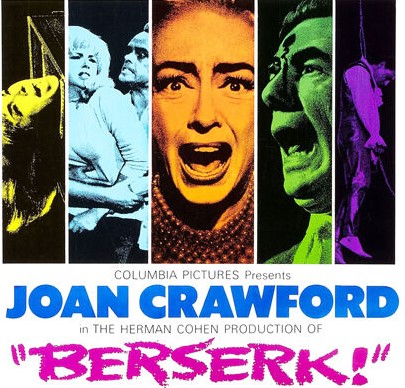
Berserk! (1967) ***

“Murder is good for business,” declares magnificently callous circus boss Monica (Joan Crawford). And so is nostalgia. Interrupting the action every ten minutes or so with the kind of circus act – courtesy of legendary British ringmaster Billy Smart – that you couldn’t see these days is probably going to win more viewers than seeing Joan Crawford in late vintage nastiness. Roll up, roll up for the elephants ridden by glamorous lasses, death-defying (or not so much) high-wire acts, prancing horses, knife-throwing, cutting a woman (and who better than a sequined Diana Dors) in half, and “intelligent” poodles (is there any other kind?).

Step aside John Wayne (Circus World, 1964), whose magnificent showmanship has nothing on circus master Monica, calling the shots and not just in the ring. She rides roughshod over business partner Albert (Michael Gough), pushes back into his box newcomer Frank (Ty Hardin), and packs daughter Angela (Judy Geeson) off to boarding school to shut the book on maternal instinct in case it gets in the way of running the show.

Throw in a good few hapless coppers, including a toff – Monica being such a big noise it requires the involvement of a Commissioner (Geoffrey Keen) and a Superintendent (Robert Hardy) – who pop up sporadically and show surprisingly little skill for detection beyond standing over a corpse or murder implement and making a pronouncement. Naturally, such an atmosphere is riven with jealousy and it doesn’t take much to start a cat fight, no surprise to see Matilda (Diana Dors) in the thick of it.

When her star act dies (murdered) on the high wire and Monica looks around for a replacement, she happens upon pushy Frank (Ty Hardin) who not only walks across the tightrope blindfold, but operates without a safety net and should he fall will land on a series of nasty spikes. He wants to share her bed and her business, but has some dodgy backstory, hints of some incident in Canada seven years ago.

So just as Monica reckons the thrill of possibly seeing death occur in front of their eyes will pull in the punters, that could be (though I doubt it) an ironic nod at the cinema audience since, as in all serial killer pictures, viewers are calculating who will be killed next, and not so much who the murderer is, but who will survive at the end. Luckily, this is British and made in times when the censor exerted a tighter rein, so you can be sure nobody’s going to meet a sticky end just because they’ve had illicit sex.

As if her employees were scary beasts, Monica beats them into submission, though, in fact, outside of Frank, nobody’s got the guts to challenge her. And it being the 1960s and forensics not much in evidence and, frankly, the producers not much interested in rounding up any suspects, you just sit back and wait to see who will be next. Will someone scare the prize elephant into misplacing a foot and crushing to death the beauties lying on the ground so that it can daintily step over them? Will the knife-thrower miss his marks or the spinning wheel containing his human target be rigged to go awry?

My money was on the poodles attacking their mistress for making them jump over a skipping rope. I hadn’t quite seen coming Albert being foolish enough to lean against a post with his head positioned exactly beside a hole so that from behind someone could hammer a spike into it. That should have made Monica a suspect because he wanted out of the business, except she has stolen and burned their contract and not a single soul in the entire circus appears to know that he even was her business partner.

Angela, when she turns up accompanied by a headmistress, appears to be a chip off the old block, turfed out of yet another school for “causing trouble.”  Monica looks as if she was born to be trouble, and you can imagine the machinations that led her to owning a circus. There’s a surprisingly tender mother-daughter reunion and the daughter is soon enrolled in an act.

The ending seems straight out an Agatha Christie novel, take the least likely contender and make them the villain, with psychobabble as justification.

I have to say that I enjoyed this, as much for the circus acts as for seeing noir queen Joan Crawford (Mildred Pierce, 1945) returning to the tough-as-they-come persona of Johnny Guitar (1954) rather than the theatrics of Whatever Happened to Baby Jane (1962). A pre-lugubrious Michael Gough (Batman, 1989) and a non-blousy Diana Dors (Hammerhead, 1968) add to the treats. Maybe Sidney Sweeney (Immaculate, 2024) consulted the Judy Geeson (Prudence and the Pill, 1968) playbook in assessing the career value of appearing in a horror movie. Ty Hardin (Custer of the West, 1967) is miscast, especially in his high-wire wobbles, though anyone thinking they can act Ms Crawford off the screen should be taken away and locked up.

Jim O’Connolly (Vendetta for the Saint, 1969) directed from a script by the team of Aben Kandel and producer Herman Cohen  (Black Zoo, 1963).

Nostalgic fun.

The Prize (1963) ****

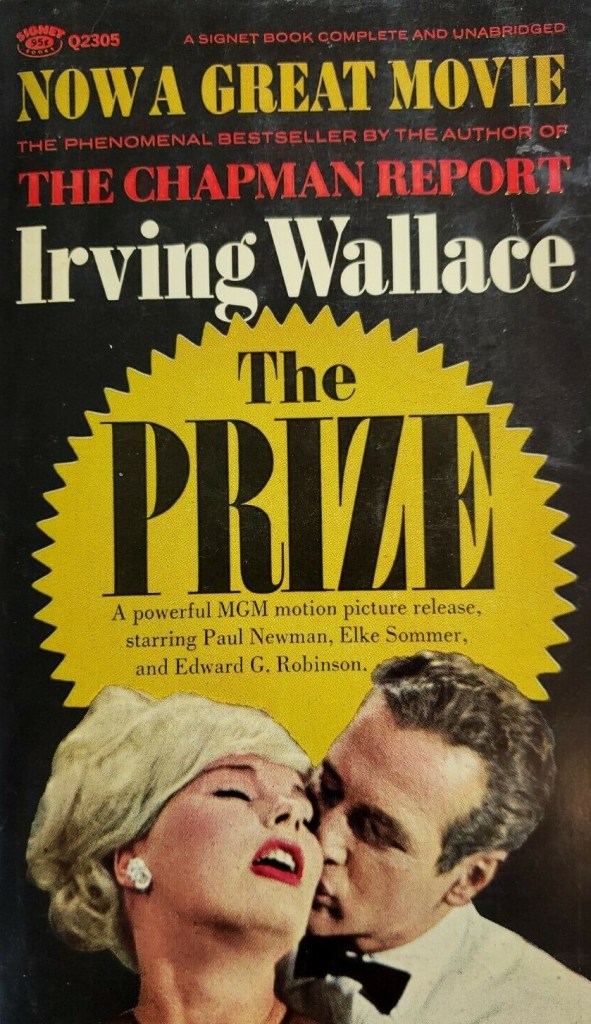
Thoroughly involving potboiler with alcoholic novelist Andrew Craig (Paul Newman) turning unlikely detective to uncover murky double-dealings at the annual Nobel Prize ceremony. Based on the Irving Wallace bestseller set in Stockholm, director Mark Robson (Von Ryan’s Express,1965) strings together a number of different stories that coalesce in a gripping climax. Screenwriter Ernest Lehman (North by Northwest,1959) brings alive what could have been a very soggy adaptation of a beefy bestseller with witty and literate dialog and a plot that hovers just the right side of hokum.

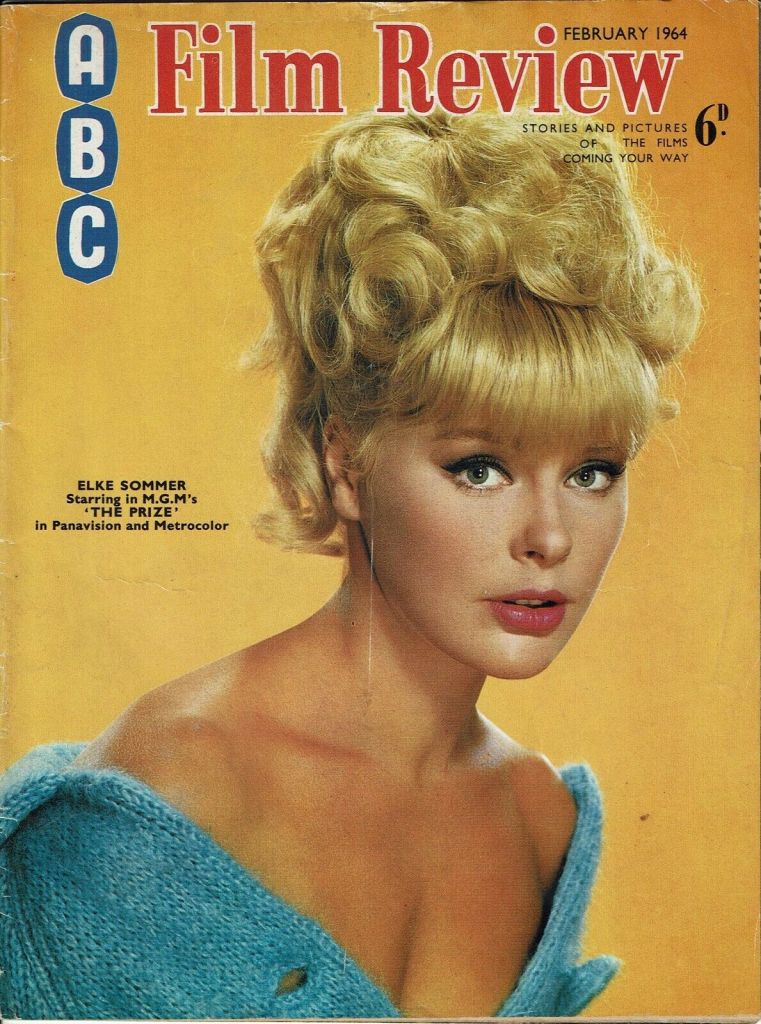
Inger (Elke Sommer), delegated to look after the author, starts out as a stuffed shirt not a sexpot, allowing Newman’s attention to drift towards Emily Stratman (Diane Baker) – daughter of another winner Dr. Max Stratman (Edward G. Robinson) – while he is dragged into romantic entanglement with neglected wife Dr Denise Marceau (Micheline Presle). Mostly, Newman just wants his next drink, and his almost continual inebriation sparks some good comedy and he is gifted good lines to extricate himself from embarrassment. Simmering in the background are warring winners – the Marceau husband-and-wife team and Dr John Garrett (Kevin McCarthy) convinced that Dr Carlo Farelli (Gerard Oury), with whom he is sharing a prize, has stolen his research.  

There are sufficient character clashes and plots to be getting along with if you were just intent on taking a Valley of the Dolls approach to the material, that is, cutting between various dramatic story arcs, but, without invalidating the other subsidiary tales, the movie takes quite a different turn, providing the potboiler with considerable edge. 

Turns out that Andrew is so impoverished that he has been writing detective novels under a pseudonym and suspecting that Dr Stratman is an imposter he starts investigating. So in some respects it’s a private eye procedural played out against the glamorous backdrop of the awards. But the clues are inventive enough and there is a femme fatale and once Inger comes along for the ride and with Andrew a target the picture picks up an invigorating pace. Echoing the humorous auction scene in North by Northwest is a sequence set in a nudist colony where Andrew seeks refuge to avoid villains while another terrific scene plays out in the docks.

Paul Newman looks as if he is having a ball. In most of his pictures he was saddled with seriousness as if every part was chosen with an eye on the Oscars. Here, he lets rip with a lighter persona, and even if he mugs to the camera once too often, the result is a screen departure that lifts the picture. Inebriation has clearly never been so enjoyable. Sommer is a delight, showing great dramatic promise. Edward G. Robinson (Seven Thieves,1960), more renowned for his gangster roles, convinces as a scientist. Diane Baker (The 300 Spartans, 1962), Kevin McCarthy (Invasion of the Body Snatchers,1956) and Leo G. Carroll (North by Northwest) provide sterling support.

Robson directs with dexterity, mostly with an eye on pace, but it is Lehman’s script with occasional nods to Hitchcock that steals the show.

The Venetian Affair (1966) ****

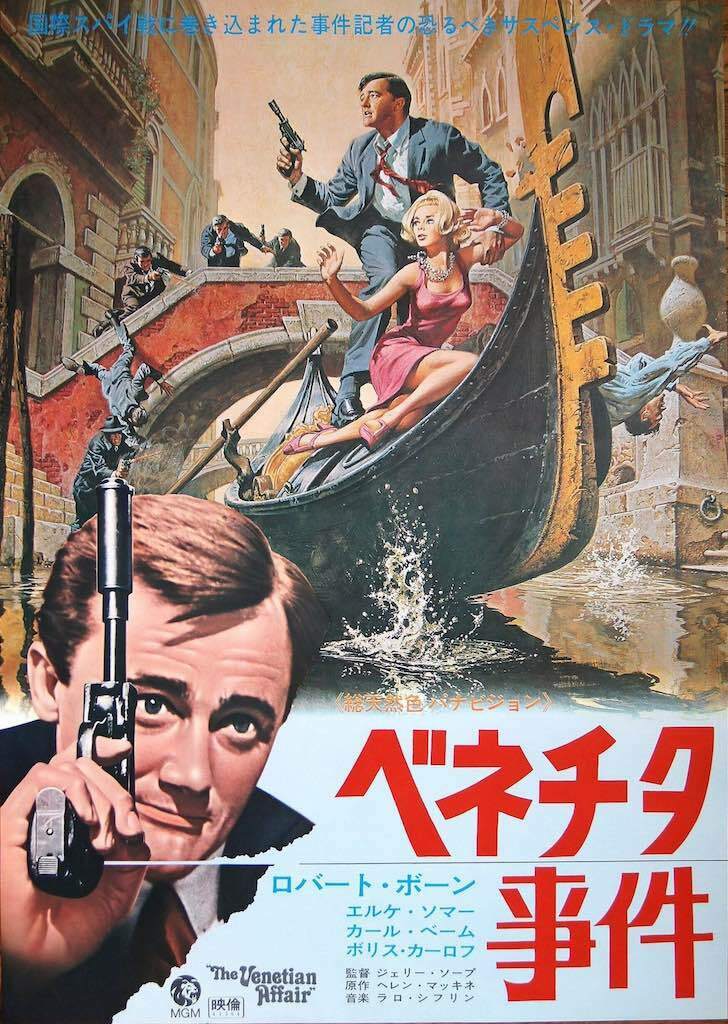
Robert Vaughn gives a terrific performance as a numbed alcoholic ex-C.I.A. journalist Bill Fenner drafted into Venice to investigate a plot involving ex-wife and Communist defector Sandra Fane (Elke Sommer). He’s the spy who lost it rather than a flashy contemporary of James Bond. This occasionally very stylish number kicks off with a terrific credit sequence that concludes with a suicide bomber blowing up a nuclear disarmament conference. Unshaven and with a Columbo cast-off overcoat, Fenner discovers Fane was key to the bombing, the bomber an otherwise distinguished diplomat with no known proclivities in the area of mass murder.

Although sold as an action picture, nobody is ripping through the canals as in a Bond film, and it is altogether a more somber, reflective, intelligent movie. Fenner’s feelings for his ex-wife are palpable when, in her apartment, he tenderly touches her clothes and smells her perfume. Far from being party to the plot, it appears Sandra has had a change of heart and wants to defect back, leaving Fenner in a perilous dilemma. Does he believe her or is she just using him? It is beginning to sound like a modern-day film noir, except he is already being used by the C.I.A., his presence in Venice a device to draw Sandra out, C.I.A chief Rosenfeld (Edward Asner) every bit as ruthless as the villains.

His investigations lead him to Dr Pierre Vaugiraud (Boris Karloff) and power broker Robert Wahl (Karl Boehm) who has a mind-altering drug that can make a man terrified of a mouse, send him into a trance and on his way to deliver savage retribution. There is death aplenty, fisticuffs and chases and Sandra, in hiding disguised as a nun, is worth waiting for.

Based on the bestseller by Scottish novelist Helen MacInnes, who challenged Alistair MacLean in her day, the project was at one point to be directed by Guy Hamilton. Coincidentally, David McCallum, Vaughn’s co-star in The Man from U.N.C.L.E. television series, was in Venice at the same time shooting Three Bites of the Apple.

Television stalwart Jerry Thorpe making his debut contributes some interesting moments. Interpreters listening in to the conference hear the magnified ticking of the bomb moments before explosion. The sequence on a train is well done and the activity surrounding the mouse is first class. Vaughn is superb in a downbeat role – shaking off his Napoleon Solo television persona- never sure if he is being duped, on the rack from falling back in love, and emerging from an alcoholic haze with a few decent ruses up his sleeve.

There’s a solid cast, Asner menacing even as a good guy, Karl Boehm a charismatic villain, Karloff memorable in his last performance in a non-horror picture, and interesting appearances by Felicia Farr as a C.I.A agent masquerading as the murderous diplomat’s unsuspecting mistress and Luciana Paluzzi as the girlfriend of an agent. Lalo Schifrin produces an outstanding score.

It was a flop first time round because audiences, partly duped by the title (all Uncle episodes incorporated the word “Affair” although the book, in fairness, was written long before the television series was envisioned) expected to pay to see Napoleon Solo, or something quite like him, on the big screen, with all the pizzazz and gimmickry of the small-screen show. Unfairly under-rated, this is a really satisfying thriller set against a murky Cold War background with Vaughn, trapped between love and redemption, the only character with a streak of morality.

Time to revive this.

Discover WordPress

A daily selection of the best content published on WordPress, collected for you by humans who love to read.

The Atavist Magazine

by Brian Hannan

WordPress.com News

The latest news on WordPress.com and the WordPress community.