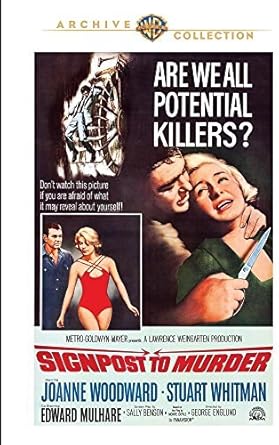
Signpost to Murder (1964) ****

Very tricky home invasion thriller. And not just from the narrative perspective and my guess is you’ll work out what’s going on long before the end, but that’s deliberate, you’re meant to, because the final twist isn’t plot but emotion, unexpected pent-up release.

Deftly directed by George Englund (The Ugly American, 1963), distinguished camerawork, long shot and overhead put to exceptional use. Biggest surprise is Stuart Whitman (Rio Conchos, 1964) taking the acting plaudits from Oscar-winner Joanne Woodward (A Fine Madness, 1966).

Slightly throws you because the interesting questions it asks about the treatment of the insane and the rehabilitation of criminals could, in retrospect, just be a contrivance to serve the plot. Basically, it’s a one-set show but thrumming continually in the background is a working water mill, the location being an English mill house belonging to American Molly (Joanne Woodward) awaiting the return of her husband from a business trip to Amsterdam. She’s got quite the hots for her lover because she’s planning to greet him at the door all decked out in a swimsuit.

But that’s in the future, takes 20 minutes of this exceptionally short picture (just 78 minutes) before we get to her. First of all, we’ve got the set-up. Confined within an asylum surrounded by high electric fences is wife killer Alex (Stuart Whitman), five years into his stretch, whom resident psychiatrist Dr Fleming (Edward Mulhare) not only believes is sane but also innocent, the convicted man having no memory of killing his wife and, as it later transpires, no motive.

The asylum officials ain’t so crazy on Fleming’s theories but by this time the good doctor has fed Alex a line, a loophole in English law dating back to the Victorian Lunacy Act, which, bizarre though it may seem, allows a man who escaped from an institution and remained free for 14 days to be permitted a re-trial.

When Fleming’s request for leniency is turned down, Alex escapes, heads for the river to elude hound dogs picking up his scent and ends up at the mill. The siren has sounded so everyone in the village is on the alert. From his cell high on a hill, Alex has previously scoped out the village, and with the help of Fleming, identified various houses, and from his own observations learned about the community, such as that the mill owner is handy with a shotgun, killing rabbits with abandon.

The original play enjoyed a successful tour of the British provinces after a West End run,
though the characters skewed older in the stage version,
Margaret Lockwood approaching 50, Derek Farr just past 50.

So it’s Alex who is greeted by the swimsuit. And then it’s the familiar duel of minds. Though we’ve just seen him knock out the doctor and an electrician, when Alex enters this house he’s a changed man. Sure, he has the shotgun but he’s planning to only hide out for a night, till the search expands away from the village and he can sneak through the gaps and hide out for the fortnight necessary to implement the loophole.

We know he’s not exactly a maniac, or a tough guy in the Lee Marvin mold, because we’ve seen what a sensitive and intelligent character he is through his conversations with Fleming, and he’s trusted enough by the officials to be allowed an axe to chop wood. But Molly doesn’t know that. She’s expecting a maniac and is thrown when he’s calm and gentle, not to mention tender.

He seems to shed nine lives when he enters this realm of domestication. She’s not half as confident as her sophistication might suggest. Her marriage has not brought her the comfort or the love she expected. The countryside is shrouded in fog, so her husband’s not going to be back till morning, which removes one complication, but adds another, a growing feeling that they are kindred souls, lost and vulnerable.

His story appears to make sense to her and when he espies a corpse trapped on one arm of the wheel it’s she who comforts him when he thinks its imagination run wild and then in the more obvious sense they console each other.

Comes the twist. That was a real body. Her husband.

This where you think. Uh-oh. The old story of the femme fatale and the patsy and you wonder were any of her feelings true or was she just acting the part to gull him. So, when the police and Dr Fleming arrive, the finger is most obviously pointed at a man who has no memory of killing before. Remember, this is in the days when the simple detection methods available now would have easily cleared him, so you have to go with the flow.

When Alex defends himself and declares that they slept together and sounds so utterly confused, one of the cops, for no desperate reason it has to be said in the absence of the usual clues on which we rely, thinks something foul is afoot.

And it’s her who confesses. She had expected a maniac not a gentle man who touched her soul in a way that neither husband nor lover, Dr Fleming, managed. Totally turns the picture on its head. And instead of the usual plethora of clever sleuthing, we have a resounding emotional climax.

Full marks though to George Englund, not just for the outstanding use of the camera, creating distance between characters even in intimate situations, one great shot where through separate windows Alex and Molly stare at each over the rolling watermill, and to offset the tension some excellent  comedy as the Yank comes to terms with British tradition after a death. He cleverly opens up the original stage play by Monte Doyle, and there’s a strong hint of irony in the opening section which sees a car-load of kids point to two loonies on the hill. We quickly learn only one is designated as such, Alex, but the other one, the sane one, Dr Fleming, turns out to be every bit as mad.  

But this is Stuart Whitman’s tour de force. He had earned an Oscar nomination for The Mark (1961) but appeared to exert more box office appeal when he went all square jaw in action pictures. I’m not the first observer to mention that one of the key points in a performance is an actor’s reaction to their surroundings. Like you or me, they should look round. I noted that with David Janssen in The Swiss Conspiracy (1976). But here is an even better example. When Alex sees the lounge and all the elements of domesticity, he’s not just having an ordinary look, he’s soaking it up and it’s taking him back to the life he lost, one he can’t understand why it was taken away from him. You look at a modern film. The camera does all the work. The director uses a habitat to guide you into the mind of the inhabitant but rarely, as in the old days, to allow reflection on the part of a visitor.

There’s a huge range of emotion for Whitman to pack in, not to mention a convincing British accent, and he does it all. Woodward nearly steals the picture away from him with that final, unexpected, scene. Molly knows that by confessing she’s about to lose the love of her life and if she doesn’t be condemned to live with a man who doesn’t come close.

In the stage play Molly was clearly the top role and always attracted the bigger star. Same here, Woodward is billed above Whitman. The last scene is a peach for any actress. But Whitman’s is the more difficult role.  Should maybe be a split decision but I come out for Whitman.

Superb minor gem.
Anyone But You (2023) **** – Seen at the Cinema

Hey, I’m going back to Anyone but You because I went back to see it again. Blame Oppenheimer, or its lack thereof –  the reissue had been scheduled for showing on Monday but was pulled presumably because it was already on streamer and not enough customers showed up over the weekend – so I took a chance on this substitute. If you recall, I’ve already reviewed it and gave it three stars. But on re-view, I’m upping that to four stars. As is often the case on first viewing, you get snagged down by the narrative, but for second viewing, once you know which way it’s headed you can sit back and enjoy the other ingredients.

I’m not alone in thinking this has been under-rated – in the U.S., box office has gone up by over 11 per cent rather than down in the third weekend of release – and, in fact, the take has increased every weekend – indicating strong word-of-mouth.  

The rom-com has kind of faded away from the glory days of Tom Hanks-Meg Ryan / Richard Gere-Julia Roberts / Hugh Grant-A.N. Other  and if you find it at all these days it’s likely to be wrapped in an adventure or thriller. In truth it’s been on a sticky wicket for over five decades when studios preferred straight-out romance or straight-out comedy rather than a hybrid, but more importantly because, for it to work, you need stars of equal importance who can generate that extremely rare onscreen chemistry.

And not either male or female stars so big that nobody cares who plays the leading man or leading female opposite them. While movie pairings ain’t so unusual – think Tracy-Hepburn, Rock Hudson-Doris Day, Burton-Taylor, Bogart-Bacall, Clark Gable-Lana Turner – it’s worth remembering that it’s only the first two of these teamings that fitted the rom-com mold, the rest being more high octane dramas or thrillers.

Most comedies that have hit the contemporary button have been raunchy boozed-up affairs whose characters have been waylaid by self-destructive tendences, insecurity and body shaming. This one is a throwback to Hollywood gloss. Nobody’s out of work, even temporarily, nobody’s poor, nobody’s moaning about their bodies, nobody’s out of their mind on drink or drugs. The male members may have a predilection for displaying torso, ass and, er, members, and the gals are equally fit, prancing about as likely as not in bikinis or even just the bottom half.

It’s woke enough, it’s a gay wedding they’re attending, they all do yoga and are fit enough to undertake a hike into the wilderness, you can take a break (a la Friends) from a relationship and hook up with someone else, and the worst that can be said is that the older guys like an occasional joint while someone takes peppermint tea with sugar and the male lead, despite being buffed-up-to-hell, is scared of flying and swimming. But it’s a very nifty script, with a bucket of little character-defining cameo moments, the brides-to-be compete to place plates in the correct position on a table, one boyfriend too keen on booze, helicopter parents.

And you could say it is as contemporary as they come, pivoting on effectively tittle-tattle, what otherwise might be an indiscreet comment on social media that turns the world upside down is here just overheard. And it’s a pretty intelligent picture that puts the ability to have a decent fight in a marriage above peace and harmony, reality in other words over romantic fiction gibberish.

The basis of any rom-com is of course meet-cute followed by any number of reasons to keep the couple apart. Most of those ideas have been used up already, so the chances of digging up anything original is rare. What they come up with here is pretty fair, and plays on the necessity of a warring couple required to cosy up in order not to cause chaos at the wedding.

But a rom-com ain’t going to work unless the audience takes to the central couple. And my first question after seeing Glen Powell (Top Gun; Maverick, 2022) and  Sydney Sweeney (The Voyeurs, 2021) is when are they going to team up again? They’re far from cloying or schmaltzy, but believable human beings. Individually, they are stars in the making. Together, they are dynamite..

I’m not sure you’d go for the other Sydney (the one in Australia) as your ideal wedding venue unless Australia was helping you foot the movie production bill, and although interesting use is made of the harbor I’d not be keen on a river so shallow that boats can’t turn around in it (a plot point) but if you’re going to stage a Titanic homage (not the sinking I hasten to add but the King of the World malarkey) probably this is as good a place as any.

Anyway, the story focuses on the disgruntled participants of a one-night stand forced to pair up at a wedding where they encounter an abundance of exes and various interfering family members. While skipping the raw rudeness of its immediate predecessors, there are still a couple of slapstick moments centering on the discarding of items of clothing, but mostly the narrative follows the dictat of the will-they-won’t-they scenario, cleverly finding ways to  keep them apart just when they look set.

Apart from Powell and Sweeney, worth looking out for Hadley Robinson (The Boys in the Boat, 2023), Alexandra Shipp (Barbie, 2023), MTA Charlee Fraser in her movie debut, and old-timers Dermot Mulroney (My Best Friend’s Wedding, 1997), Rachel Griffiths (Muriel’s Wedding, 1994) and Bryan Brown (Cocktail, 1988). Directed by Will Gluck (Friends with Benefits, 2011) from a script by himself and Ilona Wolpert (High School Musical: The Musical, 2021-2023) but pretty much drawn from Shakespeare’s Much Ado about Nothing.

Has charm in abundance, and the script has plenty of bite especially when the couple are trading bitter remarks.

An updated version of the old-fashioned enjoyable rom-com.

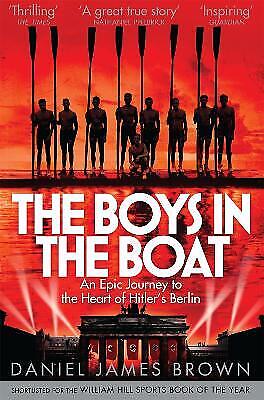
The Boys in the Boat (2023) ***** – Seen at the Cinema

Remarkable. I never thought George Clooney (Good Night and Good Luck, 2005) had it in him. His previous offerings had all been worthy but dry. Here, he conjures up a gripping drama of underdogs pitted against the rich and powerful of the USA and then the  might of Nazi Germany at the 1936 Olympics.

Rowing is generally considered an elite sport, contestants plucked from elite universities – in Britain it was always associated with the annual Oxford vs Cambridge Boat Race though from 1984 the country has won at least one gold at the Olympics and Sir Steve Redgrave, who lacked an alma mater, won five on the trot.

Except for athletics and golf, most popular sports are team games – football/soccer, American football, baseball – but the media and Hollywood tends to treat them as opportunities for individual excellence, the striker scoring the winning goal, the quarterback the winning touchdown, the baseball player the winning home run. The team aspects of these sports are rarely touched upon, even though you need a specific quantity of personnel working in tandem in order to compete.

What makes rowing so unusual is that, as one of the characters comments, you don’t have eight men in an eight-man crew you have one – in other words the guys have to be so in synch that they act as one. I probably learned more about the technicalities of sport from this one picture than any other sports-related movie I’ve ever seen and yet that information is passed out in dramatic form.

In terms of the feel-good factor, this comes closest to Chariots of Fire (1981), but in some regard exceeds that because it’s not about individuals coming good or coming from behind to win a medal, but about group dynamics. And it’s quite astonishing that with the narrative covering three key races, none much different from the other, just boats on water, that director Clooney manages to rack up so much tension.

And like Oppenheimer (2023) it’s a throwback, to those old days of men with hats. Unusual, too, that, like Moneyball (2011) or Any Given Sunday (1999) as much concerned with management as playing.

So, in the middle of the Great Depression, the young men who queue up to battle for a place on the eight-man rowing squad at the University of Washington (in Seattle not the national capital) are kids desperate to feed themselves, not those born with a silver spoon in their mouths, because making the team comes with a scholarship, a bed and meals. But qualifying is a massive attack on the human physique, not to mention psyche, as the combatants need to learn to breathe different and wear out muscles in a way no human being should.

There’s not room to showcase all the athletes so the narrative weight drops on Joe Rantz (Callum Turner), the hobo, abandoned by parents when young, living in a car wreck, skimping on food. He’s got a crush on well-to-do Joyce (Hadley Robinson) who has to do most of the running to get their romance over the line. Next in line is Don (Jack Mulhern), with a Charles Bronson haircut and taciturnity, no social skills but a handy piano player, his respiratory illness threatening to torpedo the team’s chances. In any other picture the cox Chuck (Thomas Elms) would hog the limelight because he’s the one who disobeys the coach’s commands and beats verbal hell out of the team.

Al Ulbrickson (Joel Egerton) is the coach fighting for his career, taking on the shady politics and rules-rigging and a system that wants to only reward the rich. Sidekick boatbuilder George (Peter Guinness) is the kind of backroom character who is mostly silent unless he has a pithy word of wisdom. Al manages two teams, the veterans if you like, who’ve been training together for three years and the juniors, comprising the Depression kids, but it’s the driven newcomers who impress the most and against all odds are selected to represent the university.

I had always assumed there was nothing to do in Poughkeepsie except “pick your feet.” Turns out its river is the locale for the annual rowing championships and so popular it’s not just a huge gala event but there’s even some kind of railway cars packed with passengers that runs along the side of the water so the elect can keep up with the rowers.

Most reviews of this picture have been on the niggardly side but I found it not only deftly done, but very moving, a couple of heart-tugging tear-snagging moments as it pounds its way to feel-good conclusion. The women, who are relegated to bit parts, are exceptionally good, Hadley Robinson (who I had just seen in a completely different role in Anyone But You, 2023) dances across the screen while Courtney Henngeler, as the coach’s wife, has a couple of the best lines in the entire picture. But probably the absolute zinger has to go to a blink-and-you-miss-it moment featuring Jesse Owens (Jyuddah James) when asked if he was going to “show” the Germans what he could do, replies that, no, he was going to show his countrymen back home, indicating the racial prejudice he had to overcome to win selection.  

Terrific turn from Joel Edgerton (Red Sparrow, 2018) who has been hovering around for donkeys without delivering a career-defining performance. Breakthrough, too, for Callum Turner (Divine, 2020) and Jack Mulhern (Pet Sematary: Bloodlines, 2023) though I have a sneaky feeling you’ll go away thinking British character actor Peter Guinness has stolen the picture. Top notch script by Mark L. Smith (The Revenant, 2015) from the bestseller by Daniel James Brown.

All the elements that appear essential to a contemporary sports picture, namely sex, drugs and violence, are missing and what a difference that makes, allowing the picture to streamline forward without getting bogged down. And critics, believing something critical is missing, are missing the point. At the opposite end of the pizzazz scale from Oppenheimer but with as interesting and adult-oriented tale to tell. And for once allows audiences the chance to let their hearts rule their head. And at just over two hours, doesn’t overstay its welcome. This ain’t made by a streamer so catch it in the cinema where it belongs.

Instant classic.

Behind the Scenes: Dear Mr Scorsese…or Mr Nolan

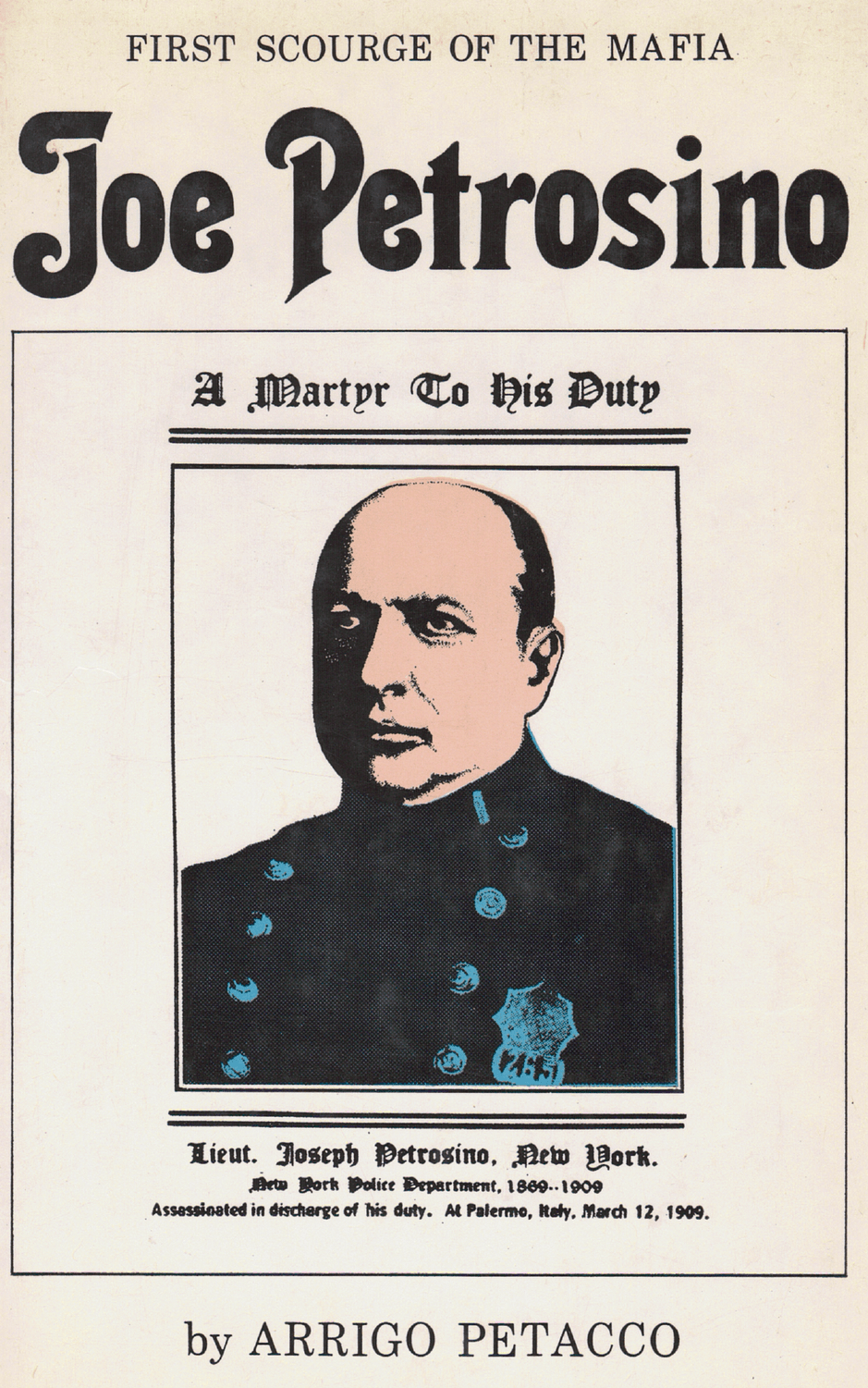
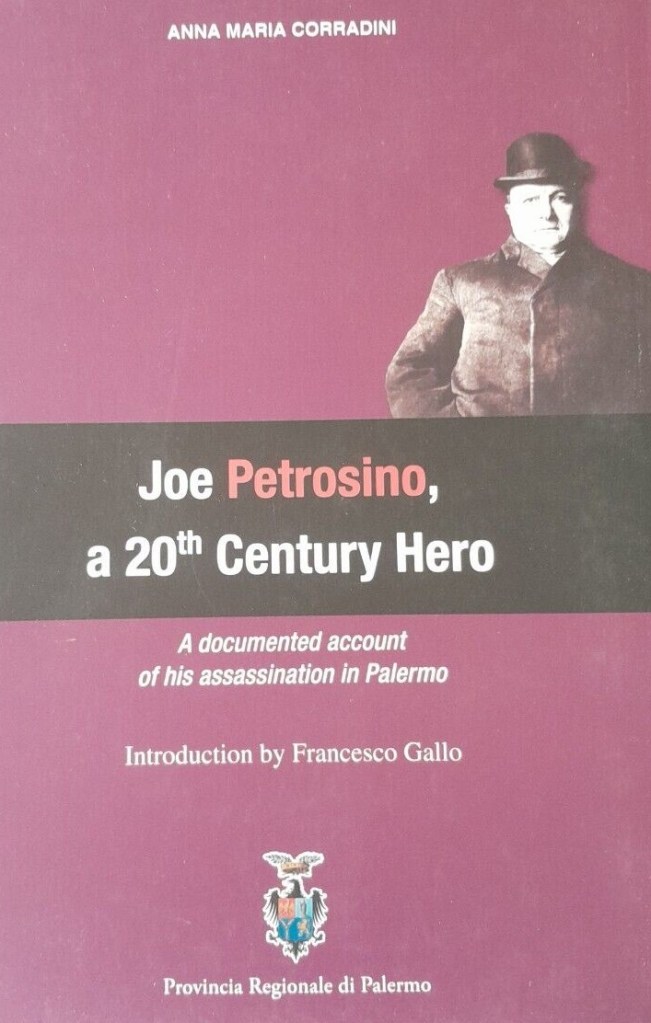
Should you be in the mood for atonement after a lifetime of deifying gangsters, Mr Scorses, you might wish to consider a biopic of the greatest cop, outside of Elliott Ness and Serpico, in American history. I’m sure Leonardo DiCaprio, who was at one time attached to a filmization of the bestseller The Black Hand (2017) by Stephen Talty, has brought the subject matter to your attention. Although Pay or Die (1960) covered similar territory, its budget and restrictions of length denied it the opportunity to properly explore the historical depth and social comment, for which in Killers of the Flower Moon (2023) you now seem more at home.

After the success of Oppenheimer (2023) audiences might be receptive to a true story about a cop who took on the Mafia a.k.a. the Syndicate a.k.a. the Cosa Nostra before it was known by any of those names and there is, to boot, a heart-rending romance that the Ernest Borgnine picture barely touched upon.

I’ve even dreamed up an opening.

A horse pulls a wagon laden with oranges and apples through a congested New York street circa 1883. As the driver pauses to make a delivery, a child, Claudia, watches from the window of her father’s shop – F. Fellini Jeweller. The horse collapses. The fruit scatters. Malnourished kids race to scoop up the merchandise. Claudia races out and strokes the horse’s mane.

We cut to a man in brown overalls striding towards the camera armed with a cleaver. The crowd parts. The child clings to her father in terror. The man raises the cleaver high over his head and slams it into the horse’s haunch. The child screams. The jeweller remonstrates with the man. The man removes his cleaver and says, “Not dead enough.”

As the credits roll, we see Claudia chasing away the flies that gather over the corpse, being pushed away by a man chiselling out the horse’s hoof, another sawing off its tail. Some days later as she is trying to pick off wriggling maggots, the man returns, this time driving a wagon. She hides behind her father.

His cleaver flashes in the sun as he hacks away at the horse. By now decomposition is so bad that the legs easily part from the body and the man is able to drag the horse bit-by-bit onto the back of his cart. Claudia watches as he leaves with the steaming carcass. We follow the wagon through the streets down to the river. A boat is waiting. The man heaves the meat onto the boat. The boat sets sail. Far out in the channels, the man begins chucking the meat overboard.

Back on dry land, the man cleans his cleaver and removes his brown overalls. Underneath he is wearing the uniform of a cop.

This is Joe Petrosino.

In those days cops also ran the Sanitary Dept in New York. Removing dead horses – they were too heavy to lift manually so you had to wait till the meat rotted sufficiently to fall from the bones – was a job for new recruits.

When Petrosino reaches the police precinct you’ll notice two things about him. He is short, well below the standard police requirement, and all the accents except his are Irish. In fact, he’s the only Italian cop on the force and only recruited because he can speak Italian and get information from all those immigrants who still can’t speak a word of English.

But he’s also very unusual especially to a contemporary audience because we’ve all been acclimatized to thinking that all Italians of this and successive generations accepted the Mafia rather than as Petrosino hating them and all they stood for. So this is effectively the tale of a silent majority who came from the same locale as the Mafia, understood their position in society in the home country, but loathed the fact that they had been allowed to infiltrate American society in part at least because they spoke a secret language (Italian) that few Americans understood or made an effort to understand with all the underlying racism that suggested.

But Petrosino’s not like a contemporary cop, forced to work within the tight constraints of the law and he’s not even like the cops of the 1930s-1960s who might have lawyers breathing down their necks and in the later decades accused by the media of breaching civil liberties. Petrosino was a good old-fashioned two-fisted cop, think James Cagney or Lee Marvin or Clint Eastwood but on the side of law and order. He thought nothing of beating up hoods, humiliating them in public as a way of showing that society was not going to stand by and let them terrorize the public.

Eventually, Petrosino was able to set up a specialist Italian-speaking squad to tackle The Black Hand/Mafia.

But he was also a superb detective. The Black Hand’s main line of business was kidnapping – little Claudia would come back into the story as a victim. Don’t pay the ransom and your business or your house would be blown up, the kidnappee killed. You may remember from old kidnapping movies that the kidnappers always cut out words from newspapers to write their demands.

Well, the only reason they ended up doing that was because of Petrosino. Prior to that, they just wrote out their demands in pen and ink. But he started to round up suspects by the hundreds and find an excuse to get samples of their handwriting. And then using the samples on file, whenever a new demand appeared he would scout the files to match the samples and go an arrest an astonished hood. So the gangsters wised up and started using newspapers.

He was also the guy who worked out that immigrants didn’t suddenly take up crime on arriving in America but they may well have criminal records back home and therefore could be extradited.

On top of that was the heart-rending love story. Petrosino had fallen for the daughter, Adelina, of a restaurant owner. Every night he dined in the restaurant. But she had been married before. She was a widow. Her husband had died young and she couldn’t contemplate marrying again to someone who was in such constant peril. So it took years of wooing, nightly meals, before she agreed to marry. The marriage lasted a year, ended by his death. He was assassinated while going into the lion’s den, the Mafia strongholds of Italy.

And all this is before you deal with the social issues of immigrant integration, of racism, of finding the new world as guilty of betrayal of trust as the old, of those complicit in murderous actions of the Mafia by turning a blind eye.

I’m suggesting Martin Scorsese because he’s covered this ground before but on second thoughts this might appeal more to the likes of Christopher Nolan who is comfortable with complexity and constantly seeks a wider perspective and who, whether through the Batman chronicles or Oppenheimer, is happy for his principal character to be in the main an upholder of justice.

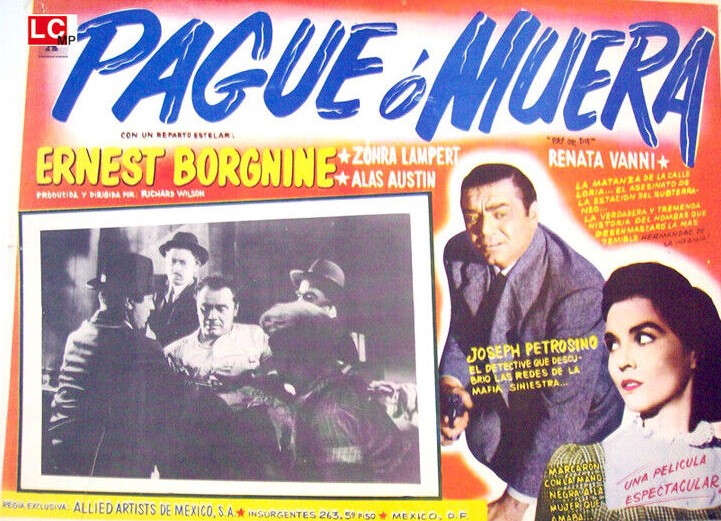
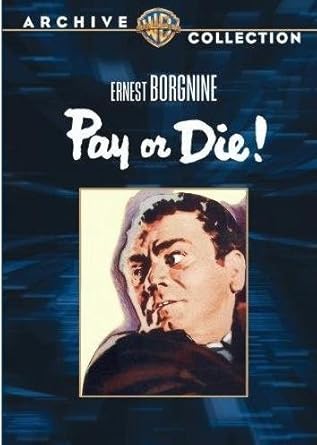
Pay or Die (1960) *****

Hollywood had outlawed the deification of villainy after the gangster gold rush of the 1930s and, before Coppola and Scorsese popped up with self-serving operatic epics, the consensus was that thugs were scum, no matter how well organised or how deep the corruption went. There had been a blast of gangster biopics in the late 1950s/early 1960s, many of them covered on these pages, but, outside of the equally thuggish Clint Eastwood cops, you would have to wait until Serpico (1973) and The Untouchables (1987) before Hollywood decided the cop was actually the hero after all.

I’m guessing Scorsese and Coppola had seen this particular picture which presented an entirely different picture of the Mafia, including its historic importance in America, but decided the bad guys were just more interesting than the good guys and that some kind of mythical Mafia presented better cinematic opportunity.  Now this is just as much a low-budget number as the bulk of the gangster pictures of this particular short-lived era so don’t go looking for any late cycle film noir or the kind of classy mise-en-scene or big stars that comes with the later bigger budgets.

But this is so spot-on, with incredible depth, that it deserves a good bit more attention than the eight critical reviews on imdb and the measly 30 per cent rating on Rotten Tomatoes. In fact, you could point to several scenes where you could imagine Coppola and Scorsese took inspiration, and there are some quite astonishing scenes of brutality, not blood-drenched or lingered-over as was the style in the 1970s but incredibly powerful precisely because they are rendered in such lean fashion.

This is based on the true story of an Italian who took on the Mafia in New York. Only it wasn’t called the Mafia then. If you remember the Robert De Niro section in The Godfather Part II (1974) you’ll recall that the gangster he rubbed out belonged to The Black Hand. That’s what they were called at the turn of the twentieth century in New York and since prohibition didn’t exist they didn’t become bootleg millionaires and then dabble in drugs. Their main businesses were extortion and kidnapping.

Italians in Italy didn’t trust cops for historical reasons. When anyone wanted to keep the populace in line they used the cops as muscle. That was the root reason for the growth of the Cosa Nostra. So when Italians emigrated they were equally inclined not to call the cops when someone put pressure on their businesses or demanded a ransom for a stolen child. And one of the reasons nobody called the cops was because not a single cop in New York spoke Italian. Joe Petrosino (Ernest Borgnine) was the first Italian on the New York police force. He made lieutenant but lack of education prevented him climbing any higher.

But let’s get back to the blistering opening. You’ll be familiar with such openings from Coppola/Scorsese, the religious procession, candles, hymns, music from traditional instruments, priests, robes aplenty. But this one has a difference. They string two kids between the rooftops. Not string them up, string them along ropes attached to their backs and dress up the sweet girls as angels so that they can hover over the procession and utter words of importance as its climax. The kids don’t look terrified, they look delighted to be chosen.

But hood Lupo (Barry Russo) has a different idea of how the ceremony should end. He slices through the rope. Down crash the kids, legs, backs broken, barely surviving the fall. But they survive enough for that calamity to be all that’s required for one parent to cough up the dough  demanded by The Black Hand, despite Petrosino’s entreaty to stand fast against the crooks.

Lupo’s next victim is the baker Saulino (Bruno Della Santino). And when he refuses to pay the thugs bang him up in his own pizza oven, threatening to burn him alive. Petrosino has that Sean Connery Chicago style of dealing with villains and back in the day liberals weren’t going to get in his way and he knows it’s not just a battle of wills but a power struggle. So he batters in Lupo’s door, batters him round the head, drags him down the stairs, pausing only to punch him again so the neighbors can get a good look, carry him on his back outside and dump him in a trash can.

Doesn’t entirely go to plan because a crooked Italian lawyer gets Lupo out and he takes revenge on Saulino by kidnapping his daughter Adelina (Zohra Lampert), cutting off chunks of her hair, ripping half her clothes off, and locking her in a cupboard. When Petrosino finds her she’s got the imprint of a black hand on what remains of her white dress.

Eventually, the police agree with Petrosino’s notion that the only way to beat the thugs is to set up an elite squad composed entirely of Italians, recruited from outside the city, to set out in plain clothes and mix with the local community, getting jobs as barbers and baker assistants, for example, so that they can witness the protection racket at first hand.

Meanwhile, the shy Petrosino has fallen for Adelina, though he has a younger, better educated rival, Johnny (Alan Austin), and in any case the more successful he is in his anti-gangster campaign the more at risk his life (and that of a potential wife) would be. The more successful the squad becomes the more the leaders of the Italian community agitate for it to be run by someone better educated, not a guy who has failed the Captain’s Exams seven times.

Although this is delivered in pretty much documentary style, there are some sensational set pieces. Apart from the falling angels, before thugs chuck Saulino in his own oven they dress him in pizza ingredients, raw eggs, flour, the works, the kind of humiliation a Scorsese gangster would endorse. When Adelina and Petrosino do get it together, every wedding present has to be soaked free of its wrapping first in the bath to ensure parcels don’t contain a bomb.

There’s a tremendous explosion of a car. A thug is captured in a barber’s chair by a cut-throat razor. And in the most horrific scene kids are killed (think The Untouchables) when they get in the way of bomb set to the timing of a big clock, the kind you used to see outside stores that acted as advertising devices.

Most of these sequences would have been delivered with more panache, blood, slow-motion and other gizmos had this picture been made a decade later. But, as I said, they pack a hell of a punch for being stripped of all cinematic artifice.

Within all this there’s time to explain the background of immigrants, the virulent racism they face, the institutional reasons for cling to old ways, the corruption and vote-grabbing politics, and there’s some lovely stuff in the bakery, Adelina not just carrying wood for the pizza ovens on her back but undertaking some of the more skilled baking. And the hunt for the child bomber turns into top-class detective work, down to identifying a wagon by horseshoe and then finding out which merchant was missing a wagon.

There’s some brilliant dialogue. At one point opera superstar Mario Caruso’s life is under threat, his is the car blown to pieces. But outside of his fancy car and voice he holds little attraction for the ladies. When he tries to pick up a beautiful girl by promising to sing for him, she retorts, “promise not to stop singing.” When Petrosino turns down Adelina it’s first on the grounds of danger and then age. “I’m older than you,” he argues. Her answer is to kiss him. “How old do you feel now?”

Ernest Borgnine (Go Naked in the World, 1961) hasn’t had a part this good since Marty (1955) and he’s in his element, two-fisted with criminals, his persuasive powers with his superiors far outranking his exam marks, and entirely believable as a diffident romantic. Zohra Lampert (A Fine Madness, 1966) delivers a winning turn. You might spot John Marley (The Godfather, 1972). Most of the cast appear authentic Italian.

So you get a riveting drama, fascinating backstory, a romance that could have been the main story all on its own, a bit of detection and a terrible twist at the climax.

Taken on its own terms and given the budget limitations director Richard Wilson (the equally under-rated Invitation to a Gunfighter, 1964) presents a multi-layered masterpiece. Richard Collins (Maya, 1967) and veteran Bertram Millhauser (Tokyo Joe, 1949), in his final movie, collaborated on the screenplay.

Minor gem crying out for reassessment.

Quadruple Bill: Ferrari (2023) **** / Anyone But You (2023) *** / One Life (2024) *** / Next Goal Wins (2023) **

The stars aligned and with only a couple of minutes between features I was able to squeeze in a record-equalling four movies in a single day (excepting all-nighters of course) at the cinema and with one exception they were all well worth the ticket price.

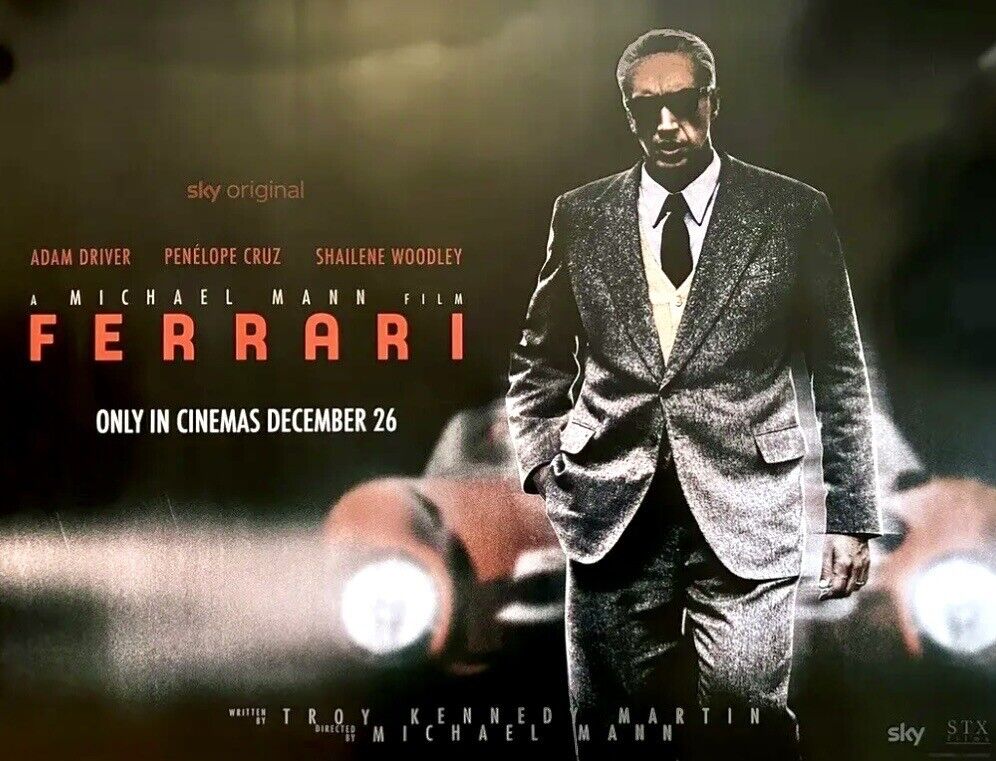
Ferrari

Not really a motor racing picture in the mold of Ford v Ferrari / Le Mans ’66 (2019) or Rush (2013) but more of a domestic drama centering around a dramatic race. The acting is plum, Penelope Cruz (The 355, 2022) taking the honors ahead of Adam Driver (House of Gucci, 2021) though Shailene Woodley (The Last Letter from Your Lover, 2021)  seems miscast. The climactic race doesn’t carry the punch of Le Mans, however, the focus more on the backseat players than the drivers. And it’s not quite prime Michael Mann (Heat, 1995)

Set about decade before Ford v Ferrari, it finds Enzo Ferrari (Adam Driver) coping with the death the year before of his only son, the potential collapse of his business, and trying to conceal long-standing mistress Lina Lardi (Shailene Woodley) from long-suffering wife Laura (Penelope Cruz).

The depth of the couple’s despair at the loss of their son can be measured in the fact that every morning they take flowers, separately, to his graveside. He has at hand an immediate substitute, having fathered a boy, now approaching ten years old, with his mistress, but rejects the chance to officially gave the boy his name.

The manufacturing side of the business was always viewed as merely a way of financing the racing, Ferrari having been a driver earlier in his life. But overspending or lack of income, such details are not specified, has pushed the business towards bankruptcy and he toys with inviting a merger with a bigger company such as Fiat or Henry Ford (which formed a central plank of Ford v Ferrari). But the easiest way out is to win Italy’s most prestigious race, the Mille Miglia, a four-day 992-mile event that ran clockwise across public roads from Brescia to Rome and back.

But I had to look that up. Unlike Le Mans, unless you are a racing aficionado, this doesn’t immediately click in the public consciousness. And there were a host of other details that seemed to skimp on information. Unlike Ford v Ferrari where you learned exactly how fast cars got faster and what it took to drive them or be driven in one (witness Henry Ford’s terrifying hurl), here you are only given some vague technical data which makes little sense. There is little background fill, Maserati pops up as Ferrari’s chief rival but its inclusion is almost incidental. In fairness, you do get more about the jiggery-pokery of running a business.

Running parallel to the racing venture is the family soap opera, will Laura find out about the mistress and child, will she jeopardize the business out of spite. Once the race starts, it’s hard to keep up. Here the distinct lack of detail hurts the most, although there is one shocking scene.

Engrossing enough but it’ll struggle to fill cinemas.

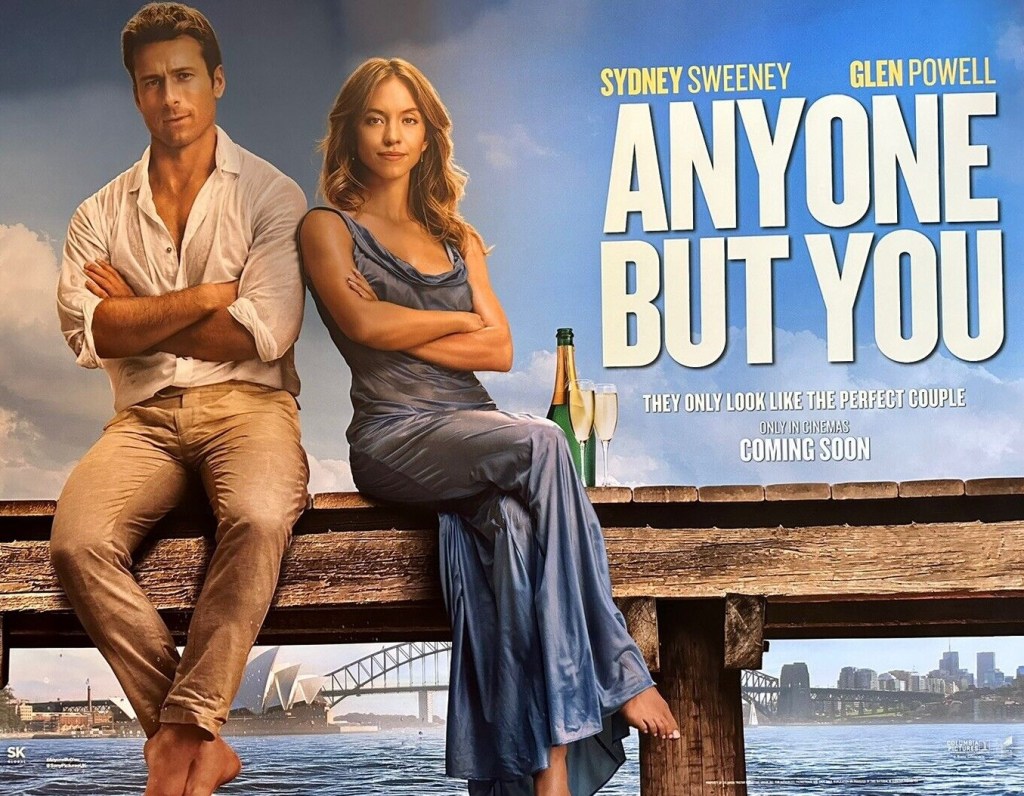
Anyone But You

A contemporary take on the rom-com with the disgruntled participants of a one-night stand forced to pair up at a wedding where they encounter an abundance of exes and various interfering family members. Glen Powell, star in the making in Top Gun: Maverick (2022), comes good as does Sydney Sweeney (The Voyeurs, 2021). Skipping the raw rudeness of its immediate predecessors, this pivots on charm, but with a few helpings of humiliation (he strips naked to avoid a predatory spider) and slapstick thrown in, plus some old-style determinedly un-woke action from one parent in particular. He is the more vulnerable, a poor swimmer, requiring a soothing song to fly. The plot is over-plotted and occasionally it seems some incidents have come straight from Room 101, but generally it works. Probably it helps, if I’m permitted of offer such a comment, that they are  A-grade beefcake and cheesecake, respectively. Setting that aside, they appear to have mastered the lost art of the rom-com and certain drew appreciative laughter from the audience I was part of. the kind of film that in the olden days would have picked up a sizeable audience on DVD and turned into the kind of cult that guaranteed a return joust.

One Life

A film of two halves when it should have been divided into three-quarters and one-quarter or an even stiffer division. Concerning the efforts of the “British Schindler” Nicholas Winton (Johnny Flynn playing the younger version, Anthony Hopkins the older) to smuggle out of Prague over 600 Jewish children at the outbreak of World War Two. The earlier section is far more gripping and the later section that revolves apparently around an attempt to publicize the previous rescue in order to highlight the plight of later refugees falls mostly flat on its face as it seems more intent on glamorizing the actions of a man who wanted anything but public recognition. Too much time is spent pillorying a society that sanctified such inanities as the long-running That’s Life television program when I felt it would have been more sensible, and fair, to devote more attention to the work of Winton’s collaborators. While the climactic scene where Winton meets, as grown-ups, the children he saved is moving, it feels redundant compared to the actual children-saving.

Next Goal Wins

Eventually, it turns into a feel-good picture but for most of the time seems intent on making fun of Samoans carrying the tag of the world’s worst team. Nobody seems to ask why FIFA is so determined to bring football to countries where there is no interest in the game. Oddly, Michael Fassbender turns in his most accessible performance as the coach drafted in to improve the team, a big ask since he has clearly been a flop at his chosen profession. You could have pinned the movie more easily on the transgender player more accepted in Samoa than virtually any other country in the world who, by default, becomes the first transgender to play in the World Cup.

Behind the Scenes: “The Swiss Conspiracy” (1976)

Not an obvious candidate for a Behind the Scenes feature, but important for four reasons. It ushered in the sub-genre of financial thriller, raised issues about tax-shelter funding, brought Hollywood back into European financing and was another example of how desperate the industry was for product that it would fund new entries from untried producers.

Banks were rarely a subject matter for movies except as the object of a heist or if they were foreclosing on a poor farmer or business, but former banker Paul Erdman, who had written his thesis on Swiss banks and the Nazis, single-handedly created substantial interest with a series of thrillers exposing the business. The Billion Dollar Sure Thing was a 1973 bestseller, as was the following year’s The Silver Bears. The latter, filmed in 1977 with Michael Caine, was beaten to the punch by The Swiss Conspiracy, an original screenplay.

Making acerbic comment about money has become critically-applauded big business ever since. Think Alan J. Pakula’s Rollover (1981) with Jane Fonda and Kris Kristofferson, Michael Douglas’s Oscar-winning role in Wall Street (1987), Oscar-nominated The Wolf of Wall St (2013) and The Big Short (2015) and more recently Dumb Money (2023). Hardly so successful or lauded, The Swiss Conspiracy nonetheless started a trend.

In the mid-1970s, cinemas were clamoring for product. Despite gigantic hits like The Godfather (1971), The Sting (1973) and The Towering Inferno (1974) – and with Jaws (1975) on the horizon –  studios had not returned to the production levels of the 1960s never mind the golden days of the previous decades. Cinemas had made do with cheap fillers, blaxploitation, sexploitation, four-walled nature documentaries, and kung fu. But with such an obvious gap to be filled, it was relatively easy for new producers to seduce banks and other investors into backing new pictures.

Raymond Homer had come from film processing. He had been a laboratory chief before moving into production. He set up his Durham Productions with the aim of exploiting opportunities for cheap moviemaking in South Africa. For The Swiss Conspiracy He partnered with former distributor Maurice “Red” Silverstein and the German producer Lutz Hengst (King, Queen, Knave, 1972) and Warner Brothers.

This proved part of a major development for the Hollywood studio which, like most of its breed, had either pulled out of funding European movies entirely or continued on nothing like the scale of the previous decade. The cutbacks were as much to do with ongoing financial fears as the losses engendered in European investment during the roadshow splurges of the 1960s.  

WB now pursued an “aggressive” European funding policy, setting aside $12 million for investment in 13 pictures. These included the thriller Inside Out (1975) with Telly Savalas and James Mason, Permission to Kill / The Executioner (1975) starring Dirk Bogarde and Ava Gardner, Peter Collinson’s The Sellout (1976) with Oliver Reed and Richard Widmark, Trial by Combat / A Dirty Knight’s Work (1976) toplining John Mills and Barbara Hershey and The Swiss Conspiracy. United Artists and Columbia had also triggered substantial European funding.

Shooting on The Swiss Conspiracy began in May 1975 on location in Switzerland and in the Bavaria Studios in West Germany. The cast was decidedly dicey. David Janssen (The Warning Shot, 1967) had only made one movie in five years. Senta Berger, though still in demand in Europe, had not starred in an American production since The Ambushers (1967). She may even have been cast out of convenience as she lived round the corner from the Munich studio. The other cast members – John Ireland and John Saxon – were either supporting players or like Ray Milland long past their peak.

Co-producer Maurice Silverstein was every bit ambitious as Homer. The next movie on his dance card was intended to be an adaptation of the John Le Carre bestseller A Small Town in Germany. But he was also lining up The Left Hand of the Law with James Mason and Stephen Boyd, Blood Money and The Jumbo Murders.  

The Swiss Conspiracy was first released in Britain. In May 1976 it opened in first run at the Warner multiplex in London’s West End, doing so well at the 132-seat Warner 1 it was shifted for the rest of its four-week run to the larger 434-seat Warner 4, for reasonable returns but not enough to win a circuit release in either of the two major chains.

Despite its funding, however, Warner Brothers’ rights did not include the US/Canada. So while the movie went out in Europe in 1976, it took another year to reach America, via distributor S.J. International which released the movie first (minus any kind of premiere or particular fanfare) in Denver in August 1977 across five screens. There was no national saturation release but eventually 400 prints found their way across America between August and December.

The best results in first run were a “tasty” (in Variety parlance) $3,000 from two cinemas in Portland and a “neat” $7,000 in Boston. Otherwise results registered as “dismal,” “dull,” “slow,” “soft” and similar.

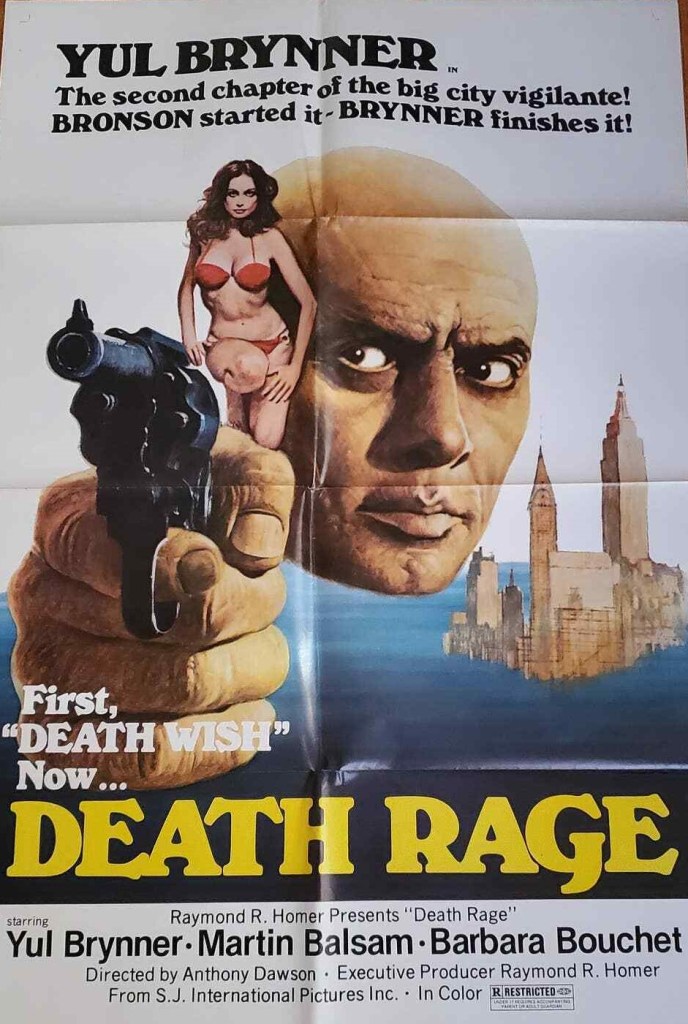
Despite the movie’s less-than-stellar U.S. box office Homer, now considered a fully-fledged producer, announced a slate of eight pictures. Sharpies was set to star Stella Stevens (The Poseidon Adventure, 1972) and Camilla Sparv (Downhill Racer, 1969). The Inheritance was headlined by Anthony Quinn (Guns for San Sebastian, 1968), Shadow Killer by Yul Brynner (Westworld, 1973), For the Love of Anna by British actress Lynne Frederick (Phase IV, 1974), The Naked Sun by Roger Moore (Live and Let Die, 1973), Queen of Diamonds by French star Olga-Georges Picot (Day of the Jackal, 1973) and The Great Day by Sophia Loren (Man of La Mancha, 1972). Compared to The Swiss Conspiracy, these movies had stars with considerable marquee value.

But the wheels came off the nascent production efforts of Homer and Silverstein when they were sued by investors for $45 million. Turned out their productions were in large part funded by a group of mid-West tax shelter investors who had not quite grasped, it would appear, how risky motion picture investment could be.

By and large, the biggest recipients of investor largesse are the cast and crew, followed by the producers, with actual investors last in line to receive any monies. Even if a movie wasn’t a hit, and there were no profits to re-distribute, a producer would still, at the very least, receive a production fee and most likely cream other monies off the top, accommodation, entertainment, transport and the like.

While tax shelter investors were looking to minimize taxes or avoid paying them altogether, they did not expect to see their cash just disappear. One of the big problems for a movie producer was that it was virtually impossible to bury results in the accounts. Box office was too transparent for that. Simply by following the weekly box office reports in Variety or Screen International in Britain you could determine a picture’s performance.

What was soon obvious to the investors was not just that the likes of The Swiss Conspiracy had done poorly, but that some of the other pictures appeared not to have been even released – or made (The Naked Sun, The Great Day, Sharpies). And that attempts to secure releases were limited by the lack of trade showings (only one in New York, for example), those being the most direct way, screening the picture to potential buyers, to secure bookings. The result of that being that none of the slate received any New York bookings.

Variety commented: “Such U.S. funded films seem to disappear almost completely here after appearing initially in the production charts.”

And eventually the sad tale that did emerge was how easily investors were duped by the thought of instant riches and just how tricky it was, even in a product-starved business, for movies produced by unknowns to gain any traction, and that names (emblazoned across full-page advertisements in Variety’s bumper Cannes editions, for example) that seemed to scream box office potential would struggle to deliver without distribution.

Turned out Raymond Homer did have a strategy, or he evolved one, though not one that would have enticed initial investors. Homer stated that he expected his main source of revenue to come from outright European sales and television and cable in the U.S. In theory, this was a sensible approach. Sell a picture outright country-by-country and you avoided the further expense of advertising and distribution. You could reap a reward without further risk and even if those returns were relatively small the cumulative effect might be profit. Joseph E. Levine would become the poster boy for such an approach – his A Bridge Too Far (1977) was in profit before filming began but then he had a top-line all-star-cast and, critically, received the cash in advance.

Theoretically, you could make money if you sold your picture outright country-by-country but only if you had box office figures somewhere to justify the amount you were asking.  Homer estimated that his movies had to gross $3 million in the U.S. just to break even and that seemed unlikely so he planned to sell them off to television and cable. But again, sums handed over by small-screen buyers depended also on box office.

The producers encountered myriad problems. Sharpies was not completed due to lack of funds. The Inheritance, for which Dominique Sanda had been named Best Actress at Cannes, found an Italian distributor. After losing 18 minutes for U.S. release and with the addition of a new prolog, it was handled in the U.S. by S.J. International and of all the films seems to have achieved the widest release.

Queen of Diamonds, also directed by Homer, was acquired for U.S. release by Peppercorn-Wormser Inc and while receiving some European exposure was actually made with television in mind as a six-part series. Shadow Killer, renamed Blood Rage, received a very limited released – just 200 prints – in the U.S. in 1978. For the Love of Anna was reshot and released in the U.S. as Until  Tomorrow in 1977 and acquired for Japanese release.

None of Silverstein’s planned productions saw the light of day. Homer produced one more picture, Mister Deathman (1983) starring David Broadnax and Stella Stevens, which may have been a re-edited and re-shot version of Sharpies.

On the other hand, the financial thriller became a sub-genre and tax shelters became a major source of funding for movies.

SOURCES: “Silverstein Bows As Conspiracy Producer,” Variety, April 30, 1975, p27; “Swiss Conspiracy Begins Shooting,” Variety, May 28, 1975, p33; “Maurice Silverstein To Produce 2nd film,” Variety, June 25, 1975, p37; “Warner Bros,” Box Office, October 6, 1975, pMC2; “Leider’s O’Seas Dozen for Warners,” Variety, October 10, 1975, p3; “Swiss Conspiracy Rights Acquired,” Box Office, February 7, 1977, p9; “Doctoring For Pics for U.S. Public,” Variety, May 17, 1978, p9; “Raymond Homer Durham Co. Schedules 8 Features,” Box Office, May 30, 1977, p5; “Swiss Conspiracy Bows in Denver,” Box Office, July 4, 1978, p8; “9 Tax Shelter Pix Face Legal Autopsy,” Variety, September 17, 1080, p5; Box office figures for The Swiss Conspiracy drawn from Screen International May 29, 1976-June 26, 1976 and from Variety in various issues August-December 1978.

The Swiss Conspiracy (1976) ***

One of those thrillers that only makes sense at the end. Lazy critics, too annoyed to wait or not able to work it out themselves, take out their bafflement on the picture. Or they carp at what they see as overmuch tourist influence instead of admiring the clever use made of Switzerland’s scenic attractions, the twisty cobbled streets, corkscrew highways teetering over ravines, and the apparatus of skiing – the chug-chug trains and lifts.  

Attractive too for the cast. You might put me down as overly fond of leading lady Senta Berger (Bang! Bang! You’re Dead! / Our Man in Marrakesh, 1966) but I’m equally appreciative of the casual charm and realistic qualities brought to the screen by the underrated David Janssen (The Warning Shot, 1967). And that’s before we come to Elke Sommer (The Prize, 1963) and veteran Hollywood star Ray Milland (Hostile Witness, 1969), not to mention character actors John Saxon (The Appaloosa / Southwest to Sonora, 1966) and John Ireland (Faces in the Dark, 1961).

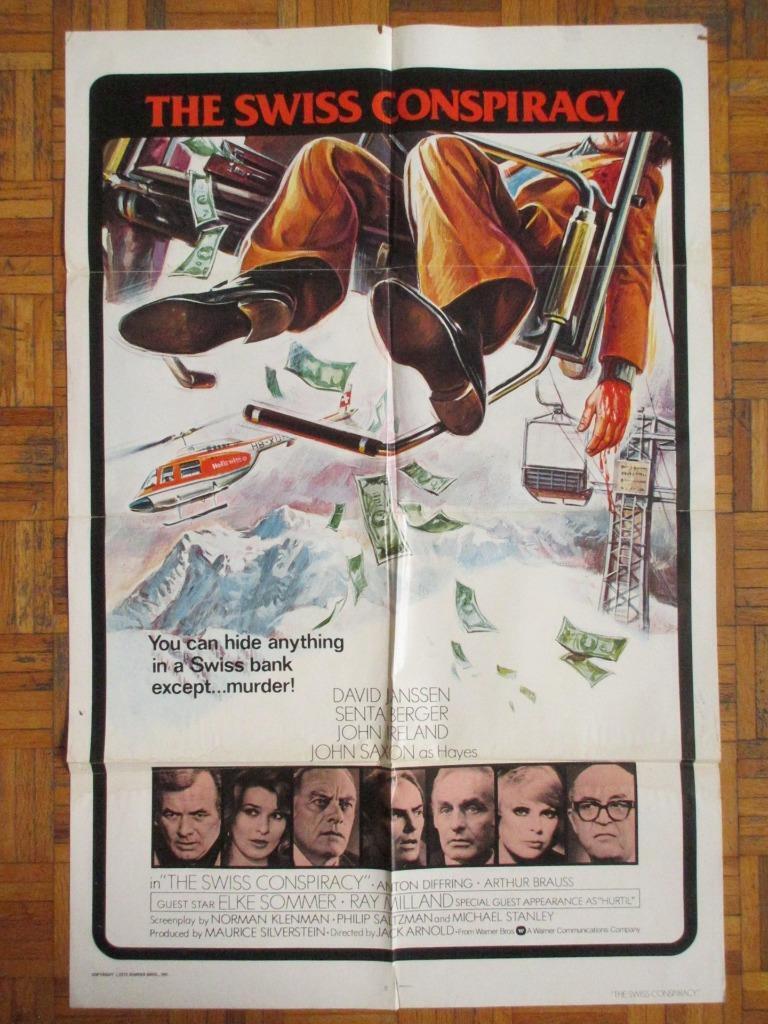
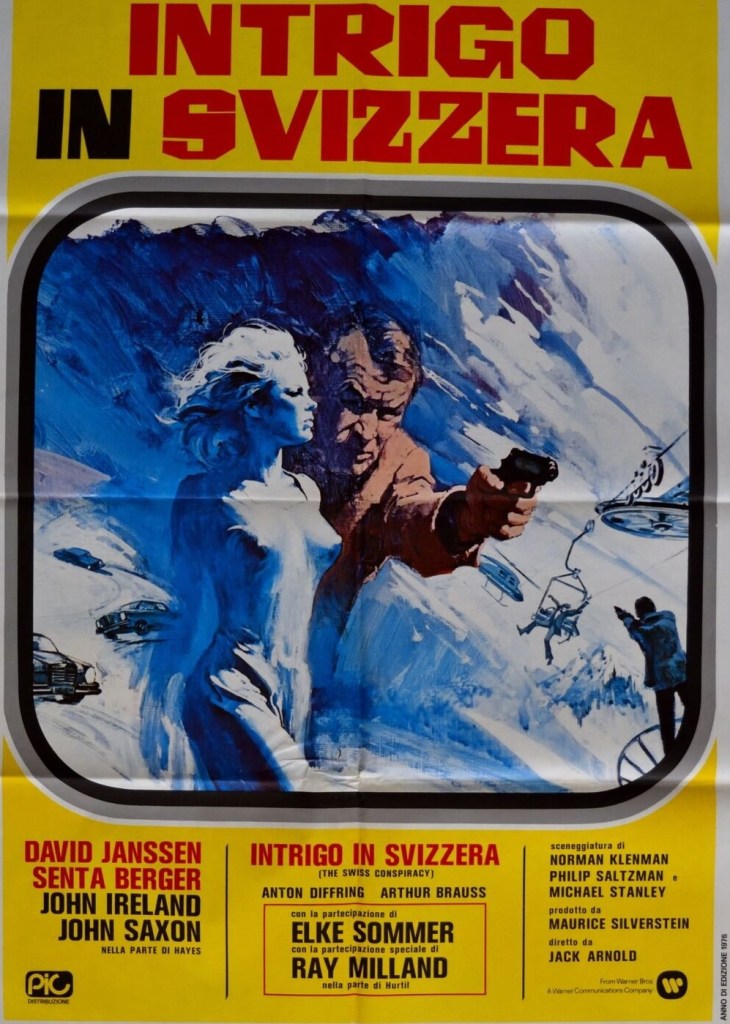
Poster designer gives himself a bit of leeway here, suggesting a lass is going to be striding around the Alps in such clingy clothing.

Former U.S. Treasury Agent David Christopher (David Janssen) is called in by Swiss bank owner Johann Hurtil (Ray Milland) to investigate a threat to expose the clients hiding behind the country’s infamous secret numbered accounts. Five clients, in particular, have been targeted including the glamorous Denise Abbott (Senta Berger), whom David first encounters in what would in other circumstances be deemed a clever meet-cute with the woman getting the upper hand.

One client is already dead, murdered in the opening sequence, as a warning. Of the others, Robert Hayes (John Saxon) is a mobster depositing illicit gains for money-laundering purposes, Dwight McGowan (John Ireland) a shady businessman on his last legs, while Kosta (Curt Lowans) equally operates in the shadows. And all is not well with the bank deputy Franz Benninger (Anton Diffring), involved in an affair with another client, Rita Jensen (Elke Sommer). On top of that, Swiss cops are on the trail of Hayes and hit men are tailing Christopher.

Christopher quickly surmises that the victims have been targeted for their undercover dealings, even the uber-glam Denise is blackmailing a former lover. But Hurtil, fearing a public and media scandal, and for whom the gangster’s demands are a mere drop in the ocean compared to the bank’s overall wealth, decides to meet their terms, which is payment of 15 million Swiss francs (equating to several million U.S. dollars, I guess) in uncut diamonds.

But before that we have a punch-up and shoot-out in a parking garage, a chase on foot on those famous narrow cobbled twisty streets with a speeding car giving the thugs unfair advantage, a race of seduction a la On Her Majesty’s Secret Service (1970) along those aforementioned treacherous mountainous roads, a literal cliffhanger in the vein of The Italian Job (1969), and one of those luscious romances beloved of the upmarket thriller (think The Thomas Crown Affair, 1968).  

While Christopher is painstakingly putting together the clues and keeping the suspicious Swiss police off his back and avoiding being killed, there’s a deadline to meet, the usual race against time, while the audience is having to fend off a surprising number of red herrings.

It’s not only glamorous, it’s short, and there’s more than enough going on, characters played by interesting actors, to keep the viewer involved. And I defy you to guess the ending. So, enough thrills, sufficient mystery, great scenery, and a female contingent (even Christopher’s secretary fits that category) with brains to match their sexiness who appear to have the upper hand in relationships with the opposite sex.

This is David Janssen at his best, that outward diffidence concealing a harder inner core, exuding a guy-next-door appeal that was never properly utilised by Hollywood, who preferred him just to reveal character by squinting. The scene where he takes in the extent of the luxury of Denise’s hotel penthouse is one of those that, while not knocking on Oscar’s door, demands true acting skills. He’s never in your face, and the camera loves him for it.

Of course, Senta Berger, what can you say, another under-rated actress never given her due in Hollywood, here finds a plum role that allows her to switch from confidence to vulnerability at the drop of a hat. John Saxon and John Ireland, as ever, are value for money. And Ray Milland keeps the show on the road.

A modern audience would be more at home with the multiplicity of plot angles and probably worked out in their own heads all that couldn’t find a place on screen, ensuring that what seemed like plot holes were anything but.

Jack Arnold (The Creature from the Black Lagoon, 1953) handles the scheming and dealing with ease. Norman Klenman (Ivy League Killers, 1959), and two television writers in their movie debuts, Michael Stanley and Philip Saltzman, wove the intricate screenplay.

The Mark (1961) ****

Despite an exceptional and Oscar-nominated performance by Stuart Whitman (Rio Conchos, 1964) , I suspect modern audiences will take less kindly to this tale of convicted child molester trying to come to terms with his feelings. At least it’s considerably more honest than the creepier May December (2023) where the criminal steadfastly contended her innocence.

And I suspect, too, that Whitman’s square jaw and muscular physique got in the way of his attracting the parts for which the depths of vulnerability he was able to exhibit were most suited. He came to this straight after an action role, as the charming bad-good-guy of The Commancheros (1961) where, as far as audiences were concerned, what he did with his fists was more important that what he expressed through his eyes.

There’s a bit of a grey area that lends the convicted Jim Fuller (Stuart Whitman) the benefit of the doubt. He was found guilty of intent not of actual molestation and a goodly part of the picture is spend on examining why he went down that route, either in a group exercise in prison or one-on-one with a psychiatrist, chain-smoking Irishman Dr McNally (Rod Steiger) in both instances.

I’m not sure how the psychiatric evidence adds up, but basically, with a dominant mother who bullied his father, he grew up frightened of women, despite being attracted and attractive to them, and sought out someone with whom he felt more comfortable, less challenging, leading him to spend too much time watching children at play and eventually buying a young girl an ice cream and going out on walks with her.

It would have been too much for audiences of the time – as it even was with May December – to go into the technicalities of what he intended to do so we are left to trust his own word that he never intended to instigate anything sexual, though why kidnap a child in the first place. The second element that would fill modern audiences with alarm is that though he manages to begin a sexual relationship with a woman of his own age, secretary Ruth Leighton (Maria Schell), she is a widow with a young daughter. Most people would instantly come to the conclusion he was using mother to groom daughter.

However, the film takes the tack that he’s using the daughter to explore a normal relationship with a child, the joy of having a daughter, and the delight and happiness that a young person can bring into a dour repressed life. Dr McNally keeps on banging on that Fuller is “cured” but it’s a very uneasy watch trying to work out if he is or not.

In the event, the first time he’s alone with the girl he is photographed by a local journalist who sticks the photo on the front page, destroying the life Fuller has carefully rebuilt. He has found employment as an accountant with a sympathetic business owner Andrew Clive (Donald Wolfit), fitting in so well he is promoted, though at odds with another senior employee Roy Milne (Paul Rogers). He is chucked out of his accommodation, loses his job and although Ruth initially stands by him the minute she sees Fuller with her daughter her instincts are hostile.

There would be no point in an actor trying to gain sympathy for such an unsympathetic character by playing to the gallery with bouts of temper or floods of self-pitying tears, but even so, the vulnerable husk Whitman presents, his struggles with his self-contempt, his understanding of the feelings he must invoke, his determination to live as quietly as possible, almost in that determined English manner of never being heard nor seen, is what makes this film. Interestingly, he replaced Richard Burton, who pulled out at the last minute (as did Jean Simmons) and you could easily imagine with those trademark quick intakes of breath and deep growls how that actor would have played the part.

Whitman doesn’t go near any grandstanding. It’s just a heartfelt performance of a man who’s lost his way and knows he might never find his way back, haunted by his past, unable to trust himself, unable to believe that he is, in fact, cured. Probably, the biggest issue is that the movie comes down on his side, especially when he becomes one of the usual suspects in another crime involving children, though he did not commit that, and tries to suggest that a child molester will find salvation through living with a mother and child in the normal fashion. As I said, this is not my subject of expertise, thankfully, and that may be well what’s advocated rather than staying away from children altogether.

While the approach might be considered a shade naïve at the same time it does examine issues surrounding reintegration and avoids the obvious trap of attempting some kind of character redemption.

Apart from Whitman, there are good performances all round. Maria Schell, whose career within a decade would go from roadshow blockbuster Cimarron (1960) to WIP epic 99 Women (1969), subsumes her normal more glamorous persona to play a believable working mother. With his chain-smoking, Rod Steiger (The Pawnbroker, 1964) is allowed to fidget to his heart’s content but even such obvious scene-stealing only places more emphasis on the quieter Whitman. Donald Wolfit (Life at the Top, 1965), too, reins in his usual bluster.

Guy Green (The Magus, 1968) directed from a screenplay by Sidney Buchman (The Group, 1966) and Stanley Mann (The Collector, 1965) from the bestseller by Charles E. Israel.

In this instance, given the Oscar nom, Stuart Whitman could hardly be considered under-rated but over the years seems to have disappeared from sight.

Worth a look to see what he could do with the right material.

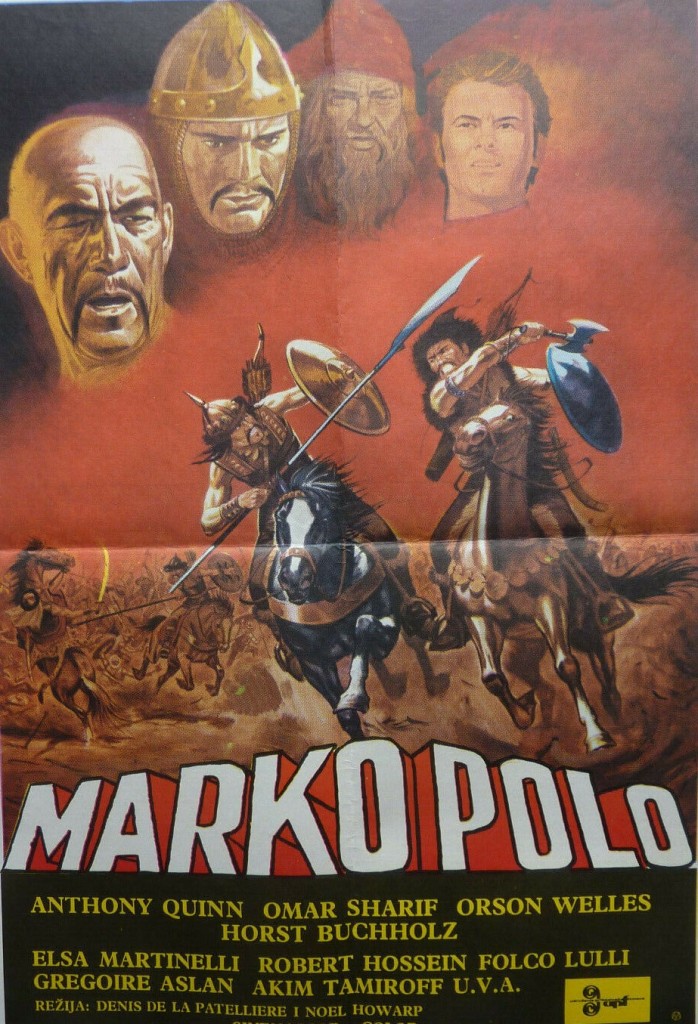
Marco the Magnificent (1965) **

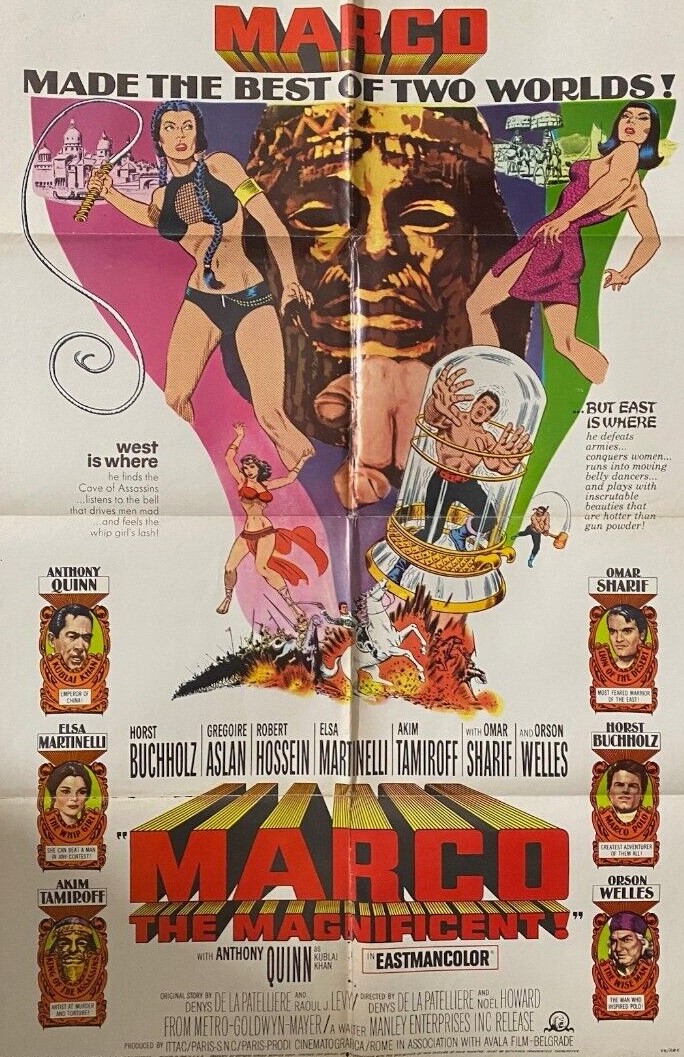
Small wonder this flopped even with the requisite all-star cast of Omar Sharif (Doctor Zhivago, 1965), Anthony Quinn (Zorba the Greek, 1964), Orson Welles (Austerlitz, 1960),  Horst Buchholz (Nine Hours to Rama, 1963) and Elsa Martinelli (Hatari! 1962). Oddly enough, Quinn comes close to saving it. Although initially laughable, presented as a cross between Yul Brynner’s long-lost brother and Ming the Merciless, he tones down the trademark rasp and growl to deliver a powerful performance.

Of course, we also have to take the word of Marco Polos (Horst Buchholz) that he had all these adventures and that he did encounter The Old Man of the Mountains (Akim Tamiroff) and The Lady with the Whip (Elsa Martinelli). The former wore a mask of gold and if you ever saw his face that meant you were in for the chop. And he had a nice line in sonic torture. The latter chooses love above betrayal.

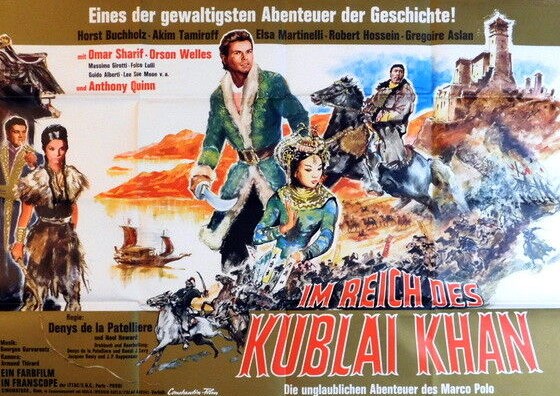
The name of Marco Polo either meant so little to German audiences or the title change was due to the producers hoping to capitalize on the success of “Genghis Khan.”

Love – or sex I guess – is a consistent theme. Marco is chosen for this adventure – whose main aim is to get a message to Mongol overlord Kublai Khan, now the ruler of China, that Italy, the dominant western power at the time, wants peace – in part because he is so handsome. He has no other pedigree that I can see. At the age of 20, he’s best described as an idler. But his father Nicolo (Massimo Girotto) is a renowned trader and has ventured along the Silk road to Samarkand.

But, would you believe it, following that old western genre trope where there’s always someone wanting to sabotage relations between Native Americans and soldiers, the idea of peace doesn’t sit well with everyone. Spies report on Marco’s every move and attempt to stop him completing his mission and when he reaches China discovers that another Mongol warlord Prince Nayam (Robert Hossein) prefers the traditional method of conquest, with the raping and pillaging that goes with it, rather than growing the economy through peaceful means.

Just as well Marco is so good-looking because whenever he is in a tight spot he is rescued by a beautiful woman, including the aforementioned Lady with the Whip, and, would you believe it, Princess Gogatine (Lynne Sue Moon), who has been chosen as a potential wife for Kublai Khan (Anthony Quinn). Multiple romance is the name of the game here – Arab chieftain Emir Alaou (Omar Sharif) has twenty-six wives, one of whom has the temerity to complain at his expanding harem.

Mostly, it’s a travelog – with a bucket of travel cliches thrown in such as Russian dancing – punctuated by occasional peril. But beyond looking handsome and putting his seductive powers to the test, there’s not much else for Marco to do.

The screenplay is so limited and haphazard you get the impression it must have been heavily truncated, that there was a three-hour roadshow covering the ground in a more sensible manner, but that appears not to have been the case. Producer Raoul Levy (who wrote and produced And God Created Woman, 1956, and wrote, produced and directed The Defector, 1966) ) spent so much assembling the cast he scrimped on a workable screenplay and was so intent on ramming it with oddly-named characters (Old Man of the Mountains and Lady with the Whip) that he took his eye off the narrative ball.

The final section with Kublai Khan trying to integrate through his own marriage the conquering Mongols and the conquered Chinese and dispensing with war in favor of peace makes more sense but by then you are so exhausted by the multiplicity of star names contributing nothing and the meandering plot that you have just about given up.

And it wasn’t as if Levy didn’t have time to get a screenplay in place. He’d been working on this since 1962 when an earlier version starring Alain Delon (Once a Thief, 1965) was abandoned when finance ran out. One of the most expensive French movies ever made, and extensively funded by Levy, it proved such a flop, it wiped him out financially and contributed to his suicide.

The inconsistency may have been caused by having three directors – Levy, Denys de la Patellier (Caroline Cherie, 1968)  and Noel Howard (D’Ou Viens-Tu, Johnny, 1963).

All-star cast wasted, promise unfulfilled.

https://m.media-amazon.com/images/I/6161DUBcazL._AC_SY445_.jpg

Discover WordPress

A daily selection of the best content published on WordPress, collected for you by humans who love to read.

The Atavist Magazine

by Brian Hannan

WordPress.com News

The latest news on WordPress.com and the WordPress community.