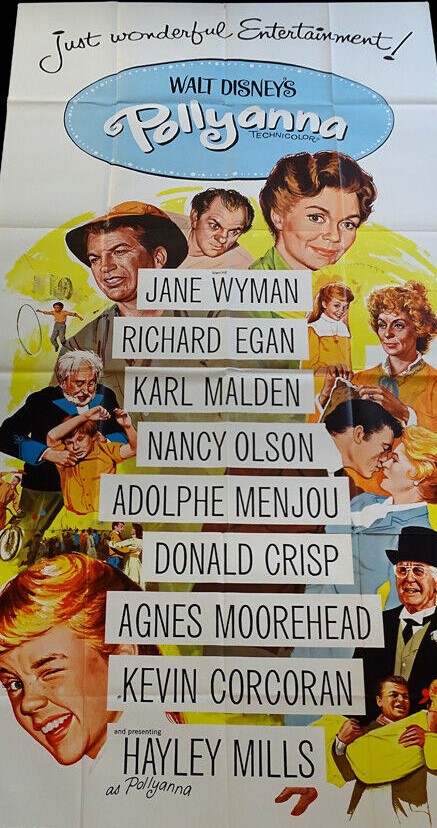
Walt Disney discarded much of Eleanor H. Porter’s original best seller not to mention a great deal of the tear-jerking section that played to superstar Mary Pickford’s strengths in the silent 1920 adaptation. Pickford was in her late 20s at the time and a movie mogul to boot (having launched United Artists) so had a depth of emotion Hayley Mills (aged 13 during filming) could not hope to match.
The screenplay, by David Swift (Love Is A Ball, 1963) is an object lesson in how to retain the essential element of a story – a positive-thinking orphan alleviates the gloom in an embittered town – while providing enough worthwhile for adult audiences. Disney assembled an awesome cast with three Oscar-winners – Jane Wyman (Best Actress, Johnny Belinda, 1948), Karl Malden (Best Supporting Actor, A Streetcar Named Desire, 1952) and Donald Crisp (Best Supporting Actor, How Green Was My Valley, 1942) – plus four-time nominee Agnes Moorehead and Adolph Menjou.
Despite no Oscar recognition Nancy Olsen had been leading lady to the likes of Bing Crosby (Mr Music, 1950), John Wayne (Big Jim McLain, 1952) and William Holden (Force of Arms, 1951). In effect, parents would be very familiar with the stellar supporting cast.
Orphan Pollyanna (Hayley Mills) – British accent explained by parents being missionaries – , majoring on optimism, tries to enliven a town torn apart by dissent and petty feuds and in thrall to her intimidating aunt and fading spinster Polly Harrington (Jane Wyman). While she tries to see the good in everyone, the rest of the population is forever pointing out the bad. The main source of contention is a derelict orphanage. The townspeople want it demolished and a new one erected. Polly Harrington wishes it preserved in its dilapidated state as a monument to her father who had built it. It’s the kind of attitude someone would take who was just plain determined to get their own way. Pollyanna tries to sway opinion against her aunt, resulting in no end of trouble.
Various sub-plots include stifled romance, Harrington has driven away boyfriend Dr Chilton (Richard Egan), fire-and-brimstone preacher Rev Ford (Karl Malden),another orphan Jimmy (Kevin Corcoran), the reclusive Mr Prendergast (Adolphe Menjou) coaxed back into communal life, and the mayor (Donald Crisp) trying to repair the rifts.
Unusually for a kid’s picture, Wyman, Malden and Crisp each are given a reflective moment to prove they are doing more than taking an easy salary cheque, bearing some of the weight of the narrative, Malden especially allocated more screen time than would be normal in a movie aimed at kids.
I have never read the book nor (to my shame) seen the Pickford version, so I came to the movie with low expectations, anticipating a lazy, maudlin effort. So I was quite surprised to discover how much I enjoyed it and was shocked by the final piece of action which turned the movie on its head. Sure, it relies on a feelgood drive but there is some decent stuff here – Pollyanna’s determination to find goodness in every event and every person takes her into some strange avenues, the rainbow playing on the walls, the “good parts” of the Bible – that these days makes for an entertaining matinee.
At least in Hollywood terms (Mills made her debut the year before in the British Tiger Bay, 1959) Pollyanna falls into the a-star-is-born category. The actress acquits herself well, with her expressive face, while hearing the emotion she packs into the word “gorgeous” is word admission alone. Being older than the usual child star, she was one of the few who made the transition into adult roles. Karl Malden is the pick of the supporting cast but he is given a good run for his money by Jane Wyman. Disney’s trick of peppering a children’s film with actors well-known to the adult audiences was one he would use again.
Swift, in dual capacity as director (and making his movie debut) played down the saccharine nature, making the main character less just automatically bouncing with happiness and more striving to make the best of difficult situations.
One of the joys of writing this blog has been the opportunity to reassess stars that I’ve had a tendency to under-rate. You’ll maybe forgive me for putting Doris Day in that category especially as I’ve had ample reasons now to take a different, Please Don’t Eat the Daisies (1960) just one of the many instances where the actress has confounded my expectations.
Until I started on the Blog I’d never gone out of my way to watch a Doris Day picture with the exception of musical Calamity Jane (1953) when it became a camp classic as well as Hitchcock’s The Man Who Knew Too Much (1956) and films where she happened to be co-starring with Cary Grant.
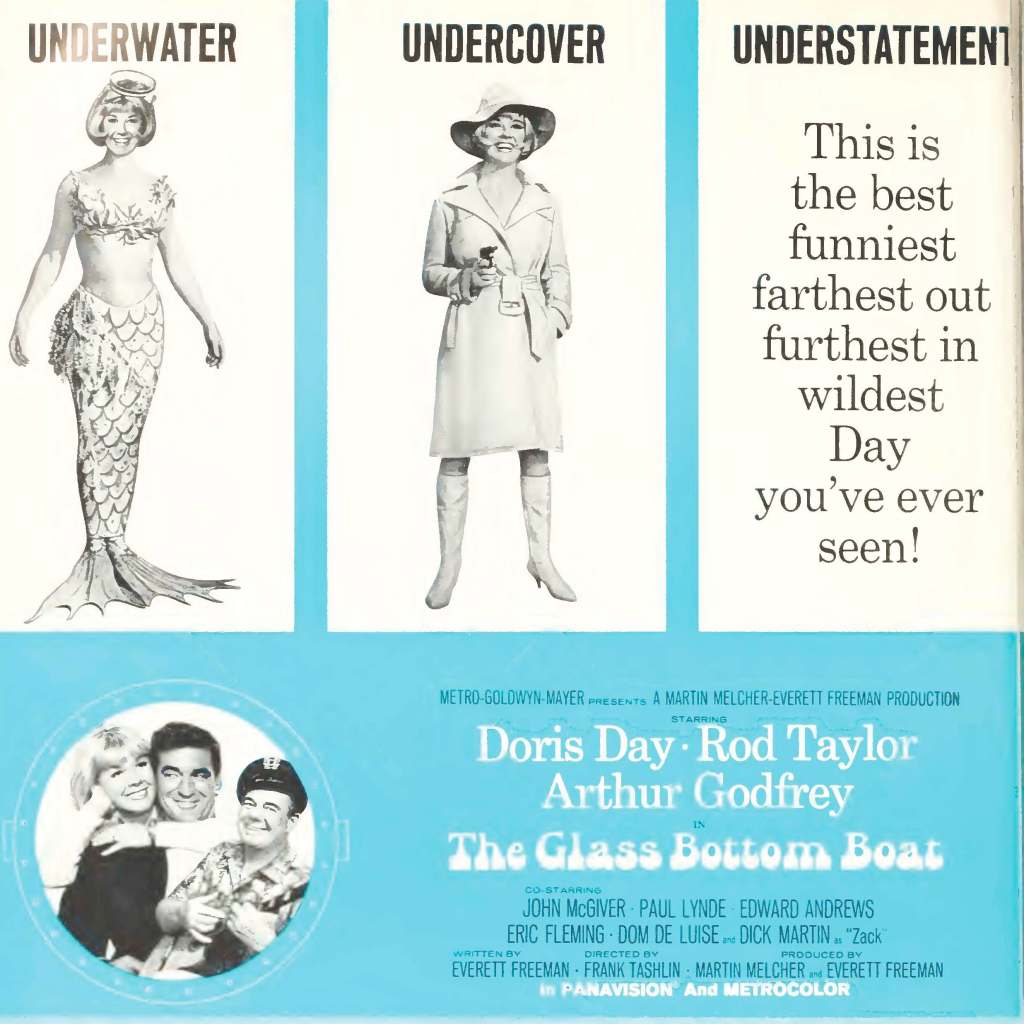
So I came to The Glass Bottom Boat with low expectations, especially as this was towards the end of her two-decades career and her co-star was Rod Taylor, a different level of star to Grant and Rock Hudson. By now, she had dropped the musical and dramatic string to her bow and concentrated on churning out romantic comedies and also been supplanted by Julie Andrews as Hollywood’s favorite cute star.
But it was in part on the evidence here that I changed my tune regarding Day. This is entertaining enough. And she sings – the theme song, one other and a riff on one of her most famous tunes “Que Sera Sera.” Unless there’s a symbolism I’ve missed, the title is misleading since the boat only appears in the opening section to perform the obligatory meet-cute with Taylor as a fishermen hooking Day’s mermaid costume.
The plot is on the preposterous side. The occasionally hapless Jennifer (Doris Day) is suspected as a spy after infiltrating Bruce Templeton’s (Rod Taylor) aerospace research operation. It’s partly a James Bond spoof – when her dog is called Vladimir you can see where the movie is headed – with all sorts of crazy gadgets. But mostly the plot serves to illustrate Day’s substantial gifts as a comedienne. For an actress at the top of her game, she is never worried about looking foolish.
And that’s part of her appeal. She may look sophisticated even when, as here, playing an ordinary public relations girl, but turns clumsy and uncoordinated at the first scent of comedic opportunity. There’s some decent slapstick and pratfalls and some pretty good visual gags especially the one involving a soda water siphon. A chase scene is particularly inventive and there’s a runaway boat that pays dividends. But there are a couple of effective dramatic moments too, emotional beats, when the romance untangles.
She’s in safe hands, director Frank Tashlin responsible for Son of Paleface (1952) and The Girl Can’t Help It (1956). I also felt Rod Taylor (Dark of the Sun, 1968) was both under-rated and under-used, never given much to do onscreen except stick out a chiseled jaw and turn on the charm. Although he had been Day’s sparring partner in her previous picture Do Not Disturb (1965) he’s not in the Cary Grant-Rock Hudson league.
It’s also worth remembering that the actress had her own production company, Arwin, which put together over a dozen of her pictures, including this one, so she would be playing to her strengths rather than those of her co-star. On the bonus side, watch out for a blink-and-you-miss-it cameo by Robert Vaughn (The Man from Uncle), and a featured role by Dom DeLuise as a bumbling spy.
Everett Freeman (The Maltese Bippy, 1969) wrote the screeplay.
Audrey Hepburn and Cary Grant (later a famous duo in Charade, 1963) were the first names associated with Bonjour Tristesse. The former was mooted soon after the movie rights were sold to French producer Ray Ventura. She remained in the frame after Otto Preminger took over in 1955, when the project was intended for MGM rather than Columbia, at which point Grant was being targeted.
But, unfortunately, this was not being proposed as a dream team. Vittorio De Sica was being lined up to play the father in the Hepburn version that was to be directed by Jean Negulesco.
(You can see why uncovering this information prompted me to have a second shot at a “Behind the Scenes” for this picture. When I did the original article, I didn’t have access to my usual online sources. But after a query from a reader over the success/failure of the movie, and with internet access restored, I began to check out its box office and, in so doing, found a treasure trove of new data.)
Even after Preminger dumped Hepburn – and Maggie MacNamara, star of The Moon Is Blue (1953) for that matter – as being too old, at this point Preminger was not looking in the direction of Jean Seberg either. Instead, he was going down a more traditional route to find an actress to play disturbed teenager Cecile. He embarked on a publicity-driven new star hunt. After in 1956 holding a “talent search for femme lead” in France, the director selected 17-year-old Gisele Franchomme for the role.
But she never made the grade either and was quickly jettisoned for Francoise Arnoul (French Cancan, 1955), aged 25 at the time, with another Frenchwoman, Michele Morgan (Lost Command, 1966), as the older woman who snares Cecile’s father, still to be played by Grant.
It’s hard to visualize now just what a hot number the source material was. The novel by Francoise Sagan had been a massive U.S. bestseller. By September 1955 it was in its ninth hardback printing, shifting 110,000 copies, and in 1956 became Dell’s top-selling paperback of the year. The movie rights had originally sold for just $3,000 to Ventura before Preminger ponied up $100,000 (or $150,000 depending on who you believe and in either case still the highest price ever paid for a French novel) and set the movie up at MGM.
So that studio was determined to strike while the novel was hot, taking advantage of the sensational sales figures achieved by Dell. Preminger had different plans. He had a double whammy in mind, planning to pre-empt the movie with a play written by S.N. Berhman (on loan-out from MGM who took first stab at the screenplay) initially scheduled to hit Broadway more than a year before the film appeared.
Preminger had worked the play-into-movie magic before, directing The Moon Is Blue on Broadway in 1951 two years prior to his controversial movie version. In the end Preminger concluded there was “insufficient time” to put a play into production before he was due to begin shooting.
Although it had originally gone along with the idea of the play to the extent of funding the stage production, MGM grew increasingly anxious about the delay in moving onto the picture-making part of the deal. Originally, it was planned as Preminger’s follow-up to The Man with the Golden Arm (1955) which would have seen it released either in later 1956 or early 1957.
The notion of turning the book into a play first probably caused the parting of the ways between MGM and Preminger, the studio unable to pin him down to a start date that would take advantage of phenomenal public interest. He was a hard guy to pin down, already commissioning Alec Coppel to write the screenplay of The Wheel, his proposed biopic of Gandhi, and he also had an ongoing deal with United Artists. So when MGM pulled out, the director turned to Columbia, planning Bonjour Tristesse as the first film in a multi-picture non-exclusive deal.
You could see why MGM were so anxious to get going. The studio was leading the way in a new trend, “the newest film cycle is controversy,” trumpeted Variety in a front-page splash in 1956, tagging Bonjour Tristesse “an unpleasant tale.”
But there was a better reason to act fast rather than just to be seen as with-it. Not only was the paperback market booming, its fastest-growing sector was the movie tie-in. While the 4,500 titles appearing annually accounted for sales of around 200 million copies, publishers also printed movie tie-ins for another 200 titles.
Movie tie-ins had turned into a publishing phenomenon. Sales of Dell movie tie-in paperbacks rocketed year on year, so much so that the rise in 1959 was 23 per cent over the previous year. Ironically, Preminger’s Anatomy of a Murder (1959) has been the publisher’s top title for that year. Peyton Place had taken the top spot in both 1957 and 1958 – 4.2 million copies in print – with Bonjour Tristesse its top seller in 1956.
Typically, a movie tie-in was, in effect, a follow-up to the initial paperback. Often the tie-in print run was much higher than the initial printing. The tie-in edition for Bridge on the River Kwai, for example, topped 750,000 copies, for Sayonara it was 900,000. Don’t Go Near the Water sold one million in a month. The average movie tie-in print run for Bantam was 200,000-350,000 copies; for Dell 250,000-300,000; for Signet 300,000; Popular Library 250,000-300,000; and Pocket 225,000-375,000.
Paperbacks accessed a new market. Apart from traditional bookshops, they were available in drugstores, newsstands, supermarkets, impulse buys when the reader was purchasing something else. But they provided for studios a powerful marketing tool. Dell advertised that its paperback “bestsellers were movie pre-sellers” and for good reason. Front covers adorned with stills from a forthcoming movie offered studios fresh promotional opportunity. When a big picture was due you could hardly walk down a street without your attention being called to a tie-in.
Paperback sales were also viewed as a providing a strong indication of box office potential. Based on its sales, it was predicted that Bonjour Tristesse would do as well as Old Yeller and Don’t Go Near the Water, which turned into, respectively, the 10th and 14th biggest films of the year. Columbia sales chief Rube Jackter was so confident of success for Bonjour Tristesse that he departed from convention, taking a groundbreaking approach, personally undertaking a nationwide tour to sell the project to his local sales teams. Perhaps he didn’t want to be beaten to the punch by A Certain Smile (1958), Sagan’s sophomore novel, rights selling for $150,000 and eight per cent of the gross.
Newcomer Jean Seberg was in the vanguard of a new talent hunt. Undaunted by his experience with Seberg in Saint Joan and the critical pummelling she had personally taken, Preminger defended his protégé. “I think she has talent. If I’m wrong, I’ll pay for it. I don’t say I’m infallible, but neither are the critics.”
Preminger backed new talent, taking a chance on Maggie MacNamara in The Moon Is Blue, Lee Remick in Anatomy of a Murder and, later, Tom Tryon in The Cardinal (1963) and Carol Lynley in Bunny Lake Is Missing (1965). In the late 1950s, Twentieth Century Fox was particularly active in developing younger – and cheaper – stars. But other studios such as Universal and Paramount (who had picked up Audrey Hepburn in a talent hunt in the earlier part of the decade) were also keen.
Lynley and Remick were among those being tipped for the top in 1959 in addition to Rod Taylor (Dark of the Sun, 1968), Jill St John (Tony Rome, 1967), Stuart Whitman (Rio Conchos, 1964), Troy Donohue (Rome Adventure, 1962), Bradford Dillman (The Bridge at Remagen, 1969), Sandra Dee (A Man Could Get Killed, 1966), John Gavin (Psycho, 1960) and Cliff Robertson (Masquerade, 1965).
Preminger’s cinematographer George Perinal (who had taken over Saint Joan, 1957, at short notice) hankered after using Technirama for the picture until the director pointed out “the difficulties of using such a large camera in the tiny interiors of the locations.” These included an art gallery in Montparnasse round the corner from Notre Dame where Preminger negotiated a one-day rental (and the purchase of a Picasso) from the Japanese owner. Following Saint Joan, Perinal was so taken with the experience of working with Preminger that he had turned down several other offers in order to keep himself free for a possible shot at Bonjour Tristesse.
“A large part of my job,” noted Perinal, “ is keeping out of the way once I had lit the set as Preminger wanted,” leaving the physical shooting to the cameraman. He had “great admiration for Preminger’s methods” since “unlike most directors he doesn’t protect himself by having one or two extra cameras covering the scene from different angle. He knows the angle he is after, and he gets it.” If the rushes proved the scene didn’t go as planned, he simply shot it all over again.
The scene in Maxim’s was filmed for a day and a night, extras being rehearsed in the morning. Most of the takes concentrated on chanteuse Juliette Greco. Francoise Sagan was tapped to write the lyrics for the movie’s theme song, but that didn;t work out instead it’s credited to Jacques Datin.
It’s worth remembering the ease with which top stars travelled. Deborah Kerr had booked passage on the Queen Mary sailing from New York to Cherbourg in the north of France for herself and two children, Melanie and Francesca, and after docking took a leisurely drive down to St Tropez.
As well as paperbacks offering marketing opportunities, the theme song to Bonjour Tristesse was also a promotional tool, Gogi Grant released it as a single, Les Baxter as an instrumental and Janet Blair sang it on British television top show Sunday Night at the London Palladium while the soundtrack album was a premier release for RCA Victor, which backed it up with an advertising campaign.
Released in February 1958 in the U.S., Bonjour Tristesse was one of 35 pictures distributed by Columbia over a six-month period. Thanks to the book sales and the cast, expectations were high. David Niven was riding a commercial (blockbuster Around the World in 80 Days, 1956, still in cinemas) and critical wave (Separate Tables, 1958, would earn him an Oscar). Deborah Kerr remained one of the industry’s most sought-after stars, her commercial and critical standing (three Oscar nominations 1956-1958 in a row) far higher than Niven’s. She had hit box office heights in The King and I (1956) and played opposite such top male stars as William Holden (The Proud and the Profane, 1956), Cary Grant (An Affair to Remember, 1957) and Robert Mitchum (Heaven Knows Mister Allison, 1957).
Robert Coyne of exhibitor alliance Compo rated it potentially one of the year’s “big pictures” along with The Young Lions and Peyton Place. But while enjoying some reasonable results in prestigious first run theaters in hi-hat locations, Bonjour Tristesse quickly fizzled out.
Although a dud in the United States – in terms of rentals it didn’t even clear $1 million – it enjoyed greater success elsewhere, ranking fifth in Japan, 20th in the annual Italian box office race, and in the Top 50 in France, “bang-up business” in journalistic parlance. But it was banned in Ireland. However, suggestions it was a box office smash elsewhere had to be taken with a pinch of salt. It only earned $195,000 in rentals in Japan. So, it is doubtful if it ever reached profitability on initial release.
There was some respite in the critical pummeling of Seberg. Hollywood Reporter, in a favorable review, tabbed her a “delicious little eyeful” noting her style was better suited to this than Saint Joan. And despite her experience of working with the director, the actress, one year later, was reported as “hoping Otto Preminger will come through with a commitment to her” not realising he was on the stage of ducking out of her contract, explaining that there wasn’t a suitable role for her in his next three planned pictures. So that contract, too, went the way of Columbia who tested her for a supporting role in The Beach Boys, a starring vehicle for Kim Novak to be helmed by Charles Vidor.
There was some reassessment of the title post-release. When Columbia sold a batch of 60 movies to television in 1964, Bonjour Tristesse was hailed in the trade advertising campaign as the main attraction, photos of the three stars adorning a full-page advert in Variety. It was reissued in Tokyo in 1981. It was featured in a 15-picture Columbia retrospective at the Museum of Modern Art in New York in 1985.
SOURCES: “Europe,” Hollywood Reporter, August 18, 1954, p7; “Otto Preminger Acquires Bonjour Tristesse Novel,” Hollywood Reporter, April 27, 1955, p2; “Tristesse Legit Version Being Financed by MGM,” Hollywood Reporter, May 31, 1955, p1; “Preminger Gets Behrman To Script Play and Film,” Hollywood Reporter, August 5, 1955, p3; Mike Connolly, “Rambling Reporter,” Hollywood Reporter, August 24, 1955, p2; “M-G Bankrolls Tristesse Legiter,” Variety, September 7, 1955, p3; “Literati,” Variety, September 7, 1955, p69; “Preminger Sets Coppel To Script Wheel,” Hollywood Reporter, January 12, 1956, p3; Stuart Schulberg, “Europe’s Unpampered Stars,” Variety, February 15, 1956, p7; “Chatter,” Variety, February 15, 1956, p74; “Paris,” Hollywood Reporter, May 22, 1956, p20; Mike Connolly, “Rambling Reporter,” Hollywood Reporter, June 8, 1956, p2; “Chatter,” Variety, June 13, 1956, p78; “Looky – We’re Controversial,” Variety, June 26, 1956, p5; “Bonjour Tristesse,” Variety, July 25, 1956, p4; “Chatter,” Variety, August 22, 1956, p62; ”Niven and Kerr Will Star in Tristesse,” Hollywood Reporter, February 21, 1957, p2; “Broadway Ballyhoo,” Hollywood Reporter, April 19, 1957, p10; “Insufficient Time for Tristesse Stage Version,” Variety, March 28, 1956, p2; “Cameraman on the Sidelines,” American Cinematographer, August 1957, p510; “The Note-Book,” Hollywood Reporter, August 5, 1957, p7; “Broadway Ballyhoo,” Hollywood Reporter, August 13, 1957, p4; “Broadway Ballyhoo,” Hollywood Reporter, August 20, 1957, p4; “Preminger,” Variety, October 16, 1957, p75; “Jackter Hits Sticks for Bonjour Release,” Variety, December 18, 1957, p3; “Foreign TV Follow-Up,” Variety, December 18, 1957, p38; Advert, “Dell Book Best-Sellers Are Movie Pre-Sellers,” Hollywood Reporter, January 8, 1958, p5; Review, Hollywood Reporter, January 15, 1958, p3; Advert, Variety, January 22, 1958, p56; RCA Victor advert, Variety, January 29, 1958, p56; Advert, Billboard, January 27, 1958, p49; “Columbia Feeds 35 by August,” Variety, February 5, 1958, p18; “A Film ‘Still’ Big Sell on Paperback,” Variety, March 5, 1958, p7; “Irish Want New Film Censoring,” Variety, June 11, 1958, p11; “Broadway Ballyhoo,” Hollywood Reporter, July 1, 1958, p4; “Sindlinger: And Rebuffed,” Variety, July 2, 1958, p5; “Paris First Runs,” Variety, July 16, 1958, p12; “New York Sound Track,” Variety, July 30, 1958, p21; “Columbia To Test Seberg for Beach Boys Role,“ Hollywood Reporter, August 15, 1958, p1; “Yank Films Still Dominate Italy,” Variety, December 3, 1958, p12; “Top Grossers* of 1958,” Variety, Jan 7, 1959, p48; “Kwai Tops in Japan,” Variety, March 18, 1959, p24; “Nine U.S. Pix,” Variety, May 13, 1959, p12; “Hollywood Takes To Tyros,” Variety, September 2, 1959, p3; “Paperback-Film Zowie Tandem,” Variety, February 3, 1960, p5; Advert, Variety, September 9, 1964, p39; “Bull Takes Charge,” Variety, May 25, 1981, p32; “MoMa Columbia Retro Set,” Variety, January 30, 1985, p4.
* NOTE: Just to confuse things, Variety headlined its annual rentals report as “Top Grossers of 1958” but in the small print clarified that these figures related to “domestic market rentals accruing to distributors (i.e. studios) a distinguished from total theater gross.”
Sequels being all the rage – James Bond, Matt Helm, Derek Flint, The Pink Panther, The Magnificent Seven – in the 1960s it was no surprise that the success of Dr Who and the Daleks (20th top film at the British box office in 1965) suggested that a second go-round might be as profitable. As was standard, a recurring formula was the key.
In this case, Dr Who (Peter Cushing) and grand-daughter Susan (Roberta Tovey) repeated their previous roles though another grand-daughter Barbara (Jennie Linden) was replaced by a niece Louise (Jill Curzon) and hapless passenger Ian (comedian Roy Castle) was ousted in favour of hapless London cop Tom (comedian Bernard Cribbins). But returning director Gordon Flemyng (The Split, 1968) upped the ante. Instead of waiting ages for the dreaded mechanical monsters with their electronic catchphrase (“Exterminate”) to appear, they turn up virtually in the first reel.
As if to emphasise the versatility of the Tardis, this time instead of space travel it’s time travel, Dr Who turning up in a blitzed London virtually two centuries ahead only to discover his nemesis rules the planet. It being set in a familiar locale, nobody is loaded down with information dumps, a tedious feature of the first picture, and it doesn’t take as long to get going, and our heroes, in various configurations, and while befriending the rebels – leader Wyler (Andrew Keir) and David (Ray Brooks) – endure a cycle of trap and escape while the good doctor tries to work out what brought the daleks to his home planet.
I’m giving this the benefit of the doubt and suggesting that the first appearance of the daleks is a homage to Dr No (1962) although one of the creatures emerging from the River Thames is hardly a patch in the sexy-entrance stakes as a bikini-clad Ursula Andress. Amidst all the mayhem, there are a couple of standout sequences, the best of which is a comedy skit involving Tom, disguised as a leather-clad member of the brainwashed automatons. This reminded me of Bob Hoskins in the first Super Mario Bros (1993 vintage) being trapped in an elevator with the Goombas. Tom is just too human to fit into this gang, constantly out of step with their actions.
Naturally, the Dr Who team are split up, allowing the action to move into two converging directions. The daleks plan to turn the planet into a giant spacecraft it can tow around, that storyline somehow involving a mining operation outside London while there’s some clever sci fi tomfoolery using the Earth’s magnetic poles to destroy the enemy.
Oops, I’ve given away the climax. Not that anybody cares that much, the main fun being the escaping formula – the daleks even use this as a plot twist, commending the intelligence of any human who can manage to escape – and watching the doctor outwit the enemy. Actually, the main fun is the dastardly daleks. Every time they appear you can imagine yourself back in a cinema crammed with thousands of kids yelling “Exteminate! Exterminate!”
The plot keeps rolling along, no time to draw breath. And we’re not having to bother with any of the boring MCU claptrap intent on giving the super-villains a backstory or expiating their evil brains. The daleks represent alien domination, and they’re not here to give lectures on inhumanity or peace. In their determination to kill, they could almost be contemporary, given the number of serial killers and/or madmen clogging up cinema screens.
If not conspicuously inventive, Gordon Flemyng’s management of a large cast and a variety of action brought him to Hollywood attention. Given the storied career of Peter Cushing (TheSkull, 1965) storied career, his performances as the doctor are generally overlooked, which is a pity, because he is certainly among the best to essay this character. Carry On regular Bernard Cribbins livens up proceedings without needing to resort to slapstick in the Roy Castle mode. This must have seemed a bit of a come down for Ray Brooks after unexpected hit The Knack (1965) but he always seemed more at home on the small screen (although Flemyng hired him again for The Last Grenade, 1970).
The series ended here after the movie flopped on home territory. The original had bombed in the States, so the producers were heavily dependent on British box office. I guess just getting U.S. audiences aware there was such a thing in Britain as a “police box” would have been harder to grasp than the fact that it housed a time machine, and that the interplanetary craft was just there without a whole story about how it had come into being.
Made on a miserly budget by anybody’s standards, the sfx was never going to come up to scratch. But who cares.
Every country followed a similar system. Unlike nowadays, new movies would first be released on the biggest cinemas in the biggest cities. Only after the hullabaloo of premieres and publicity in national newspapers did the films move into the bread-and-butter of the release pattern, appearing for a given week on the circuits. Britain had two main circuits, ABC and Odeon, both of whom, unlike their counterparts in the USA, were permitted not just to exhibit movies but to make and distribute them.
In the UK at the start of the 1960s, regardless of how well new movies had done in their opening salvos at the super-cinemas, they were allocated just one week on the circuit. In retrospect, it seemed a weird notion that a big-budget Hollywood movie would be given the same amount of time to sell tickets as a cheaper home-grown product. Even more basic, that demand was automatically limited. Unlike now, a cinema could not hold onto a hit film for as long as it wanted, because the print was already assigned another cinema in another locale. And there was no way of bringing back a hit for a second go-round until years later.
The release system began to change with the introduction of the roadshow, when 70mm movies showing twice a day at increased prices would run for at least a “season” (13 weeks) and could respond to demand by playing for much longer. Following their roadshow run, such films would be fed, at a later date, into the circuit system.
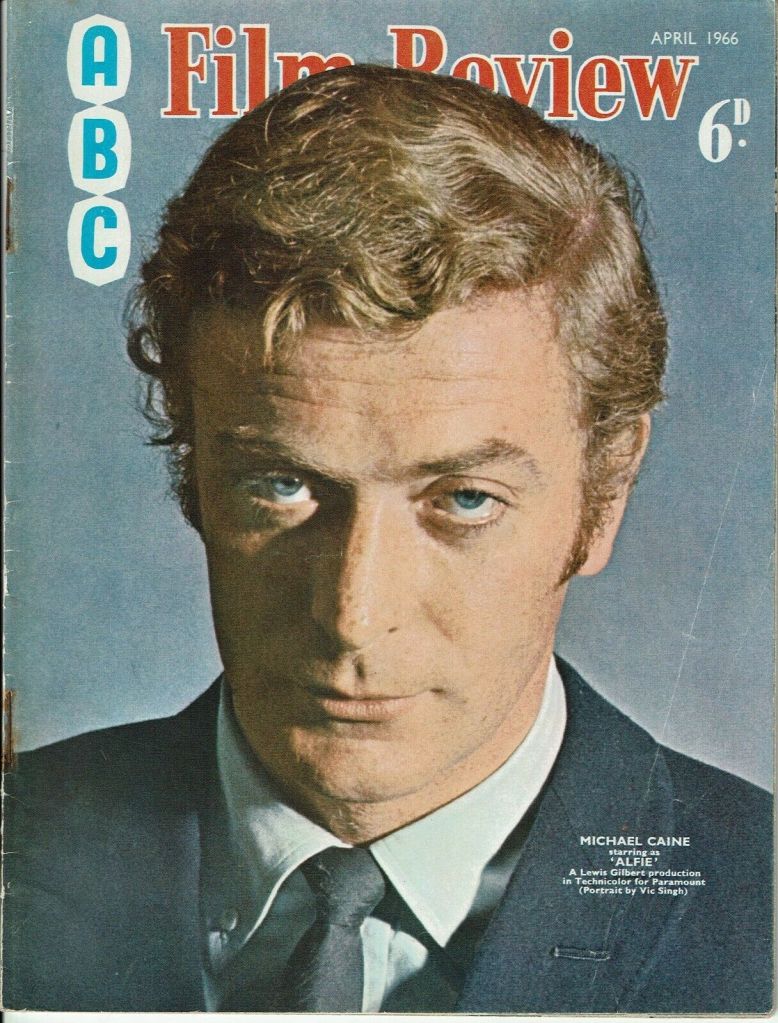
But in 1964, there was the beginnings of a shift on the ABC circuit. Towards the end of the year, instead of the traditional one-week circuit run, The Carpetbaggers, not a contender for roadshow despite its 150-minute running time, was shown for two weeks. But that proved an isolated incident. It was another two years before ABC repeated the experiment, courtesy of Alfie starring Michael Caine.
The following year the first two months saw four films go down the same route, Oscar-winning musical My Fair Lady which had been road-shown a couple of years before, Hayley Mills drama The Family Way, The Dirty Dozen, also a roadshow hit, and Bonnie and Clyde (a flop in the USA).
In addition, the circuit had learned to re-evaluate earlier hits. At that point a revival/reissue only made a second showing in the UK about 7-10 years after initial release. But in 1967, just three years after it proved to be a colossal box office success in the UK (it flopped in the USA despite an immense marketing campaign), Zulu was given another week on the circuit, this innovation adding a new dimension to the circuit release system.
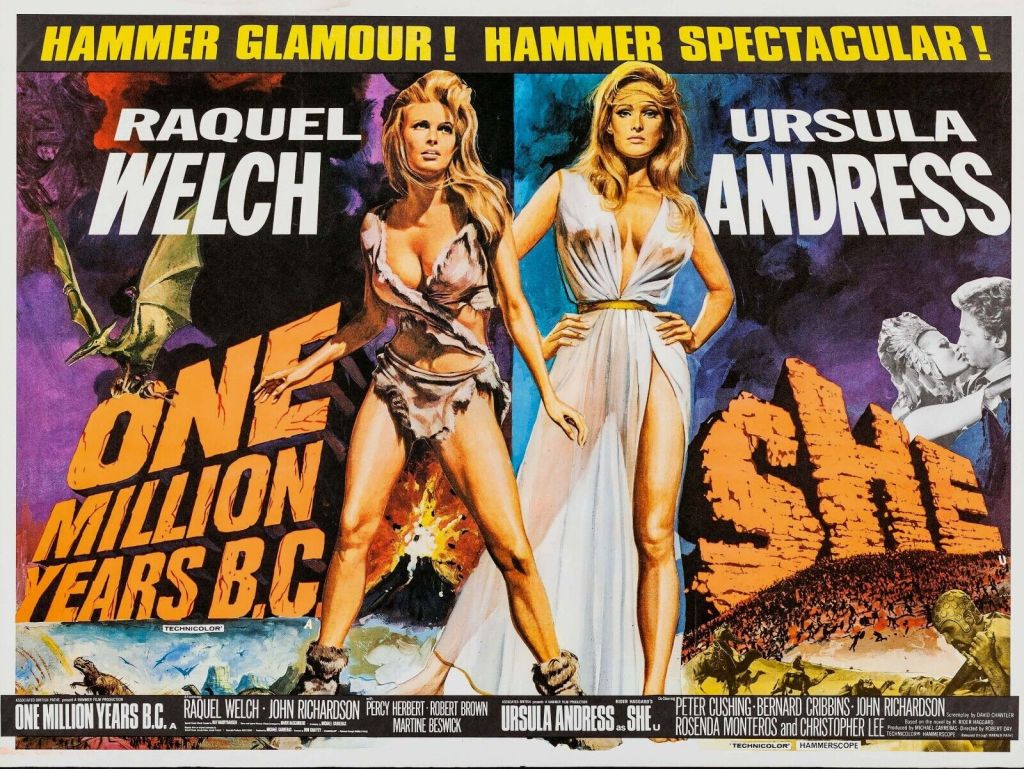
In fact, The Dirty Dozen was afforded yet another week on the circuit in 1968 – in effect, counting the roadshow and the initial circuit release, the public was accorded three opportunities in a very short space of time, The following year One Million Years B.C. (1966) starring Raquel Welch and She (1966) starring Ursula Andress were double-billed in a reissue.
But whether the two-week window had proved a complete success was open to doubt because such clear-cut hits as Bullitt and The Italian Job were only granted one week to make an impact on the circuit box office. In 1969, the circuit had so misjudged the box office potential of Till Death Us Do Part, a movie version of the popular British television comedy series, that it was initially scheduled for a one-week run. But it was such a blockbusting success that ABC tore up its release calendar and slotted it in for a further week two weeks later.
Growth of the multiplex meant big films could be retained for much longer on the biggest houses, switching between two or three or four individual cinemas until demand was deemed fully drained. No longer did a circuit release mean that release dates for the suburban part of the release were set in stone, an approach guaranteed to force the main city center cinemas to remove from its screens a movie that still had pulling power and at higher prices.
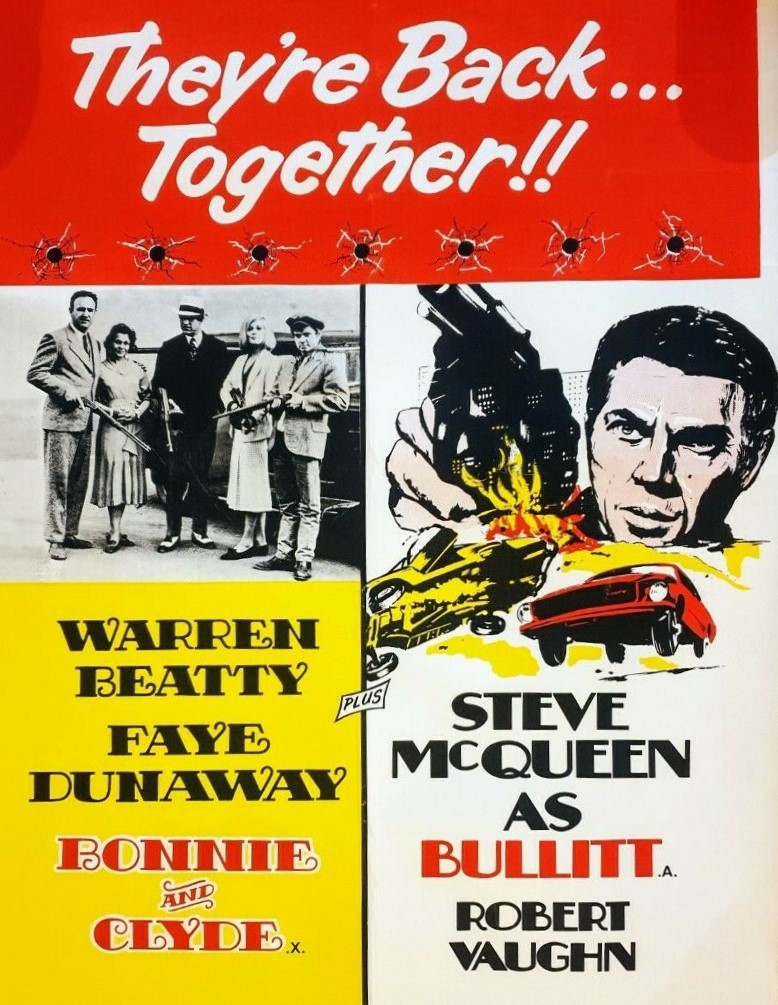
But any kind of change to the circuit release system remained minimal. In 1970, only two movies, Where Eagles Dare, a monumental success when road-shown (a release option denied in the USA), and the home-grown Women in Love were provided with a two-week circuit platform though Bullitt doubled with Bonnie and Clyde made a speedy return as a reissue.
In 1971, a pair of British comedies Percy and Up Pompeii, both made by EMI which had taken over the ABC circuit, were given the two-week treatment. But like Till Death Us Do Part, revisionist western Little Big Man was allocated another week over a month after its initial showing. The Dirty Dozen returned yet again.
In 1972, the circuit introduced unveiled another release strategy called variously a “selective release” or a “pre-release.” This meant, in effect, that in major suburban cinemas, the biggest new pictures would be given two bites of the cherry. A Clockwork Orange and The Godfather were both deemed worthy of a one-week “selective” release with a second week factored in for the following year in what was deemed a “full release.” A version of roadshow was already in place for both these movies and in the main cinemas in big cities these were retained for a considerable amount of time.
In 1972 there were also re-runs for There’s a Girl in My Soup, Zulu and Paint Your Wagon (a bigger roadshow success in the UK than the USA). But the following year saw a whole wave of reissues beginning with The Ten Commandments (1956) followed by Dirty Harry/Klute (both 1971), The Wild Bunch (1969), Love Story (1970), Coogan’s Bluff (1968)/ Play Misty for Me (1971) while Gunfight at the OK Corral (1957) supported the new Friends of Eddie Coyle.
In 1974, The Sting and Airport 1975 went down the new “selective” plus normal release pattern, enjoying one week in each phase, while Blazing Saddles and The Exorcist received a two-week send-off from the start, Fear Is the Key (1972) was revived to support another television spin-off Holiday on the Buses.
Towering Inferno in 1975 ran for three weeks, the first qualifying as “selective” system but the others two weeks shortly after. But there was another development with Jaws which went out first as “selective”, then a week in “pre-release” and its third appearance on the circuit deemed a “full release” turned into an extended run. But the “selective”/”full release” of Death Wish, Mandingo, and Murder on the Orient Express comprised only two weeks. Lisztomania looked set to join the exclusive club but instead of going out on the full release some weeks later it was restricted to a single “selective” week, suggesting it had not fulfilled expectations first time round. The Godfather Part II also managed two weeks but not sequential, the second week deemed a “re-run” six weeks later. Where Eagles Dare and David Essex duo That’ll Be the Day (1973)/Stardust (1974) were reissued while Uptown Saturday Night (1974) was revived in support of Inside Out. Gone with the Wind (1939) enjoyed another reissue in 1976 as did Zulu and Freebie and the Bean (1974)
In 1977 “pre-release” replaced “selective” as the preferred jargon and was applied to King Kong, Airport 77 and Rollercoaster but in these instances amounted to a total of two weeks counting the later full release. By contrast, When the North Wind Blows and The Eagle Has Landed enjoyed a straight two-week release. Ben-Hur (1959) was reissued as were Jaws (1975), The Sting (1973), The Godfather (1972), Clint Eastwood double bill The Outlaw Josey Wales (1976)/Magnum Force (1973) and television spin-off duo All Creatures Great and Small (1977)/It Shouldn’t Happen to a Vet (1976).
In 1978, 2001: A Space Odyssey (1968) and Jesus Christ Superstar (1973) entered the reissue market along with revivals of Enter the Dragon (1973)/Death Race 2000 (1975). Charles Bronson western Breakheart Pass (1976) returned in support to Michael Caine thriller The Silver Bears, The Car (1977) to Full Circle, Paper Moon (1973) to House Calls and the ribald Adventures of a Taxi Driver (1976) to The Other Cinderella.
However, by this time, the big city center cinemas had begun holding on to major releases for such inordinate lengths of time that they were virtually played out by the time they reached the suburban circuit houses so there was little reason to insist on those cinemas retaining them for two or three weeks. None of the ABC chain’s top hits of the year – including the likes of Saturday Night Fever, Grease and Watership Down – played more than one week when they entered the circuit release.
By 1979 the “selective” and “pre-release” idea and the two-week booking was gone. But the following previous hits were re-cycled: Superman: The Movie (1978), The Goodbye Girl (1977), The Getaway (1972), The Towering Inferno (1974), the inspired pairings of Blazing Saddles (1974)/Monty Python and the Holy Grail (1975) and Convoy (1978)/Sweeney 2 (1978). More obvious was the dualing of Peter Cushing duo The Ghoul (1975) and Legend of the Werewolf (1975). Clint Eastwood was back on support duty, The Enforcer (1976) helping out new Boulevard Nights, The Eiger Sanction (1975) bolstering John Travolta romance Moment to Moment while The Land That Time Forgot (1974) boosted to The Brink’s Job.
But by the start of the new decade, there was little differentiation between a major cinema in a city center and the rest, a new movie, in order to take advantage of advertising, either running for months in the one locale, and sucking the commercial meat out of a movie, or going much wider from the off rather than settling down in any one place for an exclusive run. Though the saturation that’s common today was still a long way off, movies still inclined to be released in regional bursts to save on prints, the circuit business had come a long way in two decades.
By this point in the 1960s, Gregory Peck’s career was pretty much at a standstill. Prestige had not saved Behold a Pale Horse (1964) from commercial disaster, thriller Mirage (1965) went the same way, other projects – The Martian Chronicles, Ice Station Zebra – failed to get off the ground or like The Bells of Hell Go Ting-a-Ling-a-Ling were abandoned once filming began. So, he was the main beneficiary of Cary Grant’s decision to retire.
Stanley Donen had Grant, with whom he had made the highly successful thriller Charade (1963), in mind for the role of the hieroglyphics professor caught in in a web of intrigue in Arabesque. In some ways Peck was an adequate replacement but lacked the older actor’s gift for comedy and failed to master the art of the double-take. Arabesque was almost a counterpoint to Charade. In the earlier movie Audrey Hepburn is continually suspicious of Cary Grant. The new movie sees a gender reversal, Peck constantly puzzled as to where Sophia Loren’s loyalties lie.
The story itself is quite simple. A code has been put inside a hieroglyphic and a variety of people are trying to get hold of it either to decipher the secret within or to stop someone else finding out what it contains. When the scientist who has the code is killed, the man who ordered the killing, the sinister Beshraavi (Alan Badel), approaches Prof Pollock (Gregory Peck) to unravel the code, but is turned down. The professor is then kidnapped by Arab prime minster Hassan Jena (Carl Duering), whom he admires, to ask him to take up the job. Beshraavi’s provocatively-dressed wife Yazmin (Sophia Loren), flirting outrageously with Pollock, is also after the code.
There follows more twists and double-crosses than you could shake a stick at, leaving the amenable Pollock mightily confused. “What is it about you,” he asks Yazmin at one point, “that makes you so hard to believe?” It looks like director Donen is playing a variation of the famous Raymond Chandler maxim, that when a plot begins to flag, “have a man come through the door with a gun in his hand.” Sometimes, there is actually a gun or similar weapon, but mostly it’s just another twist. If Pollock doesn’t know what the hell is going on, then the audience is in the same boat.
But it is stylish, set in appealing parts of Britain (antique university, Ascot), Yazmin decked out in glamorous Dior outfits and even Pollock gets to wear a morning suit. Drop in a couple of action sequences, Hitchcock-style chases in a zoo and pursuit by a combine harvester, Pollock nearly run over by horses in a race, and the pair of them having strayed into a builder’s yard facing demolition by the British equivalent of a wrecking ball. But the standout scene is when Yazmin hides the professor in her shower (curtain drawn) while being interrogated by her suspicious husband and then steps in naked and then they play footsie with dropped soap. And she proceeds to expound, “If I was standing stark naked in front of Mr Pollock, he’d probably yawn.”
Beshraavi’s jealousy over his wife’s flirtation with Pollock adds another element of tension. Beshraavi is a very sinuous, sensuous bad guy, who can turn a harmless massage into a matter of life and death. He also has a pet falcon with a habit of ripping people’s cheeks. But even in the face of obvious threats, Pollock holds his own. In one scene as Beshraaavi attempts to retrieve what he believes is the code from Pollock’s dinner plate, where it has fallen from the hiding place in the professor’s clothing, Pollock taps the man’s invading fingers with the sharp tines of his fork.
And there is some accomplished dialogue. When Pollock offers the falcon a date and is brusquely told the bird of prey only eats meat, he responds, “I thought he looked at it rather wistfully.” Beshraavi retorts, sharply, “It must have been your fingers.”
Donen had not made a film in the three years since Charade, so there was some critical feeling that he was a bit rusty and used experimentation – big close-ups, odd camera angles – to cover this up. He was living in London by this point and had been for nearly a decade. But there was very little that fazed him in any genre, and he had switched from musicals like Singing in’ the Rain (1952) to romantic drama (Indiscreet, 1958) and comedy (The Grass Is Greener, 1960). And though there is no question the film would have been better with Cary Grant, Peck proves a reasonable substitute.
The movie’s main drawback is the lack of romance since falling in love with someone you believe is either a traitor or a compulsive liar is a hard trick to pull off. But if you like the idea of pitting your wits against the screenwriters – Peter Stone (Charade), Julian Mitchell (Another Country, 1984) and Stanley Price (Gold, 1974), the latter pair in their movie debuts – then this is one for you.
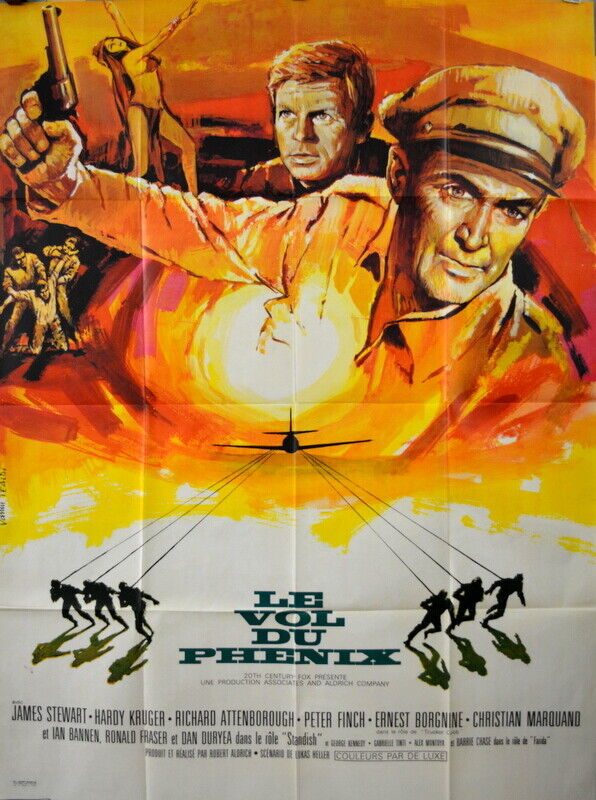
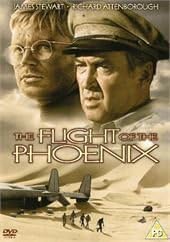
Take twelve condemned men, drop them in the desert hundreds of miles from safety with only enough water to last two weeks, and nothing to eat but dates, and make them work together to effect salvation from their predicament. Not exactly the premise for The Dirty Dozen (1967) but not far off. The Flight of the Phoenix appears a dummy run for director Robert Aldrich’s more ambitious war picture, not least because in terms of structure it is only eight minutes shorter. There are no women in the picture (except those appearing in a mirage) and the men, of all different types, must come together or die in the savage heat.
You might argue that the audience for this kind of picture no longer exists. In the 1960s there was a big market for the Nevil Shute/Hammond Innes/Elleston Trevor type of novel which contained a lot of practical detail at a time when heavy industry – mining, shipbuilding, oil, car manufacture – was a massive employer and the ordinary man had an easy understanding of – and was often fascinated by – the principles of engineering. Bear in mind that this was the era of space rockets and there was excitement about man’s planned flight to the moon.
During a sandstorm a small twin-engined plane carrying passengers from an oil field crash lands in the Sahara. James Stewart as the pilot was a casting trick. In a previous aerial adventure No Highway (1951), Stewart was the ordinary joe challenging authority. Here he is the authority figure, pilot Frank Towns, challenged and part of the film’s guile is the way he has to concede that authority to the one person on board everyone hates, arrogant German aircraft designer Dorfmann (Hardy Kruger).
The global job lot of passengers includes: two soldiers, martinet Capt Harris (Peter Finch) and his mutinous Sgt Watson (Ronald Fraser); alcoholic navigator Moran (Richard Attenborough); oil worker Cobb (Ernest Borgnine) on the brink of insanity; sarcastic Scots troublemaker Crow (Ian Bannen); French Dr Renaud (Christian Marquand0; company accountant Standish (Dan Duryea); Italian Gabriele (Gabriele Tinti); Bellamy (George Kennedy) and Carlos (Alex Montoya); plus a monkey of no fixed abode. The monkey, incidentally, is cleverly utilised. He’s not a sentimental or cute device, there to soften a hard guy or for comic relief, but Aldrich often cuts to his squeals or his face when there is imminent danger.
Two passengers are already dead, one is seriously injured. They have been blown so far off-course they will be impossible to locate. There is only enough water for ten or eleven days. It is a given in such circumstances that tempers will explode and hidden secrets surface. Were they guaranteed rescue those two pegs would be enough to hang a movie on. Since there is no such guarantee, this becomes a picture about survival. The obvious maneuver comes into play on the fifth day. Capt Harris determines to walk to safety, over 100 miles in deadly heat. But it’s not a trek picture either, the engineers present know the risks. Mountains will cause false compass readings and those going will walk around in circles.
Trevor Dudley-Smith wrote under nine other pseudonyms including Elleston Trevor and Adam Hall for the “Quiller” spy series.
What? I can get that magnetism in the mountains can affect a compass but where does the walking round in circles enter the equation? Because, explains Moran patiently, a person does not automatically walk in a straight line if there is no actual road. If right-handed then you’ll walk in a left-hand direction because the right leg is more developed than the other and takes a longer stride and there’s nothing you can do about it. This doesn’t matter if you are walking along an actual path but in the desert with no road markings it’s lethal. And this is the beginning of a bag of what would otherwise be deemed trivia except that such facts are a matter of life and death. This is a movie about reality in a way that no other realistic or authentic picture has or will be. Physics is the dominant force, not imagination.
Finch’s sergeant fakes an injury to avoid going. The mad Cobb, originally prevented from leaving, sneaks away in the night. Towns, in courageous mode, goes after him. While he is away, Dorfmann carries out a character assassination. And continues on his return – “the only thing outstanding about you is your stupidity.” By now though, Moran has warmed to Dorfmann’s insane idea of building a single-engined plane out of the wreck of the twin-engined one. And that becomes the crux of the story. Can they build this weird contraption? Will they manage it before they die of thirst? Will rising tensions prevent completion? Are they fit enough after days in the boiling heat to manage the herculean tasks involved?
Aldrich keeps psychological tension at fever pitch, helped along by the pessimistic Towns and the wildly pessimistic Crow, needling everyone in sight, who delivers lines like “how I stopped smoking in three days.” Towns and Moran have to come to terms with the parts they played in the plane crashing, Sgt Watson with his cowardice. Issues arise over leadership and water theft.
I won’t spoil it for you by mentioning the incident that threatens to demolish the entire project. But the finale is truly thrilling, edge-of-the-seat stuff and the skeletal monstrosity being constructed looks hardly capable of carrying the monkey let alone a full complement of passengers. Aldrich is a master of the group shot with unerring composition and often movement within the frame or just a simple bit of business by an actor, for example George Kennedy at one point tapping his hand against his leg, ensuring that the film does not solely focus on a couple of characters. Sometimes all Aldrich needs to make his points are reaction shots.
Terrific performances all round with Ian Bannen Oscar-nominated. Aldrich called on Lukas Heller for the screenplay, based on Elleston Trevor’s novel, having worked with him on Whatever Happened to Baby Jane (1962) and Hush, Hush Sweet Charlotte (1964). Aldrich’s son William and son-in-law Peter Bravos had bit parts, killed off during the crash.
Flight of the Phoenix virtually invented the self-help rescue genre that relied on ingenious mechanical ideas – rather than more simplistic notions – such as later absorbed in movies like Apollo 13 (1995) and The Martian (2015). Aldrich’s mastery of group dynamics would stand in him in good stead for The Dirty Dozen.
The 2004 remake isn’t a patch on the original.
A terrific movie and well worth seeing.
Turning the novel by Elleston Trevor into a movie is illustrative of the process by which the screenwriter eliminates, changes and adds. The Flight of the Phoenix (published in 1964) was a lean 80,000 words, a far cry from the blockbuster airport reads like Exodus by Leon Uris and James Michener’s Hawaii. But its length made it an ideal subject for a film, the shorter novel tending to stick close to the main story. The author’s speciality was authentic detail, an early career as a racing driver and flight engineer inspiring in him a love for all things mechanical.
He knew what made things work and gaps in his knowledge were filled by assiduous research. He was an assiduous man, with 36 books since 1943 under ten pseudonyms, one being Adam Hall whose bestselling spy tale The Berlin Memorandum would be filmed as The Quiller Memorandum. He had tackled aviation before, most prominently in Squadron Airborne (1955).
The film follows the book’s structure with only a couple of deviations. The main one was changing the nationality of the aircraft designer from British to German. Originally named Stringer he was a testy young individual prone to taking offence and going off in big sulks. There was a German in the Trevor version, Kepel, a young man who is injured in the crash. But there was no handy doctor on board and fewer different nationalities.
To build up James Stewart as the heroic pilot and as a consequence to add meat to his clash with German designer Hardy Kruger, in the film he bravely goes out into the desert to find one of the passengers, but that does not occur in the book. Other changes were minor – in the book the passengers are occasionally able to supplement their drinking rations by scraping night frost off the plane and at a later point in the book they drain the blood from a dead camel in order to dilute their drinking water.
While there is an encounter with Arab nomads in both book and film, the book’s approach to this incident is much more straightforward, ignoring some of the detail supplied in the book.
Of course, a novel allows for the inclusion of far greater detail. And while that provides the skeleton for story development, Trevor gives greater insight into the characters than can be achieved on screen. The author allows each character an internal monologue, through which device we discover their motivations, history and fears.
This approach combines the present with the past, presenting a more rounded cast of characters. While the inherent tension of the situation drives the story along, the author switches between characters to keep the reader fully engaged. The cowardly sergeant (played by Ronald Fraser in the film) is the biggest beneficiary, portrayed as a more sympathetic person than in the film.
The book is a stand-alone enjoyment, Trevor’s writing skills, his grasp of character, creation of tension and his engineering knowledge (bear in mind he invented the idea of building another plane out of the wrecked one) make the novel every bit as enthralling as the film.
When I started investigating the movies of the 1960s one of the shocks was coming to understand how little critical attention had been paid to many of these pictures. I had imagined, in my ignorance, that the highly-touted critics of the era, whose names attached to quotes you would often see adorning posters, had been allocated considerable space in newspapers or magazines for their reviews, and was astonished to discover that in most instances this was not the case.
A movie critic was allotted no more than a couple of hundred words once a week and that space might have to cover three or even four movies. Although movie production was slowing down, they were still making a lot more films than they do today. The bulk of the words would be devoted to whatever movie the critic had decided was the picture of the week. And what with many critics determined to educate their readership on what they considered the superior works coming in from abroad, some notable American movies often got the short end of the stick.
It wasn’t unusual for a picture to be dismissed in a grand total of thirty or forty words, or not mentioned at all. And once academics piled in and decided which movies future students of films should be concentrating on, then a mountain of movies were just ignored over the following decades. So, in part, my purpose has been an attempt at correction, to give every picture of the decade a lengthy review, and bring into sharper focus many movies that, in critical terms, had disappeared from view. In part, I aim to readdress the era, placing more emphasis on the films available to the general public rather than those whose remit was the arthouse. And, in part, it is also to provide a more representative idea of the era.
But, of course, in the main it’s fun, the opportunity to delve into a decade that through my many books I have grown to love. Oddly enough, I grew up in towns that lacked cinemas, and it was only when I attended university at the beginning of the 1970s that I had ready access to movies, so I had a lot of catching-up to do. I was first at the door for any reissue and combed the television listings and subsequently built up a huge library of VHS/DVD. And I was very glad of that investment, which often seemed an indulgence at the time, because trying to find older films on streamers is exceedingly difficult, and the only way of accessing certain titles is through DVD.
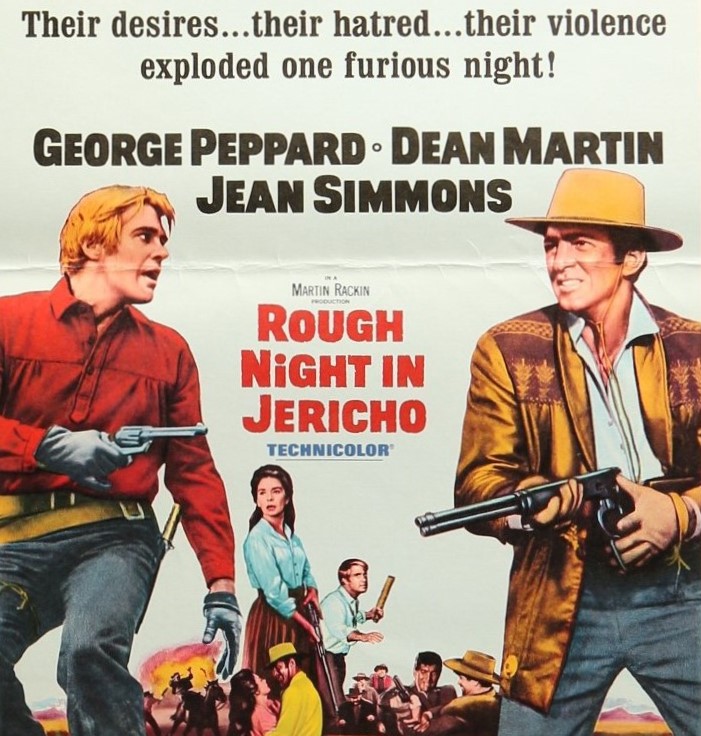
And part of the fun is being able to reassess certain performers. In this volume, in particular, I have come to appreciate much more the acting talent of George Peppard through such films as Pendulum, Rough Night in Jericho and P.J. / New Face in Hell. I’ve been watching with renewed interest Ann-Margret switch from lighter movies to more serious films like Once A Thief, Stagecoach and Bus Riley’s Back in Town. I saw a different side to Dean Martin, who had spent most of the decade in lighter fare, when he moved into westerns like Five Card Stud and turned his screen persona on its head with a vicious role in Rough Night in Jericho.
David Janssen, too, deserves reconsideration in my book after Warning Shot and Where It’s At. Angie Dickinson displays a wider range via Jessica, The Sins of Rachel Cade and I’ll Give My Life / The Unfinished Task, a movie of which I had previously been unaware.
I came across plenty films that appeared to have passed everyone by. Fade In, virtually disowned by star Burt Reynolds, being one, The Picasso Summer with Albert Finney and Yvette Mimieux, denied release at the time, and Vendetta for the Saint starring Roger Moore. I took a look at others rightfully disdained like The Maltese Bippy starring Rowan & Martin from the popular television series, Lock Up Your Daughters with Christopher Plummer as you’ve never seen him before – and wouldn’t want to again – and Orgy for the Dead.
And in trawling through the vaults, I came across many a movie that was sorely under-rated. Into that category I would place Terence Young’s Mayerling with Omar Sharif and Catherine Deneuve; Suzy Kendall as a German spy in Fraulein Doktor; James Corburn in the tricky Dead Heat on a Merry-Go-Round and for that matter the almost existential Hard Contract; and the aforementioned Five Card Stud and Rough Night in Jericho. I would urge you to take a second look at The Scalphunters, and The Shoes of the Fisherman and the tight thriller that turned Charles Bronson into a star, Farewell Friend / Adieu L’Ami, in which he went toe-to-toe with established French idol Alain Delon, and first made his mark as a genuine marquee attraction, albeit initially only in France.
Naturally, I’m hoping that reading these reviews might point you back to the movies I’ve mentioned. I have rated the movies out of five. The films are presented in alphabetical order.
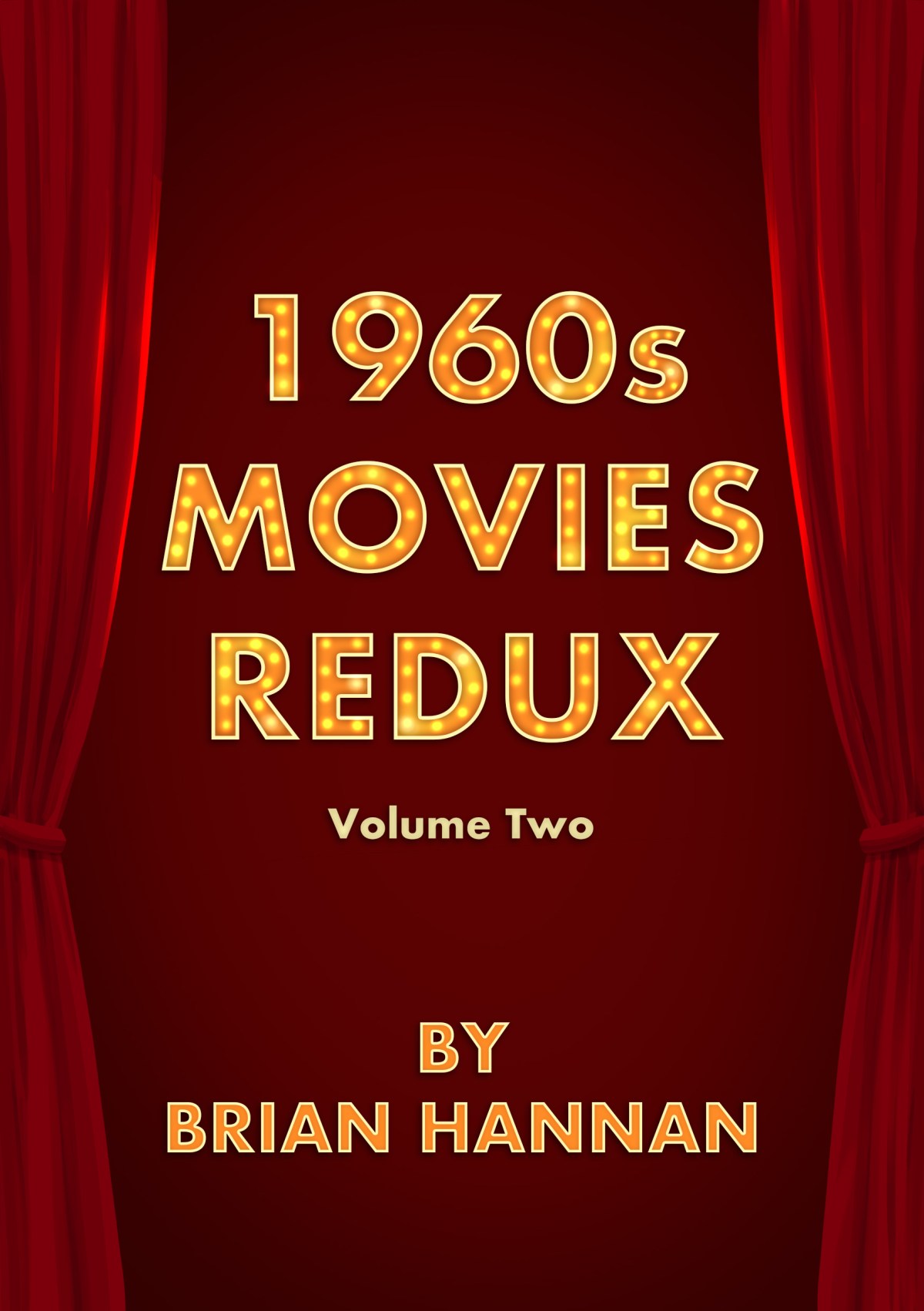
One of the reasons for producing this book is that the first volume was so successful. And when I did a bit of research, I discovered that reading over 100 reviews on Kindle or in a book was a lot easier than reading than reading them online.
In this Volume I’ve also added illustrations.
There will be many more volumes to come as I’ve taken it upon myself to see as many movies of the 1960s as possible – I’ve already passed the 1,000-mark – so as to provide a better idea of the era’s output.
Available on Kindle (at $2.99/£2.48) and via Amazon in paperback and hardback.
MOVIES REVIEWED IN VOLUME TWO
The Amorous Adventures of Moll Flanders (1965)
Baby Love (1969)
The Battle for the Villa Florita (1965)
Beat Girl / Wild for Kicks (1960)
Beau Geste (1966)
The Biggest Bundle of Them All (1968)
Bob and Carol and Ted and Alice (1969)
Breakfast at Tiffany’s (1961)
The Brotherhood (1968)
Bus Riley’s Back in Town (1965)
Can-Can (1960)
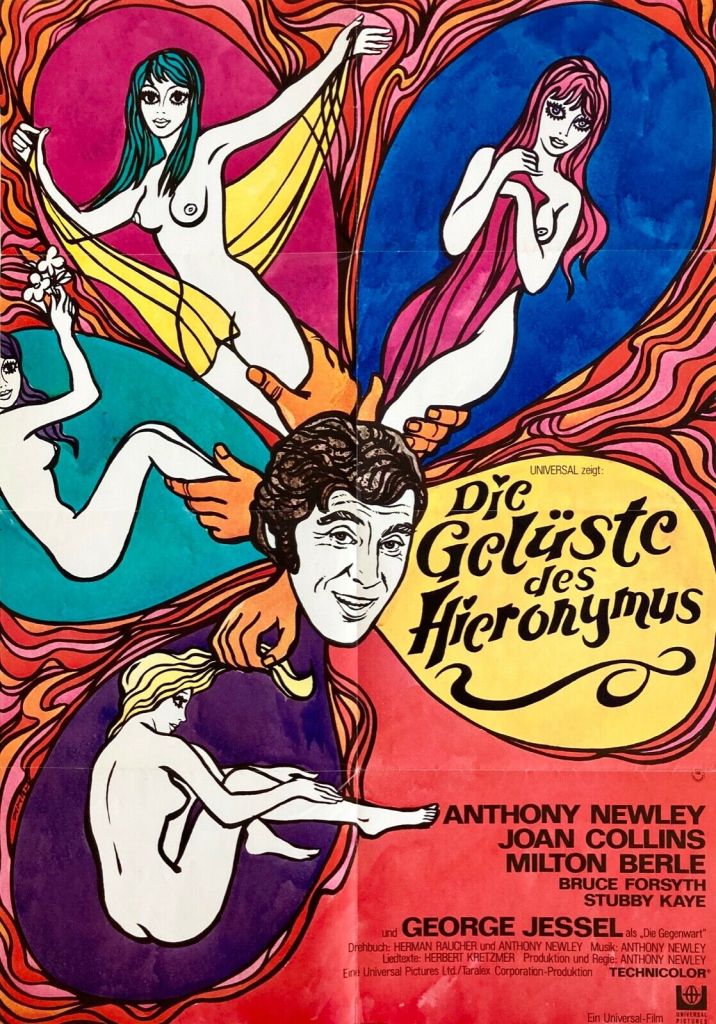
Can Heironymus Merkin Ever Forget Mercy Humpe and Find True Happiness (1969)
Castle Keep (1969)
Catacombs / The Woman Who Wouldn’t Die (1965)
The Counterfeit Traitor (1962)
A Dandy in Aspic (1968)
Dead Heat on a Merry-Go-Round (1966)
Deadlier than the Male (1967)
The Detective (1968)
The Devil’s Brigade (1968)
The Devil Rides Out (1968)
Dr Who and the Daleks (1965)
Experiment in Terror / The Grip of Fear (1962)
Fade In (1968)
Farewell Friend / Adieu L’Ami (1968)
Fate Is the Hunter (1964)
Five Card Stud (1968)
4 for Texas (1963)
Fraulein Doktor (1969)
Go Naked in the World (1961)
Hard Contract (1969)
Hercules and the Captive Women / Hercules Conquers Atlantis (1961)
A High Wind in Jamaica (1965)
A Home of Your Own (1965)
A House Is Not a Home (1965)
Ice Station Zebra (1968)
I’ll Give My Life / The Unfinished Task (1960)
It Started in Naples (1960)
Jason and the Argonauts (1963)
Jessica (1962)
King of the Roaring 20s (1961)
Kisses for My President (1964)
Lady in Cement (1968)
The Learning Tree (1969)
The Lion in Winter (1968)
Lock Up Your Daughters! (1969)
The Maltese Bippy (1969)
Mayerling (1968)
Medium Cool (1969)
The Mind Benders (1963)
Mirage (1965)
The Moon-Spinners (1964)
Murder Inc. (1960)
Night after Night after Night (1969)
Night of the Following Day (1968)
Once a Thief (1965)
Operation Kid Brother / O.K. Connery (1969)
Orgy for the Dead (1965)
Pendulum (1969)
Penelope (1966)
The Penthouse (1967)
Petulia (1968)
The Picasso Summer (1969)
P.J. / New Face in Hell (1968)
A Place for Lovers (1968)
The Pleasure Seekers (1964)
The Rare Breed (1965)
The Road to Corinth / Who’s Got the Black Box? (1967)
Rough Night in Jericho (1967)
Sanctuary (1961)
Sands of the Kalahari (1965)
The Satan Bug (1965)
Sebastian (1968)
The Scalphunters (1968)
The Scorpio Letters (1968)
Secret Ceremony (1968)
The Secret War of Harry Frigg (1968)
Seven Seas to Calais (1961)
The 7th Dawn (1964)
Sherlock Holmes and the Deadly Necklace (1962)
The Shoes of the Fisherman (1968)
The Sins of Rachel Cade (1961)
Sisters (1969)
The Sleeping Car Murder / Compartiment Tueurs (1965)
The Slender Thread (1965)
Sol Madrid / The Heroin Gang (1968)
Some Girls Do (1969)
The Spy with My Face (1965)
Stagecoach (1966)
Station Six Sahara (1963)
A Study in Terror (1965)
The St Valentine’s Day Massacre (1967)
Sumuru, Queen of Femina / The Girl from Rio / Mothers of America (1969)
Tamahine (1963)
Texas Across the River (1966)
Three (1969)
Topkapi (1964)
A Twist of Sand (1968)
Uptight (1968)
The Valley of Gwangi (1968)
Vendetta for the Saint (1969)
Viva Las Vegas! (1964)
Warning Shot (1968)
The Way West (1967)
When Comedy Was King (1960)
The Whip and the Body (1963)
Where It’s At (1969)
Wild Angels (1966)
Woman of Straw (1964)
As you’ve probably noticed, I’ve been trying to master the art of linking movies I’ve reviewed to DVDs on Amazon. I tried this before and failed and a week past tried again used “Site Stripe.” Despite following instructions to the letter, I had no better success so, in the absence of a working link, I would need you just to make your own way to Amazon.
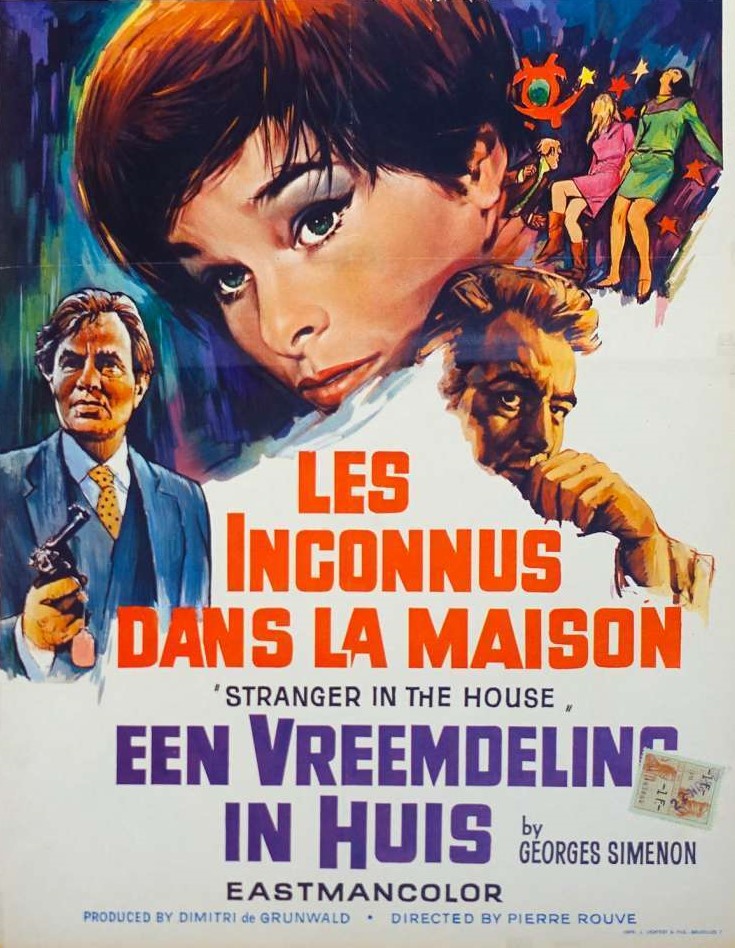
Standout performance by James Mason (Age of Consent, 1969) holds together this curiosity. Based on a novel by Georges Simenon from 1951, it is updated to the Swinging Sixties and transposed from France to the English provincial town of Winchester (possibly chosen thanks to the hit single the previous year). While featuring an investigation, but minus Maigret, it’s essentially a character study.
Given John Sawyer (James Mason) is a depressed, divorced, retired lawyer, it could easily have sunk under the weight of cliché. Realistic portrayals of depression, except amongst those confined to institutions, were rare in this era. The bulk of the audience would probably view him just as a grumpy old man.
Sawyer is not only estranged from everyone, distancing himself from daughter Angela (Geraldine Chaplin), but sliding into oblivion and even when offered potential redemption can scarcely lift his head above a parapet of boredom, almost catatonic in his attitude, overwhelmed by the loss of wife and, presumably, the esteem that came with his career. A member of the upper middle-class, he shows surprising sensitivity to the underprivileged, outsiders, especially migrants, usually dismissed with a racist epithet, and sex workers whom he treats as victims rather than a corrupting influence.
When the corpse of young American ship’s steward Barney (Bobby Darin) is found in his disused attic, suspicion falls on his daughter’s unemployed Greek boyfriend Jo (Paul Bertoya). Turns out Barney is a nasty piece of work, blackmailing Angels and her friends for trespassing on his ship.
As well as being put up initially in an empty warehouse by Desmond (Ian Ogilvy) whose father, a department store magnate who owns the building, a former cinema, and later in Sawyer’s attic, Barney extracts cash and sexually humiliates his victims. Attempted rape of Angela comes with his conviction that she’ll “thank me for it.”
Eventually, Sawyer is convinced to take on the case and is up against his daughter’s pompous employer and his wife’s lover Hawkins (Bryan Stanion). Maigret would have solved this in a trice but the joy of this is Sawyer’s indifference to the police procedural. He spends most of the time during the trial attempting to make a necklace out of paper clips, asks virtually no questions of witnesses, and makes no pretence of interest in the proceedings.
Among his unusual techniques are summoning up references to Dostoevsky’s Crime and Punishment. Unusually, the pay-off doesn’t come in a courtroom but at the twenty-first birthday celebration of the entitled Desmond when to attract attention Sawyer whips off a tablecloth, sending glasses and crockery crashing, and introduces a woman in red.
Estrangement from his daughter could easily be his fault, too wrapped up in a high-flying career to pay the child much heed, but that indifference might as easily be ascribed to the possibility, as his wife taunts him, that the girl is not his.
There’s much to admire in the observations of ordinariness, loneliness, a class system filled with puffed-up mediocrities revelling in the slightest sliver of power, female advancement often requiring dispensing sexual favors to predatory employers or some form of begging.
There’s a brief appearance by Eric Burdon and the Animals, a modelling assignment using the cathedral as backdrop, and drugs. Difficult to imagine though that the pistol holstered by a carnival booth operator could be the real thing.
James Mason’s employment of a limp (result of a war wound) probably went against any genuine assessment of the subtlety of his performance. Geraldine Chaplin (The Hawaiians, 1970) builds up her character with action rather than dialog, showing tenderness where you might expect anger. Bobby Darin (Pressure Point, 1962) essays another creepy thug.
Paul Bertoya (Che!, 1969) is underused. Ian Ogilvy (The Sorcerers, 1967) is so smug you want to thump him. Look out for Pippa Steel (The Vampire Lovers, 1970), Moira Lister (The Double Man, 1967) and Yootha Joyce (Our Mother’s House, 1967).
In his sole directorial assignment Frenchman Pierre Louve, who wrote the screenplay, has better luck dissecting English mores than finding the essence of Simenon, whose non-Maigret novels generally concentrated on a man under pressure. While Mason delivers a fine performance, and his depression is obvious, there’s no sense of him teetering on the edge, more a general decline. In fact it’s the opposite, returning to the legal fray provides him with redemption.
The story of Breathless is usually told from the triumphant perspective of director Jean-Luc Godard, expressed in messianic terms as the young Frenchman who saved the turgid movie industry and inspired a new generation of filmmakers. For star Jean Seberg it provided partial redemption and a sharp plunge into a harsh reality.
Where she had been at the mercy of Otto Preminger in her previous two films, Saint Joan (1957) and Bonjour Tristesse (1958), and for all that she loathed aspects of that experience, she was still in the Hollywood system, where a whole phalanx of people attended to your needs. Preminger had had enough of the woman he believed he could turn into a star. Both movies had flopped, her acting talent questioned.
It’s generally understood that Preminger dumped her and sold her contract to Columbia. But the antipathy went both ways. Her husband, lawyer Francois Moreuil, approached Preminger to negotiate a release from her contract. She might have wished just to be set free for nothing but given Preminger’s investment, not just salary when she wasn’t working but all the build-up that went into turning an unknown talent into a star, that was never on the cards. So, he passed her on to Columbia, to whom he was contracted, and which would take her on as a favor.
But Columbia had little idea what to do with her either. As far as that studio was concerned she was far from the finished article, a long way away from stardom. The best she could hope for was a supporting role in a prestigious production, rebuilding her career under a more sympathetic director. That appeared the most likely outcome when her name was linked to a supporting part in Carol Reed’s Our Man in Havana (1959) starring Oscar-winning Alec Guinness and Maureen O’Hara. But she wasn’t even auditioned.
When Columbia finally found something for her to do it was in the low-budget British-made The Mouse That Roared (1959), leading lady to Peter Sellers, his first as star. After that though, as far as Columbia was concerned, it would be a tumble down the credits in the American Let No Man Write My Epitaph (1960) starring Burl Ives. The British film set had none of the highwire tension of a Preminger film. She was taken acting lessons which restored some of her confidence after the mauling she had taken from Preminger.
As luck would have it, while awaiting a summons from Columbia, she was ensconced in Paris in a romantic idyll with Moreuil, who had vague notions of turning to film direction and had therefore made the acquaintance of the Cahiers du Cinema gang of critics who harbored the same dream. That brought him into contact with Godard, who was, much to her surprise since her performances had generally been lambasted, a big fan.
She was impressed by his short Charlotte et son Jules starring former boxer Jean-Paul Belmondo. Her role in his debut feature, said Godard, was based on the character she had essayed in Bonjour Tristesse. “I could have taken the last shot of Preminger’s film and dissolved to a title ‘Three Years Later’,” he explained. Still, even though there was nothing on the horizon from Columbia, she hesitated.
Godard was an unknown quantity, there was no script, and making a movie outside the Hollywood comfort zone would be a trial, a miniscule budget – $90,000 – scarcely a fortieth of that of a Preminger picture – would ensure no retinue of assistants. She would be largely on her own. Tippi Hedren had felt the same cold shock when she maneuvred herself out of her Hitchcock contract and discovered that rather than being waited on hand-and-foot by the industry’s best costume designers she had to wear her own clothes for her first job, in television.
Financially, Godard was in bad shape. Without a name – Belmondo scarcely counted – the film would be abandoned. In the absence of anything else, she signed up. But first she needed Columbia’s approval. The studio was offered $12,000 for her services and half the worldwide rights but when they stalled her husband pulled a fast one, announcing that since he was rich (untrue) Seberg need never work again and threatening that she would simply retire. Columbia took the money and ignored the rights, which cost them several million dollars.
Seberg was paid $15,000 – around $5,000 a week (the shoot lasted 23 days) – a hefty sum for an ingenue if you took that as a potentially weekly rate ($250,000 a year), but even if that was all she earned it was still six times more than the average U.S. employee was paid in a year. That was still an improvement on the $250 ($13,000 per annum) paid by Preminger in 1957.
But there was a dramatic switch in power politics. With Preminger, she kowtowed, doing what she was told, failing to stand up to the director. On Breathless, she had no trouble expressing her views and wielding her power. She walked off the set on the first day of shooting after a disagreement with Godard. That was resolved by the director chasing after her. A couple of days later she was ready to quit.
And she argued vehemently against his interpretation of her character’s actions in the final scene. Godard wanted Patricia (Seberg) to steal the wallet of Michel (Belmondo) as he lay dying. She refused to do it on the grounds that it was not in character, but later explained that it was more personal, she did not want to play a thief on screen. She had reservations about taking off her clothes for the sex scene, resolved by the couple being hidden under the bedsheets and Seberg remaining full clothed. And if she fancied a day off – a considerable indulgence on a film on so tight a deadline – she took one. Godard saved face by allowing everyone a day off.
Cameraman Raoul Coutard observed, “She didn‘t let herself be pushed around but she did cooperate.” And without the normal armada of backroom staff attending to make-up and ensuring she looked her best in every scene, Coutard fell back on the fact that she was imply photogenic and did not require the full Hollywood treatment to look her best.
Perhaps the guerrilla style of movie making appealed. Instead of rehearsals with a script set in stone and lines learned weeks in advance, Godard made up the film as he went along, turning up in the morning with a students’ notebook filled with ideas and dialogue. At times there was no written script, Godard speaking lines and the actors repeating them.
Although at one stage after a spat he threatened to deny her a close-up, in reality budget restrictions – a close-up would require filming a scene several times over – put paid to most of those. The scene in the car where the camera focuses on her an example of taking clever advantage of circumstance as the sequence, in its daring, appealed to the avant-garde.
But Godard did take the trouble to ensure that Patricia was true to her origins. As an American, her character should not speak fluent French, but make mistakes here and there, especially with gender. “It became much more colloquial and much more foreign in a way,” she said.
And much as she hated the way Preminger had imposed his ideas so strictly upon her, when left to her own devices, thanks to Godard’s improvisational style, she was at a loss. “She was very disabled because there wasn’t a script,” explained Francois. When she asked Godard for directions he would tell her to do what she wanted. Eventually, assuming the film was a mistake and would flop, she decided to “sit back and have fun.”
Although under time pressure, that was a less frightening experience than having a hundred pairs of eyes fixed on her as she spoke lines according to the Preminger dictat. But she had to come to terms with just how far down the production ladder she had fallen, a café toilet doubling as a make-up room, her wardrobe purchased from a discount store.
Godard’s inventiveness knew little bounds. For the final tracking shot, the director was pushed along in a rented wheelchair. The shot of the Champs-Elysess came from employing a postal cart. Filming began on August 29, 1959 and most of the film was shot consecutively.
Innovations included extensive use of the jump cut, hand-held camera and low lighting. Although deemed an arthouse movie by the rest of the world, Breathless opened at a commercial chain of cinemas in Paris where it was an instant hit, selling a quarter of a million tickets in its first four weeks.
While Godard and Belmondo basked in a critical and commercial triumph, for Seberg it was only part-redemption. Except at the end of the decade she was never the leading lady in big Hollywood productions, but she became an acknowledged star of French cinema, a couple of years later the third-highest paid actress in France, earning $1,750 a week ($91,000 a year).
SOURCE: Garry McGee, Jean Seberg: Breathless, Her True Story (2018), pp60-68.

















 The Magnificent 60s