High-octane non-stop adrenalin rush that crams in a heist, car chase, street shoot-outs, high-risk surgical procedures, some neat characterisations, helicopters (of course) and slam-bang technical wizardry. Director Michael Bay (The Rock, 1996) is back on form with this pulverising pedal-to-the-metal thriller through the streets – and river – of Los Angeles and even finds time for a couple of sly jokes, including a reference to one of his own pictures, a paint job and a dog that (literally) stops the astonishing action.
Bank robber Danny Sharp (Jake Gyllenhaal) organising the heist of a lifetime – $32 million – ropes in brother Will (Yahya Abdul-Mateen II) sorely in need of a mere $300,000 for a life-saving operation. Not only does lovesick cop Zack (Jackson White) jeopardise the operation but an elite cop division headed by Captain Monroe (Garret Dillahunt) is lying in wait. Cue shoot-out carnage forcing the siblings to hijack an ambulance containing paramedic Cam (Eiza Gonzalez). Her passenger, a wounded cop, ensures the pursuing flotilla of cop vehicles and fleet of helicopters remains at bay.
But only for a time because Monroe is a master of drawing his victims into a trap. But that will only work with lesser villains because Sharp has not one, but two, plans up his sleeve. To rack up the tension, FBI Agent Clark (Keir O’Donnell) joins the hunt while in the ambulance, tearing along at top speed, causing more carnage during rush hour, Cam is called upon to dig out a bullet in her patient’s spleen and Will realizes he needs to be a good bad-guy.
While the action is buckled up and buckled down, there is excellent savvy background as we learn just how top cops go about snaring their victims and for all that Monroe is pumped up with arrogance Clark is there to take him down by filling us in on just what a rapacious opponent he is dealing with. Despite the film’s pace, without slowing the picture down, Bay manages to seed the characters well. Sharp’s iconic gangster – cousin to Heat’s Neil Macauley in the ruthless stakes – still takes family seriously. Will brings his military training to bear to assist Cam, a closed-off loner who blew a promising medical career on drug addiction and is easily one of the toughest females recently seen on screen.
Characters are established in a few lines – the gay Clark in couples therapy, the tougher-than-tough Monroe still a sap unwilling to sacrifice his dog, Danny not quite as psychotic as his father. And there are some great supporting characters, sassy helicopter pilot Dzazhig (Olivia Stambouliah), a stressed-out gangster and another thug who wears the wrong shoes to a robbery.
Although it’s virtually all a set-piece, the action hardly straying from the ambulance, there are still some awesome sequences, the automated attack on the cops for a start, two surgeons whisked off the golf course to guide Cam through a tricky op. The camera races around with abandon, up and down skyscrapers like a hyperactive drone.
A remake of a Danish thriller of the same name, Bay has pumped up the action, brought believable characters to the fore, and hopefully given audiences something to whoop for outside of the comic book hero. In his movie debut Chris Fedak, best known for television work like Prodigal Son (2019-2021), sticks in the occasional zingy one-liner and treats the characters as human beings.
Only Jake Gyllenhaal’s second starring role in three years, his first action film in nearly a decade should thrust him back on top of the box office after a series of more arty pictures. He’s been creepy before, most notably in Nightcrawler (2014), but Danny is more a straight line gangster. Eiza Gonzalez (Godzilla vs. Kong, 2021) is the pick of the actors, in a difficult role confined for the most part to the ambulance. Yahya Abdul-Mateen II (Candyman, 2021) does well in what in other hands could have been a thankless role. Garret Dillahunt (Army of the Dead, 2021) and Keir O’Donnell (The Dry, 2020) are names you might hear more of in the future.
The most stunning twist since Keyser Soze shucked off his disguise in The Usual Suspects (1995). But where Soze’s trick was a cinematic triumph, here moviegoers are duped by unfair sleight-of-hand.
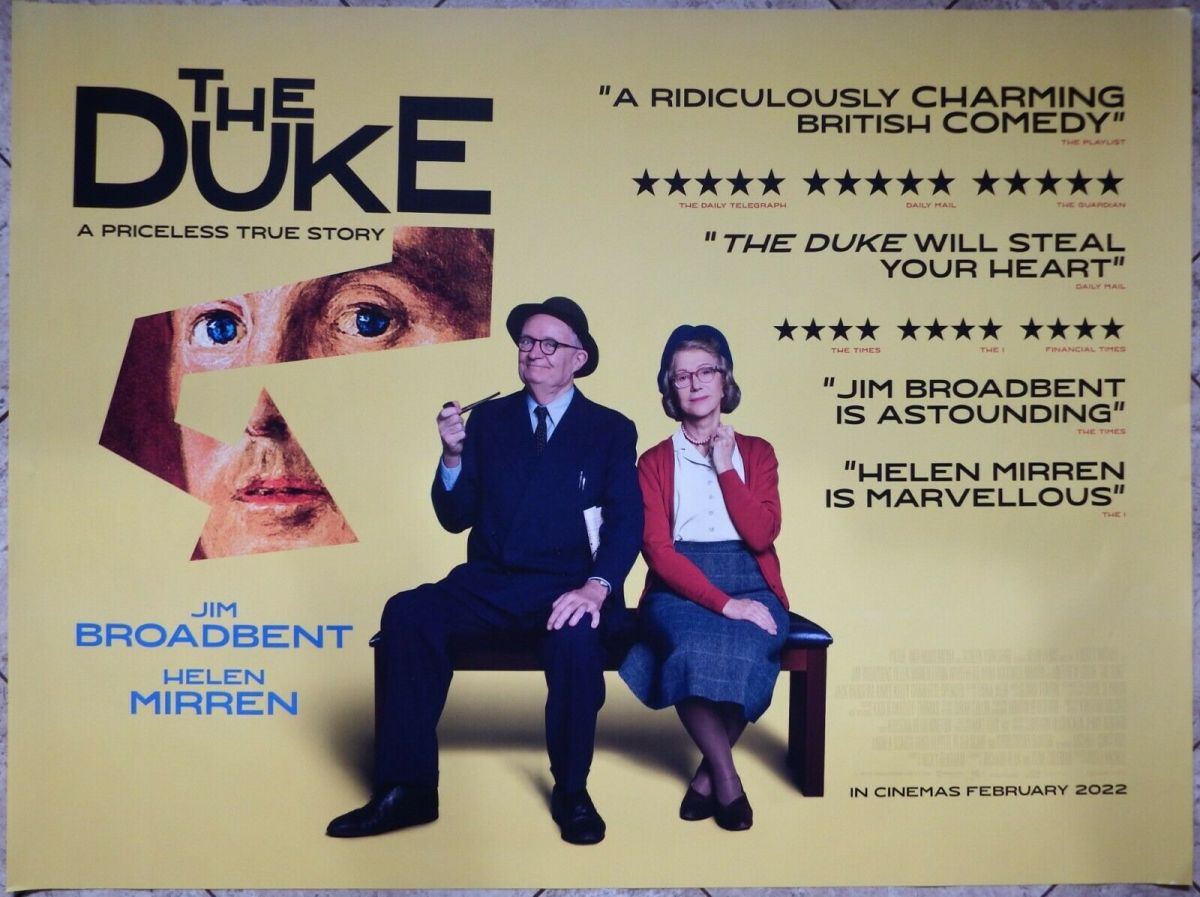
If ever there was a movie of two halves, this is it. For the first half we are presented with Kempton Bunton (Jim Broadbent) as a dour working-class liberal devoted to fighting every cause. In the second half he’s a stand-up comic with the legal profession eating out of his hand, as if the character that turned up in court bore no relation to the one in the initial section. And if his defense for stealing from the National Gallery a Goya painting of the Duke of Wellington seemed rather far-fetched even for someone as cause-addicted as him that is because, as we discover in the trick ending, it was just that, entirely made up.
You may also have wondered how a 60-year-man was quite so nimble as to scale a high fence and climb up a couple of floors by ladder, then the trick at the end reveals that this too is part of the audience deception.
Which leaves you wondering just why the core of the story – that a father volunteers to take the place of his guilty son and face the prospect of years in prison – does not even merit a scene. If it wasn’t for the performance of Broadbent and Helen Mirren as his wife, as tour de force an acting partnership as you could hope for, you would wonder what on earth was the point of making the film.
Who outside Britain has ever heard of the license fee? Everyone knows about the BBC, of course, but I would doubt very much if anyone has any idea that what appears to be a free public service broadcasting body (akin to PBS in the U.S.) actually has to be paid for on an annual basis by every single person in the country who owns a television set. Since Bunton claims he stole the painting in protest against certain members of the public being forced to pay this fee, you might wonder how this is going to go down in foreign parts. Setting Bunton up as a working-class rebel on the basis of this preposterous idea is one of the barmiest notions ever to afflict a screenwriter.
This movie has been receiving rave reviews – and picked up £3 million at the box office – because it is charming, pokes fun at the BBC and the Police and the Government and feels like a latter-day Ealing comedy with Broadbent and Mirren in top form. I was duped by the reviews and by the trailer which showed all the funny bits but was bored for a first half that seemed like a very out-of-date attack on too many targets, without providing any real measure of the man who turned into a supreme entertainer in the second half. Some of the issues he raised such as racism were worthy of his defence, but others were simply ignored. The fact that workers could be dismissed in the 1960s for any reason whatsoever with no recourse to tribunals was glossed over. The fact that he was sacked for allowing his taxi passengers to travel for free – the taxi owners not Kempton thus footing the bill – or possibly for boring is passengers to death with his strident views is equally ignored.
I have to say that initially I did enjoy the film. But afterwards I began to have a niggling feeling that somewhere along the way I had been cheated. If Bunton knew he was innocent and was simply taking the fall for his guilty son, his idealistic crusade was pointless. You would have to ask why did he not just return the painting? I can’t believe there was no confrontation with his son. Are we expected to imagine that Bunton just congratulated his son on providing him with a perfect opportunity to embarrass the BBC and thought to himself it was well worth a jail sentence regardless of the fact it would put his wife through hell.
It feels like the director was expecting after the revelation at the end that the audience would just say “oh now it all makes sense” rather than the opposite, that it made no sense at all unless we were shown collusion between father and son, and the son especially accepting the burden of the sacrifice his father was making.
In The Usual Suspects, audiences went back over the film to marvel at just how clever Soze had been. Here, though, when you try to do the same, it doesn’t work. The Bunton we are shown in the first half was not a deliberate fiction dreamt up by the character, but simply a directorial device to misdirect the audience. The big reveal appears without any reference to the father and no sign of guilt on the part of the son.
This was not one of those legal pictures where there would be a last-minute reprieve or a lawyer in the Perry Mason mold saving the day. It was a contrivance so Bunton would have his day in court and deliver his philosophy on life to a wider audience. For all I know he may well have thought such an opportunity was worth the imprisonment. But for all this sleight-of-hand to work the director had to just completely ignore the core relationship between father and son and between innocence and guilt. It would say a lot for a son that he carried out the theft out of love for his deluded father, but such a scene would have to be left to our imagination.
No matter how small a picture, its budget had to stretch to a Pressbook. Even if the movie would end up on the bottom half of a double bill or a drive-in programmer and did not have much to shout about, it still needed a Pressbook. Low-budget films meant low-budget advertising campaigns unless your name was Joe Levine who often spent far more promoting films than he did making them.
The Pressbook was essential because it was the source of the movie’s adverts that could appear in a newspaper – these came in a variety of sizes so an exhibitor could remove the one most relevant and take it down to their local newspaper to make up the display advertisement. In the pre-digital era, it was a crude as that, adverts were effectively cut and pasted.
While some Pressbooks could run to 16, 20 or 24 A3 pages in full color, the most basic requirement would be four pages, enough to show the ads and get the basic message across. This was of the basic variety. In this case, ads took up the first two-and-a-half pages, leaving a half-page to list the credits and explain the plot. The final page contained information about the stars..
Perhaps as revenge for producer Harry Alan Towers not coughing up enough money for a decent Pressbook, his name was left off it. Instead, filing his slot was Oliver A. Unger, more famous as a pioneer of syndicated television, importer of foreign films and producer of The Pawnbroker (1964). In reality, he was an executive producer, in those days that function being fulfilled by someone who either invested in the picture upfront or once filming was complete bought territorial rights.
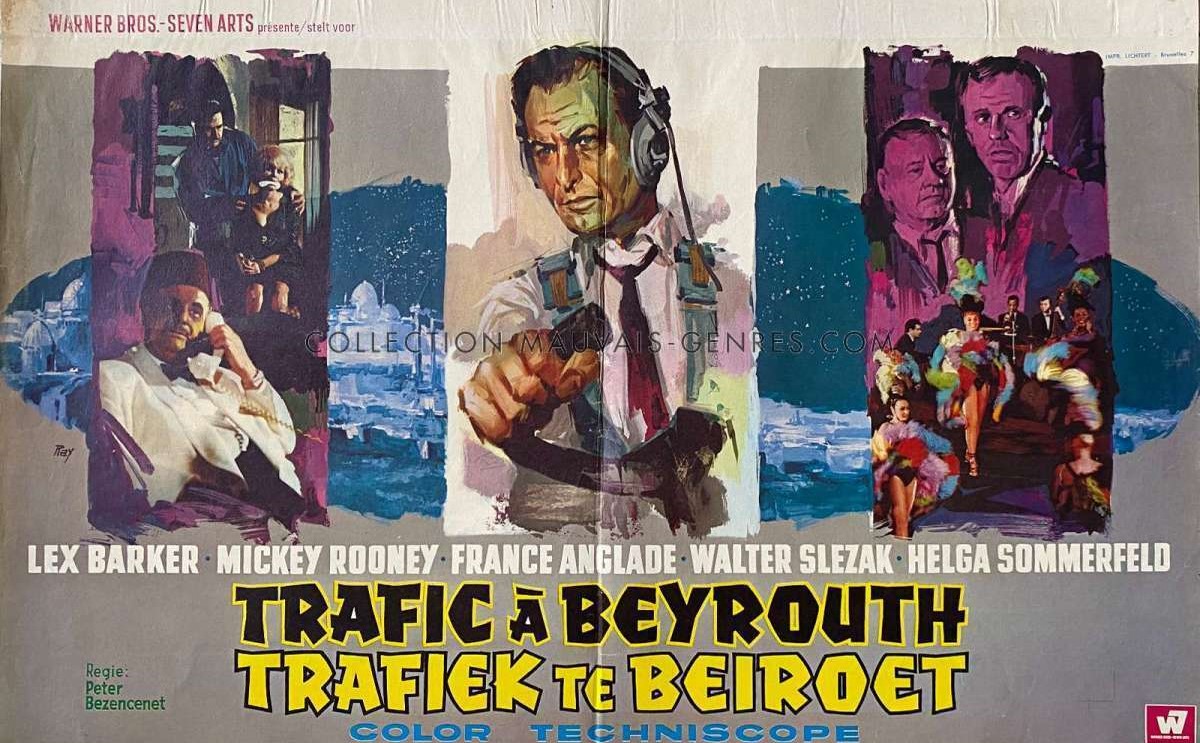
Artwork was minimal, one main advertisement, one alternative. But more or less the same taglines appear in both. Hoping to hook in the audiences was the notion of “perfumed harem…in mysterious Beirut…where every hour can be your wildest.. and your last.”
Usually films like these boasting a flotilla of European beauties devoted some space to explaining their origins and puffing up their potential. Not so here. Space is just too tight. The only actors covered are Lex Barker, Mickey Rooney and Walter Szelak. Strangely, no mention is made of Barker’s socko career as a German western hero – the notion that Europeans could make westerns remained absurd at this point (A Fistful of Dollars would take three years following completion to reach U.S. screens).
According to the Pressbook, Barker more or less jumped straight from Tarzan to this kind of thriller. Though he had been out of the loin-cloth for more than a decade (Tarzan and the She-Devil, 1953, his final appearance), the 40 pictures he had made since then (including La Dolce Vita, 1960) did not merit a sentence. The Pressbook did carry a quotable quote from Barker explaining his reasons for quitting jungle life: “It made me feel like a male Bardot because I was always parading around almost nude.” This was the type of quote that only made sense until you realised that Bardot did not become a star till three years after he quit playing Tarzan. Still, who was going to argue?
A strict regimen of physical exercise allowed him to keep in the shape necessary for the film which required him to “run for his life, rescue a pretty hostess from kidnap by helicopter and fight off thug after thug.”
Mickey Rooney gets a better write-up, especially for making the rare jump from successful child star to accepted by audiences for his adult roles. Though the writer of the Pressbook never appeared to actually go the movies. Spot the mistake in this sentence: “Last seen in runaway box office hit It’s A Mad, Mad, Mad, Mad, World Rooney now appears for producer Oliver A. Under in a drama equally as challenging.” That the first film was actually a comedy and not a drama never seemed to sink in.
The usual promotional material – suggestions for marketing, maybe a record of the soundtrack available, perhaps a theme song to target radio stations, various stunts – was non-existent even though the movie leant itself to a tie-in with an airline or a travel company especially as the National Lebanese Tourist Council had gone out of its way to accommodate the production.
When engine problems force a plane headed for Athens to land in Beirut, the past catches up with purser Norman Jones (Mickey Rooney). He manages to convince captain Jamie Faulkner (Lex Barker) and the crew that claims by ruthless gangster Malouf (Walter Szelak) claiming he has stolen his money is a mistake. But once the kidnappings begin, the doubts set in.
Producer Harry Alan Towers (Five Golden Dragons, 1967), though he remained wedded to the exotic locale, would soon learn to prioritize action over romantic entanglement and this suffers from too much romance – married Faulkner trying to resolve his relationship with stewardess girlfriend Louise (Helga Summerfeld), co-pilot Tommy (Michael Medwin) ignoring another stewardess Franzi (France Anglade) in favour of local girl Mimi listed in his little black book of previous conquests.
After a failed attempt to kidnap Jones, the gangsters turn their attentions to female members of the crew. Slim built Tommy proves handy with his fists and soon the crew are either running from trouble or running into trouble even as they attempt to enjoy the city high life. The title has a double meaning – the crew take it to mean that they have time on their hands to pass in as pleasant manner as possible only later realizing that their accidental landing provides the gangsters with a complete day to apprehend/kill Jones before the plane’s rescheduled take-off.
Although a good sight more attractive in the 1960s than when war destroyed the city, Beirut still had comparatively little to offer a visitor beyond a historic site claimed to the Garden of Eden, posh hotels, swimming pools and the kind of belly dancers that you could get anywhere in the Middle East. Still, the movie does its best to convince the audience they are in for an exotic treat. Unfortunately, locale and girls in bikinis do not make up for poor plotting and lack of action.
In terms of casting Towers had hit upon a decent formula in the international coproduction line, Hollywood stars who didn’t cost too much but still retained marquee value and up-and-comers who might be sold as the next best thing to their respective countries, thus bringing in global revenue. Former MGM child star Mickey Rooney (Secret Invasion, 1964) is the requisite Hollywood star, his credentials buffed up by the hit It’s A Mad, Mad, Mad, Mad World (1963), and continually newsworthy for his love life – he was currently on marriage number five.
All-purpose action hero Lex Barker was the surprise box office package. A former Tarzan he was enjoying a new lease of life as a huge star in Germany thanks to the Old Shatterhand series of westerns. Veteran Walter Slezak (Come September, 1961) completed the small group of actors who audiences might automatically recognize.
Heading the newcomers was Englishman Michael Medwin (Crooks Anonymous, 1962) who would later turn producer of If…(1968) ably supported by a stewardess trio played by German Helga Sommerfeld (The Phantom of Soho, 1964), French starlet France Anglade (The Oldest Profession, 1967) and Austrian Helga Lehner (Games of Desire, 1964). Likely more memorable for purveyors of the European scene would be a brief appearance by another Austrian, Maria Rohm (Five Golden Dragons), wife of the producer. You might also spot Wolfgang Lukschy (A Fistful of Dollars, 1964).
British director Peter Bezencenet (Bomb in the High Street, 1963) was better known for his editing skills but didn’t cover himself in glory in either department here. Australian Peter Yeldham (The Liquidator, 1965) wrote the screenplay along with Towers. While not a great film, you can see the Towers style in embryo, this being only the fourth of the around 100 films that would go out under his banner.
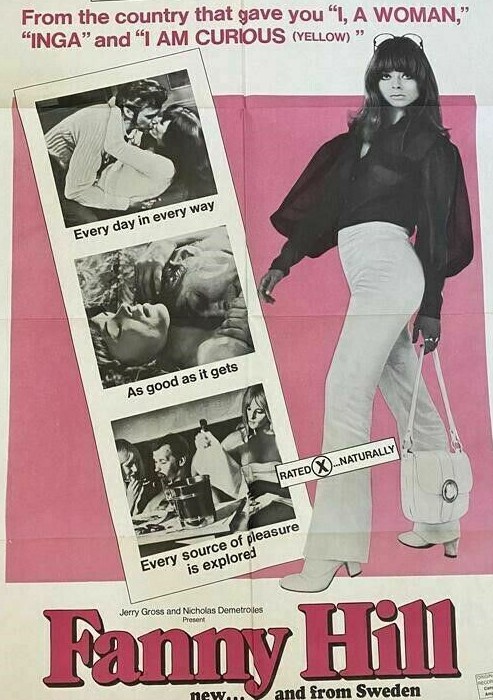
For three weeks at the end of November 1969 through to mid-December, the top films on the Variety weekly box office Top 50 chart were sexploitation films. The Swedish Fanny Hill (1968) was the first to hit the top and I Am Curious, Yellow, also from Sweden, took the top place for the next fortnight.
This was something of a slap of cold reality in the face of Hollywood which had assumed that by and large its product was sufficient to meet the needs of exhibitors nationwide. The slump in production due to the financial issues facing the top studios led the industry to expect that the traditional low-budget pictures that would make up the shortfall would come from the usual sources – westerns, crime, horror. Few would have bet on sexploitation taking up the slack.
The new Variety system of collating box office was in part to blame for the influx of sexploitation films being so transparent. Until the magazine instituted its weekly Top 50 grossing pictures in April 1969 and widened the net for gathering in those figures, box office was reported from just 200-300 first run houses in the major cities. This now expanded substantially to five times as many cinemas and included smaller houses in a greater number of cities as well as cinemas that belonged to a Showcase (wide release) circuit.
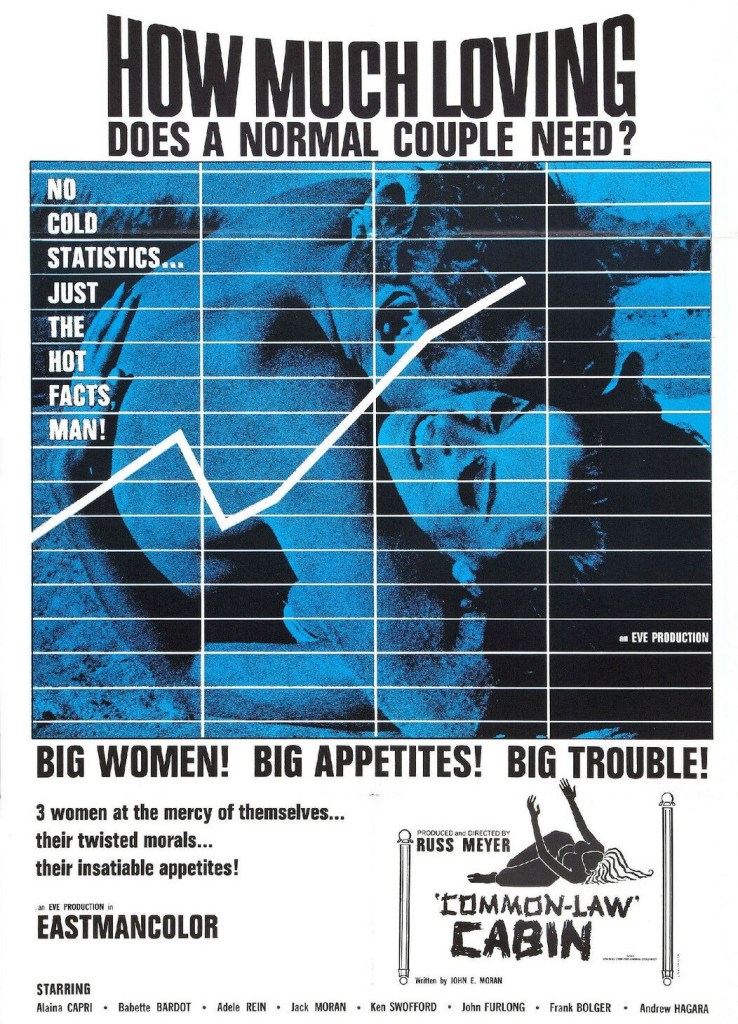
That resulted in a greater breadth of films being reported. Except on first run arthouses, where some art films with greater sexual content could be shown, it was rare for a sexploitation picture to feature in a big city first run. Russ Meyer was the acceptable face of sexploitation, especially since his films contained humor. Even so, eyebrows were raised when the exploits of Common Law Cabin (1967) made headlines in Variety (“Sexploitation pair: $22,000 at Fox”) at Detroit’s biggest cinema, the 5,100-seater Fox, a major first run venue. That film found slots in first run in Chicago at the Center and the Fine Arts in Portland. Another Meyer opus Finders Keepers found a berth at the Randolph in Philadelphia (“Russ Meyer’s Nude Pic Into Philly’s Classy First Run”). But that was the extent of its invasion of first run for that year. And that was pretty much how the industry expected things to stay, a rare sexploitation making a few headlines, but not much more.
So when Fanny Hill grossed $625,000 – equivalent to $4.7 million today – from 49 houses to hit the top spot it sent the industry reeling in shock. I Am Curious Yellow hit the top spot in successive weeks with $594,000 from 52 houses followed by $454,000 from 90. In some respects it should not have come as any great surprise. I Am Curious, Yellow had already had already featured several times in the weekly top ten, fifth with $213,000 from 16 houses, sixth with $137,000 from 14 and again with $$237,000 from 18.
Sexploitation distribution was handled in much the same way as any other picture. Probably it came closer to replicating an arthouse release, where prints, due to their cost, were in short supply and cinemas undertook to hold onto a movie for several weeks, if not months. But when a movie was clearly pulling in the crowds, the distributors switched to a more mainstream system, combining Showcase with first run. The big danger when films went wide was that grosses plummeted. But that was clearly not the case here. Yes, the earlier per-screen averages were higher but the later ones certainly did not fall off a cliff.
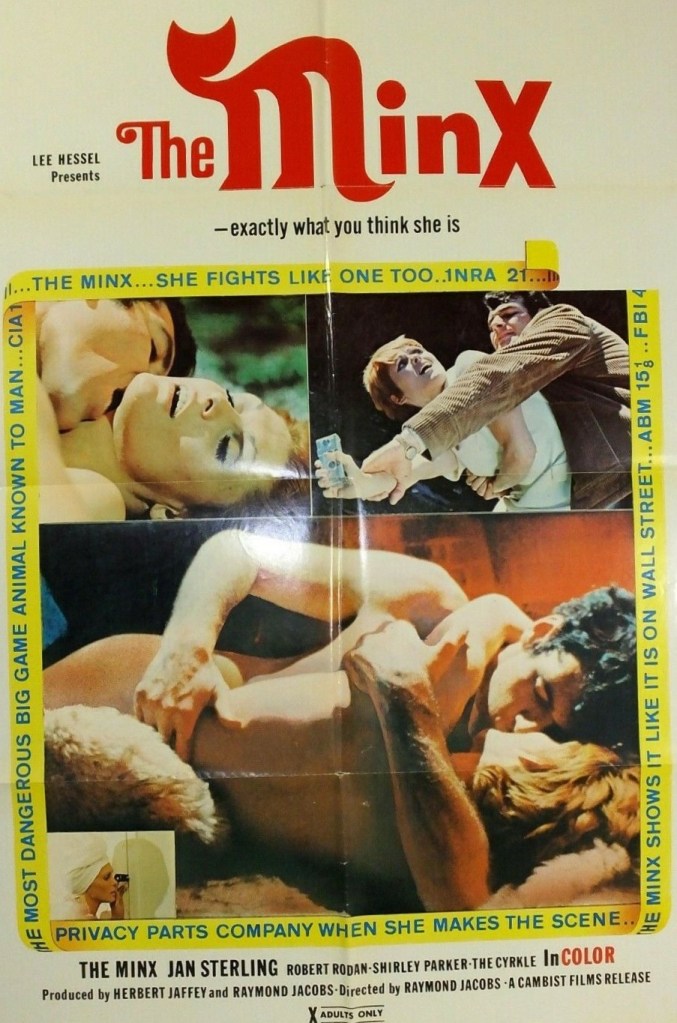
Outside of these two pictures, other sexploitationers had been making an impact on the weekly chart. The Libertine (1968) had placed 11th with $184,000 from 56, Naked Angels (1969) came 17th one week with $148,000 from 11 and lower down the chart The Minx (1969) had showed potential with $52,000 from three while Camille 2000 (1969) had earned $32,000 from two. Sexploitationers absorbed lessons learned from more mainstream distributors in how to use the Top 50 as a promotional tool. A movie that was not only taking in big bucks, but placed high in the chart and had a great per-screen average was inevitably going to attract attention.
Perhaps the oddest part of the sexploitation breakout was that so few had seen it coming. If so, they had not been reading the trade papers. This side of the business had grown so fast in a couple of years that those involved had formed their own association. It turned out a war had broken out between the suppliers of cheaply-made sexploitationers and those willing to increase their budgets in order to entice audiences with better production values.
But this was at the hard-core end of the business, the number of outlets tripling from 300 theaters three years before to 800 in 1969, and operating obviously outside the restrictions of the Production Code or the new censorship system. Initially, movies costing $8,000-$15,000 could have been put together in a weekend. Now up to 100 movies budgeted at at a maximum of $45,000 were being made every year with a potential profit of $125,000-$300,000 each. About half a dozen companies had annual million-dollar turnovers.
But this business had also filtered down to the more easily exhibited soft-core, which fitted into the “X” category under the new censorship rules. The 100 cheap soft-core efforts financed by individual theaters or small chains which filled a supporting spot on a double bill produced meagre returns so it made more sense to edit down a hard-core feature to suit a soft-core audience. The demand for hard-core, most prominently seen in Detroit, where hard-core pictures often outgrossed first run, was filtering down into soft-core, hence the growth in bookings for the likes of Fanny Hill and I Am Curious, Yellow.
The other reason for moving into the soft-core market was that the hard-core end was saturated resulting in lower rentals and consequently lower profits which inhibited production. Theaters struggling to cover overheads from the thin stream of movies emanating from the major studios or finding there was little juice left in blockbusters by the time they drifted down the exhibition food chain increasingly turned to soft porn.
SOURCES: “Sexploitation Filmmakers, Showmen Form Adult Motion Picture Ass’n,” Box Office, January 20, 1969, p8; “Over-Seated for Sex,” Variety, July 2, 1969, p1; “Sexpix of $25,000-$45,000 Negative Cost See Bright, Not Clouded, Future,” Variety, July 16, 1969, p17. Results for the “Top 50 Chart” in Variety were taken from the following issues in 1969: Jun 4, Jul 2, Jul 9, Jul 23, Sep 24, Oct 1, Oct 15, Nov 5, Nov 26, Dec 3, Dec 10, Dec 17, Dec 24.
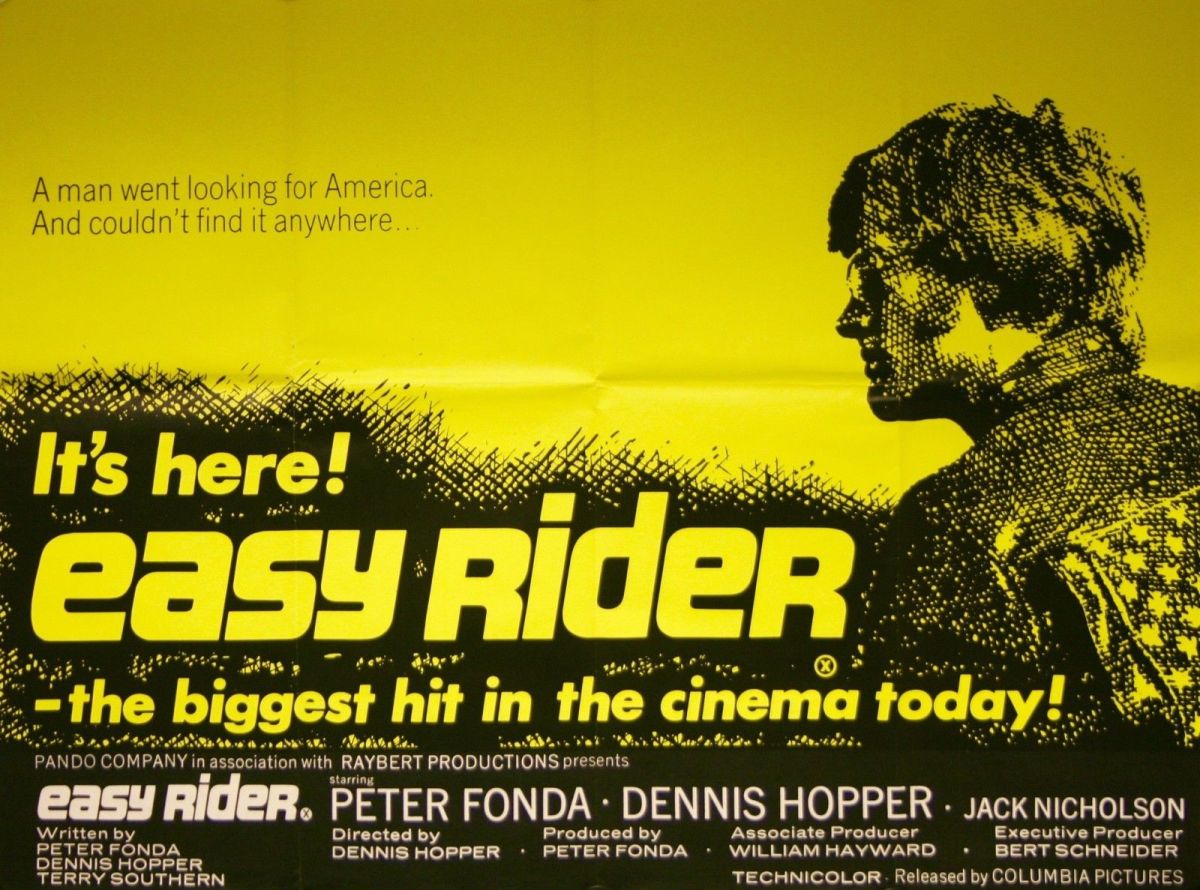
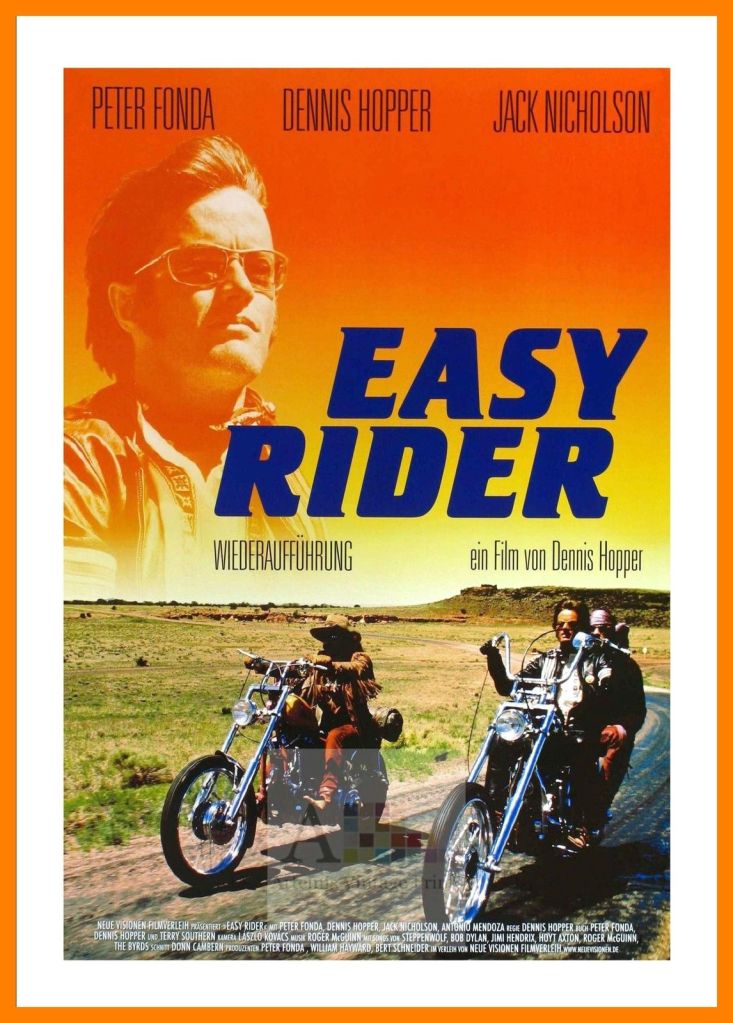
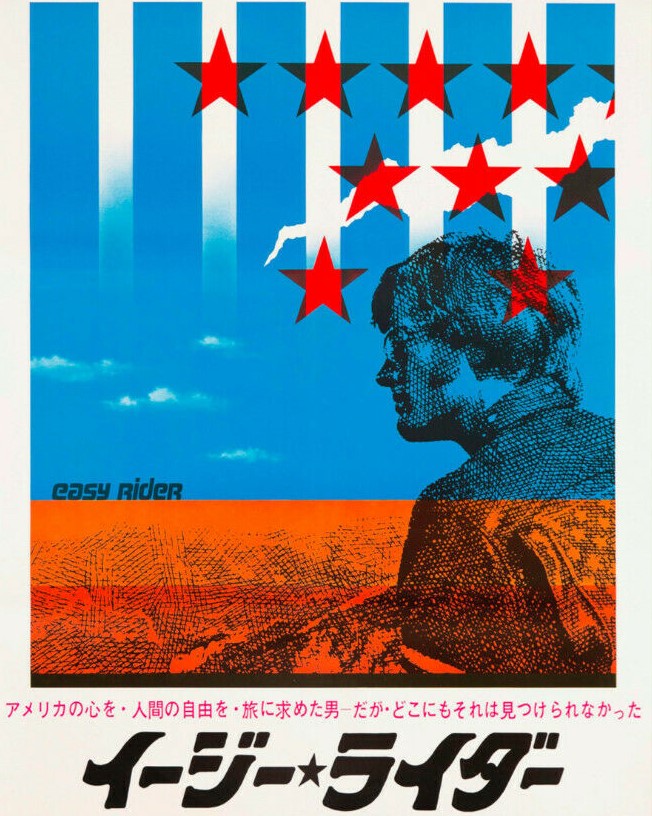
Just goes to show what a little bit of reimagining can do. A companion piece to The Wild Angels (1966) but which takes the viewer in the opposite direction, turning the characters from perpetrators of violence to its victims, adding in a stonking soundtrack and a bit more philosophy, though holding on to the long tracking shots of motorbikes that defined the Roger Corman approach. From the bare bones of the Corman movie emerged a cinematic – and box office – miracle.
You could be forgiven for thinking that the movie’s main influences were the early Cinerama pictures that focused on extensive tracking shots of scenery (in this case, the open road) and unusual customs (ditto, alternative lifestyles, dope-taking etc) and Mike Nichol’s use of contemporary pop music in The Graduate (1967). But it also drew on the assumption, as did Hitchcock in Vertigo (1958) and Kubrick with 2001: A Space Odyssey a decade later, that a camera doing nothing can be hypnotic.
Message pictures were the remit of older directors like Stanley Kramer and Martin Ritt and films that had something to say about the human condition generally emanated from Europe and not low-budget efforts coming out of Hollywood. Easy Rider has a European sensibility, an almost random collection of unconnected episodes with no narrative connection to the main story, itself incredibly slight, of two mild-mannered dudes heading to New Orleans to see the Mardi Gras.
Road trips were not particularly unusual in American cinema but the form of previous locomotion was horse-related – westerns. The journey has been a central theme to movies. This is an 80-minute picture masquerading as a 95-minute one, a good fifteen minutes of screen time taken up with endless shots of Peter Fonda and Dennis Hopper on bikes passing through the landscape, with a contemporary soundtrack as comment.
Unusually, it’s also a hymn to ancient values, heads bowed in prayer at meals as different as you could get, the Mexican family and the commune, a marching band playing “When The Saints Go Marching In” and the recitation of prayers in the cemetery.
What marks the film out stylistically, perhaps enforced by the lean financing, is the sparing way it is told. The most dramatic scenes – the three murders – are filmed in shockingly simple fashion. There are often long pans along groups of characters. While innovative, the flash-cut flash-forward editing adds little to what is otherwise a very reflective film. Inspired use is made of natural sound, the muffled thumping of oil derricks at the cemetery, the soundtrack to one death is just the battering of unseen clubs by unseen assailants.
The dialogue could have been written by Tarantino, none of the confrontation or angst that drives most films, but odd musings that bring characters to life. At the beginning of the trip, Hopper and Fonda are welcomed wherever they travel, but towards the end resented, treated as though a pair of itinerant aliens. They entrance young girls but are vilified by authority, jailed for no reason except the threat to traditional values they apparently represent.
Elements not discussed at the time of release make this more rounded than you would imagine. The excitable Hopper, a nerd in hippie costume, is driven by the American dream of making money. The more reflective Fonda, developing a character trait he revealed in The Wild Angels, senses something is not only missing from his life but has been lost forever. He has the rare stillness of a top actor, face reflecting unspoken inner turmoil. As revelatory is the performance of Jack Nicholson, here effectively making a bid for stardom in a part that would snare an Oscar nomination.
It remains an extraordinary film, a series of accumulated incidentals holding up a mirror to an America nobody wanted to acknowledge and the brutal climax no less powerful now.
As difficult as it was to guess which films would hit the box office target and which would turn into irredeemable flops, Hollywood studios and exhibitors stewed as much over the potential of the next generation of stars. This was an era when talent schools still existed, youngsters taken on at modest wages and provided with both standard acting lessons and other important elements of movie education such as riding a horse or sword-fighting as well as breaking in the actors and actresses with small roles. They would be given progressively larger roles until they emerged, hopefully, as genuine candidates for box office glory.
Of course, the studios had their own ideas which of their youngsters was likely to make the grade, the most obvious marker being the types of parts they were handed, but exhibitors helped the process along by taking part in an annual survey organized by trade paper Box Office.
So I’ve chosen a year – 1965, midway through the decade – at random to see how many of the new generation of stars made the grade. According to the Box Office survey the top six males (in order) were Peter Fonda, Robert Walker Jr, Patrick Wayne, Keir Dullea, Doug McClure and Tommy Sands. The top six females were: Patty Duke, Stefanie Power, Nancy Sinatra, Rita Tushingham, Rosemary Forsyth and Barbara Eden.
You can see from the list that a recognizable name goes a long way, a full one-third of the candidates blessed with a father with a famous name, Peter the son of Henry Fonda, Patrick the son of John Wayne, Nancy the daughter of Frank Sinatra. Robert Walker had never been in that elite class but it appeared his name was still strong enough for his son to capture public attention.
What exactly a rising star embodied appeared to be in the eye of the beholder. Some of the stars already had a decent portfolio, others not so much. (The survey was published in early 1966 so I assuming it took into account acting performances up to the end of 1965.)
On acting talent alone the front runners should have been Rita Tushingham, Patty Duke and Keir Dullea. Britisher Tushingham had won Best Actress at Cannes for A Taste of Honey (1961) and was tipped for a Bafta for The Knack (1965) – she did in fact win. In both films she was top-billed and again for The Trap (1966). Patty Duke had won an Oscar for The Miracle Worker (1962) and been top-billed in Billie (1965) but her popularity surge was largely thanks to her eponymous television show which ran from 1963 to 1966.
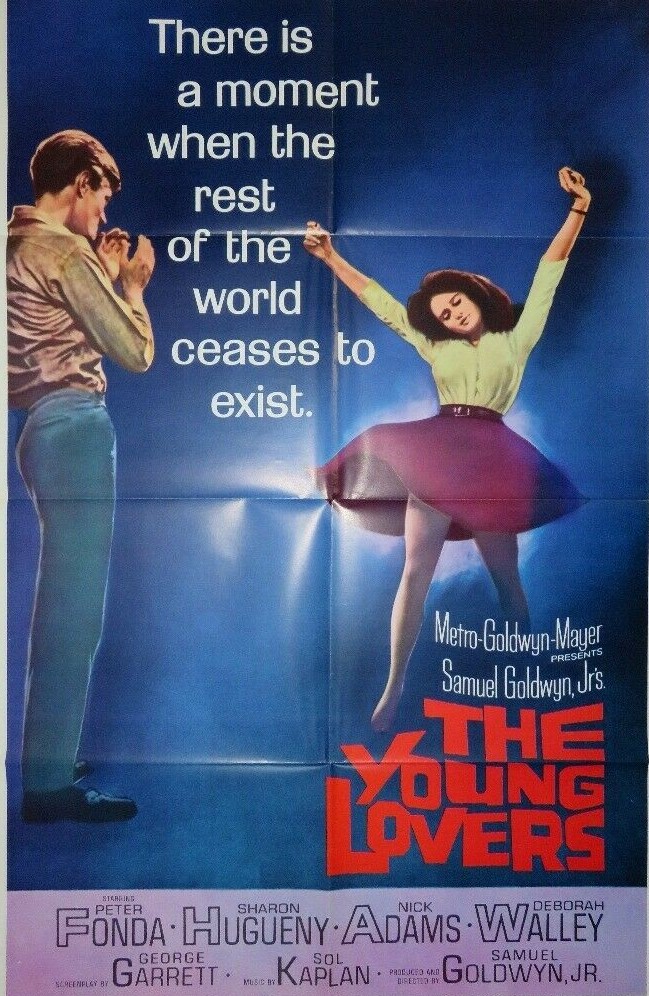
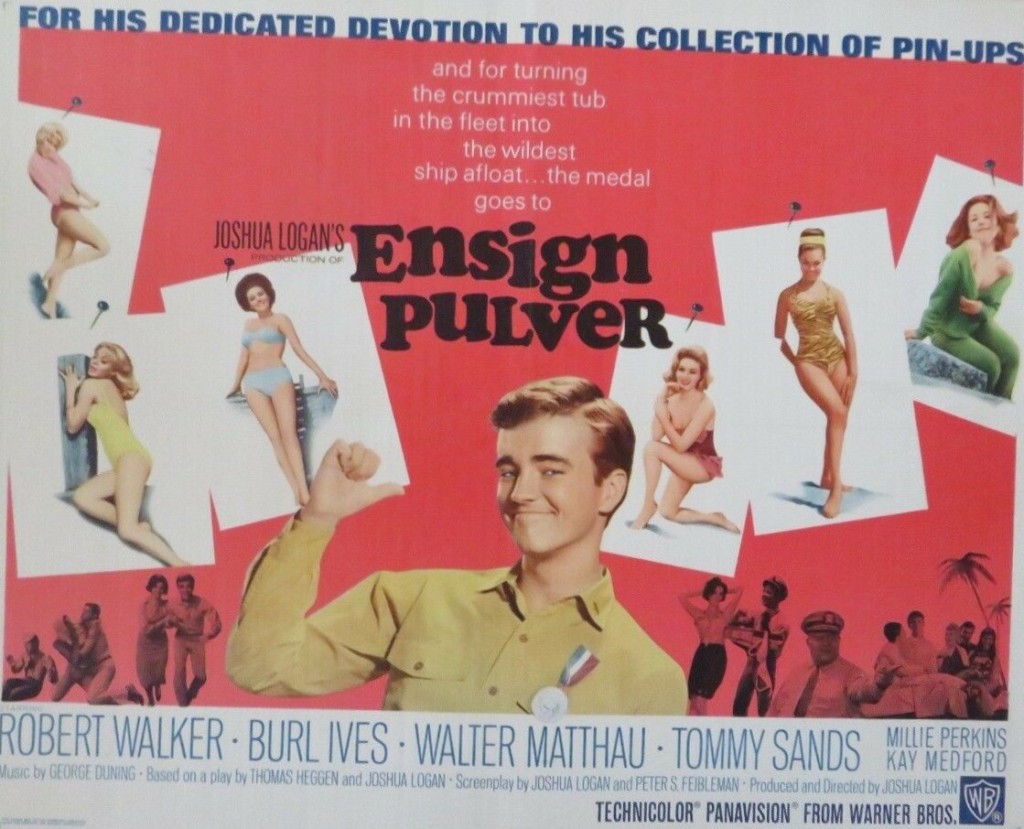
Since starring in David and Lisa (1962). Dullea’s career appeared jeopardized by offbeat choices, The Thin Red Line (1964) and The Naked Hours (1964), in both top-billed, before sliding down the credit rankings for Otto Preminger’s Bunny Lake Is Missing (1965). Peter Fonda appeared to be heading for success as a romantic star after appearing in fluff like Tammy and the Doctor (1963) and his first top-billed role in The Young Lovers (1964). Robert Walker Jr, top-billed in Ensign Pulver (1964), had followed this up with Italian oddity The Touching and Not Touching (1965) thus demonstrating versatility.
Stefanie Powers was clearly a rising star, smaller roles in The New Interns (1964) and Love Has Many Faces (1965) had led to second-billing in Die! Die! My Darling (1965) and her forthcoming role in Stagecoach was expected to solidify her mainstream career. Barbara Eden was dependent on television for her high placing, after I Dream of Jeannie kicked off in 1965. Most heavily dependent on nepotism were Patrick Wayne and Nancy Sinatra. Wayne was by far the least proven, riding very much on his father’s coat-tails, but fourth-billed in Shenandoah (1965) and a leading role in television series The Rounders which had kicked off in 1966. Sinatra was the longest shot, just bit parts so far.
Television’s The Virginian had been the launch pad for Doug McClure but he had since ventured out into Shenandoah (1965) and Beau Geste (1966), second-billed each time. Apart from his reputation as a singer, it’s hard to see why Tommy Sands ended up so favored, with just a couple of bit parts to his name. But you could see why Rosemary Forsyth, after the female lead in The War Lord (1965) was attracting industry attention.
So what happened to the prospects? Were the talent-spotters proved right? As you might expect, yes and no is the answer.
Keir Dullea and Peter Fonda proved the standouts. Dullea followed the offbeat The Fox (1967) with the big-budget big hit 2001: A Space Odyssey (1968). Fonda quickly transitioned to The Wild Angels (1966) and starred in the decade’s most unexpected hit, Easy Rider (1969), and long-term was easily the most successful graduate of the Class of ’66.
Patty Duke was second-billed in big hit Valley of the Dolls (1967) and won outright top billing for Me, Natalie (1968). After The Wild Angels (1966) Nancy Sinatra became a pop star in her own right before sharing the billing with Elvis Presley in Speedway (1968) but that was the highlight of her movie career. Patrick Wayne took longest to find his feet but snagged several top-billed roles, mostly leading with his chin in fantasy pictures such as Beyond Atlantis (1973), The People That Time Forgot (1977) and Sinbad and the Eye of the Tiger (1977). Rita Tushingham starred in a string of films including The Trap (1966) Smashing Time (1968), The Guru (1969) and The Bed Sitting Room (1969) that failed to click with U.S. mainstream audiences.
Doug McClure was second-billed in Beau Geste (1966) and top-billed for swashbuckler The King’s Pirate (1967) and comedy Nobody’s Perfect (1968) before drifting back into television to emerge years later as a credible top-billed star of Hellhounds of Alaska (1973), The Land Time Forgot (1974) and At The Earth’s Core (1976). Stefanie Powers only managed top-billing for Crescendo (1970) and had to wait over a decade to realize her potential, and then in television show Hart to Hart (1979-1984).
Roy Walker Jr.’s career never took off, his biggest success as Young Billy Young (1969) was a flop. Rosemary Forsyth got as high as leading lady on Texas Across the River (1966) and Where It’s At (1967) but then drifted down the credits into the ranks of supporting players. Barbara Eden only managed a few television movies. Tommy Sands’ movie career died the death except for third billing in biker picture The Violent Ones (1967).
Screenwriter William Goldman coined the phrase “nobody knows anything” in relation to movies but it might equally apply to industry expectation of hot prospects, some of whom crashed and burned, and some never were even hot.
SOURCE: “12 most popular players of ’65,” Box Office, February 28, 1966, p76-77.
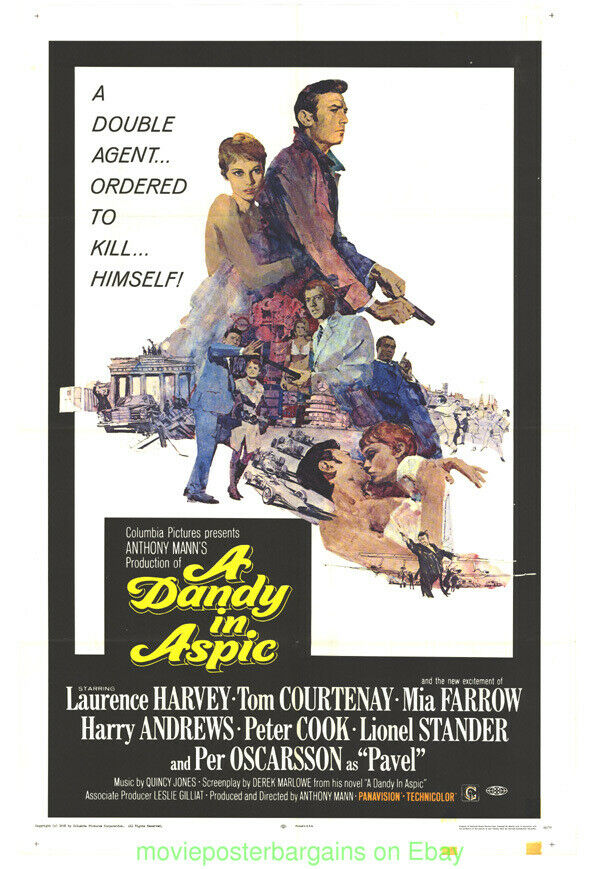
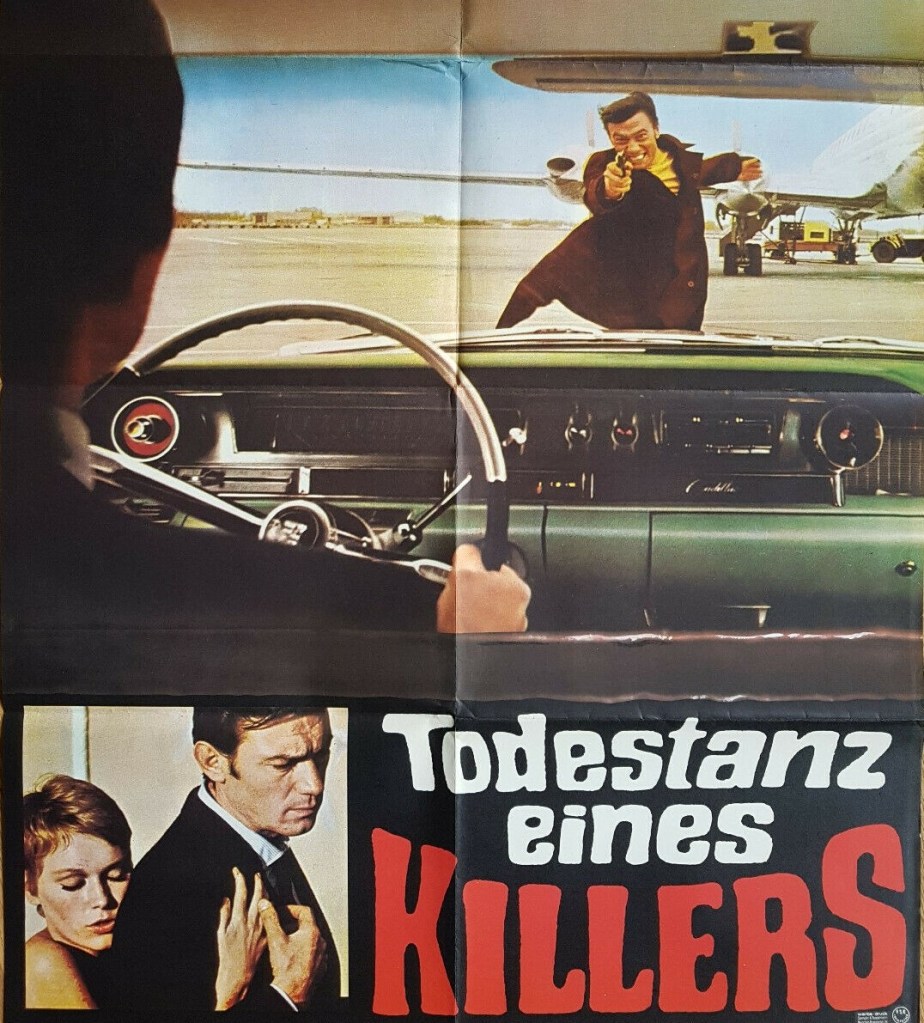
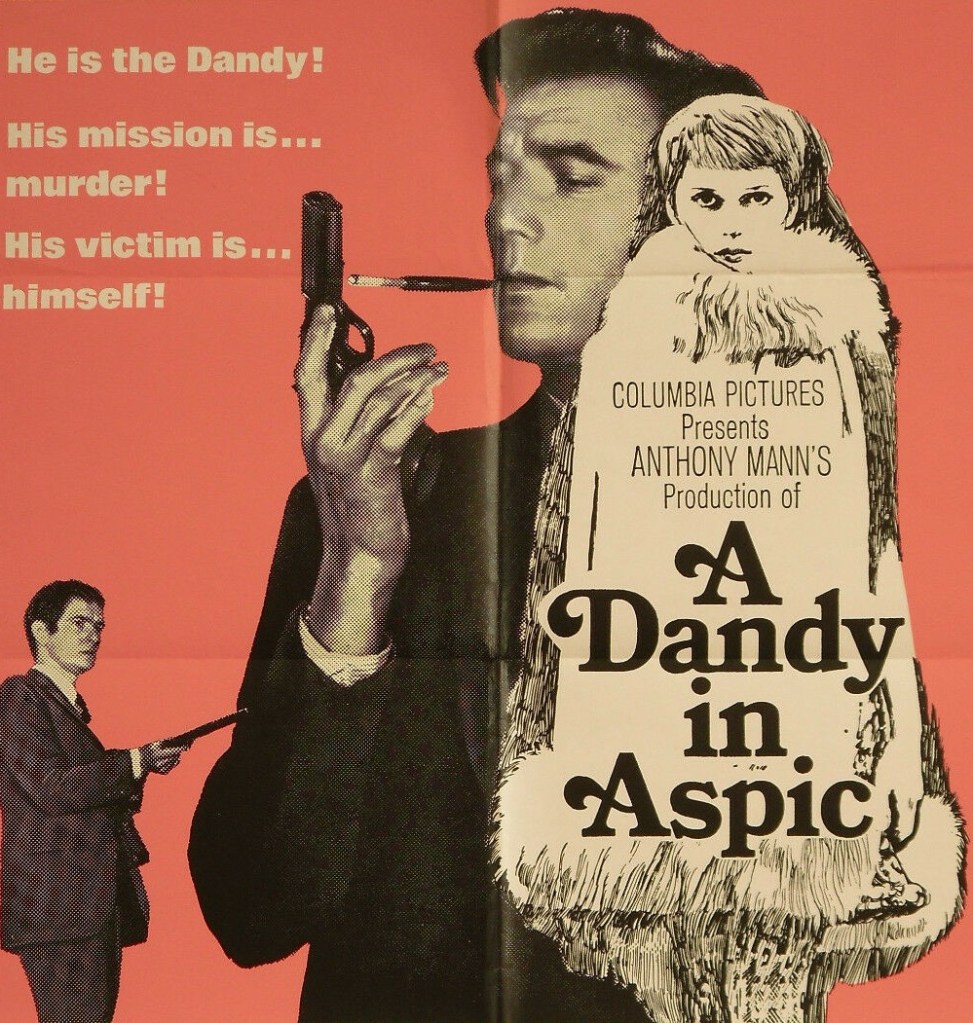
Belongs to the “serious spy” genre that exposed the nitty-gritty espionage business, often more concerned with the impact of the job on the spy than on the mission on which they have been sent. The biggest successes came early on – The Spy Who Came in from The Cold (1965), The Ipcress File (1965) and The Quiller Memorandum (1966). A Dandy in Aspic is one of the latest in the series of sad spies and like The Defector (1966) it’s more of a character study than an action picture. The tone is set with the credits, a puppet dangling to the point of being tormented, on a string.
The character in question is Eberlin (Laurence Harvey), a spy who wants to quit and go home. He knows only too well what happens to the burnt-out case, one of his colleagues is a drug addict. Only in this case home is Russia. But the feedback he receives is that nobody back home wants him to quit. His British bosses send him to go to Berlin to assassinate a dangerous Russian spy called Krasnevin. The only problem is, Eberlin is Krasnevin and so begins a game of bluff and double bluff while he fails to uncover the supposed foreign assassin his ruthless British unwanted colleague Gatiss (Tom Courtenay) is helping him locate.
Thrown into the mix is a girl, Caroline (Mia Farrow) a casual pick-up, a photographer he met in London who turned up in Berlin. Happenstance? Perhaps. But there is no such thing for a suspicious spy and to tell the truth even the moviegoer will treat her as just too good to be true even though she is a delightful personality and beautiful to boot. The fact that Eberlin has a girlfriend Miss Vogler (Barbara Murray) doesn’t seem to bother him, spies, as you will know by now, discarding women like old shoes.
If a noose is closing in, it’s a strange one, and feels more like it’s coming from the East rather than the West. He is blocked from taking a trip to East Berlin. Cops are tipped off when he makes contact with someone who could get him over/through the Wall. His Eastern masters seem willing to pay good money to find out the identity of Krasnevin.
It’s all twisted and complex and all sorts of strange characters come out of the woodwork. For no reason at all one sequence is set at a Grand Prix race, one of the drivers paid to cause a distraction to allow someone to be shot. Like The Defector, this is a movie that unravels backwards. Once you get to the end it makes a lot more sense. If you were asked to choose, on the basis of the characters presented, whether the Russians or British had more principles you would be hard put to decide.
Laurence Harvey (The Running Man, 1963) is one of the few actors with the vicious fragility to carry this off. He is coming apart at the seams. He can hold onto his good looks far longer than his mental stability. His rare acts of violence seem petulance. And since we are never allowed inside his head, since he cannot confess his feelings to Caroline, he cannot explain what it’s like to be abandoned by your native country, cast aside like an old lover. It’s left to the audience to work this out for themselves, that a true patriot risking his life for his country is refused sanctuary.
He’s doomed and soon he knows it, nowhere left to run, the sense that the trap is closing and perhaps the few hours spent with Caroline are like a condemned man’s final wishes.
Filmed in bleak London and Berlin, the setting reflects the character’s mindset. There’s a bit too much fancy cinematography and sound effects, but otherwise it’s solid entry into the “more real than reality” subgenre. Director Anthony Mann (The Heroes of Telemark, 1965) died during the making of the film, Laurence Harvey taking the helm for the last two weeks of shooting and post-production so it’s possible this is not quite the film Mann had in mind.
You can see here elements of the documentary style Mann developed in The Heroes of Telemark and it’s possible that when it came to the editing director Harvey accorded himself more prominence than Mann might have, leaving a complex tale more difficult to follow than necessary.
Harvey is very good in the role of the ruthless narcissist, Mia Farrow – she followed this with Rosemary’s Baby (1968) – with a creditable English accent is excellent as the lover though Tom Courtenay (Operation Crossbow, 1965) seems miscast. Excellent support is provided by Lionel Stander (Once Upon a Time in the West, 1968), Harry Andrews (Danger Route, 1967) and Per Oscarsson (Who Saw Him Die?. 1968). Look out for comedian Peter Cook (Bedazzled, 1967) as an unlikely lothario, Barbara Murray (television series The Power Game, 1965-1969) and Calvin Lockhart (Dark of the Sun, 1968).
Based on a novella by D.H. Lawrence, The Fox, relocated to contemporary Canada, marked the debut of director Mark Rydell. Originally, Alan Bates (Georgy Girl, 1966), Patricia Neal (Hud, 1963) and Vivien Merchant (Alfie, 1966) were in the frame for the three roles. Instead, the trio were Sandy Dennis, Keir Dullea and Anne Heywood.
Dullea’s career was at a dead end after flops The Thin Red Line (1964) and Bunny Lake Is Missing (1965). Former beauty queen Heywood had been a Rank starlet which resulted in small roles of no distinction until marriage to the film’s producer Raymond Stross improved her prospects. The main marquee attraction was Sandy Dennis who had won the Best Supporting Actress Oscar for Who’s Afraid of Virginia Woolf (1966) and starred in drama Up the Down Staircase (1967). But it was a low-budget enterprise all the way.
Dennis and Heywood play spinsters running a chicken farm in rural Canada, home-body Dennis the more introspective and content, task-oriented Heywood self-sufficient but sexually frustrated. Dullea is a merchant seamen who visits the farm in search of his grandfather, now deceased. Allowed to remain, his presence threatens their lifestyle and forces them to confront the intensity of their suppressed feelings towards each other. Although a real fox is causing trouble, Dullea is the symbolic fox in the symbolic hencoop. Rydell displays considerable confidence in his material.
It is very atmospheric, the natural backdrop, early morning sunsets and wintry chill in the air adding a certain tone, with the isolation providing a thematic template. The tiny cast creates a sense of intimacy as well as tension and the acting is uniformly good. There is no sense of lust, just a gradual emergence of submerged emotion.
Tackling such a bold theme would have brought the movie some attention anyway, but nudity, masturbation and sex brought much more. That such scenes were filmed in good taste and impressed critics was hardly going to deter the salacious. The nervy, whiny Dennis has the showiest role but Heywood’s subdued performance, trapped by her conflicting sexual needs, is the central figure.
George Roy Hill might well have purloined his freeze-frame ending in Butch Cassidy and the Sundance Kid from an idea Rydell employs here, one of only two effective stylistic devices in an otherwise highly-controlled piece. The only directorial downsides are a couple of instances of unnecessary melodramatic music when otherwise Lalo Schifrin’s gentle theme is perfectly in keeping with the picture’s mood. Made on a budget of buttons and reliant entirely on acting skill, this is one of the decade’s low-budget triumphs, not least for its sensitive treatment of its subject matter.
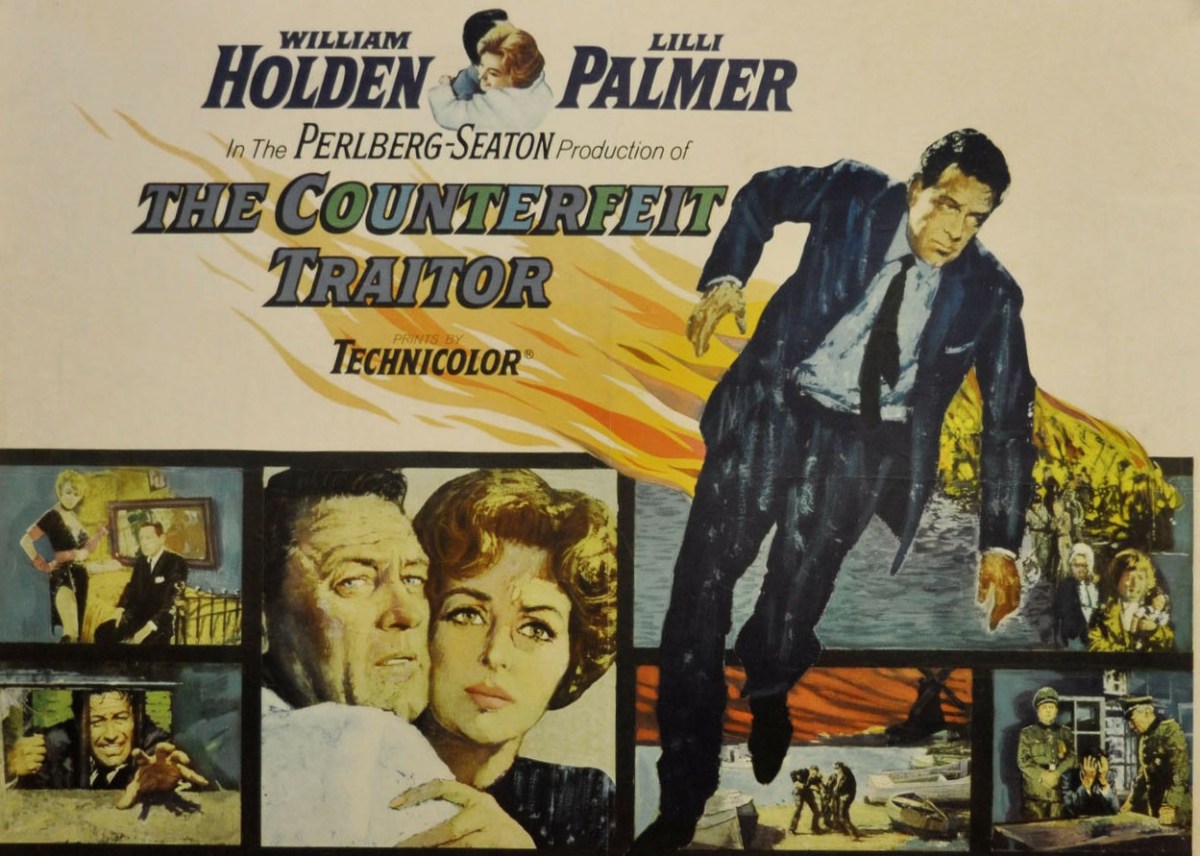
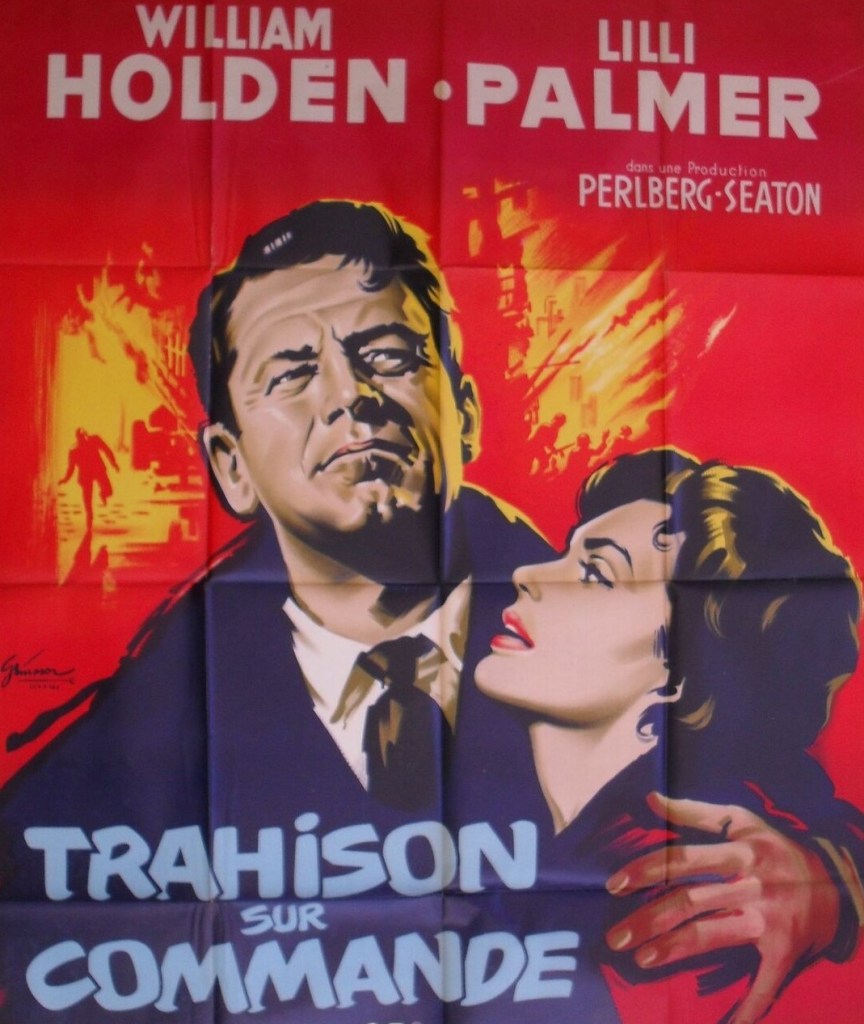
Authenticity came at a cost. In electing to film in Europe veteran producer-director team of William Perlberg and George Seaton, their partnership stretching back two decades, incurred the ire of U.S. movie unions campaigning against “runaway” productions and tax-avoiding stars like William Holden. Feelings ran so high the movie was picketed on release, even though it had received a Presidential seal of approval after John F. Kennedy requested a screening.
Perlberg and Seaton were lucky not to be indicted for a further act of anti-Hollywood behavior, the hiring of so many European actors and actresses in favor of the home-grown variety, but with the incursion of Sophia Loren, Brigitte Bardot and Gina Lollobrigida into the U.S. box office introducing another big female star into the Hollywood firmament would likely have been welcomed.
Producer Perlberg bluntly defended the decision to film abroad a movie set in war-torn Europe (where much of the damage caused by the war had not been rectified). “Where would you find three solid blocks of rubble but Berlin?” he demanded. “Or a prison like Moabit? Our company was yesterday filming in a partially bombed out section of the Altona railway station, six stories high. Action involved a 14-car German train (which Union Pacific can’t reproduce). How can we build Stockholm in Hollywood.” More to the point, he added, “Of course where in the world can you get weather like this? It’s been raining every day.”
Perlberg and two-time Oscar winner Seaton (Airport, 1970), separately and together, had considerable experience of war pictures, having between them made The Proud and the Profane (1956) and The Bridges at Toko-Ri (1954), both pictures, incidentally, starring Holden. The Alexander Klein bestseller The Counterfeit Traitor, purchased in 1957 for a modest $75,000, appeared to follow a similar trajectory. “Competition for the entertainment dollar has wedded us to big films and global stories,” maintained Perlberg despite complaint by Hollywood unions that such films, in the face of shrinking U.S. production, denied their members work.
Although the European locations would shave $500,000 from the budget of The Counterfeit Traitor, still coming in at a hefty $3.4 million and originally to be filmed under the title Man in the Middle, Perlberg was adamant that “the picture could never be made in Hollywood with justice to the subject and story… We are shooting this picture where it happened. On the streets that Eric Erickson (the character William Holden plays) walked; in the houses that were his hideouts.”
Perhaps key to this philosophy was the ability to shoot inside the notorious and still-active Moabit Prison, housing 1,300 prisoners and located close to Berlin’s famous Tiergarten. Amazingly, the prison warden granted permission not just to shoot in the courtyard but also inside the actual building. The prison officials initially denied that anyone was shot in the courtyard (a key scene in the film) until Erickson turned up and testified to the contrary, standing in the cell through whose bars he had witnessed the execution. You could not buy such authenticity and certainly not recreate it in a Hollywood back lot.
Paperback movie tie-in.
The 100-day shooting schedule included a month in Berlin, two months in Hamburg and scenes set in Copenhagen and Stockholm. It was the epitome of a multi-country adventure – the cameraman French (Jean Bourgoin who shot Tati’s Mon Oncle), wardrobe coordinator Italian, sound mixer German and assistant director British. But in Denmark, they worked with a Danish crew, in Sweden a Swedish crew. “I doubt that any other picture has been made with this type of operation – changing crews with each country involved. It has certain pitfalls but we’ve found in Germany alone that it would have been foolish to do it any other way,” added Perlberg.
“Hollywood set dressers, for instance, are great but no amount of research can match actual experience. Our interior decorators lived in the environment, witnessed the events and dressed the sets accordingly.” Apart from language problems, in Germany, where the bulk of filming took place, the lack of a centrally located “movie town” like Hollywood caused issues. Actors and crew were drawn from Berlin, Munich and Hamburg, with all the cast put up in first class hotels and paid a per diem of $15. With over 70 speaking roles, the movie also called on 2,000 extras. The producers also worked in the oldest film studio in the world, Nordish Film in Copenhagen built in 1906, and the rebuilt Palladium, which had been blown up by the Germans during World War Two.
Actors and directors worked abroad to limit their U.S. tax exposure. Anyone taking advantage of foreign income was viewed as a tax cheat. William Holden, who would only make one movie in Hollywood in seven years, epitomized the wealthy tax dodger. Living abroad also cut down on paying U.S. tax. Switzerland, for example, where Holden took up residence, calculated tax on the amount you spent on the annual rental of your home, resulting in huge savings – Yul Brunner claimed this legitimate move alone had saved him $2 million.
Holden complained that he was unfairly being singled out. “How about Clark Gable in Naples, Tony Quinn, Charlton Heston in Ben- Hur? Why do they pick on me? I pay U.S. taxes in the highest brackets and will continue doing so for years.” He was a prime target not just because he was outspoken about living and working abroad but because he was, along with John Wayne, the highest-earning male actor, on $750,00 per picture plus percentage. He had the pick of the projects, linked with The Guns of Navarone (1961), The Alamo (1961), The Americanization of Emily with William Wyler in the director’s chair, The Visit with Ingrid Bergman and Melody for Sex where he would be paired with both Sophia Loren and Gina Lollobrigida. He had followed up The World of Suzie Wong (1961) filmed in Hong Kong, with Satan Never Sleeps (1961) filmed in Britain, and then was lining up The Lion in Kenya, Together in Paris (aka Paris When It Sizzles) in France and The 7th Dawn in Malaya.
Although Prussian-born Lili Palmer (Sebastian, 1968) was an established Hollywood import, the movie offered a wide range of parts to fast-rising European talent. Most major studios had already invested in “new faces from abroad” so Perlberg-Seaton were not going against the grain on this one. Paramount, for example, had hired the German Hardy Kruger and the French Gerald Blain and Michele Girardon for Hatari! (1962). Columbia lined up Frenchman Alain Delon for Lawrence of Arabia (1962) and Greek actress Irene Papas in the female lead in The Guns of Navarone (1961). MGM chose Ingrid Thulin for The Four Horsemen of the Apocalypse (1962) and United Artists set Maximilian Schell in Judgement at Nuremberg (1961). Claudia Cardinale was intended to make her Hollywood debut opposite Sidney Poitier in Iron Men – never made.
Heading the list of potential break-out stars were Ingmar Bergman protegees Sweden’s Eva Dahlbeck (Smiles of a Summer Night, 1955) and Ulf Palme (Dreams, 1955). They had appeared in two films together, Dreams and Meeting in the Twilight (1946). German Wolfgang Preiss would later appear in The Train (1965) and Von Ryan’s Express (1965). But the biggest casting coup was Klaus Kinski. “No German producer lightly engages him because most of his engagements in German theaters have ended with a resounding quarrel or scandal,” explained journalist Peter Baker, “(but he is) nevertheless regarded with awe and respect as one of the greatest actors to merge from post-war Germany.” His three days in The Counterfeit Traitor won him a role in Perlberg-Seaton’s next picture The Hook (1963).
SOURCES: William Perlberg, “Searching Europe for Authenticity,” Films and Filming, February 1961, p9; Peter Baker, “The Tour of Babel,” Films and Filming, February 1961, p10-11, 41; “Lazar Percenting Ericson Spy Tome,” Variety, October 16, 1957, p3; “Lament for B.O. Stars,” Variety, January 29, 1958, p14; “Holding Money via Residence in Switzerland,” Variety, August 5, 1959, p12;“Par’s Sex Stars,” Variety, September 2, 1959, p3; “Holden, Seaton Invade Berlin for War Film,” Variety, October 28, 1959, p7; “H’wood – O’Seas Row Boils Up,” Variety, August 24, 1960, p7; “Bill Perlberg’s Back and Loves Hollywood,” Variety, November 2, 1960, p7; “New Faces from Abroad To Make Debuts in U.S. Films During 1961–62 Season,” Box Office, September 4, 1961, p12-13; “President Kennedy Sees Counterfeit Traitor,” Box Office, May 7, 1962, pW8; “Warm-Up for Picketing Strategy,” Variety, June 6, 1962, p4.








 The Magnificent 60s