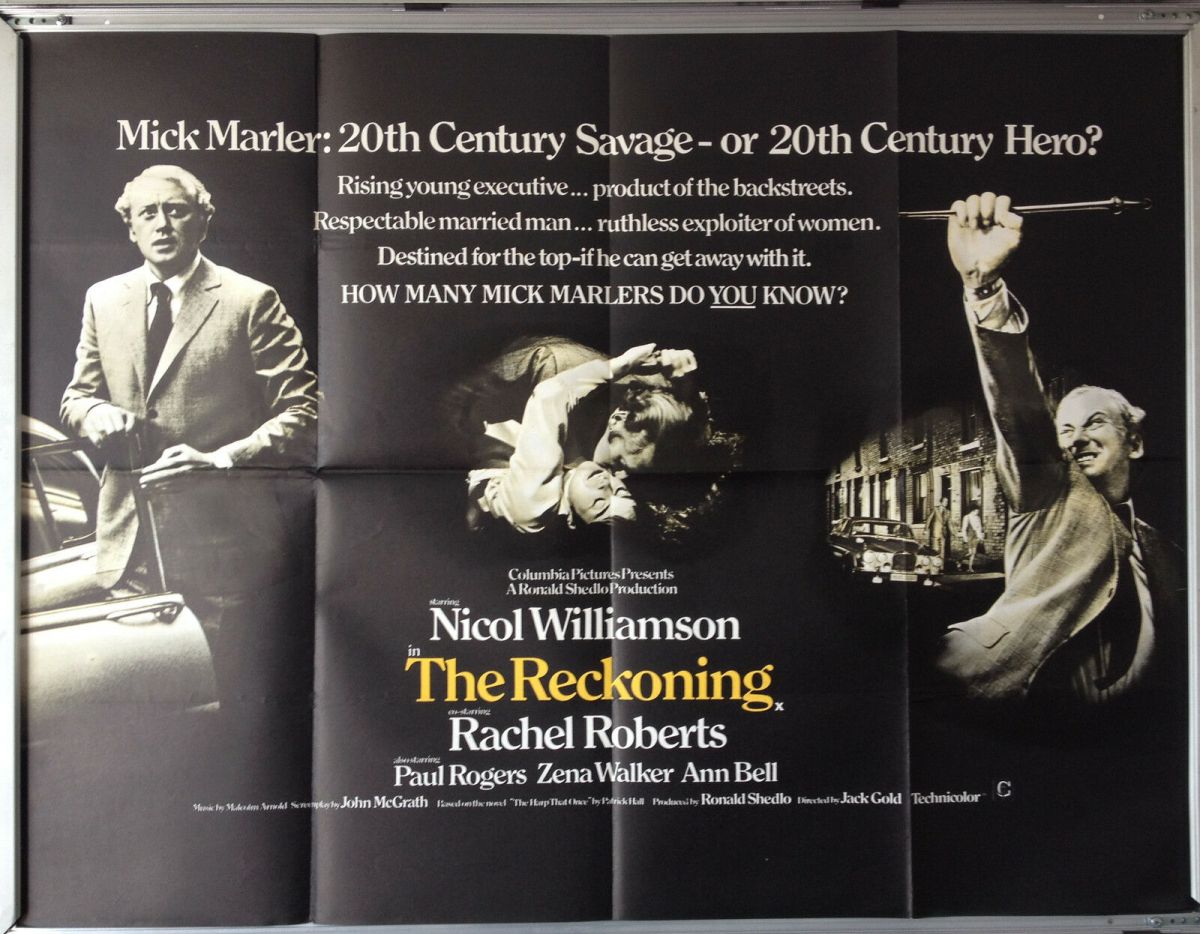
The Reckoning (1970) ****

Fans of Succession will love the boardroom battles and fans of Get Carter (1971) the gritty violence. Michael Marler (Nicol Williamson) is a thug whichever way you cut it. He’s a business hard-ass, at his nicest he’s obnoxious, at this worst brutal. He drives like a demon. Even in love, he’s fueled by hate, sex with wife Rosemary (Ann Bell) infernal. And all of this made acceptable, according to the left-wing tenets that underwrite the film, because he is a working-class man battling upper-class hypocrisy, never mind that his upper-class wife was hardly foisted upon him, nor that he was forced to live in luxury.

Unexpectedly, the film also explores other themes which have contemporary significance. Computers play a pivotal role and so does honor killing. The picture’s original title – A Matter of Honor – was ironic given that in the upper-class worlds in which Marler moved, courtesy of job and marriage, he is considered to have little in the way of chivalry. But in the working-class world he has escaped he must exact revenge according to a code of honor steeped in violence.   
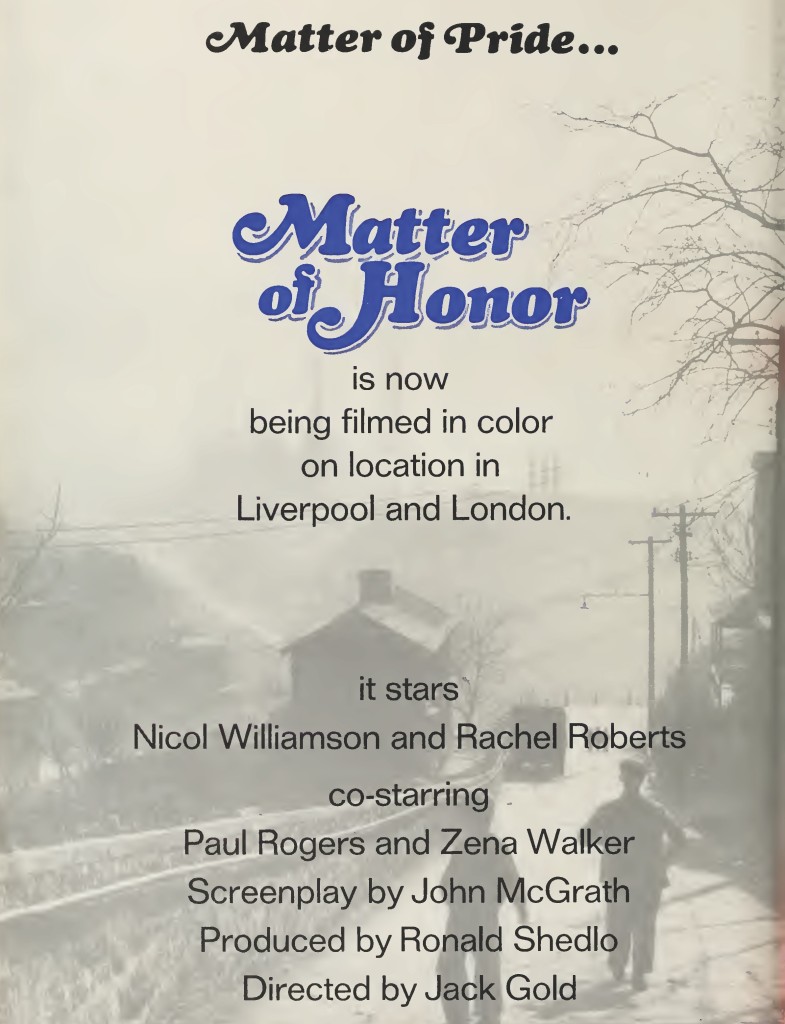
This advert dates from October 1968, which gives an indication of how long the film’s release was delayed, not appearing until January 1970. Interestingly, the advert appeared in the U.S. trade magazine Box Office (October 28, 1968), suggesting Columbia had high hopes for the British production. The title here suggest a different approach to the movie.

The sudden death of his father sends Marler back to Liverpool where he discovers the old man was killed in a pub brawl. But the local doctor and the police, uninterested in complicating what must be a regular occurrence, view his death as accidental. So Marler takes it upon himself to uncover the culprits and wreak revenge, any kind of revenge on any kind of culprit, regardless of the fact that from the outset it is clear they will hardly be gangsters.  While contemplating violence, he strikes up a sexual relationship with the married Joyce (Rachel Roberts).

The story jumps between the back-stabbing corporate world to a scarcely less violent working class environment. The combination of charm and brute energy holds a certain appeal for Rosemary (Ann Bell) and helps keep him in the good books of his boss, but he is otherwise a bully, targeting the weak spots of anyone who stands in his way on his climb to the top, and while heading up the sales division of a company in trouble blaming everyone else for his own failings. And while scorning his wife’s upper-class friends is quite happy to enjoy the benefits of her lifestyle, the flashy car might be the result of his endeavors but not the huge posh house. Marler stitches up another associate with the assistance of another lover, secretary Hilda (Zena Walker), and his long-suffering wife finally takes umbrage at his venomous manner.

Marler hides his hypocrisy behind the façade of a left-wing class-struggle. John McGrath’s screenplay clearly intends Marler’s working-class background to provide him with a get-out-of-jail-free card as well as to launch an attack on upper classes seen as namby-pamby except when it comes to putting the poor in their place. The anti-class polemic has somewhat eroded over time but in its place can be found an accurate portrait of the social mores of ordinary people for whom, alcohol, the drug du jour, plays a massive part.  The going-home element is populated by endless terraced houses without a single parked car, vast caverns of pubs which host wrestling matches and are a tinder spark away from erupting in a brawl. This is in stark contrast to the high-living life Marler enjoys in London.

He has no desire to go back home, hasn’t visited in five years, escaping from there deemed a sign of success, and mostly returns metaphorically to draw on memories with which to scourge the upper-class and excuse his own behavior. 

Nicol Williamson (Inadmissable Evidence, 1968) delivers a tour de force, his screen presence never so vibrant, exhibiting the same raw appeal as Caine in Get Carter. At this point in his career, with a critically-acclaimed Hamlet on stage, he was perceived as the natural successor to Laurence Olivier and Columbia held up the release of The Reckoning to allow the Tony Richardson film of that stage production to pick up critical momentum. Oddly enough Rachel Roberts had not capitalized on her Oscar-nominated role in This Sporting Life (1963), this only her second movie in seven years. Initially coming across as brassy caricature, she soon softens into a surprisingly wistful character. Both Ann Bell and Zena Walker bring greater dimension to their characters rather than as adoring doormats. You can catch Paul Rogers (Three Into Two Won’t Go, 1969) and Tom Kempinski in supporting roles.

Director Jack Gold, who had worked with both Williamson and McGrath on his movie debut The Bofors Gun (based on the writer’s play), does a great job of capturing a particular period of British social history as well as allowing Williamson to stomp around in his pomp.

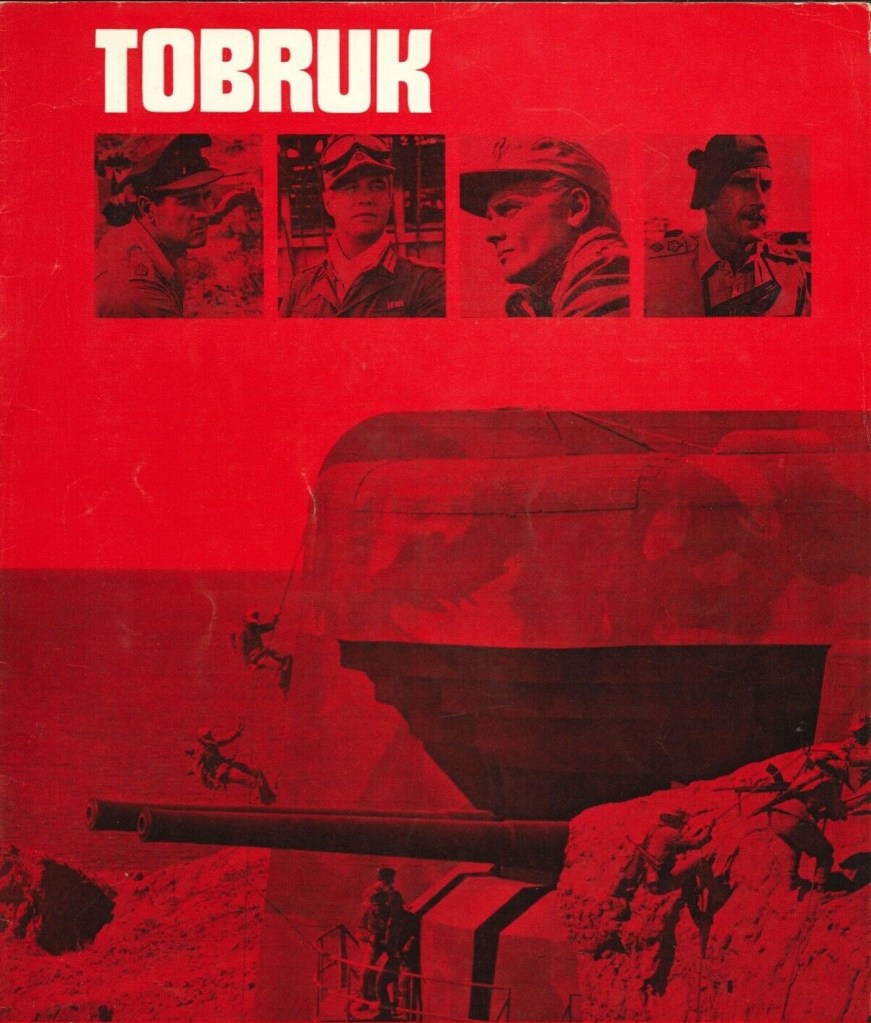
Tobruk (1967) ****

Occasionally ingenious action-packed men-on-a-mission picture that teams reluctant hero Major Craig (Rock Hudson) with Captain Bergman (George Peppard) who heads up a team of Jewish German commandos (i.e good guys). You might think the idea of German-born Jewish commandoes was a dramatic flight of fancy. But, in fact, these guys existed. They were called X-Troop although whether they actually took part in something close to this fictional operation is of course open to question.

Arthur Hiller (Promise Her Anything, 1966) directs with some skill and to increase tension often utilizes silence in Hitchcockian fashion. He meshes innate antagonism between the two principals and stiff-upper-lip British Colonel Harker (Nigel Green), two subplots that have a bearing on the final outcome, and explosive battle scenes. In addition, in supporting roles is a Sgt Major (Jack Watson) unusually solicitous of his troops and a grunt (Norman Rossington) with a fund of one-liners.

Craig is liberated by frogmen from a prison ship and flown into the Sahara on the eve of the Battle of El Alamein to guide a strike force 800 miles across the desert to blow up Rommel’s underground fuel tanks in Tobruk, Bergman’s outfit providing the perfect cover as Germans escorting British prisoners. “It’s suicide,” protests Craig. “It’s orders,” retorts Harker.

Most action pictures get by on action and personality clashes against authority but this is distinguished as well by clever ruses. First off, hemmed in by an Italian tank squadron on one side and the Germans on the other, Harker’s unit fires mortars into each, convincing them to open fire on one another. Craig, on whose topographical skills the unit depends, goes the desert version of off-piste, leading the group through a minefield, personally acting as sweeper with a bayonet as his rudimentary tool, his understanding of how the enemy lays its mines allowing him to virtually explode them all at once. But, ironically, their cover is so complete that they are strafed by a British plane, and equally ironically, have to shoot down one of their own.

Along the way they pick up a stranded father-and-daughter Henry (Liam Redmond) and Heidy Hunt (Cheryl Portman) who are on another mission entirely, to help create a Moslem uprising against the British in Egypt. Their arrival reveals the presence of a traitor in the camp. Naturally, this isn’t the only complication and problems mount as they approach Tobruk and, finding it vastly more populated with German troops than expected, they now, in addition to tackling the virtually impenetrable fuel dumps, have to knock out the city’s radio mast and neutralize the German big guns protecting the beaches.

So it’s basically one dicey situation after another, ingenuity solving problems where sheer force is not enough, and twists all the way to the end.

All the battles are particularly well done, pretty ferocious stuff, flamethrowers especially prominent, but the team are also adept at hijacking tanks, and in another brilliant ruse capturing one without blowing it up. The screenplay by Leo Gordon (The Tower of London, 1962) supplies all the main characters with considerable depth. While Craig isn’t exactly a coward, he is not interested in laying down his life for a cause. Although Harker seems a typical officious British officer, he, too, has surprising depths. But it is Bergman who is given the weightiest part, not just a German seeking revenge against his own countrymen for the treatment of Jews but a man looking to a future when Jews will fight for their own homeland in Israel.  

Hudson had begun his career in action films, mostly of the western variety, before being seduced by the likes of Doris Day and Gina Lollobrigida in romantic comedies and this is a welcome return to tough guy form. George Peppard made it two Germans in a row after The Blue Max (1966) but this is a far more nuanced performance. There are star turns from Nigel Green, Guy Stockwell (Beau Geste, 1966) as Peppard’s sidekick and the aforementioned Jack Watson (The Hill, 1965) and Norman Rossington.

This was pretty much dismissed on initial release as a straightforward gung-ho actioner and one that tipped Rock Hudson’s career in a downward spiral, but I found it both thoughtful and inventive and had much more of an on-the-ground feeling to it, with nothing going according to plan and alternatives quickly need to be found. Under-rated and well worth a look.

Subterfuge (1968) ***

Worth seeing just for super-slinky leather-clad uber-sadistic Donetta (Suzanna Leigh) who  delights in torturing the daylights out of any secret agent who crosses her path, in this case Michael Donovan (Gene Barry). She’s got a neat line in handbags, too, the poisonous kind. Two stories cross over in this London-set spy drama. American Donovan is under surveillance from both foreign powers and British intelligence. When his contact comes into unfortunate contact with a handbag, he finds himself on the sticky end of the attention of Shevik (Marius Goring) while at the same time employed by the British spy chief Goldsmith (Michael Rennie) to find the mole in their camp.

The three potential British suspects are top-ranking intelligence officer Col. Redmayne (Richard Todd), British spy Peter Langley (Tom Adams) and backroom underling Kitteridge (Colin Gordon). On top of this Langley’s wife Anne (Joan Collins) adds conscience to the proceedings, growing more and more concerned that the affairs of the secret state are taking too much precedence over her marriage.

The hunt-the-mole aspect is pretty well-staged. Kitteridge always looks shifty, keenly watching his boss twisting the dials on a huge office safe containing top secret secrets. Langley is introduced as a villain, turning up at Shevik’s with the drugs that are going to send the Donovan to sleep for eight hours before being transported abroad in a trunk. But he turns out to be just pretending and aids Donovan’s innovative escape. Charming but ruthless Redmayne is also under suspicion if only because he belongs to the upper-class strata of spies (Burgess, Philby and Maclean) who had already betrayed their country.

In investigating Langley, Donovan fixes on the wife, now, coincidentally, a potential romantic target since her husband is suing for divorce. She is particularly attracted to Donovan after he saves her son from a difficult situation on the water, although that appears manufactured for the very purpose of making her feel indebted. However, the couple are clearly attracted, although the top of a London bus would not generally be the chosen location, in such glamorous spy pictures, for said romance to develop.

As you will be aware, romance is a weak spot for any hard-bitten spy and Shevik’s gang take easy advantage, putting Anne, her son and Donovan in peril at the same time as the American follows all sorts of clues to pin down the traitor.

This is the final chapter in Gene Barry’s unofficial 1960s movie trilogy – following Maroc 7 (1967) and Istanbul Express (1968) – and London is a more dour and more apt climate for this more down-to-earth drama. Forget bikinis and gadgets, the best you can ask for is Joan Collins dolled up in trendy mini-skirt and furs. Barry, only too aware that London has nothing on Morocco or Istanbul in the weather department, dresses as if expecting thunderstorms, so he’s not quite the suave character of the previous two pictures. In this grittier role, he does not always come out on top. But that does not seem to dampen his ardor and the gentle romantic banter is well done.

Joan Collins, in career trough after her Twentieth Century Fox contract ended with Esther and the King (1960), has the principled role, determining that the price paid by families for those in active secret service is too high. No slouch in the spy department himself, essaying Charles Vine in three movies including Where the Bullets Fly (1966), Tom Adams plays with audience expectations in this role. It’s a marvelous cast, one of those iconic congregations of talent, with former British superstar Richard Todd (The Dam Busters, 1955), Michael Rennie, television’s The Third Man (1959-1965), Marius Goring (The Girl on a Motorcycle, 1968) and Suzanna Leigh (The Lost Continent, 1968) trading her usual damsel-in-distress persona for a turn as terrific damsel-causing-distress.

Shorn of sunny location to augment his backgrounds, director Peter Graham Scott (Bitter Harvest, 1963) turns his camera on scenic London to take in Trafalgar Square, the zoo, Royal Festival Hall, the Underground, Regent’s Park with the usual flotilla of pigeons and ducks to fill in any blanks in the canvas.

Catch-Up: Previously reviewed in the Blog are Gene Barry in Maroc 7 (1967) and Istanbul Express (1968), Joan Collins in Esther and the King (1960) and Suzanna Leigh in The Lost Continent (1968).

This is hard to find so your best bet is ebay although it is available on Youtube for free but the print quality is not great.

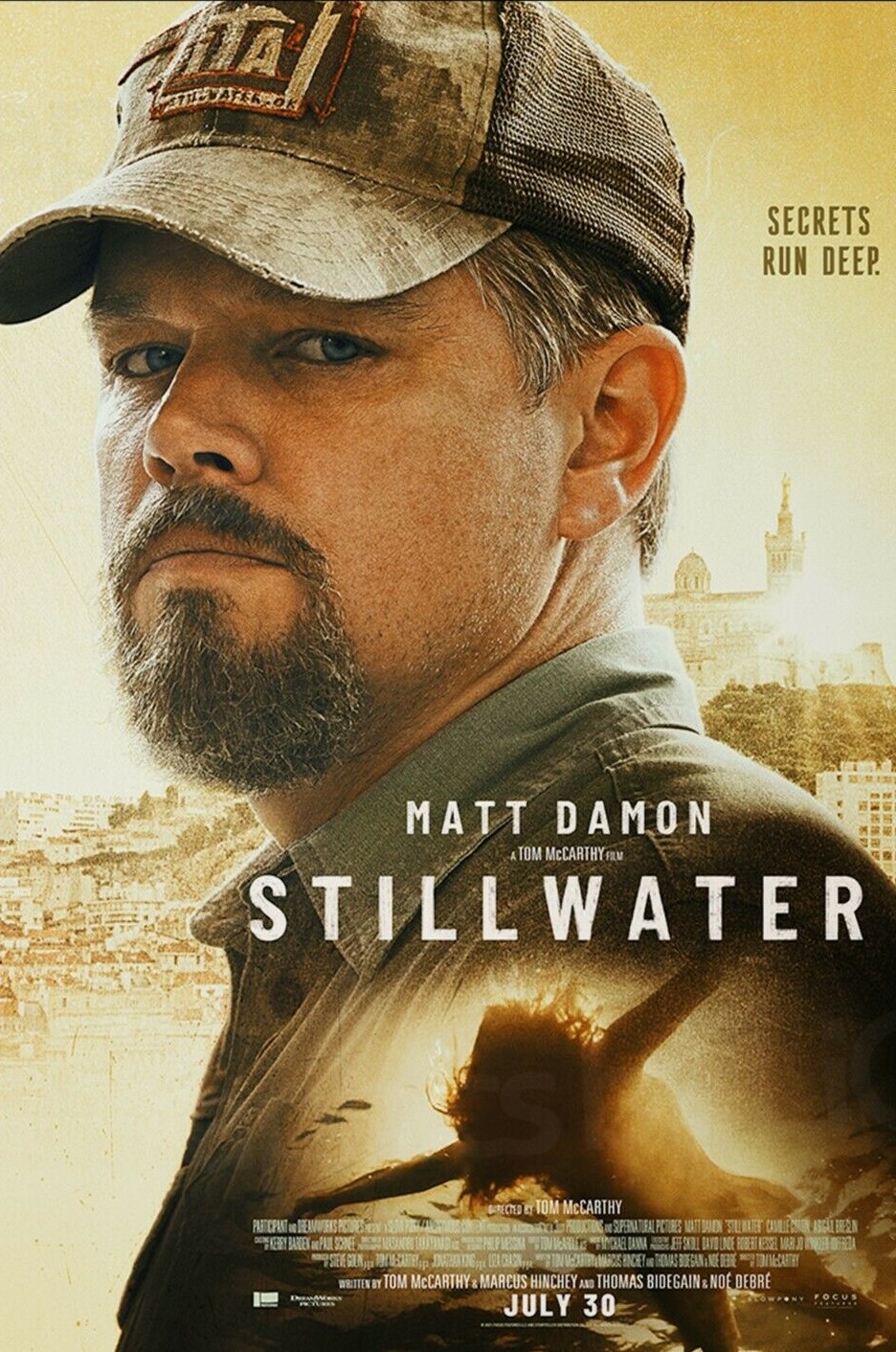
Stillwater (2021) *** – Seen at the Cinema

A towering central performance from Matt Damon as a redneck American adrift in Marseilles just about saves this from being a total train wreck. Oscar-nominated director Tom McCarthy (Spotlight, 2015) doesn’t just go off-kilter but dangerously off-piste in a truly bizarre third act that sabotages the entire picture, which already is within touching distance of the jump-the-shark record.

But let’s concentrate on the good stuff. Bill Baker (Matt Damon) is an oil rig worker in Marseilles trying to clear gay daughter Allison (Abigail Breslin) from a murder charge – she has served four years of a ten-year sentence. Normally, he only remains in France for two weeks but this time, frustrated by the French judicial system, attempts his own investigation. He strikes up a relationship with single mother Virginie (Camille Cottin), becoming very attached to her daughter Maya (Lilou Siauvaud).

He becomes a surrogate father to Maya, collecting her after school, taking on babysitting duties to allow Virginie to continue her acting career. He moves in, initially in platonic fashion, but soon they become lovers. Considering he has been a lousy dad to Allison, who still, for good reason, distrusts him, he makes up for it with Maya and soon Virginie, sensing the decent qualities beneath the typical angry American, takes him into her bed.

These relationships are all terrifically well done and it’s almost Bill’s first stab at parenthood since he was absent for most of Allison’s childhood, either away working on oil rigs or out of his skull on drink or drugs. The character exhibits considerable self-awareness and the gradual transformation from bull in a china shop (not exactly how you would describe tough Marseilles, but still) to father and lover is incredibly well done.  

So the film could have gone one of two ways. He could have remained in France, working as a general laborer, contributing to the household, watching Maya grow up, perhaps (God forbid!) actually learning some French, and waiting to be reunited with his daughter once freed – she is allowed one day a month out of prison so their relationship is being strengthened in incremental stages.

***SPOILER ALERT***

Or, the director having succumbed to brain fever, Bill could decide to throw all that away by capturing the suspect he has been hunting, slicing off a hunk of hair for DNA purposes, and keeping the prisoner in his basement until the results of such testing comes through. And in the process discovering that his daughter is in fact guilty. It’s as if Damon had realized he was in the wrong picture and slipped into his Jason Bourne alter ego or had been watching too many Taken films.

It would be entirely in character that he hides this unsavory fact from the French police, only confronting his daughter with it once she is safely back home, but it might have been a different, and more satisfying, picture altogether if he had uncovered this evidence in another, simpler, manner and then had to deal with the consequences.

I am making it sound as if the whole picture comes apart in the final section but in truth it is perilously off the rails from the get-go. McCarthy’s contribution to an outdated sub-genre that includes Missing (1982) and Not Without My Daughter (1991) falls into the unacceptable trap of tapping foreign judicial systems as incompetent at best and corrupt at worst. Bill Baker exhibits the worst characteristics of dumb American colonialism as he charges around Marseilles baffled that none of the inhabitants can speak English. It is a truly awful directorial conceit where the eight-year-old Maya is expected to have a better grasp of English than Bill of French. He surely cannot be so dumb that he can’t say “Je t’aime” instead of letting loose an emotional barrage in English to the poor child.

Then there is the very uncomfortable treatment of the locals. Sure, parts of France are certainly racist, and although Bill Baker is comfortable with racists, since he has worked alongside them and he might well have been a Trump supporter had he been allowed to vote instead of being barred due to his criminal record, director McCarthy feels it is his duty as a brave American director shining a spotlight on the country’s nether regions to highlight this aspect of French culture.

Shooting yourself in the foot was never easier than here. The movie bears strong and quite unnecessary similarities to the Amanda Knox case, especially since Allison’s experience with her gay lover comes so close to the facts of the Knox situation.

And that’s not counting the improbabilities. Guess where Bill spots the suspect Akim (Idir Azougli) he has been chasing all his time? Yep, you’ve guessed it. In a crowd of 60,000 people. At a football match. It could only happen in Hollywood. He only needs a sample of the guy’s DNA, a snippet of hair would do, to prove he was present at the scene of the crime and cast sufficient reasonable doubt on his daughter’s conviction. Instead, having floored the guy in the street to get the few strands of hair required, he then locks him up in his cellar – for a week! – until the results of the DNA test comes through.

But someone tips off the cops. But lo and behold when they arrive there is not only no body in the cellar but no evidence that anyone has ever been there because the quick-thinking but very skinny Virginie has improbably managed to untie him and move him to some other unspecified hidden location.

And so we come to the mysterious title. Stillwater is a nondescript backwater in Oklahoma where Allison lived. But for some reason it’s the type of place where not even with a touch of irony canny manufacturers believe its name attached to a necklace would be an unbelievably attractive purchase in a retail outlet at an airport. And that it was worthy not just of being a mere bauble but of being made of gold, and sufficiently valuable that it would be acceptable as part payment to Akim for carrying out a bad deed.

Tom McCarthy has been incredibly lucky to receive a performance of a lifetime by Matt Damon, so sure-footed that there is not even an inkling of his trademark shy smile. Camille Cottin is also excellent. I’m not sure whether Abigail Breslin is meant to be this unlikeable, in which case blame the director, or whether her whiny behavior is a pointer to her guilt. Either way, she is over the top.

However, this is one of those rare instances where if you swallow your disbelief at the plotting, you will uncover a pure gem of a performance.

I saw this at the cinema as part of my Monday night outing. It’s available on Amazon Prime and not the type of picture where the visuals are so outstanding that I would urge you only to watch it on the big screen.

A Home of Your Own (1964) ***

The phrase “classic silent British comedy” isn’t one that naturally trips off the tongue. Add in “of the 1960s” and you can guarantee furrowed brows. Thanks to the boom in recycling Hollywood silent classics in the early 1960s – which I may come back to in a later Blog –  there was a subsequent mini-boom in what were called “wordless” pictures, as if using the term “silent” was blasphemous. The oddity is that so many emerged from Britain, primarily in shortened format – not more than one hour long – as the second feature in a double bill.

Blame for this development lay in the hands of producer and later writer and later still director Bob Kellett, Britain’s unsung comedy king.

A Home of Your Own is beautifully structured, following the mishaps in building a block of new apartments. A credit sequence covers the stultifying bureaucracy involved so that what was a pristine site at the beginning of the endeavor turns into a waterlogged dump before the first brick is laid. Sight gags and slapstick abound with mostly everyone getting in each other’s way, or not, the traditional approach of the work-shy British builder being to provide an audience for someone else to dig up a road or a trench.

No paddle goes unsplashed, mud only exists to drench people, and in pursuit of comedy gold most of building materials end up misused. The gatekeeper’s main job is to make tea and there is naturally an union official whose chief task is to obstruct.

Pick of the gags is Ronnie Barker’s laying of cement, delivered with exquisite comedy timing, followed by Bernard Cribbin’s stonemason delicately chiselling out a plaque only to discover at the end in a laugh-out-loud moment that he has misspelled one word, and the carpenter who appropriates the closest implement with which to stir his tea. Some of the jokes grow legs – the morning tea break, a ham-fisted carpenter, the pipe-smoking architect arriving in a sports car, and a patch of ground on the road outside constantly being dug up by different contractors representing water board, gas, electricity.

Once the building is complete, the job has taken long enough for the aspiring apartment-owner, a mere fiancé at the outset, to lift his wife over the threshold accompanied by three kids. Any sense of personal accomplishment – the British thirst for owning property quenched – is undercut by problems the young couple now face thanks to the shoddy workmanship we have witnessed.  

All this is accompanied by a very inventive Ron Goodwin score which provides brilliant musical cues. As a bonus, the film features a roll-call of British television comedy superstars  including Ronnie Barker (The Two Ronnies, 1971-1987), Richard Briers (The Good Life, 1975-1978) and Bill Fraser (Bootsie and Snudge, 1960-1974).  Peter Butterworth and Bernard Cribbins were Carry On alumni. Janet Brown achieved later fame as an impressionist while Tony Tanner hit Broadway as the star of Half a Sixpence before expanding his career to choreographer-director, Tony-nominated for Joseph and his Amazing Technicolor Dreamcoat.

A Home of Your Own went out as the support to the Boulting Brothers’ comedy Rotten to the Core (1964) which gave a debut to Charlotte Rampling. Despite being effectively a B-film, primarily made to take advantage of the Eady Levy (a cashback guarantee for producers), it was surprisingly successful.  “Will delight arthouse patrons” commented Box Office magazine in America (“Review,” October 4, 1965, p160) as British comedy films in those days tended to end up in the arthouses. In part, this was because it was the official British entry to the Berlin Film Festival. It was distributed in the U.S. there by Cinema V in a double bill with Rotten to the Core and launched in what was misleadingly called a “world premiere engagement” at the prestigious Cinema 1 in New York.

Jay Lewis (Live Now, Pay Later, 1962) directed and co-wrote, along with Johnny Whyte, the mini-feature. Kellett continued in this enterprising vein with the 55-minute San Ferry Ann (1965) – which he wrote – about a group of British holidaymakers going abroad and the 49-minute Futtock’s End (1970) – which he directed – featuring a bunch of guests descending on an ancient country house owned by Ronnie Barker.

Television stars showcased in these two featurettes included Wilfred Bramble (Steptoe and Son, 1962-1974), Rodney Bewes (The Likely Lads, 1964-1966), Warren Mitchell (Till Death Do Us Part, 1965-1975) and Richard O’Sullivan (Man About the House, 1973-1976). Ron Moody composed the Oscar-winning Oliver! (1968) while Joan Sims and Barbara Windsor made their names in the Carry On series and theatrical knight Sir Michael Hordern appeared in Khartoum (1965) and Where Eagles Dare (1968).

Though disdained by critics, Kellett went on to become by far the most influential British comedy director of the 1970s. His output included the Frankie Howerd trilogy Up Pompeii (1971), Up the Chastity Belt (1972) and Up the Front (1972), as well as The Alf Garnett Saga (1972). He was well ahead of his time with the transgender comedy Girl Stroke Boy (1972) and female impersonator Danny La Rue in Our Miss Fred (1972).

You can find all four films in a compilation released by Network under the title Futtock’s End and Other Short Stories.  Thanks to Dolphin PR for a copy. You can catch it on DVD, Blu-Ray and digital services.

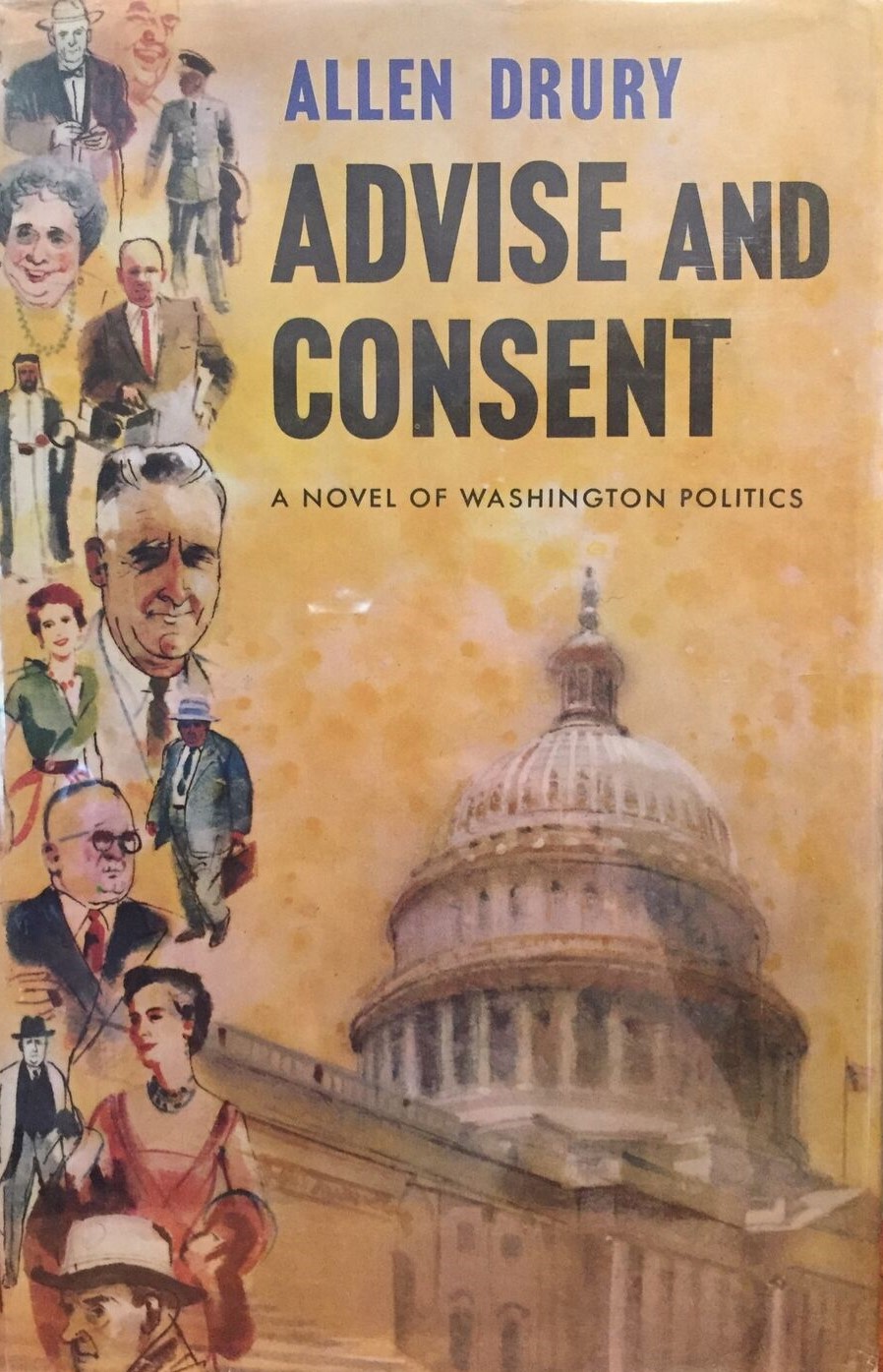
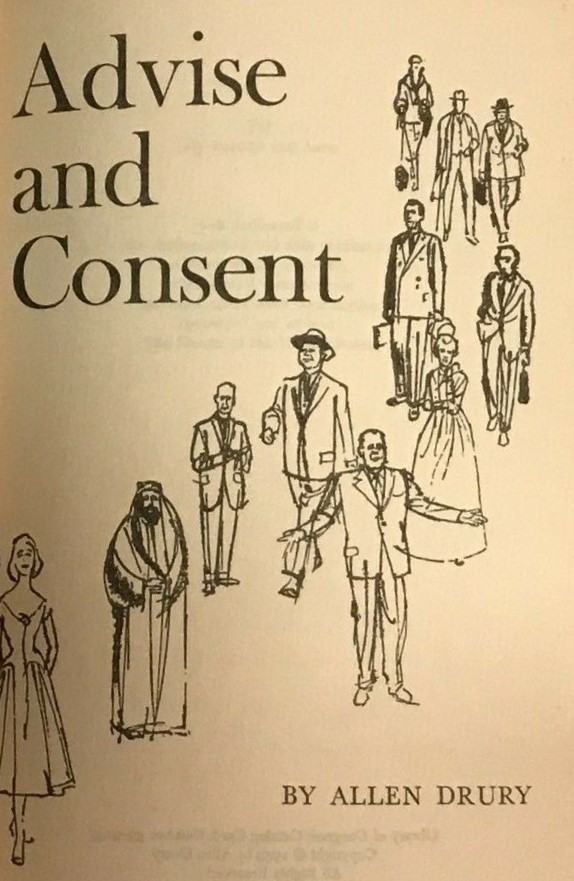
Book into Film – “Advise and Consent” (1962)

While Otto Preminger could be quite intemperate on the movie set, he actually toned down the novel on which Advise and Consent was based. He considered author Allen Drury an “arch-conservative.” So from the outset the film takes a more moderate approach. Where Drury named the U.S. enemy as the Soviet Union, Preminger stuck to the more generic communists. it was a different story when he was trying to set up a picture. Not only did the director cut down on the obvious anti-communist stance but veered away from taking a moral high ground.

In any case, there was a great deal that required to be eliminated- especially from a novel that clocked in at 600-plus pages. For example, the Leffingwell story is effectively dealt with 100 pages before the end of the book.  

More importantly, Preminger made the main character Leffingwell (Henry Fonda) more sympathetic. In the book, he is more of a typical politician, able to talk his way out of anything and proud of such a skill. Various scenes, not in the book, were inserted to make Leffingwell more principled, the main addition being the sequence where the politician confesses to the President (Franchot Tone) that he had lied about previous Communist affiliations. In the book Leffingwell and Van Ackerman (George Gizzard) are allies, but not in the film. More importantly, to rack up the tension, the book has Leffingwell easily defeated in the vote, whereas there is deadlock in the film.

It would have indeed been casting against type had Fonda played Leffingwell as outlined in the novel and the Preminger presentation he has a presidential stature and unusual humility for a politician.

Narrative simplification was also necessary. Van Ackerman carries the blame in the film for the blackmail scheme, but in the book this involves a greater conspiracy. Drury portrays Ackerman as a fairly villainous character with severe personality malfunction but the film treats him in more rounded fashion. Orrin Knox (Edward Andrews), one the book’s main characters, was marginalized in the film.

Preminger added scenes relating to the homosexuality of Brig (Don Murray) in an effort to give the character greater depth and to clarify his motivation and especially to ensure his suicide was a result of his internal conflict rather than the blackmail, as was the case in the book. The letter at the end makes no judgement on him.

Drury tended to show his characters in black-and-white, so that instead of a muscular and inflammatory critique of the politicians, with all their chicanery, but Preminger allows the characters to speak for themselves rather than setting them up to be shot down by an audience. As I mentioned in my review of the film in the Blog, many of the politicians engage in verbal duels and present themselves not so much as cocky but confident, not so much smarmy as charming. Here, the actors are encouraged to become performers without their performances degenerating into ham acting.

As congressional correspondent for the New York Times, Drury had an intimate knowledge of the political scene and it is no surprise that each character in the book was modelled on an existing politician – even the blackmail story was drawn from a real-life incident.. By removing much of the party politics in order to concentrate on the main central issues, and by allowing the actors great freedom with their roles, Preminger was able both to humanise the characters and also ensure they were not easily recognizable as current or past politicians.

As in other films, Preminger set to out create a picture about  a moral issue, not one where there is a right way and a wrong way, although the governing party is shown to be generally uncompromising when it comes to dealing with anyone who steps out of line.

In a film that could be easily have been dogged by dialogue or argument, Preminger’s free-flowing camera movement ensures there is a sense not just of excitement and exhilaration but forward movement. Perhaps this film demonstrates more than nay other the director’s mastery of cinematographic techniques.

Behind the Scenes – “Advise and Consent” (1962)

Just before setting off to film Exodus (1960), director Otto Preminger ponied up $200,000 for the rights to Allen Drury’s inflammatory novel three months after publication. He expected to place the picture with United Artists, with whom he was in partnership over Exodus, but perhaps his remuneration package was too high, for Advise and Consent ended up at Columbia.

Preminger postponed shooting of Bunny Lake Is Missing in order to start on Advise and Consent. But filming of the former was in part delayed due to pregnancy of the proposed female lead Lee Remick.

When Wendell Mayes script was submitted in July 1961 to the Production Code for approval, the main issue under discussion was the treatment of homosexuality, and as a consequence some scenes were trimmed or treated in a different manner. In fact, Preminger was more explicit than the novel about same-sex relationships. The Code approved the production with changes on the basis that a revision of the current system was imminent. Preminger was turned down by a number of well-known actors because of this aspect of Brig’s character, before eventually turning to Don Murray.

As mentioned in the review yesterday, Preminger hired actors who had long been out of the business. The blacklisted Will Geer hadn’t made a film in over a decade, Franchot Tone had not been seen on screen since 1951 when he had been involved in love triangle, for Lew Ayres it was nearly a decade, while Gene Tierney, who had been institutionalized, had last made a picture in 1955. Martin Luther King was offered the role of a Georgia senator.

Astonishingly since the book and film had taken pot shots at the American political system, beginning late September 1961, Preminger was granted permission to shoot in the Senate, taking over the Russell Senate State building, with the Senate Caucus Room used for the sub-committee rooms. To cut down on shooting time, Preminger often filmed with two cameras and finished filming after two or three takes.  Preminger was racing through shooting in order to release the film in December in the hope of snagging Oscar nominations.

Filming lasted barely three months in total, beginning September 5 and ending on . the early scenes shot included the sequences in Munson’s hotel room (filmed at the Sheraton Park hotel), the White House correspondents’ dinner (the ballroom of the same hotel) and Dolly’s party (at Tregaron, a private residence once owned by joseph A. Davies, an ambassador to the Soveiet Union.

Understandably nervous after such a long time away from filming, and probably doubly nervous to be working with a director known for his titanic rages, Gene Tierney, “though just frightened to death” received nothing but gentlemanly treatment. Franchot Tone, on the other hand, was reduced to tears. Don Murray only once felt the sharp end of the Preminger tongue, but other found that he could manage the director as long as he did not show a weakness. However, Preminger did disparage cinematographer Sam Leavitt and actor Larry Tucker, apparently to demonstrate his fiery side for visiting journalists, fired three crewmen. Arguments with unions set the production back $150,000-$200,000.

Away from the set, Peter Lawford’s involvement in the picture apparently drew the ire of President John F. Kennedy. The Press had a field day after “word leaked out.” There was also concern about Gene Tierney’s role as a society hostess.

Possibly aware of the changing mood in the critical world, Preminger had invited Jean Domarchi of Cahiers du Cinema to observe the shooting.

By the time the film was being prepped for released, Allen Drury’s novel had spent over 100 weeks on the New York Times bestseller list and the author had won the Pulitzer Prize. Drury hated what Preminger had done to this novel, got his revenge by delaying the film’s release. A stage version of the book was not going to complete its run until June 1962 and Drury applied for – and won – an injunction to prevent the film opening before then. Preminger had been aware of the problem and had attempted, while the movie was in the first month of filming, to exploit a legal loophole to allow the movie to be shown in December. (Hitchcock’s Dial M for Murder in 1954 had suffered the same fate). This also put the blocks on RCA Victor’s plans to release a soundtrack album – “for minutes of music…no vocals.”

Sources: Chris Fujiwara, The World and its Double: The Life and Work of Otto Preminger, Faber and Faber 2008, p280-289; Mark Shives, “Otto Preminger on Advise and Consent,” Movie 4, p26-27; Jean Domarchi, “Voyage a Washington,” Cahiers du Cinema 22, p28-30; “Code Seal to Advise and Consent,” Box Office, December 18, 1961, p8; “Preminger Postpones One; To Start on Advise,” Box Office; January 12, 1961, p23; “Otto Preminger’s Advise Transferred to Columbia,” Box Office, August 14, 1961, p10; “Bunny Lake Is Delayed; Prem Moves Up Casting of Advise and Consent,” Variety, June 7, 1961, p18; “Consent Pic Delay Stalls Victor album,” Variety, December 27, 1961, p39; “Lew Ayres into Consent, He and Tierney on Comeback Trail,” Variety, August 16, 1961, p20; “Is JFK Miffed About Lawford Role Or Is It More Pic Ballyhoo?,” Variety, August 30, 1961, p2; “Report Preminger Seeks Early Release of Advise,” Variety, October 11, 1961, p69.

Advise and Consent (1962) ****

Excoriating engrossing political drama in which the unscrupulous take the moral high ground and the principled are destroyed. In other words, the reality of power – gaining it and keeping it and all the skullduggery in between. And it has resonance in today’s cancel culture for it is minor indiscretions from the past that bring down the most upstanding of the species.  

Theoretically, director Otto Preminger (Hurry Sundown, 1967) broke one major taboo in touching on the subject of same-sex relationships. But in reality he took an even bolder step from the Hollywood perspective of giving center stage in the main to older players. Many  had first come to the fore in the 1930s or earlier – Walter Pidgeon (Turn Back the Hours, 1928), Lew Ayres (All Quiet on the Western Front, 1930),  Charles Laughton (Oscar winner for The Private Life of Henry VIII, 1933), Franchot Tone (Oscar nominated for Mutiny on the Bounty, 1935), Henry Fonda (You Only Live Once, 1937). This was the kind of all-star cast you used to get in 1960s big-budget pictures filling out supporting roles. But in this ensemble drama, they all, at various times, hold the floor. And this approach lent the movie greater authenticity.  Even if few viewers today fail to recognize many, that, too, works in the movie’s favor, giving it an almost documentary feel.

Movies about politics are never heavy on plot, so if you’re looking for a thriller in the way of All the President’s Men (1973) go elsewhere. It has more in common with The Trial of the Chicago Seven (2020) with multiple viewpoints and opposing perspectives. What the best movies about politics have in abundance is repartee. Virtually every exchange is a verbal duel, the cut and thrust, the slashing attack, the parry, sometimes a knockout blow delivered through humor. Given politicians spend most of their lives making speeches, even the shortest of sentences, even the bon mots, have a polished ring. And that, frankly, is the joy of this picture, brilliantly written by Wendell Mayes (Anatomy of a Murder, 1959) from the Allen Drury bestseller. In some respects the plot is almost a MacGuffin, a way into this labyrinthine world, where characters duck and dive like a more elevated breed of gangster

A lesser director would have given in to the temptation of filming these duels in close-up.  Instead, Preminger’s direction is almost stately, keeping characters at bay.

A seriously ill President (Franchot Tone), distrusting his feeble Vice-President Harley Hudson (Lew Ayres), decides to fill the vacancy for Secretary of State with highly-principled Senator Robert Leffingwell (Henry Fonda). This not being the beginning of the President’s term, he can’t just do what he wants, his nomination must go before a committee and then face a vote in the Senate. The Senate Majority Leader Bob Munson (Walter Pidgeon) isn’t too happy with the idea, seeing Leffingwell as a dove, likely to appease the growing Soviet threat. Others on the committee, namely Senator Brigham Anderson (Don Murray) side with Munson and the committee hearing turns into a hostile interrogation. The fine upstanding Leffingwell parries well until Senator Seabright Cooley (Charles Laughton) introduces a witness Herbert Gelman (Burgess Meredith) who says Leffingwell belonged to a Communist cell, an accusation Leffingwell denies.

Twist number one: Leffingwell has lied on oath. He confesses this to a friend Hardiman Fletcher (Paul McGrath) who then stitches up the witness. The committee apologises to Leffingwell, which means he is a sure thing for the post, but Cooley smells a rat and starts his own investigation. Leffingwell tries to get out of the job, admitting his perjury, but – twist number two – the President refuses. Munson and Anderson are let in on the secret, the former willing to accommodate the President but the latter outraged and planning to thwart the nomination when it reaches the voting stage at the Senate. Anderson comes under pressure, phone calls to his wife about something from his past that occurred in Hawaii.

And so the stage is set. The pressure builds on Anderson. The President becomes more unwell, making the appointment of Leffingwell more crucial. Aware of Anderson’s intentions, Munson starts whipping up votes, with Cooley doing the same for the opposition. Machinations take over.  And for a movie that was initially light on plot, it ends with three stunning twists, and proving once and for all there is nothing quite so standard as the self-serving politician.

This was the first movie for several years for Henry Fonda (Broadway and television his refuge) and for Gene Tierney (Laura, 1945) – playing a society hostess – who was recovering from mental health problems and the last screen appearance of Charles Laughton. The acting is uniformly excellent and the direction confident and accomplished.  

A slow-burner for sure, but a fascinating insight into the less savory aspects of politics and the human collateral damage.  

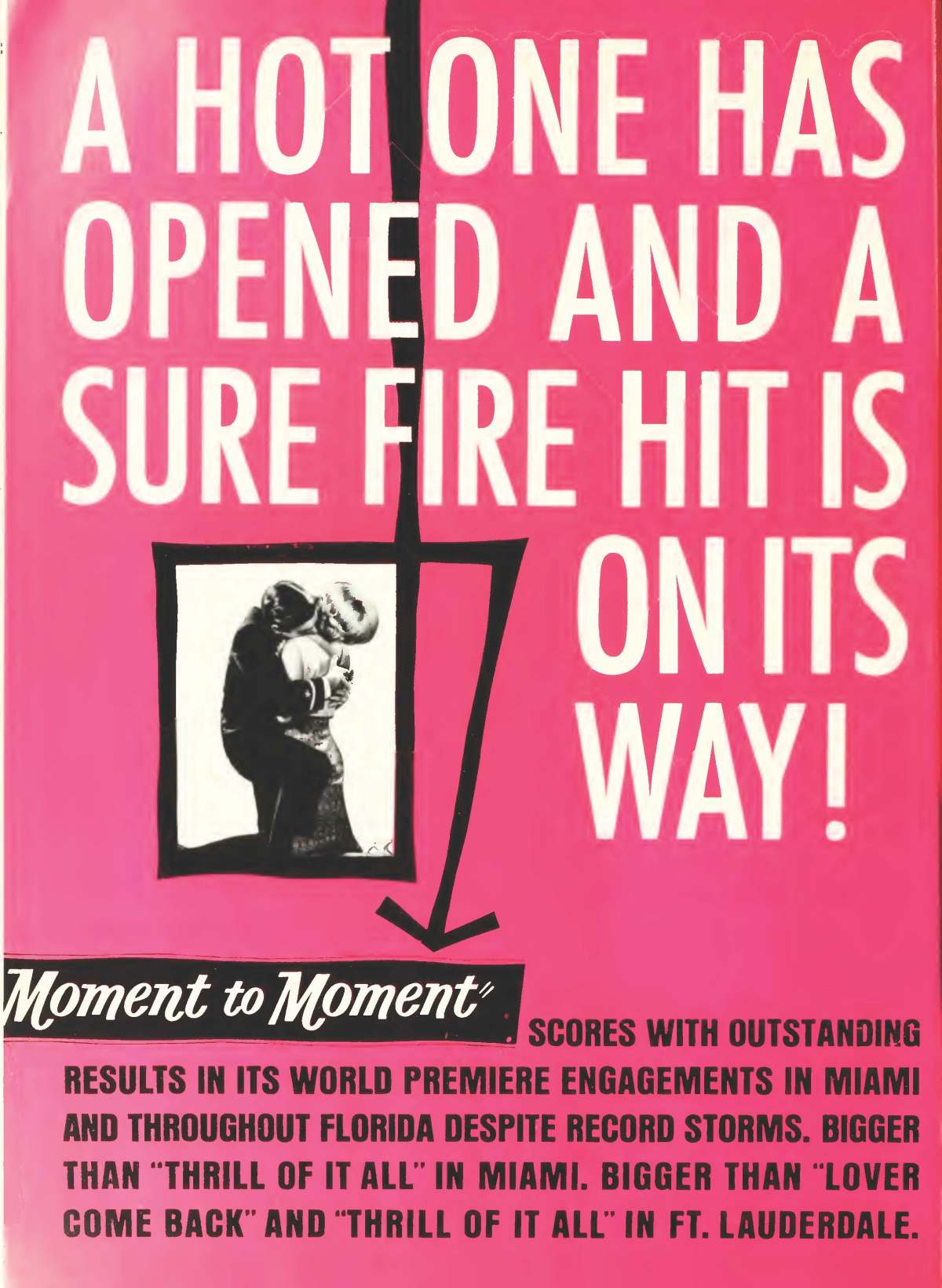
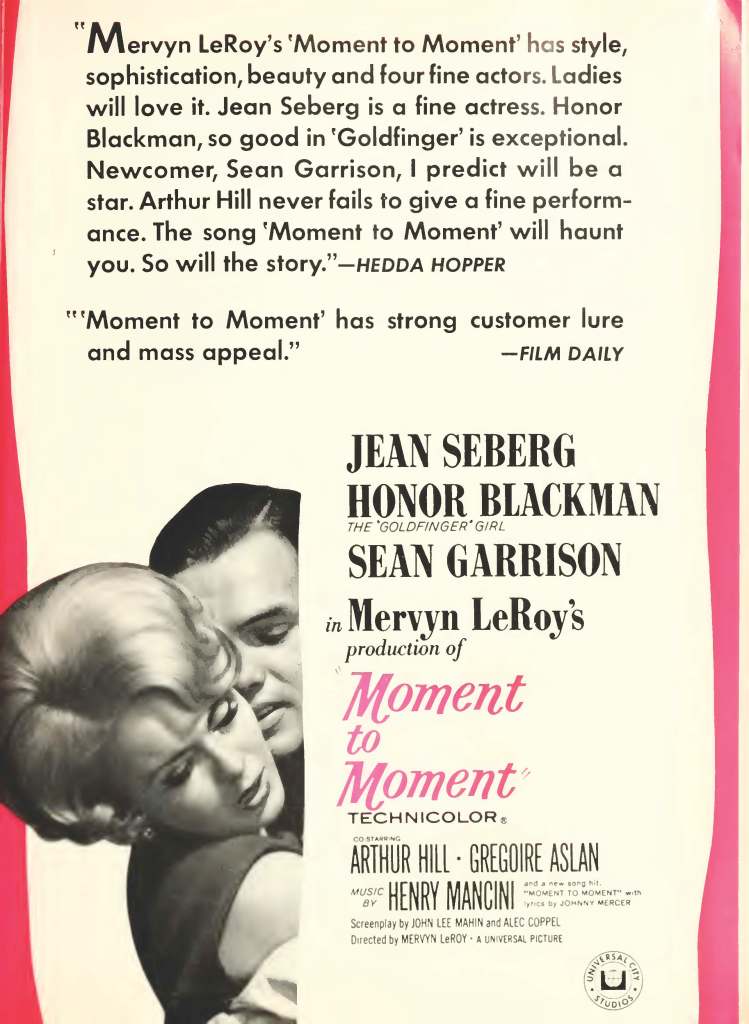
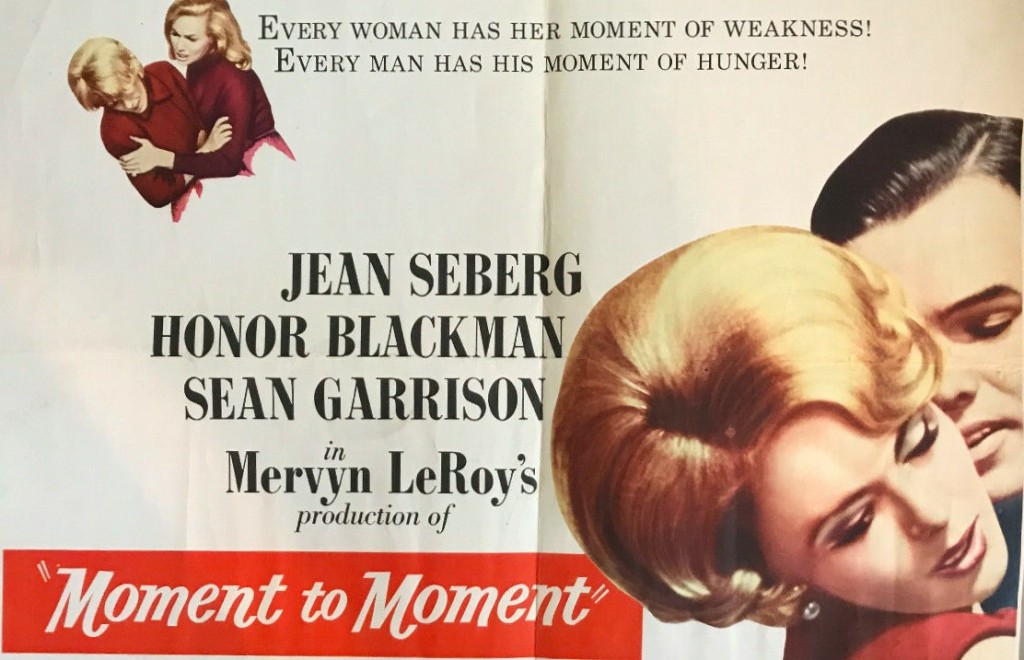
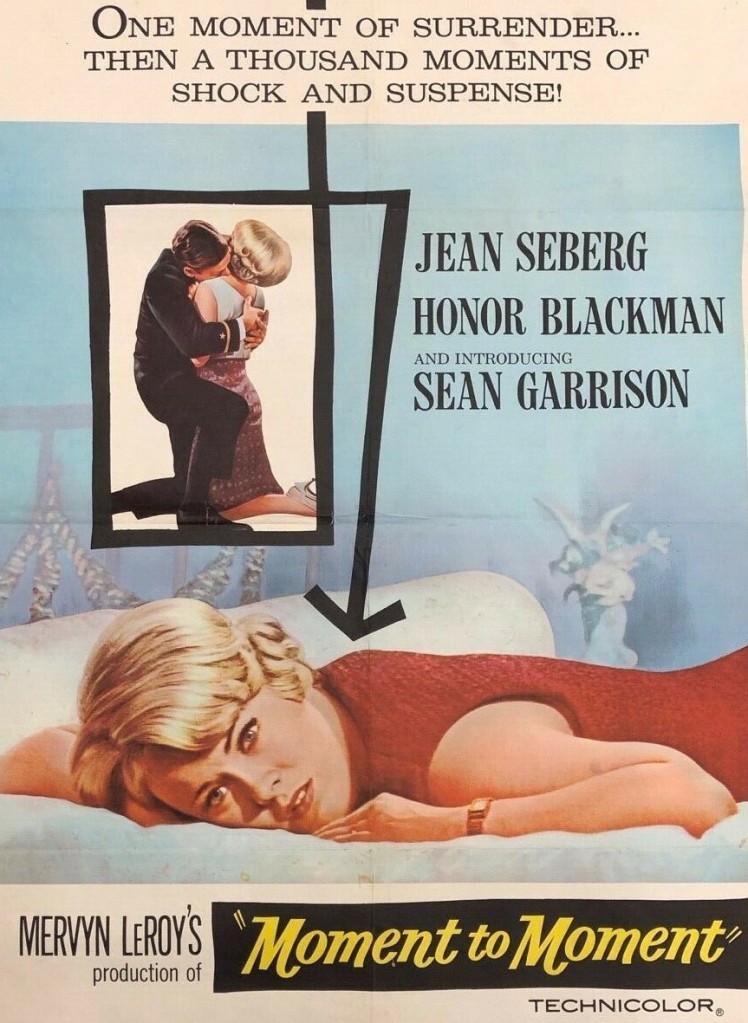
Moment to Moment (1966) ***

Screenwriter Alec Coppel, responsible for Alfred Hitchcock’s Vertigo (1958) – now considered the best film ever made, supplanting Citizen Kane in the Sight & Sound poll – follows pretty much the same structural idea as in the James Stewart-Kim Novak thriller. The second half here is in many respects a repeat of the first, with a man trying to recapture previous experience in a bid to reawaken memory.

But in this case the man is French police inspector DeFargo (Gregoire Aslan) trying to trap glamorous Kay Stanton (Jean Seberg) suspected of killing young sailor and architect-wannabe Mark (Sean Garrison) with whom she has engaged in a brief affair. DeFargo is cunning in the extreme, almost stalking Stanton, turning up unexpectedly, employing all sorts of ruses, including recruiting Stanton’s unsuspecting husband Neil (Arthur Hill), an internationally renowned psychiatrist.

The picture is set on the French Riviera so it’s the height of fashion. Kay wears a series of stunning top-of-the-range clothes (designed in fact by Yves St Laurent), as does high-living  neighbor and suspected accomplice Daphne (Honor Blackman). Kay drives a red sports car and frequents swanky restaurants and chic bars.

A number of cleverly-wrought images in the first half – white doves that turn golden at sunset, dancing to a tune called “Moment to Moment,” the wind causing shutters to bang, a statue in a village square, some sketches, the clacking together of the hard balls used to play the French traditional game of boules, a boardgame called “Blockhead” – prove pivotal in the second half. They form clues from which the inspector has to determine meaning.  

But if ever there was a film of two halves, this is it, and they are not a great fit. The first section involves Kay, lonely due to her husband’s continual absence, embarking on an affair. That she initially resists, in order to prove she is at heart really a good woman, gets in the way of the picture, since that makes the romance more drawn-out than necessary and leaves the viewer wishing the director would get a move on. Even though the time is spent in planting all the clues necessary for the second half to work, had Kay been more keen on a piece of action, driven for example (as is the case) by her husband staying away far longer than promised, it would have speeded things up to get to the more interesting part of the story.

Part of the problem is that the affair is totally unconvincing. Mark is handsome enough and dashing in the way most sailors are in uniform with an artistic streak, first viewed  making sketches, but Sean Garrison is so wooden the romance never sparks. That leaves Seberg to do the heavy lifting and, in fairness, once she is targeted by the wily inspector she comes up to the mark.

I’m not the first to think, after watching this picture, what would Hitchcock have done? That was exactly the same conclusion reached by the New York Times critic on original release. For this picture has a great deal going for it, but not a sufficient quota of suspense, and, as I mentioned, takes too long to get to the core of the story.

However, the second half works exceptionally well, as Seberg is put under pressure by the wily inspector and her husband unexpectedly enters the equation. An abundance of  twists culminate with a number in the final few minutes that serve to confound audience expectation.

Seberg’s career up to now had been somewhat disjointed, a sense of unfulfilled potential. An Otto Preminger protégé via Saint Joan (1957) and Bonjour Tristesse (1958), she was widely believed, despite the artistic coup of Jean-Luc Godard’s Breathless (1960), to have thrown her career away by decamping to France where she made no further films of particular note. Her previous Hollywood offering Lilith (1964) had not commercially delivered. So this high-budget Universal number was considered something of a comeback. But the perfectly-coiffed fashion-model look seems a poor imitation of Grace Kelly (To Catch a Thief, 1955) and Tippi Hedren (The Birds, 1963). At times, with the romance scarcely touching the lower rungs of passion, the movie falls back on haute couture.

Second half Seberg is better than the first as she is given far more material to work with and a decent opponent in Gregoire Aslan. Honor Blackman, as a flirtatious divorcee, reinvents her  screen persona, far removed from her memorable incarnations as Catherine Gale in British television series The Avengers (1962-1964) and Pussy Galore in Goldfinger  (1964). Sean Harrison made only one more movie, and his career mainly consisted of television. Arthur Hill (Harper, 1966) is excellent as the over-enthusiastic husband, unwittingly hammering nails in his wife’s coffin and Gregoire Aslan (Lost Command, 1966) almost steals the show as Seberg’s accomplished adversary.

Veteran Mervyn LeRoy (The Devil at 4 O’Clock, 1964) had a distinguished and versatile career including an Oscar nomination for Random Harvest (1942) and recipient of an Oscar in the form of the Irving G. Thalberg Award for lifetime contribution to the business. But this isn’t quite up to the mark of innovative gangster picture Little Caesar (1931), drama Little Women (1949), Biblical epic Quo Vadis (1951) or cultish The Bad Seed (1958).  

Old (2021) *** – Seen at the Cinema

Surely no director has cut his cloth according to his means more than M. Night Shyamalen. After a series of big-budget failures, he returned with a series of low-budget numbers like The Visit (2015) and Split (2016) with a couple of forays into television to keep his hand in. And although his movies sometimes don’t work, usually from over-ambition, he is still a brand name and as a triple-hyphenate one of the few working directors to completely control his output.

So the starting point is you don’t know what you’re going to get, except there will be twists and occasional shocks along the way. Even the Glass films aren’t a trilogy in the accepted sense of the word. 

Old is a neat idea. A group of strangers on vacation end up on a strange beach where time moves along at quite a clip and they can’t escape. Most of the action involves the characters responding to one calamity after another and despite a couple of gruesome moments Shyamalan seems intent on swapping jump-out-of-your-seat moments for a continual slow burn. He takes the disaster trope of who’s gonna die next – the bad old guy or the cute younger person – and inverts it until nothing makes any sense except impending apocalypse, at least for all stranded in this apparent paradise.

Speeded-up life makes for speeded-up dread. While wounds heal in seconds and pregnancy might last, oh, a half hour or so, the malfunctioning body malfunctions at lightspeed.

The great thing about Shyamalan is he is a writer first so the characters here are all very well drawn. He gives a geeky kid the geekiest of all character traits, going up to everyone he meets to ask their name and job. But it’s an ensemble picture so nobody is more important than anybody else. And the characters bring along a hamper full of tensions – there’s an epileptic, a couple on the verge of divorce, a doctor on the verge of a breakdown. He also has a distinctive visual style, preferring to track the camera from one character to another rather than using cuts.

It slightly runs out of steam as the body count mounts and it might have been an idea to introduce the shock ending – which asks significant questions about the direction society is heading – a bit sooner

There’s a solid cast, good actors rather than A-list stars, a bundle of whom are best-known for television. Gael Garcia Bernal (The Motorcycle Diaries, 2004) takes pole position in the credits, supported by Rufus Sewell (The Man in the High Castle television series, 2015-2019), Luxembourg actress Vicky Krieps (Das Boot, 2018- 2020), Ken Leung (Lost, 2008-2010), and Abbey Lee (Lux Aeterna, 2019).  Scions of Hollywood royalty get a leg-up here – Francesca Eastwood being the daughter of Clint and Alexa Swinton cousin to Tilda – and there are cameos from the likes of Embeth Davidtz (Schindler’s List, 1993)

Otherwise it’s a decent addition to the Shyamalen oeuvre, enough at least to keep him chugging along until he gets the next big idea or budget. While the chances of him alighting on another Sixth Sense (1999) or Unbreakable (2000) might appear remote bear in mind the guy has barely passed 50, an age when top directors are just coming into their prime – Hitchcock was a few years older when he hit the hot streak of Rear Window, Vertigo and North by Northwest.

There’s a fair chance the ending is uncomfortably close to science fact rather than fiction and if Shyamalan can activate social media along those lines the picture could build up enough of a head of steam to bring the director back into the big-budget Hollywood fold or ensure at least that he is never cast aside.

Saw this at the cinema as part of my Monday double bill. – but on the previous week to Suicide Squad/Jungle Cruise.

Discover WordPress

A daily selection of the best content published on WordPress, collected for you by humans who love to read.

The Atavist Magazine

by Brian Hannan

WordPress.com News

The latest news on WordPress.com and the WordPress community.