Behind the Scenes: “Bus Riley’s Back in Town” (1965)

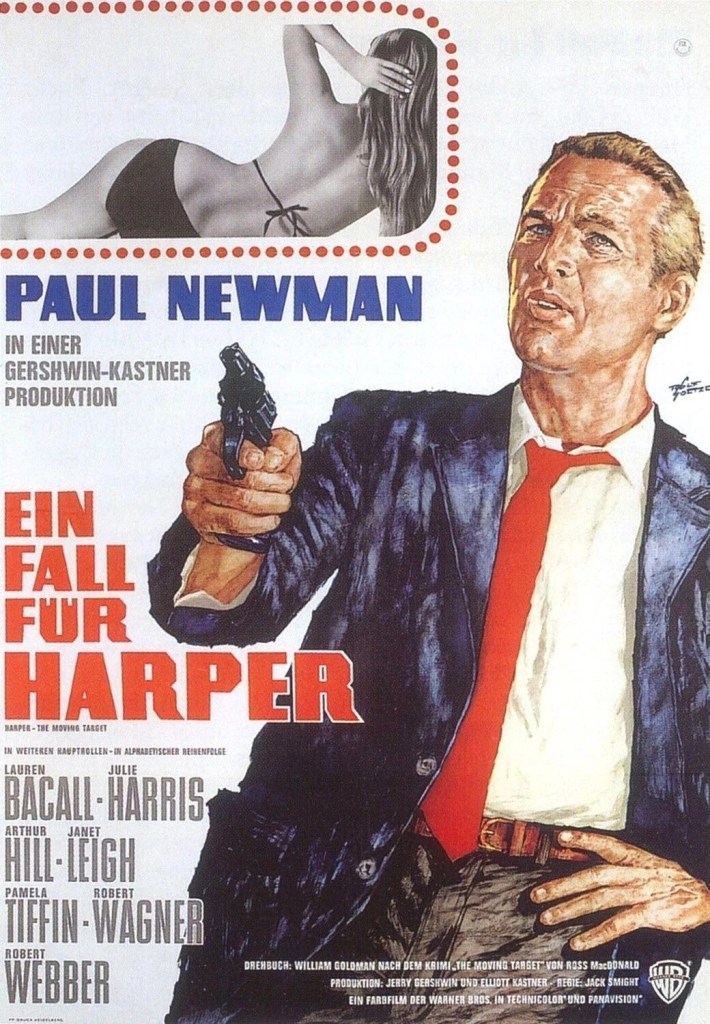
Small wonder that Bus Riley’s Back in Town found scant appreciation on producer’s Elliott Kastner’s dance card. He preferred to have people believe that his career began with box office smash Harper / The Moving Target (1966) rather than the two flops – Kaleidoscope (1966) and Bus Riley’s Back in Town (1965) – that preceded it. As his son Dillon Kastner pointed out: “He always preferred to forget his first film. He liked to think his first film was Harper so he never put that title (Bus Riley) on his list of credits for investors.”

After jockeying in the Hollywood trenches for three years, Kastner should have been delighted to finally get his name on a picture after so many potential movies had slipped through his grasp. But he had good reason to want to forget the experience of working on Bus Riley. It sat on the shelf for a year and, minus the involvement of the producer, was “butchered” by the studio.

By the time the movie appeared it was the latest in a long line of failed attempts by former agent Elliott Kastner to get onto the Hollywood starting grid. He had previously been involved in a pair to star Warren Beatty – Honeybear, I Love You with a screenplay by Charles Eastman and Boys and Girls Together adapted from the William Goldman bestseller with Joseph Losey (Accident, 1966) lined up as director. Also on his scorecard were 1963 William Inge play Natural Affection, Tropic of Cancer from the controversial Henry Miller novel and The Crows of Edwina Hill. At the time of the Bus Riley opening, he had acquired a further seven properties.

Bus Riley was never intended as a major picture, the budget limited to $550,000 – at a time when a decent-sized budget was well over $1 million. Shot in Spring 1964, and in post-production in July, release was delayed until Universal re-edited it and added new scenes because Ann-Margret had  achieved surprising movie stardom between her recruitment and the film’s completion. Along with Raquel Welch, she became one of the most glamorous stars of the decade and in building up her own career Welch clearly followed the Ann-Margret template of taking on a bucket of roles and signing deals with competing studios.

After making just three movies – A Pocketful of Miracles (1962), State Fair (1962) and Bye, Bye Birdie (1963) – Ann-Margret shot into the fast lane, contracted for three movies with MGM at an average $200,000 per plus an average 12% of the profit, substantial sums for a neophyte. On top of that she had four far less remunerative pictures for Twentieth Century Fox, three for Columbia, Marriage on the Rocks with Frank Sinatra and a couple of others. By the time Bus Riley finally appeared, she had expanded her appeal through Viva Las Vegas (1964) opposite Elvis and top-billed roles in Kitten with a Whip (1964) and The Pleasure Seekers (1964).
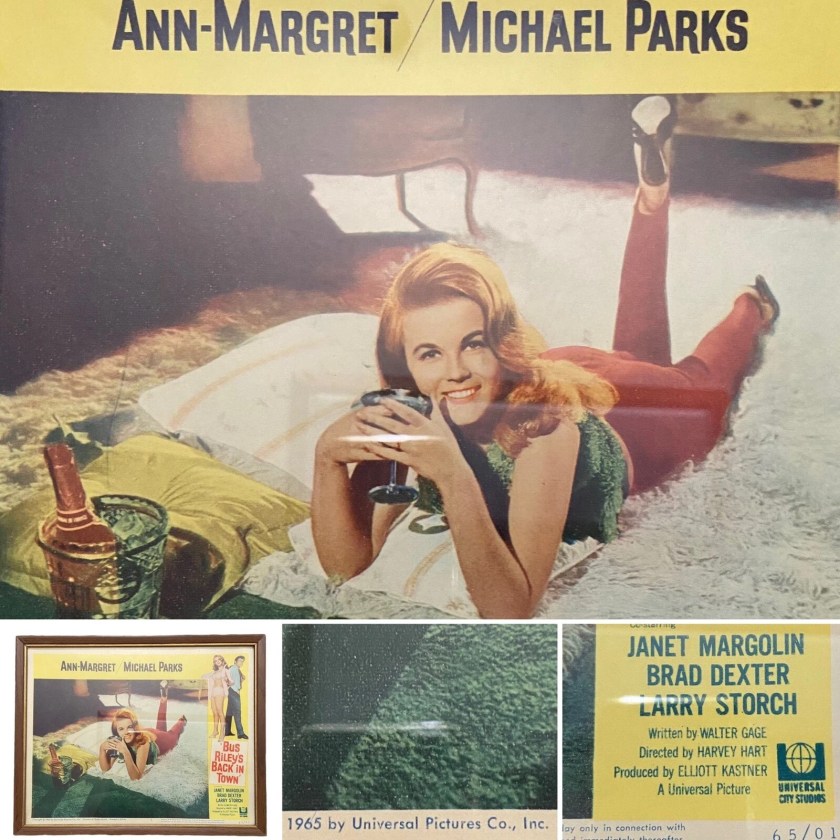
Universal also had another property to protect. Michael Parks was one of small contingent of novice actors in whom the studio had invested considerable sums, using them in television roles before placing them in major movies. Others in this group – at a time when most studios had abandoned the idea of developing new talent – included Katharine Ross and Tom Simcox who both appeared in Shenandoah (1965), James Farentino (The War Lord, 1965), Don Galloway (The Rare Breed, 1965), Doug McClure (The Lively Set, 1964) and Robert Fuller and Jocelyn Lane in Incident at Phantom Hill (1965).

However, the introduction of Parks had not gone to plan. He was set to make his debut in The Wild Seed (1965) – originally titled Daffy and going through several other titles besides – but that was also delayed until after Bus Riley, riding on Ann-Margret’s coat-tails, offered greater potential. Kastner had been instrumental in the casting of Parks – whom he tabbed as “a wonderful up-and-coming actor” – in The Wild Seed.

Also making their movie debuts in Bus Riley were Kim Darby (True Grit, 1969) and Canadian director  Harvey Hart (Dark Intruder, 1965), an established television name. Hart joined David Lowell Rich and Jack Smight as the next generation of television directors making the transition. Universal was on a roll, in 1964 greenlighting 25 pictures, double the number of productions in any year since 1957.

Falling just behind Tennessee Williams league in terms of marquee clout, playwright William Inge had won an Oscar for Splendor in the Grass (1961) and been responsible for a string of hits including Come Back Little Sheba (1952) – Oscar for Shirley Booth – the Oscar-nominated Picnic (1955) starring William Holden and Kim Novak and Bus Stop (1956) with Marilyn Monroe.

Kastner had persuaded him to turn his little-known 1958 one-act play All Kinds of People into a movie-length screenplay. Inge was initially keen to work on a low-budget picture, anticipating “more freedom with an abbreviated budget.” He asserted, “You don’t have the front office calling you up all the time.” Since the movie was not initially envisaged as a star vehicle for Ann-Margret (and, in fact, she plays the supporting role) he saw it as a “way of breaking up that old Hollywood method of selling pictures before they were made” on the back of a big star and hefty promotional budget.

Unfortunately for him, once Universal realized they had, after all, a star vehicle, the studio concluded that her image was more important than the “dramatic impact” of the film. “When we signed Ann-Margret she wasn’t a big star but in six months she was and Universal became very frightened of her public image. They wanted a more refined image.”

Kastner and Inge were elbowed aside as Universal ordered a rewrite and reshoots. Inge took his name off the picture. The credited screenwriter Walter Gage did not exist, he was created to get round a Writer’s Guild dictat that no movie could be shown without a writer’s name on the credits.

Despite her supposed growing power, Ann-Margret had little say in preventing the changes either. She expressed her disappointment to Gordon Gow of Films and Filming: “You should have seen the film we shot originally. William Inge’s screenplay…had been so wonderful. So brutally honest, And the woman, Laurel, as he wrote her, was mean and he made that very sad. But the studio at the time didn’t want me to have that image for the young people of America. They thought it was too brutal a portrayal. They wanted me to re-do five key scenes. And those scenes completely changed the story. There were two of these scenes that I just refused to do. The other three I did, but I was upset and angry.”

Film historian James Robert Parish refuted Ann-Margret’s recollection of events. He claimed the changes were made at her insistence because she wanted to be the focal point of the narrative rather than Bus Riley (Michael Parks).

Harvey Hart reckoned Universal got cold feet after the audience attending a sneak preview made “idiotic” comments on the questionnaire. Recalled Kastner, “I had nothing but heavy fiddling and interference from Universal.” Even so, given it was his debut production, he wasn’t likely to disown then and didn’t follow Inge in removing his name.

Despite the changes, the movie received a cool reception at the box office. It turned in opening weeks of a “modest” $7,000 in Columbus, “slow” $9,000 in Boston, “modest” $9,000 in Washington, “lightweight” $10,000 at the 1642-seat Palace in New York, “mild” $4,000 in Provident, “so-so” $4,000 in Portland, “not so good” $7,000 in Pittsburgh, “okay” $7,000 in Philadelphia, and $98,000 from 22 houses in Los Angeles with the only upticks being a “good” $7,000 in Cincinnati and a “fast” $7,000 in Minneapolis. The movie didn’t register in Variety’s Annual Box Office Chart which meant it earned less than $1 million in U.S. rentals and was listed as a flop.

SOURCES: Elliott Kastner Memoir, courtesy of Dillon Kastner; “Elliott Kastner’s Partner on Honeybear Is Warren Beatty,” Variety, January 23, 1963, p4; “Elliott Kastner Will Helm Crows for U,” Variety, May 1, 1963, p21; “Escalating Actress,” Variety, May 22, 1963, page 4; “Raid Canadian Director,” Variety, March 4, 1964, p24; “Inge Thinks Writer Contentment May Lie in Creative Scope of Cheaper Pix,” Variety, May 6, 1964, p2; “Ann-Margret Into the Cash Splash,” Variety, July 22, 1964, p5; “Universal Puts 9 Novices Into Pix,” Variety, March 3, 1965, p25; “ A Collective Byline,” Variety, March 17, 1965, p2; “U Stable of Promising Thespians,” Variety, March 17, 9965, p2; “Fear Ann-Margret Going Wrongo in Her Screen Image,” Variety, March 24, 1965, p5; “Radical Kastner-Gershwin Policy: Get Scripts in Shape Way Ahead,” Variety, May 19, 1965, p19; “Warren Beatty Partner and Star of Goldman Tale Via Elliott Kastner,” March 31, 1965, p7; “Picture Grosses,” Variety – March-May 1965.

Harper / The Moving Target (1966) ****

Inventive screenplay by William Goldman (Masquerade, 1965), the ideal combination of witty lines and others that strike to the heart, and Paul Newman’s most naturalistic performance, and a family at each other’s throats, create a genuine addition to the private eye genre. Punch-ups are limited, generally the sleuth comes out worse, his skull an easy target apparently for any villain wanting to give him a good biff.

Most people remember the celebrated credit sequence. But, in fact, most people do not. They remember that this is a guy who will reuse old coffee grinds, which is as good a character definition as you’re going to get. But the opening sequence says much more – he sleeps in a pull-out couch, he falls asleep with the television on, dunking his face in ice suggests a hangover, and – the killer – he sleeps in his office. You won’t forget the ending either, the freeze frame, as fed-up Harper (Paul Newman) just gives up on the stupidity of mankind. And just before that there’s a delicious moment when crippled mother Elaine Sampson (Lauren Bacall) trills to the daughter she loathes Miranda (Pamela Tiffin) in a voice that would denote happiness but is anything but, “I’ve got some news for you,” as she looks forward to informing the child that the father she adores and that Elaine equally loathes is dead.

Not surprisingly, Harper’s on the verge of divorce from wife Susan (Janet Leigh), but he still hankers after being a knight in shining armor, those few days every year when he puts the world to rights rather than chasing down errant husbands in seedy hotel rooms.

The tale is a tad convoluted, involving initially tracking down Elaine’s estranged missing millionaire husband that turns into kidnapping and then murder with a side order of a fake cult headed by Claude (Strother Martin) that’s a front for an illegal immigrant operation, and going through the gears, character-wise, with malicious wife, an extremely flirtatious Miranda who gets her come-uppance when she tangles with Harper, faded alcoholic star Fay Estabrook (Shelley Winters) and junkie Betty (Julie Harris) sometime lover of lothario pilot Allan Taggert (Robert Wagner).

Two distinctive thugs Dwight Troy (Robert Webber) – Fay’s husband – and Puddler (Roy Jenson) offset the dumbest of dumb cops led by Sheriff  Spanner (Harold Gould) and lovesick attorney Albert Graves (Arthur Hill), Harper’s longtime buddy, who pines for Miranda.

Torture comes in two guises – the junkie gets the treatment from Dwight and Harper is put through the wringer listening to the endless whining of Fay as he tries to pump her for information. Harper avoids beatings and takes beatings and various characters bounce through doors with a gun – both Taggert and Graves save Harper from being shot.

Harper’s got a slick way about him, but mostly his charm is used to weasel information. He hasn’t got enough of it left to work on his wife.

When Harper’s not racing his sports car along twisting mountain roads, the action shifts to a cult temple, the docks and an abandoned oil tanker. Even when Harper works out who’s in on the kidnapping, it turns out he’s now got a murder to solve since someone’s bumped off the kidnappee.

Despite the endless complications, this whizzes along, helped enormously by Paul Newman’s (Cool Hand Luke, 1967) winning characterization. He’s brought a new trick to his acting arsenal, mastering a method of not listening to a conversation by tilting his head away from the speaker, and there’s a number of novel gestures. The scene where he rejects Miranda is a cracker. Tough guy running short of a soft center, he makes a very believable human being. And he’s got his work cut out because Lauren Bacall (Shock Treatment, 1964) is on scene-stealing duties. As is Pamela Tiffin (The Pleasure Seekers, 1964) though she can hardly match the older woman for arch delivery.

It’s a top-notch cast all the way down. Fans of Strother Martin (Cool Hand Luke) will enjoy his fake healer, Arthur Hill (Moment to Moment, 1966) is engaging, Robert Wagner (Banning, 1967) adds another notch to his rising star bow while Robert Webber (Don’t Make Waves, 1967) emanates menace with his “old stick” routine. Shelley Winters (The Scalphunters, 1968) is a great lush, Julie Harris (The Split, 1968) a junkie trying to pretend she’s not and Janet Leigh (Psycho, 1960), having kicked her husband out, still hoping he might come back in more acceptable form.

Jack Smight (The Third Day, 1965) directs with some zap. This should have had everyone singing the praises of crime writer Ross MacDonald, who in inventing the character (Lew Archer in the original) had inherited the Raymond Chandler mantle, but instead they came away whistling Dixie for screenwriter William Goldman.

Class act.

No Way To Treat a Lady (1968) ****

Sly cunning highly original drama hugely enjoyable for a number of reasons, top among which would be Rod Steiger’s serial killer. As the wealthy and cultured Christopher Gill, the actor employs disguise to enter the homes of the unsuspecting. Disguises range from Irish priest,  German maintenance man, wig salesman, a woman and even a policeman knocking on doors to advise people not to admit strangers.

Clearly Steiger has a ball with these cameos, but, more importantly, his character pre-empts the celebrity status accorded the modern-day mass murderer. This is a killer who wants everyone to know just how good he is at his self-appointed task, who desperately wants to be on the front pages, who revels in a cat-and-mouse taunting of the police. To be sure, an element of this is played as comedy, but from our perspective, half a century on, it is a terrific characterization of the narcissistic personality, and far more interesting than the psychological impulse that causes him to kill in the first place.

The hapless detective (George Segal) on the receiving end of Gill’s brilliance is named Morris Brummel which means that he is met with laughter anytime he introduces himself since he that is invariably shortened to Mo Brummel, close to Beau Brummel, the famous historical dandy, from whom the cop could not be further removed. And Brummel is not your standard cop, the kind we have seen often who is stewed in alcohol with marital problems, feuding with his bosses and close to burn-out. Brummel would love marital problems if only to get out from under his nagging mother (Eileen Eckhart) , with whom he lives.

He is dogged, but respects authority and takes his demotion like a man. Not coincidentally, killer and cop are linked by mother issues. Although Gill is angry when ignored he does not taunt Brummel the way his mother does. She is ashamed he is a cop and not wealthy like his brother.

Even less standard is the meet-cute. Kate Palmer (Lee Remick) is a useless witness. She can’t remember anything about the priest she passed on the stairs. When the cop arrives, she is hungover and just wants to get back to sleep, and without being aware that Brummel is in fact Jewish praises his nose. Gill is a bit ham-fisted in the seduction department and it is Palmer who makes the running. But although appearing glamorous when first we see her, in reality she is a mundane tour guide. Their romance is conducted on buses and a police river launch, hardly the classic love story.

Although the trio of principals boasted one Oscar and two nominations between them, their careers were at a tricky stage. Winning the Oscar for In the Heat of the Night (1967) did not trigger huge demand for Steiger’s services and he had to skip over to Italy for his next big role. Both Remick and Segal, in freefall after a series of flops, had been working in television. Whether this picture quite rejuvenated their careers is a moot point for the picture was reviled in certain quarters for bringing levity to a serious subject and it was certainly overshadowed in critical terms by The Boston Strangler (1968) a few months later. But all three give excellent performances, especially Steiger and Segal who subjugated screen mannerisms to create more human characters.

While Jack Smight had directed Paul Newman in private eye yarn Harper (1966) the bulk of his movies, regardless of genre, were tinged with comedy. While he allows Steiger full vent for his impersonations, he keeps the actor buttoned-down for most of the time, allowing a more nuanced performance. Violence, too, is almost non-existent, no threshing of limbs of terrified victims. John Gay wrote the screenplay from a novel by William Goldman (who had written the screenplay for Harper) so short it almost constituted a movie treatment.  

In reality, the comedy is slight and if you overlook a sequence poking fun at the vertically-challenged, what remains is an examination of propulsion towards fulfilment through notoriety and the irony that the murders elevate into significance the mundane life of the investigating officer.   

Catch-Up: George Segal films previously reviewed in the Blog are Invitation to a Gunfighter (1964), Lost Command (1966), The Quiller Memorandum (1966) and The Southern Star (1969). I also covered Rod Steiger in The Pawnbroker (1964).

Discover WordPress

A daily selection of the best content published on WordPress, collected for you by humans who love to read.

The Atavist Magazine

by Brian Hannan

WordPress.com News

The latest news on WordPress.com and the WordPress community.