Kaleidoscope (1966) ***

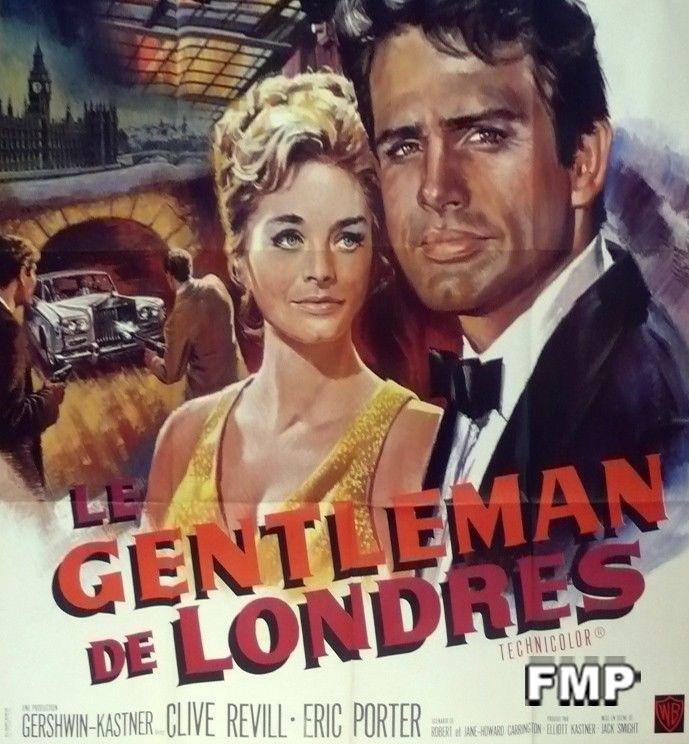
Amazing the tension that emanates from the turn of a card. Or, more correctly, waiting for one. Only problem is we’re two-third through the movie before high-stakes poker begins – the pot nudging £250,00 (close on a cool £5 million now). Mostly, the earlier tension derives from not knowing what the hell is going on in this enjoyable thriller made at the height of the Swinging Sixties as playboy gambler Barney (Warren Beatty), a walking Carnaby St model driving an Aston Martin DB5, tilts the odds dramatically in his favor.

Barney is a gambler but the problem with gambling is the odds. They can be against you too much. So Barney decides to turn himself into a burglar, the kind that can clamber over rooftops, abseil between buildings, and break into – a printing business called Kaleidoscope. This just happens to print the playing cards supplied to all the major European casinos. So Barney does a little doctoring of the master printing plates. Bingo, the odds are a bit more even now that he knows what cards are coming out of the shoe – he plays chemin de fer (as it is known in posh casinos, pontoon or 21 to you and me).

While cleaning up he bumps again into fashion designer Angel (Susannah York) – their original meet-cute taking place in a traffic jam – who he dated once in London. Unbeknownst to him, she is on a scouting mission, looking to snare the kind of high-rolling gambler who can take on and completely fleece the drugs kingpin Harry (Eric Porter) being pursued by cop Manny (Clive Revill), her father who, rather than waste so much time collecting the required evidence to put the villain behind bars, decides it would easier done by making him broke. Unable to pay his debts, some other villain would put him out of business in the traditional cemented-boot fashion.

It takes a while for the movie to line up all its ducks in a row, mainly by holding on to the information the audience requires. But the audience is privy to details of the way Manny works that Barney is not. Even for ruthless villains, Manny has a peculiar calling card, one that would make any gambler think twice about entering his lair. Of course, it doesn’t take long for Manny to rumble Barney’s game so the stakes are much higher than the charming gambler imagines.
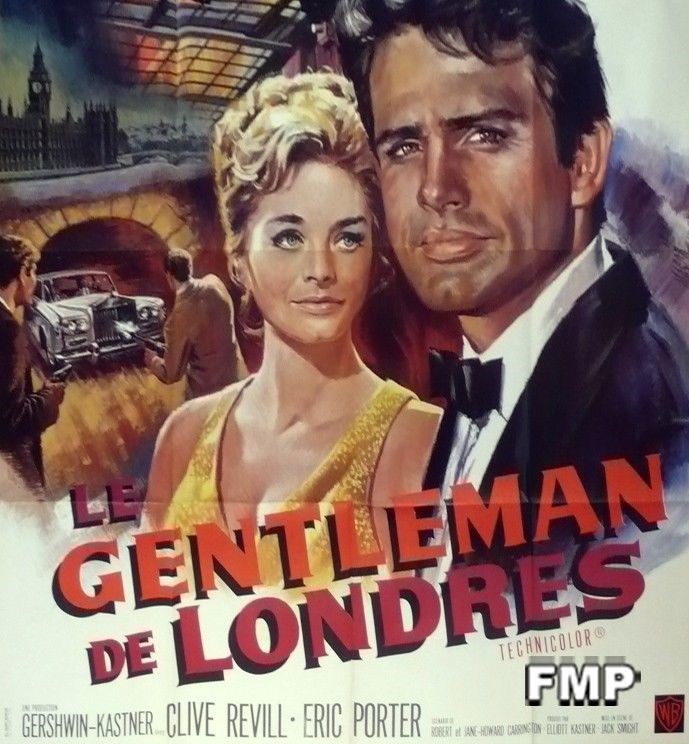
Throw in as much fashion as London was capable of generating at this time, the burgeoning romance, some exotic European locations, a castle with a moat, and the usual tourist guide stuff of red buses, Big Ben, Piccadilly Circus, pubs and Tower Bridge and you have all the ingredients of an easy on the eye thriller.

It’s a movie that relies on star power but Beatty and York deliver. That is, if you don’t need Beatty to do much more than be Beatty, all teeth and charm. At this point in his career Beatty looked as if his career was fast approaching its end. The box office success of Splendor in the Grass (1961) had been followed by a string of flops, romantic dramas and comedies that should have had audiences queuing up plus an occasional wild card like Arthur Penn’s Mickey One (1965), the biggest flop of all. He does make an engaging crook, and he never loses his screen charisma here, but there ain’t quite the right number of twists that moviegoers weaned on the likes of Topkapi (1964) had come to expect.

Hollywood had been doing its best to position Susannah York as a top box office attraction and she had snagged the female lead in The 7th Dawn (1964) opposite William Holden and Stanley Baker in Sands of the Kalahari (1965)  but she was recovering from the colossal flop of Scruggs (1965) by ‘poet of the cinema’ David Hart.  Kaleidoscope offered  the kind of role York could do with her eyes closed. So while the screen pair were not exactly sleep-walking it was not the kind of story that was going to create sparks.

Character actor Clive Revill (Fathom, 1967) and Eric Portman (The Pumpkin Eater, 1964) take more leeway with their roles, the latter almost chewing he scenery, the former content with just chewing his lips. Look out for Jane Birkin (Blow-Up, 1966) and British television stalwarts Yootha Joyce, George Sewell and John Junkin. 

The title would have been more enigmatic, original meaning of images twisted out of shape, had it not also applied, straightforwardly, to the card-making company. Giving Harry the surname of Dominion seems overkill.

Director Jack Smight (No Way to Treat a Lady, 1969) came to this after twisty private eye picture Harper/The Moving Target (1966), a big hit starring Paul Newman. This is too lightweight a feature to command such interest, but he does keep the story rolling along and it’s an effortless watch and it has a certain offbeat quality. The screenplay was fashioned by Robert Harrington and Jane-Howard Harrington, making their movie debut, who also co-wrote Wait until Dark (1967). It was also the debut for Winkast Productions, the Jerry Gershwin-Elliott Kastner production team who went on to make Where Eagles Dare (1968).

Behind the Scenes: “Bus Riley’s Back in Town” (1965)

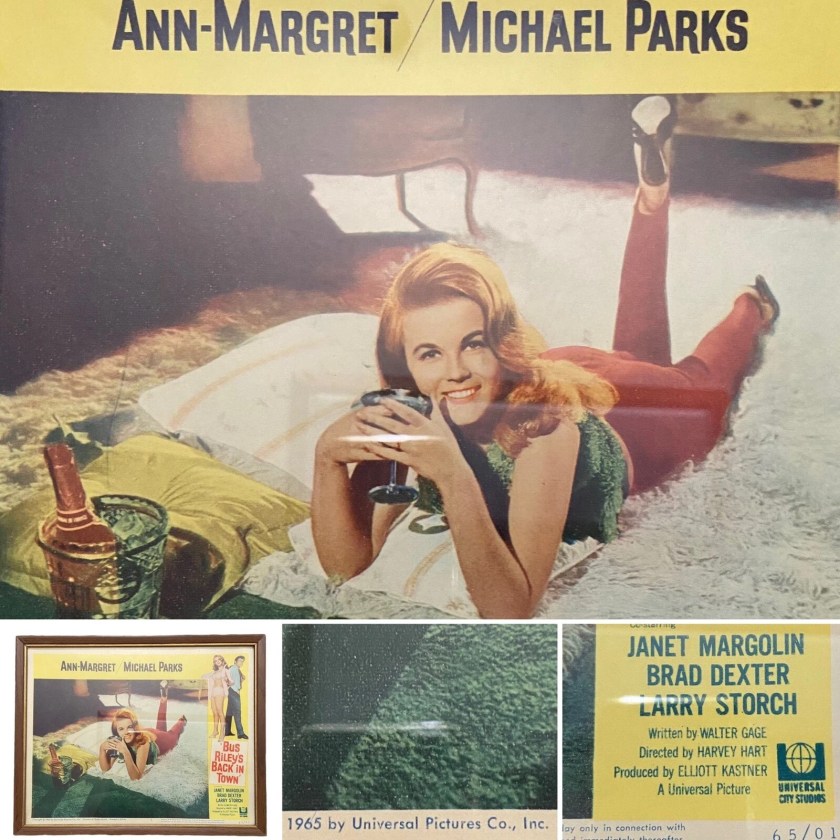
Small wonder that Bus Riley’s Back in Town found scant appreciation on producer’s Elliott Kastner’s dance card. He preferred to have people believe that his career began with box office smash Harper / The Moving Target (1966) rather than the two flops – Kaleidoscope (1966) and Bus Riley’s Back in Town (1965) – that preceded it. As his son Dillon Kastner pointed out: “He always preferred to forget his first film. He liked to think his first film was Harper so he never put that title (Bus Riley) on his list of credits for investors.”

After jockeying in the Hollywood trenches for three years, Kastner should have been delighted to finally get his name on a picture after so many potential movies had slipped through his grasp. But he had good reason to want to forget the experience of working on Bus Riley. It sat on the shelf for a year and, minus the involvement of the producer, was “butchered” by the studio.

By the time the movie appeared it was the latest in a long line of failed attempts by former agent Elliott Kastner to get onto the Hollywood starting grid. He had previously been involved in a pair to star Warren Beatty – Honeybear, I Love You with a screenplay by Charles Eastman and Boys and Girls Together adapted from the William Goldman bestseller with Joseph Losey (Accident, 1966) lined up as director. Also on his scorecard were 1963 William Inge play Natural Affection, Tropic of Cancer from the controversial Henry Miller novel and The Crows of Edwina Hill. At the time of the Bus Riley opening, he had acquired a further seven properties.

Bus Riley was never intended as a major picture, the budget limited to $550,000 – at a time when a decent-sized budget was well over $1 million. Shot in Spring 1964, and in post-production in July, release was delayed until Universal re-edited it and added new scenes because Ann-Margret had  achieved surprising movie stardom between her recruitment and the film’s completion. Along with Raquel Welch, she became one of the most glamorous stars of the decade and in building up her own career Welch clearly followed the Ann-Margret template of taking on a bucket of roles and signing deals with competing studios.

After making just three movies – A Pocketful of Miracles (1962), State Fair (1962) and Bye, Bye Birdie (1963) – Ann-Margret shot into the fast lane, contracted for three movies with MGM at an average $200,000 per plus an average 12% of the profit, substantial sums for a neophyte. On top of that she had four far less remunerative pictures for Twentieth Century Fox, three for Columbia, Marriage on the Rocks with Frank Sinatra and a couple of others. By the time Bus Riley finally appeared, she had expanded her appeal through Viva Las Vegas (1964) opposite Elvis and top-billed roles in Kitten with a Whip (1964) and The Pleasure Seekers (1964).

Universal also had another property to protect. Michael Parks was one of small contingent of novice actors in whom the studio had invested considerable sums, using them in television roles before placing them in major movies. Others in this group – at a time when most studios had abandoned the idea of developing new talent – included Katharine Ross and Tom Simcox who both appeared in Shenandoah (1965), James Farentino (The War Lord, 1965), Don Galloway (The Rare Breed, 1965), Doug McClure (The Lively Set, 1964) and Robert Fuller and Jocelyn Lane in Incident at Phantom Hill (1965).

However, the introduction of Parks had not gone to plan. He was set to make his debut in The Wild Seed (1965) – originally titled Daffy and going through several other titles besides – but that was also delayed until after Bus Riley, riding on Ann-Margret’s coat-tails, offered greater potential. Kastner had been instrumental in the casting of Parks – whom he tabbed as “a wonderful up-and-coming actor” – in The Wild Seed.

Also making their movie debuts in Bus Riley were Kim Darby (True Grit, 1969) and Canadian director  Harvey Hart (Dark Intruder, 1965), an established television name. Hart joined David Lowell Rich and Jack Smight as the next generation of television directors making the transition. Universal was on a roll, in 1964 greenlighting 25 pictures, double the number of productions in any year since 1957.

Falling just behind Tennessee Williams league in terms of marquee clout, playwright William Inge had won an Oscar for Splendor in the Grass (1961) and been responsible for a string of hits including Come Back Little Sheba (1952) – Oscar for Shirley Booth – the Oscar-nominated Picnic (1955) starring William Holden and Kim Novak and Bus Stop (1956) with Marilyn Monroe.

Kastner had persuaded him to turn his little-known 1958 one-act play All Kinds of People into a movie-length screenplay. Inge was initially keen to work on a low-budget picture, anticipating “more freedom with an abbreviated budget.” He asserted, “You don’t have the front office calling you up all the time.” Since the movie was not initially envisaged as a star vehicle for Ann-Margret (and, in fact, she plays the supporting role) he saw it as a “way of breaking up that old Hollywood method of selling pictures before they were made” on the back of a big star and hefty promotional budget.

Unfortunately for him, once Universal realized they had, after all, a star vehicle, the studio concluded that her image was more important than the “dramatic impact” of the film. “When we signed Ann-Margret she wasn’t a big star but in six months she was and Universal became very frightened of her public image. They wanted a more refined image.”

Kastner and Inge were elbowed aside as Universal ordered a rewrite and reshoots. Inge took his name off the picture. The credited screenwriter Walter Gage did not exist, he was created to get round a Writer’s Guild dictat that no movie could be shown without a writer’s name on the credits.

Despite her supposed growing power, Ann-Margret had little say in preventing the changes either. She expressed her disappointment to Gordon Gow of Films and Filming: “You should have seen the film we shot originally. William Inge’s screenplay…had been so wonderful. So brutally honest, And the woman, Laurel, as he wrote her, was mean and he made that very sad. But the studio at the time didn’t want me to have that image for the young people of America. They thought it was too brutal a portrayal. They wanted me to re-do five key scenes. And those scenes completely changed the story. There were two of these scenes that I just refused to do. The other three I did, but I was upset and angry.”

Film historian James Robert Parish refuted Ann-Margret’s recollection of events. He claimed the changes were made at her insistence because she wanted to be the focal point of the narrative rather than Bus Riley (Michael Parks).

Harvey Hart reckoned Universal got cold feet after the audience attending a sneak preview made “idiotic” comments on the questionnaire. Recalled Kastner, “I had nothing but heavy fiddling and interference from Universal.” Even so, given it was his debut production, he wasn’t likely to disown then and didn’t follow Inge in removing his name.

Despite the changes, the movie received a cool reception at the box office. It turned in opening weeks of a “modest” $7,000 in Columbus, “slow” $9,000 in Boston, “modest” $9,000 in Washington, “lightweight” $10,000 at the 1642-seat Palace in New York, “mild” $4,000 in Provident, “so-so” $4,000 in Portland, “not so good” $7,000 in Pittsburgh, “okay” $7,000 in Philadelphia, and $98,000 from 22 houses in Los Angeles with the only upticks being a “good” $7,000 in Cincinnati and a “fast” $7,000 in Minneapolis. The movie didn’t register in Variety’s Annual Box Office Chart which meant it earned less than $1 million in U.S. rentals and was listed as a flop.

SOURCES: Elliott Kastner Memoir, courtesy of Dillon Kastner; “Elliott Kastner’s Partner on Honeybear Is Warren Beatty,” Variety, January 23, 1963, p4; “Elliott Kastner Will Helm Crows for U,” Variety, May 1, 1963, p21; “Escalating Actress,” Variety, May 22, 1963, page 4; “Raid Canadian Director,” Variety, March 4, 1964, p24; “Inge Thinks Writer Contentment May Lie in Creative Scope of Cheaper Pix,” Variety, May 6, 1964, p2; “Ann-Margret Into the Cash Splash,” Variety, July 22, 1964, p5; “Universal Puts 9 Novices Into Pix,” Variety, March 3, 1965, p25; “ A Collective Byline,” Variety, March 17, 1965, p2; “U Stable of Promising Thespians,” Variety, March 17, 9965, p2; “Fear Ann-Margret Going Wrongo in Her Screen Image,” Variety, March 24, 1965, p5; “Radical Kastner-Gershwin Policy: Get Scripts in Shape Way Ahead,” Variety, May 19, 1965, p19; “Warren Beatty Partner and Star of Goldman Tale Via Elliott Kastner,” March 31, 1965, p7; “Picture Grosses,” Variety – March-May 1965.

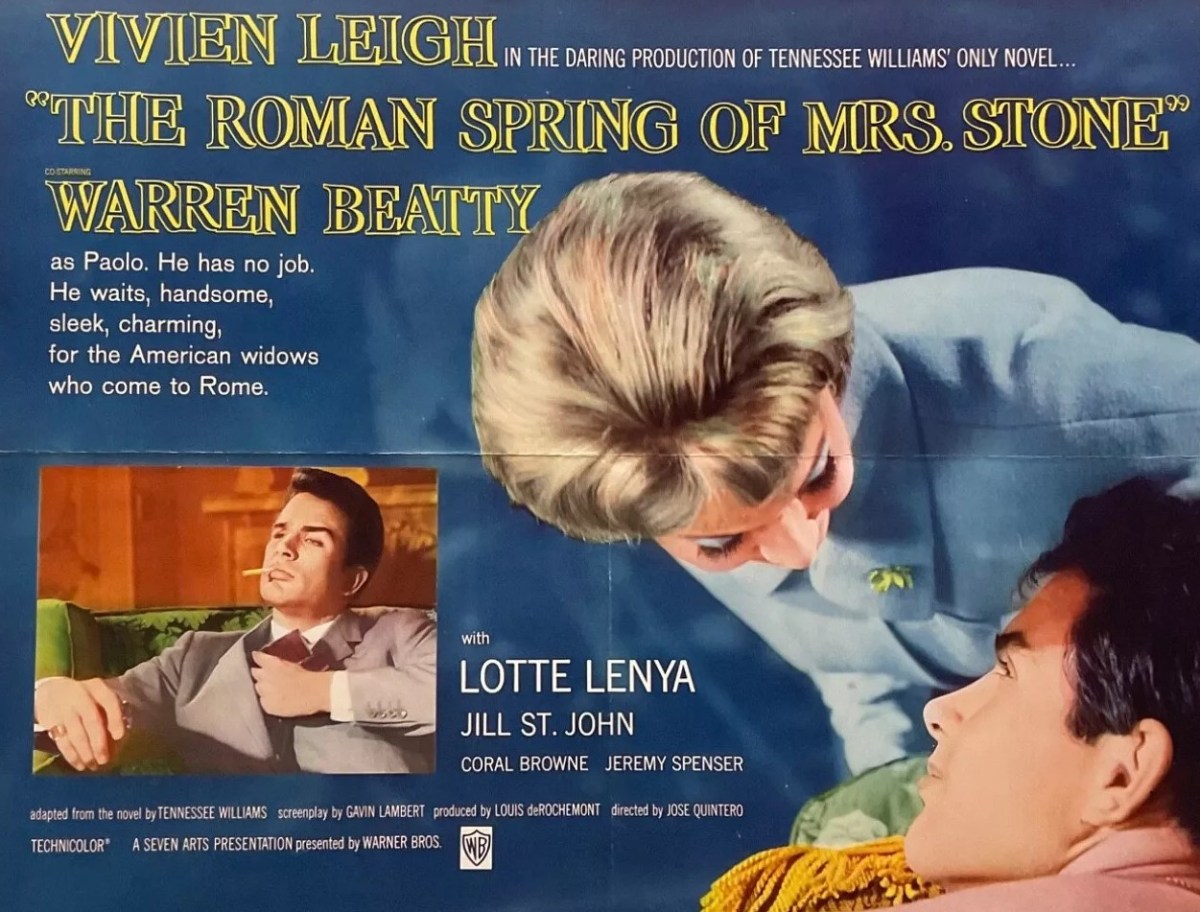
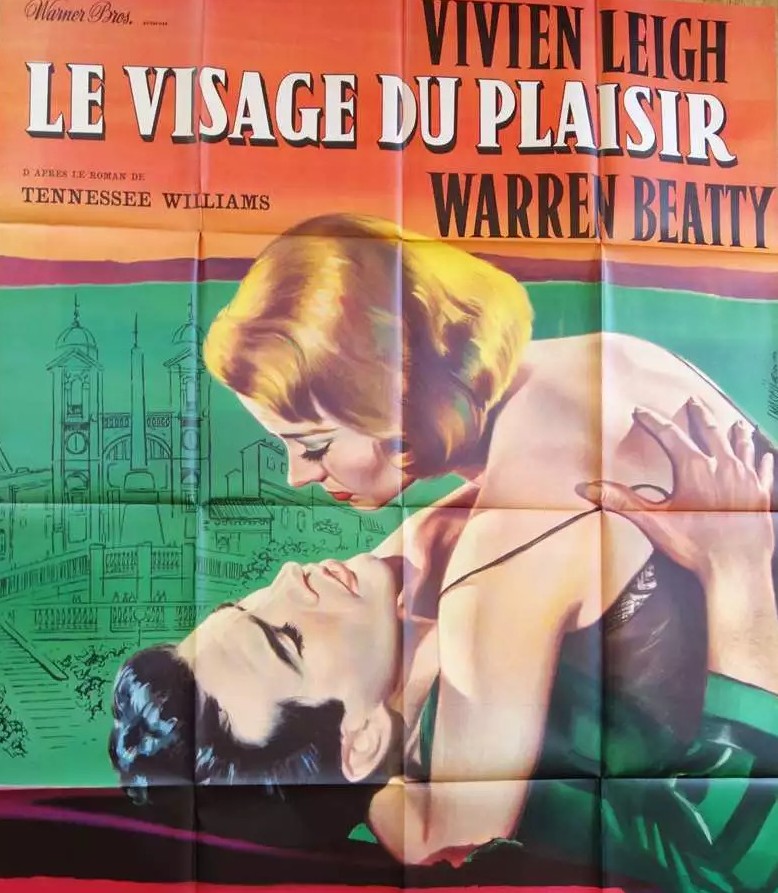
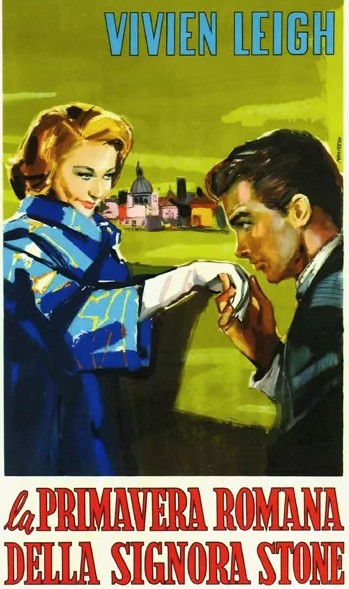
The Roman Spring of Mrs Stone (1961) **

Dreary miscalculation. Ever since Tennessee Williams hit a home run with Cat on a Hot Tin Roof (1958), studios, directors and stars had clamored for his works, so much so that Hollywood had greenlit seven adaptations in five years. While box office was one consideration, the playwright was catnip to the Oscar, racking up 17 nominations with a hefty number in the Best Actress category.

However you dressed it up, his work contained a substantial number of portraits of sadness and malevolence and often teetered on the murky, so making them work at all depended not just on the acting and direction, but the initial story. Rather than being based on a play, this was sourced from his first novel, a bestseller.

But the tale never shifts out of first gear and it’s difficult to summon up sympathy never mind interest in any of the characters. The middle-aged romance had proved a cumbersome fix for studios, and since May-December numbers featuring ageing male and younger female had proved popular, Cary Grant set up with an endless supply of woman nearly half his age, it seemed only fair to give middle-aged actresses the opportunity to romance younger men.

Usually, however, this followed a more straightforward path, involving genuine feelings on both sides. But Hollywood was also digging into another cesspit, the female sex worker, somewhat dressed up in Butterfield 8 (1960) and Go Naked in the World (1961), treated more straightforwardly in Never on Sunday (1960) and Girl of the Night. So it only seemed fair to introduce the gigolo.

Stage actress Karen Stone (Vivien Leigh) heads for Rome with her wealthy husband to recover from the failure of her latest play, a Shakespearian outing. When her husband dies on the plane, Karen decides to hang on in the Italian capital, which, after a year, brings her into the orbit of gigolo Paulo (Warren Beatty) and his unscrupulous mentor/manager Contessa Magda (Lotte Lenya). While Karen isn’t entirely a dupe and quickly sees through Paulo, nonetheless a year of loneliness has taken its toll.

Plus she understands the attraction of the older lover, her husband being a good two decades older and willing to subsidize her theatrical and cinematic ambitions. Despite not falling for Paulo’s more obvious con tricks, Karen finds herself enmeshed in a one-sided romance, ignoring the warnings of friend Meg (Coral Brown) on the dangers of becoming the talk of the town with her lover clearly more attracted to rising movie star Barbara (Jill St John). Paulo quickly dumps the Contessa, leaving her free to pour bile into Karen’s ear.

Inevitably, the younger lover tires of the older, but generally such pairings work well enough because initially at least there is attraction on both sides. But when it’s as lop-sided as this no amount of long drawn-out close-ups of the disenchanted provide sufficient compensation for a story that overstays its welcome.

While there are hints of the decadence of La Dolce Vita (1960) that Fellini explored, here it’s more of a surface examination until the surprising ending, where you would think Karen is doing little more than willingly opening the door to a potential serial killer.

The only redeeming element, which might reverberate more easily today, is of the woman demonstrating her independence by being the one to choose, and to some extent discard, the man. While not for most of the movie a sexual predator, she may well have turned into one at the end.

Oscar-winner Vivien Leigh, in her first movie in six years, essays her role well but is compromised by portraying a character that fails to elicit sympathy. Warren Beatty (Promise Her Anything, 1966) avoids the trap of thickening his Italian accent and going wild with the gestures which lends his character more of a thoughtful personality but there’s not much here to write home about. Lotte Lenya (From Russia with Love, 1963) steals the show and was rewarded with an Oscar nomination. Jill St John (Tender Is the Night, 1962) plays the ingénue like an ingénue.

Unless you’re a student of theater I doubt if you’ll have come across Panamian director Jose Quintero. This was his only movie and he was more famous for staging some of Williams’ plays and for resurrecting Eugene O’Neill on Broadway. His inexperience shows in lingering on faces at the expense of creating drama. Gavin Lambert (Inside Daisy Clover, 1965) adapted the novel.

Disappointment.

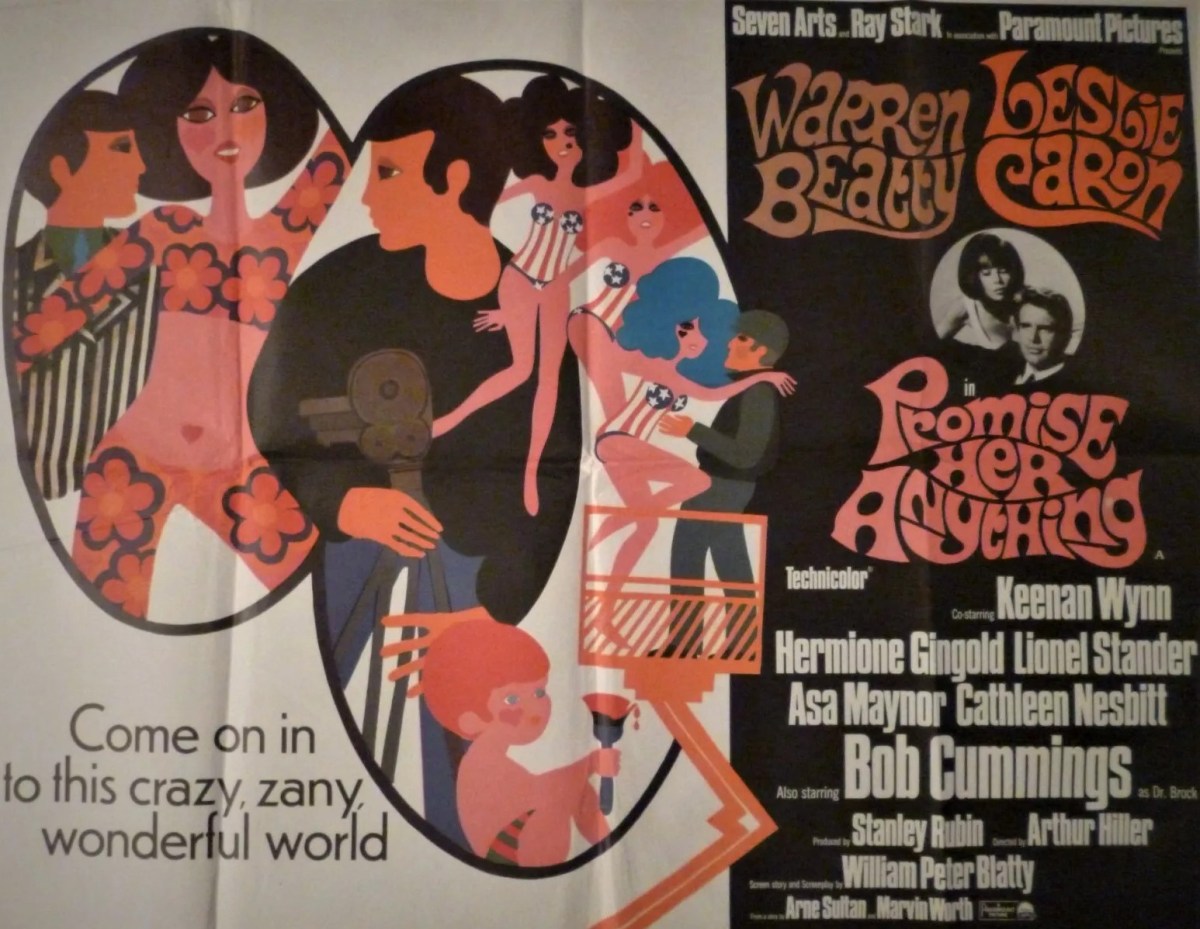
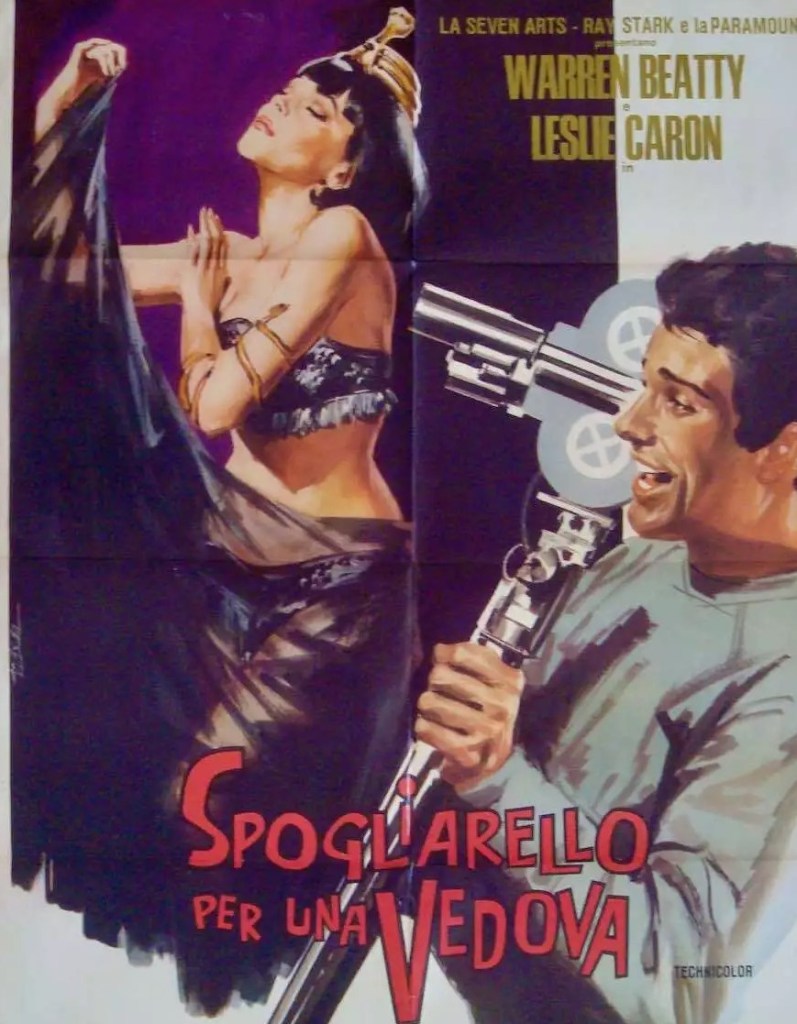
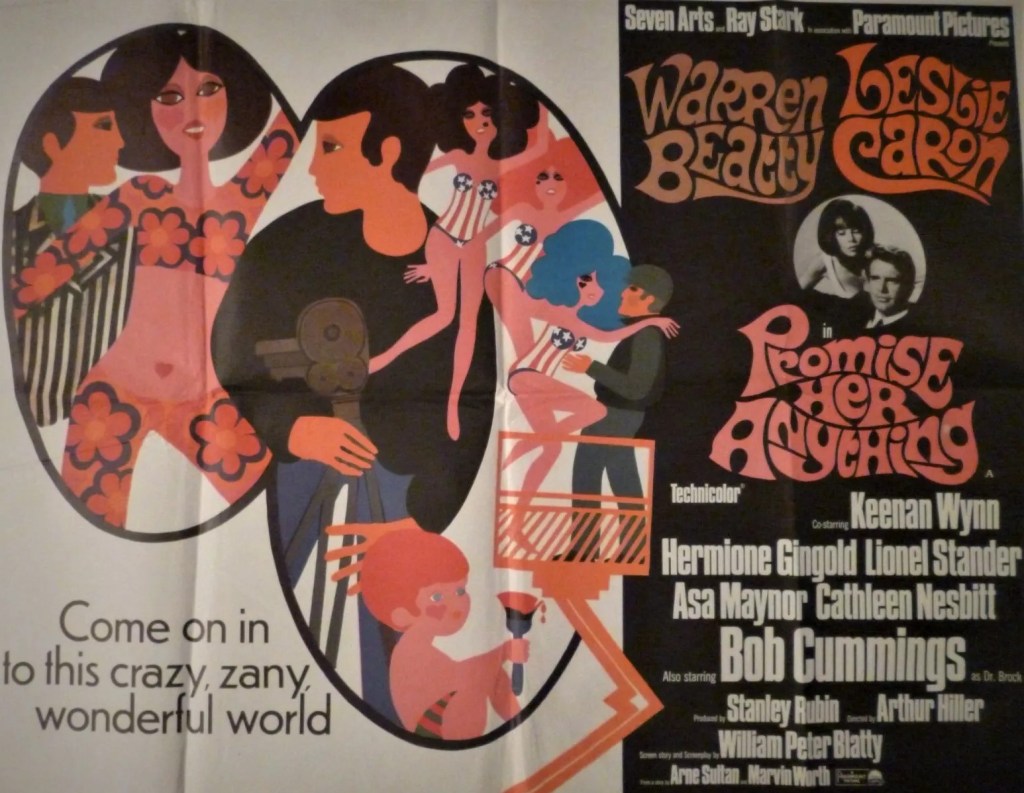
Promise Her Anything (1966) ***

You ever wonder what William Peter Blatty got up to before he scared the bejasus out of everyone with The Exorcist (1973)? He was a screenwriter, churning out somewhat formulaic comedies like this. There were two approaches to this subgenre. The potential lovers hate each other on sight and spend the rest of the film annoying each other before they discover they are actually in love. Or, they are kept apart by the simple process of one of them being in love with someone else.

Here Michele (Leslie Caron), widowed single mother, is trying to get her hooks into boss Dr Brock (Robert Cummings), a child expert, because she thinks he would make a great father. So, largely, she ignores the seduction attempts of nudie film director Harley (Warren Beatty). What Michele doesn’t know is that Dr Brock hates children – though some of his concepts (mocked at the time) seemed quite prophetic such as “corporal punishment is an admission of failure by the parents.” But, basically, she offloads the kid onto neighbors, keeping him out of the way till she gets her man.

Meanwhile, her cute baby John Thomas (Michael Bradley) is doing all the work of bringing the couple together. He more or less adopts Harley as a surrogate father and filming him turns out to be the refreshing new idea the director needs to satisfy irate backer Angelo (Keenan Wynn).

This could as easily have been entitled Babies Behaving Badly for John Thomas is introduced to the audience escaping from his mother and wrecking a jewellery story and spends most of the picture getting into trouble, for which his cuteness provides the requisite get-out-of-jail-free card. (The child’s name probably was the only thing guaranteed to raise a chortle among British audiences).

You spend a lot of time waiting for Michele and Harley to get it together, during which time neither of the alternative narratives – the Michele-Dr Brock subplot and the filming of the child – offer much in the way of sustenance. Theoretically, Harley isn’t the standard seducer of the period, the well-off kind who lives in a cool or plush pad and does something financially or artistically rewarding for a living. He lives in a crummy apartment in Greenwich Village and struggles to make ends meet, blue movies not as remunerative as you might expect.

Michele’s character is stuck in the 1950s more than the more liberated 1960s, with the ideas that a child needs a father, that you should marry for security, and that there’s nothing wrong with snaring a man by devious means. She’s pretty uptight and old school.

Warren Beatty’s career was on a distinctly shaky peg. Since his breakthrough in Splendor in the Grass (1961) he had been bereft of a commercial hit and not found critical acclaim, though there were some takers for Arthur Penn’s Mickey One (1965). Like other actors had before him, he had fled to Europe in the hope of finding better opportunities, but all he managed was this (though set in New York it was filmed at Shepperton Studios in Britian) and heist picture Kaleidoscope the following year, neither of which solved his marquee issues.

Leslie Caron hadn’t quite found her niche either. Nothing she had done had topped Gigi (1958) and though Father Goose (1964) had been a commercial success it put her in the comedy category whereas her more interesting work of the decade had been in the drama genre – Guns of Darkness (1962) and The L-Shaped Room (1962). In fact, as a Hollywood leading lady, this was pretty much her swansong.

Robert Cummings (Five Golden Dragons, 1967) is good value and the cast includes Keenan Wynn (Point Blank, 1967), Hermione Gingold (The Naked Edge, 1961), Lionel Stander (Once Upon a Time in the West, 1969), British television actor Warren Mitchell (The Assassination Bureau, 1969), Margaret Nolan (Goldfinger, 1964) , Viviane Ventura (Battle Beneath the Earth, 1967) and a blink-and-you-miss-it role for Donald Sutherland (Riot, 1969). Directed by Arthur Hiller (Penelope, 1966).

Tame stuff.

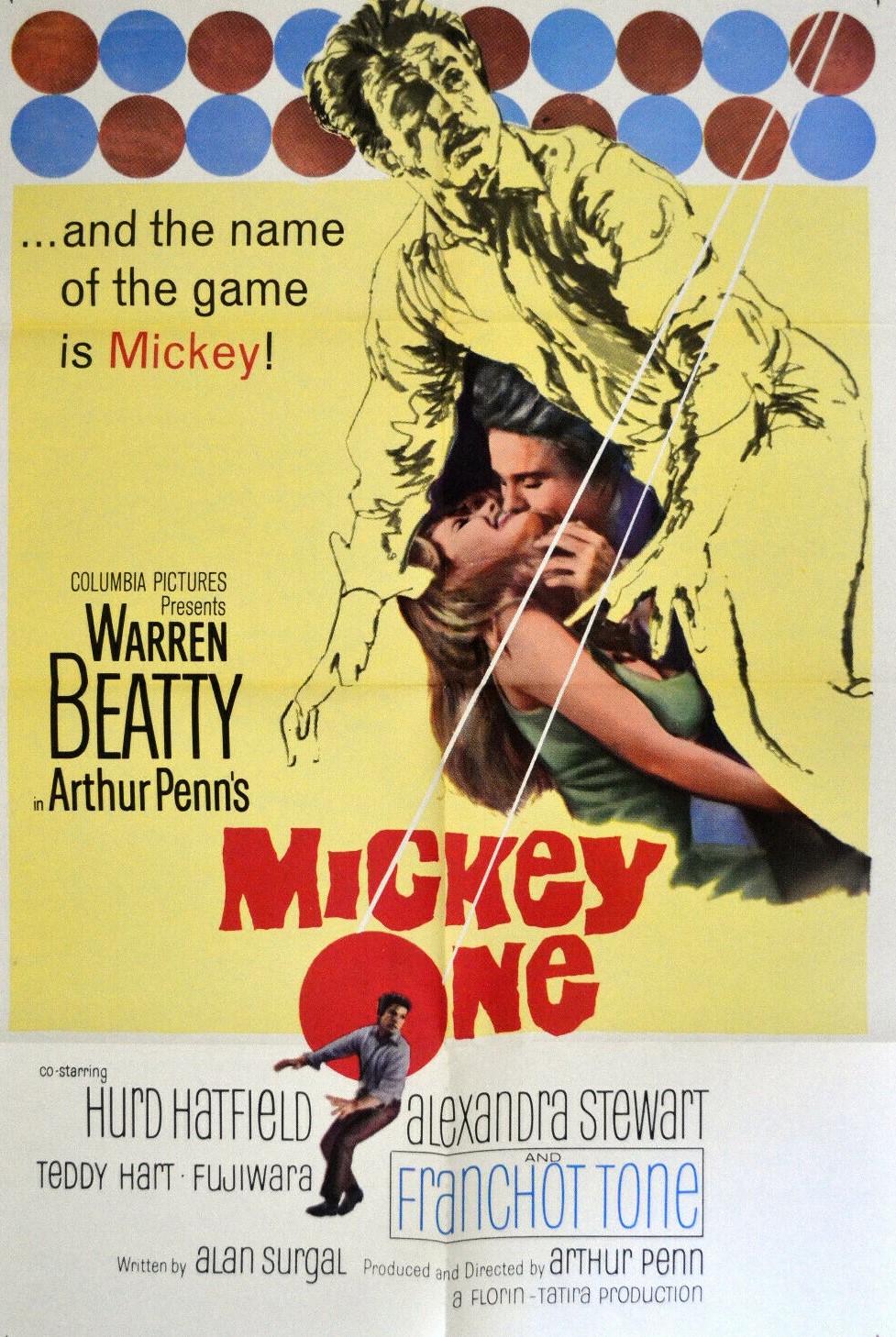
Mickey One (1965) ***

Smorgasbord of paranoia, Kafka and the surreal, set in an American netherworld. Cue trampolines, a mime, what these days we’d call installations, a comic without a decent joke, a wrecker’s yard, organic food, catering kitchens. You could call Arthur Penn (Bonnie and Clyde, 1967) a visionary director just for including some of these aspects. Or you could go for another contemporary word: “random.”

We are pretty used to people being on the run be they innocent of the crime of which they are accused or small-time hoods trying to evade punishment. The notion here is of small-time hood Mickey One (Warren Beatty) fleeing Detroit for Chicago but with no idea for what crime, though the list could include gambling debts and stealing a bigger gangster’s moll.   

A misleading tagline if ever.

His situation is spelled out often enough in case you’ve not got the picture. “Hiding from you don’t know who for a crime you don’t know you committed,”  remarks girlfriend Jenny (Alexandra Hay). In a particularly Kafkaesque moment, Mickey espouses: “The only thing I know is I’m guilty – of not being innocent.”

Smart with the words but not so smart with the actions. Even though he can just about get by  as a kitchen wash-up, he gets sucked back into his former profession of stand-up comedian, hardly the most anonymous of jobs. So he is all angst-on-fire when success in some low dive, keeping clients entertained between strippers, attracts interest from a classier joint which naturally sees marketing the new prospect as part of the deal.

Some of this paranoia might just be in his head were it not for being stalked by car-crunching cranes in the wrecker’s yard, spotlights on stage (though you could point out that’s an occupational hazard) and a silent rag-and-bone man.

It says something for the acting of Warren Beatty (Kaleidoscope, 1966) that this is in any way believable. The fast-living lothario of the opening sequence, with gals and booze aplenty, segues into a bum without missing a beat. His paranoia is consistent and he makes some attempt to find out what the heck he has done to end up this way, though it has to be said there’s no actual evidence of pursuit, just the fear of it, and the notion that he owes somebody maybe twenty grand or that the lass tempted into stripping for him was stepping out of line.

Pretty good plug from a top critic and an arthouse opening – what else could you ask for?

His breadline living is realistic, too, hitching a ride on a train, bumming food from a mission, sleeping among bags of rubbish, a world where down-and-outs steal the clothes from the back of other vagrants and his job is scraping leftover food from plates in a cafeteria. And there’s always someone at the scam, his landlady dumping another tenant (Jenny) in his tiny apartment.

Maybe less realistic that club owners are lining up to hire him when there’s nary a laugh in his schtick. The biggest joke is in the casting, some kind of infernal joke on audiences to put the likes of the uber-handsome Beatty through mental and physical torture, albeit that he’s perceived as man of abundant talent and collects with ease women willing to put up with the depressive side of his nature.  

The movie doesn’t quite fit the Kafka mold because being on stage represents freedom and nobody in Franz’s world ever had a sniff of that. And you wouldn’t call it a thriller either. And if it’s a homage to the French New Wave you’d have to watch a stack of French pictures from this decade to work out what it’s mimicking.

And it’s not like Penn’s work is always on this kind of edge, he’s not the David Lynch of his generation. Every top director is permitted at least one turkey, and this would have been Penn’s except critics in the 1990s started to give it the old reassessment treatment, Penn being a big enough name from his other works to have a stab at how this fits into his repertoire/oeuvre.

So, far from being an intolerable mess. Doesn’t quite ask the big questions Penn hopes it does. More of a curate’s egg of a picture, some interesting ideas, and an excellent performance from Beatty. Alexandra Hay (Only When I Larf, 1968) was part of the French connection, a Canadian model who had hit it big in Paris, with roles in French pictures and an affair with director Louis Malle. But actually she’s good, not the kind of submissive woman Mickey has perhaps been used to, but thoughtful and capable of challenging his illusions.

Screenwriter Alan Surgal was not prolific, this being his only movie.

Lilith (1964) *****

You couldn’t make this now. What top-ranked actor would be willing to play a character who takes sexual advantage of a vulnerable young woman? You’d find it even harder to get a marquee name to play a female with paedophiliac tendencies, predatory sexual instincts and thinks it fine to drive a lovelorn young man to suicide.

That it was feasible back in the day was largely due to the restraints imposed by the much-maligned Production Code. Most of the issues are delicately probed, the problematic themes only touched upon, so that the result is quite amazing, the director turning to the lyrical,  rendered by its intensity a metaphor for internal conflict.

War veteran Vincent (Warren Beatty) takes a job as an occupational therapist at an upmarket mental institution, the kind that looks more like a country club or grand hotel with extensive manicured grounds. Few of the inmates are of the type found in the normal hospitals for the insane, the worst cases a woman with a maniacal laugh and another who treats a doll like a baby, but he is warned insane women are more “sinister” than crazy men.

One of his charges is the withdrawn Lilith (Jean Seberg) whom he gradually coaxes out of her shell, soon believing that it is his innate skill that brings about the possibility that such a high-risk individual could possibly achieve something akin to cure, or at least a greater degree of normality. You can hardly blame him for missing the obvious – that Lilith is using him – for the young woman is every inch the winsome innocent seeking guidance from the more mature responsible male.

It’s mostly shorn of obvious metaphor but there is one scene, compelling in itself, where Vincent plays the knight on horseback, complete with lance, winning a contest of skills for his lady, that completes his idealisation in her eyes. But he is already halfway there, with unexpected dexterity he frees her hair caught in loom, the kind of scene that in an otherwise more romantically-inclined movie would be the meet-cute.

And this isn’t one of those films about a madwoman in an attic or an apparently sane person turning demented. Instead, considerable time is spent analysing the condition of the schizophrenic, either through clinical lead Dr Lavrier (James Patterson) expounding his theories or through Vincent discussing individual patients with his boss Dr Brice (Kim Hunter). The idea of opening up a new realm to an audience is crystallised in one scene where Lavrier explains that even spiders go mad, resulting in asymmetrical webs rather than the typical formations to which we are more accustomed.

And by using one of the oldest tricks in the book, an inexperienced young man negotiating a new world, disbelief is suspended. But just when we think we are seeing everything from Vincent’s perspective, we are thrown into a heightened intensity linked to the lyrical – a river, a waterfall – the madness of ecstasy, what used to be called rapture, as Lilith stares and stares at nature.

But there are warnings about the personality of both characters. Lilith bears a startling resemblance to Vincent’s dead mother. He has difficulty committing, lack of communication while away at war resulting in girlfriend Yvonne (Anne Meacham) marrying someone else.

And there is plenty that is disconcerting about Lilith that only the besotted would overlook. She leads on lovelorn Stephen (Peter Fonda) to potential disasters he cannot foresee. Angry at Vincent, “I show my love for all of you and you despise me,”  she seduces vulnerable older patient Laura (Jessica Walter). But the worst aspect of her character is that she perceives no boundaries to behavior. She exhibits inappropriate attitudes to young boys, inviting one to rub his finger along her lower lip.

However, for most of the film the skilful direction of Robert Rossen (The Hustler, 1961) has you rooting for the young lovers. Even while never falling back on the cliché of the doctor-type saving the ill person, there is enough in Vincent’s earnestness and Lilith’s innocence to make that a distinct possibility, were it not for the other discordant elements of her character.  The picture is wrapped in natural sound – the river, waterfall, a flute playing mournful tune, ping-pong ball hitting bat, reeds or branches parting, rain, footsteps, a ticking clock, and the bulk of the music emanates from Stephen’s radio. And then he will twist it slightly, reflections are seen upside-down in the river, or a shot of the waterfall is held for too long, the sound of water increasing, or Lilith standing in the river bends down to kiss the surface, or at a picnic she eats a leaf irrespective of whether it might be poisonous.

Usually, when you get so much detail it’s a surfeit, and ends up drowning the viewer. But that’s not the case here. Either it builds or expands. And there is even a throwaway that mocks the notion of containing madness in an institution. The best, most revealing, line in the  picture is not spoken by either of the two principals, but secondary character Yvonne, seen only at the beginning and end. When for unspecified reasons Vincent turns up at her house and her husband (Gene Hackman) leaves them on their own, she says, “I told you I’d never really let you make love to me until I was married,” (pause), “well, I’m married now.”

Jean Seberg (Moment to Moment, 1966) is just superb, coming across as a young woman entering adulthood full of fears and insecurities, only suggesting the darker side of her character, and never giving in to the temptation of overplaying. Warren Beatty (Kaleidoscope, 1966) can’t quite match her for subtlety or kick those acting mannerisms – lowered head, looking away – but his stupefied expression towards the end as he realizes just what he has taken on is priceless.

There’s an outstanding cast of rising stars. Peter Fonda (Easy Rider) as the preppy insecure victim is excellent while Jessica Walter suggests the qualities that would make her the prime candidate for the femme fatale in Play Misty for Me (1971). Gene Hackman, in his movie debut and still working on his trademark chuckle, provides early evidence of his immense talent.  

Robert Rossen, who wrote the screenplay (from the novel by J.R. Salamanca) and also produced, couldn’t have wished for a better epitaph. This was his final film in a relatively short career – he only directed 10 films.

Despite contemporary reservations about the content this is a beautifully observed piece and well worth a look.

The Parallax View (1974) ****

The shocking ending ensures the need to re-evaluate everything you have seen. The middle film in Alan J. Pakula’s paranoia trilogy – after Klute (1971) with All the President’s Men (1976) to come – is a dark (in more ways than one) reflection in essence on the John F. Kennedy assassination. The superbly stylish, on occasion over-stylised, cinematography carries an undercurrent of fear.  

Ambitious reporter Joe (Warren Beatty) investigates the notion that too many witnesses, including ex-girlfriend Lee (Paula Prentiss), to a senatorial assassination have been dying. Joe’s boss Bill (Hume Cronyn), while turning up acceptable reasons for each death, reluctantly backs him. Other witnesses such as Tucker (William Daniels) have run for cover. But, as Joe soon discovers, nobody can hide forever.  

Joe’s initial foray leads him to a small-time small-town Sheriff Wicker (Kelly Thorsden) with an unexpectedly large bank balance and murderous intent. Finding a link to a mysterious company the Parallax Corporation, Joe takes a written psychometric test to become a potential recruit for a company that is seeking, apparently, to find the hidden talents of under-achievers. After preventing one attempt on the life of another senator (Charles Carroll), Joe realises Parallax will stop at nothing.

Effectively, it’s a straightforward private eye number, Joe moving from character to character, building up a case. But the way Pakula frames the film, peppered with unusual scenes, turns it into an exercise in tension. One of Joe’s contacts works in a lab that is trying to train chimpanzees to play video ping-pong. Another scene takes place, disconcertedly, on a miniature train. At times we can hear every word delivered, even with the camera far away from the speakers, other times we hear nothing. Ominous music appears sparingly. Every step Joe takes in solving the mystery pushes him further into a corporate heart of darkness.

Beatty in the bar he’s about to wreck after ordering a drink of milk.

Joe believes Parallax are recruiting assassins but in point of fact their aim is considerably more devious. And here I don’t see how I can avoid a SPOILER ALERT. Parallax already have their assassins on board. What they are looking for are dupes, a patsy to take the blame once the killing has been done.

So when you look back from the ending what you find is that the cocky reporter is in fact exactly the kind of under-achiever the Parallax web attracts. There’s no proof of Joe’s editorial pedigree. Bill can point to any number of stories where Joe got hold of the wrong end of the stick. And the audience can see for themselves that he’s not exactly a super-brain. Sure, he can easily, with the help of a psychiatrist, pass the psychometric test, but how is he going to fare when he is linked up to some kind of machine that measures his response to visual imagery?

And you have to wonder what kind of idiot gets on a plane he suspects has a bomb on board  instead of staying off the aircraft and making a phone call. Or how he managed, after surviving an explosion at sea, to swim several miles to shore and land on a beach without drawing attention to himself so that he can masquerade as a dead man.

There’s also a curious section where Joe triggers a fist fight that ends in a John Ford-style saloon-wrecking. After killing the suspicious sheriff and hijacking his car, Joe then, in true French Connection style, sparks a car chase, managing to evade his pursuers by (natch) jumping onto the back of a passing truck.

But for all these flaws, there is something hypnotic about the picture. A camera that moves with snail-like precision from extreme long shot to medium shot or close-up, a reining in of flamboyance in favor of discipline, and shadow given its biggest outing since the film noir golden era. Pakula was trying to make an obvious point about the shady authorities that exercise behind-the-scenes power. The government is either powerless or complicit, various hearings into assassinations discovering zilch. Paranoia is no less prevalent now, of course, but what makes the biggest impact is journalistic entitlement, the reporter who can change things because he is willing to go down those dark streets like an avenging angel, not realizing he is always going to one step behind.

Warren Beatty (Kaleidoscope, 1966) has lost all the acting tics, the mumbling and stuttering he used to inflict on a weaker director, and instead delivers a great performance. Which is just as well because it’s a one-man show. Paula Prentiss (Man’s Favorite Sport, 1964) barely appears before she’s bumped off. William Daniels (Two for the Road, 1967) eschews his normal harassed husband for a well-judged turn.     

David Giler (Aliens, 1986) and Lorenzo Semple Jr. (Three Days of the Condor, 1975) fashioned the screenplay form the novel by Loren Singer. Also worth a mention is the eerie score by Michael Small (Klute, 1971) who for a time was the go-to composer for paranoia pictures.

Kaleidoscope (1966) ***

Amazing the tension that can emanate from one turn of a card. Or, more correctly, waiting for one. Only problem is we’re two-thirds through the movie before high-stakes poker begins – the pot nudging £250,00 (close on a cool £5 million now). Mostly, the earlier tension derives from not knowing what the hell is going on in this enjoyable thriller made at the height of the Swinging Sixties as playboy gambler Barney (Warren Beatty), a walking Carnaby St model driving an Aston Martin DB5, tilts the odds dramatically in his favor.

Barney is a gambler but the problem with gambling is the odds. They can be against you too much. So Barney decides to turn himself into a burglar, the kind that can clamber over rooftops, abseil between buildings, and break into – a printing business called Kaleidoscope. This just happens to print the playing cards supplied to all the major European casinos. So Barney does a little doctoring of the master printing plates. Bingo, the odds are a bit more even now that he knows what cards are coming out of the shoe – he plays chemin de fer (as it is known in posh casinos; pontoon or 21 to you and me).

While cleaning up he bumps again into fashion designer Angel – their original meet-cute taking place in a traffic jam – who he dated once in London. Unbeknownst to him, she is on a scouting mission, looking to snare the kind of high-rolling gambler who can take on and completely fleece drugs kingpin Harry (Eric Porter) being pursued by her father Manny (Clive Revill), a cop who, rather than waste so much time collecting the required evidence to put the villain behind bars, decides it would easier done by making him broke. Unable to pay his debts, some other villain would put him out of business in the traditional cemented-boot fashion.

It takes a while for the movie to line up all its ducks in a row, mainly by holding back the vital information the audience requires. But the audience is privy to details of the way Manny works that Barney is not. Even for ruthless villains, Manny has a peculiar calling card, one that would make any gambler think twice about entering his lair. Of course, it doesn’t take long for Manny to rumble Barney’s game so the stakes are much higher than the charmer imagines.

Throw in as much fashion as London was capable of generating at this time, the burgeoning romance, some exotic European locations, a castle with a moat, and the usual tourist guide stuff of red buses, Big Ben, Piccadilly Circus, pubs and Tower Bridge and you have all the ingredients of an easy on the eye thriller.

A bit over-reliant on star power. That is, if you don’t need Beatty to do much more than be Beatty, all teeth and charm. At this point Beatty’s career looked as if it was fast approaching its end. The box office success of Splendor in the Grass (1961) had been followed by a string of flops, romantic dramas and comedies that should have had audiences queuing up plus an occasional wild card like Arthur Penn’s Mickey One (1965), the biggest flop of all. He does make an engaging crook, and he never loses his screen charisma here, but there ain’t quite the right number of twists that moviegoers weaned on the likes of Topkapi (1964) had come to expect.

Hollywood had been doing its best to position Susannah York as a top box office attraction and she had snagged leading female roles in The 7th Dawn (1964) opposite William Holden and Stanley Baker in Sands of the Kalahari (1965)  but she was recovering from the colossal flop of Scruggs (1965) by ‘poet of the cinema’ David Hart.  Kaleidoscope offered  the kind of role York could do with her eyes closed. So while the screen pair were not exactly sleep-walking it was not the kind of story that was going to create sparks.

Character actor Clive Revill (Fathom, 1967) and Eric Portman (The Pumpkin Eater, 1964) take more leeway with their roles, the latter almost chewing he scenery, the former content with just chewing his lips. Look out for Jane Birkin (Blow-Up, 1966) and British television stalwarts Yootha Joyce, George Sewell and John Junkin.  

The title would have been more enigmatic, original meaning of images twisted out of shape, had it not also applied, straightforwardly, to the card-making company. Giving Harry the surname of Dominion seems overkill.

Director Jack Smight (No Way to Treat a Lady, 1969) came to this after twisty private eye picture Harper/The Moving Target (1966), a big hit starring Paul Newman, but this is too lightweight a feature to command such interest, but he does keep the story rolling along and it’s an effortless watch and it has a certain offbeat quality. The screenplay was fashioned by Robert Harrington and Jane-Howard Hammerstein, making their movie debut, who also co-wrote Wait until Dark (1967). It was also the debut for Winkast Productions, the Jerry Gershwin-Elliott Kastner production team who went on to make Where Eagles Dare (1968).
Discover WordPress

A daily selection of the best content published on WordPress, collected for you by humans who love to read.

The Atavist Magazine

by Brian Hannan

WordPress.com News

The latest news on WordPress.com and the WordPress community.