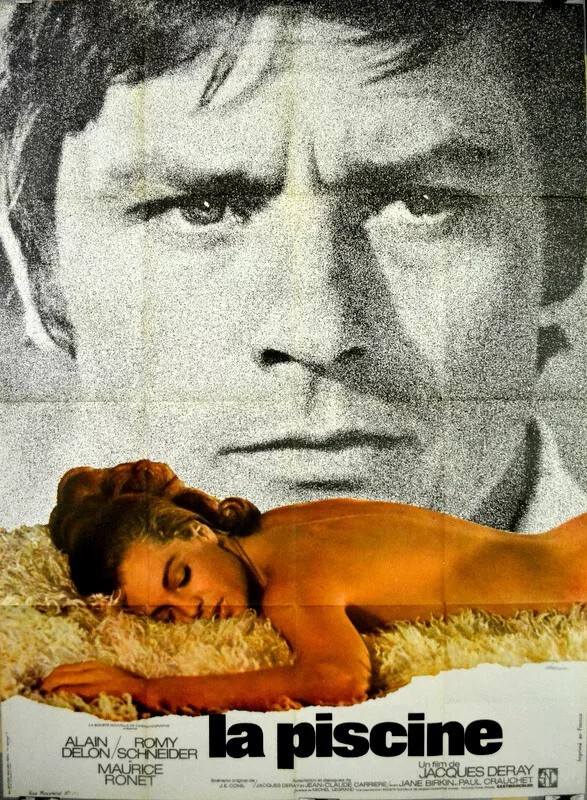
Blackeyes (1989) *****

Absolutely mesmeric. Would be catnip for contemporary audiences with its shifting time frames, juggling perspectives, narrative sleight-of-hand, and heavily feminist-oriented outlook with its slating of misogyny. Ripe for a remake and with the adventurous directors around these days they should be vying for the opportunity. But I should warn you, steer clear of the version that showed on Amazon Prime which cut the four-part television series in half.

British screenwriter Dennis Potter was something of a national institution before this appeared, the BBC ponying up vast sums (in television terms) for his experimental programs that included the likes of Pennies from Heaven (1978) – remade as a movie three years later with Steve Martin – and The Singing Detective (1986) (remade seventeen years later with Robert Downey Jr) and his blend of pastiche and males struggling with raw emotion had made him not just a household name but accorded him worldwide acclaim.

However, just as Peeping Tom (1960) put the kibosh on the career of Michael Powell, Blackeyes proved a major critical reversal and after the mauling it received and outraged headlines in the national media Potter somewhat lost his mojo and automatic critical favor although Lipstick On Your Collar (1993) helped a certain Ewan McGregor to make his mark.  

In part, Blackeyes is way ahead of its time in the use of the stylistic devices mentioned above which when incorporated into the works of, for example, David Lynch or Christopher Nolan, were hailed as groundbreaking.

So this is a three-hour-plus show setting precedents that not only break all the rules of narrative but blows them sky-high and has so many layers you can hardly keep up and that narrative spinning continues to the very end. You could almost entitle it “Whose Story Is It, Anyway?”

Elderly author Maurice (Michael Gough) has fashioned the experiences of his model niece Jessica (Carol Royle) into a bestselling literary novel. Leading character Blackeyes (Gina Bellman) is taken advantage of so often by men that she commits suicide, wading out dressed in sexy night attire into a lake.  Although Maurice makes a fine specimen suited-and-booted and talking to admiring audiences at book fairs, in reality he’s a sodden old drunk living in a threadbare apartment with a teddy bear. But he’s intellectually adroit as shown with his verbal duels with a smug journalist who spouts artistic jargon.

Jessica is so annoyed that she has not been acknowledged as the source of her uncle’s novel – he claims it is a work of imagination – that she begins to write her own fictional version of her life story, calling into question some of the events in her uncle’s account. So that’s two perspectives already. Stand by for a third, that turns the entire story on its head.

It appears Blackeyes (Gina Bellman) has not committed suicide. Detective Blake (John Shrapnel) is convinced she has been murdered, especially after he finds a list of names stuck in her vagina (yes, despite Blake gamely searching for every euphemism under the sun, the actual word, to add to the shock and horror of an audience and especially critics reeling from the sex and nudity, was used on the BBC) and later finds her diary which provides another version of events.

He’s an old-school detective, and while not beating anyone up, not above handing out a good thump in the ribs to anyone giving him lip. So while following Maurice and his niece, we are also finding out more about Blackeyes via the cop’s investigations and how she was taken advantage of in the advertising profession and world of photographic modeling. She is even the one who gets the blame when someone tries to rape her.

Her life could be viewed in two ways, as a sexually independent woman or as a victim of MeToo.

To counteract what is presented as a sordid existence there comes into her life a gentler soul, advertising copywriter Jeff (Nigel Planer) and he’s writing and rewriting versions of a more old-fashioned romance where they enjoy a meet-cute (of sorts) and get talking and move onto romantic walks along the seaside. But Jeff’s too diffident a fellow to appeal to Blackeyes and he doesn’t even get to first base. But it also turns out that he’s been watching Jessica through binoculars (they live across the street from each other) and there’s a marvelous moment when he realizes that Blackeyes occupies the same apartment as Jessica and that he could at that very moment be watching himself.

All the way through there’s been a male voice-over, measured, commenting on the action, advising on twists in the story, adding a different perspective to characters, offering many polished bon mots, and it takes you quite a while to realize that this is an entirely new voice, and doesn’t belong to either Maurice or Jeff. In the ordinary run of things, this character would turn out to be the Hercule Poirot of the piece, putting the jigsaw together, explaining all.

In fact, he’s another element of the jigsaw. He’s not just the narrator. Everyone we’ve seen are characters in his fiction. But they don’t always obey the rules and at the very end Blackeyes escapes.

So just a stunning piece of television. Although Michael Gough (Batman Returns, 1992) received the bulk of what little plaudits there were, the series is carried by New Zealand actress Gina Bellman (Leverage, 2008-2012, and Leverage: Redemption, 2021-2023) who is simply superb. She rises above what could easily have been a cliché – and in some respects was written as a cliché version of the “dumb blonde” at male beck and call. Her comic timing for a start turns many scenes on their heads. But what’s often been overlooked is her transitional skill. She moves from male fantasy figure to believable human being and from there to rebel. And that takes some doing.

Gina Bellman hates talking about this series, my guess on account of the nudity and the backlash that created for a young actress, but she should be proud of her achievement. This is more than solid stuff.

Writer Dennis Potter also directed and his camera is always prowling around the edges.

The word auteur was over-used but this genuinely fits that category.

A masterpiece.

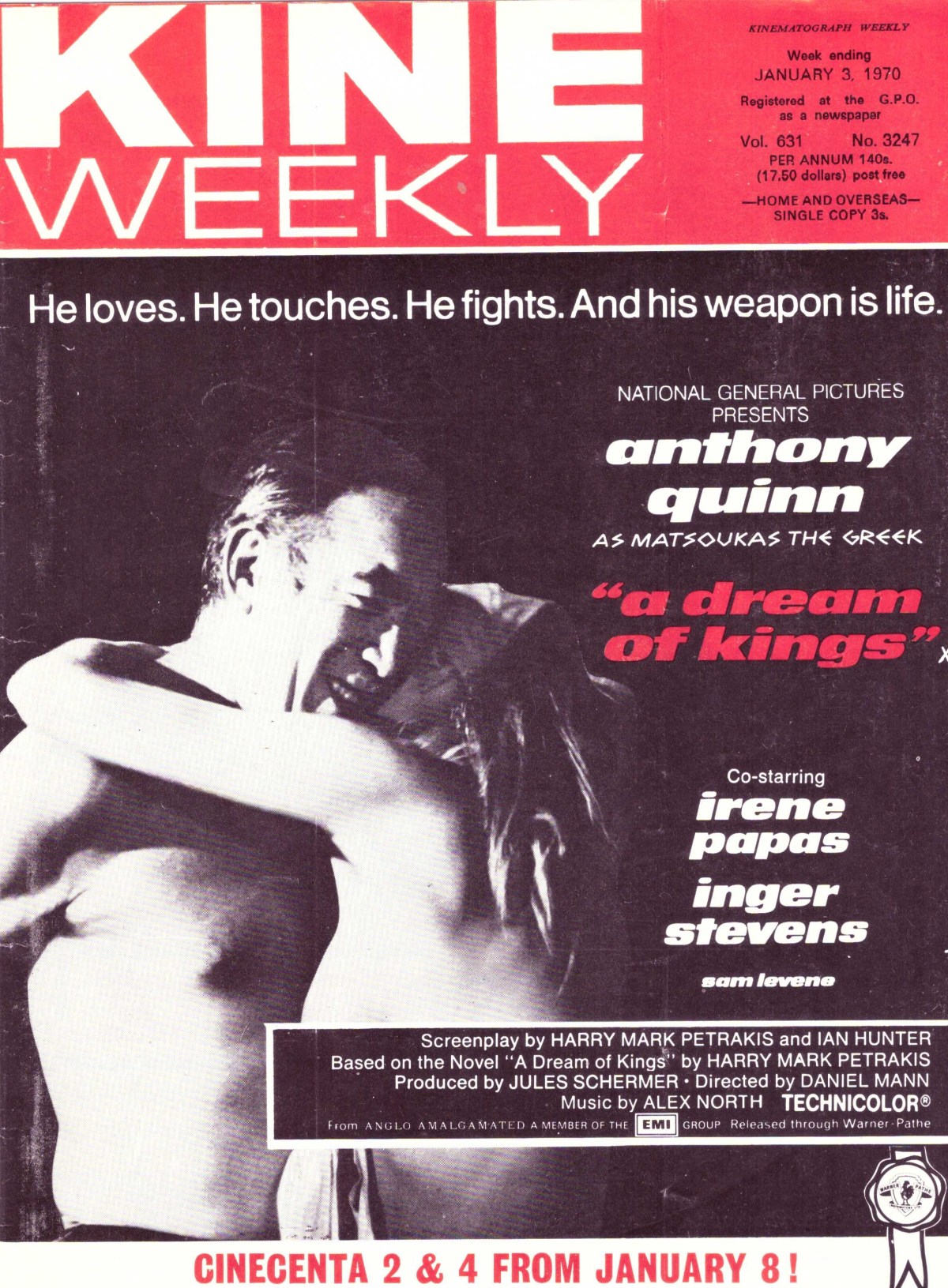
A Dream of Kings (1969) *****

Sometimes great movies just disappear. Even if they pick up some critical traction on initial release, as here, they flop at the box office. And they are not revived because the production company goes bust or the rights are complicated. Or, more likely, they don’t fit into audience expectation. All three stars here completely play against type, outliers in career portfolios. We have become so accustomed to the attraction of stars according to their screen personas that unless they are known to completely change their screen characters with every outing anything that’s different to the norm becomes unacceptable.

Director Daniel Mann (Ada, 1961) was best known for producing Oscar-winning or Oscar-nominated performances from female stars. He was immensely skilled at making audiences sympathize with the most flawed women. Here, he does the same for Anthony Quinn, in a performance that should have had Oscar voters lining up but was dismissed for all the wrong reasons. Theoretically, one of the film’s problems is the dialog. We are so used to a script full of cut-and-thrust or witty putdowns that we fail to recognize a screenplay, that in much the same way as a stage play – but without that form’s inherent artificiality – lets characters live and breathe, explore depths that are just not possible except in fleeting moments in the normal construction of a movie.

Most scenes here begin one way and then move in all sorts of directions, sometimes ending up back where they started, but most often going somewhere unexpected, not in the sense of a sudden twist, but in digging deeper into relationships and understanding that marriages are built on shifting sands, and not all of them perilous. There’s a lot of dialog and when you get a lot of long speeches it can make the actors look as though they’re hamming it up when in fact what they’re doing is opening up the character.

We shouldn’t like Matsoukas (Anthony Quinn) at all. He’s a gambler, a womanizer, drinks, comes home at sunrise, has nothing you’d call a real job.

And yet.

In his company you enter a world of possibility. By sheer force of personality he lifts gloom, even when it’s his actions that have caused it. He can convince the most downtrodden weaklings that they have something of worth.

When nobody has anything good to say about old drunk Cicero (Sam Levene), Matsoukas tells him he has a poker dealer’s graceful hands and provides solace just by befriending him. He convinces a 72-year-old man that the loss of his libido is not down to the old guy’s age but because in four years of marriage he has lost interest in his 31-year-old wife because she’s the one who has aged, physically less appealing, and then he teaches the desperate soul the gentle art of seduction, how to win a woman’s heart by putting her on a pedestal, treating her like a goddess, kissing her softly on eyes and ears rather than pawing her in frantic passion.

Just what Matsoukas’s job is – on the door it says “counsellor” which would suggest something  legal  – but in fact he’s a male version of an old wife and provides solutions to odd problems, a mother worried that her teenage son masturbates, for example.

He is the sort of guy who can wring triumph from disaster. He has just lost a bundle of dough at poker but the way he tells it you’d think he’d won. Instead, he appreciates the drama of it all, the way it makes a great tale even if he’s the loser. Naturally, wife Caliope (Irene Papas) doesn’t see it his way. She’s on her knees with trying to feed her three children from the scraps that fall from his gambling. Though when he wins big, they live like kings.

Although he still has a lusty sex life with Calope, and can mostly coax her round, he has fallen for widowed baker Anna (Inger Stevens), attracted to her in part to alleviate her grief, pull her out of the darkness.

And he cannot face up to the potential loss of his young son who has three months to live and has it fixed in his own mind that the boy will be cured if Matsoukas can expose him to the sunshine and the ancient gods of his Greek homeland, though he lacks the $700 required for the air fare.

Each sequence is long, carefully calibrated, giving time for the exploration of a wealth of emotions. Outside of the three main narratives are two other stand-out scenes. In his sermon a priest rails against the evils of life insurance that makes people welcome death yet argues, ironically, that death is a great joy and should not be feared. And there’s a party where Matsoukas on the dance floor is a magnet for every woman in the room.

This is an Anthony Quinn (The Shoes of the Fisherman, 1968) devoid of all trademark abrasiveness, the loud voice gone, trying to gouge every ounce of joy from a forbidding world. He has a very tender relationship with his dying son, inventing a game with fake telephones to deal with the boy’s fears, and is very playful with his two daughters. He is constantly wooing his wife, in part to ease the pain he causes her, but mostly because he wants them to get the most out of life.

This is a different Irene Papas (The Brotherhood, 1968) too, not the fiery woman or dutiful wife of her screen persona. Whatever anger she feels is subsumed by sorrow and she is always willing to let her husband fire up her heart as in the old days. Actresses don’t get such complex roles these days.

And all the pent-up fragility of Inger Stevens (Five Card Stud, 1968) is suddenly let loose as she twists her entire screen persona of tough woman in a man’s world – usually a western – on its head. Her scenes with Quinn are breathtaking. Unfortunately, this was her final film – she committed suicide shortly after. But she could not have found a better swansong, one that extended her range.

As he always does, Daniel Mann doesn’t take his main character’s side, but while extracting sympathy for character predicament and perspective, still lets the audience make up his mind. This could easily have gone all maudlin, the child miraculously recovering, the flight to Greece to find a rare cure, all Matsoukas’s delusion revealed as nothing more than true faith, but it’s more hard-edged than that. At the end Matsoukas has his exterior carapace ripped apart, beaten up, ostracized for committing the worst crime of a gambler – cheating – in dire straits.

And yet.

Written by Ian McLellan Hunter (Roman Holiday, 1953) from the bestseller by Harry Mark Petrakis.

I just adored this.

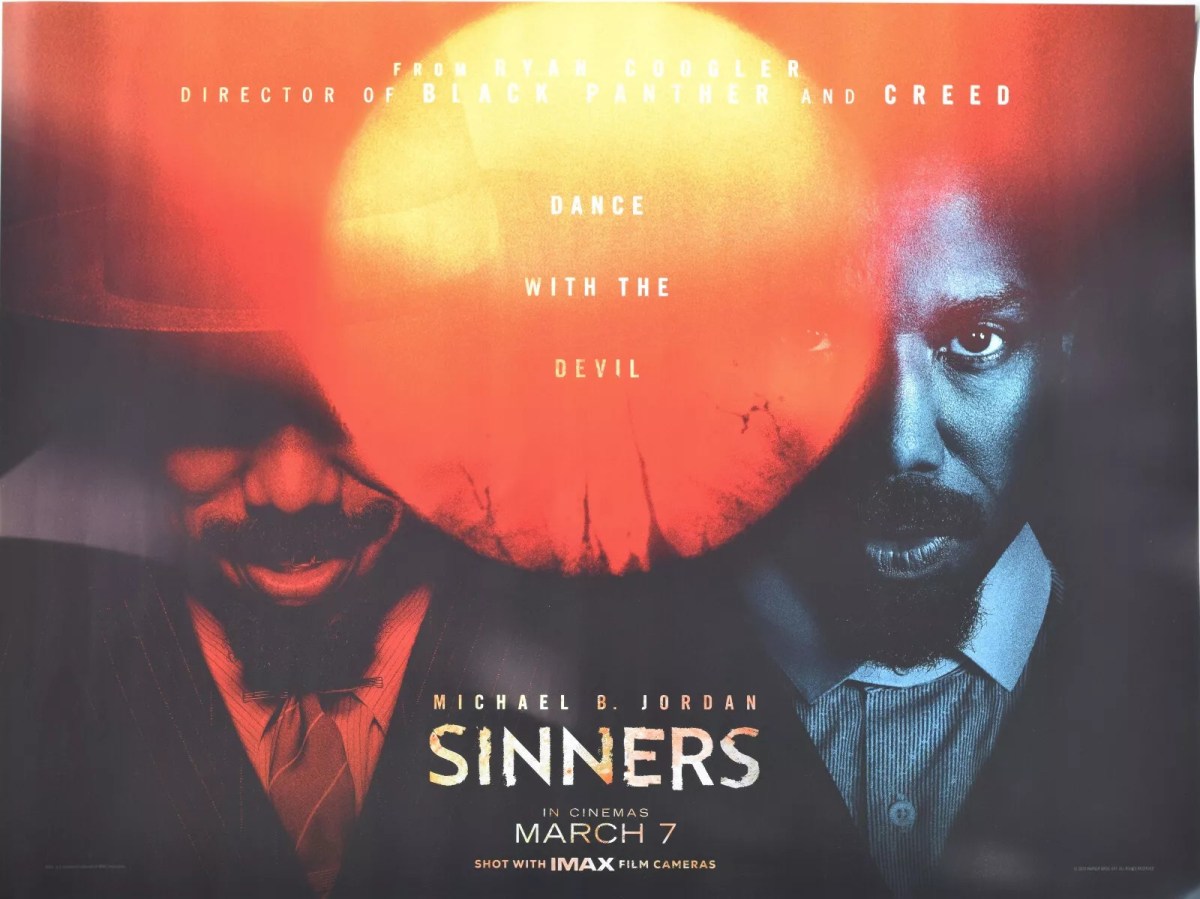
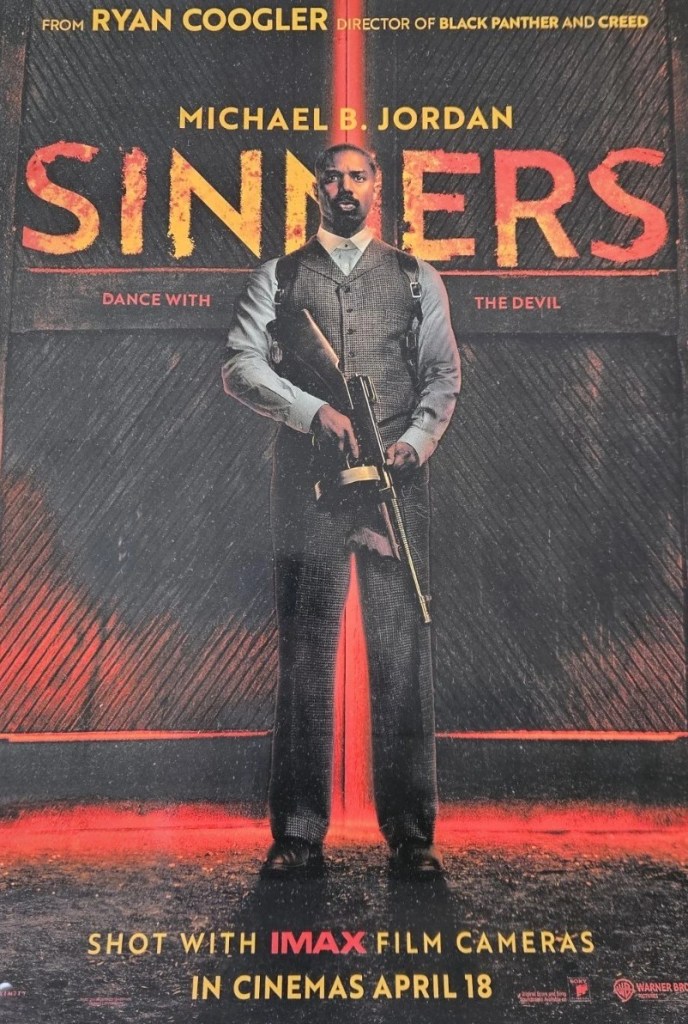
Sinners (2025) ***** – Seen (Twice) at the Cinema

A great movie is more than the sum of its parts. There’s something indefinable, something as they used to say “in the ether”, or “hits the zeitgeist” or, more aptly “hits the spot” because the area in question can never be defined, yet somehow we know it’s there. A writer from several generations past came up with “only connect.” And that’s a pretty food summation. Audiences are not really interested in movies that connect with critics – we’ve been served up too much dross too often to trust critics, Anora (2024) a recent case in point. When movies scarcely drop any percentage of revenue at the box office in the second weekend it’s not because of a ramped-up advertising budget, but because movies have hit the spot, connected with audiences, acquired that elusive word-of-mouth quality. For sure, this is going to be an Oscar contender, which probably means all the fun will be knocked, as its supporters get all preachy on us about its importance as a social document.

But a great movie comes from nowhere and sets up its own tent, creates its world, its own logic. There were gangster pictures before The Godfather (1972), westerns before The Searchers (1956) or Once Upon a Time in the West (1969) and sci fi before Avatar (2009) but what such pictures owe to their genres is derivative in a minor key. And so it here, Sinners takes the vampire movie and tosses it every which way but loose.

You got the blues, the most appealing vampires you’ll ever come across (and not in the svelte style of another game-changer, The Hunger, 1983), the need for community, the duping of the poor through religion, music than can summon up Heaven and Hell, raw sexuality, belonging, mothers, orphans, genius, cotton, a world where African Americans who fought for their country discovered their country didn’t want to fight for them, where the white man is going to take your money and then, for sport, kill you, and the plaintive despair of never feeling the warmth of the sun again as long as you live – which is forever. And connections – there’s myriad connections that will hit home.

In fact, you might not be aware you’re watching a vampire movie for roughly the first half. You might imagine this is more akin to The Godfather Part II (1974) with gangsters trying to go straight. First World War veterans identical twins Smoke and Stack – I have to confess right till the credits I didn’t realize these were both played by Michael B. Jordan (Creed, 2015) – descend on a small southern town intending to make an honest buck from a dance hall, convinced they have acquired the necessary business acumen. The motley bunch enrolled in this endeavor include neophyte bluesman Sammie (Miles Caton), veteran alcoholic bluesman (Delroy Lindo), singer Pearline (Jayme Lawson), storekeepers Grace (Li Jun Li) and Bo (Yao), bouncer Cornbread (Omar Miller), Smoke’s estranged wife Annie (Wunmi Musaki), who has knowledge of the occult, and Stack’s ex-girlfriend Mary (Hailee Steinfeld). Coming a-calling is Irish immigrant Remmick (Jack O’Connell) recruiting new members for his vampire flock.

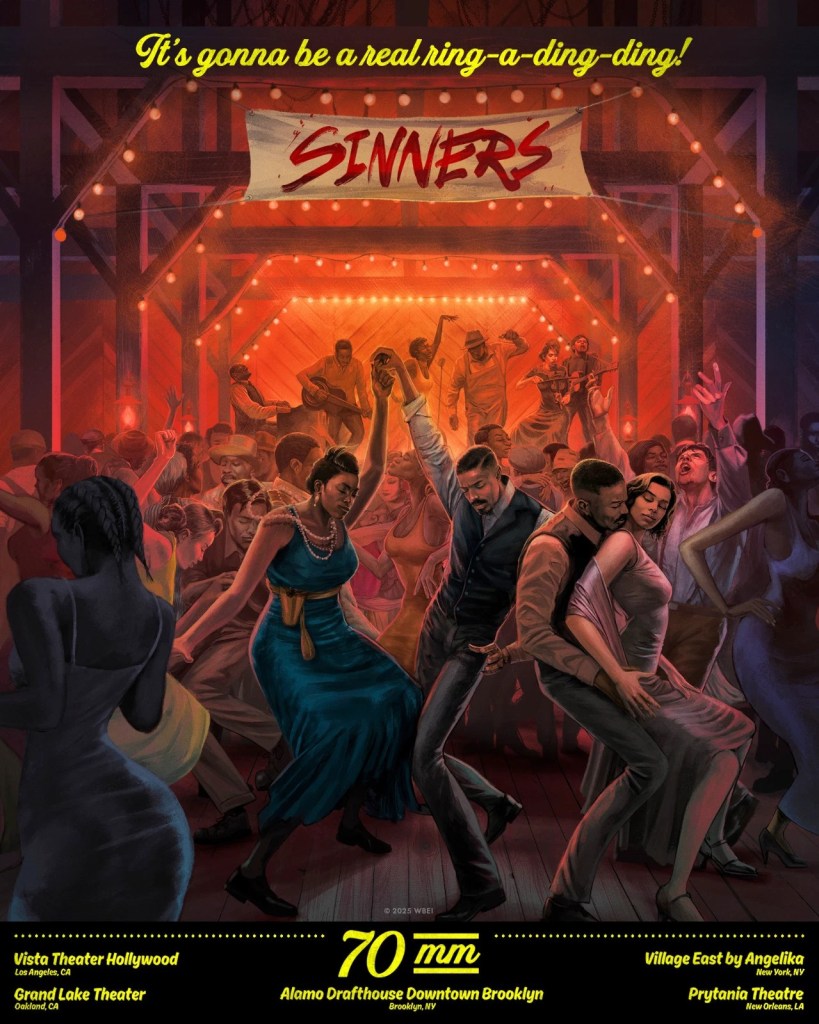
The movie doesn’t take flight so much in the unwinding of intertwined lives, or with the rocking action, as with two dance sequences that transcend anything you’ve seen before in the cinema, the first conjuring up music of the past, present and future, the second a routine by the vampires. Trying to save himself from vampires, Sammie begins reciting the Lord’s Prayer only to hear the sacred words echoed by the undead. A guitar is buried in Remmick’s head. And there’s a fascinating coda, if you wait through the credits.

Michael B. Jordan is the obvious pick, striding across both characterizations with immense aplomb (the Oscars will be calling) but Miles Caton in his debut, Delroy Lindo (Point Break, 2025), Hailee Stainfield (The Marvels, 2023), and especially the seductive blood-lusting Jack O’Connell (Ferrari, 2023).

Writer-director Ryan Coogler came of age with Creed and the Black Panther duo but this takes him into the stratosphere, a genuine original talent, not just with something to say but the visual smarts to match. He could have harked on a lot more. Too many worthy pictures have turned virtue-signaling into an art form, but one boring beyond belief. Coogler is much more subtle, he slips in his points.  

But all the subtlety in the world wouldn’t count for a hill of beans if he couldn’t tell a story in way that connected big-time with the audience who wanted to tell their friends to go-see.

The Nightcomers (1972) ****

Originally dismissed as meretricious trash, contemporary re-evaluation reveals it as uncommonly prophetic. You can start with the feral children, abandoned by their guardian, lack of parenting allowing space for pernicious ideas to foment. Or with the pornography correlative, the young, posited as unruly voyeurs, conditioned by the internet into believing that violent sex is the norm. Or with the influencer seeding notions that demolish the accepted Establishment views. Or impressionable children creating a distorted world view based on their interpretation of adult behavior.

Audiences and critics back in the day were taken in by the most cunning Maguffin of all, that this was some kind of more realistic Downton Abbey/Upstairs, Downstairs power struggle  played out among the servants against the background of a sadistic/masochistic affair. Lives can be ruined on a whim. A letter to the absent landlord can destroy a career. Remember from Downton Abbey the importance in the servant hierarchy of the role of the owner’s valet. To be summarily demoted from that lofty position to gardener, forced to tug your forelock in gratitude at not being cast out, and you can see where power lies.

Instead, consider this a slow-burn, deliberately understated drama where, against the style of the usual horror picture, the score (by Jerry Fielding) offers no clues, a virtually anonymous piece to lull you into thinking this is a pastoral setting where genuine evil, as opposed to acts of mean inconsideration, can flourish.

Watching it entirely from the perspective of the children, ignoring the appeal of the top-billed Marlon Brando engaging in licentious and disturbing sex with the governess Miss Jessel (Stephanie Beacham) he has groomed, and a completely different movie emerges. It reveals more than any other study of children unexpectedly grown violent how vulnerable young minds are to suggestion and that in the absence of adult intervention how easy it is for them to devise a fantasy whose fabric is drawn from their misinterpretation of the real world.

My guess is that back in the day the attempts by teenage Miles (Christopher Ellis) and younger sister Flora (Verna Harvey) to copy the bondage scenes and violent sex witnessed by the voyeuristic boy would have had the audience in stitches rather than reeling in shock. There would have been very little in the audience experience beyond teenage gangs to suggest that young children could be guilty of such depravity – this is long before the murder of Jamie Bulger in England or the mass shootings by teenagers in America. So laughter would be the natural response.

But times are different now. We know that children existing outwith genuine adult supervision are prone to suggestion and acting on impulse. Miles and Flora have been taught by gardener Quint (Marlon Brando) to ignore traditional views of Heaven and Hell, to imagine that torture of small creatures is acceptable, and that love is hate, and that only in death can true lovers be united. Miles has been taught to shoot with a bow-and-arrow by Quint and there’s more than a touch of irony in how quickly the young fellow masters this skill that leads to a grisly climax.

While the adults largely ignore the children, the children are not ignoring the adults. They are in thrall to what they see and hear and make up their own minds about how to put the world to rights. Had the children been adults driven by loneliness and abandonment to such acts, they would viewed simply as evil monsters. But here they are demonstrably not evil, just misguided, and by the very people who should be guiding them. Quint takes inherent joy in corrupting the young, it’s the simplest type of revenge he can enact against his master, filling the heads of the next generation of overseers with information that runs counter to the accepted.

The British censor left largely untouched the rape scenes in The Straw Dogs and A Clockwork Orange out the same year. He was much tougher on this, excising the bondage sequences, as if such prurience would diminish the impact. Certainly, that did the trick at the box office for audiences, denied shock content, ignored it.

If all this isn’t enough to trigger reconsideration of the picture, then the grooming of the governess (Stephanie Beacham), her submission to male control, will strike a contemporary chord. Despite the respectability of her position, she is revealed as eminently vulnerable, born out of wedlock, witnessing how tough life was at home without a protective male figure, not just prone to accepting Quint’s brutality but conditioned herself to wait in a more romantic setting for the gentler lover of her imagination who never arrives. While the housekeeper (Thora Hird) comes over as any powerless functionary exerting what little power she has.

Marlon Brando (The Chase, 1966) is especially good and the scene where he blackens his teeth to amuse the children might have been a dress rehearsal for the sequence in The Godfather where, unintentionally, he frightens the child. Except for Dracula A.D. 1972 (1972) in Italian crime tale Mafia Junction (1973), rising star Stephanie Beacham’s star failed to significantly rise, and she never again enjoyed such an important, and difficult, screen role, especially in those scenes where she attempts to exert control.

Written by Michael Hastings (The Adventurers, 1970).  

It might be a contradiction in terms to suggest that much-maligned British director Michael Winner (Hannibal Brooks, 1969) ever came close to producing what you might term a masterpiece, but within his own portfolio this is surely the chief contender.  

You can catch in on Talking Pictures for free.

Well worth a look.

The Hunger (1983) ****

With this weekend’s Sinners claiming to reinvent the vampire picture, I thought it time to look back at a movie that genuinely did reimagine the vampire genre, though hardly acclaimed at the time.

Elegant, atmospheric, subtle. Never thought I’d be stringing those words together to describe an offering from uber-director Tony Scott (Top Gun, 1986). Add in “slow” and this is a director reinvented. Did I mention “short?” This clocks in just over the hour-and-a-half mark. So what  might have driven an audience to distraction if stretched out over a languorous two hours twenty minutes, say, or longer, as would be par for the course in these more self-indulgent times, is not an issue.

If this has become a cult, it’ll be for all the wrong reasons. A vampire picture that doesn’t play by the rules, a lesbian vampire movie that steers clear of Hammer sexploitation, a lesbian movie featuring two top marquee names, or just any picture that features David Bowie.

There’s an inherent sadness to the whole exercise, an elegiac feel comparable to the likes of The Wild Bunch (1969).  Miriam Blaylock (Catherine Deneuve) and husband John (David Bowie) are so stylish and have no truck with growing those oh-so-out-dated fangs that you are willing them to succeed especially as there’s no sign of a crucifix-wielding vampire hunter.

You might wonder why the cops haven’t been alerted to a spate of killings, throats cut in serial killer modus operandi fashion, but really there’s so much else going on – emotional, not action, you understand – that its absence isn’t worth commenting upon.

So first up is betrayal – and from a serial betrayer at that – as John realizes that while he has been promised eternal life by Miriam, who’s somewhere in the region of two millennia old, she can’t guarantee eternal beauty. So when he starts to suffer from ageing, cracks begin to show in their relationship. And whether he’s aware of this or not, she’s already lining up a replacement, the classical music student Alice (Beth Ehlers) they both tutor. And when John knocks her out of the equation, his pursuit of eternal youth or at least a reversal of the ageing process leads Miriam to a spare, scientist Sarah (Susan Sarandon).

The connection between the two women is initially so subtle that Sarah picks up the telephone imagining Miriam on the other end when the phone hasn’t even rung. Sarah is perturbed/excited to discover she has gay tendencies, especially when she’s already in a strong heterosexual relationship. And she’s not that keen, either, on discovering that she has been co-opted into the vampire fraternity.

Most of this has moved along in almost dreamy style so, that come the end, a sudden burst of twists  takes you by surprise. You’ll find echoes to  the priestess in Game of Thrones when the aged John seeks to kiss his lover. And John’s discovery at the end that’s he’s part of an undead harem carries over to the climax of Christopher Nolan’s The Prestige (2006).

Anyone looking for cheap kicks from the lesbian sex scene is going be disappointed, this is sex arthouse-style with wafting curtains getting in the way, and pleasure delivered in subtle rather than orgiastic fashion.

Tinged with a sense of loss, and pervaded by sadness, this is a complete outlier in the Tony Scott portfolio, especially the pace which is completely at odds with the fast-editing style for which he is best known. At the same time, tension remains high, in part because you don’t really know what Miriam is up to, and because these are new ground rules by which the vampires play, not least in their enjoyment of style and fashion, the kind of garb favored by the likes of Christopher Lee only employed as pretense and not by one of the main players.

Catherine Deneuve (Mayerling, 1968) was a Hollywood irregular, not seen there in six years since March or Die (1977), and it’s surprising, never mind her choice of couture, what sophistication a French accent brings to a vampire movie. Susan Sarandon was an ideal fit for the European feel of the picture, having cut her teeth with Louis Malle on Pretty Baby (1978) and Atlantic City (1981). David Bowie spends most of the movie under a sheet of make-up so you need to get in quick for your Bowie fix, and for that short period he is quintessential Bowie.

Written by debutant James Costigan and Michael Thomas (Ladyhawke, 1985) from the Whitley Streiber bestseller.

But this is Tony Scott’s (Enemy of the State, 1998) triumph, work that you’ve never seen before and never seen since, making you wonder why he never continued in this vein.


The Damned / Gotterdammerung / Twilight of the Gods (1969) **

Ponderous, gratuitous, offensive. Let’s start with the pedophile, spoiled grandson Martin (Helmut Berger) of industrialist patriarch Joachim (Albrecht Schonhals). We already guess he has this kind of predilection for young girls as that’s suggested during a game of hide-and-seek at the family mansion and by a scream in the night that is ignored. He keeps a mistress Olga (Florinda Balkan) and is drawn to the young girl in the apartment next door, bringing her the kind of expensive present that her impoverished mother believes she must have stolen. So we know what he’s all about. It’s discreetly enough stated without the inclusion of a scene which I doubt would pass the censor these days and should the young actress be still alive in these MeToo times might be considering legal action for being taken advantage of.

Although the storyline is similar to the director’s earlier The Leopard (1963) of the powerful – there a wealthy landowner, here an arms manufacturer – trying to hold onto their status in times of change (then the invasion of Sicily by forces wanting to unite Italy, now the rise to eminence of Hitler), there’s little of the cinematic flair of the latter. Long scenes are played out at dinner tables or in bedrooms. And most of that is machination, someone or other wanting to take over the family firm or be the power behind the throne.

You need some knowledge of German history to understand the significance of some events. Hitler, then the German Chancellor, burned down the Reichstag (the German Parliament) in 1933 in a ruthless bid for power. Hitler employed two factions, the predominantly working class brownshirts (the SA) and the mainly middle class blackshirts (the SS), the former a paramilitary organization committed to actions against Jews and backing his early bid for power. In 1934, in the Night of the Long Knives, the SS obliterated the SA.

The first section of the picture straddles these two events with a Succession-style drama. In reaction to the burning of the Reichstag, Joachim replaces Herbert (Umberto Orsini), his top executive and outspoken anti-Nazi, with boorish nephew Konstantin (Reinhard Koldehoff) who is a high-ranking member of the SA.

This doesn’t sit well with Friedrich (Dirk Bogarde), who expected preference. Urged on by lover Sophie (Ingrid Thulin), Joachim’s widowed daughter-in-law,  and Aschenbach (Helmut Griem), Joachim’s nephew and an ambitious high-ranking SS official, Friedrich kills Joachim but pins the blame on Herbert who has to flee.  

Konstantin is thwarted because although technically in charge it’s now Martin who owns the business and nudged by Sophie gives Friedrich the top management role. So Konstantin resorts to blackmail, having uncovered the pedophile. In steps Sophie who uses Aschenbach to thwart him again. Though there’s not much need because Konstantin is eliminated as one of the SA members executed in 1934 at some kind of gathering where the attendees all appear to have homosexual tendencies.

Aschenbach and Martin nurse grievances. Aschenbach feels Friedrich isn’t ostentatious enough in support of Hitler and Martin is furious that Sophie manipulated his difficulties with Konstantin to Friedrich’s benefit. So the SS man and the dissolute conspire. In the way of this kind of heightened melodrama it’s revealed that Friedrich killed Joachim. That doesn’t send Friedrich to trial, instead wins him a get-out-of-jail-free card by turning into a radical Nazi.

Martin, meanwhile, is also a member of the SS. He rapes Sophie, Friedrich loses his way and in one of those moments Francis Ford Coppola would appreciate Martin kills them on their marriage day.

There are a couple of oddities. It’s hard to believe a young girl – we’re talking a 7-8-year-old – would actually manage the mechanics of hanging herself. And when Friedrich is drawn into joining the slaughter of the SA members, there is over-emphasis on his perceived sensitivity  when previously he had cold-bloodedly despatched Joachim.

So glorified soap opera with too much virtue signalling for its own good. Excepting Herbert and wife Elizabeth (Charlotte Rampling) and another grandson, who play minor roles, there’s not  a single character to care for.

Despite the unusual backdrop, there’s nothing particularly unusual about the succession/inheritance scenario. The tough self-made millionaire or latest head of a wealthy family seeks to maintain power and guard against diminishing its status and lineage by ensuring the correct successor is groomed and that capital is not dissipated through unsuitable marriage or indulging weaker offspring. Thomas Mann, who fled the Nazis in the 1930s, covered this ground more successfully in his debut novel Buddenbrooks, although admittedly with less decadence.

Setting The Damned against the rise of the Nazis is an attempt to give it more artistic status than it merits because it’s really not much more than a standard study of ambition and ruthlessness.  

Rising Sun (1993) ****

Will instantly connect with the contemporary audiences for two unusual reasons. First off, it’s the initial depiction of deepfake. Secondly, a major plot point concerns an aspect of the roughest kind of sex, erotic asphyxiation. These days you’ll find many women complaining that a partner’s addiction to porn has forced them into such dangerous experiment. Here, lending fire to the idea that it’s nothing but fun, is the notion that it’s the woman who’s desperate for such.

There used to be a standard Hollywood ploy of sticking a younger rising star alongside an established bigger name. After Top Gun (1986) Tom Cruise proved the best exponent of this, working with Paul Newman in The Color of Money (1986) and Dustin Hoffman in Rain Man (1988). The idea is that the younger fella will learn from the older (Newman and Hoffman proved top-class tutors, both winning Oscars).

And in fact the narrative here actually takes up such an idea. Semi-retired cop Capt. John Connor (Sean Connery) plays mentor to Lt. Webster Smith (Wesley Snipes) when both are called out to act as liaison between investigator Tom Graham (Harvey Keitel) and the top brass of Japanese corporation Nakamoto where a murder has been committed. The death was initially dismissed as a sex game that went too far and as scarcely worth anyone’s time given the victim was a sex worker, Cheryl (Tatjana Patitz), sometime girlfriend of Japanese playboy and fixer Eddie Sakamura (Cary-Hiroyuki Tagawa).

Matters are complicated because Nakamoto is bidding to take over a key American computer manufacturer and because Senator John Morton (Ray Wise), who initially opposed the deal, is now in favor of a merger. Connor begins to suspect the Japanese have manipulated video recordings of the murder. Single father Smith, objecting to Connor’s involvement, is compromised by a secret past, exposure of which could potentially stop the investigation in its tracks. Slippery American fixer Bob Richmond (Kevin Anderson) is desperate to get a deal over the line.

While the intricate investigation is engrossing in itself, what really makes this fly, beyond another excellent performance by Connery, are the business machinations and the insights into Japanese culture. On the face of it, you might think this is an attack on the Japanese business machine, rampant at the time, but, in reality, my guess is the Japanese would love it for the way it shows American companies in their thrall.

In Japan “business is war” and companies gird themselves for battle by forming alliances that would be outlawed in America. An adept screenplay manages to seed a rich background, featuring elements of Japanese society that are both positive (criminals are generally caught plus caring for employees and “fixing the problem, not the blame”) and negative (racism is widespread). Connor, steeped in Japanese culture, able to move in the highest business circles, calling in favors, is our guide, but that’s never to the detriment of the overall picture, and instead adds welcome depth.

There’s a certain subtlety at work, too, the introduction of the single dad (treated seriously rather than for comic effect) a bit of a thematic coup for the times and Connor’s relationship with Jingo (Tia Carrere) is more fluid than you might expect, the older man leaving the “cage door open” should his younger lover find someone of her own age.

Three decades on from the cultural appropriation of A Majority of One (1961) when Hollywood elected Alec Guinness to play a Japanese man, there’s no shortage of players of Japanese descent  to supply the movie with more authenticity. Mako had been Oscar-nominated for The Sand Pebbles (1966) while Stan Egi (Come See the Paradise, 1990), Clyde Kusatsu (In the Line of Fire, 1993) and Nelson Mashita (Darkman, 1990) flesh out the ranks.

Beard aficionados will welcome Connery’s stylish cut which, once again, serves as a shortcut to character – this is a confident, fashionable man. Sean Connery (The Man Who Would Be King, 1975) drives the movie, he’s always one step ahead even when the bad guys think they have him beat. Another top-notch performance from Sean Connery. Wesley Snipes (Passenger 57, 1992) wasn’t paying much attention to the free acting lessons handed out by Connery, not learning to rein it in, and, presumably to maintain his action cojones, is permitted some unlikely karate kicking. That last wasn’t in the book. There were only two other major changes from the book – adding a couple of early scenes with the victim and giving Connors a relationship with  Jingo. Some of the book is heavily truncated for obvious reasons – you’ll wonder just what the heck is the purpose of Willy the Weasel (Steve Buscemi).

The screenplay by author Michael Crichton (Jurassic Park, 1993), director Philip Kaufman and Michael Backes in his debut, manages to fully convey the novel at the same time as squeezing in as many bon mots as possible without losing sight of the drama.

Philip Kaufman (Fearless Frank, 1967) makes the most of the rich material.

Connery scores once again.

P.J. / New Face in Hell (1968) ****

Exceptional down-and-dirty thriller and throwback film noir woefully underrated on release but with a brilliant mystery (or two), a touch of satire, red herrings, some great lines, and believable characters. Private eye P.J. Detweiler (George Peppard) is so down on his luck he is willing to play the lover so an errant wife can be photographed in a motel room. What little he earns goes on paying is debts. So he can hardly down the chance of serious money as bodyguard to Maureen (Gayle Hunnicutt), mistress of rich businessman William Orbison (Raymond Burr), never mind that she initially treats him as a servant.

Orbison has a legendary mean streak – secretaries have to type closer to the edge of sheets of paper, he forces wife Betty (Colette Gray) to account for every dime of her allowance to the point of almost making her beg. Sadism is another character trait. He is happy not to kill off animals he has shot. The childless millionaire adds Maureen to his will for the sole purpose of upsetting every other potential heir. In front of guests at a prestigious party he forces Betty to acknowledge Maureen’s existence.

This apparently wealthy world is riddled with seedy inhabitants, whose only motivation is  greed, all desperate to retain status or inheritance and enjoying Orbison’s largesse, which, despite his miserly nature, he nonetheless flaunts. As well as Betty enduring ritual humiliation to remain his wife and enjoy a gilded lifestyle, his executive assistant Jason (Jason Evers) accepts being treated as a gofer in order to keep his position and the perks that go with it, and Maureen makes no bones about prostituting herself for temporary and future gain. Everyone has to kowtow, even the occupants of a West Indian island dependent on Orbison for investment, not only a kids choir welcoming Orbison on arrival, but a calypso performer singing a song in his praise.

As various threats, including narrowly missing a bullet, are made against Maureen, making a classical entrance in a red dress and alternating between helpless victim and femme fatale, with her creepy manservant Quell (Severn Darden) reporting on her every move, inevitably Detweiler grows closer to his client, unaware that Orbison is planning to have someone killed.

That someone turns out to be Jason, whom Orbison suspects of clandestine activity with his wife, and whom Detweiler innocently kills. As this takes place on the island, where the death is easily hushed up, Detweiler begins to wonder if he’s a patsy and, paid off by Orbison, undertakes his own investigation, quickly entering more dangerous waters, viciously beaten up at Quell’s behest in a gay bar, narrowly avoiding death in the subway and literally finding himself in the firing line.

Detweiler’s character undergoes transition, too. From begging for scraps and turning the other way so as not to jeopardize easy income, he rediscovers his suit of shining armor, walking down some pretty mean streets, a diligent private eye who can no longer be bought off, determined to get to the bottom of what turns out to be a complicated mystery.

Detweiler is no Marlowe or even Tony Rome, but rather despicable at the outset, employing all sorts of dodges, his interest in Maureen not slackening even after he knows she indulges in a quickie with Orbison. He takes too much at face value.

The unfolding mystery is superbly handled, involving proper clues and investigation, shoot-outs and fisticuffs, the outcome not what you might initially imagine. Although primarily an old school private eye picture, it’s great fun, with some wonderful comedy involving a dog, gentle satire on the West Indian island where whitewash is the order of the day, and some touching romantic foreplay.

Peppard (Pendulum, 1969) is outstanding as the dupe who rediscovers his moral code and his Detweiler is an excellent addition to the ranks of the private eye.  Raymond Burr, a far cry from his Perry Mason (1957-1966) television persona,  is easily one of the worst screen millionaires – on a par with Ralph Richardson in Woman of Straw (1964) in his contempt for humanity – and with his silver hair and bulk and scheming proves a slick adversary. Gayle Hunnicutt (Eye of the Cat, 1969) is allure on legs, brilliantly playing every man in sight, eye never diverted from the main chance.

Brock Peters (The Pawnbroker, 1964) has a standout cameo as the island’s cynical police chief. Susan Saint James (The Name of the Game, 1968-1971) makes her movie debut as Orbison’s slinky sex-mad niece.  Also putting in an appearance are Wilfrid Whyte-Hyde (The Liquidator, 1965) as the island’s accommodating governor, Colleen Gray (Red River, 1948) as the humiliated wife, Severn Darden as the odious Quell, and John Ford regular John Qualen (The Man Who Shot Liberty Valance, 1962).

This was the second of director John Guillermin’s George Peppard trilogy following The Blue Max (1966) and prior to House of Cards (1968). Generally dismissed as a journeyman, Guillermin brings a sly eye to this picture, the send-up of British colonialism, the master-servant aspects, an over-the-shoulder shot of an unknown assassin, the scenes in the bar which is effectively Detweiler’s office, and a brilliant subway death adding layers to the movie. He is bold in his use of close-ups with Hunnicutt, some scenes almost a homage to the Bogart-Bacall chemistry, and brings out a world-weary performance from the usually cocky Peppard.

Philip Reisman Jr. (All the Way Home, 1963) fashioned the screenplay, delivering one of cinema’s most memorable final lines.

Bracketed with Pendulum and House of Cards demonstrates that Peppard is under-rated.

Well worth a watch.

The Sisters / Le Sorelle (1969) ****

Erotically-charged, symbolically-heavy French drama of siblings trying to re-establish the intense relationship they enjoyed as teenagers. After a nervous breakdown and on the point of divorce, blonde translator Diana (Nathalie Delon) seeks respite at the home of younger sister Martha (Susan Strasberg), a brunette happily married to the wealthy and indulgent Alex (Massimo Girotti).

Initially, the more worldly Diana, the more flamboyant dresser, appears the superior but it soon transpires she is the more fragile. The apparently timid Martha allows her husband to control her life to the point of buying all her clothes and confesses to feeling as if she is on “a perpetual cruise.” While on the surface, it seems as if she has given up too much, in reality she disapproves of disorder and seeks perfection. She comes across as needing protection, and believes the woman’s role is to sacrifice, but in fact has managed to arrange her life to her own satisfaction.

Their competitive streaks emerge in different ways, Diana in obvious fashion, seeking to beat her sister while out horse-riding, Martha in more subtle and sensual manner, flaunting her sexual relations with her husband, almost offering her sister to her husband, and having a lover (Lars Bloch) on the side. There is a sense of each attempting to impose their world view on the other. Diana gives her sister a make-over, a new look which Alex adores, Martha hates it. There’s a sense of a chess game, with two or more players, with the males subservient. pawns.

Sensuality is never far away. Diana nuzzles her sister’s neck to smell her perfume. Alex is photographed, encouraged by Martha, in almost intimate mode with Alex. Dario (Giancarlo Giannini) is brought in to tempt Diana. And a scene where the girls experiment with colorful scarves suggests libertarianism. 

But it is clear that both sisters live empty lives devoid of true love and equally obvious as the picture progresses that both have arrived at the conclusion that they were at their happiest when together. There are subtle hints of incest, comforting each other in bed, the sensuality electric and the film begins to examine whether this taboo can be crossed and, if so, will it provide the necessary escape?

Despite Martha’s apparent subjugation, there is more than an inkling of feminism, the girls are involved in a complicated game in which the males are pawns, either rejected or made to look fools. While not fulfilled, Martha has turned as much as possible to her own advantage and Diana seems perfectly capable of taking what she wants.

Alex provides the symbolism. He cultivates rare plants that need to hide from the sun, in a greenhouse, lengthy exposure to whose atmosphere would be fatal to humans. He endlessly photographs them because they won’t last long. And in similar fashion provides a haven for the apparently vulnerable Martha.

Nathalie Delon (When Eight Bells Toll, 1970), married at this point to Alain Delon, shows a subtlety of expression that is rare for someone appearing in just her third film, and effects a gradual character transition throughout. Susan Strasberg, daughter of famed acting coach, Lee Strasberg, inventor of the Method Style of Acting, was one of the boldest actors of her generation, appearing in drug pictures The Trip (1967) and Psych Out (1968). She delivers an excellent portrait of a woman who manages to keep her true personality hidden, and for whom sexuality has few barriers.

This is the puppy-fat version of Giancarlo Giannini (Swept Away, 1974), barely recognizable as the future arthouse superstar whose physical appearance relied on gaunt, angst-riddles features.  Massimo Girotti (Theorem, 1968) is good as the man who thinks he has everything, not realizing how little he has. 

Although this was an accomplished directorial debut from Roberto Malenotti, he only made one more movie. Perhaps he made enough from directing the famous Coke commercial I’d Like To Teach The World To Sing (1971).

Always intriguing, revelations continually undercutting what we think we know of the characters, but delivered in subtle European tones rather than employing Hollywood shock, each of the four main people involved changing considerably due to their interaction with the others. While certainly skirting close to the borders of what was permissible at the end of the 1960s, it does so without exploiting the actresses.

Intriguing.

Negatives (1968) ***

Role play wasn’t the sub-culture it is now. Though fashion had injected more of a sense of dressing up what with Russian furs courtesy of Doctor Zhivago (1965) and snazzy berets from Bonnie and Clyde (1967), the idea of people living out their lives in costume had not taken hold. So consider this a precursor – and maybe a warning – as to what can go wrong if taken too far.

Obscurity to the point of obfuscation was an arthouse default especially prevalent in more commercial ventures like Blow-Up (1966) and In Search of Gregory (1969) so no need to bother yourself with hunting out motivation or background.

The erotic subtext – voyeurism too – here takes on a disturbing quality as it touches on the notion of male justified in using violence in response to female provocation.  Drama centers on a clash of role model sensibilities with a weak male shifting from interpreting a murderous villain to imitating a heroic pilot.

Antiques dealer Theo (Peter McEnery) spices up his stale marriage to Vivien (Glenda Jackson) by dressing up as serial killer Dr Crippen. She invests in the role of his complaisant lover Ethel. Play-acting, at her behest it appears, doesn’t prevent her verbally tearing into him. Into this unconventional nest arrives German photographer Reingard (Diane Cilento) who has been spying on him for several weeks. She has her own fantasy and soon has him rigged out as World War One flying ace Baron von Richtofen, complete with ancient biplane. He responds to the militaristic characteristics of the pilot, entering more into the spirit of the game than the famed killer.

Naturally, Vivien doesn’t take kindly to this intrusion, not least because she realizes she isn’t the only one who can manipulate her malleable husband and violence and tragedy ensue. It’s not entirely clear why either female character indulges in such fantasies and does give rise to the cliche notion, and redolent of the times, of the female wishing to give in to the dominant male, even when the man shows little sign of being a dominant personality.

Apart from Theo visiting his father (Maurice Denham) who appears to be dying in hospital, the picture doesn’t shift much from its three-cornered narrative. The idea of the ongoing masquerade is emphasized by a sequence set in Madame Tussaud’s. Given the censorship of the times, the eroticism is largely of the discreet variety, rather than going down the full-blown sexual fantasy of The Girl on a Motorcycle (1969).

Glenda Jackson both plays a character right up her street and brings far more to the role than either Peter McEnery (The Moonspinners, 1964) or Diane Cilento (The Third Secret, 1964) who give the appearance of slumming it in a low-budget production in the hope it might bring career kudos.

Unwilling to dig any deeper into the characters, director Peter Medak (The Ruling Class, 1972), in his debut,  merely toys with technique, elaborate shots following a character round a room or unusual compositions.

With the trendy crowd parading down King’s Road with all the latest hip gear including military uniforms and Victorian garb, this might have seemed to fit right in, except that the main characters have little in common with the “Youthquake” of the era.

On the one hand a true oddity with McEnery and Cilento well out of their comfort zones, on the other proof of what Jackson and Medak had to offer.

Might appeal to the role-playing crowd, more likely to those interested in early Glenda Jackson.

Discover WordPress

A daily selection of the best content published on WordPress, collected for you by humans who love to read.

The Atavist Magazine

by Brian Hannan

WordPress.com News

The latest news on WordPress.com and the WordPress community.