Three (1969) **

More interesting for the personalities involved – Sam Waterston, Charlotte Rampling, an ex-fighter pilot, an Australian pop star and a model – than the film itself, which presents a European arthouse take on youngsters freewheeling around Europe looking for their share of the free love purportedly available everywhere.

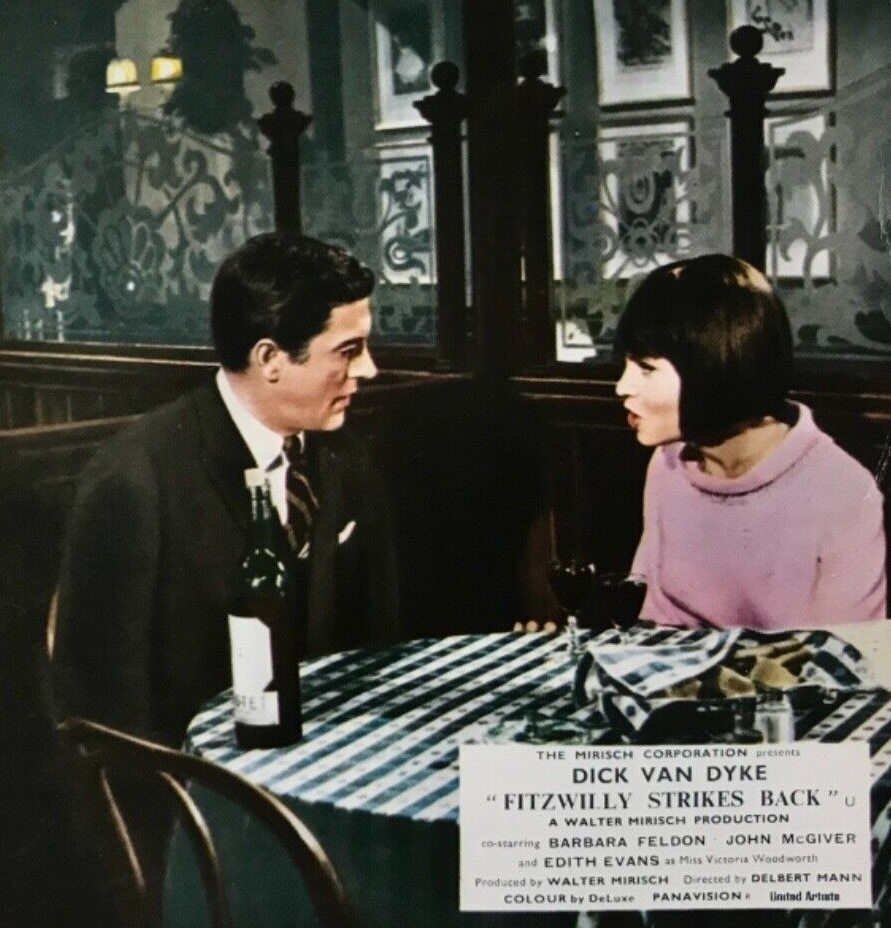
There’s not really any story, mostly it’s scenery, and whatever tension there is rarely rises to the point of drama. However, it is refreshing to see a picture not steeped in angst that reflects the normality of life rather than superficially-imposed heightened confrontation. On a tour of Italy, American college buddies Taylor (Sam Waterston), the shy, gawky one, and Bert (Robie Porter), the better-looking confident one, take up with British girl Marty (Charlotte Rampling). The guys make a pact not to compete for the girl’s attentions, but that idea doesn’t last long. The title suggests she might end up with one – or both. In trying to sell the film, the marketeers felt obliged to make that idea more implicit.
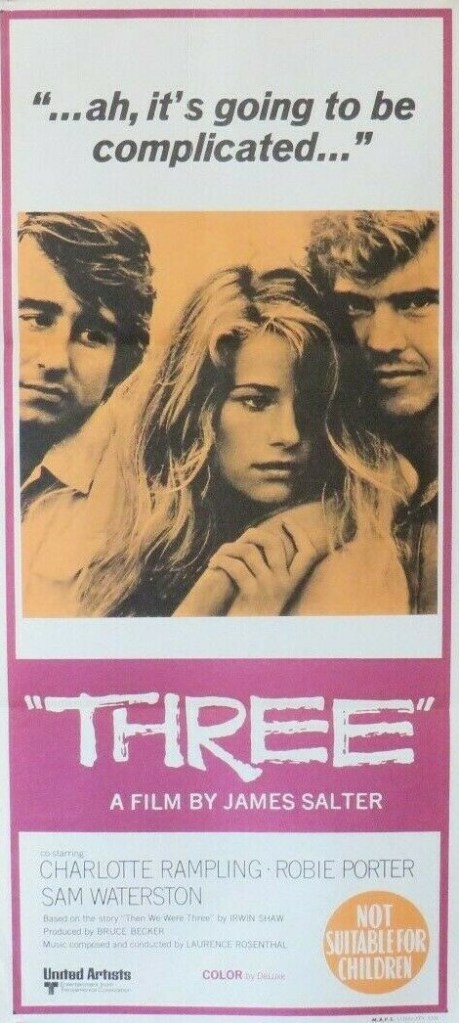
The guys make plays for other girls they meet but seem to find little genuine action and in that sense it is more true to life than other films of the period which suggested sex was there for the asking. But none of the characters are particularly interesting and while that is also more realistic it diminishes enjoyment. The highlight is a naked Taylor attempting to save a girl from drowning in the sea, but in keeping with the film’s tone he is beaten to it by a boat.

There’s not much sign here of the intense dramatic style Oscar nominee Sam Waterston would later bring to the movies. This was his third film after small parts in The Plastic Dome of Norma Jean (1966) and Dick Van Dyke vehicle Fitzwilly (1967) and he wouldn’t hit his stride until The Great Gatsby (1974).

Perhaps the oddest movie fate befell Charlotte Rampling, also a later Oscar nominee. How else to explain that she followed up this picture with Luchino Visconti’s The Damned (1969) and preceded it with Roger Corman’s Target: Harry (1969). With a career that at this point appeared to follow no particular pattern, after making an impact in Georgy Girl (1966) as a libidinous flatmate, she took a small role in The Long Duel (1967) before reaching leading lady status opposite Franco Nero in Italian thriller Sequestro di Persona (1968). Her languid screen persona was turned on its head with The Night Porter (1974). And then she was swept up in Alistair MacLean thriller Caravan to Vaccares (1974).

Who was Robie Porter you might very well ask and why did he only make two pictures, the other being The Carey Treatment (1972)? He was an Australian pop star, specializing in instrumentals on a steel guitar, with a series of hits including two at number one. He chanced his arm in Britain, without repeating that success, then moved to the U.S. and landed parts in television series Daniel Boone and Mannix. After Three, he returned to the music business, as part-owner of record label Sparmac and producing for the band Daddy Cool.

Other names in Three, in bit parts only, none making any discernible impact in the picture, included model Edina Ronay, daughter of celebrated food critic Egon Ronay, who had appeared in A Study in Terror (1965) and Prehistoric Women (1967). Equally as celebrated, if for other reasons, was Gillian Hill, best known as one of the girls cavorting naked with photographer David Hemmings in Blow Up (1966).

Writer-director James Salter was a genuine Hollywood curiosity. He hit a peak of cinematic activity in 1969, with two screenplays filmed – Downhill Racer (1969) and The Appointment (1969). This is pretty much a companion piece to Downhill Racer (1969) which has a bunch of professional skiers on a similar scenic tour and often sitting around with not much to do although that film builds in confrontation and more standard love affair.

Generally considered a “writer’s writer” – i.e. adored by his peers more than the public – his first novel The Hunters (1958), based on his Air Force experiences, was turned into a movie starring Robert Mitchum. He dabbled in documentary film-making, whose impact can be seen in his feature films, but was better known for a short erotic novel A Sport and a Pastime set in Europe. None of his 1969 trio were hits, he ended up in Hollywood limbo, and he didn’t reappear on the movie credits list until Richard Pearce’s sci-fi Threshold (1981) starring Donald Sutherland.   
Fitzwilly (1967) ***

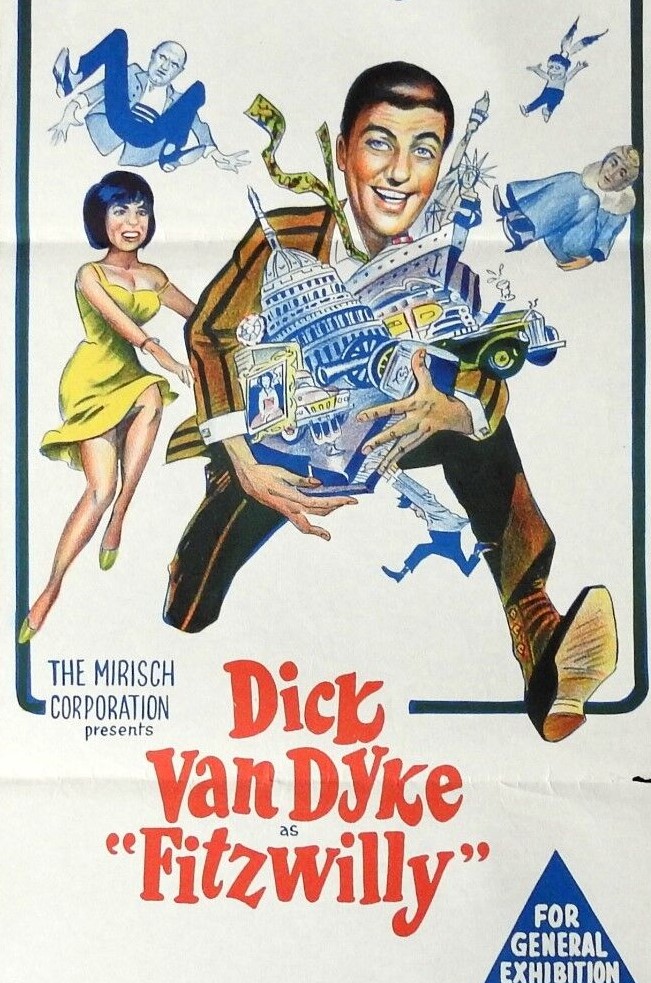
Implausibility was not much of a deterrent for the Hollywood screenwriter. It might even prove beneficial when it came to romantic plot ramifications. Suffice to say that this most charming of fey comedies entailing a gang of butlers engaged in a larcenous spree stretches credibility, not least because their intentions are a twist on Robin Hood, stealing from the rich to give to the rich, namely to ensure a dotty old lady maintains her wealthy lifestyle.

The big plus is not the series of heists, which fall into the over-egged pudding category, but the performance of Dick Van Dyke (Chitty Chitty Bang Bang, 1968). It’s somewhat refreshing to see him not falling back on twisting his vowels or his body and looking like an accident waiting to happen. This is Dick Van Dyke – actor.

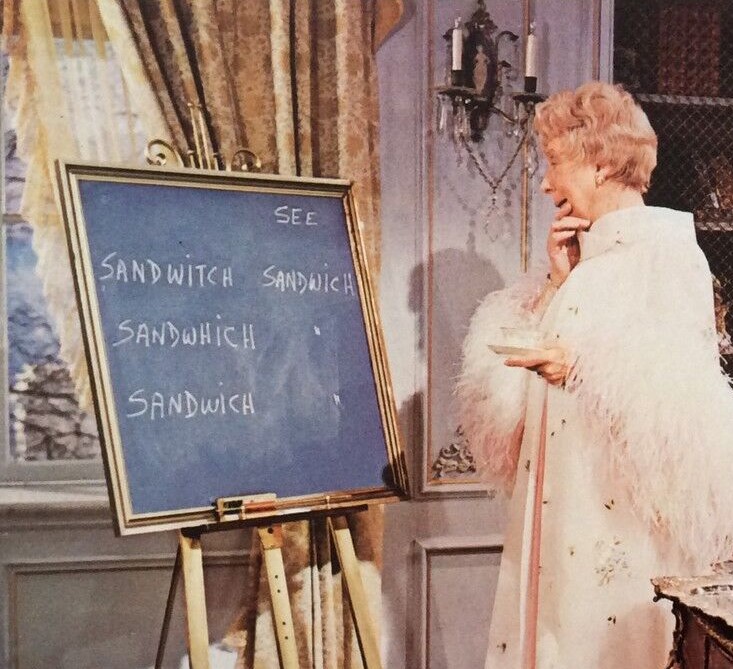
Edith Evans explaining her brilliant concept. although I’m surprised to see her leave in the “D” in Sandwich which is the most common error.

Fitzwilliam – nicknamed Fitzwilly – is the adored and highly-educated head butler in a gigantic New York mansion owned by the eccentric Victoria Woodworth (Edith Evans) who is working on the daftest notion imaginable, writing a dictionary for people who can’t spell. That’s not even the most bizarre element.

While leaving the entire running of the house, and the management of her money, to Fitzwilly, Miss Woodworth goes against this by off her own bat hiring a secretary Juliet (Barbara Feldon) who can’t spell. This is despite Juliet having a degree from a top university and having a professor for a father. But, aha! There’s method in the old bird’s madness. She requires a semi-illiterate to practise her dictionary notions upon.

Having upset Fitzwilly by sneaking in like a cuckoo to his well-oiled nest, Juliet complicates matters firstly by spotting some of the thieving and secondly by falling in love with the butler.  It’s something of a shame, really, that the initial scheme of clever crooks on the make, using wealth as a disguise – who is going to challenge an exceptionally well-spoken butler when he walks off in plain sight with a Steinway piano – is turned on its head when we realise the hoods stand to make no personal benefit. Their largesse merely avoids revealing to Miss Woodworth than she is actually broke.

The two stars getting up close and personal.
There are a ton of under-stated elements of Van Dyke’s performance. In this scene,
he delicately explains to a young, inexperienced waiter how to properly pour wine.

Some of the heists are more of the over-egged con variety, too complicated for their own good, but the final robbery – on Xmas Eve – sits fairly and squarely in Marx Bros territory, providing a host of genuine laffs. Though you might wonder at the susceptibility of big-name department stores to smooth-talking criminals.

The romance is gently old-fashioned, and though Barbara Feldon (Agent 99 from Get Smart!, 1965-1970) does possess comedic timing, in hairstyle and delivery resembles Jane Fonda. It could have done with more time spent on her challenging or outwitting the butler, as she does at the start, to build up her character rather than lamely surrender to the romantic urge

Dick Van Dyke and Edith Evans effortless carry the picture. But while you’d expect nothing less of the renowned British actress, Oscar-nominated the previous year for The Whisperers, the biggest stretch in the entire picture is Van Dyke reversing his screen persona to turn into a believable leading actor not dependent on pratfalls, dodgy accents, singing and those limbs that seem to have a life of their own. He exudes charm and class and his character, without the distraction of being so devoted to his boss, could have pursued a highly profitable life of crime with himself as the sole beneficiary, which might have opened the door for his underwritten confederates – including John McGiver (My Six Loves, 1963), Oscar nominee Cecil Kellaway (Guess Who’s Coming to Dinner, 1967), Norman Fell  (Sgt Ryker, 1968) and in his debut Sam Waterston (Three, 1969) – to play a larger part in the dramatic proceedings.

But hey, if audiences were primed to fall for every Doris Day comedy built on a dumb premise and had lined up in the millions for It’s a Mad, Mad, Mad, Mad World (1963), then it’s kind of hard to question the narrative underpinning this picture. Isobel Lennart (Funny Girl, 1968) whipped up the screenplay from the novel A Garden of Cucumbers by Poyntz Tyler.

Once you get over the initial over-egging it’s soon apparent that Delbert Mann (Buddwing, 1966) has stitched together quite successfully a jigsaw of improbability.

Worth seeing for a Dick Van Dyke you never knew existed and another imperial turn from Edith Evans.

Three (1969) **

More interesting for the stars involved – in particular Sam Waterston and Charlotte Rampling as well as an ex-fighter pilot, an Australian pop star and a model – than the film itself, which presents a European arthouse take on youngsters freewheeling around Europe looking for their share of the free love purportedly available everywhere.

There’s not really any story, mostly it’s scenery, and whatever tension there is rarely rises to the point of drama. However, it is refreshing to see a picture not steeped in angst that reflects the normality of life rather than superficially-imposed heightened confrontation. On a tour of Italy, American college buddies Taylor (Sam Waterston), the shy gawky one, and Bert (Robie Porter), the better-looking confident one, take up with British girl Marty (Charlotte Rampling). The guys make a pact not to compete for the girl’s attentions, but that idea doesn’t last long. The title suggests she might end up with one – or both. In trying to sell the film, the marketeers felt obliged to make that idea more implicit.

The guys make plays for other girls they meet but seem to find little genuine action and in that sense it is more true to life than other films of the period which suggested sex was there for the asking. But none of the characters are particularly interesting and while that is also more realistic it diminishes enjoyment. The highlight is a naked Taylor attempting to save a girl from drowning in the sea, but in keeping with the film’s tone he is beaten to it by a boat.

There’s not much sign here of the intense dramatic style Oscar nominee Sam Waterston would later bring to the movies. This was his third film after small parts in The Plastic Dome of Norma Jean (1966) and Dick Van Dyke vehicle Fitzwilly (1967) and he wouldn’t hit his stride until The Great Gatsby (1974).

Perhaps the oddest movie fate befell Charlotte Rampling, also a later Oscar nominee. How else to explain that she followed up this picture with Luchino Visconti’s The Damned (1969) and preceded it with Roger Corman’s Target: Harry (1969). With a career that at this point appeared to follow no particular pattern, after making an impact in Georgy Girl (1966) as a libidinous flatmate, she took a small role in The Long Duel (1967) before reaching leading lady status opposite Franco Nero in Italian thriller Sequestro di Persona (1968). Her languid screen persona was turned on its head with The Night Porter (1974).

Who was Robie Porter you might very well ask? And why did he only make two pictures, the other being The Carey Treatment (1972)? He was an Australian pop star, specializing in instrumentals on a steel guitar, with a series of hits including two at number one. He chanced his arm in Britain, without repeating that success, then moved to the U.S. and landed parts in television series Daniel Boone and Mannix. After Three, he returned to the music business, as part-owner of record label Sparmac and producing for the band Daddy Cool.

Other names in Three, in bit parts only, none making any discernible impact in the picture, included model Edina Ronay (daughter of celebrated food critic Egon Ronay) who had appeared in A Study in Terror (1965) and Prehistoric Women (1967). Equally as celebrated, if for other reasons, was Gillian Hills, best known as one of the girls cavorting naked with photographer David Hemmings in Blow Up (1966) and as the titular Beat Girl (1960)

Writer-director James Salter was a genuine Hollywood curiosity. He hit a peak of cinematic activity in 1969, with two other screenplays filmed – Downhill Racer (1969) and The Appointment (1969). This is pretty much a companion piece to Downhill Racer (1969) which has a bunch of professional skiers on a similar scenic tour and often sitting around with not much to do although that film builds in confrontation and a more standard love affair.

Generally considered a “writer’s writer” – i.e. adored by his peers more than the public – his first novel The Hunters (1958), based on his Air Force experiences, was turned into a movie starring Robert Mitchum. He dabbled in documentary film-making, whose impact can be seen in his feature films, but was better known for a short erotic novel A Sport and a Pastime set in Europe. None of his 1969 trio were hits, he ended up in Hollywood limbo, and he didn’t reappear on the movie credits list until Richard Pearce’s sci-fi Threshold (1981) starring Donald Sutherland.   
It’s not a stinker, but it’s not much of anything else either.

Discover WordPress

A daily selection of the best content published on WordPress, collected for you by humans who love to read.

The Atavist Magazine

by Brian Hannan

WordPress.com News

The latest news on WordPress.com and the WordPress community.