Book into Film: “The Way West” (1967)

Screenwriters Ben Maddow and Mitch Lindemann earned their keep on this one. The source was a literate historical novel by A.B. Guthrie which, despite winning the Pulitzer Prize, was seen primarily as a western. In considerable detail, it covered what a wagon train heading to Oregon needed to do and know in order to make the 2,000-mile trip. It is a fascinating read, told from many points of view. But very little of the book found its way into the film.

It wouldn’t have been much of a film if the screenwriters had simply followed the book structure, for much of that was internalized, thoughts and feelings of the settlers, dramatic incident not so much. So if this was going to be a big-budget western it needed a lot more.

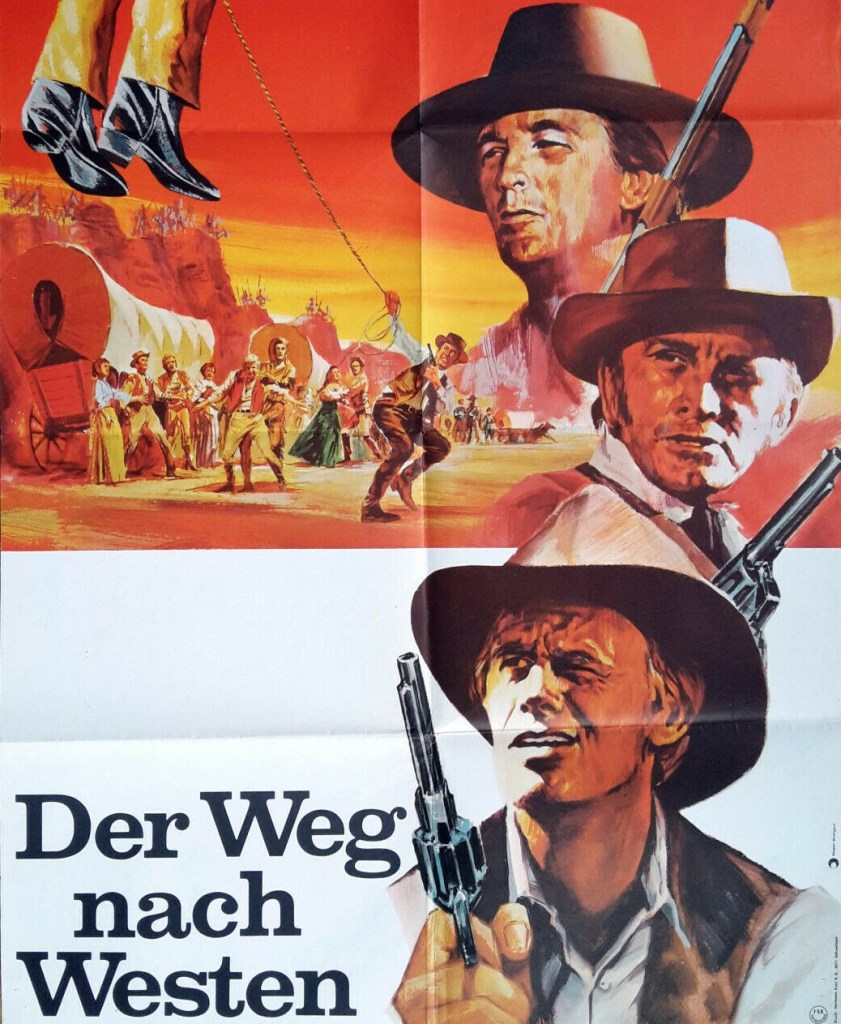
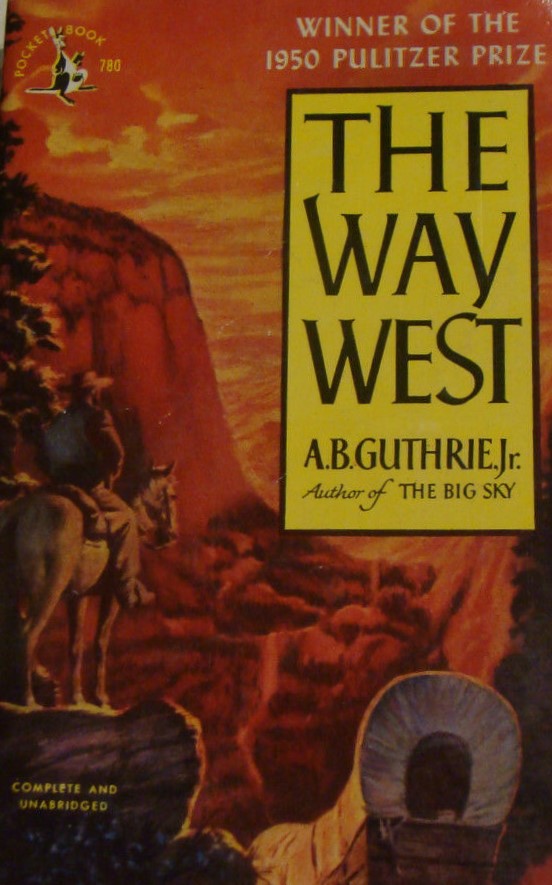
The paperback was sold as a western not as a novel of literary merit so it was inevitable
that the Native Americans who played a minor role in the book took center stage
on the book cover to target the expected audience.

What isn’t in the book: Tadlock (Kirk Douglas) isn’t a Senator for a start, he’s not a widow and doesn’t have a child. He’s not a visionary either with some grandiose map of how he envisages the town he’ll build. He doesn’t hang a man, get a whipping or die falling over a cliff. He’s quit the wagon train long before the cliff section. And he stopped being the leader of the expedition less than halfway through the book.

What isn’t in the book: Evans (Richard Widmark) isn’t overfond of alcohol, doesn’t create an unforced halt in order to celebrate Independence Days several days too soon, doesn’t have a grandfather clock whose loss causes him to lose his rag with Tadlock, in fact it’s he who picks the fight after discovering Tadlock intends to hang a thieving Native American.

What isn’t in the book: Dick Summers (Robert Mitchum) isn’t losing his eyesight, though recently widowed his wife wasn’t a Native American, and he doesn’t have a lucky necklace to pass on to a young man or woman.

So there’s a whole passel of wonder right there. The screenwriters have instantly dramatized all three leading characters by providing them with different attributes, making Tadlock and Summers more sympathetic than in the book, rendering Evans less sympathetic. The problem with the book’s Summers is that what makes him interesting is his lore, his knowledge of everything to do with the West, little of which translates to the screen. So providing the toughest of them all with an impediment allows him an immediate story arc.

What isn’t in the book: a Native American child is not killed by a settler, there’s no settler hanged by Tadlock to placate the warring tribe. There’s no warring tribe. There’s no race with other wagon trains at the outset and no racing across a river to get ahead of a rival. There’s no stowaway preacher either, though there is a preacher (Jack Elam). There is only one stop along the way in the film, at Fort Hall, but two in the book, the other being Laramie.

What isn’t in the book, I’m sorry to say, is the wonderful sequence of lowering wagons down a cliff, and Brownie (Michael McGreevy) marries Mercy (Sally Field) because otherwise she’s going to leave the wagon train at Fort Hall and he doesn’t make a pledge in public that her unborn child is his. And there’s no part for Stubby Kaye.
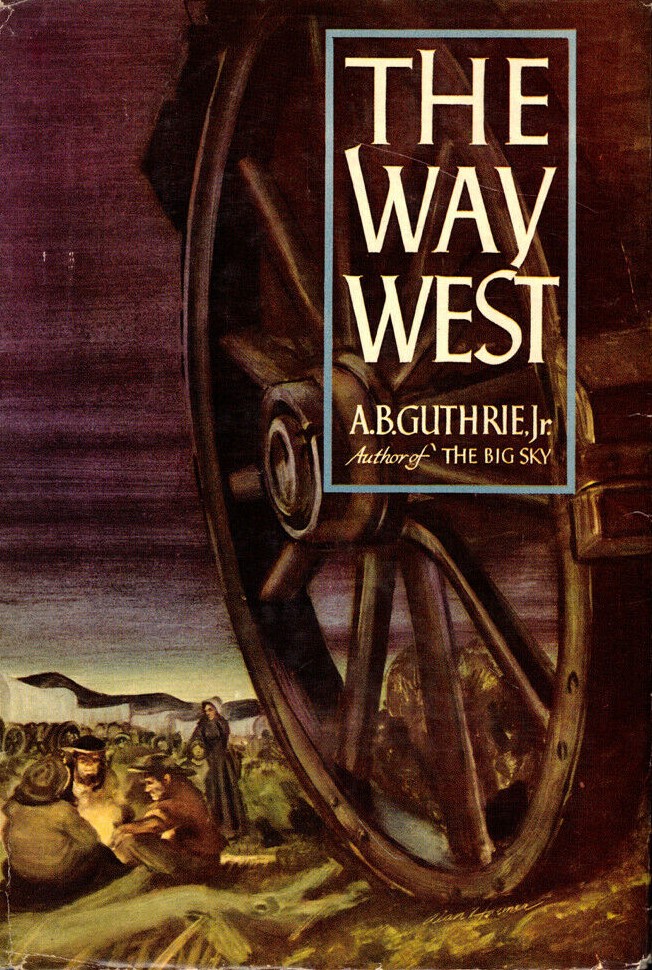
This hardback cover gives far better representation of the novel’s content.

Some of the more solid emotional material is retained. The frigidity of Mrs Mack (Katherine Justice) remains, giving her husband (Michael Witney) the excuse to seduce Mercy, considerably more innocent in the book, where she is described not as sassy but awkward in adult company, “growed up in body and not in knowing.”  While not loving Brownie, she marries him for convenience, though she learns to love him. Brownie gets advice on handling Mercy from Summers and much of that dialog is imported straight from the book.

From the book comes the idea of the settlers chiseling their names on the rock, of Brownie, while doing so, being captured by Native Americans and being traded back to his father.
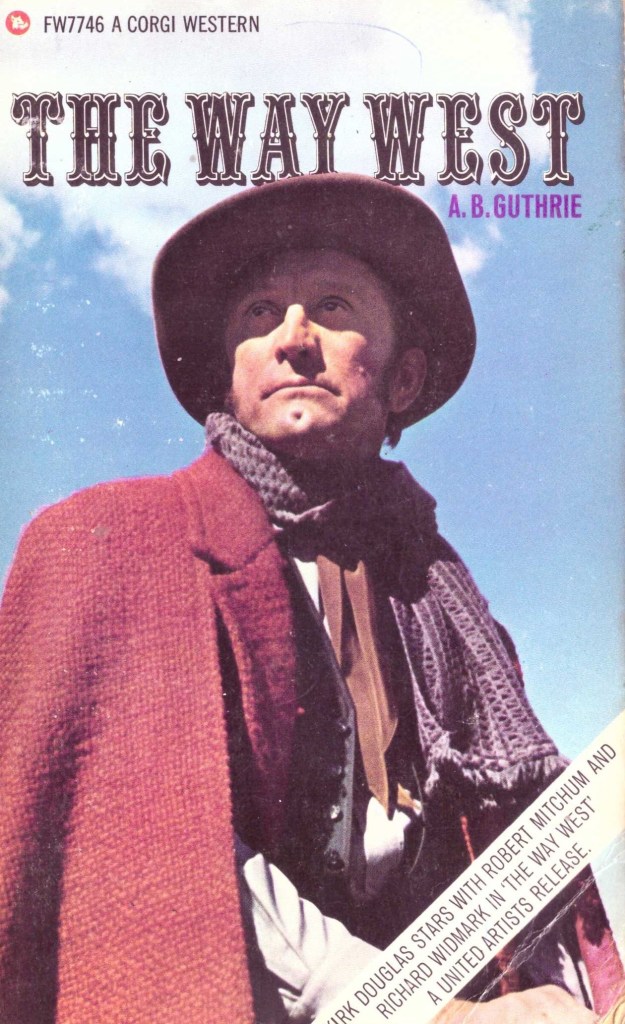
Cover of the British Corgi movie tie-in paperback printed in 1967.

But there are some ideas lifted from the book out of sequence that the screenwriters build up into major dramatic incidents. The river crossing at the start of the film is taken from the river crossing near the end of the book. Close to the start of the novel, Mack kills a Native American, whose tribe seek justice but are sent away empty handed by Tadlock. That becomes a key sequence in the film when Mack is hanged by Tadlock. A child is killed by a rattlesnake and that is transferred to a different father who gives full expression to his grief.

The screenwriters exacerbate the tensions between the characters, create more moments of high drama, invent the visionary element, and are responsible for the vast bulk of crisp dialogue. While the dialogue in the book sounds authentic, it lacks the brittleness and thrust of the words spoken in the film.

A.B. Guthrie was a celebrated American novelist, a journalist who had come to fiction late, over 40 when he produced his first book, a mystery novel set in the West. But after winning a fellowship to Harvard, his writing took a literary turn, and his West did not take the traditional romanticized view. Two of his novels had been filmed – The Big Sky (1952) starring Kirk Douglas and These Thousand Hills (1959) directed by Richard Fleischer – and he had written an Oscar-nominated screenplay for Shane (1953), based on the Jack Schaefer novel, as well as for The Kentuckian, based on the Felix Holt book. The Way West had become such a touchstone for originality and an acclaimed masterpiece that it seemed impossible to turn it into a film.

Whether the film’s negative critical reaction and audience disregard was down to the screenplay veering so far away from what was considered a classic novel is hard to say. This is a very good example of a book that appeared unfilmable being somehow turned into a more than watchable film.     

And I can recommend the book.
Behind the Scenes: “The Way West” (1967)

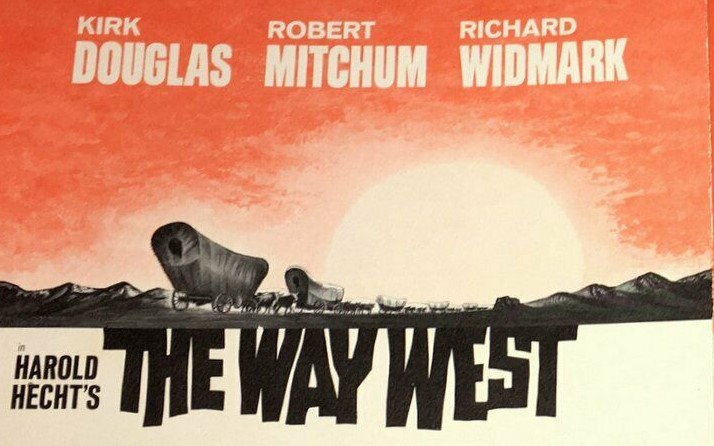
As you might expect with a title like this John Wayne was in the frame, at least at the start. But when Burt Lancaster’s production outfit Hecht-Lancaster bought the property that was the end of that casting idea. Hecht-Lancaster was at its peak in 1956, each of its first 11 pictures turning a profit, and just signed up to a $40 million three-year deal with United Artists. Biggest project on the table: $5 million for The Way West with a dream team of Lancaster, James Stewart and Gary Cooper and a script from Clifford Odets (The Sweet Smell of Success, 1957). But by 1959 the dream had soured, with $545,000 already shelled out on the western with no sign of a start date. A year later the project was shelved. When Harold Hecht split from Lancaster, the rights reverted to United Artists.

Hecht’s initial efforts as a solo producer had not paid off, Taras Bulba (1962), Flight from Ashiya (1964), both starring Yul Brynner, and Tony Curtis comedy Wild and Wonderful (1964) all covered in red ink, before suddenly resurfacing with the hit Cat Ballou (1965), making him imminently more bankable than before. However, given the impact music had in Cat Ballou, Hecht hankered after something in the same vein, except bigger, and bought the rights to Finian’s Rainbow, a Broadway hit from 1947. When casting issues caused delay, Hecht signed a one-picture deal with United Artists for The Way West. The studio had such high hopes for the movie that plans were made for its world premiere to be held at the Houston Astrodome, a first, and it was considered a natural for roadshow treatment.

A substantial rejig was required of the source material, the Pulitzer-Prize-winning novel by A.B. Guthrie, by screenwriters Ben Maddow and Mitch Lindemann, not least to ensure that the character played by Kirk Douglas remained with the wagon train until the end of the trail, unlike in the book. Andrew V. McLaglen, with three box office western hits behind him in McLintock (1963) starring John Wayne and Maureen O’Hara, Shenandoah (1965) with James Stewart and The Rare Breed (1966) co-starring Stewart and O’Hara, was first choice to sit in the director’s chair.

Charlton Heston (El Cid, 1961) was approached to play the lead of Senator Tadlock. When he turned it down, Kirk Douglas signed on for his first western in five years – although his next would also be a western, The War Wagon (1967) with John Wayne – Robert Mitchum (Villa Rides, 1968) was offered the choice of either scout Dick Summers or firebrand Life Evans. At the end of a long lunch with Hecht and McLaglen, Mitchum could not make up his mind and the producer and director assigned him the role of the scout.

“I’m awfully glad it worked out the way it did,” recalled McLaglen, “because Widmark was perfect for the other part and Mitchum was perfect for the scout.” It might not have been Widmark because Max von Sydow was also reputedly offered a part. Von Sydow was too big a star to play any of the other supporting parts and the part assigned to Widmark was Scandinavian so in that sense an ideal fit.

While Widmark did not attempt a Scandinavian accent, Mitchum spoke Lakota, apparently with a decent accent, in several scenes where he had to communicate with Native Americans. He didn’t learn the language, as modern actors might do, but simply recited the words spoken to him off-camera.  Mitchum and Douglas had acted together in Out of the Past (1947), where the former had the larger role, and, while not sharing scenes, appeared in The List of Adrian Messenger (1963), where the billing was reversed. Although not in a directorial capacity McLaglen had worked with Mitchum on Blood Alley (1956) before the actor was fired.

It was an arduous shoot, virtually the whole picture shot as exteriors, in Tucson, Arizona, and in various locations in Oregon including Bend, Christmas Valley and the Crooked River Gorge. Around 400 members of cast and crew made the trek. In the absence of CGI, everything seen on the screen was achieved for real without any recourse to blue screen. The desert was real. When the river was forded, it was with real wagons and the cast. The wagons were raised and then lowered from the tops of cliffs using the old-fashioned methods that would have been available at the time, that is by rope-and-tackle.

In order to begin filming or play less arduous scenes on top of the cliffs, cast and crew went up in a ski lift. “You’re up there, hundreds of feet up, nothing but rocks to call on,” Jack Elam remembered. “If you had to go to the bathroom it was a matter of half an hour down and half an hour up.” When the wagons were lowered down the cliff all the actors at some point had to participate and according to Elam “some people landed in the hospital.” The river crossing was no less dangerous, with the potential for drowning a constant hazard.

“Andy McLaglen…was wonderful through the whole thing. Stayed calm through thick and thin,” said Elam. Added assistant director Terry Morse, “Nothing intimidated him…for all the difficulties he kept it right on schedule.”

Given three stars with reputations, it was not surprising there were flashpoints, Kirk Douglas, apparently, at the heart of most, accused of snatching newspapers out of the hands of supporting players and trying to usurp the director. Commented Harry Carey Jr., “He tried to take over the thing at some point. Widmark got furious at it, very agitated. He screamed, ‘You’re not directing this goddam movie.’ Really raised hell with Douglas.”

Said McLaglen, “Somebody like Kirk Douglas and somebody like Mitchum, they were poles apart in personality. Bob was an easygoing guy and Kirk was more volatile. But there was never a feud.” Just how easygoing Mitchum was – a production assistant was assigned to keep an eye on him just in case he got carried away with his predilection for fishing and was wading in the water when it was time for his next scene.

Kirk Douglas thought so little of the picture there’s not a single mention of it in his autobiography The Ragman’s Son.

The movie wrapped on August 29, two days ahead of schedule, which was quite remarkable given how tough the shoot had been. The fact that it took almost a year to reach screens suggested UA had problems with the finished product. Andrew McLaglen asserted that it had been shorn by nearly 30 minutes after the first round of cinema screenings, but that memory seems faulty given that the film Variety reviewed the movie in mid-May 1967 – a month before its world premiere in Eugene, Oregon, on June 13 – ran 122 minutes, the stated running time. Critics were not kind but the director thought it was “a terrific picture” and “one of the things I dream about today.”

SOURCES: Kate Buford, Burt Lancaster, An American Life (Aurum Press, 2000) p171,192, 194; Lee Server, Robert Mitchum, Baby I Don’t Care, (Faber and Faber, 2002), p491-495; Kirk Douglas, The Ragman’s Son (Simon & Schuster, 2012); “Largest Independent Motion Picture Deal,” Variety, April 13, 1956;  “Hollywood Report,” Box Office, November 15, 1965, p20; “Hecht’s Oncer for UA,” Variety, March 30, 1966, p5; “Astrodome May Show Hollywood’s Way West,” Variety, May 4, 1966, p12; “Hecht Finishes Production of UA’s The Way West,” Box Office, September 5, 1966, pW5; “Review,” Variety, May 17, 1967, p6.

Book into Film – “The Secret Ways” (1961)

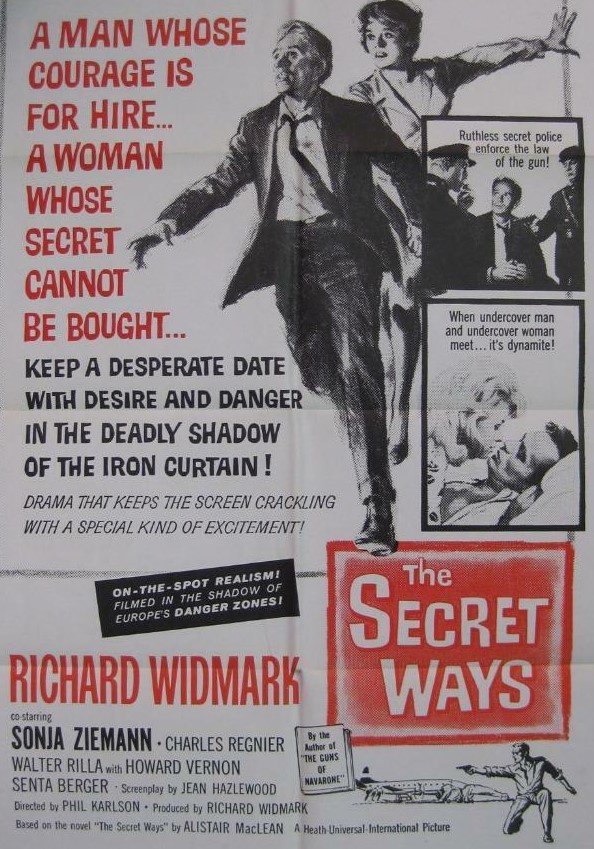
You might ask yourself why star Richard Widmark bought the rights to Alistair MacLean Cold War thriller The Last Frontier (title changed to The Secret Ways for American publication and the film) if he was going to ignore so much of the author’s brilliant story. In the original version hero Reynolds (the Widmark character) does not simply fly into Vienna as in the film, but has already crossed the Austrian border into Hungary in a blizzard after hitching a lift in a truck but now is stranded on foot in sub-zero temperatures, 30 miles from Budapest. This is not the only change authorized by Widmark, wearing his producer’s hat.

His Reynolds is a freelance gun for hire clearing a gambling debt and hired by an American spy ring compared to MacLean’s British secret service agent, intensely trained for 18 months for this mission. The mission in MacLean’s book is to rescue/kidnap British scientist Professor Jennings, the world expert on ballistic missiles, with the help of Hungarian resistance leader -Hungary at the time part of the Soviet bloc – Jansci (Wolf Rilla). Widmark eliminated all mention of Jennings. Instead, the task facing his Reynolds is to get Jansci out of Hungary. Widmark’s Jansci is still a resistance leader but doubling up as the professor albeit a straightforward scholar with nothing to do with missiles.  

Cover of the Doubleday U.S. hardback edition in 1959.

Combining characters was not unusual in the movie business and Widmark may have deemed it necessary to streamline the plot. But if the idea was to simplify the plot, that hardly explained the existence of Elsa (Senta Berger). She was not in the book. Her sole purpose may have been to provide Widmark with casual romance – a testament in Hollywood terms to his irresistible attraction – early in the story.

This was Alistair Maclean’s first shift away from the trio of war novels, including The Guns of Navarone, which had rocketed him into the bestseller class, and it proved to be a major change of style that created the non-stop thriller template that would underpin the later Fear Is the Key (published in 1961), When Eight Bells Toll (printed in 1966) and Puppet on a Chain (1969 publication), all of which were filmed, which saw loners or secret agents enduring horrific physical abuse as they battled the odds.

MacLean’s Reynolds enters Budapest a captive, rather than as in the Widmark version merely catching a train. Widmark meets Jansci’s daughter Julia (Sonia Ziemann) in Vienna. But in the book the secret agent meets Julia, along with her father, after he is captured by the resistance. In the book Reynold’s kidnap occurs in the first 20 pages, in the film at the halfway mark. From the outset Maclean thrusts his hero pell-mell into action with nary a let-up but in the film the action is punctuated by romance and various political meanderings.

Giving the game away No 1: the back cover of the Fontana paperback movie tie-in explains the plot – and it’s different from the one Widmark filmed.

Perhaps Widmark shied away from the MacLean plot due to budget constraints for the novel is certainly more intense and continually action-packed. Starting with the blizzard and ending with a perilous river crossing, the novel has several scenes which would have looked stupendous on screen. The story Widmark ignored involved the scientist in danger of being removed from Hungary to be returned to the Soviet Union, forcing Reynolds to effect a rescue on board a train, in a devil-may-care episode worthy of James Bond, by separating one car from the rest. There follows a 400-kilometer chase to the Austrian border where, pursued by Hungarian secret police, they cross the river Danube. In a final twist, while the professor and Julia are safe, Jansci refuses to leave his native country.

In various blogs covering the transition of novel into screenplay, I have mostly understood why a screenwriter would delete, alter or embellish plot, characters, time scale and even locale. Sometimes the screenwriter simply comes up with a more believable plot (as in Blindfold) or is required by the sheer length of the novel to make considerable changes. It’s rare for me to think that the screenwriter has taken the wrong approach. I thought The Devil Rides Out could have done with more of the occult background in the Dennis Wheatley novel. Here, it’s quite obvious that Maclean had a far better storyline than the film Widmark chose to make, the blizzard, train and river crossing scenes far more exciting than anything in the finished picture. As I noted, money may have been the issue.

Giving the game away No 2: the back cover of the Pocket Books paperback movie tie-in explains that Reynolds is a British secret service agent – but that’s not how Widmark played him.

However, it’s just as interesting that Widmark and Co. managed to make an enjoyable picture by not following the original story. The role of gambler-gone-bad was more appropriate to the Widmark screen persona than a secret service agent (outside of the humorous Our Man in Havana, there were not many of those around until a few years later). The film did introduce Senta Berger to a wider audience and the plot as it stands made a lot of sense.

The book was published in Britain in 1959 as The Last Frontier. In America the same year Doubleday renamed it The Secret Ways. There was a Victor Mature western called The Last Frontier in 1955 – and the title had also been used in 1932 and 1939 – so unless  Richard Widmark had purchased the film rights prior to American publication and announced a name change, then I have no idea why the book title changed.


Behind the Scenes – “The Secret Ways” (1961)

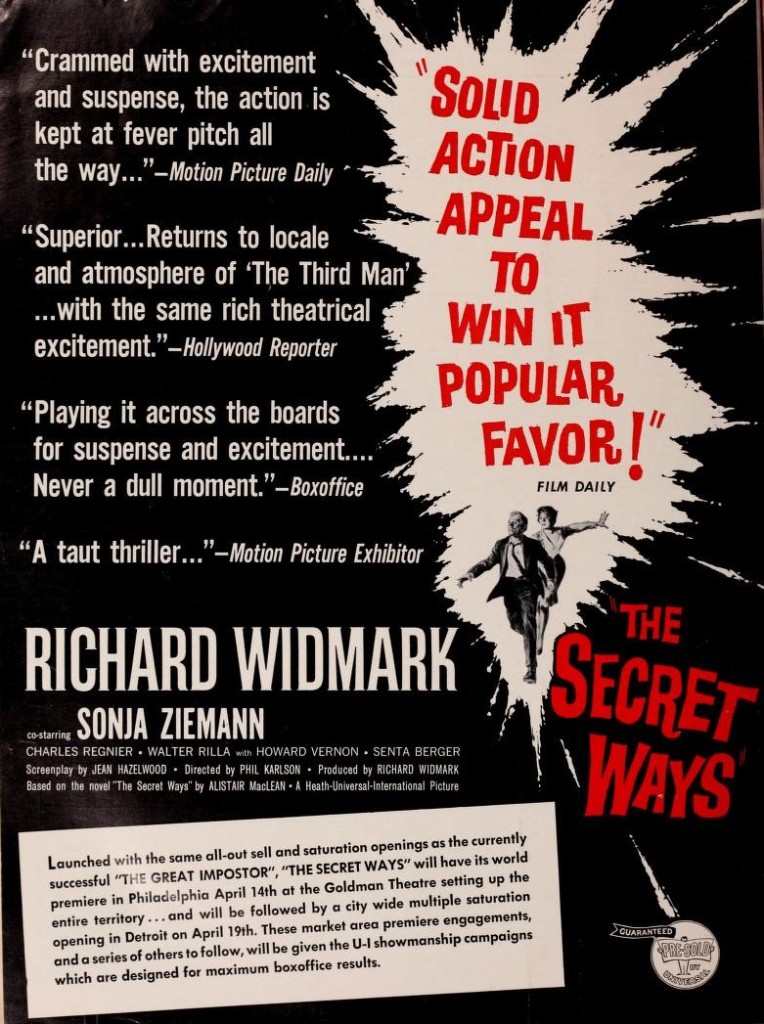
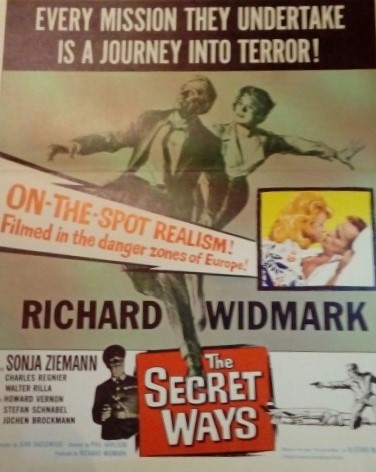
Since this is the most popular review on the Blog, I thought I might delve into the background to the picture.

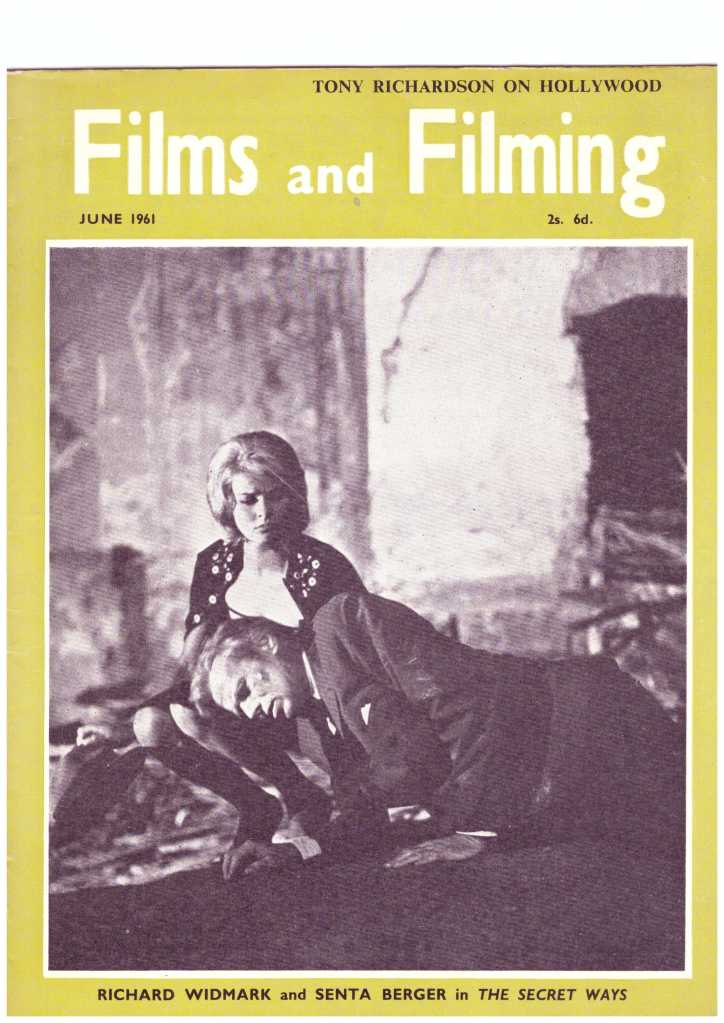
“The reason I made The Secret Ways,” Richard Widmark told British film monthly Films and Filming, “is that I like spy thrillers. I’ve been in this business quite a long time and to survive you have to do all kinds of pictures, you can’t just specialize on just one kind.”

Widmark wasn’t just branching out into a different genre, he was developing a completely new set of skills – turning producer. His Heath Productions had cut its teeth on Time Limit (1957), a Korean war drama in which he starred with a strong supporting line-up in Richard Basehart, Dolores Michaels, Martin Balsam and Rip Torn. For a neophyte producer, Widmark went out on a limb in his choice of director, Karl Malden, better known as an Oscar-winning actor. So he had no problem taking chances. He had bought the property from Warner Brothers at a time when big studios were running shy of doing small pictures.

Widmark purchased the rights to The Secret Ways in March, 1959, one month after American publication by Doubleday, with the intention of beginning production before the year was out, putting him on target to produce three films in a year. Also on his production schedule were The Seven File for United Artists and bullfighting drama Wounds of Honor which he would direct but not star. Budget for The Secret Ways was set at $1 million.

“I enjoy production,” Widmark later claimed. “I like to act but over the years I find that I can do more and I enjoy setting things up and seeing them through.” But he could have hardly have been happy with his experience on The Secret Ways. Screenplay issues prevented Widmark meeting his initial start date. Peter Viertel (The Old Man and the Sea, 1958) had first crack followed by Scotsman William Templeton who having written the film adaptation of 1984 in 1956 was expected to understand the Cold War elements. But it was left to Widmark’ s wife Jean Hazelwood to take the screenwriting credit, even though this would be her movie debut and she never made another film.

Finalizing roles proved equally last minute. Female lead Sonja Zieman signed up only a few weeks before production rolled, Senta Berger a couple of weeks after. Obstacles arose once filming finally got underway on August 1, 1960. Rather than importing crews from Britain or America, Widmark chose the budget-conscious idea of utilizing a German-only team. Problems proved as much psychological as a culture clash of working principles.

Widmark recalled that it was “like fighting World War Two all over again – you have the Austrians and the Germans fighting like mad with the English and the Americans, they hated us.” Added to that were language barriers, technical obstacles and cultural difficulties, one example being that the foreign crews were not accustomed to going out into the street and shooting all night for five consecutive weeks. Nor, presumably, were they so keen to be filming so close to the borders. Much of the filming, according to assistant producer Euan Lloyd in a six-minute documentary, was “done directly under the guns of communist guards only yards away.”

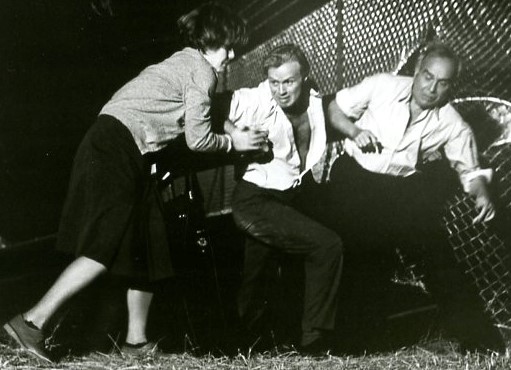
Worse, star and director Phil Karlson were soon at odds, not helped by the fact that Widmark had little regard for directors. “There are to me about eight to ten efficient directors in the world,” he declared, not counting Karlson among that figure. When the director took ill for a week with a virus, rather than shutting down the production, the star took over the directorial reins. Three weeks later, the director quit, over creative differences regarding the ending. Widmark took up his seat again in the directorial chair.  

Release was delayed due to Widmark’s other commitments. Once he had completed his role in the film he was away from mid-October shooting John Ford’s Two Rode Together and not able to return to post-production until December

The biggest problem was avoiding making an overt political statement. “I was trying to make an adventure story, a sheer adventure story. But some of it (politics) just creeps in.” Hungarians in Detroit complained the movie did not go far enough in depicting the reign of terror. “They had been in contact with the Hungarian Secret Police,” said Widmark, “had gone through this torture, which seems corny with the dope, the needle and the steam room. But it’s not incredible, it goes on every day of the week there.”

Despite tepid box office, Widmark ploughed ahead with plans to make The Tiger’s Roar from the Jack Davies novel as a vehicle for Trevor Howard. But this and his other two features did not come to fruition and the star did not climb back into the producer’s chair until The Bedford Incident in 1965, which proved his last stab at production.

Working with Widmark inspired Zieman to set up her own production arm, announcing Next Stop Paradise, based on husband Marek Hlasko’s novel, in which she would star. But that did not get off the ground either.

SOURCES: “Widmark to Star Self in Secret Ways,” Hollywood Reporter, March 20, 1959, p18; “Viertel Secret Plottter,” Hollywood Reporter, October 2, 1959, p11; ”Widmark Projects Three Heath Prod’ns Next Year,” Hollywood Reporter, November 11, 1959, p2; “Bill Templeton Plots Secret Ways for U-I,” Hollywood Reporter, December 17, 1959, p1; “Widmark Signs Fem Lead,” Hollywood Reporter, July 11, 1960, p2; “ “Widmark Film Rolls,” Hollywood Reporter, August 1, 1960, p3; “Viennese Actress Set,” Hollywood Reporter, August 9, 1960, p3; “Phil Karlson resumes,” Hollywood Reporter, September 6, 1960, p2; “Karlson Exits Widmark Picture Over Different Endings,” Hollywood Reporter, September 22, 1960, p1; “Widmark Reports,” Hollywood Reporter, October 11, 1960, p3; “Widmark Back to U-I,” Hollywood Reporter, December 15, 1960, p2; “Crew Hazards Under Red Guns As Documentary for U’s Secret Ways,” Variety, March 1, 1961, p19; “New Role for Sonja,” Box Office, May 8, 1961, W2; Richard Widmark, “Creating Without Compromise,” Films and Filming, October 1961, p7-8.

And The Winner Is…

Many thanks to all who took the time to enter the first-ever competition run by the Blog. The idea was to guess which of the films reviewed in the April Blog received the highest number of views. How many did you get correct?

Here’s the Top Five in ascending order:

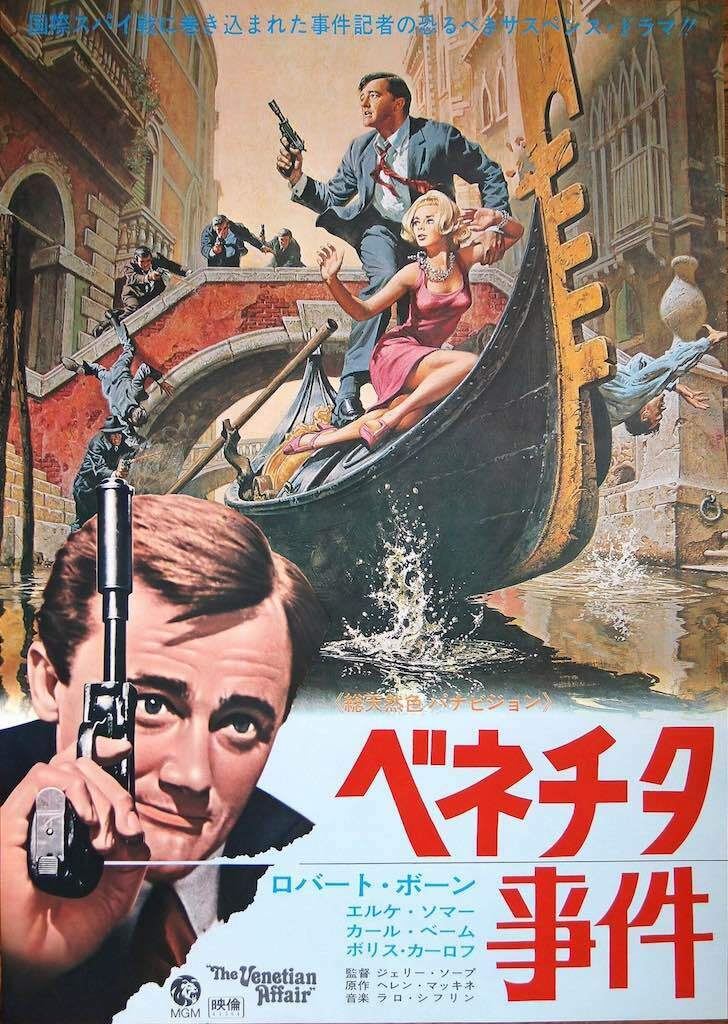
  1. The Venetian Affair (1966)- Robert Vaughn, Elke Sommer and Boris Karloff in espionage drama, adapted from the Helen MacInnes bestseller.
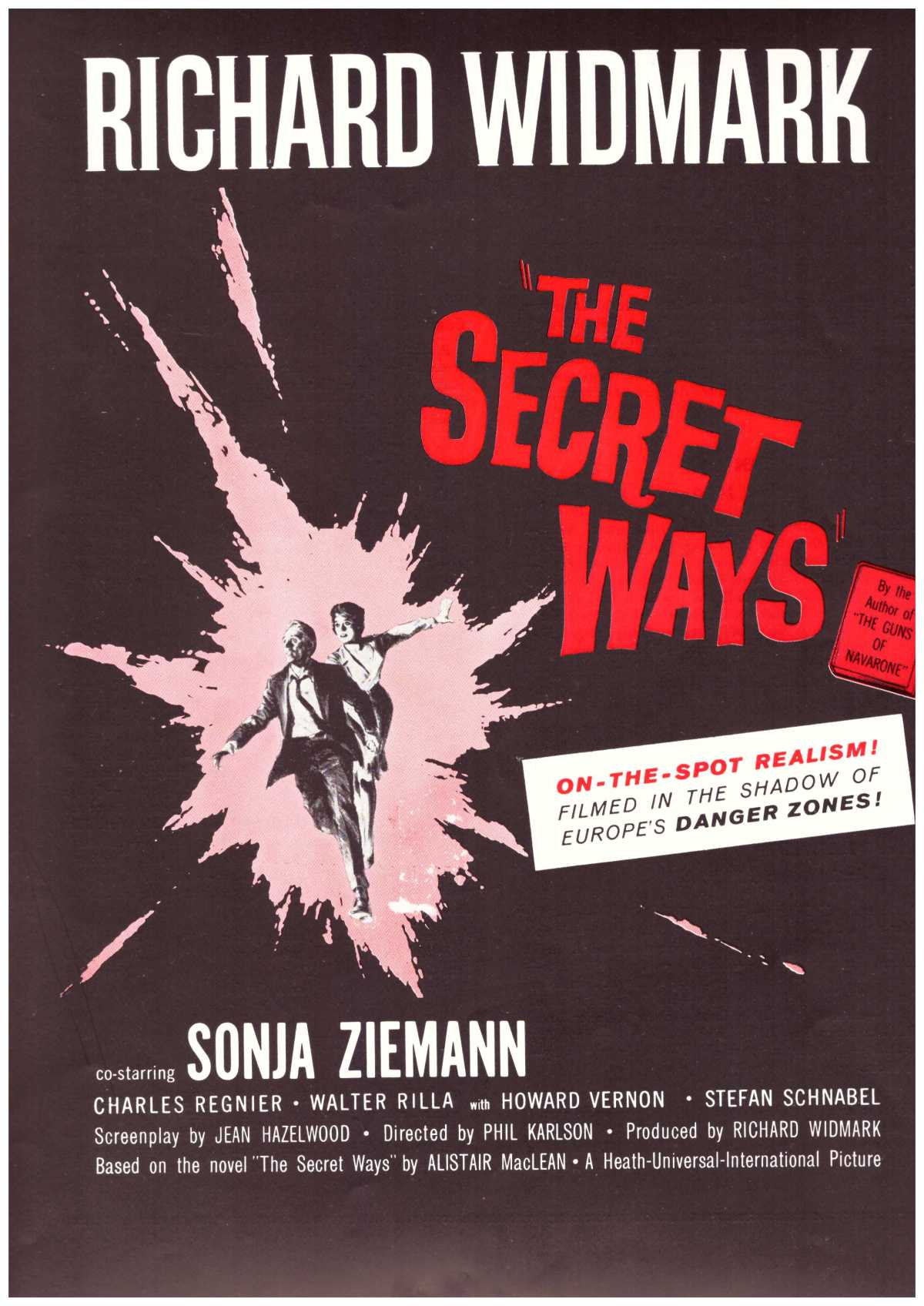
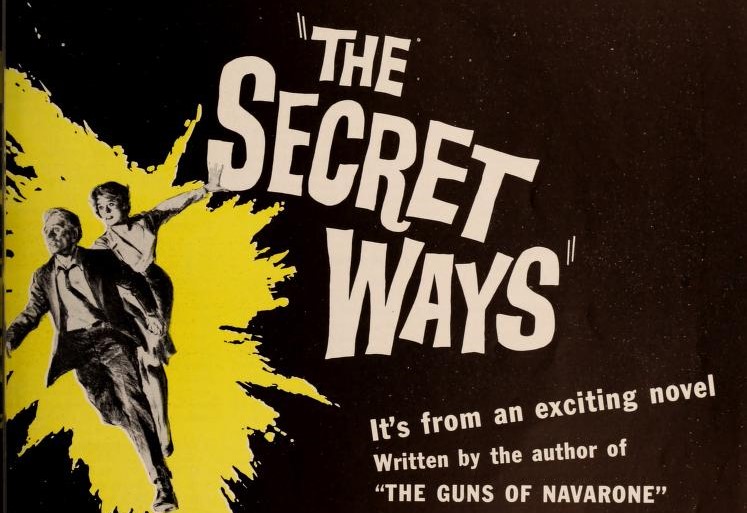
  2. The Secret Ways (1961) – Richard Widmark behind the Iron Curtain in Alistair Maclean thriller.
  3. Stiletto (1969) – Mafia assassin Alex Cord hunted by cop Patrick O’Neal with Britt Ekland providing the glamor. From the Harold Robbins novel.
  4. Duel at Diablo (1966) – action-packed western starring James Garner and Sidney Poitier, both playing against type.
  5. The Secret Partner (1961) – Stewart Granger on the run in mystery thriller also starring Haya Harareet.

If I had not restricted the films in the competition to those that were just reviewed in the April edition of the Blog, I would have had to find room for another picture that was originally reviewed last year. Polish epic Pharaoh/Faraon (1966) would have taken fifth place if I had changed the criteria to just total views for the month.

I am delighted to see readers digging back into the Blog to ferret out great films.

The winner has requested that I respect his anonymity. He writes a movie blog under the pseudonym “Over-The-Shoulder” and has asked I don’t reveal his full name. But if you want to know what he writes about, check out his blog.

The Secret Ways (1961) ***

This gritty realistic thriller, based on Alistair Maclean’s The Last Frontier, has much in common with The Quiller Memorandum (1965) with spies stalked through dark cobbled streets. To pay off his gambling debts, Michael Reynolds (Richard Widmark), posing as a journalist, agrees to smuggle out of Hungary resistance leader Jansci (Walter Rilla) on the Soviet hit list after the failed 1956 uprising.  Assisting him is Jansci’s daughter Julia (German star Sophie Ziemann) and, making her debut, Senta Berger as Elsa.

This is a city of staircases and tunnels and echoing footsteps and authorities keeping close tabs on visitors. The first time Widmark escapes their notice he is beaten up and it takes considerable skill, dodging through cinemas, creeping along window ledges, to make any headway in his assignment. Various complications ensue, not least that Julia despises Reynolds and that Jansci does not want to flee his country. Reynolds, who starts out as anything but your standard good guy, ends up less mercenary.

Mostly it is atmospheric cat-and-mouse with ruthless opposition partial to the odd spot of torture. Once it gets going, it a chase that the escapees are unlikley to evade. That Reynolds is distrusted by those he is trying to help and that he doesn’t want to be here at all, forced into adventure by adverse personal circumstance, stokes up the tension.

Widmark doesn’t quite abandon his snarling persona but manages some deft dry-wit comedy when trying to play a journalist accommodating his hosts. Senta Berger makes a striking debut. Sophie Ziemann is less impressive but veteran character actor Walter Rilla has the brooding and charismatic presence of a leader. Vienna, generally not considered a soulless city, does a great job standing in for Budapest.

This was one of many Widmark bids to gain greater control of his career and provide himself with more interesting leading roles than the standard villains or tough guys that Hollywood marked him down for. He was the producer and at one point took over direction from Phil Karlson after artistic differences of opinion. Jean Hazlewood, Widmark’s wife, wrote the screenplay. While there’s less out-and-out action than Maclean devotees brought up on Where Eagles Dare and Fear Is the Key might expect, there are still considerable rewards from an intelligent screenplay and the crackle of pursuit. Seen as a late entrant to the Hollywood cloak-and-dagger genre than a precursor of the 1960s Bond-style adventure, this has a great deal going for it.

Catch-Up: Previously reviewed in the Blog – Senta Berger in Major Dundee, Bang! Bang! You’re Dead!, and The Quiller Memorandum; Richard Widmark in The Bedford Incident, The Long Ships, Flight from Ashiya and Alvarez Kelly.

The Long Ships (1964) ***

Decent hokum sees Vikings ally with Moors to seek a mythical giant bell made of gold, “the mother of voices.” There are stunning set-pieces: a majestic long ship coming into port, superior battles, the Mare of Steel, the discovery of the bell itself, while a clever ruse triggers the climactic fight. There’s even a “Spartacus” moment – when the Vikings declare themselves willing to die should their leader be executed.

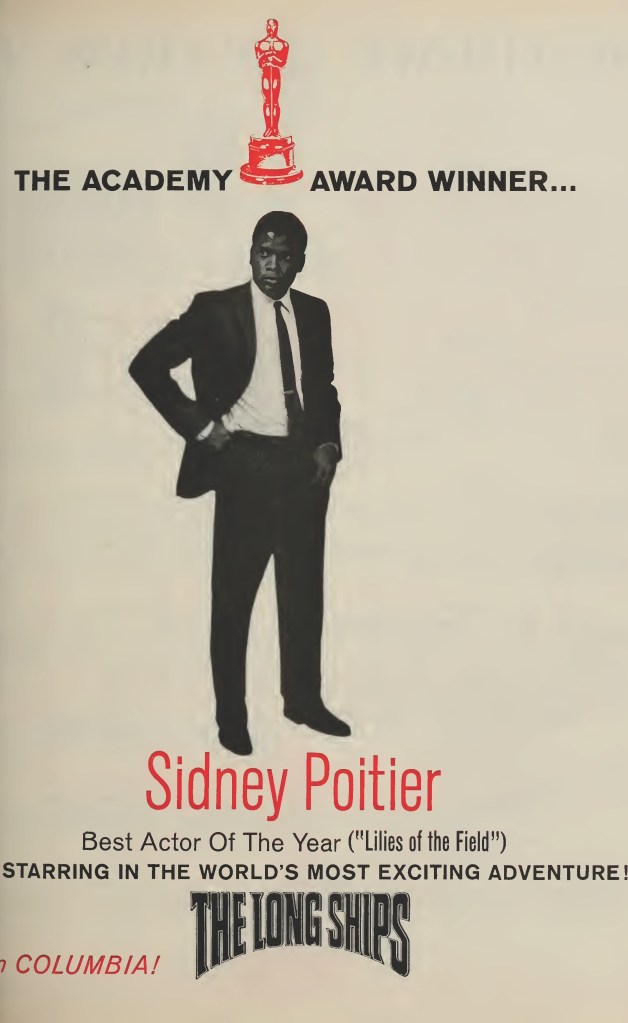
Richard Widmark as a wily Viking, second cousin to a con man, makes the most of an expansive role. Instead of seething with discontent or intent on harm as seemed to be his lot in most pictures, he heads for swashbuckler central, with a side helping of Valentino, gaily leaping from high windows and  engaging in swordfights although he does appear to spend an inordinate amount of time swept up ashore after shipwreck. Sidney Poitier, laden down with pomp and circumstance rather than immersed in poverty as would he his norm, is less comfortable as the Islamic ruler. Fresh from winning the Oscar for Lilies of the Field (1963) it surely must have the chance of a big payday that lured him into this role. (Widmark and Poitier re-teamed in The Bedford Incident, 1965, previously reviewed in the blog.) The diminutive Russ Tamblyn, as Widmark’s sidekick, is easily the most athletic of the trio.

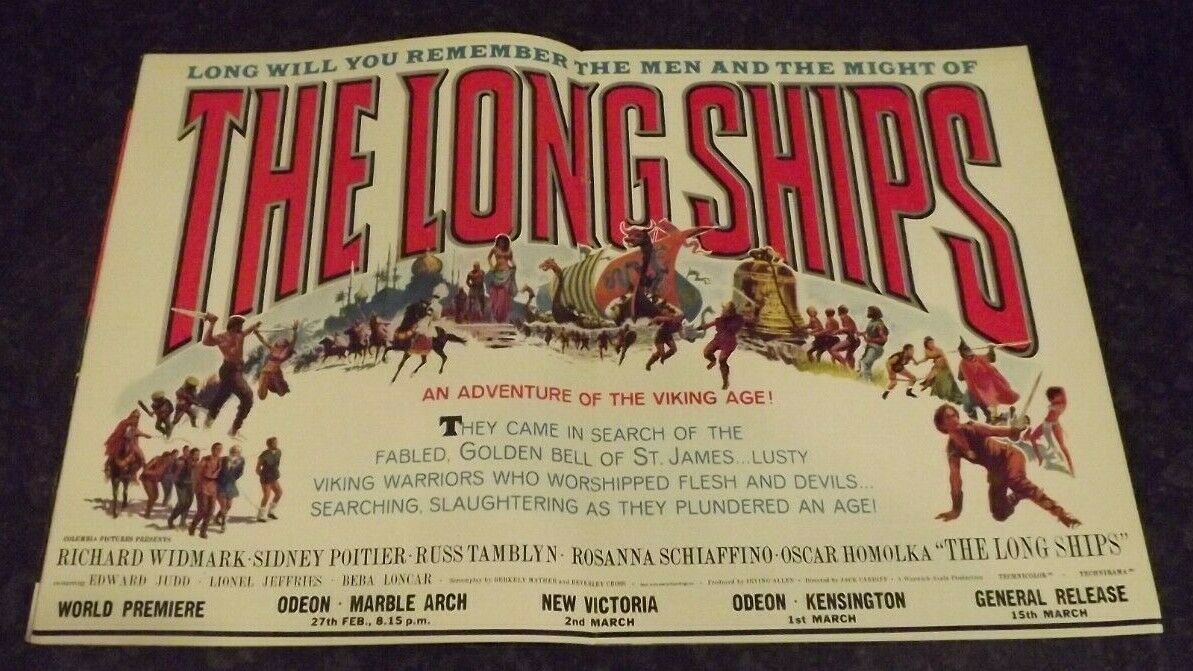
British production company Warwick could hardy believe their luck in landing an Oscar-winner. They had gone down the swashbuckling route before with The Black Knight (1954) and had made films with big Hollywood names like Robert Mitchum and Rita Hayworth in Fire Down Below (1957). This was a trade advertisement in “Box Office” magazine (April 27, 1964) – in the same issue was an advert for Poitier’s triumph in Lilies of the Field.

Although handy with a sword, both are equally adept as employing seduction, Poitier making eyes at Viking princess Beba Loncar (in her Hollywood debut) while Widmark targets Poitier’s neglected wife Rosanna Schiafffino (The Victors, 1963). The story is occasionally put on hold to permit the Viking horde to pursue their two favorite pastimes – sex and violence – and they make the most of the opportunity to frolic with a harem.

One of the marks of the better historical films is the intelligence of the battle scenes. Here, faced with Muslim cavalry, the Vikings steal a trick from The 300 Spartans by lying down to let the horses pass over them then rising up to slaughter their riders. But there is also an unusual piece of intelligent thinking. Realising, as the battle wears on, that they are substantially outnumbered and have their backs to the sea, Widmark takes the sensible option of surrendering.

Director Jack Cardiff, Oscar-nominated for Sons and Lovers (1960), brings to bear his experience of working on The Vikings (1958) for which he was cinematographer. He is clearly at home with the action and equally there is some fine composition. However, the story in places is over-complicated, he fails to rein in the mugging of one of the industry’s great muggers Oscar Homolka and there is a complete disregard for accent discipline.  Edward Judd (The Day the Earth Caught Fire, 1961), Scotsman Gordon Jackson (The Great Escape, 1963) and Colin Blakely (The Private Life of Sherlock Holmes, 1970) have supporting roles. 

Many of the films from the 1960s are to be found free of charge on TCM and Sony Movies and the British Talking Pictures as well as mainstream television channels. But if this film is not available through these routes, then here is the link to the DVD and/or streaming service.

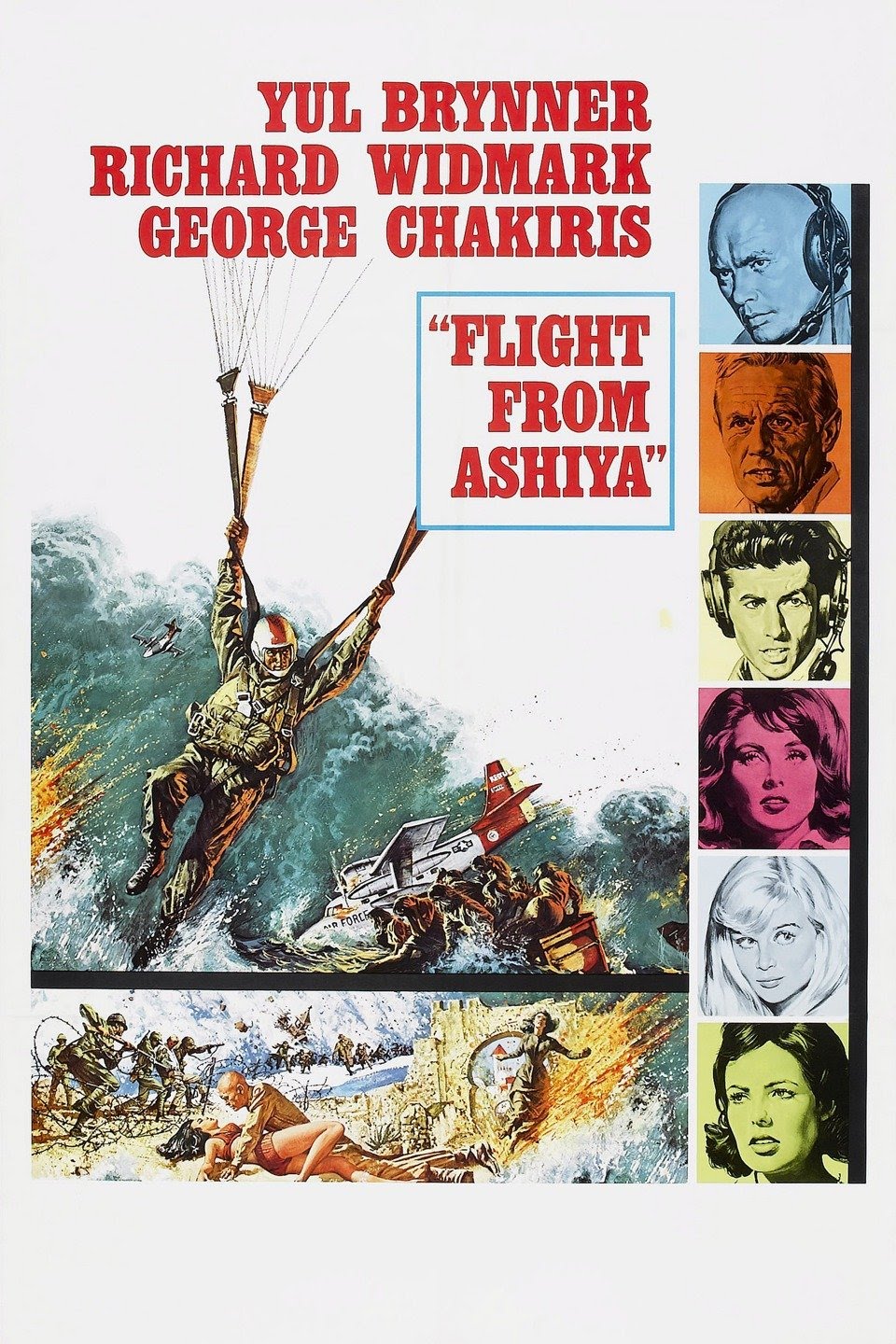
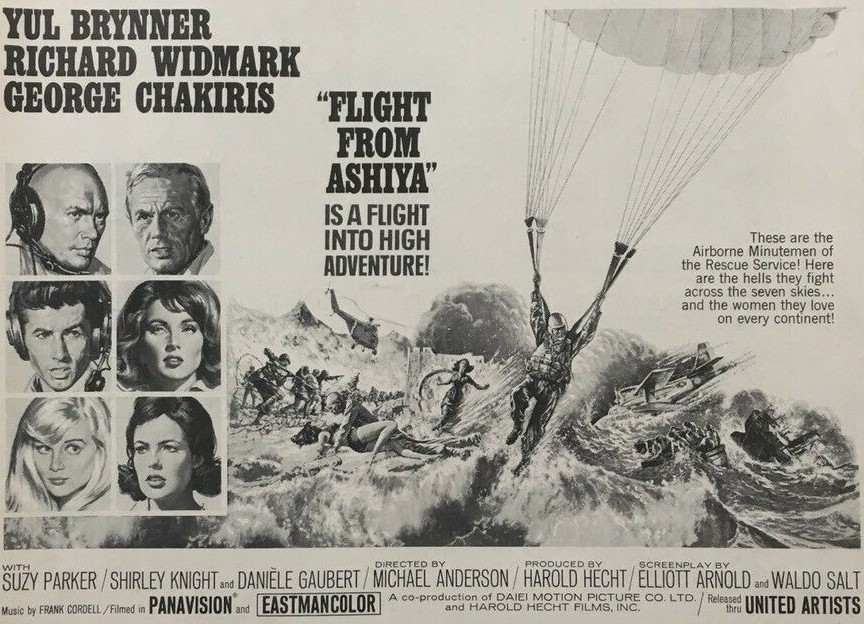
Flight from Ashiya (1964) ***

A post-WW2 operation to save a handful of Japanese adrift at sea in a storm is endangered when three members of the U.S. Air Force Air Rescue Service confront conflicts from their past. Despite tense rescue action, this is basically a three-hander about guilt and how men deal – or fail to deal – with emotions. Extended flashbacks illuminate the tangled relationships between Yul Brynner, Richard Widmark and George Chakiris.

So really it’s like one of those portmanteau films that were occasionally popular – like Trio (1950) made up of Somerset Maugham short stories or the more recent The VIPs (1963) or The Yellow Rolls Royce (1964). Each of the episodes stands up in its own right, actions taken in the past having a direct bearing on the present situation. Chakiris is haunted by causing an avalanche after flying his helicopter too close to a mountain and by having to leave behind many of the victims, due to restricted capacity on board, and now he is terrified of flying solo. 

As a consequence, Widmark has no faith in abilities as a pilot. Widmark has an ongoing hatred of the Japanese – colleague Brynner of Japanese ancestry also bears his wrath – because his ill wife (Shirley Knight) and child died in a Japanese prisoner-of-war camp where medical supplies were reserved for the Japanese. Faced with rescuing Japanese, he is enraged.  For his part, Brynner, as a paratrooper during the war, inadvertently caused  the death of his Algerian girlfriend.

It’s not so much an examination of tough guys under pressure as about their inability to deal with the consequences of action. There’s certainly a sense that the only way men like these have of dealing with trauma is to throw themselves further into harm’s way. Unusually, at a time when product was in short supply and for a film boasting a strong cast, the picture was shelved for two years after completion. Michael Anderson (Around the World in 80 Days, 1956) directed.

The title’s a bit of a misnomer, suggesting someone is trying to escape from Ashiya when, in fact, that is just the name of the air base where the rescue team are located. Critics complained it was neither one thing nor the other, but in fact I found it a perfectly satisfactory combination of action and drama, especially as it dealt with rarely-recognised male emotions.

Many of the films from the 1960s are to be found free of charge on TCM and Sony Movies and the British Talking Pictures as well as mainstream television channels. But if this film is not available through these routes, then here is the link to the DVD and/or streaming service.

Discover WordPress

A daily selection of the best content published on WordPress, collected for you by humans who love to read.

The Atavist Magazine

by Brian Hannan

WordPress.com News

The latest news on WordPress.com and the WordPress community.