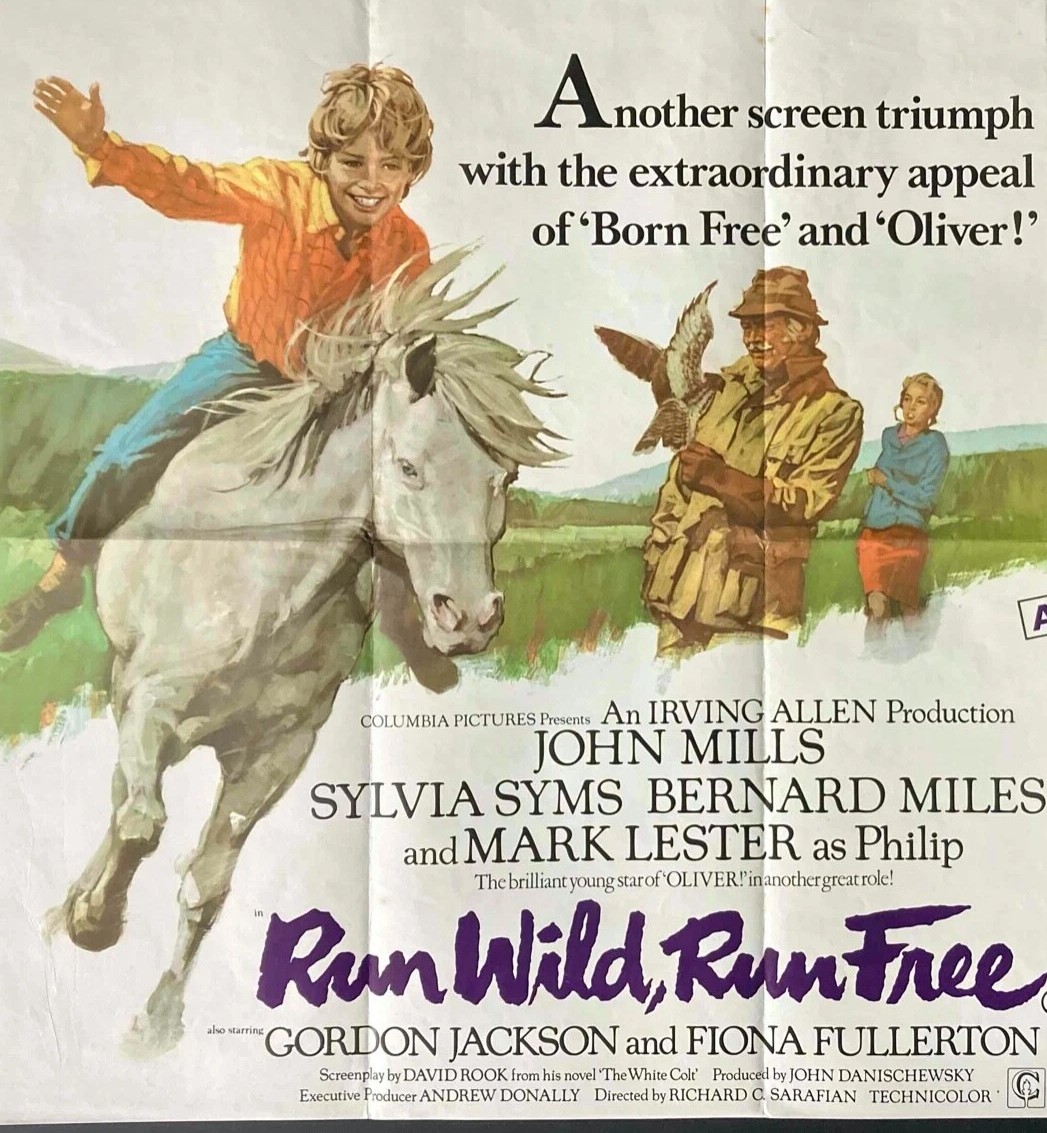
Run Wild, Run Free (1969) ****

Surprisingly absorbing, precisely because of the distinct lack of the soppiness or mawkishness associated with the genre. Nature “red in tooth and claw” scarcely puts in an appearance and even then is a good bit less dangerous than a wanton child unable to understand or control his emotions. Parents are very well-drawn, too, in an era that scarcely ran to much comprehension about child psychology, a mother rejecting her son because she is convinced he has rejected her, a traditional father who lacks the skills to convey his love for his son. And you wouldn’t get away these days with an old fellow taking more than a passing interest in a small bewildered boy with the audience immediately conjuring up images of abuse.

The film also prefigures the Gaia movement. Both the old fellow and his young charge are given to lying prostate on the grass, the better to listen to the beating heart of the Earth. And you wouldn’t think of pinning this one on director Richard C. Sarafian, best known for his biker epic Vanishing Point (1971). Far less imagine how you’d get a whole stack of actors to spend a great deal of time wading through a swamp “in camera” rather than utilizing some form of CGI or to volunteer their fingers to be bitten by a predatory bird.
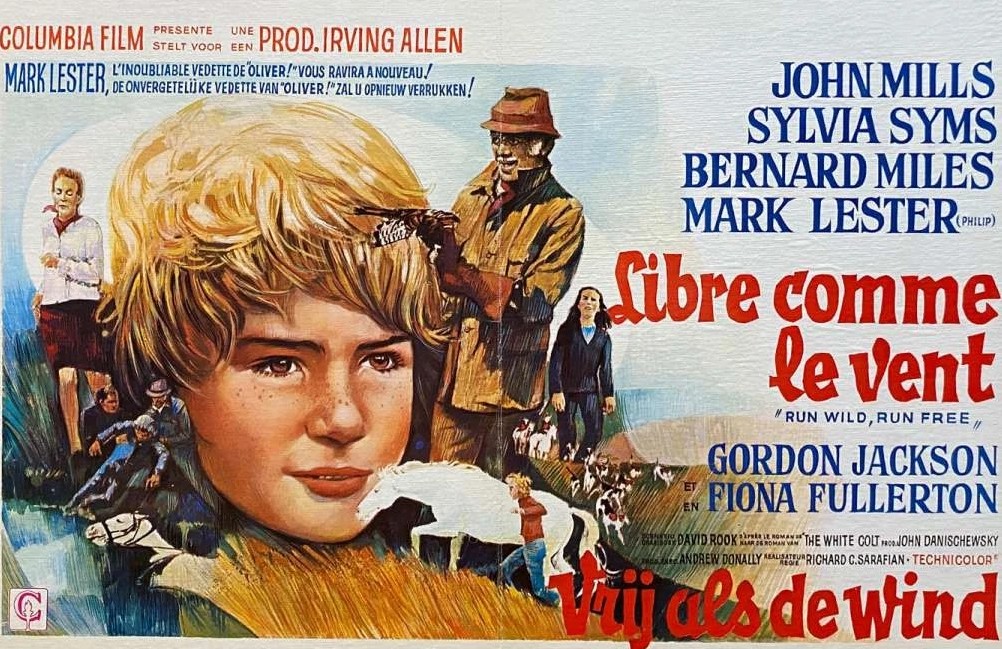
If you’re searching for the kind of twist that’s so common these days, look no further than the location. Those wild moors look fantastic in the sunshine, especially for compositions that outline characters against the sky, but they’re treacherous too, when the fog comes down and you’re trapped without a signpost home, and they’re not all hard grass or spurs or rock but conceal sections of perilous swamp.

Living on the edge of the moors, small wonder Philip (Mark Lester) is attracted, even as a toddler, to the wilderness. That’s exacerbated when he’s afflicted by muteness after developing a stammer around the age of four. It’s assumed there’s a psychosomatic cause, but we’ve got no time and the parents no inclination to dwell upon that.

He develops an obsession with a wild white pony, one of a herd that runs free on the moors, and spends most of his time out trying to find it. Col Ransome (John Mills), nature lover and amateur ornithologist, befriends Philip, helping him to understand nature, and teaching him to ride – bareback – the pony. Ransome also shows him to manage a kestrel.
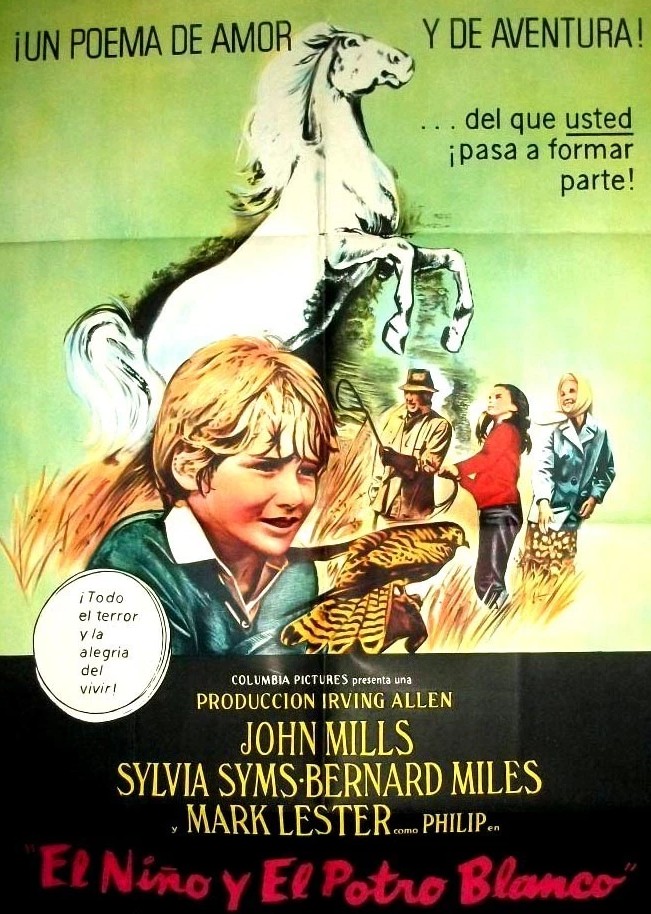
Scenes of characters working with horses or other animals are usually limited to  bit of nose stroking or whispering to calm said animal down, but here we go into a lot more intricate detail of how to win the cooperation of a horse, the kind of lore that nobody’s got much time for these days. So if you want to ride a horse bareback first off you need to just lie on top across its back and stroke its sides. And for a predator, you have to be willing to accept the occasional peck on your fingers while, again, you evoke a stroking mechanism. You might also be surprised to learn that the easiest way to mend a broken wing is by the use of glue.

While Philip and the Colonel and a young girl Diana (Fiona Fullerton) are happily communing with nature, Mr Ransome (Gordon Jackson) and wife (Sylvia Syms) are scarcely able to work out their feelings at being abandoned by their child. The mother tends to get angry, the father, in a very touching scene, is left desolate after Philip ignores a present the father believes would have brought more solidity to their relationship, and in another effective scene it’s the Colonel who explains that it doesn’t take much for a child to understand how devoted an apparently distant father can be.

Any potential soppiness is killed off when Philip in a wild fit of obsession nearly kills the kestrel and in another sequence of disregard almost kills the horse. Occasionally, Philip speaks a few words to the old man but refuses to express himself in front of the parents.  So it will come as little surprise that when the parents finally hear the son speak it’s at the quite gripping climax when all the adults have failed to rescue the white horse from a swamp.

And anyone expecting that cute kid from Oliver! (1968) would have their hopes dashed when Mark Lester displays all the natural truculence and wantonness of a child. He’s pretty good, I have to say, in being forced to confine his emotions to facial expression.

John Mills (Guns at Batasi, 1964) is excellent and Sylvia Syms (East of Sudan, 1964), shorn of glamor, and Gordon Jackson (The Ipcress File, 1965) as her emotionally inarticulate husband, both dump their screen personas in favor of highly believable characters. Fiona Fullerton makes her screen debut.

Richard C. Sarafian does a splendid job. Screenplay by David Rook based on his novel.

Emotionally true.
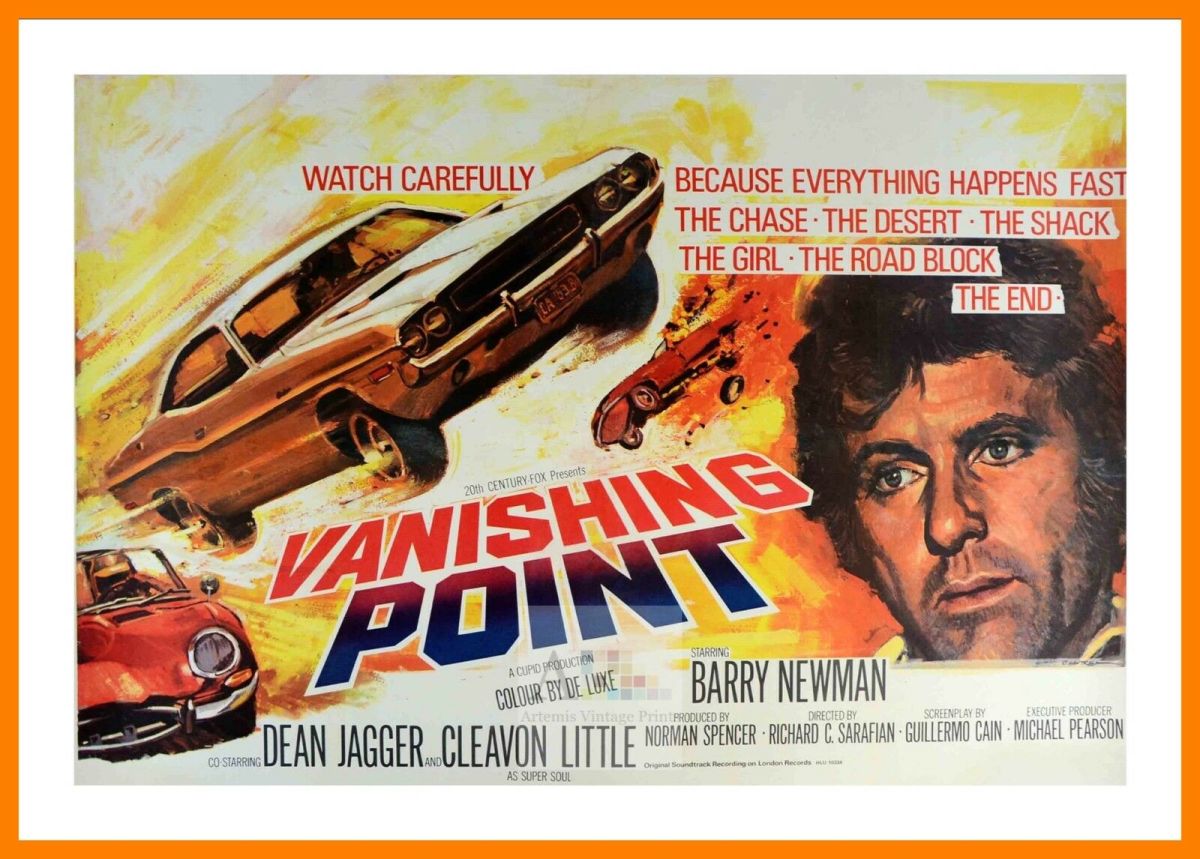
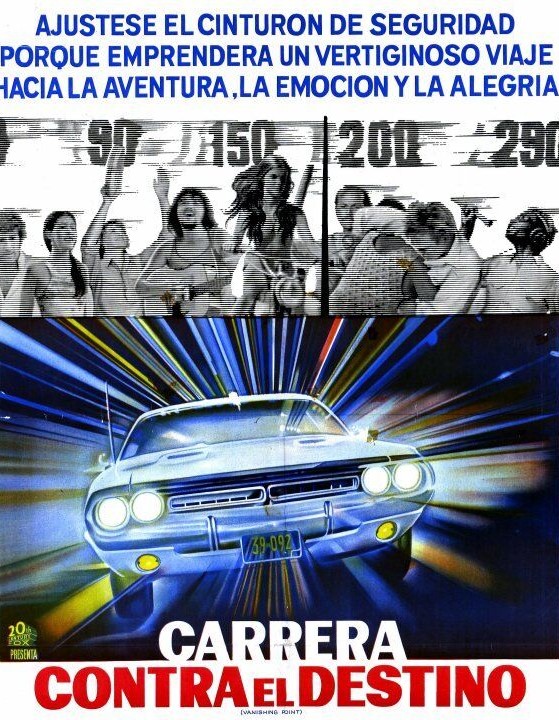
Vanishing Point (1971) *****

There always was an existential element to speed. Destination was another symbolic aspect. A “vanishing point” has an artistic meaning; relating to perspective it’s the place where parallel lines cross. But it also means something so diminished as to be unimportant, and you could argue this movie is a place where the figurative and metaphorical collide. Throw in a couldn’t-care-less driver and you have all you need for a cult film, a cross between the thoughtful paeon to speed of Easy Rider (1969), Sugarland Express (1974) and the camped-up chase characteristics of the later Smokey and the Bandit (1977).

It has less in common with the city-bound Bullitt (1968) and The French Connection (1971), whose protagonists had the excuse of being on the right side of the law. And where Easy Rider is majestically scenic, the route here is through Backwater U.S.A.

With a little bit more planning, Kowalski (Barry Newman), tasked with delivering a car from Denver, Colorado, to San Francisco, could easily have driven the 1250 miles (see Note) roughly within the 16.5-hour deadline he set himself – and very easily within the target set by his employer – without breaking the law. But he’s got no intention of easing his foot off the accelerator. Instead of pulling over, he sends the first pair of speed cops into the ditch.

And that sets the tone. Countless cops set out to stop him, countless cops are driven off the road, the authorities increasingly infuriated by constant humiliation. Kowalski is helped by blind DJ Super Soul (Cleavon Little), who has infiltrated police radio, and whoops up public support.

Director Richard C. Sarafian could have hit the existential mother lode by making Kowalski mysterious, akin to the western’s anonymous lone rider, or to a contemporary audience “the last American hero.” Or he could have dressed him up in more contemporary colors. But instead of being a long-haired drugged-up sex-mad hippie, he’s a decorated war vet, a stock car racer and a cop who exposed corruption and prevented a colleague raping a young girl. Unlike the drug peddlers of Easy Rider or the hostage-takers of Sugarland Express, he doesn’t start out as a law-breaker (setting aside his intake of Benzedrine) and the most he’ll be charged with is a misdemeanor.

Apart from a desire for the freedom of the open road untrammelled by petty rules, we don’t get much of an idea why Kowalski is so intent on risking his life, beyond a hint that an idyllic loved-up beach lifestyle had been shattered. There’s a fatalism that Ridley Scott ripped off for Thelma and Louise (1991).

The awe-inspiring driving across arid country is interrupted by episodes uncovering the underside of the American Dream and the nascent counter-culture. He is almost robbed by a couple of gay hitchhikers, encounters an old man (Dean Jagger) living off the land, trapping rattlesnakes and trading them for supplies, and a youth-oriented revivalist group who make music their mantra. He turns down free sex and marijuana offered by a beautiful nude motorcycle rider (Gilda Texter) while her boyfriend (Timothy Scott), with a stolen police siren, guides Kowalski through roadblocks.

Mostly, though, the focus is on the driving. Kowalski’s white 1970 Dodge Challenger R/T 440 Magnum, souped-up to reach 160 mph, leaves a Jaguar E-Type in the dust, and makes a mockery of the succession of wannabe cop speedsters.

He can leap over gaps, race off-road, charge through the desert, hide from pursuing helicopters, and could probably have hidden out till the heat died down except his blood is up and his eyes are starting to glaze over and he’s got a peculiar smile on his lips.  

Even on a small screen the full-throttle driving hits the spot. But it scores on many other emotional and intellectual levels. It strikes a chord with the disaffected. It’s the ultimate in defiance of authority, innate skills belittling superior forces. The fastest man will always have an audience rooting for him. If you can’t win, choosing how this will end means you remain in control. Speed puts a man in the zone, where you are reduced to an essence of being.

On paper, this should hardly work at all. In the hands of director Richard C. Safarian (Fragment of Fear, 1970) it works like a dream. Barry Newman (The Lawyer, 1970) is superb with very little to go on, nothing but a buttoned-up driving machine. Cleavon Little (Blazing Saddles, 1974) on the other hand goes nuclear as the hippest of the hip disc jockeys. Oscar-winning Dean Jagger (Firecreek, 1968) makes his mark and you might like to know Gilda Texter went on to become a successful costume designer. Depending on what version (not the one I caught) you see, you’ll get a glimpse of Charlotte Rampling (Three,1969).

Stone cold classic. Gets the adrenaline going, but leaves you thoughtful.

The DVD is worth buying just for Sarafian’s commentary.

NOTE: That’s according to Google. Though estimates vary. One reference puts it at 15 hours of non-stop driving, another between 19 and 22 hours. Without breaking the speed limit of 70mph and allowing for not hitting any big cities necessitating curbing your speed, I reckoned he would only cover 1150 miles within his deadline but there are clearly plenty stretches of remote road where you would be able to crank up your speed without any bother. It’s noticeable that Kowalski sets off during the night but we never see him doing any night-time driving, he only attracts the attention of the cops during the day.

Discover WordPress

A daily selection of the best content published on WordPress, collected for you by humans who love to read.

The Atavist Magazine

by Brian Hannan

WordPress.com News

The latest news on WordPress.com and the WordPress community.