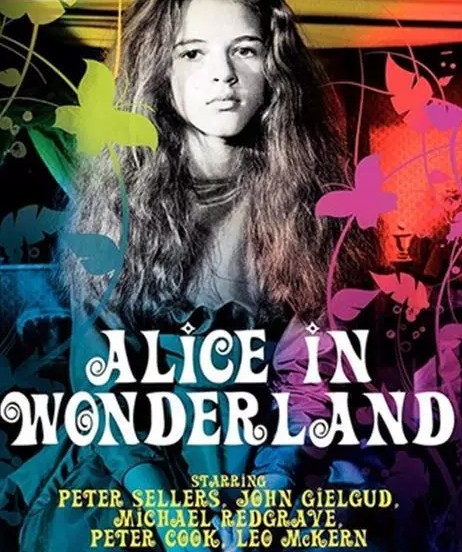
Alice in Wonderland (1966) **

Young bucks wanting to make a bigger splash are apt to rampage through sacred texts and treat unwary audiences to avant-garde notions. Thus, Jonathan Miller (Take a Girl Like You, 1970), in his debut, set aside all expectations and in fairness purists had decried Walt Disney’s 1951 telling of the Lewis Carroll classic. In truth audiences weren’t so in love with the Disney version either, an unusually low hitter for the company, and one that only really found its niche when reissued to catch a whiff of the stoned hippies who had drooled over 2001: A Space Odyssey (1968).

This 1966 reimagining might have been buried in the vaults after its initial showing except that Jonathan Miller went on to become something of a British institution, renowned directed of opera and stage plays, writer and presenter of a number of highly-regarded television projects and a regular on the talk show circuit. That his career had begun in sensational fashion, one of the hands on the tiller of the satirical Beyond the Fringe stage show (a hit in the West End and Broadway) and television program, meant that when he decided to spread his wings into the movies, no expense was spared.
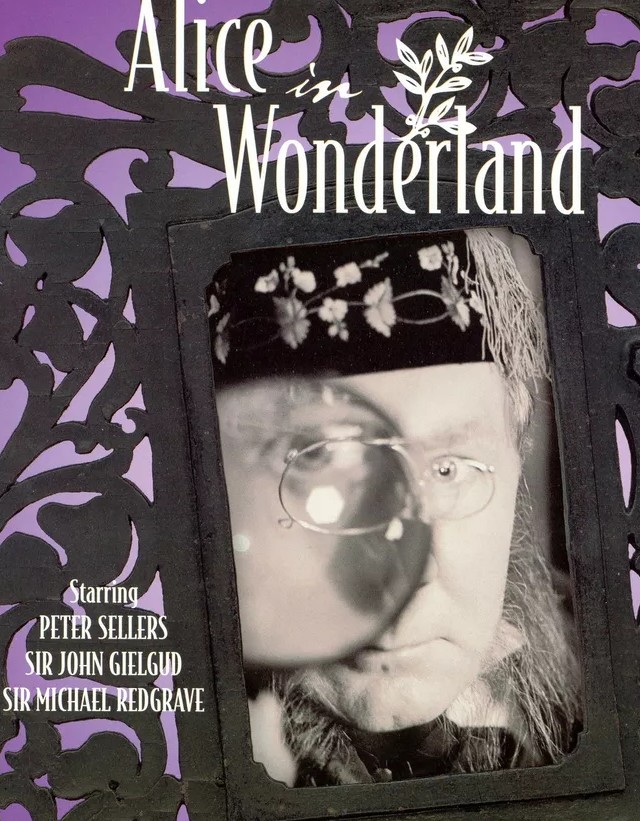
Big stars flocked. What other neophyte could attract stars of the caliber of Peter Sellers (The Pink Panther, 1964), John Gielgud (Khartoum, 1966), Michael Redgrave (Goodbye, Mr. Chips, 1969), Leo McKern (Bunny Lake Is Missing, 1965), Peter Cook (The Wrong Box, 1966) and playwright Alan Bennett (The Madness of King George, 1994)? All admittedly in small parts but that was the nature of the all-star enterprise.

And that would have been fine if they had all been employed to supply the voices. Or if audiences had the fun of trying to determine who was who when hidden under the ton of make-up required to turn them into White Rabbits or Mock Turtles or Caterpillars or Lobsters cutting a quadrille.

But Miller had determined that not only was the Disney version short of the mark but for too long readers had missed the entire point of the Lewis Carroll book. He decided the point of the story wasn’t humor at all, nor a succinct exploration of the pitfalls of language, but about a young girl adrift in a adult world of confusion. So that was bye-bye to the cuteness.

He even broke a cardinal role. Alice doesn’t fall down a rabbit hole. The whole thing is a dream.
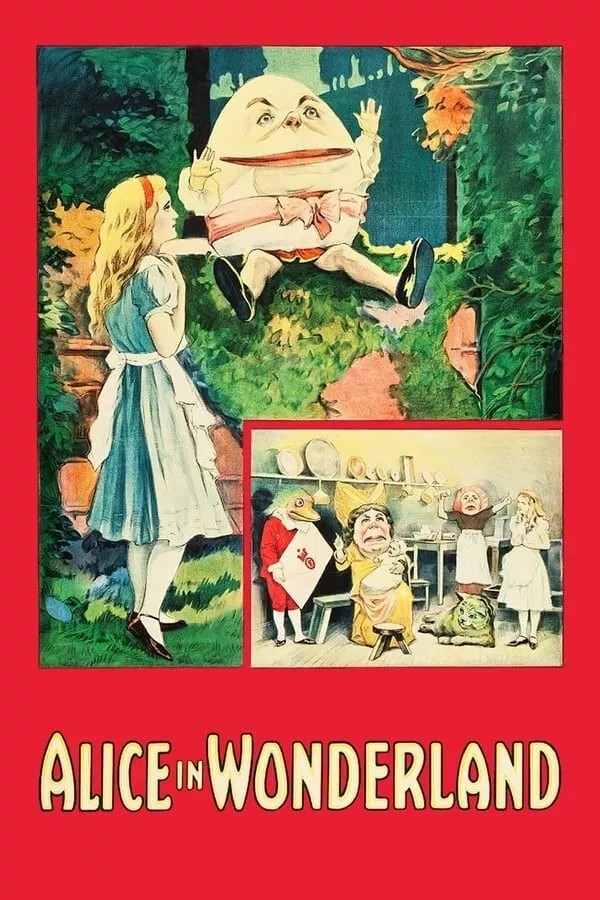
They’ve been adapting the book since the early days of cinema. This poster dates from 1915.

So you need to listen carefully to find out, with the lack of make-up, which actor is playing which fantasy character. And this isn’t set in any fantasy world either, certainly far removed from the famous illustrations that accompanied the book. It takes place in Victorian times which, yes, reflects the era in which the book was written, but, no, seems an extremely odd decision to give what is still fantasy some kind of realism.

It’s as if the director didn’t really have the courage of his convictions. That said, if he was catering to the arthouse mob, it’s got that kind of cinematic sensibility, with voice-over and unusual compositions.

Just to help you out, let me tell you that Peter Sellers plays the King of Hearts, John Gielgud the Mock Turtle, Michael Redgrave the Caterpillar, Alan Bennett the Mouse, Finlay Currie the Dodo, Leo McKern the Duchess and Peter Cook the Mad Hatter. The part of Alice went to 13-year-old Anne-Marie Mallik who never made another movie.

While it retains enough of the original to be recognizably based on the book – with all the catchphrases, “off with their heads” etc – the locale is just totally at odds with the story. And while it’s a tonic to hear the mellifluous tones of John Gielgud uttering the author’s immortal words, it would have been better just to hear his voice.

My guess is this is only still available because Miller made such a name for himself. You can catch it on Talking Pictures.

Curiosity or mess, it’s hard to decide.

https://www.facebook.com/TalkingPicturesTV/videos/easter-on-tptv/654499693946106

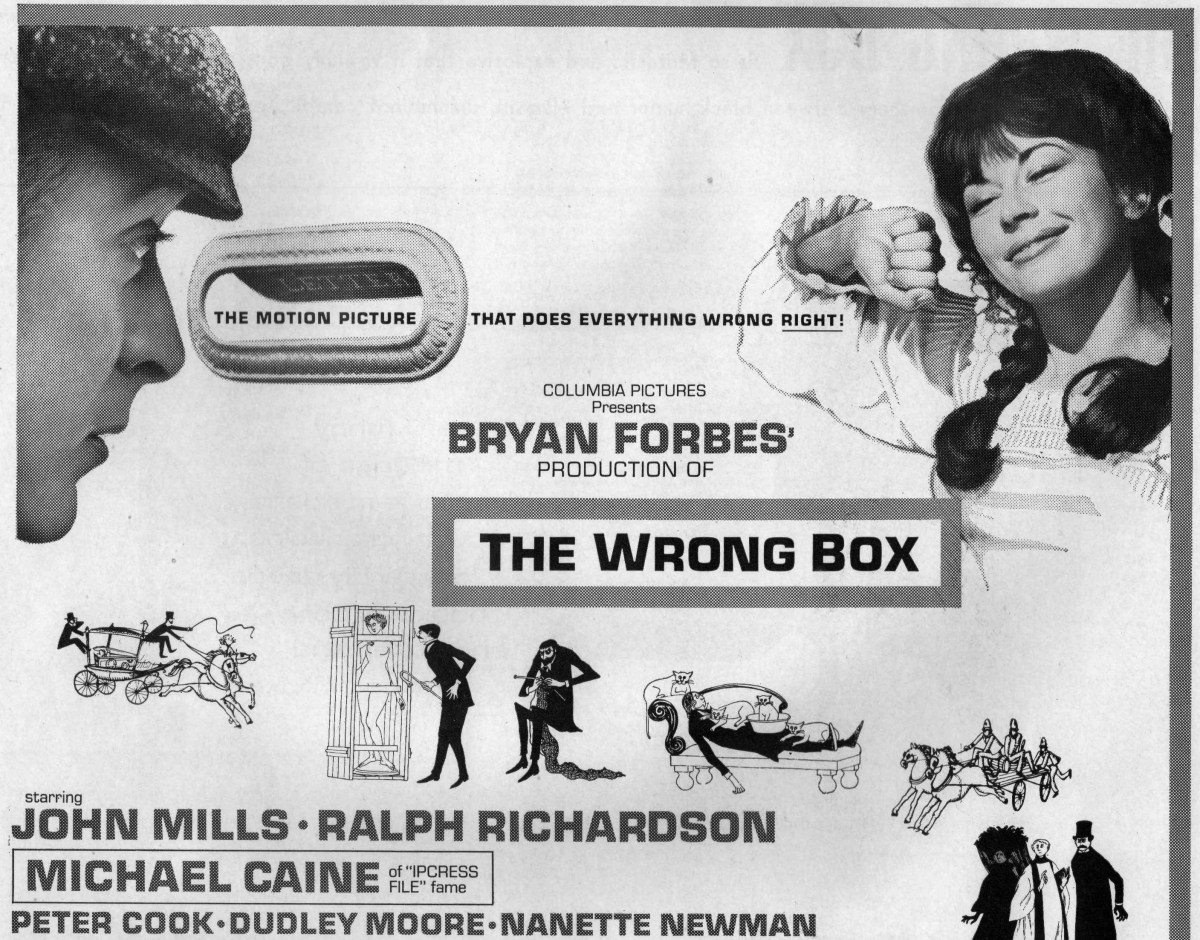
The Wrong Box (1966) ***

Somewhere between SBIG (So Bad It’s Good) and WAL (Worth a Look), The Wrong Box is a black comedy in the wrong directorial hands. Better known for thriller Seance on a Wet Afternoon (1964) and POW drama King Rat (1965) Bryan Forbes struggles to bring enough comedy into the proceedings or to wring sufficient laughs out of what he has.

Neither the wit nor the slapstick is sharp enough. But it does exhibit a certain charm. Essentially an inheritance story, it pivots on the notion that the two potential inheritors are on their last legs and putting one, Joseph Finsbury (Ralph Richardson), out of action will benefit dastardly nephews Morris Finsbury (Peter Cook) and John Finsbury (Dudley Moore) of the sole survivor Masterman Finsbury (John Mills).

It turns out Joseph Finsbury is not dead. That does not cue as much hilarity as it should., as the nephews plot to send him to his grave. Given the idea was dreamed by none other than Robert Louis Stevenson of Dr Jekyll and Mr Hyde fame, you can imagine it was written less with comedy in mind.

With so much dependent on set-pieces, it’s rather a hit-and-miss affair, with the conspirators’ failures not matching the humor of watching potential victims escape their proposed doom. Only occasionally does it sparkle.

Surprisingly, the film relies on affecting performances from the shy, retiring Michael Finsbury (Michael Caine), a gentle soul, who enjoys a very innocent romance with Julia Finsbury (Nanette Newman), a young woman terrified of being murdered, which condition provides ample opportunity for her to be rescued/consoled. who enjoy a very innocent romance.

Ralph Richardson steals the movie as a dotty pedant, weighted down with erudition and a knack, equally, for boring the pants off anyone within earshot and for escaping from the jaws of death including a massive train pile-up and several murderous attempts.

Michael Caine, in a follow-up to The Ipcress File (1965) and Alfie (1966) convincingly plays against type. John Mills (The Family Way, 1966) also plays against type as a villain rather than Hitherto, I had been rather sniffy about Nanette Newman (Deadfall, 1968),wife of the director, but here she is delightful.

Peter Cook (A Dandy in Aspic, 19680 and Dudley Moore, in his movie debut, let the show down by being so obviously the personalities from their comedy series Not Only…But Also (1964-1970), a partnership that works so well on television just frittered away here from what looks like characterization with nowhere else to go. But there is a nice cameo from Peter Sellers (The Millionairess, 1960) as an inebriated doctor.

Hard to say whether the blame lies with Larry Gelbart (The Thrill of It All, 1963) for his screenplay or Bryan Forbes for his direction.

Michael Caine got it spot-on when pointing out in his autobiography that it was a “gentle success in most places except Britain” precisely because to foreigners it represented an acceptably stereotypical view of a country full of eccentrics while to Brits it was all too stereotypical. So if you’re from America or other points global you might like it and if you are British you might not. On the other hand, the score by John Barry is one of his best with a wonderful theme tune.

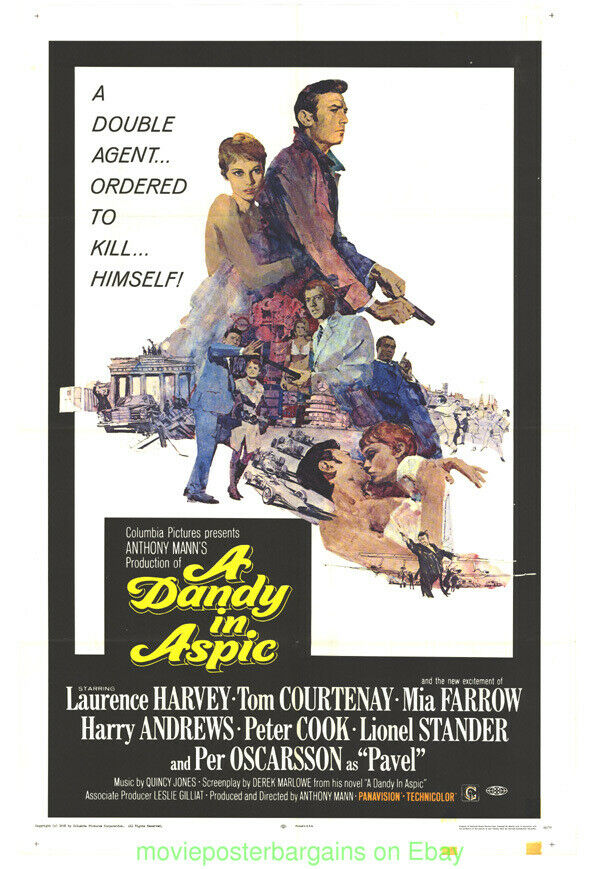
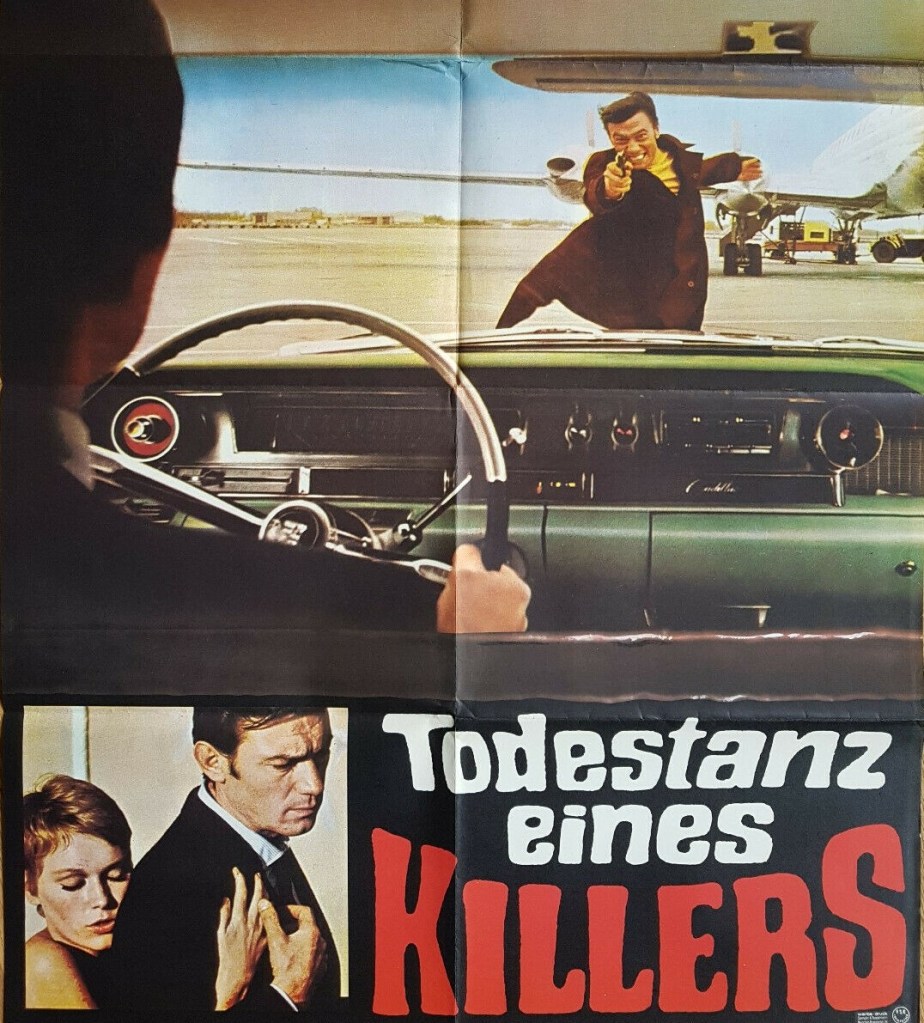
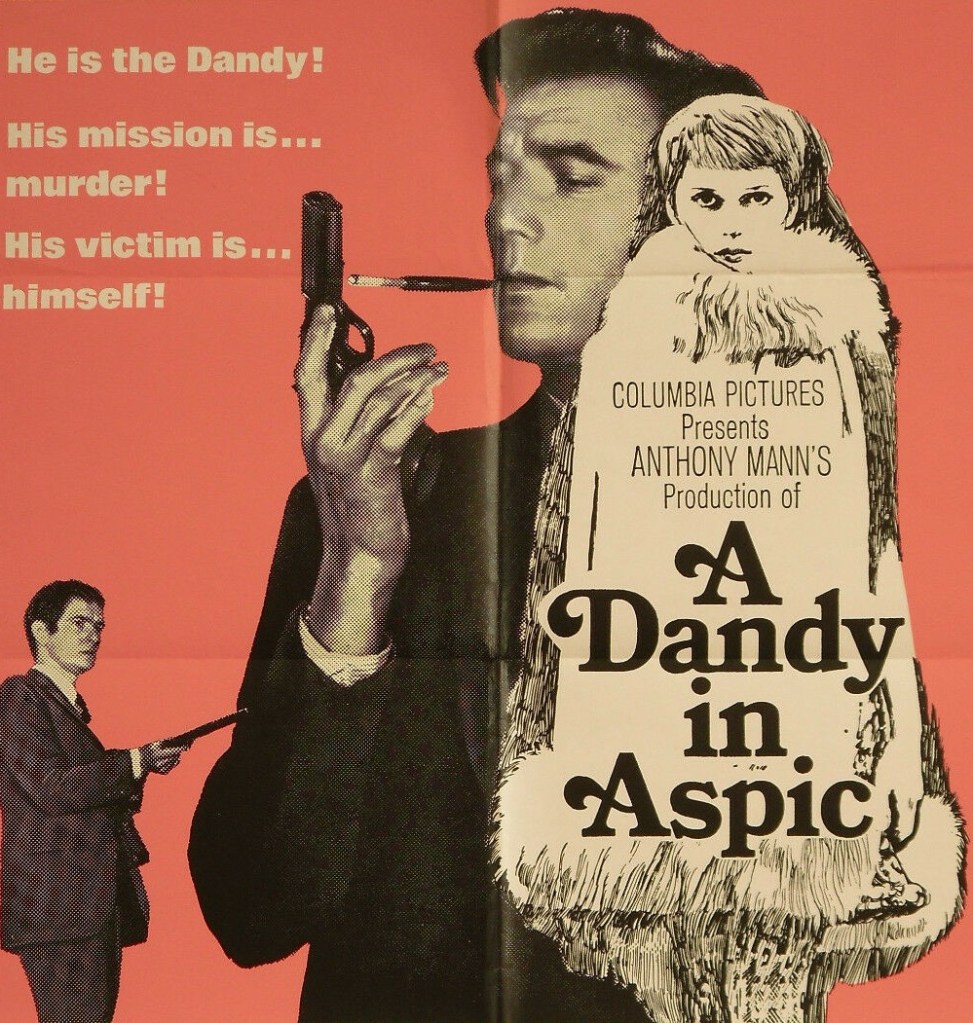
A Dandy In Aspic (1968) ***

Belongs to the “serious spy” genre that exposed the nitty-gritty espionage business, often more concerned with the impact of the job on the spy than on the mission on which they have been sent. The biggest successes came early on – The Spy Who Came in from The Cold (1965), The Ipcress File (1965) and The Quiller Memorandum (1966). A Dandy in Aspic is one of the latest in the series of sad spies and like The Defector (1966) it’s more of a character study than an action picture. The tone is set with the credits, a puppet dangling to the point of being tormented, on a string.

The character in question is Eberlin (Laurence Harvey), a spy who wants to quit and go home. He knows only too well what happens to the burnt-out case, one of his colleagues is a drug addict. Only in this case home is Russia. But the feedback he receives is that nobody back home wants him to quit. His British bosses send him to go to Berlin to assassinate a dangerous Russian spy called Krasnevin. The only problem is, Eberlin is Krasnevin and so begins a game of bluff and double bluff while he fails to uncover the supposed foreign assassin his ruthless British unwanted colleague Gatiss (Tom Courtenay) is helping him locate.

Thrown into the mix is a girl, Caroline (Mia Farrow) a casual pick-up, a photographer he met in London who turned up in Berlin. Happenstance? Perhaps. But there is no such thing for a suspicious spy and to tell the truth even the moviegoer will treat her as just too good to be true even though she is a delightful personality and beautiful to boot. The fact that Eberlin has a girlfriend Miss Vogler (Barbara Murray) doesn’t seem to bother him, spies, as you will know by now, discarding women like old shoes.

If a noose is closing in, it’s a strange one, and feels more like it’s coming from the East rather than the West. He is blocked from taking a trip to East Berlin. Cops are tipped off when he makes contact with someone who could get him over/through the Wall. His Eastern masters seem willing to pay good money to find out the identity of Krasnevin.

It’s all twisted and complex and all sorts of strange characters come out of the woodwork. For no reason at all one sequence is set at a Grand Prix race, one of the drivers paid to cause a distraction to allow someone to be shot. Like The Defector, this is a movie that unravels backwards. Once you get to the end it makes a lot more sense. If you were asked to choose, on the basis of the characters presented, whether the Russians or British had more principles you would be hard put to decide.

Laurence Harvey (The Running Man, 1963) is one of the few actors with the vicious fragility to carry this off. He is coming apart at the seams. He can hold onto his good looks far longer than his mental stability. His rare acts of violence seem petulance. And since we are never allowed inside his head, since he cannot confess his feelings to Caroline, he cannot explain what it’s like to be abandoned by your native country, cast aside like an old lover. It’s left to the audience to work this out for themselves, that a true patriot risking his life for his country is refused sanctuary.

He’s doomed and soon he knows it, nowhere left to run, the sense that the trap is closing and perhaps the few hours spent with Caroline are like a condemned man’s final wishes.

Filmed in bleak London and Berlin, the setting reflects the character’s mindset. There’s a bit too much fancy cinematography and sound effects, but otherwise it’s solid entry into the “more real than reality” subgenre. Director Anthony Mann (The Heroes of Telemark, 1965) died during the making of the film, Laurence Harvey taking the helm for the last two weeks of shooting and post-production so it’s possible this is not quite the film Mann had in mind.

You can see here elements of the documentary style Mann developed in The Heroes of Telemark and it’s possible that when it came to the editing director Harvey accorded himself more prominence than Mann might have, leaving a complex tale more difficult to follow than necessary.

Harvey is very good in the role of the ruthless narcissist, Mia Farrow – she followed this with Rosemary’s Baby (1968) – with a creditable English accent is excellent as the lover though Tom Courtenay (Operation Crossbow, 1965) seems miscast. Excellent support is provided by Lionel Stander (Once Upon a Time in the West, 1968), Harry Andrews (Danger Route, 1967) and Per Oscarsson (Who Saw Him Die?. 1968). Look out for comedian Peter Cook (Bedazzled, 1967) as an unlikely lothario, Barbara Murray (television series The Power Game, 1965-1969) and Calvin Lockhart (Dark of the Sun, 1968).

The Wrong Box (1966)***

Somewhere between SBIG (So Bad It’s Good) and WAL (Worth a Look), The Wrong Box is a black comedy in the wrong directorial hands.

Better known for thriller Seance on a Wet Afternoon (1964) and POW drama King Rat (1965) Bryan Forbes struggles to bring enough comedy into the proceedings or to wring sufficient laughs out of what he has. Neither the wit nor the slapstick is sharp enough. But it does exhibit a certain charm.

Essentially an inheritance story, it pivots on the notion that the two potential inheritors are on their last legs and putting one (Ralph Richardson) out of action will benefit the dastardly nephews (Peter Cook and Dudley Moore) of the sole survivor (John Mills). It turns out Richardson is not dead. That does not cue as much hilarity as it should.

Surprisingly, the film relies on affecting performances from Michael Caine, playing against type as a gentle soul, and Nanette Newman as a young woman terrified of being murdered, who enjoy a very innocent romance. Hitherto, I had been rather sniffy about Ms Newman, but here she is delightful. Ralph Richardson steals the movie as a dotty pedant, weighted down with erudition and a knack, equally, for boring the pants off anyone within earshot and for escaping from the jaws of death including a massive train pile-up and several murderous attempts by Mills.

Cook and Moore let the show down by being so obviously just themselves but there is a nice cameo from Peter Sellers as an inebriated doctor.

Michael Caine got it spot-on when pointing out in his autobiography that it was a “gentle success in most places except Britain” precisely because to foreigners it represented an acceptably stereotypical view of a country full of eccentrics while to Brits it was all too stereotypical. So if you’re from America or other points global you might like it and if you are British you might not. On the other hand, the score by John Barry is one of his best with a wonderful theme tune.

POSTCRIPT. Just to back up Caine’s assertion, I pulled out the Pressbook from my stack and it goes heavy on critical praise. Newsweek said: “As funny and sunny a movie as any audience could ask for.” From the New York Times came: “so fantastic and explosive it virtually pops right out of the screen! A crazy, merry tale that tumbles somewhere between black humor and elegant, uninhibited camp.” The New York Post thought it was “a beautifully designed elaborate spoof,” while as far as the New York Daily Post was concerned it was “a laugh a minute.”

Discover WordPress

A daily selection of the best content published on WordPress, collected for you by humans who love to read.

The Atavist Magazine

by Brian Hannan

WordPress.com News

The latest news on WordPress.com and the WordPress community.