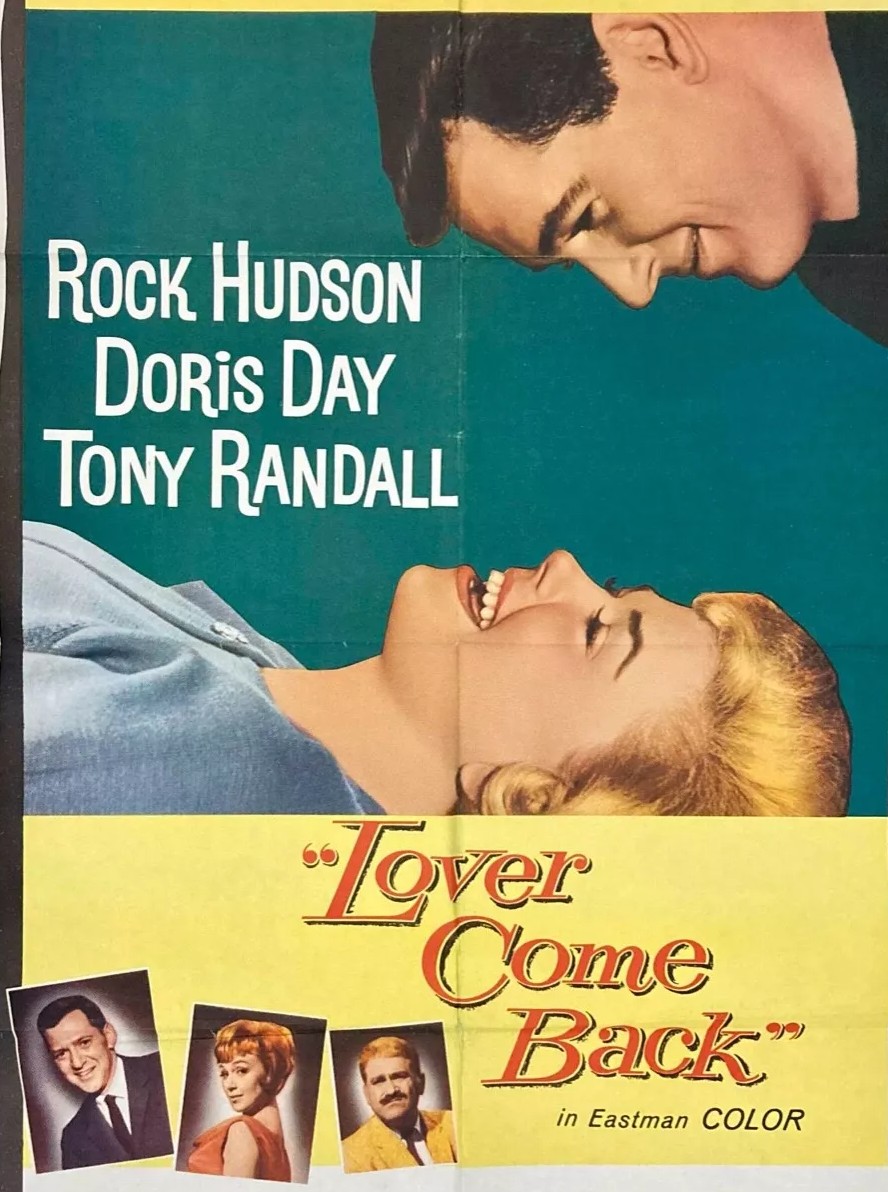
Lover Come Back (1961) ***

In an ideal world there’d be someone you could complain to if an advertiser stepped out of line. In an ideal world, the agency that won a pitch would be the one that had put in the hard yards researching the marketplace and coming up with the most creative idea rather than the one who took the easy way out by simply wining and dining the client and laying on a bevy of women.

As you might imagine on Madison Ave it will be the prim intense Carol (Doris Day) who will play by the rules and stay up all night honing her pitch. And it would be louche smarmy executive Jerry (Rock Hudson) who puts in the hours but only as far as schmoozing the client and appealing to his primitive nature. Given this is a fiction, I’m assuming the idea of a code of ethics by which advertisers can be brought to book is a figment of the writer’s imagination.
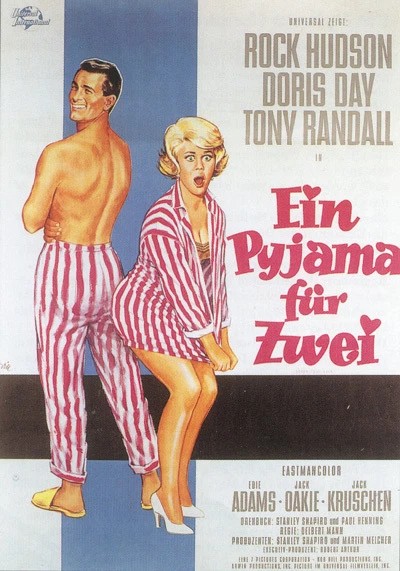
No worries, whether fictional or not, Carol still loses out, Jerry more than capable of winning over the members of the ethics panel by seducing them with seductive chorus girl Rebel (Edie Adams) whom he has promised to turn into a star by featuring her as the model for a new product called VIP.

The only problem is, once Rebel’s usefulness is over, and once the ethics team is satisfied, Jerry has no intention of making such an unlikely candidate for stardom a star. Which is just as well because VIP doesn’t exist. He invented it solely to shoot enough of a commercial to convince Rebel he would honor his part of the deal.

Carol sees through the scam and hauls him up before the ethics board once again. However, Jerry has the sense to bring with him an actual product, a seemingly innocuous candy except it turns out to be highly intoxicating.

Screenwriters had long realized that a drunken Doris Day (The Ballad of Josie, 1967) is a banker and that she’ll use it to hit a comedic home run. And that’s the way it plays out with the complication that the pair have a one-night stand and a subsequent speedy marriage which leads to exactly the kinds of complications you’d expect from a Rock Hudson-Doris Day comedy and with a not unexpected twist at the tail end of the tale.
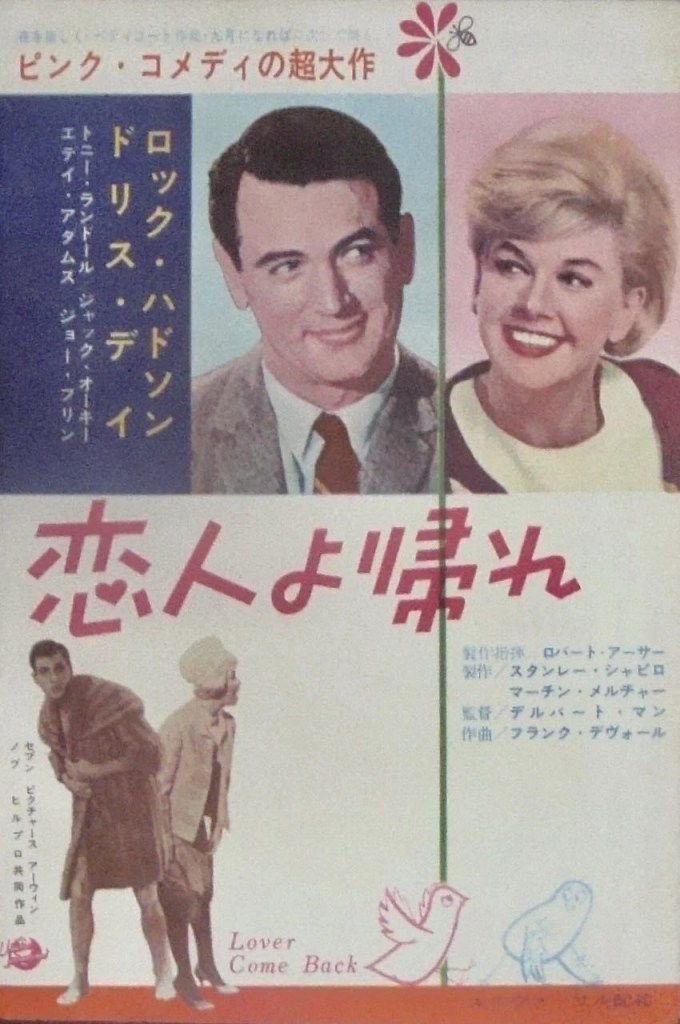
The only problem here is that we spend so much time satirizing the advertising industry, which, let’s face it, is easy meat, that it takes too long to get to the comedic hard yards the pair eventually put in. Doris Day makes a very persuasive top dog, and with that pinched-up intensity you could easily see her playing such a role in a drama and be very convincing. Generally, when she’s adopting her in-charge mode, there’s plenty inanimate objects to get in the way and create the pratfalls and physical comedy at which she excels. But when she’s just being undone by someone else’s cleverness, she might win sympathy but that doesn’t translate into big laffs.

So it only really gets going when the pair get into a romantic tangle, helped along, as I said by Day’s trademark inebriation. Rock Hudson (Seconds, 1966)  is at his best when he’s constantly being taken down a peg or two by a clever woman or is himself ambushed by inanimate objects, so he’s somewhat out of his comfort zone in, here, always sitting in the winner’s circle.

There are certainly some high points but for too long it just drifts along, and much of the sharpness of the satire has been superseded by the more ruthless antics exposed on Mad Men (2007-2015), so it’s lost some of the bite which may have made up for the lack of comedy in the earlier sections.

But there’s no diminishing the screen charisma of the Hudson-Day partnership. It brought out the best in both actors. Tony Randall (Bang! Bang! You’re Dead! / Our Man in Marrakesh, 1966) puts in an interesting shift as Jerry’s boss who is bullied by his underling. Edie Adams (The Honey Pot, 1967) adds scheming to sultriness.

Directed by Delbert Mann (Buddwing, Mister Buddwing, 1966) from a screenplay by Stanley Shapiro (A Very Special Favor, 1965) and Paul Henning (Bedtime Story, 1964).

Good wholesome fluff.

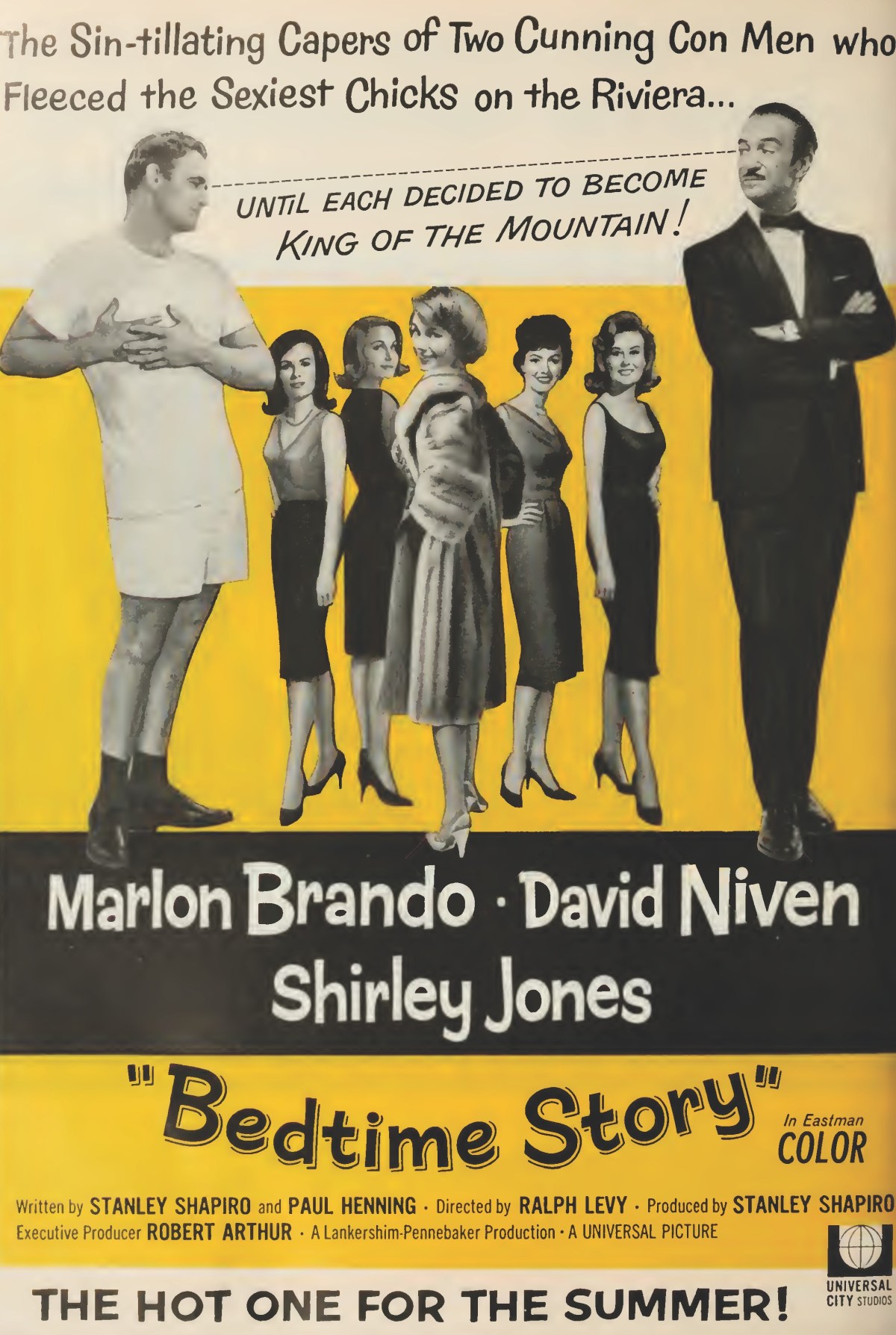
Bedtime Story (1964) ***

Con men at opposite ends of the grifter divide face off in a duel over territoriality in the French Riviera. Freddy Benson (Marlon Brando) is a low-level scam artist who is happy to scrounge a meal or talk his way into an innocent damsel’s bed. Lawrence Jameson (David Niven) is his polar opposite, posing as an impoverished aristocrat to relieve gullible women of their wealth, seduction an added extra.

Initially, Jameson gets the better of their encounters until Benson realizes just what a killing the Englishman is making. Initially, too, Benson is happy to pair up with Jameson, although that involves demeaning himself as a supposed mad brother kept in a dungeon, until the Englishman dupes him out of his share. Eventually, they agree a winner-take-all battle – whoever can swindle heiress Janet Walker (Shirley Jones) out of $25,000 shall inherit the shyster kingdom.

Benson takes the sympathy route to the woman’s heart, turning up in a wheelchair, while James adopts a psychological approach, persuading Ms Walker that Benson’s illness is psychosomatic for which he has the cure for the small consideration of $25,000. And then it’s one devious twist after another as the pair attempt to out-maneuver, out-think and generally embarrass the other. Both have a despicable attitude towards women, whom they view as dupes, but it is woman who proves their undoing.

Most comedies rely on familiar tropes and you can usually see the twists coming, but this is in a different imaginative league and once the pair are in their stride I defy you to work out what they will come up with next. It is full of clever quips and small dashes of slapstick and because neither actor chases the laughs but plays their roles straight it is a very effective and entertaining morsel.

Director Ralph Levy in his movie debut knows more than where to just point a camera since he had decades of experience extracting laughs in television with top comedians like Jack Benny and Bob Newhart. Brando (The Chase, 1966) free of the shackles of the angst he normally incorporates into his dramatic performances, looks as if he is having a ball and while teetering occasionally on the edge of mugging never quite overplays his hand.

David Niven (Prudence and the Pill, 1968) was born with a stiff upper lip in his mouth and while this kind of aristocratic character is a doddle for an actor of his stature the portrayal here is much more like the sharpest tool in the box. While oozing charm, Niven exhibits deadly spite.

Screenwriters Stanley Shapiro and Paul Henning had previously collaborated on Lover Come Back (1961) and Shapiro particularly made his bones on the Doris Day-Cary Grant-Rock Hudson axis so it is interesting to see him shift away from the romantic comedy cocoon into something that is a good deal sharper.

Enjoyable and original with excellent performances from the two principles and great support from Shirley Jones (The Music Man, 1962) as the mark and Egyptian Aram Stephan (55 Days at Peking, 1963) as an only too congenial French policeman.

Good fun, stars in top form.

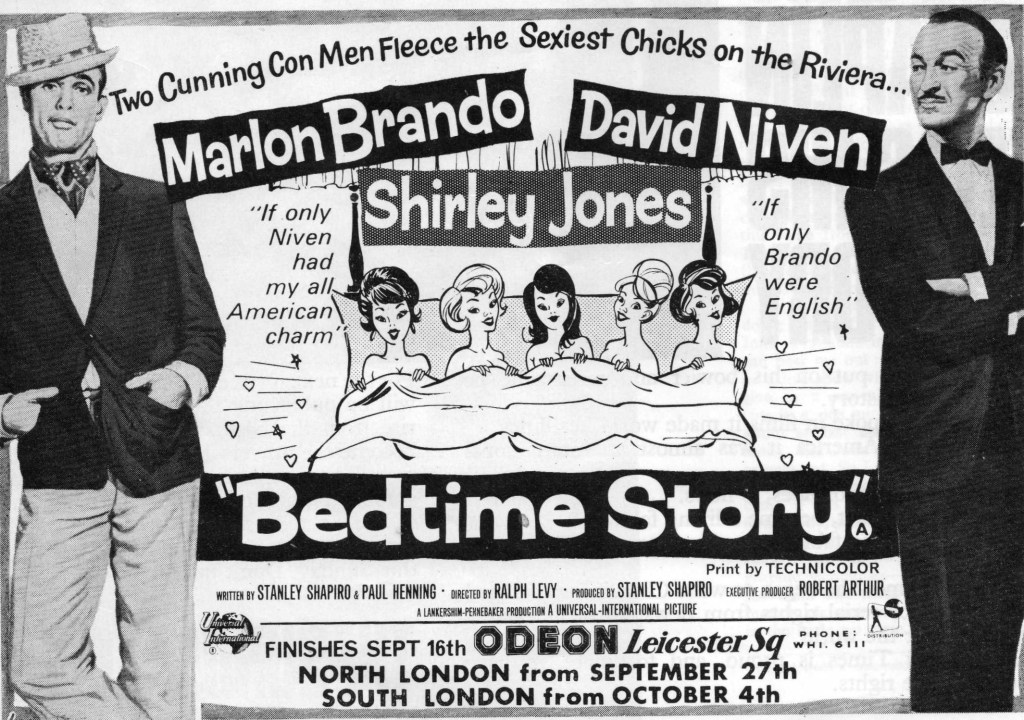
Bedtime Story (1964) ***

Con men at opposite ends of the grifter divide face off in a duel over territoriality in the French Riviera. Freddy Benson (Marlon Brando) is a low-level scam artist who is happy to scrounge a meal or talk his way into an innocent damsel’s bed. Lawrence Jameson (David Niven) is his polar opposite, posing as an impoverished aristocrat to relieve gullible women of their wealth, seduction an added extra.

Initially, Jameson gets the better of their encounters until Benson realizes just what a killing the Englishman is making. Initially, too, Benson is happy to pair up with Jameson, although that involves demeaning himself as a supposed mad brother kept in a dungeon, until the Englishman dupes him out of his share. Eventually, they agree a winner-take-all battle. Whoever can swindle heiress Janet Walker (Shirley Jones) out of $25,000 shall inherit the shyster kingdom.

An example of the older style of British movie distribution. The prints started off in one section of London the first week and switched to another sector the following week. Even if the film was a big hit, it could not be retained since the prints were already promised elsewhere. Only after it had played London, would general release follow in the provinces. There was no point watching West End release dates for an idea of when a new movie would play in your local city, it would not be anywhere near you until it had completed the North and South London runs.

Benson takes the sympathy route to the woman’s heart, turning up in a wheelchair, while James adopts a psychological approach, persuading Ms Walker that Benson’s illness is psychosomatic for which he has the cure for the small consideration of $25,000. And then it’s one devious twist after another as the pair attempt to out-maneuver, out-think and generally embarrass the other. Both have a despicable attitude towards women, whom they view as dupes, but it is a woman who proves their undoing.

Most comedies rely on familiar tropes and you can usually see the twists coming, but this is in a different imaginative league and once the pair are in their stride I defy you to work out what they will come up with next. It is full of clever quips and a small dash of slapstick and because neither actor chases the laughs but plays their roles straight proves a very effective and entertaining morsel.

Director Ralph Levy in his movie debut knows more than where to just point a camera since he had decades of experience extracting laughs in television with top comedians like Jack Benny and Bob Newhart. Brando (Mutiny on the Bounty, 1962), free of the shackles of the angst he normally incorporated into his dramatic performances, looks as if he is having a ball and while teetering occasionally on the edge of mugging never quite overplays his hand. This was a conscious effort by Brando, whose company Pennebaker was involved on the production side, to shift his screen persona.

David Niven (The Pink Panther, 1963) was born with a stiff upper lip in his mouth and while this kind of aristocratic character is a doddle for an actor of his stature the portrayal here is much more like the sharpest tool in the box. While oozing charm, Niven exhibits deadly spite. Screenwriters Stanley Shapiro and Paul Henning had previously collaborated on Lover Come Back (1961) and Shapiro particularly made his bones on the Doris Day-Cary Grant-Rock Hudson axis so it is interesting to see him shift away from the romantic comedy cocoon into something with considerably more edge.

Enjoyable and original with excellent performances from the two principals and great support from Shirley Jones (The Music Man, 1962) as the mark and Egyptian Aram Stephan (55 Days at Peking, 1963) as an only too congenial French policeman.

Originally, it was lined up with a quite a different cast – Gregory Peck, Tony Curtis and Tippi Hedren. It was remade as Dirty Rotten Scoundrels (1988) with Steve Martin and Michael Caine.

CATCH-UP: The Blog has previously featured Brando in more dramatic vein in The Chase (1966) and The Appaloosa (1966) and also the dramatic side of David Niven in The Guns of Navarone (1961), Guns of Darkness (1962) and 55 Days at Peking (1963).

Discover WordPress

A daily selection of the best content published on WordPress, collected for you by humans who love to read.

The Atavist Magazine

by Brian Hannan

WordPress.com News

The latest news on WordPress.com and the WordPress community.