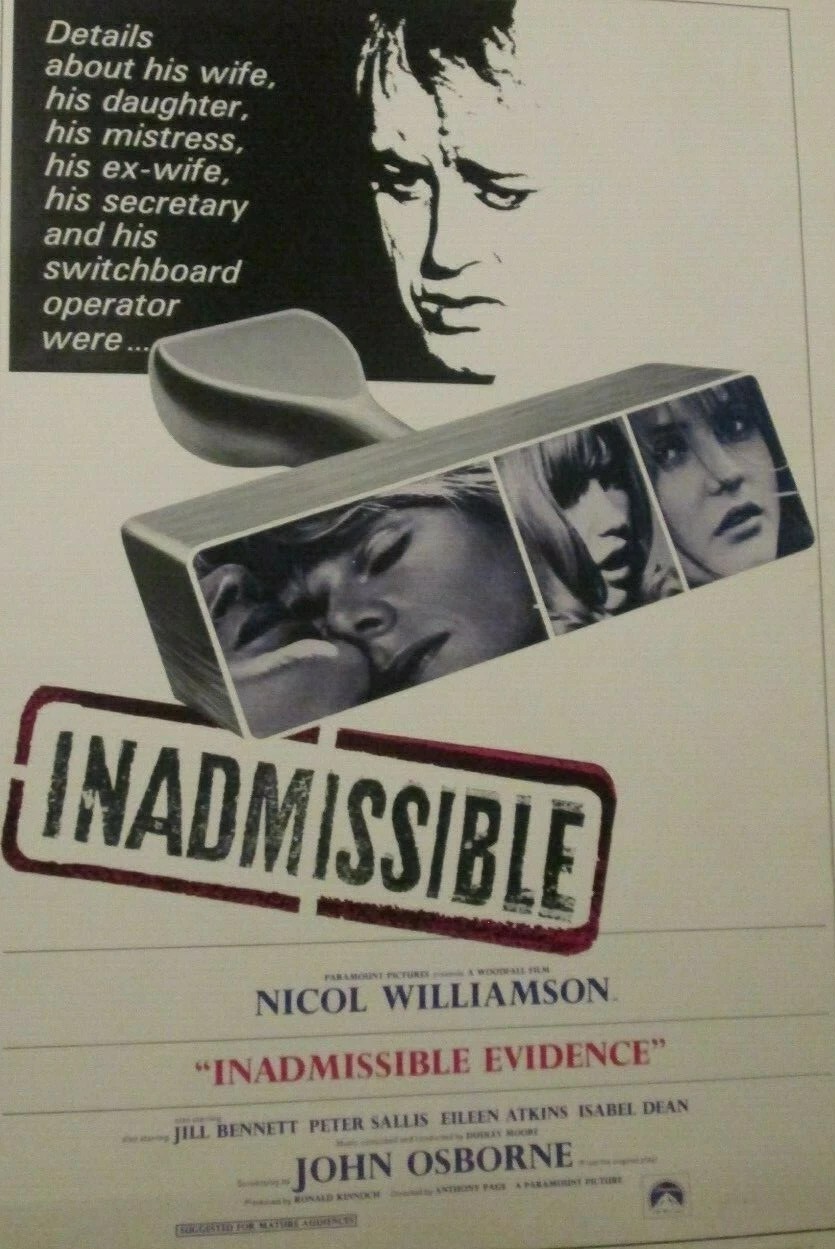
Inadmissible Evidence (1968) ***

The Angry Young Man approaching 40 is not only a lot angrier but misogynistic, rude, contemptuous, constantly berating society, and, despite his physical energy, completely lacking in the charm that made playwright John Osborne’s groundbreaking Look Back in Anger (1959) with Richard Burton such a conspicuous success.

Lawyer Bill Maitland (Nicol Williamson) exhibits neither self-awareness nor remorse as the aspects of his personality that have fueled his downfall are brought home to roost. He is abandoned by wife, two lovers and colleagues and finds that all the people he has ostracized over the years are unlikely to come to his aid in time of trouble.
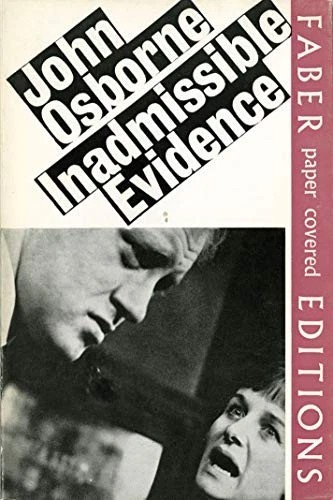
Mostly, it’s just a catalog of disaster as his personal and professional life fall apart. While never a high-flyer in the legal field he had done enough to run a reasonably successful business, delegating those tasks for which he was unfit to employees, but treating everyone with disrespect, except temporarily when he is in seduction mode.

There’s an early scene advising a client on her impending divorce where it seems as though the scenario could shift in his favor, in the sense that the audience could be more on his side, empathizing with his situation rather than hating him. Mrs Gamsey (Isabel Dean) doesn’t want to divorce her philandering husband but realizes she can’t make him happy and has no idea what might bring him contentment, a situation that clearly reflects Bill’s own, and though for a moment it looks like he might be on the verge of self-realization the moment passes and he’s back on a rant against the world.

When secretary and lover Shirley (Eileen Atkins) tells him she’s pregnant, his first instinct isn’t congratulations or commiseration, but to try and establish, by working out when they last had sex, whether he could be the father. No sooner has she quit than he’s trying it on with the newest staff member, the comely Joy (Gillian Hills). Despite sleeping with him she doesn’t stay enamored of him for long. No matter, he already has another mistress, Liz (Jill Bennett) but that relationship is on the brink.  
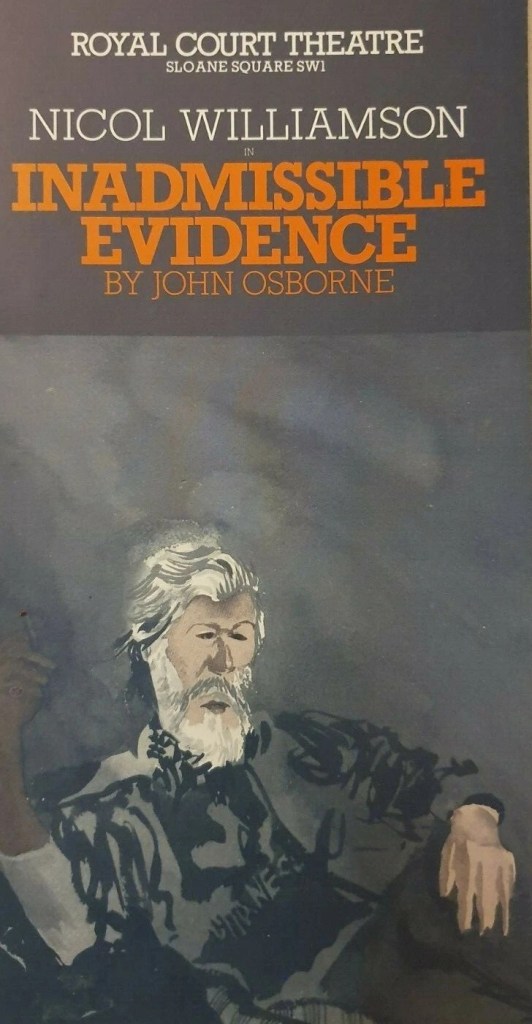
His marriage to Anna (Eleanor Fazan) is falling apart and she at least has the strength of mind to give him a good slap when at a party he insults their friends. That sends him scurrying out of the marital house. Daughter Jane (Ingrid Brett) can’t put up with his behavior either.

He is too late in realizing just how essential his clerk Hudson (Peter Sallis) is and by the time he offers the man a partnership, Hudson is already halfway out the door  having received a better offer. He’s a poor operator, leaving a client (and former lover) in the lurch while another client is reduced to tears.

Throughout this, Bill keeps up a steady stream of abuse on virtually anyone his imagination alights. But it’s that imagination that also preys on his mind as he slips into nightmare scenarios of being brought to court for trial for his personal misdemeanors, of being disqualified from the profession, of being cremated. It’s not going to end well but just how it ends is left to the audience’s imagination.

It’s only the energy of Nicol Williamson (The Reckoning, 1970) that makes this fly at all. This falls into the sub-genre of successful men, lacking in self-worth, heading for a nervous breakdown as exemplified by The Arrangement (1969). Williamson was being hailed as the successor to the mantle of Richard Burton, but his choice of films soon scuppered that notion. He was a bigger draw on stage.

Here, director Anthony Page (Absolution, 1978) does him a disservice by, in terms of framing, refusing to give him physical stature. The camera always seems to be looking down on him, squashing his features, rather than elevating him as occurred in other films. Page does the audience a disservice by choosing to film in black-and-white. Whether for budgetary or artistic purposes is unclear. Adapted by Osborne from his play.

For about 30 minutes this is terrific stuff because Williamson can command the screen like few others. But then it’s just too wearing.
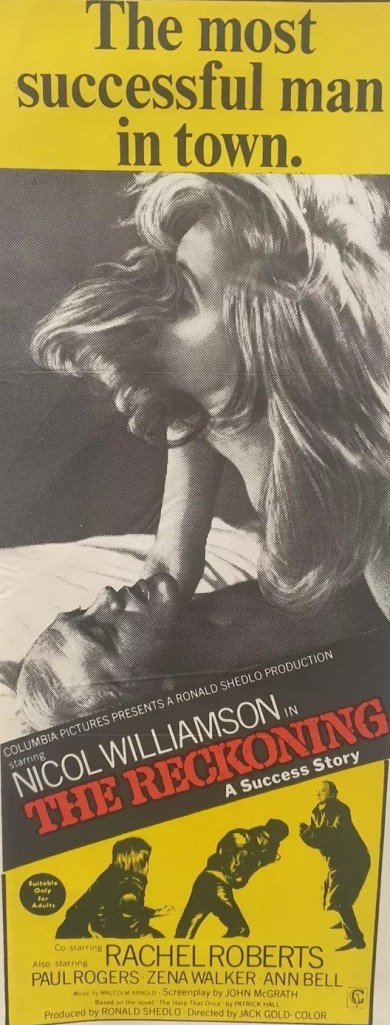
The Reckoning (1969) ****

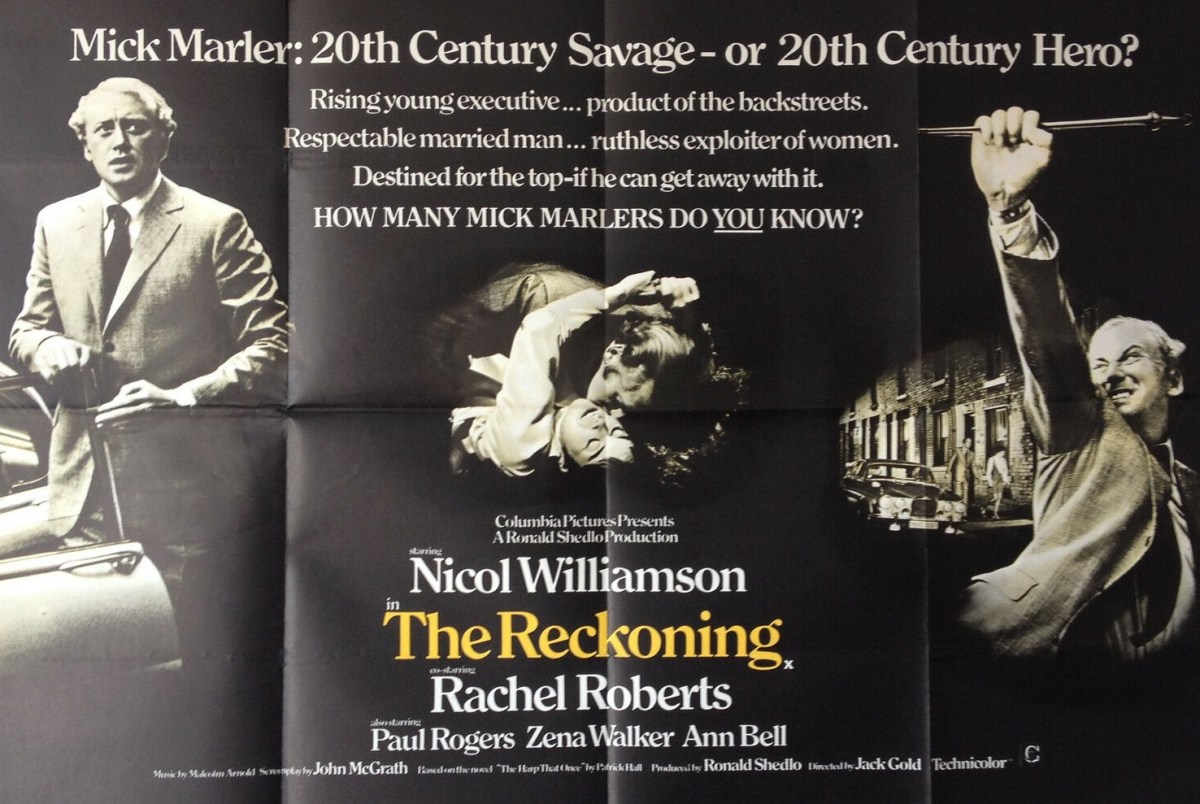
Fans of Succession will love the boardroom battles and fans of Get Carter the gritty violence. Michael Marler (Nicol Williamson) is a thug whichever way you cut it. He’s a business hard-ass, at his nicest he’s obnoxious, at this worst brutal. He drives like a demon. Even in love, he’s fueled by hate, sex with wife Rosemary (Ann Bell) infernal. And all of this made acceptable, according to the left-wing tenets that underwrite the film, because he is a working-class man battling upper-class hypocrisy, never mind that his upper-class wife was hardly foisted upon him, nor that he was forced to live in luxury.

Unexpectedly, the film also explores other themes which have contemporary significance. Computers play a pivotal role and so does honor killing. The picture’s original title – A Matter of Honor – was ironic given that in the upper-class worlds in which he moved, courtesy of his job and marriage, he is considered to have little in the way of chivalry. But in the working-class world he has escaped he must avenge his father’s death in this manner.   

The sudden death of his father sends him back to Liverpool where he discovers the old man was killed in a pub brawl. But the local doctor and police, disinterested in complicating what must be a regular occurrence, view his death as accidental. So Marler takes it upon himself to uncover the culprits and wreak revenge, any kind of revenge on any kind of culprit, regardless of the fact that from the outset it is clear they will hardly be gangsters.  While contemplating violence, he strikes up a sexual relationship with the married Joyce (Rachel Roberts).

The story jumps between the back-stabbing corporate world to a scarcely less violent working class environment. The combination of charm and brute energy holds a certain appeal for Rosemary (Ann Bell) and helps keep him in the good books of his boss. He is otherwise a bully, targeting the weak spots of anyone who stands in his way on his climb to the top, and while heading up the sales division of a company in trouble blaming everyone else for his own failings. And while scorning his wife’s upper-class friends is quite happy to enjoy the benefits of her lifestyle, the flashy car might be the result of his endeavors but not the huge posh house. Marler stitches up another associate with the assistance of another lover, secretary Hilda (Zena Walker), and his long-suffering wife finally takes umbrage at his venomous manner.

Marler hides his hypocrisy behind the façade of a left-wing class-struggle. John McGrath’s screenplay clearly intends Marler’s working-class background to provide him with a get-out-of-jail-free card as well as to launch an attack on an upper classes seen as namby-pamby except when it comes to putting the poor in their place. The anti-class polemic has somewhat eroded over time but in its place can be found an accurate portrayal of social history.  For  ordinary people, alcohol, the drug du jour, plays a massive part.  The endless terraces, houses without a single car parked outside, the vast pub which hosts wrestling matches and is a tinder spark away from erupting in a brawl, a culture where the first graspings at sex are likely to take place up a close or in a car, are in stark contrast to the high-life Marler enjoys in London.

He has no desire to go back home, hasn’t visited in five years, escaping there deemed a sign of success, and mostly returns metaphorically to draw on memories with which to scourge the upper-class and excuse his own behaviour. 

Nicol Williamson (Inadmissable Evidence, 1968) delivers a tour de force, his screen presence never so vibrant, exhibiting the same raw appeal as Caine in Get Carter. At this point in is career, with a critically-acclaimed Hamlet on stage, he was perceived as the natural successor to Laurence Olivier and Columbia held up the release of The Reckoning to allow the Tony Richardson film of the stage production, in which he starred, to pick up critical momentum. Oddly enough Rachel Roberts had not capitalized on her Oscar-nominated role in This Sporting Life (1963) and this was only her second movie in seven years. Initially coming across as brassy, she soon softens into a surprisingly wistful character. Both Ann Bell and Zena Walker bring greater dimension to their characters rather than as adoring doormats. You can catch Paul Rogers (Three Into Two Won’t Go, 1969) and Tom Kempinski in supporting roles.

Director Jack Gold, who had worked with both Williamson and McGrath on his movie debut The Bofors Gun (based on the writer’s play), does a great job of capturing a particular period of British social history as well as Williamson stomping around in his pomp. Written by john McGrath (The Bofors Gun, 1967) and, in his debut, Patrick Hall.

Terrific performance stands up well.

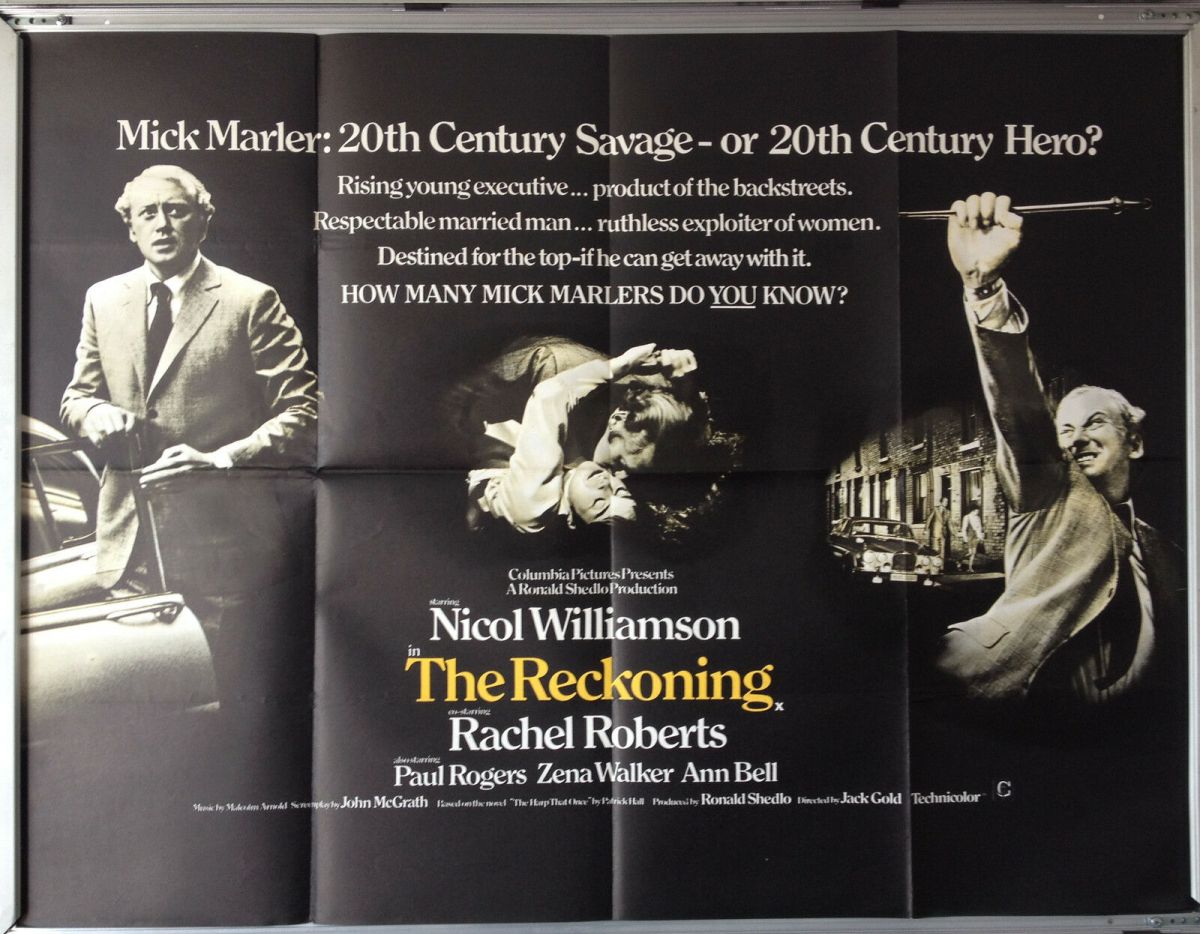
The Reckoning (1970) ****

Fans of Succession will love the boardroom battles and fans of Get Carter (1971) the gritty violence. Michael Marler (Nicol Williamson) is a thug whichever way you cut it. He’s a business hard-ass, at his nicest he’s obnoxious, at this worst brutal. He drives like a demon. Even in love, he’s fueled by hate, sex with wife Rosemary (Ann Bell) infernal. And all of this made acceptable, according to the left-wing tenets that underwrite the film, because he is a working-class man battling upper-class hypocrisy, never mind that his upper-class wife was hardly foisted upon him, nor that he was forced to live in luxury.

Unexpectedly, the film also explores other themes which have contemporary significance. Computers play a pivotal role and so does honor killing. The picture’s original title – A Matter of Honor – was ironic given that in the upper-class worlds in which Marler moved, courtesy of job and marriage, he is considered to have little in the way of chivalry. But in the working-class world he has escaped he must exact revenge according to a code of honor steeped in violence.   

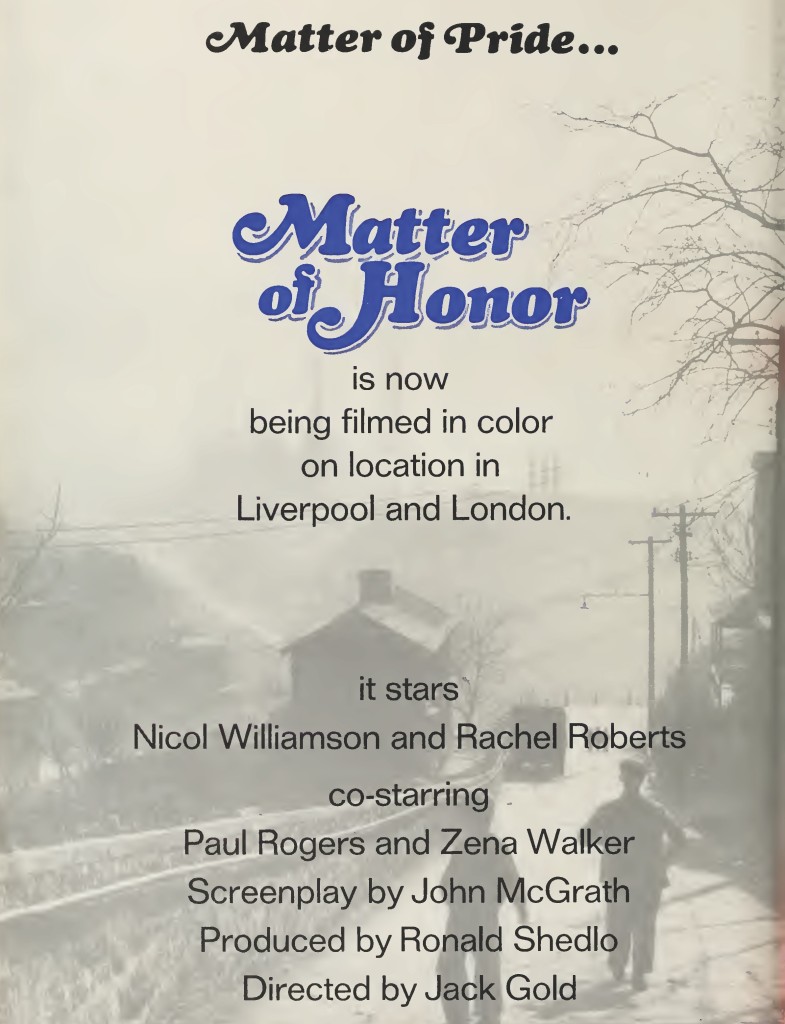
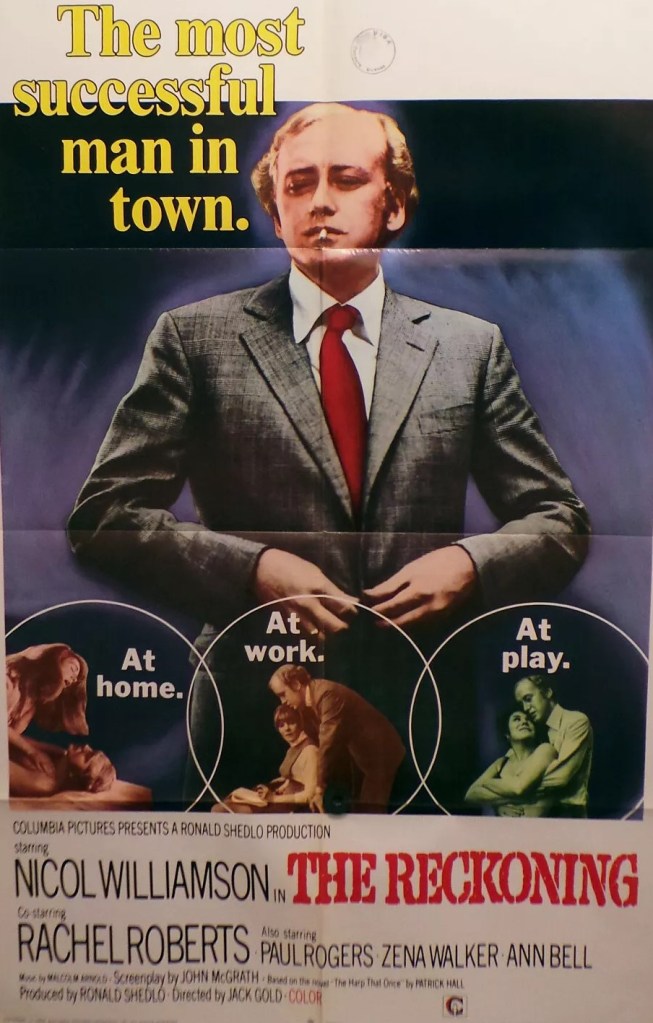
This advert dates from October 1968, which gives an indication of how long the film’s release was delayed, not appearing until January 1970. Interestingly, the advert appeared in the U.S. trade magazine Box Office (October 28, 1968), suggesting Columbia had high hopes for the British production. The title here suggest a different approach to the movie.

The sudden death of his father sends Marler back to Liverpool where he discovers the old man was killed in a pub brawl. But the local doctor and the police, uninterested in complicating what must be a regular occurrence, view his death as accidental. So Marler takes it upon himself to uncover the culprits and wreak revenge, any kind of revenge on any kind of culprit, regardless of the fact that from the outset it is clear they will hardly be gangsters.  While contemplating violence, he strikes up a sexual relationship with the married Joyce (Rachel Roberts).

The story jumps between the back-stabbing corporate world to a scarcely less violent working class environment. The combination of charm and brute energy holds a certain appeal for Rosemary (Ann Bell) and helps keep him in the good books of his boss, but he is otherwise a bully, targeting the weak spots of anyone who stands in his way on his climb to the top, and while heading up the sales division of a company in trouble blaming everyone else for his own failings. And while scorning his wife’s upper-class friends is quite happy to enjoy the benefits of her lifestyle, the flashy car might be the result of his endeavors but not the huge posh house. Marler stitches up another associate with the assistance of another lover, secretary Hilda (Zena Walker), and his long-suffering wife finally takes umbrage at his venomous manner.

Marler hides his hypocrisy behind the façade of a left-wing class-struggle. John McGrath’s screenplay clearly intends Marler’s working-class background to provide him with a get-out-of-jail-free card as well as to launch an attack on upper classes seen as namby-pamby except when it comes to putting the poor in their place. The anti-class polemic has somewhat eroded over time but in its place can be found an accurate portrait of the social mores of ordinary people for whom, alcohol, the drug du jour, plays a massive part.  The going-home element is populated by endless terraced houses without a single parked car, vast caverns of pubs which host wrestling matches and are a tinder spark away from erupting in a brawl. This is in stark contrast to the high-living life Marler enjoys in London.

He has no desire to go back home, hasn’t visited in five years, escaping from there deemed a sign of success, and mostly returns metaphorically to draw on memories with which to scourge the upper-class and excuse his own behavior. 

Nicol Williamson (Inadmissable Evidence, 1968) delivers a tour de force, his screen presence never so vibrant, exhibiting the same raw appeal as Caine in Get Carter. At this point in his career, with a critically-acclaimed Hamlet on stage, he was perceived as the natural successor to Laurence Olivier and Columbia held up the release of The Reckoning to allow the Tony Richardson film of that stage production to pick up critical momentum. Oddly enough Rachel Roberts had not capitalized on her Oscar-nominated role in This Sporting Life (1963), this only her second movie in seven years. Initially coming across as brassy caricature, she soon softens into a surprisingly wistful character. Both Ann Bell and Zena Walker bring greater dimension to their characters rather than as adoring doormats. You can catch Paul Rogers (Three Into Two Won’t Go, 1969) and Tom Kempinski in supporting roles.

Director Jack Gold, who had worked with both Williamson and McGrath on his movie debut The Bofors Gun (based on the writer’s play), does a great job of capturing a particular period of British social history as well as allowing Williamson to stomp around in his pomp.

Discover WordPress

A daily selection of the best content published on WordPress, collected for you by humans who love to read.

The Atavist Magazine

by Brian Hannan

WordPress.com News

The latest news on WordPress.com and the WordPress community.