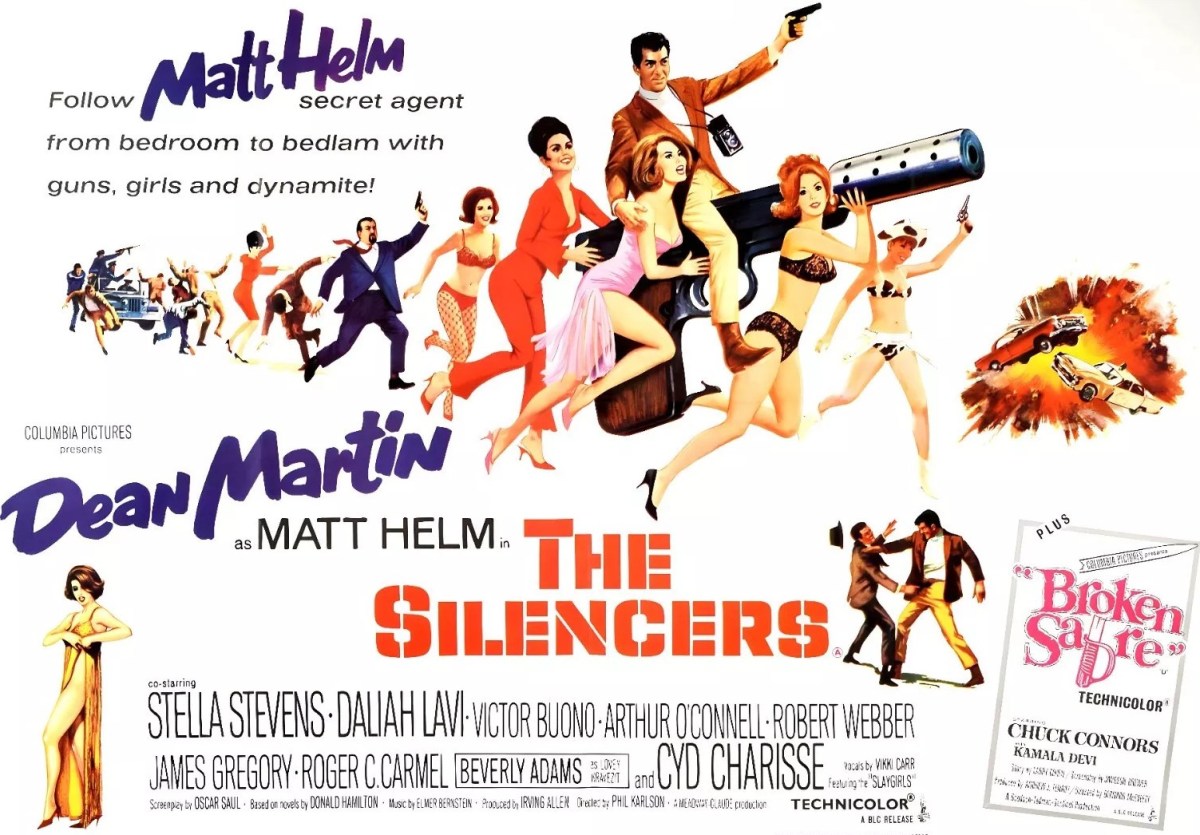
The Silencers (1966) ****

An absolute delight. Have to confess though I had been pretty sniffy about even deigning to watch what I always had been led to believe was an ill-judged spoof of the Bond phenomenon especially with a middle-aged Dean Martin with scarcely a muscle to crease his stylish attire.

Full of witty repartee, and even a whole jukebox of snippets from the Dean Martin repertoire (plus an aural joke at the expense of Frank Sinatra) and a daft take on the Bond gadget paraphernalia. The spoofometer doesn’t go anywhere near 10 and the whole enterprise not only works but damn near sizzles. No wonder it led to another three.
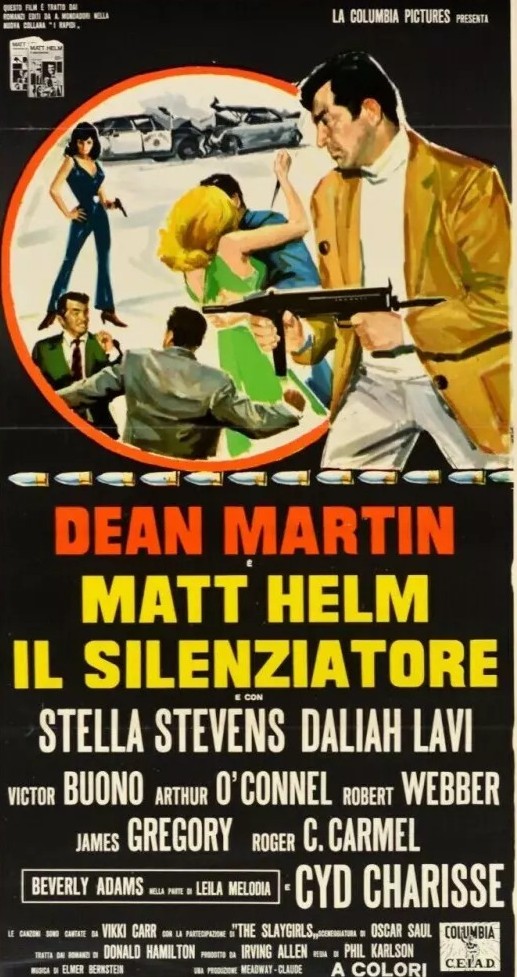
Called out of retirement – hence cleverly swatting away any jibes about his age – Matt Helm (Dean Martin) resists becoming re-involved in the espionage malarkey until his life is saved by former colleague Tina (Daliah Lavi) as he falls for the seductive technique of an enemy agent. Back in harness with ICE (Intelligence and Counter Espionage), Helm is called upon a thwart a dastardly scheme by the Big O organization headed by Tung-Tze (Victor Buono) to stage a nuclear explosion.

Some malarkey about a secret computer brings into Helm’s sphere the klutzy Gail (Stella Stevens) whom he initially treats with suspicion. Gail and Tina end up as rivals for Helm’s afections.

But you could have invented any number of stories and they would still have worked because it’s the rest of narrative that makes the whole thing zing. We could start with the massive effort that goes into ensuring that the private parts of naked men (and women) are concealed by a wide variety of objects, a kind of bait-and-switch that paid homage to the James Bond legend while casually taking it apart. Since Helm now operates legitimately as a fashion photographer it makes sense that his most deadly gadget is a camera that fires miniature knives.
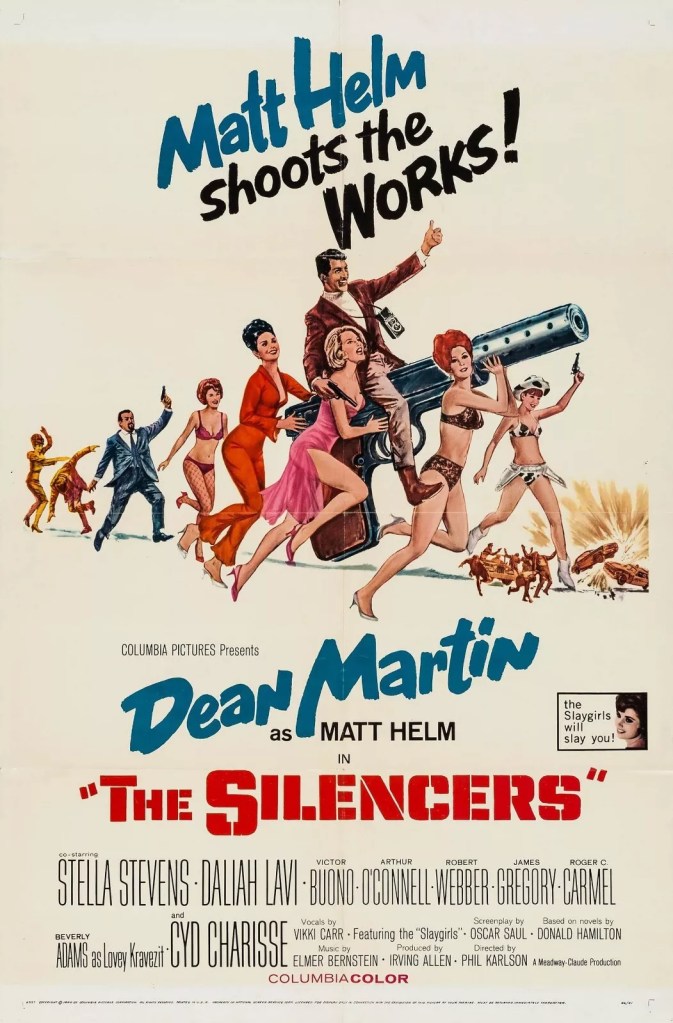
And knowing how much delight villains take in despatching secret service agents in the most gleeful fashion, wouldn’t it make sense to kill said agent with his own gun? Who could resist such a notion? Until it, literally, backfires and the bad guy is shot by a gun that shoots a reversible bullet – two bullets if you’re so dumb you can’t believe that’s what’s happening and you shoot yourself twice.

And what about the laser? Another famed Bond device. Why not have that go haywire?

But there’s also a playful Heath Robinson aspect to those gadgets whose purpose is pure labor-saving. Helm can automate his circular bed so he doesn’t have to get out of it to answer the phone and to save him walking a few steps into the bath the bed is programmed to jerk upwards and tip him in.

“Treasure hunt,” remarks Helm, slyly, as he spies a string of discarded female clothing. But making love to a strange woman feels rude so Helm is impelled to complain they haven’t been introduced. “You’re Matt Helm,” says the stranger. “Good enough,” replies Helm.

And that’s before we come to the joy of Gail, who has been taking lessons from Mrs Malaprop, and, despite lurching into Helm at every opportunity, giving him the mistaken impression that she’s keen to get to know him better, Gail actually is wary. So wary that in a thunderstorm she tries to escape their cosy nest of a car (equipped with separate sleeping arrangements, don’t you know) only to end up slipping and sliding through the mud.

While Daliah Lavi (The Demon, 1963) isn’t exactly called upon to act her socks off, she at least is afforded a believable character, but she can’t hold candle to Stella Stevens (Rage, 1966) when the blonde one decides to go full-tilt boogie into comedy slapstick. Sure, Stevens relies overly on other occasions on a pop-eyed look, but the thunderstorm sequence reveals a deft, and willing, knack for physical comedy.

Dean Martin (Rough Night in Jericho, 1967) struck a solid seam with his interpretation of Helm, slick enough to get away with Bond-style lothario, laid-back enough for no one to take it seriously.

Nancy Kovack (Tarzan and the Valley of Gold, 1967), Cyd Charisse (Maroc 7, 1967) and Beverley Adams (Hammerhead, 1968) up the glamor quotient.

Director Phil Karlson (The Secret Ways, 1961) and screenwriter Oscar Saul (Major Dundee, 1965), adapting the Donald Hamilton bestseller, provide the basic template but Dean Martin makes it work.

Great fun.
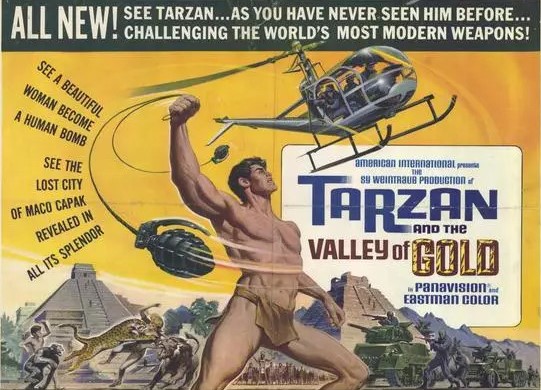
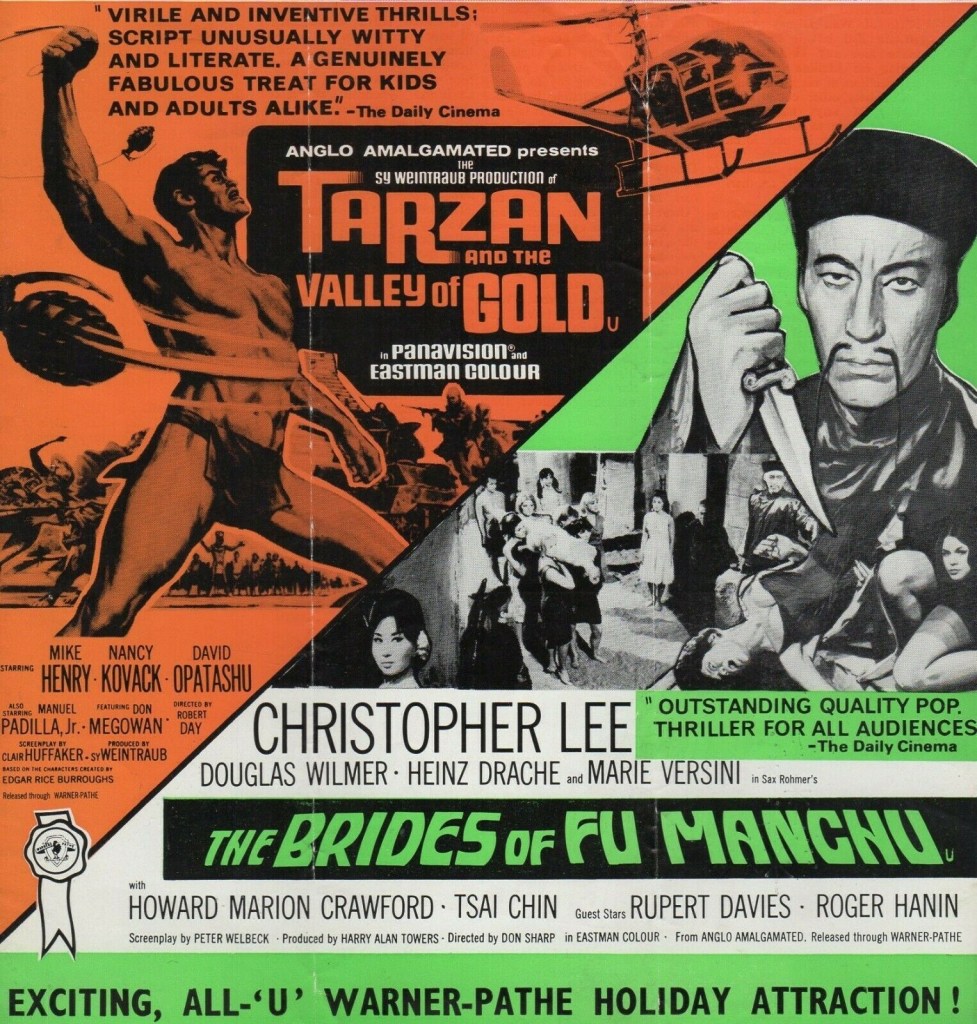
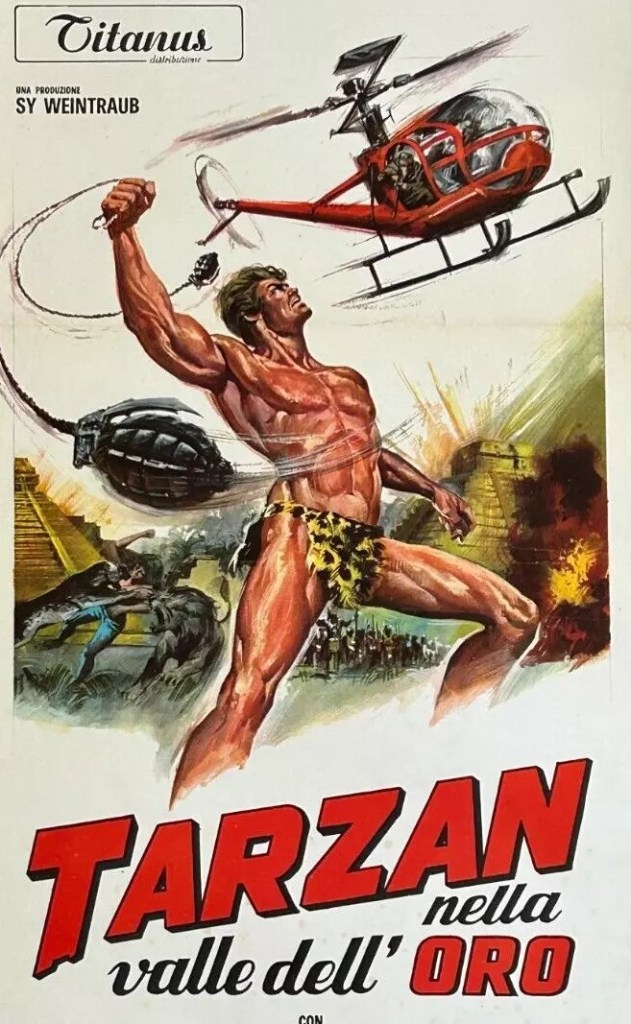
Tarzan and the Valley of Gold (1967) ***

Hooray for hokum. What should have been termed Tarzan: The Next Generation takes our hero temporarily out of loincloth but equips him with a hefty Browning machine gun and rudimentary grenade launcher, not to mention the neat tricks of  repurposing a giant Coca-Cola bottle and bringing stalactites down on the heads of pursuers. Hardly surprisingly he’s toting such weaponry given he’s not just, as was more common, wrestling pesky crocodiles and punching the living daylights of any villain stupid enough to get in his way.

Sadistic evil mastermind Vinero (David Opatashu), has raided the Army Surplus stores for a World War Two M5A1 Stuart light tank, an M3 half track and a Bell 47 helicopter to augment his battalion of 40-odd mean-looking mercenaries. Though he hardly requires them since his favored device is an exploding watch.

Vinero has kidnapped a small native boy Ramel (Manuel Padilla Jr. who reputedly knows the way to an ancient El Dorado complete with Aztec pyramid. Yep, we’re in Mexico, which, incidentally, should screenwriter Clair Huffaker so require, does boast crocodiles as well as jungle. Tarzan is called in to rescue the lad.

He only wears a suit long enough to dispatch an assassin who has dumped him in a football stadium. Once he smells the wild it’s into the traditional loin cloth. He teams up with a Dirty Quarter Dozen comprising chimp Dinky (recruited for his scouting skills, you understand, and his three wise monkeys impersonation), lion Major (specialty: human flesh) and the boy’s pet leopard who will lead our merry crew to the child.

Quite how Ramel was found wandering in the jungle is never explained though it’s perfectly believable that, once lost, he wouldn’t know his way back and would rely on that well-known human compass Tarzan to help him find the way.

There’s quite a lot of trekking one way or another, but, thankfully, that’s interrupted by spurts of sadistic behaviour, an entire village gunned down by Vinero’s henchmen and the big bad guy only too delighted to take time out to demonstrate his incendiary ability in despatching unworthy lieutenants.

To be honest, the jungle doesn’t provide much cover, helicopter ferreting out Tarzan with little problem, only to be downed by his inspired trick of throwing a home-made hand-grenade bolus at the aircraft.

You won’t be surprised to find there’s a fair maiden involved. Her task, unlike previous incursions into this kind of  jungle, is not to be discovered deshabille swimming in a pool. Instead, she’s bait. It’s hard to get a precise fix on Sophia (Nancy Kovack) since for most of the picture she’s Vinero’s mistress. It’s taken her quite some time to become disgusted by his sadistic tendencies. Probably, her rescue is to demonstrate Tarzan’s inherently gentle nature, given he’s got to separate her from a deadly necklace that will explode, so we have been led to believe, by the slightest tremor.

When they reach the lost city – who am I to quibble that a pyramid that can be seen for miles around hardly qualifies as a valley – they discover it is of a distinctly pacific nature, the chief willing to give away all their gold rather than sacrifice a single life, the kind of attitude that conspires against the traditional Hollywood notion of collateral damage.

Chief’s not much trusting of Tarzan and Sophia either and locks them up. Oddly enough, there could easily be an exquisite zero-sum-game at work, a winners-take-all scheme where everyone is a winner, except Tarzan has no truck with the chief’s notion of letting the bad guys get away with as much as they can carry, and Vinero literally digs his own grave by insisting on taking more than he can carry (though I doubt if this is where the makers of Witness, 1985, found their silo death scene).

Mike Henry (The Green Berets, 1968) hulks up pretty well, Nancy Kovack (Marooned, 1969) – replacing Sharon Tate – adds to the scenery, David Opatoshu (Torn Curtain, 1966) underplays the villainy to good effect. Clair Huffaker (Hellfighters, 1968) sufficiently updates Tarzan to a James Bond world. Robert Day (She, 1965) – who had also directed Gordon Scott in the role – delivers the goods.

Enjoyable matinee fare.

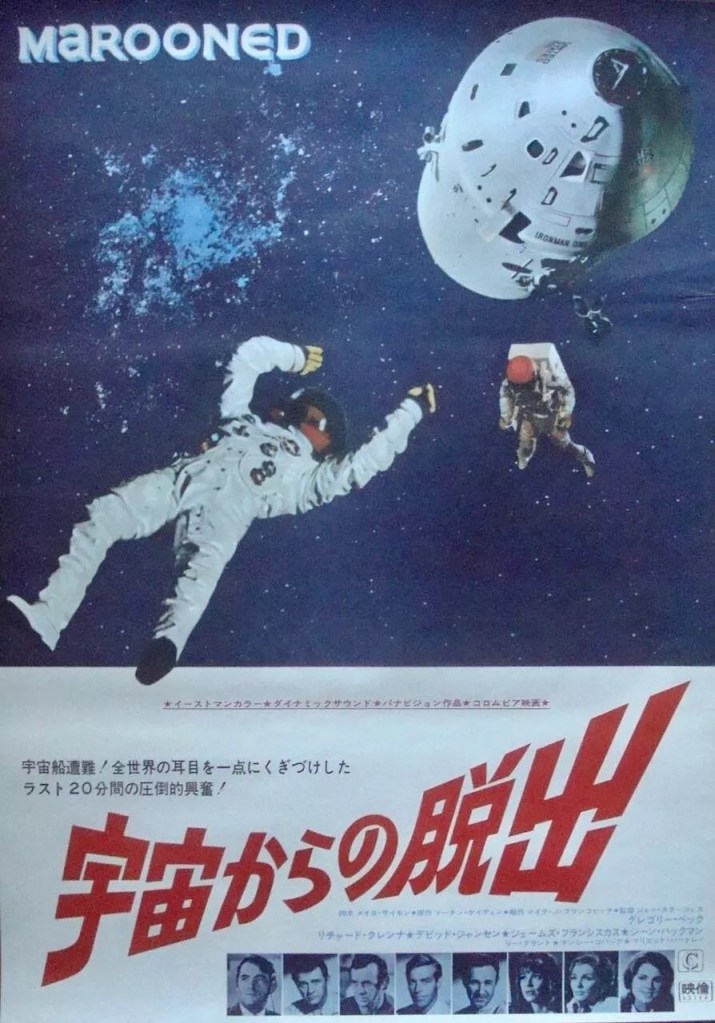
Marooned (1969) ****

The forgotten one. Left out in the cold by audiences and critics alike in the late 60s sci fi boom by the more audacious 2001: A Space Odyssey (1968), Barbarella (1968) and Planet of the Apes (1968). And that’s a shame because it’s by far the most realistic (to the nth degree) of the space movies. Audiences growing up with astronauts saving their own skins with ingenious maneuver – sling shot and whatnot – in Apollo 13 (1995) and The Martian (2015)  might be shocked by the harsh reality of space travel as evidenced here. Astronauts are little more than helpless creatures in a tiny box with ground control in obsessive control. It’s salutary that escape was the audience mindset even after the Challenger Space Shuttle disaster of 1986.

Nobody thought to tell audiences to buckle up because they were in for a hell of a ruthless ride back in the day, but this one really should come with a warning.

Casting makes this work – when it shouldn’t. It’s full of those kind of actors who scarcely move their lips and rarely engage in extraneous facial movement. You can hear director John Sturges issuing instructions: to Gregory Peck, keep those brows knitted; to David Janssen, keep your head lowered and keep with the muttering; to Richard Crenna, don’t move a muscle; to Gene Hackman, limit that trademark chuckle to just once. Why this shouldn’t work is because the big star isn’t in the goldfish bowl of the shuttle cockpit, and since there’s none of the get-to-know-the-crew backstory of The Right Stuff (1983) or Apollo 13 there’s nobody to really root for, especially as the crew is just siting there, doing (by instruction) nothing and awaiting their fate. Which, by the way, which is constantly spelled out, is to suffocate from lack of oxygen.

But there’s a reason Gregory Peck’s on the ground and not in space. Because he’s the one making the life-and-death decisions.

This is by far Gregory Peck’s toughest role. He pulled out of Ice Station Zebra (1968) because he didn’t like the slant of the character, and since then he’d been in typical upstanding heroic mode in The Stalking Moon (1968), Mackenna’s Gold (1969) and The Chairman (1969). Here he’s the king of data management and crisis control, the most ruthless, heartless sonofa you’d ever encounter, not willing to take a risk on greenlighting a rescue mission because the computer says no. The weaselling PR-speak that’s all about saving the space program and making allowance for collateral damage is nothing compared to his terrible delivery of news to one of the wives that her husband is dead. She collapses with emotion, he puts the phone down.

If you’re geek-minded, you’ll give this five stars because there’s information overload. “Go” and “Mark” are the most commonly used words. And in case you can’t judge from the visuals what’s going on, there’s usually some television commentator voice-over to help you out.

So, the Ironman One mission hits trouble when its retro rockets refuse to ignite for return to Earth after several months in space. They’ve got 40 hours or so to effect a rescue before the oxygen runs out for crew members Jim Pruett (Richard Crenna), Buzz Lloyd (Gene Hackman) and Clayton Stone (James Franciscus). The crew are forbidden to try any stunts themselves because any exertion will use up valuable oxygen.

Plan by chief astronaut Ted Dougherty (David Janssen) to mount a rescue operation via an untried spaceship XRV (smaller than a helicopter, by the way) is vetoed as too risky by NASA boss Charles Keith (Gregory Peck) until the President, terrified of public reaction, overrules him. With time running out the impending launch is hindered by an approaching hurricane. But then, in the only nod to ingenuity, someone suggests taking off in the eye of the hurricane, when wind force will be zero.

Meanwhile, up in space, the three stalwarts are slowly coming apart. Buzz, the toughest-looking of the trio, is worst affected, screaming his head off as the prospect of dying looms. Then they are faced with a terrible decision. With the rescue delayed, there’s not enough oxygen to see them through, so one has to sacrifice himself.

I told you it was brutal stuff. About the last 30 minutes are not about whether they can be saved, but who will die and how, the impact of asphyxia on the brain spelled out by resident boffin Clayton. By this point anything they do will almost certain sabotage any rescue and they’re in cloud cuckoo land as Keith tries to keep them in line.

While there’s certainly information overload and a few questionable scientific decisions (can you really open a hatch straight into space?), the reality of the drama more than holds the enterprise together. The realpolitik, the callous use of the wives to go along with the company line as they watch their husbands suffer before their very eyes, the management of potentially bad news, was perhaps a shock for audiences back in the day but would be accepted more easily by contemporary moviegoers.

The acting is first class. Gregory Peck never attempts to lighten his load, to make his character less unattractive and appease his following. David Janssen (Warning Shot, 1966) is as solid as ever. Gene Hackman (The Gypsy Moths, 1969) is the pick of the crew but Richard Crenna’s (Midas Run, 1969) less showy disintegration packs a punch. Lee Grant (The Big Bounce, 1969) is the standout among the wives.

Much as Sturges lets the computerspeak run away with itself, he doesn’t flinch when it comes to the really tough scenes. Written by Mayo Simon (I Could Go On Singing, 1963) from the Matt Caidin source novel.

Under-rated. Worth a look.

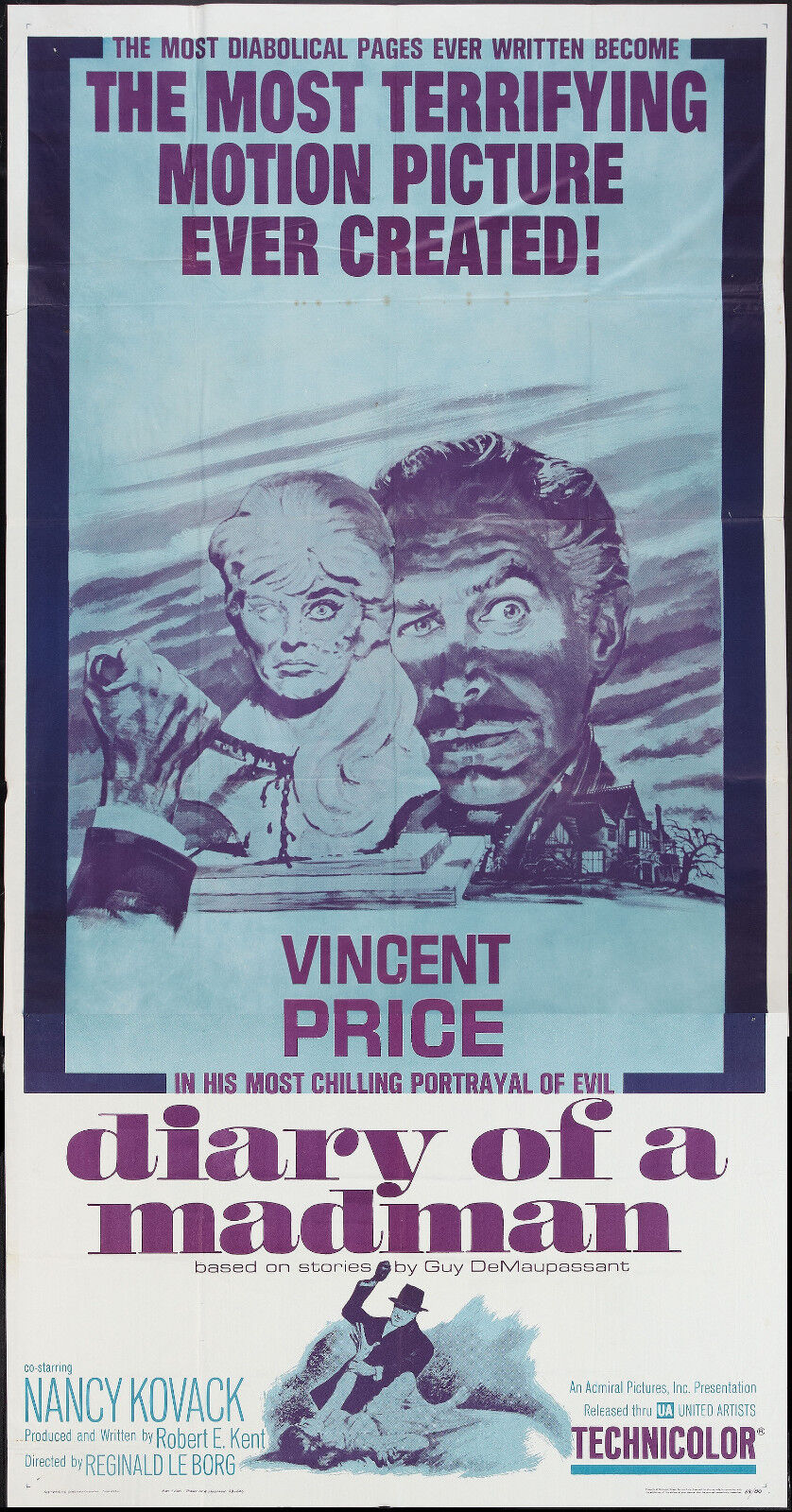
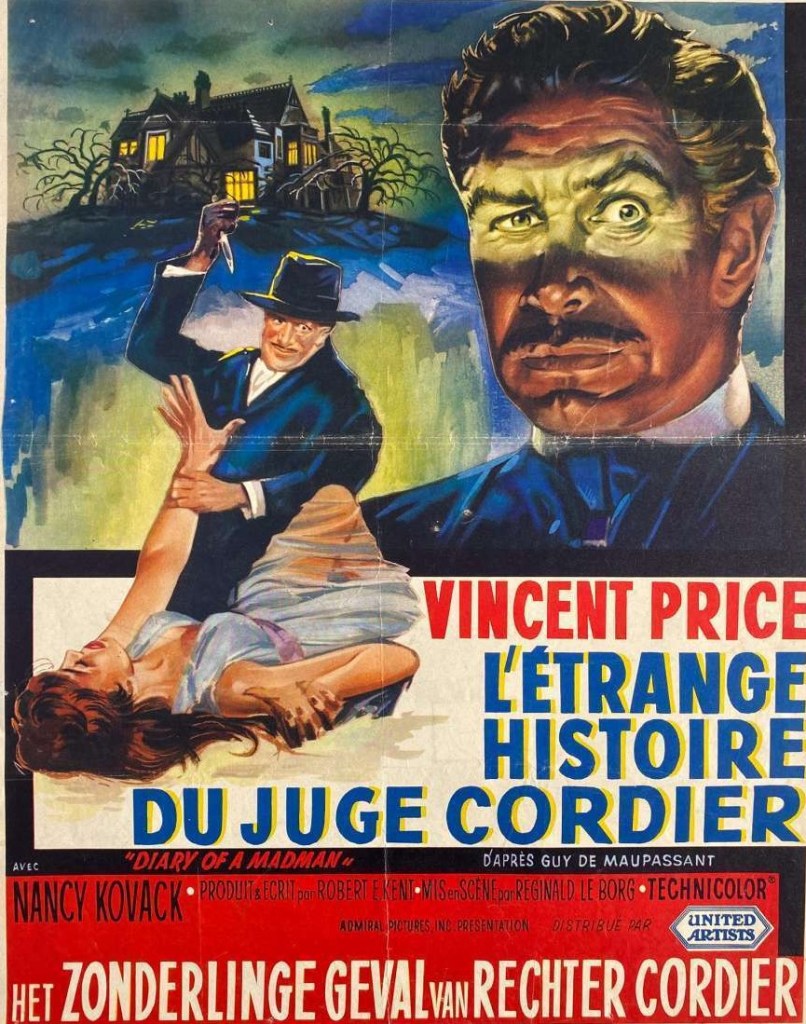
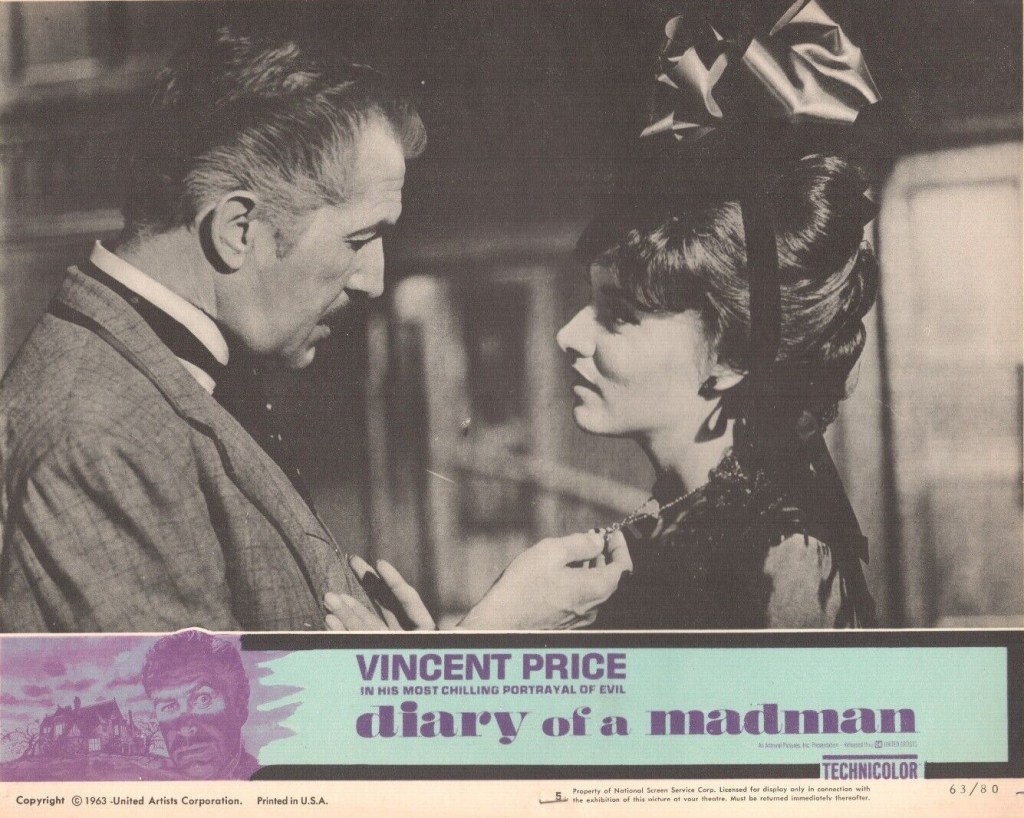
Diary of a Madman (1963) ***

Contemporary perspectives occasionally raise a film in the estimation. Here, our knowledge of the psychology behind serial killers sheds quite a different light. The idea that a killer can blame outside forces over which he has no control was one of the original tenets when the ordinary mind could not take in that some folks just enjoyed the act of murder so much they were inclined to do it over and over again.

Where I come there there’s a saying – “a big boy did it and ran away” – a device used by small boys in big trouble. And that’s pretty much the idea here. The innocent can be taken over by an evil entity, rather than admitting to surrendering to their most heinous desires.

A prisoner condemned to death in 19th century France confides in magistrate Simon Cordier (Vincent Price) that his murdeorus acts were the result of direction by the mysterious and, unhelpfully, invisible “Horla.” Naturally, Cordier dismisses the notion until, in self-defence, he kills the prisoner. Disturbed by his action, he seeks counsel and is advised by a psychiatrist (an “alienist” as such a person was known at the time) to spend more time on his hobby, sculpting.

Although Cordier appears to be a model citizen, there lurks in his past a suicidal wife who killed their child, and the notion that somehow he was responsible. Into his world comes woman-on-the-make Odette (Nancy Kovack) who earns more money as an artist’s model than her husband Paul (Chris Warley) does for his paintings. Unaware  that she is already committed, Simon proposes marriage. It doesn’t take long for him to suspect she is not what she seems and he does away with her only for Paul to become the main suspect and be condemned to death.

Cordier, discovering by accident that the Horla, is frightened of fire, lures the entity into his deserted house (servants sent away) and plans to destroy the entity but in the process the fire melts the door handles and Cordier can’t escape, dying in the process.

Price and Kovack.

A modern reading of course would set it up a different way, putting greater emphasis on the past, trying to uncover what drove Cordier’s wife to suicide. That he gives in to overwhelming urges might well be followed by periods of guilt until he realises that the only way out is his own suicide.

But the 1960s moviegoer – possibly still recovering from the murderous goings-on at the Bates Hotel, and grateful that it was fiction, and The Boston Strangler only just getting into his stride – was not quite ready to put any faith in a landscape filled with predators and victims, so it would make more sense for outside forces, voices or the like, to be controlling the ordinary person.

An eerie glowing light comes over the eyes of Cordier (and the earlier convict) any time the urge to kill dominates. But if you were going to set this up as a picture of innocence driven to dark deed you would not populate it with Vincent Price (Witchfinder General, 1968), who had form for dastardly deeds. Nor is Price quite able to pull it off, those sepulchral tones always seeming to indicate something lurking, and he’s hardly in the debonair category so at the very least he belongs to the caste of entitled rich taking advantage of a poor woman to press his case for marriage.

Nancy Kovack (Jason and the Argonauts, 1963) is more convincing as the manipulative object of his desire. I half-expected her to turn into a murderer in order to rid herself of her the husband getting in the way of her chance at a new, wealthier, life. Chris Warfield (Dangerous Charter, 1962) is the talentless dupe, whichever way you cut it, and you have to admire his wife for sticking with him for so long.

Given that director Reginald Le Borg’s career dated back to the 1940s and he had been lumbered with the Joe Palooka series and any number of B-movies, it was perhaps surprising that horror, although still strictly on B-movie budgets, became a forte – The Black Sheep (1956) and Voodoo Island (1957). While this one was clearly filmed on a studio backlot, he does a good job of bringing a bit of lushness to the proceedings.

Perhaps the most interesting element is that the idea originated in the mind of famed French short story writer Guy de Maupassant – you might be surprised to learned that nearly 300 movies and television adaptations have been made from his works, a dozen alone in 1963 including Mario Bava’s Black Sabbath. Worth comparing with Maniac out in the same year where the idea of the mad killer is exploited for a different end.

Very old-school, but with passable sfx.

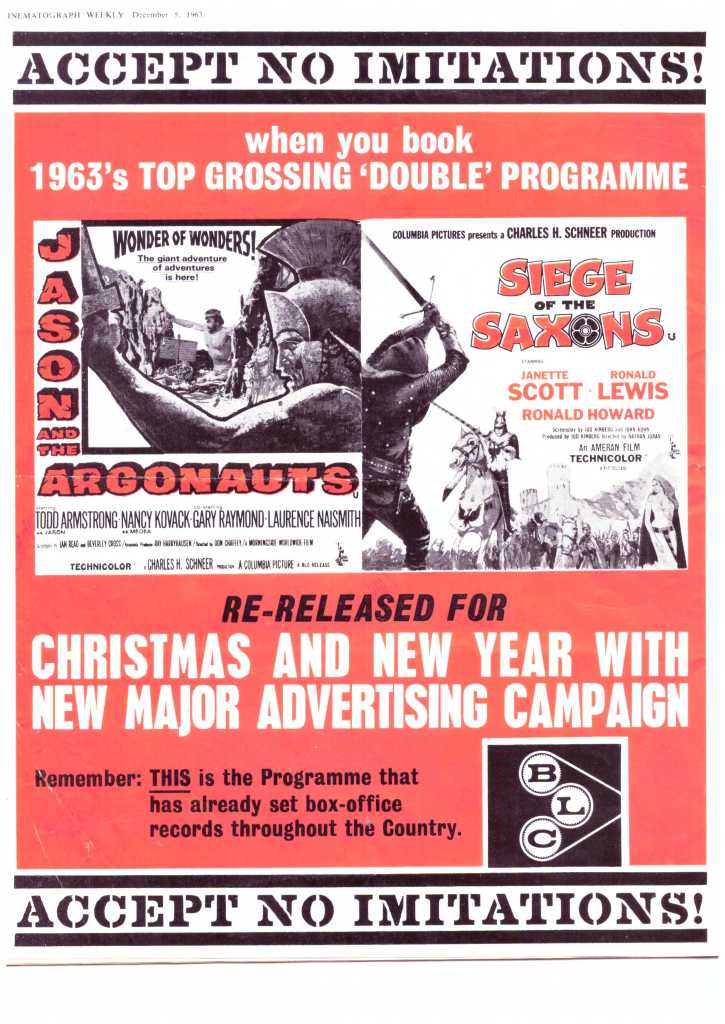
Jason and the Argonauts (1963) *****

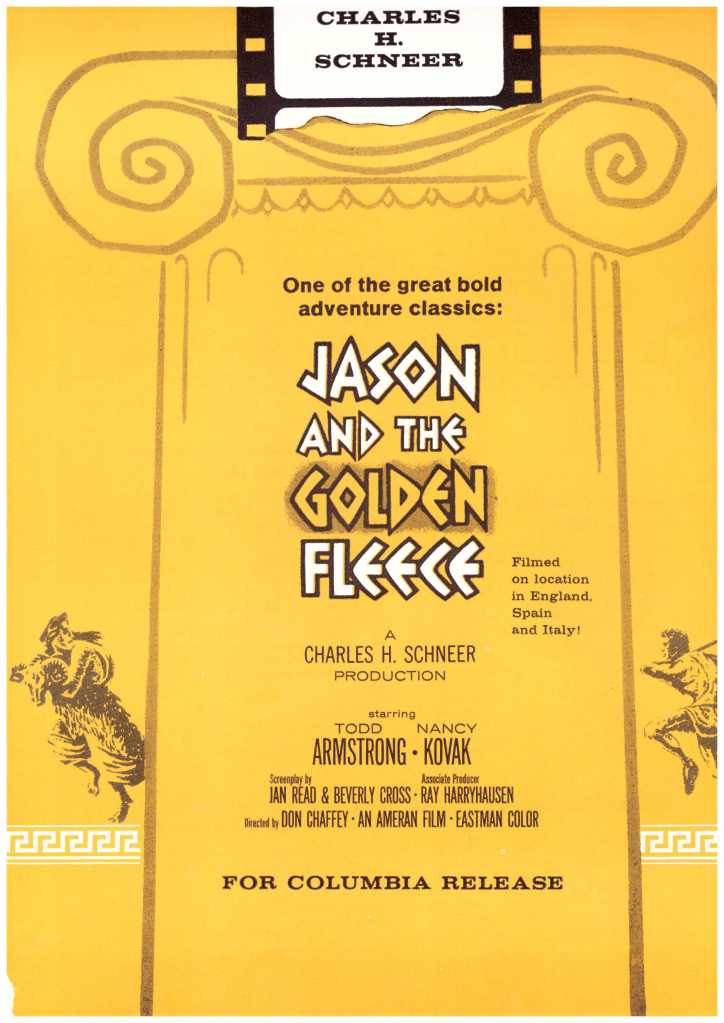
An absolute delight, great storytelling married to groundbreaking special effects produces an adventure picture of the highest order. Though mostly known for its Ray Harryhausen stop-motion animation, its success also relied heavily on the direction of Don Chaffey (The Viking Queen, 1967) and a great script. It’s one of the few films to benefit from not being viewed in its original size, the small screen minimizing the flaws of the special effects. In essence it’s a combination of three genres – the Italian peplum, the men-on-a-mission picture and the classic detective story. it was originally entitled Jason and the Golden Fleece (see below).

Plus there are interesting stabs at philosophy – if man refuses to believe in the gods do they cease to exist? And if the golden fleece brings peace and prosperity to a nation what will happen to that country when it is stolen?  And if various people can call on their own gods for help will that not create conflict in heaven as much as on earth? And the ultimately question – what can man achieve without celestial interference?

While the episodic structure derives from the clues meted out piecemeal to hero Jason (Todd Armstrong) during his long voyage to find the golden fleece these often come minus vital pieces of information ensuring that surprise remains a key element.

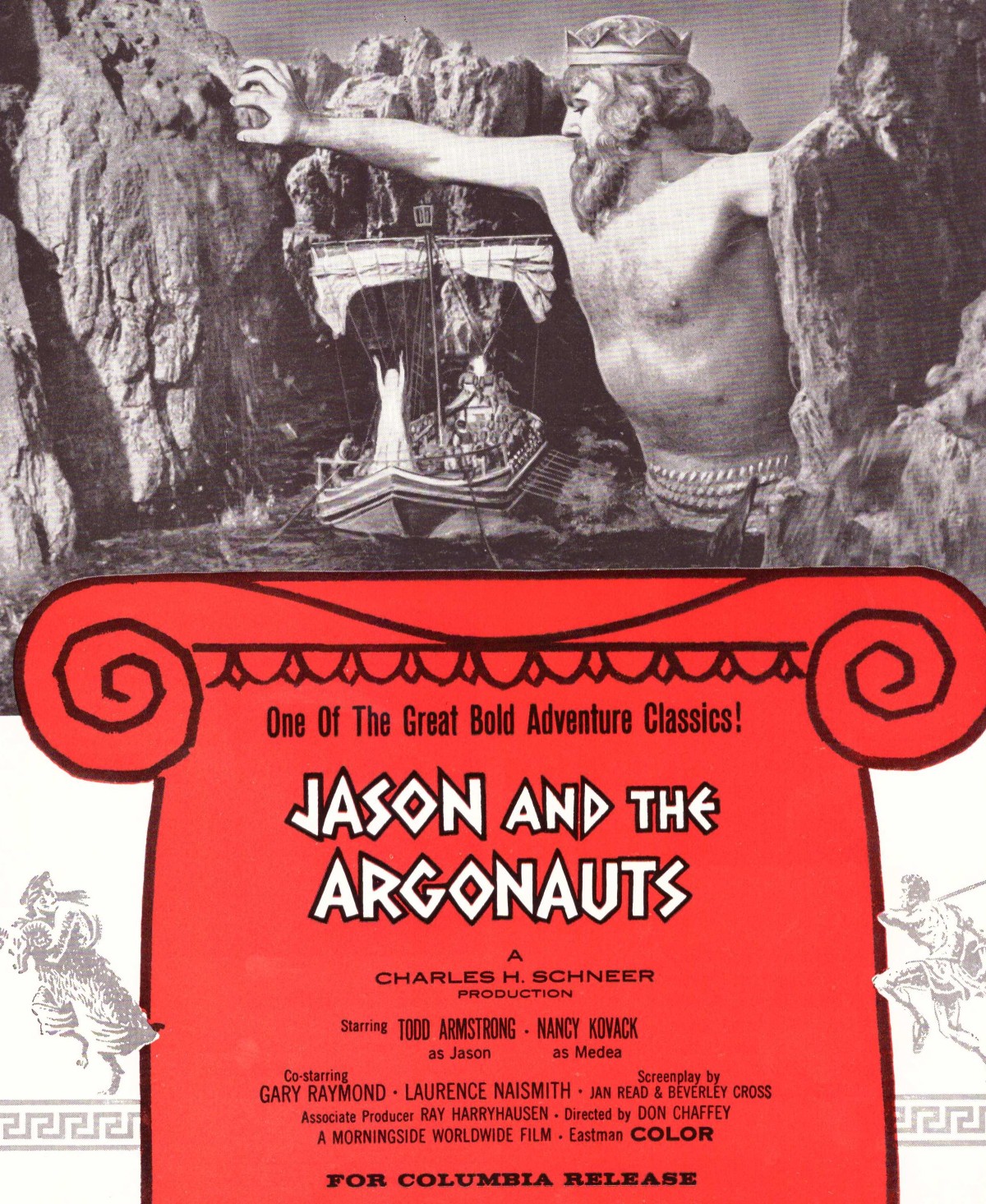
Without doubt the special effects are the triumph, although some work better than others. The highlights for me were the towering bronze statue of Talos and the skeleton warriors. I can’t be the only one who thinks that some of the visuals in Game of Thrones were inspired by the sight of Talos astride two land masses separated by the sea. Talos is not so much a man-mountain as an actual mountain, first viewed coming round the corner of a cliff top, his head topping it. But where, except for cunning Jason, the crewmen are viewed primarily in miniature in relation to the giant Talos, the skeletons are the same size as the adventurers and that fight scene all the more impressive as the ensuing battle appears completely real.

Scale allows Harryhausen to wriggle out of the problems of contact. If the creatures are out of reach anyway, there’s little need to attempt to bring them into close proximity. The way the Harpies are utilised, close enough to strip clothes from a blind man but otherwise hovering just out of reach, is a classic example of clever direction. The multi-headed Hydra, on the other hand, is the least convincing monster simply because it is impossible for Jason to get close to the beast. Scale is also one of the film’s best weapons. The scenes where a miniaturized Jason is transported to Mount Olympus to face the gods are well done as are the occasions when the gods peer down on tiny man.

Outside of the special effects and the varying degrees of excitement aroused, in the background is constant intrigue. Jason is the son of the King of Thessaly slain by the usurper Pelias (Douglas Wilmer) and his crew includes Acastus (Gary Raymond), son of Pelias, whose task is to cause trouble and if Jason succeeds in his endeavor to kill him. On top of that, there is a heavenly battle over Jason’s fate. Jason, having defied Zeus (Niall MacGinnis) by first of all refusing to believe he exists and that his life is determined by fate, becomes enmeshed in a battle between the king of the gods and his wife Hera (Honor Blackman) who grants Jason a get-out-jail-free card, the ability to call on her help, but only five times.

Jason determines to recruit his own team and in the manner of The Guns of Navarone (1961) and The Professionals (1966) they are all experts in their fields but unlike that film and The Dirty Dozen (1967) are willing conscripts. The team also includes Hercules (Nigel Green) and Hylas (John Cairney) and in the first of the film’s many surprises and reversals, the weedy latter is able to beat the muscular former in a contest of strength.

There is enough incident to keep the story ticking along but Don Chaffey fills in the blanks with montage, the various essentials of a ship – sails, oarsmen, sides, stern, figurehead, pace set by drumbeat  – and a full color palette from the bright blue sky, from dawn and dusk to sunset and night, a wonderful image of rowers at sunset on the sea the pick. He also makes great use of the sea – pounding surf, storms, the sea turned tempest by the clashing rocks, a shipwreck. And we have dancing girls, colorful costumes, ancient backdrops and the sense that the budget has been well spent

Some scenes call for immense skills in coupling special effects with real characters. For the clashing rocks sequence five elements are simultaneously in play: the crew in danger, a tempest, rocks crashing into the water, the ship itself and Neptune.

And the romance is well handled dramatically: if Jason rescues Medea (Nancy Kovack) then she too rescues him. Love produces conflict. To love Jason, Medea must betray her country. There is hardly a moment when Jason, confronted either by monsters or kings, does not face death.  

In addition, there is a stunning score by Bernard Herrmann (Psycho, 1960).

Any top-notch acting would have been overshadowed in any case by the special effects. Which is just as well because the entire cast is drawn from the lower strata of the stardom ladder. Todd Armstrong, from the Manhunt tv series (1961), needs only not to mess up, which he manages adequately. Nancy Kovack (Diary of a Madman, 1963) does well to make an impact given she does not appear until the final third. This did not turn out to be much of a star-making vehicle for either. Honor Blackman drops the slinky persona with which she had made her name in The Avengers tv series (1962-1964) and instead plays a confident goddess willing to out-maneuver husband Zeus.

The rest of the cast comprises a regiment of future movie supporting actors – Nigel Green (Tobruk, 1967), Niall MacGinnis (The Viking Queen, 1967) and Douglas Wilmer (The Brides of Fu Manchu, 1966). Future television stars ranged from Patrick Troughton (the second Dr Who) and Scottish actor John Cairney (This Man Craig, 1966-1967) to Laurence Naismith (The Persuaders, 1971), Gary Raymond (The Rat Patrol, 1966-1968), Mike Gwynn (Poison Island, 1965) and Andrew Faulds (The Protectors, 1964).

The screenplay was written by Jan Read (First Men on the Moon, 1964) and Beverley Cross (The Long Ships, 1964), husband of Maggie Smith. Cross returned to ancient worlds again for producer Charles H. Schneer for Sinbad and the Eye of the Tiger (1977) and Clash of the Titans (1981)

Although the ending appeared to leave the door open for a sequel, none was made. A huge box office hit in Britain, it did not repeat its success elsewhere.

I first saw this film as a boy and was so enthralled I wouldn’t have noticed if there was anything awry with the special effects. I have not seen it since. Coming at it with some degree of scepticism I found that attitude misplaced for I was equally enthralled.

Catch-Up: Nigel Green’s portrayal of Hercules was a far cry from his normal screen persona of martinet. His movies previously reviewed in the Blog are The Skull (1965), Khartoum (1966), Tobruk (1967) and Africa Texas Style (1967).

Discover WordPress

A daily selection of the best content published on WordPress, collected for you by humans who love to read.

The Atavist Magazine

by Brian Hannan

WordPress.com News

The latest news on WordPress.com and the WordPress community.