The Sins of Rachel Cade (1961) ***

In her first top-billed role Angie Dickinson (Jessica, 1962) delivers a strong performance as an American nurse/missionary in the Belgian Congo at the start of the Second World War. The usual Hollywood trope of “heathens” needing to be educated by imperialists – from The Bitter Tea of General Yen (1933) and The Keys of the Kingdom (1944) through to The Nun’s Story (1959) – was to some extent turned on its head here.

Just as Rachel Cade (Angie Dickinson) arrives at a hospital in a small village, resident Dr Bikel  (Douglas Spencer) dies. Not only does the hospital have no patients, the local Belgian commissioner Col Derod (Peter Finch) wants her to leave, believing her presence will act as provocation to the local high priest Kalanumu (Juano Hernandez) and witch doctor Muwango (Woody Strode). After standing up to all three, Rachel embarks on refurbishment of the hospital aided by assistant Kulu (Errol John).

Patients remain non-existent until she cures a small boy of appendicitis, as a result of which Muwango places a curse on her that she will lose her Protestant faith and promises the local god will take his revenge on anyone who supports her. Of course, her skills are not infinite and not only is there another boy who dies in her care but she cannot cure – and does not attempt to cure – the infertile third wife of the local chief.

While she warms to her patients and they to her, she cannot come to terms with their acceptance of incest (if a husband is called away, his brother must make love to his wife), polygamy, vaginal mutilation, the sexuality of their dancing and the fact that sin does not exist in their culture. Meanwhile, she distrusts the visions seen by the most convinced of her converts, Kulu.    

When the sexually repressed Rachel rejects Derod’s advances in favour of the  dashing but money-oriented Dr Paul Winton (Roger Moore), thus violating her own teachings, she becomes enmeshed by the principles she holds so dearly and which the Africans refute. A twist in the tale pivots the picture on whom she will marry, the sensible Derod, the cavalier Winton, or retain her own independence in defiance of the standards of the time.  

A battle of the hierarchies – the female nurse and her supporters versus male supremacy – maintains the tension but underneath is a philosophical struggle between the two faiths. The Christian religion which boasts of forgiveness is in the end unforgiving of those who break its moral code, while the African religion does not force onto its believers such ludicrous rules. On top of that is Rachel’s acceptance of her own passion, the realization that love cannot be restrained by commandment, and that men are more likely to betray her.

The reality of imperialist rule is not underplayed but since this predates the Mau Mau uprising in Kenya in the 1950s that precipitated widespread rebellion and Derod can call on soldiers for protection in the Belgian colony and is in fact a generally tolerant (though at times patronising) overseer, political issues remain in the background.

Angie Dickinson gets the movie star build-up in this British trade advertisement.

Director Gordon Douglas (Claudelle Inglish, 1961) keeps the focus on the transition of the naïve American while not ignoring nor appearing to ridicule the rituals and beliefs of the tribe – although a cynic might consider that the sexuality of the dancing, while repellant to Rachel, might be included more with an eye to attracting an audience. Overall, it appears an honest even-sided presentation, with the high priest getting the better of Rachel in arguments over the frailties of Christianity. Angie Dickinson brings conviction to a role that sees her start out a shade saintly until brought back down to earth by human weakness. Peter Finch, by coincidence the leading man to Audrey Hepburn role in The Nun’s Story, fills out his normal stoic screen personality with touches of grief. Roger Moore (Vendetta for the Saint, 1969) had not yet mastered the art of the raised eyebrow and so brought a more rounded performance to his role and is entirely believable as the lover with the mercenary streak.

The pick of the supporting parts is Mary Wickes (Sister Act, 1992) as Derod’s wisecracking housekeeper. Woody Strode (The Professionals, 1966), Scatman Crothers (The Shining, 1980),  Juano Hernandez (The Pawnbroker, 1964) and Errol John (The Nun’s Story)  provide stiff opposition for the incomers.  Edward Anhalt (The Satan Bug, 1965) based his screenplay on the bestseller by Charles Mercer.

CATCH-UP: Featured in the Blog so far are the following Angie Dickinson pictures: Ocean’s 11 (1960), A Fever in the Blood (1961), Jessica (1962), The Chase (1966), Cast a Giant Shadow (1966) and Point Blank (1967).

The Picasso Summer (1969) ***

Must-see for collectors of cinematic curios. A treatise on entitlement, bullfighting, Picasso, the impact of celebrity on everyday lives and the hermaphroditic qualities of snails? Or an innovative piece of moviemaking through its use of a jigsaw split-screen, an audacious reimagining of the painter’s work, documentary and animation. Or despite the involvement of top talent like Albert Finney (Tom Jones, 1963), Yvette Mimieux (Dark of the Sun, 1968), composer Michel Legrand (The Thomas Crown Affair, 1968) and writer Ray Bradbury (Fahrenheit 451, 1966), rightly consigned to the vault and never given a cinema release.  

George (Albert Finney), a disenchanted San Francisco architect who designs warehouses, and wife Alice (Yvette Mimieux) take a holiday in France to rekindle his love of Picasso and set out to find and – in in a severe case of early onset entitlement – talk to the legendary painter. So they fly to Paris, take the train to Cannes and cycle around.  Romance, it has to be said, in that idyllic countryside is the last thing on his mind, although George does pluck a guitar and sing a love song on a riverbank and they do dally in the sea. And he is far from a stuffed shirt, in one scene stealing a boy’s balloon to prevent the kid hogging a telescope.

Not even Barbra Streisand singing the title track provided the movie with any momentum.

There are barely ten lines of meaningful dialog, though Alice’s frustration at her husband’s obsession is soon obvious. The best sequences are the reimagining of Picasso paintings as animation. Picasso broke down the world, so we are told, and represented it as his own so by this token it seems pretty fair to do the same to the artist’s work. In the best scene George turns toreador (not sure the budget ran to stuntmen) facing up to a real bull. But there is plenty Picasso to make up, including a candlelit walk along the “Dream Tunnel” displaying the artist’s War and Peace murals, a lecture on the painter’s ceramics and his self-identification with death in the bull ring.

And there is a twist at the end, as the couple on a beach do not loiter long enough to see a man resembling the famed artist make Picasso-like drawings on the sand. But mostly it’s a story about American entitlement, that a painter should not shut himself off from the world in order to prevent the world stopping him getting on with painting. When George, denied entrance or even acknowledgement of his bell-ringing, stands at the gate to the Picasso villa, it is almost as he is the one imprisoned by his need for celebrity. Half a century on, the need for ordinary lives to be validated by contact with celebrities has become an insane part of life. The fact that the impossible mission ends in defeat (“everything is still the same”) lends a tone of irony.

Work out in your own mind what resemblence the guy who appears briefly at the end bears to Picasso.

Finney’s box office status at this point in his career allowed him to retain his thick Lancashire accent – Sean Connery managed that trick for his entire career. As in Two for the Road (1967) he does a trademark Bogart impression and eats with his mouth open. And he is game enough to stand in a bull ring with a raging bull. Yvette Mimieux is scandalously underused, insights into her thoughts conveyed by lonely walks through night-time streets, although she is the only one to fully appreciate art when she comes across a blind painter (Peter Madden). The best part goes to Luis Miguel Dominguin playing himself, a bullfighter and renowned friend of Picasso. In the incongruity stakes little can match Graham Stark (The Plank, 1967) as a French postman.

As you might have guessed this had a somewhat complicated production. Three directors were involved: Robert Sallin, Serge Bourguignon and Wes Herchendsohn. It was the only directorial chore for Sallin, better known as the producer of Star Trek II: The Wrath of Khan (1982). It brought a temporary halt to the career of Oscar-nominated director Bourguignon (Sundays and Cybele, 1962) whose previous film was Two Weeks in September starring Brigitte Bardot. Herchendsohn was primarily an animation layout artist/supervisor credited with episodes of Star Trek: The Animated Series (1973-1974). 

There is some stunning cinematography from Vilmos Zsigmond (Deliverance, 1972) and a superb score by Michel Legrand.  This was the beginning and end of the movie career of Edwin Boyd who shared screenwriting credit with Bradbury. And it was the beginning and the end of the movie as a viable film for general release, Warner Brothers promptly shelved it.

In the hands of a French or Spanish arthouse moviemaker, with a tale of protagonists going nowhere, this might have gained more critical traction. It’s hardly going to fall into the highly-commended category, but in fact from the present-day perspective says a lot about celebrity obsession and entitlement. Despite the oddities – perhaps because of them – I was never bored.

Doctor in Trouble (1970) **

Limp ending to a fine series. Torpedoed by too many oddities. Leslie Philips returns in the top-billed role, but he’s not playing the suave Dr Gaston Grimsdyke of the previous iteration, but instead a more hapless version of Dr Paul Burke, the character he played a decade before in Doctor in Love (1960).

Confused? You will be. It’s clearly set up for James Robertson Justice to play two characters, a la Sinners (2025), his usual Sir Lancelot Spratt and his presumably identical brother, ship’s captain George Spratt. But Justice fell ill and the naval part was taken by Robert Morley, of similar bombastic ilk, but in diction more long-winded and fluffy and lacking the bite of the surgeon.

In the last two episodes I’d seen there had been an obnoxious salt-of-the-earth character who turned out to be surprisingly artistic. Here, we have to settle for the nouveau riche Pools-winner (a gambling game of the era) who is channeling his inner Sidney James, all leer and not much else. And if you want proof that it’s never a good idea to hire a television personality merely because he has a large following, look no further than Simon Dee.

Several notions will not endear themselves to the contemporary audience – the cross-dressing, the cliché gays, and the Englishman in brownface playing an Indian. That’s not to mention the pratfalls and endless falling into swimming pools.

There’s even less of a plot than in the last outing. Dr Burke (Leslie Philips) accidentally stows away on a cruise ship after pursuing model girlfriend Ophelia (Angela Scoular) who’s working there. He also comes up against actor Basil Beauchamp (Simon Dee), an old school bete noire, who plays a doctor in a television soap.

Dr Burke is hounded by the ship’s Master-at-Arms (Freddie Jones) so occasionally it lurches into farce. And there’s any number of sexy debutantes either desperate to climb into bed with the TV star or hook the gambler.

If it had settled on one tone – slapstick, sex comedy or farce – it might well have worked even in the face of the poor script. Cor blimey, there’s even some fleeting nudity from Ophelia and Leslie Philips and a striptease that’s way out of place for what was originally a much gentler comedy than the Carry Ons. In terms of style it’s all over the place and not a single member of the cast is appealing enough to rescue it.

Had Leslie Philips been in traditional “ding-dong” comfort zone it might have passed muster but here he’s just the butt of all the jokes without generating an ounce of sympathy. Robert Morley (Some Girls Do, 1969) isn’t a patch on James Robertson Justice. Angela Scoular (On Her Majesty’s Secret Service, 1969) seems off-key, Freddie Jones (Otley, 1969) as if he’s in a different picture while the constantly leering Harry Secombe (Oliver! 1968) belongs in a Carry On. Graham Stark (The Picasso Summer, 1969) is deplorable as the Indian waiter Satterjee.

The only person to rise above their station is Joan Sims (Doctor in Clover, 1966) who makes a cameo appearance as a Russian nurse. In bit parts you might spot Yutte Stensgaard (Zeta One, 1969) and Janet Mahoney in her debut.

Directed as usual by Ralph Thomas. Script by Jack Davies based on a Richard Gordon bestseller.

After this, the series was reimagined for television and returned to its gentle comedy roots.

For completists only – and even then…

Doctor in Clover / Carnaby M.D. (1966) ***

Ding dong! All change. Out go the dithering twerps and in comes the seductive lothario. Dirk Bogarde after one last charge and no longer the country’s top attraction at the box office has departed for the more receptive arthouse climes of King and Country (1964), Darling (1965) and Accident (1966). In his place, at St Swithins, has come Dr Gaston Grimsdyke (Leslie Phillips) who imbues the character with trademark seductive purr.

With Gaston able to be upfront in his intentions, there is less reliance on the innuendo that suffocated rival Carry On series, and seemed to cover all manner of male deficiencies, most obviously the ability to pursue a girl in the normal acceptable manner. The exceptionally slight narrative is more a series of sketches and falls back on slapstick, some of which is hilarious – two doctors covering everyone in foam – and others less so (how many times can you fall fully clothed into a swimming pool?).

The patients line up to fill any gaps, headed in the main by “I-know-my-rights” walking medical encyclopedia Tarquin Wendover (Arthur Haynes) who despite his rough exterior reveals a penchant for ballet, and Russian ballet dancer Tatiana Rubikov (Fenella Fielding) determined to attract the male gaze.

Now there are two medics to put everyone in their place, Sir Lancelot Spratt (James Robertson Justice) and starchy Matron Sweet (Joan Sims) who revels in handing out a ticking off and takes on Spratt over what might be deemed these days a support animal in the shape of a parrot – and wins. At least she wins round one. But then her steely resolve crumbles as she believes she is secretly being wooed by Spratt.

But in the days when ageing male Hollywood idols were being teamed up, with nary a concern about the obvious age gap, with women half their age, and the likes of James Bond and Alfie never had to countenance rejection, it’s quite amazing that this piece of froth takes a more realistic approach. The main storyline revolves around the 35-year-old Gaston being knocked back by the 20-year-old French physiotherapist Jeannine (Elizabeth Ercy) who, for plot reasons, appears almost constantly in a swimsuit.

In a bid to make himself more appealing, Gaston embarks on a series of rejuvenating activities and treatments, planning to inject himself with a serum which, as you might he expect, he manages to inject into Spratt with hilarious consequence. He then turns to a “mood-enhancing” gas but that rebounds on him when he finds himself instead falling for the matron. As a subplot he is rival with his cousin Miles Grimsdyke (John Fraser) for a plum job – and is passed over, ironically, because he looks too young.

British audiences were taken by the twists to the formula and turned it into one of the top 15 films of the year at the box office. And I can certainly see its continued appeal. The days of the inept romantic are over. This is the permissive sixties after all. And while Gaston is rejected by Jeannine his flirtatious moves are welcomed by the equally seductive Nurse Bancroft (Shirley Anne Field), though since she is already engaged flirtation is as far as she’ll go and Gaston is disinclined to pursue the matter once he notices the size of her future husband.

There’s even a daring, for its time, sequence involving male hands mistakenly caressing each other, with their owners enjoying such fondling before they realize their error.

Leslie Phillips (The Fast Lady, 1962) is in his element – and he has a far better command of comedy than Dirk Bogarde – and a delight especially as his constant amour is constantly curbed. Despite third billing Shirley Anne Field (Kings of the Sun, 1963) has little more than an extended cameo even though she shines in what little she has to do. James Robertson Justice (Mayerling, 1969) remains the grumpy heart of the picture though Carry On regular Joan Sims runs him close. Elizabeth Ercy (The Sorcerers, 1967) has the delightful job of putting Gaston in his romantic place. Suzan Farmer (633 Squadron, 1964) puts in a brief appearance as do a host of British television names including Arthur Haynes (The Arthur Haynes Show, 1957, 1966), Terry Scott (Hugh and I, 1962-1967) and Alfie Bass (Bootsie and Snudge, 1960-1963)

Directed, once again, by series regular Ralph Thomas, taking a break from more serious efforts like The High Bright Sun (1965). Written by Jack Davies (Those Magnificent Men in Their Flying Machines, 1965) from the Richard Gordon bestseller.

Inoffensive Saturday matinee material.

Tomorrow at Ten (1962) ****

Surprisingly hardnosed for a British crime thriller. Surprisingly stylish and when the sting in the tail comes, it’s an emotional one, adding a deeper level to one of the main characters. In most crime picture – wherever they originate, Britain, Hollywood, France, Italy – the detectives may well complain to their colleagues about their superiors but they never take them on head-to-head and again and again. For that element alone, this is well worth watching.

The opening has you hooked, way head of its time, you would be more likely to see this type of approach in a picture from a top-name director, Alfred Hitchcock for example. A man, Marlowe (Robert Shaw) enters a derelict detached house carrying three parcels. He climbs a flight of stairs. With a key he opens a locked door. It might be a bedsit it’s so scarcely furnished except for the child’s bed. He sits down at the table, empties out two bottles of milk and some food. He opens a long parcel wrapped in paper and takes out a stuffed toy. He flips it over on its stomach, cuts open its back, pulls out the stuffing and from his last parcel removes a small bomb which he places in the empty space.

(At this point I have to explain that the toy is a gollywog, an innocent enough toy at the time but which has different connotations now, so is rarely mentioned, but this particular type of toy has a bearing on the plot, so forgive me if I make further mention of it.)

Next time we see him he’s wearing a chauffer’s uniform, picking up a small boy, Jonathan, (Piers Bishop) to take to school. Only, as you’ll have gathered, he has another destination in mind, but takes care not to frighten the child, to keep him distracted to the extent of the child thinking there’s nothing untoward as he is taken upstairs. He’s delighted with the toy, and not, at this point, too worried to be left alone.

Meanwhile, at the boy’s house, nanny Mrs Robinson (Helen Cherry) receives a telephone call from the school asking where the boy is. Just as the perplexed widowed father Anthony Chester (Alec Clunes) is given the news, Marlowe, now dressed in a suit, and carrying a Gladstone bag, appears at the door. Anthony greets him by name.

In the study Marlowe explains he has kidnapped the son, requires £50,000 in ransom, has planted a bomb set to go off the next morning at ten o’clock (hence the title), but will only release details of the child’s whereabouts once he is out of the country. Chester, a millionaire, has no qualms about paying up. Marlow is as cool as a cucumber. He has come up with the perfect crime. He will get off scot-free, become instantly rich and no one will come to any harm.

Except the nanny is listening at the door and dials 999. The local cops call in Scotland Yard. Assistant Commissioner Bewley (Alan Wheatley) assigns the case to Detective Inspector Parnell (John Gregson) quickly revealed as a tough nut, threatening to turn a suspect in a jewel robbery loose so that his pals will think he’s squealed and exact vengeance.

By the time, he reaches the house, Chester has gone off to withdraw the cash from the bank.  Inside, Parnell confronts Marlowe. And so begins a game of cat-and-mouse. Marlowe holds firm, believing that the cop will give in to save the child, Parnell searches for a psychological weakness in the criminal’s makeup that he can use to crack him. Each convinced of their own mental strength in a battle with an innocent life at stake.

Chester returns with the money and is furious to discover the cop. When Parnell refuses to play along with handing over the cash to the kidnapper, Chester pulls out his ace, the old boys network, calling up Bewley, asking for Parnell to be removed from the case. Bewley, happy to do a favor for a wealthy pal, agrees. But Parnell refuses to go.

Bewley goes in person to confront his insubordinate officer. Still, Parnell refuses to budge, verbally attacking his smug superior, threatening to go to the newspapers.

While the pair are arguing, Chester loses his rag, physically attacking Marlowe. In the struggle, Marlowe falls  back, hits his head and falls unconscious. Bewley, who has reluctantly agreed to let Parnell continue, now responds with spiteful glee. The cop will carry the can if the child dies.

Chester, meanwhile, is calling in the top medical experts to save Marlowe, money no object. But Parnell can’t afford to wait and enlarges the inquiry, putting out a public appeal, Marlowe’s face on the front page of the evening newspaper. But every other investigation can’t be halted just for this case, so Parnell is frustrated when various beat cops, originally going door-to-door, are pulled off onto other case.

Meanwhile, we already know Jonathan has worked out something is wrong, But the window is sealed with steel mesh and the door is locked and eventually he goes to sleep cuddling the deadly toy.

Marlowe shows no sign of recovery and dies. Bewley ups the stakes against Parnell. A beat cop looks at the outside of the house in question but walks away. Parnell gets a tip-off that leads him to a nightclub called the Gollywog Club and encounters Marlowe’s parents who run the place. Their name is Maddow. They haven’t seen their son in several months and while they accept he’s a criminal, the mother reminisces about what a loving boy he was.

Eventually, Parnell finds the estate agent who rented the property to Marlowe. By now they have just five minutes to get to the property.

They arrive a few minutes after the deadline.

But Jonathan has inadvertently saved his own skin, and ironically the plan has backfired because of Marlowe’s insistence on hiding the bomb in a stuffed toy of sentimental value rather than secreting it in a cupboard or somewhere the child would not have looked, and even if he found it wouldn’t know what it was.

After waking up Jonathan has washed his face and hands and decides the toy could do with a bit of tidying up the same so dunks it in a sink full of water, thus nullifying the bomb.

Parnell goes home, welcomed by wife and – child the same age as Jonathan.

So, yes, much of the tale is par for the course, several twists to up the tension, but Parnell’s duels with his boss put this on a different level, and the realisation at the end that he has managed to set aside the feelings for his own child. And it’s also elevated by the direction of veteran Lance Comfort (Devils of Darkness, 1965) who takes time out – in an era when such features were usually cut to the bone – to add atmosphere. The first and last scenes are outstanding for different reasons and the two verbal duels make for a fascinating movie.

Stronger cast than most in this budget category – John Gregson (Faces in the Dark, 1960) and Robert Shaw (Jaws, 1975) bring cool steel to the affair.

Though little-know, Tomorrow at Ten has been acclaimed as one of the top 15 British crime pictures made between 1945 and 1970 and I wholeheartedly agree.

Another welcome revival from Talking Pictures TV.

Kaleidoscope (1966) ***

Amazing the tension that emanates from the turn of a card. Or, more correctly, waiting for one. Only problem is we’re two-third through the movie before high-stakes poker begins – the pot nudging £250,00 (close on a cool £5 million now). Mostly, the earlier tension derives from not knowing what the hell is going on in this enjoyable thriller made at the height of the Swinging Sixties as playboy gambler Barney (Warren Beatty), a walking Carnaby St model driving an Aston Martin DB5, tilts the odds dramatically in his favor.

Barney is a gambler but the problem with gambling is the odds. They can be against you too much. So Barney decides to turn himself into a burglar, the kind that can clamber over rooftops, abseil between buildings, and break into – a printing business called Kaleidoscope. This just happens to print the playing cards supplied to all the major European casinos. So Barney does a little doctoring of the master printing plates. Bingo, the odds are a bit more even now that he knows what cards are coming out of the shoe – he plays chemin de fer (as it is known in posh casinos, pontoon or 21 to you and me).

While cleaning up he bumps again into fashion designer Angel (Susannah York) – their original meet-cute taking place in a traffic jam – who he dated once in London. Unbeknownst to him, she is on a scouting mission, looking to snare the kind of high-rolling gambler who can take on and completely fleece the drugs kingpin Harry (Eric Porter) being pursued by cop Manny (Clive Revill), her father who, rather than waste so much time collecting the required evidence to put the villain behind bars, decides it would easier done by making him broke. Unable to pay his debts, some other villain would put him out of business in the traditional cemented-boot fashion.

It takes a while for the movie to line up all its ducks in a row, mainly by holding on to the information the audience requires. But the audience is privy to details of the way Manny works that Barney is not. Even for ruthless villains, Manny has a peculiar calling card, one that would make any gambler think twice about entering his lair. Of course, it doesn’t take long for Manny to rumble Barney’s game so the stakes are much higher than the charming gambler imagines.

Throw in as much fashion as London was capable of generating at this time, the burgeoning romance, some exotic European locations, a castle with a moat, and the usual tourist guide stuff of red buses, Big Ben, Piccadilly Circus, pubs and Tower Bridge and you have all the ingredients of an easy on the eye thriller.

It’s a movie that relies on star power but Beatty and York deliver. That is, if you don’t need Beatty to do much more than be Beatty, all teeth and charm. At this point in his career Beatty looked as if his career was fast approaching its end. The box office success of Splendor in the Grass (1961) had been followed by a string of flops, romantic dramas and comedies that should have had audiences queuing up plus an occasional wild card like Arthur Penn’s Mickey One (1965), the biggest flop of all. He does make an engaging crook, and he never loses his screen charisma here, but there ain’t quite the right number of twists that moviegoers weaned on the likes of Topkapi (1964) had come to expect.

Hollywood had been doing its best to position Susannah York as a top box office attraction and she had snagged the female lead in The 7th Dawn (1964) opposite William Holden and Stanley Baker in Sands of the Kalahari (1965)  but she was recovering from the colossal flop of Scruggs (1965) by ‘poet of the cinema’ David Hart.  Kaleidoscope offered  the kind of role York could do with her eyes closed. So while the screen pair were not exactly sleep-walking it was not the kind of story that was going to create sparks.

Character actor Clive Revill (Fathom, 1967) and Eric Portman (The Pumpkin Eater, 1964) take more leeway with their roles, the latter almost chewing he scenery, the former content with just chewing his lips. Look out for Jane Birkin (Blow-Up, 1966) and British television stalwarts Yootha Joyce, George Sewell and John Junkin. 

The title would have been more enigmatic, original meaning of images twisted out of shape, had it not also applied, straightforwardly, to the card-making company. Giving Harry the surname of Dominion seems overkill.

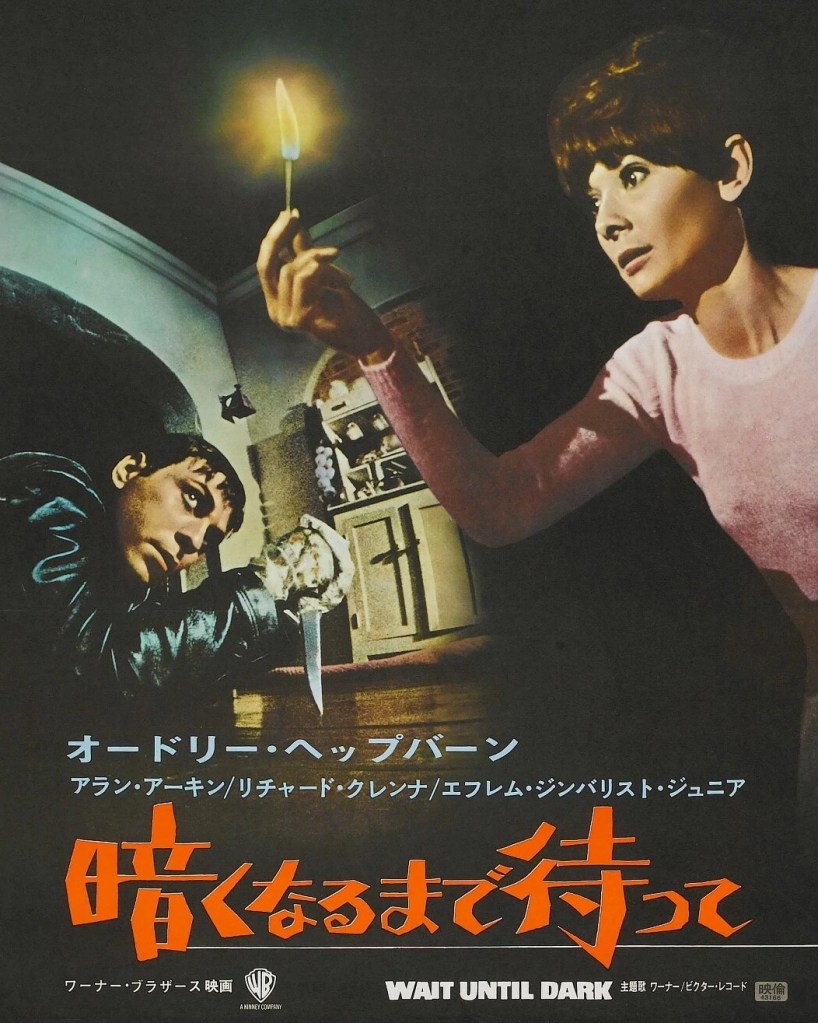
Director Jack Smight (No Way to Treat a Lady, 1969) came to this after twisty private eye picture Harper/The Moving Target (1966), a big hit starring Paul Newman. This is too lightweight a feature to command such interest, but he does keep the story rolling along and it’s an effortless watch and it has a certain offbeat quality. The screenplay was fashioned by Robert Harrington and Jane-Howard Harrington, making their movie debut, who also co-wrote Wait until Dark (1967). It was also the debut for Winkast Productions, the Jerry Gershwin-Elliott Kastner production team who went on to make Where Eagles Dare (1968).

The Rare Breed (1966) ****

Classic themes of hope, resilience and redemption influence director Andrew V. McLaglen’s follow-up to Shenandoah (1965). Add in a battle against widespread misogyny, thieves falling out, a brilliant stampede and a forlorn hunt that has echoes in the decade-old The Searchers. But other more serious issues are explored. At the film’s core is the question of how a nation built on innovation refuses to countenance change, in other words a country where hierarchy (inevitably male) has begun to impose its preference and how those who suggest alternatives must not just buckle to that collective will but admit they are wrong, a problem that in the half century since the film was made has not gone away.

Widow Martha (Maureen O’Hara) and daughter Hilary (Juliet Mills) bring to auction her white-face Hereford bull, a British institution, the first of its kind to be imported (for breeding purposes, you understand) to America where hardy longhorn cattle are the dominant species. Despite being insulted for her temerity in challenging the existing order, Martha is astonished to receive a winning bid of $2,000, only to realize this comes with conditions attached, the buyer assuming his largesse will also win her, a sharp elbow to the ribs dissuading him of this notion.

Determined to see the bull delivered to the Texan ranch, Martha decides to accompany the animal on its journey. Wrangler Sam (James Stewart), hired to transport it instead plans to steal it and to keep the dupe sweet until the time is ripe encourages her to develop romantic ideas towards him. When another cowboy, Simons (Jack Elam), with eyes on the same four-legged prize causes confrontation the game is up, though Sam sees the trip through.

Rancher Bowen (Brian Keith) belittles the Hereford bull although viewing Martha as a better proposition, but the only way to discover whether the beast can survive in the territory is to let it loose on the open range where it was likely to encounter blizzards (not so rare in Texas as you might think). Once the bull is set free, the movie shifts onto a question of endurance, not just of the animal, but of the mindset of Martha and Sam. Her faith in her insane idea is tested to the limit and, almost in compensation, a woman needing security/protection et al, she comes to appreciate the attentions of a less wild Bowen.

Both central characters have much to lose and much to face up to. Martha, in accepting she was wrong and letting Bowen into her life, will almost certainly be surrendering her independence (she can still be feisty but that’s not the same thing). It’s a testament to her acting that you can see that faith wilting. Sam, a conniving thief whichever way you cut it (although the storyline gives him something of a free pass), has to face up to the fact that he was planning to con a woman out of the precious possession on which her precarious future was built.

The scenes between Martha and Sam are superb, especially when he is grooming what he thinks will be an easy dupe. Sam, in a purgatory of his own making, almost certainly an outcast were the truth more widely broadcast, attempts to expiate his guilt.  

James Stewart and Maureen O’Hara had worked together in Mr Hobbs Takes a Vacation (1962) and there is no denying their screen chemistry. But there’s an innocence that O’Hara rarely displays, the woman in love suppressing those emotions not denying them as perhaps in The Quiet Man (1952). She’s both independent and, if the right man comes along, happy to accept his protection (from the male predators of the West), while at the same time keeping him on the right track and sorting out his world of misshapen priorities. There are some brilliant scenes where something else is going on story-wise and O’Hara is internalizing some deeper emotion entirely. It’s an acting coup for an actress like Maureen O’Hara who would never give up to convey so well a character on the verge of surrender.

This is one of James Stewart’s best roles, far removed from the principled hero of Shenandoah (1965) and returning him closer to the shifty character of Vertigo (1958) adept at self-justification. In the scene where he is found out by O’Hara he is outstanding. It’s not a given that the character will find a way to turn things round and his efforts to redeem himself make the latter part of the picture emotionally involving, especially as this is countered by O’Hara’s own internal battle.

It’s worth pointing out that although the narrative mainly concerns the two main characters, the background is filled with ruthlessness. Not only does Sam feel no compunction about stealing a bull worth $2,000, we first encounter Bowen’s son Jamie (Don Galloway) when he is making off with a herd of his father’s longhorns. The cattle barons use their wealth to “buy” a classy woman and cheat cowboys. And there is further murder along the way.

I was going to mark this picture down for the comedy which seems to amount to endless brawls but I wondered if modern audiences, reared on the never-ending fistfights and wanton destruction that usually indicated the finale of a superhero picture, would accept it quite happily, perhaps even welcome it. While Brian Keith (The Deadly Companions, 1961) stands accused not only of one of the worst Scottish accents committed to the screen – and these days of cultural appropriation – that does not take away from a character who, behind the beard, transitions from loathsome father to something more approaching humanity, in other words wild man who realizes the benefits of civilization.  

In fact, the broad comedy serves to obscure a film full of brilliant, cutting, funny lines, generally delivered in scathing tones by the woman.  O’Hara to Stewart: “You may bulldog a steer but you can’t bulldog me.” Stewart to O’Hara: “Can I help you with that” and her response “No, they’re clean and I’d like to keep them that way.” And that’s not forgetting the sight of the cowboys whistling British national anthem “God Save the Queen” in order to bring the bull to heel.

I forgot to mention the romantic subplot involving Hilary – in case you were wondering what role she had in all this – and Bowen’s estranged son, Jamie. Juliet Mills (Avanti!, 1970), older sister of child star Hayley, is excellent as the sassy daughter of a feisty woman, Don Galloway (Rough Night in Jericho, 1967) less of a stand-out in his debut, in part because he has to subsume his rage against his father.

Jack Elam (Once Upon a Time in the West, 1968) is good as always and you will spot in smaller parts Ben Johnson (The Undefeated, 1969), Harry Carey Jr. (The Undefeated), Barbara Werle (Krakatoa, East of Java, 1968) and David Brian (Castle of Evil, 1966). John Williams, masquerading as Johnny Williams, wrote the score.

Setting the comedy aside, this is a more intimate film from director Andrew V. McLaglen compared to the widescreen glory of The Undefeated and the intensity of Shenandoah and for that reason tends to be underrated. There are some wonderful images, not least Sam carrying the injured Jamie in the style of Michelangelo’s La Pieta – an idea stolen by Oliver Stone for Platoon (1986) – but mostly McLaglen concentrates on the actors.

Bus Riley’s Back in Town (1965) ***

Given Ann-Margret receives top billing I had automatically assumed she was the Bus Riley in question. Although decidedly the female lead, her role is secondary to that of a sailor returning to his small town. The backstory is that Bus – no explanation ever provided for this nickname – Riley (Michael Parks) had been too young to marry the gorgeous Laurel (Ann-Margret) before he joined the U.S. Navy and in his absence she married an older wealthy man.  

Bus dithers over his future, re-engages with his mother and two sisters and finds he has not lost his attraction to Laurel. Although a handy mechanic, he has his eye on a white collar  career. An initial foray into becoming a mortician founders after sexual advances by his employer (Crahan Denton). Instead he is employed as a vacuum salesman by slick Slocum (Brad Dexter).  

While his sister’s friend Judy (Janet Margolin) does catch his eye, she is hardly as forward or inviting as the sexy Laurel who crashes her car into his to attract his attention. But the easy sex available with Laurel and the easy money from exploiting lonely housewives trigger a crisis of conscience.

Perhaps the most prominent aspect is the absence of good male role models. Bus is fatherless, his mother (Jocelyn Brando) taking in boarders to meet her financial burden – including the neurotic Carlotta (Brett Somers) – and while younger sister Gussie (Kim Darby) adores Bus the other sister Paula (Mimsy Farmer) is jealous of his freedom. Judy’s father is also missing and her mother (Nan Martin) a desperate alcoholic. The biggest male players are the ruthless Slocum and Laurel’s husband who clearly views her as a plaything he has bought. The biggest female player, Laurel, is equally ruthless, boredom sending her in search of male company, slithering and simpering to get what she wants.   

Scandal is often a flickering curtain away in small towns so it’s no surprise that Bus can enjoy a reckless affair with Laurel or that a meek mortician can get away with making his desires so quickly apparent, or that behind closed doors houses reek of alcohol or repression. A couple of years later and Hollywood would have encouraged youngsters like Bus and Laurel to scorn respectability in favor of free love. But this has a 1950s sensibility when finding a fulfilling job and the right partner was preferred to the illicit.

In that context – and it makes an interesting comparison to the more recent Licorice Pizza that despite being set in the 1970s finds youngsters still struggling with the difference between sex and love – it’s an excellent depiction of small-town life.

While Michael Parks (The Happening, 1967) anchors the picture, it’s the women who create the sparks. Not least, of course, is Ann-Margret (Once a Thief, 1965), at her most provocative but also revealing an inner helpless core. And you can trace her screen development from her earlier fluffier roles into the more mature parts she played in The Cincinnati Kid (1965) and more especially Once a Thief (1965).

In her movie debut Kim Darby (True Grit, 1969) is terrific as the bouncy Gussie and Janet Margolin (David and Lisa, 1962) invests her predominantly demure role with some bite. Jocelyn Brando (The Ugly American, 1963) reveals vulnerability while essaying the strong mother. Mimsy Farmer (Four Flies on Grey Velvet, 1971) also makes her debut and it’s only the second picture for David Carradine (Boxcar Bertha, 1972). Brad Dexter (The Magnificent Seven, 1960) is very convincing as the arrogant salesman.

It’s also the first film for Canadian director Harvey Hart (The Sweet Ride, 1968) and he has some nice visual flourishes, making particular use of aerial shots. The scenes of Bus trudging through town at night are particularly well done as are those of Laurel strutting her stuff.

It was also the only credit for screenwriter Walter Gage. That was because Gage didn’t exist. Like the Allen Smithee later adopted as the all-purpose pseudonym for pictures a director had disowned, this was the name adopted when playwright William Inge (Oscar-winner for Splendor in the Grass, 1961) refused to have anything to do with the finished film.

A Very Special Favor (1965) ****

Surprisingly funny for a movie that’s long been out of favor. Starring a Rock Hudson (Seconds, 1966) who was just beginning to lose his grip on the marquee after an incredible run of box office success and Leslie Caron (Guns of Darkness, 1962) who had always seemed to just miss out on the top echelons of audience approval.

You can see why this had rapidly lost whatever appeal it originally possessed and that a contemporary crowd would turn its nose up at a man that has such success with the ladies that he has a whole stream of women carrying out his most basic chores. Except that the tale is really about him getting his come-uppance and everyone enjoys that kind of narrative.

Paul (Rock Hudson) only has to look at a woman and she melts. His job, such as it is, though he is wealthy, is to use his charm to commercial advantage. We open with him in a French court winning a case it transpires because he has seduced the female judge. The opposing lawyer Charles (Charles Boyer) encounters Paul on the way home, observing the American batting back stewardesses with ease, and the Frenchman enlists him to seduce his daughter Lauren (Leslie Caron), so much of a career woman, a high-flying psychologist,  that her father fears she will turn into an old maid.

But Lauren already has a fiancé, Arnold (Dick Shawn) who, like Paul’s harem, is at her beck and call, carrying out the most basic tasks for her. Paul pretends to be a patient, his fake problem being his irresistibility which has caused a girlfriend to commit suicide. Lauren shows very little sign of falling for Paul’s charm. In order to prove that they are making progress, they go to a restaurant. To Paul’s astonishment, Lauren passes out from drinking too much champagne. He takes her back to her apartment and in the morning pretends that she has succumbed to his charms.

So now the twists come. Lauren is upset to discover that she has been seduced by a man she was determined to keep her distance. But when she finds out the truth, the tables are turned. She invents a Spanish lover which knocks Paul’s ego to hell. Plus she accuses him of impotence. Then he turns the tables again, and using one of his many fans – and a ploy that would prove somewhat ironic given Hudson was a closet gay – switchboard operator Mickey (Nita Talbot), makes Lauren so jealous that eventually he contrives to win her back and the two determined singletons, against all odds, get married.

There’s some marvellous stuff here, some slapstick at which Caron is surprisingly adept, but mostly it’s a tale of flustered feathers and vengeance for perceived humiliation, beginning with Boullard who is so annoyed that any of daughter of his is a stuck-up prude. Paul can’t believe Lauren isn’t falling at his feet and equally she is infuriated that Paul isn’t another male slave like her fiancée.

There’s a great turn from Dick Shawn as the slave and his mother (Norma Varden) who keeps on encountering Paul at his least winning. It’s a relief to see Rock Hudson not playing the stuffed shirt of previous comedies and for Leslie Caron not to be a hapless heroine. So it plays as a more effective modern comedy.

Not everyone was so keen on Caron, complaining about the lack of chemistry between the leads and that Paul would never get hooked by such a cold fish. But I disagree. Sure, it called for a lot more from the audience that the leading lady wasn’t the usual ultra-feminine model, but that made the initial romance more believable. Initially, Paul doesn’t fall for her and is seducing her as a “very special favour” to her father but once he sees the other side of her personality he changes his tune.

But I would hazard a guess that, mostly, people were annoyed with Caron because she wasn’t Doris Day and that, while this follows one formula, it steers clear of the Hudson-Day formula in making Caron a high-flying career woman. Dick Shawn (Penelope, 1966) leads an able supporting cast.

Directed by Michael Gordon (Texas Across the River, 1966) from a script by Stanley Shapiro (Bedtime Story, 1964) and Nate Monaster (That Touch of Mink, 1962).

Worth a look.

Submarine X-1 (1968) ***

One of the tropes of the World War Two mission picture was that it afforded plenty scope to boost the careers of supporting players – The Dirty Dozen (1967) being the best example given it boasted Charles Bronson, Ernest Borgnine, Donald Sutherland (the denoted breakout star), Jim Brown (another breakout) and Telly Savalas.  Never mind that here you could hardly find an interesting face, never mind well-written character in this one, you were struggling to find the James Caan as defined by The Godfather (1972).

Even with production shrinking and the industry throwing more and more money at the actors who supposedly guaranteed box office, Hollywood was still trying to blood new talent. But most failed to connect – Burt Reynolds was another who took a helluva long time, by movie standards, to find a fanbase.

Though Caan had been chosen by Howard Hawks to headline Red Line 7000 (1965) that had sunk without trace and a supporting role in the director’s El Dorado (1967), while exposing him to a larger audience, had not, as yet, pushed him that far up the Hollywood tree, top billing in neither Robert Altman’s Countdown (1967) nor Games (1967) doing much to bolster his marquee credentials.

His career could go either way – fizz and pop in a part that provided the opportunity to create a defined screen persona or fizzle and die after using up too many Hollywood lives. We all know which way it went so this could be considered a testing ground. And he reins in his screen persona so much he could almost qualify for a Stiff Upper Lip Award.

As ever, Yanks in many World War Two pictures set in Britain had to come in disguise.  Commander Bolton (James Caan) is acceptable in the Royal Navy if he’s Canadian and a volunteer rather than American, though you’d be hard put to distinguish the nationalities by Caan’s accent.

It was also a given of this type of war picture that the recruits hated their leader with a vengeance – Lee Marvin in The Dirty Dozen leading the field, though you could equally point to Frank Sinatra in Von Ryan’s Express (1965) – “why did 600 Allied prisoners hate the man they called Von Ryan more than they hated Hitler” ran the tagline – and William Holden in The Devil’s Brigade (1968). .

Here, Bolton is in hot water for obvious reasons. He was a poor leader, causing the deaths of the majority of his crew on the 50-man submarine Gauntlet after an ill-chosen attack on the German battleship Lindendorf. The movie starts with him and the remainder of the crew staggering out of the water onto dry land. Even when he’s cleared at a tribunal, the stench of incompetence sticks. So it’s any wonder that he’s put in charge of a secret operation with many of the survivors, unless of course it’s the kind of suicide mission that offers redemption.

As it takes forever to reveal, the British have built mini-subs, manned by three men, for a second go at the Lindendorf safely stowed out of the way in the Norwegian fjords. So apart from simmering resentment and mutterings everywhere, the first section is the standard training where, as is par for the course, Bolton is a hard-ass, forcing men dying of exhaustion back into the freezing water to complete the designated exercise.  

Except for incipient rebellion, there’s not much else in the way of plot before we head for the fjords, not even a romance which might make an audience more sympathetic to Bolton. The Germans, somehow, have got wind of this secret mission taking place in a remote part of Scotland (Loch Ness, actually) and send in a parachute team.

On land it’s as dull as ditchwater, but once we head to sea, it’s a more than competent action picture.

If James Caan has learned anything from his first four pictures, it’s not obvious, as mostly what he does is grimace. The supporting stars look as if they knew from the outset that this wasn’t going to do anything for their careers – and with the exception of David Sumner (Out of the Fog, 1962), they made barely a scratch on the movie business.

It didn’t help that the naval operation had been filmed before as Above Us the Waves (1955) starring John Mills (S.O.S. Pacific, 1960) and directed by Ralph Thomas (Deadlier than the Male, 1967).

Directed by William Graham (The Doomsday Flight, 1966) who had just scored a surprising hit with Waterhole #3 (1967). Written by Donald Sanford (The 1,000 Plane Raid, 1969) and Guy Elmes (Kali-Yug, Goddess of Vengeance, 1963).

Torpedoed by the acting, only partially rescued by the action.

Discover WordPress

A daily selection of the best content published on WordPress, collected for you by humans who love to read.

The Atavist Magazine

by Brian Hannan

WordPress.com News

The latest news on WordPress.com and the WordPress community.